Off the Top of My Head
By Paul Murray
***A huge thank you to all the wonderful people I met in the United States…warm, generous, intelligent, hard-working, creative, happy, beautiful people.***
New York City

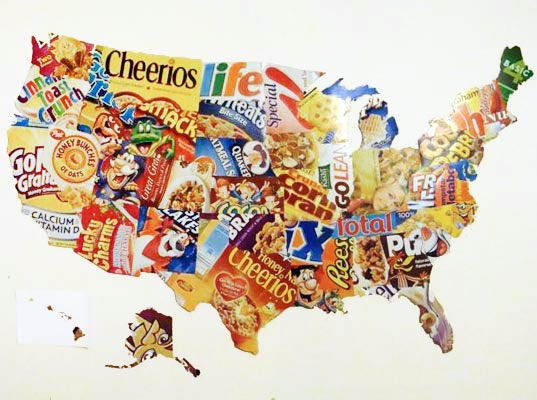
NYC: Stayed at The Gershwin Hotel on East 27th Street just off 5th Avenue between the Flat Iron Building and the Empire State Building and adjacent to the Museum of Sex. The Gershwin is famous for pop art and general funkiness and the hotel is currently exhibiting the work of Michael Albert, who deconstructs advertising logos to create collages with political, social, religious and historic messages pertaining to the United States.

Michael Albert: Map of USA
Twin Room was $US200 per night including taxes, the rooms were small, basic, Spartan, but acceptable…the Birch Coffee café on the ground floor was superb and many local office workers went there for coffee, breakfast on the way to work…the grilled cheese sandwich was apparently “the best ever in the whole world,” as stated by several people I met in the café, but I didn’t try it myself…grilled cheese is a little heavy for my breakfast palate.

The Gershwin Hotel Room

The coffee was good and like most places in New York City, you can order it EXACTLY as you want it…I eventually settled on a tall 2/3 double-shot expresso Arabica blend from Puerto Rico with a steamed 2% milk topper with organic agave sweetener stirred anticlockwise with a electro-plated nickel silver teaspoon and served at 95C with the cup served handle right…and I felt so good that they could meet my morning coffee needs! Coffee sizes range from “jumbo” to “massive” to “grande,” which is essentially a 2-gallon bucket brim full of “joe,” which is apparently American for coffee…I have no idea why.
[However, thanks to “Big Red” on Yahoo Questions, I now know…]
Cup of Joe
Josephus Daniels (18 May 1862-15 January 1948) was appointed Secretary of the Navy by President Woodrow Wilson in 1913. Among his reforms of the Navy were inaugurating the practice of making 100 Sailors from the Fleet eligible for entrance into the Naval Academy, the introduction of women into the service, and the abolishment of the officers’ wine mess. From that time on, the strongest drink aboard Navy ships could only be coffee and over the years, a cup of coffee became known as “a cup of Joe.”
Notes on New York: Strong Jewish influence/Kosher Restaurants/Central Park/Hudson River/Massive homes in The Hamptons/Jazz clubs…segways are illegal in NYC/Upstate New York…Hill Billies in massive V8 4×4 trucks, SUVs, decaying and abandoned houses, stars and stripes everywhere…NYC smells like a BBQ. Gold-plated shit squirrels openly discussed in public and on the streets.

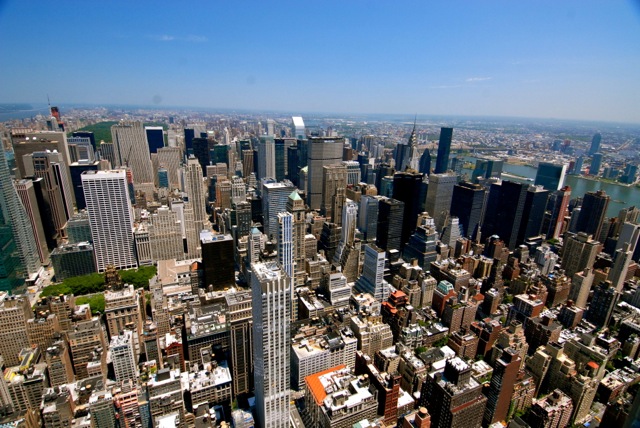
Manhattan from the Empire State Building

Downtown NYC
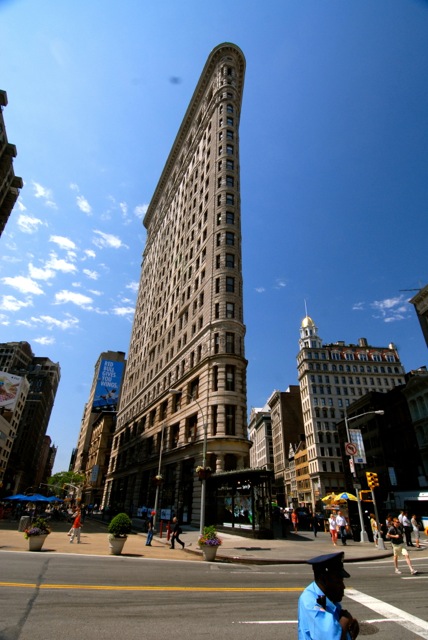
Flat Iron Building…Efficient use of a small section….
DONALD TRUMP has a major influence on the real-estate markets in NYC and Chicago…monuments to his colossal self-aggrandisement stab into the skylines of both cities and his name is branded all over the place…One assumes he is oblivious to the Cockney rhyming slang associated with his name––taking a Donald…Donald Trump/Dump––my erstwhile indomitable travelling companion Doktor Heagney and I certainly made sure many of the fine folk we met are now familiar with the expression.

DT Taking a Donald
Gold-plated shit squirrel…a phrase we invented and attempted to establish as a popular street expression by asking people we met what the phrase meant saying that we’d often heard it on the street, is it a new drug? A cry for help? A cuss? A metaphor for something? We managed to say several times in conversations with locals, “As you Americans like to say…or as you say in the United States…or in the words of your compatriots…or as the saying goes…XXX is like a gold-plated shit squirrel.” Many a blank face was followed by a puzzled squint as we strode off quickly to release our mirth…I bet gold-plated shit squirrels will be discussed on the streets of New York City and Chicago for some time to come and hope that it will enter popular parlance and lexicon of the street in the near future…it will be interesting to see what meaning is attributed to the phrase that came from the warped mind of Doktor Heagney on a hot day after several pints of cold beer-flavoured soda pop in the Big Apple.

Doktor Heagney: Hot on the Trail of Gold-Plated Shit Squirrels in NYC
The Wedding:
The main reason for the trip to the United States was to attend the nuptials of an old mate Erik Sanner. Erik is an artist and the inspiration behind the art facet of the LivnginPeace Project. I hadn’t seen Erik for many years and the opportunity to catch up, meet his bride Ruthie, see the Doktor, meet a whole lot of artists and spend some time Stateside was just too good to miss.
The wedding was to be in upstate New York and Ruthie organised a ride with her friend Judi, who works in publishing and is an aspiring jewellery designer. The Doktor and I waited outside The Gershwin for a sophisticated lady in a fancy car…Judi arrived at the appointed time in her father’s monster truck after apparently wrecking her new volvo earlier in the week…our confidence in her driving skills were not high, but the monster truck seemed pretty indestructible, so we climbed aboard. Judi turned out to be a total gold-plated shit squirrel (as the Americans say) and we laughed our way out of NYC and into the countryside.

Judi and her Dad’s “Car”

Judi Powers: Gold-Plated Shit Squirrel
We decided to stop in Woodstock for lunch…Old and young hippies alike can be seen and are welcome in this town…many shops have “Hippies Always Welcome” signs in the windows, which, if you’re a hippie, makes for a welcome change. One aged hippy, dressed in a sack-cloth robe of a Gregorian monk appeared to be meditating in the main street, stoically sitting perfectly still amidst the urban bustle and seemingly oblivious to the oppressive 100F+ heat…perhaps he was still coming down from an acid trip taken 50 years earlier? Tie-dye T-shirts, floral print skirts and peace signs were all the go and the town had a pleasantly laid-back feel. However, if you want to live here, you’d need a decent bank balance, homes in the area are well over $1million.

Some Locals Just Can’t Let Woodstock Go!
We asked a local for directions to an excellent restaurant for lunch in Woodstock, she recommended Oriloe9, which was superb….the restaurant has an organic farm that supplies it with fruit and vegetables…the salads were FANTASTIC…(they also had Magic Hat beer on the menu).
The wedding was in a small upstate town called Roxbury. We stayed at The Roxbury Motel, which has to have the zaniest decor of any motel anywhere in the world…there was clearly a whole LOT of cocaine involved in the interior decorating here…we stayed in a room called “George’s Space Pad,” which had a futuristic sic-fi theme…Space Odyssey meets Futurama.

George’s SpacePad

The Roxbury Motel by Day

The Roxbury Motel by Night

The Noir Boudoir

Angel Hair Room

Amadeus’ Bride Room

Maryann’s Coconut Cream Pie Room

Genie’s Bottle Room

The Wizard’s Emeralds Room
Erik and Ruthie have many artistic friends and they organized a pre-wedding function and invited all his friends to bring and display their artworks…I took one of my photographs from Karamea, West Coast, South Island, New Zealand and hung it on the wall with many other great artworks…it was an excellent way to meet all their friends and showcase their creative talents and artistic pursuits.

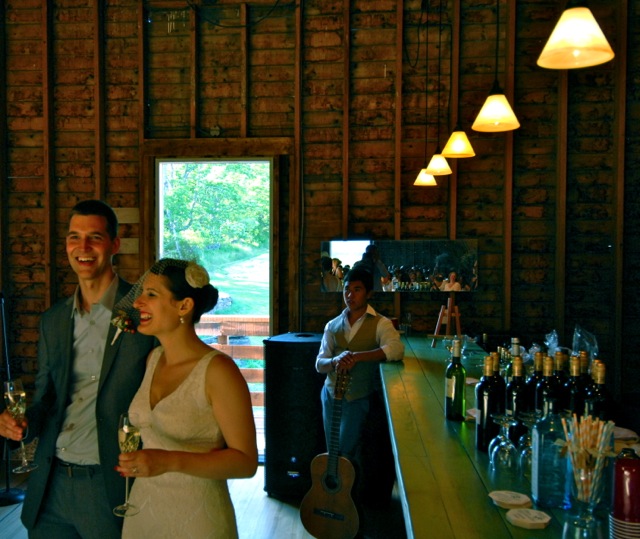
The Happy Couple Erik Sanner and Ruthie Ackerman

Mr and Mrs Sanner…Ready to PARTY!!
If you’re looking for a real hippy town in the upstate NY area, try New Paltz a university town that has taken up the mantle of the groovy and hip and features many great restaurants, including the Main Street BISTRO where we had lunch. WARNING…if you should be tempted to try a “popper” as I was, be sure to let the insanely HOT jalapeño pepper wrapped in cheese and crumbed deep fried to form a napalm bomb molten lava that can cause serious damage to the soft tissue of the mouth…I can offer first-hand experience in this as I popped one into my mouth and unsuspectingly crunched it, releasing the lava and serious melting my bottom lip with the contents…I spent the rest of the trip explaining that I didn’t have herpes, the red weeping welt on my lower lip was in fact a third-degree burn from my first-ever and now last “popper.”
Chicago
Notes on Chicago: Irish/Catholic/German/Italian influences…best tap water of any city I have ever been anywhere in the world (Straight out of Lake Michigan)…Lake Michigan/ Massive Houses in Lake Forest/Hotels cheaper than NYC/Blues clubs/Segway tour…segways can be legally ridden on Chicago footpaths. The smell of cigar smoke permeates the city. Gold-plated shit squirrels quietly discussed in private.
Chicago was the next stop, I was there to catch up with an old school friend I hadn’t seen for 30 years. He had recently married his partner Chris and they are pioneers of same-sex marriage in the state of Illinois. Peter and I were good friends back at boarding school and we’re good friends today, it was fantastic to see him after three decades and we resumed our friendship immediately.

Chicago
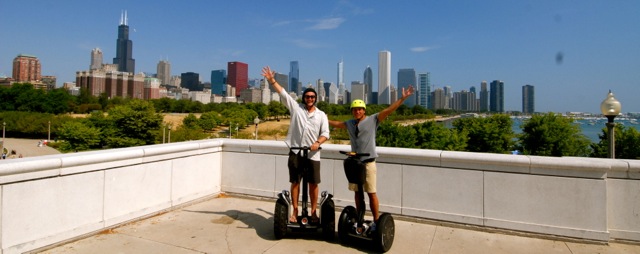
I spent four days with Peter and Chris exploring the downtown Chicago area and was there for the 4th of July Independence Day celebrations. It was the hottest Independence Day since 1913…temperature soared to 105F and we thought we might as well enjoy the heat, so we signed up for a segway tour of the waterfront around Lake Michigan.

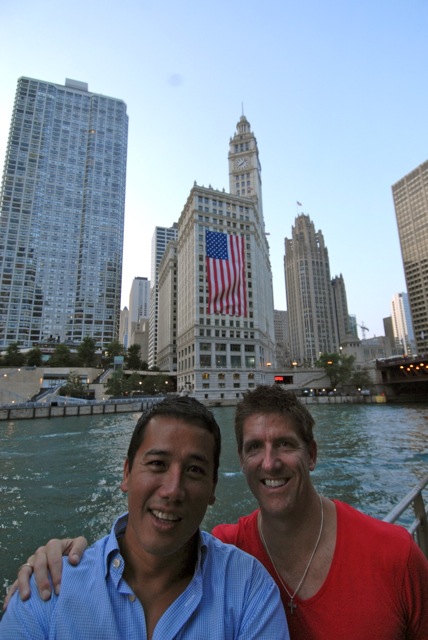
Peter and Chris Morin in Chicago U.S. Independence Day July 4, 2012

Paul Murray and Peter Morin take in Chicago on Segways
Just north of Chicago on the forested shore of Lake Michigan is the aptly named suburb of Lake Forest. There, two resident artists from the LivinginPeace Project, a venture I founded in New Zealand in 2004, are collaborating artistically.
Kristin Mikrut and Shota Kawahara met while on artist residencies at our place in Karamea at the top of the West Coast of the South Island of New Zealand in 2011.
Kristin returned to the United States charged with creative fervour and got together with a childhood friend Cecelia Lanyon to establish Re-Invent, an exhibition space, art workshops and retail outlet in Lake Forest.
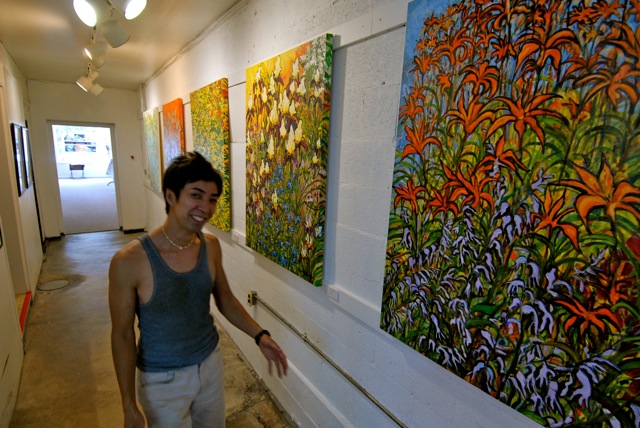
They offered Shota a residency at Re-Invent and he has been there preparing for an exhibition in the gallery space from August 17, 2012.
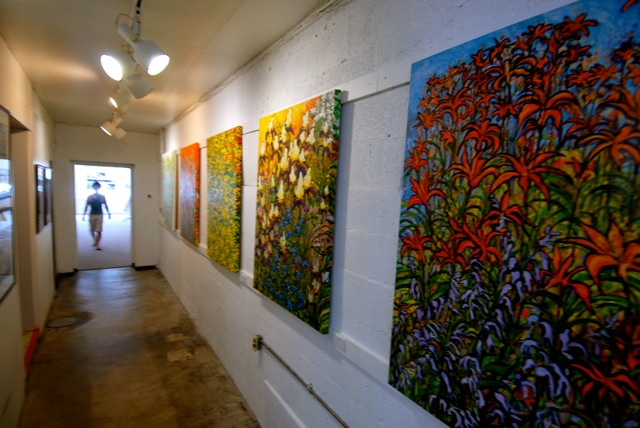
Shota Kawahara, a painter from Japan, is preparing to show his work at Re-Invent on August 17. Shota studied visual art at the prestigious Kyoto University in Japan and is currently a resident artist at Re-Invent. His acrylic works are nature-inspired, abstract, bright, vibrant, colourful and very, very happy…a Kawahara on your wall will bring much joy into your home and the messages in his intricate work will keep your mind active forever.

Shota Kawahara Re-Invent Resident Artist 2012
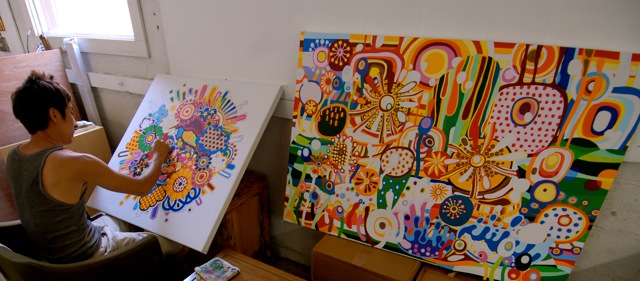
Shota Kawahara Re-Invent Resident Artist 2012
Kristin and Shota at Re-Invent
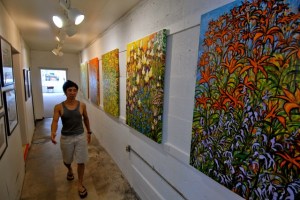

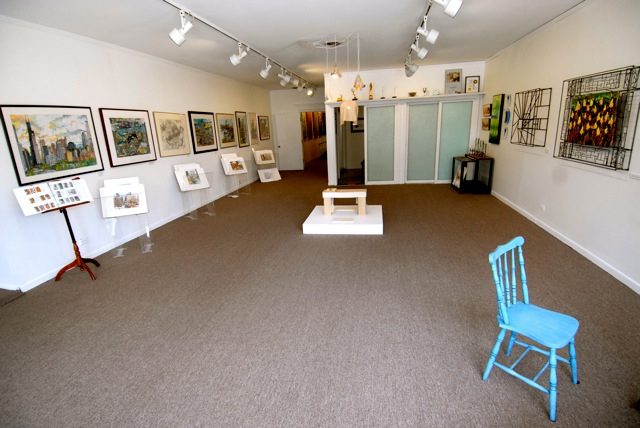

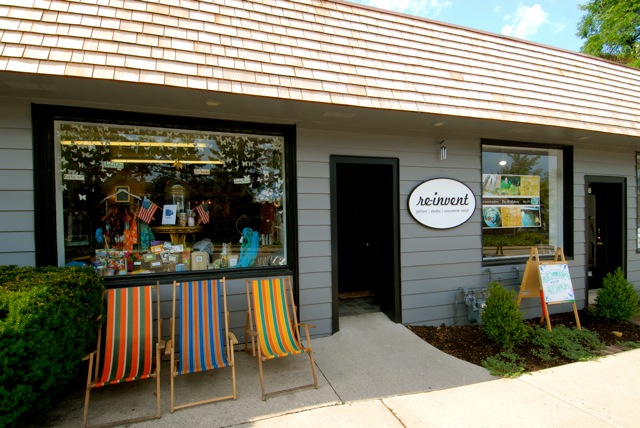
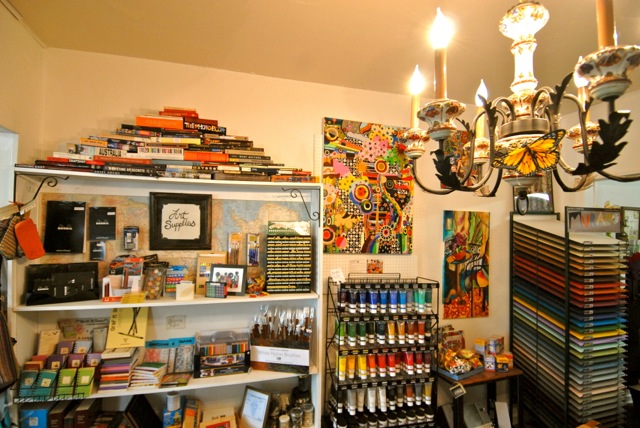
Re-Invent also sells art supplies and artworks by local artists on a commission basis. A broad array of regional creative talent is on display and available for purchase at the shop; metal sculptures, mobiles, stylish handmade children’s clothing and soft toys, jewellery, furniture, retro clothing, and accessories, scarves, lots of paintings and there is even a large dinosaur made from recycled vintage model-T parts on offer. The local art-supplies shop recently closed, so Mikrut and Lanyon took up the challenge to also sell art and craft materials, which should keep the creative people of Lake Forest well satisfied.

All holidays must come to an end and mine almost didn’t. Peter kindly dropped me off at Ohare Airport in Chicago and as I was about to check in, I found myself without ticket, passport of any of my travel documents…Peter calmly said, “OK, I’ll go home and get them for you.” Fortunately, he has a new porsche, which is made for high-speed traffic weaving…normally, Peter and Chris allow an hour to travel from their apartment to the airport. I had 40 minutes before the check-in deadline.
Peter fired up the porsche and sped off…I was kicking myself for being so stupid and really didn’t think I’d be leaving Chicago that day. However, in an amazing feat of death-defying driving, Peter made it back to the apartment, collected my documents and returned to the airport with 10 minutes to spare…thanks for risking your life over my absent-mindedness Pete! That has to be some kind of record…Ohare Airport to W Erie Street and back to the airport through traffic in 30 minutes…it’s possible some road laws were breached, so kids, please do not try and match this as I imagine Peter has set a record that will never again be challenged!
Ahead of me now was a daunting flight schedule; Chicago, Indianapolis, New York City, Los Angeles, Sydney, Wellington, Westport, Karamea…I would have plenty of time to reflect on my travels and ponder life.
High over the dead brown quilt of drought-stricken Midwest corn monoculture watching the CO2 vapour trail spew out of the Boeing 747-400 on the hottest U.S. summer ever recorded, I find myself thinking about permaculture. (Apparently, over 3,500 temperature records in the United States have been exceeded this summer).
My trip to the United States to attend the nuptials of a very close friend was an luxurious indulgence for me, and as I now winged home to my lush, green parallel universe in remote New Zealand, I reflected on the quality of my life there. While the quantity of life in the United States exceeds that in New Zealand, I feel the quality of life we enjoy is far superior to the average U.S citizen. We may not have the affluence, range of product choices, consumables, unlimited restaurant and retail choices, entertainment options etc, but we have a the ability to grow our own food, fresh clean air and water, less people, traffic, pollution and stress in our lives…this to me is life quality.
Flying over the land at 10,000 feet affords a perspective on life that is not possible at ground level. The view of a bird reveals clearly the perils of commercial agriculture and the devastating impact of human influence on natural systems.
Vast tracts of flat fertile farmland below me are devoted to the production of corn, which is now a staple food in the United States forming the basis for most processed food products. The diverse natural landscape that must have once existed here is all gone…the diversity of flora and fauna has been replaced with a single crop. Corn.
The interior of the Unites States resembles the dry withered skin of an old elephant…with the occasional festering pustule of consumption bursting through its leathery hide as we flew over cities…surely this is not a healthy landscape? How long will it be before the great elephant succumbs to consumption?
As I look around the plane, I consider that I am possibly the only passenger pondering the subject of sustainability. My fellow passengers and I are the lucky 10% of the world’s population who can actually afford to fly and I’m feeling very decadent indulging myself the environmentally expensive luxury of international flight, but decadence is a rather subjective evaluation.
Am I decadent compared with the businesspeople in first class who do this most every day? Are they decadent compared with the owner of the airline who has mansions all over the world, his own island and is planning flights to the moon? Thinking about the poor sods below watching their cornfields wither and die as they pray for rain puts my self-indulgence into sharp perspective.
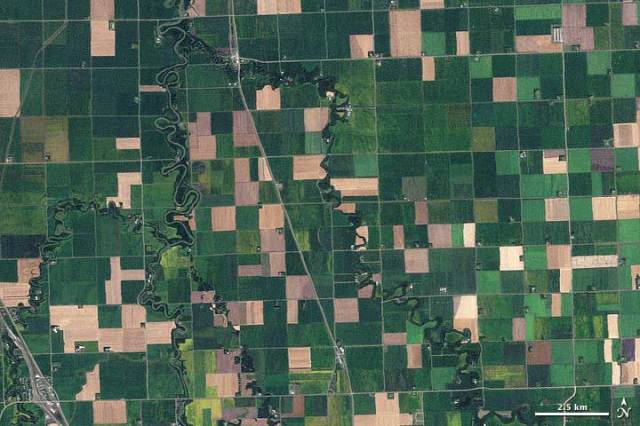
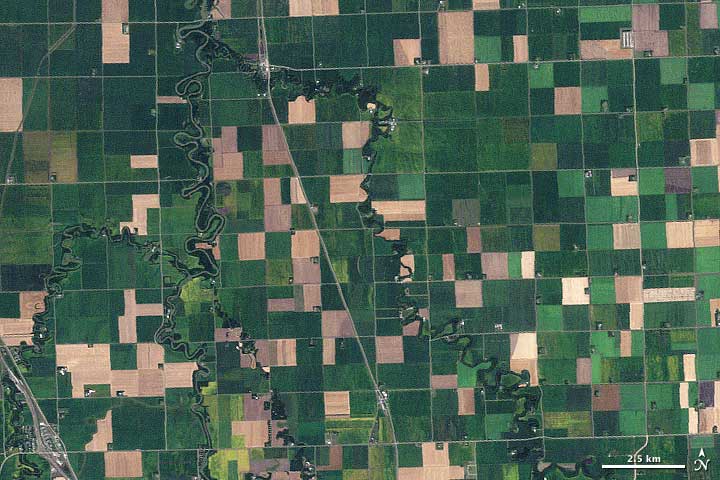
A Quilt of Corn is Keeping the Mid-West Warm: This photo shows the region in lusher times). The U.S. interior is now a dustbowl for thousands of miles.

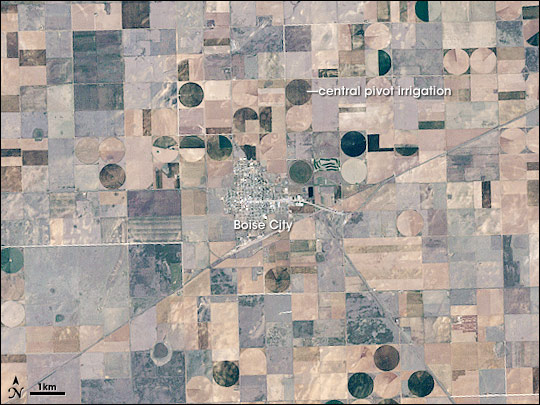
Aerial Photo of Boise Idaho: The entire Midwest currently looks much like this….
As Michael Pollan reiterates in his book “Omnivore’s Dilemma” and his articles in the New York Times Magazine on the subject of corn, “Take a typical fast food meal. Corn is the sweetener in the soda. It’s in the corn-fed beef Big Mac patty, and in the high-fructose syrup in the bun, and in the secret sauce. Slim Jims are full of corn syrup, dextrose, cornstarch, and a great many additives. The “four different fuels” in a Lunchables meal, are all essentially corn-based.
The chicken nugget—including feed for the chicken, fillers, binders, coating, and dipping sauce—is all corn. The french fries are made from potatoes, but odds are they’re fried in corn oil, the source of 50 percent of their calories. Even the salads at McDonald’s are full of high-fructose corn syrup and thickeners made from corn.
Corn is the keystone species of the industrial food system, along with its sidekick, soybeans, with which it shares a rotation on most of the farms in the Midwest. I’m really talking about cheap corn — overproduced, subsidized, industrial corn — the biggest legal cash crop in America. Eighty million acres — an area twice the size of New York State — is blanketed by a vast corn monoculture like a second great American lawn.”
In the cities, consumers dutifully consume products that are essentially corn-based, eat beef and chicken that has been on corn stockfeed in feedlots and wash it down with sodas sweetened with corn fructose syrup. “If you are what you eat, and especially if you eat industrial food, as 99 percent of Americans do, what you are is “corn,” concludes Pollan.

The affluence of many people living in the United States is clearly evident, but there are also a lot of people living in the streets, drug issues, desperate people lacking sufficient health care, racial and economic disparity…this is also clearly evident to the casual observer.
The whole world is a class system that is determined by money…the many at the bottom of the pyramid supporting the few at the top…people are beginning to fully understand this and the recent “Occupy” movements around the world are testament to that awakening. Money is God and we’re all worshiping this new omnipresent deity, but at what cost? The distribution of fiscal spirituality has become somewhat inequitable over the past few decades, with those at the top of the stack getting more God than everyone else. This situation is out of whack and will surely lead to escalating social unease and dissent among the godless minions, which we are seeing and rightly so…we need a good revolution every now and then to restore life balance and social equity.
From the comfort of my airline seat, I have a plan view of what would appear to be a monumental collapse about to happen. Maybe I’m wrong, maybe the 99% will accept that the 1% have every right to abject opulence and maybe this summer is a seasonal anomaly and that rains will come and refresh the land so that the cycle of production and consumption may continue unabated.
It would seem there are two ways of reacting to the world’s dwindling energy resources…become more efficient, use less energy, strive for sustainability, reuse, reduce, recycle…or accept that we’re running out of go juice and live it up, go hedonistic, consume more, expand everything, supersize the lot and party hearty until it’s all gone…it would seem that many in the United States have chosen the latter option…Gold-plated Shit Squirrels.



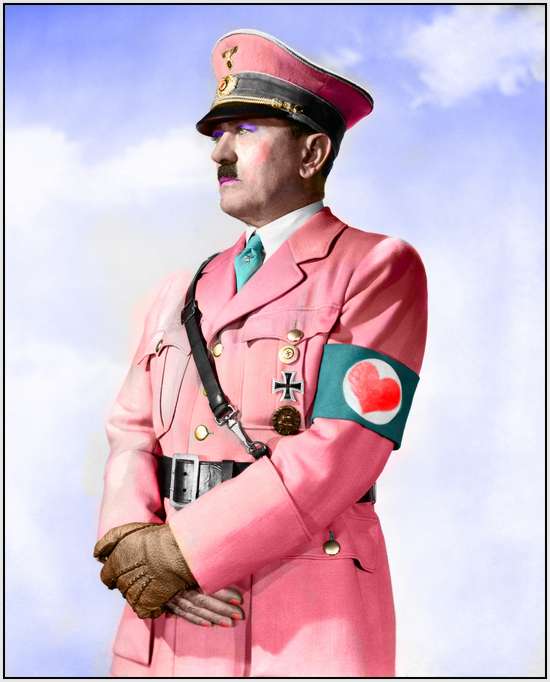
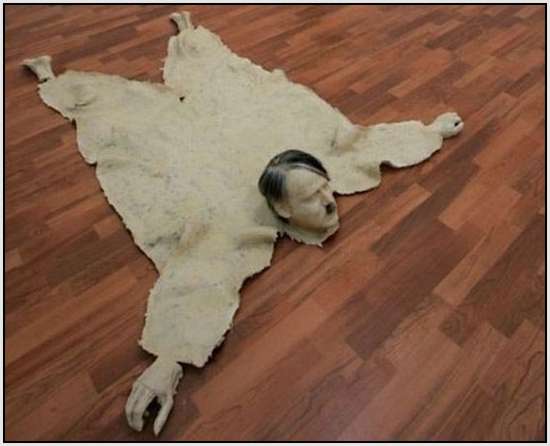












































The Serious Business of Permaculture
“What permaculturalists are doing is the most important activity that any group is doing on the planet. We don’t know what the details of a truly sustainable future are going to be like, but we need options, we need people experimenting in all kinds of ways and permaculturalists are one of the critical groups doing that.” — David Suzuki
Join the New Permaculture Generation
By Arthur Lewis Gordon JacksonLooking out over the lifeless brown quilt of drought-stricken Midwest corn monoculture from the window of a Boeing 747-700, it was immediately apparent to me that permaculture farming practices would have prevented this ecological catastrophe. The hottest summer on record in the United States combined with aggressive commercial farming practices has created the potential for a biblical famine!
I had been to New York City to attend the nuptials of a very close friend and was heading to a lush, green parallel universe to do a permaculture design course in Karamea on the West Coast of the South Island of New Zealand.
New York City from the Empire State Building
Flying over the land at 10,000 feet affords a perspective on life that is not possible at ground level. The view of a bird reveals clearly the perils of commercial agriculture and the devastating impact of human influence on natural systems
Vast tracts of flat fertile farmland devoted to the production of corn, which is now a staple food in the United States. Corn and its byproducts form the basis for most processed food products. The diverse natural landscape that must have once existed here is all gone…the diversity of flora and fauna has been replaced with a single crop.
The interior of the Unites States currently resembles the dry withered skin of an old elephant…with the occasional urban smogatropolis bursting through the leathery hide like a festering pustule as we flew over cities…surely this is not a healthy landscape? How long will it be before the great elephant succumbs to consumption?
As I look around the plane, I consider that I am possibly the only passenger pondering the subject of sustainability. I am one of the lucky 10% of the world’s population who can actually afford to fly and I’m feeling very decadent indulging myself the environmentally expensive luxury of international flight, but am I decadent compared with the businesspeople in first class who do this most every day? Are they decadent compared with the owner of the airline who has mansions all over the world, his own island and is planning flights to the moon? Thinking about the poor sodbusters below watching their cornfields wither and die as they pray for rain puts my self-indulgence into sharp perspective.
Looking down on the state of the land in the U.S. Midwest, it is clear land-use changes need to be made as the current system of food through the exploitation of land resources is clearly not sustainable and appears headed for collapse.
In permaculture, it is often stated that, “the problem is the solution” and that the solution to any problem already exists in nature. Broad-scale monoculture farming is the problem here, the solution is to reintroduce crop diversity, water harvesting, replanting trees along waterways, assisting nature to remediate the damage done and collectively applying permaculture principles over the entire region.
Another huge part of this problem is that there are many mouths to feed in the United States, food production is essential to the sustenance of the populace. Midwest farmers no doubt feel the weight of responsibility to provide food.
The good news for U.S. farmers is that there is already a lot of permaculture activity in the United States and progressive farmers like Joel Salatin and his Polyface Farms in Virginia have working models of what is possible with a change of mindset from “we do it this way because that’s how my grandfather did it,” to it’s time to take a new approach, let’s learn about permaculture, and set about repairing our land for future generations. Doing what you’ve always done does not always produce what you’ve always got and cracks are appearing in the broad-scale commercial monoculture model…it’s time to have a rethink on food production in the Midwest and everywhere else.
Joel Salatin with the Girls on PlyFace Farm
Joel Salatin Sharing his Knowledge with other Farmers at a PolyFace Farm Field Day
With that in mind, Paul Murray decided to be part of the solution and study permaculture so that he could help find answers to the challenges of future food production and distribution and work towards rebuilding and replenishing the land so that it may produce an abundance of food and feed everyone forever .We need to help others to learn about permaculture and how to grow food for themselves without relying on corporate agriculture food production and distribution systems.
However, Permaculture Design Course students often come from large cities somewhere in the world. They may not have had an opportunity to gain hands-on practical experience necessary to apply the principles of permaculture in a practical situation.
Seeing the need to offer practical training for people who have completed a theoretical Permaculture Design Course to enable them to achieve the confidence and competence necessary to apply the permaculture theory they have learned in the classroom to their own permaculture ventures, Living in Peace Project founder Paul Murray decided to offer his property, facilities and services to people seeking practical permaculture experience and set about creating a centre for excellence in permaculture.
The LivinginPeace Project seeks to holistically apply the principles of permaculture to the establishment, development and management of a business venture. The stated goal of the LivinginPeace Project is to incorporate the elements of art, travel, permaculture and education into a sustainable business.
Inspired on completing a Permaculture Design Course with Bill Mollison and Geoff Lawton at Melbourne University in 2009, Murray, with a lot of help from people from all over the world, and with further inspiration from the Permaculture Master Plan, he began to establish a permaculture exhibition farm, education facility and centre for permaculture research, training and practice in the Karamea region at the top of the West Coast of the South Island of New Zealand.
In June 2004, Murray purchased an old maternity hospital and converted it into a hostel to offer reasonably priced accommodation to young and budget travellers visiting the region. A year later, he purchased a small farm and motel complex to cater to travellers looking for self-contained accommodation and organic gardens to grow food for his family, colleagues and customers.
Murray has a degree in agricultural science with a major in horticulture. The degree was essentially a study in commerce and taught students how to maximise the profit derived from every square inch of land with no real consideration for maintaining the fertility of the farm or for responsible stewardship. Permaculture made a whole lot more sense and the Permaculture Design Course with colourful, progressive-thinking characters like Mollison and Lawton and 100 students from all over the world convinced him of the way forward and his life changed as Lawton suggested it might.
The long-term objective for the Living in Peace Project is to gradually phase into permaculture and away from tourism, which Murray believes to be “an environmentally expensive form of entertainment” and into the provision of permaculture education, way of life and knowledge sharing with travellers. “Karamea is a stunning region, but it is also perhaps the most remote town on mainland New Zealand, people have to make a real effort to come here.” “I want to cater to travellers who make that effort––people who take the time to learn from their travel experience––and we have a great opportunity to share our permaculture knowledge with people from all over the world and, hopefully, gain new ideas and innovations from the people who come and stay.”
The hostel, Rongo Backpackers & Gallery, hosts travellers from over 50 countries each year and the Murray hopes the experience of living and working on a permaculture farm will spark a quest for knowledge among his guests and that they will take some of the energy-saving, self-sufficiency initiatives and permaculture practices home with them.
Bananas and avocadoes can be grown in Karamea and the region enjoys an almost sub-tropical microclimate. The soil is deep, well-drained alluvial loam, which enable a broad range of food crops to be grown. The annual rainfall is around 80 inches and it is evenly spread across the year, alleviating the need for irrigation and water storage.
“In all my travels, I’ve never come across a place with greater potential for growing food. The Living in Peace Project farm is a blank canvas for permaculture designers. People have the opportunity to learn how to go from bare earth to Eden rather than just seeing an established permaculture farm, we offer a very interactive experience and the chance to learn how to do it rather than merely seeing it after it’s done,” he said.
The project has employed Dave Tailby as the Permaculture Farm Manager this year and he has taken charge of the property and its development.
“Having Dave on board is fantastic! He’s a great people-person, a really hard worker and is as passionate about permaculture as anyone you’ll meet. He’s an asset to the project and a really great teacher,” Murray said.
LivinginPeace Project Farm Manager Dave Tailby (right) Talking Compost with a Couple of Urban Permaculturalists
After doing his Permaculture Design Course and watching the Permaculture Master Plan video, Murray decided to devote his life to permaculture and saw his tourism accommodation facilities and farm performing a different function––spreading the word about permaculture, helping others to learn and offering an opportunity to urban permaculture people to learn practical farm skills so that they might be better able to establish their own permaculture projects.
In the meantime, the LivinginPeace Project still offers accommodation over the summer months to visitors coming to see the many regional attractions, but changes focus from May to December to host permaculture students as interns on the farm and will offer a permaculture design course from September 30 to October 14, 2012.
“We are very fortunate to have Tim Barker from the Permaculture Research Institute coming over to lead the course, Tim is a great guy and an experienced permaculture practitioner with lots of practical skills to pass on to students on the course,” Murray said. Barker is currently one of the farm managers at the PRI’s Zaytuna Farm in New South Wales, Australia and describes himself as “Mr Fix it.”
LivinginPeace Project Premaculture Design Course Head Lecturer Tim “Mr Fix It” Barker
Eventually, Murray hopes to phase tourism out altogether and focus entirely on permaculture programmes year-round. “I don’t think international tourism is a good bet, but I do believe in international travel…it’s the best form of self-education you can get,” he said.
The LivinginPeace Project will therefore cater to travellers and provide opportunities for people to affordably stay in Karamea for an extended period and learn about New Zealand customs, culture, traditions, lifestyle, food while they also learn about permaculture, sustainable living and self-sufficiency.
For more information on the LivinginPeace Project, or to enrol in the LivinginPeace Project Permaculture Design Course, please contact Paul Murray:
LivinginPeace Project Founder Paul Murray
E-mail: rongo@actrix.co.nz
Ph: 0064 (3) 7826-767
LivinginPeace Project
Permaculture Design Course in Karamea
(September 30 to October 14, 2012)
The LivinginPeace Project in Karamea on the West Coast will be offering a Permaculture Design Course (PDC) from September 30 to October 14, 2012.
We are fortunate to have Tim Barker as the senior lecturer for the course.
Tim is a very experienced permaculturalist and is currently one of the farm managers at the Permaculture Research Institute of Australia Zaytuna Farm.
The PDC will have an emphasis on practical application of permaculture theory and will include excursions to local permaculture projects.
More information about the PDC is available on our Web site: http://www.livinginpeace.com/pdc/
If you are interested in the PDC, have any questions, or require more information please contact Paul Murray.
Paul Murray:
E-mail: rongo@actrix.co.nz
Ph: 03-7826-767
Click link to Play: LivinginPeace Project Video
Rate this: