Labour’s CGTax: Savvy Politics or Political Suicide?

Off the Top of My Head

By Paul Murray

There is an old political adage: Never stand between hard-working Kiwis and the future they have spent decades trying to build. Labour may be about to test that sentiment.

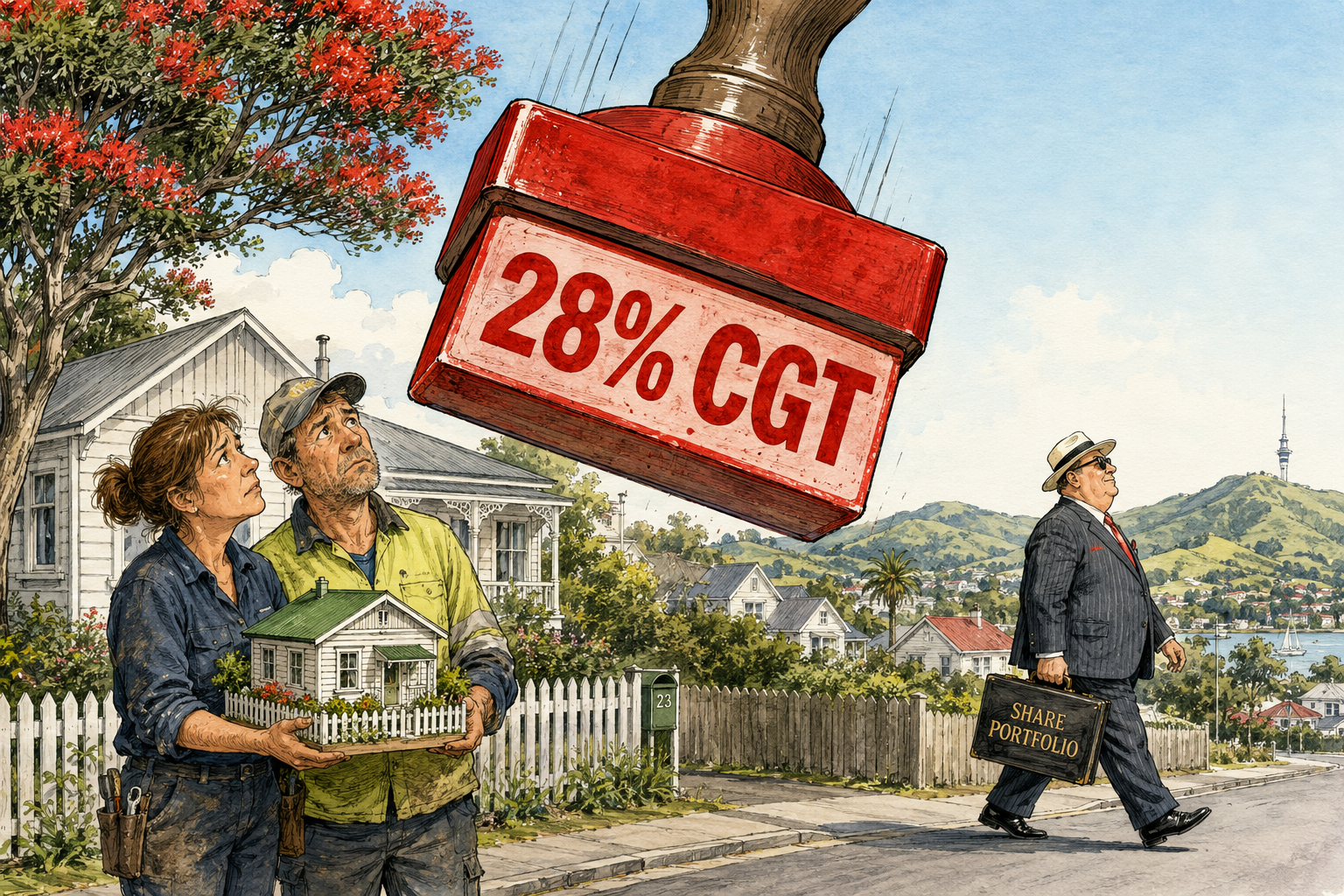
The NZ Labour Party’s new capital gains tax (CGT) proposal sounds neat in a press release. From 1 July 2027, gains on residential investment and commercial property would be taxed at 28% when the property is sold. The family home, farms, KiwiSaver, shares, businesses, inheritances and personal assets would all be exempt. Labour claims the proposed CGT won’t effect 90% of New Zealanders and promises to pour every dollar into health, including three free GP visits a year.

Who could object to fairness and free doctors? Quite a few people, I suspect—especially once they realise what Labour has chosen to call “fair.”

Labour calls it targeted. Small property investors may have another word for where the target has been painted.

This is not a comprehensive capital gains tax. It is a property tax wearing a capital-gains nametag. It does not tax the gain on a large share portfolio. It does not tax the gain on a private business. It does not tax KiwiSaver. It selects rental and commercial property, and only those assets, for special punishment.

That is politically dangerous in a country where property has long been the ordinary person’s unofficial pension scheme.

For years, New Zealanders have been told not to expect the state to provide a luxurious retirement. Save. Invest. Take responsibility. Build something for yourself. Many middle-income couples did exactly that. They worked, paid PAYE, went without, borrowed against the family home, bought a modest rental and dealt with interest rates, insurance, rates, repairs, compliance costs and the occasional tenant who treated a wall as a punching bag. They did not set up a Cayman Islands structure. They bought a weatherboard house in Hamilton.

The Kiwi retirement plan: work hard, pay down the mortgage, build a nest egg—and hope the magpie in the red tie does not spot it.

Now Labour wants to tell them that the asset class they understood, trusted and could actually borrow against is socially suspect—and that 28% of its future nominal gain belongs to the government when they sell.

Labour says nine out of ten New Zealanders will not pay the tax on property they own. That claim matters, and critics should be honest about it: the family home is exempt. This is not a tax on every homeowner.

But elections are not decided only by the number of people who receive an invoice. They are decided by what a policy says about aspiration. A voter may own one home today and still hope to buy a rental tomorrow. Adult children may expect their parents’ investment property to fund aged care rather than leave the family begging the state for help. Small landlords may not think of themselves as speculators at all. They think of themselves as people trying not to become a burden.
Those people vote and they are entitled to ask an obvious question: If Labour’s real objective is to move money into “productive investment,” why are gains on shares and businesses exempt?

The policy may actually make tax planning more productive than investment. Owners will delay selling to avoid crystallising the tax. Capital will become locked into properties that no longer suit the owner or market. People will rearrange ownership and valuations around the family-home exemption. Accountants and lawyers will do nicely. Whether an extra dollar reaches a promising New Zealand company is far less certain.
Then there is the phrase “property speculation.” It is politically useful because it makes every landlord sound like someone flipping six Auckland villas before breakfast. But a long-term rental held for twenty years is not a roulette chip. It is capital tied up, risk accepted, housing supplied and a retirement plan patiently built.

Yes, New Zealand is overinvested in housing—and the scale matters. University of Auckland analysis drawing on OECD data puts housing at roughly 33.8% of New Zealand’s total national investment, compared with an OECD average of 21.4%. In other words, about one investment dollar in three goes into housing here, against roughly one in five across the OECD.

The same preference appears on household balance sheets. Stats NZ’s 2024 household wealth data show that owner-occupied dwellings and other real estate account for approximately 48% of total household assets, up from 43 per cent in 2021. Direct shares and managed funds occupy a much smaller share for most households. The national instinct is not subtle: when Kiwis have money, equity and borrowing capacity, we tend to put them into something with a roof.

Among the wealthy, the preference is not merely for property but for property close to home. A 2025 Knight Frank survey reported by Property Council New Zealand found that 93% of Kiwi family-office real-estate investment remained in New Zealand, compared with 90% in Australia and 86% in the United States. That figure concerns surveyed family offices rather than all households, so it should not be treated as a national average. But it reinforces the larger picture: New Zealand capital is unusually attached to New Zealand land and buildings.
That concentration is a genuine economic problem. It leaves households exposed to one asset class, directs savings away from enterprises that might raise productivity, and encourages us to become wealthy by selling increasingly expensive houses to one another.

But it is also the result of policy. Successive governments created a country with shallow capital markets, expensive housing, inconsistent rules and an understandable public distrust of political promises about retirement. Having trained households to seek security in property, Wellington now proposes to fine them for learning the lesson.

Labour answers that nearly every comparable country taxes capital gains. True. Australia has done so since 1985. But “other countries do it” is not an argument; it is the beginning of a comparison.

Countries are not interchangeable tax laboratories. They have different pension systems, savings habits, capital markets, rates of home ownership, housing shortages and attitudes to risk. New Zealand households are unusually dependent on property as both shelter and retirement capital. A policy copied from overseas can have a very different effect here because it lands on a very different household balance sheet.

Before imposing a CGT, a government should therefore answer some basic questions in public. What precise economic problem is the tax intended to solve? How much money will it raise after administration, behavioural change and avoidance? How much investment is realistically expected to move from property into New Zealand businesses rather than overseas shares? What will happen to rents, new construction, house prices and retirement incomes? What other taxes could be reduced? What measurable benefit should New Zealanders expect in five, 10 and 20 years?
Most importantly: what is the net gain for the country after the costs are counted?

Labour has supplied the slogan—tax property, fund doctors—but not yet the national balance sheet. Ring-fencing the revenue for health tells us where the money will be spent. It does not demonstrate that this particular tax is the best way to raise it, or that the wider economic benefits will exceed the distortions and compliance costs.
The Case Labour Needs to Make

There are respectable arguments for taxing capital gains, and opponents should acknowledge them.

A well-designed CGT can improve horizontal fairness: two people enjoying the same increase in economic resources should not face completely different tax outcomes merely because one earned wages and the other held an appreciating asset. It can reduce the tax advantage of chasing capital gain rather than taxable income. It can broaden the revenue base as the population ages. It may reduce speculative demand at the margin, make first-home buyers more competitive and encourage some savings to flow towards companies, infrastructure and innovation.

If those changes actually occurred, New Zealand could gain deeper capital markets, better-funded businesses and less household wealth concentrated in a single, leveraged asset class. Investors themselves could gain more diversified portfolios and less exposure to one housing market, one interest-rate cycle and one set of tenancy rules.

Those are potential benefits—not guaranteed outcomes. A realisation-based CGT also encourages owners to hold assets merely to defer tax. A property-only CGT creates new boundaries and new opportunities for avoidance. Taxing nominal gains can capture inflation rather than genuine increases in purchasing power. Reduced investor demand might improve affordability for buyers, but a poorly managed transition could also reduce rental supply or discourage development.
That is precisely why the government bears the burden of explanation. It must publish its modelling, assumptions, distributional effects, implementation costs and measures of success. “Most countries have one” and “three free doctor visits” are campaign lines. They are not a complete economic case.

Not Retrospective—Far Too Abrupt

To be fair, Labour’s proposal is not retrospective in the strict tax sense. Property would be valued at 1 July 2027 and only gains accruing after that date would be taxed when realised. Historic gains would be excluded.

But two years’ warning is still abrupt when the investments concerned were commonly made over twenty- or thirty-year horizons. A person who arranged a retirement plan under one set of rules cannot necessarily unwind mortgages, tenancies, ownership structures and market timing by an arbitrary valuation date without cost.

If Parliament decides that the national interest requires households to move capital away from property, it should treat those households as partners in a transition—not as a convenient tax base. Existing investors should receive a long runway, potentially ten years, to sell, restructure or redirect savings. The tax could be phased in gradually, with clearly announced rates and durable cross-party legislation. Existing properties might be grandfathered for a defined period, while new purchases made with full knowledge of the rules could enter the regime sooner.

A decade is not a gift to speculators. It is recognition that government helped create the incentives people responded to, and that retirement planning cannot be turned like a speedboat.

Such a transition would have costs. It would delay revenue and could produce strategic buying or selling around commencement dates. Those effects would need careful design. But stability, consent and predictability are economic assets too. A rushed reform that is reversed after one election may be worse than no reform at all.

Where Could Investors Go?

If this policy became law, it would create both pressure and opportunity for investors. The sensible response would not be a frantic sale of every rental. It would be a sober reassessment of purpose, time horizon, cash flow, debt and diversification, supported by independent financial and tax advice.

Under Labour’s announced design, gains on shares, businesses, KiwiSaver and the family home would remain outside this CGT. That could make diversified New Zealand and international share funds, listed companies, managed PIE funds, bonds and increased KiwiSaver contributions relatively more attractive than another leveraged rental. Investors willing to accept business risk could provide equity to productive New Zealand enterprises—the capital shift Labour says it wants.

There may also still be viable property strategies. Because the tax is triggered on sale, a well-bought rental producing reliable net income could remain worthwhile for a long-term owner; income and yield would matter more, and hoped-for capital gain less. Lower investor demand might eventually improve purchase prices or gross yields for buyers who properly account for tax. Property owners could focus on operational performance, appropriate improvements and disciplined debt rather than assuming perpetual price inflation.

Investors could also obtain indirect property exposure through listed or managed vehicles, although the precise treatment would depend on the final legislation and on tax paid inside the entity. Nobody should build a strategy around an exemption until the law, anti-avoidance rules and fund-level treatment are known.

The larger opportunity is diversification. Many Kiwi households have their home, rental, mortgage, income and retirement hopes all tied to the same local property cycle. Redirecting part of that concentration into a spread of industries, countries and asset types could make household finances more resilient—even if Labour’s tax is a poor way to force the lesson.The larger opportunity is diversification. Many Kiwi households have their home, rental, mortgage, income and retirement hopes all tied to the same local property cycle. Redirecting part of that concentration into a spread of industries, countries and asset types could make household finances more resilient—even if Labour’s tax is a poor way to force the lesson.

A broader investment culture could benefit New Zealand. The question is whether Wellington should build the road—or simply put a tollbooth on the old one.

Will Kiwis Simply Build McMansions?

There is another unintended consequence Labour has barely discussed. If gains on investment property are taxed but gains on the family home—including lifestyle blocks—remain exempt, rational people will notice the difference.

Some households may decide that the safest place for their next dollar is not a rental or a New Zealand company but the kitchen, second lounge, swimming pool, landscaping or extra hectare attached to the tax-free family home. Others may trade up to a larger and more expensive residence because its gain remains sheltered. At the margin, the policy could encourage renovation, overcapitalisation and “mansionisation”: more capital poured into fewer, grander homes rather than more modest homes or productive businesses.

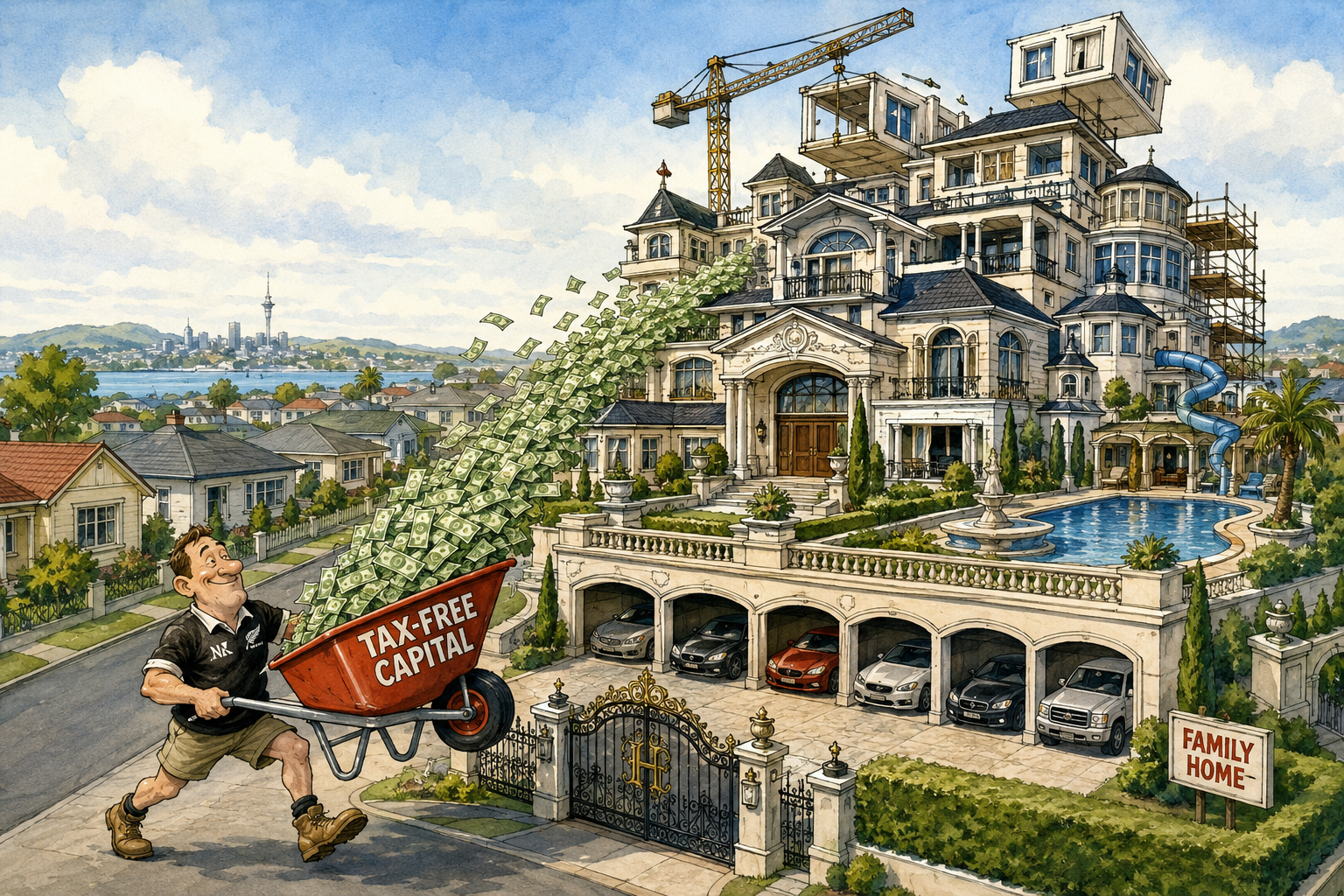
If the rental is taxable but the family home is not, do not be surprised when the productive economy turns out to have a swimming pool and a six-car garage.

Will Auckland instantly become Los Angeles with McMansions on every ridge? Of course not. Planning rules, construction costs, mortgage rates, insurance and household incomes will remain far more powerful drivers. Most families do not buy an extra wing merely because of tax treatment. And home improvements create real work for builders and tradespeople while sometimes improving energy efficiency and housing quality.

But incentives do not have to transform everyone’s behaviour to distort investment. The people most able to respond will be higher-income owners with spare equity—the very people capable of choosing between another rental, a share portfolio, a business investment and a major home upgrade. If one option offers private enjoyment and an untaxed gain, while another carries a 28% tax on sale, the government should expect some money to move towards the exempt option.

Lifestyle blocks deserve particular scrutiny. Labour expressly says they are covered by the family-home exemption, while farms are also exempt. Unless the final legislation tightly defines the exempt home, surrounding land and genuine farming activity, the boundary could invite people to package investment as lifestyle, seek larger residential holdings or retain land around a home that might otherwise be subdivided or used productively.

That does not mean a CGT will automatically “tie up farmland.” Zoning, subdivision rules, infrastructure and rural economics will still determine most land use. A tax exemption cannot magically turn productive farmland into residential land. But it can add another reason to hold wealth in a large home and its surrounding acreage—and another argument for lawyers to have with Inland Revenue.

The 2019 Tax Working Group saw this problem coming. Its proposed main-home exclusion limited exempt surrounding land to the lesser of 4,500 square metres or the area reasonably required for enjoying the home, with gains on additional land apportioned. Labour’s current policy page simply promises exemptions for family homes, lifestyle blocks and farms. Before voters accept that promise, they deserve the definitions.

A credible policy would cap or apportion the main-home exemption above a generous value or land-area threshold, protect ordinary family homes, and prevent artificial changes of use. It would also disclose whether renovations and improvements reset the cost base, how mixed residential and farming land would be treated, and how trusts and multiple residences would be policed.

Otherwise, Labour may discover that taxing investment property does not send capital marching obediently towards productive enterprise. Some of it may simply move through the front gate and reappear as a six-car garage.

Labour’s best argument is tax fairness. Wage earners pay tax as they earn. Much capital appreciation escapes tax altogether. Inland Revenue’s study of 311 of the country’s wealthiest families found a median effective tax rate of 8.9% on economic income; on a broadly comparable measure including GST and netting off government payments, the figure was 9.4%, against 20.2% for a middle-wealth New Zealander. That is the real scandal.

But Labour’s answer largely misses the people in that study. The very rich do not keep all their wealth in a couple of suburban rentals. Their gains commonly sit in businesses, financial portfolios, trusts and complex ownership structures. Labour proposes to exempt shares and business assets while taxing the familiar retirement vehicle of the shopkeeper, tradie, nurse, teacher and small-business couple.

If the problem is that the truly wealthy pay too little, tax the truly wealthy.

New Zealand should debate a high-wealth minimum tax: a rule ensuring that people above a genuinely high net-worth threshold—say $20 million or $50 million—pay a minimum effective rate on their total economic income, including capital gains. Design it with deferral provisions for genuinely illiquid assets, strong trust look-through rules and safeguards against forced sales. Make the threshold high enough that a family home and one or two rentals do not turn an ordinary household into a Treasury target.

There are difficult details. Valuation, liquidity and avoidance do not disappear because a policy has a satisfying slogan. But at least such a tax would aim at the stated problem: multimillionaires whose effective tax rate can sit below that of the people who clean their offices.

New Zealand’s tax system has always believed in lifting people up. It has simply been less specific about which end of the lever they should stand on.

Better still, pair tax reform with genuine incentives for productive investment. Encourage long-term investment in New Zealand companies. Make diversified funds inexpensive and accessible. Reduce the complexity that makes rental property feel safer than backing a business. Improve financial literacy. Build a stable retirement framework that lasts longer than one electoral cycle. Do not simply make one widely held asset less attractive and hope the money obediently marches into a start-up—or leaves New Zealand altogether.

And let us retire the moral caricatures on both sides. People who need public healthcare are not lazy. Many are working, caring, sick, disabled or simply trapped by costs no individual can control. Three free GP visits could be valuable policy. But a worthwhile service does not automatically justify any tax chosen to fund it.

Likewise, owning an investment property does not make someone greedy. For many New Zealanders it represents years of restraint and a serious attempt to provide for themselves.

That is where Labour risks political suicide. It is offering voters a morality play in which property investors are the villains and government spending is the redemption. But many of the supposed villains look remarkably like the middle class: cautious, mortgaged, ageing and worried about the future.

A fair tax system does not ask everyone to put in the same amount. It asks everyone to put in the same amount of effort.

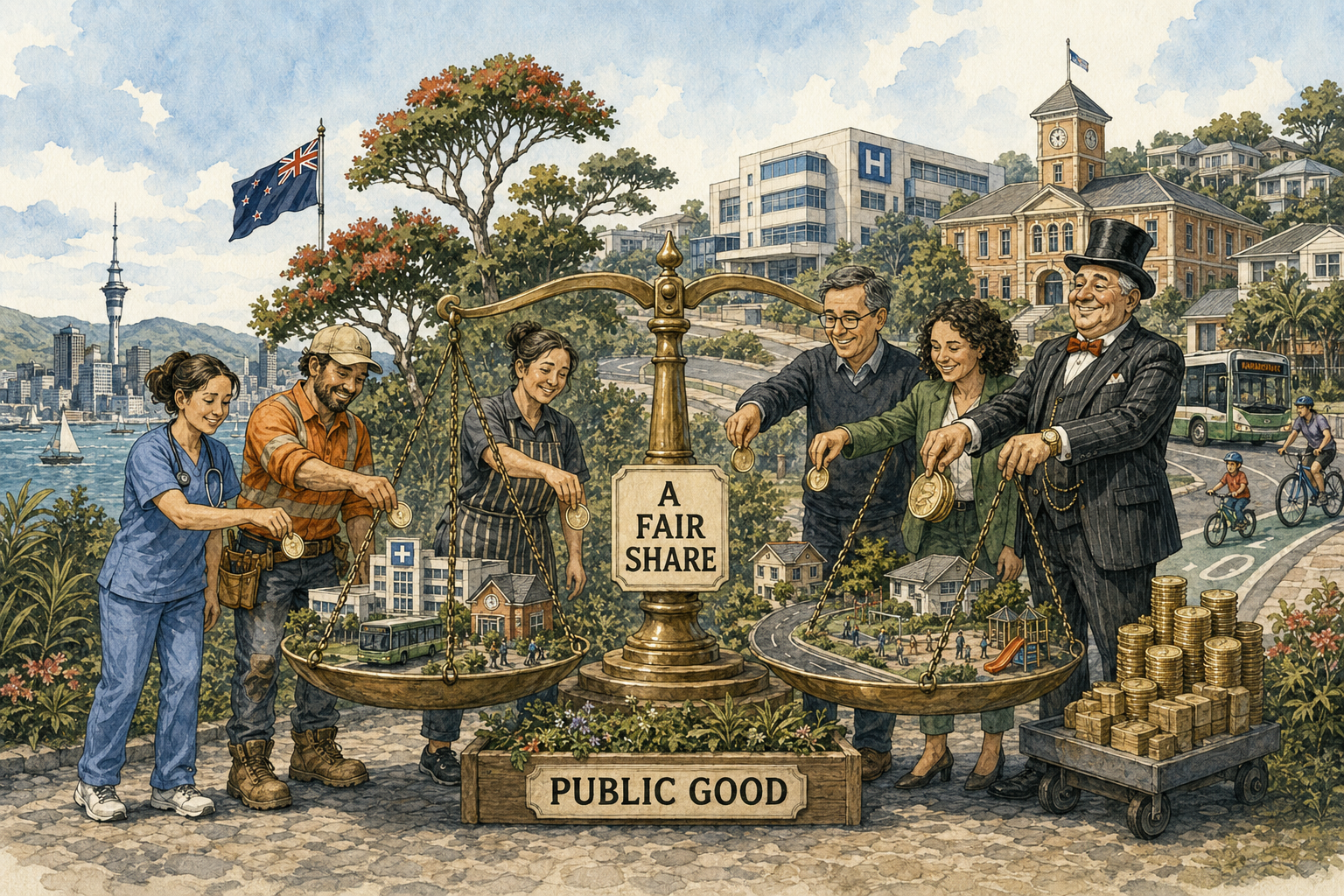
Tax fairness should mean that people with the greatest economic resources carry a fair share of the load. It should not mean choosing the investment most familiar to ordinary New Zealanders because it is visible, immovable and easy to hit.

Labour may call its policy targeted, the problem is whom it has chosen to target.


Sources and fact-check notes

Author’s note: The proposed ten-year transition and high-wealth minimum tax are arguments for consideration, not descriptions of current Labour policy. The investment discussion is general commentary, not personalised financial or tax advice.

Posted in Banking, Bureaucracy, Capital Gains Tax, Capitsl Gains Tax, Economics, Money, New Zealand, Paul Murray, Politics, Property, Real Estate, Social Commentary, Social Equity, Uncategorized | Tagged , , , , , , , | Leave a comment

MAGA: Make America Giggle Again

This gallery contains 182 photos.

Satire & Politics: Featuring U.S. President DumbOld J. Trump

Rate this:

More Galleries | Tagged , , , , , | Leave a comment

KaraWearable 2026: WHOOPS…They Did it AGAIN!

Off the Top of My Head

By Paul Murray

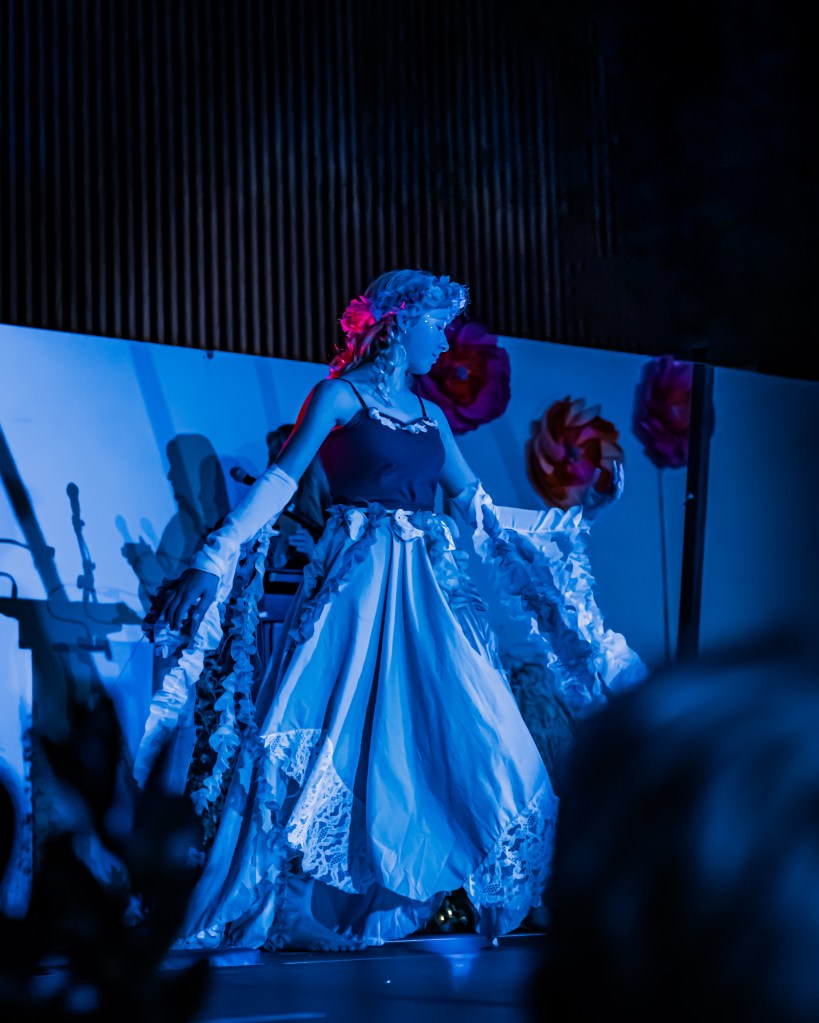
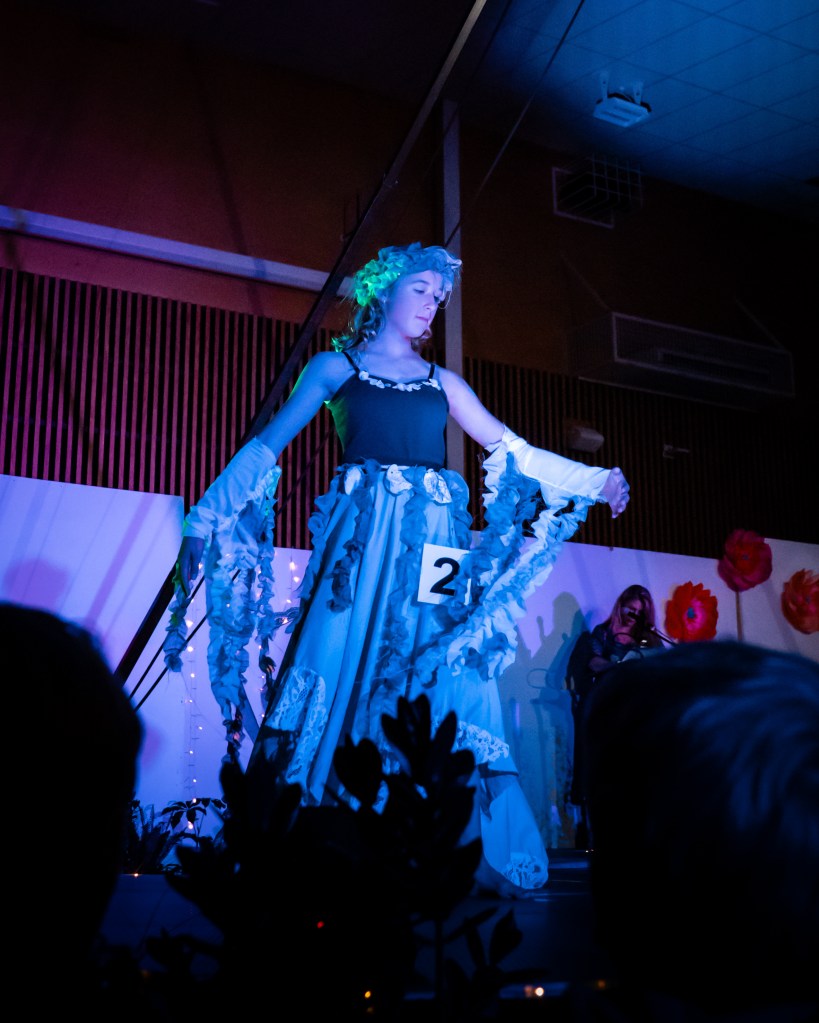
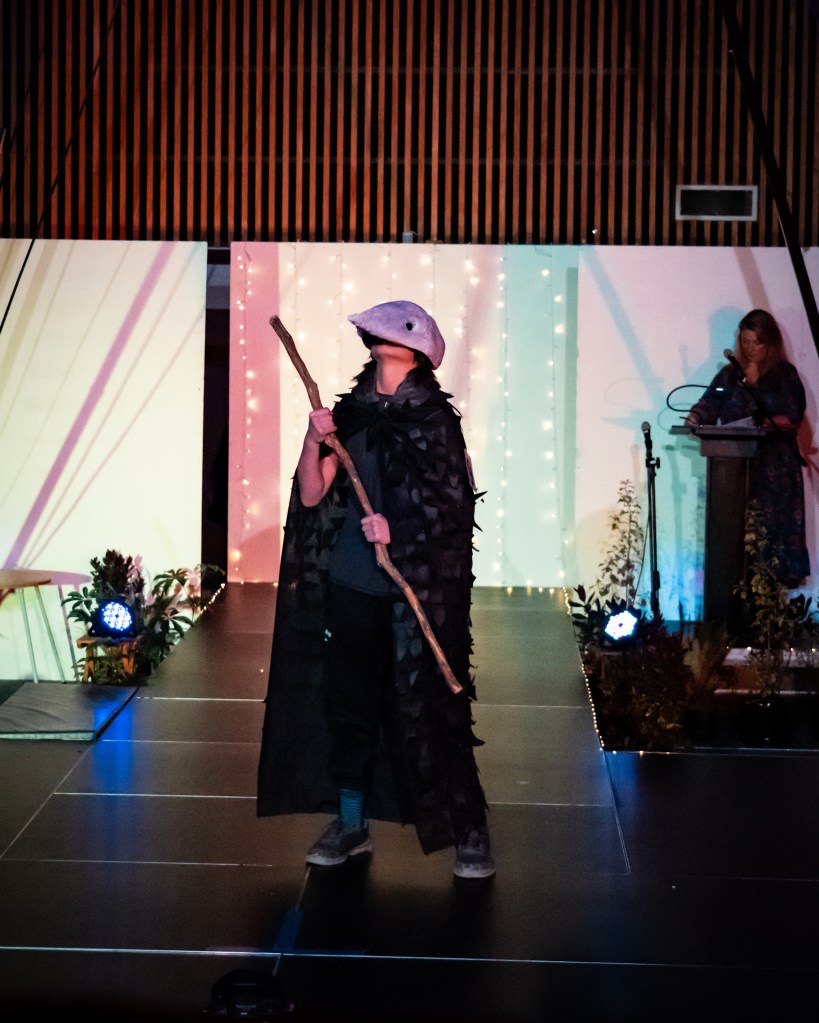
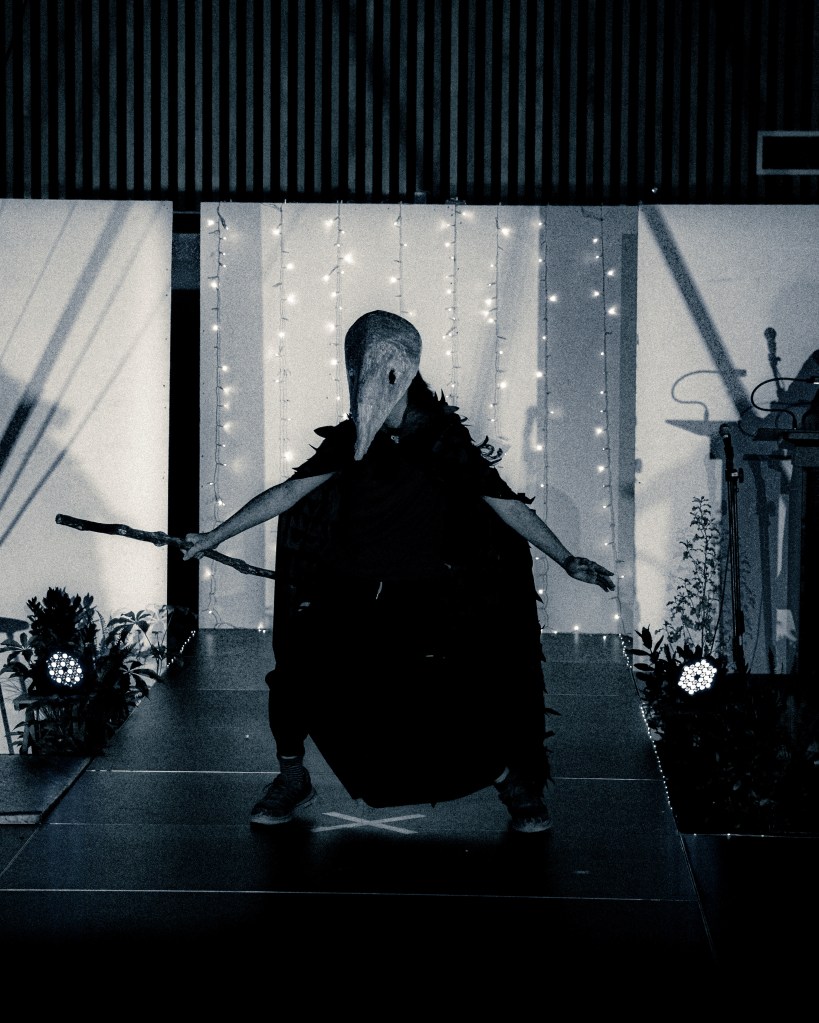
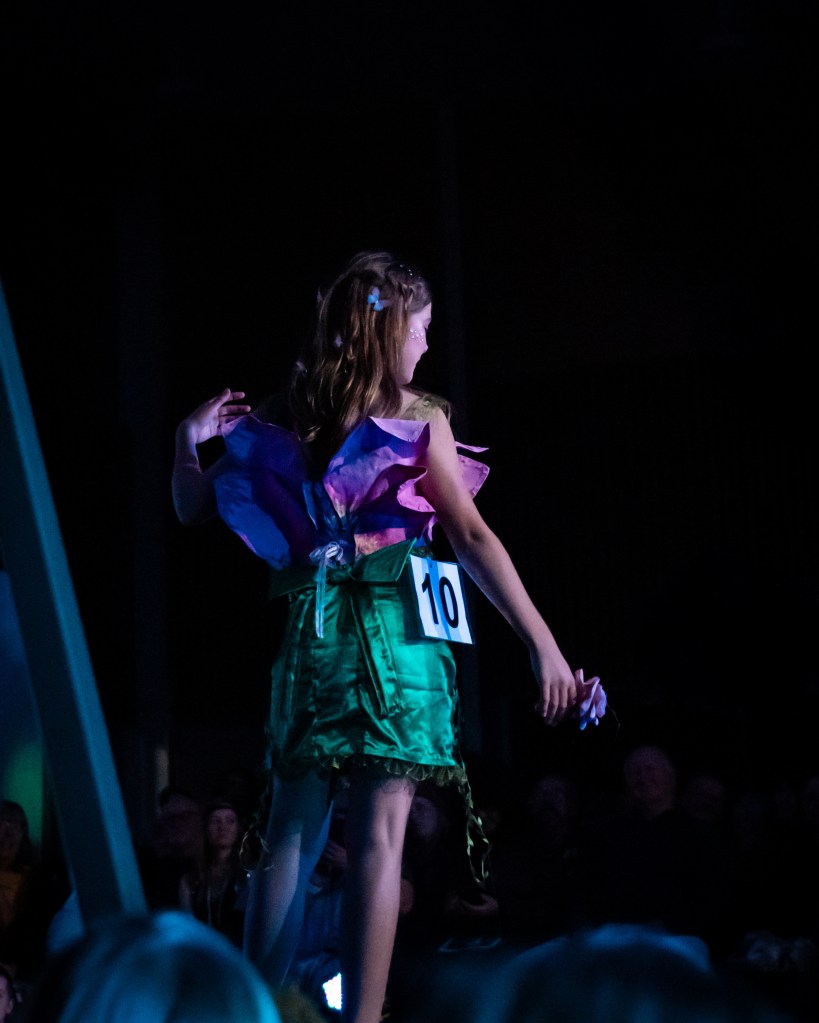
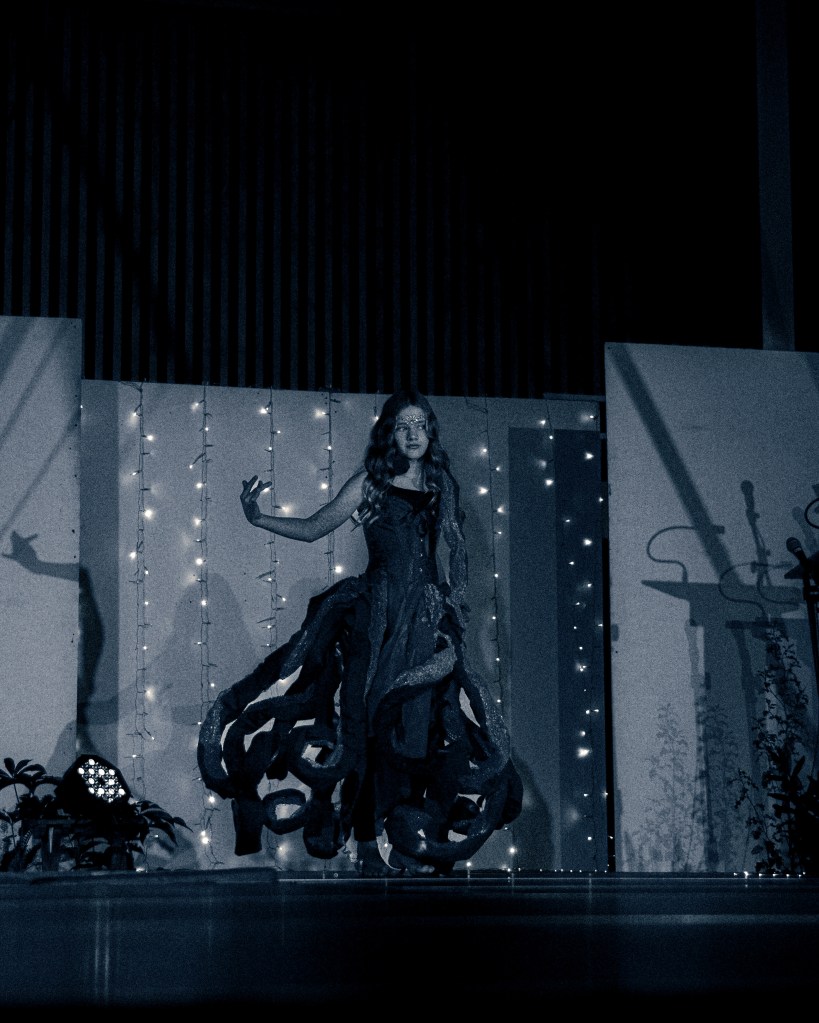
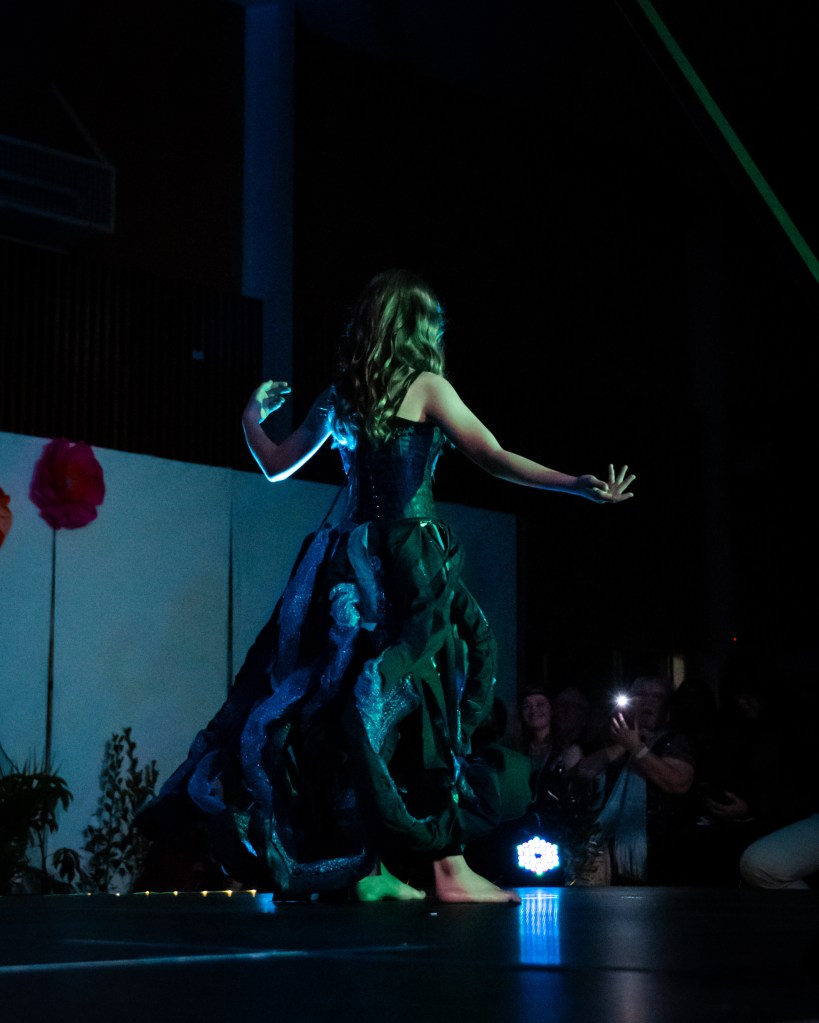
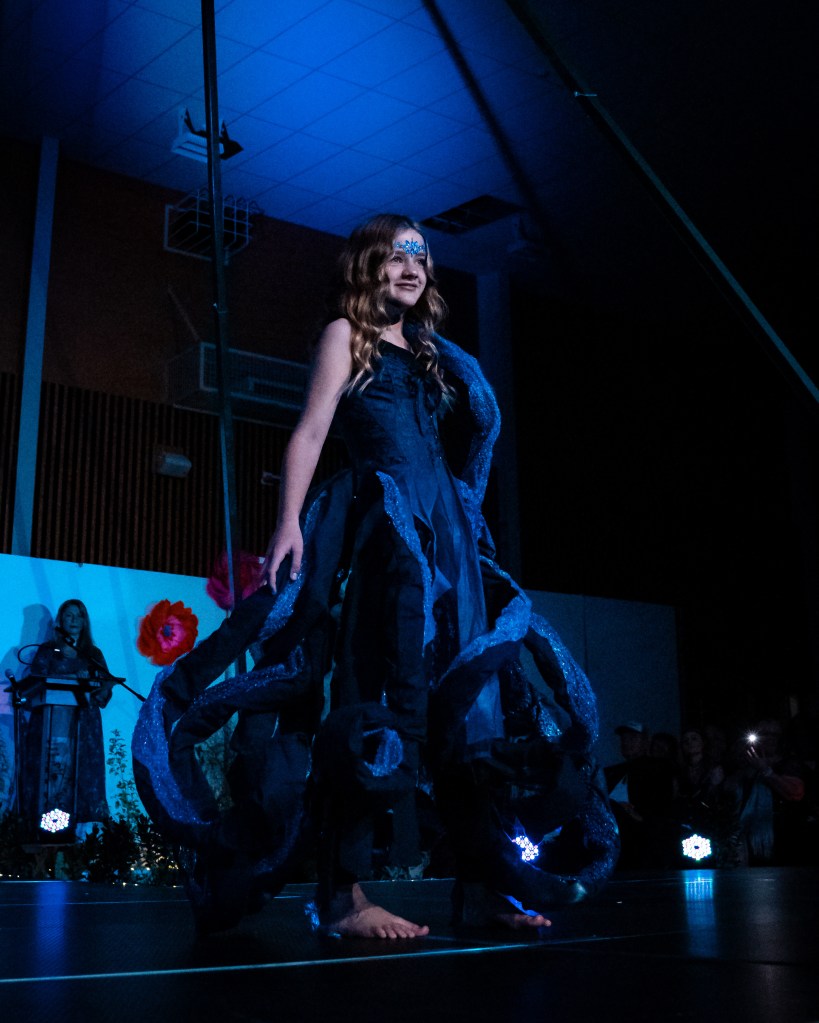
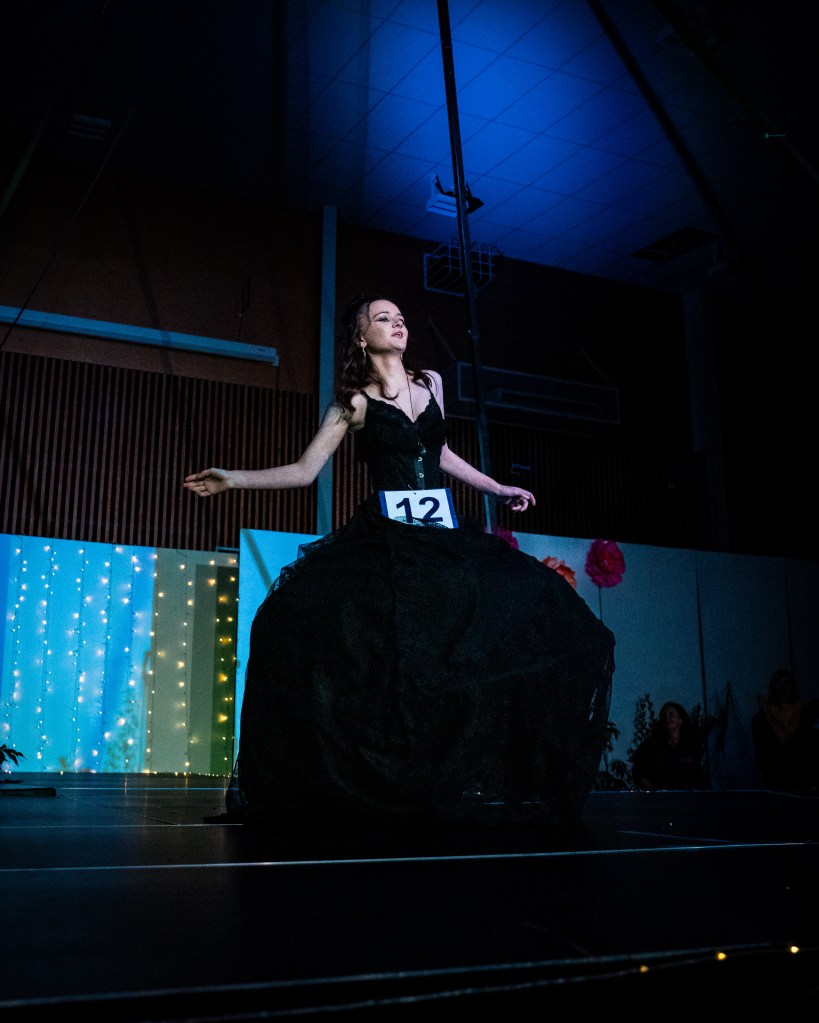
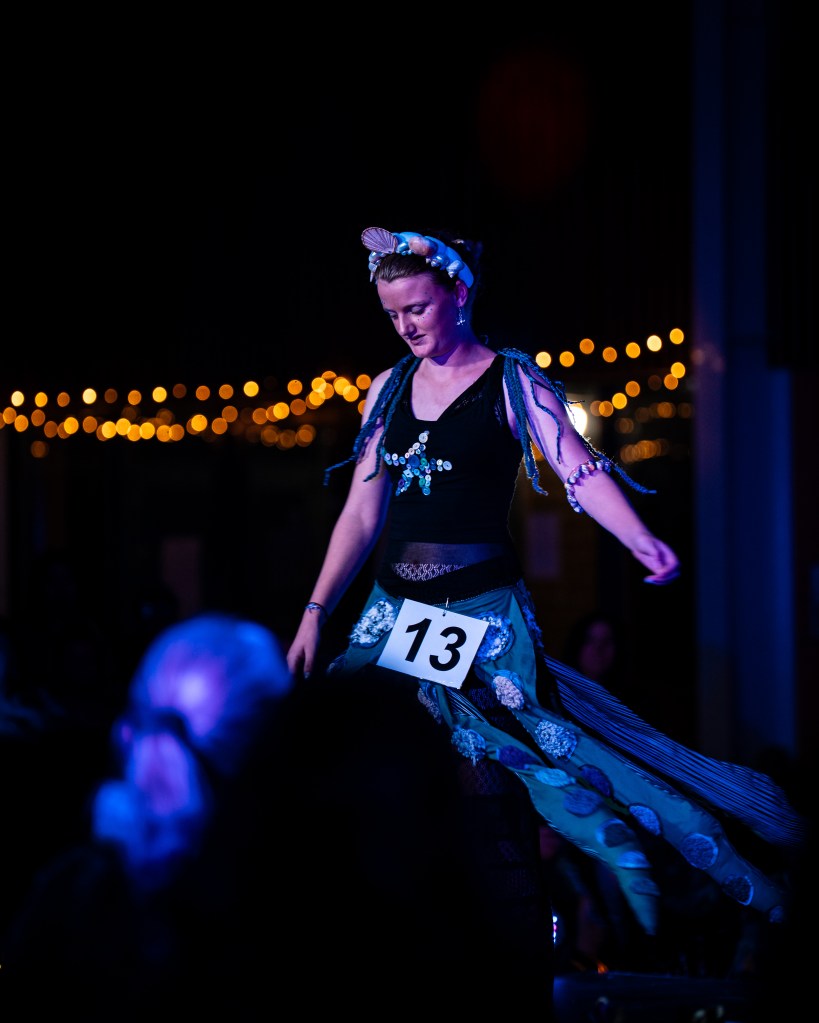
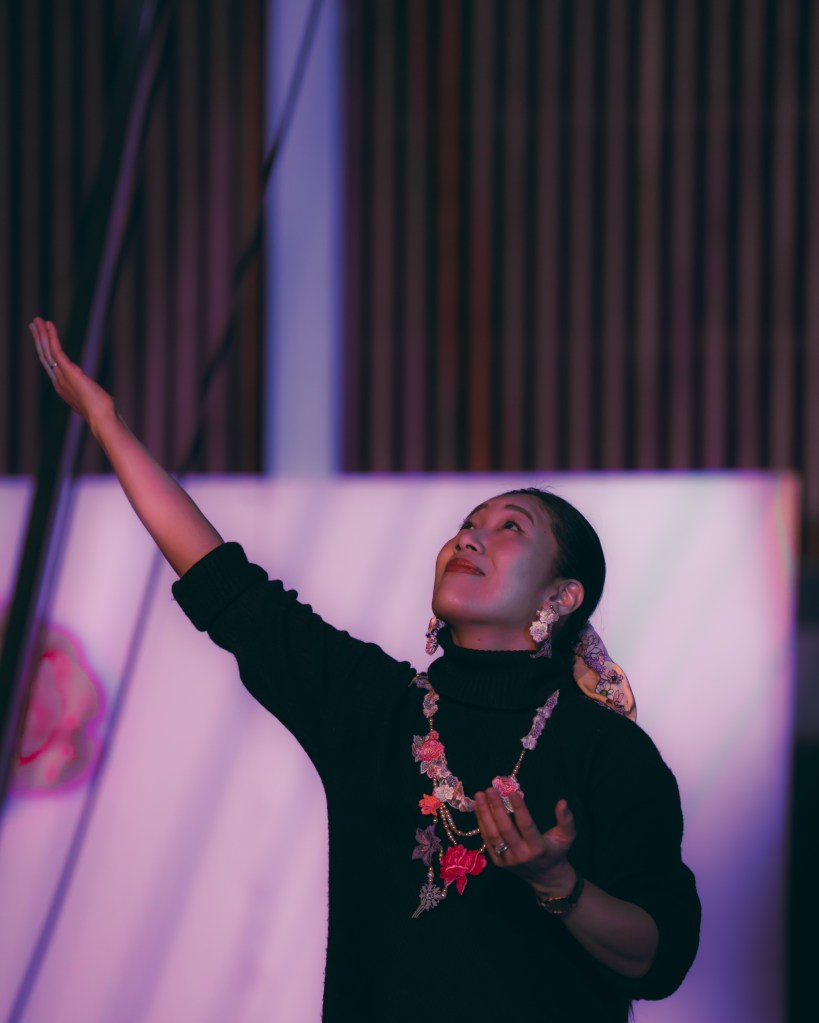
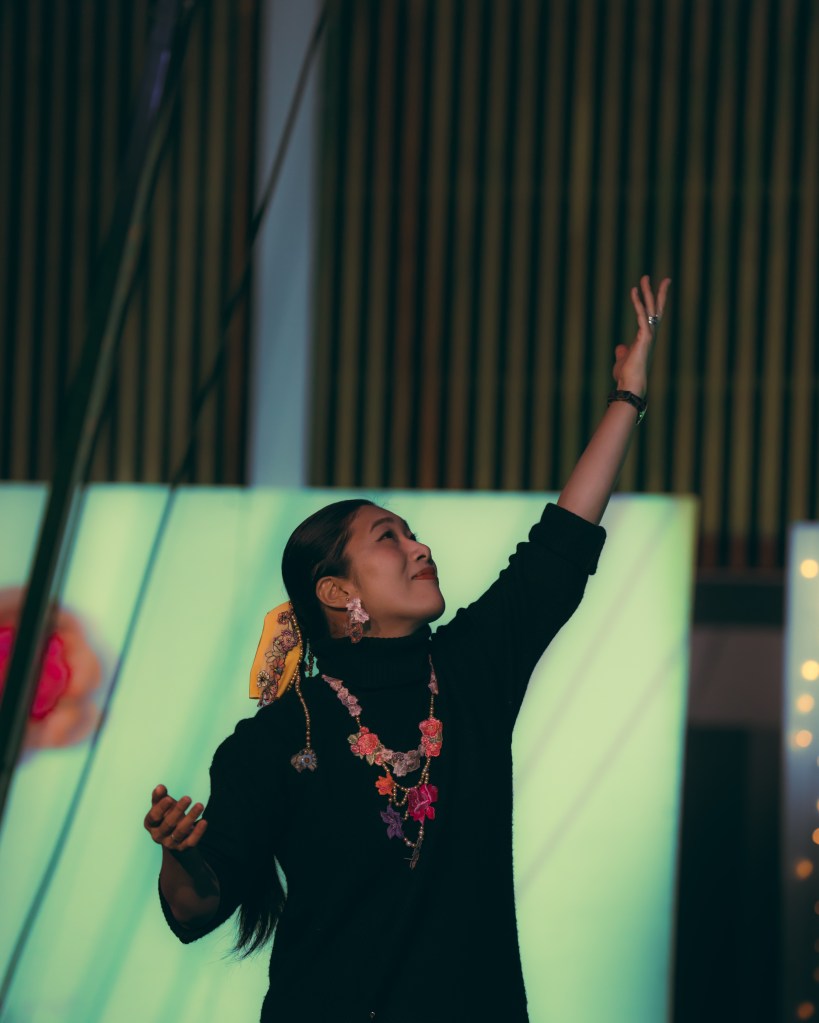
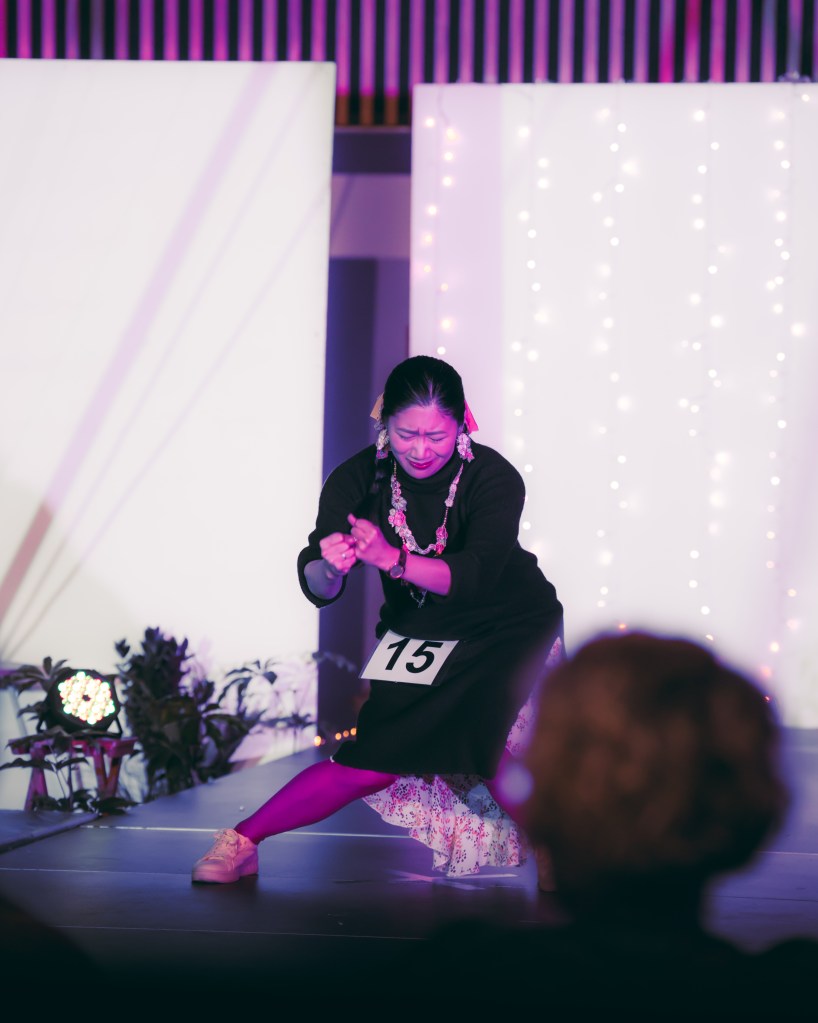
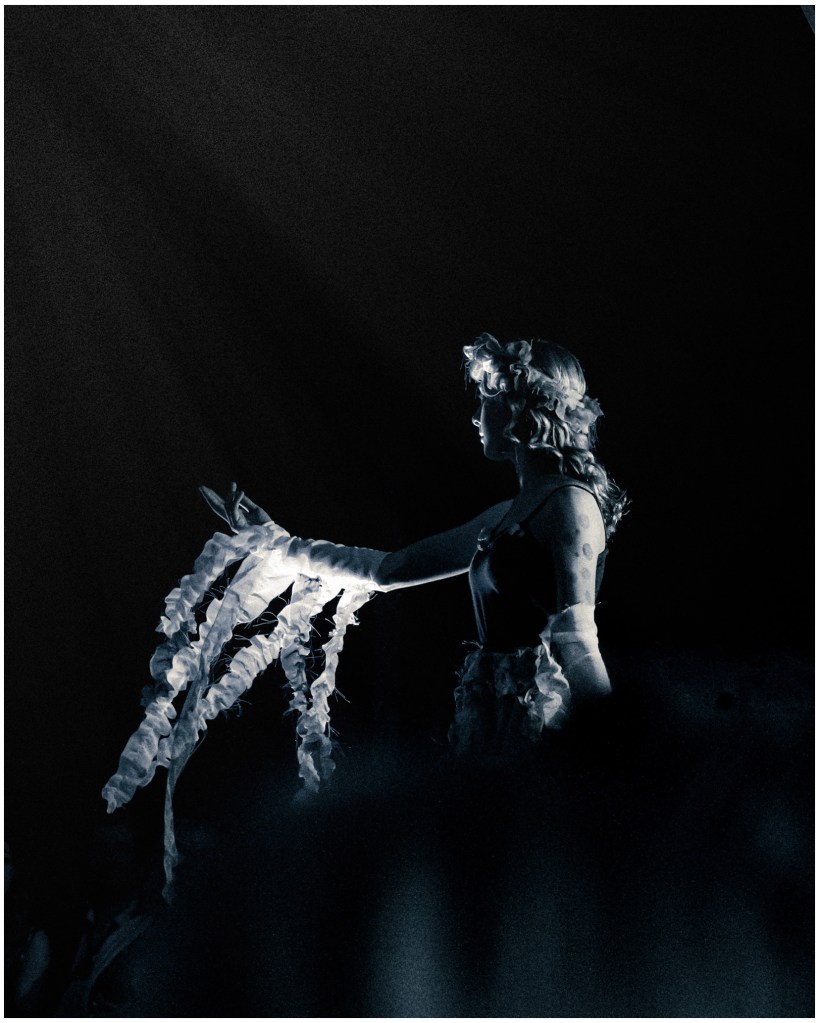
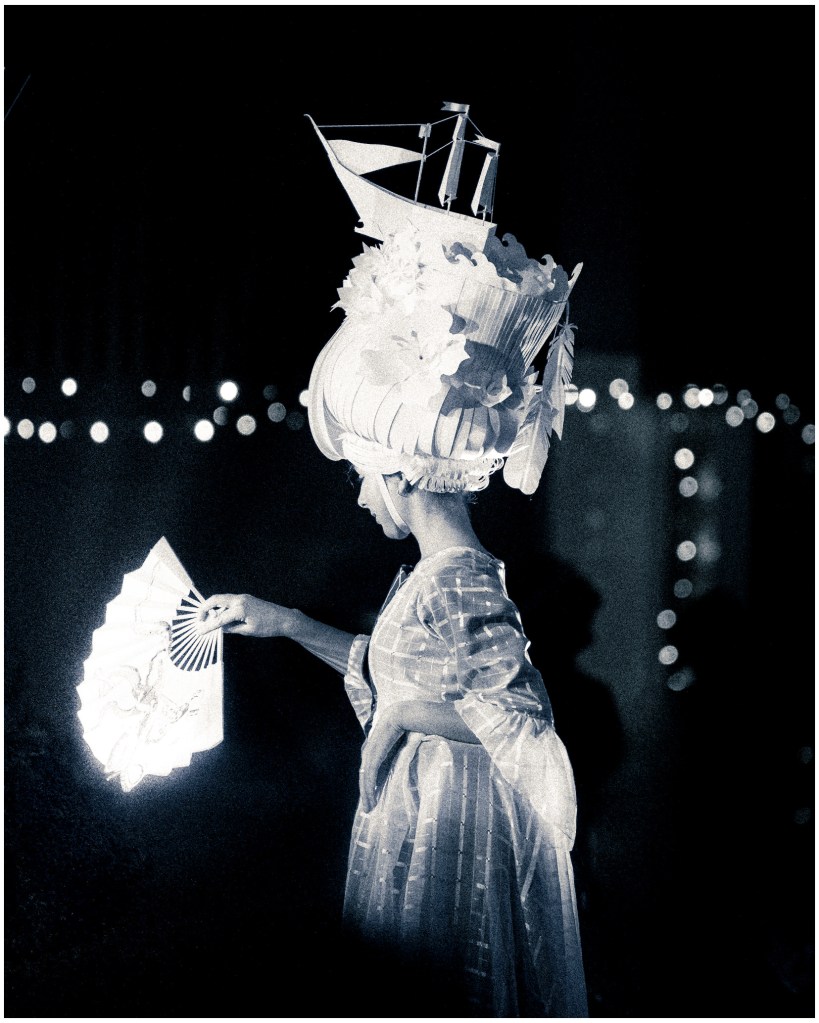
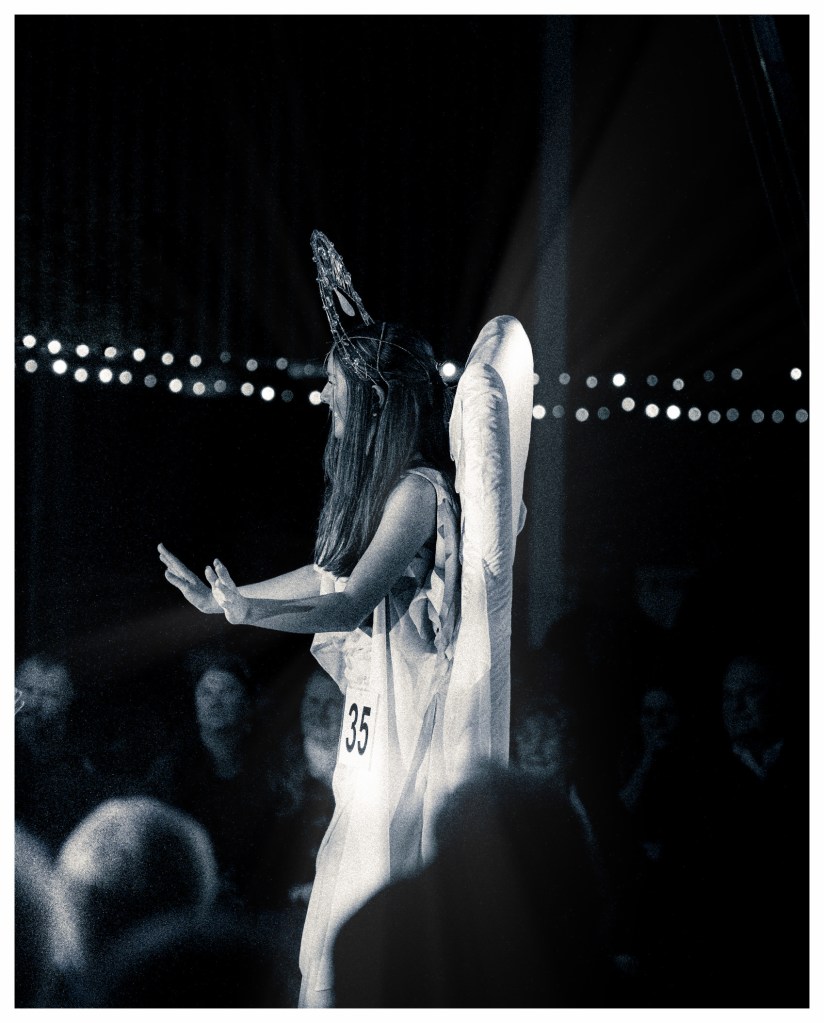
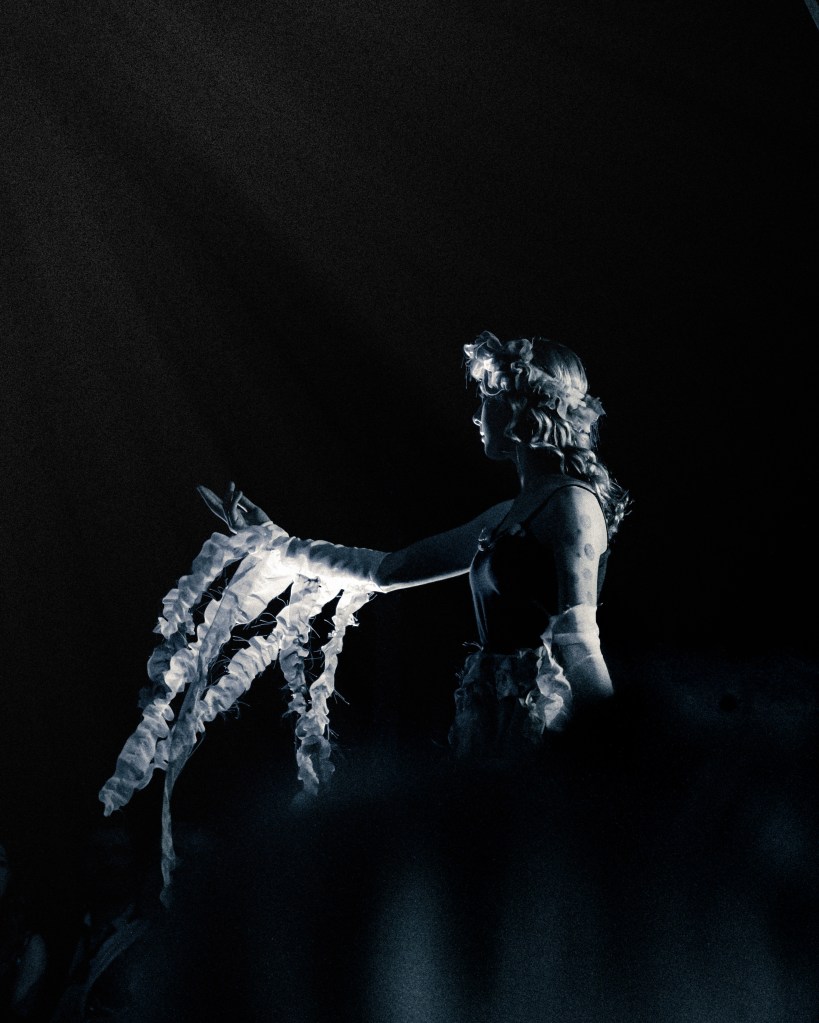
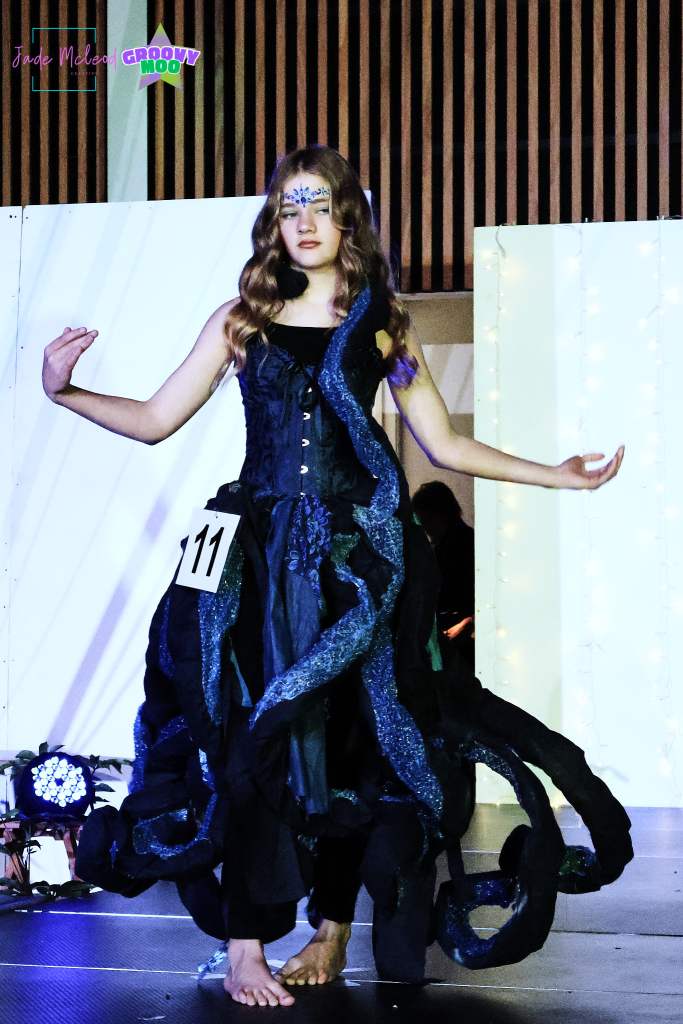
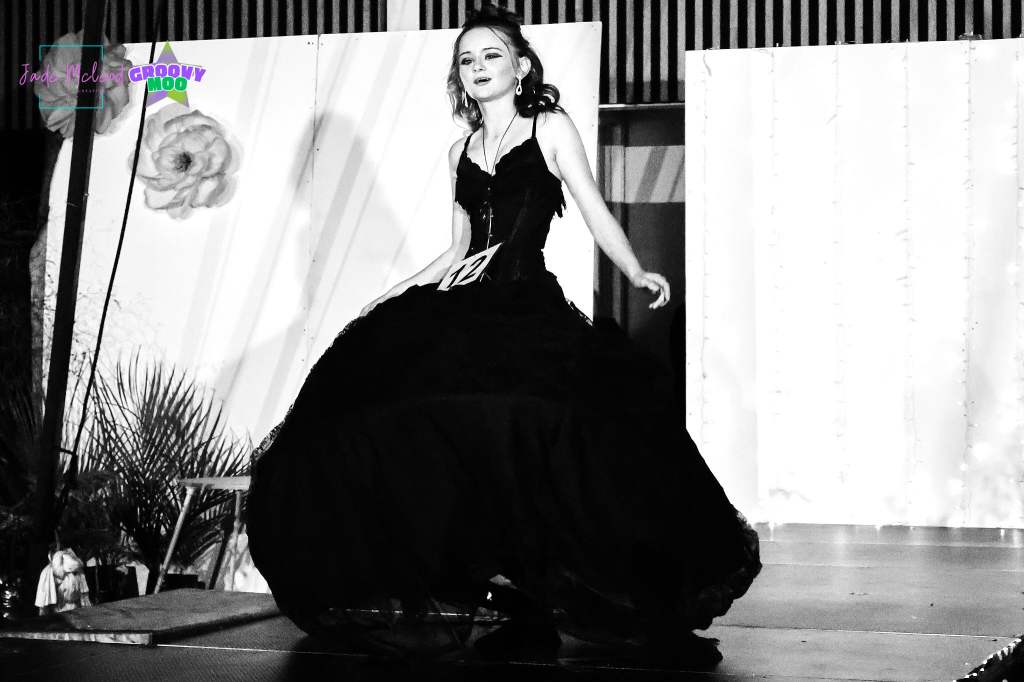
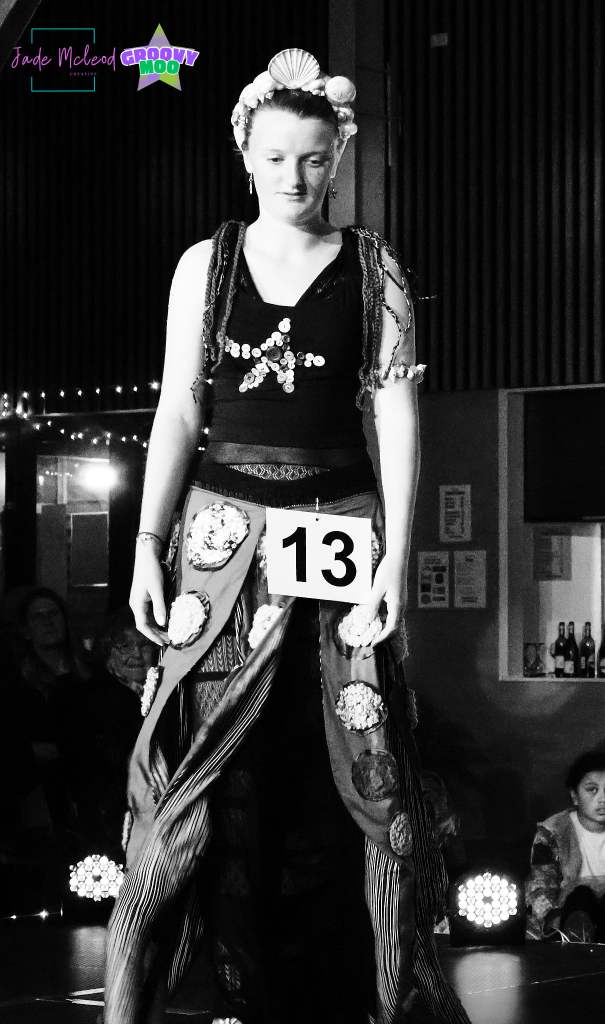
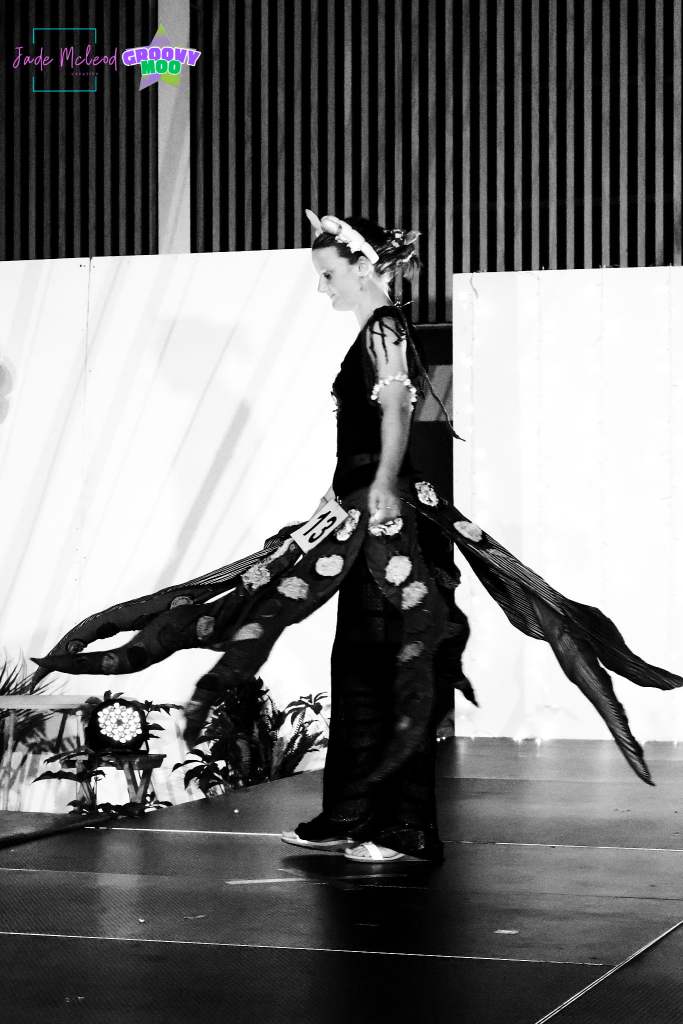
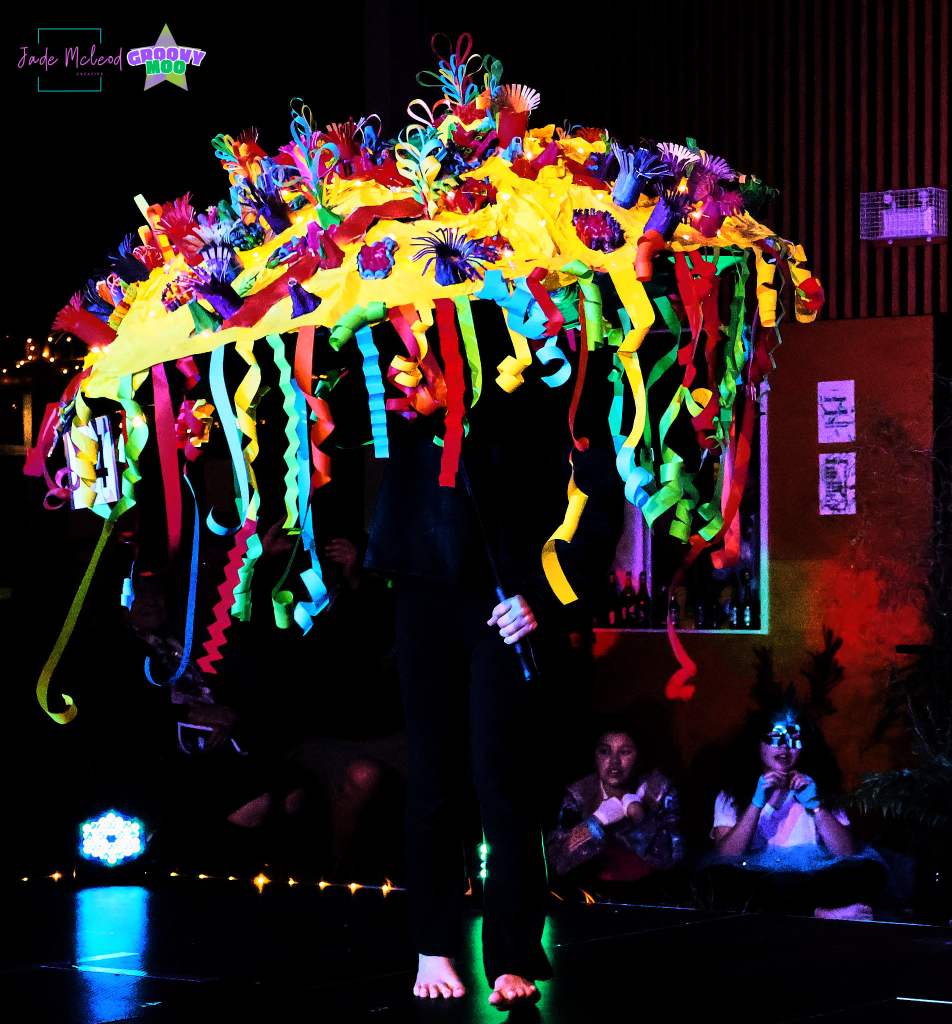
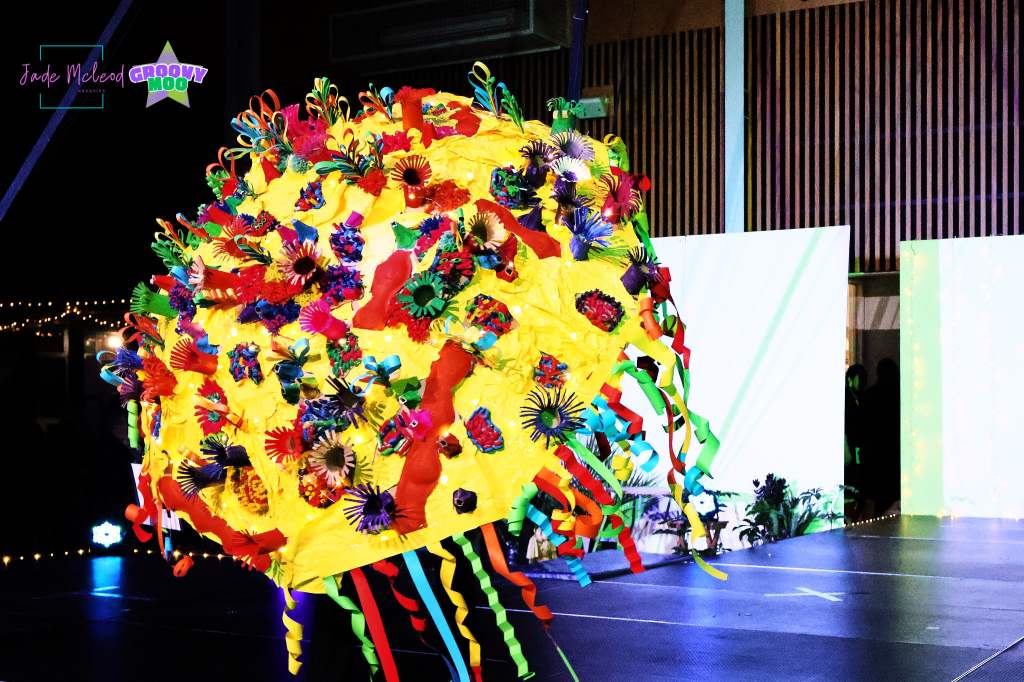
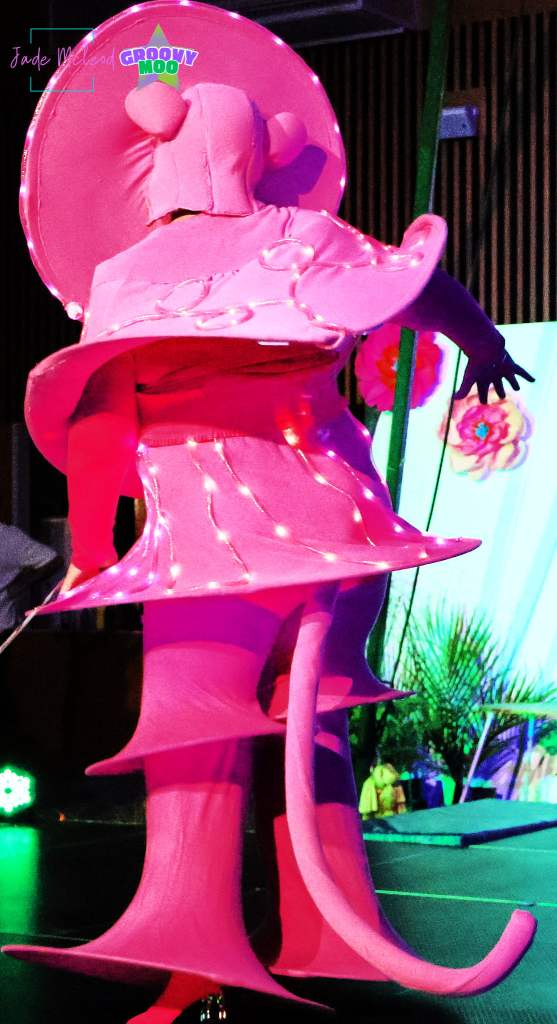
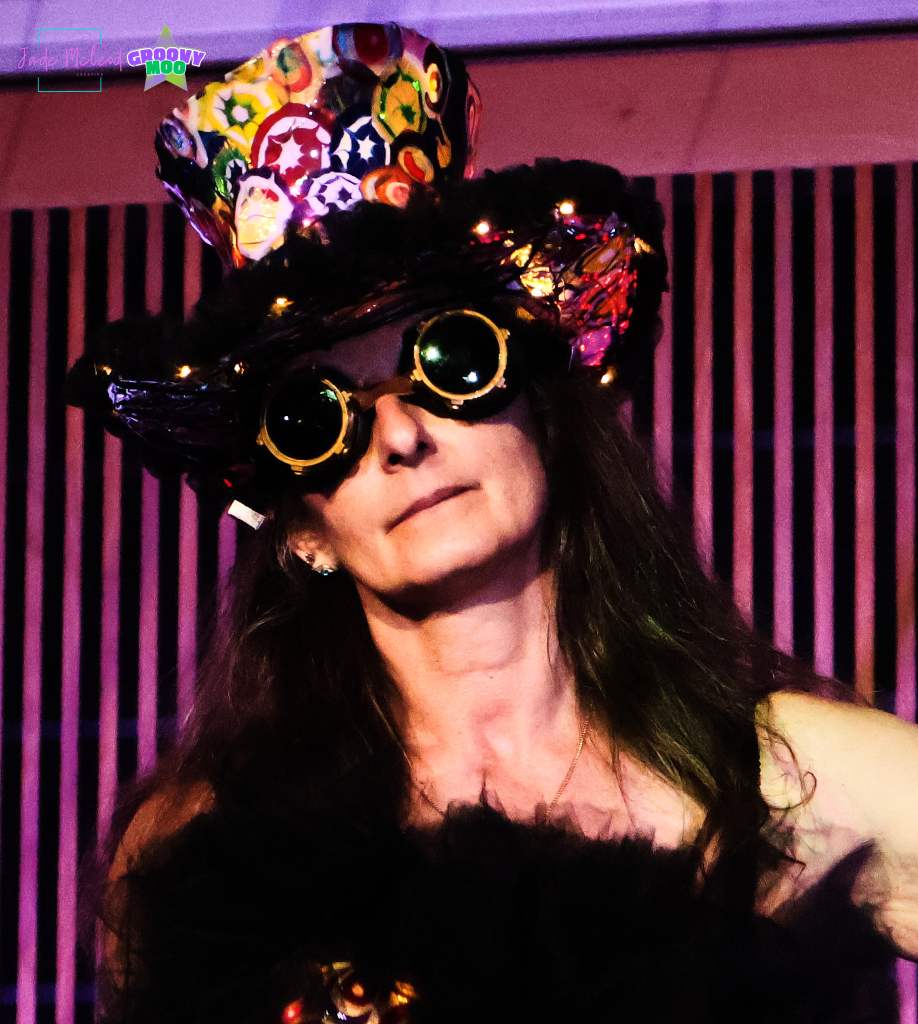
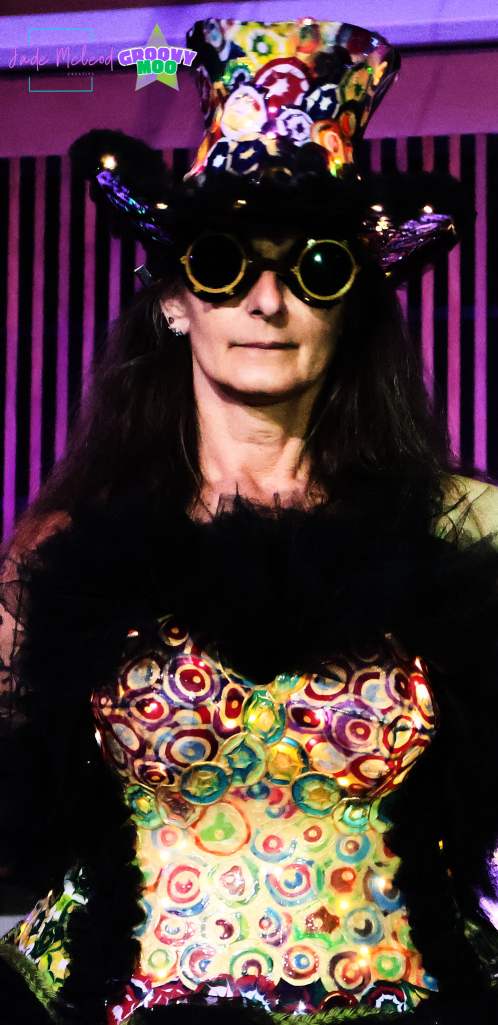
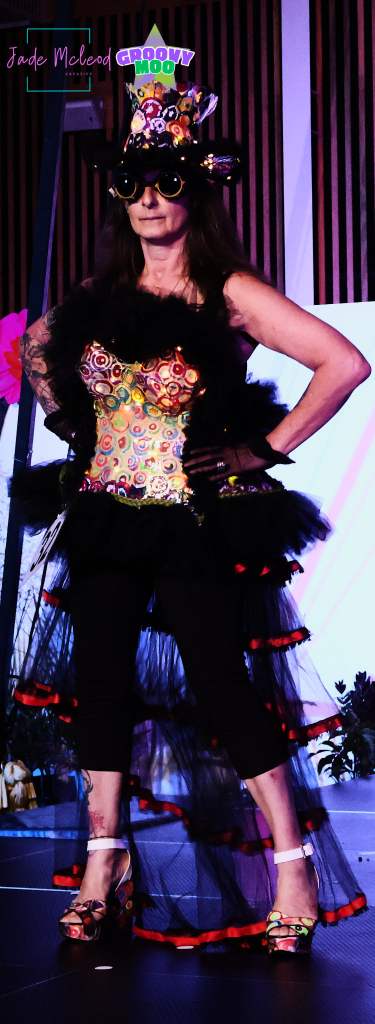
“Teamwork makes the dream work,” as our kids often say, and the KaraWearable Team, together with a diversely talented team of local volunteers, created a dream on Saturday May 30, 2026, at the Karamea Pulse Energy Centre with a spectacular show of local imagination, creativity and design skills that was the 4th consecutive annual KaraWearable Art Show.

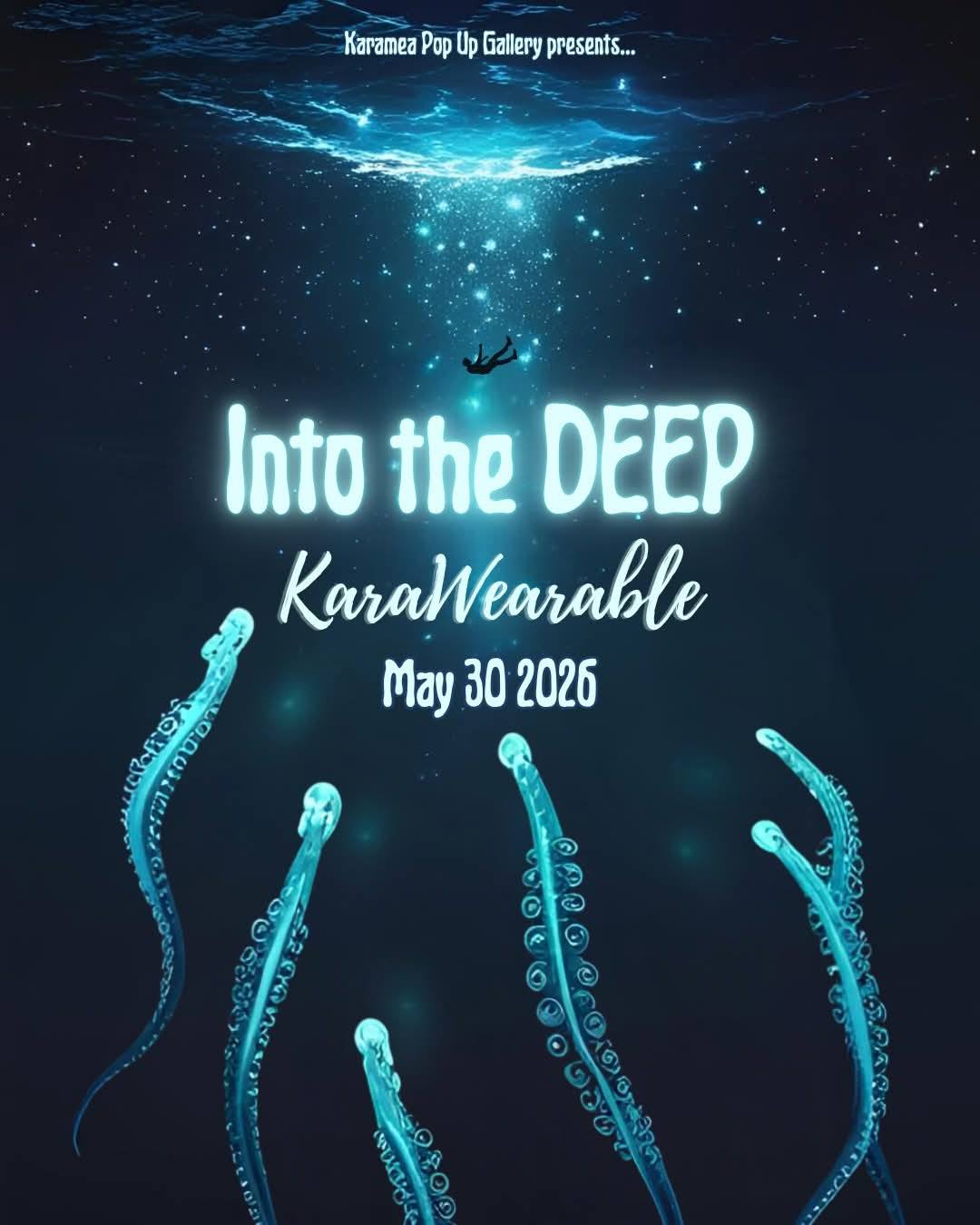
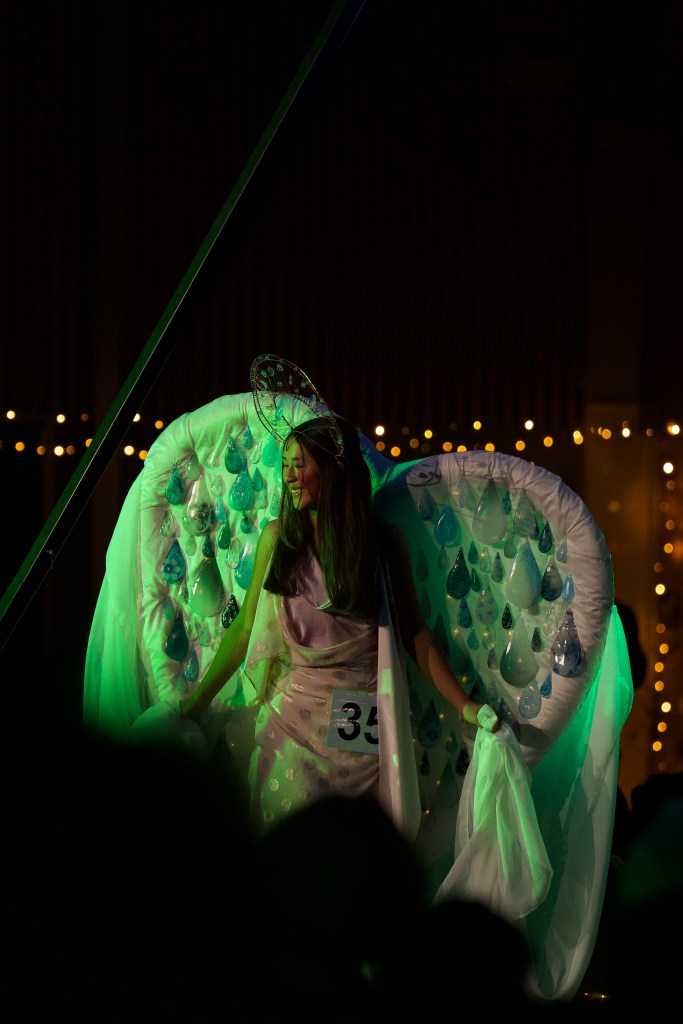
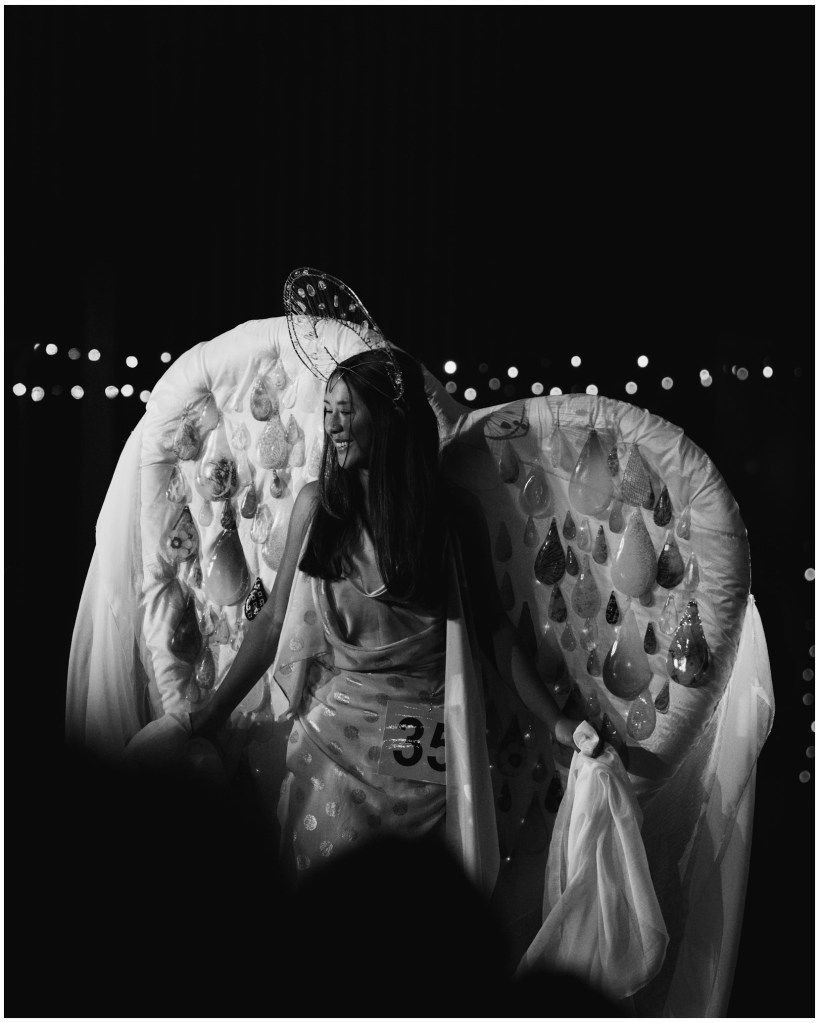
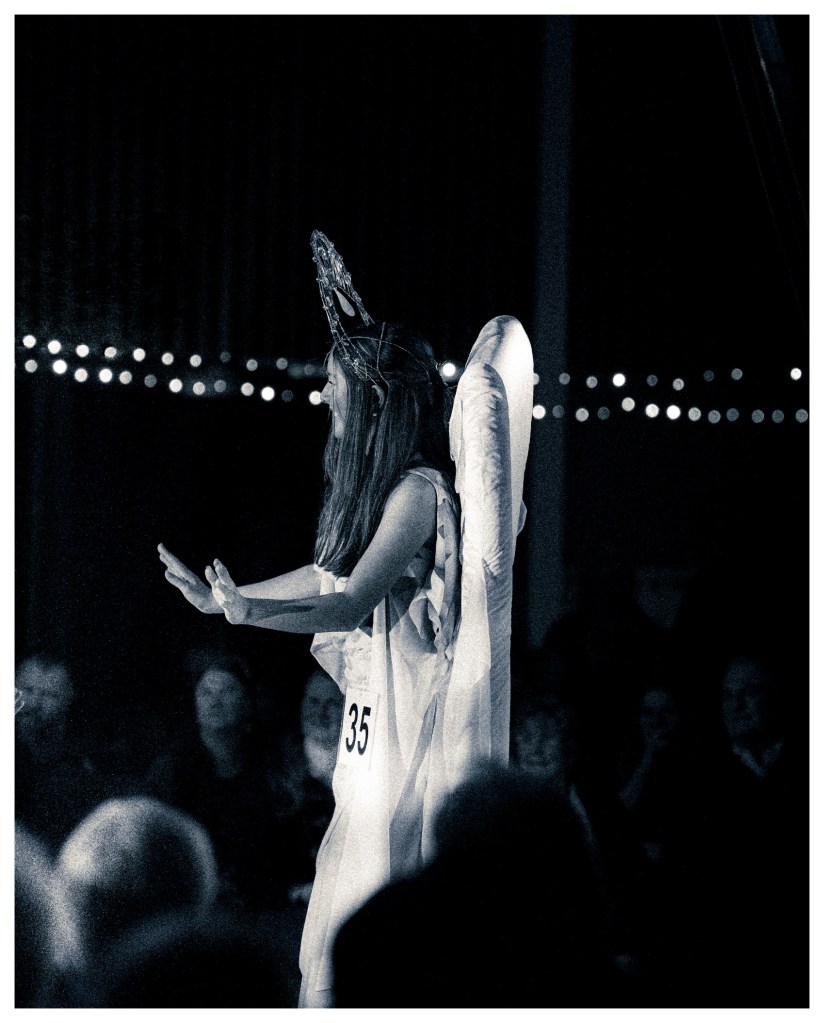
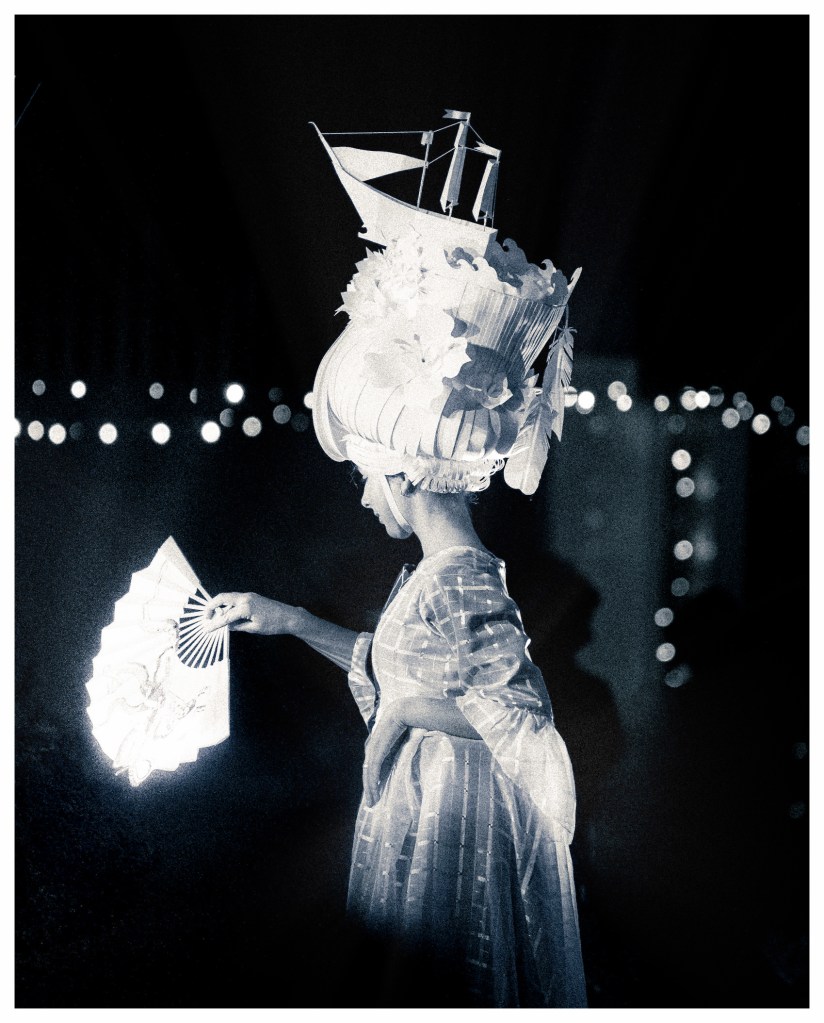
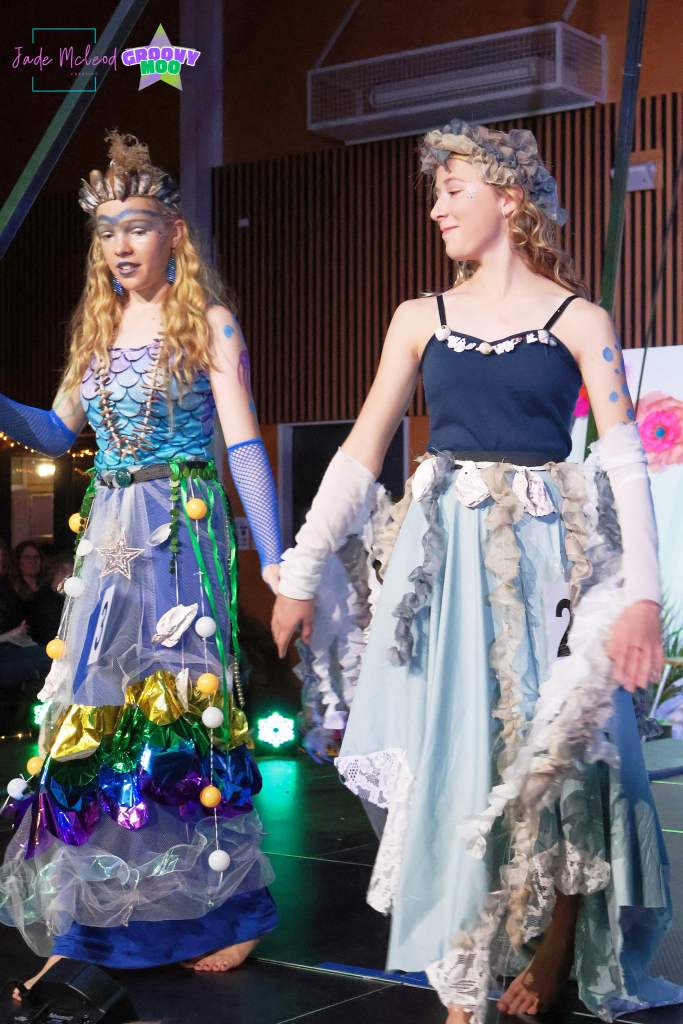
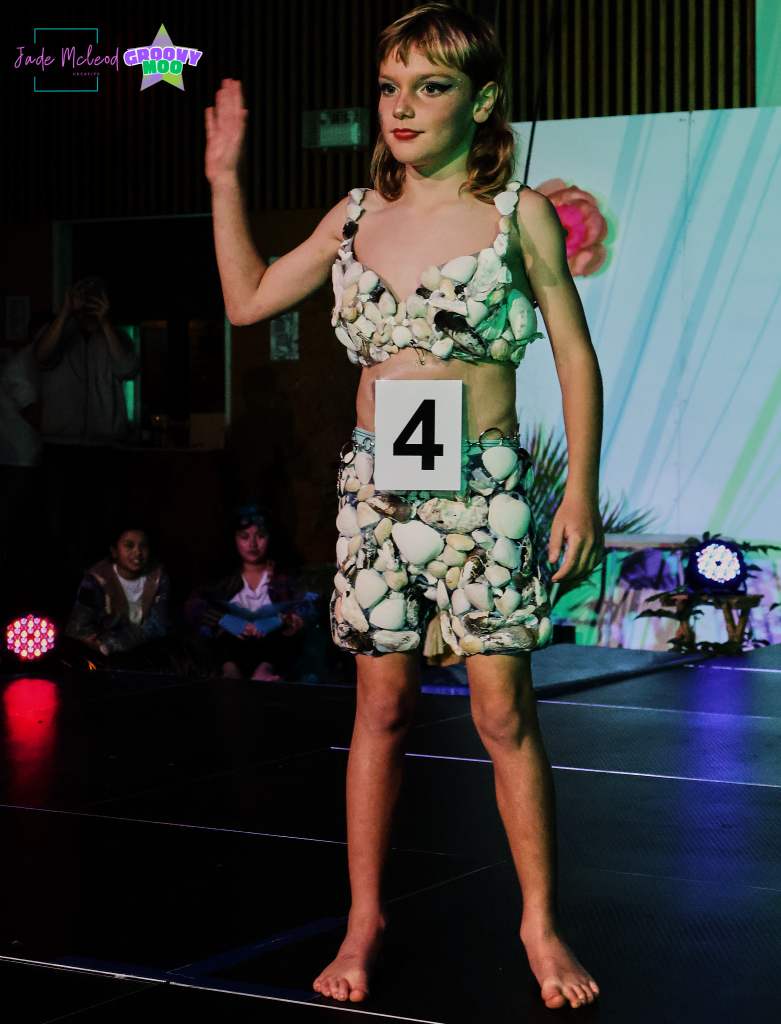
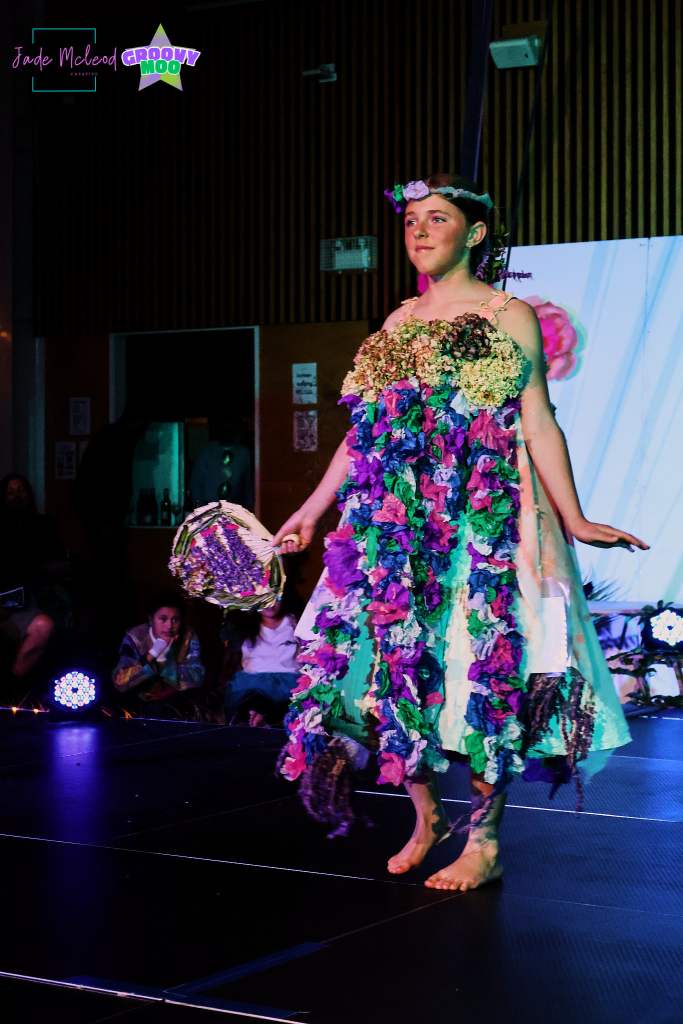
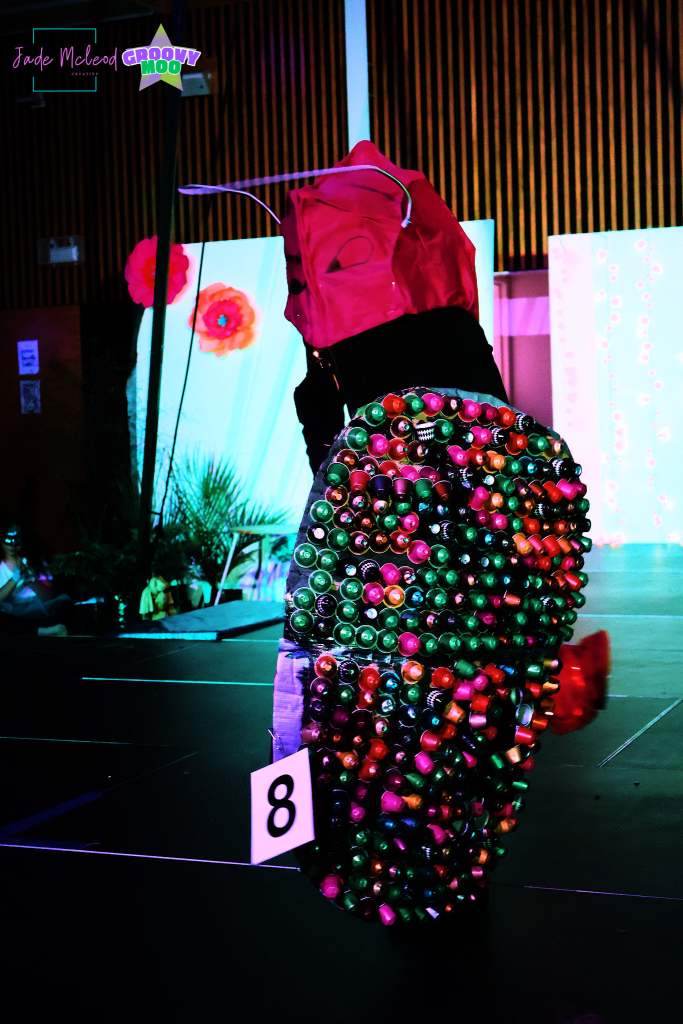
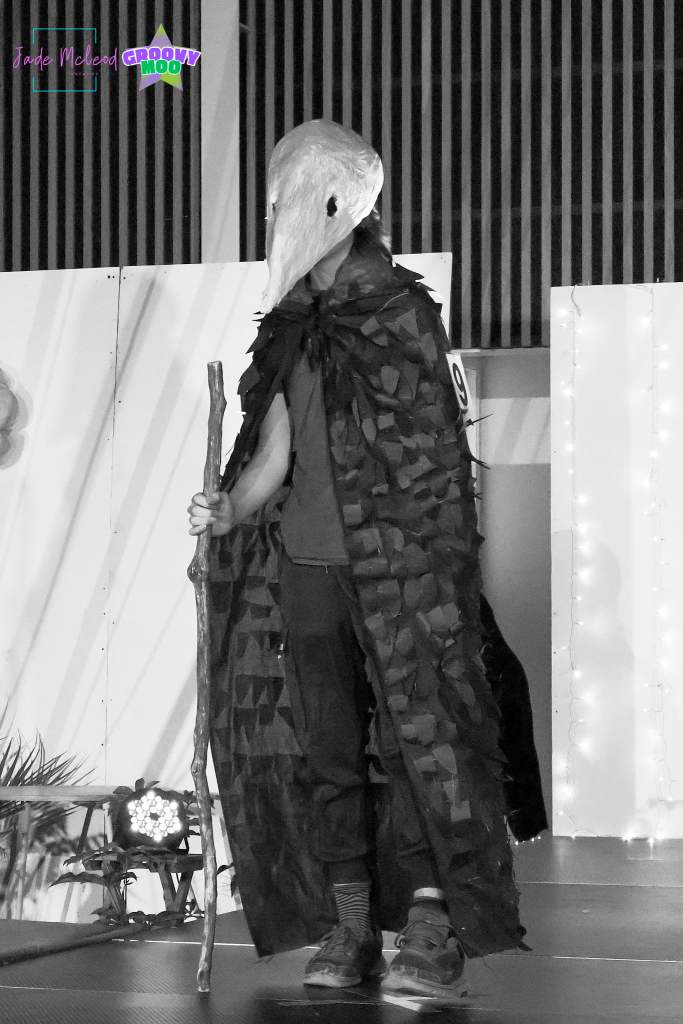
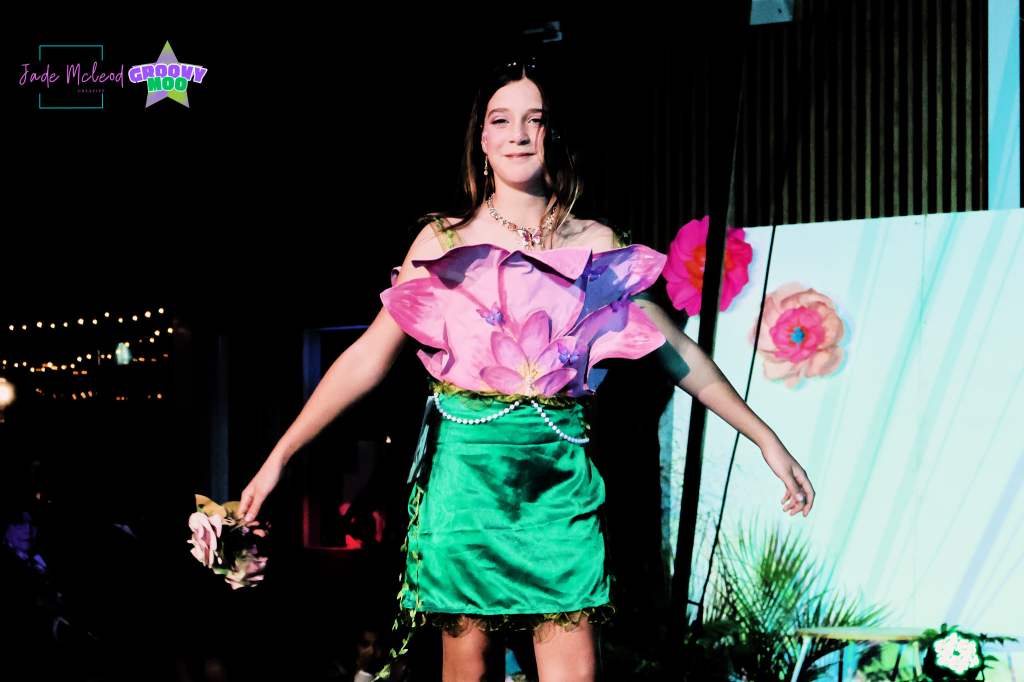
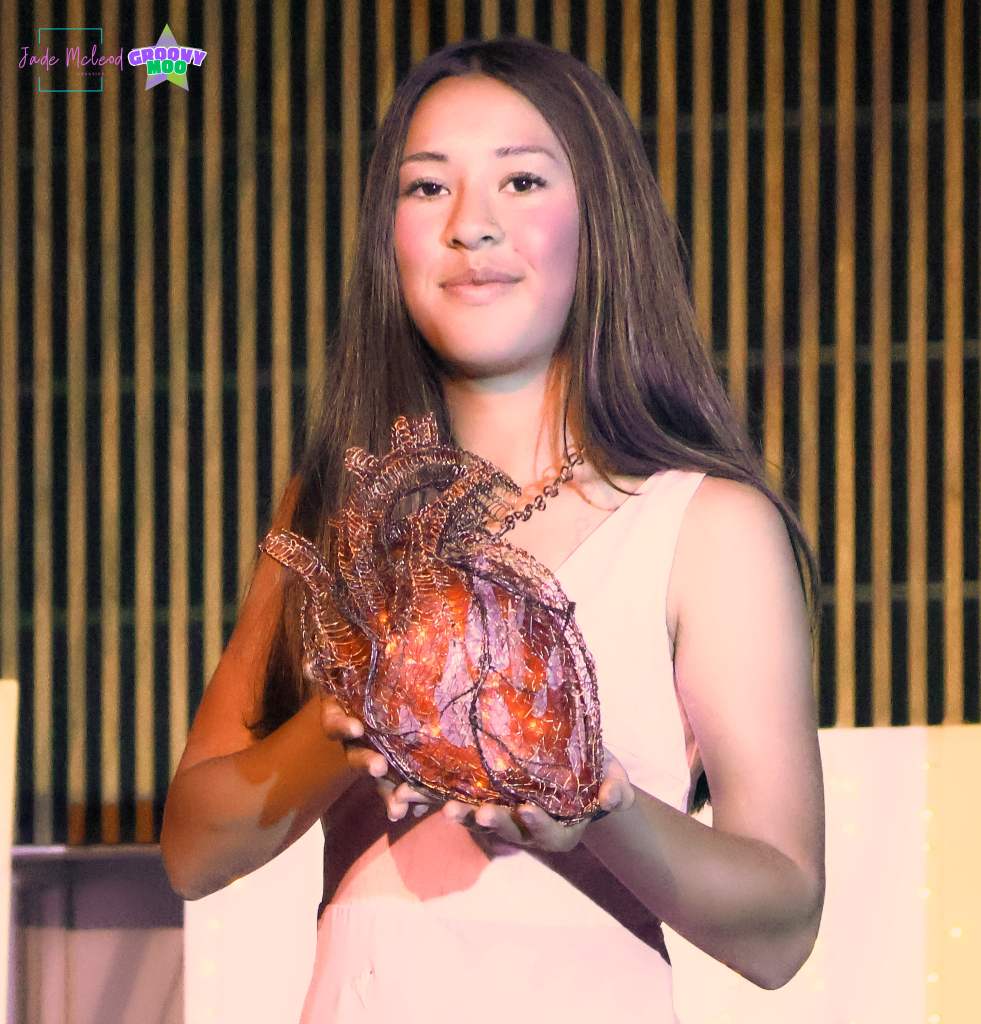
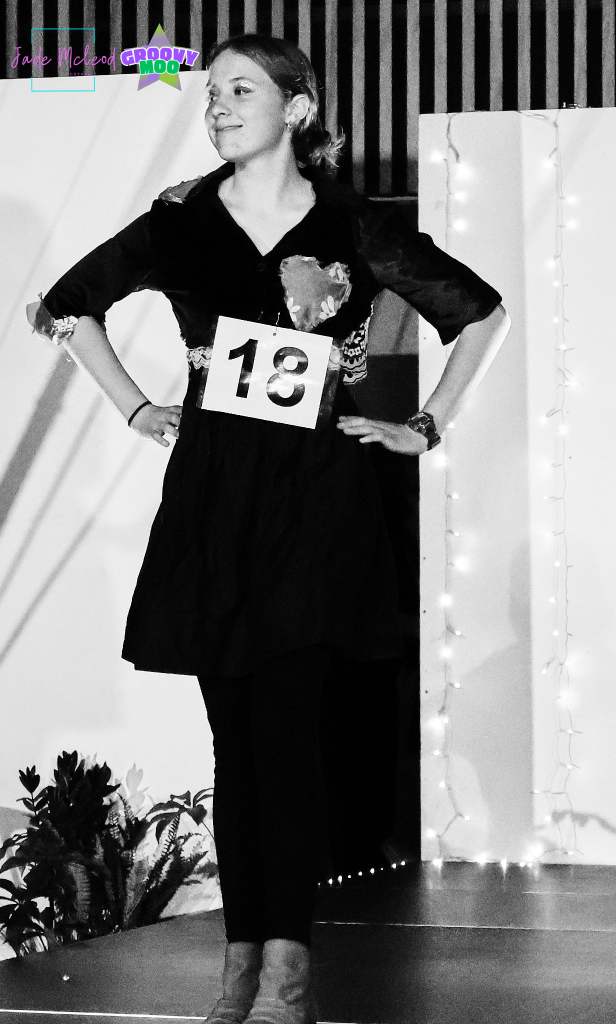
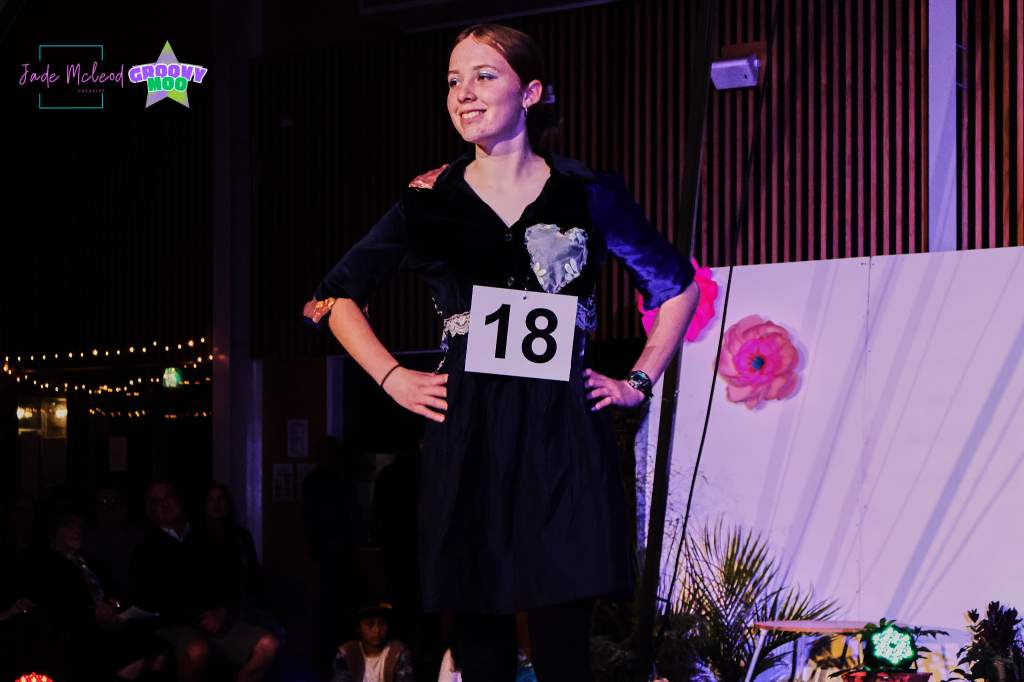
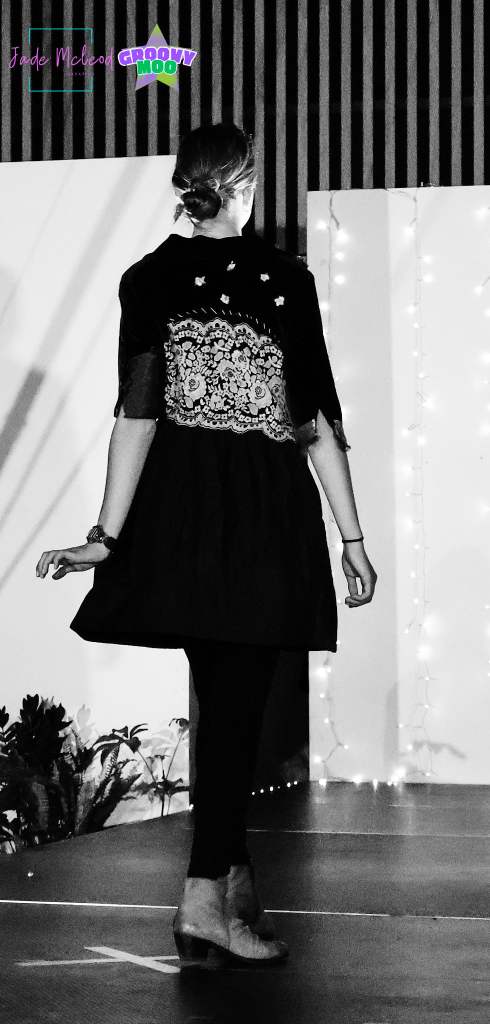
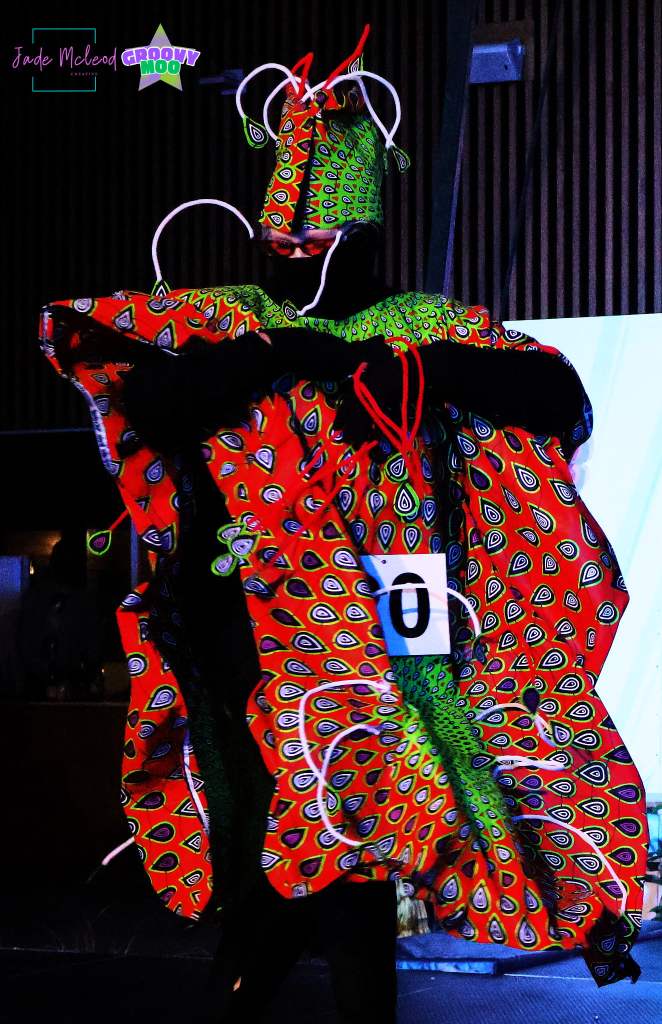
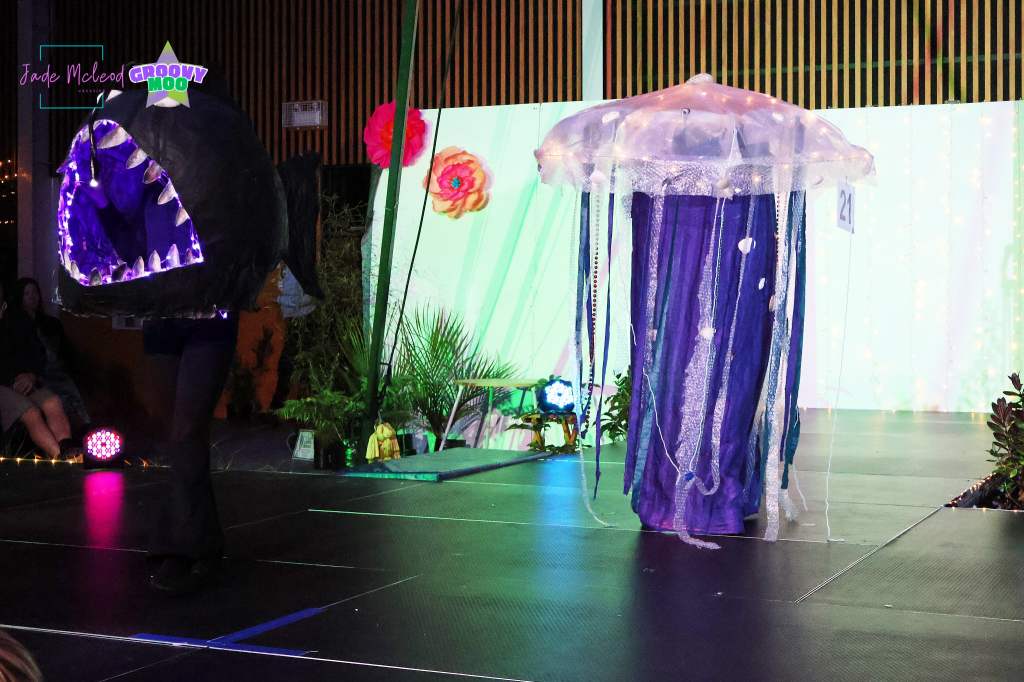
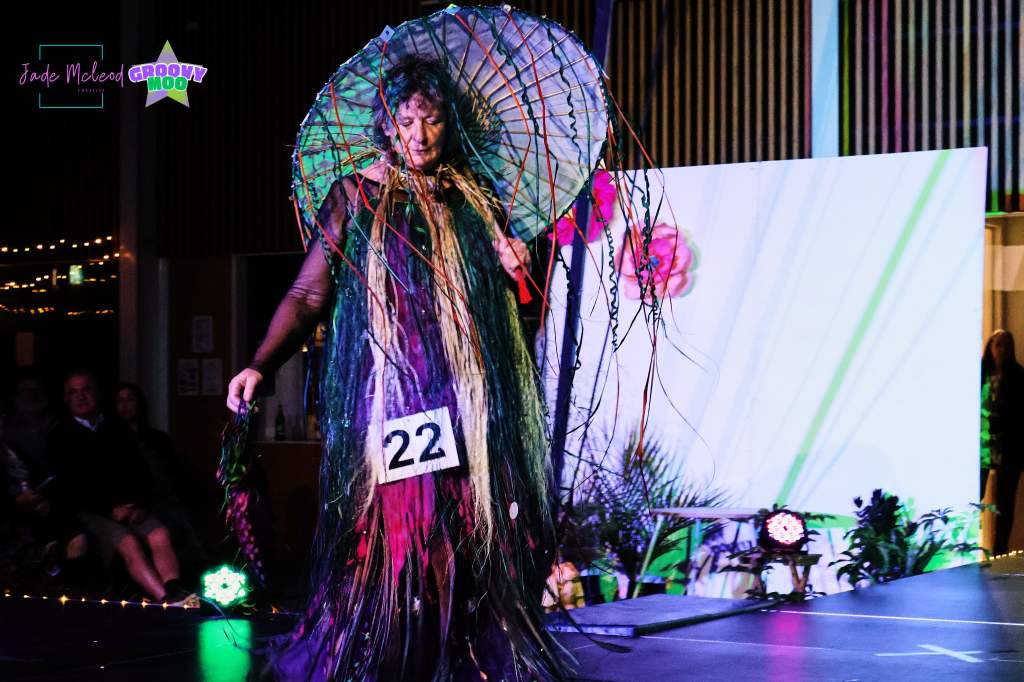
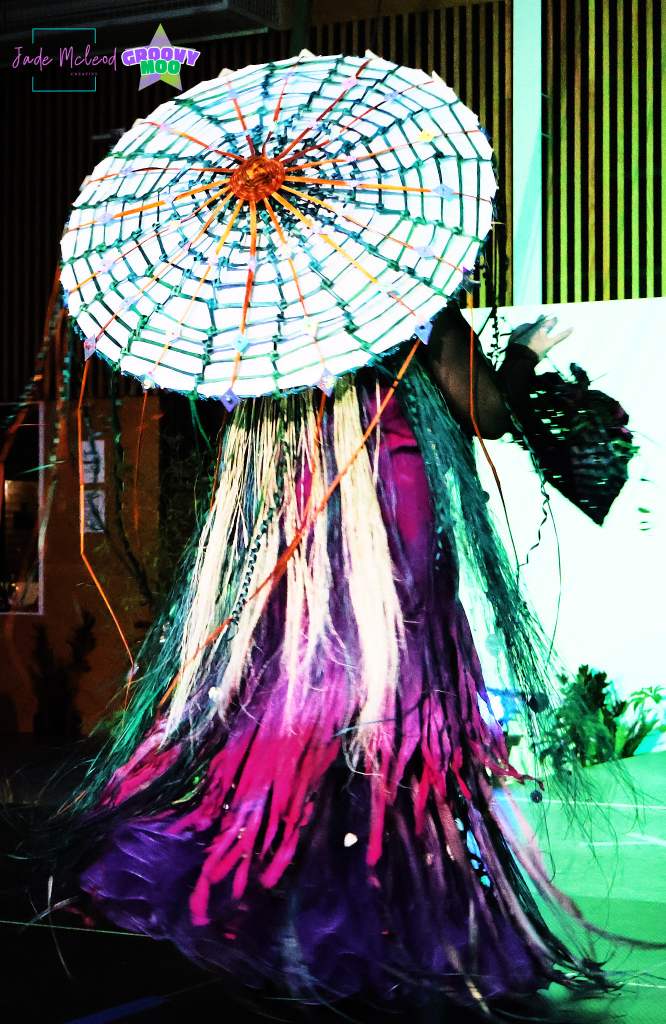
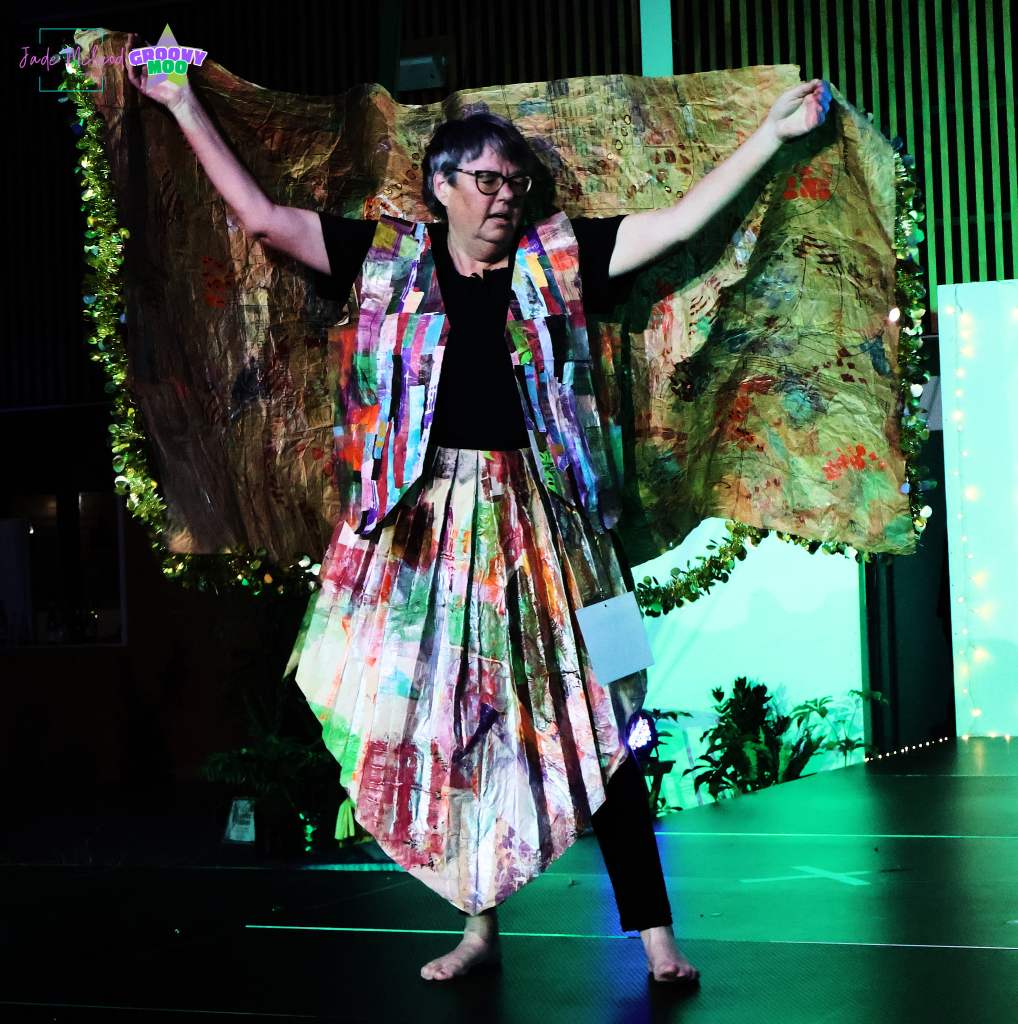
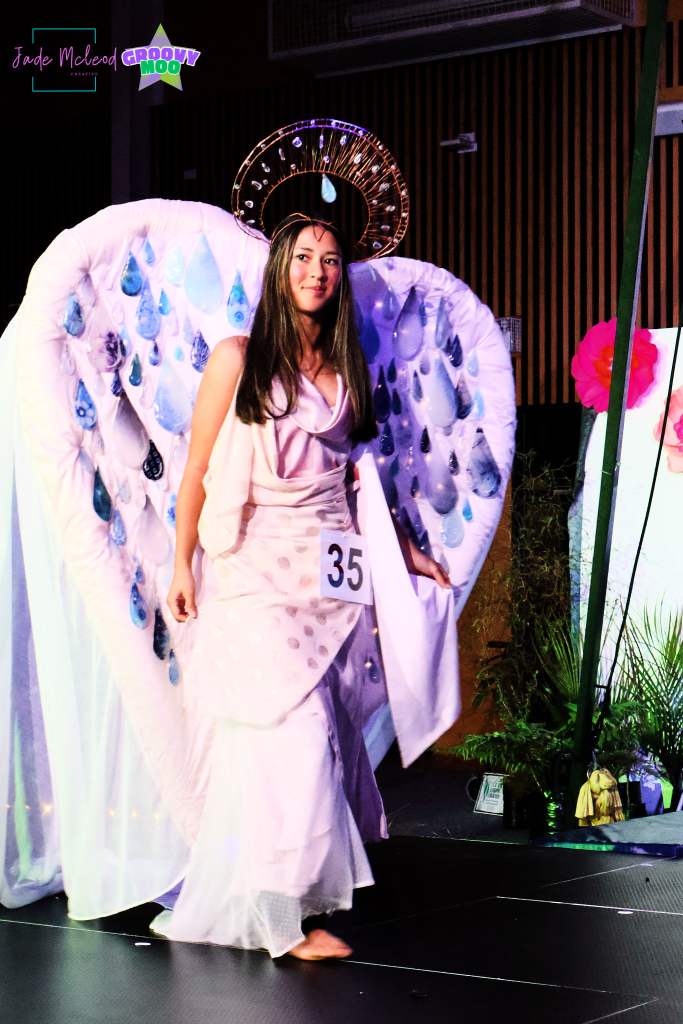
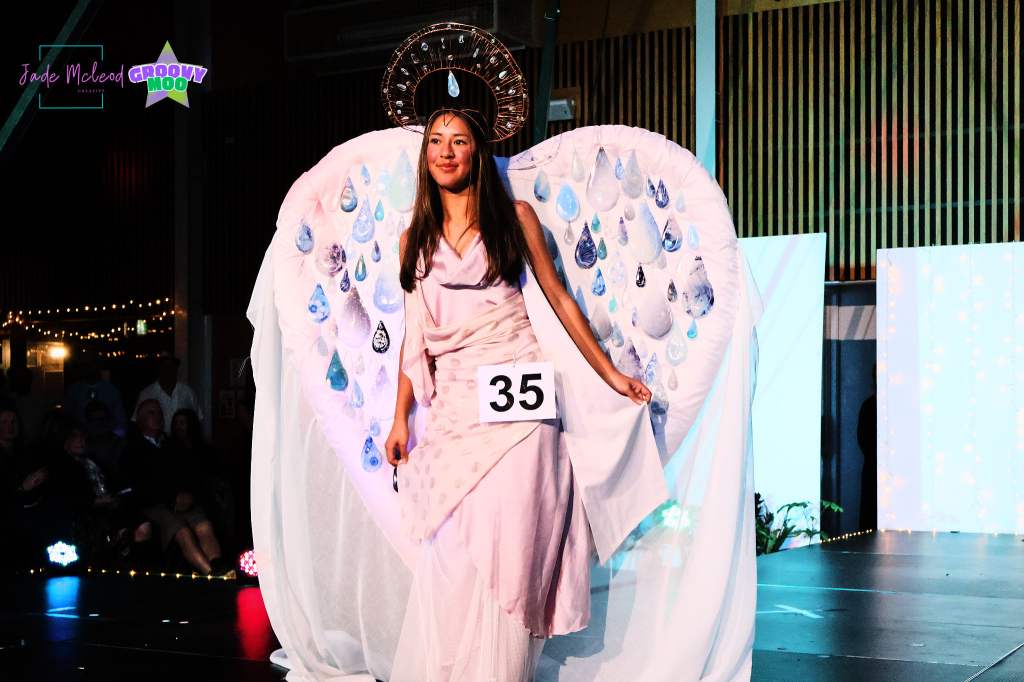
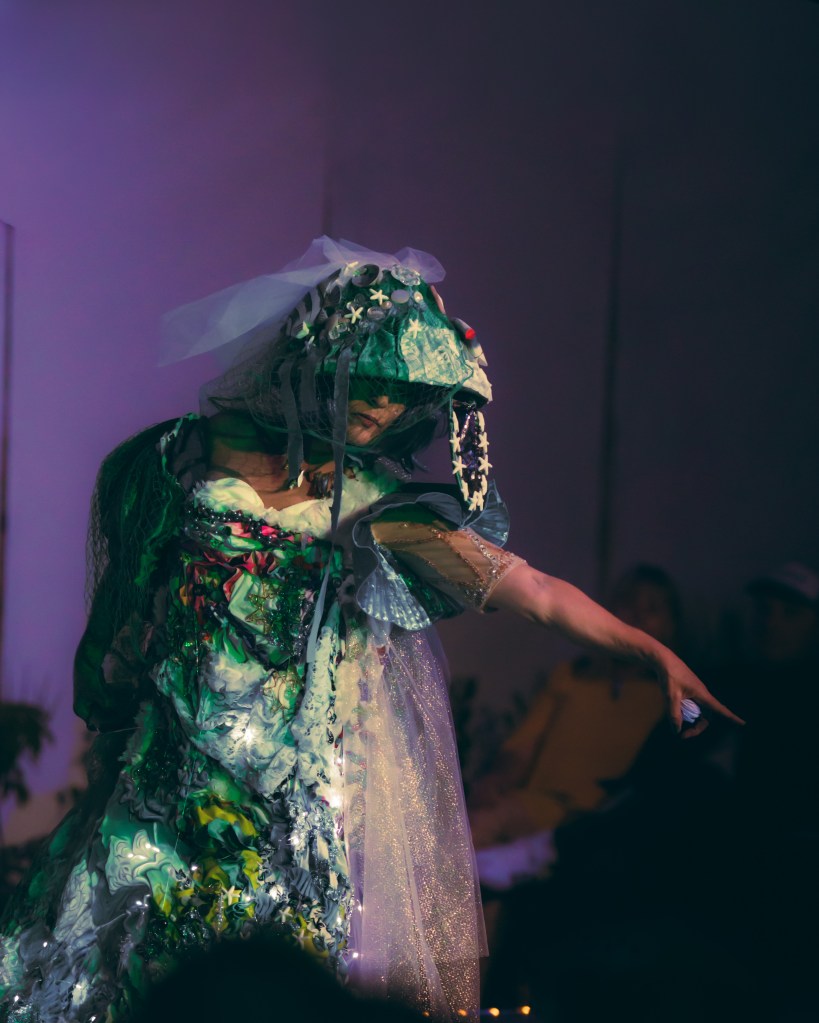
This year’s theme was “Into the Deep” and most of the creations displayed on the catwalk drew inspiration from the creatures, colours and beauty of our oceans, rivers and lakes. A total of 35 entrants, this year 20% of which were from outside our district, worked much of the year to craft clever outfits that could be worn by models on the gala night and the audience at the sold-out event were regaled by the inventiveness and originality of the designs and the professionalism of the models.

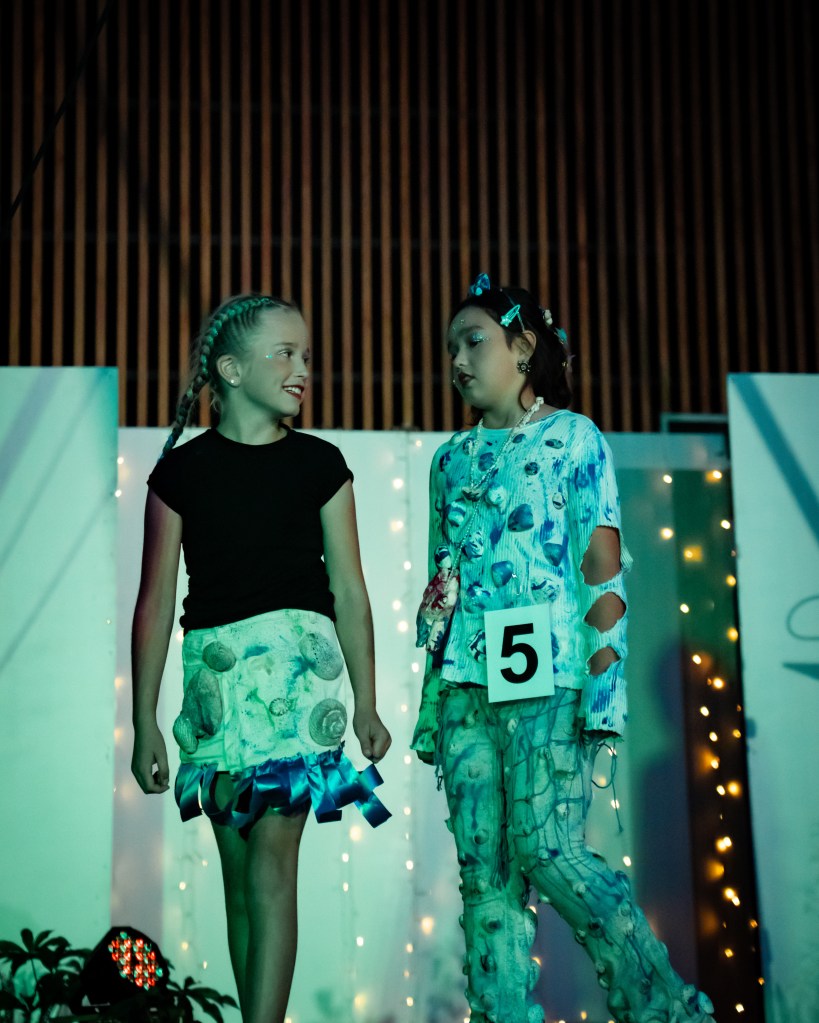
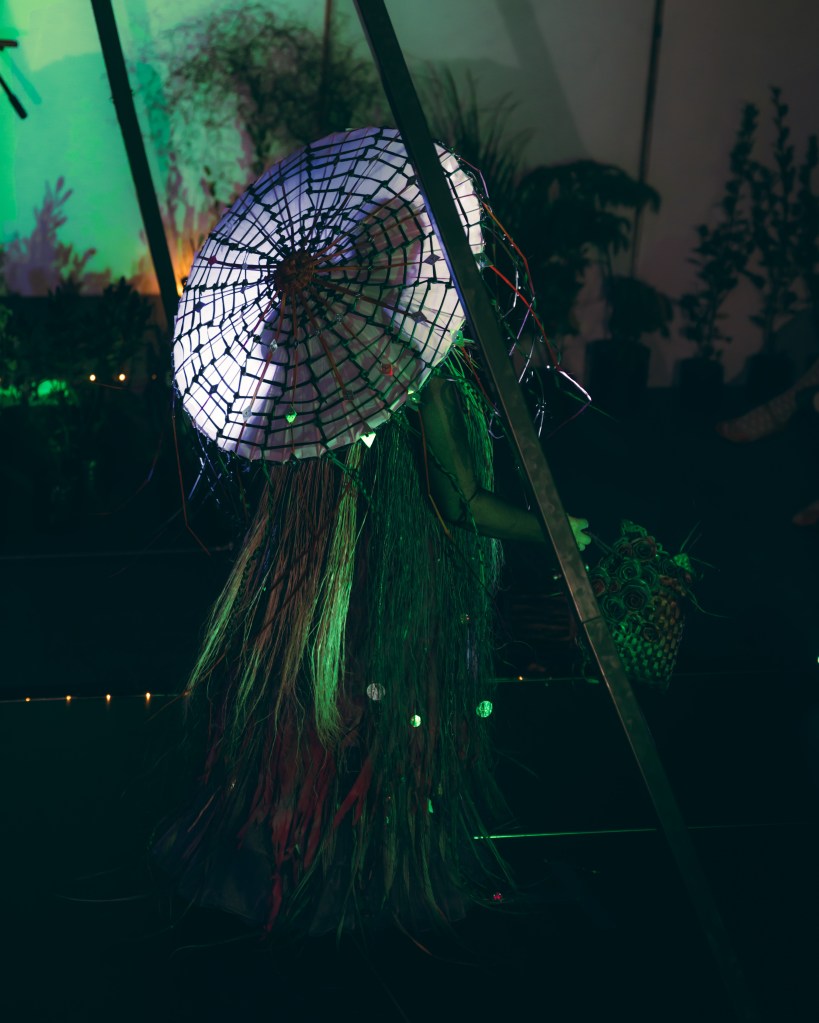
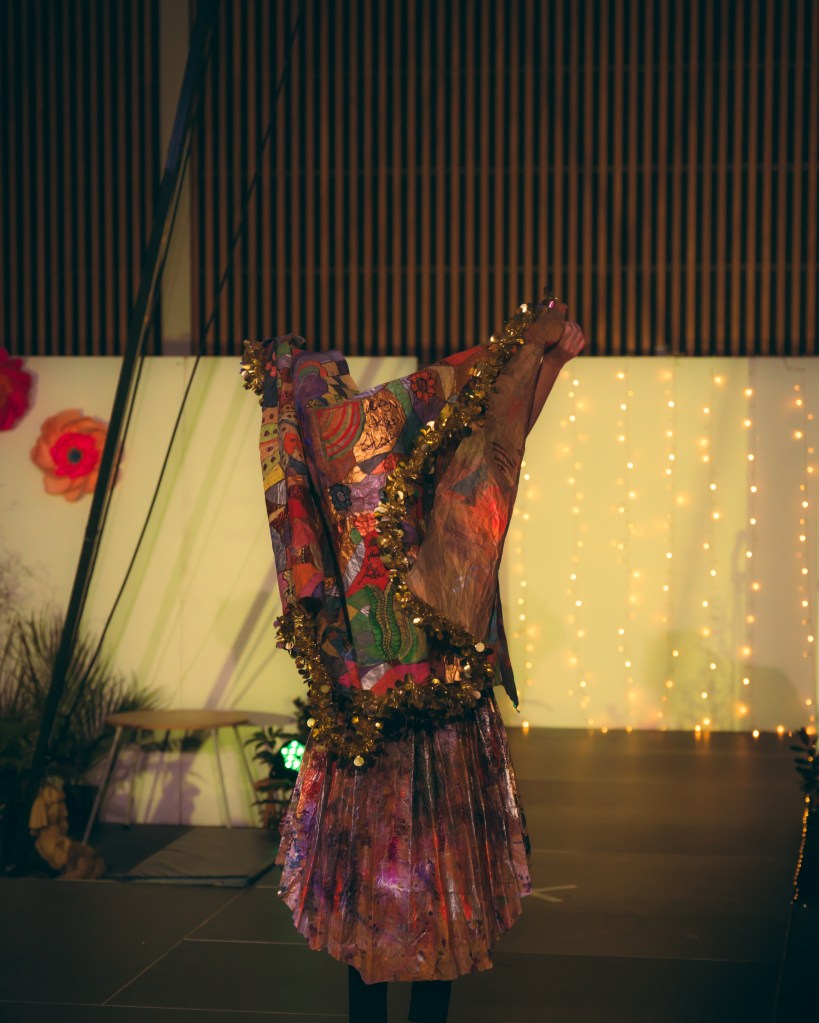
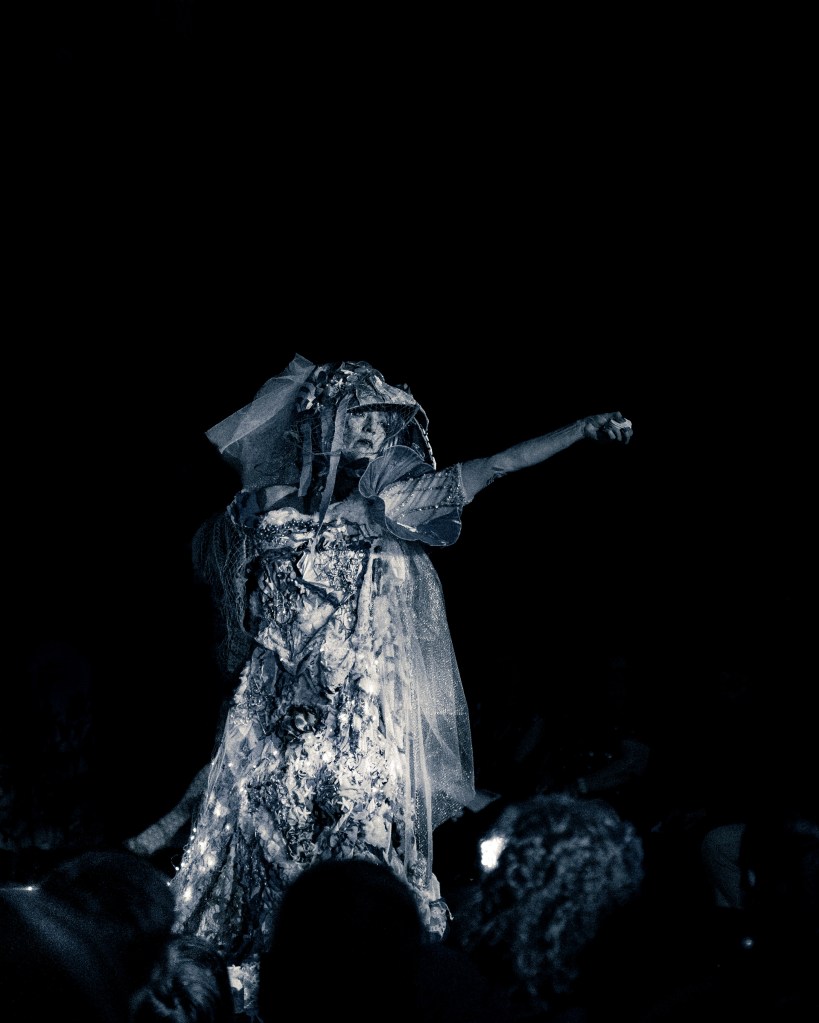
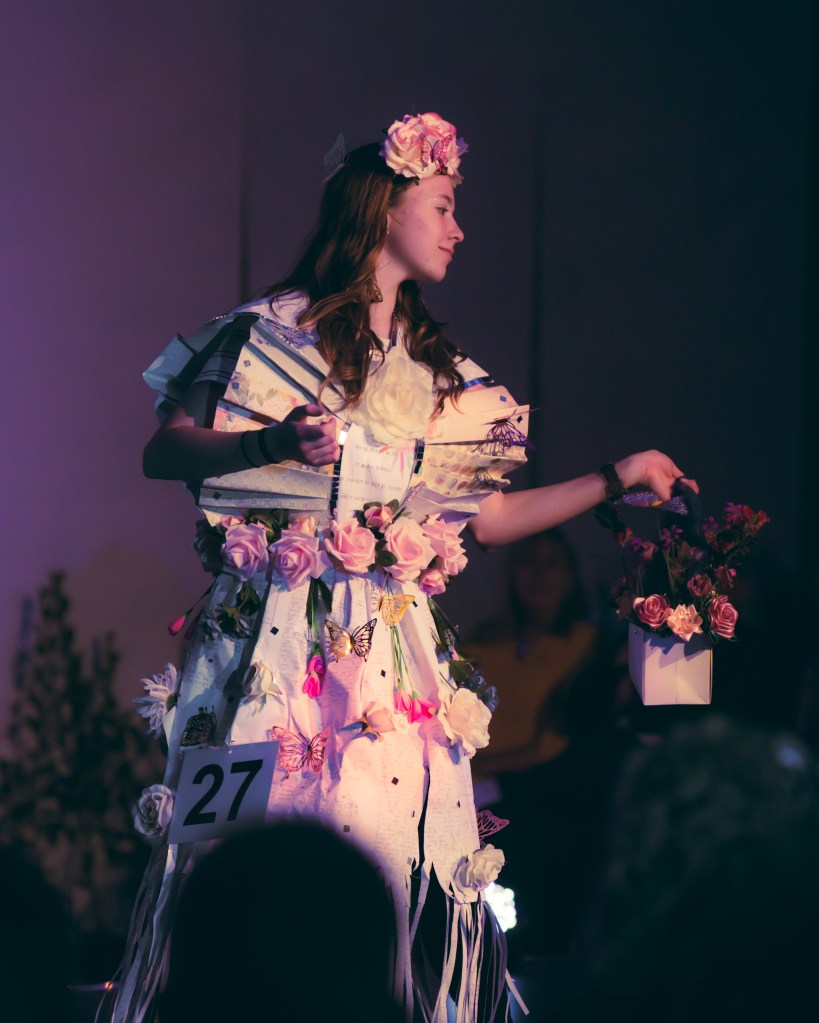
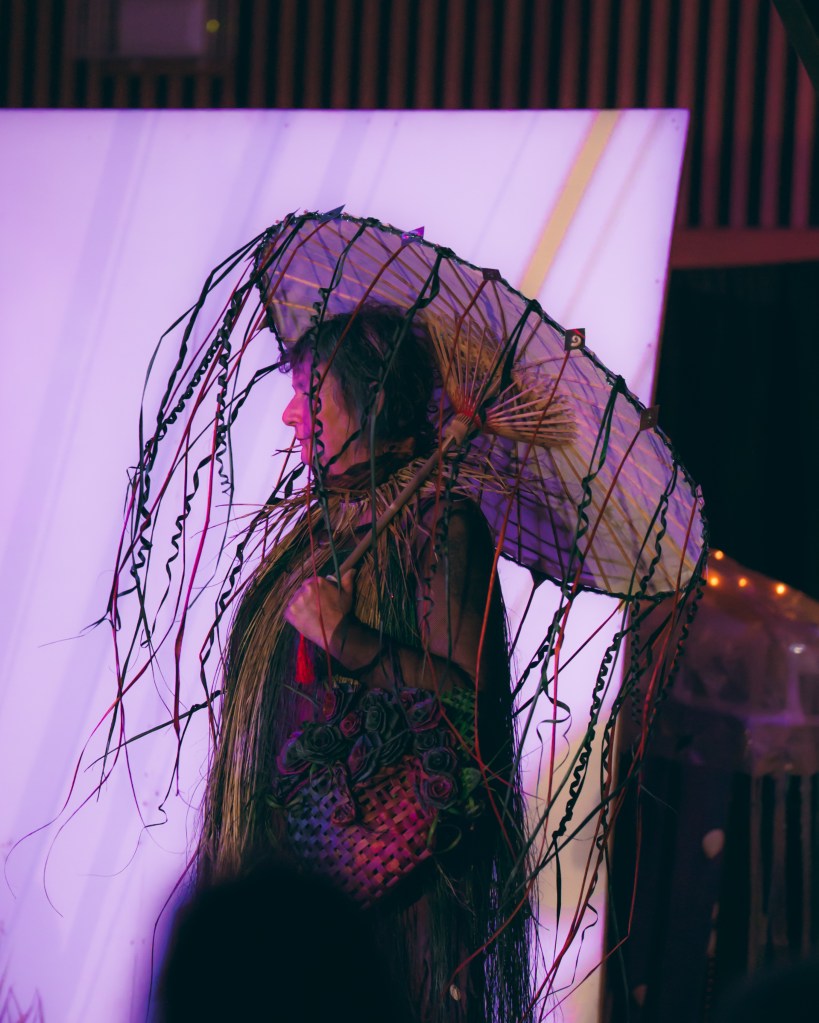
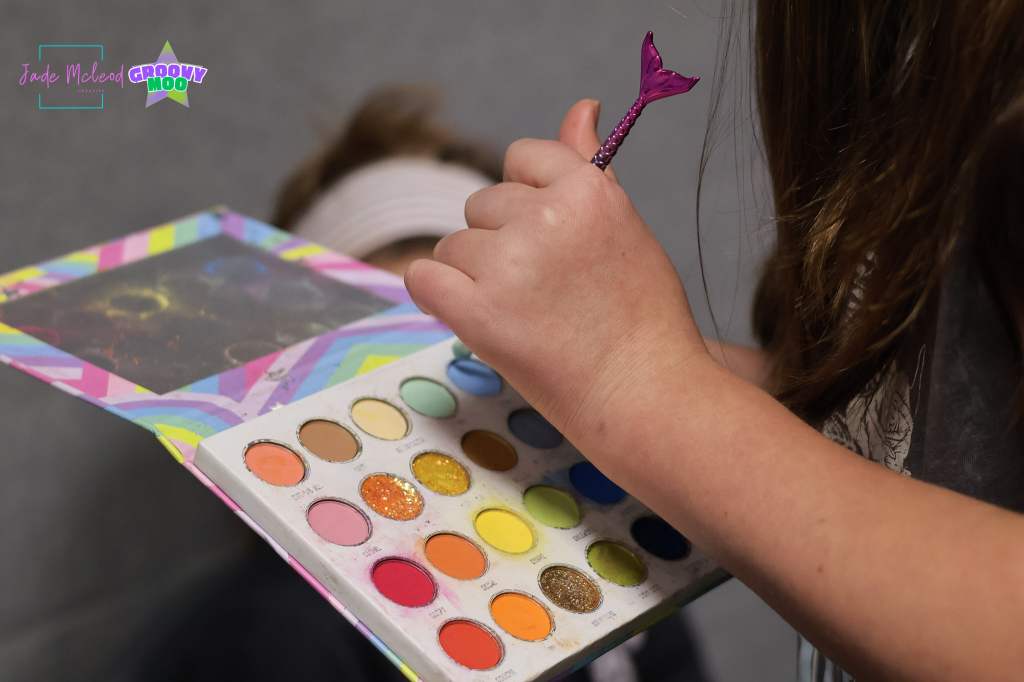
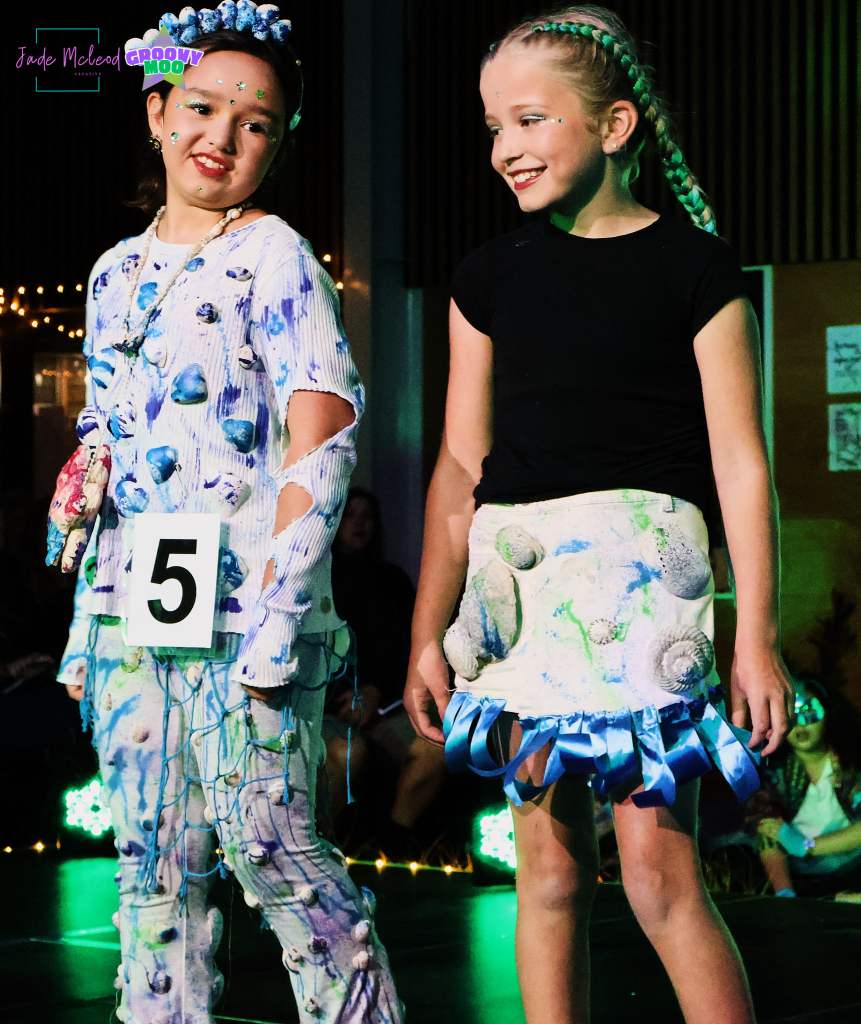
Students from Karamea Area School and children from designed costumes and learned how to present their creations on the big stage, and they delighted the crowd and warmed up the catwalk for the adult section in the second half of the show. School teachers, their students, farmers, nurses, mothers, retirees, and people from all walks of life, people who are normally not devoted to artistic pursuits, relished the opportunity provided by the event to flex their creative brain muscles and fertile imaginations, draw on less common contemporary skills like sewing, crochet, paper mâché and sculpting. The designers used found objects, refuse, repurposed materials and the abundance of natural fibres, plants, shells, wood and stones readily available in our special area to express feelings, emotions, life experiences, history, humour, social issues and thoughts that prevail in our daily lives to showcase them on an outfit with vibrant colours, artistic flair, grace and style.

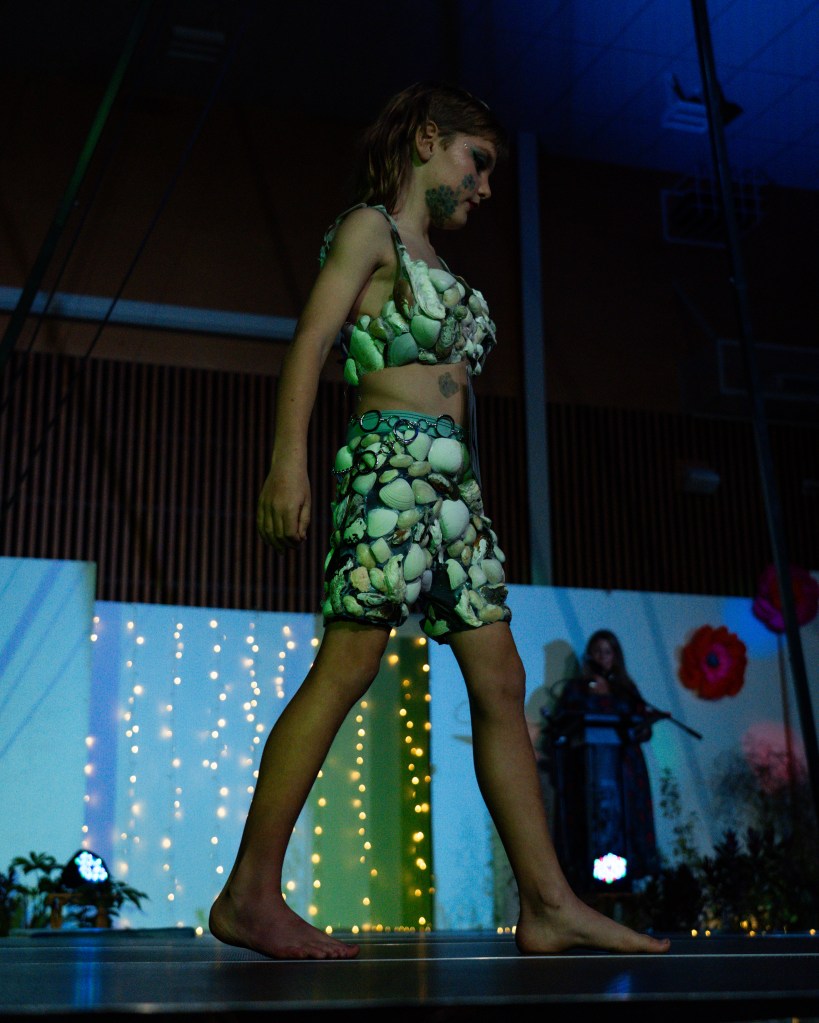
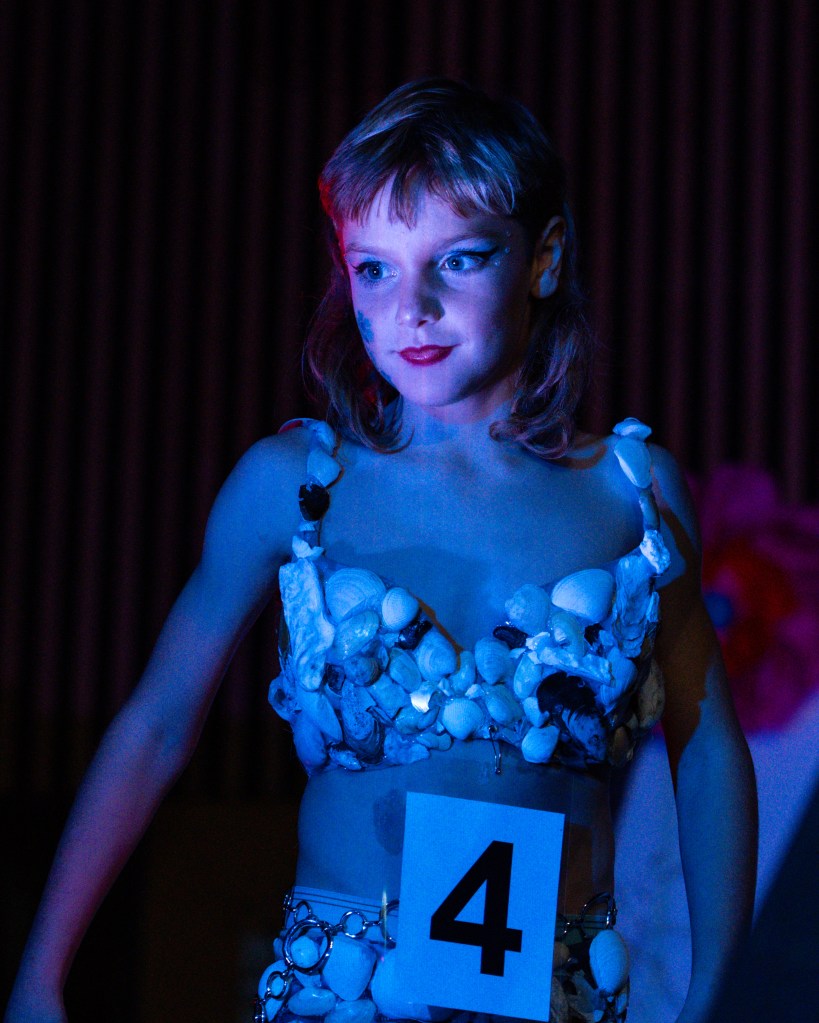
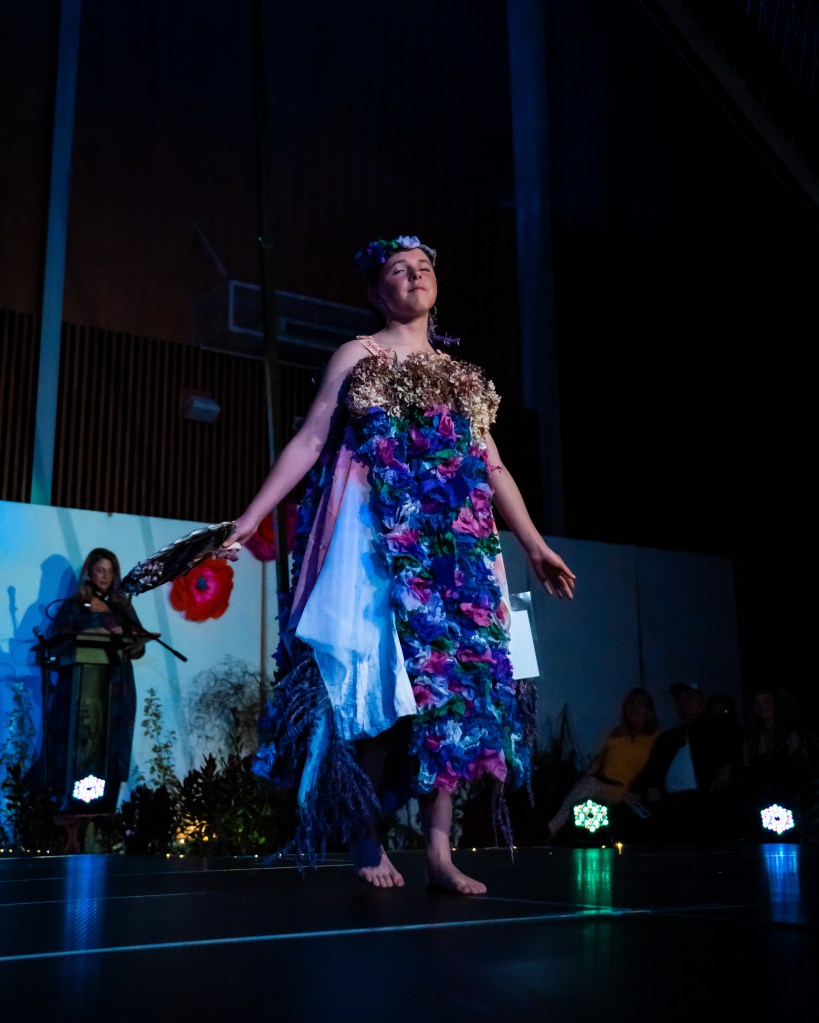
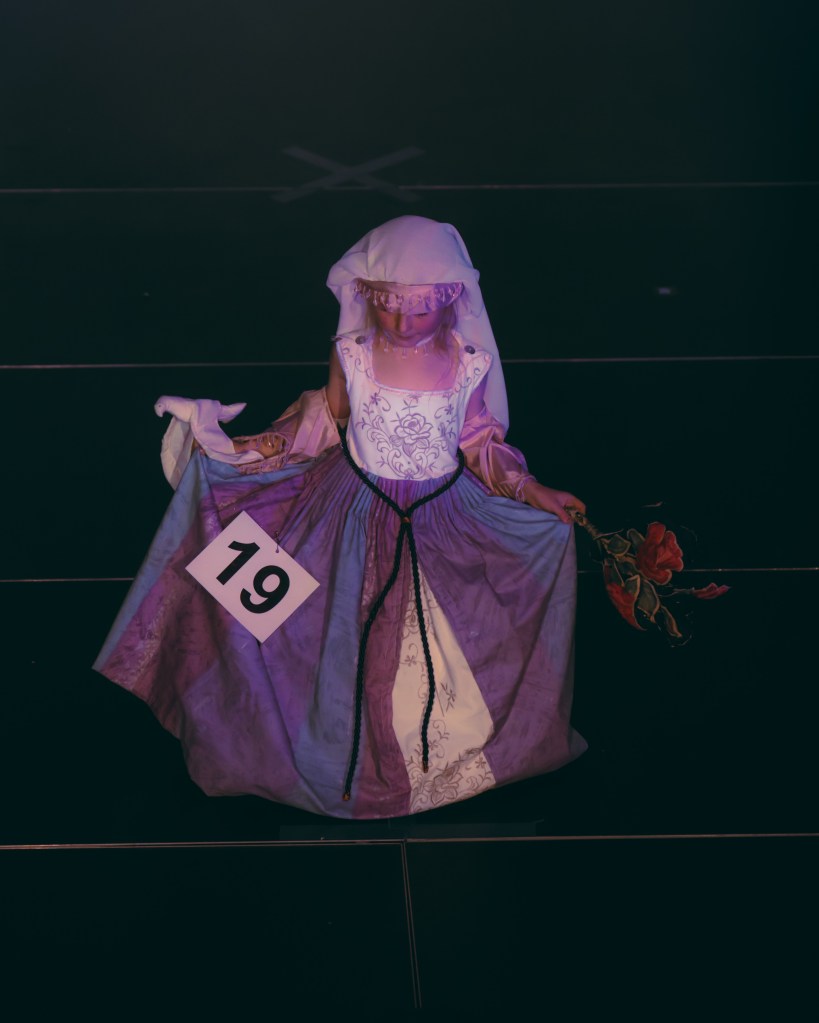
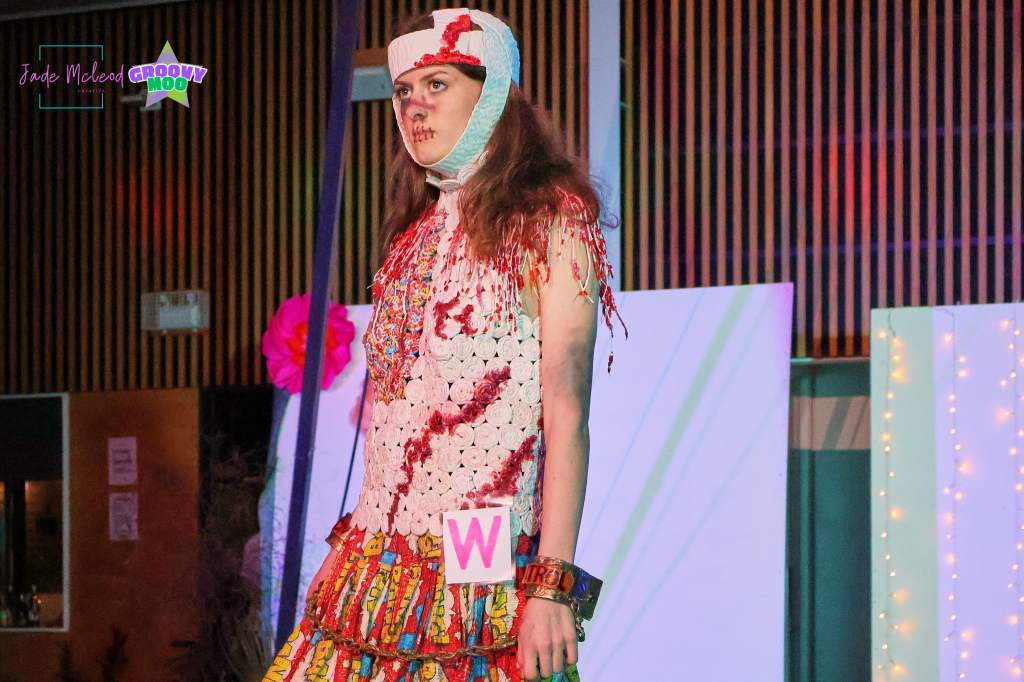
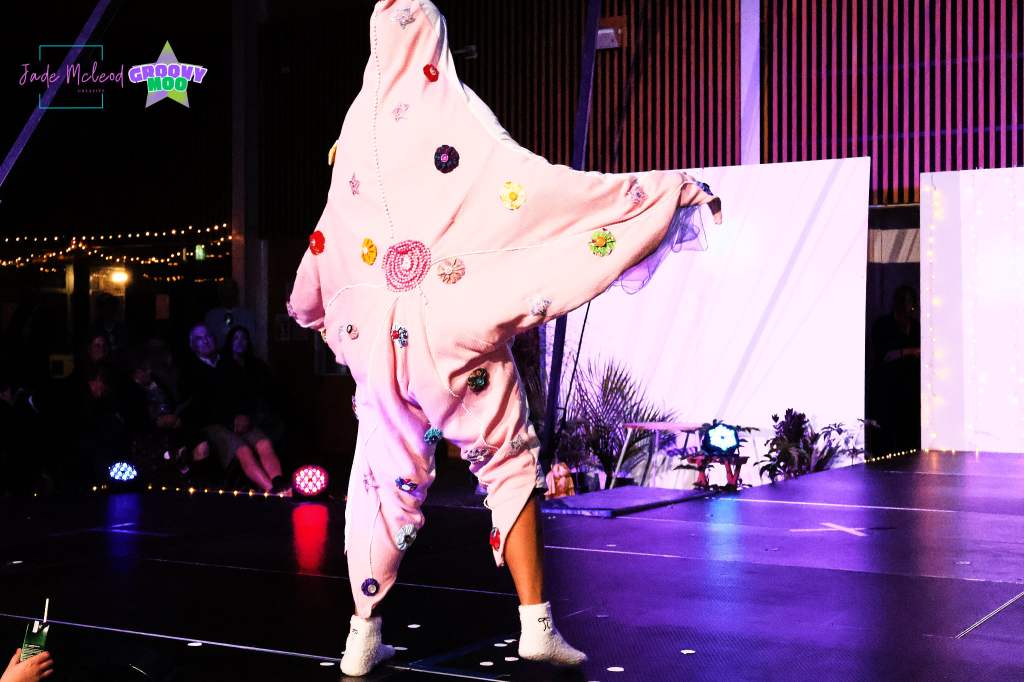
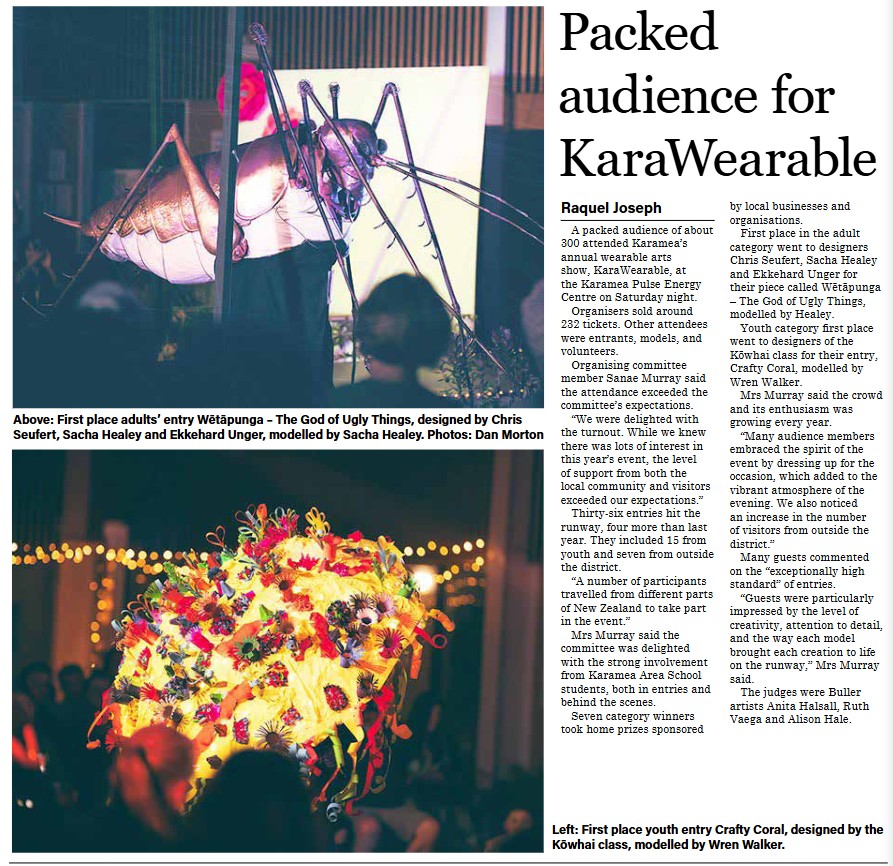
“Crafty Coral” by the Kowhai Class at Karamea Area School won 1st Prize in the Youth Category. The outfit was created by the students under the inspiring tutelage of class teacher Miss Hannah Lawson. The outfit was modelled by student Wren Walker. The class were learning about coral reefs, and they used all sorts of materials, including painted pasta, to create their winning entry.

“Crafty Coral,” designed by Miss Hannah and Karamea Area School’s Kowhai Class and modelled by Wren Walker. (Photo by Dan Murton)

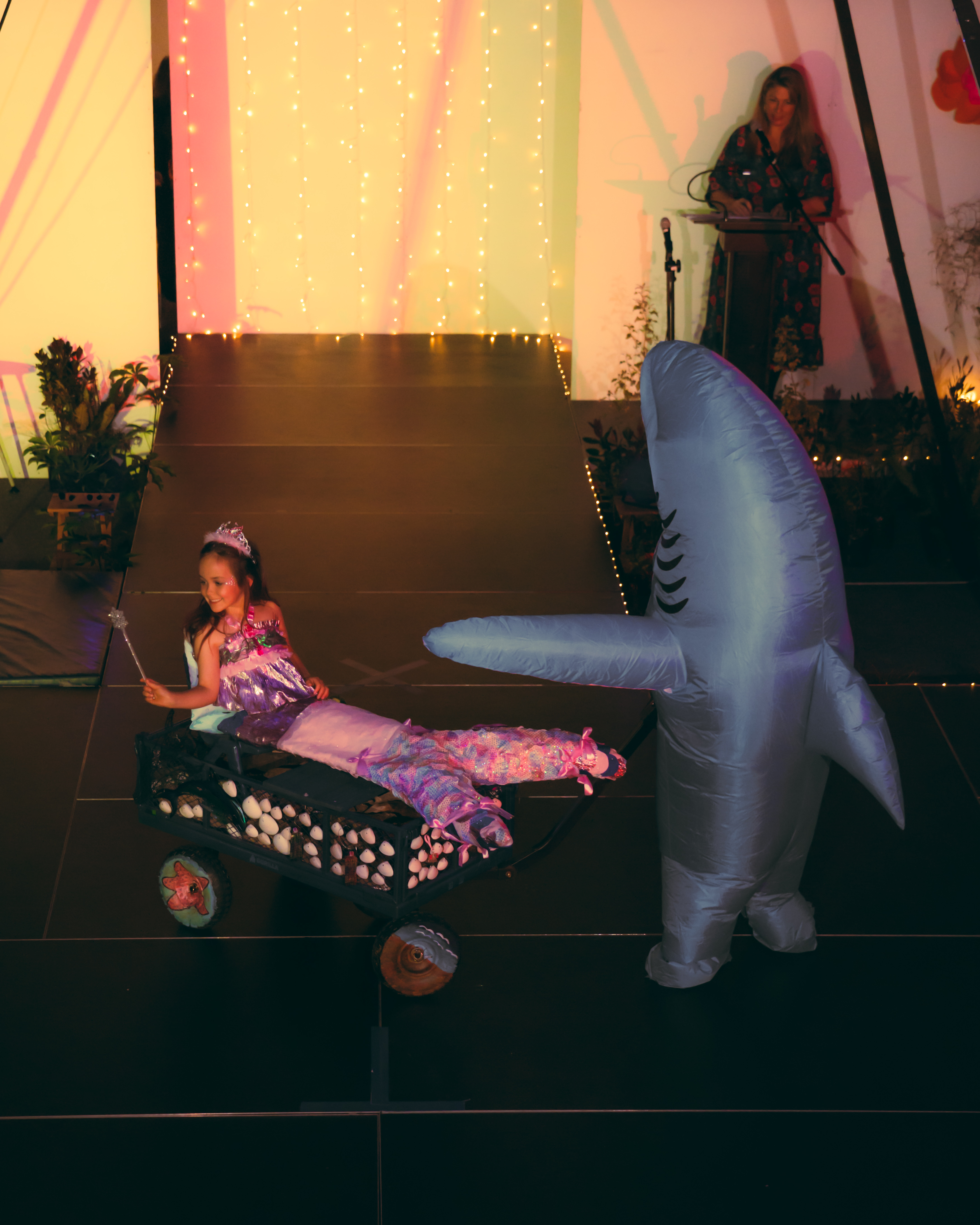
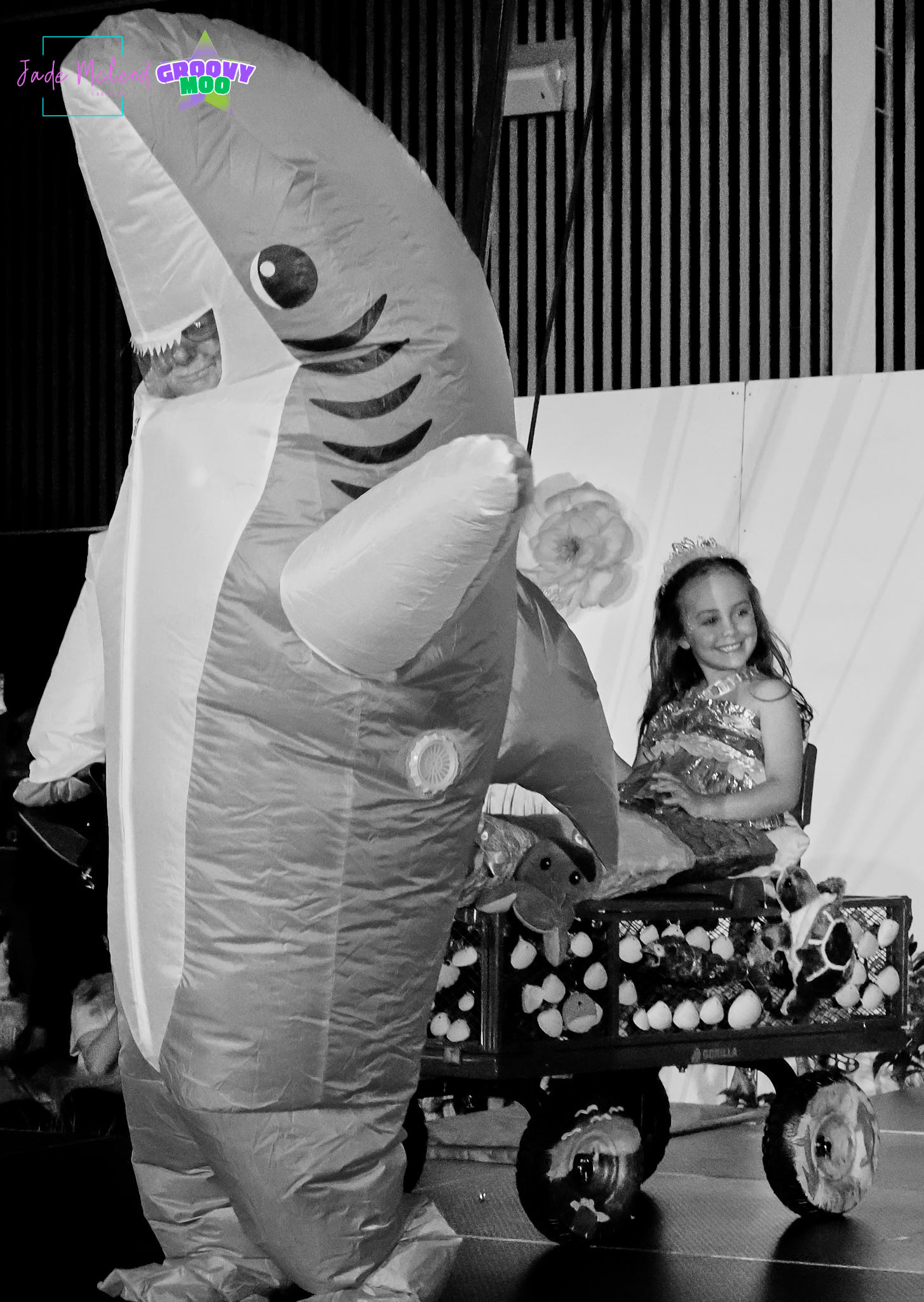
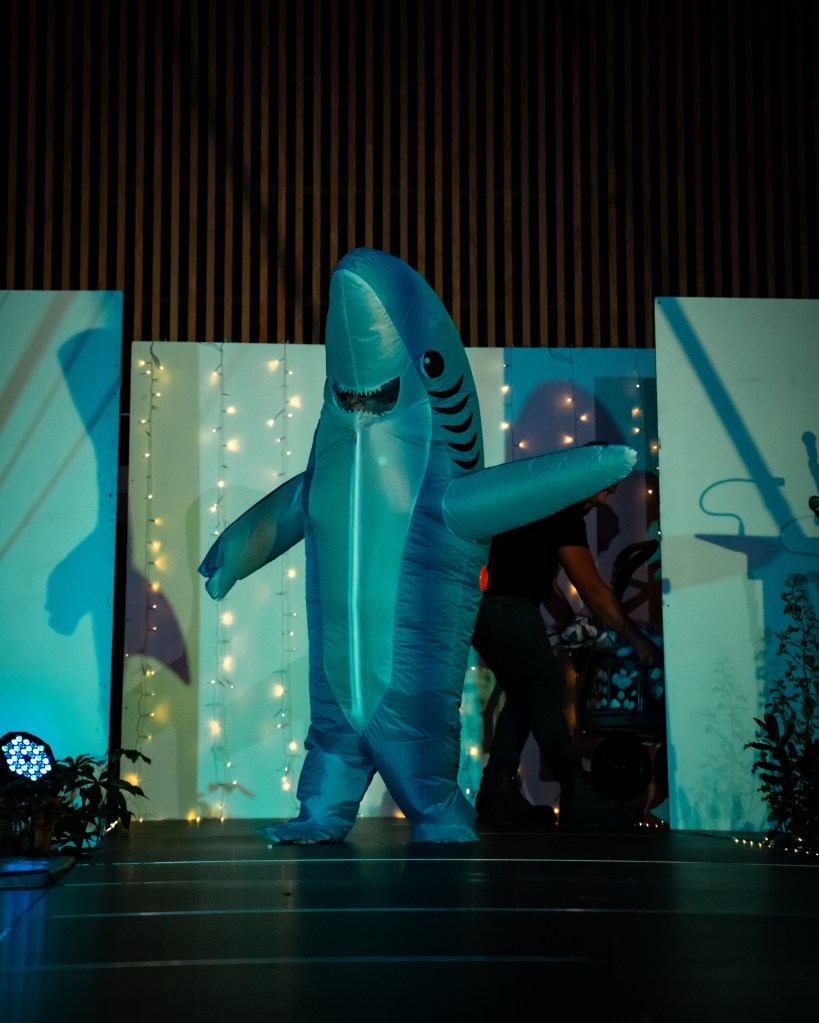
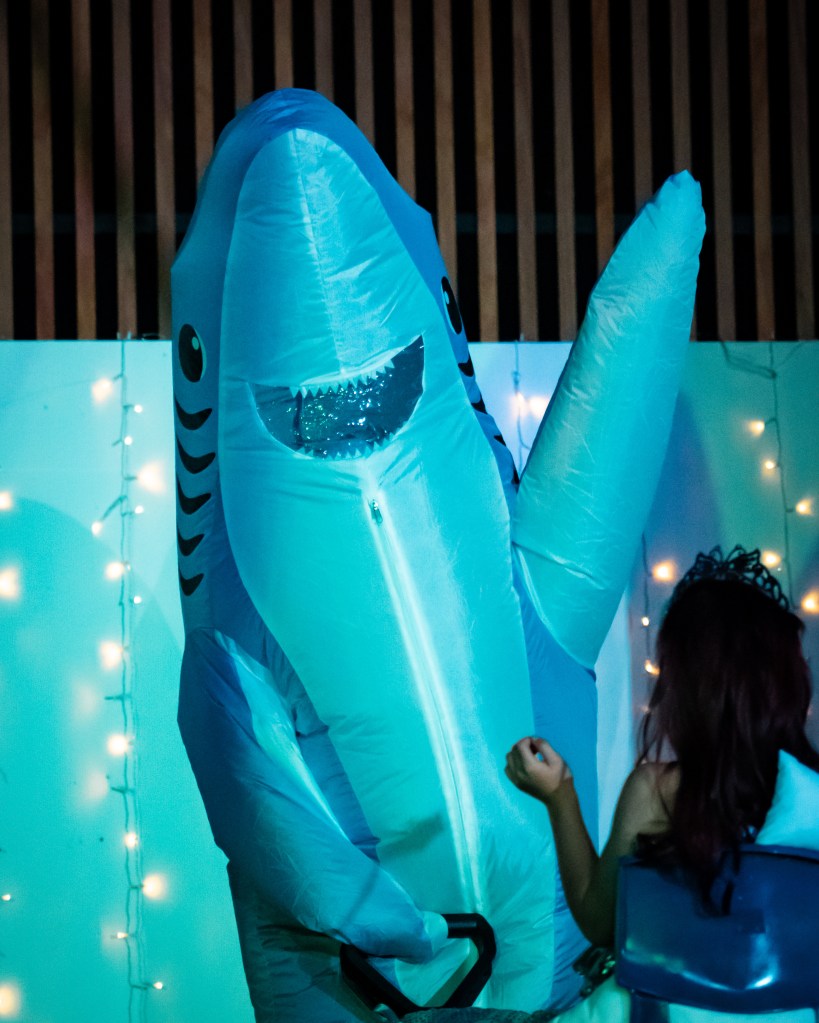
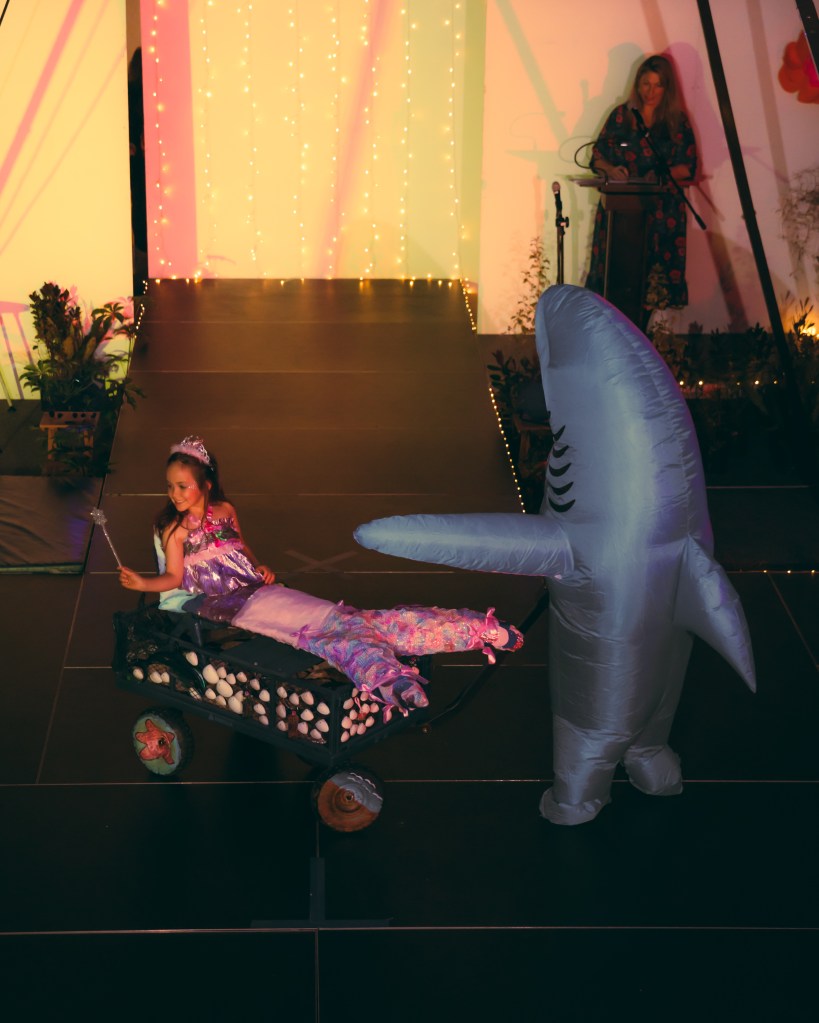
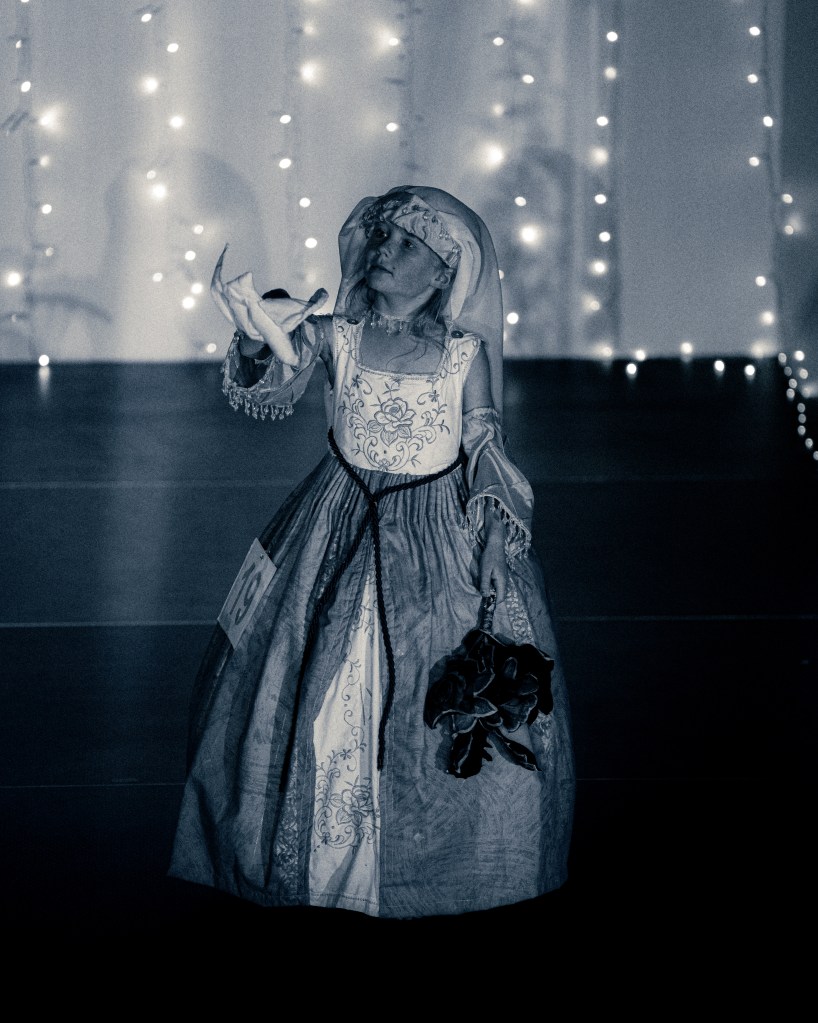
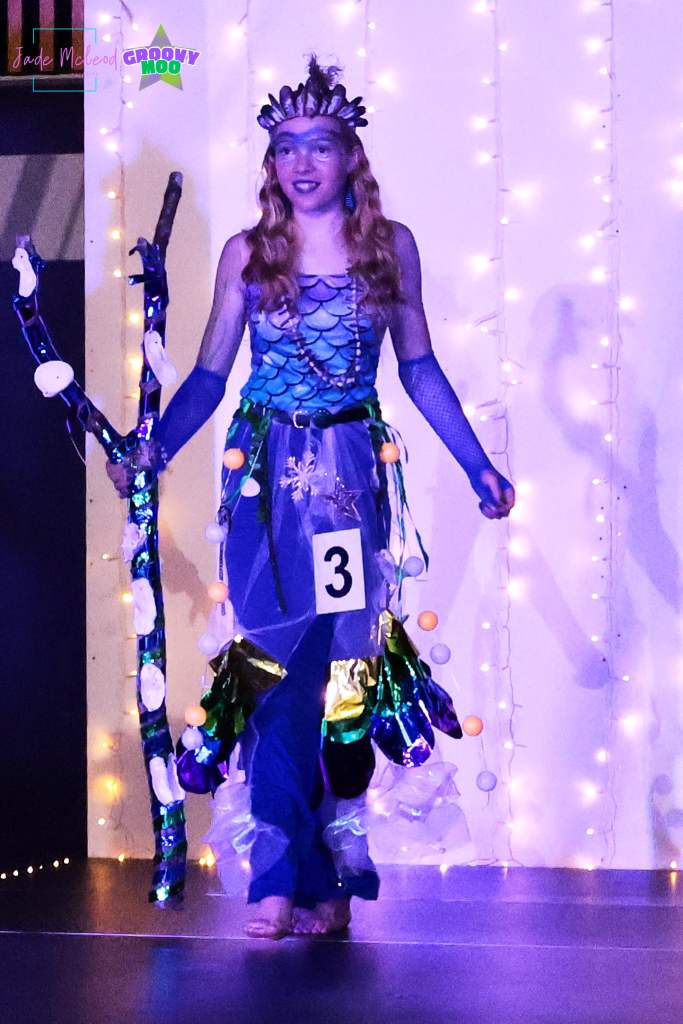
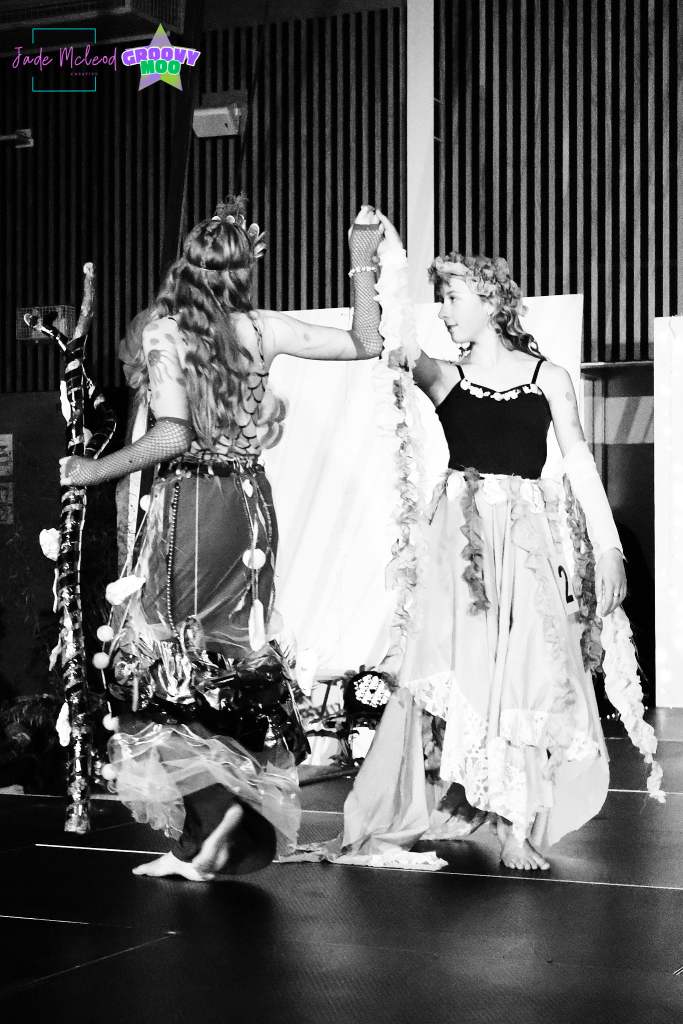
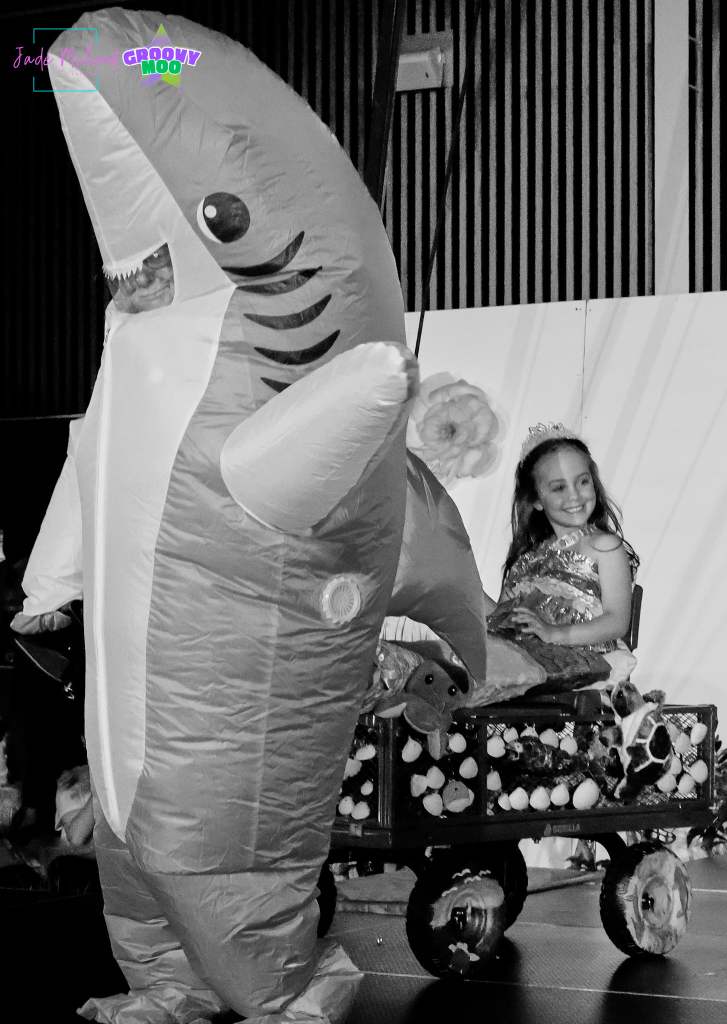
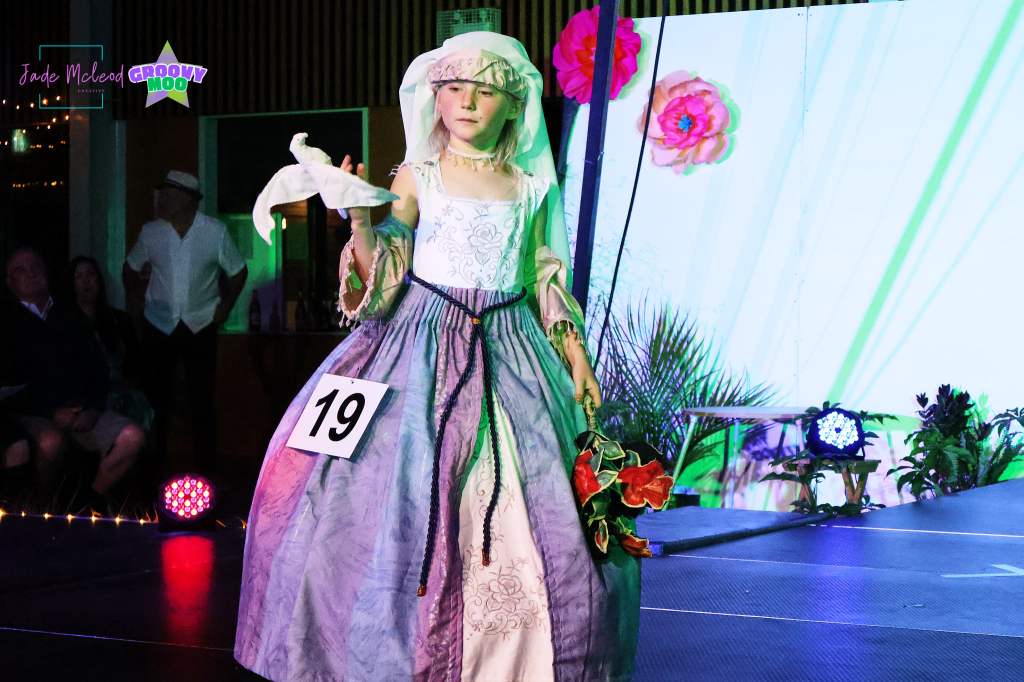
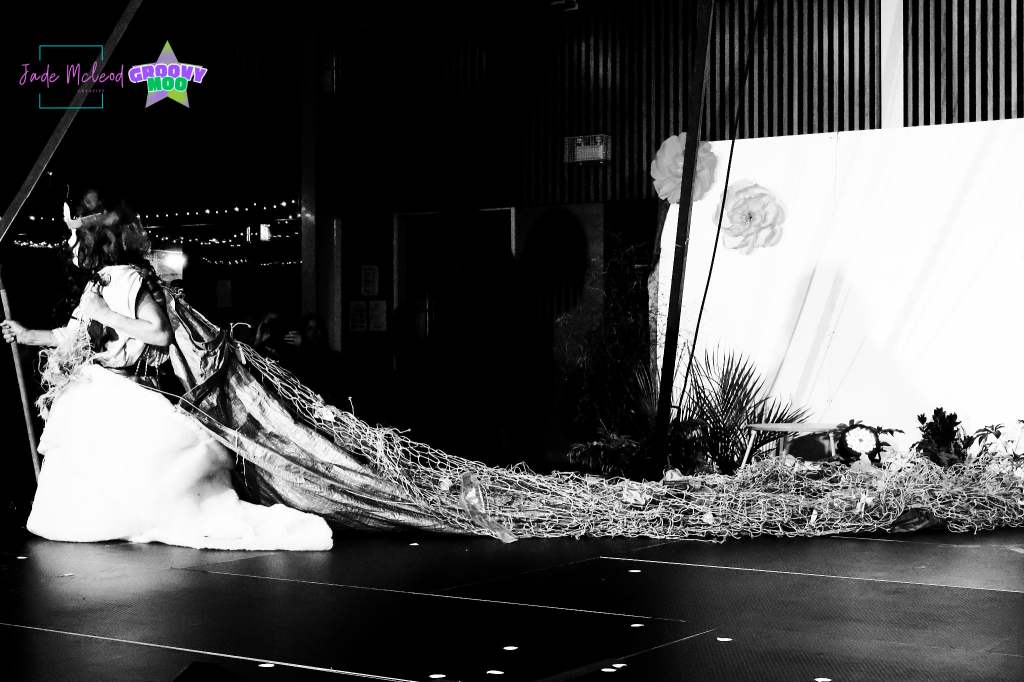
Second place in the Youth Category went to Lulu Brownie and Chris Lowe with “Magic Mermaid,” and their on-stage performance really stole the show. Nana Chris, comically dressed in an inflatable shark suit, bopped her way around the catwalk towing magical mermaid Lulu around on a beautifully decorated cart.

“Magic Mermaid,” designed by Linda and Lulu Brownie and modelled by Lulu and Chris Lowe. (Photo by Dan Murton)
“Magic Mermaid,” designed by Linda and Lulu Brownie and modelled by Lulu and Chris Lowe. (Photo by Jade McLeod)

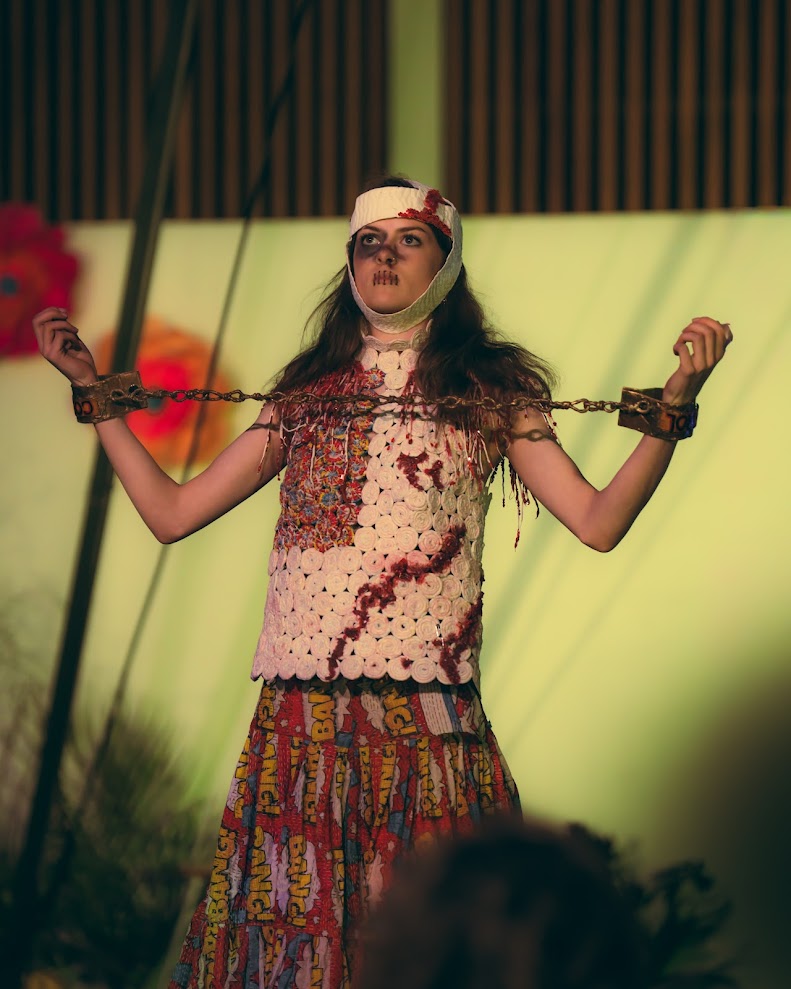
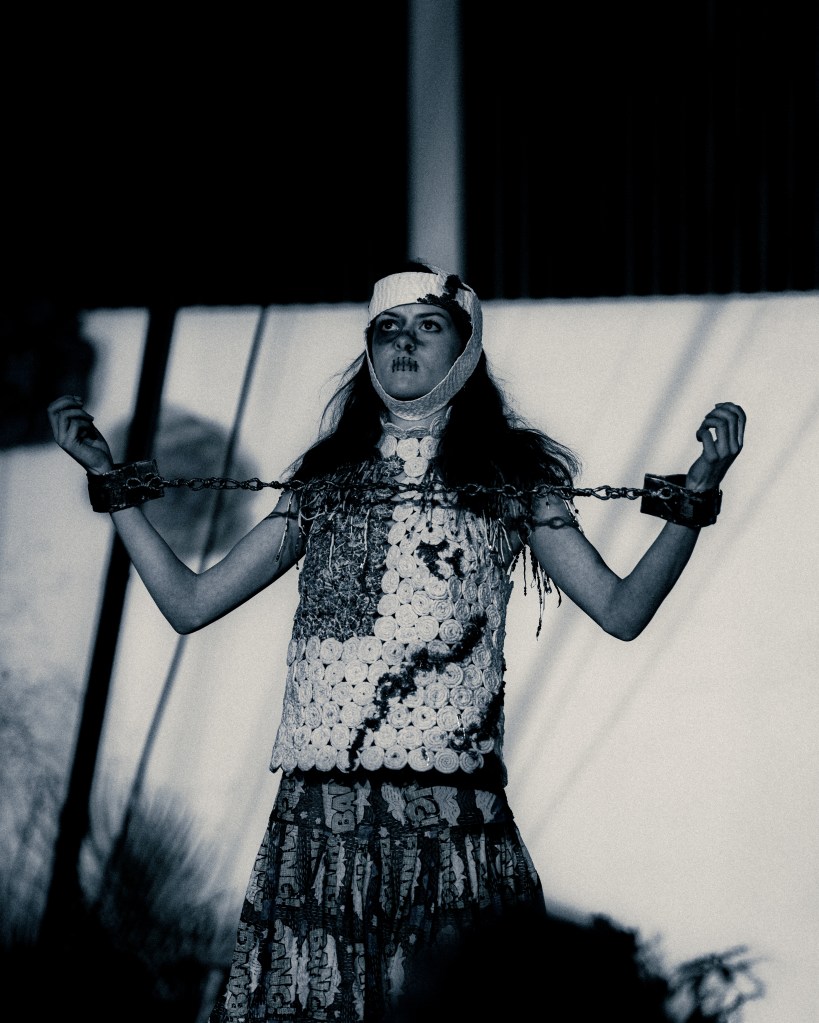
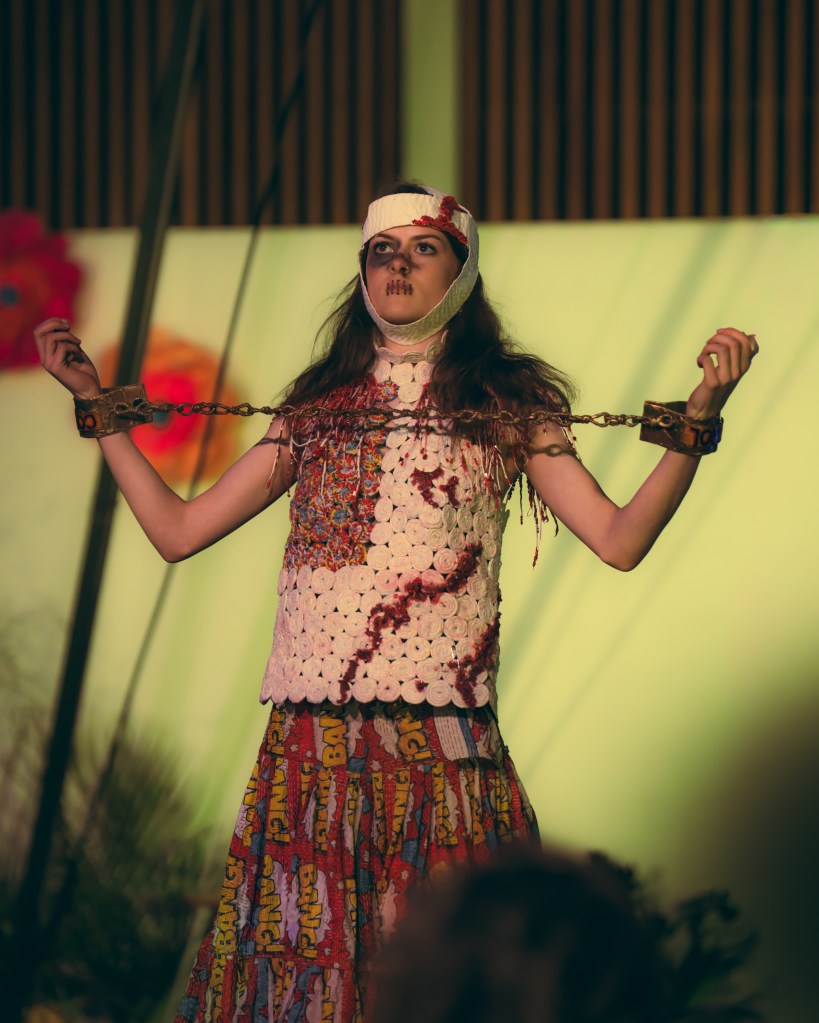
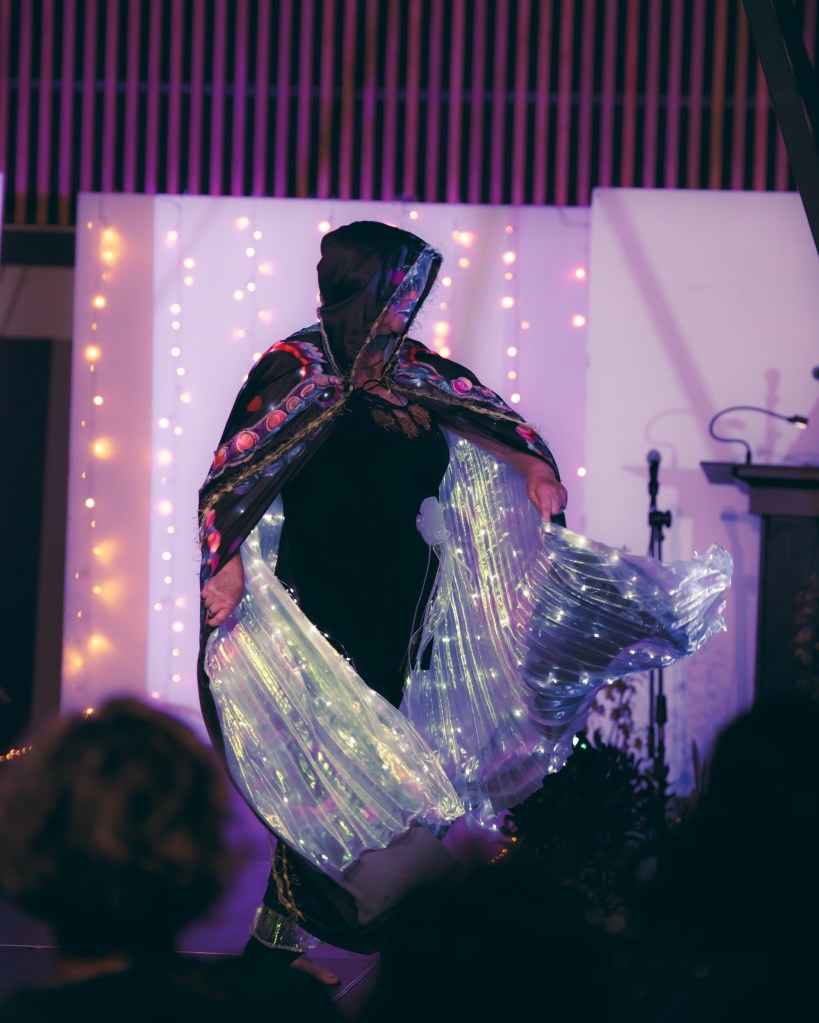
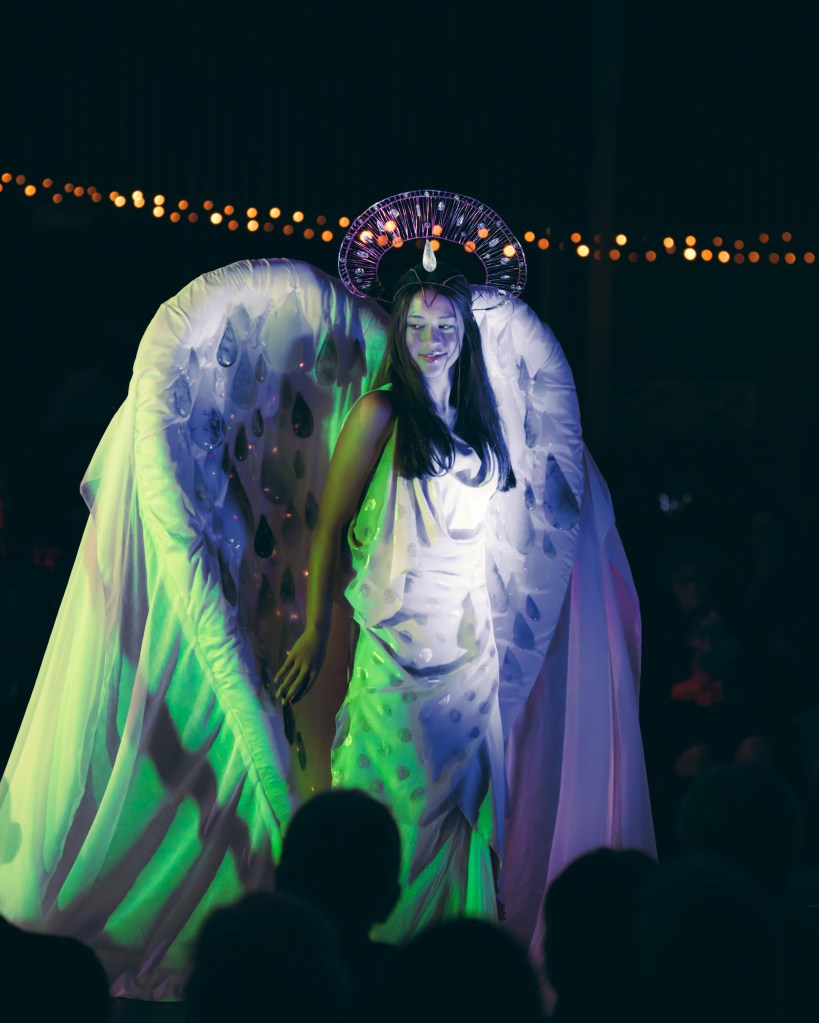
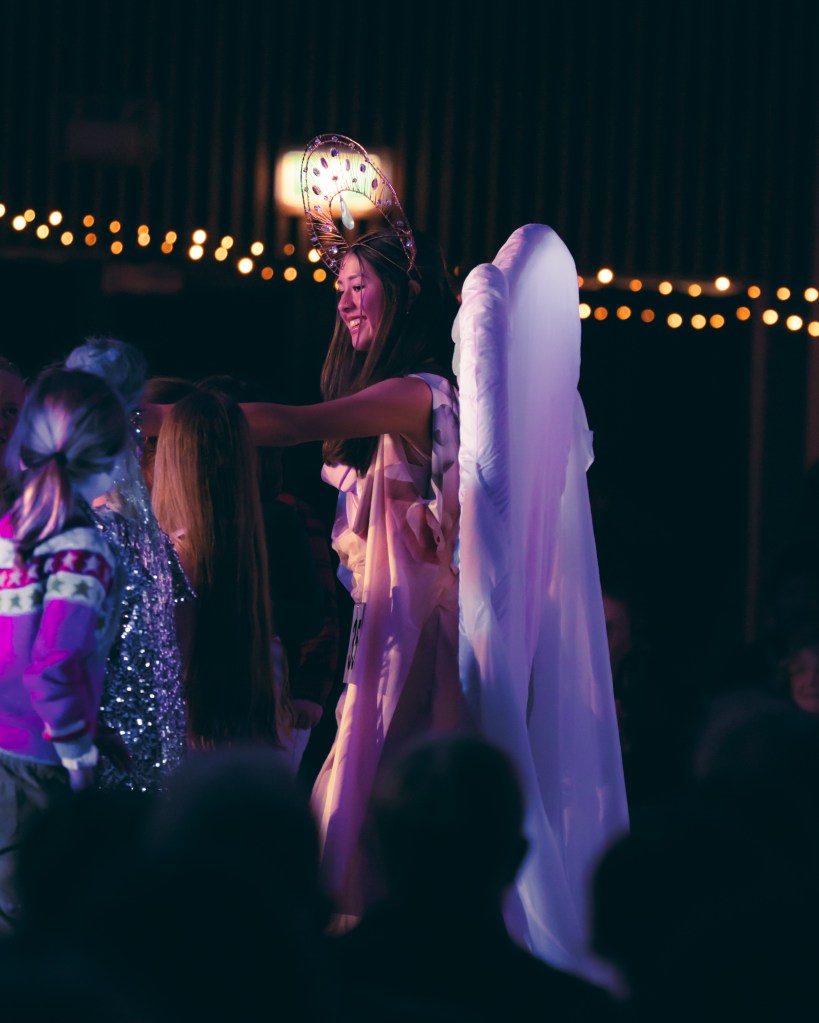
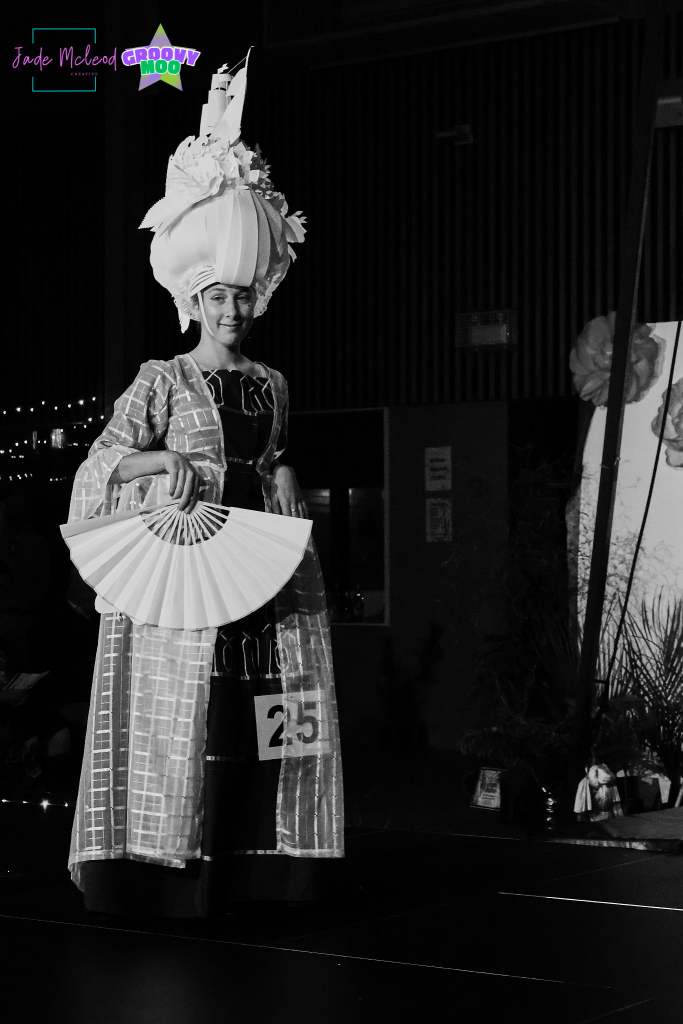
The adult portion of the show began with the display of an award-winning outfit by recent Karamea arrival, Renate Jamieson, titled “Bang, Bang,” which won First Prize at the Salt Festival in Port Lincoln, South Australia, in 2025. The piece was professionally modelled by senior Karamea Area School student Quillyn O’Dwyer, and it spoke to the important social issue of domestic violence and abuse. It was made of thousands of pieces of folded paper and took Ms Jamieson 650 hours to assemble. While the outfit was not eligible for an award on the night, it showed how creativity can be utilised as social commentary and to raise awareness and provoke thought about a challenging issue that affects so many and urgently needs public understanding and attention.

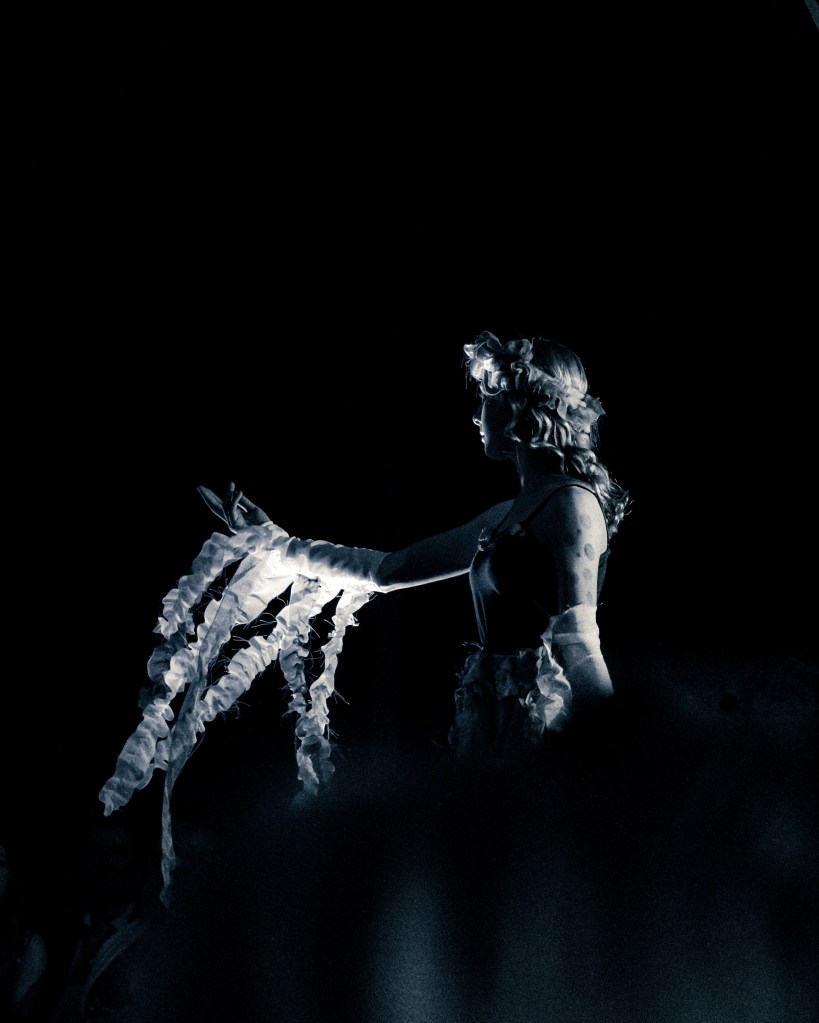
“Bang, Bang” designed by Renate Jamieson and modelled by Quillyn O’Dwyer (Photo by Dan Murton)

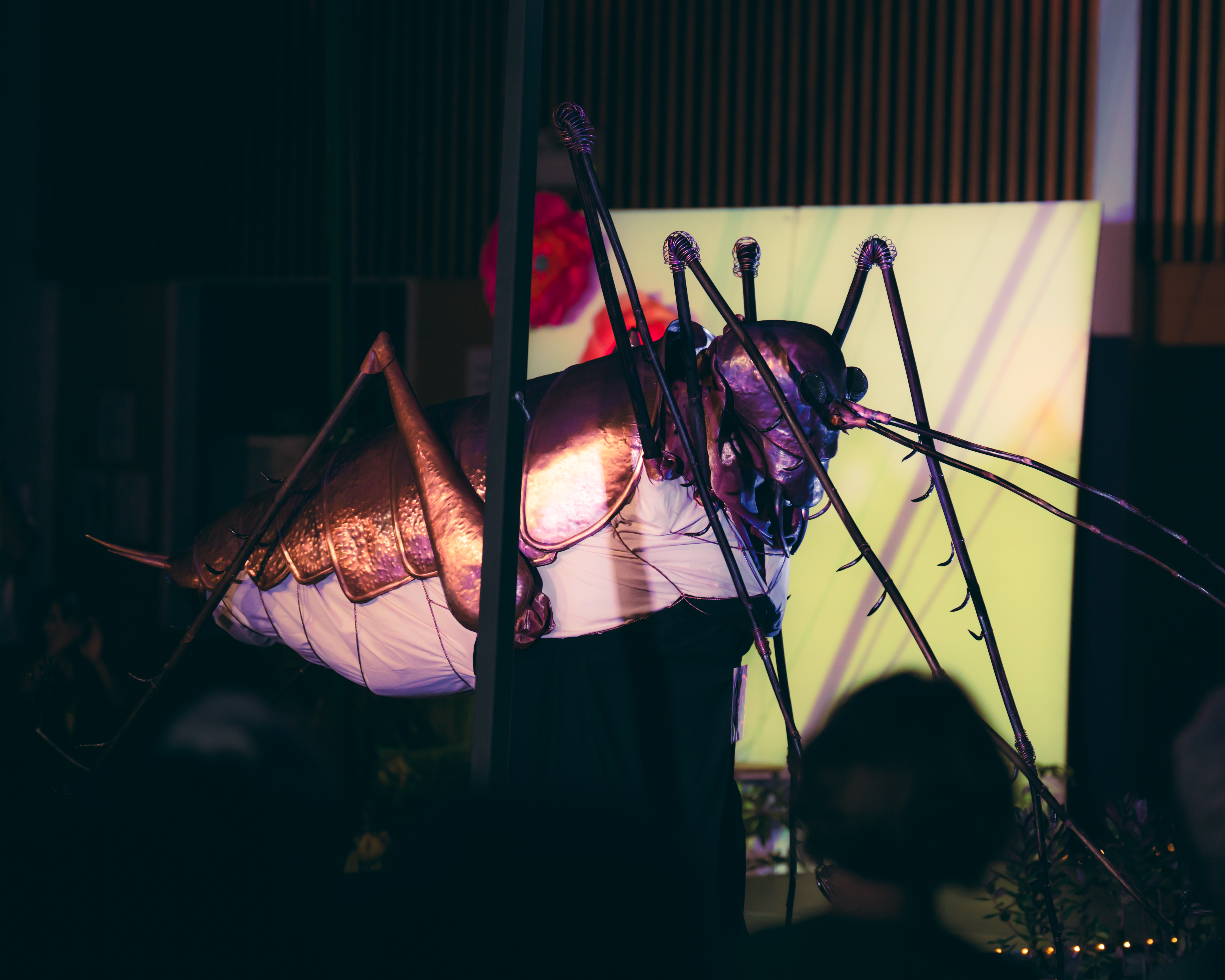
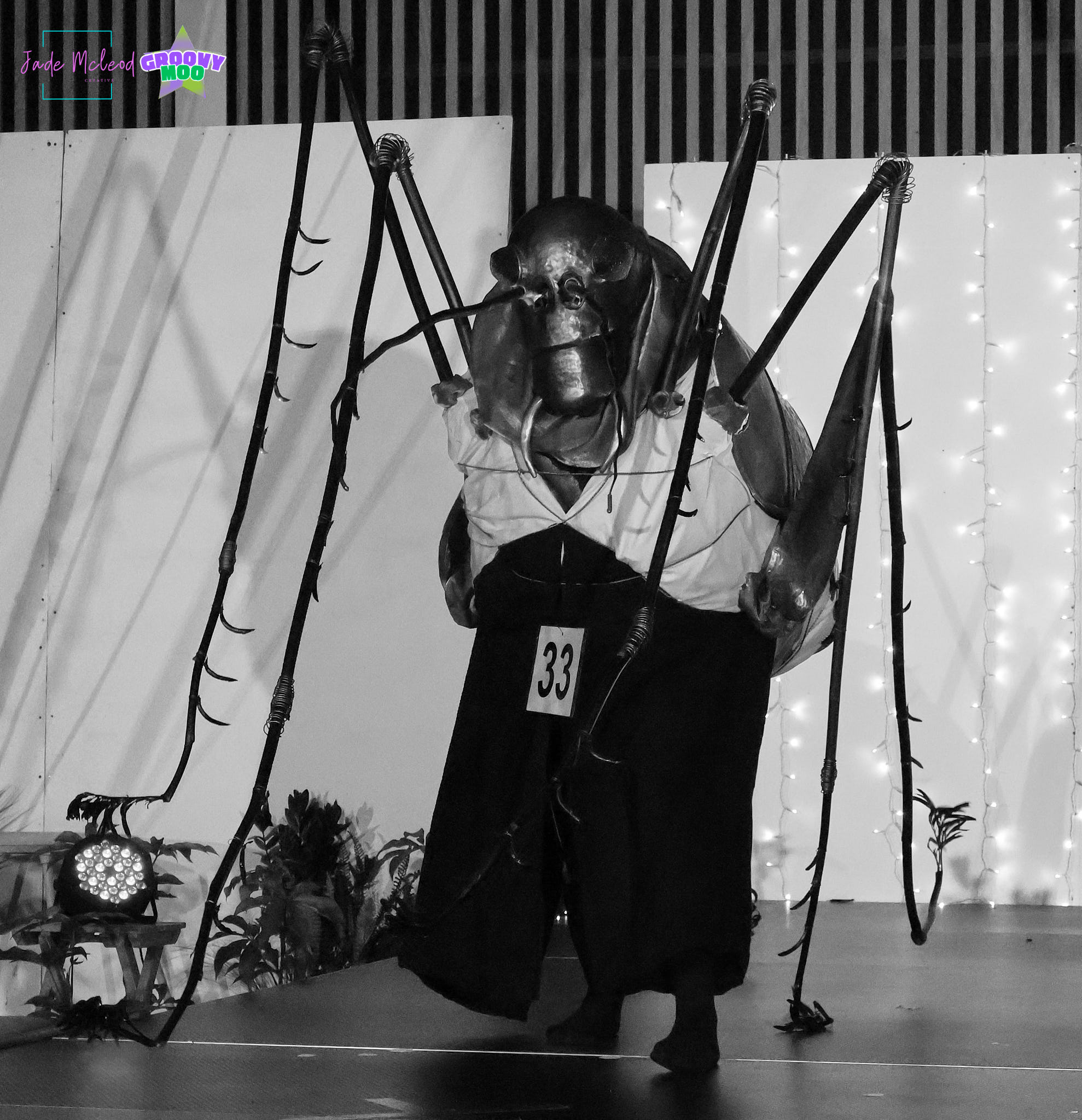
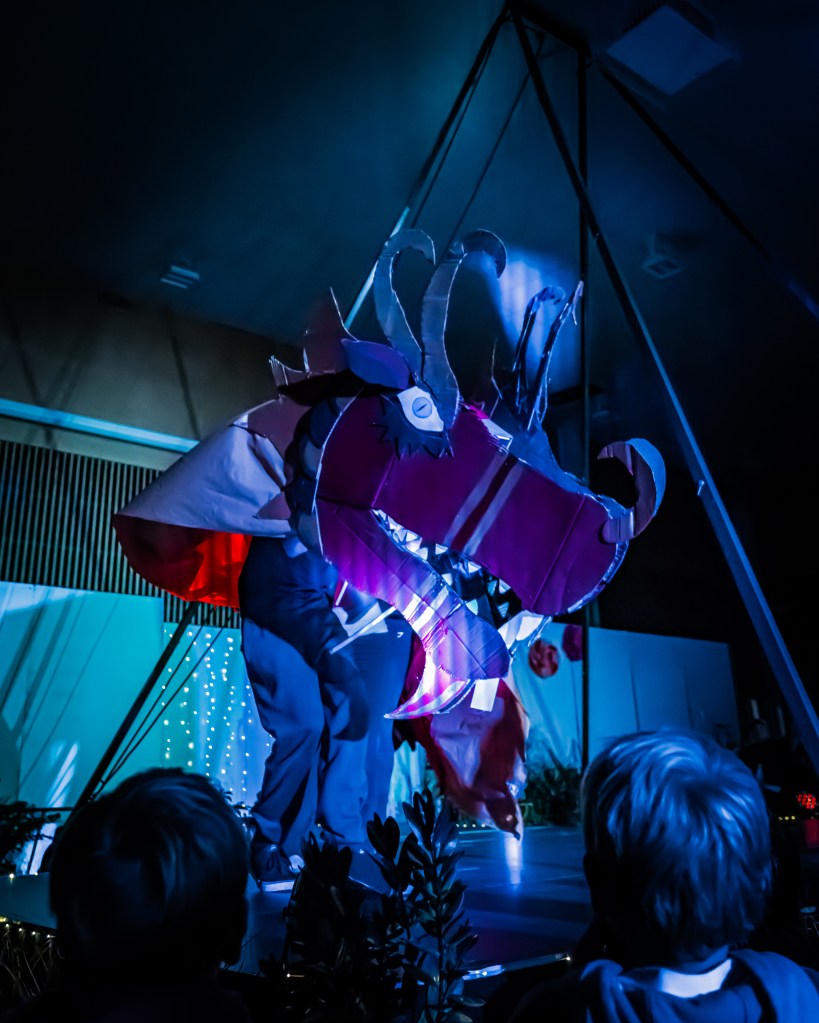
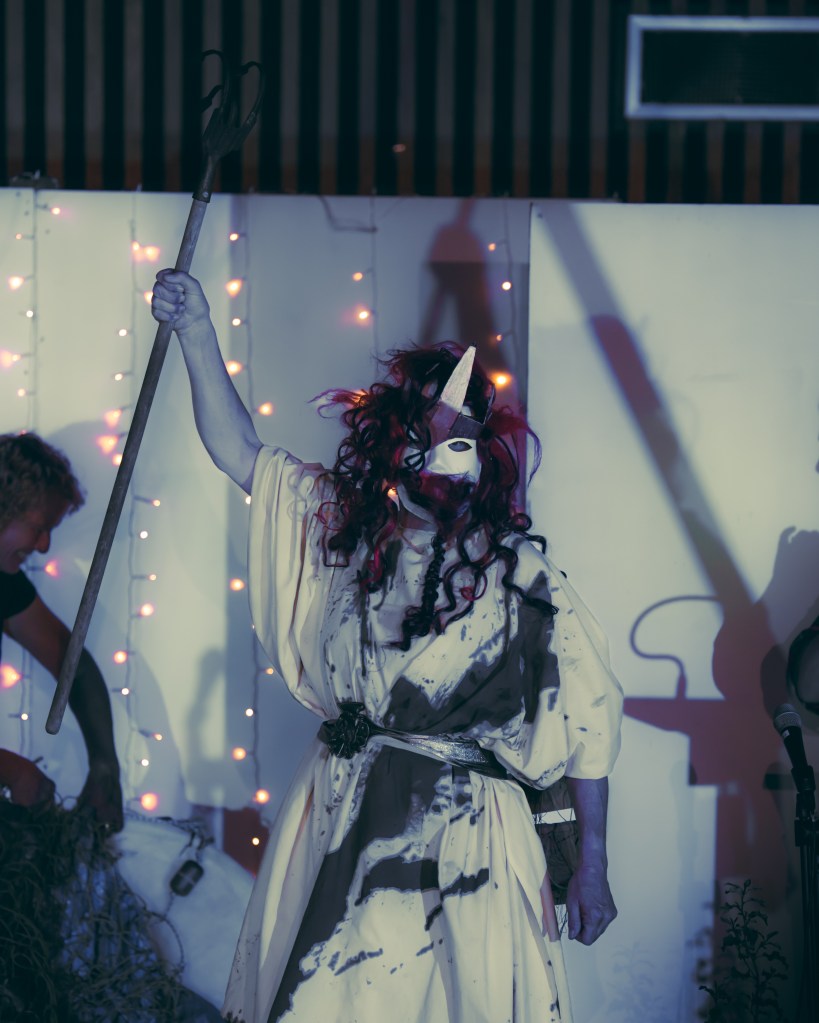
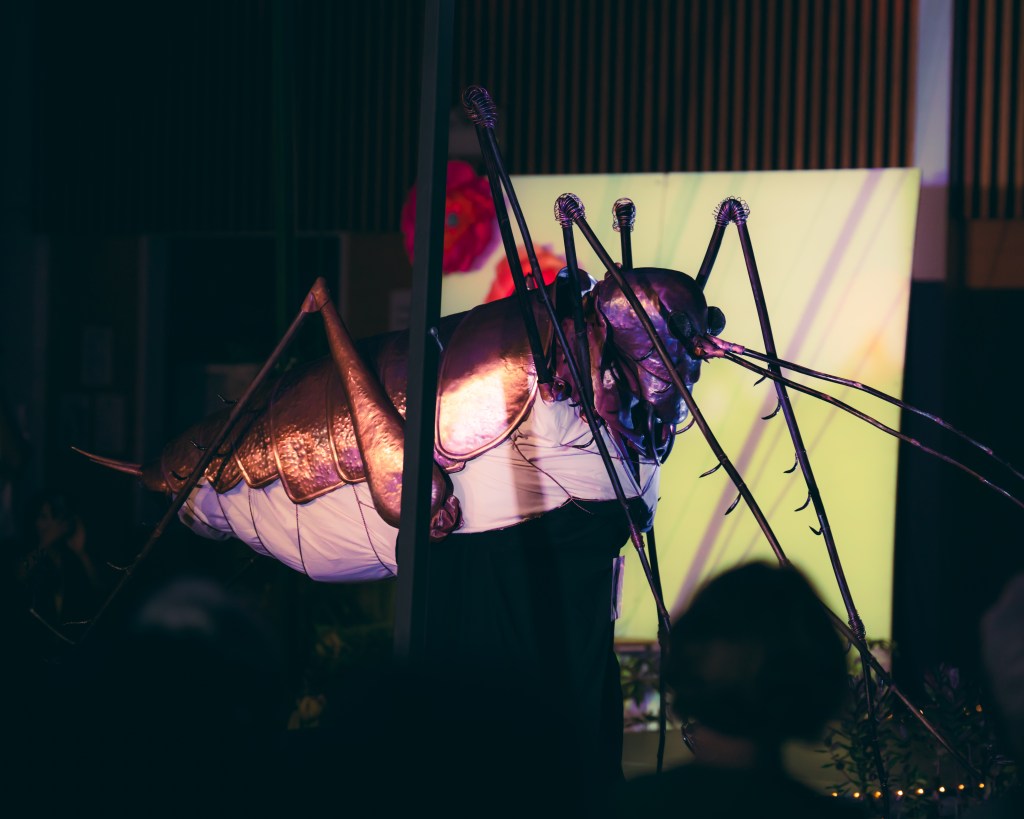
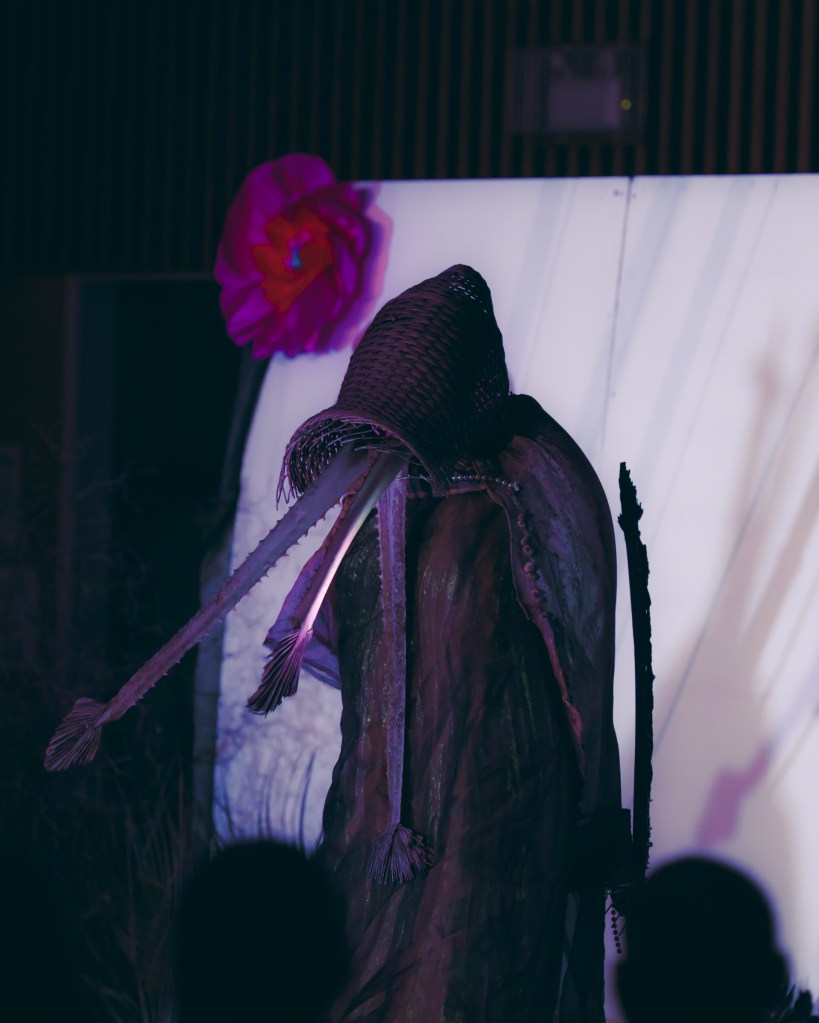
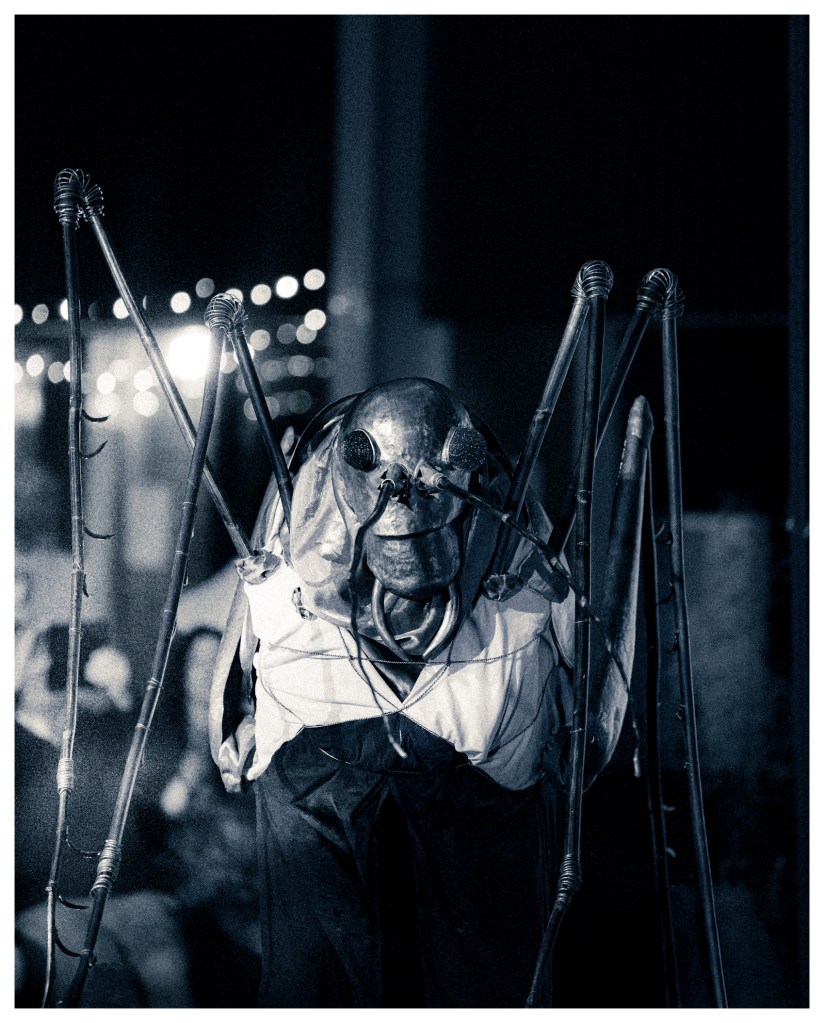
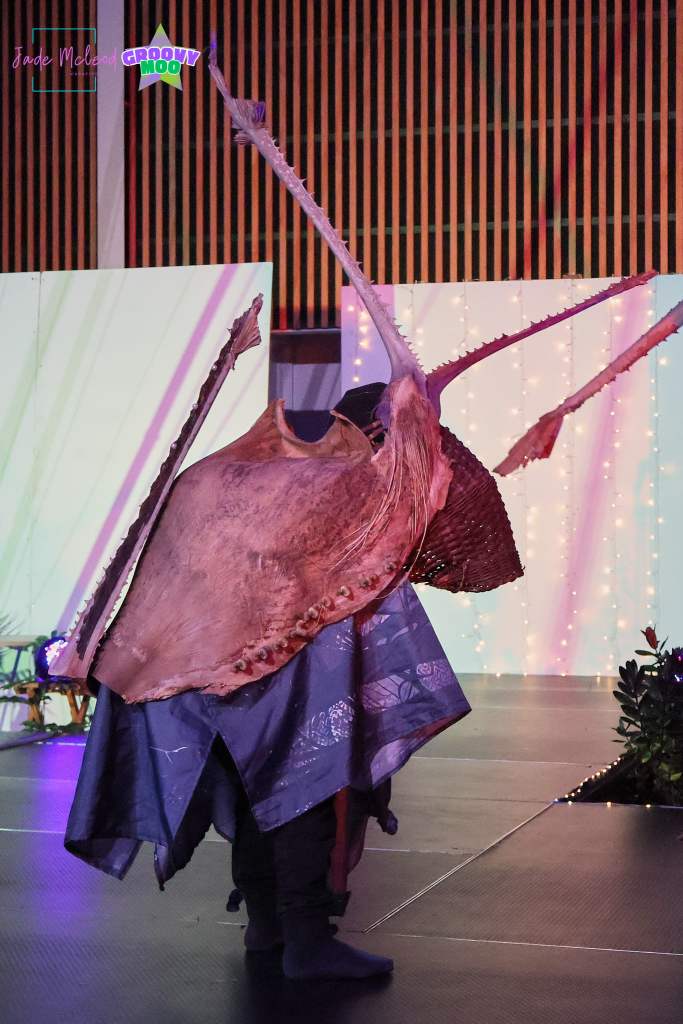
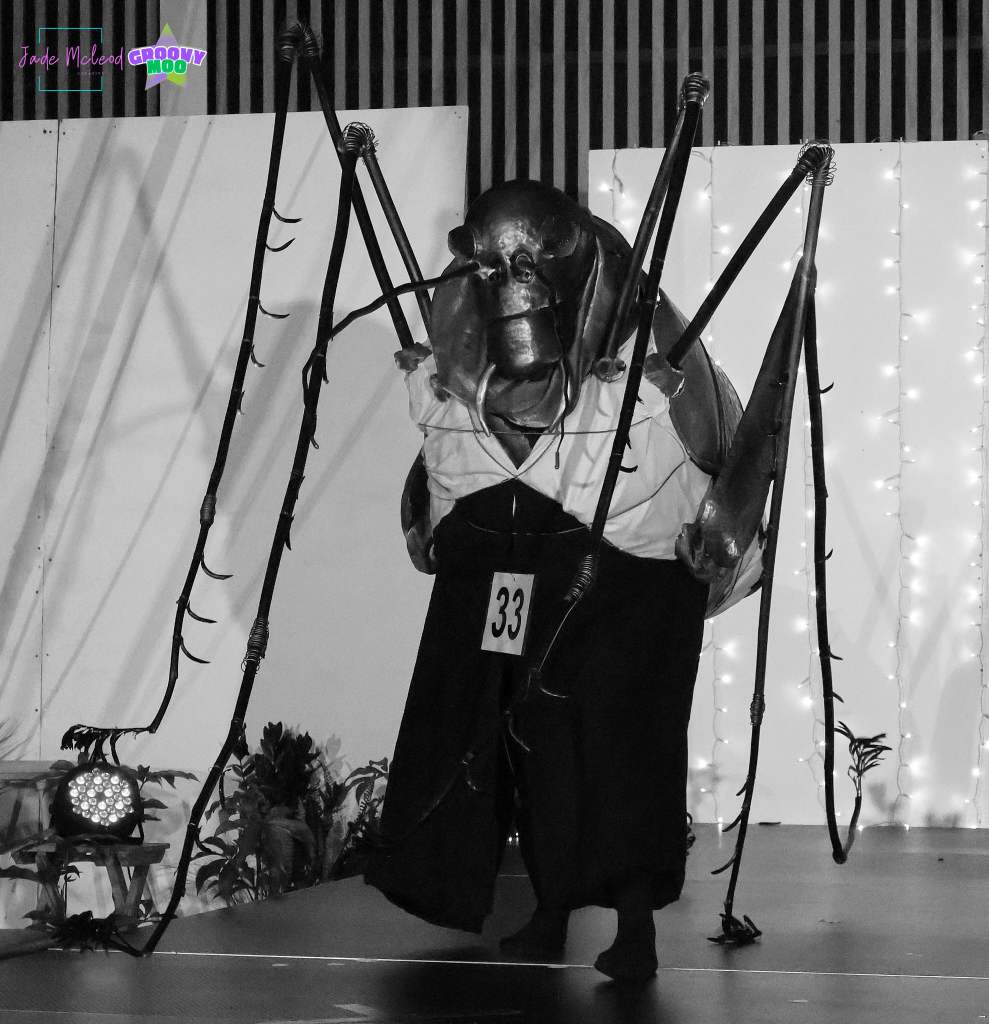
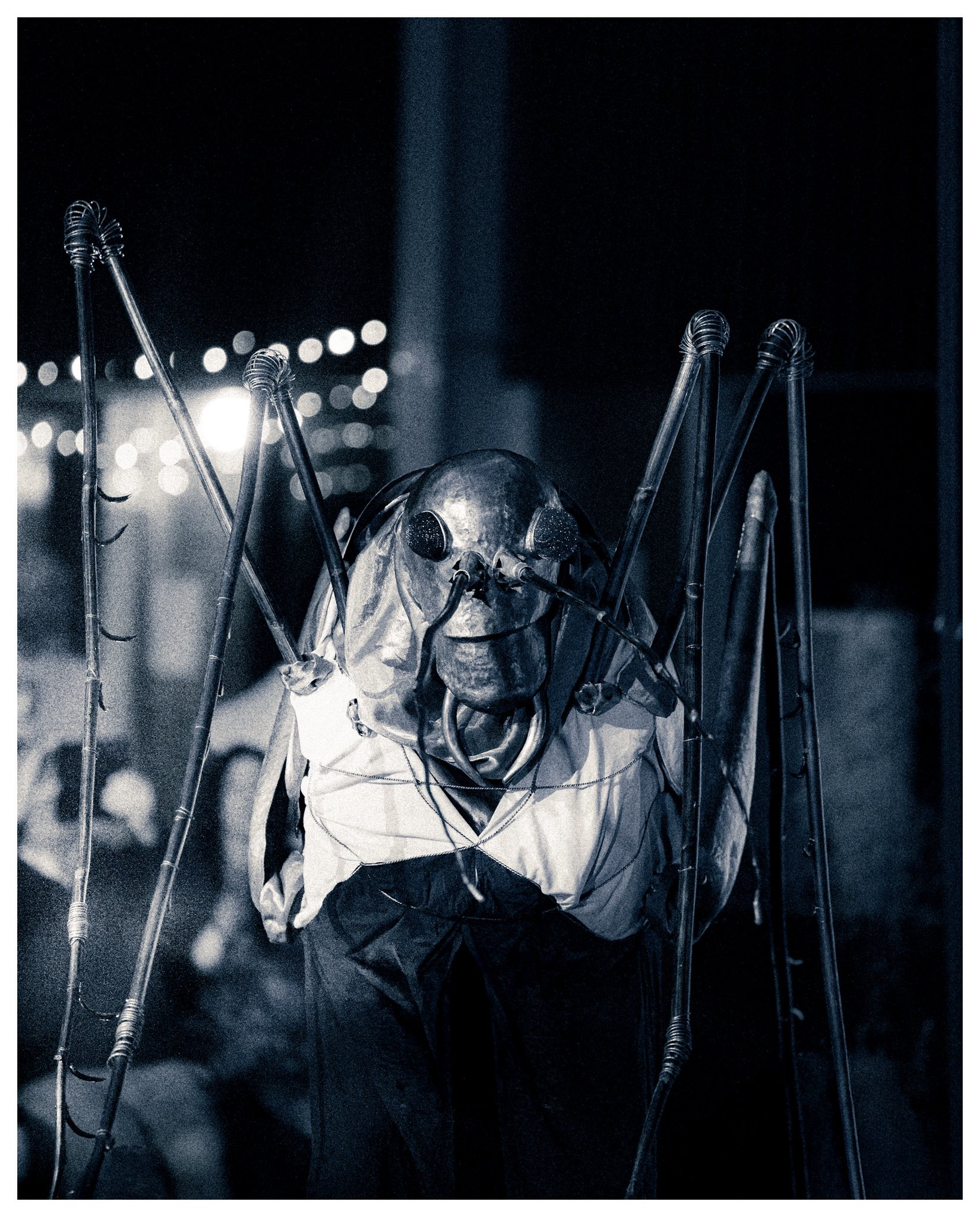
The winning entry in the adult category was a giant weta with an exoskeleton crafted from copper by German artisan Chris Seufert, the very creative Sacha Healy and their trusty assistant Ekkehard Unger and expertly modelled by Sacha Healy.

Wētāpunga: The God of Ugly Things” by Chris Seufert, Sacha Healy and Ekkehard Unger and modelled by Sacha Healy (Photo by Dan Murton)

Wētāpunga: The God of Ugly Things” by Chris Seufert
, Sacha Healy and Ekkehard Unger and modelled by Sacha Healy (Photo by Jade McLeod)
Wētāpunga: The God of Ugly Things” by Chris Seufert, Sacha Healy and Ekkehard Unger and modelled by Sacha Healy (Photo by Dan Murton)

For many weeks, as I walked our dog “Kawa” around the Karamea Estuary Walkway, I would stroll past Chris’ house and hear industrious metallic banging from his shed, along with lots of laughter, accompanied by Frank Zappa music, and wonder to myself, “What are they building in there?” I knew better than to ask and managed to suppress my curiosity, and was completely overwhelmed on show night by the incredible creation they presented. With the likeness of a real weta, completed with long, thin harakeke flax flower stems for its legs and antennae, their entry was a stand-out winner among tough competition on the night.

The weta was accompanied by a poem that described the creation and the motivation behind it well:

Wētāpunga: The God of Ugly Things

Into the deep, into the murk,
Into the darkness where ugly things lurk-
Light up your courage,
Breathe life from it’s sparks,
Transmogrify fear into luminous art!

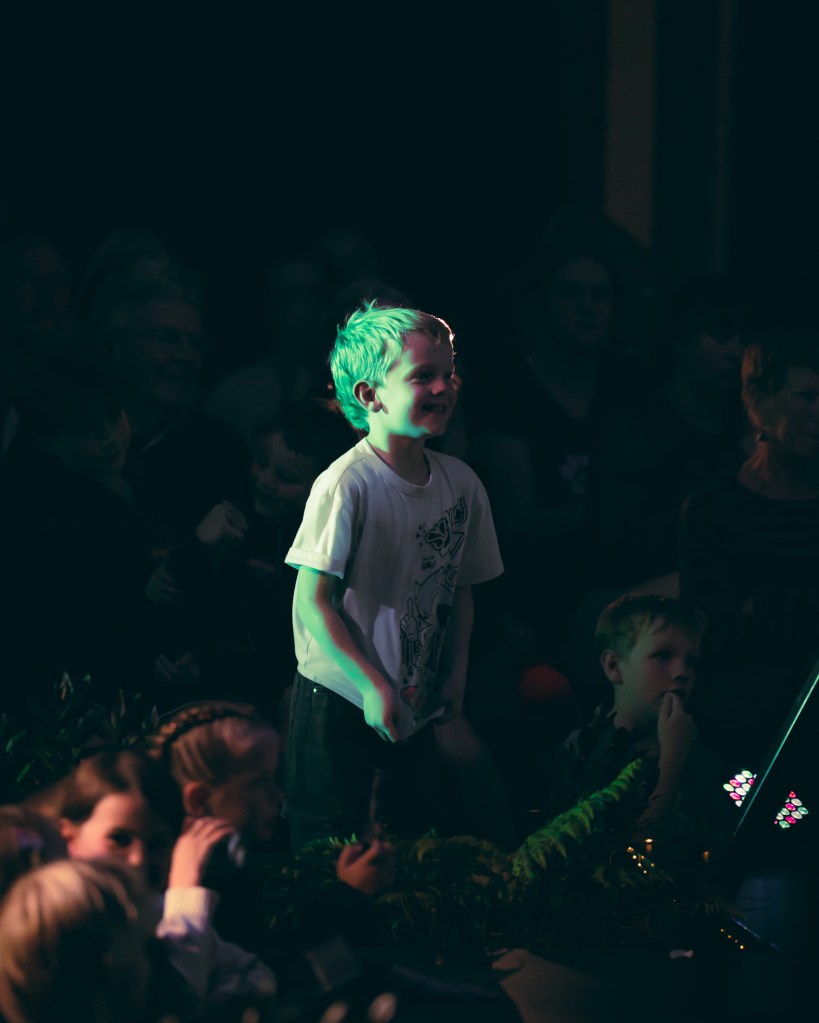
Wētāpunga was so life-like, it scared the children sitting at the front of the stage. The creation will be on display in window of the old Global Gypsy Gallery, opposite the Karamea 4-Square supermarket. This entry raised the already high bar set by the KaraWearable event, so go and check it out and be inspired to create your own piece for the next show.


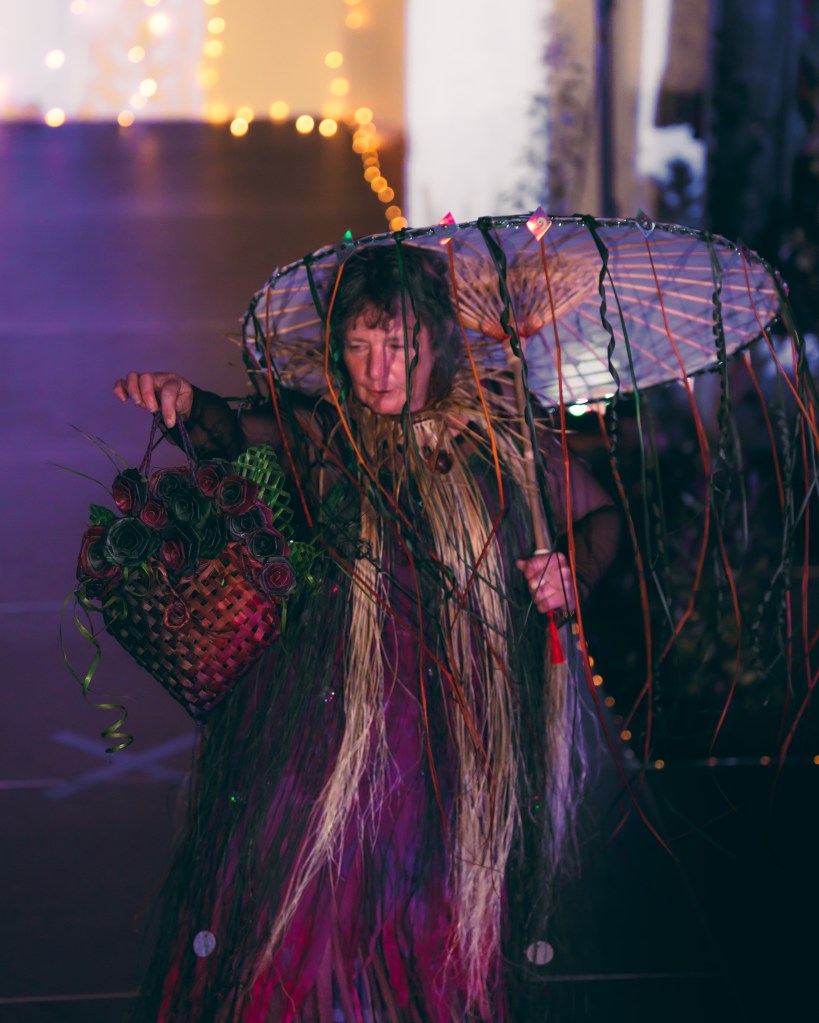
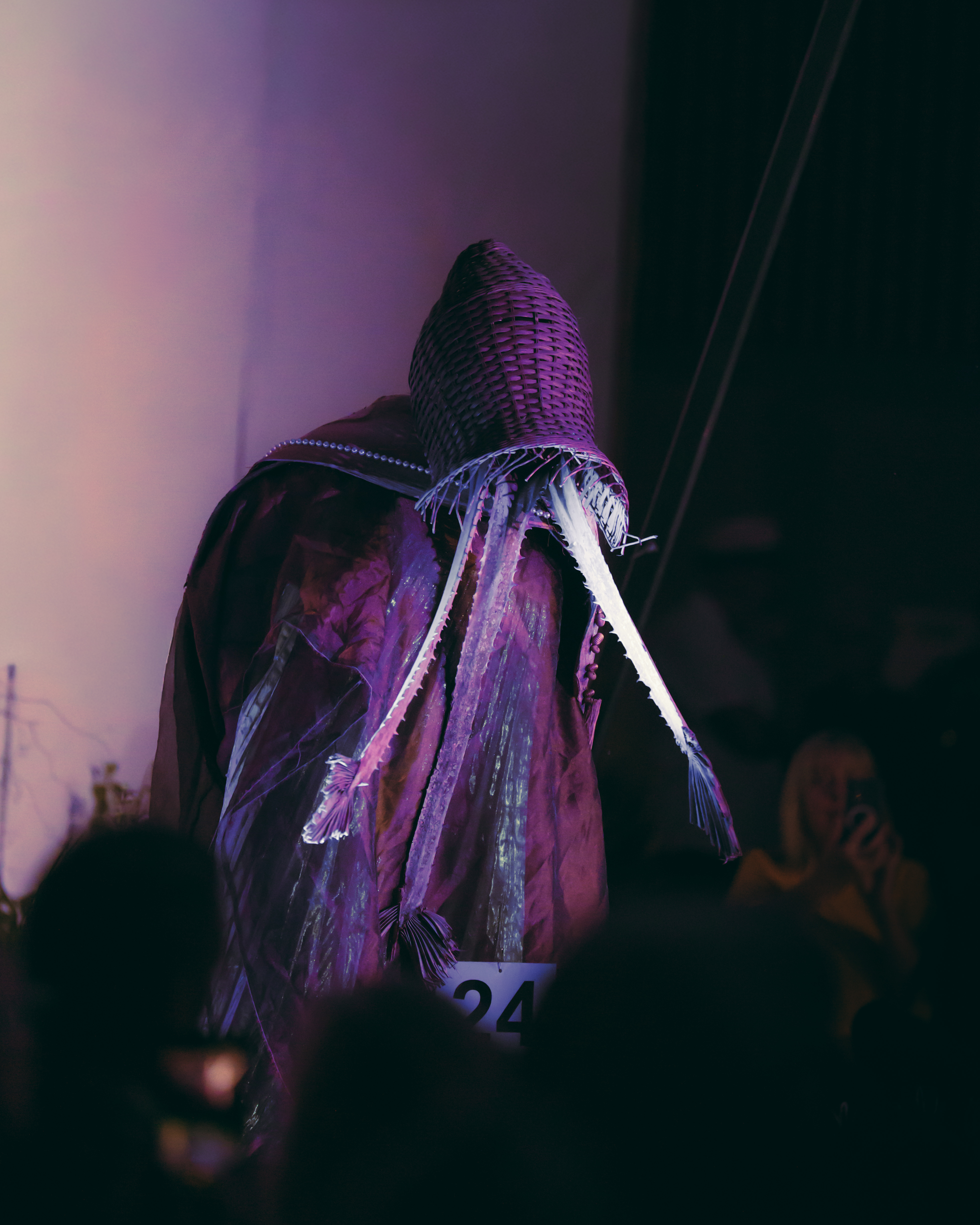
Second place in the Adult Category went to Mary Bell and her son Sam, who designed, crafted, and modelled a creation titled “Mutating Microbes.” The mother and son team are from over the hills in Granity, one of the entries from outside of the Karamea region. Mary has been an enthusiastic supporter of the Karawearable show over the years and has won numerous awards. She is a great wearable artist…Congratulations, Mary and Sam, thanks for your dedicated and ongoing support of the event.

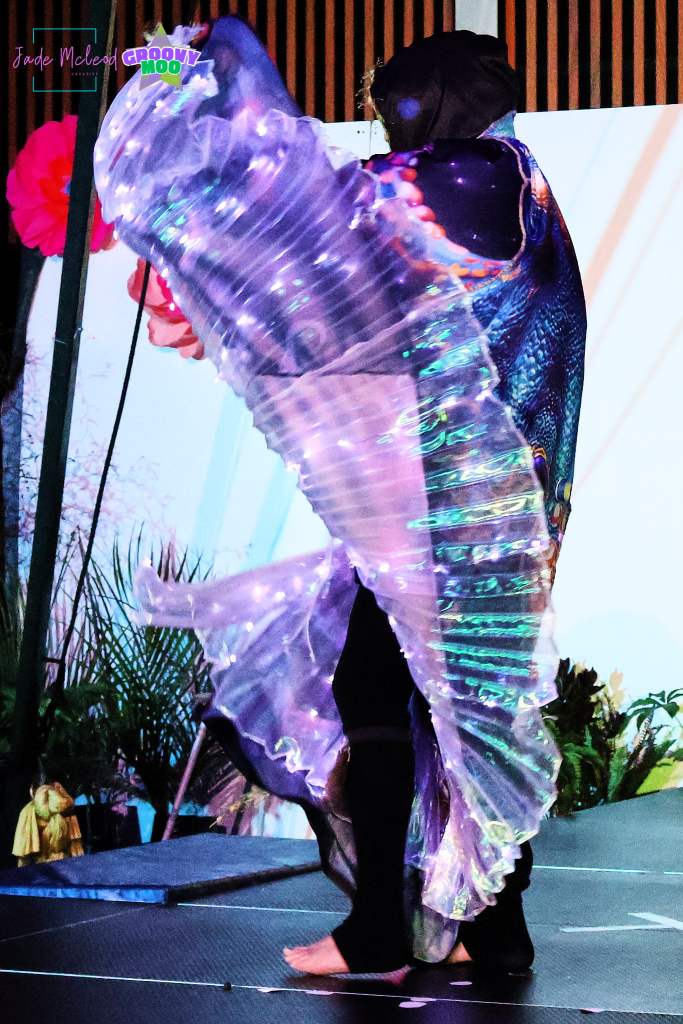
“Mutating Microbes” explores the resilience of life beyond humanity. Inspired by prehistoric organisms and the hidden microscopic world, the work imagines microbes evolving and adapting into new forms in Earth’s future. Through mutation and metamorphosis, the creations reflect on nature’s capacity to endure in the deepest reaches of time, darkness, and transformation. So the work is less about the depth of the ocean, but about the deep, unseen processes of evolution and the enduring power of life to adapt long after human influence has faded.

“Mutating Microbes” designed and modelled by Mary Bell and son Sam from Granity. (Photo by Dan Murton)

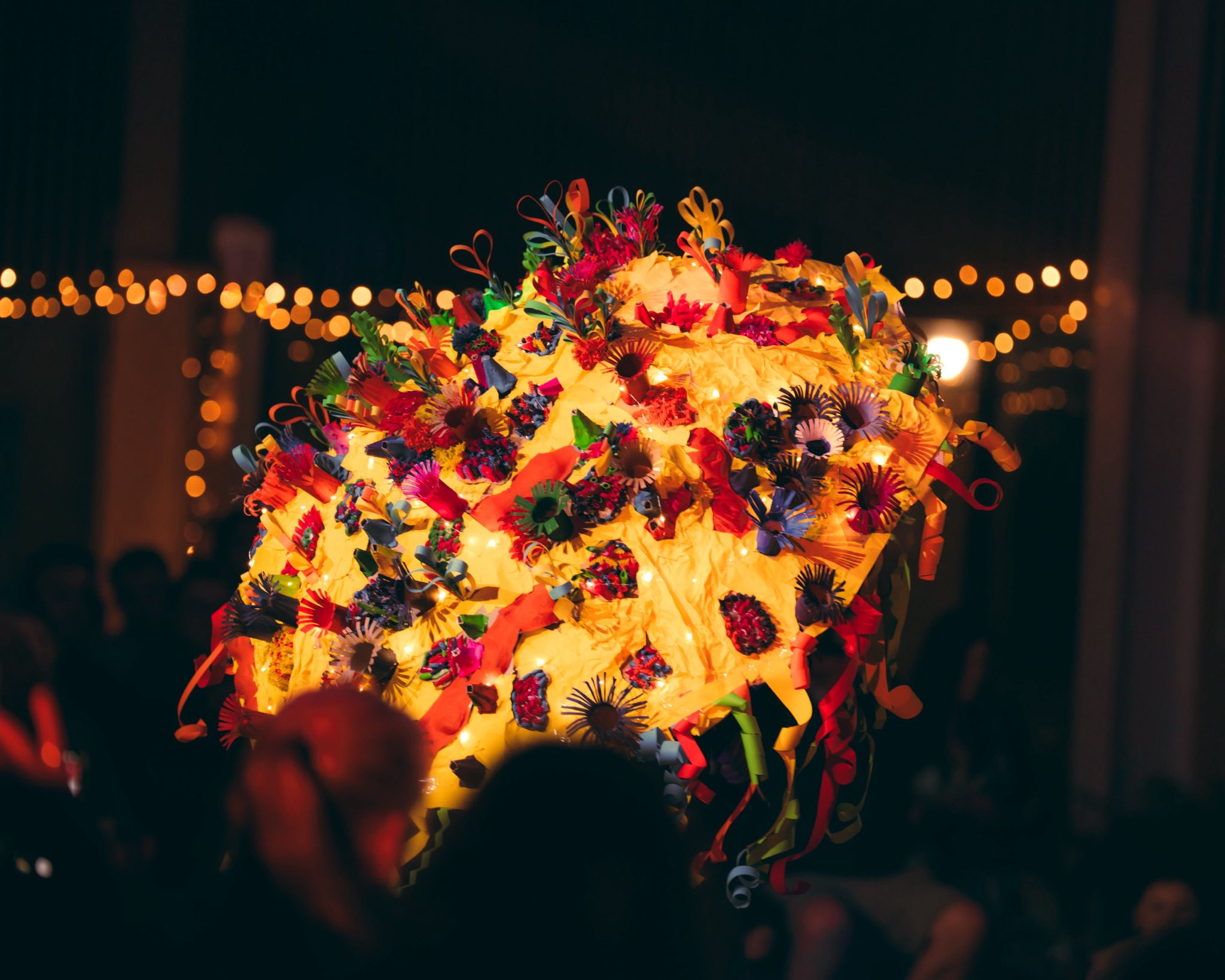
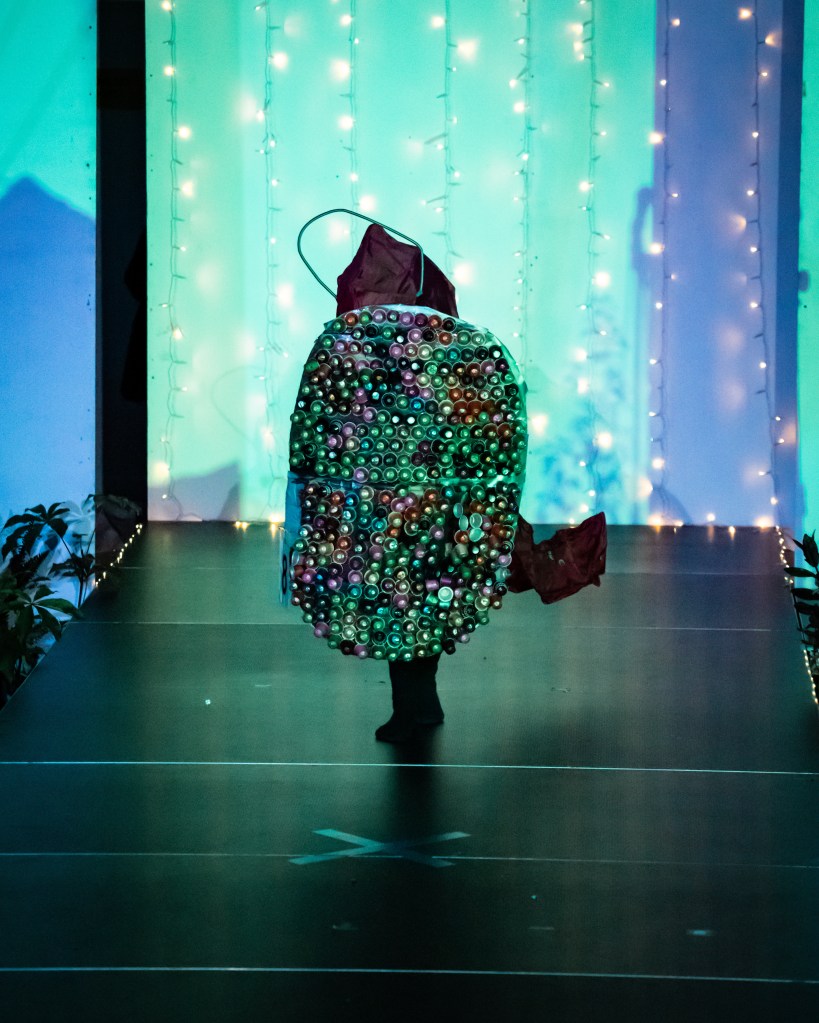
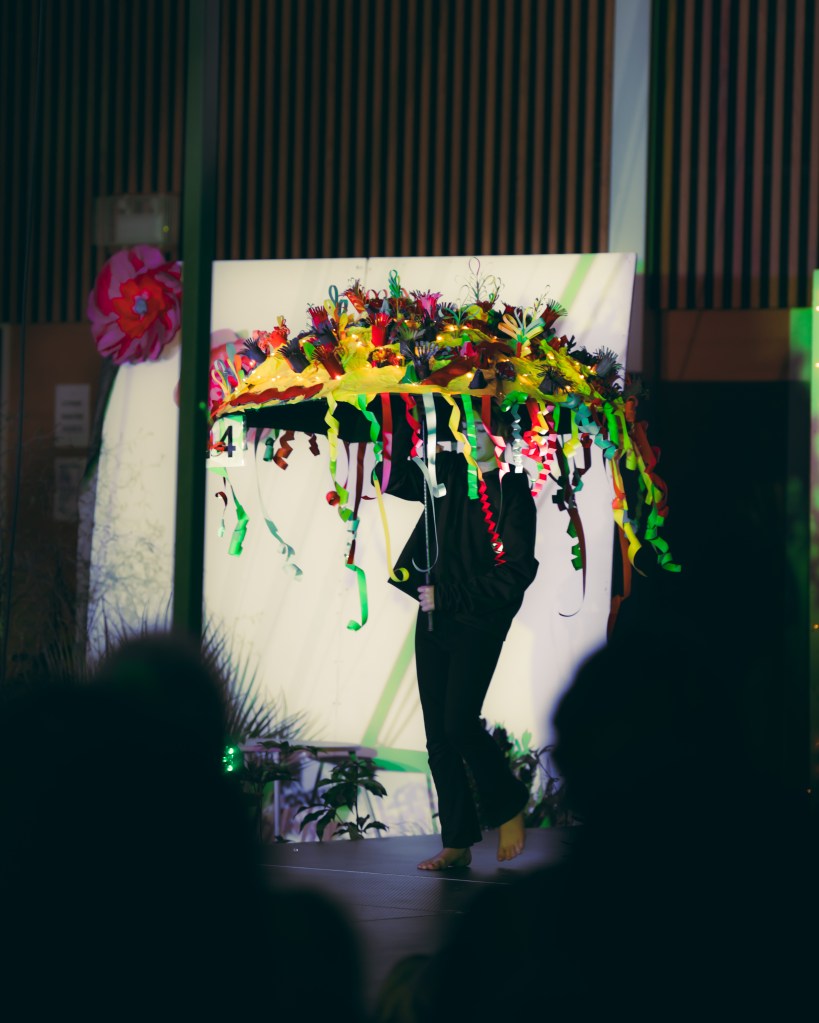
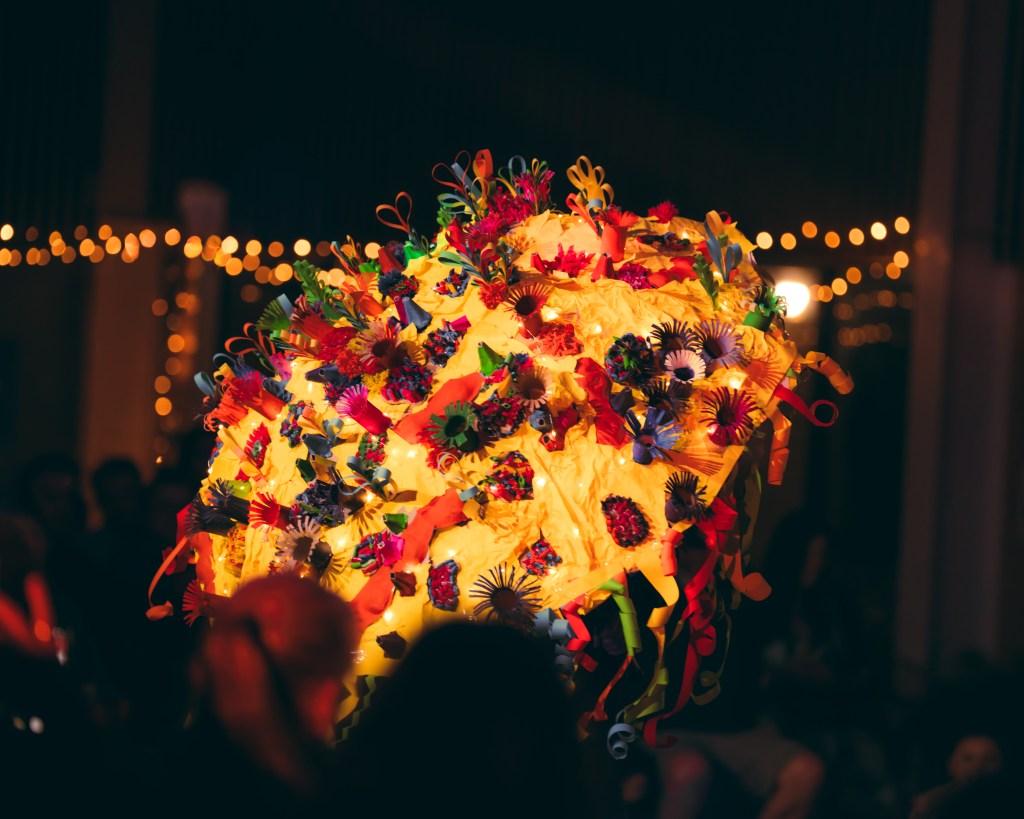
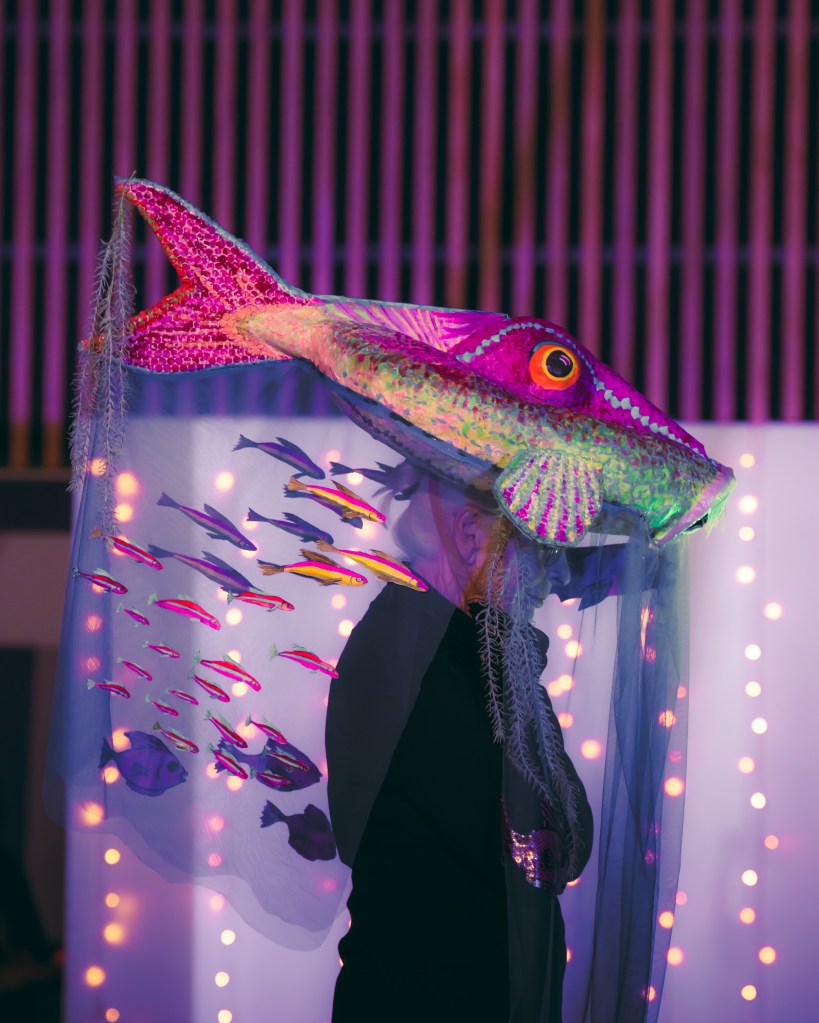
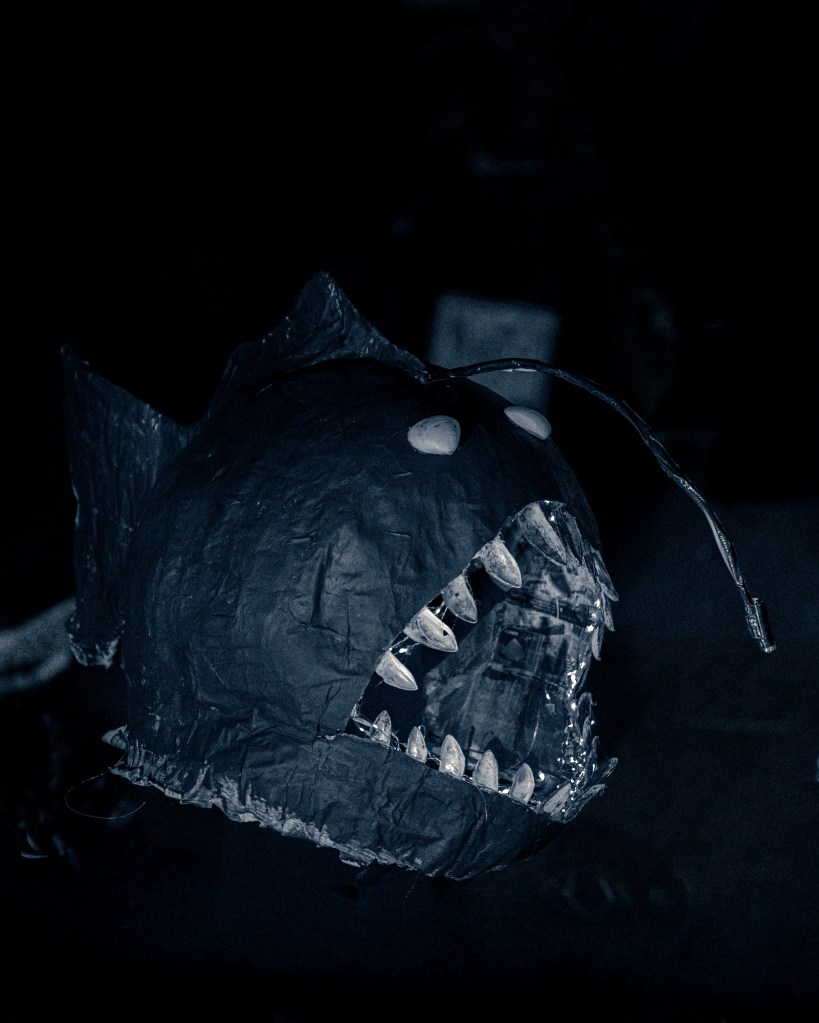
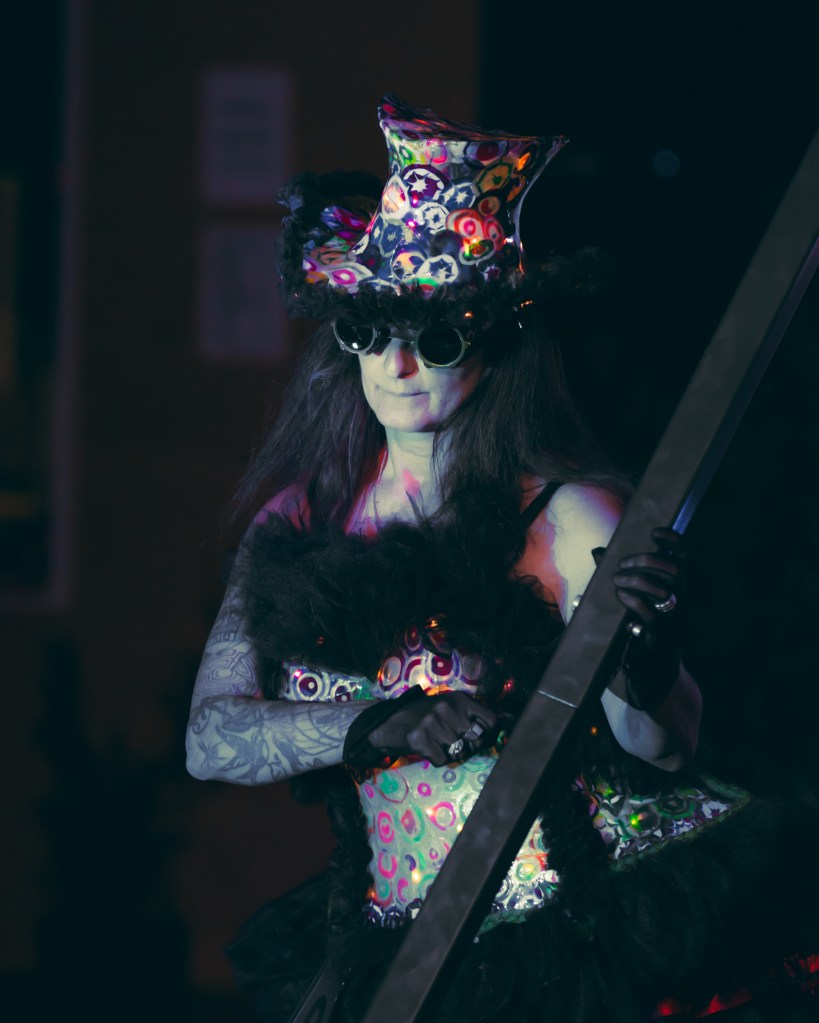
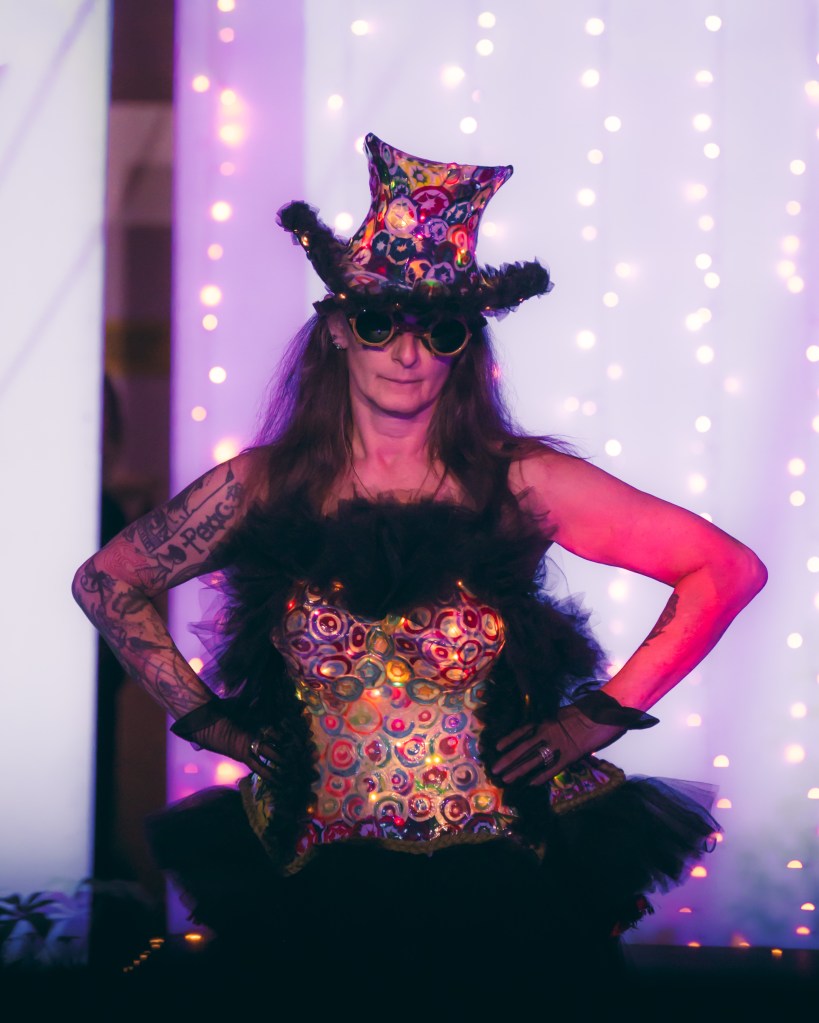
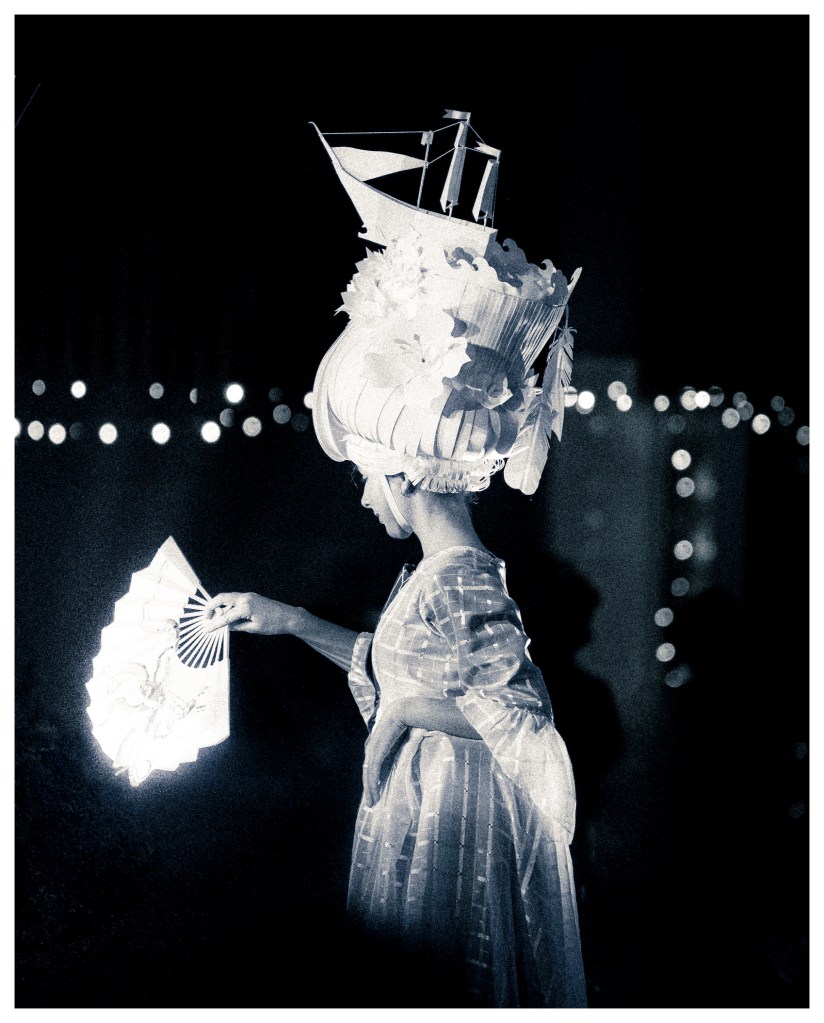
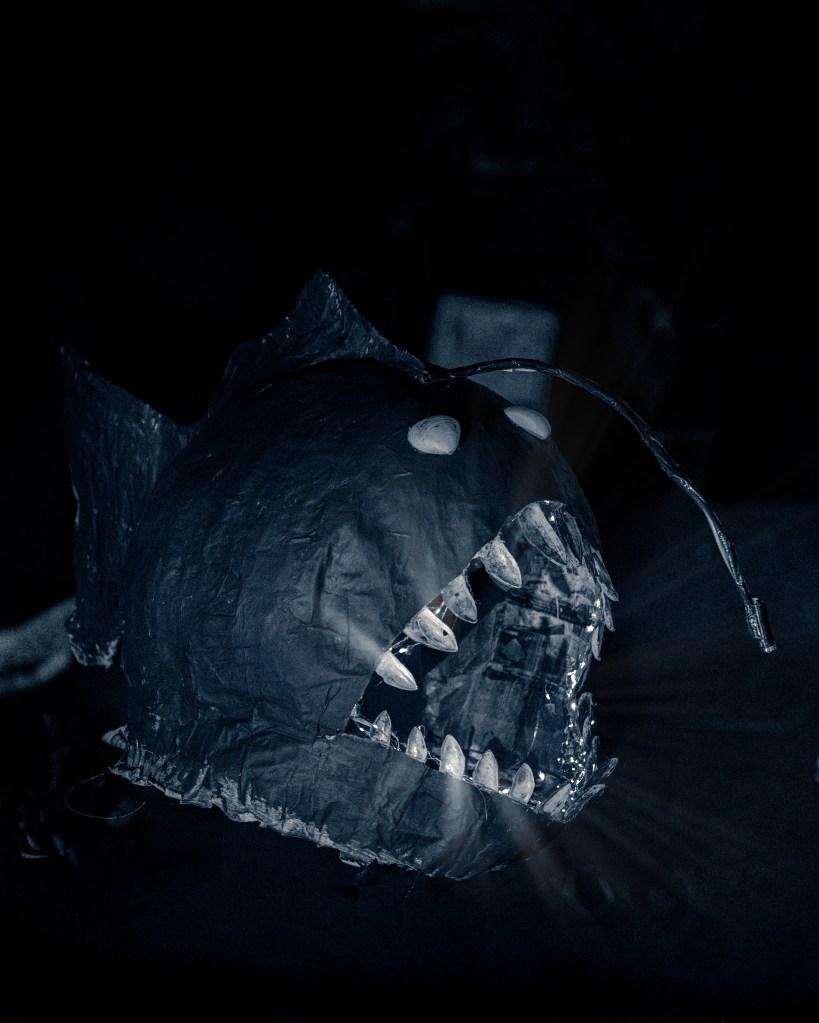
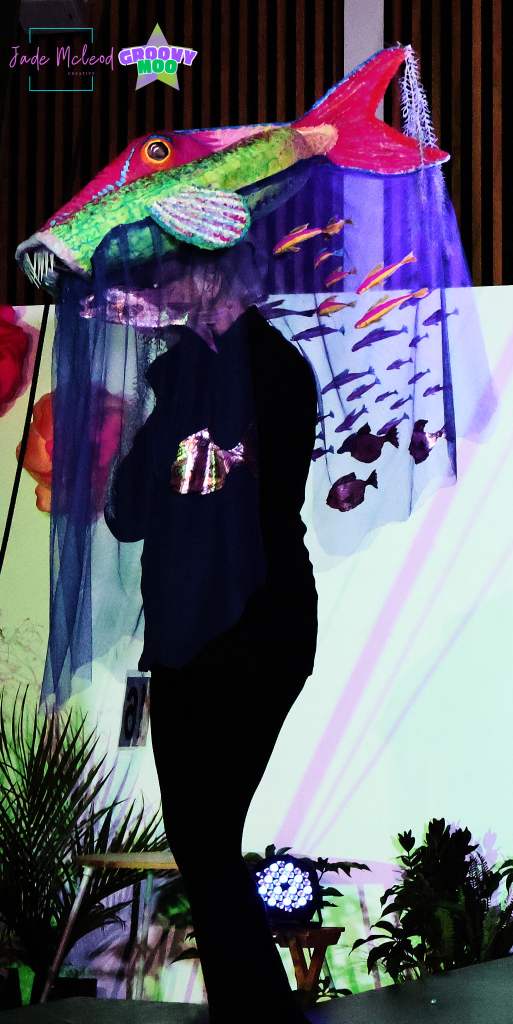
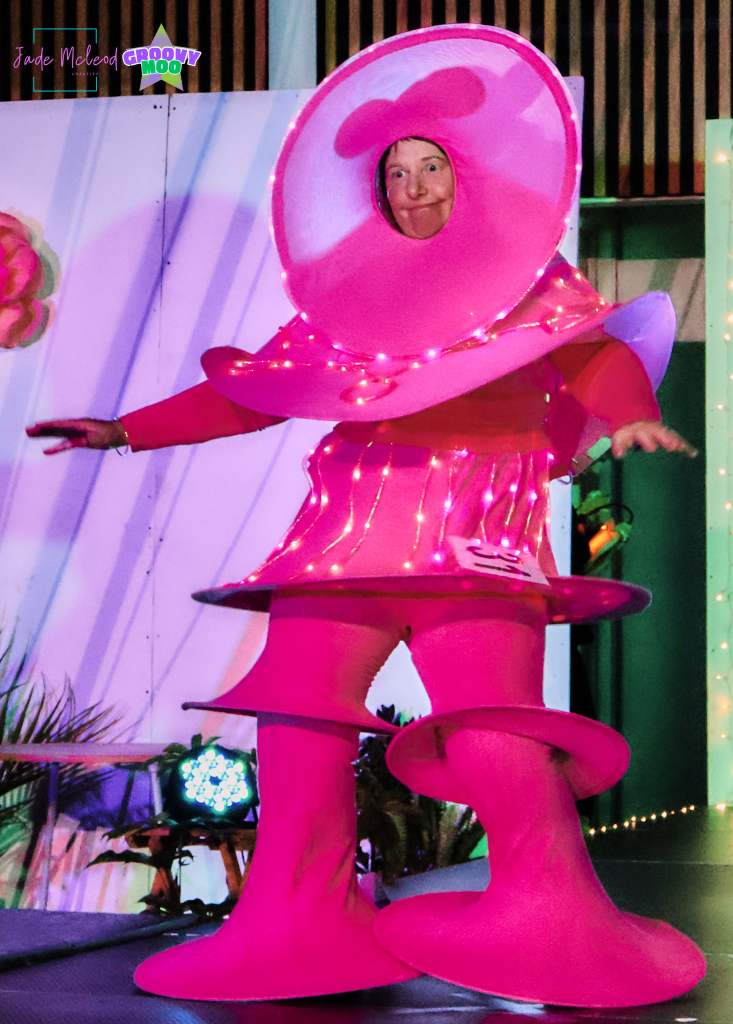
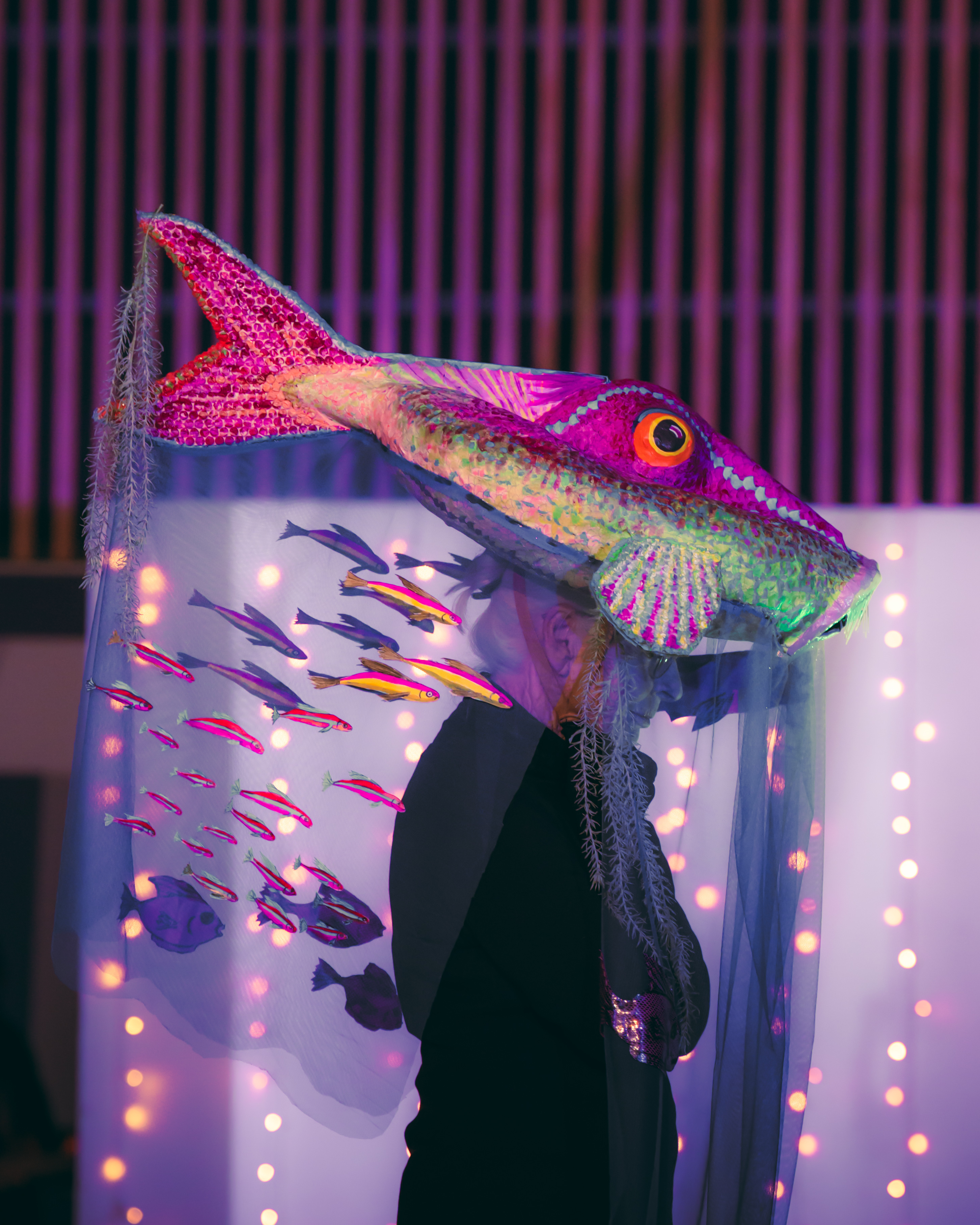
A hat titled “Fishervessence,” designed and modelled by Patricia August, also from Granity, took out the “Best Accessory” award. Her creation was made from papier-mâché and “bits and pieces” and cleverly lit with LED lights.

“Fishervessence,” designed and modelled by Patricia August, from Granity. (photo by Dan Murton)

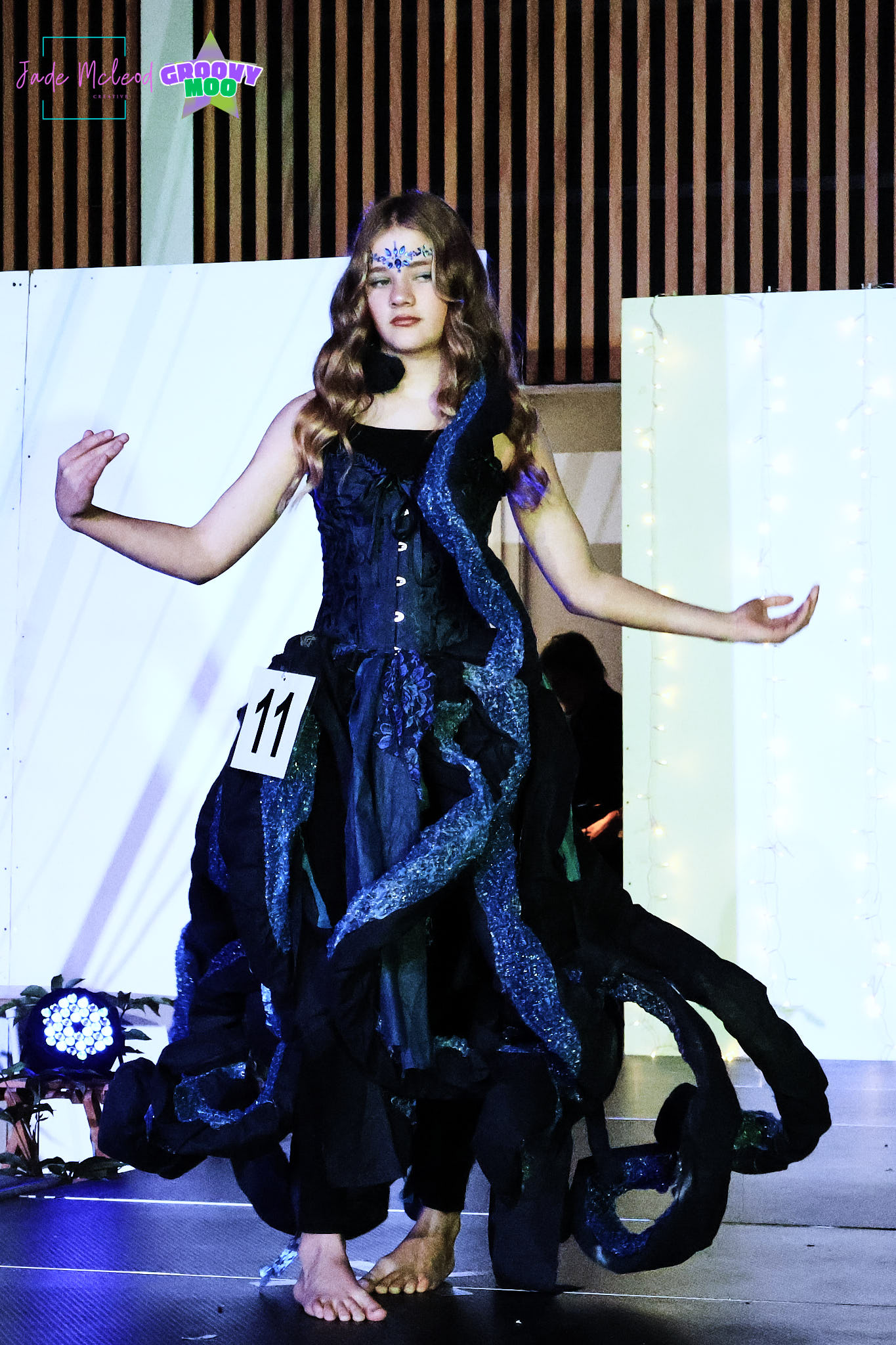
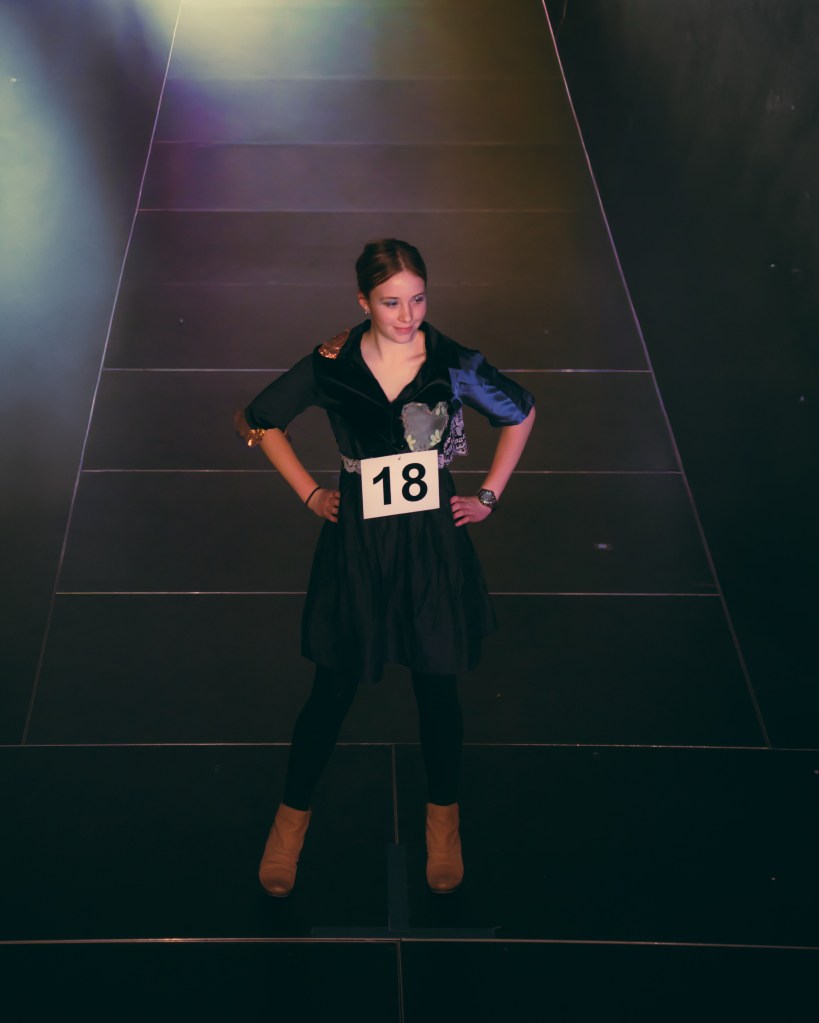
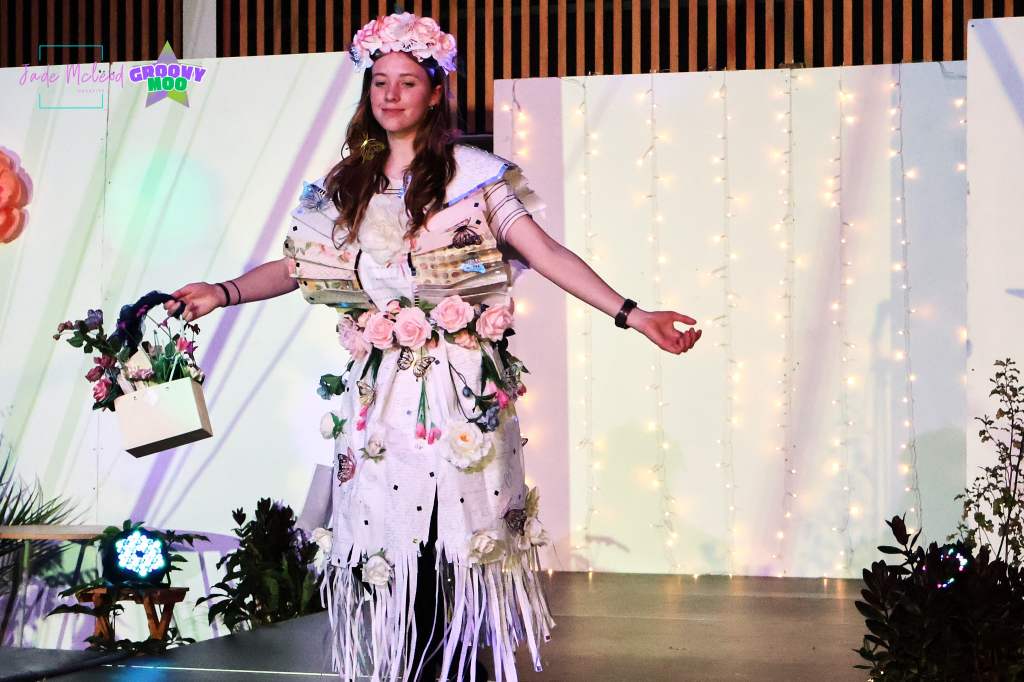
The “People’s Choice Awards” are always a popular feature of the show. Audience members can vote for their favourite entry, and their votes are collected from the crowd by runners who take them backstage to be counted. This year’s people’s choice for the Youth Section went to designer Diva Murray with “Tetra,” which was beautifully modelled by her friend Eva McGrath.

As Diva’s father, I can hardly believe she managed to finish her creation, as two days before the show, the outfit was lying on her bedroom floor in a series of seemingly irreconcilable bits. With teenage confidence, she assured me that she knew what she was doing, and true to her word, she nailed it (or more accurately sewed it).

“Tetra”designed by Diva Murray and modelled by Eva McGrath (Photo by Dan Murton)

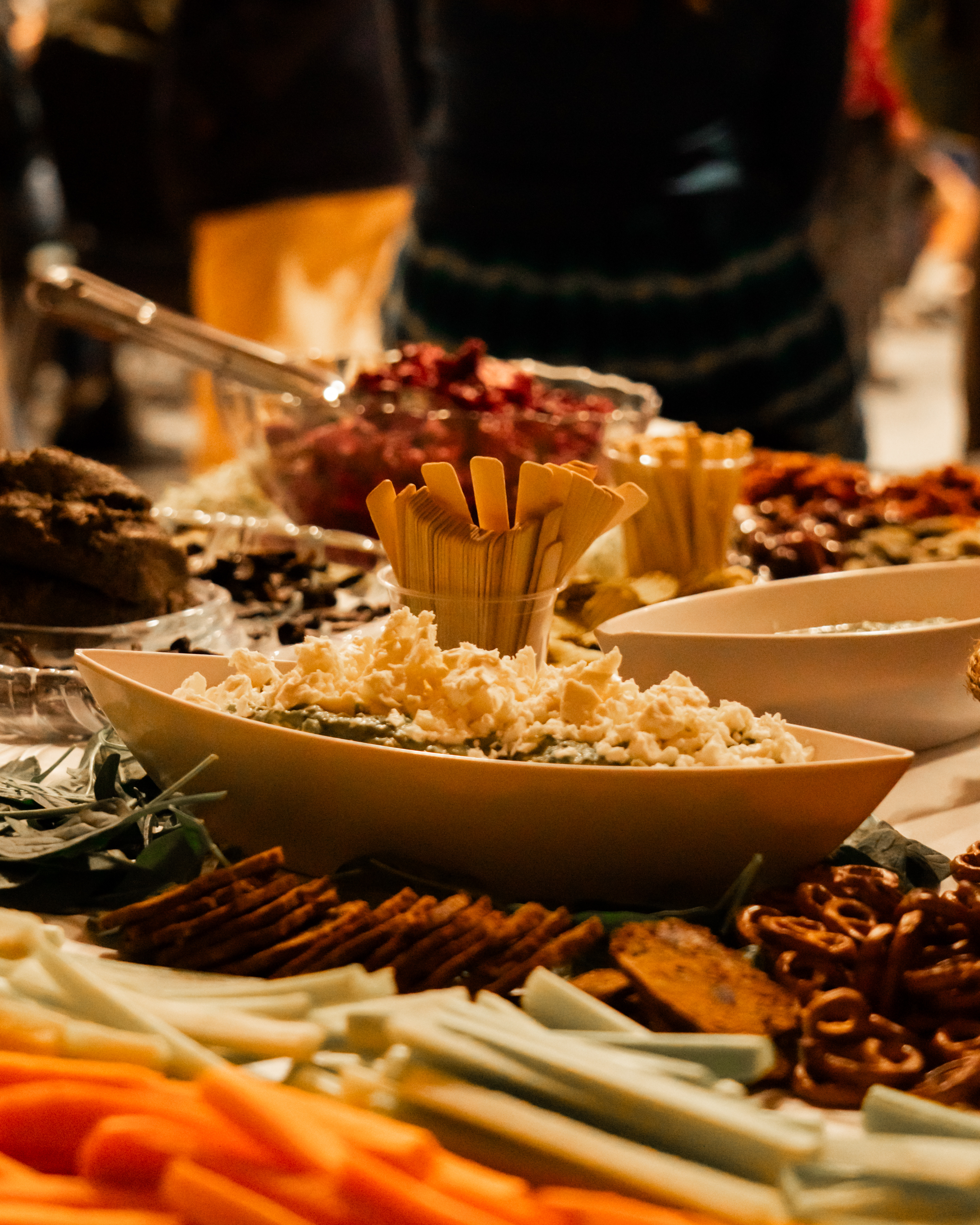
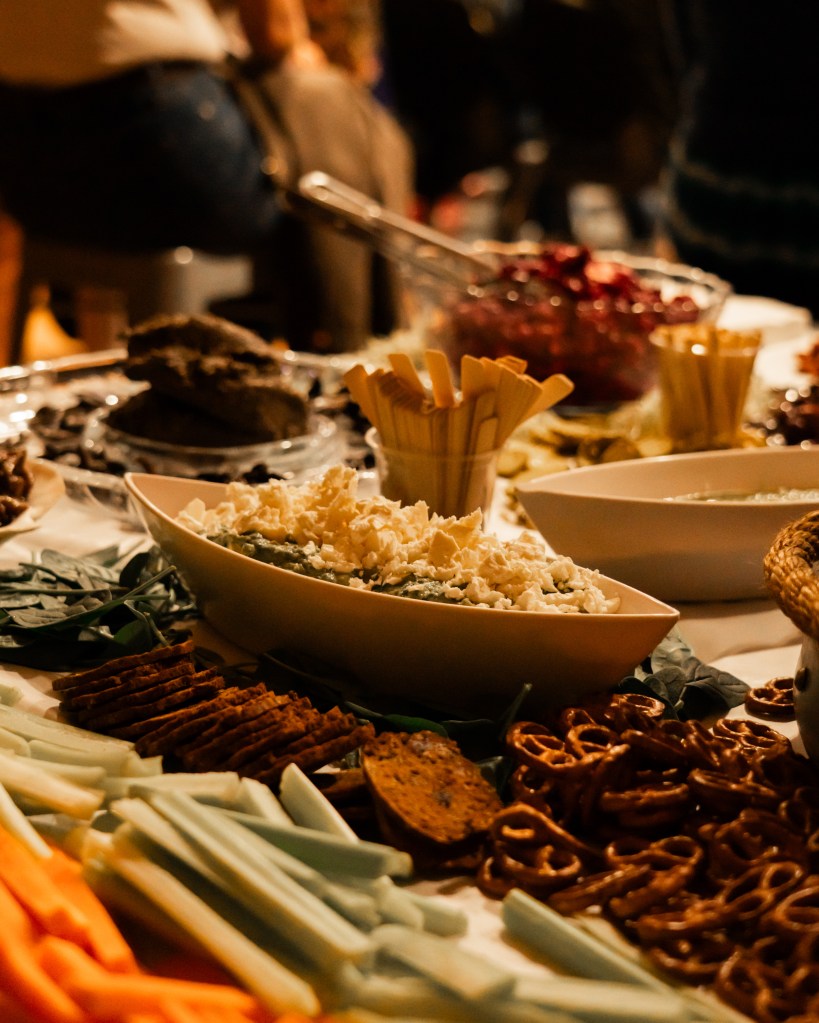
After the Youth portion of the show was completed, it was suppertime and the hungry crowd were treated to a sumptuous spread of gourmet treats by Vinnie Dunford, the Master Chef at the world famous (in Karamea) “Vinnies Cafe.”

Opulent repast from Vinnies Cafe in Karamea prepared by local culinary aficionado Vinnie Dunford. (Photo by Dan Murton)

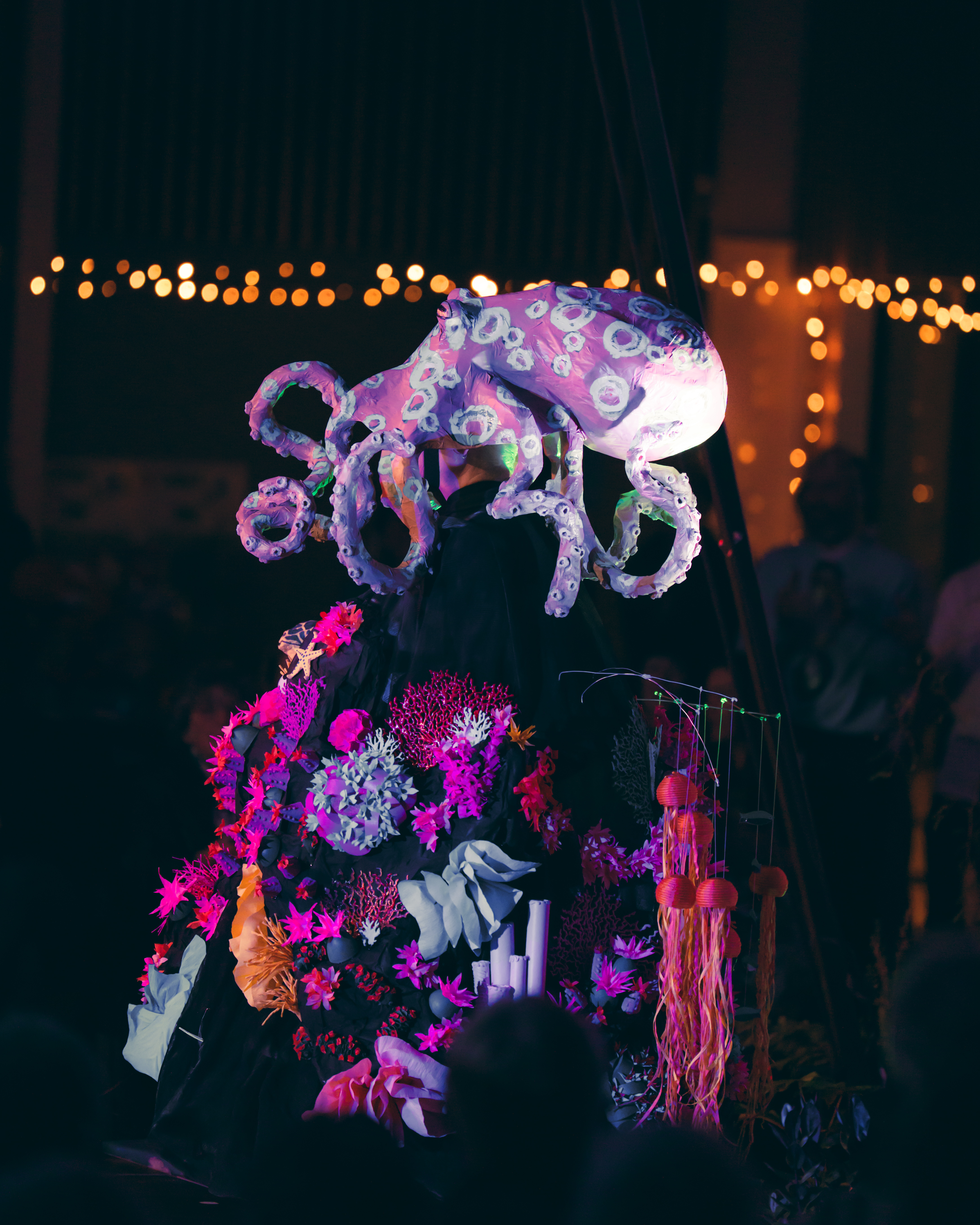
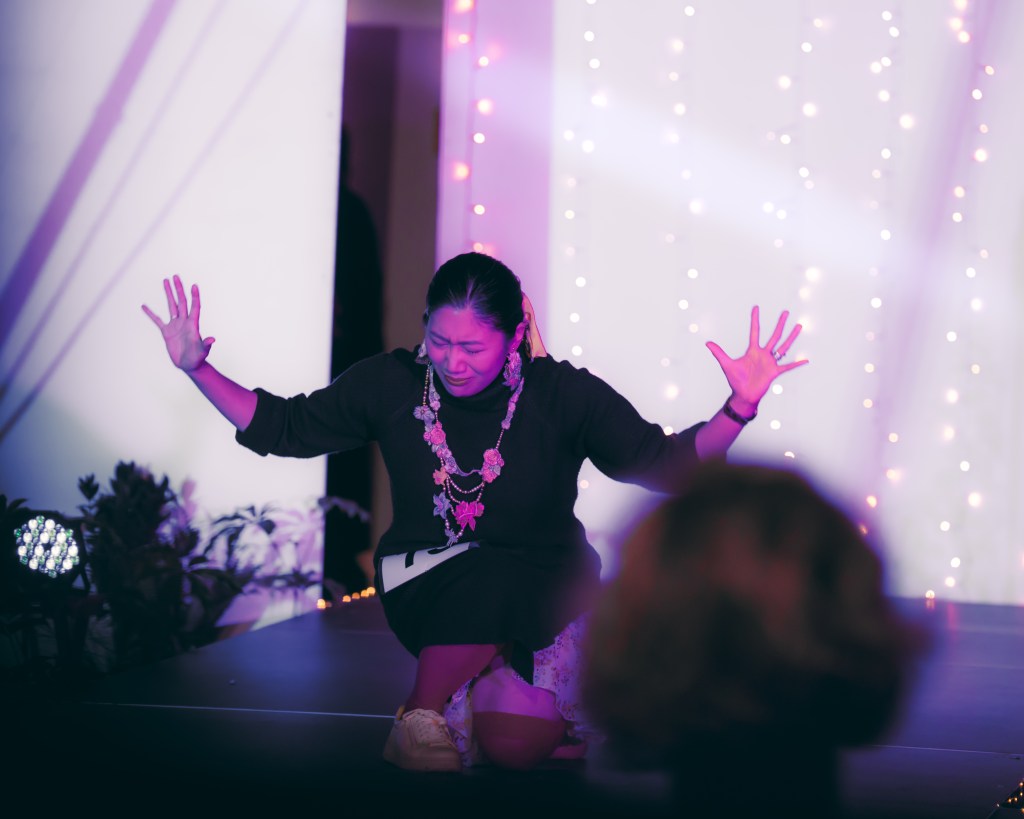
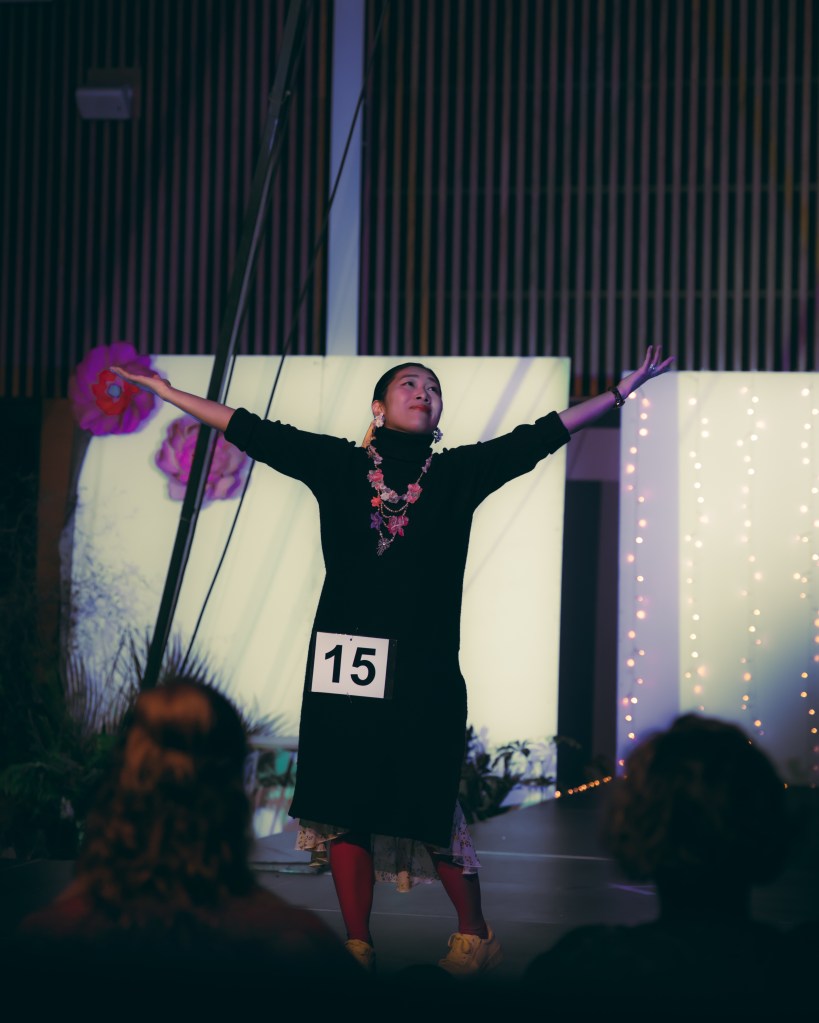
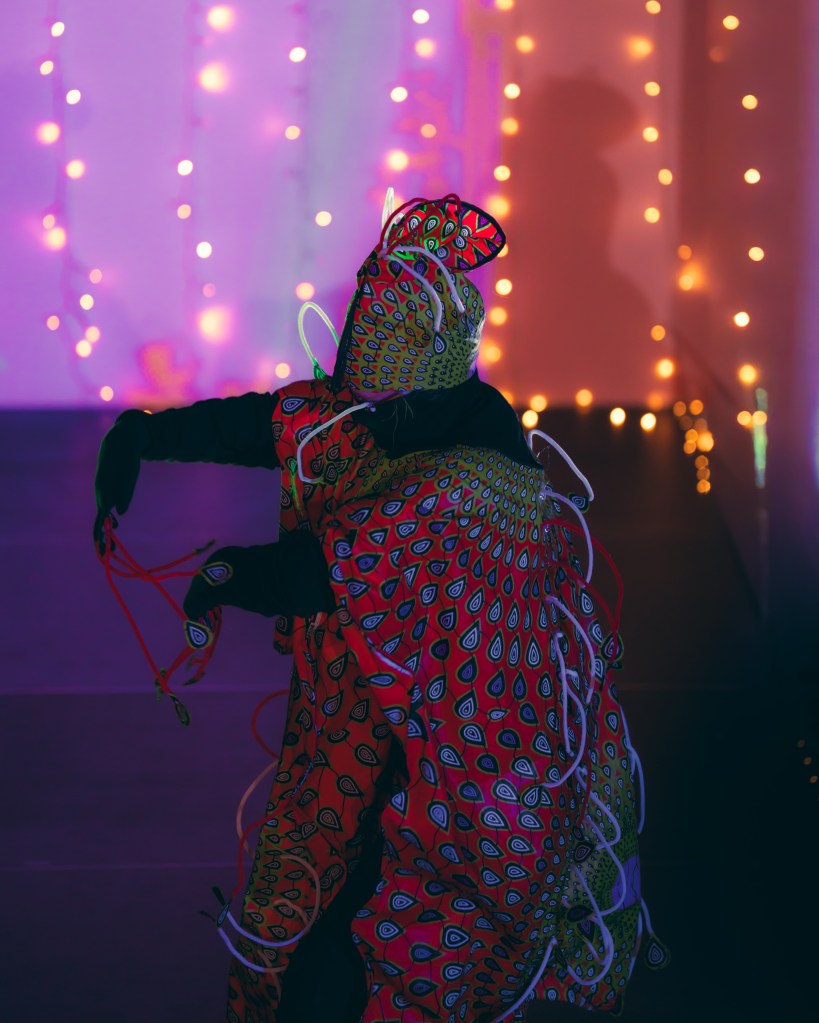
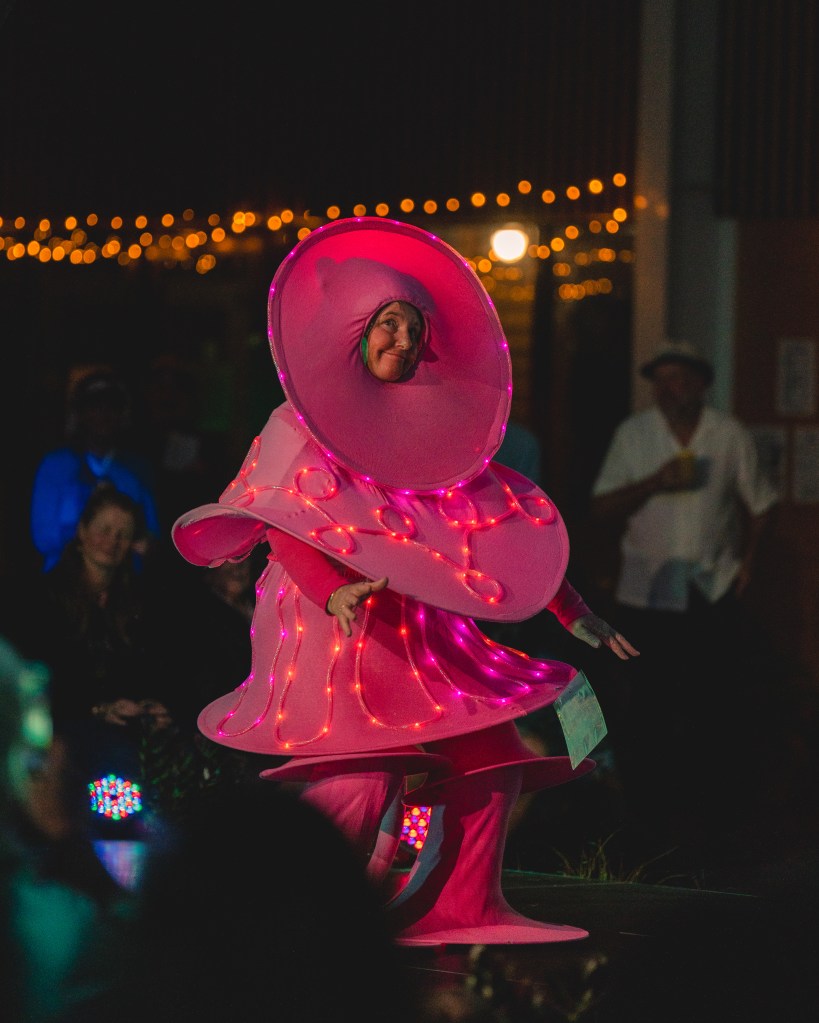
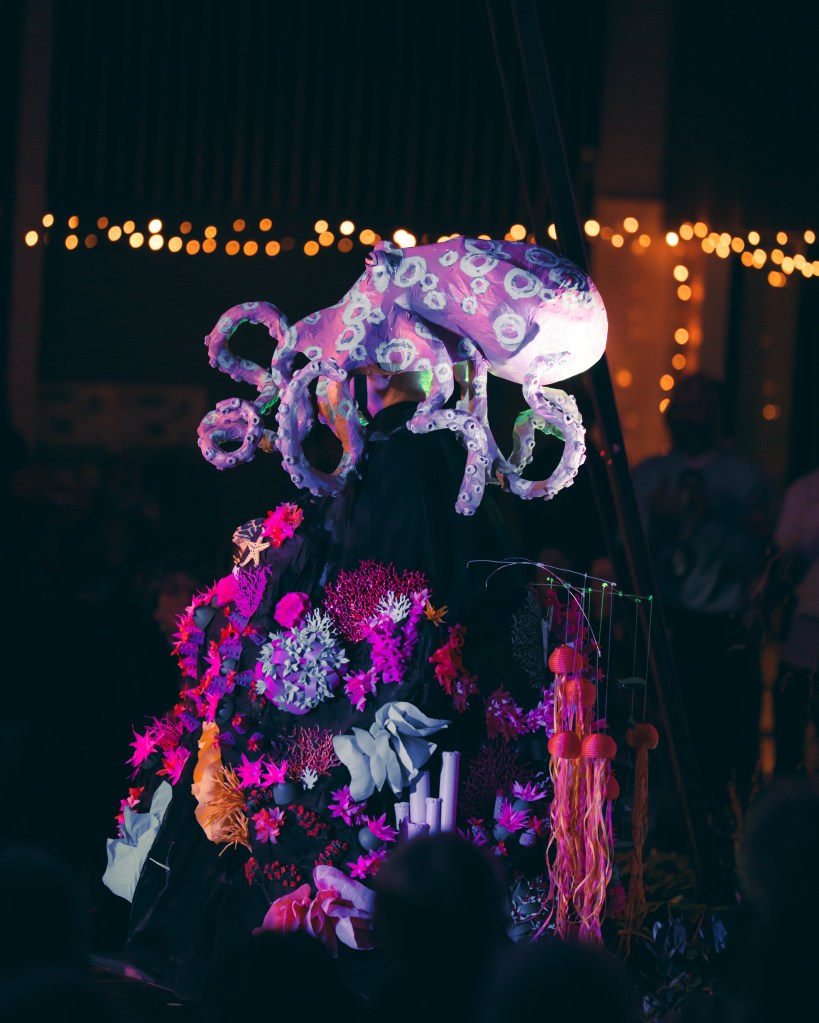
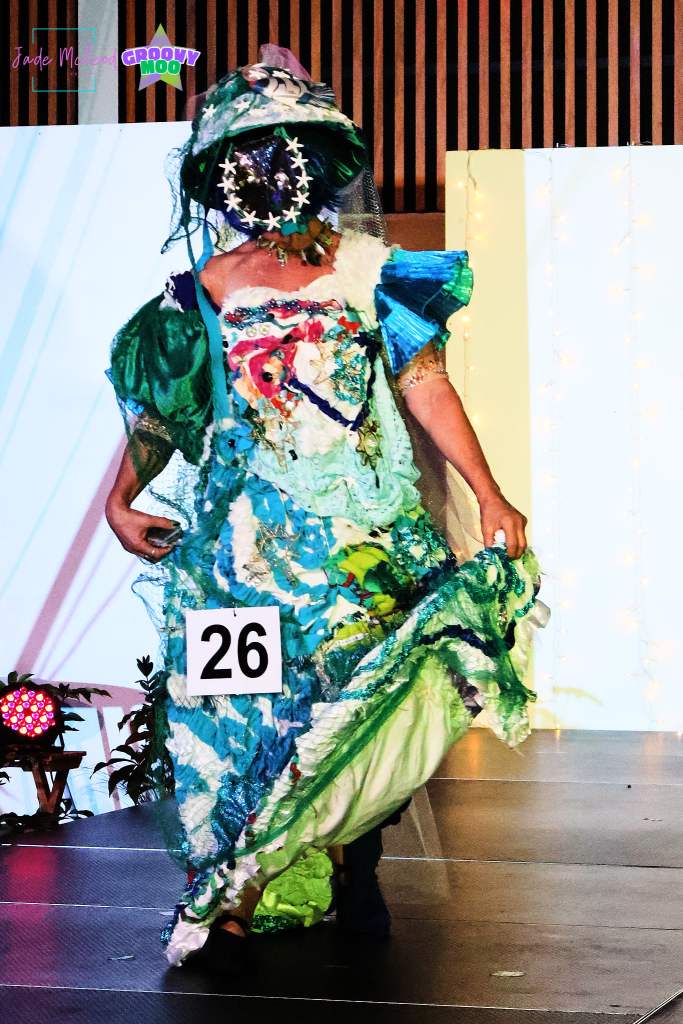
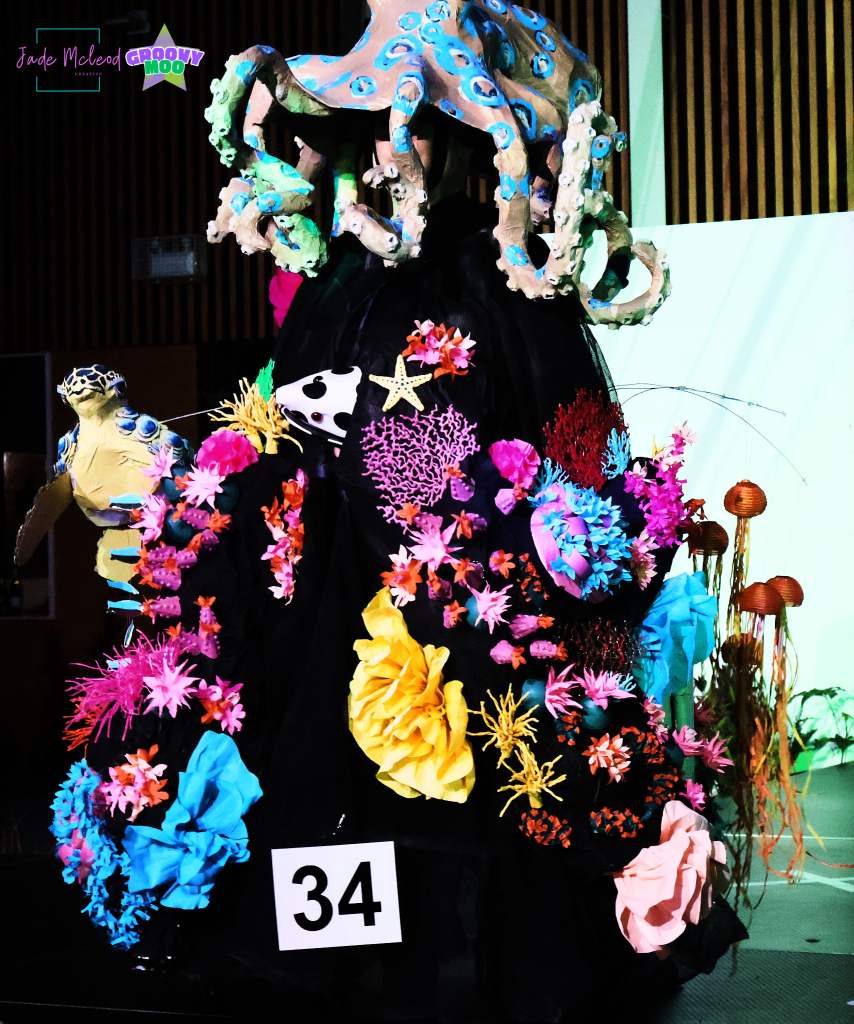
The Adult Section winner of the “People’s Choice Award” was “Curiosities of the Coral Reef,” which was designed and modelled by the very clever Tina Wylie. Her incredibly intricate design also featured a good dose of humour. To the Dean Martin song  “That’s Amore,” a comical moray eel would emerge from the outfit, smile and acknowledge the crowd. It was a very memorable performance, so much so that many who saw it, including myself, have had that song in our heads for days after the show!

“Curiosities of the Coral Reef” designed and modelled by Tina Wylie (Photo by Dan Murton)

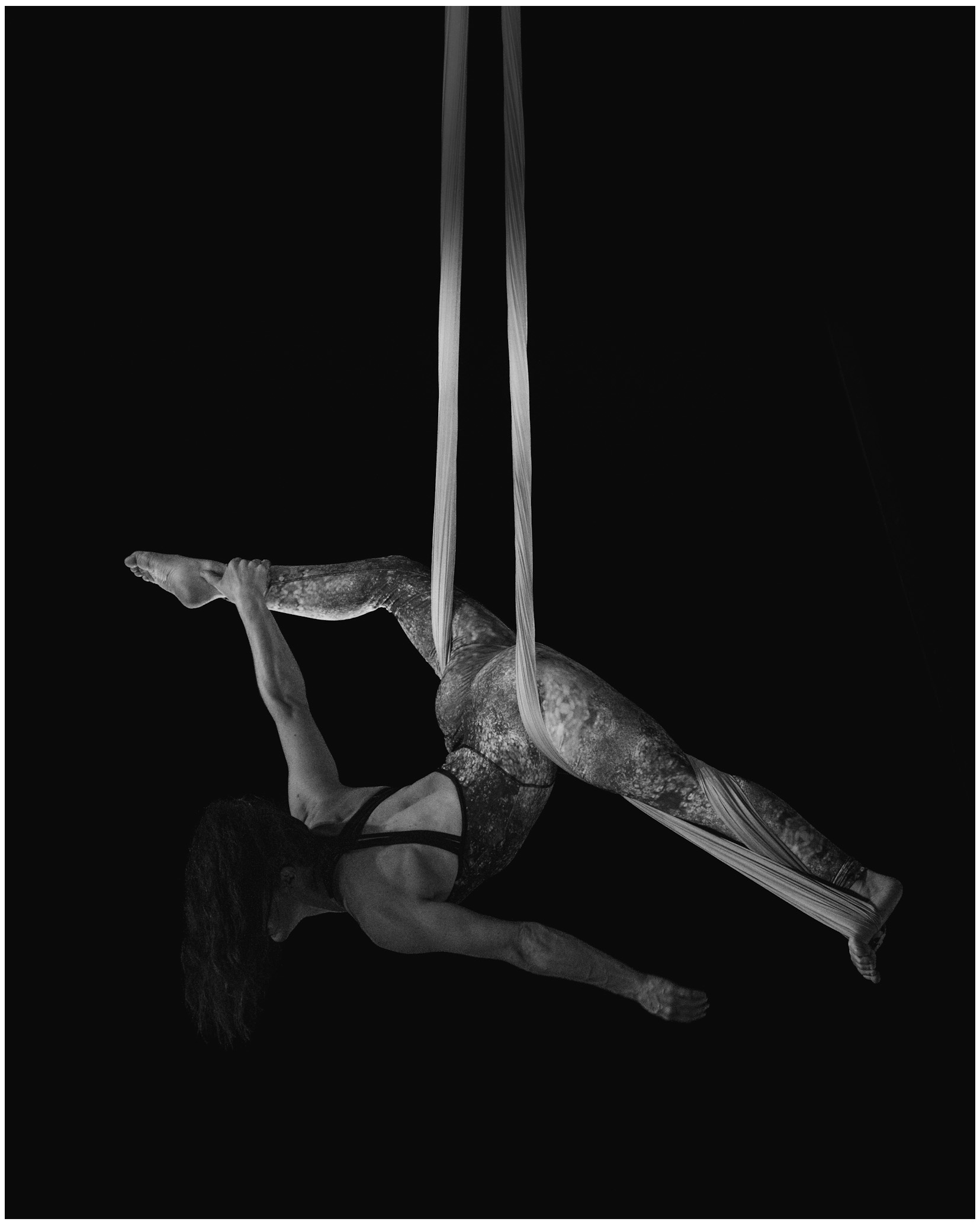
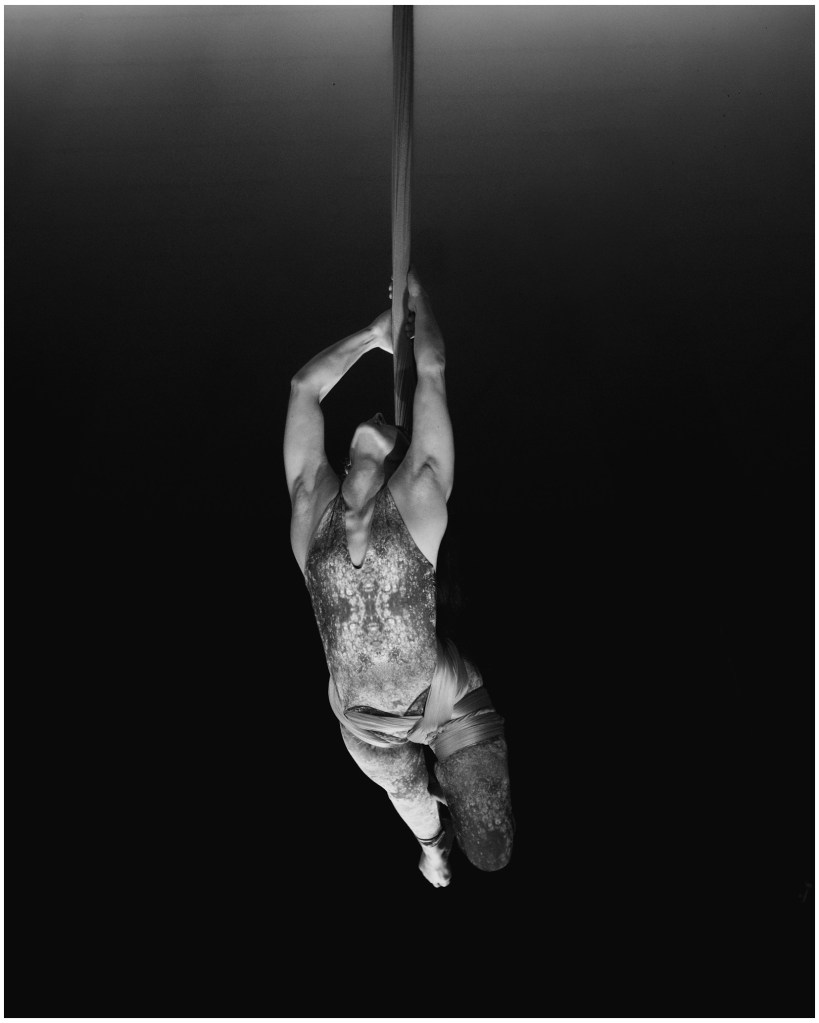
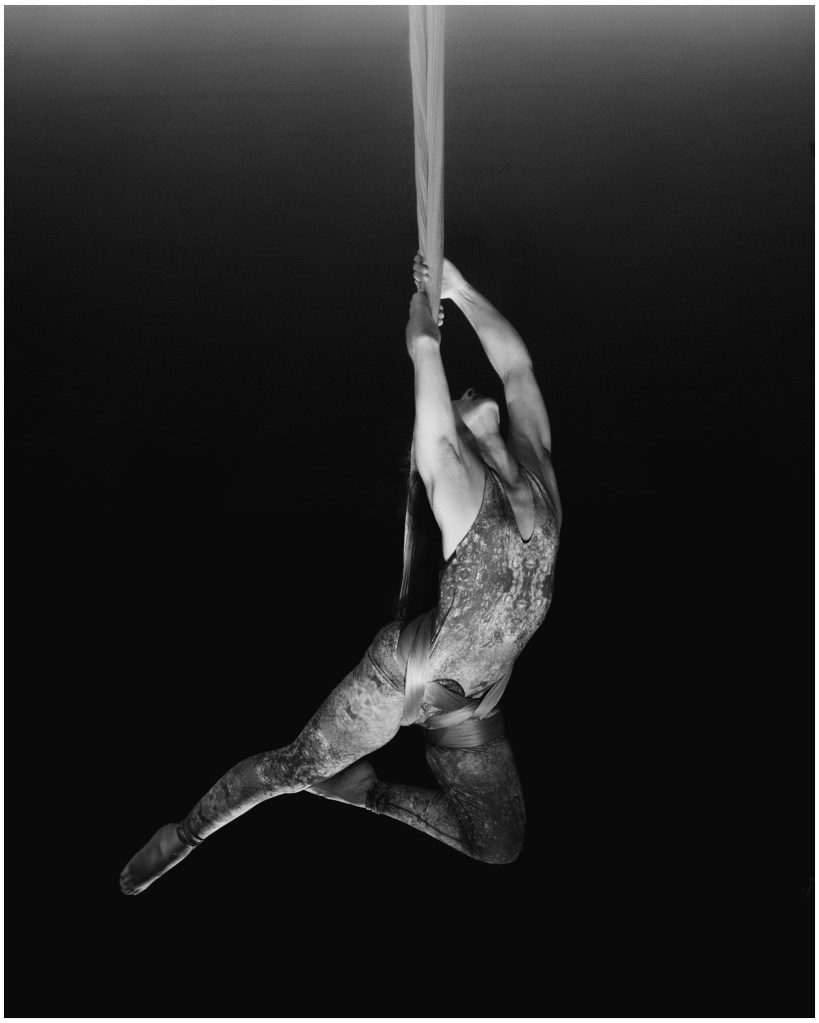
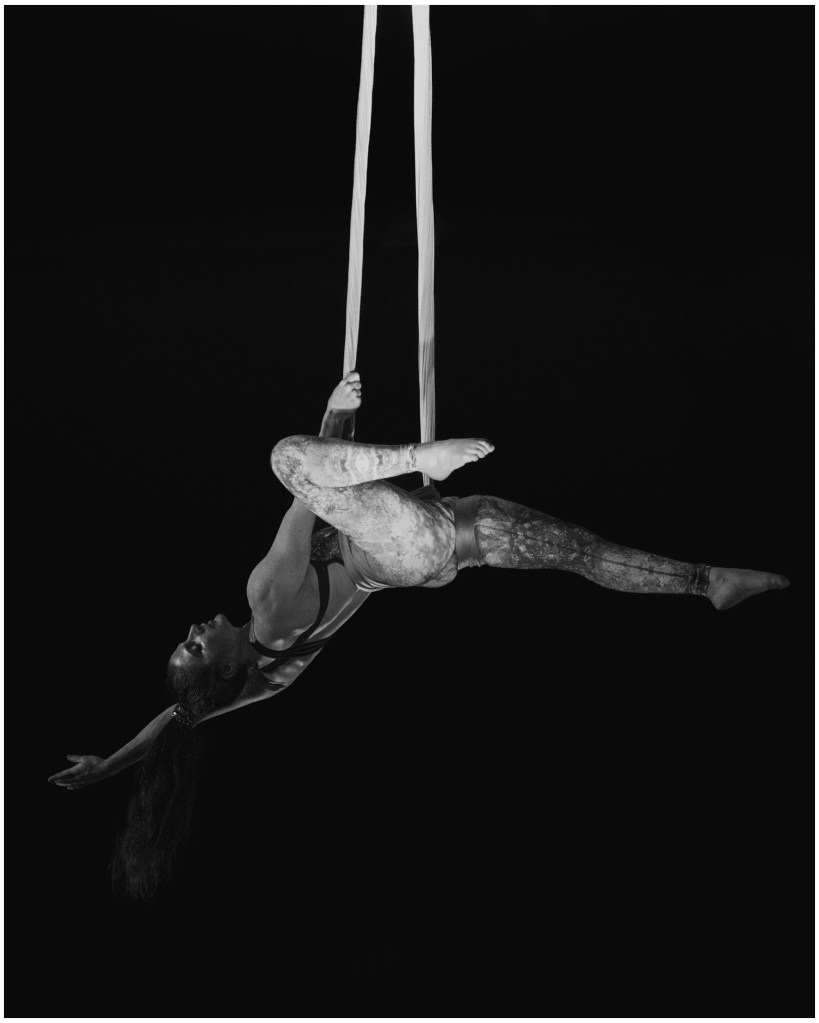
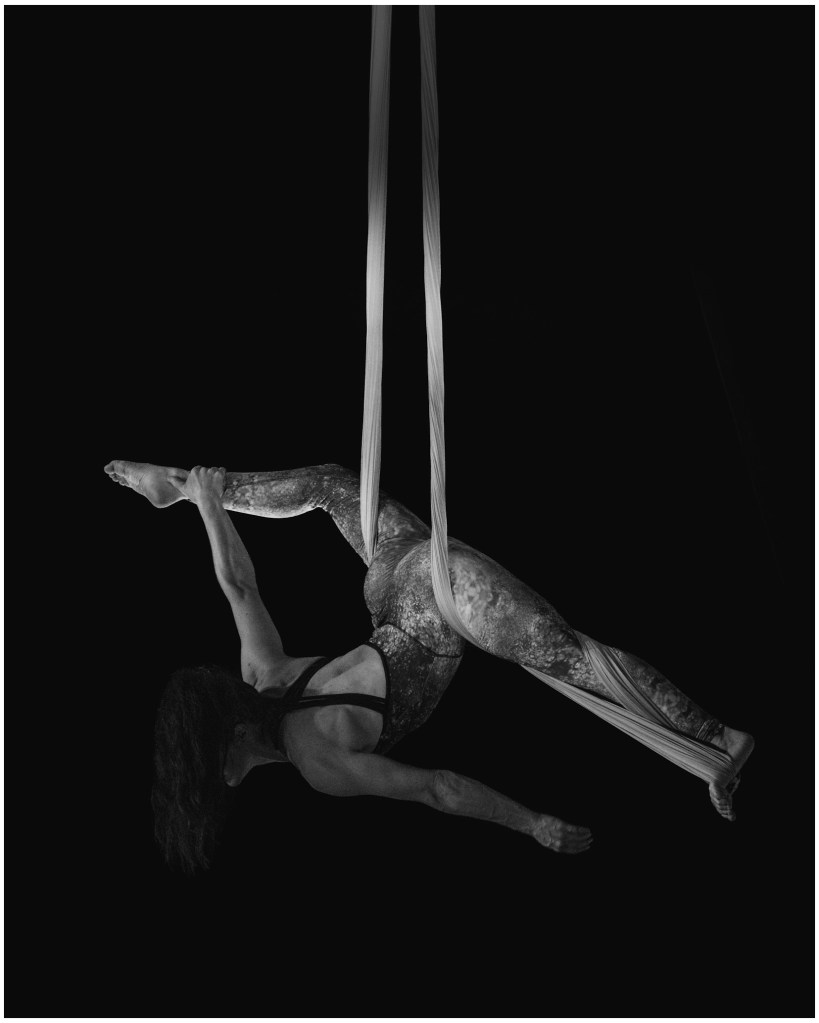
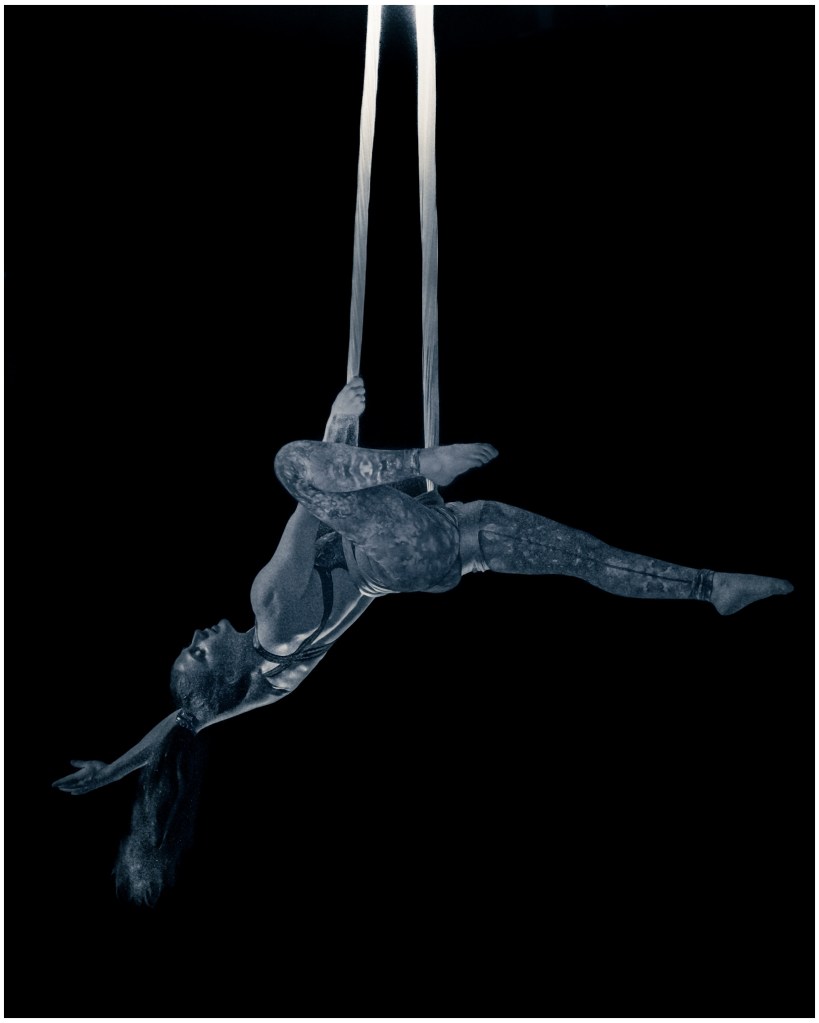
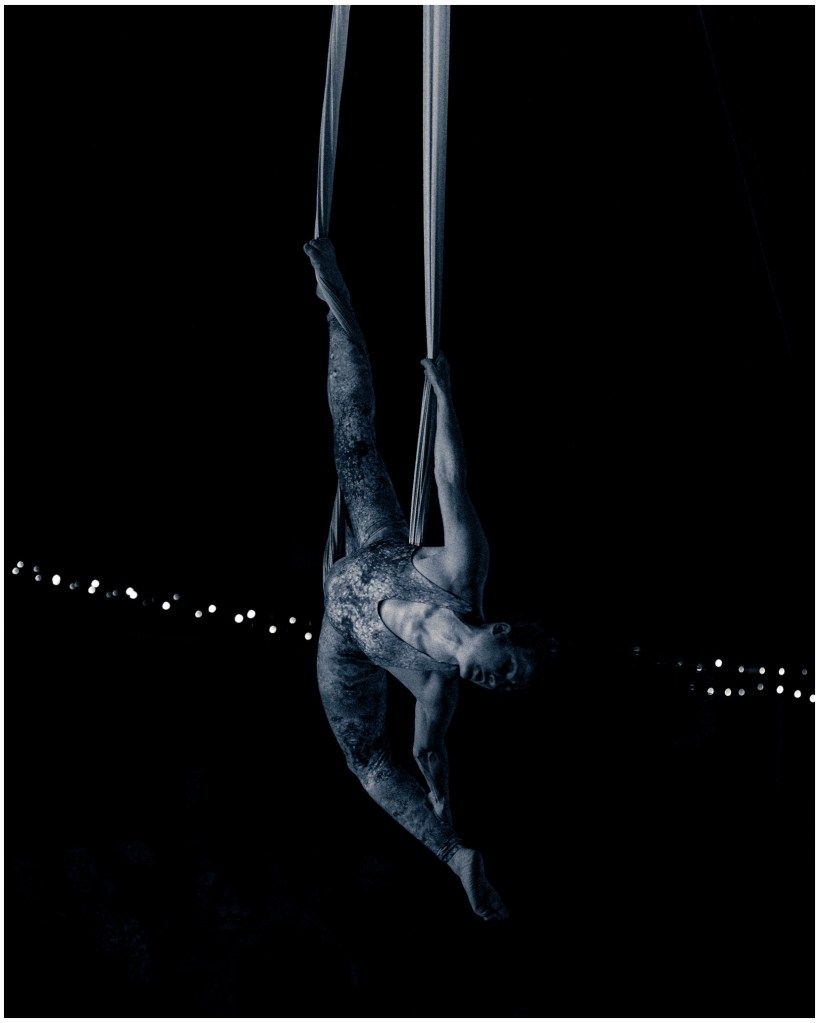
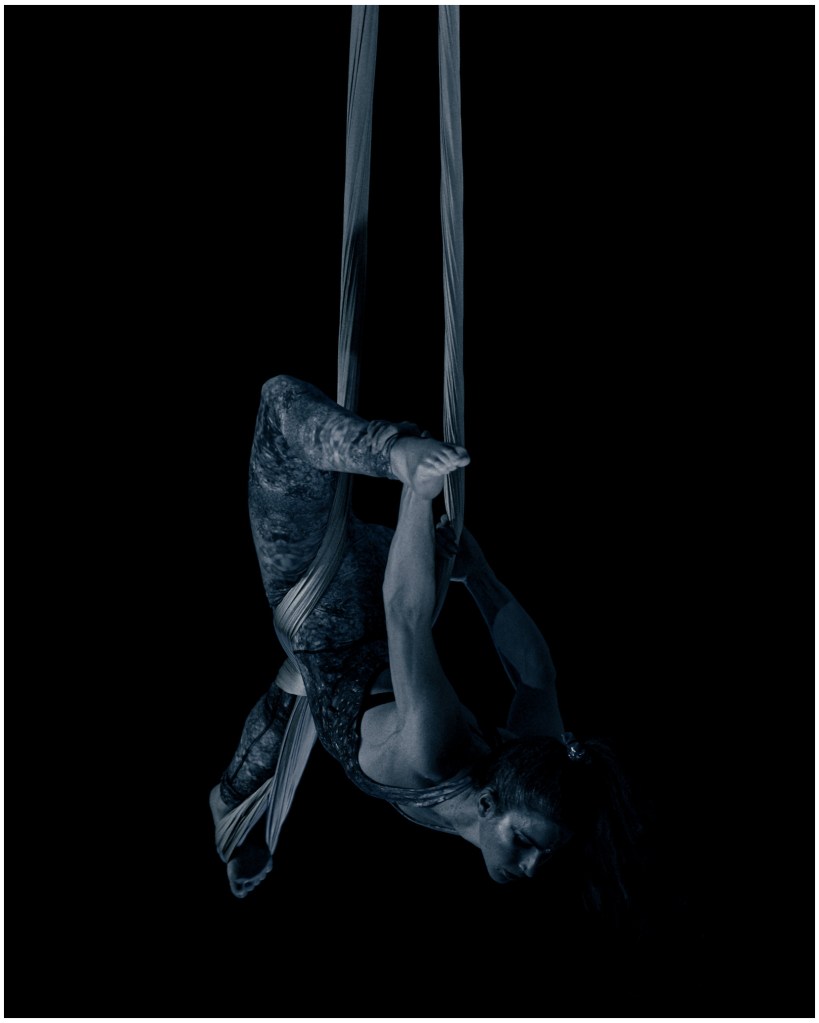
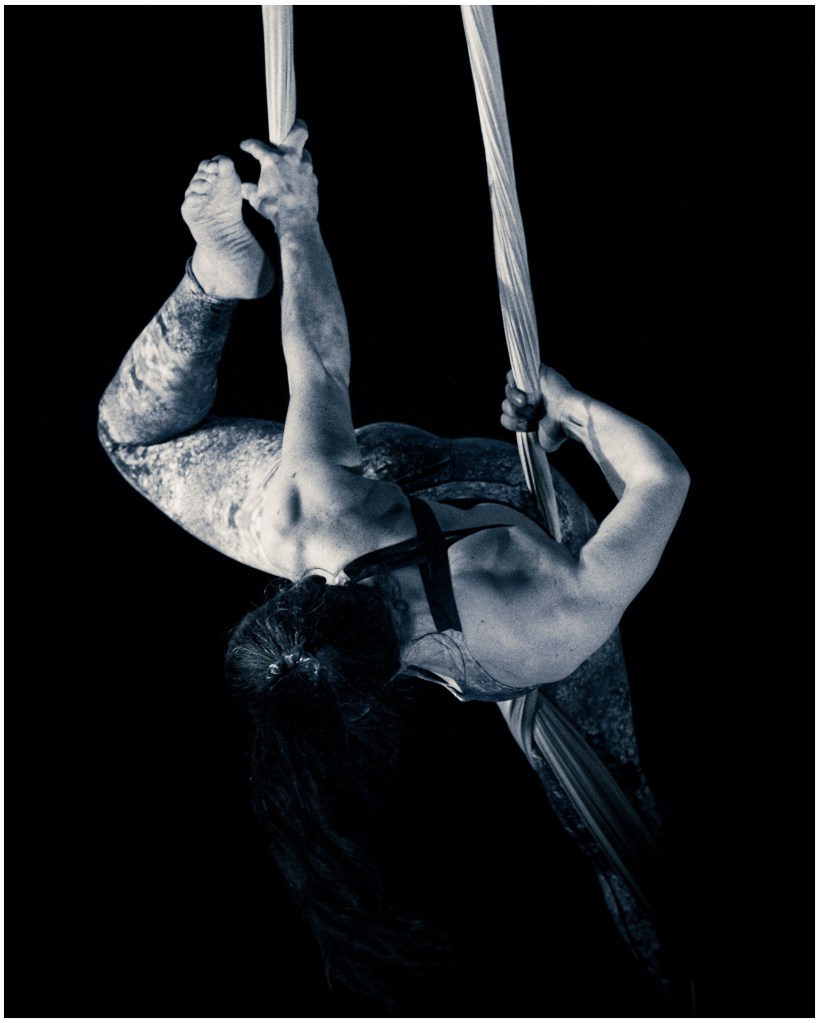
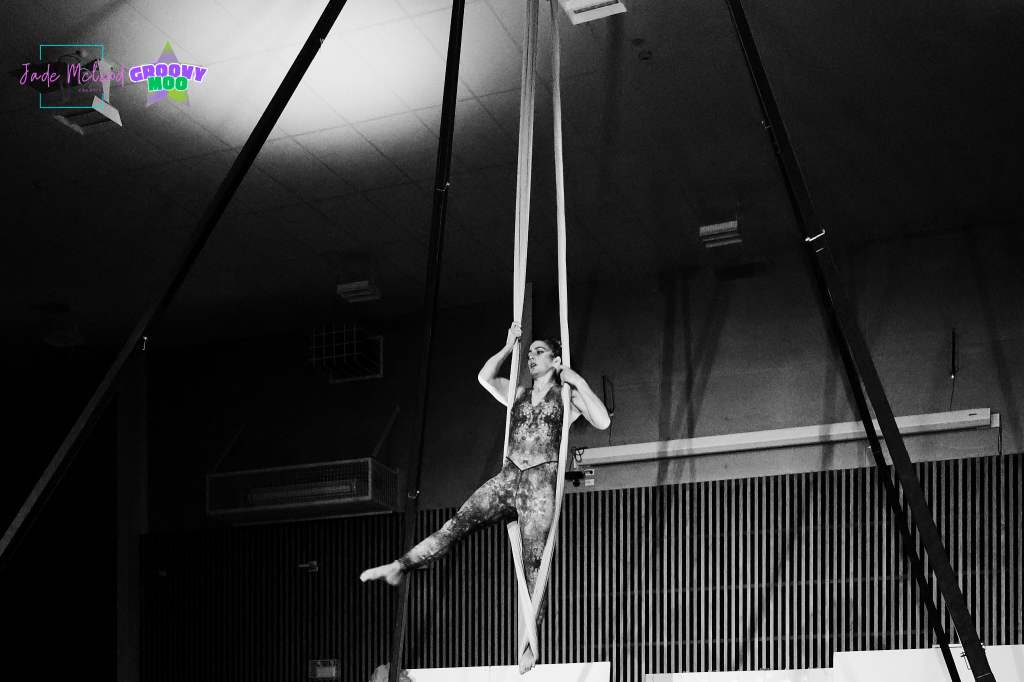
After the adults had strutted their stuff and while the judges were deliberating, local gymnast Lydia Bee took to the stage and wowed the audience with an incredibly flexible and seemingly death-defying aerial performance high under a steel pyramid, swinging from an aerial hammock. Thank you for an amazing acrobatic performance Lydia.

Acrobat Lydia Bee entertains the audience at the 2026 Karawearable Show. (Photo by Dan Murton)

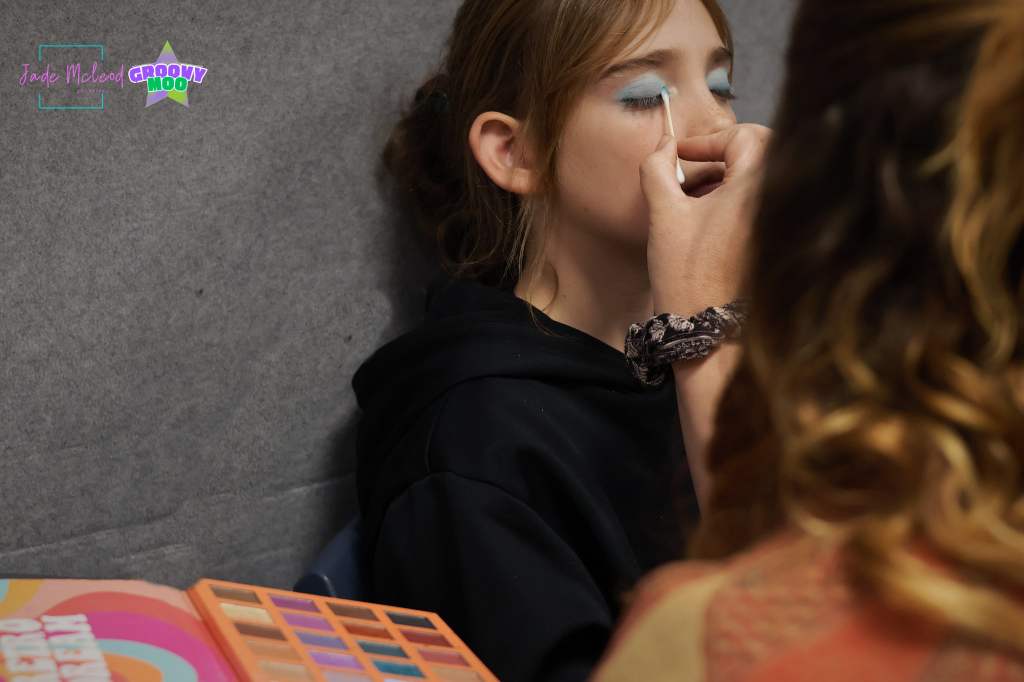
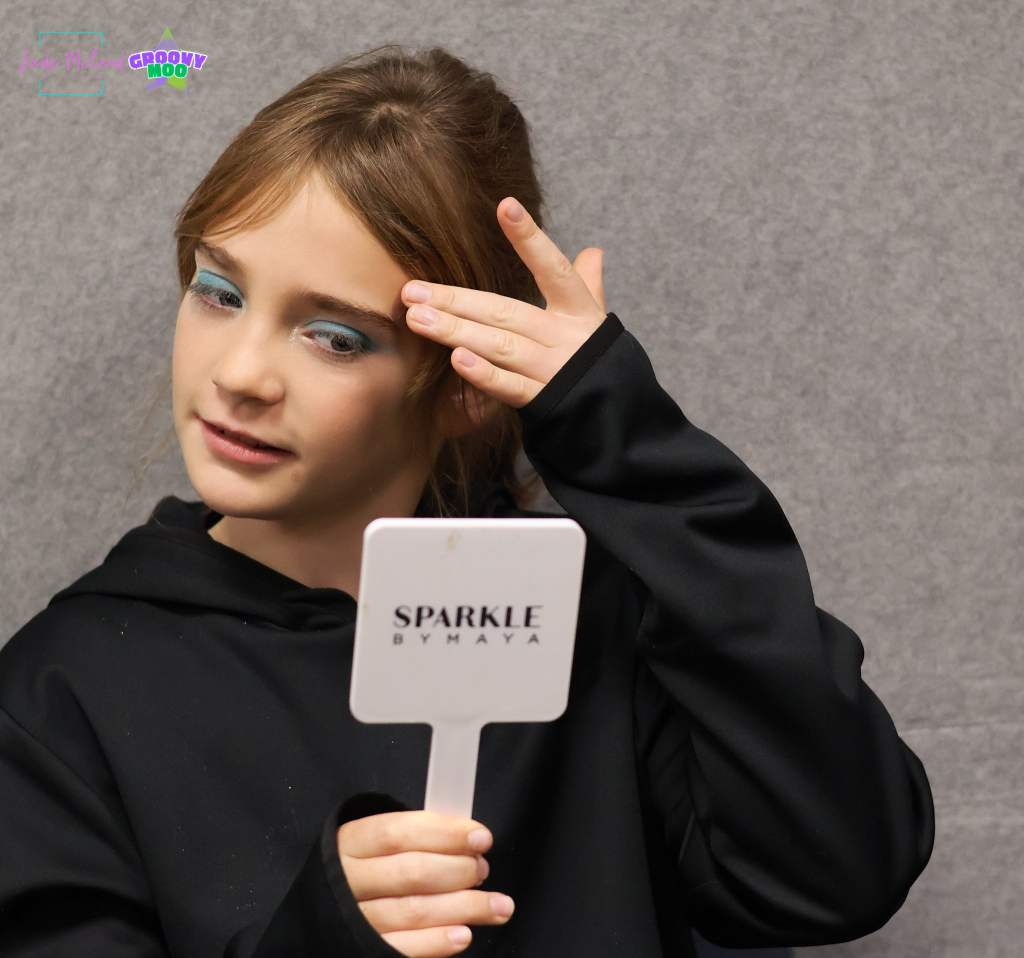
To all the team, everyone involved to make this dream work, thank you, Thank you to the organizing committee who worked tirelessly and doggedly all year to bring this awesome event together, thanks to the creative people who designed, crafted and modeled the outfits, the school staff, teachers, hall management team, bar staff, cleaners, backstage helpers, judges, make-up artists, photographers, sponsors, promoters, sound engineers, lighting technicians, caterers, graphic designers, printers, ticket sellers, Clean Streams Karamea for the plants to decorate the hall, scaffolders, the MC, the acrobat, all the volunteers who helped set up and take down the stage, chairs, carpets etc for the show…It is always amazing to see how the Karamea community rallies around to contribute and assist. Thank you to everyone who volunteered their time and skills, and finally, thank you to the audience who came and clapped and cheered and supported the carnival of creativity and made it all well worth the effort.

A special mention needs to be made to the organising team of Sanae Murray, Cathy Sampson, Liz Kerslake, Bridie Young and Ange Cronin thank you team for a magnificent effort. Judges Anita Halsall, Alison Hale and Ruth Vaega, all artists themselves, took on the tough job of deliberation and eventually deciding the winning entries in each category in a very tight competition. Thanks for your important contribution ladies. Master of Ceremonies, the vivacious Jessie Creedmore, got the show on the road and kept it rolling along all night. Well played, Jessie. To all the creators, designers, artisans and models who made the show a show…Brilliant work. Thank you again for making the night magical. It was a dream come true.

In the era of social media, digital screens, computer games and artificial intelligence, it is more important than ever that we inspire our children and encourage them to use their imaginations and demonstrate that artistic expression is gratifying, a productive pursuit and essential for human prosperity and the enjoyment of life. Well done all concerned, all of Karamea is bigger and better because of your collective efforts and dedication….Can we do it again in 2027? Of course we can!

Category Winners

Youth 1st Place – Prize sponsor: S M Lowe Contracting
Title: Crafty Coral
Designer: Kowhai Class
Model: Wren Walker

Youth 2nd Place – Prize sponsor: S M Lowe Contracting
Title: Magic Mermaid
Designer: Lulu & Linda Brownie
Models: Lulu Brownie & Chris Lowe

Youth People’s Choice – Prize sponsors: Mitre 10 Westport & Property Brokers 
Title: Tetra
Designer: Diva Murray
Model: Eva McGrath

Best Accessory – Prize sponsor: Little Wanganui Pub
Title: Fishervessence
Designer: Patricia August
Model: Patricia August

Adult 1st Place – Prize sponsor: Property Brokers Karamea
Title: Wētāpunga – The God of Ugly Things
Designers: Chris Seufert, Sacha Healey and Ekkehard Unger
Model: Sacha Healey

Adult 2nd Place – Prize sponsor: Karamea Village Hotel
Title: Mutating Microbes
Designer: Mary Bell
Models: Mary & Sam

Adult People’s Choice – Prize sponsors: Mitre 10 Westport & Property Brokers
Title: Curiosities of the Coral Reef
Designer: Tina Wylie
Model: Tina Wylie

KaraWearable Art Show Photos by Dan Murton

KaraWearbale Art Show Photos by Jade McLeod

Category Winners

Youth 1st Place – Prize sponsor: S M Lowe Contracting
Title:Crafty Coral
Designer: Kowhai Class
Model: Wren Walker

Youth 2nd Place – Prize sponsor: S M Lowe Contracting
Title: Magic Mermaid
Designer: Lulu & Linda Brownie
Models: Lulu Brownie & Chris Lowe

Youth People’s Choice – Prize sponsors: Mitre 10 Westport & Property Brokers 
Title: Tetra
Designer: Diva Murray
Model: Eva McGrath

Best Accessory – Prize sponsor: Little Wanganui Pub
Title: Fishervessence
Designer: Patricia August
Model: Patricia August

Adult 1st Place – Prize sponsor: Property Brokers Karamea
Title: Wētāpunga – The God of Ugly Things
Designers: Chris Seufert, Sacha Healey and Ekkehard Unger
Model: Sacha Healey

Adult 2nd Place – Prize sponsor: Karamea Village Hotel
Title: Mutating Microbes
Designer: Mary Bell
Models: Mary & Sam

Adult People’s Choice – Prize sponsors: Mitre 10 Westport & Property Brokers
Title: Curiosities of the Coral Reef
Designer: Tina Wylie
Model: Tina Wylie

From The Westport News, June 3, 2026.

Posted in Art, Artist, Children, Community, Community-Led Development, Education, Entertainment, Environment, Fashion, Food, Funny, Humor, Humour, Karamea, Karamea Area School, LED Lighting, Music, New Zealand, Paul Murray, Photography, Social Commentary, Uncategorized, Wearable Art, West Coast | Tagged , , , , , , , , , , | Leave a comment

Busy Day for DJT: Political Satire Mirrors Social Trends

Posted in Bureaucracy, DJT, Donald Trump, Hilarious, Hilarous, Humor, Humour, Parody, POTUS, President Trump, Racism, Satire, Social Commentary, Uncategorized, United States, War, Weird | Tagged , , , , , , , , , | Leave a comment

Democracy Crumbles While Nero Blows His Trumpet

Beware the Conductor, but Watch the Orchestra

Off the Top of My Head


By Paul Murray

Donald Trump has a rare talent that his critics underestimate and his supporters misunderstand. It is not policy. It’s not discipline. It’s certainly not restraint or intelligence….It is velocity and an uncanny ability to control the media narrative and command public attention.

The man operates at a speed that overwhelms comprehension. One day he is floating the idea of buying Greenland as if it were a slightly used jet ski on Trade Me or e-Bay. The next, he’s crowing about absorbing Canada into the United States as the 51st State, withouit bothering to discuss this with officials from the sovereign state of Canada. Then comes a Trump Tower beachfront redevelopment for Gaza, which sounds less like foreign policy and more like a brochure for a distressed luxury resort: “Sun, sea, and geopolitics—great potential, just needs a tidy-up.” And just when you think the well has run dry, out pumps something new. A White House ballroom. A national digital currency. His tariffs, which are somehow supposed to bring American manufacturing back, then, he launches a line of Trump Bibles—manufactured in China.

It would be hilarious if it wasn’t so sinster, because while everyone is reacting to Trumps ludicrous proclamations—laughing, fuming, sharing, arguing, sharing and reposting—the machinery of governance continues to shift in ways that are much more ominous and consequential.

This part of the show is off stage and well out of the spotlights. While Trump performs, others plot nefarious machinations. While he dominates the narrative and captures public attention, backstage, quiter, more methodical efforts reshape the long-term policy frameworks, staffing strategies, and institutional changes that they don’t want trending on social media. They just need to be implemented slowly enough that no single moment feels significant.

So Trump keeps his bike moving, pedalling ever faster to stay ahead of public scrutiny, legal process and Democratic opposition to Republican redrawing of the blueprints to ensure perpetual dominion.

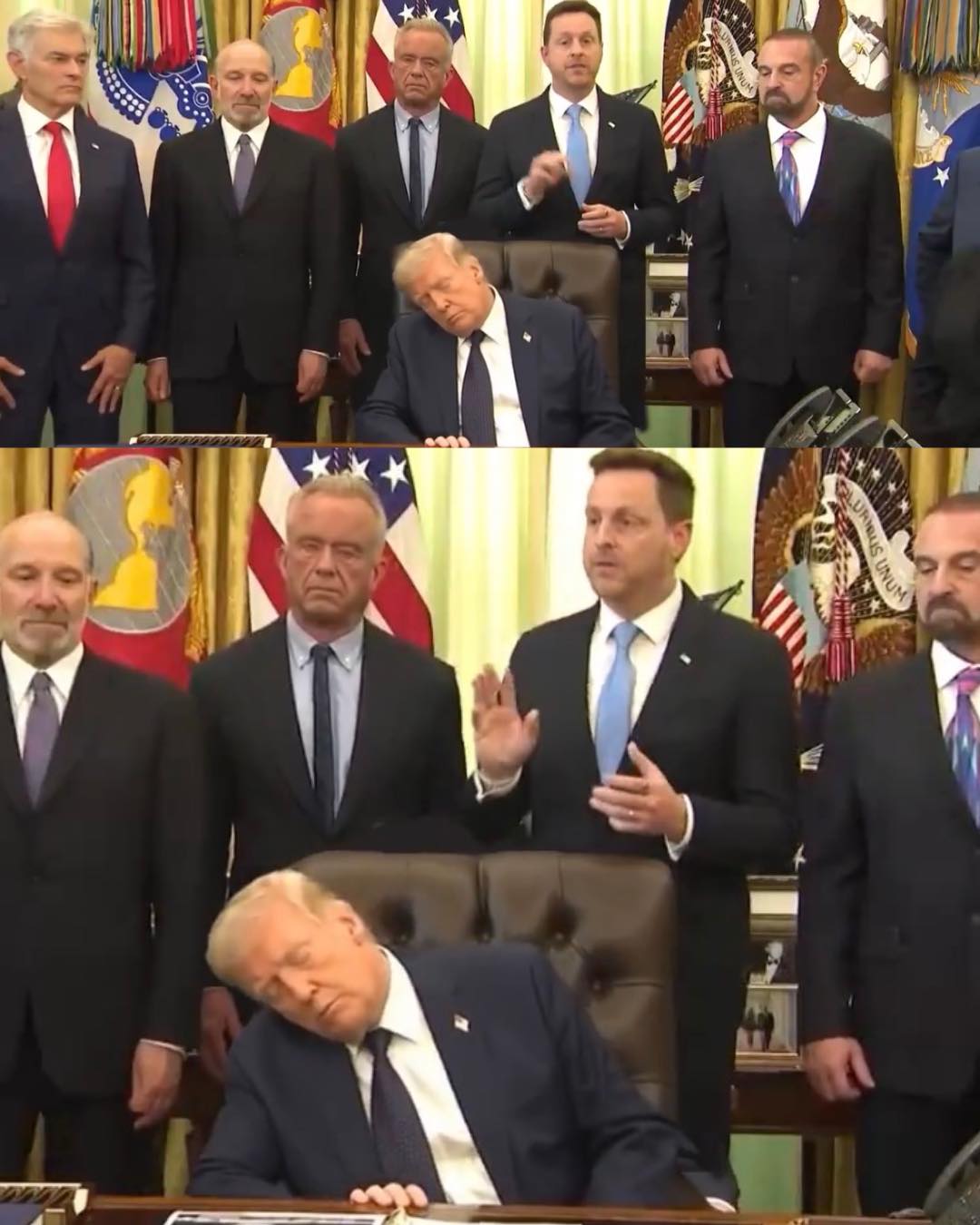
That, really, is the image that best captures the current state of play: Trump on a stationary bike, pedalling furiously. Not moving forward in any meaningful sense, but generating just enough motion to stay upright. The pedals are labelled outrage, distraction, crisis, and counter-crisis. The flywheel is powered by attention. And the rule is simple—stop pedalling, and everything catches up, because there is always something coming up behind him.

Legal cases, for one thing. Civil, criminal, procedural—layered, complex, and, most importantly, slow. The justice system, by design, is not built for speed. It dawdles rather than sprints. This creates a peculiar advantage for anyone able to operate faster than it can respond. Politics can change in days. Court cases take years, and in that gap between action and consequence, a LOT can happen.

This timing mismatch is useful to the incumbent administration. By exploiting reality and keeping public attention, conversation stays on the smoke and mirrors Trump keeps spewing, ensuring that the slower checks and balances of common sense, prudent policy, and Constitutional guidelines struggle to keep pace.

But what happens when Trump can’t pedal any faster and the wheel falls off?

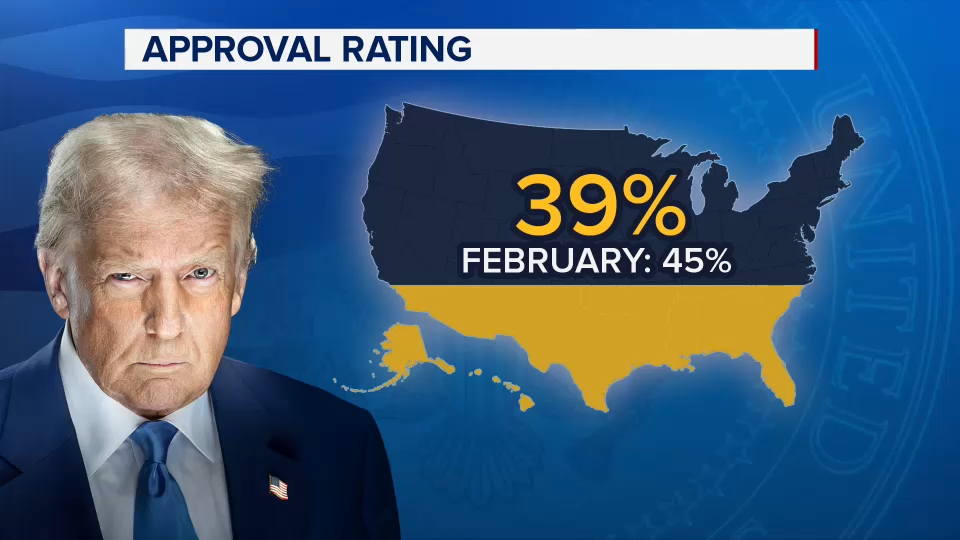
For all its effectiveness, the spectacle Trump creates has a shelf life. Promises, particularly the simple ones, tend to linger in the public mind. Promises need to be kept to garner continued support. No more wars. Lower costs. A better deal for working people. Make America Great Again…the hubris is beginning to wane, the strategy is faltering, and the audience is starting to tire. These are not abstract ideological commitments; they are everyday expectations, and such expectations keep quietly and persistently returning, like unpaid bills.

When such expectancy is not met, something shifts. Not dramatically or suddenly, but subtly. People begin to hear questions where there were once slogans. Conversations where there was once certainty. Not a collapse of support, but a dilution and a hesitation before blind acceptance.

Even within the broader media ecosystem, which has often been sympathetic, there are signs of Trump’s magnificent, malicious public persona crumbling. Debates about strategy, delivery, and whether the constant motion is producing results or merely sustaining itself.

Many of his champions are having second thoughts; Former political allies and Trump trumpeters, Majorie Taylor Green, Rex Tillerson, Thomas Massie and media trumpets, Megan Kelly, Tucker Carlson, Joe Rogan et al., are all rethinking their MAGA hats. The list goes on, and MAGA voters are also starting to wish they hadn’t supported Trump at the ballot and polls support this assertion.

This is where the bike metaphor becomes less amusing, because the faster you pedal to maintain the lead over an increasingly maddening crowd and the lagging legal process, the harder it becomes to stay ahead. Each new statement must be louder than the last. Each new idea needs to be more attention-grabbing. Each new controversy must be more consuming. Greenland wasn’t enough? Try Canada. Canada not enough? Try Gaza. Gaza not enough? Try something else entirely. Invade Cuba? Invade Venezuela? Arrest former FBI Director Comey (again)? Ban transgender athletes in the Olympics? Demand rare-earth minerals from Ukraine? A gold statue of himself? Mt Rushmore? Trump passports? Demand a Nobel Peace Prize? Claim he has ended numerous wars? How about a Melania Movie? Trump Underpants?

Escalation is not a choice. It is a requirement and things are going to get weirder as the need to pedal faster looms ever closer.

Meanwhile, behind the curtain, the iniquitous changes quietly continue. Electoral rules debated and redrawn. Institutional norms stretched or reinterpreted. Media landscapes reshaped—not necessarily silenced, but nudged, pressured, aligned and purchased by Trump allies. Not in a single sweeping act, but in a series of incremental adjustments that, over time, begin to add up into substantial and possibly irreversible change that favours Republican sentiment.

This is how systems change in modern democracies. Not with a dramatic break, but with a gradual reconfiguration. A tweak here. A precedent there. A personnel change that seems minor until it isn’t. All of it occurring while the maddened crowd is watching and increasingly beginning to question the man on the bike pedalling furiously.

It would be comforting to believe that the spectacle is the story. That the outrageous statements, the grandiose ideas, the theatrical gestures are the entirety of what is happening, but they may, in fact, be the least important part.

Yes, the spectacle, by its nature, demands attention, but public heed is finite. Every moment spent reacting to the latest absurdity is a moment not spent examining the quieter, more structural shifts it is designed to obfuscate.

It is not whether Trump believes his own ideas about Greenland or Gaza or ballroom expansions or digital currencies, imported Bibles or…Trump Unicorns? The question is whether it matters and what is really going on behind the scenes.

If the effect is to keep the conversation perpetually occupied, constantly reactive, continuously one step behind—then the content of the distraction is almost irrelevant. What matters to the Trump administration is that it works, but maybe it is becoming less effective, maybe people are starting to peek backstage to see what is really happening as Trump’s proclamations become increasingly farcical, absurd and laughable. Perhaps public opinion, including MAGA supporters are catching up to the tiring one-trick president, and the real agenda is becoming increasingly evident.

Because democracies, for all their flaws, have a stubborn tendency to reassert themselves through the unglamorous mechanisms that built them in the first place. Voting. Courts. Institutions. Public scrutiny that arrives late but, occasionally, decisively. The slow stuff. The boring stuff. The stuff that does not trend on social media. The checks and balances that are supposed to right wrongs and maintain an even keel on the democratic process will eventually catch up.

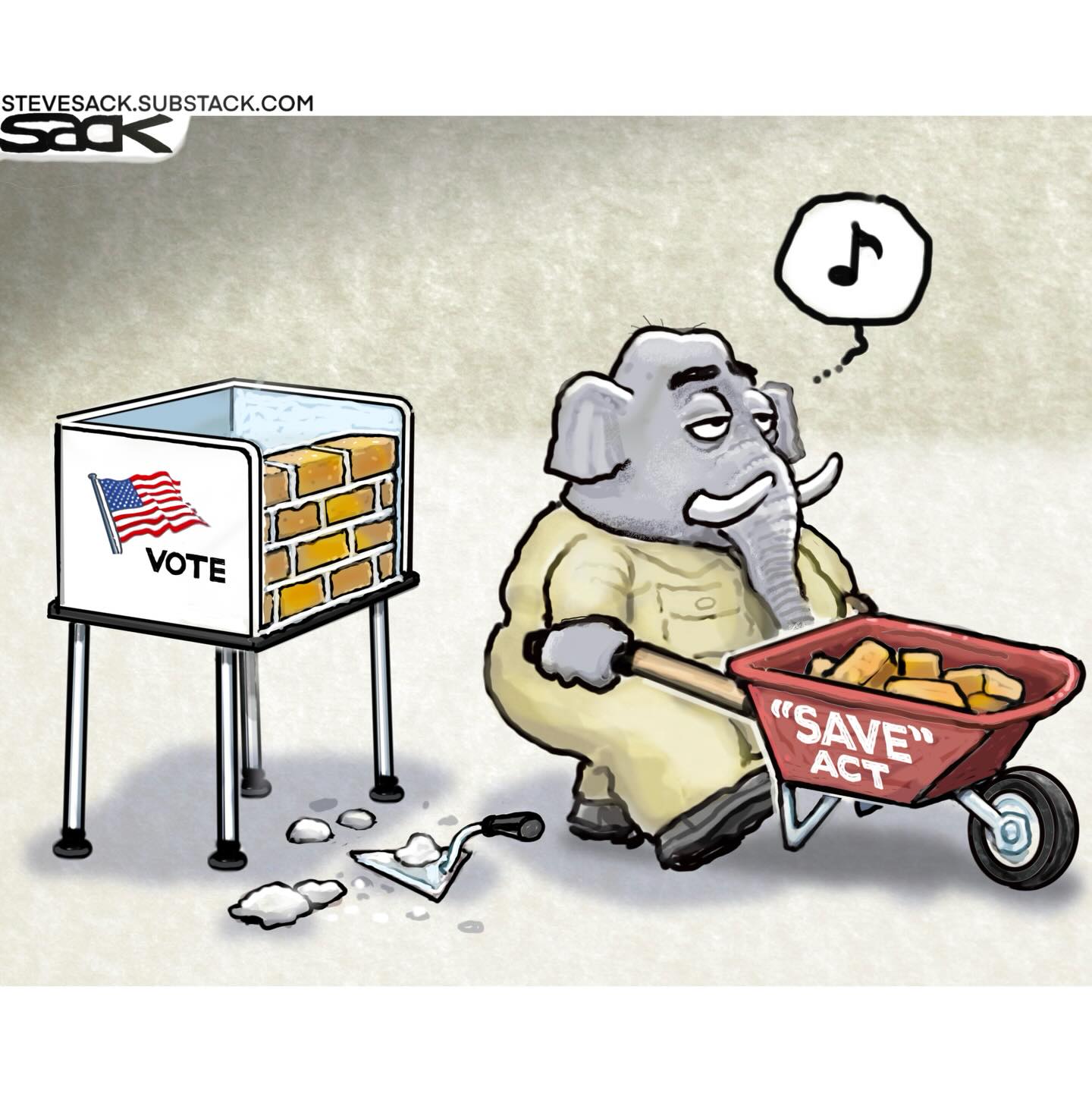
This is what Trump and his administration fear most. They currently control the House, the Senate and the Department of Justice, but with the mid-term elections looming and the Democrats already gaining significant momentum, Trump’s cronies are flat out trying to rig the game in their favour through the Safeguard American Voter Eligibility (SAVE) Act. The key purpose of this bill is to require individuals to provide documentary proof of U.S. citizenship when registering to vote in federal elections. It requires voters to show a valid photo ID to cast a ballot and mandates that states verify citizenship, often requiring in-person registration or documentation rather than just self-attestation.

Critics argue that the SAVE Act could benefit Republicans by reducing participation among certain groups that tend to lean Democratic. They point out that stricter documentation requirements—such as proving citizenship with official records—may disproportionately affect younger voters, lower-income individuals, and some minority groups, many of whom may not have easy access to documents like passports or birth certificates. As a result, even eligible voters could face added hurdles that discourage or prevent them from taking part in elections.

They also highlight broader barriers to registration and voting. Requirements for in-person verification and stricter ID rules could make the registration process more cumbersome, particularly for people with limited time, mobility, or access to government offices. Past examples of similar laws have shown that large numbers of eligible voters can be blocked or deterred from registering. Taken together, some analysts argue these effects could shift the composition of the electorate in ways that may benefit Republicans, especially in closely contested races.

Maintaining political control of the U.S. House and Senate is key to the Trump administration’s plans to reengineer the political system in favour of Republican rule and the possibility of a third Trump presidency despite Section 1 of the 22nd Amendment to the U.S. Constitution clearly stating, “No person should be elected to the office of president more than twice.” However, Trump blithely disregards the Constitution, which has been the supreme law of the United States since 1787. It was designed to frame the federal government, its powers and limitations. He also desperately needs to keep control of the legislative, executive, and judicial branches of government to keep ahead of the legal process.

Which leaves us, awkwardly, with a choice. Not a dramatic one, not a revolutionary one, but a quietly demanding one: whether to keep watching the bike, or to start paying attention to what’s really happening and who is really running the show. Because the entertainment provided by Trump is not the future, the reengineering of political systems in the United States is what is real about all this reality show. Eventually, even the sychophantic Republican nutters he has surrounded himself with and who help obfuscate the truth will realise they are destroying the democratic structure that actually made America great and will eventually find their balls…maybe in the Trump ballroom?

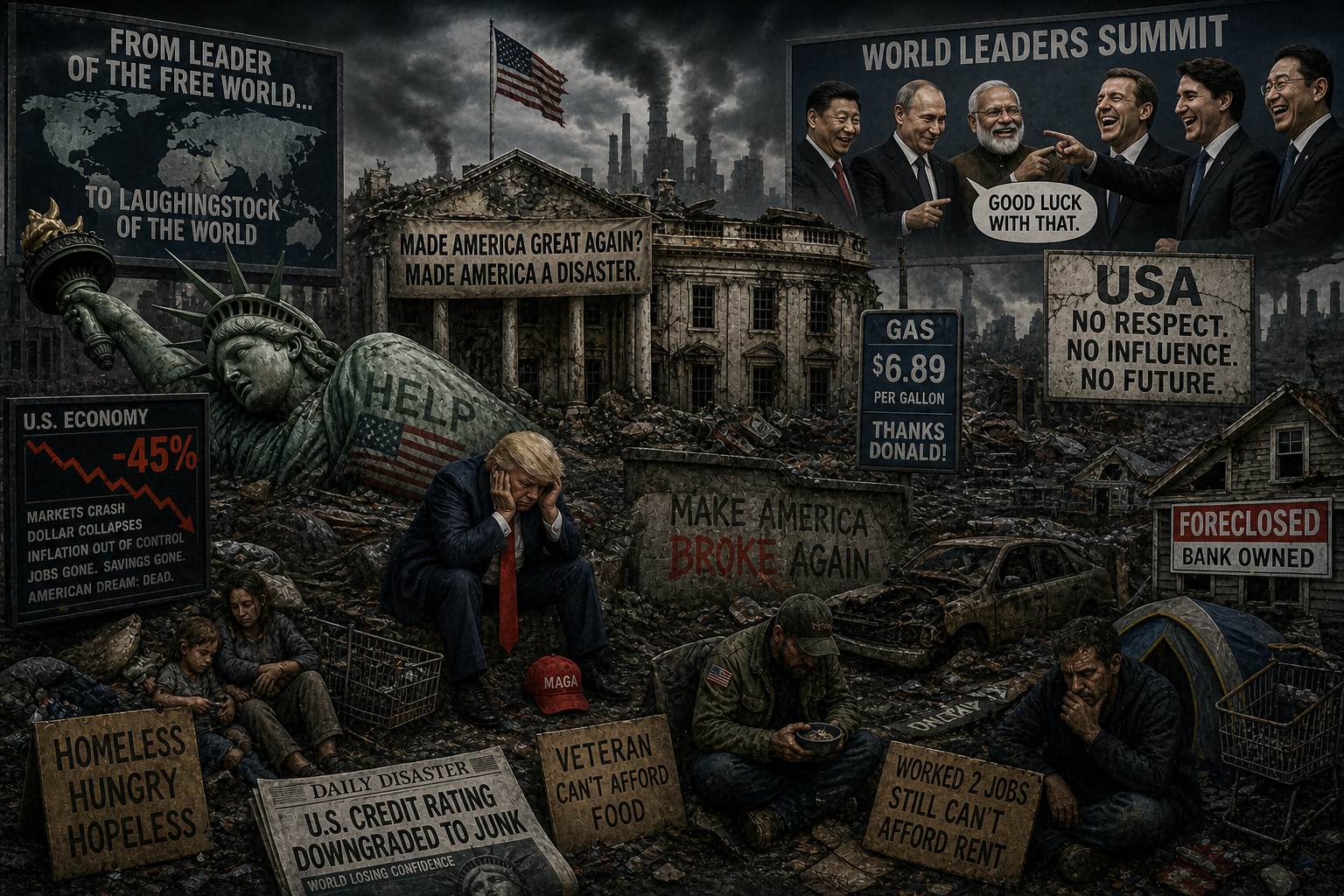
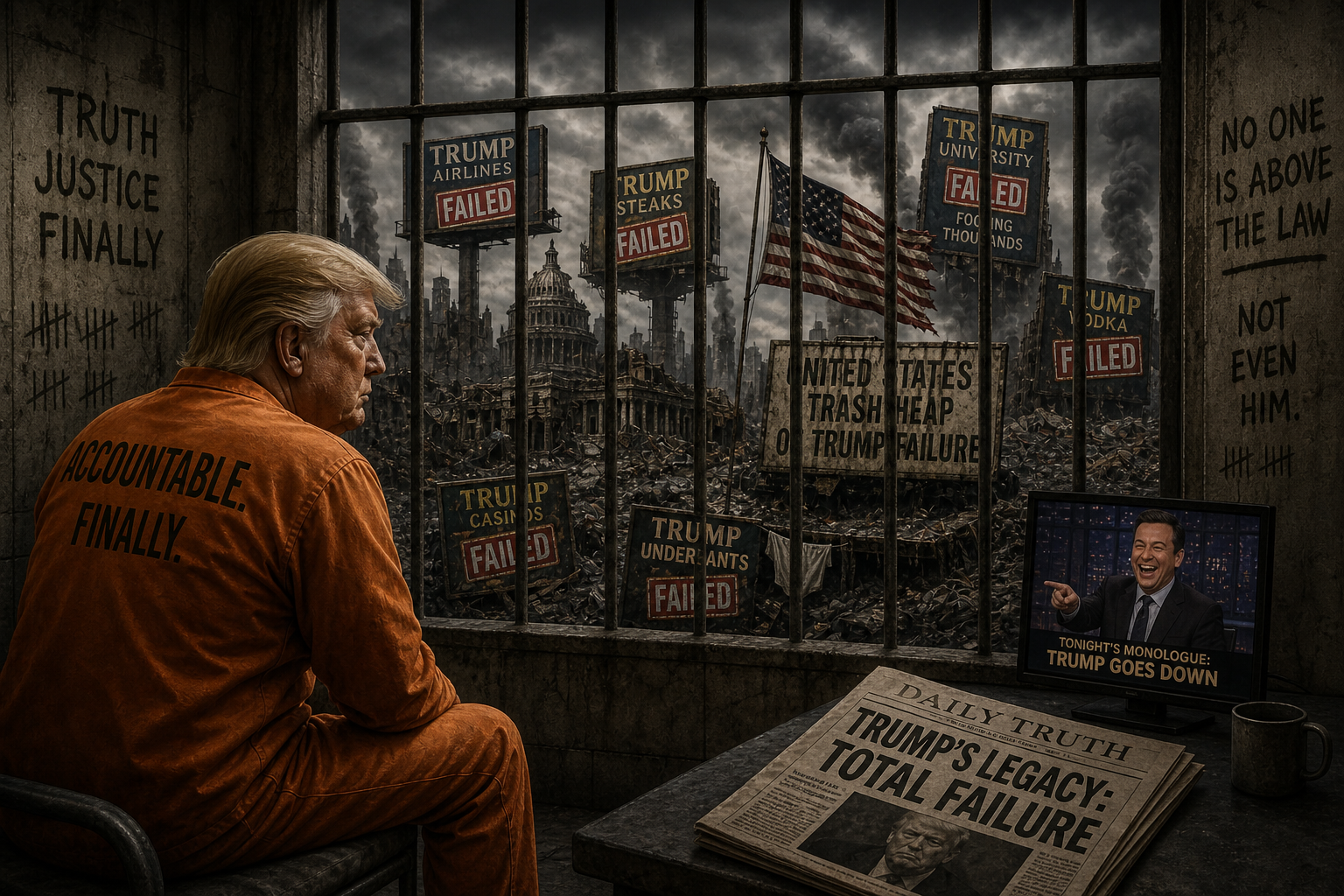
Trump can keep pedalling, but he can’t hide. He’s already in top gear and out on the open road pushing into a strong headwind. The thing he fears most is bearing down on him…it’s a new word, one may soon discover and claim as his own…Accountability. In the face of losing public support, former allies turning against him, economic failure, affordability (another word Trump apparently recently discovered), irrelevance, public humiliation, truth, the threat of jail time and being the brunt of late-night TV comics monologues…it’s coming for him, and he will be held accountable. This is why he’s trying to stem media commentary that is not favourable to him and encourage friends to purchase mainstream media outlets to control the messaging. It’s also why he needs to rig elections, for without public support, he’s finished, and the end will come soon, hopefully before the United States is on the trash heap of Trump Failure; Like Trump Airlines, Trump Steak, Trump University, Trump Vodka, Trump Casinos and Trump Underpants

Accountability won’t be kind to Trump, but it is possibly the only thing he’s really earned in his life.

Posted in Art, Canada, Crime, Donald Trump, Economics, Entertainment, Hilarious, Hilarous, Humor, Humour, Parody, Paul Murray, Politics, Power, Satire, Social Commentary, Uncategorized, United States, War | Tagged , , , , , , , , , , , , , , , | Leave a comment

Travis “Blind Dog” Taylor Wags his Tail Feather

Off the Top of My Head

By Paul Murray

What I love most about my old school mate Travis Taylor, is his blind, dogged determination to be a blues artist…He has devoted his life to the craft. Several albums, endless live shows, a couple of recording trips to the United States later, he IS a bluesman and there’s life in the Old Dog yet…His two latest albums with band One More Mile (OMM) are absolute bangers…buy them, put them on, crank up the volume and get grooving.

We met at the Prince Alfred College boarding house in Adelaide, South Australia, in the early 1980s, he from Mt Gambier in the SE of the state and me, a farm boy from Kangaroo Island. Travis was the biggest schoolboy I’d ever encountered, a fully developed chap in stark contrast to myself…a squeaky voiced adolescent with hair on my head, but nowhere else. Despite our physical differences, we developed an immediate kinship and have remained good friends for almost 50 years.

Travis excelled on the football field, playing for the First XVIII, but a knee injury put paid to his sporting aspirations and, while convalescing from a knee reconstruction operation in hospital, he began pondering his future. Now that a sporting career was off the agenda, he began wondering how he should spend his life. “I heard Sonny Terry and Brownie McGhee playing on the hospital PA system and I thought, “That’s what I’ll do, I’ll learn to play the harmonica,”” he said.

On the occasion of his 21st birthday, a lovely lass, whom Travis was smitten with, Eleanor “Elle” Dark, gave him a present that launched his musical career. “She gave me a harmonica…and then she gave me the blues,” said Travis, for Ms Dark had sadly fallen for another, and Travis has been singing about “Woman Trouble” ever since.

“I started trying to play harmonica like Sonny Terry, which is close to impossible, because he’s blind and plays upside down and back-to-front as far as the harmonica goes, and he’s just a genius,” Travis said.

John Mayall and Sonny Boy Williamson were also influential in developing his ear for the blues genre, but when his fellow musician friend, Andrew Hall, introduced him to “Hoodoo Man Blues” by Junior Wells and Buddy Guy, his blues wheels really started spinning.

While living in the snowfields with friend “Fish” Thompson, a very patient fellow, Travis practiced the harmonica incessantly and his pursuit of harp mastery continued until he got his dog “Phantom,” who either wasn’t as patient as “Fish” or was attempting to accompany Travis on the mouth organ as he’d start howling as soon as he began to play…this meant he was unable to practice at home for several years.

Travis developed a love for New Orleans-style piano blues listening to Professor Longhair, Alan Toussaint and Fats Domino. He said, “When I was in London, I saw Dr John playing in Camden Town, This inspired me to start writing my own music.” Not having a piano handy, he said, “I decided to teach myself the guitar as I couldn’t write songs on the harmonica.” This was a great leap forward as Travis now started becoming an artist in his own right rather than performing covers of his blues idols.

He started listening to the likes of Freddy, Albert and BB King, ZZ Top, Johnny “Guitar” Watson, Stevie Ray and Jimmy Vaughan. Organ also piqued his broad musical interest, and he tuned into Jack McDuff, Jimmy McGriff and Smith. Fellow muso Brian Morrison gave him an album titled “Wild Bill Davis Live at Count Basie’s Lounge,” and Davis’ swingin’ sounds also had a big influence on his blues style.

“The first band I was in was the “MaliBlues” with some fellas from Pembroke College, and we played gigs at the Marryatville Hotel in Adelaide. I then joined “Cookin’with Chilli” and played at the Ko Club every Friday night, ahead of “Blind Dog and the Guides,” who took over and played well into the night. “Blind Dog Wally” was their lead singer, and when Wally had to spend a bit of time in jail at her Majesty’s pleasure, I filled in for him and assumed the “Blind Dog” handle and “Blind Dog Taylor” I became.”

“Greg Baker (the harmonica player from Smokestack Lightning Adelaide Blues Band) was a mentor of mine, and he used to encourage me to listen to music that helped to focus my musicianship,” Travis said. “He turned me on to “Hooker ‘n’ Heat” a collaboration between John Lee Hooker and Alan Wilson from “Canned Heat.” The album achieves a live music sound in a studio recording and helped shape Travis “Blind Dog” Taylor’s stage personality and presence.

In 2016, Travis reluctantly agreed to attend a religious gathering in Sydney of 16,000 African devotees to the somewhat controversial Malawian Prophet Shepherd Bushiri at the insistence of his devout born-again Christian partner, Ugandan-Australian Esther Poni. At the event, Travis was approached by an event official who asked to interview him. Travis said, “Nah, Man, you don’t want to interview me, I really don’t even want to be here.” The man insisted he had “presence,” and encouraged him to agree to the interview. Esther’s son Simon said, smiling, “You know what “presence” means, right? It means you are the only white guy here!” Looking around, Travis realised the boy was right, he stood out like an Allen’s Kool Mint in a huge bowl of Maltesers!

Later, Travis was selected from the crowd and taken to the stage where the good Shepherd Bushiri asked Travis who “Nick” was…”One of the guys in my band,” said Travis. “Stick with Nick and everything will be alright,” the mystic mysteriously stated. Bushiri, who is much smaller than Travis, then apparently knocked him flat on his back with some kind of African mojo power surge. Travis was completely shocked, and Bushiri informed him that he had cleared a “blockage” from his body that was “preventing him from attaining his full potential.”

Malawian Prophet Shepherd Bushiri

While The Shepherd may have cleared one blockage, it seemed Blind Dog had another, and on his return to Adelaide from the evangelical revival in Sydney, he suffered a stroke and was knocked down again.

While recovering from his health scare at Esther’s home, Travis, perhaps from the powerfully compelling influence of Shepherd Bushiri’s religious revelations or, more likely, gratitude for not being dead, Travis began listening to Gospel music. When he found a tune that resonated with him, he’d post it on his FaceBook page. This caught the attention of other blues/gospel lovers worldwide, and he received a friend request from Al Blake, fellow harmonica aficionado and one of the original members of the legendary “Hollywood Fats Band” from Los Angeles.

Their online rapport led to a real friendship and a musical collaboration after Blind Dog Taylor and his band One More Mile won the chance to travel to Memphis, Tennessee, in the United States to play at the Memphis International Blues Challenge in 2019.

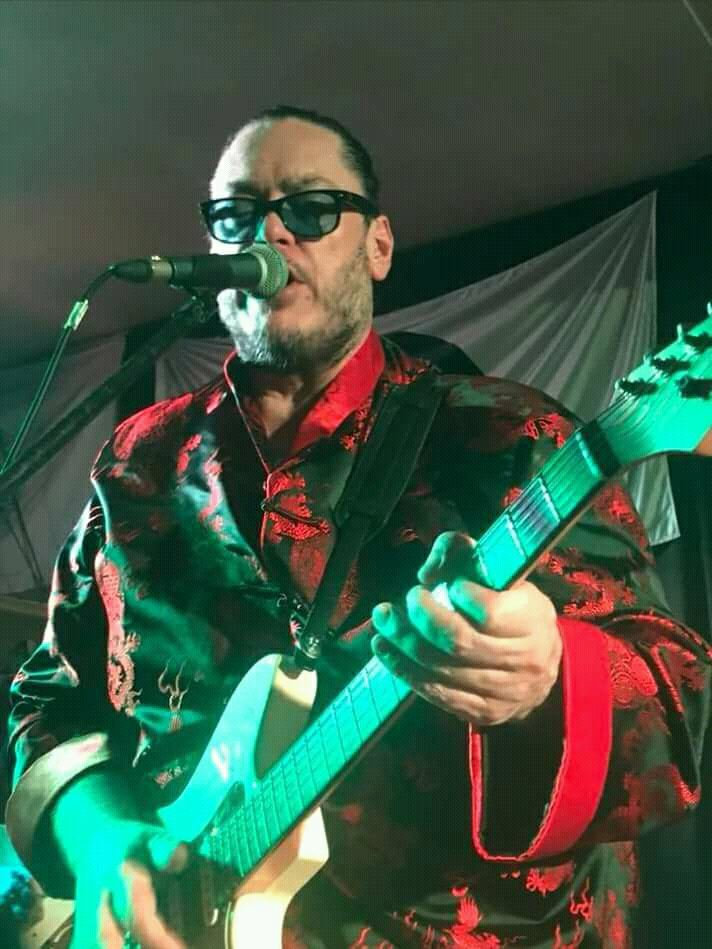
Travis “Blind Dog” Taylor (Left) and band One More Mile win the 2018 competition to represent Adelaide in the Memphis Blues Challenge.

When one of the OMM guitarists Sav Palaktsoglou was unable to travel to the United States with the band due to family commitments, Travis urged the other OMM axeman, Nick Kipridis, to join them on the trip. Nick agreed, as did the other members. So Travis and the band boarded a plane and flew to the United States to test their talents and blues mastery against all contenders.

Travis was able to realise the prophecy from Shepherd Bushiri’s gathering to “Stick with Nick “and, while the festival turned out to be what Travis referred to as the “Memphis debacle,” the band won the blues challenge. While in the United States, Travis was able to meet Al Blake in person, and they decided to collaborate on a recording. Al introduced him and the band to another member of The Hollywood Fats Band, Fred Kaplan, a recording studio and music mixing genius, and they recorded about 60 songs over two days at Kaplan’s Full Contact Recording Studios in Camarillo, California. The collaboration resulted in two superbly crafted albums featuring a couple of musical industry legends with bona fide blues chops. These albums (Vol 1: The Hollywood Connection and Vol 2: The Camarillo Connection) include new material, old songs and some well-rendered interpretations of blues classics and have elevated Travis “Blind Dog” Taylor and OMM to star class. “Al and Fred gave our sound an authenticity we didn’t have without them,” said Travis.

Travis “Blind Dog” Taylor and One More Mile live at The Wheatsheaf Hotel in Adelaide, South Australia.

His many years playing live gigs in Adelaide and elsewhere in the world enabled Travis to handle the recording sessions with ease, and he quickly developed a professional rapport with the Hollywood Fats chaps. “There’s no substitute for playing live,” he said, “If someone falls off the rigging onto the stage, you’ve just gotta plough on through and keep playing.” “You can practice as much as you like in your room–and you should– to get yourself to a level that you can work with other musicians and understand what’s going on.”

Travis “Blind Dog” Taylor and One More Mile Live at the Semaphore Workers Club on Aug 22, 2018

Travis “Blind Dog” Taylor modestly describes himself as a “recording artist/engineer with 30+ years experience,” but he is a genuinely talented artist and performer and has lived the blues in a deliberate and dedicated fashion ever since his hospital-bed revelation in the 1980s. He made the blues his life’s focus since that day, and he’s been diligent and successful in the pursuit of his objective.

Few men at the dusk of their careers can gaze in retrospect at tangible evidence of their life’s work…Travis “Blind Dog” Taylor has an oeuvre of original songs and recordings that showcase his dedication to blues music and his many decades of effort to master the craft.

https://f4.bcbits.com/img/0023869934_10.jpg

Travis “Blind Dog”Taylor: Aussie BluesMan

Travis “Blind Dog” Taylor is an award-winning blues singer, guitarist, and harmonica player based in Adelaide, South Australia. He has recorded under names including Blind Dog Taylor & The Healers, Blind Dog Taylor & The Heat and Blind Dog Taylor & One More Mile. His recordings and videos are available on Bandcamp and YouTube.

All of Travis “Blind Dog” Taylor’s recordings with his bands “The Healers,” “The Heat” and “One More Mile,” and collaborations with other artists like JJ Hackett are available for download on BandCamp.

https://travistaylor1.bandcamp.com/

Travis “Blind Dog” Taylor Discography

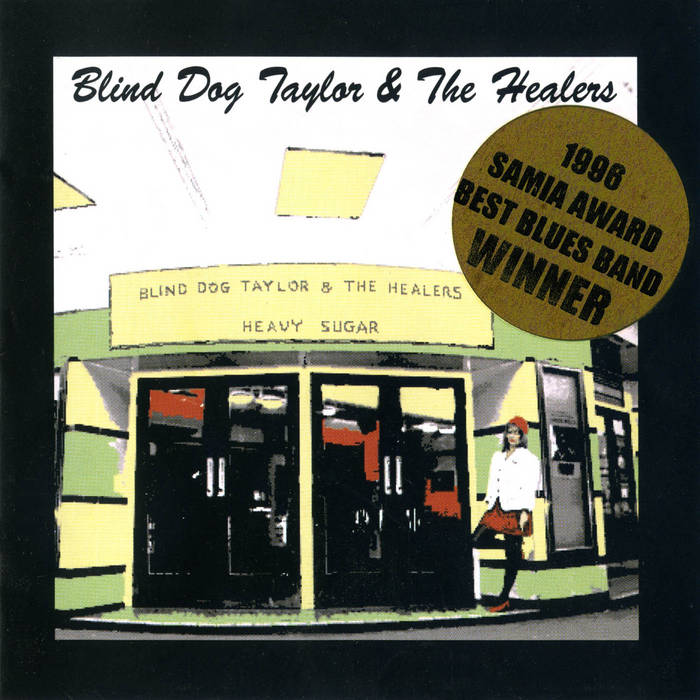
1996: Heavy Sugar by Blind Dog Taylor & The Healers

https://f4.bcbits.com/img/a2806335090_16.jpg

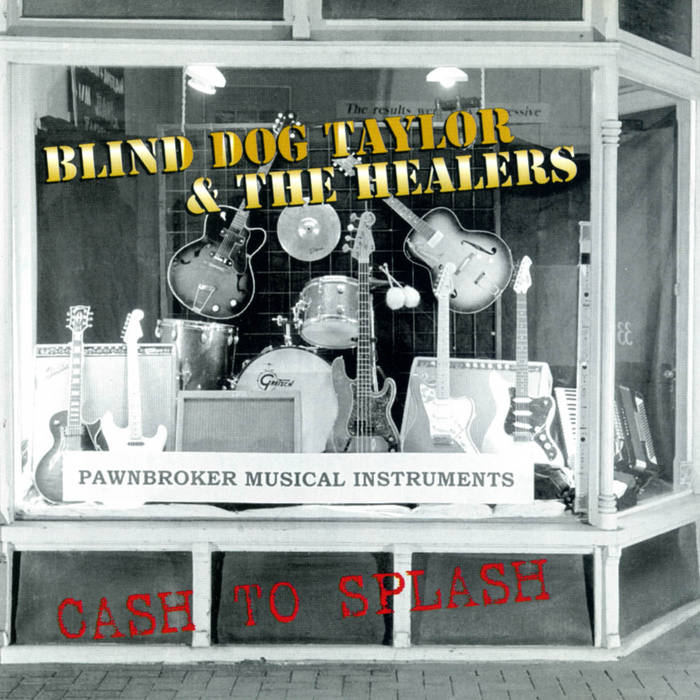
1998: Cash To Splash by Blind Dog Taylor & The Healers

https://f4.bcbits.com/img/a3897307903_16.jpg

1999: After Hours Inferno by Bind Dog Taylor & The Heat

2000: One Bite At The Cherry by Blind Dog Taylor & The Heat

https://f4.bcbits.com/img/a3560751059_16.jpg

2011: Blue In The Face by Travis “Blind Dog” Taylor

2018: Secrets Of Kangaroo Island by Travis Taylor & JJ Hackett

2019: Are We There Yet? By Travis Taylor and ONE MORE MILE

2021: Forbidden Fruit: by Travis Taylor and ONE MORE MILE

2025: Volume 1 THE HOLLYWOOD CONNECTION by Travis Taylor’s ONE MORE MILE with Al Blake and Fred Kaplan

2025: Volume 2 THE CAMARILLO CONNECTION by Travis Taylor’s ONE MORE MILE with Al Blake and Fred Kaplan

Posted in Adelaide, Australia, Blues, Entertainment, Funny, Hilarious, Hilarous, Humor, Humour, Interviews, Jazz, Music, Musicians, Paul Murray, Photography, Social Commentary, South Australia, Uncategorized, United States | Tagged , , , , , , , , , , , , , , , | Leave a comment

Antique Antique Shop Owners of Japan

Off The Top of My Head

By Paul Murray

A few years ago, I was exploring the back streets of the old Japanese city of Kamakura, which was the de facto capital of Japan during the Kamakura Period (1185–1333). The city is steeped in history and is home to many grand temples, shrines and the very popular “Daibutsu” or “Great Buddha.”

On my walk, I happened across a tiny antique shop run by a very elderly gentleman who may have been older than some of the artefacts he had on display in his emporium. He was elegantly dressed in a fine kimono, and despite it being a hot summer day, he seemed cool and calm in the stifling heat and still air of his shop. He was extremely knowledgeable about his collection and was happy to discuss the provenance and historical significance of the items he had on display. 

Among his collection was a gnarled piece of tsuge (Japanese boxwood) that resembled an enraged minatour sliding into a turn after a charge, seemingly having missed his target and wheeling back onto his foe to send him to oblivion. I immediately fell in love with the piece and wanted to purchase it, but assumed it would be well beyond my means. However, as there was no price tag on the beast, so I asked what he let it go for…”Oh, there’s no price tag?” He asked. “I can’t see one,” I replied, taking the sculpture to him. “It’s ¥7,500,” he said, seemingly off the cuff. At that time, it was about $US70, which was well below what I was expecting and within my budget, so “SOLD,” I said, and the Mad Minatour is now one of my favourite objet d’arts on display in my New Zealand home.

Last week, I was at it again, trawling the backstreets of Tokyo in search of antique treasures…this time in Ōmori, which is an old central Tokyo suburb that was the childhood home of famous Japanese film director Akira Kurosawa. Kurosawa popularised the Samurai film genre and brought Japanese cinema to the world. Kurosawa combined Japanese and Western storytelling traditions, producing films of visual grandeur and moral messaging. His work is respected internationally for its innovative artistry and profound humanity.

Legendary Japanese Film Director Akira Kurosawa: “I suppose all of my films have a common theme. If I think about it, though, the only theme I can think of is really a question: Why can’t people be happier together?
One of my favourite Kurosawa films, “Rushomon,” is the tale of a murder from the perspective of four different witnesses, each offering a distinct and contradictory account of the incident. The film explores the philosophy of justice, and the story is told in reverse chronological order. The innovative portrayal of the story inspired Quentin Tarantino’s “Pulp Fiction.”

Ōmori also housed a brutal POW camp in WWII. The site is now the site of the popular Heiwajima boat racing arena, where punters place their bets on the first two finishers among six powerboats piloted by jockey-sized racers in colourful “silks” roaring around three laps of a 600m course. Ironically, “Heiwajima” means “Peace Island,” which belies the site’s past but, hopefully, heralds its future.

And they’re OFF! Boat Racing at the Heiwajima course in Omori Tokyo
(Image from https://www.heiwajima.gr.jp/en/)

While exploring Ōmori, I was fortunate to come across 大塚陶器店 the Otsuka Ceramic Shop, which, at first glance, seemed cluttered, decrepit, unkempt and derelict…just the kind of place I was looking for!

On display were a broad range of antique Japanese pottery, cups, bowls, sake sets, sculptures and vases. The aged owner was reclining fast asleep at the back of the store, which enabled me the chance of quiet inspection and contemplation of his displays, which were coated with a thick layer of black, sooty dust. I was possibly his only customer for the month, but the slumbering owner was delightfully nonchalant about the possibility of making a sale, choosing to remain comatose over the pursuit of commerce.

Among his wares was a delightfully crafted wooden sake decanter and set of cups that I caught my attention and spurred my desire for ownership. Again, there was no price on the items, so I politely roused the Old Boy from his slumber to enquire their worth. In a very similar scenario to the experience I had in Kamakura many years earlier, he seemingly randomly said, “¥2.500.” (Currently about $US15). Again, I was surprised, thinking the set would be much more, “SOLD,” I said, and he began wrapping them in old newspaper and popped them into a recycled shopping back for me to carry home.

Despite the lack of a cash register, payment was in cash as I don’t think the aged antique merchant had Internet, credit card facilities or had even ever considered such new-fangled nonsense…He opened a drawer from an old chest and retrieved my change from a paper bag full of banknotes. This speaks to the lack of petty crime in Japan that an elderly gentleman could keep wads of cash in an insecure and easily accessible location without concern is a wonderful testament to the honesty, respect and social responsibility of Japanese people.

The six-piece wooden sake set…after a good clean!

I took my antique find home, shared my treasure-hunting story with my wife Sanae and showed her the photos of the shop. After she stopped laughing, she noticed the Jōmon dogū figurines in one of the photos…She is particularly interested in the Jōmon period (circa 14,000 BC to 300 BC) history and cultural traditions, so I promised to return the next morning and ask about the statues to see if I could possibly procure one for her.

So, I dutifully arrived at the shop at 9:00 am the following day, only to find the shutters down and the shop very closed. I peered through the post slot in the roller door, and Sensi was in the back of the store reading the morning paper. “Ëxcuse me,” I shouted through the hole, “Yes?” he replied. “What time do you open?” I asked. “10:00 a.m.,” he said firmly. “OK,” I said, “I’ll come back then.”

Otsuka Ceramic Shop Sensei reading the morning paper at the back of his pottery emporium prior to the 10:00an opening time. Photo taken through the mail slot on the roller door .

I returned at 10:00 a.m. and the shop roller door was half open, but Sensei was nowhere to be seen. I waited another 15 minutes or so and eventually stuck my head under the door and said, “Sumimasen” to hear “‘Gomaenasai” from behind me and down the street, and there was Sensai, marching back from a shopping expedition in his white singlet, shorts and sandals, shopping bag in hand, very apologetic for having forgotten I was coming.

I reminded him that we had spoken the day before, and that I’d purchased the wooden sake set. Unsurprisingly, he remembered me as I really must have been his only customer for the day. I asked about the Jōmon dogū figurines, and he was quite surprised that I knew what they were. He laughed quite a lot when I enquired about the authenticity of the dogū. Genuine Jōmon dogū are museum pieces or the preserve of wealthy private collectors, and he honestly informed me they were not genuine Jōmon-era artefacts.

There were about a dozen dogū statuettes to choose from, and after some quiet deliberation and some enthusiastic encouragement from Sensai, I decided on the large one…¥4,500 (About $US30). Before my shopping spree, I’d done a bit of online research to make sure I didn’t get touched on the purchase. On Ebay, the asking price for 10 cm similar replica dogū statues was about $US65, so I was in good shape. I dropped the hammer on Sensei’s offering, which was twice the height and half the price!

Jōmon period (縄文時代), people were peaceful hunter-gatherers and early agriculturalists with a common culture. They were largely sedentary and had a well-established and complex society, religious beliefs and cultural traditions, which included artistic pursuits of which their remnant pottery and ceramic sculptures demonstrate.

I asked Sensei a few questions about his fascinating store. It turns out his father had started the business in 1948 as a means of post-WWII survival. He’d taken it over when his father retired and was himself now 86 years old and doesn’t have an heir willing to continue the family legacy. So, sadly. the Otsuka Ceramic Shop may soon be closed forever…perhaps Sensei will have a “closing down sale”? Keep an eye out for that antique hunters, there’s sure to be bargains galore!

I’ve always found it curious that, in general, Japanese people, (with a few notable exceptions, private collectors, traders, galleries, museums etc) see little value in antiques, preferring new. clean, disposable, fashionable and whatever the current trend suggests is popular.

Back in the “Bubble Economy” days, it was quite common to find Japanese antiques on the roadside awaiting pick-up and disposal by the rubbish trucks. An Irish friend created a great business by going around collecting antique “rubbish,” giving it a clean up and a polish and exporting it to Europe for resale at premium prices.

Antique treasures from the Otsuka Ceramic Shop soon to be proudly on display in our NZ home.

As my wife and I both forgot our wedding anniversary….again…I decided to give the dogū to her as a belated anniversary gift. Romance is not dead in the Murray household!

Happy 17th Wedding Anniversary My Darling!

Seventeen happily married years without a cross word! What an incredible wife you are and mother to our two amazing children…Who will soon, hopefully, be wonderful adults. 

Thank you for your compassion, kindness and consideration and for forgiving my many foibles. 

You are vastly more beautiful and interesting today than the happy day I met you, incredibly, over 20 years ago. Thank you for being my wife and for making my fabulous life ever more wonderful. 

Please accept this somewhat unusual wedding anniversary gift from your somewhat eccentric, but loving husband.  

Jōmon dogū figurines are thought to represent the religious  beliefs, artistic practices, and social structures of Jōmon period peoples and symbolise fertility, safety, social etiquette and protection from illness.

Let’s continue together to keep our family healthy safe and strong and to develop our artistic appreciation, creativity and sensibilities and our family spirit.

Thank you my LOVE for everything you do, you are and all you share with me.

I will love you, Diva, Winston and “Kawa” Murray unconditionally into perpetuity and continue to provide for you all and to, laugh, share life’s  experiences,, explore possibilities and grow wise and  happily old together.

Grace, Peace, Love and Happiness,

Your forever husband,

Paul.

愛しい人、17回目の結婚記念日おめでとう!

口喧嘩一つせず、幸せな結婚生活17年!あなたは本当に素晴らしい妻であり、二人の素敵な子供たちのお母さんです。きっともうすぐ素敵な大人になるでしょう。

あなたの思いやり、優しさ、そして思いやり、そして私の多くの欠点を許してくれてありがとう。

20年以上前にあなたに出会ったあの幸せな日よりも、今のあなたはずっと美しく、魅力的です。私の妻でいてくれて、そして私の素晴らしい人生をさらに素晴らしいものにしてくれてありがとう。

少し変わっているけれど、愛情深いご主人からの、少し変わった結婚記念日の贈り物を受け取ってください。

縄文土偶は、縄文時代の人々の宗教的信仰、芸術的慣習、そして社会構造を表し、豊穣、安全、社会的な礼儀、そして無病息災の象徴であると考えられています。

これからも一緒に、家族の健康、安全、そして力強さを保ち、芸術的な鑑賞力、創造性、感性、そして家族の絆を育んでいきましょう。

愛しい人よ、あなたがしてくれたこと、あなたがいてくれること、そして私と分かち合ってくれたことすべてに感謝します。

ディーヴァ、ウィンストン、そして「カワ」・マレーを、私は永遠に無条件に愛し、これからもあなたたちを支え続け、共に笑い、人生の経験を分かち合い、可能性を探求し、共に賢く、幸せに歳を重ねていきます。

恵み、平和、愛、そして幸福を、

永遠の夫より、

ポールより

Posted in Antiques, Art, Business, Economics, Funny, Gifts, Hilarous, Historical, Humor, Japan, Marriage, New Zealand, Paul Murray, Photography, Social Commentary, Tokyo, Tourism, Travel, Uncategorized, War | Tagged , , , , , , , , , , , , , , , | Leave a comment

Aotearoa AWOL at Osaka World EXPO

Murray Family’s Quest to Locate MIA New Zealand at Expo 2025

Off The Top of My Head

By Paul Murray

My family and I recently flew to Tokyo on our annual pilgrimage to visit my wife Sanae’s parents. This year. we also visited the World Expo in Osaka, Japan.

It was supposed to be a grand cultural exchange—an opportunity to see how nations present themselves and to proudly check out the New Zealand pavilion to see how we stack up against the world, but as we arrived at the venue beneath the myriad national flags, Aotearoa was not to be found….Crickets!

We flew from Karamea to Tokyo, transferred to the shinkansen, and barrelled down to Osaka at 300km/h. We battled through tides of people, stood for hours in a line in the baking sun, and spent thousands of dollars—not to mention a sizable chunk of our family holiday in the hunt for the New Zealand pavillion/display.

It was 37°C in the shade! Seriously HOT and HUMID…I drank six litres of water that day and, miraculously, never once had to visit the urinals. My pores turned me into a human sprinkler system.

But Expo 2025 itself? Absolutely fantastic. An awe-inspiring collection of nations showing off their best sides—art, culture, history, technology, food, sport, music, innovation. Many countries I’d never thought twice about now have a permanent place in my imagination. Palau? Turns out they’ve got some fascinating ideas about ocean conservation. Tuvalu? Yes, Tuvalu—population 9,646—was there with a display, proudly waving the flag and showing the world what they’re about.

To put a bit of perspective on the size of the exposition, the area inside the wooden ring that surrounds the pavillions is a little over 6 ha. The event runs from April 13 to October 13, 2025. Over 200,000 people per day visit the show and the total number of visitors is expected to exceed 28 million. According to the Asia Pacific Institute of Research, the event will boost the local Osaka economy by an estimated $US20 billion as visitors take the opportunity to explore the region after attending the EXPO.

The Japanese, whose penchant for cute animated characters is well known, have really raised the “kawaii” bar with the Osaka EXPO mascot MYAKU-MYAKU, an amorphous. multi-eyed, happy and colourful character who has won the hearts of EXPO attendees and become he event’s icon. The character, which appears to be sexless and possibly prefers the pronoun “it,” has also spawned a myriad or merchandising opportunities and the character adorns everything from towels, key chains, cookies, pens and hats to umbrellas, shoes, watches and even underpants! (There is also a MYAKU-MYAKU tamagochi!)

Meet World EXPO Osaka Mascot “MYAKU-MYAKU”

MYAKU-MYAKU” is a mysterious being born from the fusion of cells and water. The red parts symbolize life’s dividing, multiplying cells, while the blue represents pure, ever-changing water. Constantly shifting shape, MYAKU-MYAKU sometimes forgets its own original form, but for now it has taken on a human-like appearance. It thrives in sunlight, delights in rainy days, and eagerly absorbs rain into its body. Dreaming of being recognised by all before Expo 2025 in Osaka, MYAKU-MYAKU looks forward to meeting people from around the world.

MYAKU-MYAKU Bio:

Birthplace: A small spring somewhere in Kansai.

Personality: Friendly but goofy, often making silly mistakes.

Special Skills: Able to change its shape into various forms and finding rainbows after it rains.

Favourite Thing to Do: Interacting with all kinds of living beings and things

Over 150 countries and regions have displays at the EXPO (76% of countries in the world). These countries did not attend World EXPO in Osaka in 2025: Greece, Mexico, Estonia, Argentina, Niue, Russia, North Korea, Afghanistan and Iran due to issues like financial instability or political tensions with Japan. while New Zealand did not have a pavilion due to a lack of government commitment.

Tonga was there. Fiji was there. Nauru—yes, Nauru—was there (Pop. 11,497). Even Papua New Guinea had a presence. But New Zealand? The land of the All Blacks, Middle-earth, kiwifruit, and pineapple lumps? AWOL. Nowhere. Zip. Nada. Not a bean. The Kiwi Pavilion was as extinct as the moa.

Is New Zealand really that broke? Could we not scrape together enough coins from back of the couch to put up at least a modest stall in the Commons Pavilion? Maybe a card table with some Whittaker’s samples, a bloke with a guitar strumming Crowded House, an All Black haka, and a looping video of Milford Sound?

Instead, New Zealanders abroad had to endure the humiliation of explaining that our country was too busy or too poor or too disorganised to show up at the biggest international showcase of the decade. What message does that send? Don’t come visit? Don’t invest? We’re closed until further notice?

Ironically, the only NZ representation I found was at Disneyland, in the “It’s a Small World After All” ride. There, a smiling Māori lady in a grass skirt and two kiwis standing under cabbage trees swaying back and forth. It wasn’t much, but hey—it was something. Compared to EXPO 2025, Disney is making us look good.

So here we are, watching the world march proudly onto the global stage while New Zealand lurks backstage, mumbling, “Yeah-Nah, mate, not today.” Meanwhile, Tuvalu’s out there punching well above its weight, proving that even the smallest voices can be heard—while ours is MIA.

If this is our international strategy, then perhaps New Zealand’s new motto should be:


“New Zealand: The World’s Best Kept Secret… ”

###################################################################################

Letter to N.Z. Prime Minister Christopher Luxon requesting an answer as to why New Zealand failed to show up at the most significant international promotional forum: World EXPO Osaka 2025:

September 19, 2025 

The Rt Hon Christopher Luxon 
Prime Minister of New Zealand 
Parliament Buildings 
Wellington, New Zealand 

Cc: Hon Todd McClay, Minister of Trade 
Cc: Hon Matt Doocey, Minister for Economic Development 
Cc: Hon Louise Upton, Minister of Tourism 
Cc: Hon Paul Goldsmith, Minister for Arts, Culture and Heritage 

Cc: Hon Christopher Hipkins Leader of the Opposition 

Subject: Absence of a New Zealand Presence at Expo 2025, Osaka 

Dear Prime Minister, 

As a proud New Zealand resident, deeply committed to my community and the future of our country. I recently travelled with my wife, who is Japanese, and our two New Zealand-born children to visit Expo 2025 in Osaka, Japan. While we were greatly impressed by the international displays of culture, innovation, trade, and tourism from around the world, we were disheartened to discover that New Zealand had no pavilion, exhibition, or visible presence at the event. 

Expo 2025 is an extraordinary opportunity for nations to showcase their art, culture, traditions, food, technology, history, innovations, sport, and music on the world stage. With over 200,000 visitors per day between April and October, the Expo offers unparalleled exposure to prospective tourists, investors, and business collaborators. Countries both large and small—Tuvalu included—were represented with pride and impact. Australia’s pavilion, for example, was so popular that we were unable to gain entry due to long queues. 

By contrast, New Zealand’s absence was conspicuous. It was, frankly, embarrassing not to find our country represented, and it left my family and I concerned about the message this sends internationally. What impression are we leaving with the millions of visitors attending this event? That New Zealand has nothing to offer? That we are closed for investment? That we do not wish to promote our culture, products, services, and innovations to the world? 

Understandably, some countries—such as Russia—are absent for specific geopolitical reasons. However, New Zealand’s omission raises troubling questions. Was this a deliberate policy decision? If so, who made it, and on what grounds? Was the decision financial? If so, what does it signal about our priorities and ability to invest in opportunities for trade, tourism, and global collaboration? 

New Zealand has so much to offer such as world-class art, culture, technology, food, and natural beauty. To miss the chance to share this with a global audience feels like a significant lost opportunity—not only for tourism and trade, but for the international reputation of our nation. 

I respectfully request clarification on: 

  1. Why New Zealand chose not to participate in Expo 2025? 
  1. Who made the decision and what factors influenced it? 
  1. What assessment has been made of the potential consequences for New Zealand’s international profile, trade, and tourism? 
  1. Are there are plans to ensure New Zealand participates in future Expositions or similar global showcases? 

As proud NZ resident and patriot who loves this country and confidently represents it abroad, I believe the New Zealand absence in Osaka reflects poorly on the country, and I hope the Government will provide reassurance that this was not a missed opportunity without careful consideration and that due consideration is given to showcase Aotearoa in the next World EXPO in Belgrade in 2027. 

Thank you for your time and attention to this important matter. I look forward to your response. 

Yours Sincerely, 

Paul John Murray 

(Contact Details Supplied)

Response from Minister for Agriculture, Forestry, Trade and Investment and Foreign Affairs, The Hon Todd McClay

Posted in Adventure, Australia, Bureaucracy, Children, Economics, Education, Entertainment, Hilarious, Hilarous, Humor, Humour, Japan, Karamea, Media, Money, New Zealand, Parenting, Paul Murray, Photography, Politics, Product review, Social Commentary, Tourism, Travel, West Coast | Tagged , , , , , , , , , , | Leave a comment

The Little Shop of Horrors

A Karamea Area School Production

August 30, 2025

Off the Top of My Head

Photographs by Paul Murray

Posted in Art, Children, Community, Education, Entertainment, Karamea, Karamea Area School, Little Shop of Horrors, Music, New Zealand, Parenting, Paul Murray, Photography, Social Commentary, Theatre, West Coast | Tagged , , , , , , | Leave a comment

Karamea Ministry of Red Tape #28

Ole! Karamea Ministry of Red Tape! Ole! 

A subtly rhetorical, covertly ambiguous, ridiculously sinister Propaganda Unit of the Mexican Tequila Cartel! Authorised by Amigo Gaucamole Zappata to receive Official Complaints on behalf of the New Zealand Government! 
 

Market Cross, Karamea, 0900 hrs Monday the 15th of March 2025 

Karamea Ministry of Red Tape Head Honcho: Senorita Rohita Skarletta 

Karamea Ministry of Red Tape Head Honcho Senora Senorita Rohita Skarletta

Receptionist Senora El Vino Dizzy Dorozita

«Troops! Avanti!» 

Office Teetotalitarian: Yeltin El Boozlebub! 

Office Teetotalitarian: Yeltin El Boozlebub!  «Skol!» 

Office Guard Hundt: El Supermoo 

El Supermoo «R…a…l….p….h!!!» 

(Radio Karamea 107.5 FM DJ San Pedro «Ze chanson dedicated to all ze Rongolians!» 

«I don’t like Mondays.by Herp Albert and The Tijuana Brass.» 

Office Bar Keeper: Ole Amigos! A Montgomery Pythagorian Tragedy! The Karamea Ministry  
of Red Tape has run out of Lemons and Salt! 

Generalissimo Cancun Fernandez aka Bob!: «ring ring»: I wish to make ze complaint! 

Generalissimo Cancun Fernandez aka Bob!

Office Front Desk Receptionist Senora El Vino Dizzy Dorozita: An Official Complaint? 

 
Bob!:  Si! I have just visited the the Karamea Memorial Museum of El Senor Don Jockstrap  
Trumpetkov and I do not believe he has earned the right to be a Life Member of The Purple  
Tit Club! 

Senora El Vino: Three tours of Nam! 

Bob!: Si! In the foyer there are free psychodelic doggie bags of mescalin flavoured bull dust! 

Senora El Vino: Ai Carumba! Your complaint is extremely serious! Karamea Ministry of Red  
Tape fee is 3 million pesos including GST and Alcohol and Cigar Excise Tax! 

Senora El Vino

Bob!: Ole! A bargain senora, keep a the change! 

Senora El Vino: Receipt? 

Bob!: Non! 

Senorita Rohita Scarletta: Please enter the Karamea Ministry of Red Tape Chanson 
and Pizza Bar! I will personally record your Official Complaint! 

«Ring! Ring!»  

Dizzy Dorizita: Si senor! 

El Senor Donk Jockstrap Trumpetkov aka Pueblo: Si Senorita I wish to a make a complaint? 

El Senor Donk Jockstrap Trumpetkov aka Pueblo

Dizzy Dorozita: An Official Complaint? 

Pueblo Trumpetkov: Si! In Market Cross there is a Memorial Museum dedicated to a me  
senorita but I am a still alive! 

Bang! Bang! Bang! 

Office Karpenter Georgian Vazilimov: Santa Maria! My Nigro and a Decker nail  
gun a Misfire! 

Office Karpenter Georgian Vazilimov

Pueblo: #@%$#@@@ ! You pierced my good ear, my left nostril and my wallet! 

El Senor Donk Jockstrap Trumpetkov aka Pueblo

Senorita Dizzy Dorizita: Mmm? That will incur an a extra fee! 

Office Hostess Senorita Stormy Jacqueline Danielo: Amigo! Is that a nail in your nose or are you  
just a please to a see me!? 

Office Hostess Senorita Stormy Jacqueline Danielo

Pueblo: Ai carumba! I need to a sit down! 

Dizzy Dorizita: Si! 500 pesos Senor! 

Office Con Artist El Guevara El Che: Attention Staff! The Karamea Ministry of Red Tape 
is collecting donations for the Radio Karamea 107.5 FM! So a give til it hurts! 

Office Con Artist El Guevara El Che

Pueblo: F…#$@%&*&*^% El Che! You a kicked me in the balls! 

El Che El Guevara: Senor! Uno you have a no balls and duo I give and you a hurt! 

Pueblo: Can I get lunch here? 

El Che: Please a sit down in the Karamea Ministrry of Red Tape Lunch Bar Amigo! 

Pueblo: A cheese board with a Soviet hammer and sickle!?? 

El Che: Si Senor! You are a iron deficient! Bonk!!!! Slash!!!! 

Pueblo: #@$%^% EXPLETIVE!!!!! @#$%^&* 

El Senor Donk Jockstrap Trumpetkov aka Pueblo

El Che: Senor! A watch this video of me ringing the Casa Mexicana the day  
before the Ides of March! 

«Ring 111 800 9/11»

Bustrous Affropithecus: You have reached the Communications Office of  The Mexican Tequila Cartel! 

Bustrous Affropithecus

 
El Che: Si! Cave Idibus! 

Bustrous Affropithecus: Red Alert! I will put you immediately through to the Casa Mexicana 

Emergency Response Team! 

El Voda Phona: «Burp!» Zis is ze the Answerphone for the Casa Mexicana Tequila Cartelo! 

If your call involves torture or pubic persecution of Senor El Trumpetkov, please a hang up now and dial 0 for further Options! Hasta La Vista! 

Radio Karamea 107.5FM ….. Gang Bang Style by Juanita Chiquita!!!! 

 
Doktor Kavorkian Mengele aka Max: Mmm? You a need an urgent a Frontal Phlebotomy! 

Doktor Kavorkian Mengele aka Max

Pueblo:  $@%$#$% That is an El Giordo Katheter! 

Max: Say agghh!! 

Pueblo: Aaaaaghhhhh!!!!! Not a from my a one eyed trouser snake! @#$@%^%$#! 

Max: Mmmm Blood Type 911! 
 

El Senor Sweeny Todd: Haircut Senor? 

El Senor Sweeny Todd

Pueblo: Si! Can you cut this hair stuck in my front teeth since Senorita Stormy Danielo 
trespassed my office in the Casa Mexicana!? 

El Senor Sweeny Todd: Si Senor!   «husqavvaaarmmma!» 

Pueblo: #@$%^%$# A haircut with a Husquavarna Chain Saw!! @#$%$# 

«Husqavarrma…..!!!!» 

El Sweeny Todd: Ai Caramba! Hjey senor, how am I to know Pueblo you have hairs on your   
a forked tongue!  I give you a quick lesson in Mexicana Sign Language for gratis!! 

Pueblo:  (Both middle digits!) 

El Sweeny Todd: Ah, you learn a fast senor! 

Doktor Jekyll and Senor Hyde BDS: Hey it is a tooth hurty pm! Just a time for a tooth extraction!! 

Pueblo: «Two Fingered Salute!» 

Karamea Ministry of Red Tape Ultra Secret Sign Language Code Book! 

Senor Hyde: Ai Caramba! An educated Amigo! «Two fingered salute!» 
A Churchillian quote! ( We shall fight them in the Garden Bars, we shall fight them in  
the Chicano LowRiders, we vill never surrender! Amigos will still say this was their  
finest Lunch Hour!) 

Doktor Jekyll: Step aside senor Hyde! «An Eye tooth for an Eye tooth!» Recriminations 9/11 

Senor Hyde: Si, but I will administer an anaesthetic! Open Wide El Senor Pueblo! 

Doktor Jekyll and Senor Hyde BDS

Doktor Jekyll: Ah an a awkward customer! Use a crow bar Senor Hyde! 

Senor Hyde:  Read the label! An Oral Suppositry! Should work Herr Doktor! 

Taco Lolita:  Ah a Rule .303! Si! 

Taco Lolita

Radio Karamea 107.5FM DJ San Pedro

Radio Karamea 107.5FM DJ San Pedro

Senor Frederick Mercury Filling: …Another one biting ze dustkov!

Senor Frederick Mercury Filling
“Cindy” & “Crystal” from Guangzhou @ Karamea Radio LIVE on 107.5
Posted in AI, Bureaucracy, Business, Donald Trump, Funny, Hilarious, Hilarous, Humor, Humour, Karamea, Karamea Radio, Karamea Radio 107.5 FM, Media, Mexico, New Zealand, Parody, Paul Murray, Radio, Radio Karamea, Russia, Satire, Social Commentary, SuperMoo the KarameaWonderDog, Uncategorized, United States, West Coast | Tagged , , , , , , , , , , , | 4 Comments