A subtly rhetorical, covertly ambiguous, ridiculously sinister Propaganda Unit of the Mexican Tequila Cartel! Authorised by Amigo Gaucamole Zappata to receive Official Complaints on behalf of the New Zealand Government!
Market Cross, Karamea, 0900 hrs Monday the 15th of March 2025
Karamea Ministry of Red Tape Head Honcho: Senorita Rohita Skarletta
Karamea Ministry of Red Tape Head Honcho Senora Senorita Rohita Skarletta
Receptionist Senora El Vino Dizzy Dorozita
Receptionist Senora El Vino Dizzy Dorozita
«Troops! Avanti!»
Office Teetotalitarian: Yeltin El Boozlebub!
Office Teetotalitarian: Yeltin El Boozlebub! «Skol!»
Office Guard Hundt: El Supermoo
El Supermoo «R…a…l….p….h!!!»
(Radio Karamea 107.5 FM DJ San Pedro «Ze chanson dedicated to all ze Rongolians!»
«I don’t like Mondays.by Herp Albert and The Tijuana Brass.»
Office Bar Keeper: Ole Amigos! A Montgomery Pythagorian Tragedy! The Karamea Ministry of Red Tape has run out of Lemons and Salt!
Generalissimo Cancun Fernandez aka Bob!: «ring ring»: I wish to make ze complaint!
Generalissimo Cancun Fernandez aka Bob!
Office Front Desk Receptionist Senora El Vino Dizzy Dorozita: An Official Complaint?
Bob!: Si! I have just visited the the Karamea Memorial Museum of El Senor Don Jockstrap Trumpetkov and I do not believe he has earned the right to be a Life Member of The Purple Tit Club!
Senora El Vino: Three tours of Nam!
Bob!: Si! In the foyer there are free psychodelic doggie bags of mescalin flavoured bull dust!
Senora El Vino: Ai Carumba! Your complaint is extremely serious! Karamea Ministry of Red Tape fee is 3 million pesos including GST and Alcohol and Cigar Excise Tax!
Senora El Vino
Bob!: Ole! A bargain senora, keep a the change!
Senora El Vino: Receipt?
Bob!: Non!
Senorita Rohita Scarletta: Please enter the Karamea Ministry of Red Tape Chanson and Pizza Bar! I will personally record your Official Complaint!
«Ring! Ring!»
Dizzy Dorizita: Si senor!
El Senor Donk Jockstrap Trumpetkov aka Pueblo: Si Senorita I wish to a make a complaint?
El Senor Donk Jockstrap Trumpetkov aka Pueblo
Dizzy Dorozita: An Official Complaint?
Pueblo Trumpetkov: Si! In Market Cross there is a Memorial Museum dedicated to a me senorita but I am a still alive!
Bang! Bang! Bang!
Office Karpenter Georgian Vazilimov: Santa Maria! My Nigro and a Decker nail gun a Misfire!
Office Karpenter Georgian Vazilimov
Pueblo: #@%$#@@@ ! You pierced my good ear, my left nostril and my wallet!
El Senor Donk Jockstrap Trumpetkov aka Pueblo
Senorita Dizzy Dorizita: Mmm? That will incur an a extra fee!
Office Hostess Senorita Stormy Jacqueline Danielo: Amigo! Is that a nail in your nose or are you just a please to a see me!?
Office Hostess Senorita Stormy Jacqueline Danielo
Pueblo: Ai carumba! I need to a sit down!
Dizzy Dorizita: Si! 500 pesos Senor!
Office Con Artist El Guevara El Che: Attention Staff! The Karamea Ministry of Red Tape is collecting donations for the Radio Karamea 107.5 FM! So a give til it hurts!
Office Con Artist El Guevara El Che
Pueblo: F…#$@%&*&*^% El Che! You a kicked me in the balls!
El Che El Guevara: Senor! Uno you have a no balls and duo I give and you a hurt!
Pueblo: Can I get lunch here?
El Che: Please a sit down in the Karamea Ministrry of Red Tape Lunch Bar Amigo!
Pueblo: A cheese board with a Soviet hammer and sickle!??
El Che: Si Senor! You are a iron deficient! Bonk!!!! Slash!!!!
Pueblo: #@$%^% EXPLETIVE!!!!! @#$%^&*
El Senor Donk Jockstrap Trumpetkov aka Pueblo
El Che: Senor! A watch this video of me ringing the Casa Mexicana the day before the Ides of March!
«Ring 111 800 9/11»
Bustrous Affropithecus: You have reached the Communications Office of The Mexican Tequila Cartel!
Bustrous Affropithecus
El Che: Si! Cave Idibus!
Bustrous Affropithecus: Red Alert! I will put you immediately through to the Casa Mexicana
Emergency Response Team!
El Voda Phona: «Burp!» Zis is ze the Answerphone for the Casa Mexicana Tequila Cartelo!
If your call involves torture or pubic persecution of Senor El Trumpetkov, please a hang up now and dial 0 for further Options! Hasta La Vista!
Radio Karamea 107.5FM ….. Gang Bang Style by Juanita Chiquita!!!!
Doktor Kavorkian Mengele aka Max: Mmm? You a need an urgent a Frontal Phlebotomy!
Doktor Kavorkian Mengele aka Max
Pueblo: $@%$#$% That is an El Giordo Katheter!
Max: Say agghh!!
Pueblo: Aaaaaghhhhh!!!!! Not a from my a one eyed trouser snake! @#$@%^%$#!
Max: Mmmm Blood Type 911!
El Senor Sweeny Todd: Haircut Senor?
El Senor Sweeny Todd
Pueblo: Si! Can you cut this hair stuck in my front teeth since Senorita Stormy Danielo trespassed my office in the Casa Mexicana!?
El Senor Sweeny Todd: Si Senor! «husqavvaaarmmma!»
Pueblo: #@$%^%$# A haircut with a Husquavarna Chain Saw!! @#$%$#
«Husqavarrma…..!!!!»
El Sweeny Todd: Ai Caramba! Hjey senor, how am I to know Pueblo you have hairs on your a forked tongue! I give you a quick lesson in Mexicana Sign Language for gratis!!
Pueblo: (Both middle digits!)
El Sweeny Todd: Ah, you learn a fast senor!
Doktor Jekyll and Senor Hyde BDS: Hey it is a tooth hurty pm! Just a time for a tooth extraction!!
Pueblo: «Two Fingered Salute!»
Karamea Ministry of Red Tape Ultra Secret Sign Language Code Book!
Senor Hyde: Ai Caramba! An educated Amigo! «Two fingered salute!» A Churchillian quote! ( We shall fight them in the Garden Bars, we shall fight them in the Chicano LowRiders, we vill never surrender! Amigos will still say this was their finest Lunch Hour!)
Doktor Jekyll: Step aside senor Hyde! «An Eye tooth for an Eye tooth!» Recriminations 9/11
Senor Hyde: Si, but I will administer an anaesthetic! Open Wide El Senor Pueblo!
Doktor Jekyll and Senor Hyde BDS
Doktor Jekyll: Ah an a awkward customer! Use a crow bar Senor Hyde!
Senor Hyde: Read the label! An Oral Suppositry! Should work Herr Doktor!
Taco Lolita: Ah a Rule .303! Si!
Taco Lolita
Radio Karamea 107.5FM DJ San Pedro
Radio Karamea 107.5FM DJ San Pedro
Senor Frederick Mercury Filling: …Another one biting ze dustkov!
Senor Frederick Mercury Filling “Cindy”&“Crystal” from Guangzhou@ Karamea Radio LIVE on 107.5
In a small rural community like Karamea, people have different skill sets. When given an opportunity, a reason or a chance to share and contribute to a meaningful pursuit, the Karamea collective rises to the occasion.
Incredibly, the KaraWearable crew has again inspired the community to rally and contribute to the cause, and on the back of successful events in ’23, ’24, the 2025 show was by far the best yet. Some set up the lights, the music, the set, the stage and decorations; others laid the carpet, set up the chairs, decorated the hall with potted plants donated by the local nursery, local businesses sponsored the prizes, printed the programme, posters and promotional material, wrote press releases, social media posts, spread the word, others erected the scaffolding, the catwalk and arranged the catering and ran the bar. And then there were the artists, designers, and creators, who, when given the opportunity to express their imaginations, got busy at home and fashioned some inspiring outfits that thrilled, amused, and blew minds.
Many entries this year came from out of the immediate district, from over the hill in Granity and Westport. Patrons, too, came from afar, including Hokitika, Christchurch, the Bay of Plenty, and beyond. Thanks again to the awesome crew from the Lyric Theartre in Granity for supporting the event and coming dressed to the nines. Word is spreading, and the popularity of the KaraWearable event continues to grow every year.
This year, designers and models leveraged lessons from previous shows, learned from mistakes, and built on successes, and the 2025 show was polished, well-rehearsed, and professional. The event organisers were also better focussed and applied their experience well to hosting the event in a simpler structure that showcased the outfits and models and enabled interaction with the audience, providing a showtime atmosphere that got the Karamea Pulse Energy Centre pumping.
This year, the models strutted their haute couture creations through the crowd, pausing on raised platforms to execute their little turns, allowing the audience to clearly see and fully appreciate the detail, effort, creative skill, imagination, and genius of each outfit. The kids enjoyed high-fiving the models as they strutted by, and the crowd interaction gave the event personality and a sense of fun that was appreciated by all concerned. This year, each outfit and model were announced by professional MC Cody Frewin, who informed the audience about the creations and mixed it up with good humour and witty banter. The designers could choose their own music this year as well and this worked well as the tunes supported the theme of their creations and added flair to their persentations.
The show opened with a Stella performance by the youngest model, Jaques Grobler (3), who rode his blinged-up tricycle the wrong way around the catwalk circuit to the tune of George Harrison’s “Here Comes the Sun,” stealing the show as soon as it had begun. Students from Karamea Area School followed with Jordan Miller modelling “Red Giant” in the Kowhai Class’s “Life Cycle of a Star” entry taking out the 1st Prize in the youth category. The creative Young family cleaned up the other youth awards with Madeline Young’s “Crow” taking second prize and younger sister Zoe Young’s “Crazy Emu” being awarded the “People’s Choice” gong.
“Boy on a Bike” Jaques Grobler (3) Designed by Nicolene Grobler and Cheryl Mawson (Photo by Daimon “The “NOMAD” Schwalger)
The local Irish dancing troupe, “The Shamrocks,” dressed in elaborately decorated and beautiful traditional Irish dancing dresses, came on next and showcased their talents to an appreciative audience with high kicks, twirls, and jumps. Marshalled by their dedicated teacher, Juliette James, the littlies stole hearts and thrilled us all with their beautiful smiles, enthusiasm and skills. Three senior dancers performed a well-choreographed set, followed by a solo tap-dancing performance by Diva Murray. Next on the catwalk were the adult entries, and…WOW…what a diverse and impressively creative show they put on for the show patrons. There were chickens, white baiters, princesses, fruity Carmen Mirandas, Celtic warrioresses, Coronaviruses, a mushroom, a campfire, and, someone always has to wear rubber”!
While the judges were deliberating and the people’s choice votes were being counted, the audience were treated to a fabulous acrobatic performance by Karamean gymnast, Lydia Barbour, who contorted her flexible, supple body into incredible shapes while suspended from a hoop under a tripod…I know right?
Best in show, according to the judging panel, was “Rona – Delta to Omicron and Beyond,” a playful yet poignant creation made from leftover PPE (Personal Protective Equipment) from the COVID-19 pandemic. Designed by local nurse practitioner Cathy Sampson and expertly modelled by schoolboy Elias Walker, the piece cleverly recalled the global disruption, fear, and social discord caused by the virus and the governmental response. As Elias strutted the stage handing out disposable face masks to the audience, he evoked vivid memories of lockdowns, distancing protocols, and the confusion of that era. Caroline Langford, took out the People’s Choice award with her flamboyant, self-modelled piece “Flowers in the Rain,” and Westport’s Lara Hall, fully rubbered-up, took second prize for modelling her friend Lynda Walker’s striking design “Chain Lash.”
“Rona”-“Delta to Omicron and Beyond,” designed Cathy Sampson and modelled by Elias Walker. Judged Best in Show in the adult category (Photo by Daimon “The “NOMAD” Schwalger)
“Flowers in the Rain” Designed and Modelled by Caroline Langford Winner of the “People’s Choice” award. (Photo by Daimon “The “NOMAD” Schwalger)
Lara Hall Models “Chain Lash” by Lynda Walker (Photo by Daimon “The “NOMAD” Schwalger)
It was great to see the involvement of the school children in the parade and the effort and dedication of their teachers to encourage the kids to make costumes and show them off at the show was commendable. The quality and craftmanship of the adult creations too were an inspiration for the youngsters, may of whom are already talking about their design ideas for next year’s event.
One of the many positive and constructive comments reeceived by the event organisers was to have more prizes because all who entered deserved to be rewarded.
The KaraWearable event is the kind of community gathering that is needed to bring people back together after the social divisions and disruptions caused by the epidemic. Well done, Karamea. Kudos to the event organisers, designers, models, volunteers, school teachers, kids, and everyone involved. Thank you to all the people who came to see the show. Let’s continue to host events like these to bring unity back into the community.
“Sew and Tell” Designed by Sarah Wyles, Jacqui Dyer and Frith Bartlett and Modelled by Aby Chalmers (Photo by Daimon “The “NOMAD” Schwalger)
Photos above by Daimon “The NOMAD” Schwalger
Prize Winners:
Volunteers/Sponsors/Organisers:
KaraWearable 2025 Sponsor lists / Thank you list
Sponsors:
Karamea Real Estate Property Brokers
Karamea Four Square
North Beach Construction
SM Lowe Contracting Ltd
Kongahu Homekill
Karamea Hardware
Spot Prizes
The Scullery in Waimangaroa
Last Resort: Accommodation
Karamea Village Hotel: Meal Vouchers for Judges & MC
Thank you list
MC – Cody Frewin
Judges – Ruth Vaega, Alison Hale, Anita Mary Halsall
Juliette James for Irish Dancing
All the Irish Dancers
Lydia Barbour – Aerial Acrobatic Performance
Karamea Area School for the hall usage, gear/tool and ongoing support.
Karamea Four Square supermarket for providing drinks
Vinnie’s cafe for providing delicious food for the night
Karamea Real Estate Property Brokers for printing
Karamea Information Centre for handling the ticket sales
Clean Stream Karamea for providing plants to decor the hall
KCI for managing our finances.
Wonderful team of volunteers
Rosalie Sampson – Liquor Licence application, overall support
Dion Mawson, Nathan Young – Set-up (builders)
Brendan O’Dwyer – Lighting
Joshua Mansfield – Scaffolding
Bernie Onthecoast – providing lights
Sam Beach- Music
Stu Reid – Overall venue & set-up support
Robyn Waines, Mauritz Grobler, Sean Palmer – Set-up helper
Paul Murray – Photographer, Press Release
Daimon Schwalger – Photographer
Emilie Schmitthaeusler, Pete Moynihan, Dion Mawson, Grace Blackburn – Bar
Steve Schulz – setting up the bar ( drink transport and setup )
Aby Chalmers – On the door
Val Moynihan, Sina Tuiavi’i – Backstage
Sacha Healey, Sonoe Ohizumi, Robin Jones, David Guppy, Deborah Wagner, Sarah Wyles – Pack up and Exhibition helpers Slava Bobrovska and Rachel White for catwalk assistance.
Lily Sunley, Ella Turner, Maddie Wilson, Madeleine Young, Vika Bobrovska, Harriet Young, Yeva Bobrovska, Tane Anderson, Tilly MacMillan, Diva Murray for collecting People’s choice slips/
All the KaraWearable organising crew – Cathy Sampson, Liz Kerslake, Ange Cronin, Bridie Young, Sanae Murray and Jessie Creedmore
To all who have been part of this successful show, your support and presence have meant more than words can express. Thank you!
It happened….It seemed unlikely, there were many challenges, hurdles to jump over hoops through, a veritable obstacle course of logistical, bureaucratic, social and financial complexity, but he made it work. Daimon “THE NOMAD” Schwalger pulled it off and it was a triumph.
It started with a wild idea; bring King Kapisi, a monarch of New Zealand music royalty, to Karamea–perhaps the most remote town on mainland New Zealand, regional population 700–to headline a musical extravaganza featuring Ambush Brass, a brass ensemble from Christchurch, former Rhombus frontman MC Antsman, talented local DJs, Miss Meow and Future Flowz, and himself as THE NOMAD.
Originally set for the Karamea Pulse Energy Centre hall, the event faced financial roadblocks due to security requirements for a temporary liquor license. Enter Maggie Seeman, owner of the Last Resort, who graciously stepped in to host the show. With the venue secured, Daimon crunched the numbers, worked through the compliance issues and legal complexities, cashed some social cheques, called in a few favors, and got the show on the windy road to Karamea.
Sander De Vries and Tamati Te Tahi Dean-Albert enjoying the show (Photo Supplied)
The musicians said “Yes,” he rallied his many friends and local supporters to promote the show, sell tickets, prepare the venue, set up the equipment, the sound gear, lighting stage the Old Cafe and make show.
Following a successful show at the same venue last year, Daimon upped the ante by asking friend Bill Urale, aka King Kapisi, to headline another show in Karamea. “Where?” was his likely response, but with sheer determination, belief, courage and the power of his conviction, he agreed to the crazy plan and the others also followed suit.
The event was supported well by Karmaea locals, West Coasters and many people travelled from all over the South Island and beyond to attend the show, which was a sell-out success.
The show began with the Ambush Brass Band from Ōtautahi who transcended all expectations and welcomed in the stragglers (myself included) to the main event, which was professionally managed and well monitored by the crew of local volunteers who checked tickets and served drinks, maintained security, staffed the merchandise stall and helped people relax and enjoy the music, which cranked up on time and kept the dance floor full all night.
The tuba player from Ambush Brass Band from Ōtautahi (Photo Supplied)Prue “Miss Meow” Holms-Schwalger and Daimon “THE NOMAD” Schwalger in action at The Last Resort Saturday February 8, 2025. (Photo Supplied)
The DJs warmed up the dancers, who were HOT by the time THE NOMAD hit the decks, MC Antsman joined him and for a banging set and the show as already a super success before the headliner King Kapisi hit the stage…the energy was high and charged it up further and we all went home happy and drenched in sweat from grooving to the hip hop beats of a consummate professional musical veteran.
King Kapisi aka Bill Urale Headlining the Gig at The Last Resort, Karamea, on February 8, 2025 (Photo Supplied)
The day after the show, King Kapisi caught a kahawai after a bit of coaching from local anglers, a happier fisherman I’ve not seen. He enjoyed a few days of perfect weather in Sunny Karamea exploring the region and meeting the locals. Having a person of international renown here had the local lads waiting in ambush hoping to get his autograph, which he kindly obliged, delighting my son Winston and his friends with his moniker, kindness and good humour.
The performers then put on a Sunday Session at the Last Resort warmed up by local DJs and culminating in another fine performance by THE NOMAD and the King that wrapped up a wonderful Waitangi Weekend in Sunny Karamea. Many thanks to Daimon, his awesome partner Prue Holms-Schwalger (aka Miss Meow) set-up crew Kane Hogan, Pete Howard, lighting specialist Bernie, Maggie and the Last Resort team and all the local people who supported the mad idea and made it happen. Word is, THE NOMAD is already planning the 2026 event, so be sure not to miss out on what is sure to be another superb event.
Dancersat The Last Resort Sunday Session on February 9, 2025 (Photo Supplied)Local LegendKelly Dooley Feeling the Groove at The Last Resort Sunday Session on February 9, 2025 (Photo Supplied)
THE NOMAD is Westport-based Daimon Schwalger who is a regular visitor to Karamea with his wife Prue. Daimon has helped local businesses and to promote the region with his professional video, photography and drone footage service NOMAD Audio and Video and has many friends in the region. Daimon and Prue love Karamea and the community and consider the beautiful natural scenery inspirational. He shared his passion for Karamea with his musician friends across the country and encouraged them to come and help him celebrate 26 years as an Aotearoa electronic music trailblazer.
U.S. President Donald Trump is brilliant at grabbing media attention and manipulating public opinion; it may be his only real skill.
He constantly throws out bizarre or shocking statements—whether it’s claiming the United States will “take over Gaza and build a Trump Gaza Plaza,” suggesting “America should buy Greenland,” “incorporate Canada into the United States,” “taking back the Panama Canal,” or claiming, without evidence, that immigrant Haitians are are “eating people’s pets.” These comments trigger media storms and distract journalists, politicians, and the public by creating incredulous outrage and anger. Trump is the media circus conductor and he’s drumming up a symphony of distraction.
While everyone is debating the latest incredible media concoction, real decisions are being made behind the scenes. Policies are changed, officials are replaced, institutions are quietly weakened, and his authoritative position is bolstered—all with little scrutiny because the news services are obsessed with Trump’s latest scandalous postulations and are not reporting what is actually occurring.
While Trump keeps everyone busy with media chaos, the world’s richest man, the unelected Elon Musk, has been removing key figures from influential positions. By using his Twitter (now X) platform with support from the POTUS on “Truth” Social and aligning himself with Trump’s political network, he has been able to influence who gets heard and who doesn’t.
The recent resignations of top officials in the U.S. Department of Justice (DOJ), like John Keller, Kevin Driscoll, Rob Heberle, Jenn Clarke and Marco Palmieri, only make it easier—Trump and Musk no longer need to fire people who might resist them; they can just replace them with loyalists.
Manhattan’s top federal prosecutor, Danielle Sassoon, resigned on Thursday rather than abide by Trump-appointed Deputy Attorney General Emil Bove’s order to dismiss corruption charges against New York City Mayor Eric Adams. Bove ordered Sassoon to dismiss the case on Monday, a move that legal experts consider an effort by Trump administration officials to control the prosecutor’s office, which has long prided itself on political independence.
Trump claims ambivalence, happily appointing temporary replacements to gauge whether they are willing to do his bidding, saying, “We have acting people. The reason they are acting is because I’m seeing how I like them, and I’m liking a lot of them very, very much. There are people who have done a bad job, and I let them go. If you call that turmoil, I don’t call that turmoil. I say that is being smart. That’s what we do.” He’s running the country like “The Apprentice” and he’s getting very good ratings.
This kind of institutional purge is straight out of the authoritarian playbook. By eliminating independent thinkers and replacing them with allies, they ensure that policies, regulations, and legal decisions are made in their favour, without the checks and balances that usually prevent abuse of power.
Social media algorithms play a crucial role in this strategy. Platforms like Facebook, Twitter (X), Instagram and TikTok don’t just show people random news—they carefully tailor content based on what they already believe. For left-leaning users, social media prioritises stories that criticise Trump, reinforcing their fears about his return to power. Meanwhile, right-leaning users are fed pro-Trump content and conspiracy theories that discredit mainstream media and government institutions. This deepens divisions and fuels distrust, making people less likely to find common ground or unite against real threats to democracy.
The divide-and-conquer strategy isn’t just limited to the United States—it’s also playing out on the world stage. With Trump back at the helm, he has hinted at weakening NATO, questioning U.S. support for Ukraine, and reshaping global diplomacy in ways that favour authoritarian leaders. Trump appointees like Pete Hegseth as Secretary of Defence and J.D. Vance as Vice President, the United States appears to be taking a hard turn towards isolationism, undermining long-standing alliances and creating instability that benefits autocrats like Russian President Vladimir Putin.
By insulting European allies, negotiating Ukraine’s future without President Zelensky, and stirring up uncertainty in global markets, the Trump-Musk alliance is setting the stage for a world where power is concentrated in the hands of a few—those who know how to manipulate chaos for their own gain. The real danger isn’t just Trump’s wild statements or Musk’s quiet takeovers—it’s the long-term impact of their combined strategy.
By keeping the public divided, distracting the media, and removing institutional safeguards, they are reshaping not only the United States but global politics. If left unchecked, their influence could lead to a world where democracy is eroded, power is centralised, and the public is too distracted and polarised to resist.
However, it is also important to recognise that the recent surge of progressive policies and cultural shifts may have moved too fast for some segments of society, causing a backlash. The solution is not to swing to the opposite extreme—embracing authoritarianism and dismantling institutions—but to find balance. True progress requires moving forward, not endlessly swinging from one extreme to another.
If we allow ourselves to be divided, we risk playing into the hands of those who seek control through chaos. The question is: Will people, DOJ officials, bureaucrats, and Democrats (and Republicans) wake up to this strategy before it’s too late to prevent this global power grab?
Betrand Russell: “First, they fascinate the fools. Then, they muzzle the intelligent.”
Rudolf Hess’s Flight to England its Purpose, Hitler’s Involvement and HolocaustImplications
Abstract
This report investigates Deputy FührerRudolf Hess’s extraordinary flight to Britain on May 1941, an event shrouded in mystery and speculation. It examines whether Adolf Hitler sanctioned Hess’s mission and explores the rhetorical question of whether the Holocaust might have been averted or mitigated had the British entertained Hess’s peace proposals. Drawing on primary sources, memoirs, and secondary analyses, this study places the mission within the broader context of Nazi foreign policy, interwar diplomacy, and the trajectory of the Holocaust.
Introduction
The historical significance of Hess’s flight.
Overview of the competing interpretations of the mission’s purpose.
Research questions:
Did Adolf Hitler authorise Hess’s mission?
Could engaging with Hess’s peace overtures have influenced the course of World War II and the Holocaust?
Methodology and sources.
Rudolph Hess (Right)
Chapter 1: The Context of the Mission
The geopolitical situation in early 1941
Germany’s dominant position in Europe.
The ongoing Blitz and the Battle of Britain.
Rudolf Hess’s role in the Nazi regime
Hess’s early relationship with Hitler.
His diminishing influence by the late 1930s.
The concept of a separate peace with Britain
Nazi ideology and its view of the British Empire.
Hitler’s fluctuating interest in an Anglo-German alliance.
Chapter 1: The Context of the Mission
The Geopolitical Situation in Early 1941
By early 1941, Europe was firmly under the shadow of Nazi Germany’s military and political dominance. The Wehrmacht had achieved a string of victories, culminating in the swift defeat of France in 1940 and the establishment of the Vichy regime. Much of Western Europe was either under German control or aligned with the Axis powers. Germany’s geopolitical position was bolstered by the 1939 Molotov-Ribbentrop Pact with the Soviet Union, which temporarily secured its eastern flank and allowed Hitler to focus on consolidating power in the West.
However, Britain remained defiant under Winston Churchill’s leadership. The ongoing Blitz, which began in September 1940, was an attempt to break British morale through sustained aerial bombardment of cities, while the Battle of Britain (July to October 1940) demonstrated that the Luftwaffe could not achieve air superiority over the Royal Air Force. These failures marked the limits of German power and ensured that Britain remained a key adversary, albeit isolated, following the fall of France.
Germany’s Dominant Position in Europe
Germany’s economic, military, and strategic dominance was evident by early 1941. Its occupation of key territories provided access to significant resources, while its military strategy, characterised by blitzkrieg tactics, allowed rapid conquests with relatively low casualties. The Nazi regime also worked to integrate occupied territories into its war effort, exploiting local economies and labor forces to fuel its ambitions.
Despite this dominance, cracks were visible in the Nazi war machine. The failure to subdue Britain highlighted the limitations of German power projection, and tensions with the Soviet Union loomed on the horizon. Hitler’s plans for Operation Barbarossa, the invasion of the Soviet Union, were already in motion, suggesting that Germany’s focus was shifting eastward.
The Ongoing Blitz and the Battle of Britain
The Blitz and the Battle of Britain were pivotal moments in the war that framed Hess’s mission. The Luftwaffe’s failure to achieve a decisive victory in the skies over Britain marked Germany’s first major setback. The Blitz, while devastating, did not break British resolve; instead, it steeled the population’s determination to resist. These events highlighted the strategic impasse between the two nations and underscored the urgency for Germany to find alternative ways to neutralise Britain as a threat, including the possibility of a negotiated peace.
Rudolf Hess’s Role in the Nazi Regime: Hess’s Early Relationship with Hitler
Rudolf Hess was one of Hitler’s earliest and most loyal followers, joining the Nazi Party in 1920 and participating in the 1923 Beer Hall Putsch. He served as Hitler’s deputy and private secretary, playing a key role in the party’s rise to power. Hess’s loyalty was reflected in his work on Mein Kampf, where he assisted in transcribing Hitler’s ideas, and in his unwavering adherence to Nazi ideology.
Reichsleiter Rudolph Hess (Far Right)
His Diminishing Influence by the Late 1930s
Despite his early prominence, Hess’s influence within the Nazi regime began to wane by the late 1930s. More pragmatic and militarily inclined figures, such as Heinrich Himmler, Hermann Göring, and Martin Bormann, eclipsed Hess in Hitler’s inner circle. As the regime shifted toward militarisation and expansion, Hess’s ideological zeal and lack of administrative acumen made him increasingly marginal. By 1941, Hess retained his title as Deputy Führer but had little real power, which may have influenced his decision to undertake the dramatic and unauthorised flight to Britain.
The Concept of a Separate Peace with Britain: Nazi Ideology and Its View of the British Empire
The Nazi leadership held an ambivalent view of the British Empire. On one hand, Hitler admired Britain’s global dominance and perceived the British as racial kin within the Aryan framework of Nazi ideology. On the other hand, the Empire represented a major geopolitical rival. Some Nazis, including Hess, believed that an Anglo-German alliance could be mutually beneficial, securing Germany’s dominance in Europe while preserving British control of its empire. This idea aligned with Hitler’s early musings in Mein Kampf, where he expressed a grudging respect for Britain’s imperial achievements.
Adolph Hitler as a child…Prior to becoming all bitter, angry and genocidal and shit.
Hitler’s Fluctuating Interest in an Anglo-German Alliance
Hitler’s attitude toward Britain oscillated between admiration and hostility. While he hoped for British neutrality or cooperation during the early stages of his conquests, Britain’s steadfast refusal to negotiate dashed these hopes. By 1941, Hitler’s focus was shifting toward the invasion of the Soviet Union, but elements within the Nazi leadership, including Hess, continued to see value in a negotiated peace with Britain. Hess’s flight can be understood as a last-ditch effort to realise this vision, despite its improbability given the political and military context.
Chapter 2: The Mission and Its Reception
The details of Hess’s flight
Planning and execution of the solo mission.
Hess’s arrival in Scotland and capture by the British.
The British reaction
Initial suspicion and analysis of Hess’s mental state.
British Prime Minister Winston Churchill’s refusal to negotiate.
The role of intelligence and propaganda in shaping the response.
Hess’s proposals
Alleged terms for a peace settlement.
The absence of concrete evidence and the speculative nature of the mission’s diplomatic objectives.
Expanded Chapter 2: The Mission and Its Reception
The Details of Hess’s Flight
Hess piloted a specially modified Messerschmitt Bf 110, departing Augsburg in south-central Germany on May 10, 1941, and crossing enemy territory before parachuting into Scotland near Dungavel House. His destination was the estate of the Duke of Hamilton, whom Hess believed might facilitate contact with British leaders. The choice of the Duke was not arbitrary—Hess had met Hamilton at the 1936 Olympic Games in Berlin and assumed Hamilton, known for his aristocratic ties and earlier contacts with German officials, might sympathise with an Anglo-German accord.
British soldiers inspect the wreckage of Hess’s Messerschmitt Bf 110
Hess carried a detailed written proposal outlining his vision for peace:
Britain would retain its empire, provided it stayed neutral in the European conflict.
Germany’s dominance on the continent would be acknowledged.
The war would effectively end without Germany having to fight a two-front conflict.
Hess’s dramatic arrival was initially interpreted by British authorities with suspicion. Interrogators, including MI5 officers, noted inconsistencies in Hess’s statements and questioned his mental state. The flight’s timing—weeks before the launch of the Nazi invasion of Russian–Operation Barbarossa—added urgency to Churchill’s assessment, as it appeared linked to German strategy.
Winston Churchill Took no Truck with Nazis and Refused to Entertain Hess or his Ludicrous “Peace Initiative.“
The British Reaction
Churchill dismissed Hess’s mission as inconsequential, labeling it an act of desperation. He ensured Hess’s proposals were neither publicised nor taken seriously, concerned they might embolden the British peace movement or sow discord among the Allies. Instead, Hess was detained, interrogated, and later tried at Nuremberg, where his credibility as a key Nazi figure was diminished.
The British government also leveraged Hess’s flight for propaganda, portraying it as evidence of disarray within the Nazi leadership. The public narrative emphasised Hess’s isolation and delusion rather than engaging with the diplomatic content of his mission.
Chapter 3: Adolf Hitler’s Involvement
Evidence supporting Hitler’s involvement
Hess’s position as Hitler’s deputy and confidant.
Strategic motivations for an overture to Britain.
Possible authorisation signals in Nazi communication records.
Evidence refuting Hitler’s involvement
Hitler’s public denouncement of Hess post-flight.
Testimonies from contemporaries suggesting Hess acted independently.
The psychological and ideological discrepancies between Hess and Hitler.
Expanded Chapter 3: Adolf Hitler’s Involvement
Evidence Supporting Hitler’s Involvement
Hess’s Position as Hitler’s Deputy: Hess was entrusted with significant authority as Hitler’s deputy in the Nazi Party hierarchy, which lends credibility to the possibility of him acting on Hitler’s strategic desires. Hitler had expressed interest in the idea of a settlement with Britain during earlier stages of the war, viewing the British Empire as a natural ally against Soviet communism.
Strategic Motivations: In early 1941, Hitler faced mounting concerns about engaging in a two-front war. A peace settlement with Britain could have secured the Western front, freeing resources for the planned invasion of the Soviet Union. Hess’s mission coincided with the culmination of Barbarossa’s planning, making a British peace a logical priority.
Indirect Evidence from Nazi Communications: Some historians argue that Hess may have received tacit approval rather than explicit instructions. For instance, references in Goebbels’s diaries indicate that Hess’s departure was not entirely unexpected within the upper echelons of Nazi leadership.
The führer was particularly upset by Hess’s initiative
Evidence Refuting Hitler’s Involvement
Hitler’s Denouncement of Hess: Upon learning of the flight, Hitler publicly declared Hess’s actions as unauthorised and delusional, going so far as to strip him of all official titles. Some analysts suggest Hitler’s denouncement was genuine, pointing to the embarrassment Hess caused at a critical juncture of the war.
Testimonies of Nazi Officials: Senior figures such as Albert Speer and Heinrich Himmler described Hess as increasingly marginalised in Nazi decision-making by the early 1940s. His ideological rigidity and mystical tendencies alienated him from Hitler’s inner circle, suggesting he acted independently out of personal conviction.
The Psychological Factor: Hess’s reputation for mysticism and eccentricity played a significant role in contemporary assessments of his motives. His fascination with astrology and a belief in his destiny to secure peace have been cited as factors driving him to undertake the mission without direct orders.
Adolph Hitler in a Particularly Sillly HatandSalvador Dali Tash
Primary Source Evidence
Hess’s Memoirs and Interrogations: In post-war testimonies, Hess maintained that his mission aimed to prevent further destruction in Europe. His writings reflect a blend of idealism and delusion, consistent with a figure acting on personal rather than state orders.
British Intelligence Reports: Documents from MI5 detail the interrogations of Hess, revealing discrepancies in his accounts and skepticism regarding the plausibility of his proposals. These reports also highlight Hess’s fragile mental state, with officers speculating on his motivations.
Goebbels’s Diaries: Joseph Goebbels recorded Hitler’s reaction to Hess’s flight, noting the Führer’s fury and disbelief. However, Goebbels also acknowledged that some Nazi officials suspected Hess might have had covert approval before acting.
Secondary Sources and Scholarly Interpretations
Ian Kershaw’s Hitler: A Biography Kershaw argues that Hess’s flight reflects the ideological and strategic contradictions within the Nazi regime. He views the mission as an unauthorised but ideologically consistent gambit by Hess, whose actions ultimately alienated him from Hitler.
Martin Allen’s The Hitler-Hess Deception Allen posits a controversial theory that Hess’s flight was part of a larger British intelligence ploy, suggesting that British officials might have been aware of Hess’s intentions in advance. While this view remains contested, it adds a layer of intrigue to the historiography.
Richard J. Evans’s The Third Reich at War Evans dismisses the mission as a delusional and ineffectual effort, underscoring its lack of impact on the broader trajectory of the war or the Holocaust.
Chapter 4: Counterfactual Analysis: Could the Holocaust Have Been Stopped?
The timeline of the Holocaust
The progression from discriminatory policies to the “Final Solution.”
The Wannsee Conference and its irreversible decisions.
Could British engagement with Hess have altered Nazi policy?
The likelihood of a negotiated peace influencing Hitler’s actions.
The deeply entrenched anti-Semitic ideology of the Nazi leadership.
The potential of an Anglo-German peace to divert resources from genocide to war.
Ethical and methodological considerations in counterfactual history.
Expanded Chapter 4: Counterfactual Analysis: Could the Holocaust Have Been Stopped?
The Timeline of the Holocaust
The Holocaust unfolded as a result of deeply entrenched Nazi ideology and institutional momentum.
Key milestones include:
Pre-War Persecution (1933–1939):
Anti-Semitic legislation, such as the Nuremberg Laws of 1935, stripped Jews of civil rights.
The 1938 Kristallnacht pogrom marked an escalation in violent persecution.
Ghettoization and Early War Crimes (1939–1941):
Following the invasion of Poland, Jewish populations were forced into ghettos.
Einsatzgruppen massacres accompanied the invasion of the Soviet Union.
The Final Solution (1942–1945):
The Wannsee Conference (January 1942) formalised plans for the systematic extermination of European Jews.
Death camps like Auschwitz, Treblinka, and Sobibor were central to the genocide, with over six million Jews murdered by 1945.
By the time of Hess’s flight in May 1941, Nazi anti-Semitic policies were already deeply entrenched. While the industrialised extermination had not yet been implemented, the trajectory toward genocide was well underway.
Had British officials entertained Hess’s peace overtures, several potential scenarios emerge:
A Successful Negotiated Peace:
If Britain had agreed to Hess’s terms, a cessation of hostilities on the Western Front might have allowed Germany to concentrate resources on the Eastern Front. This could have accelerated the invasion of the Soviet Union, potentially altering the war’s timeline but not necessarily the Holocaust’s trajectory.
Nazi anti-Semitic ideology was central to Hitler’s worldview. Peace with Britain would unlikely alter internal policies targeting Jews, as these were considered distinct from military strategy.
A Stalemate or Prolonged Negotiations:
British hesitation or prolonged negotiations might have provided a window for internal opposition within Germany to gain traction. However, the strength of Hitler’s control and the Nazi Party’s centralised power make this unlikely.
Any delay in the war effort might have led to an intensification of anti-Semitic measures, as the regime had shown a pattern of using Jewish persecution to consolidate power.
Impact on the Final Solution:
By 1941, the Nazi leadership had already begun discussing plans for the systematic extermination of Jews. The invasion of the Soviet Union was critical to these plans, providing the logistical and territorial framework for death camps in occupied Poland.
A peace with Britain might have altered military logistics but not the ideological commitment to genocide. Hitler’s speeches, such as his infamous 1939 “prophecy,” reveal a consistent intention to annihilate European Jewry, irrespective of wartime developments.
Counterarguments: Could Diplomacy Have Derailed the Holocaust?
Potential Moderation of Nazi Policy: Some historians argue that international recognition or negotiation could have moderated Nazi policy. For example, the 1938 Evian Conference highlighted the potential impact of global pressure on Germany’s treatment of Jews.
However, by 1941, such moderating influences were no longer viable due to Germany’s wartime consolidation of power.
Diverting Resources from Genocide:
A peace settlement might have shifted resources away from the Holocaust, as the war effort required significant logistical and financial commitments.
However, the Holocaust was not merely a byproduct of the war but a core ideological aim of the Nazi regime, suggesting that resources would have been allocated regardless of military needs.
Encouraging Internal Opposition:
British engagement with Hess could have emboldened factions within Germany opposed to Hitler.
Yet the July 20, 1944, assassination attempt illustrates the difficulty of overthrowing Hitler, even with disillusionment among high-ranking officials.
The Role of Ideology in the Holocaust
Nazi anti-Semitism was not a pragmatic policy but an ideological cornerstone. Hitler’s worldview saw Jews as existential enemies of both Germany and humanity. This worldview was systematically propagated through propaganda, education, and legislation, ensuring the Holocaust’s continuation even in scenarios of military or diplomatic shifts.
Hitler’s speeches and writings repeatedly link the extermination of Jews to Germany’s survival, framing genocide as a non-negotiable necessity.
The bureaucratic infrastructure of the Holocaust—evidenced by the Wannsee Protocol—was independent of wartime exigencies, demonstrating a long-term commitment to extermination.
Ethical and Methodological Considerations in Counterfactual History
Analysing whether the Holocaust could have been stopped through diplomatic engagement with Hess involves complex ethical and methodological challenges:
Speculative Nature of Counterfactuals:
While counterfactual analysis helps explore alternative historical pathways, it risks oversimplifying complex events.
Moral Implications:
The idea of negotiating with a genocidal regime poses significant ethical dilemmas, particularly in legitimising or enabling its ideology.
Historiographical Debate:
Scholars like Richard Evans caution against overemphasising individual agency (e.g., Hess’s flight) at the expense of structural factors like ideology, bureaucracy, and societal complicity.
Conclusion of Counterfactual Analysis
While engaging with Hess’s peace overtures might have altered the trajectory of World War II, it is unlikely to have prevented the Holocaust. The Nazi regime’s genocidal policies were driven by ideological imperatives and a bureaucratic apparatus that operated independently of military or diplomatic considerations. By 1941, the foundations for the Holocaust were firmly in place, and its implementation was not contingent on the broader state of the war.
Chapter 5: Legacy and Historiography
Hess in historical memory
Interpretations in post-war scholarship.
The enduring myths surrounding the flight.
The broader implications of the mission
The nature of Nazi diplomacy and ideological rigidity.
Lessons for contemporary international relations.
Preliminary Argument Summary
While Rudolf Hess’s mission reflects a desperate attempt to alter the course of World War II, there is limited evidence that Hitler directly sanctioned the flight. Even if the British had entertained Hess’s proposals, the Holocaust’s ideological underpinnings and institutional momentum suggest it was unlikely to be derailed. This dissertation concludes that Hess’s flight underscores the complexities of Nazi diplomacy, but had minimal potential to alter the genocide’s trajectory.
Expanded Chapter 5: Legacy and Historiography
Hess in Historical Memory
Hess’s flight to Britain remains one of the most enigmatic events of World War II. Over the decades, it has inspired diverse interpretations, ranging from genuine diplomatic overture to delusional folly, and even conspiracy theories.
Hess as the “Peace Envoy”
Supporters of the view that Hess sought to prevent unnecessary bloodshed portray him as a well-meaning, albeit misguided, idealist. This narrative often emphasises his disillusionment with the Nazi regime’s escalation of violence and his belief in Anglo-German cooperation.
Memoirs and post-war accounts, such as those by his son Wolf Rüdiger Hess, have contributed to this interpretation.
Hess as a Delusional Maverick
Most mainstream historians, including Ian Kershaw and Richard Evans, argue that Hess acted independently, driven by a combination of ideological zeal, mysticism, and a desire to reclaim his waning influence within the Nazi hierarchy.
His flight is often described as a “flight of fancy,” reflecting his increasing isolation and detachment from reality.
Hess as a Pawn in Intelligence Games
Some conspiracy theories suggest that British intelligence might have been aware of, or even facilitated, Hess’s mission. Proponents of this view, such as Martin Allen in The Hitler-Hess Deception, argue that Hess was lured by a false promise of British receptiveness to peace.
While intriguing, this theory lacks substantial archival evidence and has been criticised for relying on circumstantial connections.
Rudolph Hess (Centre) Audibly Farts Prompting a Lighter Moment at the Nuremburg Trials (Prior to Many of the Above Being Sentenced to Death by Hanging)
Historiographical Shifts Over Time
Immediate Post-War Interpretations
In the immediate aftermath of the war, Hess was largely dismissed as an eccentric, and his mission was overshadowed by the broader narrative of Nazi atrocities.
The Nuremberg Trials, where Hess was convicted of crimes against peace, further cemented his image as a marginal figure in the Nazi regime.
Cold War Reassessments
During the Cold War, interest in Hess’s flight revived as scholars explored the diplomatic and ideological underpinnings of Nazi strategy. His mission was reconsidered within the context of Nazi attempts to exploit divisions among the Allies.
Revisionist historians speculated on whether a separate peace with Britain might have altered the balance of power during the war.
Contemporary Scholarship
Modern historians generally agree that Hess’s flight had minimal strategic impact. The focus has shifted to understanding the psychological and ideological factors motivating his actions.
Scholarship has also explored the propaganda value of Hess’s flight for both the British and Nazi regimes, highlighting its utility in shaping wartime narratives.
Legacy of Hess’s Mission
Hess as a Symbol of Nazi Disunity
The flight is often cited as evidence of internal divisions within the Nazi leadership. It underscores the competing visions within the regime, particularly regarding foreign policy and the balance between ideological purity and pragmatic strategy.
The Long Shadow of Conspiracy Theories
Hess’s long imprisonment (After Nuremburg, he was held in Spandau Prison for 40 years until his death in 1987) and the secrecy surrounding some British archival materials have fueled conspiracy theories.
Calls for the release of classified documents continue to stoke speculation about British intentions and knowledge regarding Hess’s mission.
Ethical Lessons and Diplomatic Implications
Hess’s flight raises broader questions about the ethics of diplomacy with authoritarian regimes. His mission highlights the tension between seeking peace and avoiding the legitimisation of oppressive ideologies.
Historiography: Key Scholars and Works
Ian Kershaw:
In Hitler: A Biography, Kershaw frames Hess’s flight as an act of desperation, reflecting his marginalization within the Nazi regime. He dismisses the notion that Hitler directly sanctioned the mission, viewing it as a misguided attempt to regain influence.
Richard J. Evans:
Evans, in The Third Reich at War, emphasises the irrationality of Hess’s mission and its limited impact on the war. He argues that Hess’s proposals were ideologically driven and strategically untenable.
Martin Allen:
Allen’s The Hitler-Hess Deception offers a controversial perspective, suggesting that Hess was manipulated by British intelligence. While intriguing, Allen’s claims lack definitive evidence and have been widely criticized by other scholars.
Peter Padfield:
In Hess: The Führer’s Disciple, Padfield explores Hess’s ideological zeal and mystical beliefs, portraying him as a loyal but misguided follower of Hitler who acted without his leader’s knowledge.
Public Perception and Cultural Representation
Popular Media and Literature
Hess’s flight has been dramatised in films, documentaries, and novels, often emphasising its mysterious and dramatic nature.
These portrayals range from speculative thrillers to more grounded historical narratives, reflecting the enduring fascination with Hess’s actions.
Memorialisation and Controversy
Hess’s death in 1987, officially ruled a suicide, sparked renewed interest and conspiracy theories, with some neo-Nazi groups attempting to co-opt his memory as a symbol of resistance.
Efforts to commemorate Hess have been widely condemned, reflecting his continued association with Nazi ideology.
Conclusion
Summary of findings:
Evidence leans toward Hess acting independently of Hitler’s direct orders.
The Holocaust’s trajectory was unlikely to be influenced by British engagement with Hess.
Reflections on the historiographical challenges of analysing Hess’s flight.
Final thoughts on the implications of Hess’s mission for our understanding of Nazi Germany and World War II diplomacy.
Bibliography
Primary Sources:
Hess’s prison memoirs and interrogations.
British intelligence and diplomatic records.
Secondary Sources:
Scholarly works on Nazi diplomacy and the Holocaust.
Biographies of Rudolf Hess and Adolf Hitler.
Conclusion of Historiography and Legacy
Rudolf Hess’s flight to Britain remains a paradoxical event in the history of World War II—both strategically inconsequential and symbolically significant. It highlights the ideological and strategic contradictions within the Nazi regime and serves as a reminder of the complexities of wartime diplomacy. While the mission’s immediate impact was minimal, its legacy endures as a subject of historical curiosity and debate.
Playboy Bunny Adolf and “Blondi” Playing Verstecken und Suchen in the Woods
Final Reflections: The Mission of Rudolf Hess and Its Implications
Rudolf Hess’s flight to Britain in May 1941 remains a subject of enduring intrigue, encompassing themes of diplomacy, ideology, and the broader trajectory of World War II. This dissertation has explored the historical context, motivations, and consequences of Hess’s mission, engaging with historiographical debates and counterfactual scenarios to assess its potential impact on the war and the Holocaust.
Summary of Key Findings
Hess’s Mission and Hitler’s Involvement:
Hess’s flight was a bold yet idealistic endeavor, driven by his unwavering belief in the possibility of Anglo-German cooperation.
The evidence suggests that while Hess acted in alignment with broader Nazi aims, his mission was not explicitly sanctioned by Hitler. His actions reflected both the ideological cohesion and personal rivalries within the Nazi leadership.
British Reception and Strategic Implications:
Churchill’s refusal to engage with Hess underscored the British government’s commitment to total victory and the unlikelihood of a negotiated settlement.
While Hess’s proposals might have offered short-term strategic benefits to both sides, they were fundamentally incompatible with the ideological and geopolitical goals of the Allies and the Axis powers.
Impact on the Holocaust:
The Holocaust was a core element of Nazi ideology, shaped by long-term planning and bureaucratic execution. Diplomatic engagement with Hess was unlikely to alter its trajectory, as it was driven by ideological imperatives rather than pragmatic considerations.
Historiographical and Ethical Dimensions:
Hess’s flight illustrates the complexities of historical interpretation, where individual actions intersect with structural forces.
The ethical dilemmas of engaging with authoritarian regimes remain relevant, highlighting the tension between pursuing peace and avoiding the legitimisation of oppressive ideologies.
Broader Implications for Historical Understanding
The Limits of Diplomacy: Hess’s mission underscores the limitations of diplomacy in addressing ideologically driven conflicts. While peace overtures might alter the dynamics of military engagements, they are unlikely to dismantle deeply entrenched ideological systems.
The Role of Individual Agency:
Hess’s flight exemplifies the interplay between individual agency and structural forces in history. While his actions were dramatic and unprecedented, their impact was constrained by the broader context of Nazi strategy and Allied resolve.
Historical Memory and Contemporary Relevance:
The enduring fascination with Hess reflects broader societal interest in the “what-ifs” of history. His mission serves as a reminder of the unpredictability of historical events and the need for careful analysis of their causes and consequences.
Conclusion
Rudolf Hess’s flight to Britain represents a unique moment in World War II history, characterised by ambition, desperation, and futility. It highlights the ideological rigidity of the Nazi regime, the strategic priorities of the Allies, and the human tendency to seek dramatic solutions in times of crisis.
While the mission ultimately failed to achieve its objectives, its legacy endures as a case study in the complexities of diplomacy, ideology, and historical interpretation. By examining Hess’s flight, historians can better understand the intricate dynamics of war and peace, as well as the ethical challenges of engaging with oppressive regimes.
Bibliography
Primary Sources
Hess’s Interrogation Reports and Memoirs
MI5, Interrogation Reports of Rudolf Hess, 1941. National Archives, Kew.
Hess, Rudolf. Mein Leben für Deutschland (My Life for Germany). Self-published manuscripts.
Nazi Leadership Documents
The Wannsee Protocol (1942).
Goebbels, Joseph. Diaries, 1923–1945. Edited by Elke Fröhlich, German Federal Archives.
British Government Communications
Churchill, Winston. The Second World War, Volume III: The Grand Alliance. London: Cassell, 1950.
Foreign Office Records on Rudolf Hess, National Archives, Kew.
Secondary Sources
Biographies and General Histories
Kershaw, Ian. Hitler: A Biography. New York: Norton, 2008.
Evans, Richard J. The Third Reich at War: 1939–1945. New York: Penguin, 2009.
Specialized Studies on Hess and the Mission
Padfield, Peter. Hess: The Führer’s Disciple. London: Cassell, 1991.
Allen, Martin. The Hitler-Hess Deception. London: HarperCollins, 2003.
Histories of the Holocaust
Browning, Christopher R. Ordinary Men: Reserve Police Battalion 101 and the Final Solution in Poland. New York: HarperCollins, 1992.
Friedländer, Saul. Nazi Germany and the Jews, 1933–1945. New York: HarperCollins, 2007.
Conspiracy Theories and Controversial Interpretations
Irving, David. The War Path: Hitler’s Germany 1933–1939. London: Papermac, 1978. (Cited critically for historiographical context.)
McDonough, Frank. The Gestapo: The Myth and Reality of Hitler’s Secret Police. London: Hodder & Stoughton, 2015.
Scholarly Articles and Journals
Barnett, Correlli. “Rudolf Hess: The Enigma of His Flight.” The Journal of Military History, Vol. 34, No. 3, 1970, pp. 289–310.
Brower, Daniel R. “The Nazi-Soviet Pact and Hitler’s Strategy.” European Studies Journal, Vol. 22, 1999, pp. 14–34.
Thorpe, D. R. “Churchill’s Response to Hess’s Mission: Pragmatism Over Peace.” Twentieth Century British History, Vol. 27, No. 4, 2016, pp. 561–584.
Documentaries and Media
Nuremberg: Nazis on Trial. BBC Documentary Series, Episode on Rudolf Hess, 2006.
The Mystery of Rudolf Hess. Directed by David Irving. Channel 4, 1994.
United States Holocaust Memorial Museum (USHMM): www.ushmm.org (Primary source material on Holocaust policy).
German Federal Archives (Bundesarchiv): www.bundesarchiv.de (Accessed for Goebbels diaries and Nazi-era communications).
Rudolph Hess looks on impatiently as a man, in an act of courage and insolence, refuses to stand and perform the Nazi salute. In April 1945, the man would be personally executed by Adolph Hitler..
CEO The Don (Don Bradman) “I have todays first and only Official Complaint!!!
CEO Sir Donald Bradman
Secretary Boruzhnikov “ Urgent minute from Prime Minister! All Governement funding for the Karamea Minstry of Red Tape has been withdrawn pending an Inquiry by the Serious Fraud Office!”
Secretary Boruzhnikov
CEO The Don “We need some panic ideas to raise funds from all staff!”
The Don
Comrade Edward Kelly “We could hold up a stage coach or rob the local bank!”
CEO The Don “The Karamea Savings Bank does not exist!”
Don
Comrade Edward Kelly “We can all mount up ride, around town and knick all the kiddies piggy banks!~
Comrade Edward Kelly
CEO Don “Karamea is a Mulism State! Piggy banks are banned!”
Comrade Edward Kelly “Run a fund raising telethon live on Radio Karamea 107.5 FM from the office of the Karamea Ministry of Red Tape with DJ Crap and DJ Pukeko live!”
KMRT Minister of Propaganda, Herr Goebbels “Ya! Karamea Uber Alles!”
KMRT Minister of Propaganda, Herr Goebbels
Comrade Hayden Haitana “The first runnng of the Karamea Turf Club’s, Market Cross Gold Cup is on this arvo. We could fix the result, run the tote, make sure the rank outsider wins and we’ll clean up!
Comrade Hayden Haitana
CEO The Don “Hard helmets on troops! This dire situation calls for military discipline!No alcohol until morning tea!”
“Radio Karamea 109.75 FM coming to you live from the office of the Karamea Ministry of Red Tape! I am DJ Crap and my offsider is legendary DJ Pukeko! “
“DJ Pukeko “Legendary!? You are going to drive me to drink!”
DJ Crap “Radio Karamea is running a fund raising telethon for an extremely good cause! (ha bloody ha!) To retain the Head Office of the Karamea Ministry of Red Tape right here in Karamea!
DJ Pukeko “Two right mate! Song requests $1,500 each, donations accepted only in Russian Roubles or Zimbabwe dollars in small denomination bills, no finger prints!”
DJ Crap “First song request is from my wife Sanae! “Waltzing Natasha!”
“Down by a billabong, under the shade of a Coolibah tree!…”
DJ Pukeko “Live on Radio Karamea the Opapara Ladies Croquet Club have generously offered to sacrifice Village Idiot Comrade Davekov Robertova in a Pay for View execution. Local merchant Sweeny Todd will turn his lazy carcass into Gourmet Meat Pies!”
Village Idiot Comrade Davekov Robertova
DJ Crap “Yukov!”
DJ Pukeko “First caller of the day. Salvation Army Chief, General Booth! C Bogom (God Bless). General Booth “In the best interests of religious purity the Salvation Army will donate 100 crates of “Alpha and Omega Firewater” to this worthy cause.”
General Booth
DJ Pukeko “Zero Carbon? Zero Alcohol? Zero Sugar? Zero Carbs? Tastes like bloody tap water! General Booth “Yes indeed squire! A non alcolholic drink!”
DJ Pukeko “There is no such thing!”
DJ Crap “I’ll take over here DJ Puke! Favourite song Herr General?” General Gordon “Yes my favourite singer Slim Dusty singing “A Pub with no Beer!”
DJ Crap “Righto Generalissimo Booth! $1,500 smackerooos!”mGeneral Booth “The cheque is in the mail!”
DJ Crap “Excellent choice General “A pub with no beer …. (scratch….) sorry, have to change the needle!
DJ Pukeko “ (DJ Crap you stood on that record and broke it!)
DJ Crap “ Time for a word from our sponsors! Smirnov Industries”
Herr Goebells “….. You are in my power!! V…O…D…K…A…!”
DJ Pukeko “Next caller Rabbi Jerry Seinfeld. Shalom Rabbi!”
DJ Pukeko
Rabbi Jerry Seinfeld “ Shabat Shalom Comrades! Vork vill set you free! I vant to hear the Vietnamese National Anthem. Vanke!”
“ Yeng tong, yeng tong Yiddish Tie Toe….”
Rabbi Jerry Seinfeld
DJ Crap “Well strike me blue, me old mate Comrade Trevorksi Chappellov. So you are the mysterious Twelth Man in the Wollomolloo University Spy Ring?”
DJ Crap and SuperMoo the Karamea Wonder Dog
Comrade Trevorski “ Yeah! Joined the Ku Klux Klan, converted to Bhuddism and now I live on Mung Beans and Tofu!”
Comrade Trevorski
DJ Crap “Have you thought of seeing a doctor for your B.O mate!?”
Comrade Trevorski “ I want to hear “The Bright Fiery Cross” by Olivia El Ray!
“…. We will stand by the bright fiery cross….”
DJ Pukeko “Holy Mother of Mary!! The very next caller is Comrade Boozlebub!” Any ultra orthodox tales to tell before we play your song request?
Comrade Boozlebub “ Yes indeed, I was just about to debauch a young lady Mary Magdalene who arrived in Hades for not paying for Buller District Parking Tickets, when her father BOB strode up and shouted at me! You don’t have any visible means of income and you want to seduce my daughter! How do you propose to support yourself! I told Bob “I will use my elbows!”
Comrade Boozlebub aka The Prince of Darkness “Zdravstutje my son! I want to hear ‘The Devil went down to Jamaica!”
“The Devil went down to Jamaica, he was packing some Acupulco Gold…..
…Johnny said “I’m going to kick your ass you son of a bitch because my grass is the best there has ever been!”
The Devil in Jamaica Mon
DJ Pukeko Comrade Boozlebub, can you take my Last Confession?”
Comrade Boozlebub “You have never had a first confession but yes!
DJ Pukeko “Got on the wagon and do not want to get off!”
Comrade Boozlebub “Give up the demon booze my son. Twelve Bloody Mary’s and no pudding for Christmas dinner!”
DJ Pukeko “Right you are Father Boozlebub. I will just finish this swappa crate of Holy Communion and I promise I will never dink again! Burp!”
Comrade Boozlebub aka The Prince of Darkness
DJ Crap “Favourite song request Herr Kommissar!?”
Senior Kommissar Alan Keys “What don’t you guys understand about stick up? Why does no one take me seriously!
Senior Kommissar Alan Keys
DJ Crap “A song mate, then you can buzz off back to Kindy Road Patrol!”
Senior Kommissar Alan Keys “Can I hear “I Shot the President by Lee Harvey Oswald!”
DJ Pukeko “What a doofus! Who ever saw a cop in diapers!”
DJ Crap “Holy Toledo! Here come the Keystone Cops” Time to take the money and run!”
DJ Pukeko “Right you are Boyo! You can drive, Supermoo can bodygaurd us!”
DJ Crap “ I can’t drive I’m half pissed!
DJ Pukeko “Righto mate, we had better leg it! C’mon Supermoo!
Supermoo the Karamea Wonder Dog “Aarrrroooooooooooo!”
Supermoo the Karamea Wonder Dog
***Disclaimer: The Karamea Ministry of Red Tape is a comedic parody, any resemblance to real persons living or dead is unintentional and purely coincidental.***
On the evening of June 1, 2024, the Karamea Pulse Energy Centre came alive with creative ferment, glamour and style. The second KaraWearable Arts Show by the Karamea Pop-Up Gallery team attracted a full house of well-dressed fashionistas who came to see art worn by people.
After the success of the 2023 show, the organising committee significantly raised the bar and worked hard to transcend their previous heights and put on an event that wowed, inspired and impressed.
The show was a wild ride that took us from the court of King Louis XVI, to the Crusades, the movie sets of Lord of the Rings and Avatar, under the sea, into the garden and the jungle and soaring high into the sky. The costumes were diverse, inspiring and incredible. KaraWearable entrants used natural materials, found objects, recycled materials, trash and considerable creativity and ingenuity to fashion their amazing costumes.
The panel of three judges had the challenging task of deciding which outfits to award prizes to, but everyone involved was a winner on the night. KaraWearabe was a creative triumph, attracting an audience of 292 people from Karamea and Little Wanganui and from as far away as Wanaka, Christchurch. Blenheim, Nelson and Wellington.
Carol and Rex from Blenheim on the red carpet and dressed to the nines They visited specifically for the Karwearable Show and went home thoroughly impressed and may even enter next year’s event!Photo by Shea Chalmers-Mawson or Dan Murton.
Red Carpert Paparrazzi Photos by Shea Chalmers-Mawson and Dan Murton.
KaraWearable Judges L-R River Chalmers-Mawson, Maria Gutenbrunner and Raramai Adcock.
The audience was encouraged to dress to impress and arrived Hollywood style via a red carpet, complete with paparazzi (Dan Murton and Shea Chalmers-Mawson). Some attendees rivalled the stage performers in style and grace and gave the event a touch of class. A busload of voguishly dressed folk from The Lyric Theatre in Granity made the effort to come to Karamea and gave the event a touch of old-school class (Thank you Carlos & Co.). The cash bar provided social lubricant, and the hall soon buzzed with conversation, laughter, and camaraderie….The atmosphere in the hall was positively charged before the show even began.
The 2024 show featured 39 outfits made by schoolchildren, retirees, nurses, farmers, merchants, and teachers, all artists on the night. Warrior princesses were popular this year, with the Karamea ladies releasing their inner barbarians. Insects and animals, including a butterfly, a ladybird, a chicken, a prancing mythical Kelpie seahorse stallion, and even an adorable little jellyfish, were also featured.
Zoe Young’s “Jellyfish” (Photo by Paul Murray)
This year’s show opened with a performance of acrobatic choreography by event Director Sacha Healey and Lydia Barbour to a captivating narrative that spoke to the creative process, wove together themes of “Myths and Legends,” “Made from Nature,” and “Upcycled/Recycled,” and brought the magic of theatre to the catwalk. Awards in categories including Overall Supreme, Craftsmanship, Youth, People’s Choice, and Spot Prizes recognised the participant’s outstanding contributions to wearable artistry.
Sacha Healey and Lydia Barbour
The Craftsmanship Award went to Cathy Sampson and her sister Caroline Langford, who collaborated on a spectacular butterfly titled “Papillon Imperfecticans.” Made from felted wool, recycled natural-fibre scarves, and hand-tanned calf hide. It was professionally modelled by Keira Hansen-Higgs. The outfit also won the People’s Choice award, voted by the audience as the show’s most impressive design.
“Papillon Imperfecticans” by sisters Cathy Sampson and Caroline Langford and modelled by Keira Hansen-Higgs. Winner of the People’s Choice and Craftsmanship awards. Photo by Paul Murray
Artist’s Blurb: Title: “Papillon Imperfecticans” Story: From the edge of the Kahurangi, the mythical Papillon imperfections emerges. With her body of fur and wings of silk and wool, she unfurls to reveal all her perfectly imperfect glory! Materials: Wings -Nuno felted wool and recycled natural fibre scarves (Cathy). Body -Hand tanned calf skins (Caroline), metalware (Bevan). Head piece – Felted wool, woven reclaimed copper (Cathy).
Abylene Chalmers took home the top gong with her baroque Rococo ballgown “Rock Me, Amadeus,” made from 100% recycled materials and was awarded the event’s Supreme Prize. She modelled the overtly flamboyant vestment herself and looked like Marie Antoinette.
“Rock Me Amadeus” designed and modelled by Abylene Chalmers. Winner of the 2024 KaraWearable Supreme Award for best in show. Photos by Paul Murray
Artist’s Blurb: Title : “ROCK ME AMADEUS” Inspired by the lavish excessiveness that was the Rococo era, “Rock Me Amadeus” was made entirely from scratch with no bought items, except for rivets, glue and paint. The costume contains metal bracing, fencing wire, water pipe, a sleeping bag, toilet rolls, cardboard, old curtains, tissue paper, milk bottles and a defunct mosquito net. Who said rubbish can’t be glam and fit for the king’s court?”
The Youth Prize went to “Chicken Big,” a creative collaboration between school friends Sebastian Klaver-Jones, Odin O’Dwyer, Shea Chalmers-Mawson and Alfie Murton. It was modelled by Elias Walker, who really brought the chook to life.
“Chicken Big” by Sebastian Klaver-Jones, Odin O’Dwyer, Shea Chalmers-Mawson and Alfie Murton. Winner of the Youth Prize and modelled by Elias Walker. Photo by Paul Murray
Artist’s Blurb: Title : “Chicken Big” The head is made out of cards, newspaper, eggs for the eyes and a glove for the chicken’s crown. The beak is made from recycled cardboard . The body is made from spare canvas that the school provided, with cut up milk bottles shaped in feathers that were glued on.
After the show, the costumes were placed on mannequins and exhibited the next day, along with information about the designers and their creative inspiration, to allow people to inspect the artistry, craftsmanship, and detail in the outfits. This proved popular and will surely inspire others to enter their own creations in future events.
All costumes were displayed on mannequins to enable closer inspection the day after the KaraWearable Show.
The event showcased the creative talents of the Karamea community, brought people together for a superb social occasion that unified the community, encouraged the region’s youth to express themselves artistically and attracted visitors to enjoy the show, the facilities, food and beverages, activities and scenic locations that inspired the creative designers and make Karamea so special.
The show’s success was not just a result of the organising committee’s hard work but also a testament to the strong community spirit of Karamea. The community rallied behind the cause, offering logistical support, skill sets, and muscle. They also generously provided a raft of prizes to award the best designers.
Prize Winners List:
In order of prize category, entrant, costume title, prize sponsor:
Supreme: Aby Chalmers with “Rock Me Amadeus” – SM Lowe Contracting Ltd
Craftsmanship: Cathy Sampson & Caroline Langford with “Papillon Imperfecticans” – North Beach Construction
People’s Choice: Cathy Sampson & Caroline Langford with “Papillon Imperfecticans” – Karamea Real Estate/Property Brokers
Supreme Runner Up: Mary Bell with “Decoy Convoy” – The Scullery Waimangaroa + Dianne Anderson
Craftsmanship Runner Up: Margaret Mackley with “Kōtare: The King(fisher)” – Karaea Hardware + Dianne Anderson
Youth Runner Up: Tilly Macmillan with “Recycle Fairy” – The Dutch Oven + Karamea Four Square
Spot Prizes:
Best Use of Nature: Donna Chambers & Cheryl Mawson with “Tellus Mater: Earth Garden Goddess” – Tahi Skincare
Overall Effort: Slava Bobrovska with “Hippie Jeans Dress” “The White Fairy,” “Peacock Princess,” “Boho Dress” – Nature Ahead
Unique Idea: Liz Kerslake with “Crochet Brolli” – Karamea Hardware
Unbridled Creativity: Sacha Healey with “Karamea Kelpie” – Karamea Four Square
Family Effort: The Young Family with “Coffee Bug” “Jellyfish Monster” “Raven’s Cloak” “From the Ashes” – The Pantry Refill
Great Recycling and Modeling: Bronwyn Anderson with “Sea Cape” “Tiffany 2.0″ – The Pantry Refill
Thanks to the KaraWearable team of Jessie Creedmore, Cathy Sampson, Sacha Healey, Sanae Murray, Aby Chalmers, Ange Cronin and Liz Kerslake, DJ Brett Mawson, lighting Kathy Ramsay, sound engineering Aaron Cross, MC Nick Scarlett, bar Hamish MacBeth, Dion Mawson and Steve Schultz, catering Vinnie Dunford, red carpet Steve Bowden and Hamish MacBeth, Tracey McEwing for videoing the event, the crew who helped set up and remove the stage, chairs, carpets, set and incredible decor, the judging panel, Raramai Adcock, River Chalmers-Mawson and Maria Gutenbrunner, and all the models and costume designers and everyone who came to see the show and made it such a great success. Thanks also to all the sponsors who rewarded the incredible efforts of the entrants and recognised their creativity, imagination and design skills.
The 2024 KaraWearable Arts Show was a resounding success, leaving the audience eagerly anticipating the next event. The organisers are already planning for the 2025 event, which promises to be even more spectacular. The buzz among the audience was palpable, with many vowing to enter the show next year. So, be sure to join us in Sunny Karamea for another unforgettable wearable art extravaganza next year.
Thank you – from KaraWearable
This isn’t an exhaustive list! The list is arm length and we’d risk missing someone out. Rest assured we know who you all are and we sincerely appreciate your help.
Our Creators – The biggest hand goes to YOU. You put so much time, effort and panache into your work. Closely followed by our brave and sassy models.
Incredibly Supportive Audience from here and far away.
Continuing in no real order of importance as KaraWearable wouldn’t have happened without any of these integral ‘parts’:
Our Team of Volunteers which is too huge to list – from the very hands-on organising team and helpers, judges, sound and lighting crew, photo booth builders and photographers, amazing voluntary bar crew, venue dressing helpers, flower providers, set builders, videographer, and ALL the spouses and partners who pick up the slack on household and family duties while our lives are engulfed.
Major prize sponsors:
SM Lowe Contracting Ltd – Supreme award prize sponsor
Karamea Real Estate/Property Brokers – People’s Choice prize sponsor
North Beach Construction Ltd – Craftsmanship prize sponsor and set build assistance
Kongahu Homekill -Youth prize sponsor
Sponsors of Spot Prizes: Vinnie’s Cafe, The Scullery (Waimangaroa), Tahi Skincare, Karamea Hardware, Karamea Four Square, Dutch Oven Bakery, The Pantry Refill, Dianne Anderson, Nature Ahead
MC Nick Scarlett
Karamea Area School – Staff, and the Karamea Pulse Energy Centre
Karamea Information Centre – Ticketing
Westreef – Poster sponsor
Paul Murray– Photography & press releases
Karamea Four Square – Drink returns facility
Vinnie’s Cafe – Catering
Hamish Macbeth and Steve Bowden – Red carpet
Clean Streams Karamea – Tree supply for venue
Buller District Council Creative Communities – Seed funding
KaraWearable 2024 Photos by Jade McLeod
Craftsmanship Runner Up: Margaret Mackley with “Kōtare: The King(fisher)” – Karaea Hardware + Dianne Anderson’s Little Wanganui Cheese
Kōtare – tThe King(fisher) Designed by Margaret Mackey and moddelled by Emilie Schmit . Photos by Paul Murray
This work is inspired by the kingfisher that regularly sits on the line above our pear tree, scaring the flocks of wax eyes that raid the tree. It is constructed from furnishing samples otherwise destined for the tip, appliqued to an old sheet.
Supreme Runner Up: Mary Bell with “Decoy Convoy.” Photos by Paul Murray
Both costumes are made from recycled materials. This artwork is a political protest about duck shooting and women’s rights. Themes of winged women in indigenous stories and current political global issues are the inspiration for this creation.
The Young Family Youth Entry: “Jellyfish Monster.” A monster made from recycling. Modelled by Tessa
Zoe & Bridie Young Youth Entry: “Coffee Bug.” A monster made from recycled materials. Modeled by Zoe
Madeleine & Bridie Young Youth Entry: “Raven’s Cloak.” Raven has wings and is as black as the night. All of his black feathers are made from upcycled black clothes. We can thank Raven for unleashing light on the world. Modelled by Madeleine.
Harriet & Bridie Young Youth Entry: “From the Ashes.” My outfit is inspired by the Phoenix, mythical bird of flame and light. My dress is made from recycled fabric and dyes. The Phoenix is beautiful and fierce and symbolizes rebirth after destruction. Modelled by Harriet
Abylene Chalmers Title : TUTTI FRUTTI This fun ensemble was constructed from bubble wrap, cardboard and oil pastels. Inspired by the days of milk bars, pop culture and summer frivolity, it is a nod to the feel good times of California in the 50’s and 60’s when life was easy, summer was always long, and skirts were getting shorter.Photo by Jade McLeod
Imagine a dystopian scenario in which all the systems and services of contemporary life, the comforts and conveniences we currently take for granted, no longer exist. Good people are forced to be resilient and cooperate using what they have to survive, while evil people seek advantage through greed, violence, and criminality.
First-time author Bruce Cole, a former professional soldier in the Australian Army, decided to write a novel based on the premise that a pulse of electromagnetic energy caused by nuclear explosions caused irreparable damage to power lines, telecommunications, and electronic equipment, knocking out all supply systems and suddenly plunging the world into the pre-industrial era.
Cole, the proud owner of a holiday home in the remote rural town of Little Wanganui Sub-Division at the top of the West Coast of the South Island of New Zealand, spent the last couple of years penning his debut tome at his table in the Little Wanganui Hotel with the support and encouragement of the locals. His lovely wife Gillian also supported Cole’s dream of becoming an author, contributed one of her stunning abstract artworks for the book’s cover and helped him through some mental and physical health challenges he faced as a result of his military service
A ripping read that horrifies, thrills and amuses, Cole’s book “The Battle for the Bluff” draws on his military experience and local knowledge and experiences. The main protagonist is Brad, a retired SASR soldier who assembles a militia of local people to defend their community against “The Scavengers,” a lawless rabble of murderous thieves, rapists and criminals led by degenerate psychopath “Ragnar,” who considers himself a reincarnation of a Viking warrior king and lives that delusion with violent malevolence.
Brad uses his military experience and knowledge to train his civilian conscripts in the art of war with the help of Shek, an ex-Ghurka soldier, who fortuitously arrives in the settlement to help lead the vigilantes. Together, they prepare to defend themselves and their loved ones from the ensuing threat of the Scavengers as they work their murderous way up the Coast plundering, pilliging all in their path to steal land for their overlords in their Queenstown base at the south of the country.
The blokeish narrative has romance, humour, horror, compassion, innovation, magic and a myriad of other themes, all of which are woven into a compelling page-turner that thoroughly entertains and has the reader staying up much later than usual. Think the Swiss Family Robinson, Gilligan’s Island and Magyver and meet Mad Max, The Book of Eli and Clockwork Orange….Something for everyone!
The battles are fierce, and the home team is determined and motivated to defend their homeland. Lives are lost, heroes are made, and ordinary people do extraordinary things to combat an overdog with superior numbers and weapons. The story ends hanging on a cliff, but the good news is that Cole has already written a second book and is working on the third to complete the trilogy. I’ve ordered an advance copy of Book II, which will be published later this year or early 2025, as I need to know what happens next!
Throughout “Battle for the Bluff,” Cole’s observations of nature and animals, ambivalent to human conflict and traits of avarice and barbarity, demonstrate his love of the environment and his West Coast home. I have no doubt that should the unpleasant scenario he portrays in his excellent book become a reality, he would step into Brad’s boots and lead the way to defend his people and his paradise.
Copyright Bruce Cole 2024
Published by BC Publications 2024
ISBN: 978-0-473-71299-0
Printed by CopyPress, Nelson, New Zealand
“Battle for the Bluff” is available online at Copy Press and Wheelers Books, or you can pick up a copy at Page and Blackmore bookshop in Nelson and Dennis’s Bookshop & Stationery at 178 Palmerston Street, Westport. It is also available on Kindle at: https://www.amazon.com/dp/B0CW1HRHHR There is also a copy available at the Karamea Community Library, but you may need to put your name on the long list and wait a while before you can read it!
Creative property blurb attracts unprecedented media attention for dilapidated Seddonville house
Munted: This 120-year-old house is in an excellent location on a rise, surrounded by hills and forest and with a stunning view of a waterfall. The garage, sheds and house are dilapidated and in dire need of thorough restoration.
It’s as though it was built and never maintained and gradually fell into disrepair, awaiting a saviour to come and replace its roof, piles, cladding, lining, wiring, plumbing, floor and windows…Oh, and the property boundary runs right through the middle of the house, so you will need to make a boundary adjustment at your expense with the amicable neighbour.
If you’re looking for a new house, this property is not for you. However, if you have the pockets, the skills and the temerity to fully renovate and restore this historic house, the endpoint will be an extraordinary home in a superb location.
So, I’m seeking handy people with sufficient capital to buy the property, to fund the remedial work and with the desire to own a quaint colonial house in the historic settlement of Seddonville surrounded by natural beauty and coal-mining history.
This lovely ode by an unknown poet is stencilled on an ancient hand-adzed beam in the house: “May the beauty of the mountains- the forests- the lakes-the oceans-the plants and the animals always strike music with you. May the harmony of nature always teach and provide for your kind. Now and forever. Seek peace within, and love abounds. Arohanui/Kiaora.”
If you seek a home that embraces this sentiment, and you can see what could be rather than what is, extract your chequebook, prepare your tools and get stuck into restoring this beauty, and, pretty soon, you’ll be living these words.
In summary, this isn’t a mere “fixer-upper;” this is a project for the bold, the brave, and the slightly unhinged. If you’ve got the cash to splash, the skills to wield a hammer, and the courage to embark on a journey of architectural resurrection, welcome to your new home.
Please call Paul today for additional information and to arrange an inspection of this charming project and opportunity to employ your home-renovation skills.
Chattels: Fixed floor coverings, Light fittings, Drapes, Garden Shed, Ceiling Fans, Clothesline, Gas Stove, Hob/cooktop – Gas, Refrigerator, Sky Dish not connected, Washing Machine – “as is,” Washing Machine Taps, Water Tank – Well Pump
The two bedroom shack at 12 Con Street, in Seddonville, Buller, is priced at $145,000. Photo / Supplied
A “surfer dude” from California has made an offer on a “munted” house in West Coast, with a sale looking imminent, according to listing agent Paul Murray, from Property Brokers.
But if the deal falls through, Murray said there were plenty of others who were interested in the flawed two-bedroom property – all of them tradies, builders or handypeople.
The 120-year-old house at 12 Con Street in the coal-mining town of Seddonville is on the market for sale for $145,000. It is labelled in Murray’s marketing as “munted” and is described as dilapidated and in dire need of restoration. It also has the property boundary running right through the middle of the house.
Murray said he was amazed at not just at the interest in the property but the reach of the marketing.
He said his buyer from California had been to Seddonville before and sent a trusted friend to look at the property on his behalf. He then made an offer because of the keen interest from others, deciding to buy first then sort out the boundary issues later.
He said the “surfer dude” had Australian residency so was “permitted to buy a house here”.
The buyer’s offer, which was under the $145,000 asking price, had been accepted and the paperwork was underway, Murray told OneRoof.
The house is in a poor shape and is need of a major upgrade. Photo / Supplied
Murray’s marketing doesn’t shy away from highlighting the property’s many flaws – but it also makes a case for its delights. “This 120-year-old house is in an excellent location on a rise, surrounded by hills and forest and with a stunning view of a waterfall,” the listing on OneRoof said.
But the house was awaiting a “saviour” to come and replace the roof, piles, cladding, lining, wiring, plumbing, floor and windows – “oh, and the property boundary runs right through the middle of the house so you will need to make a boundary adjustment at your expense with an amicable neighbour”.
He points out the garage, sheds and house are dilapidated and writes it is as though the house was built but never maintained, gradually falling into disrepair.
Murray told OneRoof he wanted people to know what they were buying.
He had several lengthy conversations with the Californian and recommended a local lawyer, but while everyone urged caution he said the buyer and his partner sounded “fairly intrepid”.
“They’ve been to Alaska and done different things and are familiar with living in remote areas which has challenges and also enormous benefits,” he said.
The kitchen isn’t exactly an entertainer’s delight. Photo / Supplied
The current owner had only owned the house a few years and Murray said he did not know a lot about its past or how it ended up with such deferred maintenance issues, but said maintaining properties was challenge, requiring concerted effort and money.
“The reason properties slip behind is simply financial, and we’re talking about one of the lowest socioeconomic areas in the whole country and with property maintenance costs that are probably higher than most areas of the country given the proximity of services and availability of different suppliers and manufacturers and what have you,” Murray said.
While there are a lot of handy people around, actual tradespeople are not so easy to find, he said.
“I live in Karamea, which is right at the top of the West Coast and we struggle with plumbing. If you know a plumber out there that wants to come and live in an awesome place, put him on to me. I’ll do him a special deal on a munted house.”
The biggest challenge the new owner will have to sort out is the boundary, which runs right through the middle of the house. Photo by Paul Murray.
While there are a few more munted houses around, most are actually in fair condition, he said.
This house was built back when Seddonville was destined for greater things but that never really eventuated.
“If you have a look at any sort of town plan map of Seddonville it’s incredible the number of sections that are there, paper roads that have never been formed and the number of houses that have never been built.”
According to the NZ History website, the town was named in honour of Liberal premier Richard Seddon and was also the site of an early experiment in state socialism with the country’s first state-owned coal mine opening there in 1903.
The mine struggled, though, and closed in 1914, and later the area became a centre for other mines, but the website said because of exceptionally high sulfur content Seddonville coal became difficult to sell and mining ceased in the 1990s.
One of the standout features of the property is the stunning setting. Photo by Paul Murray.
Murray said the house was in a great spot with access to surfing, mountain biking and other outdoor activities in the area, and said once restored, the property would make good capital gain.
But not only that, despite it being “wrecked,” the house had a nice feel. It would have had a family living there, and he thinks probably had a Māori presence because of a “lovely poem” stenciled on a beam in the house.
The poem says: “May the beauty of the mountains – the forests – the lakes – the oceans – the plants and the animals always strike music with you. May the harmony of nature always teach and provide for your kind. Now and forever. Seek peace within, and love abounds. Arohanui/Kiaora.”
But while there is that lovely feel, Murray said, “you’d have to be handier than a Hindu love god to renovate the bloody place.”
‘Munted’ house for sale straddles two property boundaries
Colleen Hawkes
April 05, 2024, • 12:43pm STUFF
There’s a lot needs doing with this ultimate do-up in Seddonville, Buller. But first a potential buyer needs to sort out a problem with the property boundaries that run through the house and outbuildings. It was built in 1908.
Dilapidated house in Seddonville is listed for $145,000
Two boundary lines run through the house. It encroaches both the neighbour’s property and council land
No-one knows how this happened back in 1908
Potential buyers will need to negotiate with the “amiable” neighbour and the council
The property comes with two other sections in a flood zone
You can’t beat honesty when it comes to selling property, and the agent selling this $145K semi-derelict house in Seddonville, Buller tells it like it is.
“Munted” is the word he uses, but the poor state of the house that hasn’t been a permanent home for several years is not the only catch. The house straddles the boundary line with the neighbour’s property. And what’s more, another part of the house encroaches onto a paper road that is council land.
The yellow lines define the true boundary of the property, which sprawls out onto another property and council land. The hand-drawn red line shows how much extra land has been claimed (approximately double), and potentially could be negotiated with the respective landowners.
This is how listing agent Paul Murray of Property Brokers, Wesport puts it: “The garage, sheds and house are dilapidated and in dire need of thorough restoration. It’s as though it was built and never maintained, and gradually fell into disrepair, awaiting a saviour to come and replace its roof, piles, cladding, lining, wiring, plumbing, floor and windows…Oh, and the property boundary runs right through the middle of the house, so you will need to make a boundary adjustment at your expense with the amicable neighbour.”
Murray has no idea how the house, built in 1908, ended up across both the neighbour’s and council land.
Listing agent Paul Murray says the house has a certain rustic charm but renovating will be a job for “the bold, the brave and the slightly unhinged”.
“Way back when the house was built, this was a large coal-mining town and roads and thousands of sections were laid out in preparation for it to become a big city. But of course that was never realised. There’s a lot of vacant land.”
Murray says the neighbour is very amenable to working out an agreement with a potential buyer, but the buyer would also need to talk to the council. Murray has heard a report that a previous owner had already done a deal with the council over the paper road, but this is unconfirmed by documentation to date.
‘It would be very much posh camping’
“You could live in the house as it is, as it does have power, water and a septic tank, but it would be very much posh camping,” he says. “And the well is on the council land.”
“It could be possible to remove the house and build another one elsewhere on the site, but the land drops away and it would be a tiny home.”
Murray says there’s also the problem of potential flooding. “Although this house is elevated, the neighbour says floodwaters have been through it once in his lifetime, but not in the 2010 flood.”
“I wanted to write it up [the listing] as it is,” Murray says. “I didn’t want prospective buyers to come out to look at with expectations I couldn’t meet. They would have to be a bloody sight handier than me to take it on as a project. And there will be significant costs to develop and resurrect the house.
Murray also says while the house has water (the well is on council land), power and a septic tank, to stay here would be like posh camping.
The original coal range is still in the house, along with a newer cooker.
“I’m just looking for the right person who will go into it with their eyes open, with all the info we can give them.”
Murray says the current owner, who lives in Christchurch, bought the property a few years ago with the intention of doing it up. But he works at property maintenance in the city and found he wanted a break when he came out here, and this property demands too much work. Hence the decision to sell.
There are pluses, however, including attractive natural scenic views in every direction, from rolling hills to forests. “There is also a stunning waterfall behind the house,” Murray says.
Everything is rough and ready.
There is a timber-lined bathroom.
The house still has the original kitchen range as well as a newer oven, and despite its abandoned look, it has been loved at some stage. There’s a large beam in the living area, carved with the words: “May the beauty of the mountains- the forests- the lakes-the oceans-the plants and the animals always strike music with you. May the harmony of nature always teach and provide for your kind. Now and forever. Seek peace within, and love abounds. Arohanui/Kiaora”
‘Job for the bold, the brave, and the slightly unhinged’
Murray notes the house does have a rustic charm, but a restoration will not be a mere “fixer-upper”. It’s a job for “the bold, the brave, and the slightly unhinged”.
And here’s the thing – he has had far more enquiries about this property than any of the lovely fully renovated houses he has on his books.
The owner is including a new woodburner in the sale to replace the one seen here.
“I have been getting enormous interest, with three to four calls every day. And that’s definitely down to the asking price of $145,000, and the potential to do a value-added project. The current owner paid $97,000 for the property three-and-a-half years ago, and will look at any reasonable offer.”
Murray says the owner has included in the sale roofing material for about half the roof, and a new Scandia WarmBrite woodburner.
There is also some bare land on a separate title included in the sale, however, this land is definitely in the flood zone.
This large beam is carved with a poem that includes the words: “May the beauty of the mountains- the forests- the lakes-the oceans-the plants and the animals always strike music with you.”
Murray also points out the area has numerous attractions, including sites of historical interest, fishing, surfing, bushwalking, mountain bike trails and the famed Ghost Rd.
“It’s just a gut thing, but the region feels like it’s primed to take off.”
‘Munted’ house for sale attracts numerous enquiries
Colleen Hawkes
April 11, 2024, • 10:36am STUFF
There’s a lot needs doing with this ultimate do-up in Seddonville, Buller, but that hasn’t deterred potential buyers keen for a project. Two property boundaries run through the house and outbuildings. It was built in 1908.
Dilapidated house in Seddonville listed for $145,000 has generated plenty of interest from carpenters and builders
Two boundary lines run through the house – it encroaches both the neighbour’s property and council land
Potential buyers will need to negotiate with the “amiable” neighbour and the council
The property comes with two other sections in a flood zone
A boundary line running right through the middle of this house, with another through the outbuildings, is proving no deterrent for chippies. They have flooded the real estate agency with enquiries since Stuff featured a story on the property last week.
Listing agent Paul Murray of Property Brokers in Westport says enquiries about the “worst house in New Zealand” have increased ten-fold in the past week.
The yellow lines define the true boundary of the property, which sprawls out onto another property and council land. The hand-drawn red line shows how much extra land has been claimed (approximately double), and potentially could be negotiated with the respective landowners.
And it’s carpenters and builders who have shown the most interest in the Seddonville property and the house built in 1908. “Chippies from all over New Zealand have called, and I have even taken a call from California,” Murray says.
“That call was from a young guy who is a carpenter and an Australian citizen who can actually purchase the property. He and his partner are looking at relocating and taking it on as a project, and making it theirs.”
Listing agent Paul Murray says the house has a certain rustic charm but renovating will be a job for “the bold, the brave and the slightly unhinged”.
Murray says at least 20 of the enquiries are from people genuinely interested in buying the property, and they understand they will likely need to negotiate the sale of a piece of land with the neigbour.
“The neighbour is very happy to discuss a boundary change and sell the land. But buyers would also need to negotiate with the local council about the paper road that has been built upon.
“The enquiries I’ve received are largely about the house. Is it liveable? And it is, but I tell them it would be like posh camping. They also want to know how much the neighbour wants for the land.
“It’s difficult to answer that question. We would need to go to the neighbour with a solid proposal showing exactly where a new boundary might run.”
Murray says potential buyers will need to allow time to have a surveyor work out the boundary details, and for the negotiations.
He also believes the “project” is best suited to someone who has the skills to do the renovation work themselves, as tradespeople are in demand on the coast.
Murray also says while the house has water (the well is on council land), power and a septic tank, to stay here would be like posh camping.
“It would make sense to renovate rather than demolish and rebuild, as they wouldn’t need to go through the whole building consent process.”
Murray says buyers on the coast are mostly looking at properties where they think they can make a capital gain. “But people often don’t take into account the associated cost of building in remote areas and the availability [or lack thereof] of tradespeople.”
In his listing, he notes the “munted” house does have a rustic charm, but a restoration will not be a mere “fixer-upper”. It’s a job for “the bold, the brave, and the slightly unhinged”.
The original coal range is still in the house, along with a newer cooker.
And there’s another potential problem – potential flooding. “Although this house is elevated, the neighbour says floodwaters have been through it once in his lifetime, but not in the 2010 flood.”
The property is listed at $145,000. Murray says the current owner paid $97,000 for the property three-and-a-half years ago, and will look at any reasonable offer.
“The price is a drawcard – it’s an opportunity for someone to get on the first rung of the property ladder. But it’s also about ‘location, location, location’. The property is on the doorstep of the national park. It’s perfect for outdoor activities.”
Everything is rough and ready.
The owner is including a new woodburner to replace the one seen here.
Murray says the owner has included in the sale roofing material for about half the roof, and a new Scandia WarmBrite woodburner.
There is also some bare land on a separate title included in the sale, however, this land is definitely in a flood zone.
‘Munted’ house up for sale on West Coast gets snapped up
Joanne Naish
April 23, 2024 The Christchurch Press
A 120-year-old “munted” house for sale in Seddonville has been snapped up.
A West Coast house described as “munted” on its for sale listing has been snapped up by an American surfer.
Property Brokers real estate agent Paul Murray said the $145,000 listing for the property on Con St in Seddonville, northern Buller, went viral after his “honest” descriptions featured in a Stuff story.
“I wish I had that much interest from actual nice houses I have for sale. It went international and I have it under contract sight unseen with a couple from California who are Australian citizens and eligible to buy a house in New Zealand.”
The 120-year-old house was in an excellent location on a rise, surrounded by hills and forest, and with a stunning view of a waterfall, he said.
Real estate agent Paul Murray says the new owners need money and skills to take on the project.
However, the buyer “would need to be more handy than a Hindu love God” to take it on.
“It needs a new roof, new floor, new cladding, new windows, new piles, new plumbing and wiring, otherwise it’s perfectly fine.”
The house is 100m², and the land area is 2861m². The property has an rateable value of $130,000, plus a land value of $70,000.
Murray said the US couple had been to Seddonville before and had a friend look at the house on their behalf before putting in an offer.
The yellow lines define the true boundary of the property, which sprawls out onto another property and council land. The hand-drawn red line shows how much extra land has been claimed (about double), and potentially could be negotiated with the respective landowners.
The offer was accepted by the owner, pending a LIM report and solicitor’s approval.
One of the new buyers was a carpenter and “surfer dude” attracted to the surfing spots on the West Coast, Murray said.
The new owners would have to have sufficient capital to fund the remedial work needed and potentially buy surrounding land from the “amicable” neighbour and local council.
It would require a boundary adjustment at the new owner’s expense because the property boundary ran right through the middle of the house and the property’s shed and well were on an unformed council-owned paper road.
A poem is etched on a beam inside the old house.
Murray’s listing said the buyer would have to have “the pockets, the skills and the temerity” to fully renovate and restore the old house.
“The endpoint will be an extraordinary home in a superb location… In summary, this isn’t a mere fixer-upper; this is a project for the bold, the brave, and the slightly unhinged. If you’ve got the cash to splash, the skills to wield a hammer, and the courage to embark on a journey of architectural resurrection, welcome to your new home,” he wrote.
Murray said the house featured an ancient hand-adzed beam, with a poem stencilled on it.
The poem reads: “May the beauty of the mountains, the forests, the lakes, the oceans, the plants and the animals always strike music with you. May the harmony of nature always teach and provide for your kind. Now and forever. Seek peace within, and love abounds. Arohanui/Kia ora.”







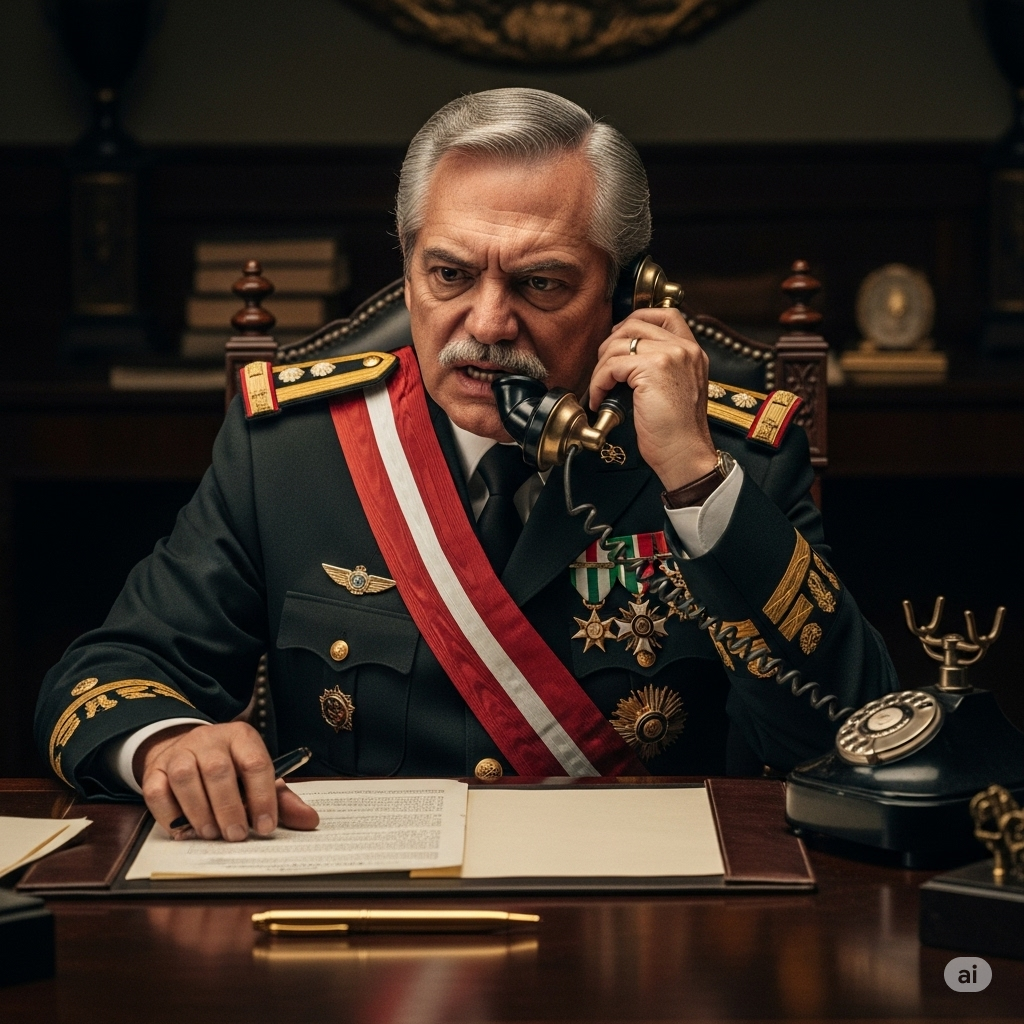



























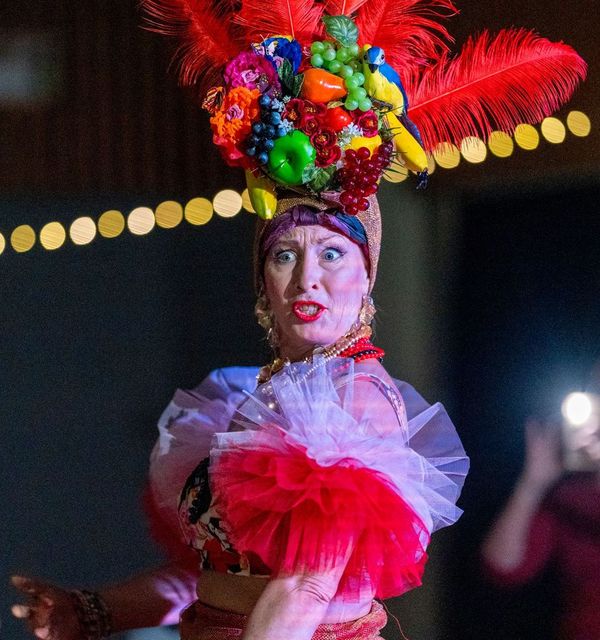



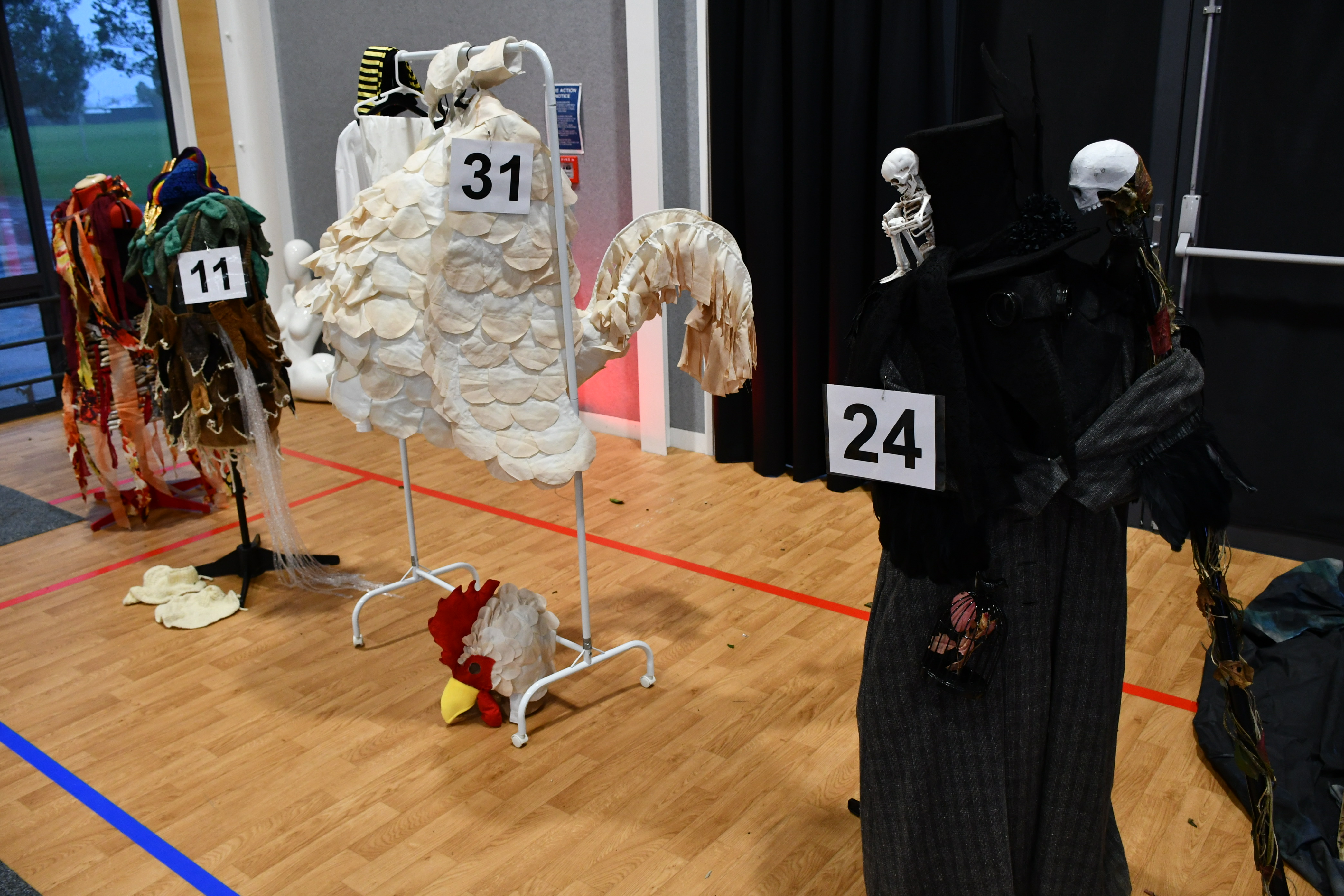











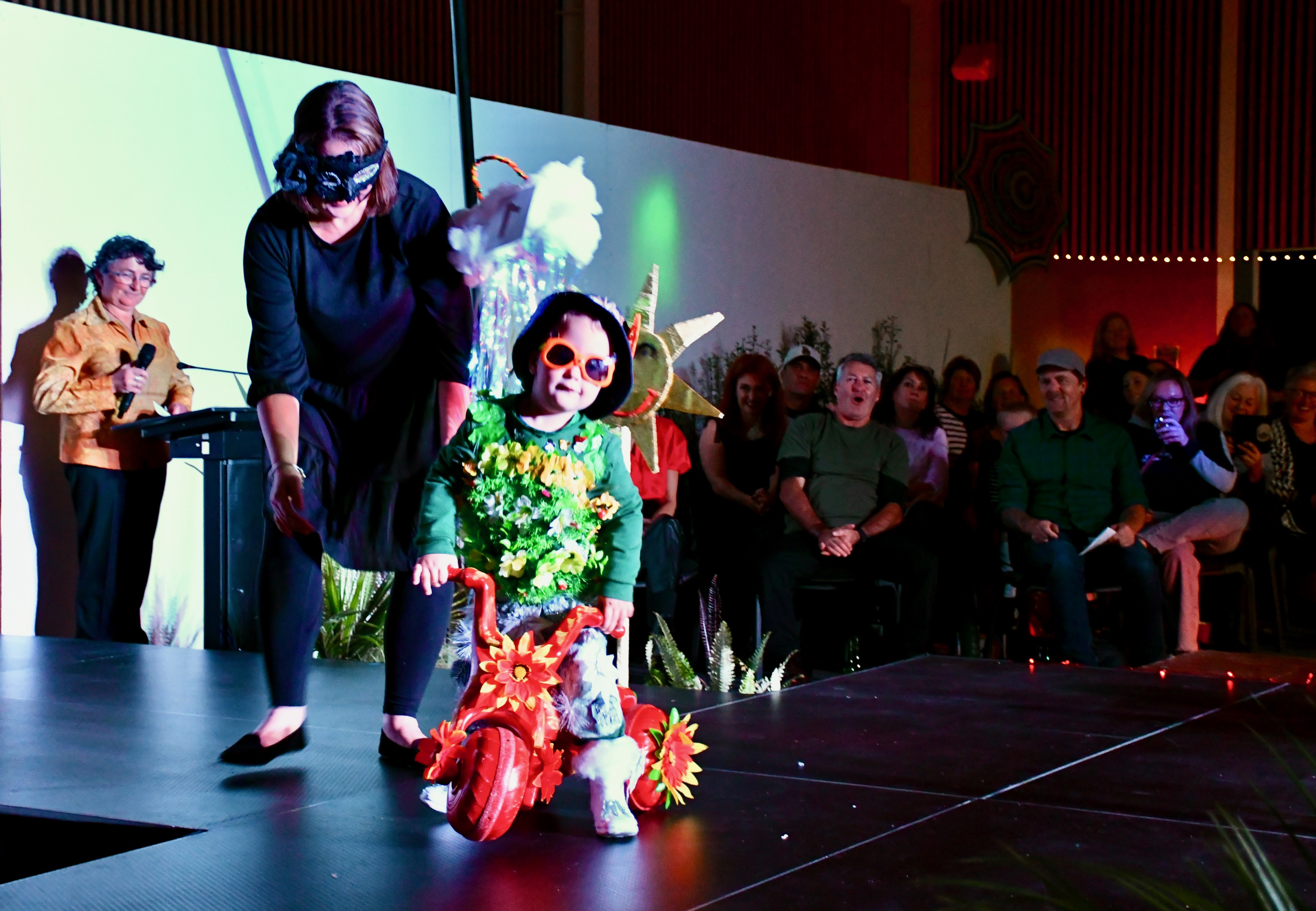
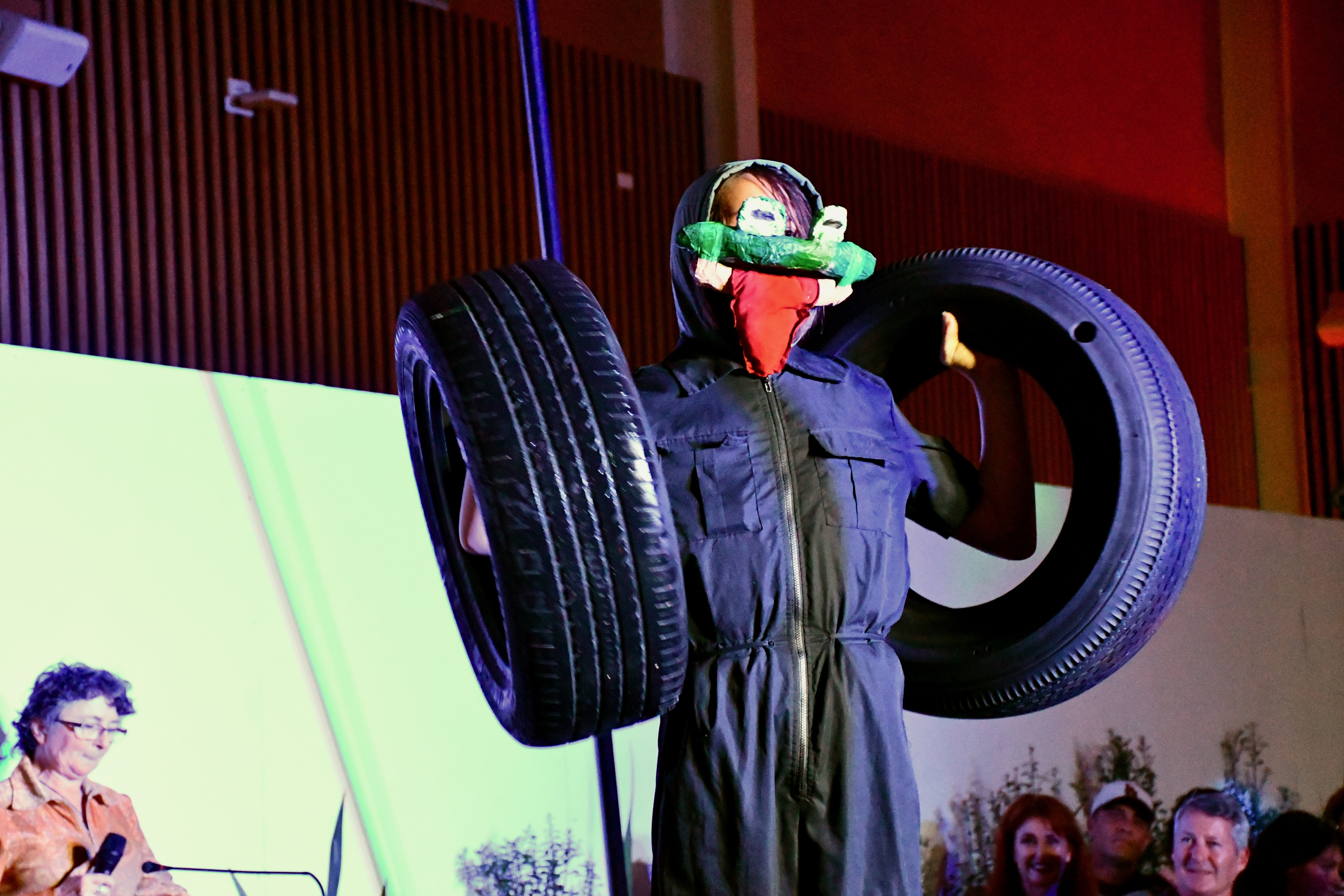


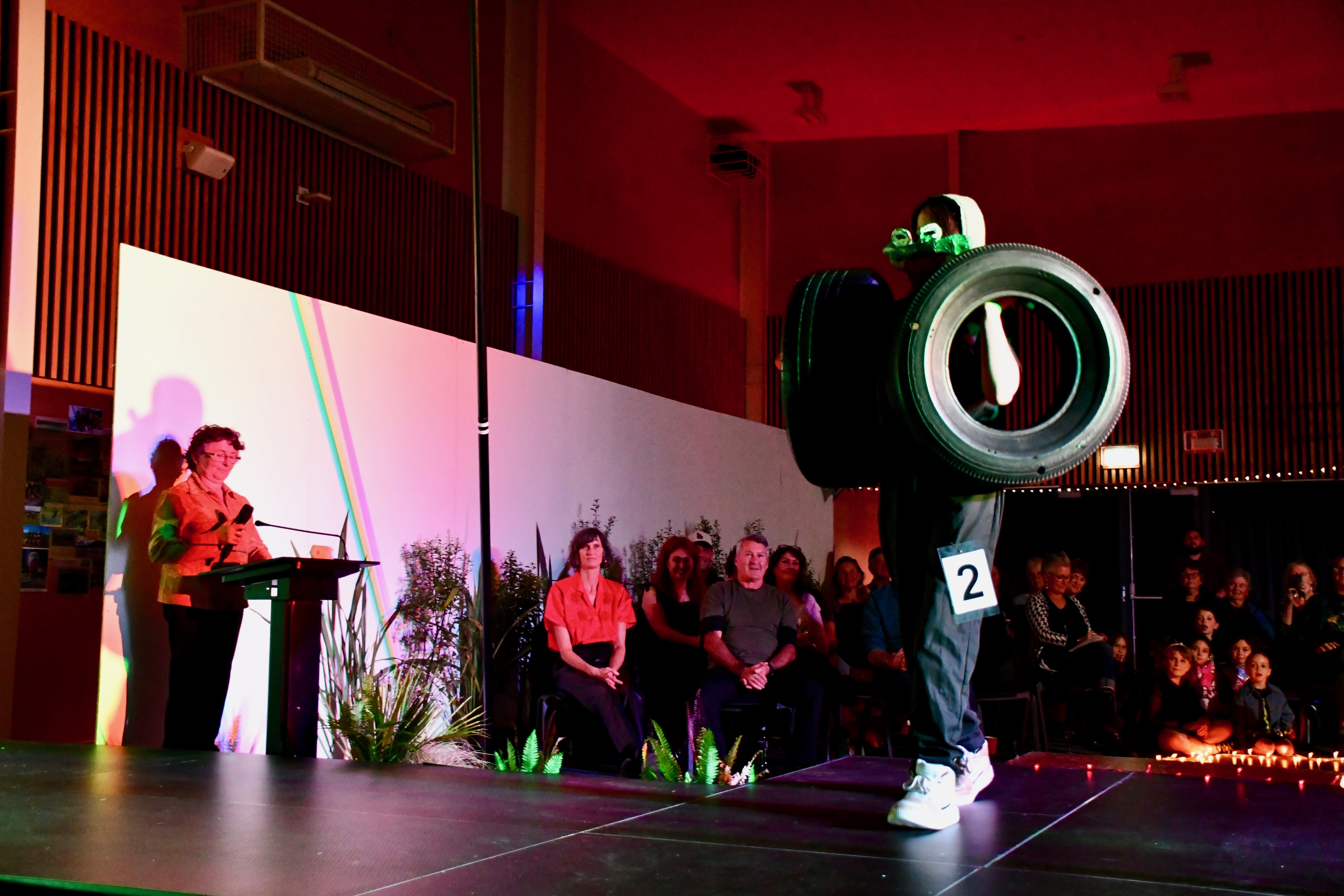


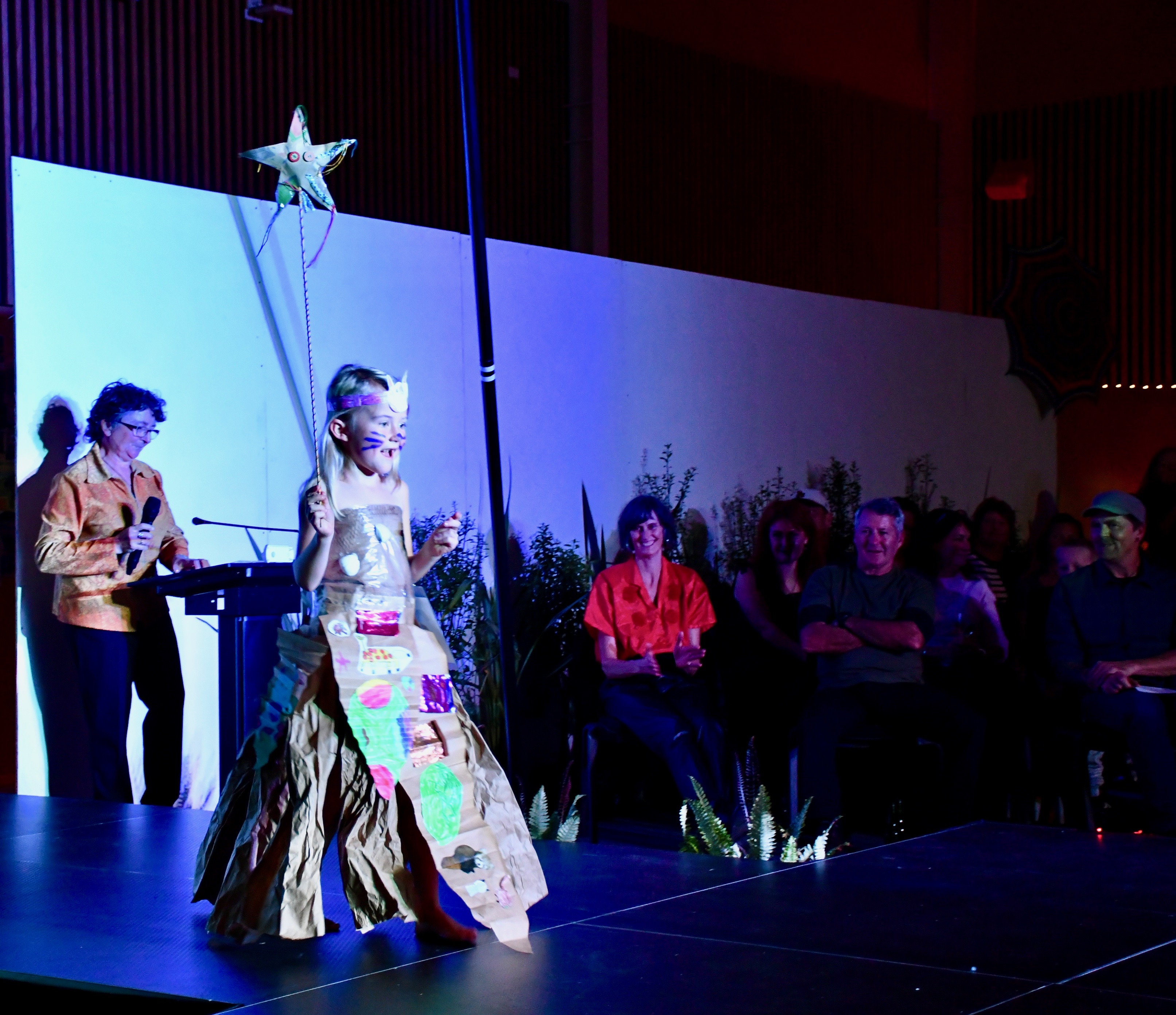



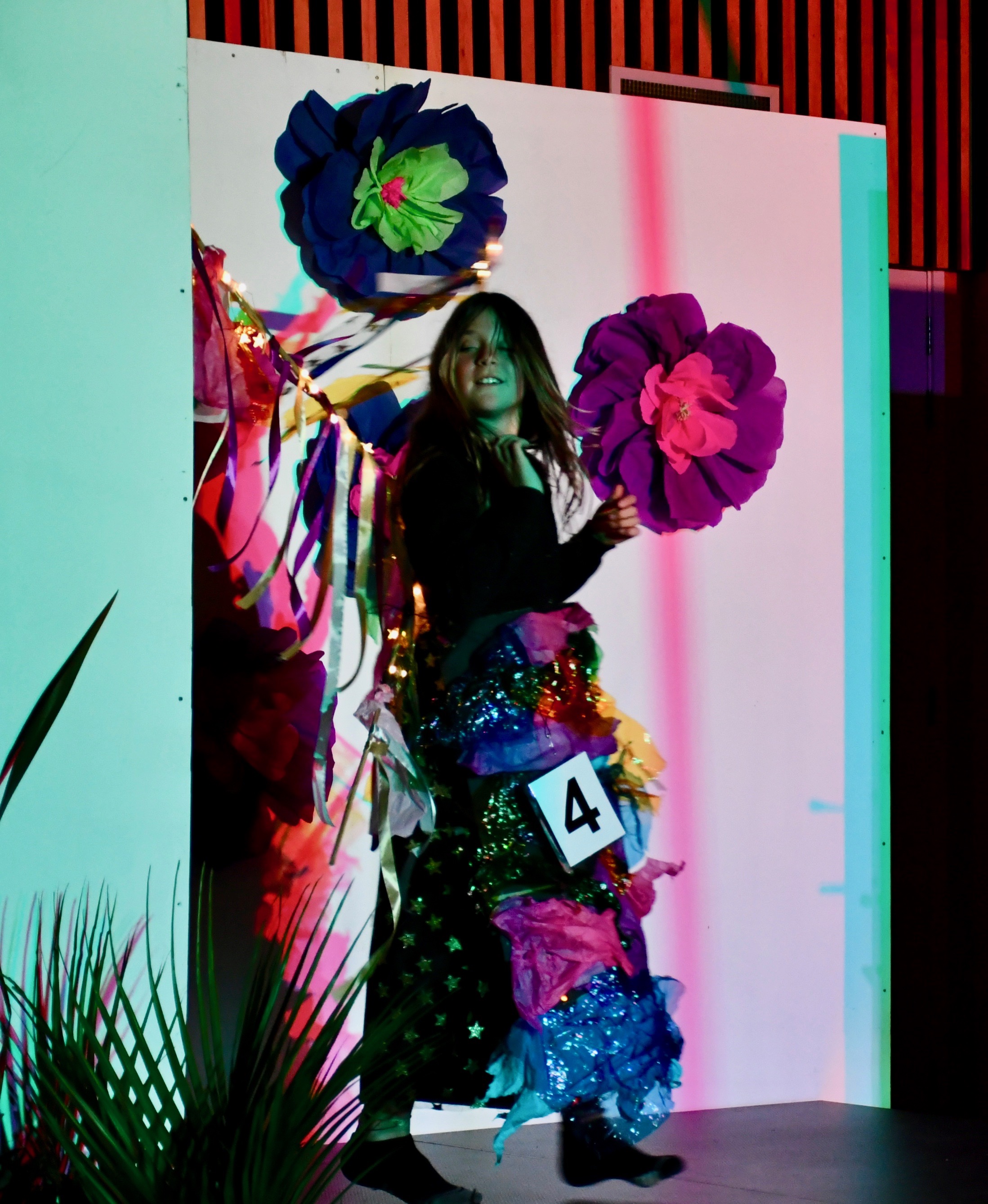
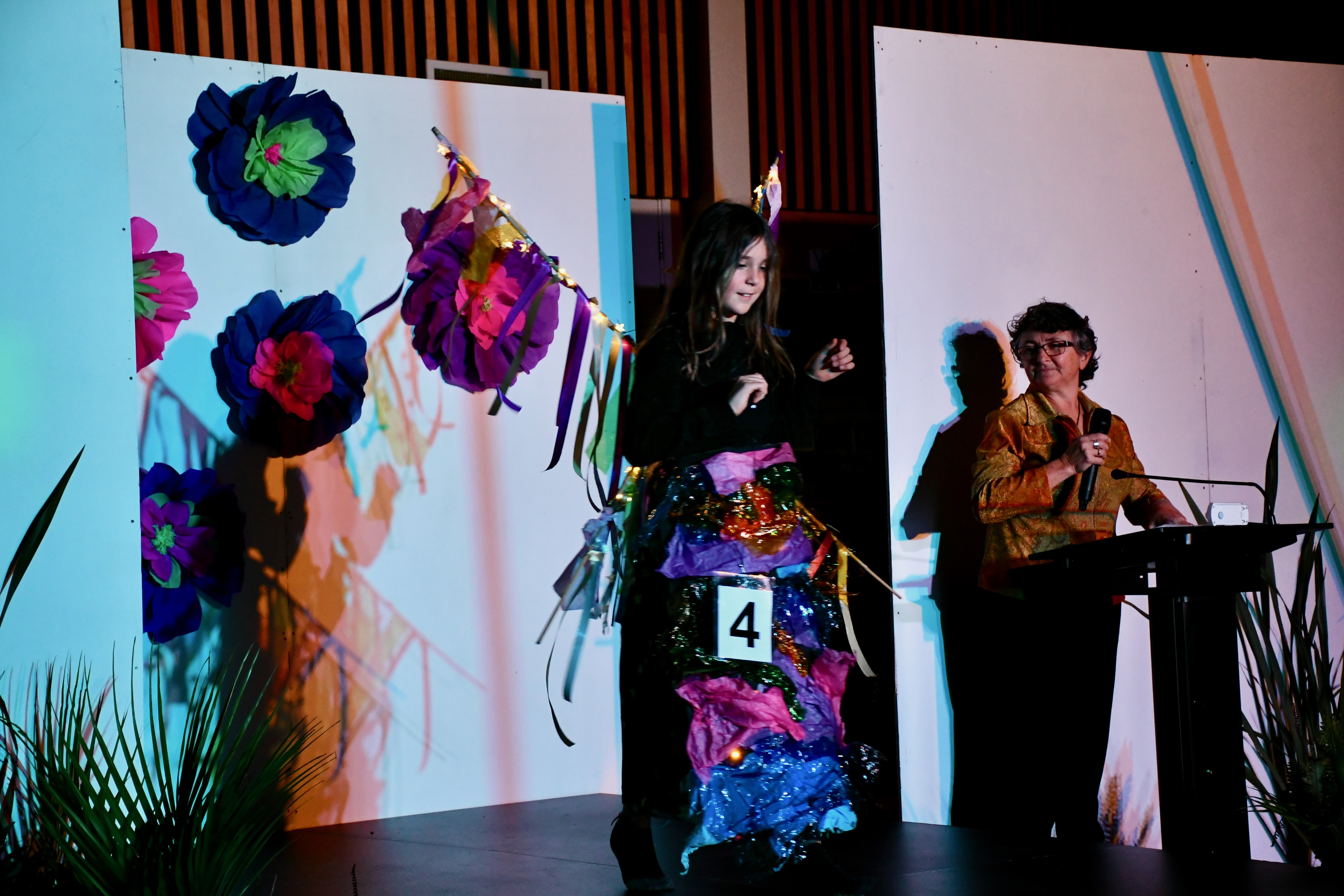

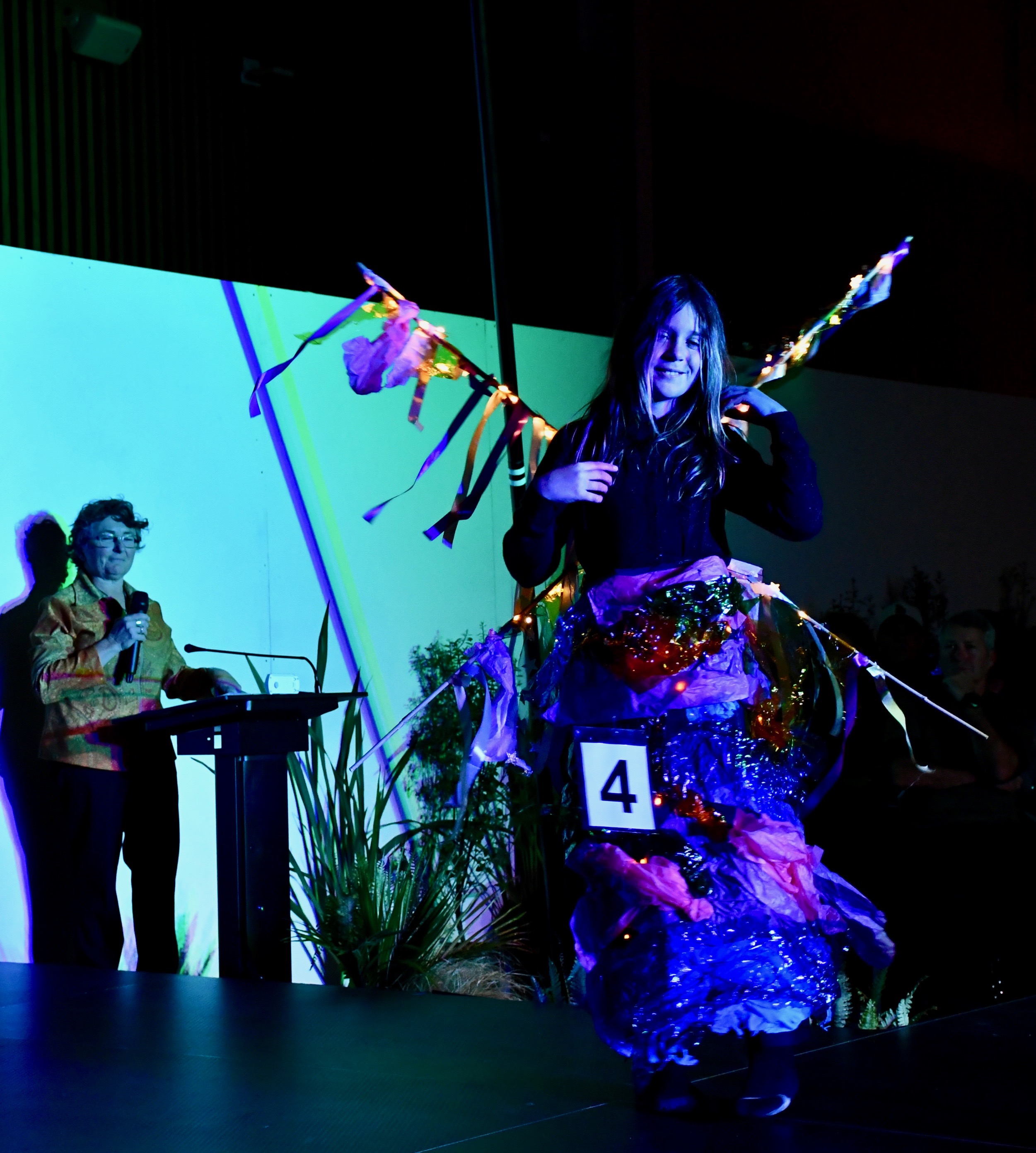

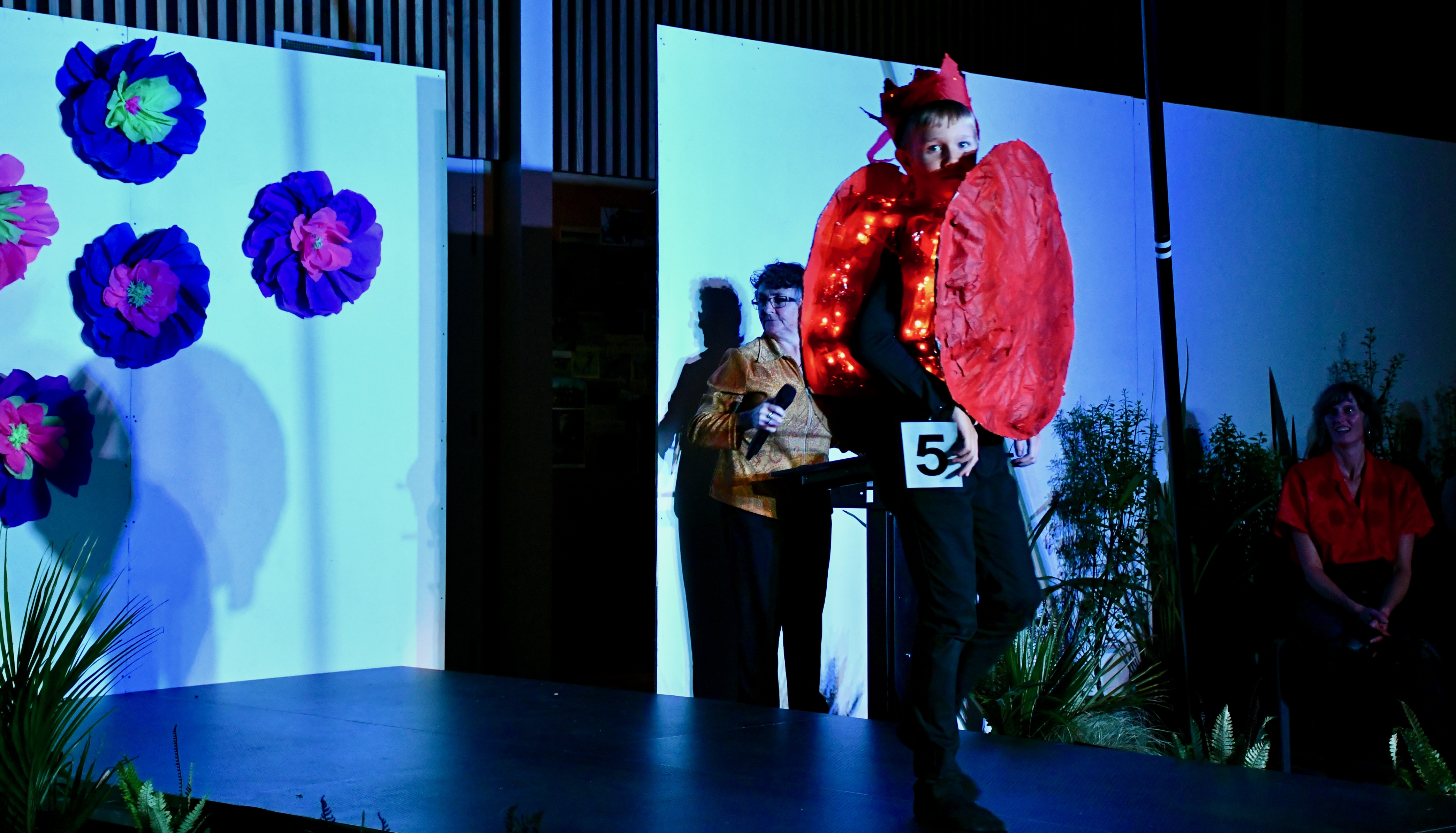
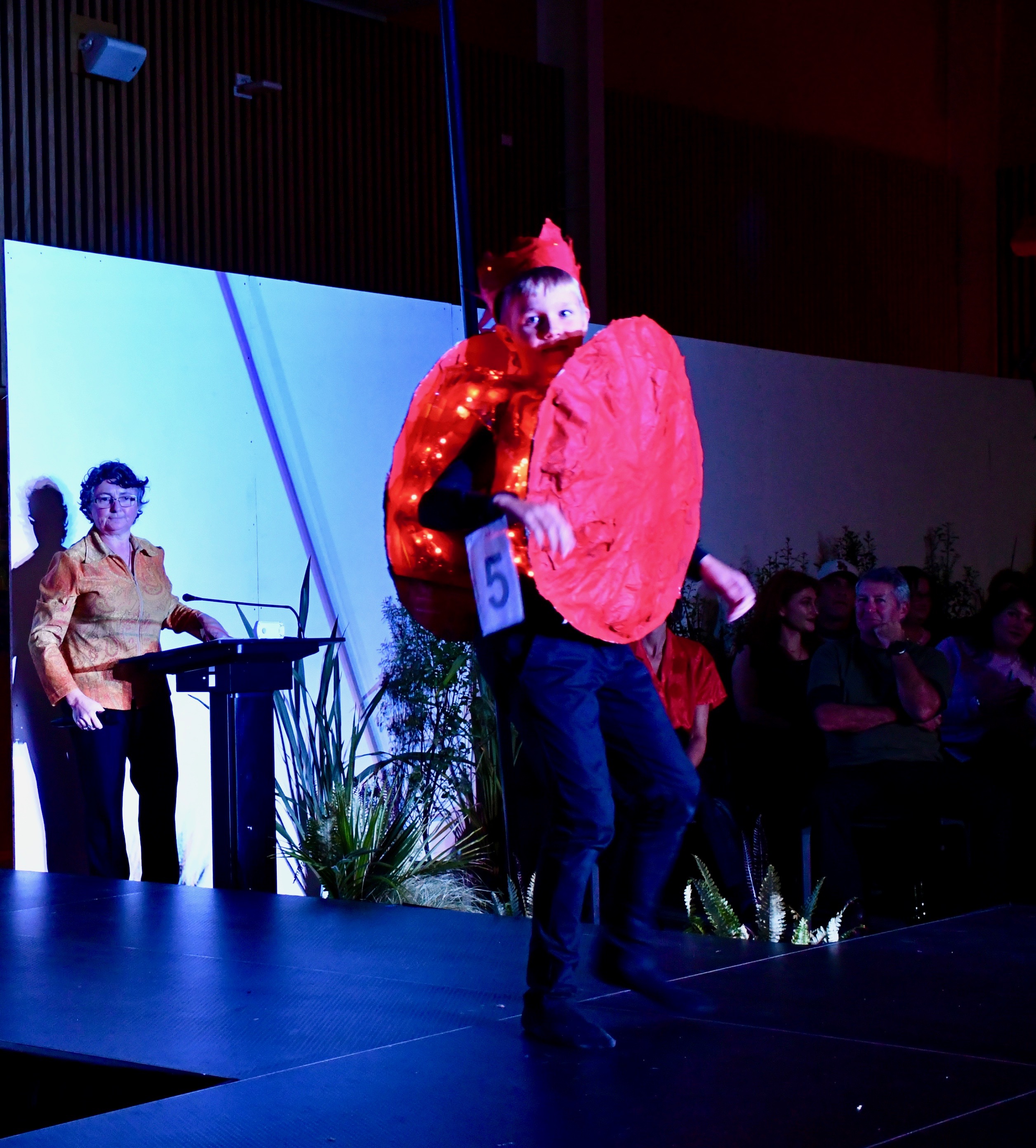
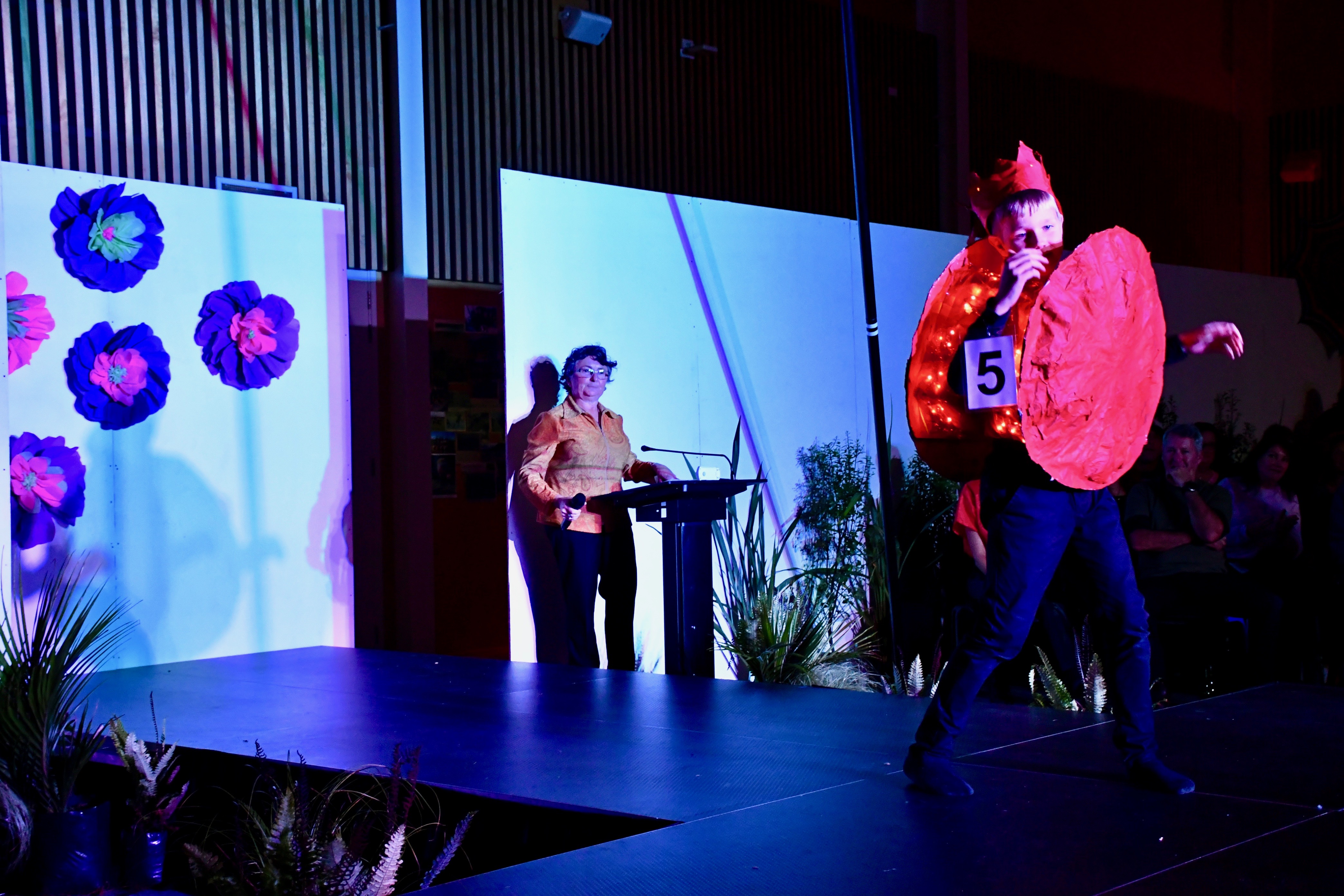

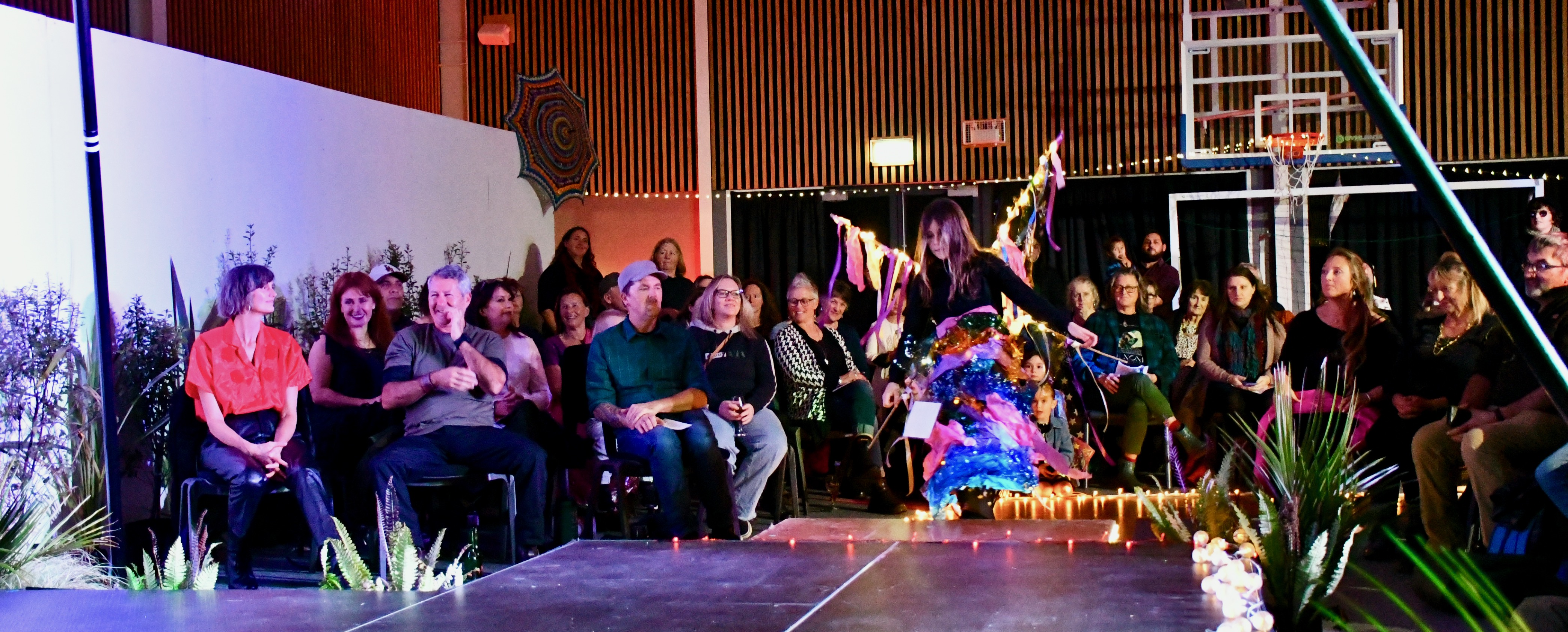




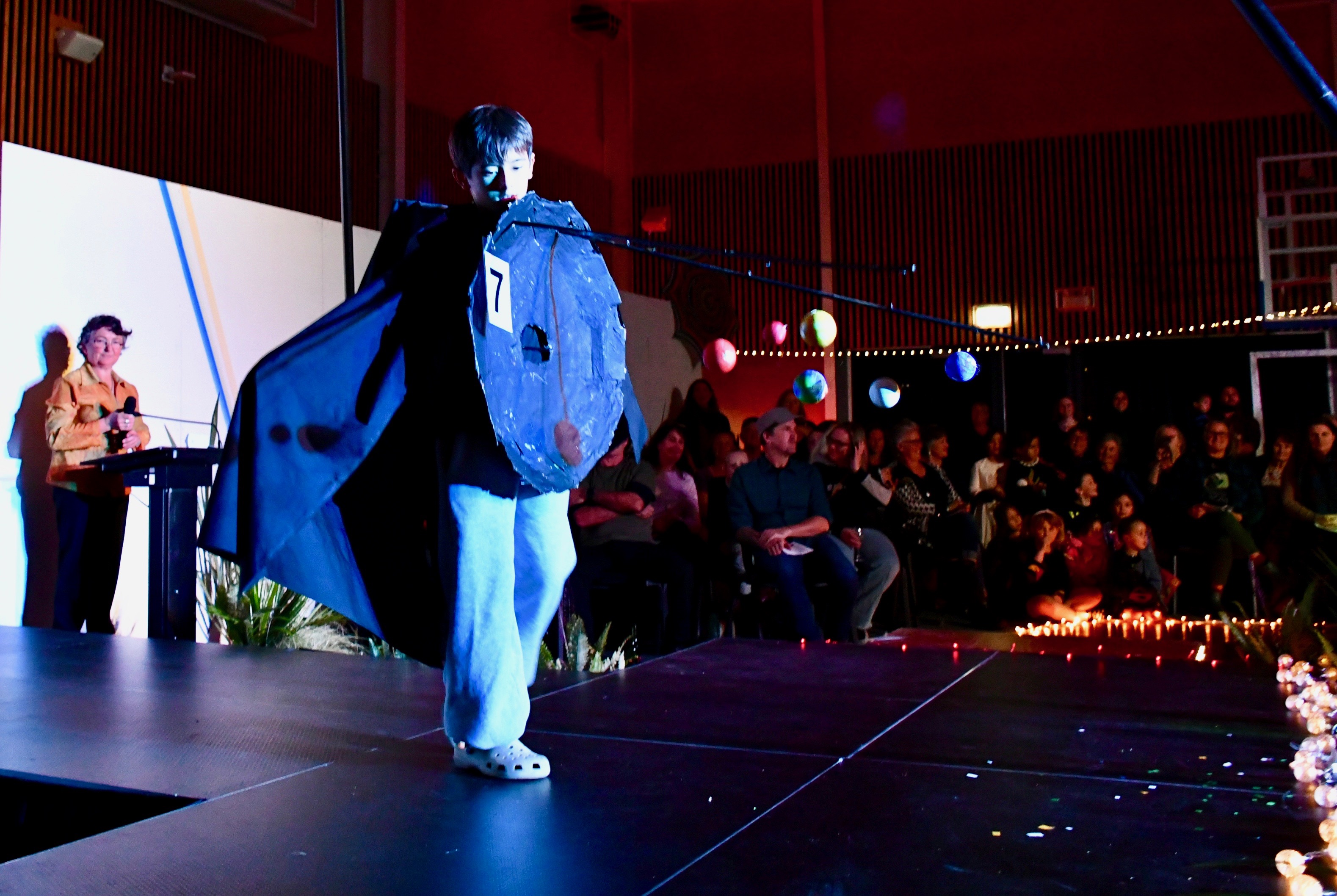


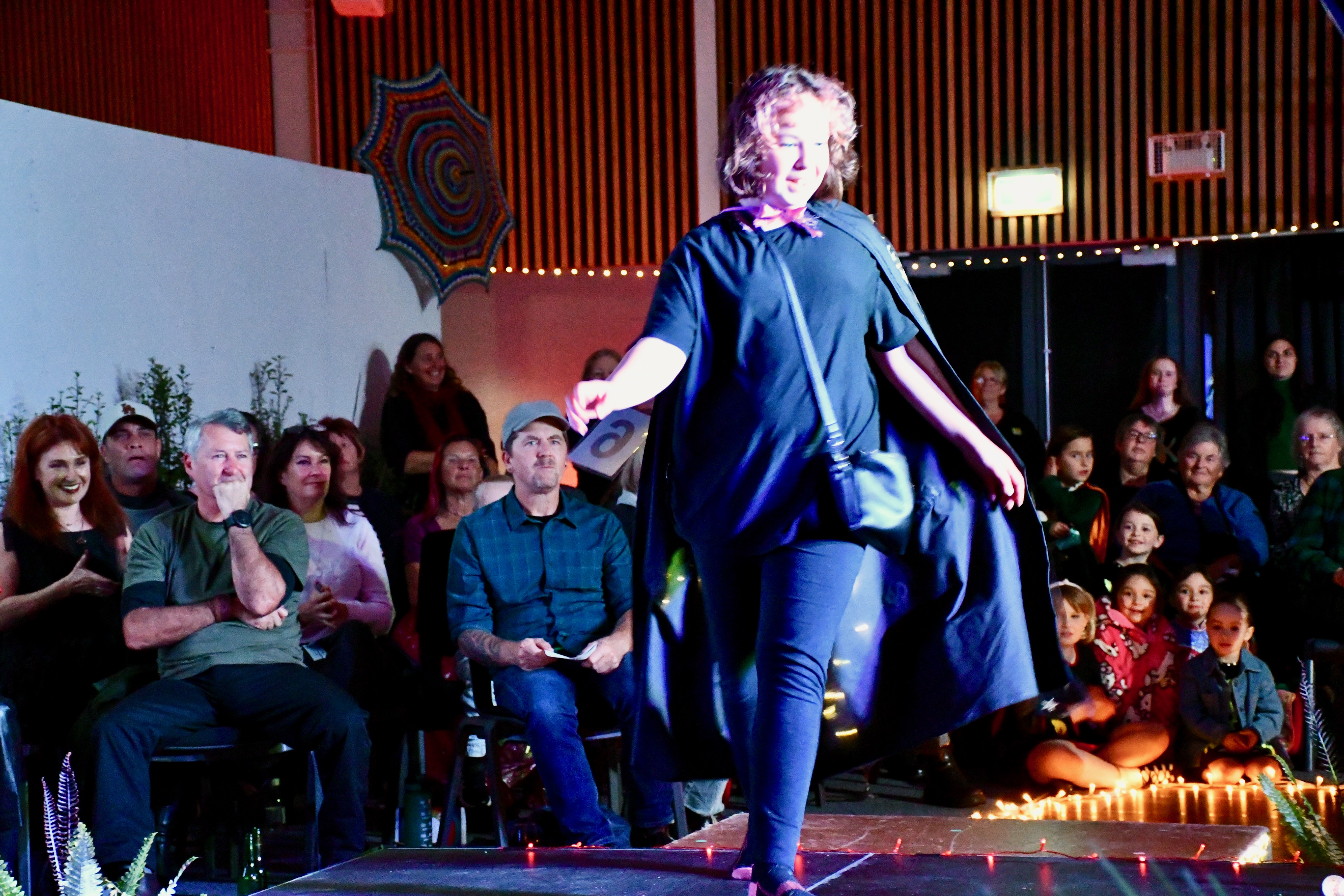


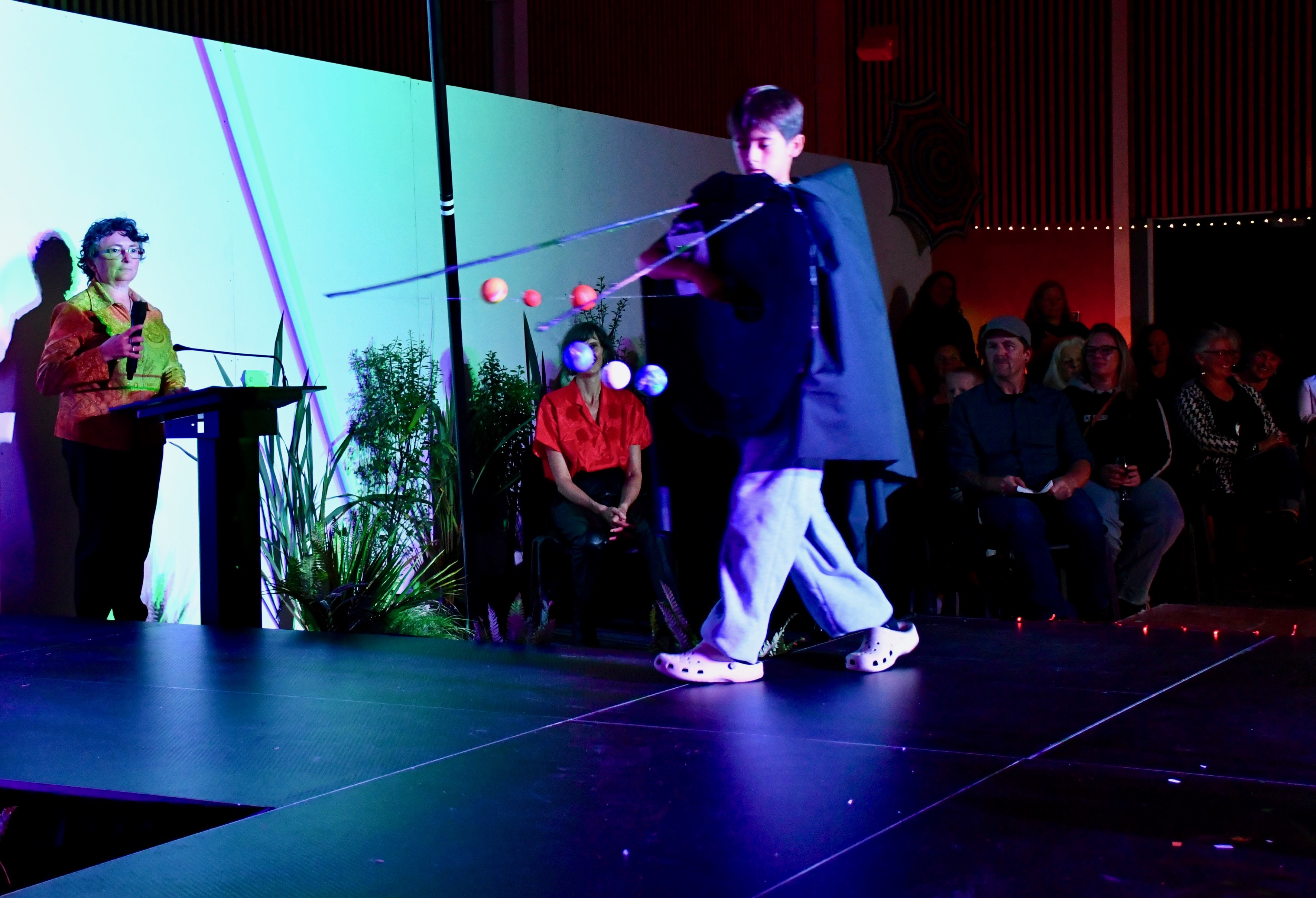


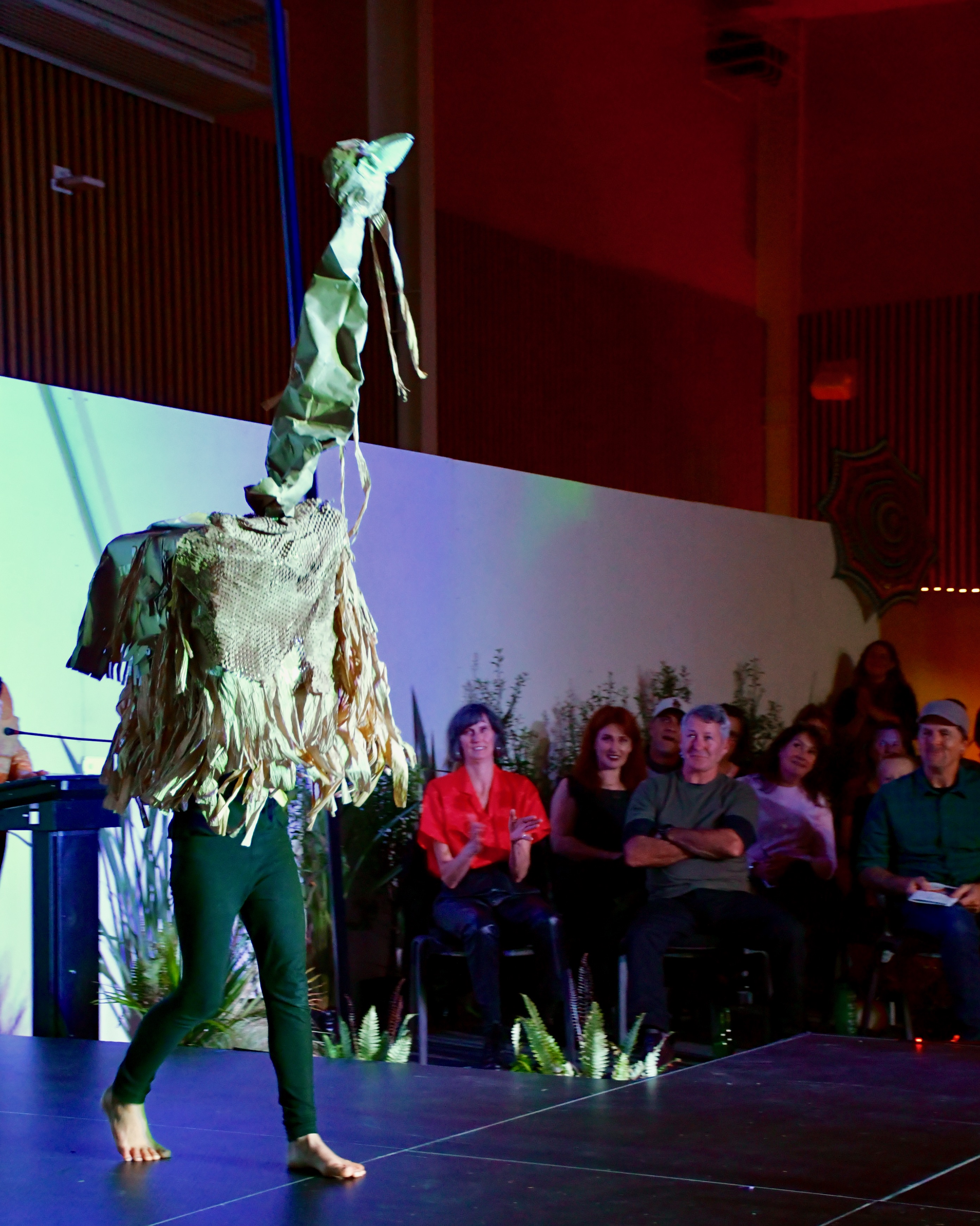



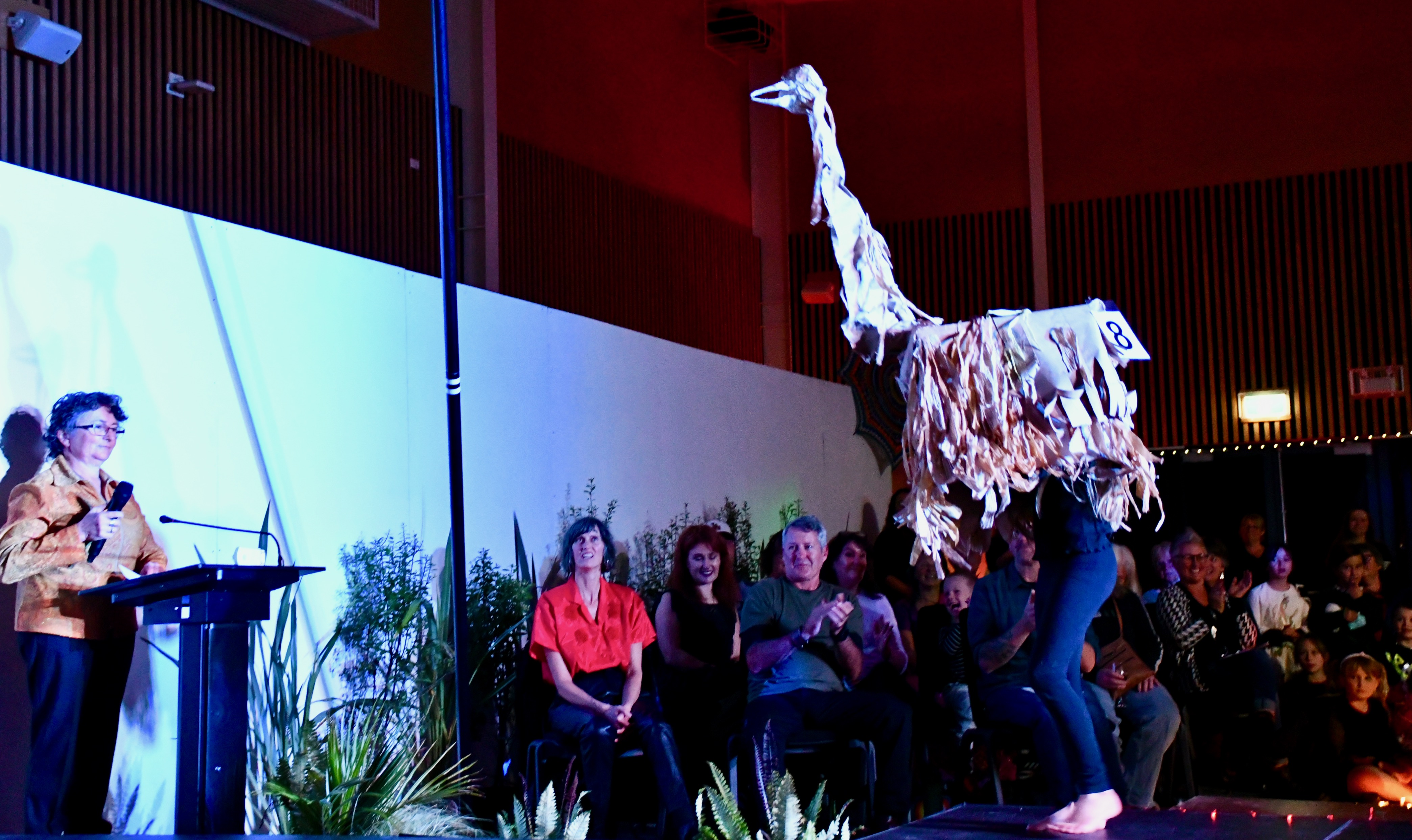

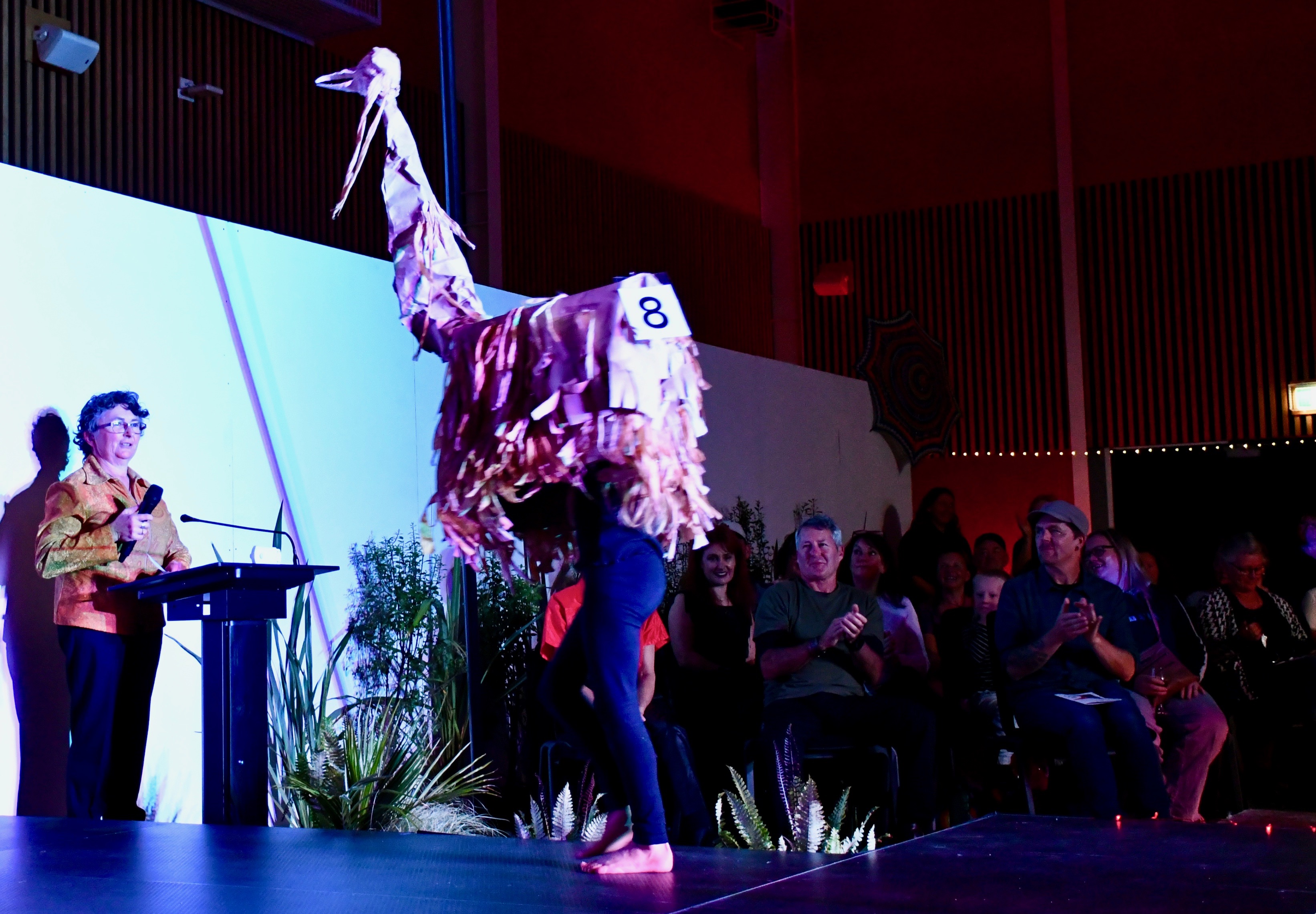


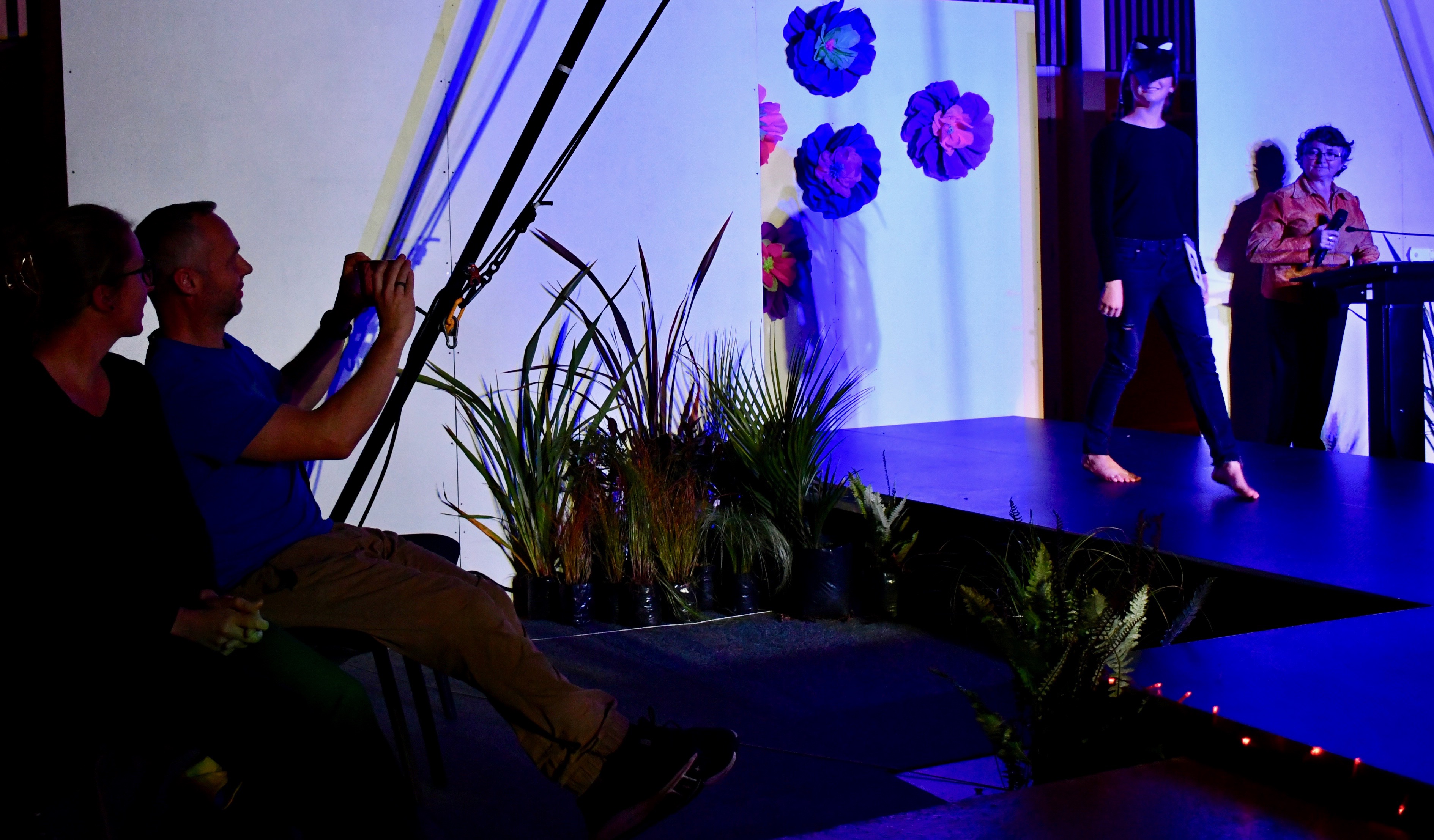


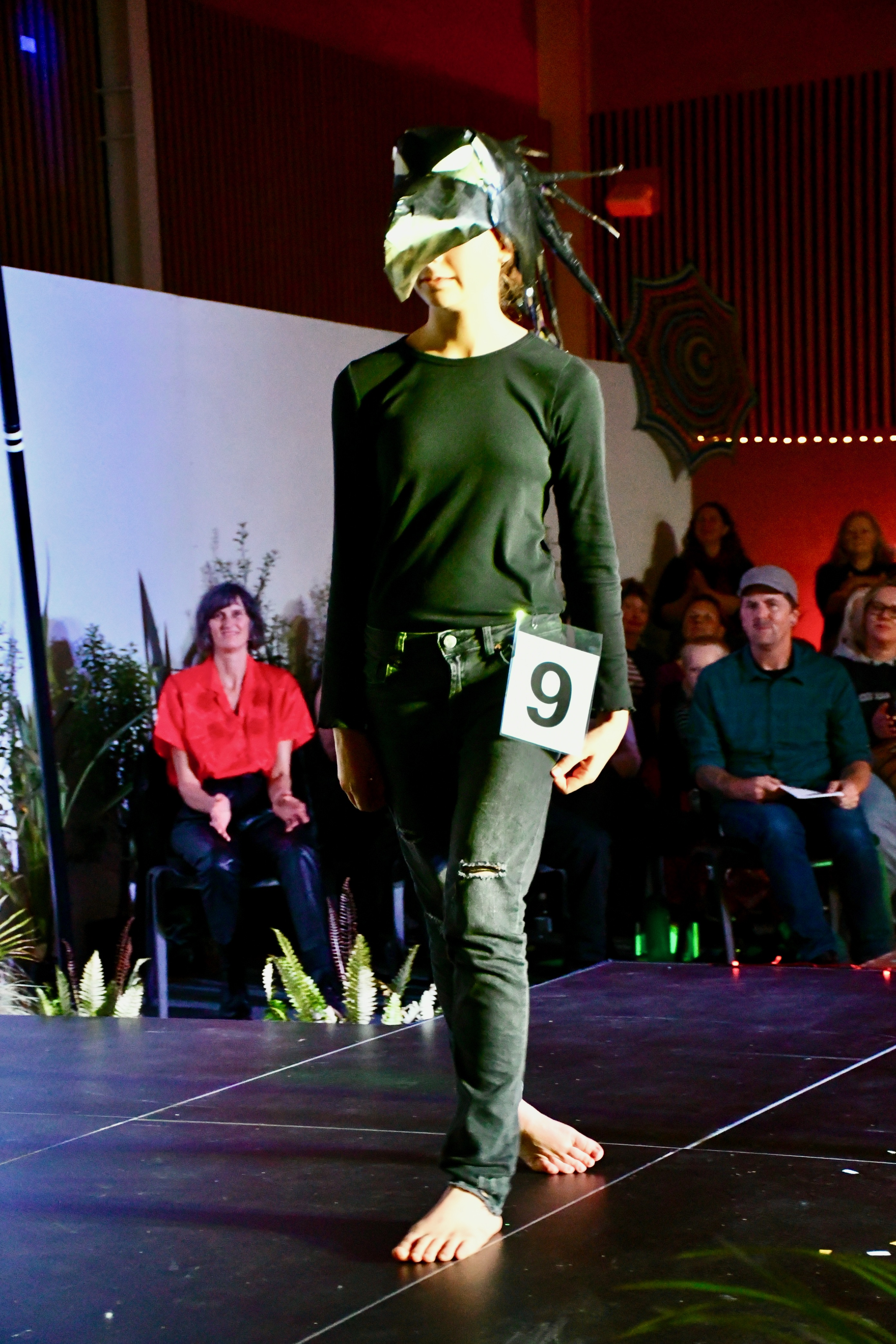

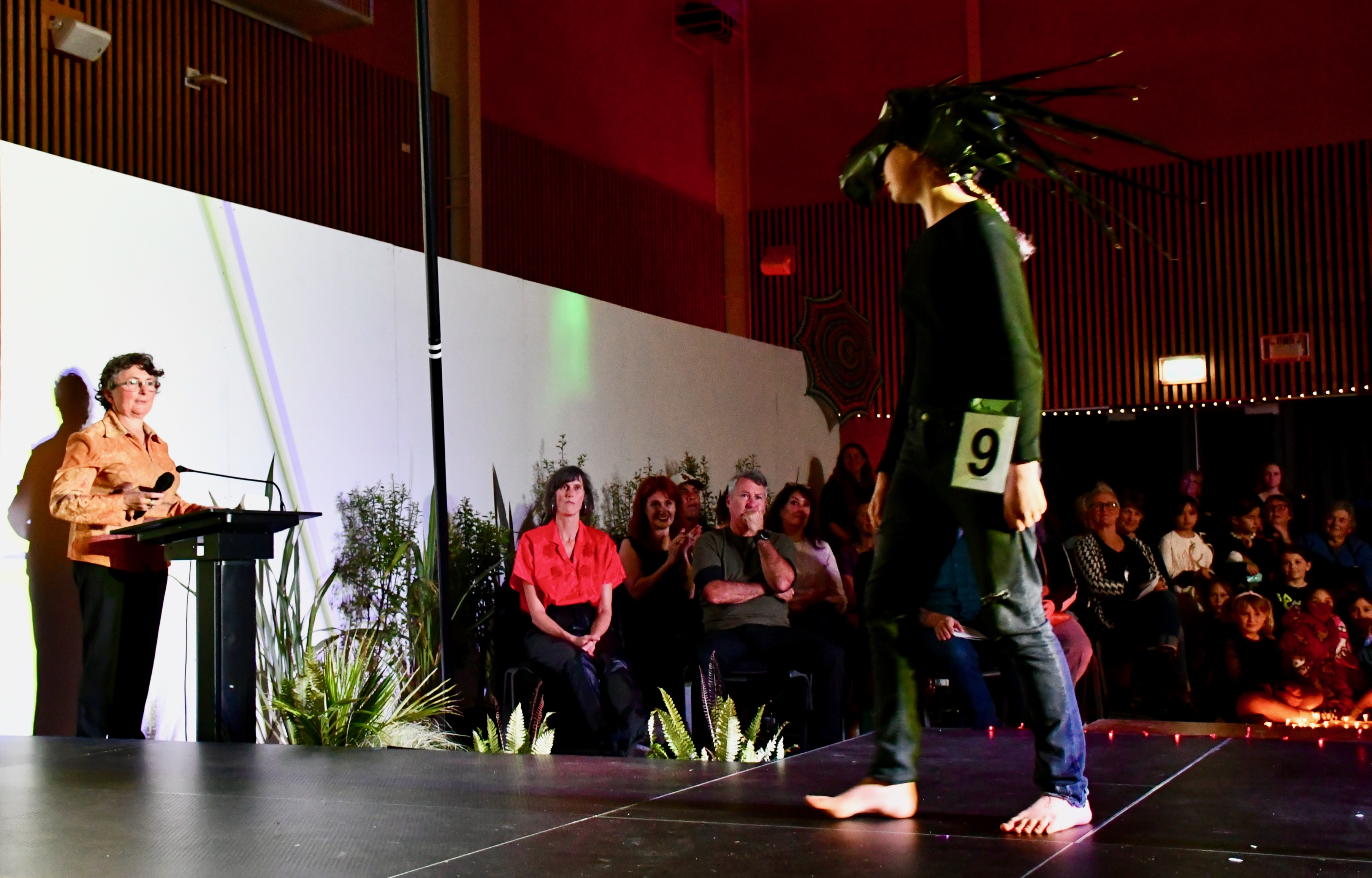
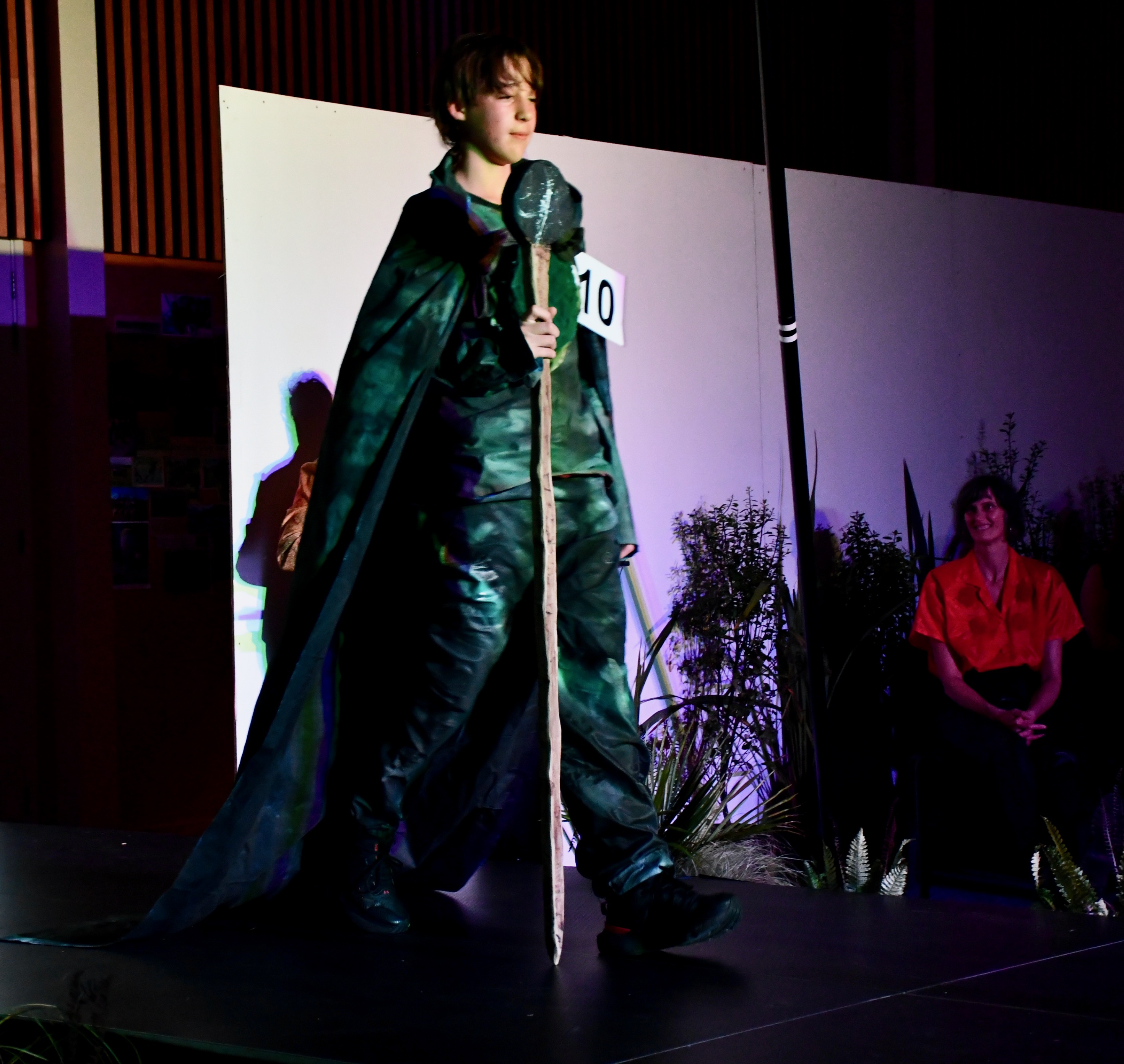

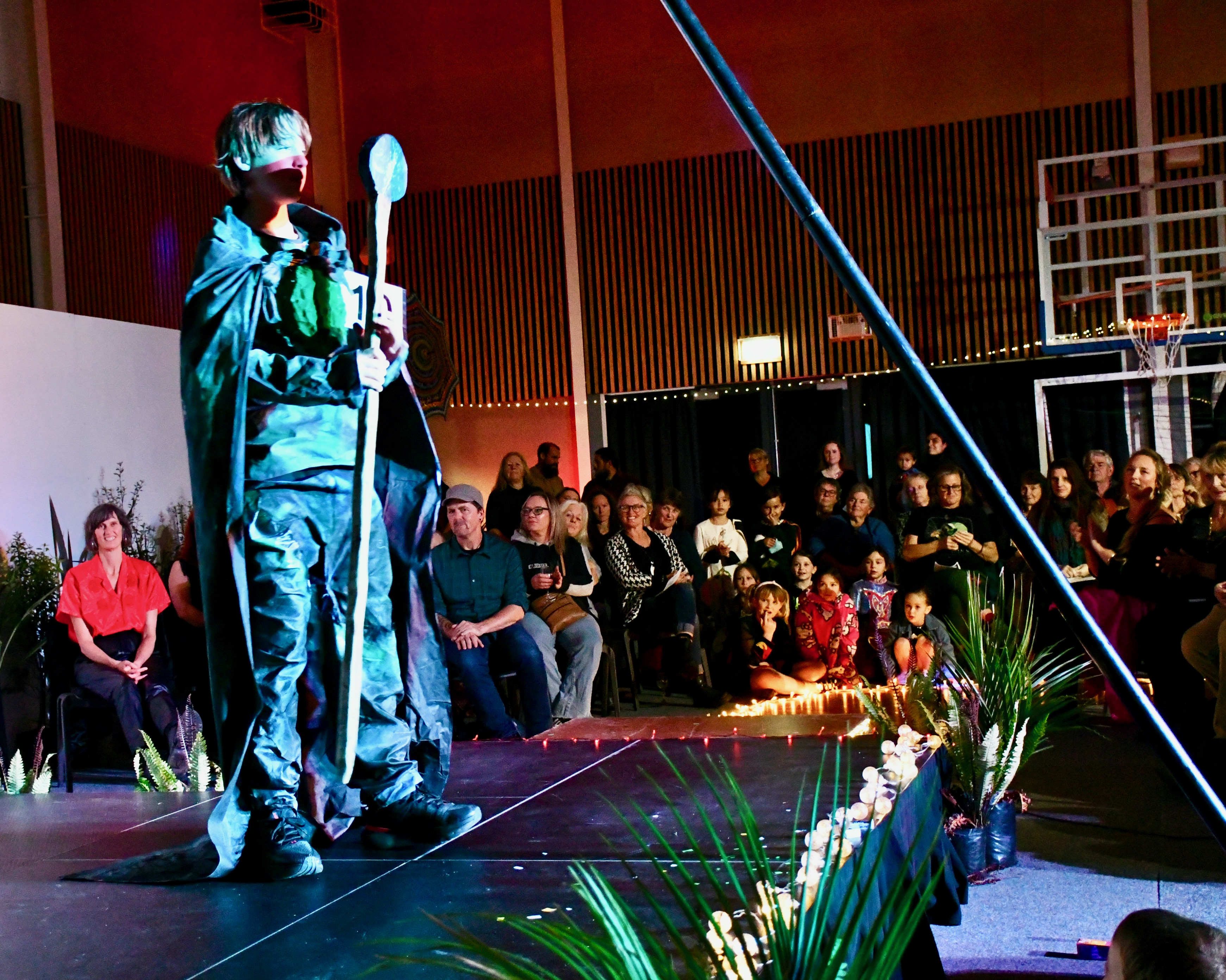

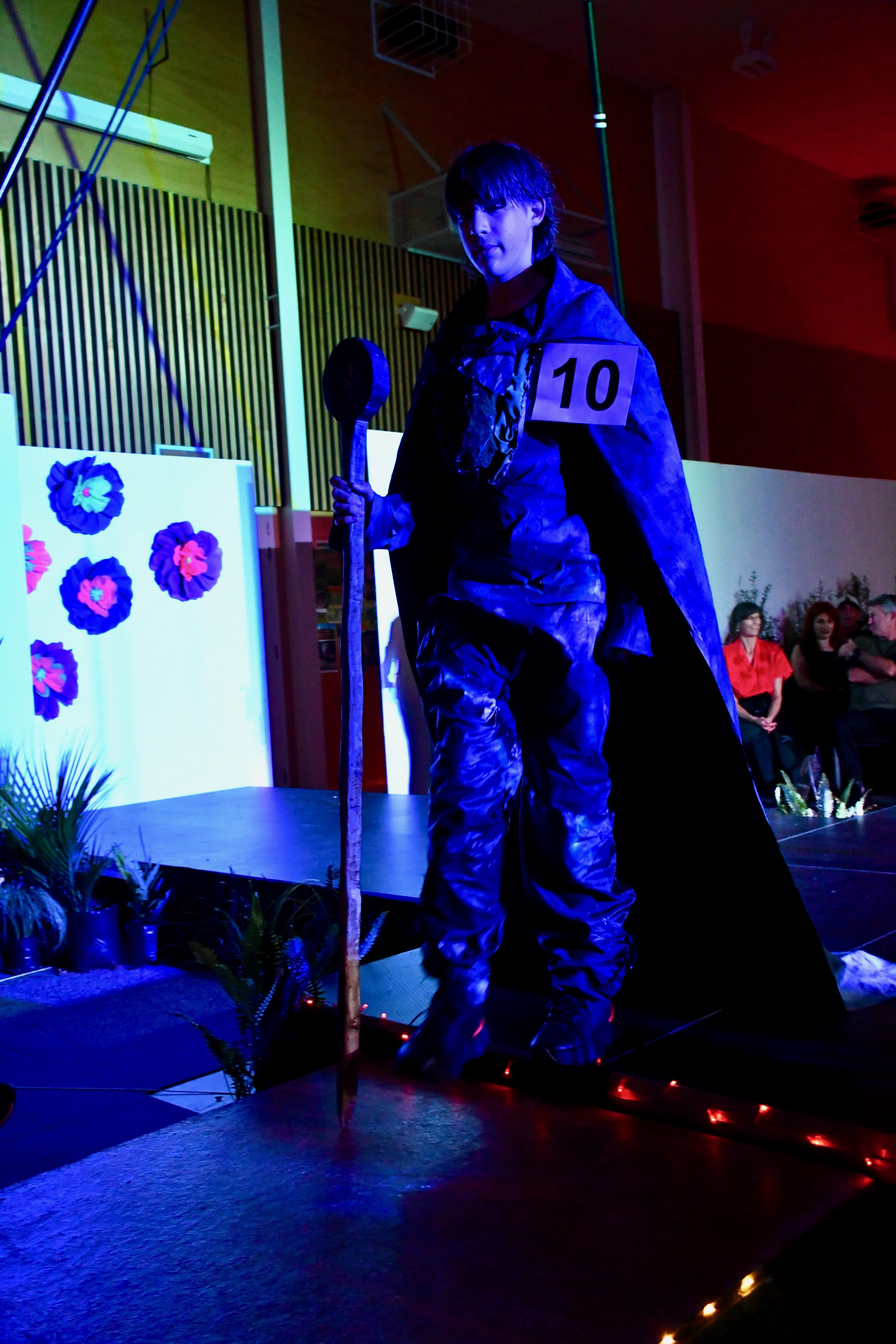





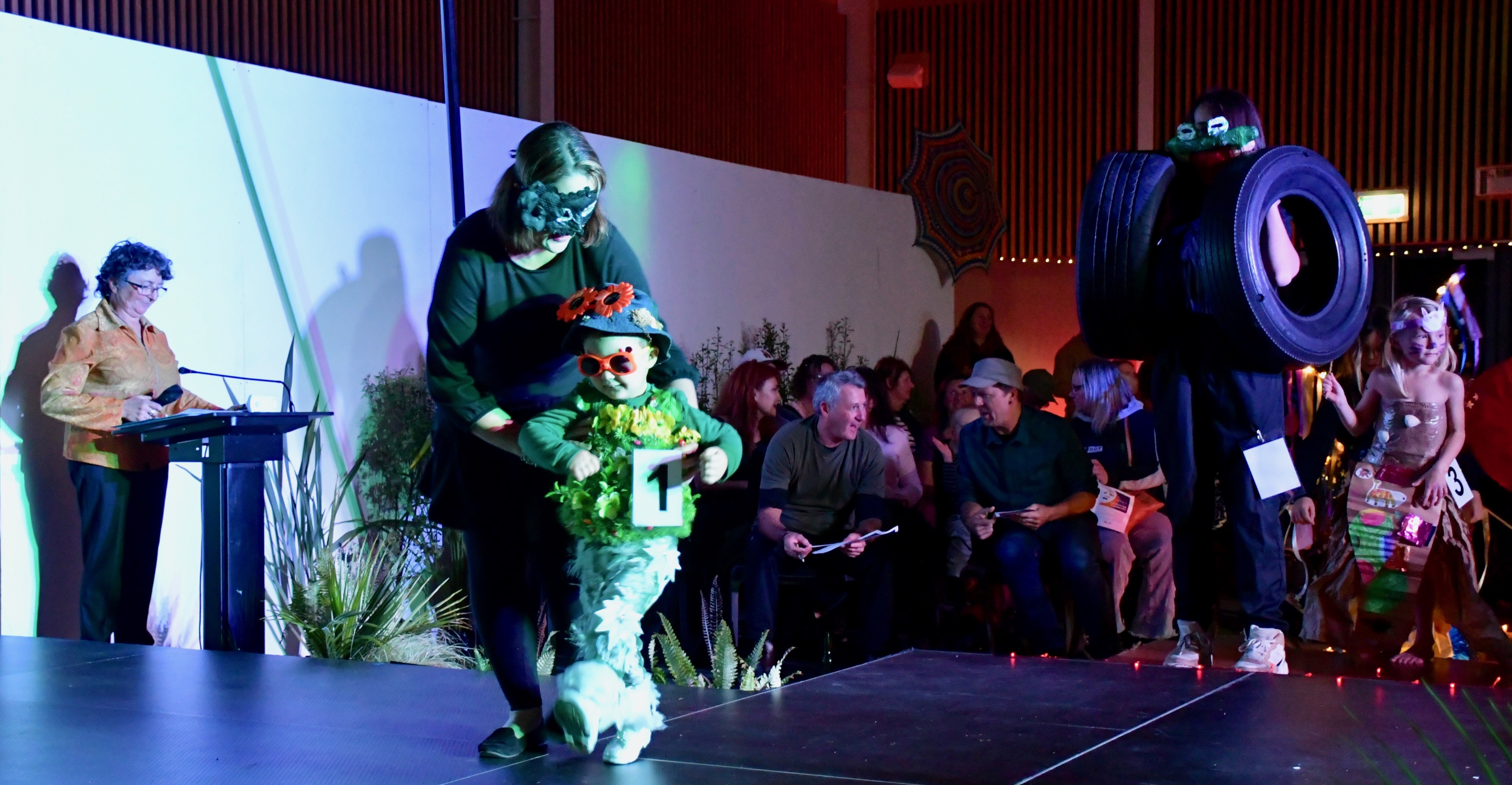
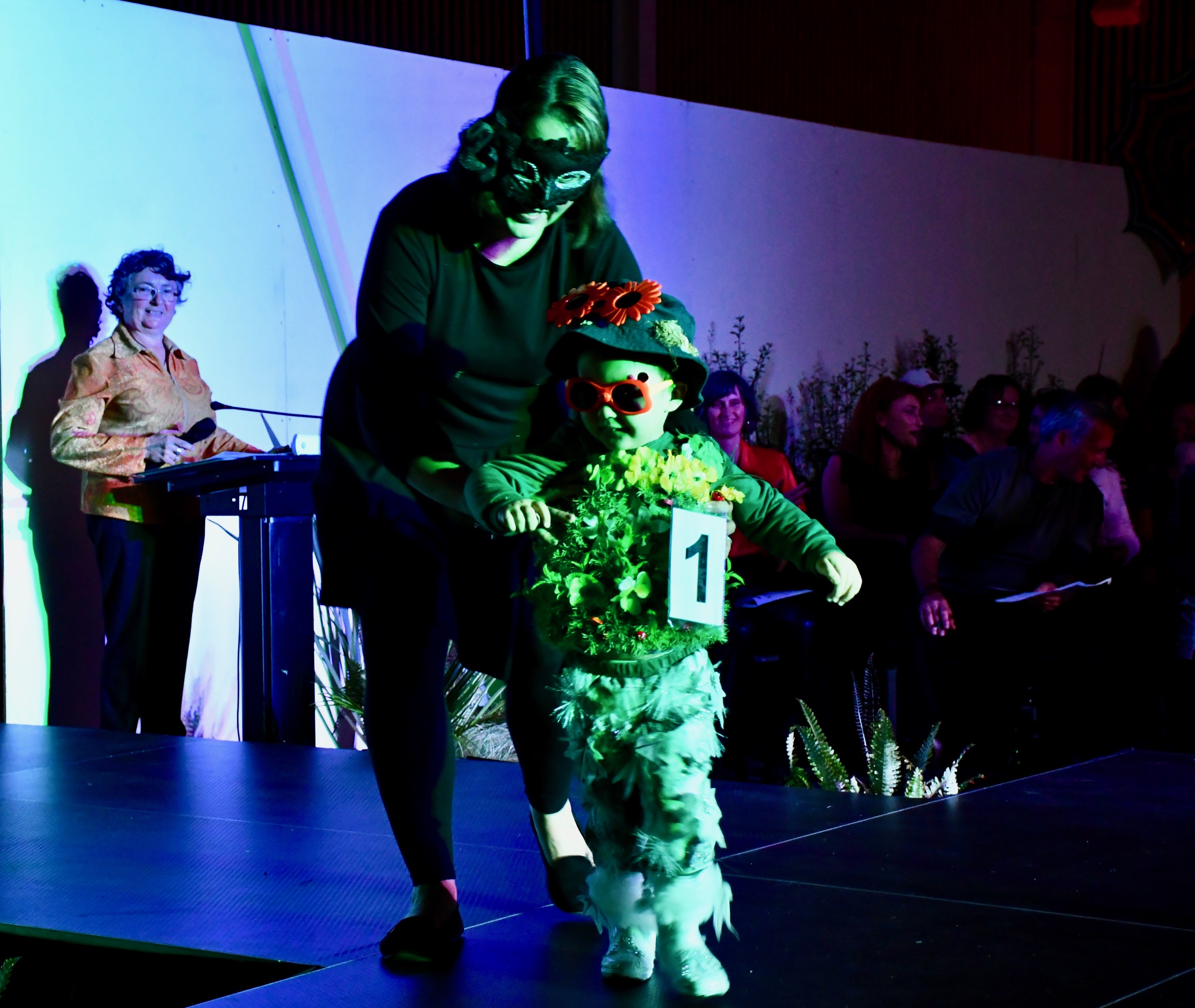


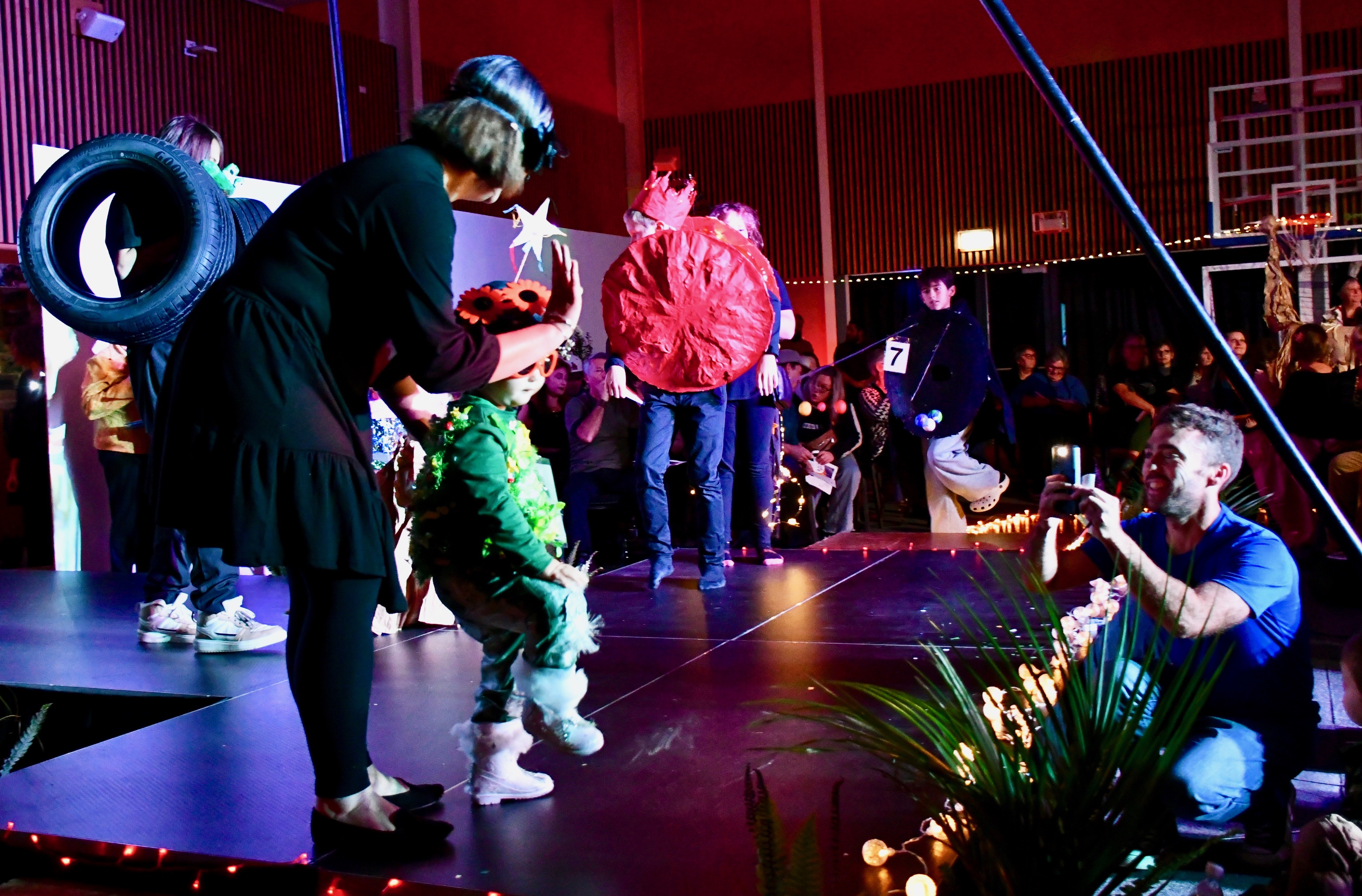
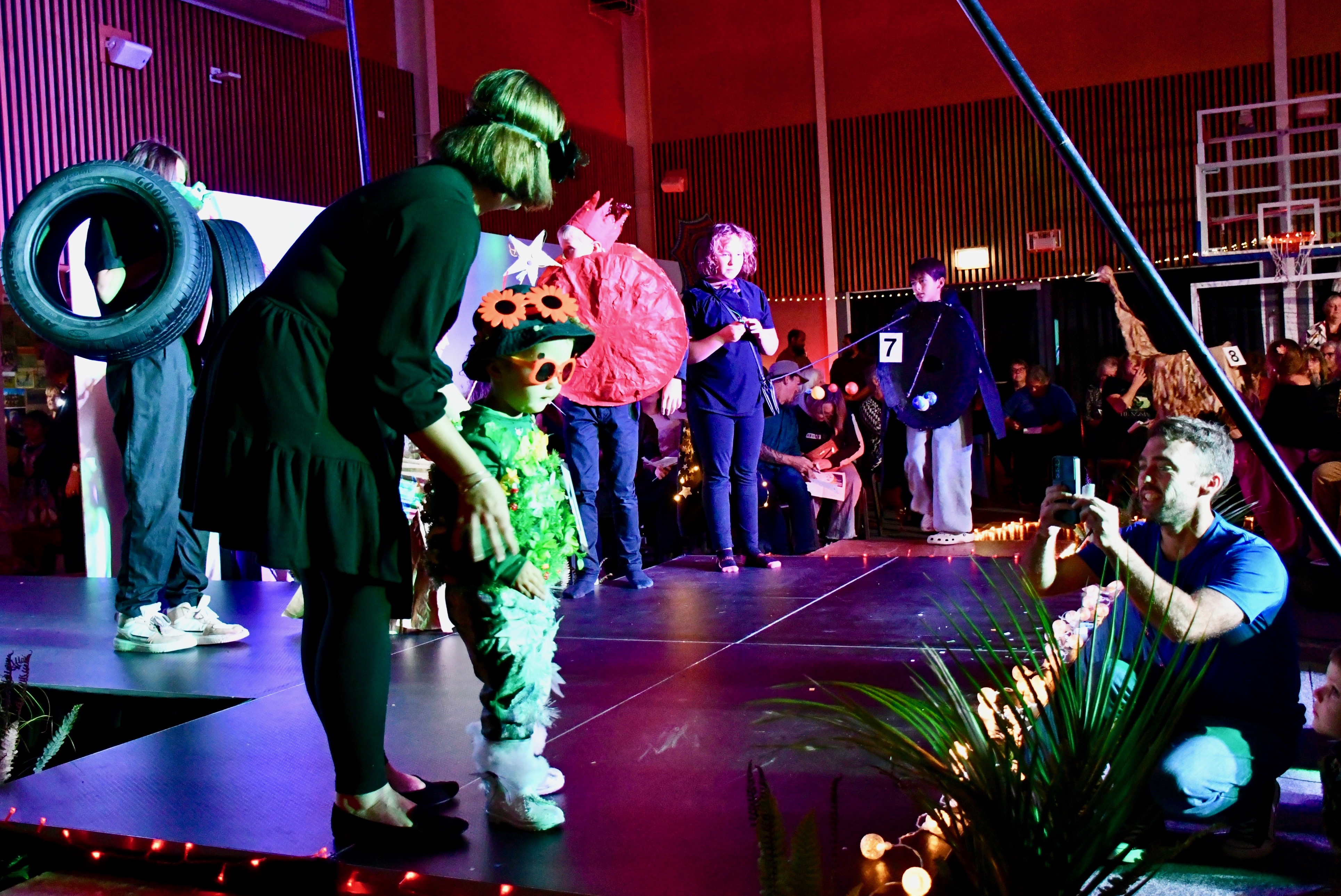

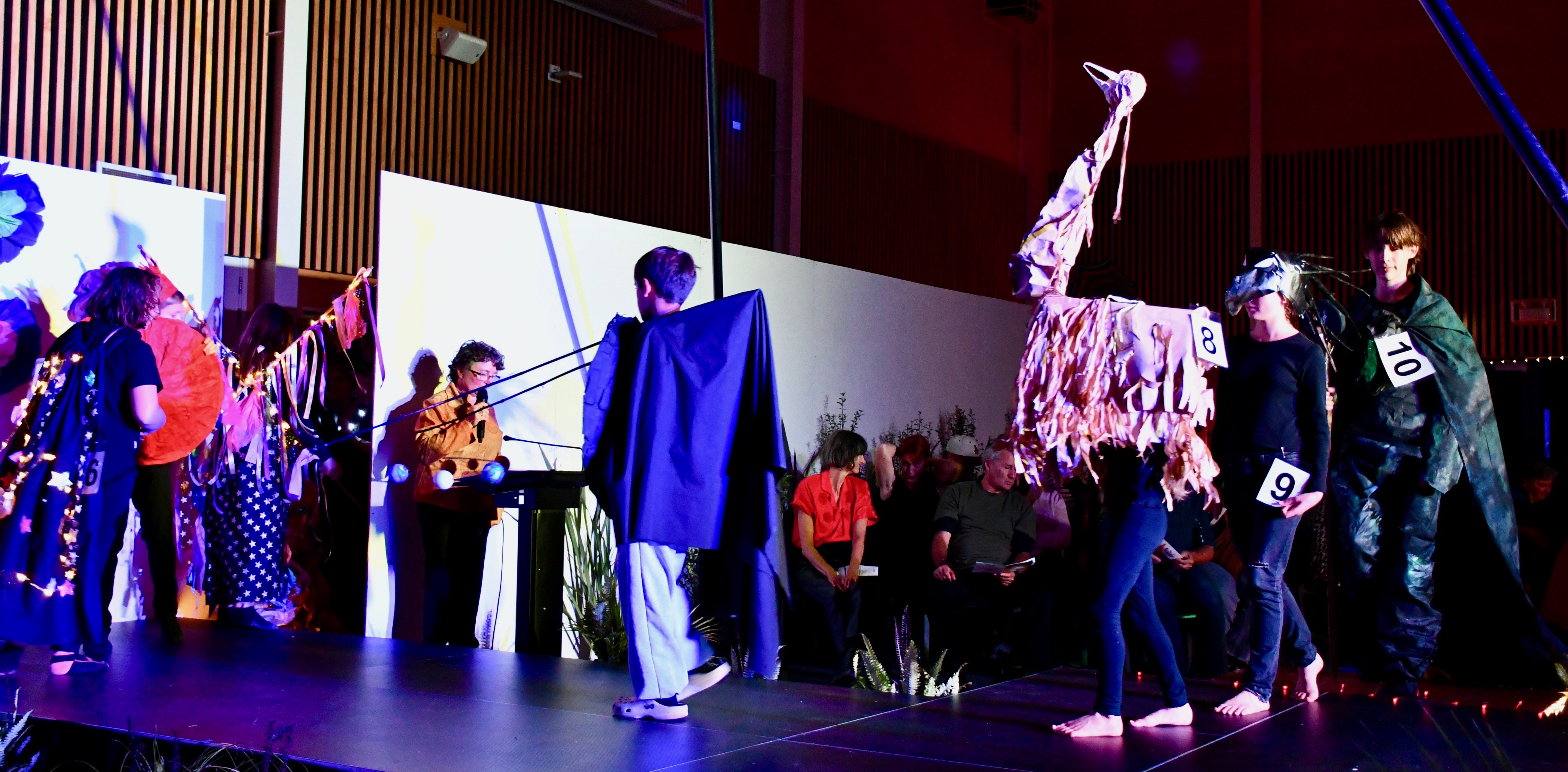
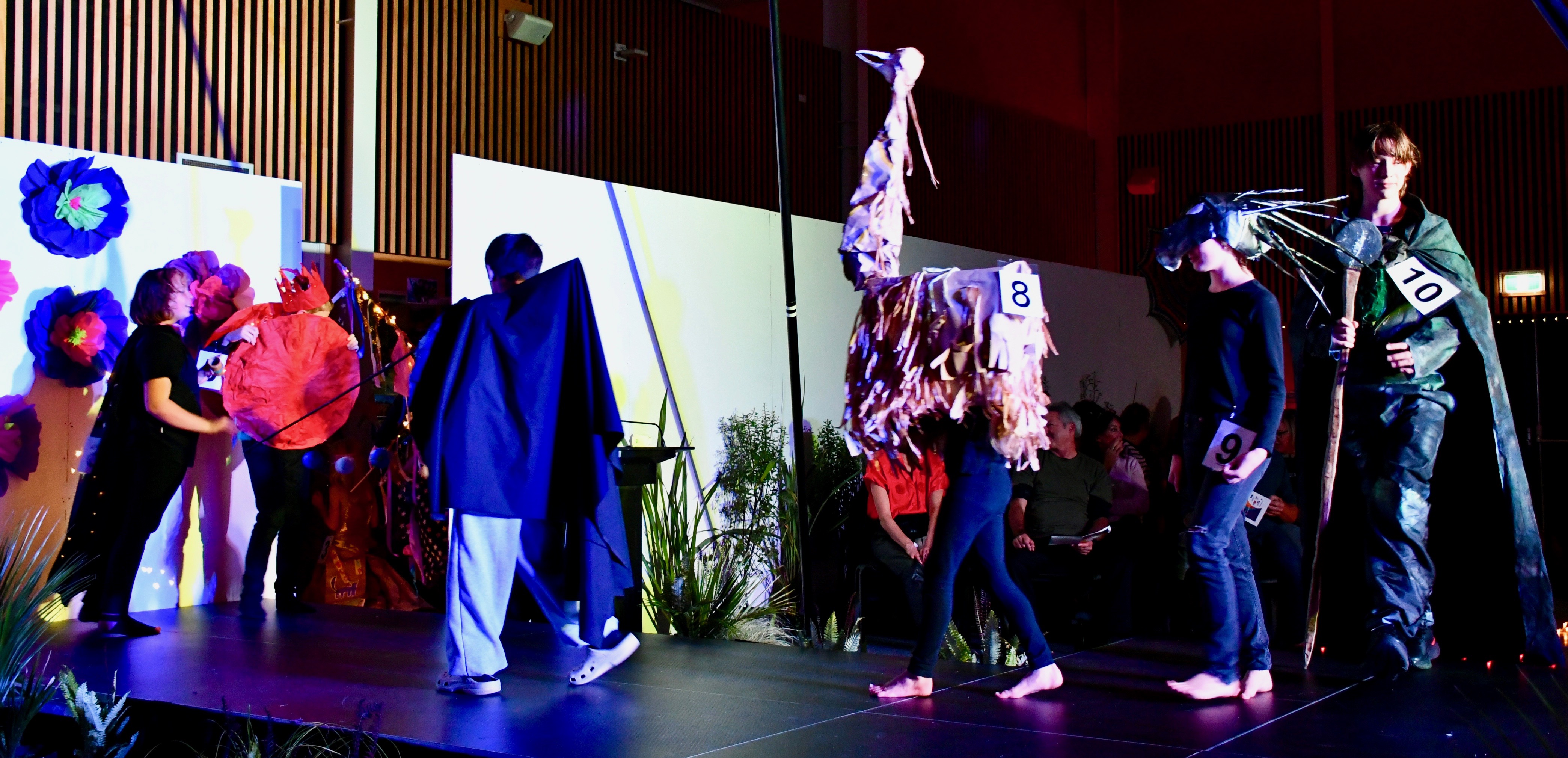
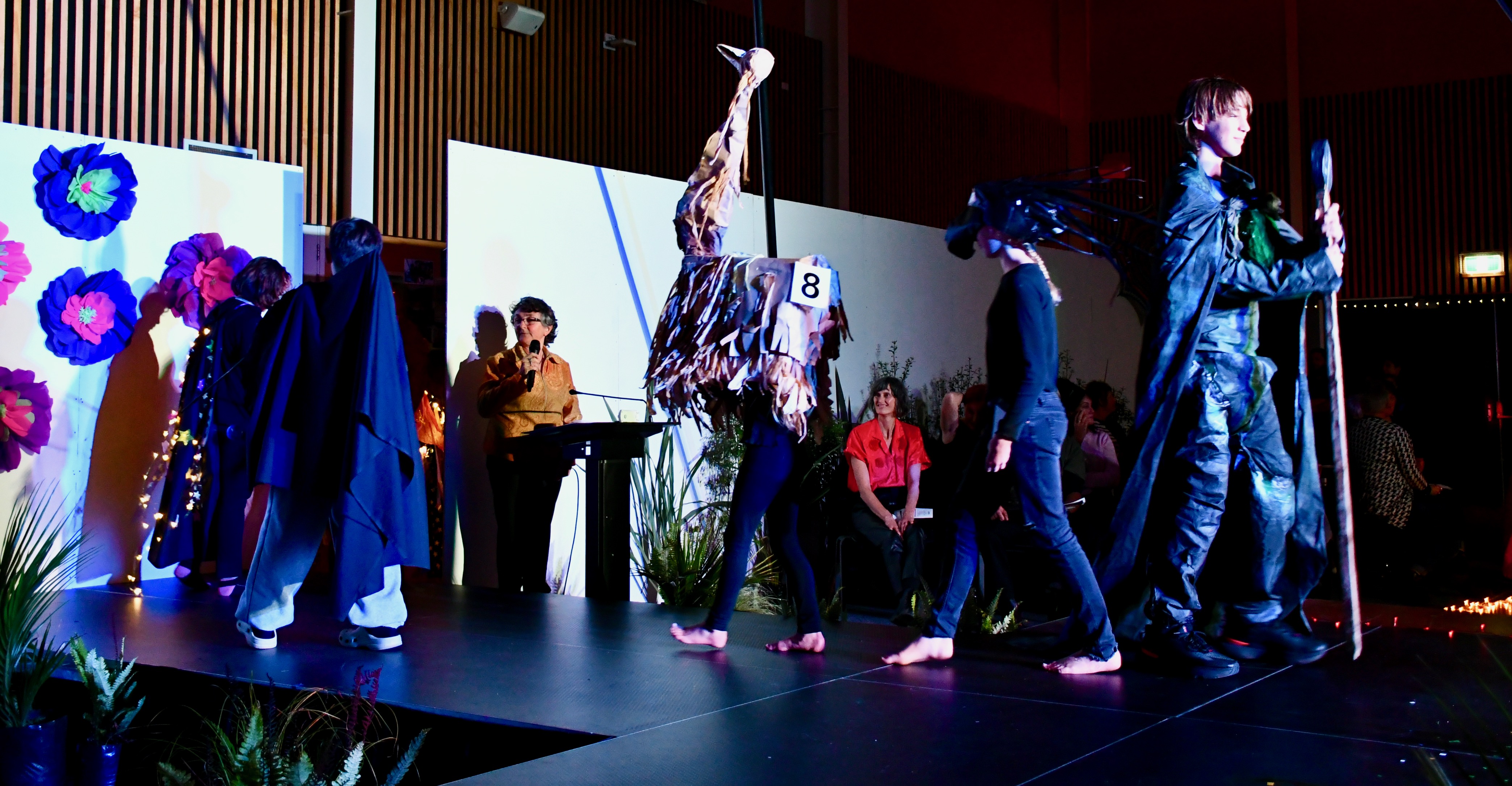


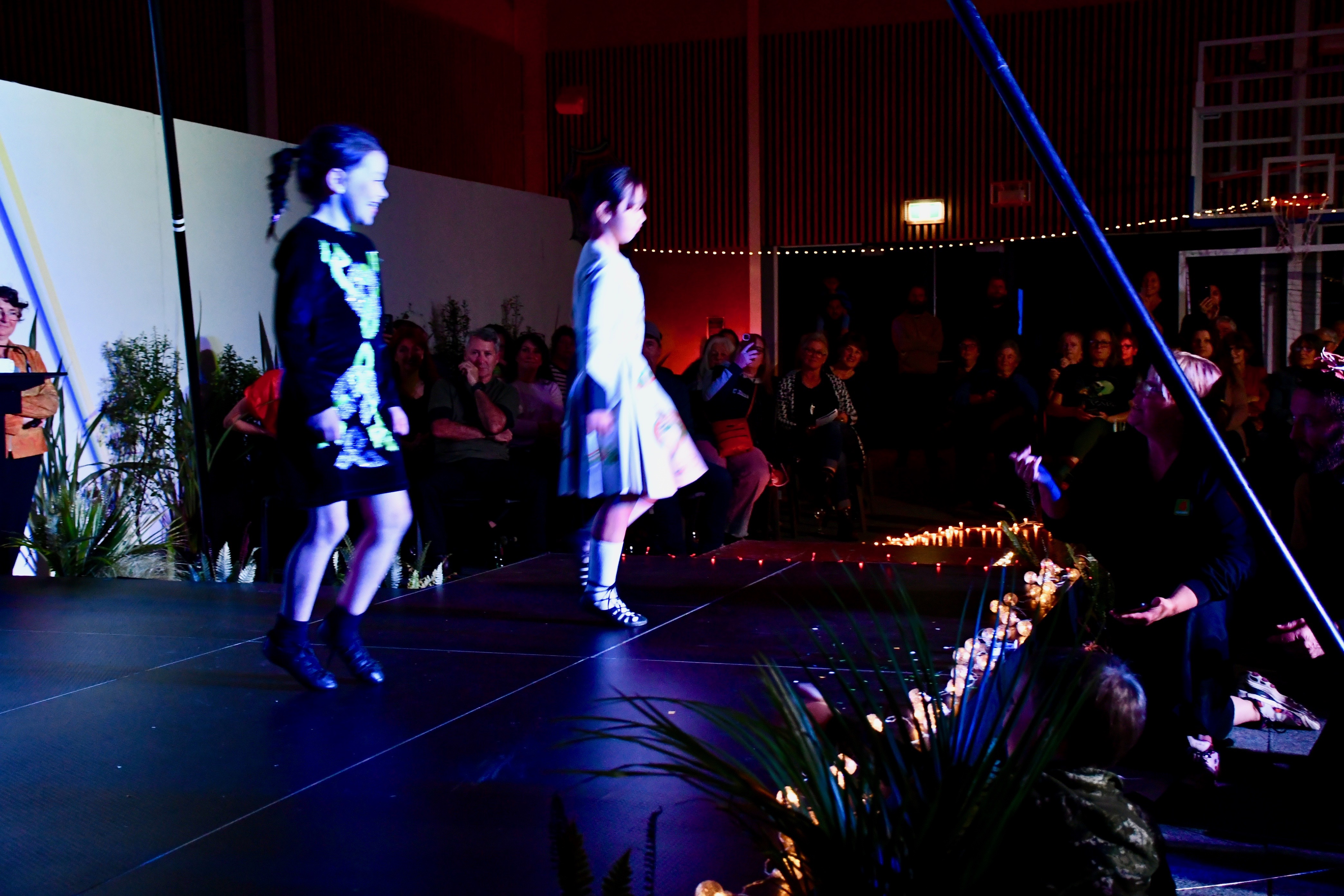




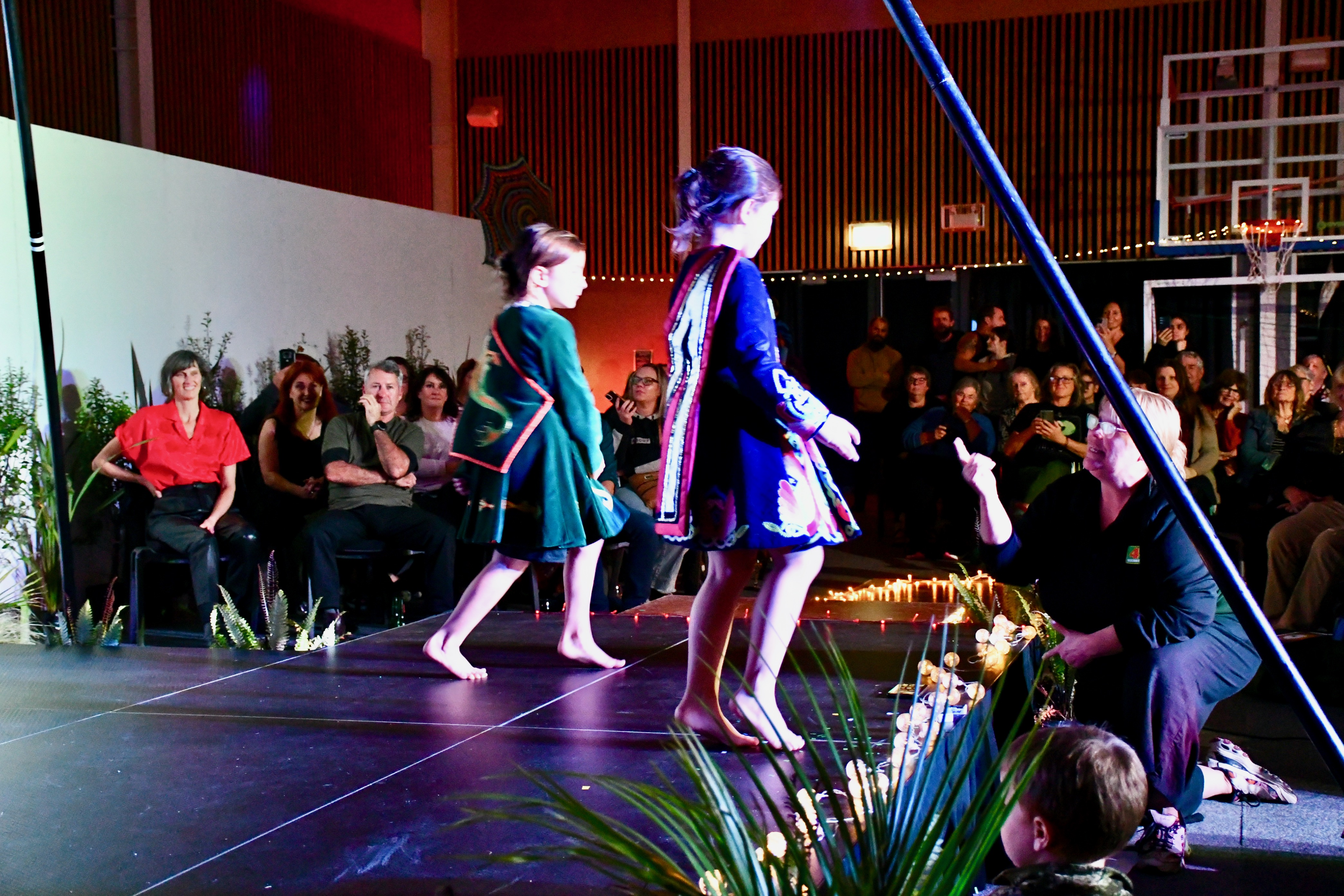




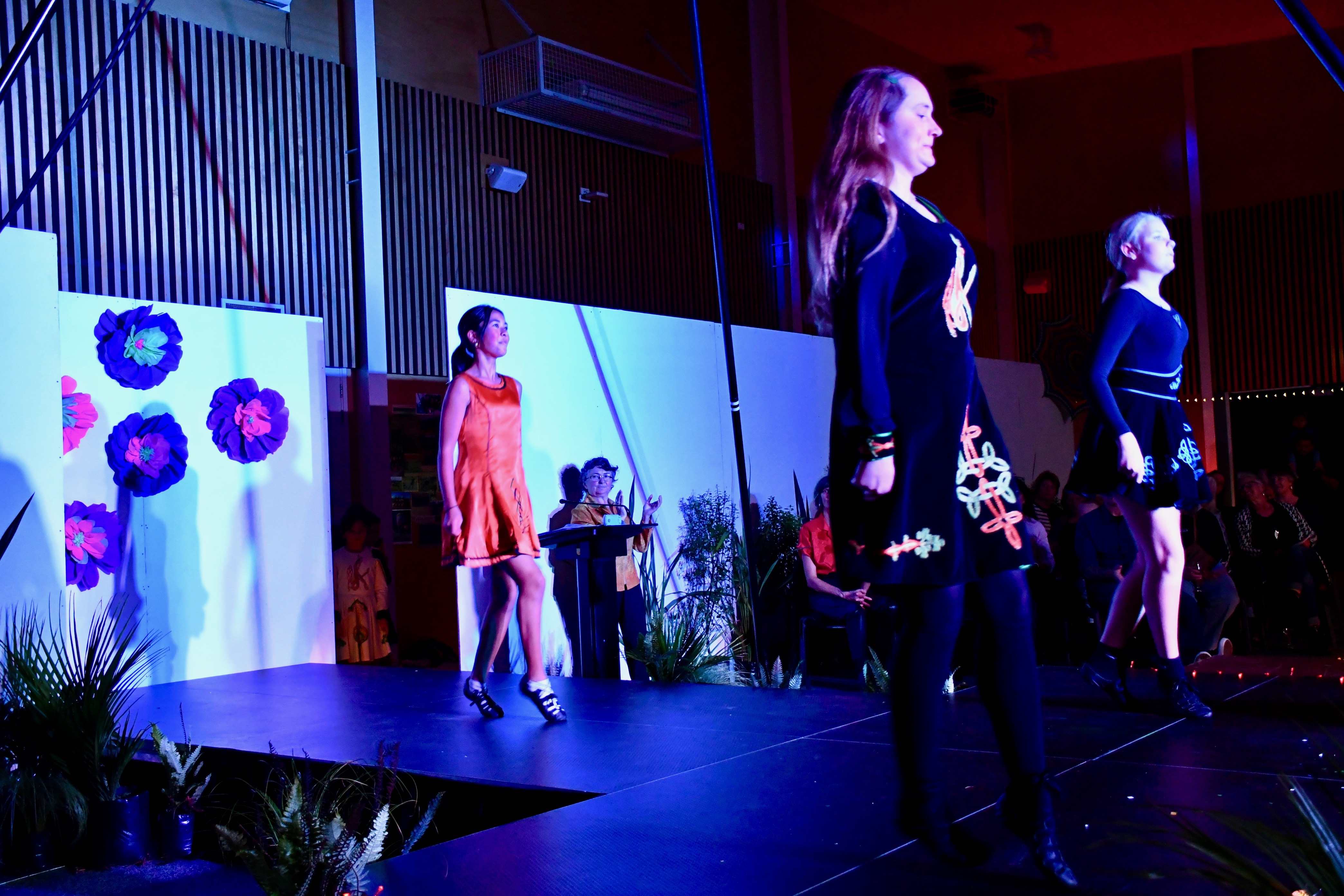
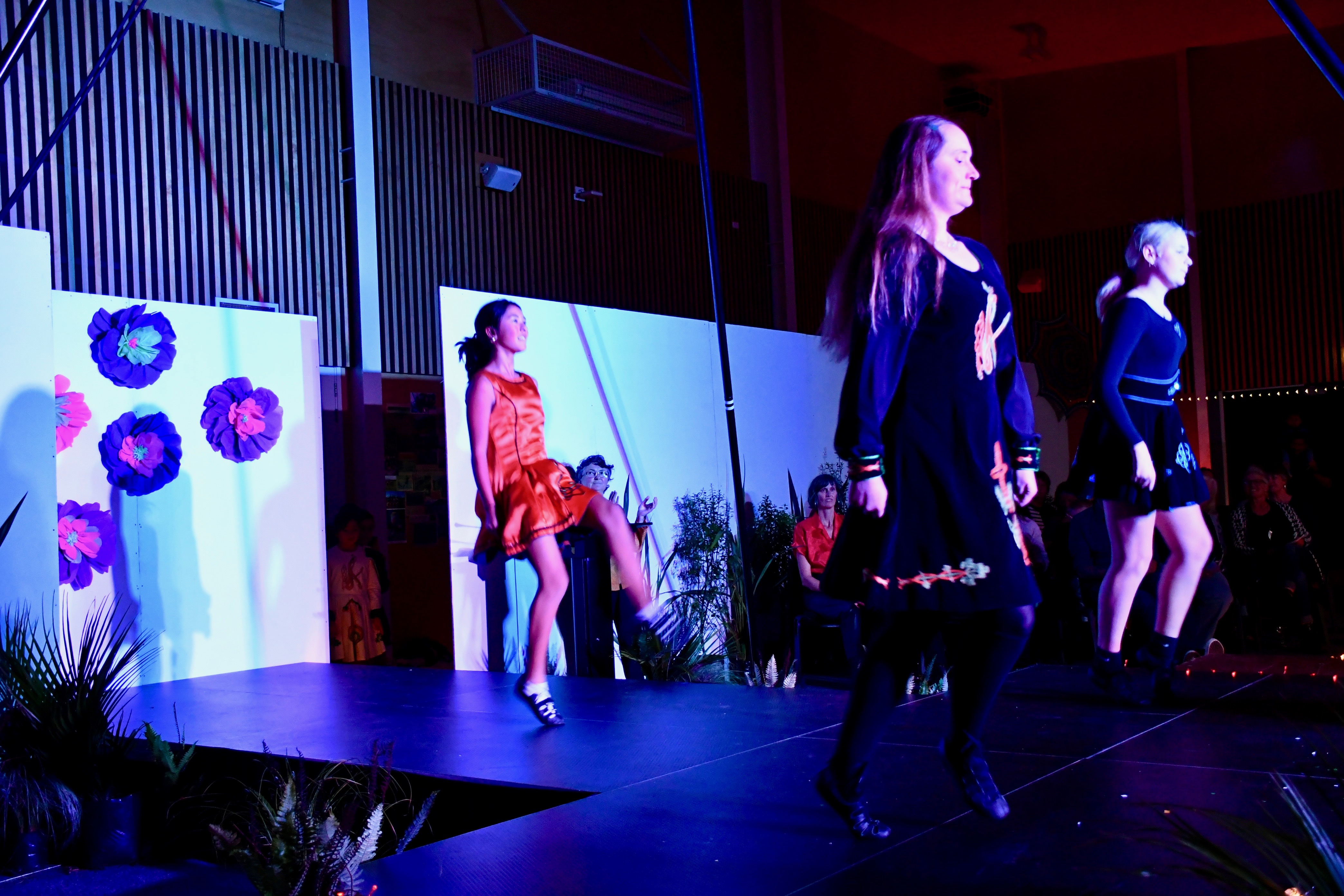


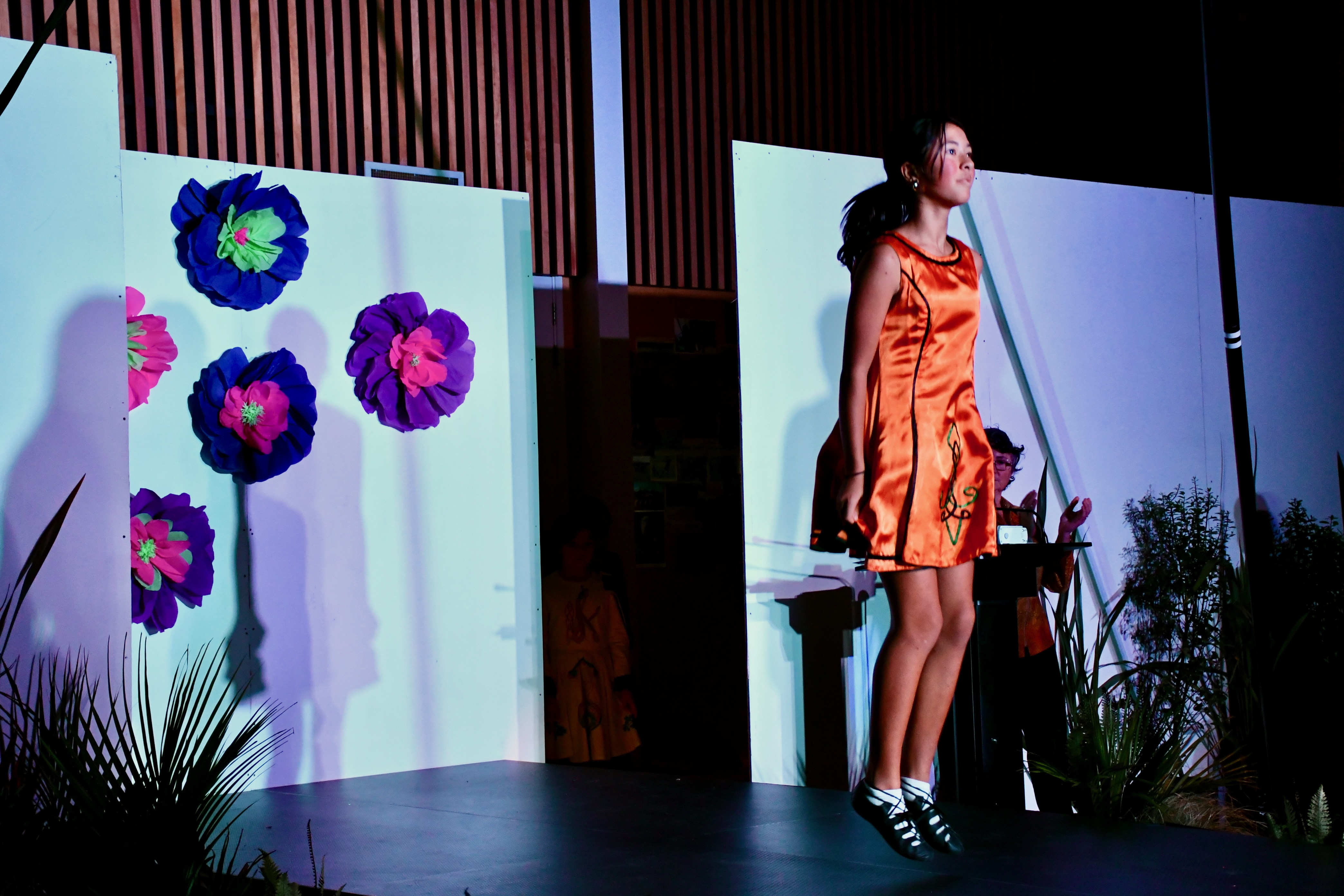


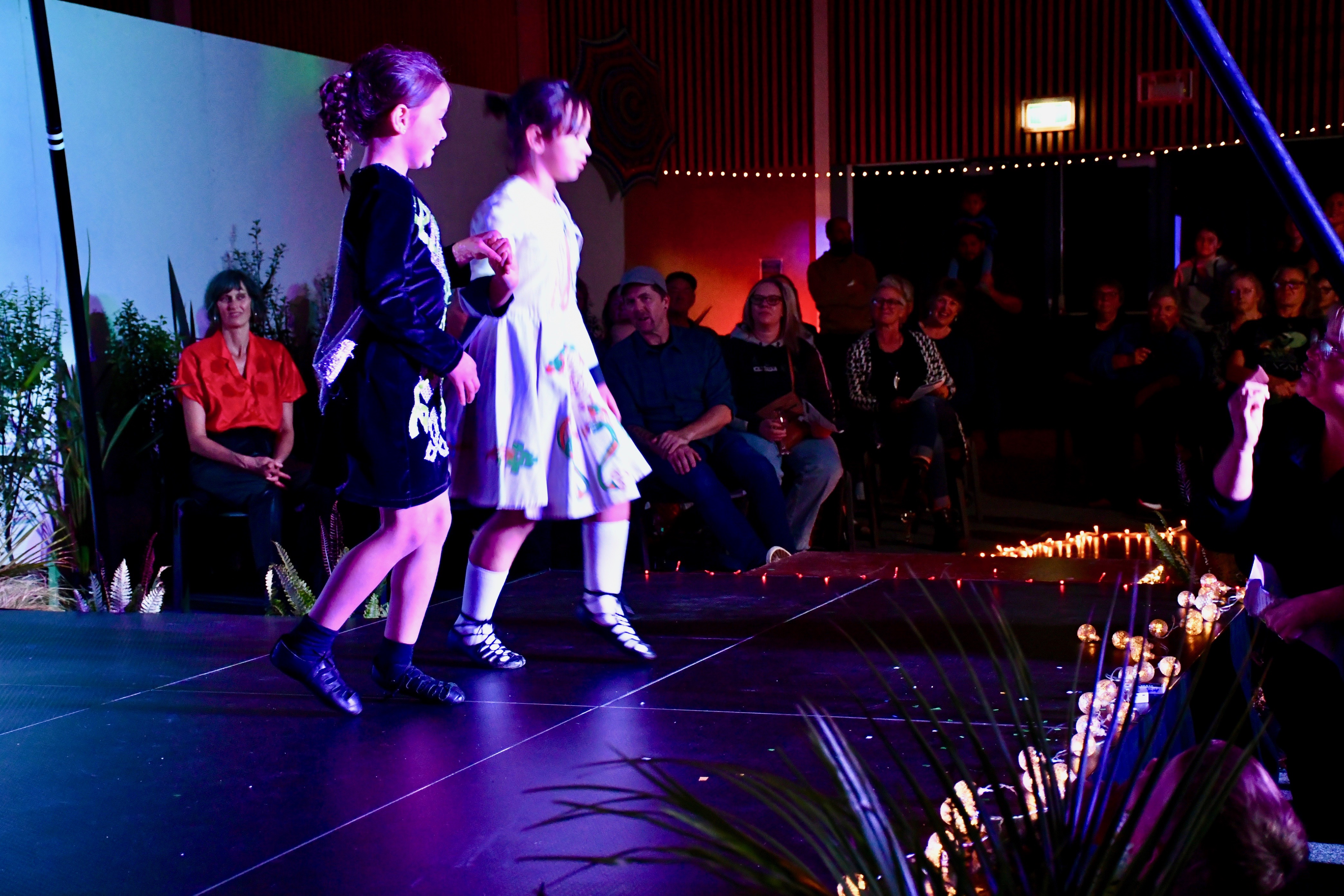


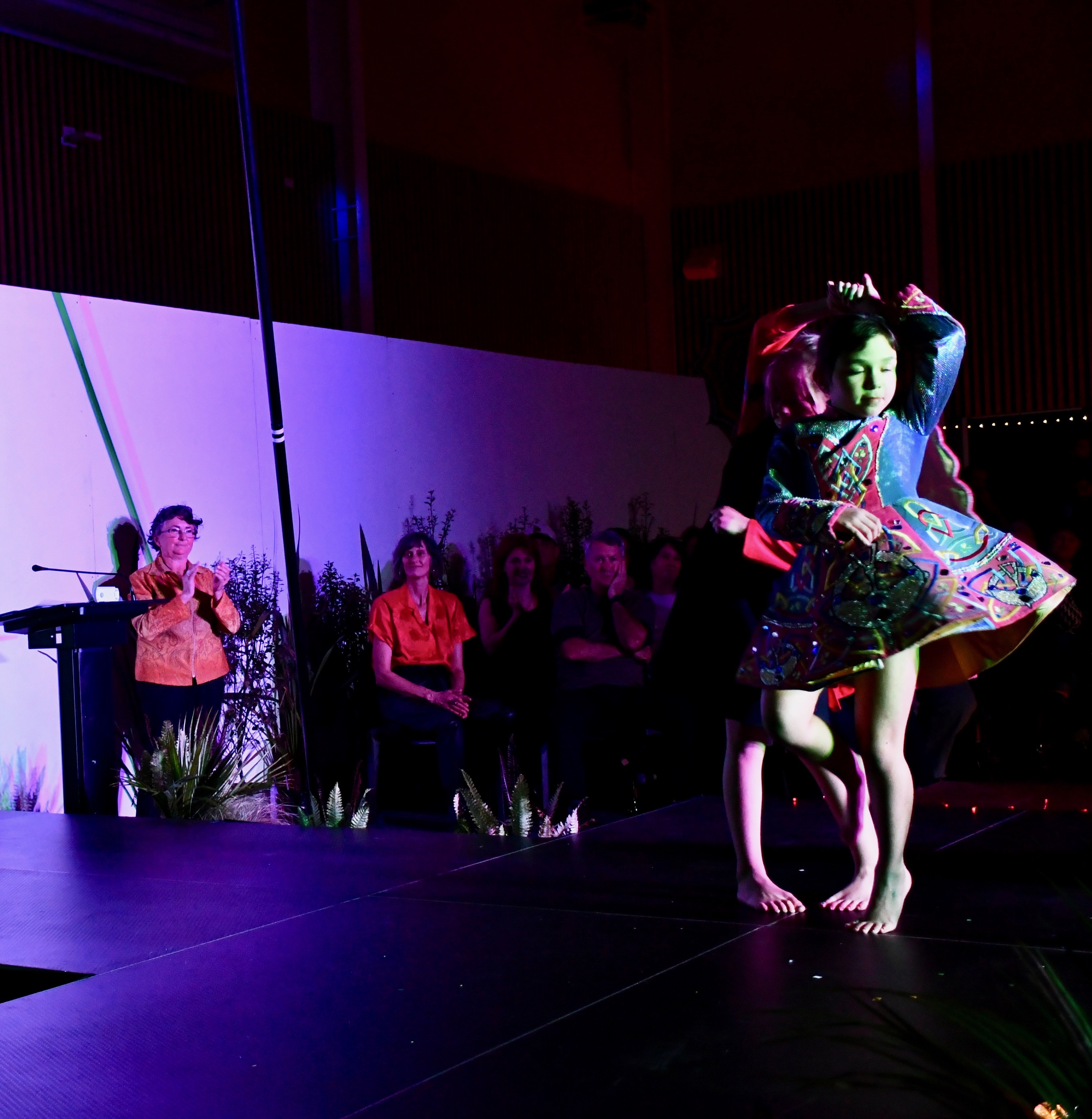
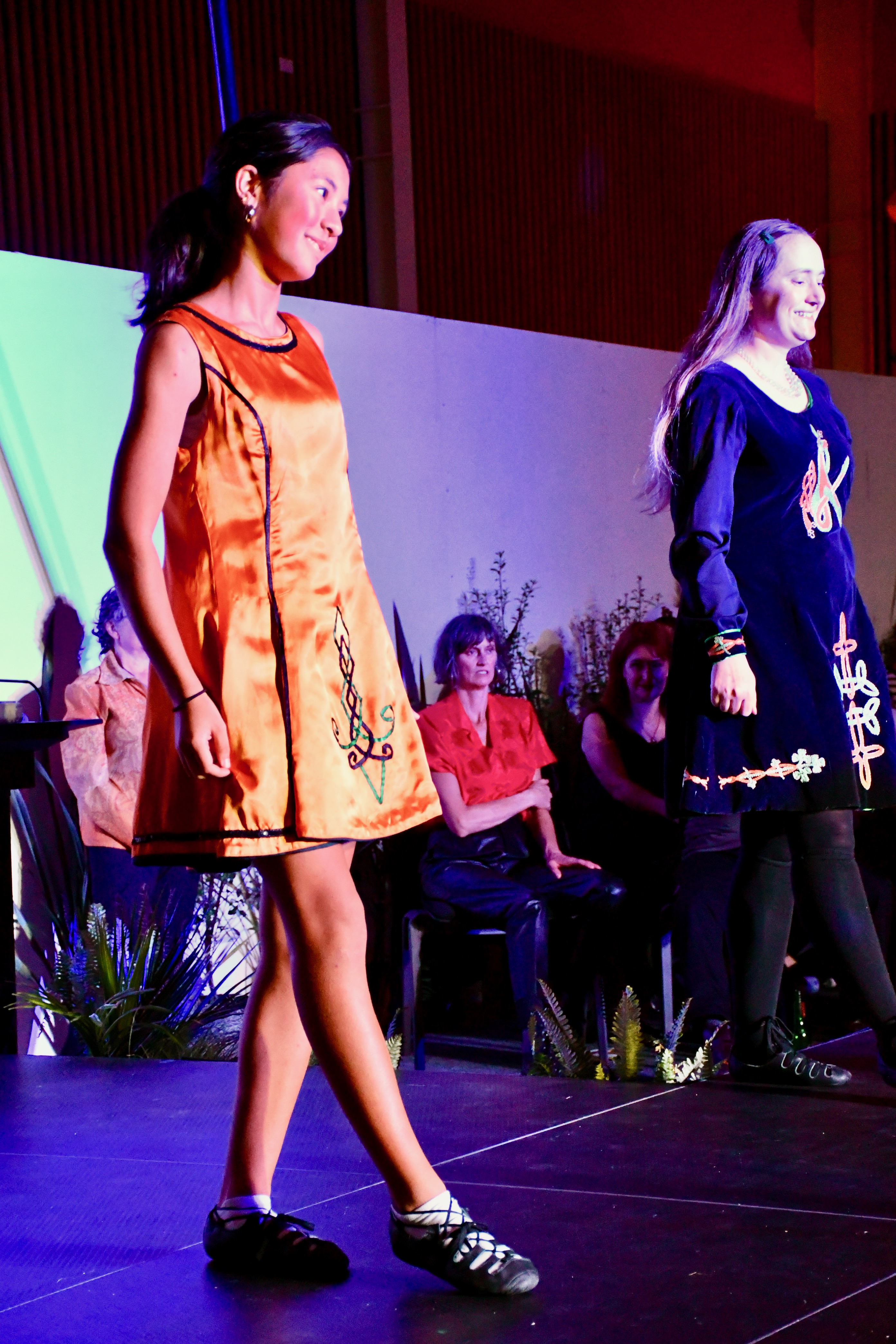




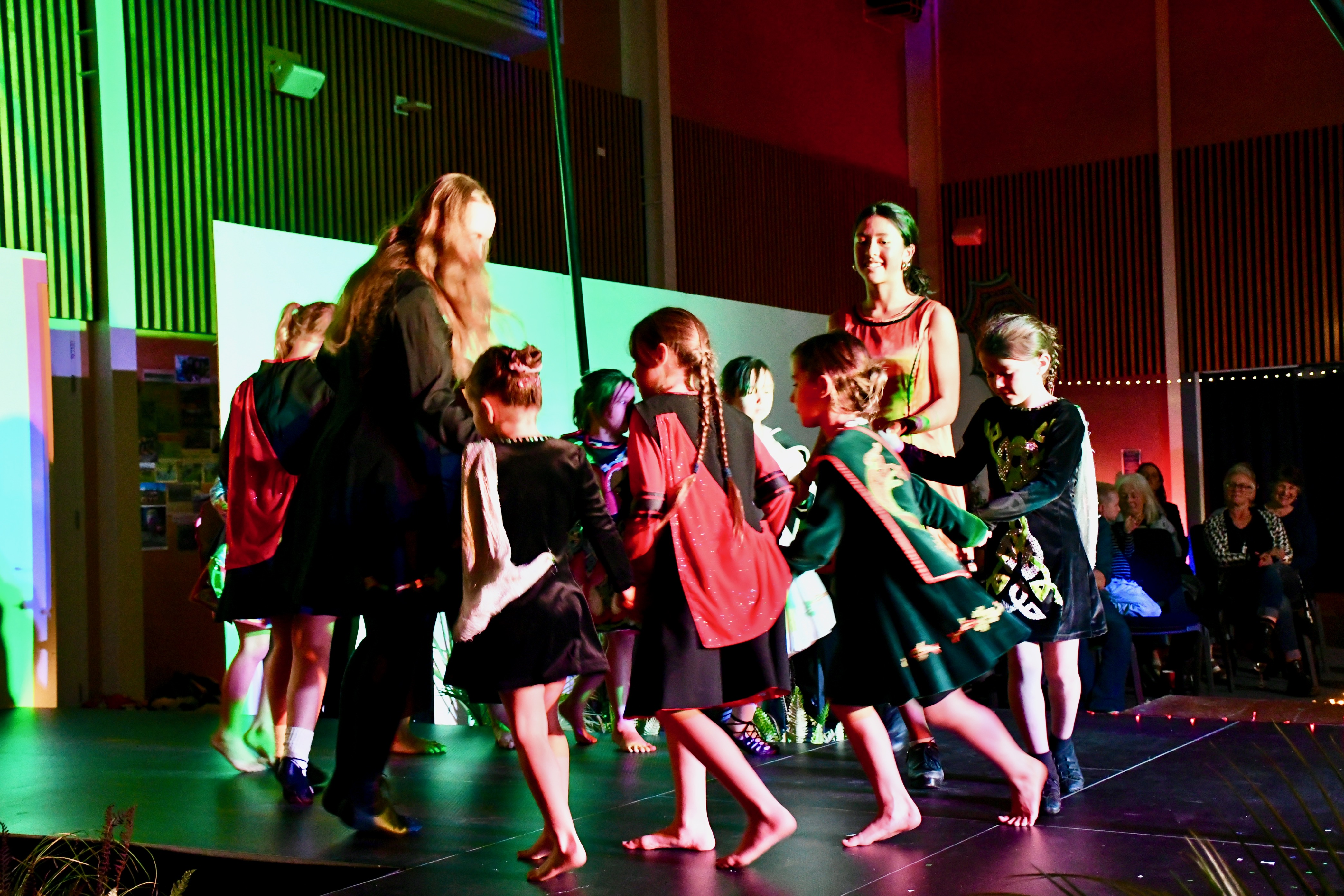
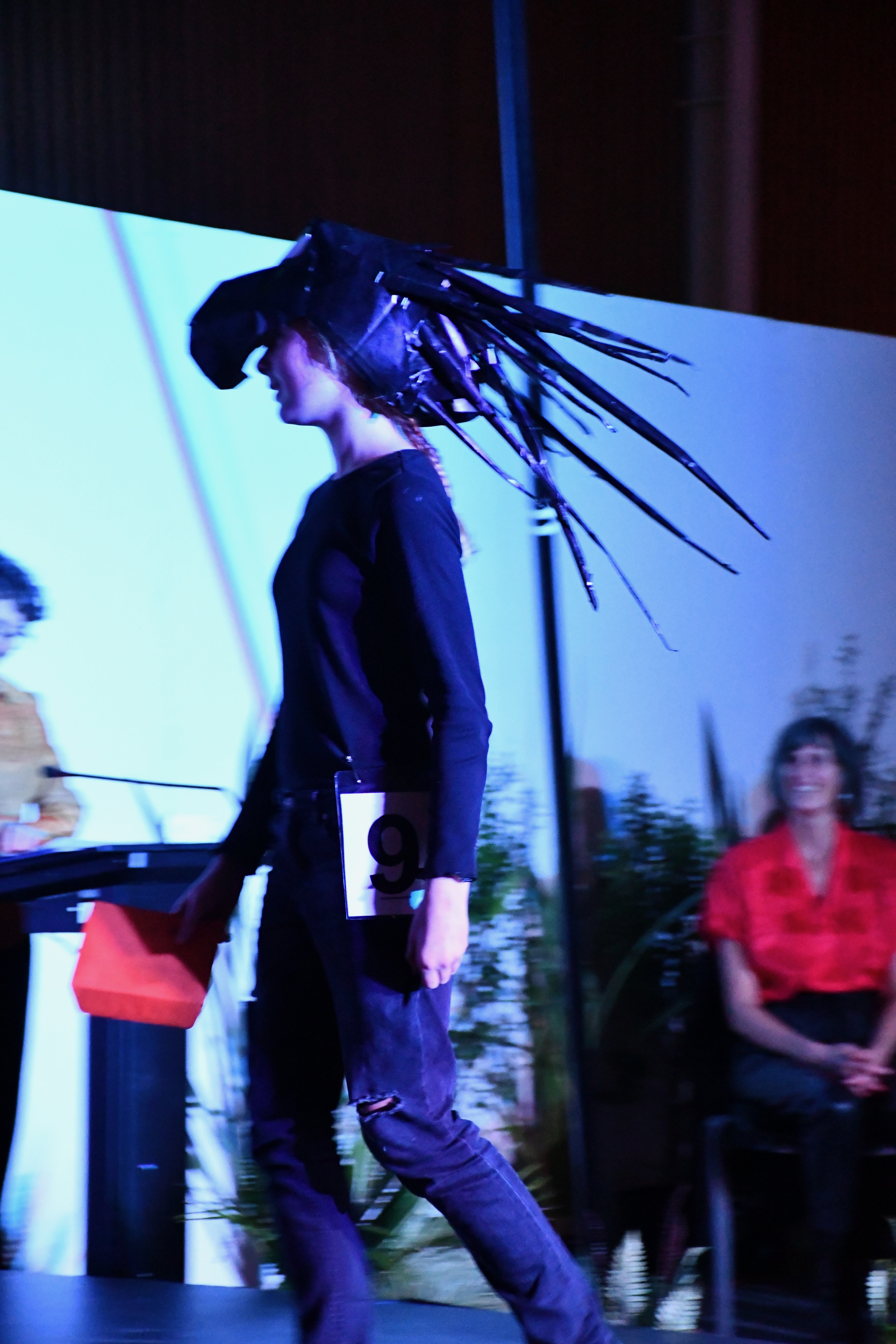
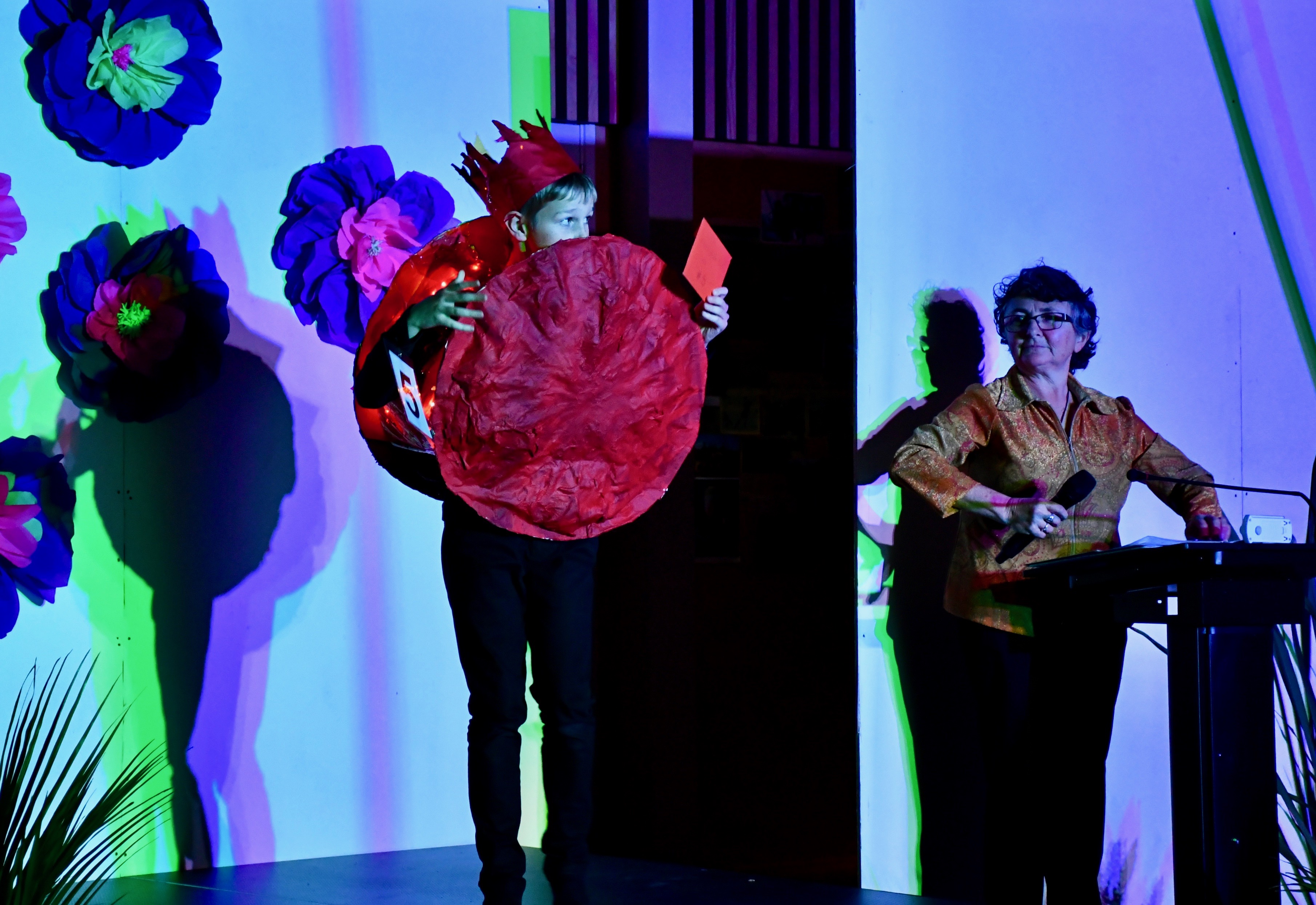



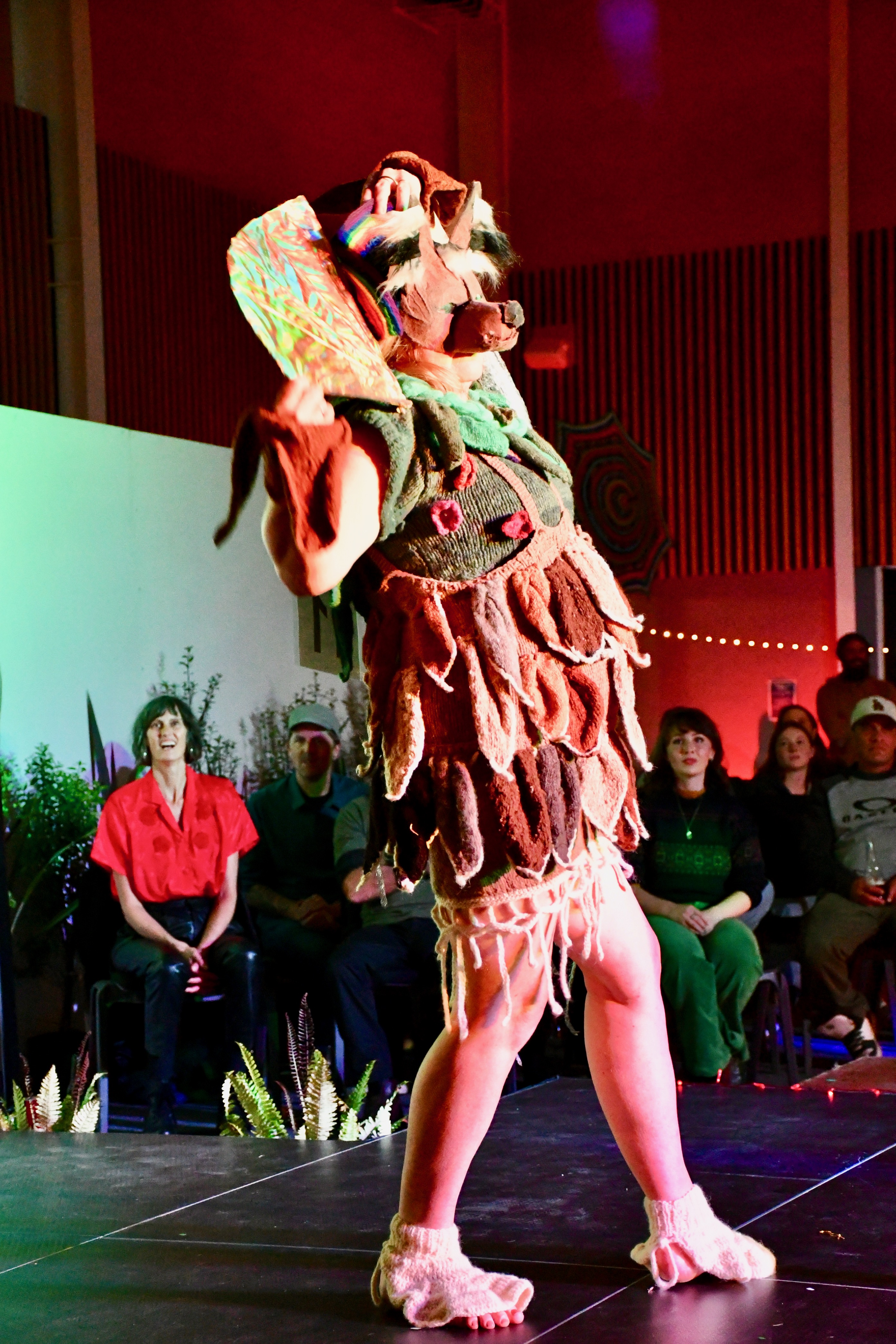


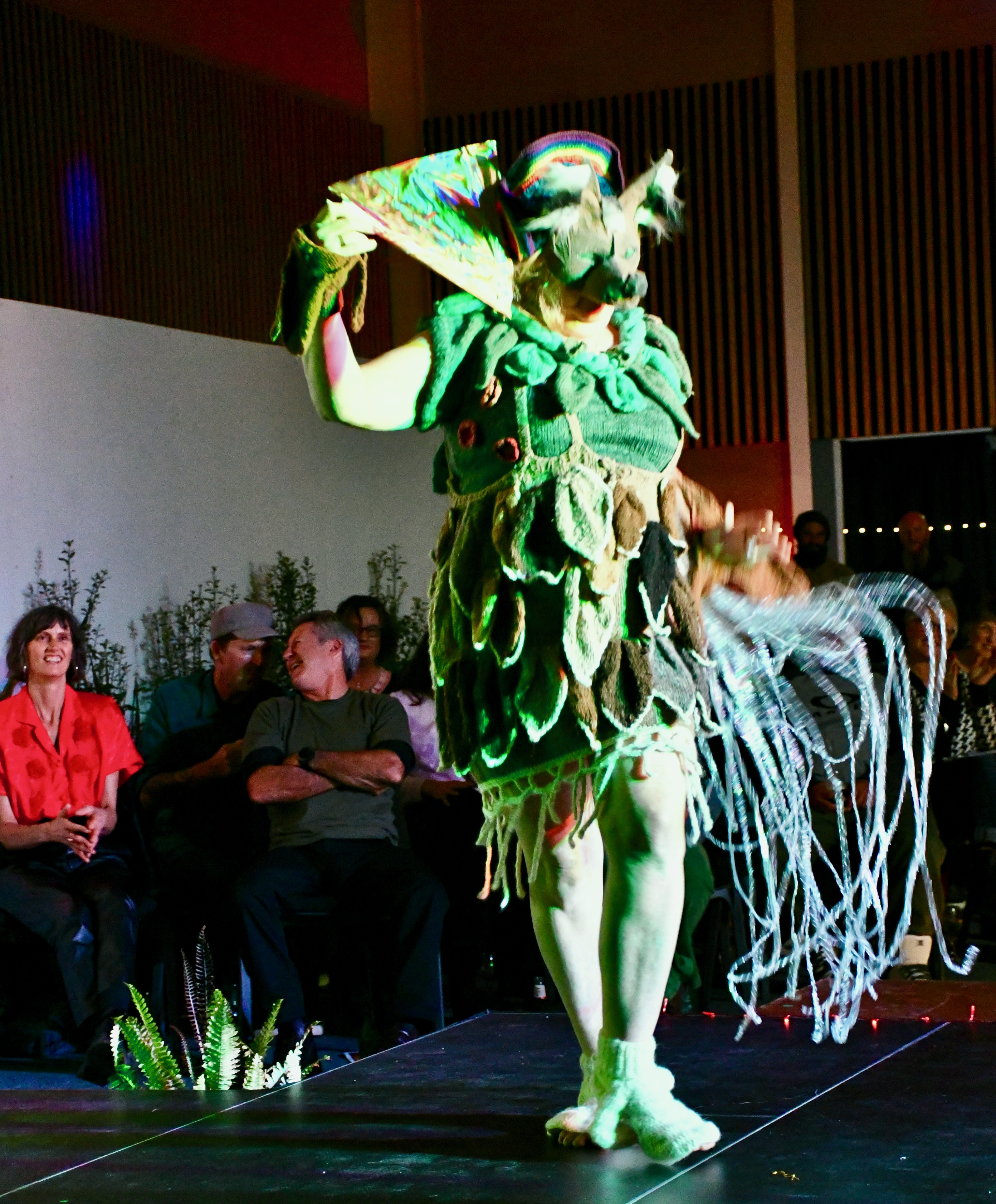

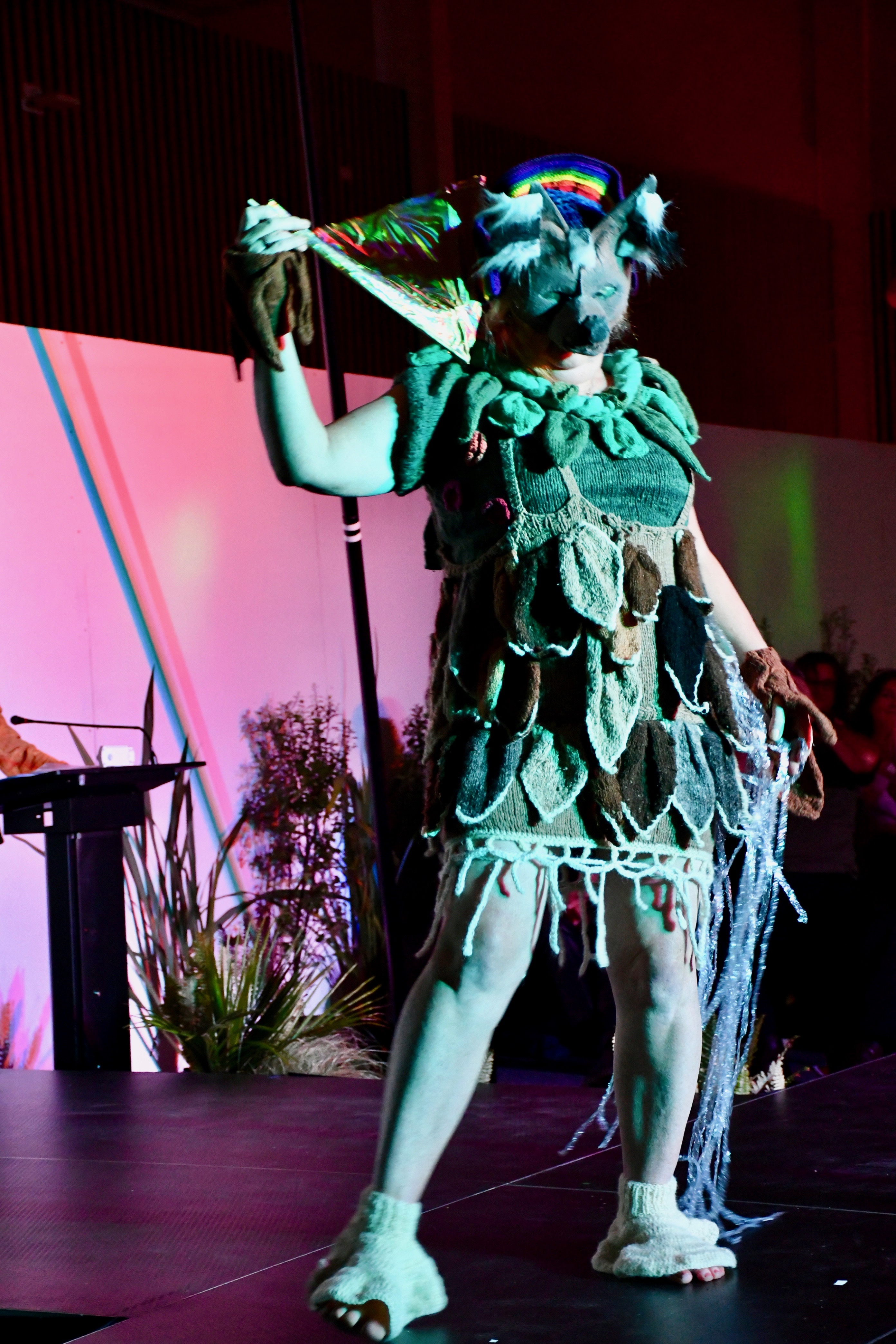
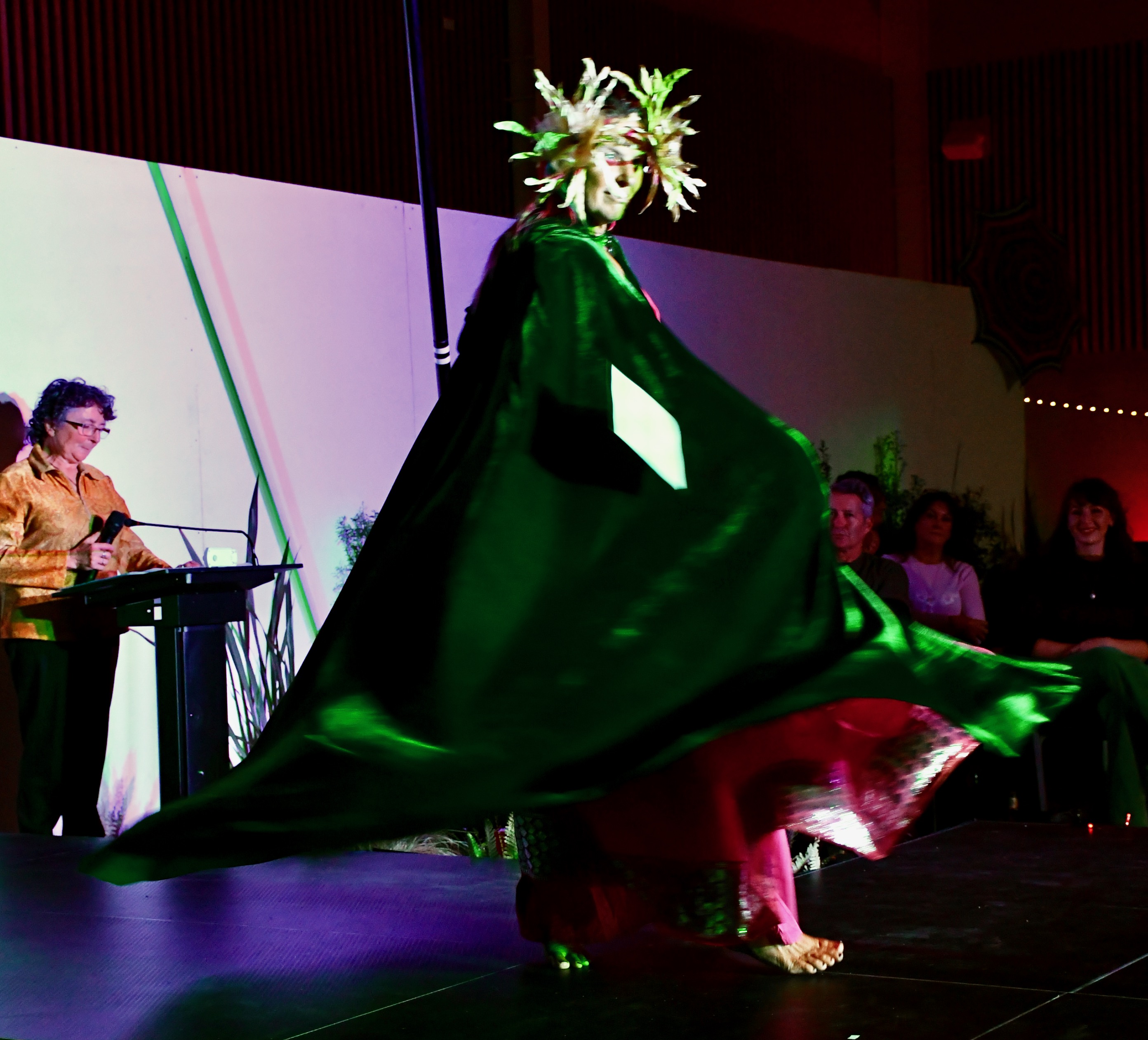
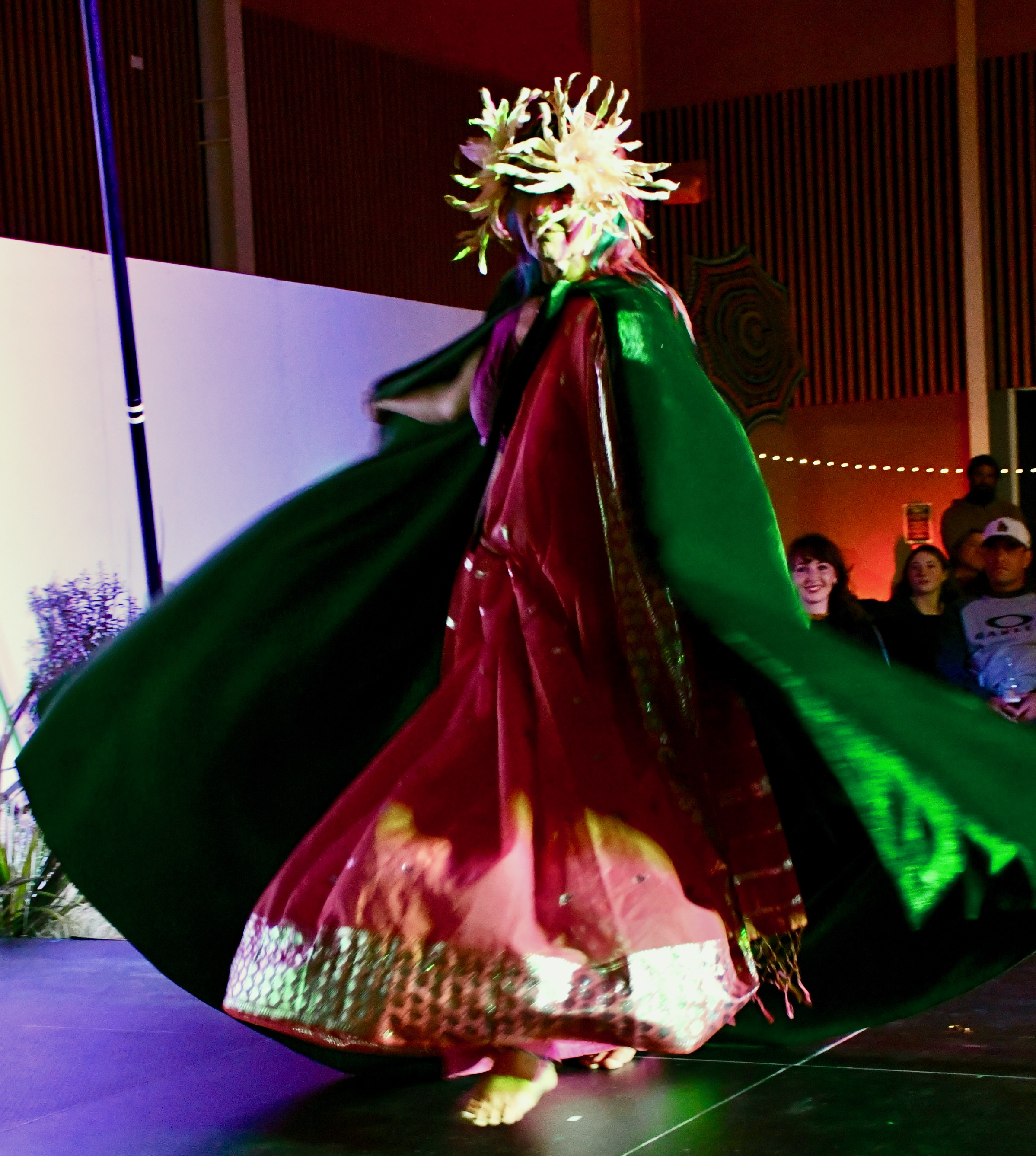


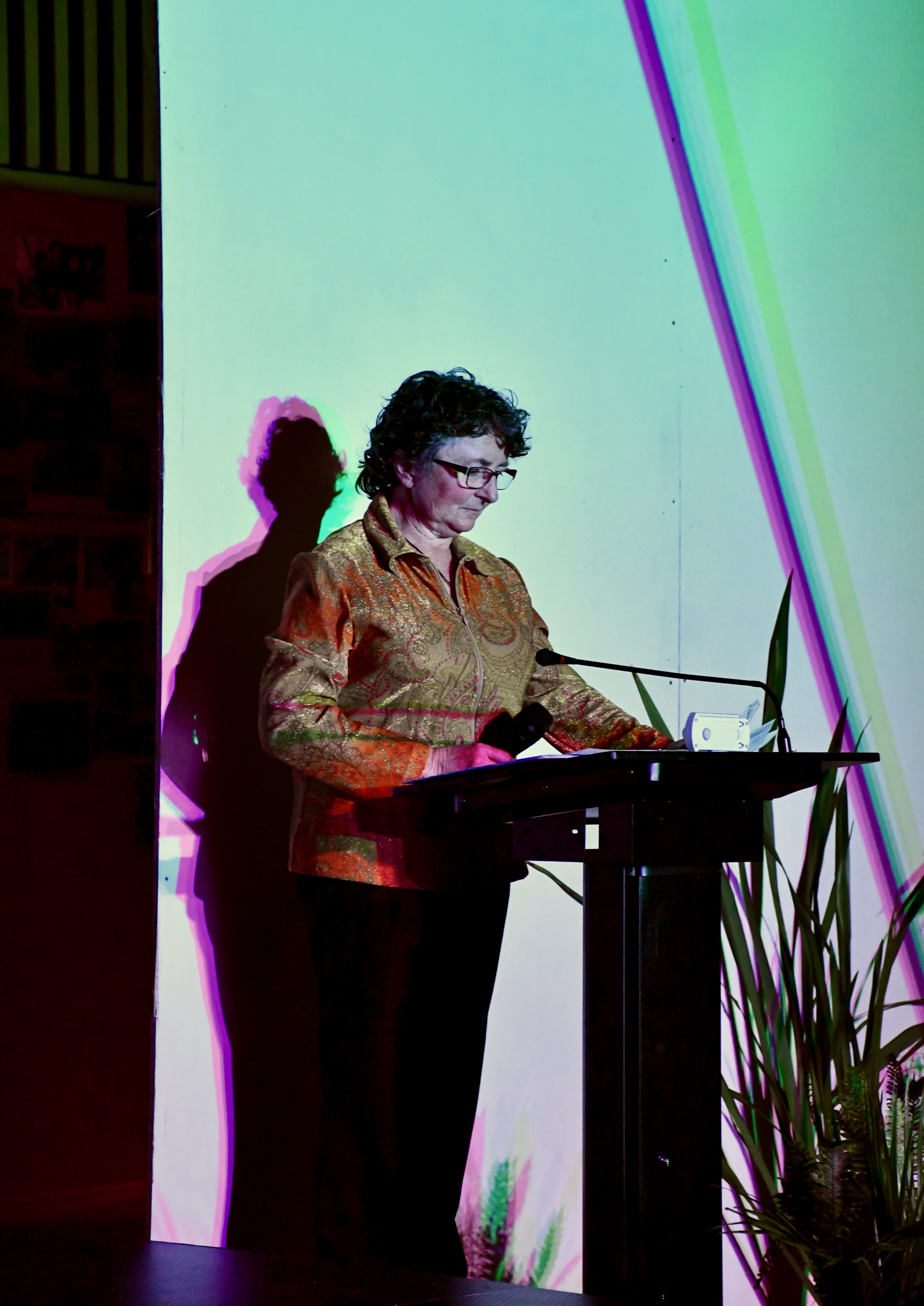
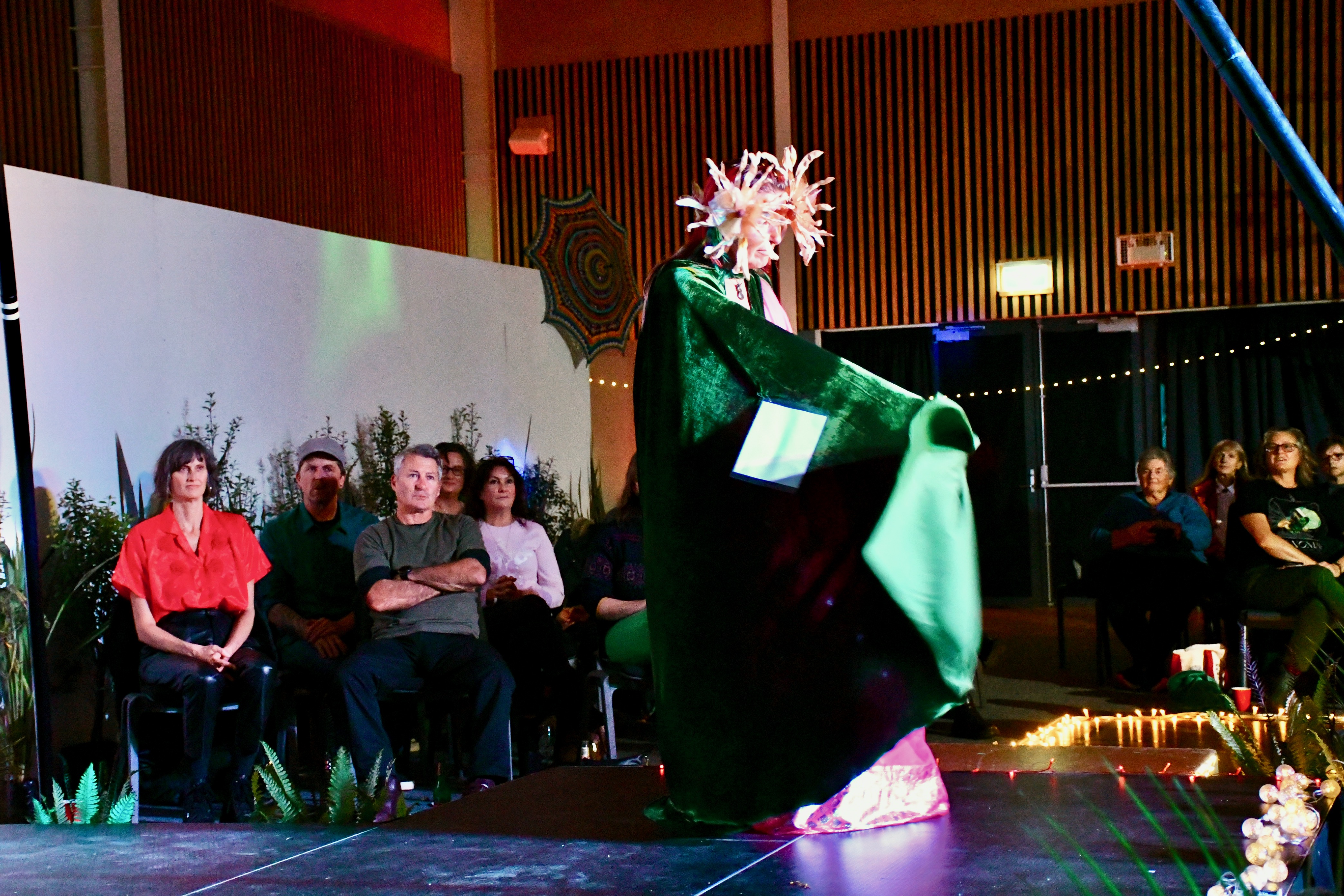


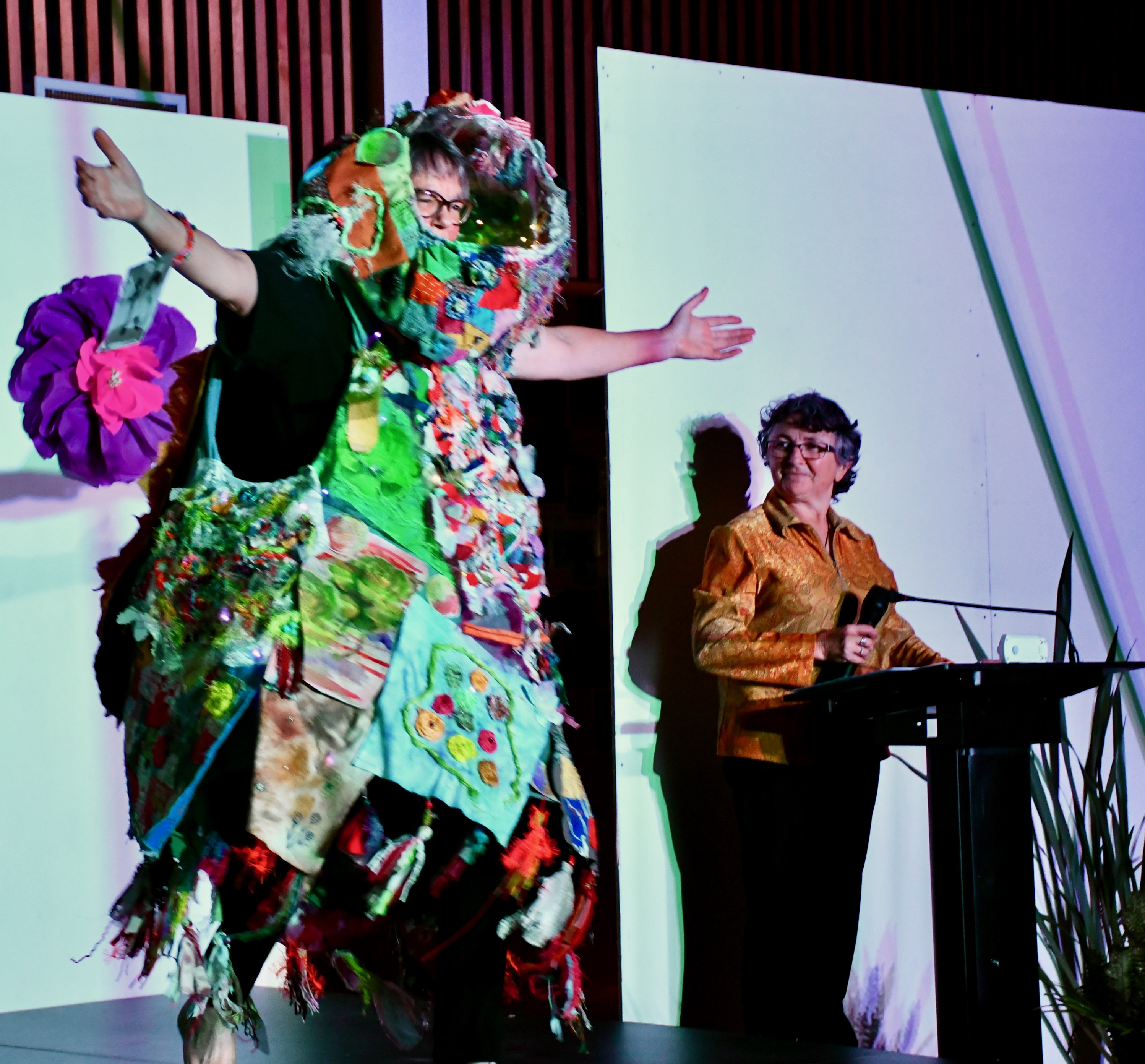
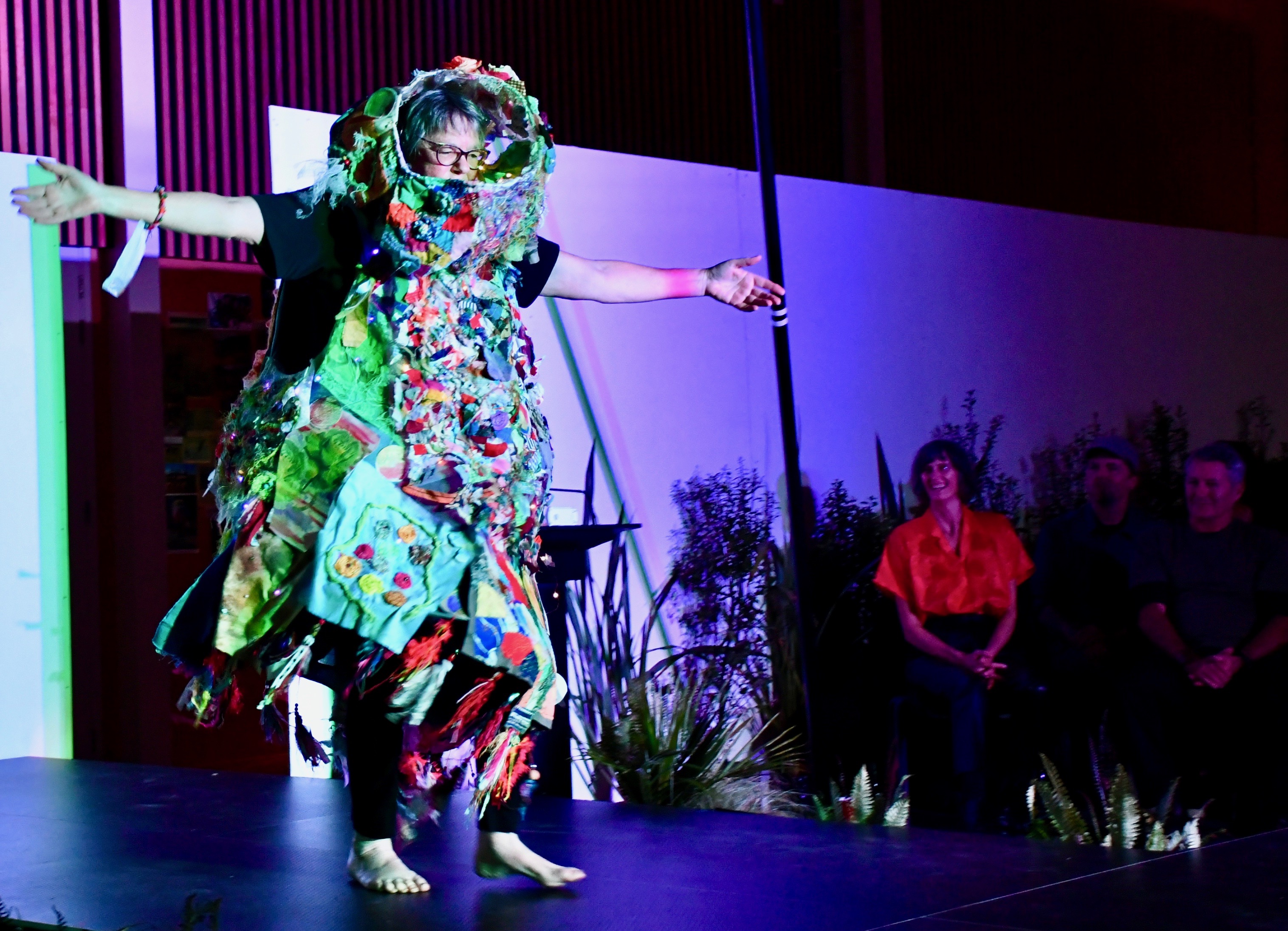

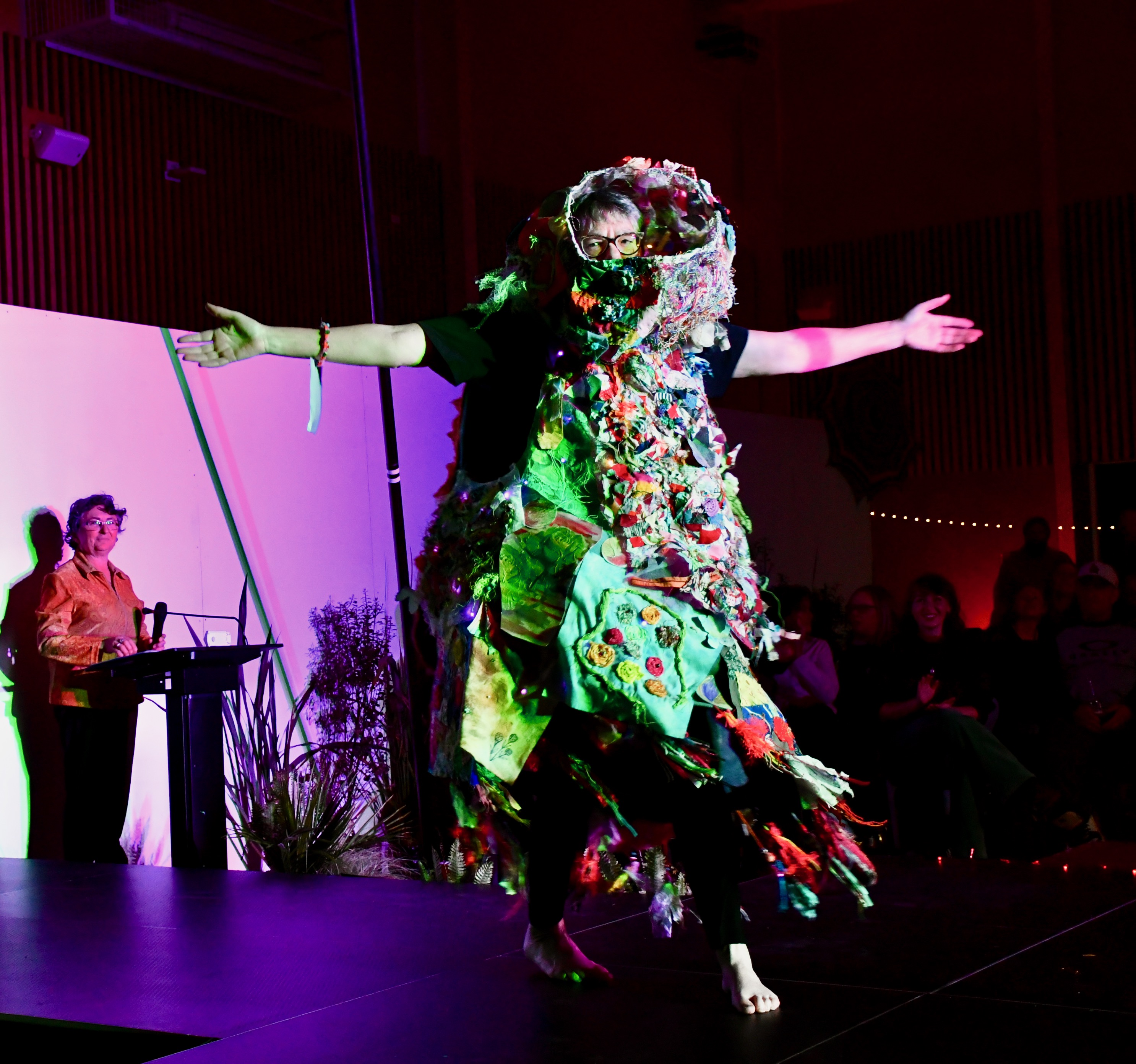


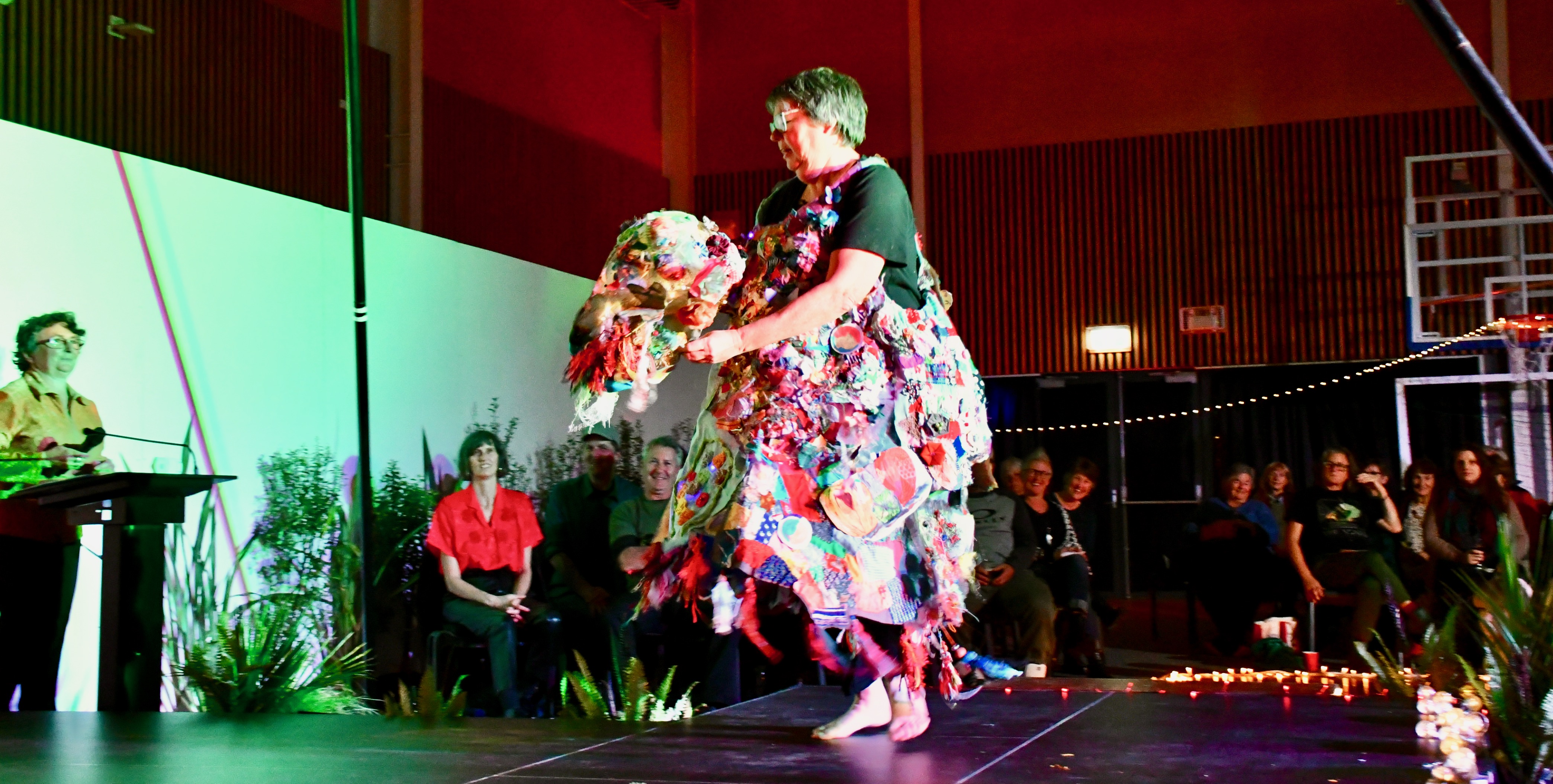
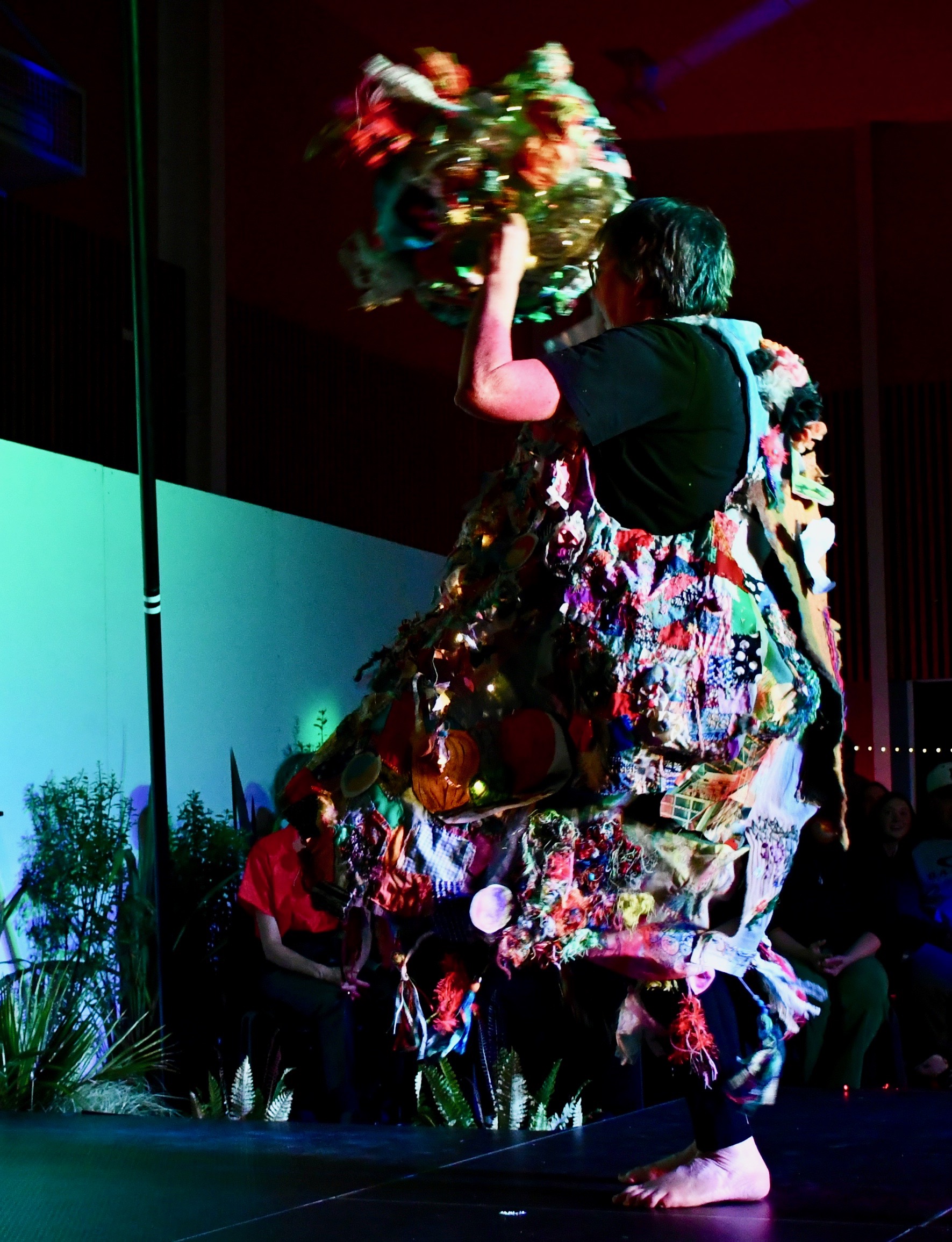


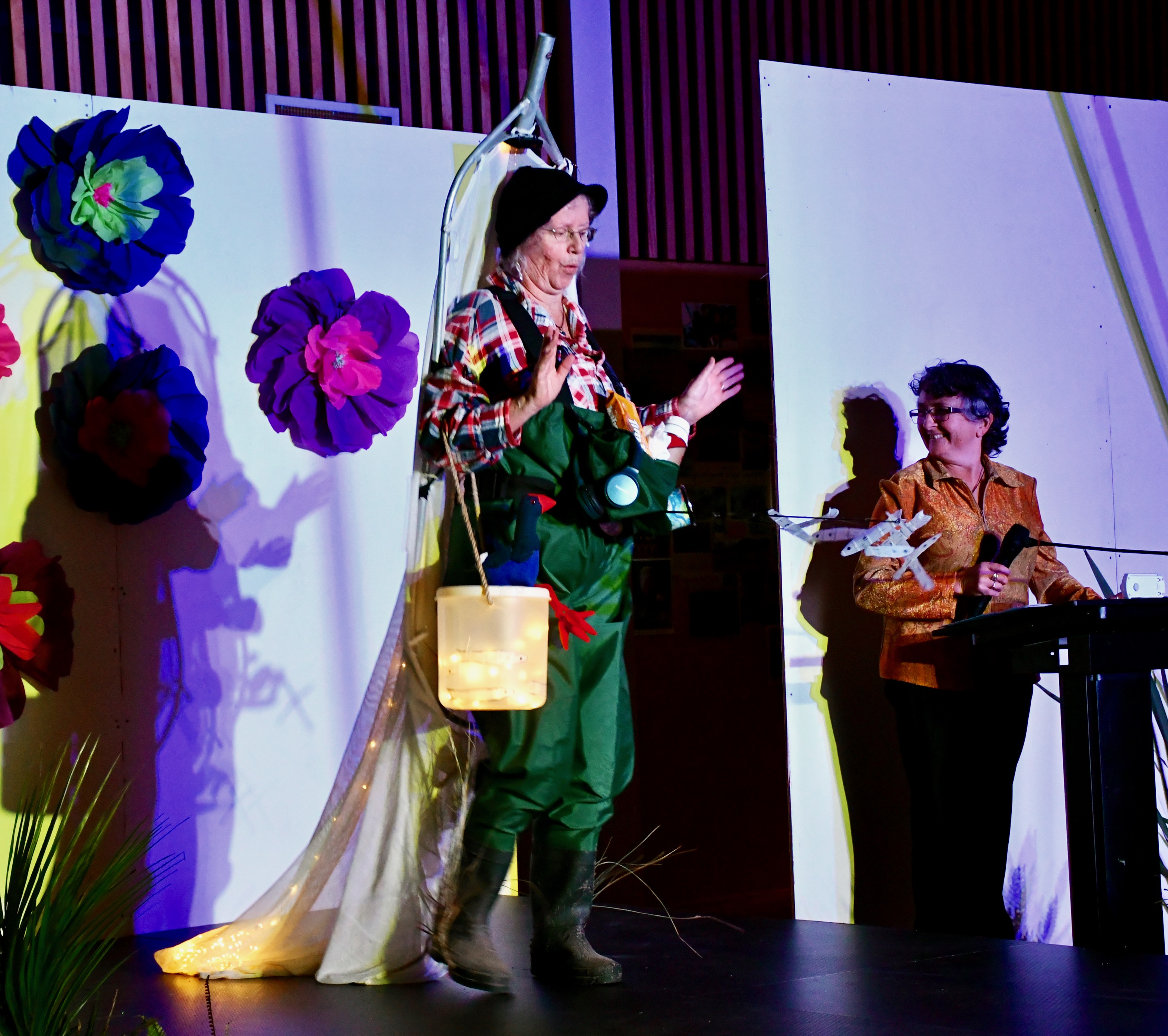

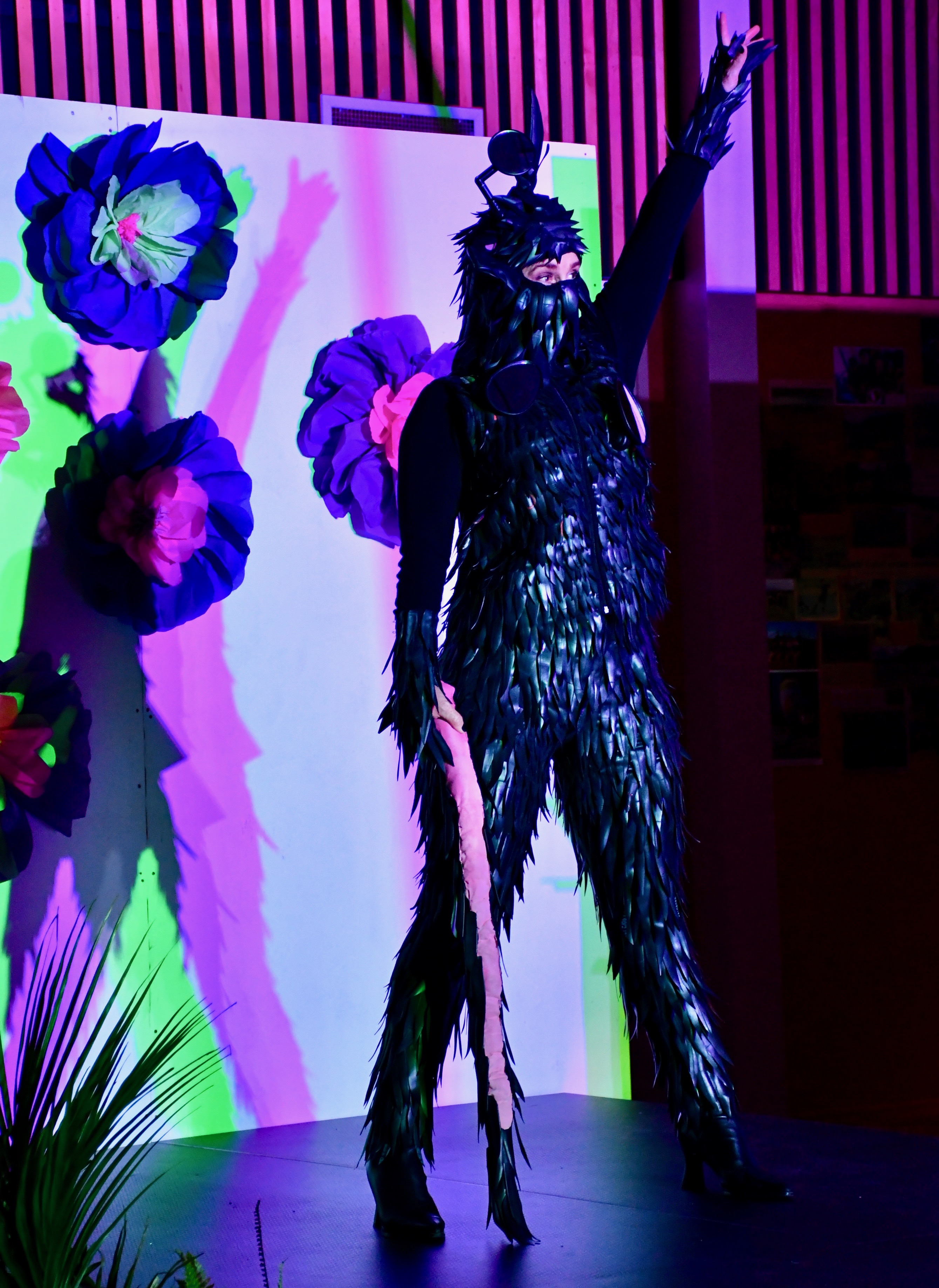


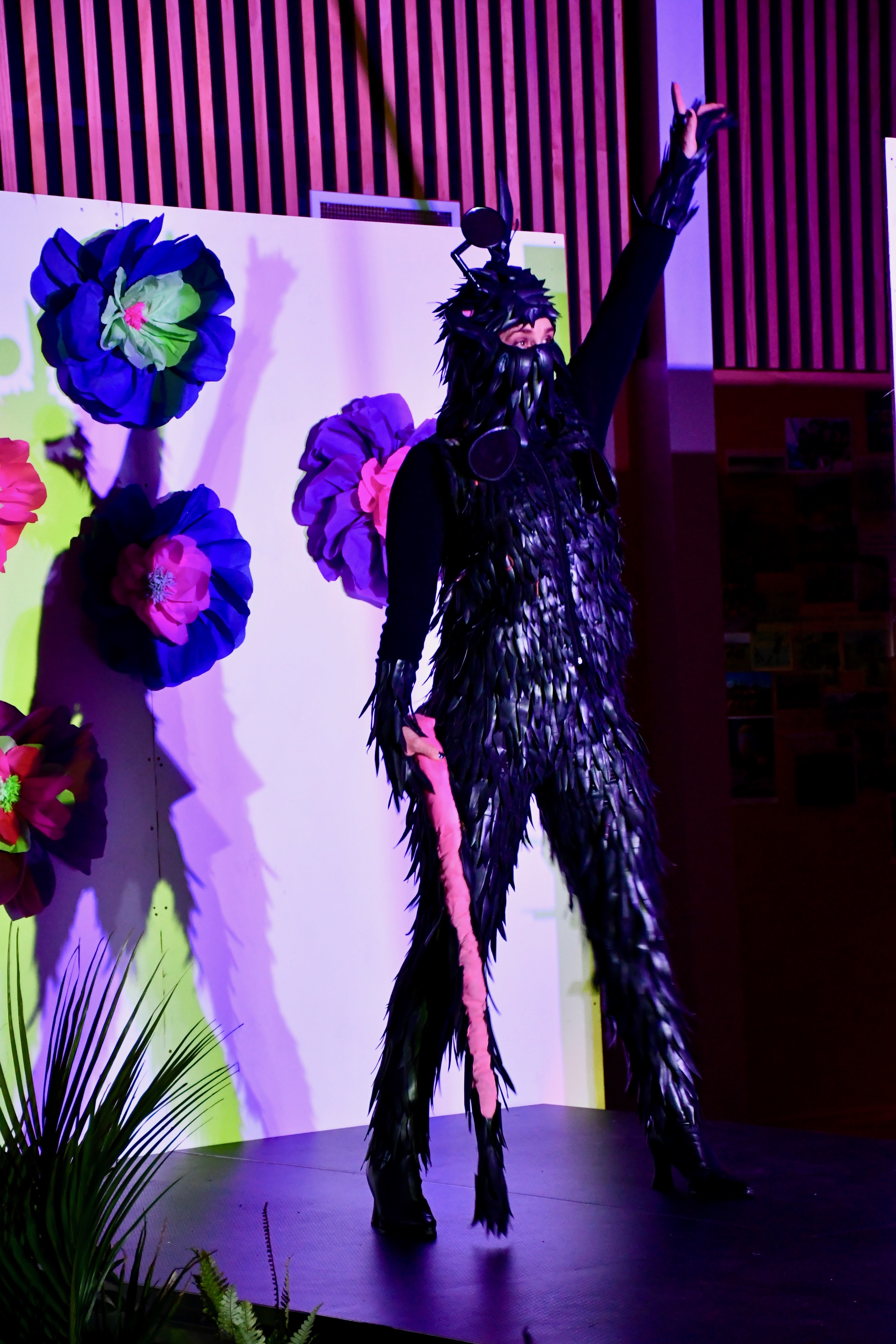

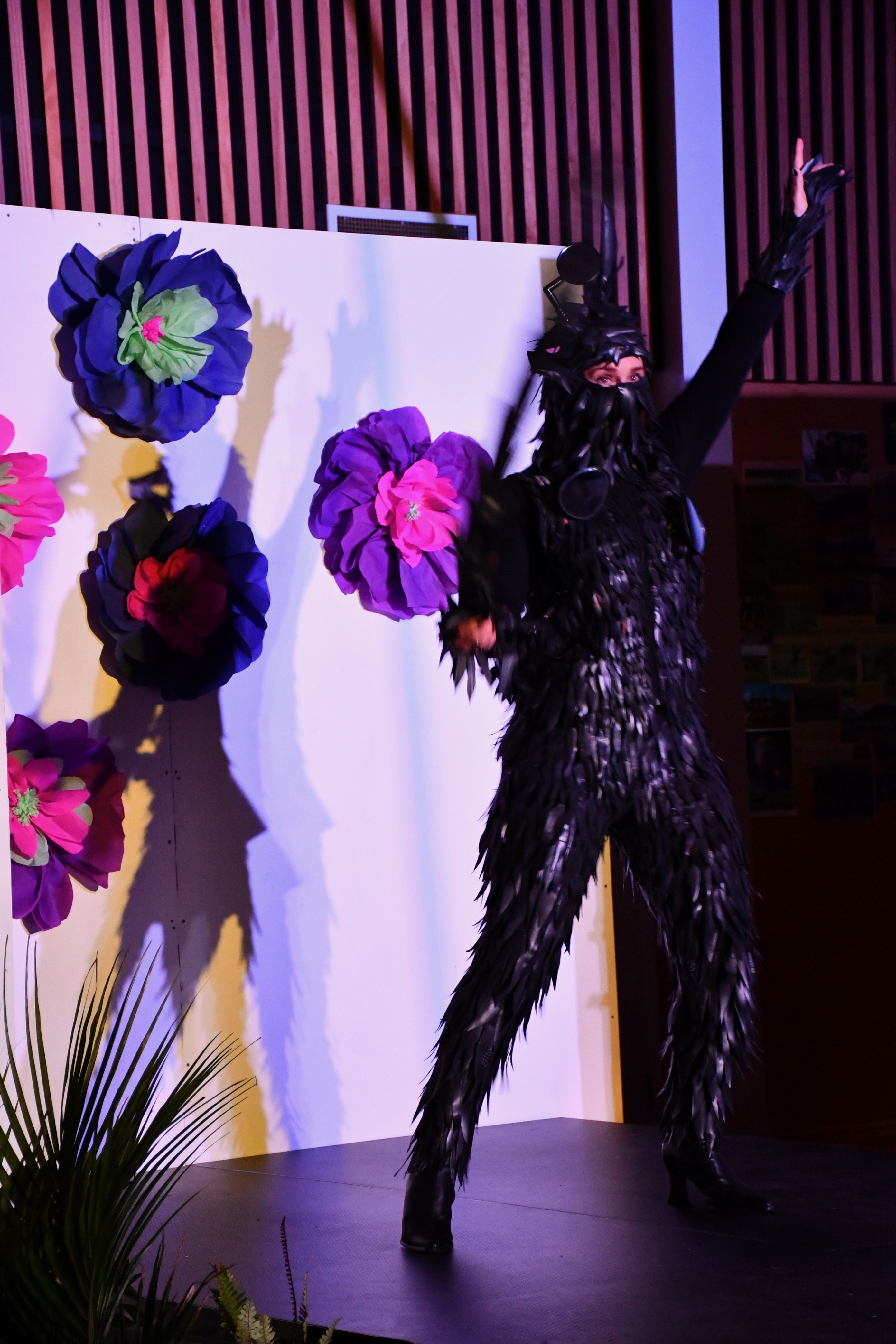

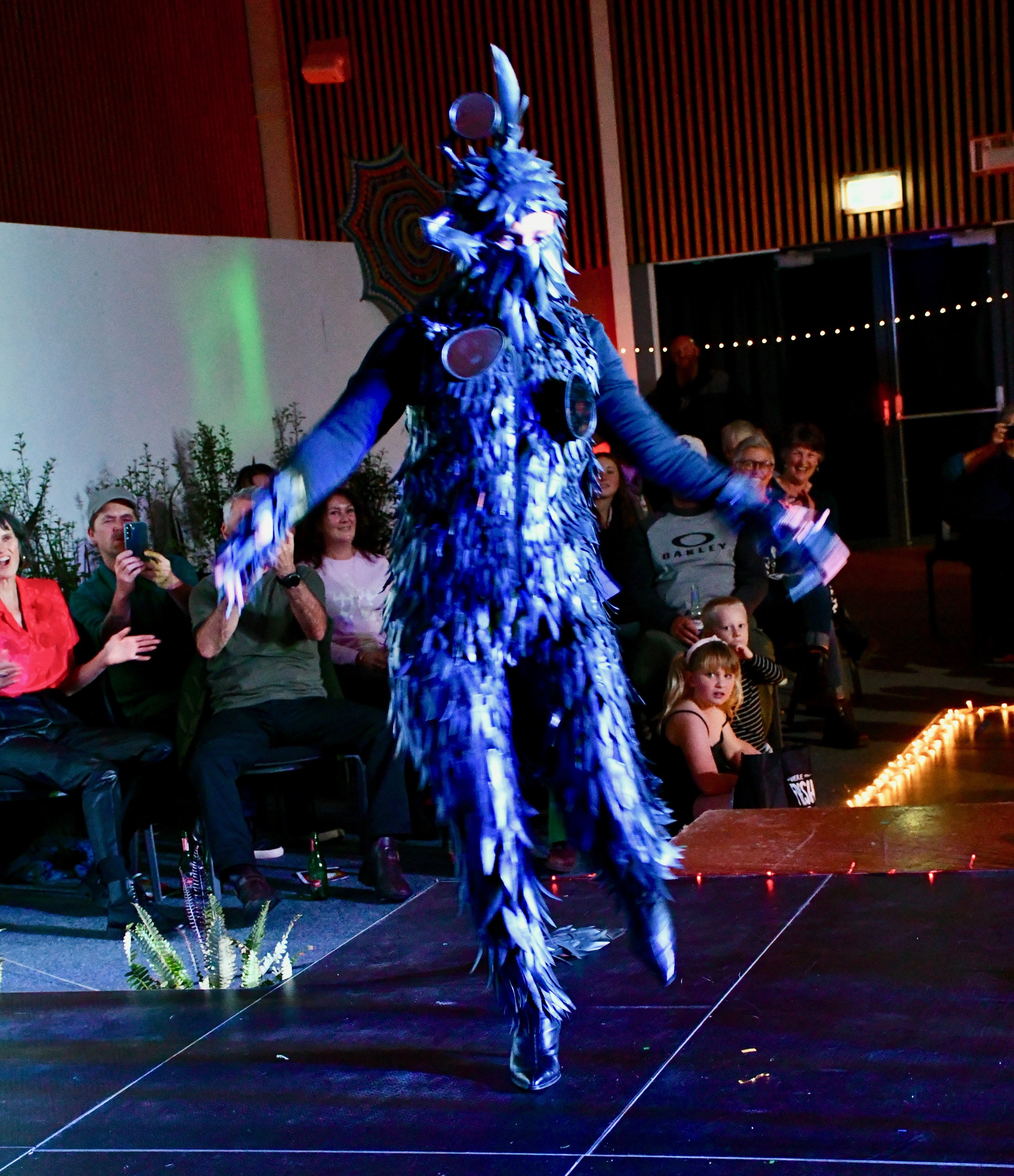


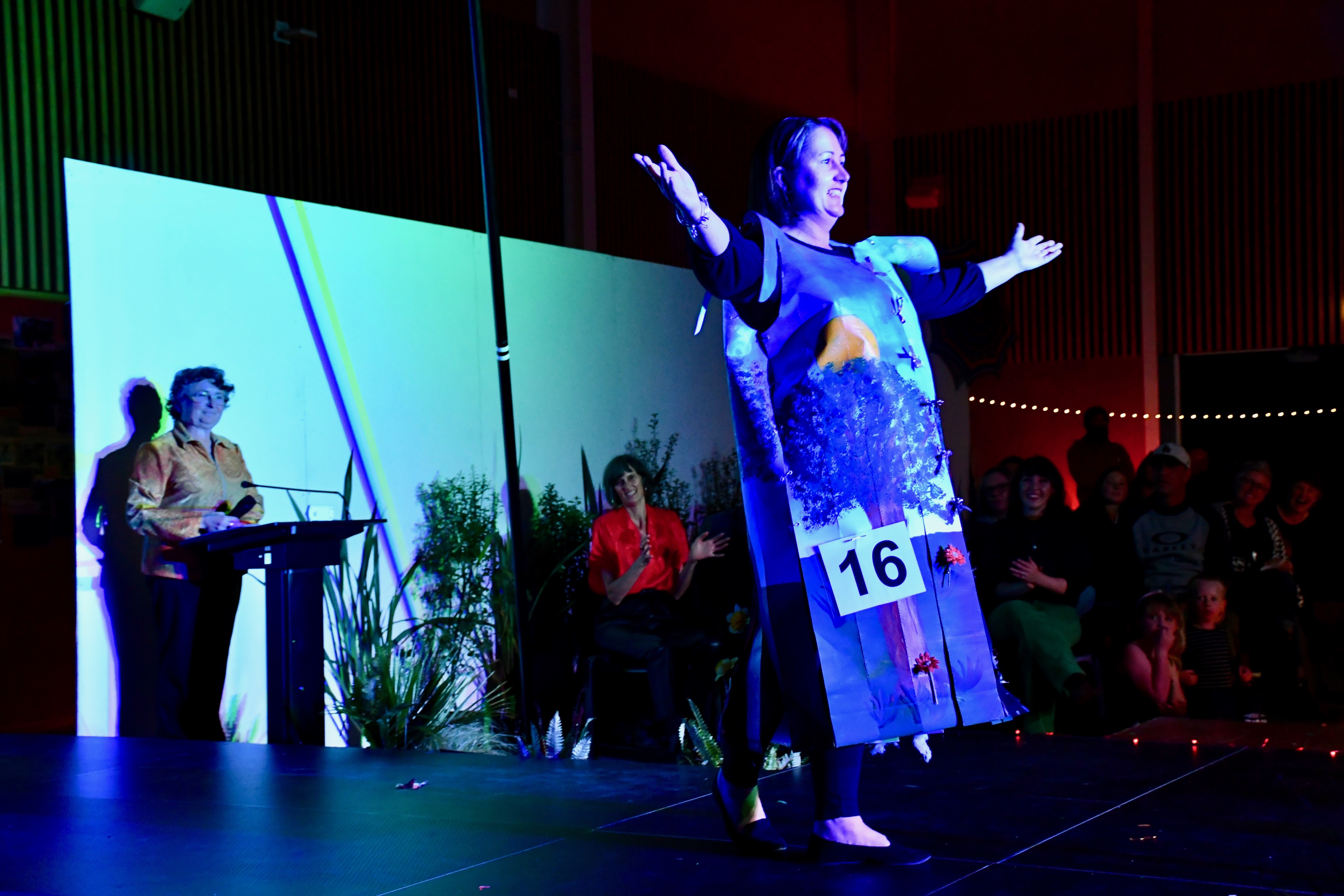
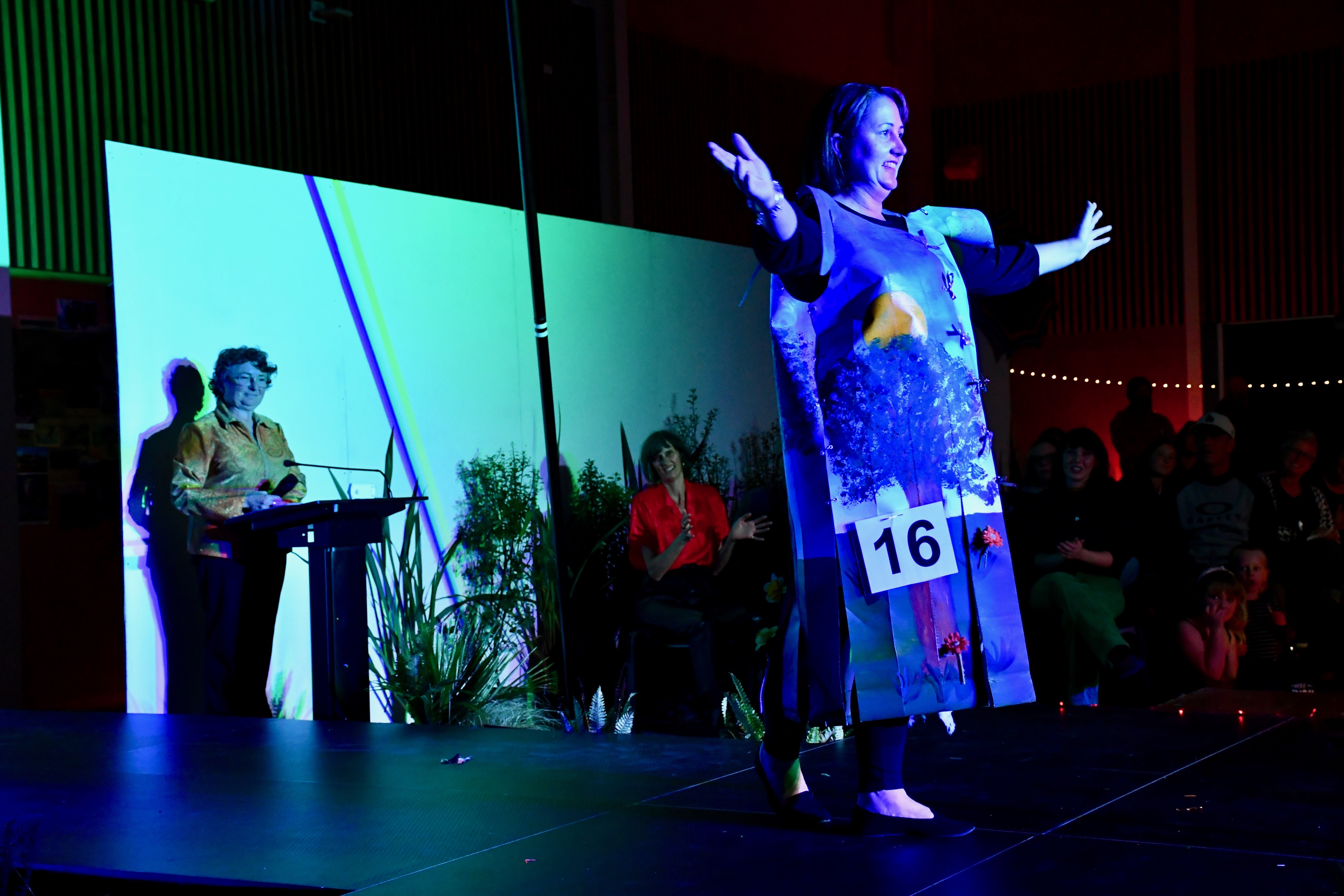
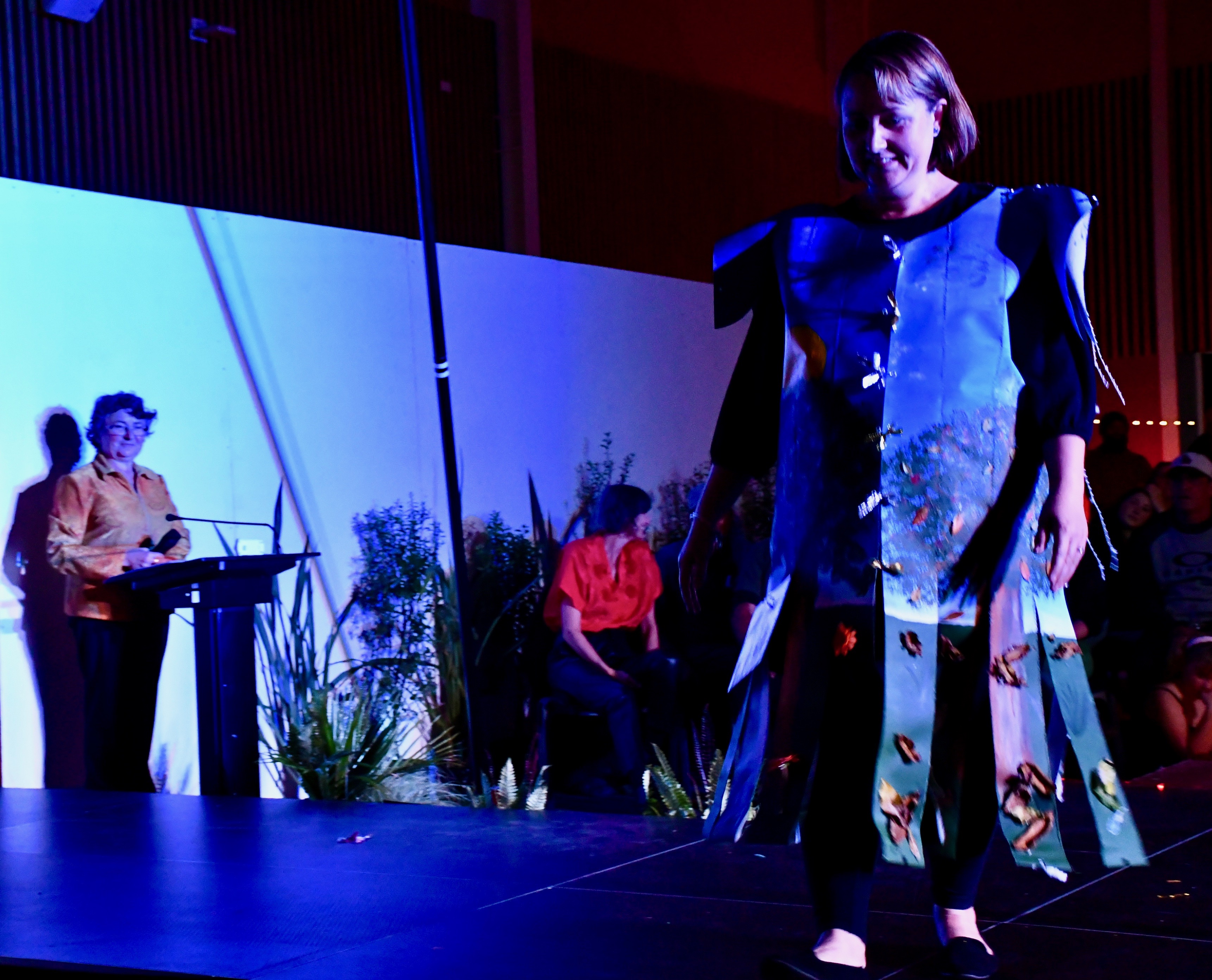


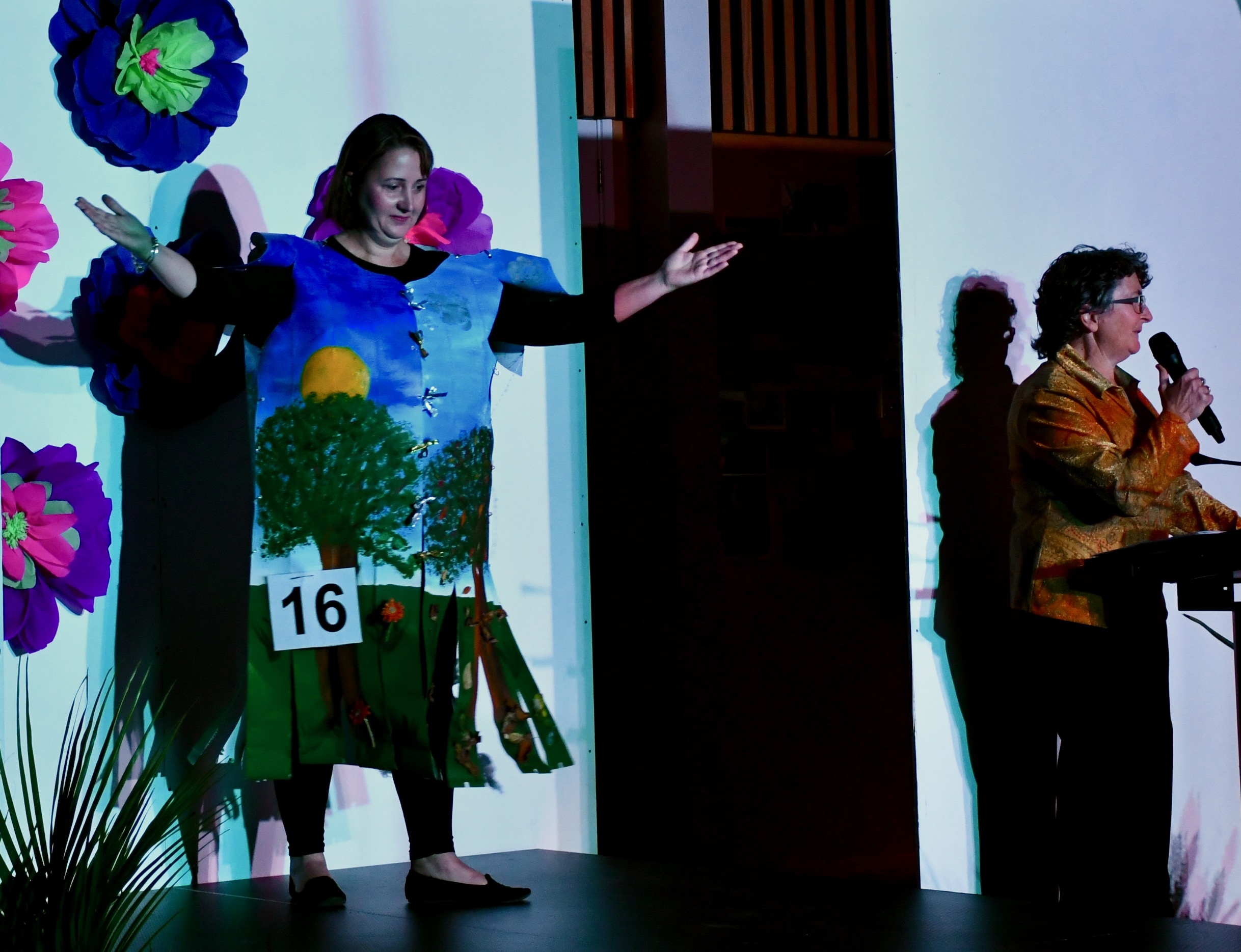
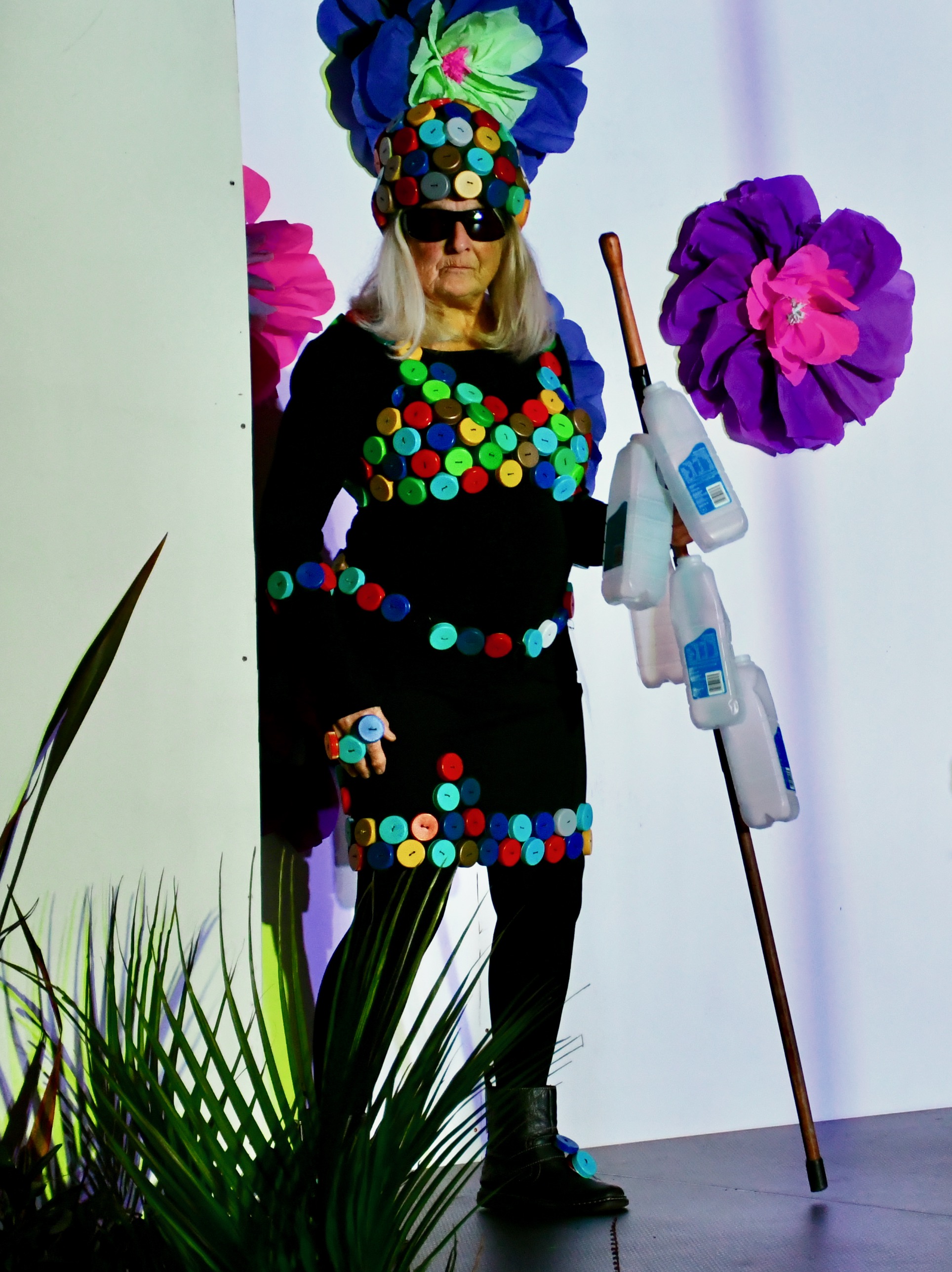


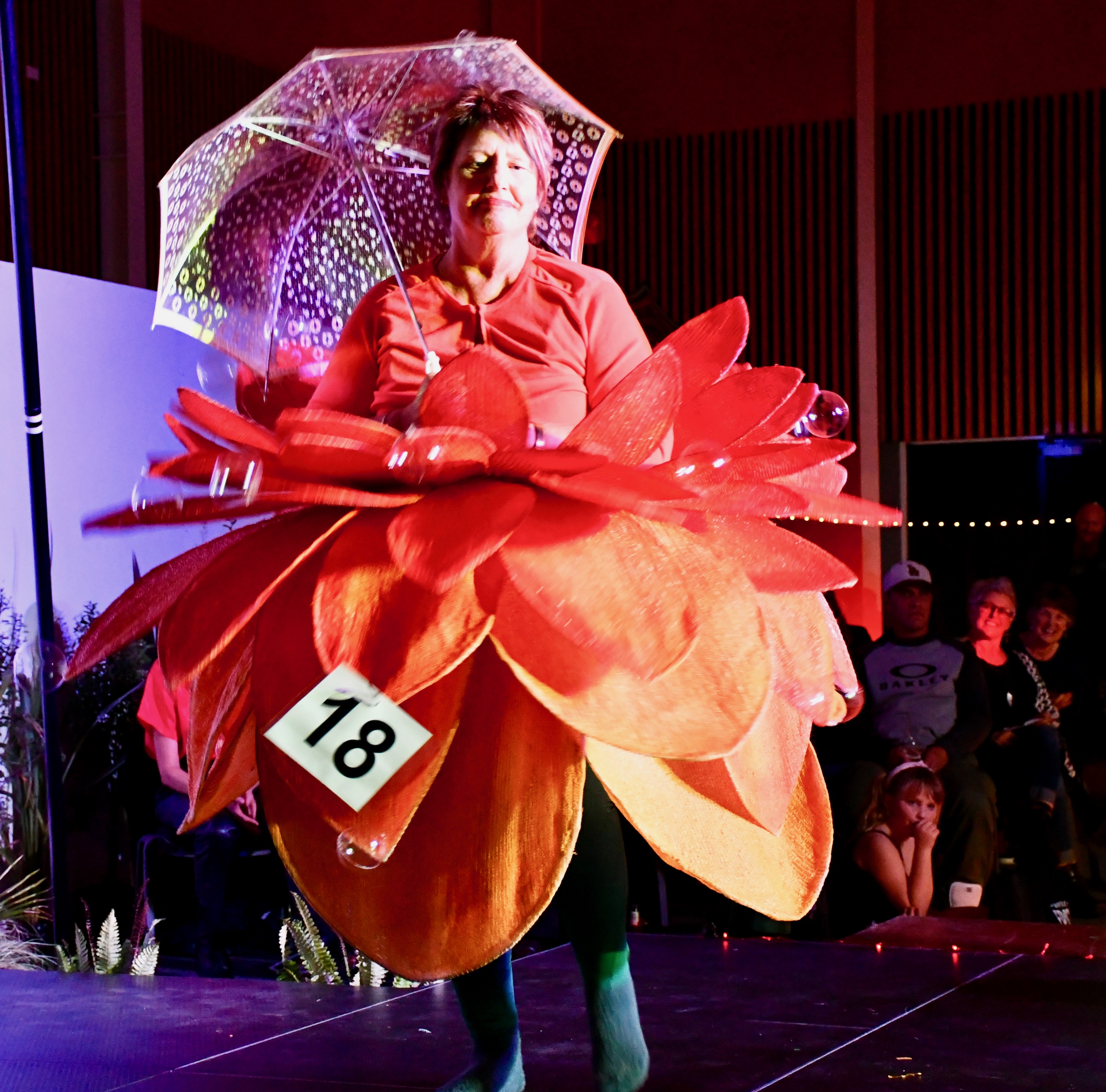


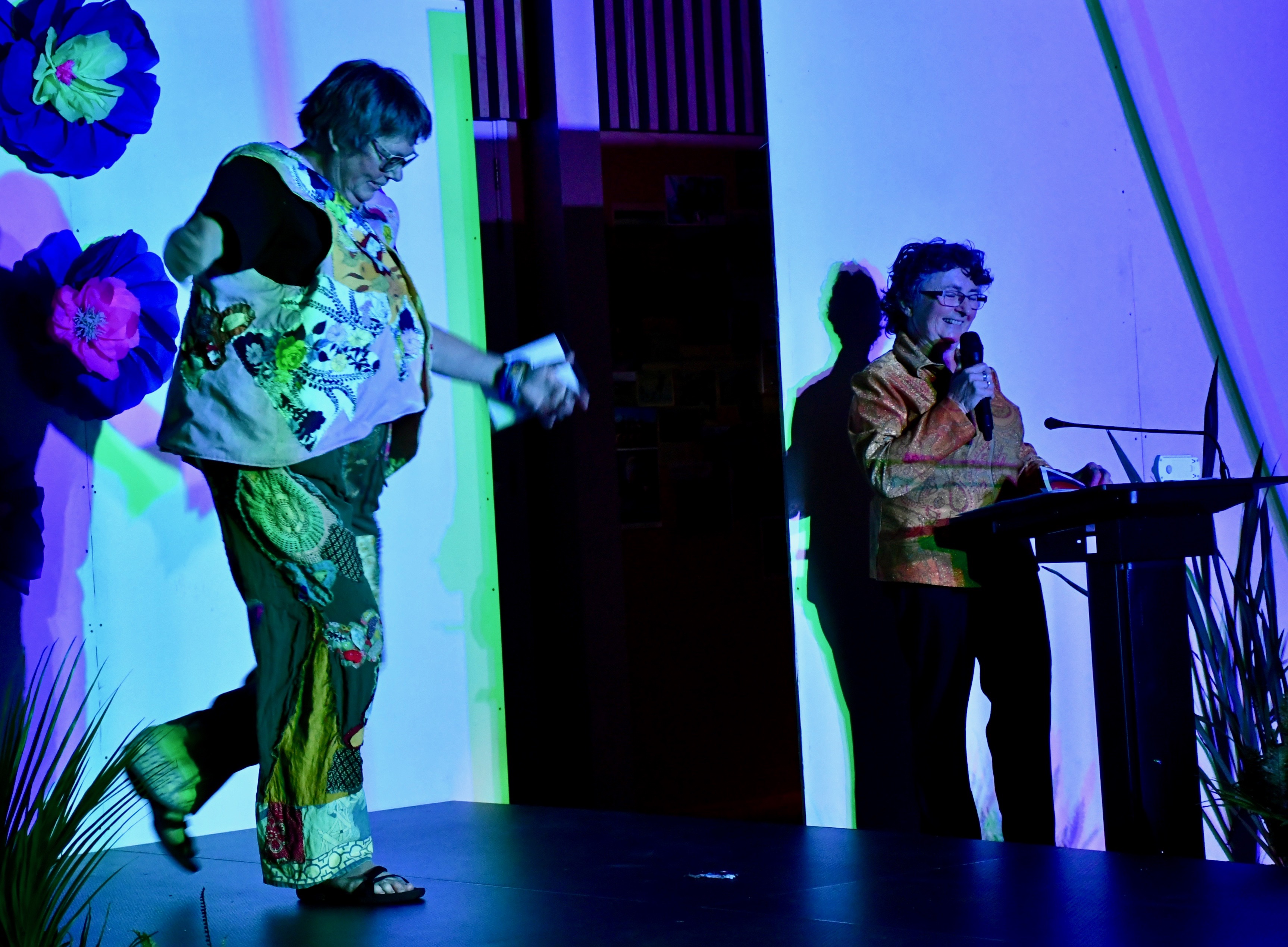


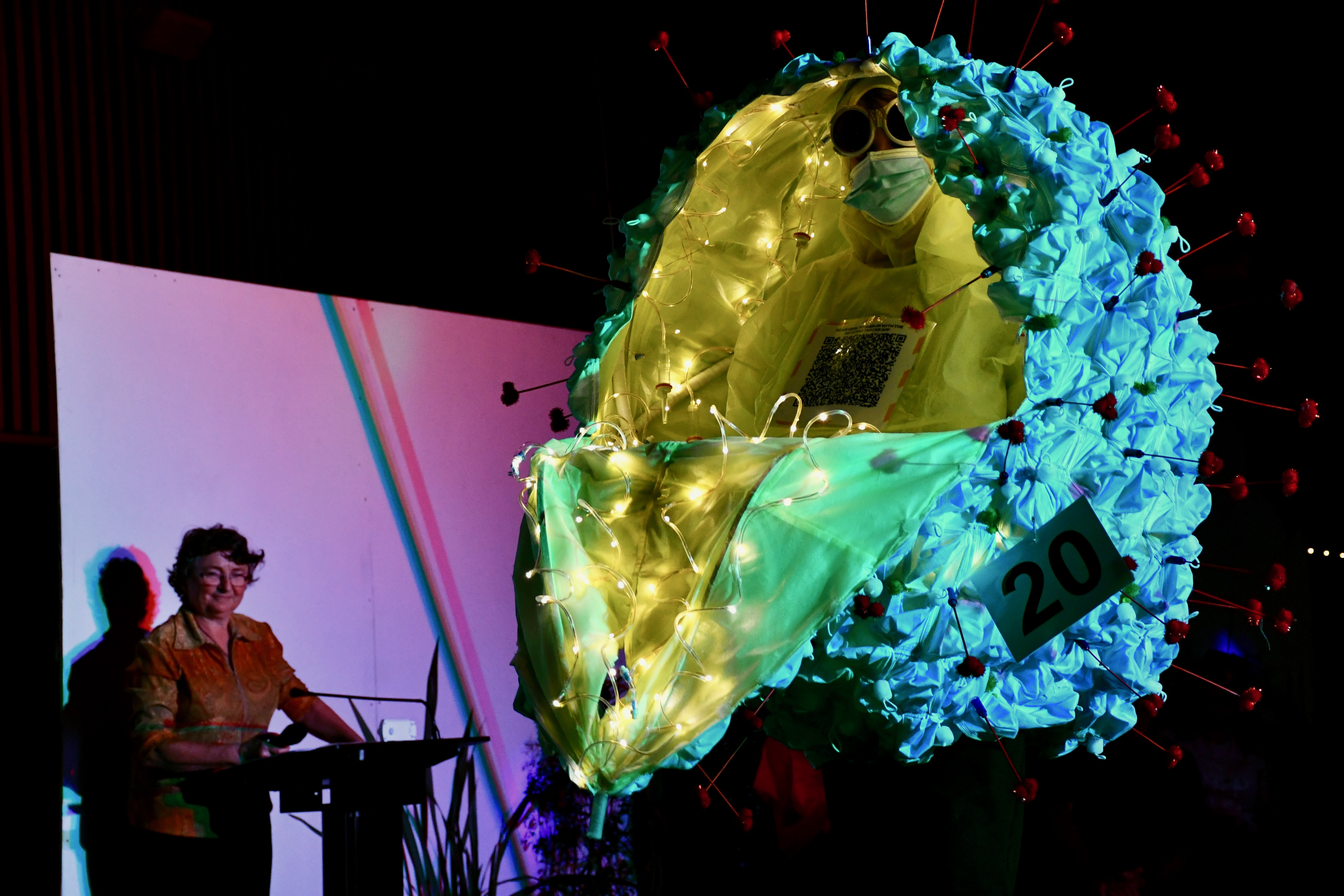
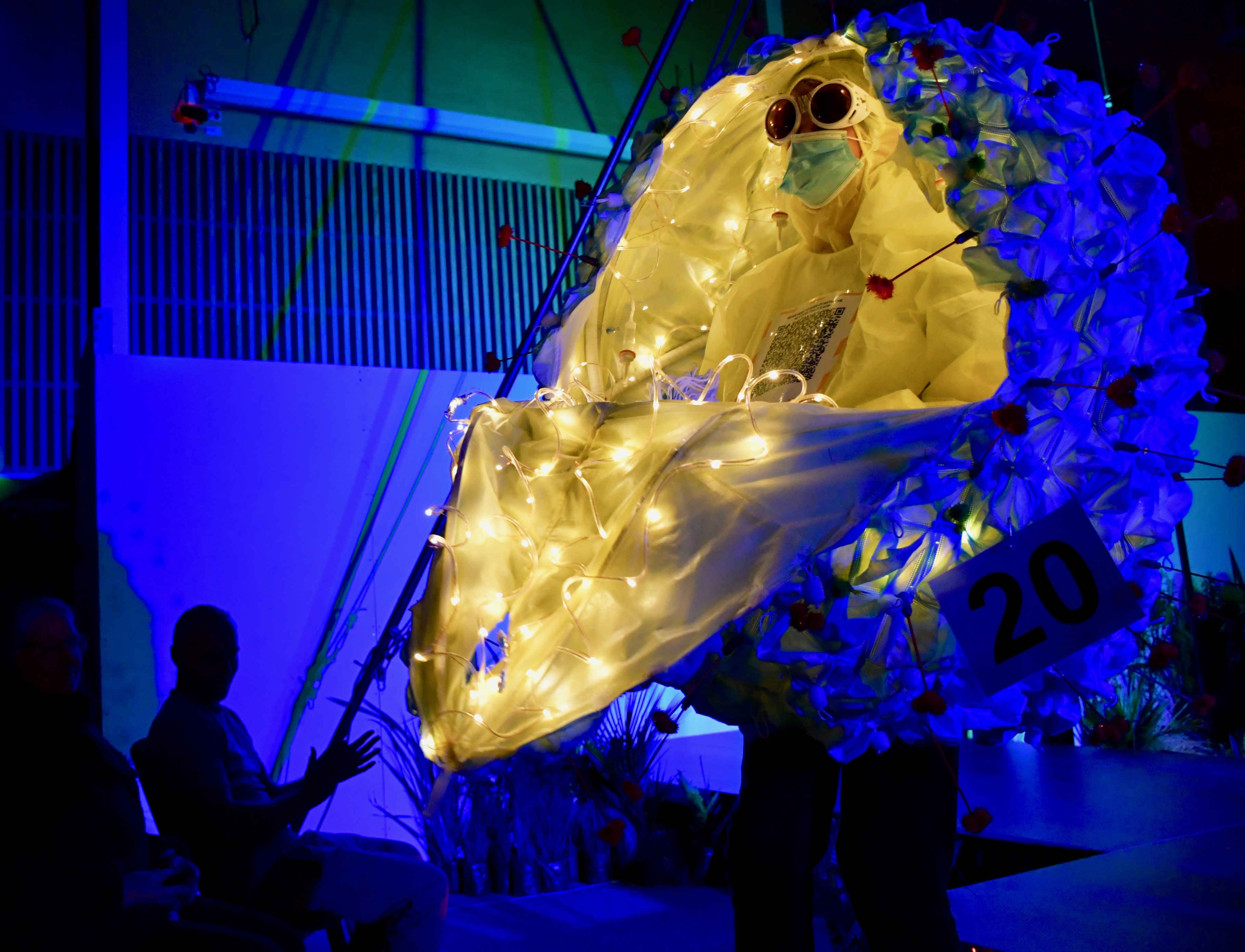


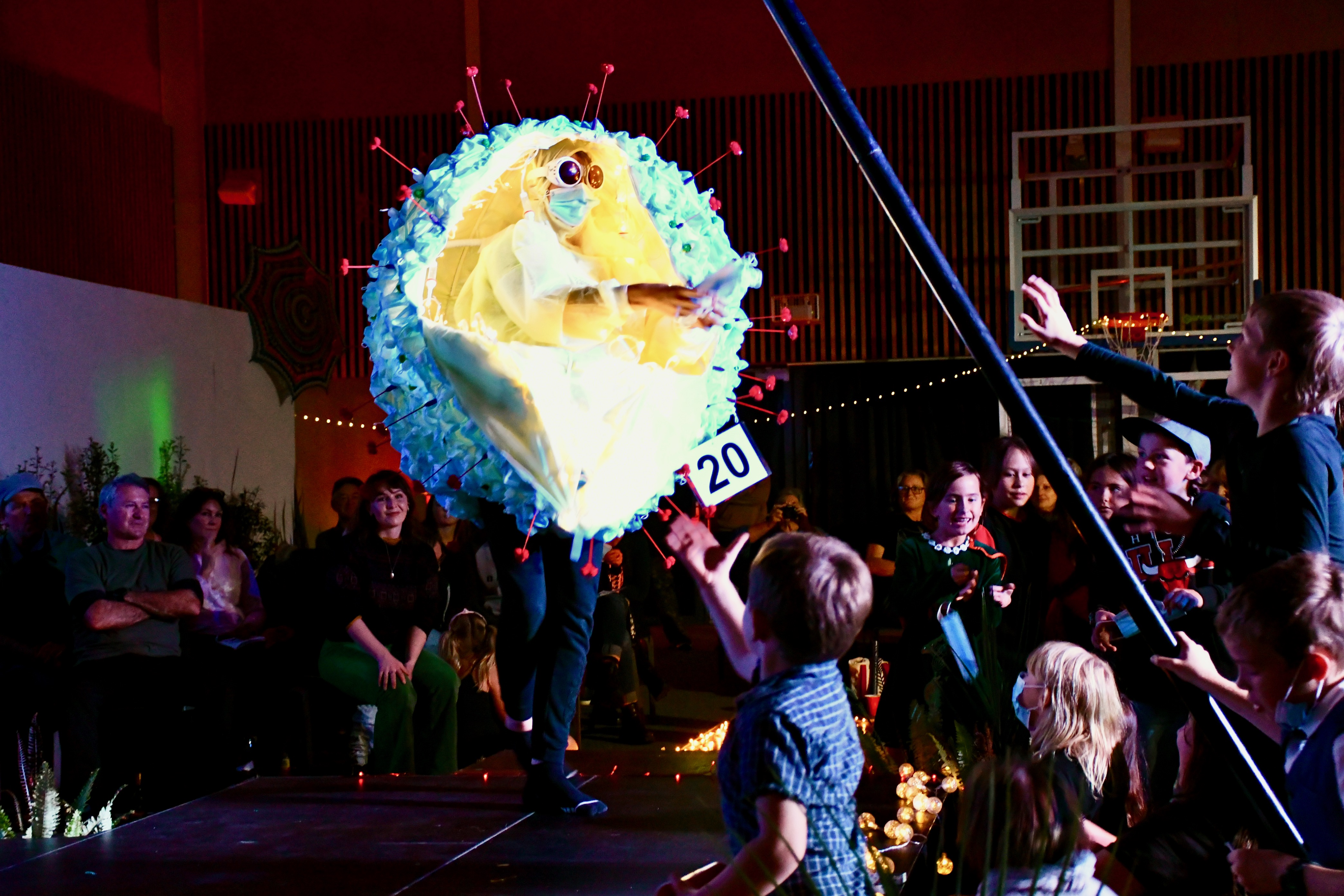

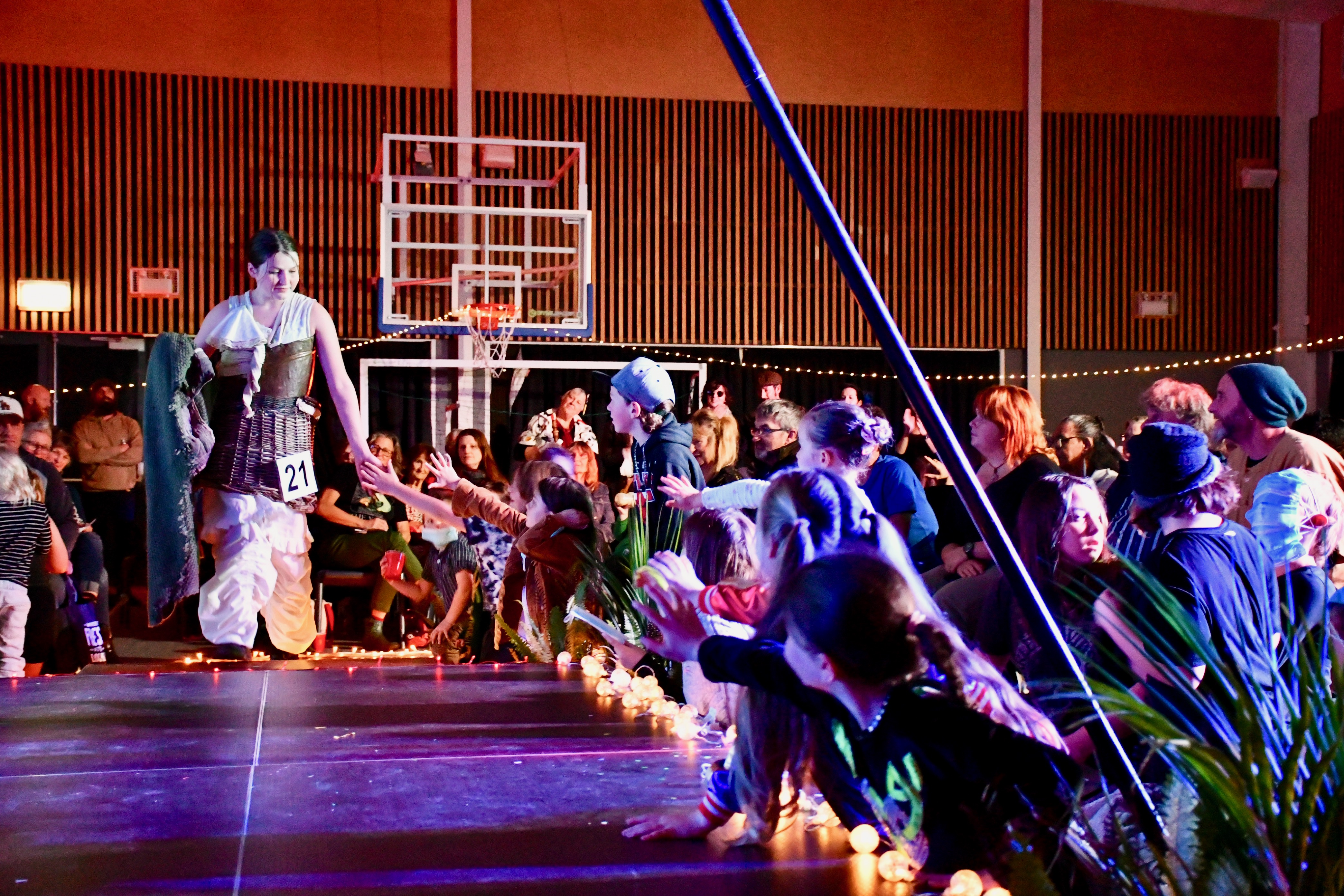




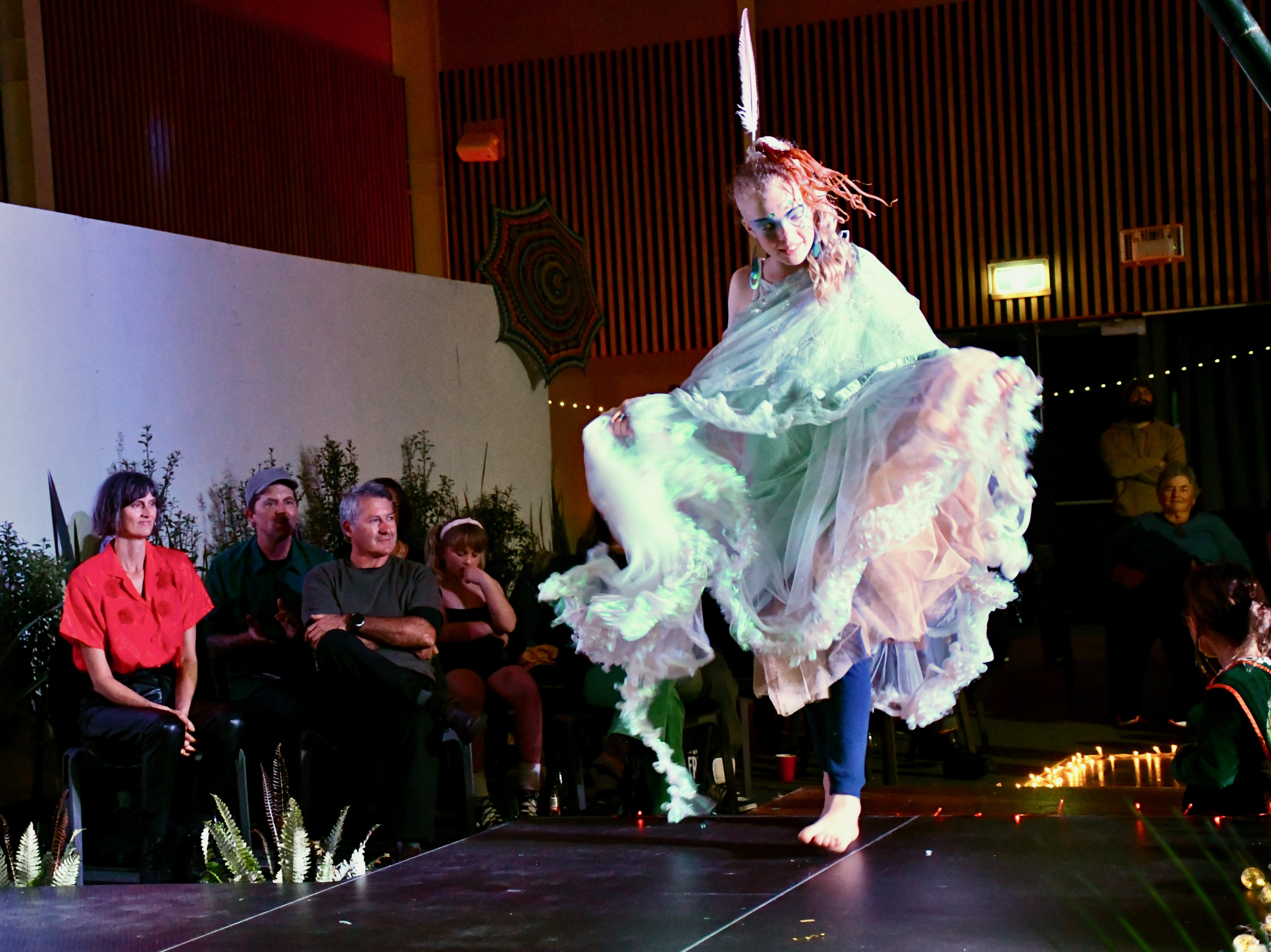
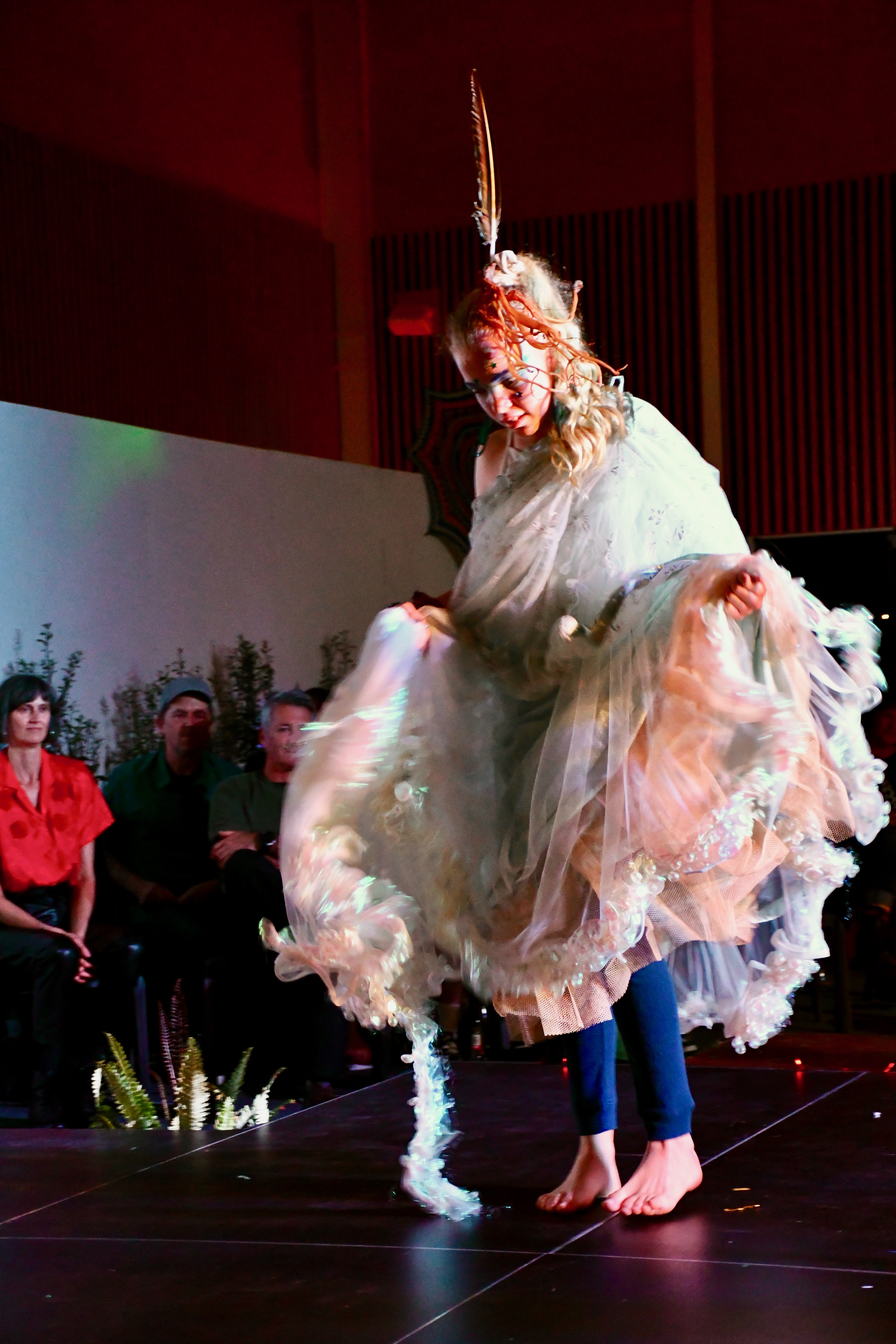
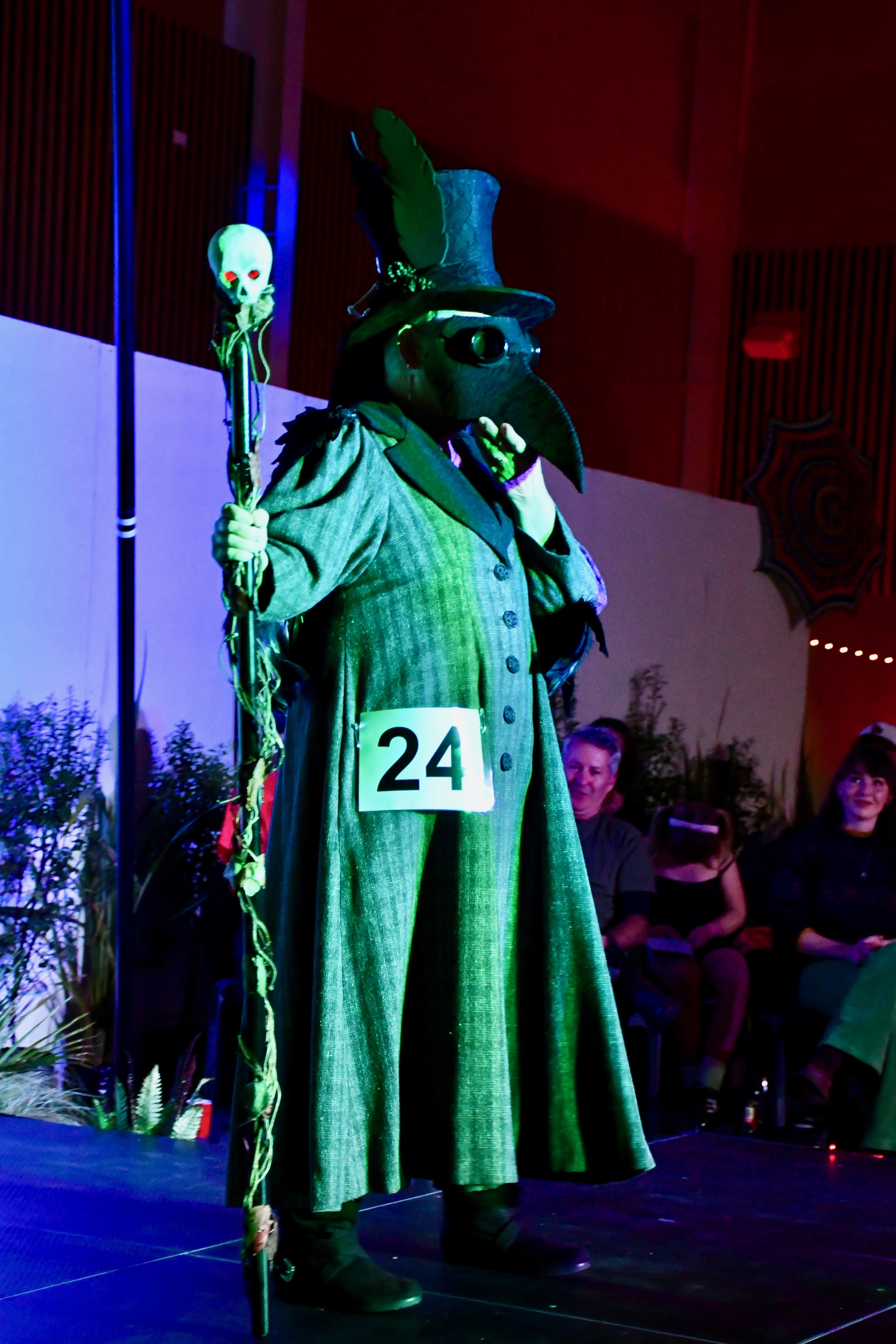
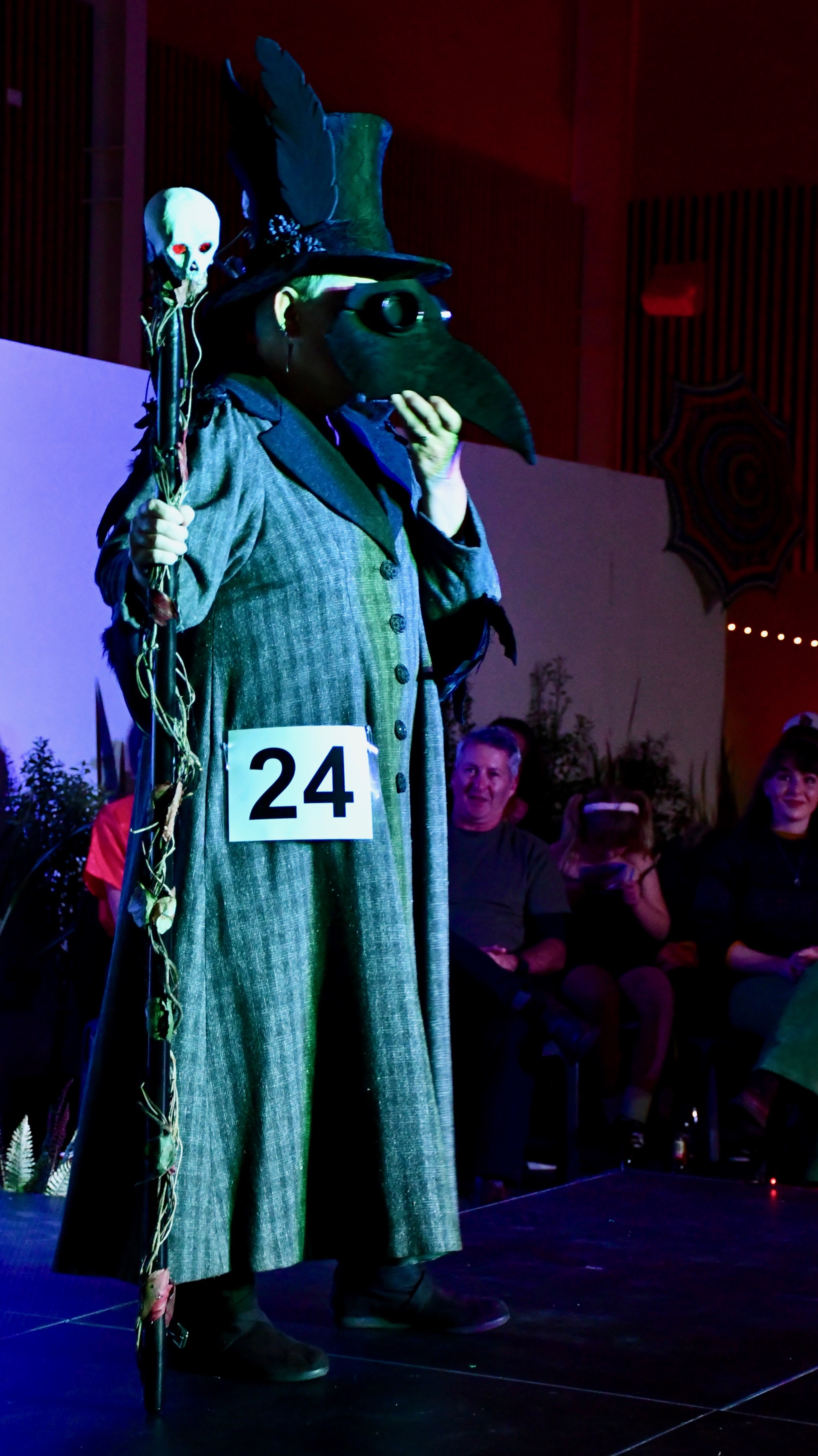


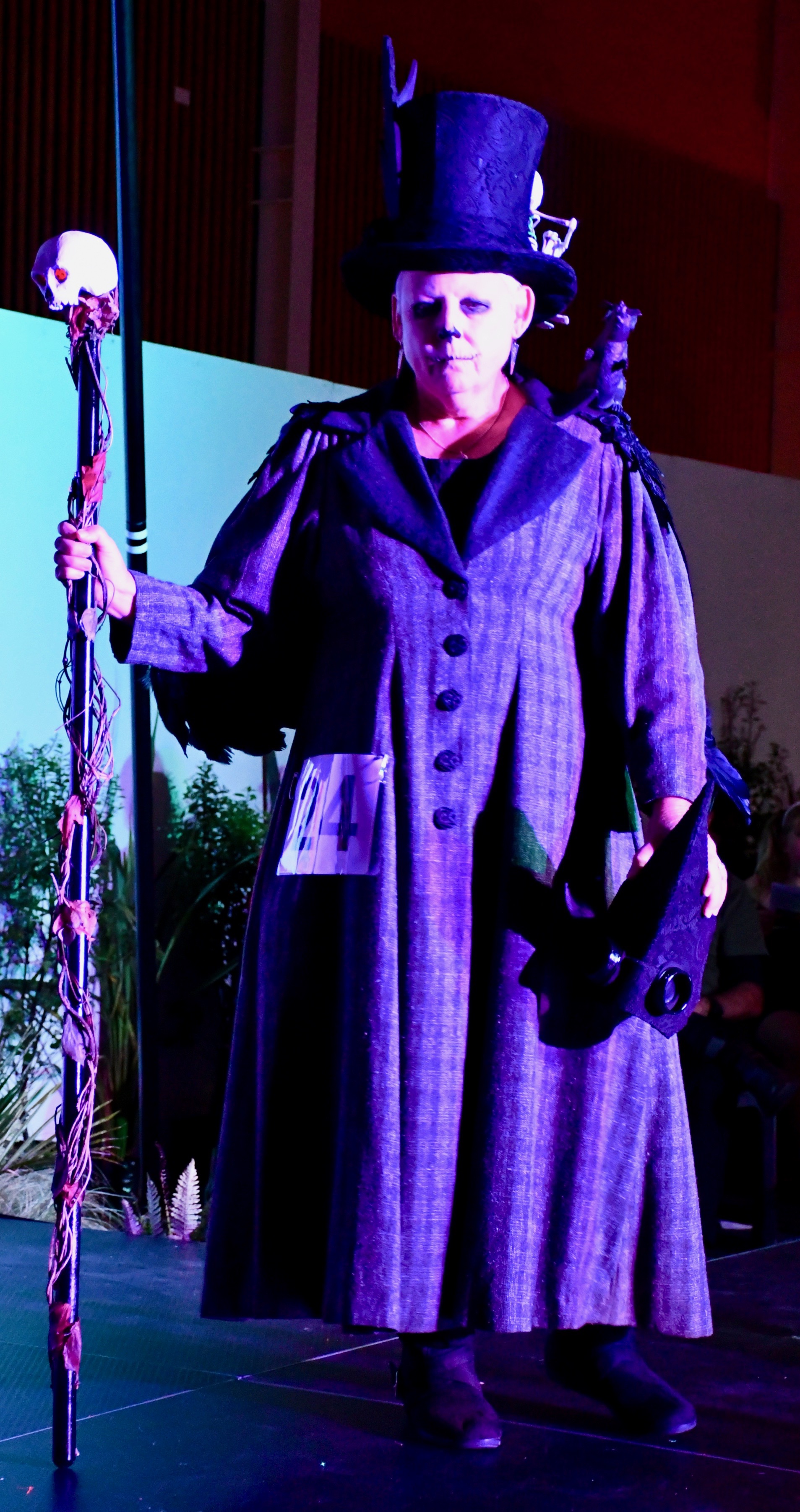
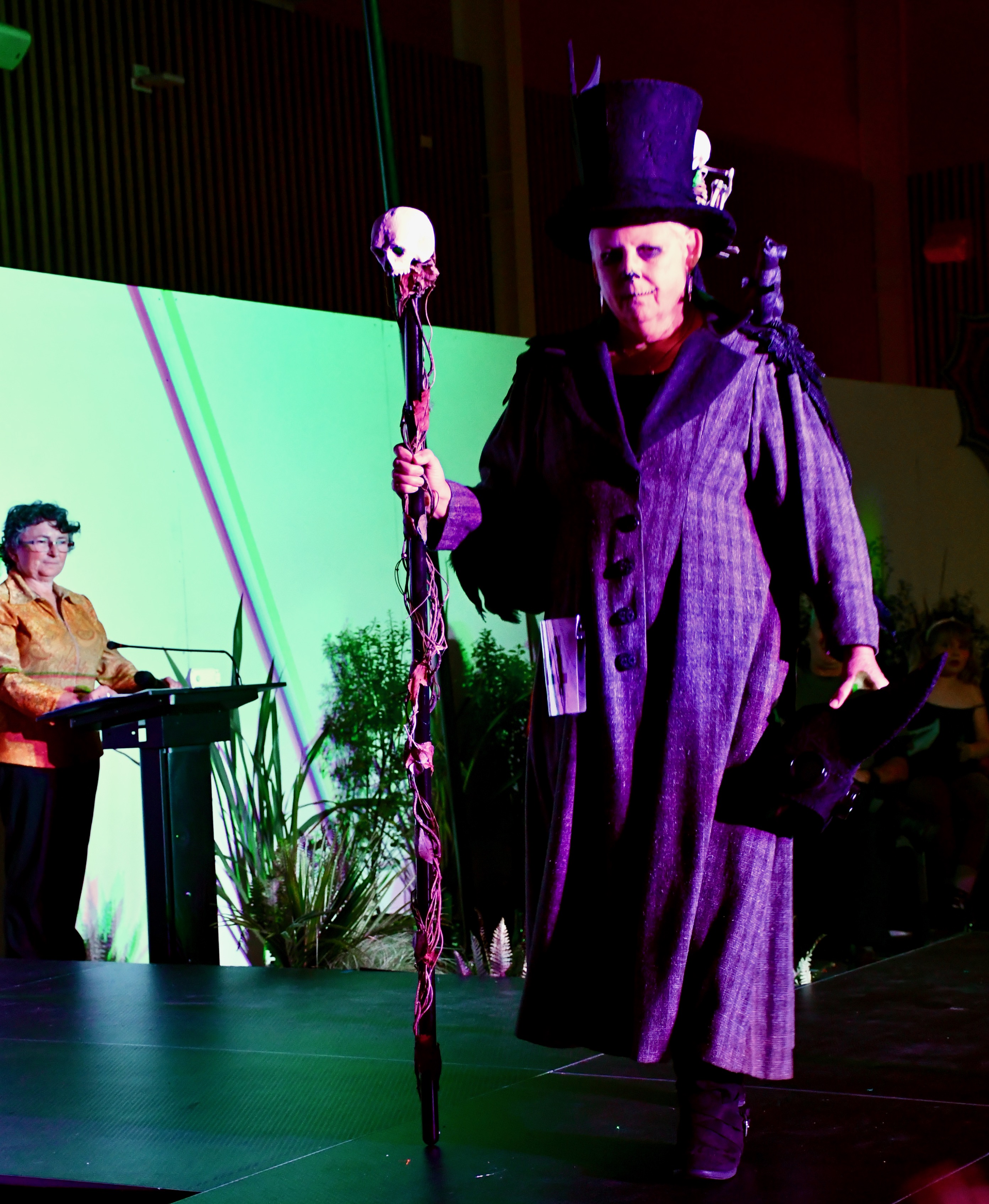

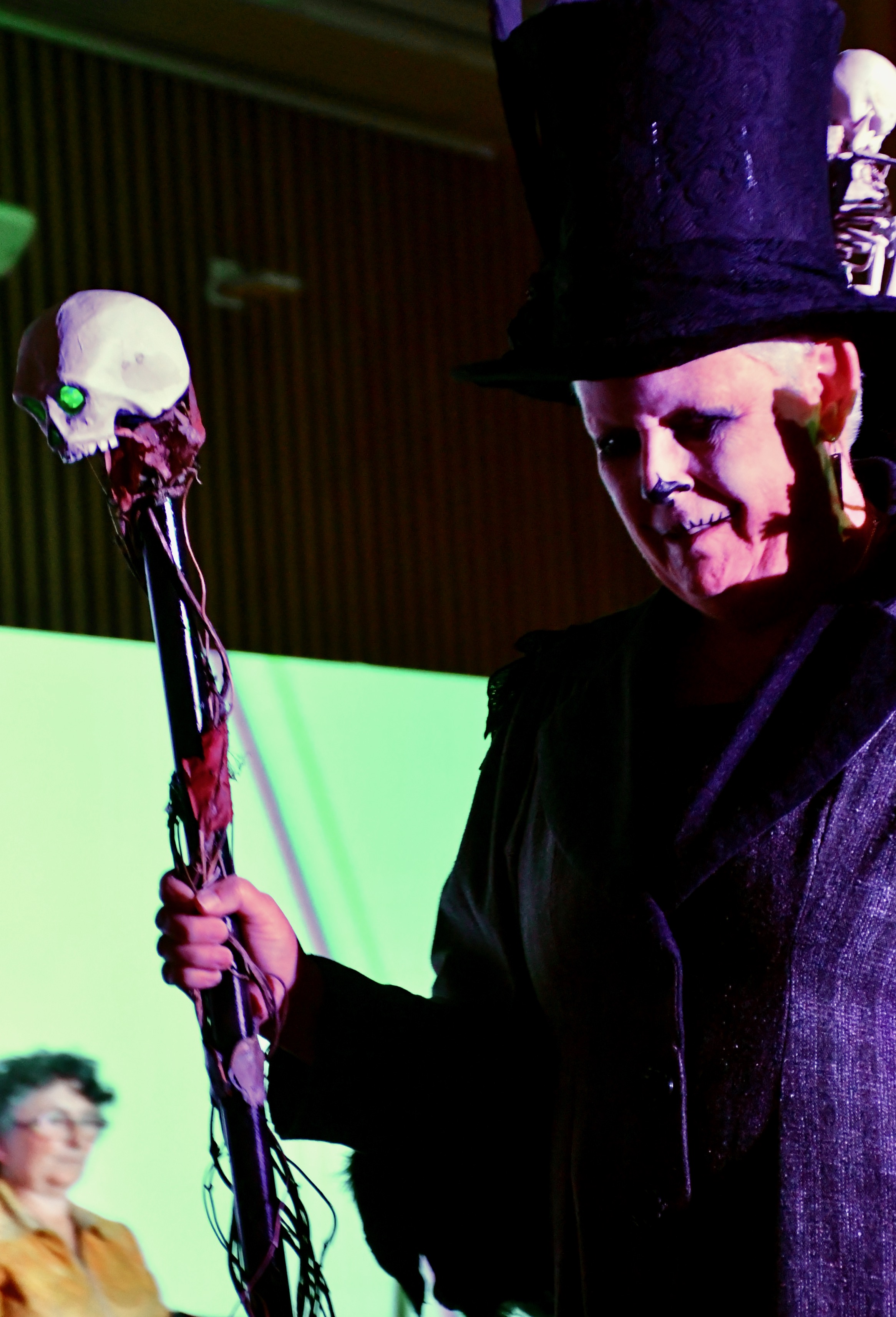
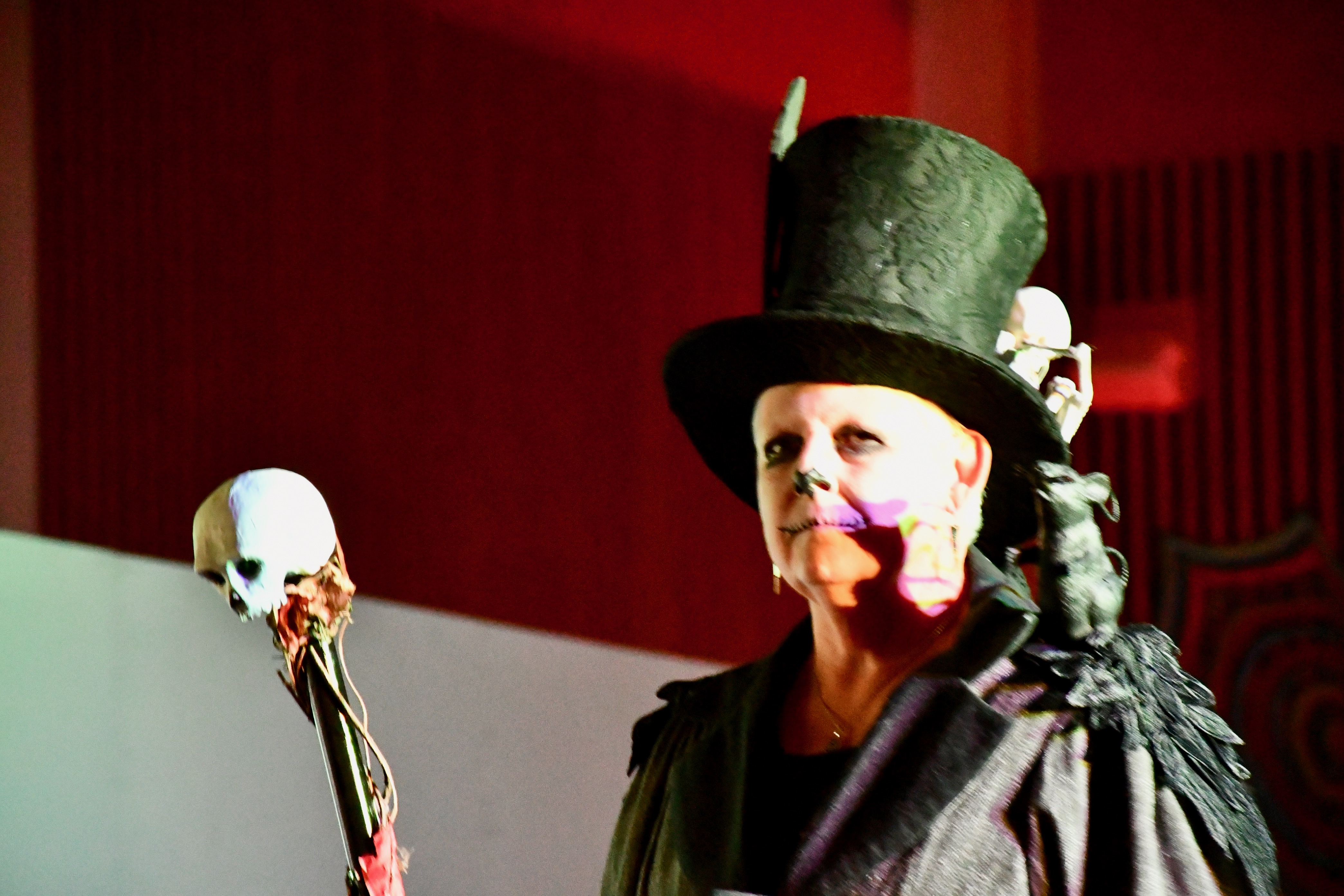
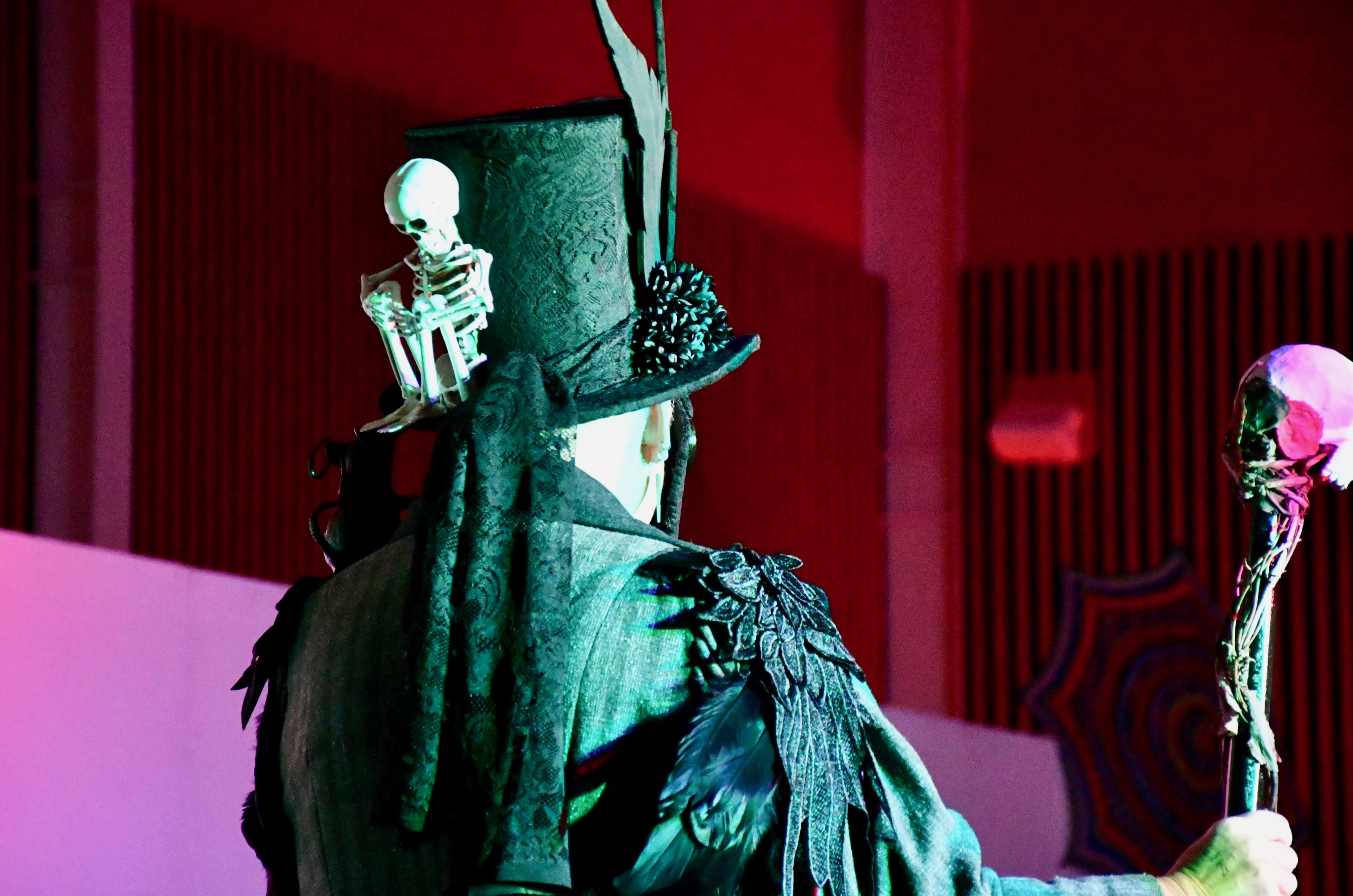






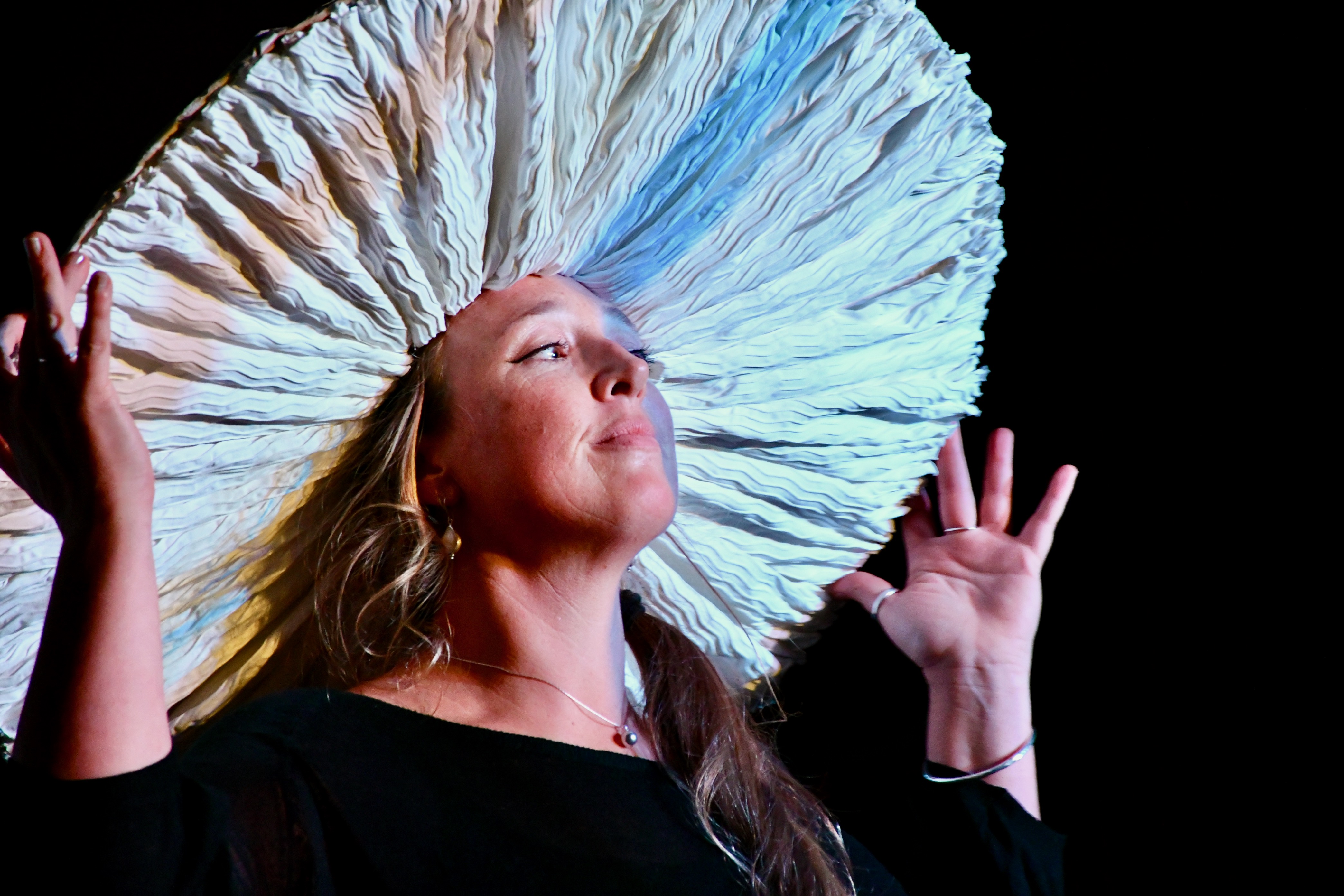
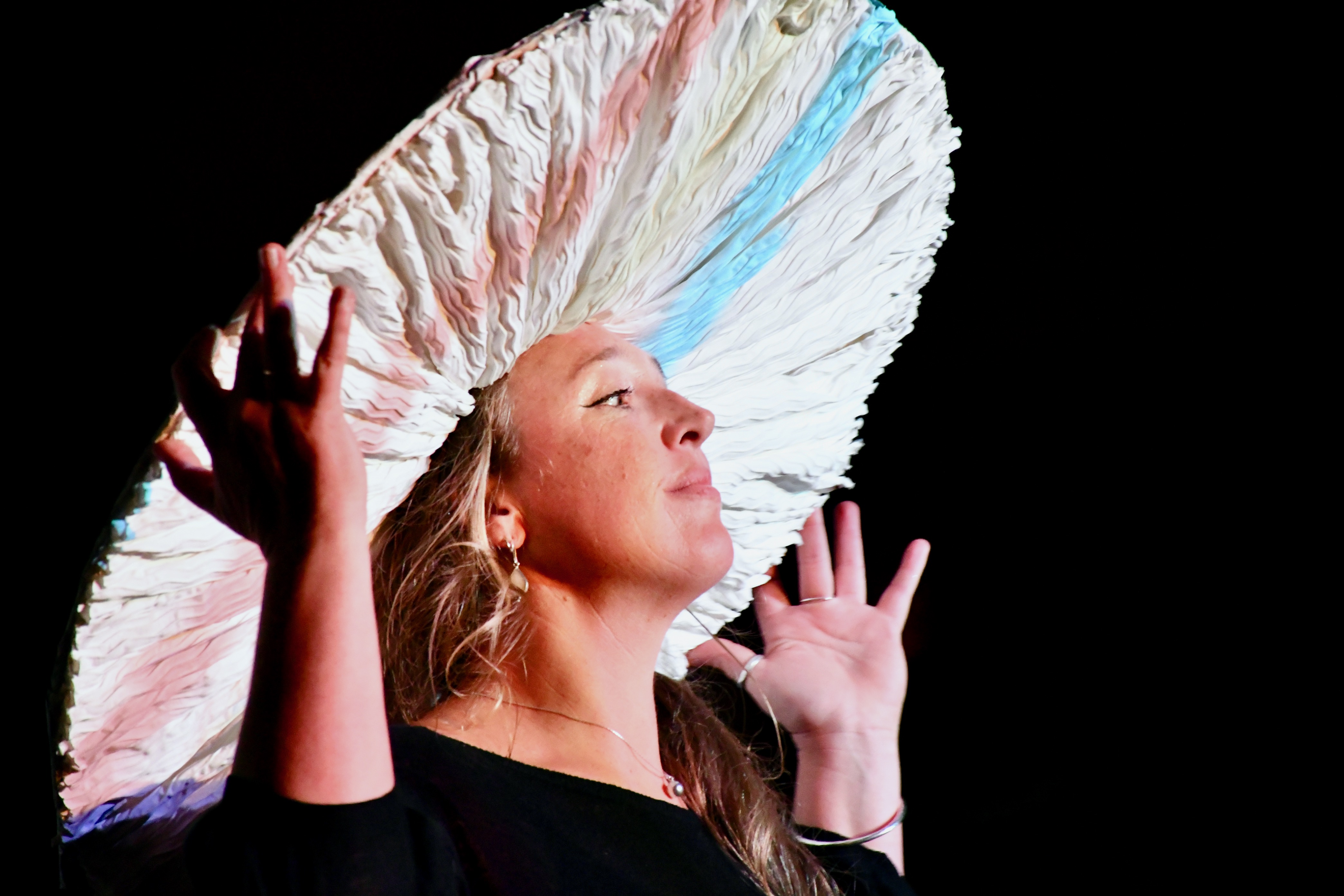


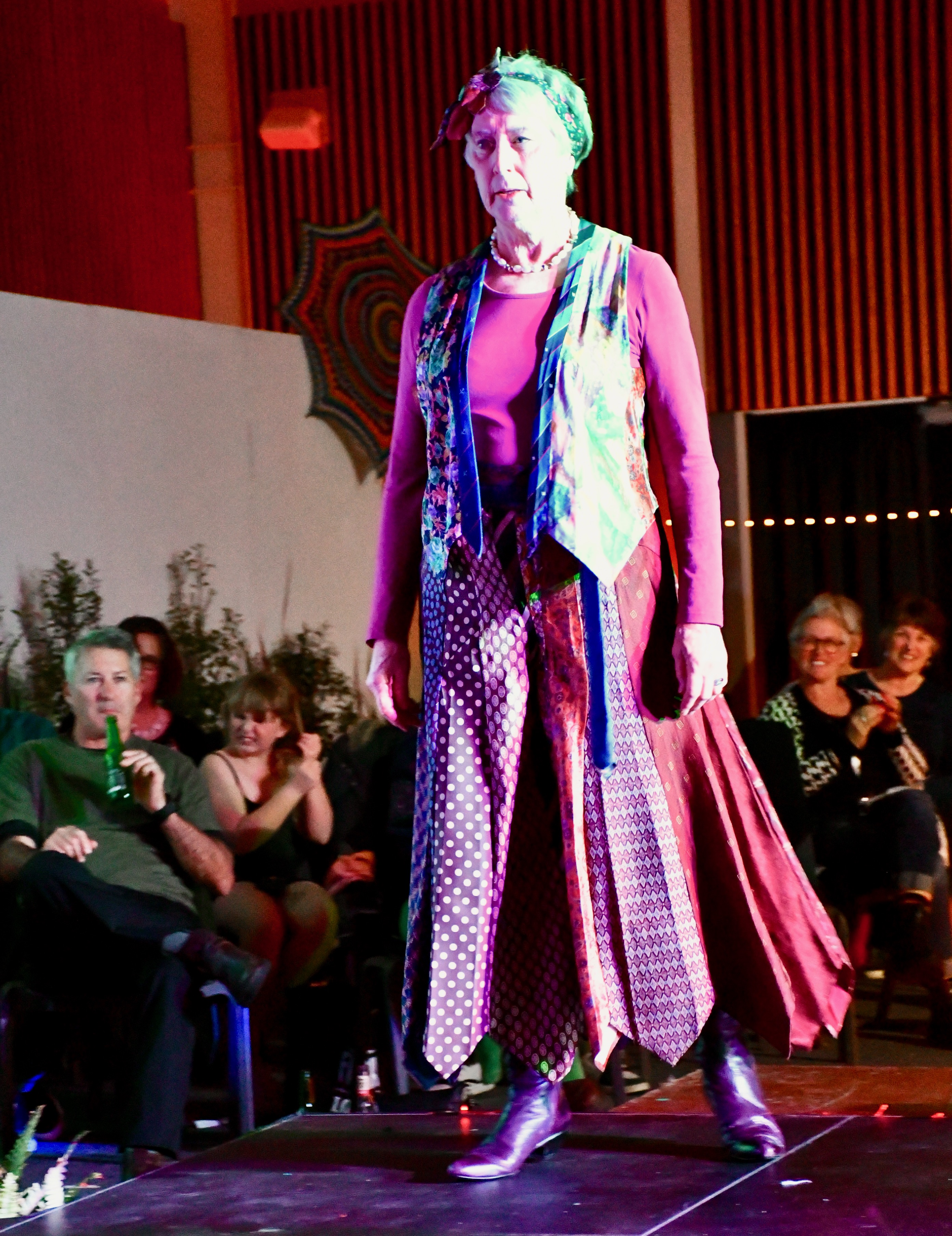

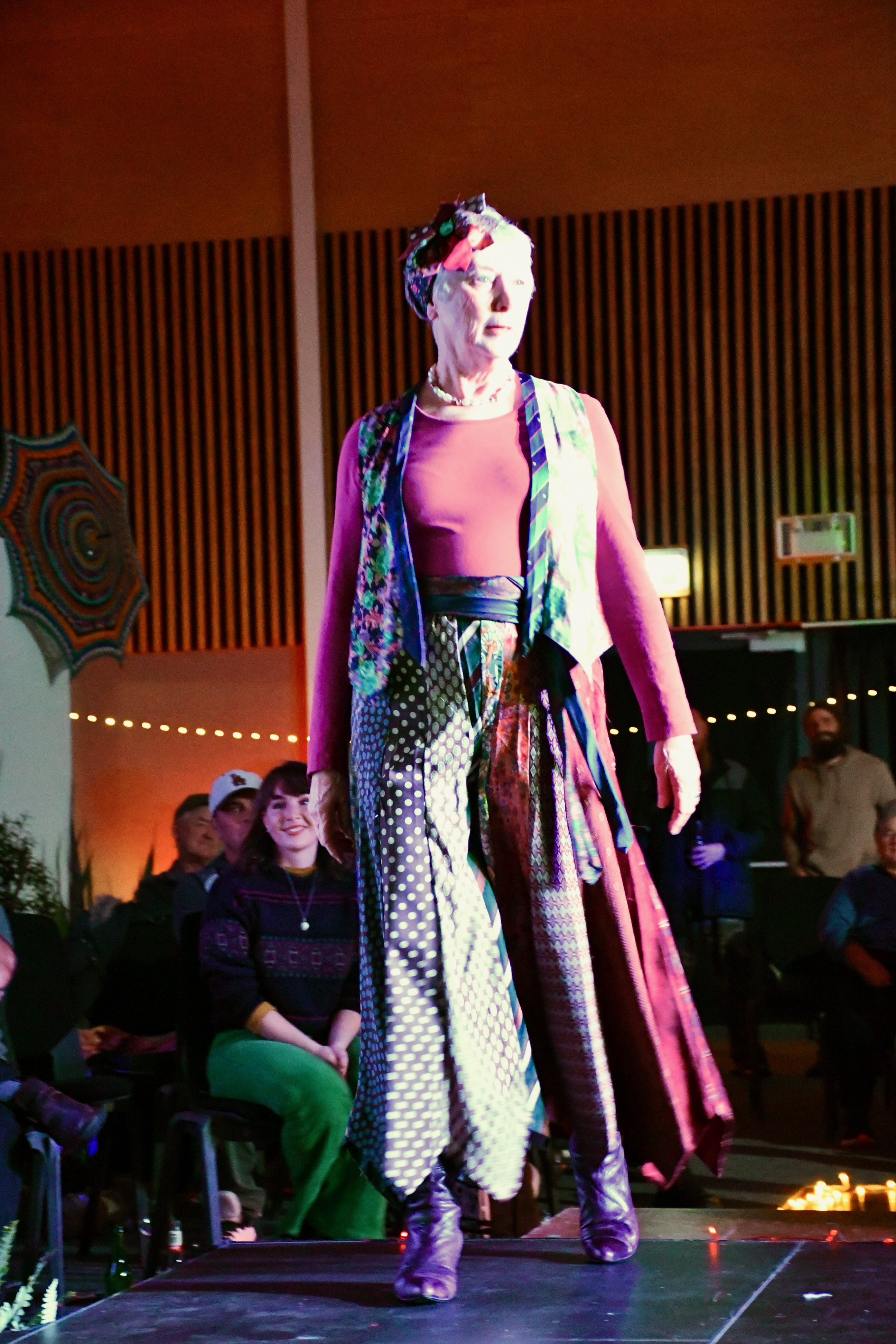



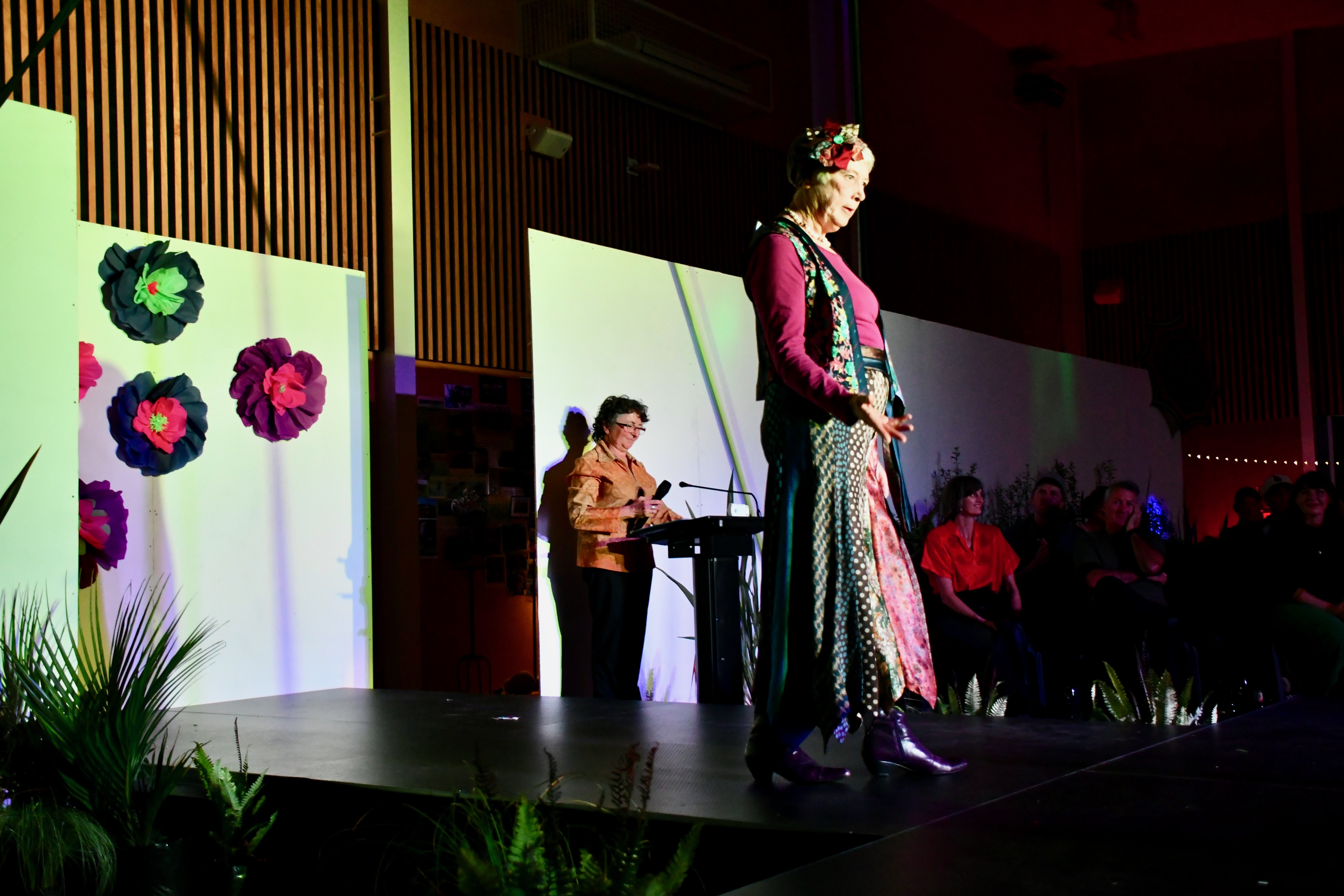


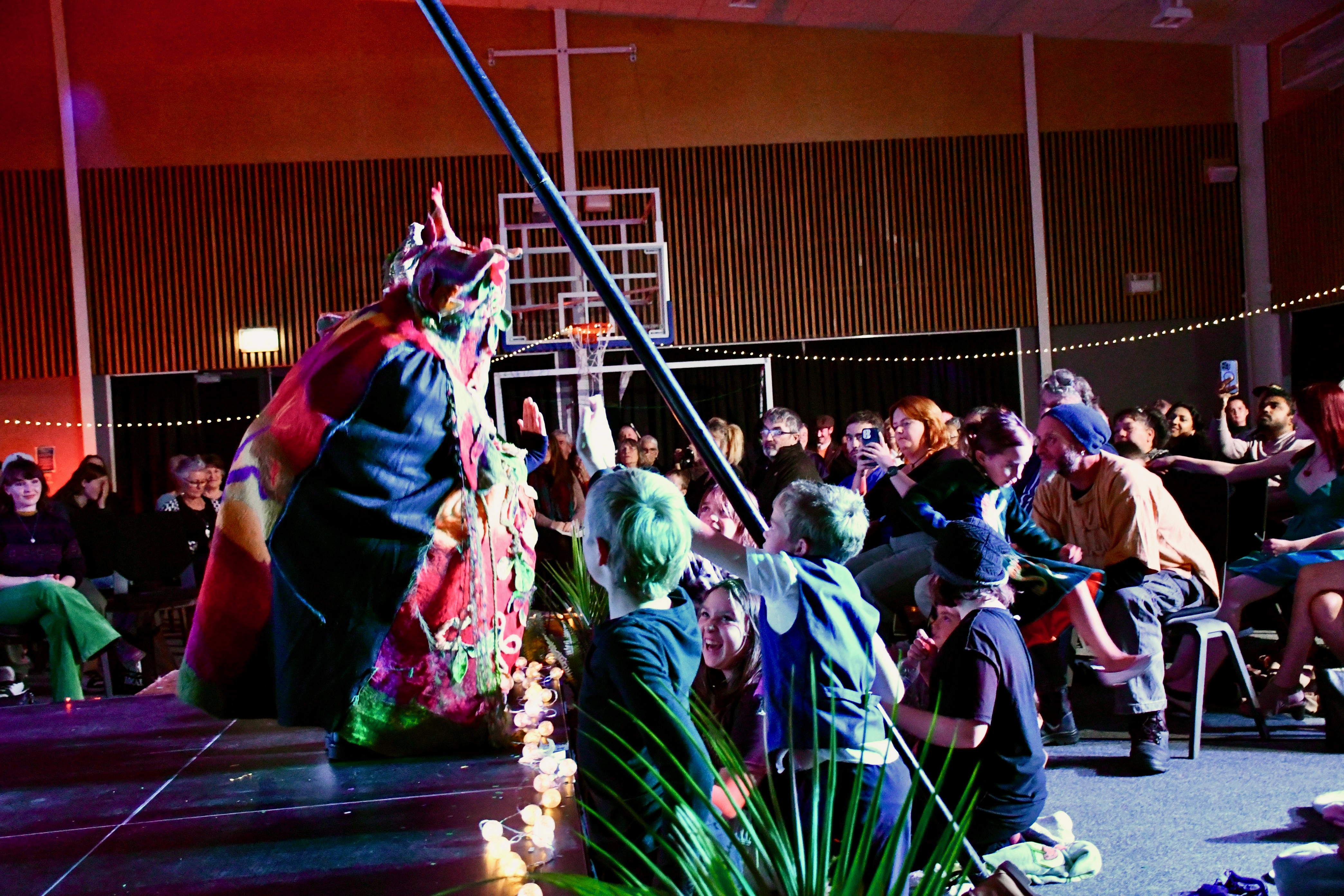







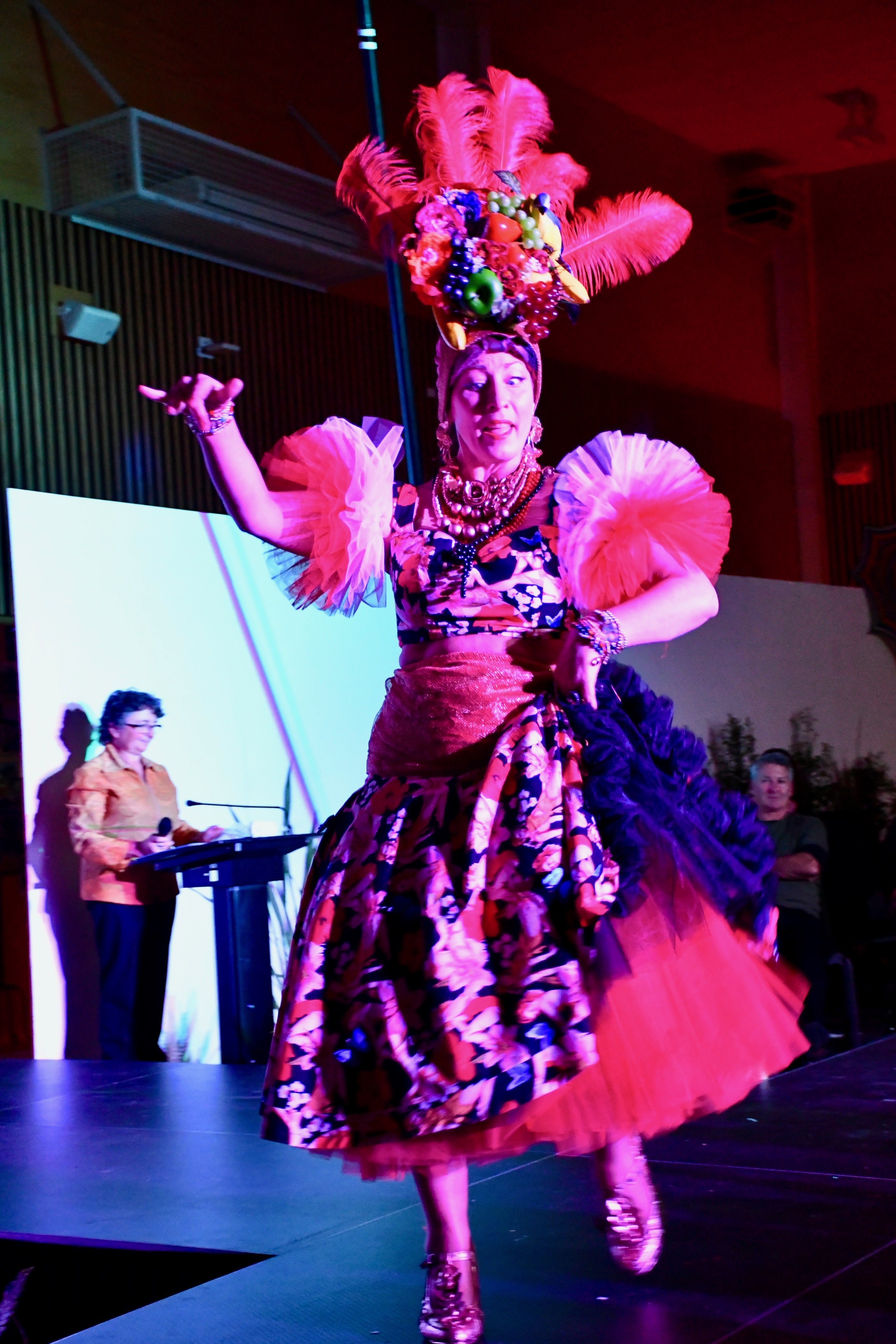




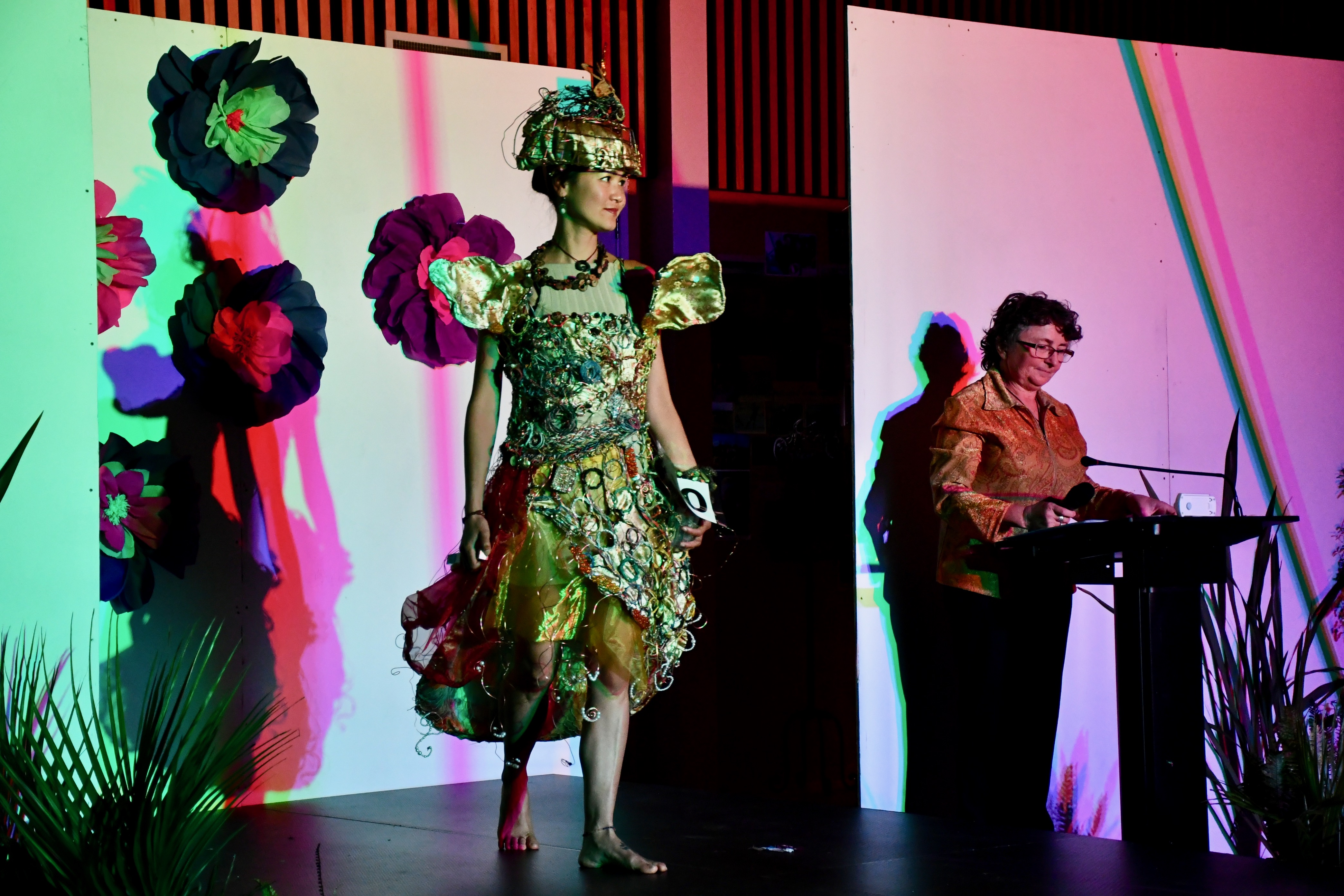
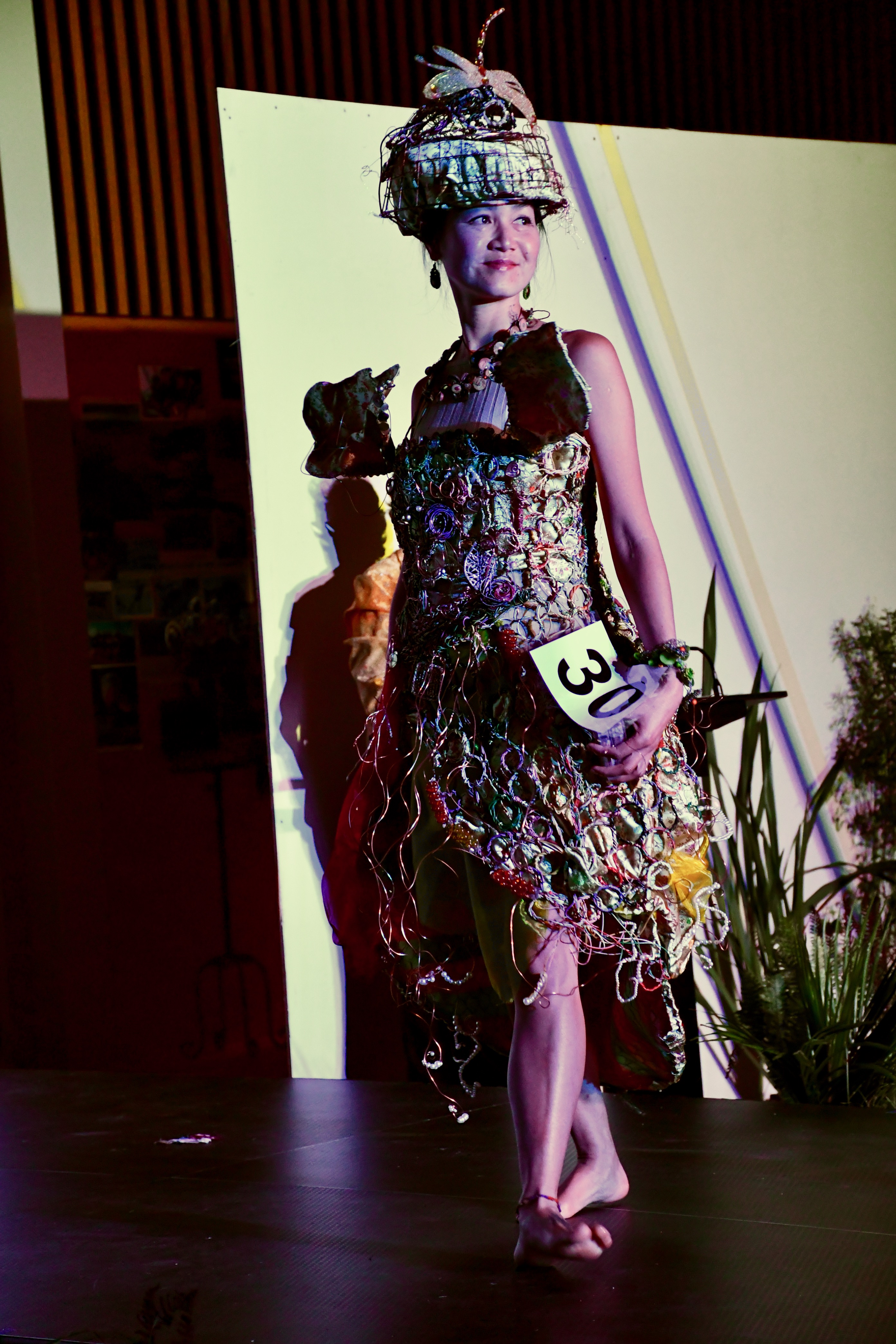
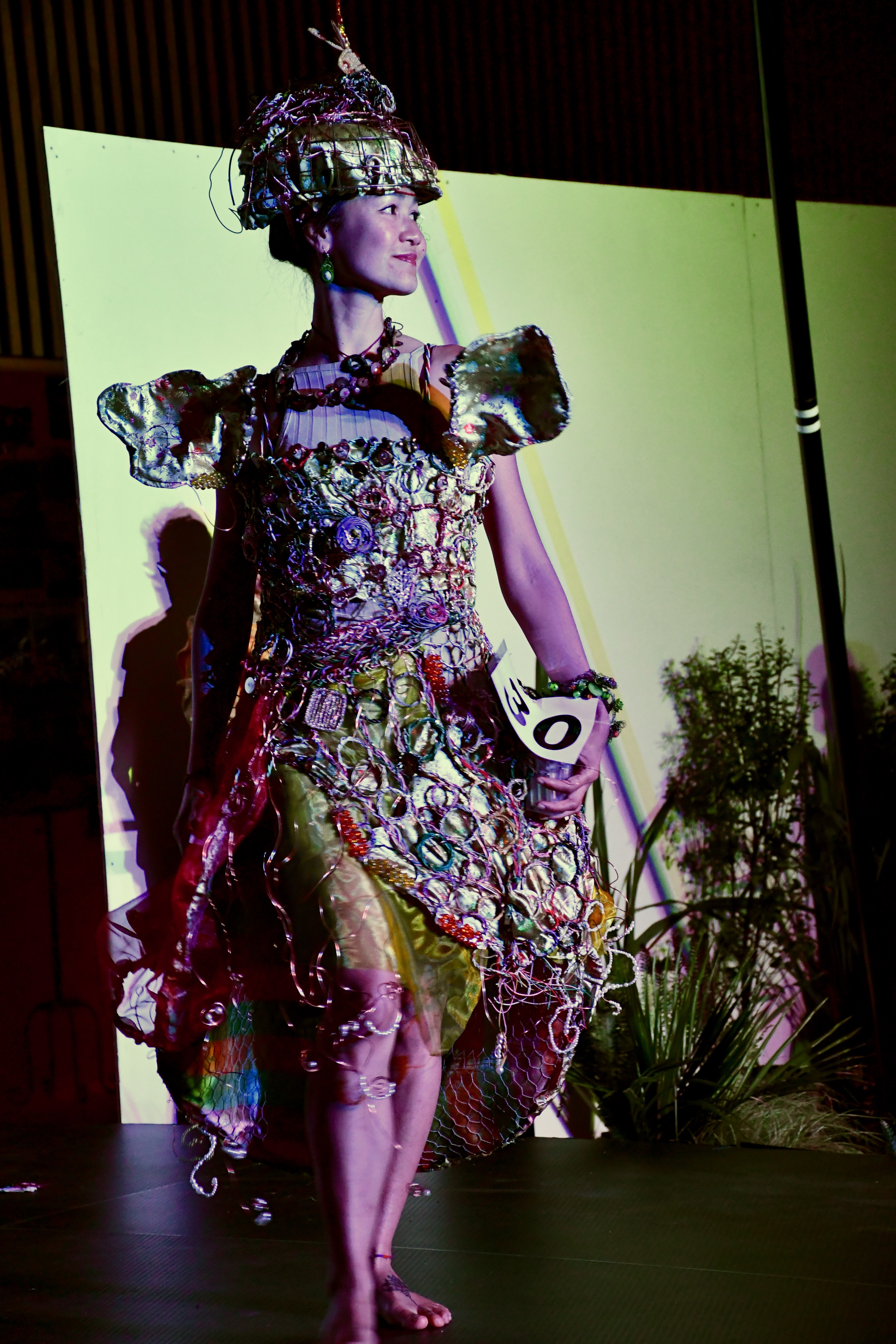

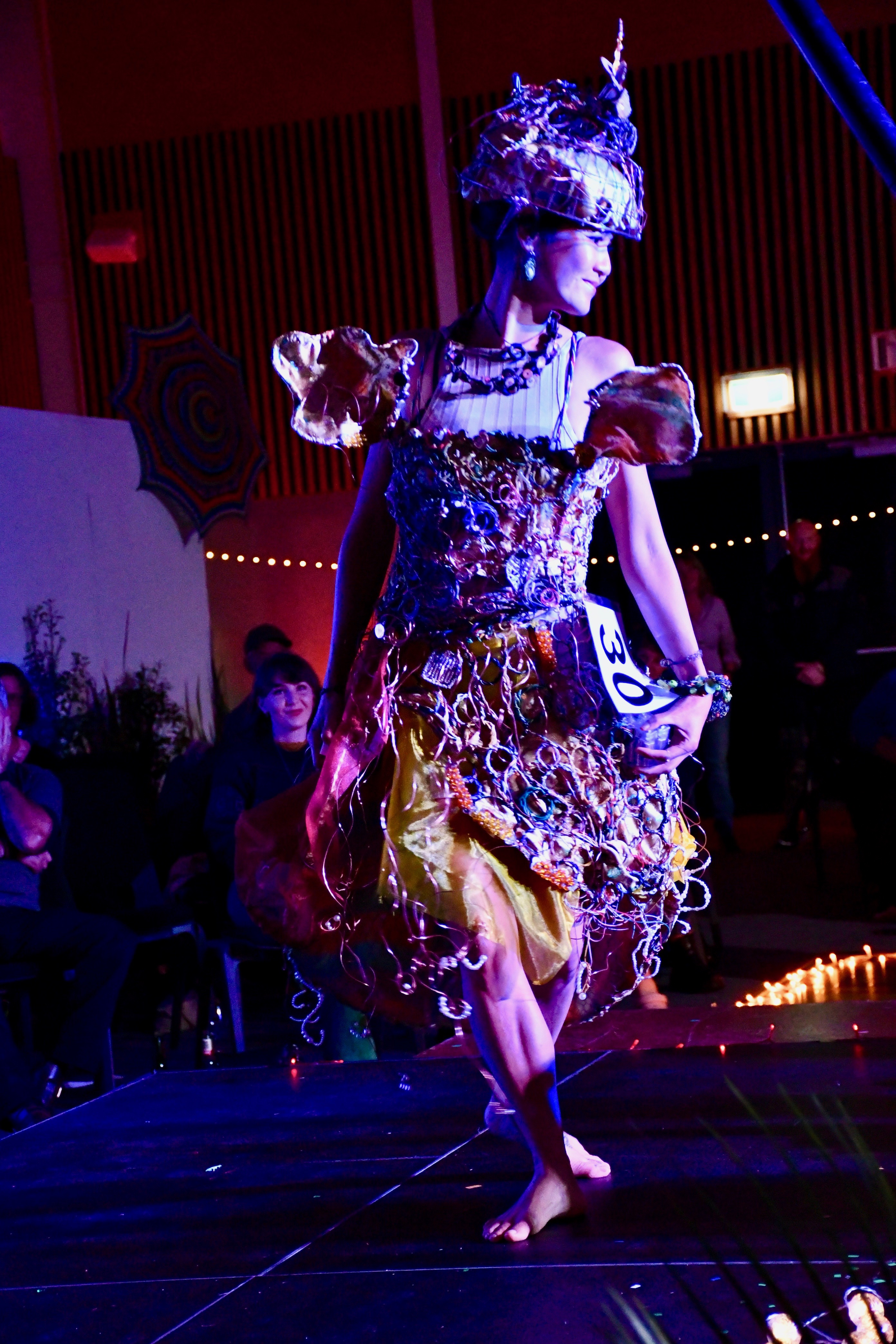

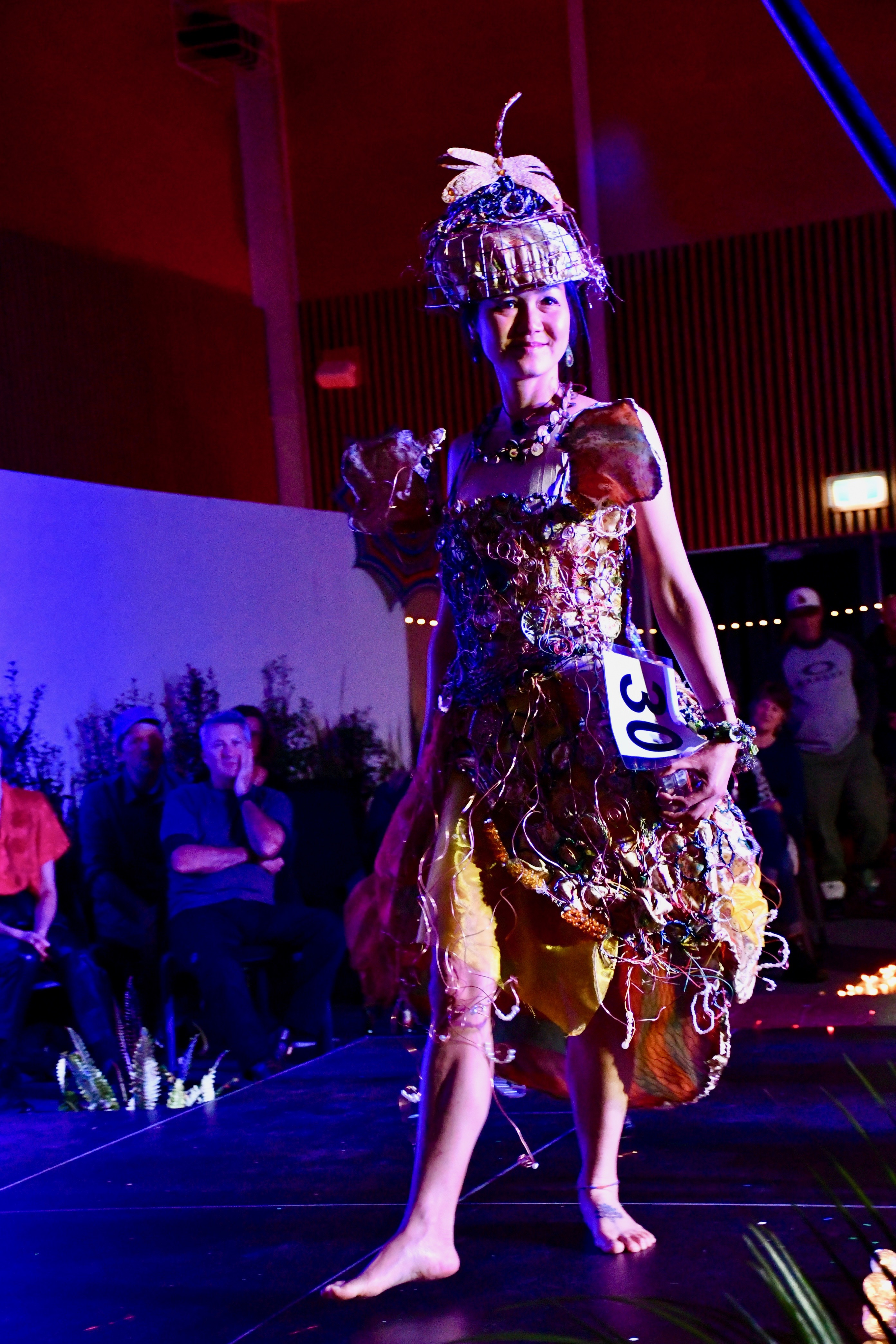

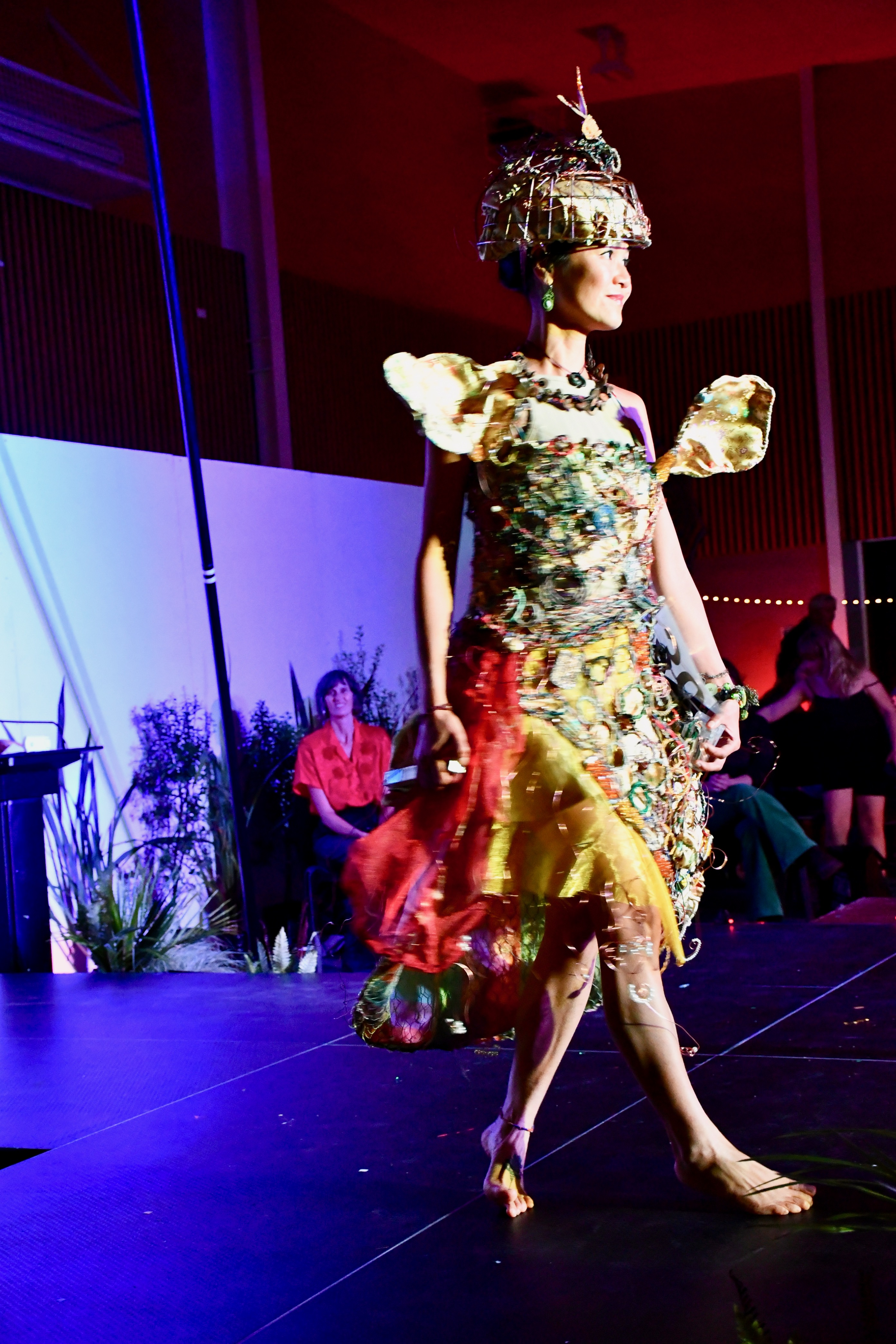

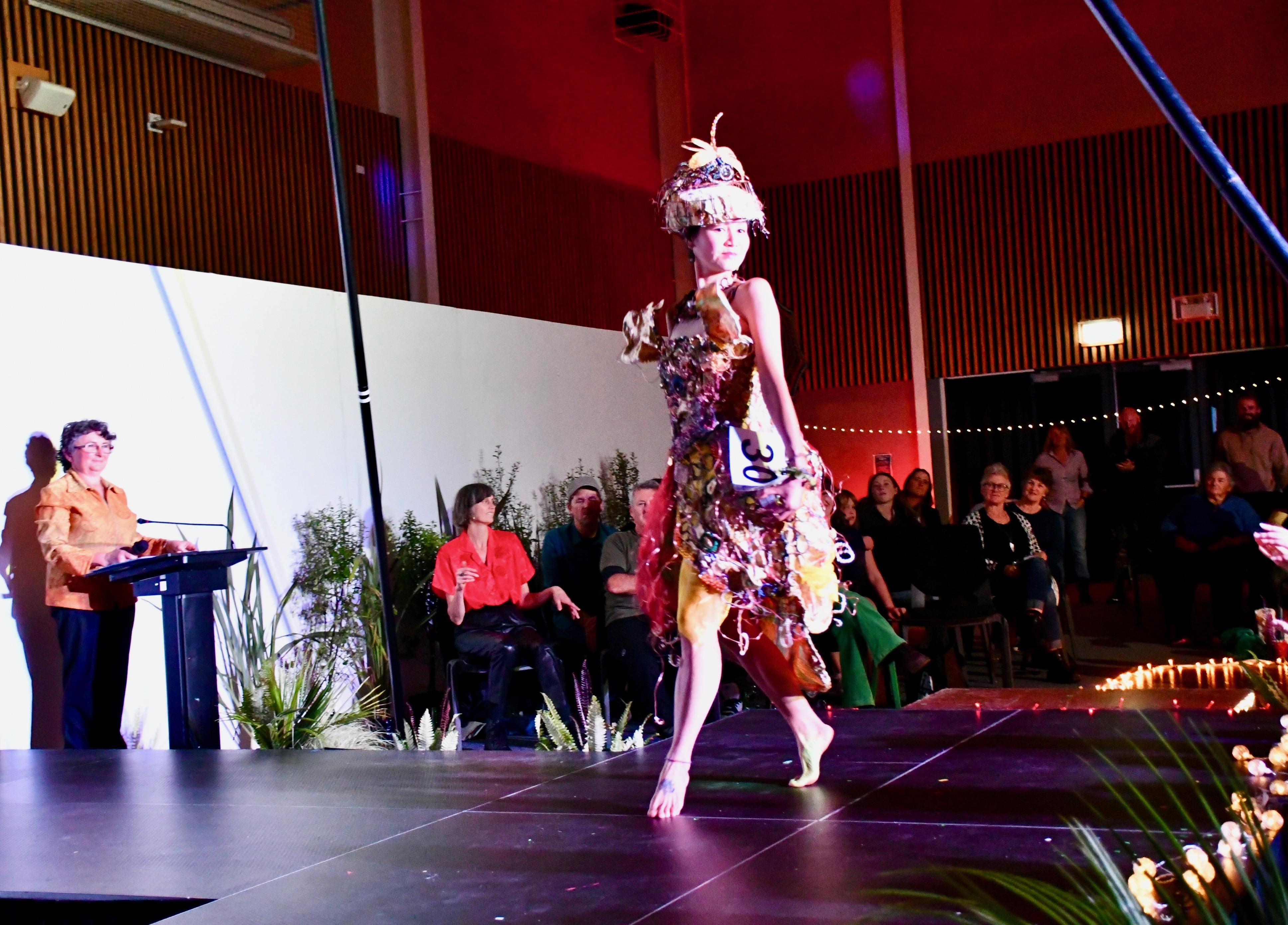
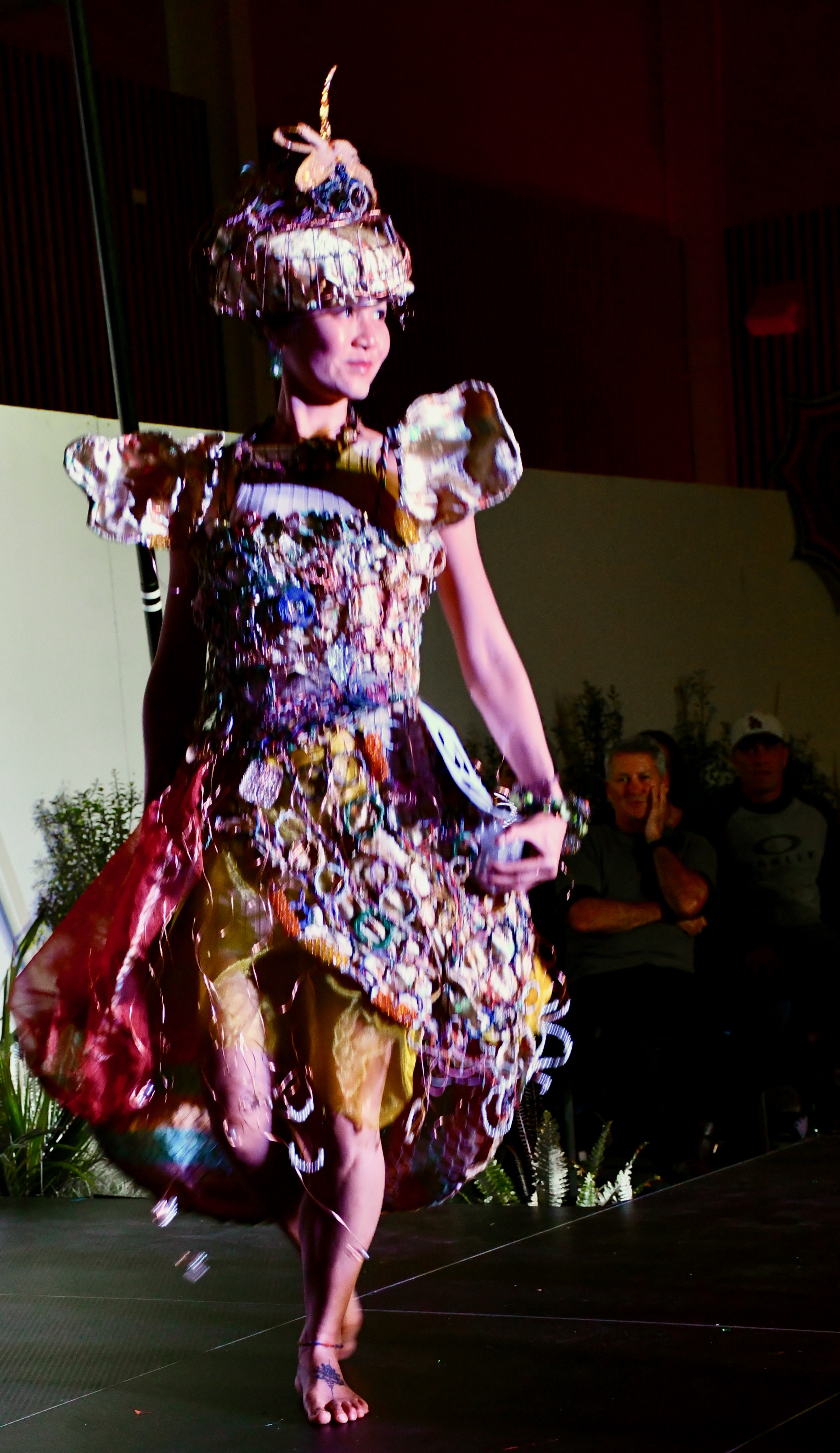





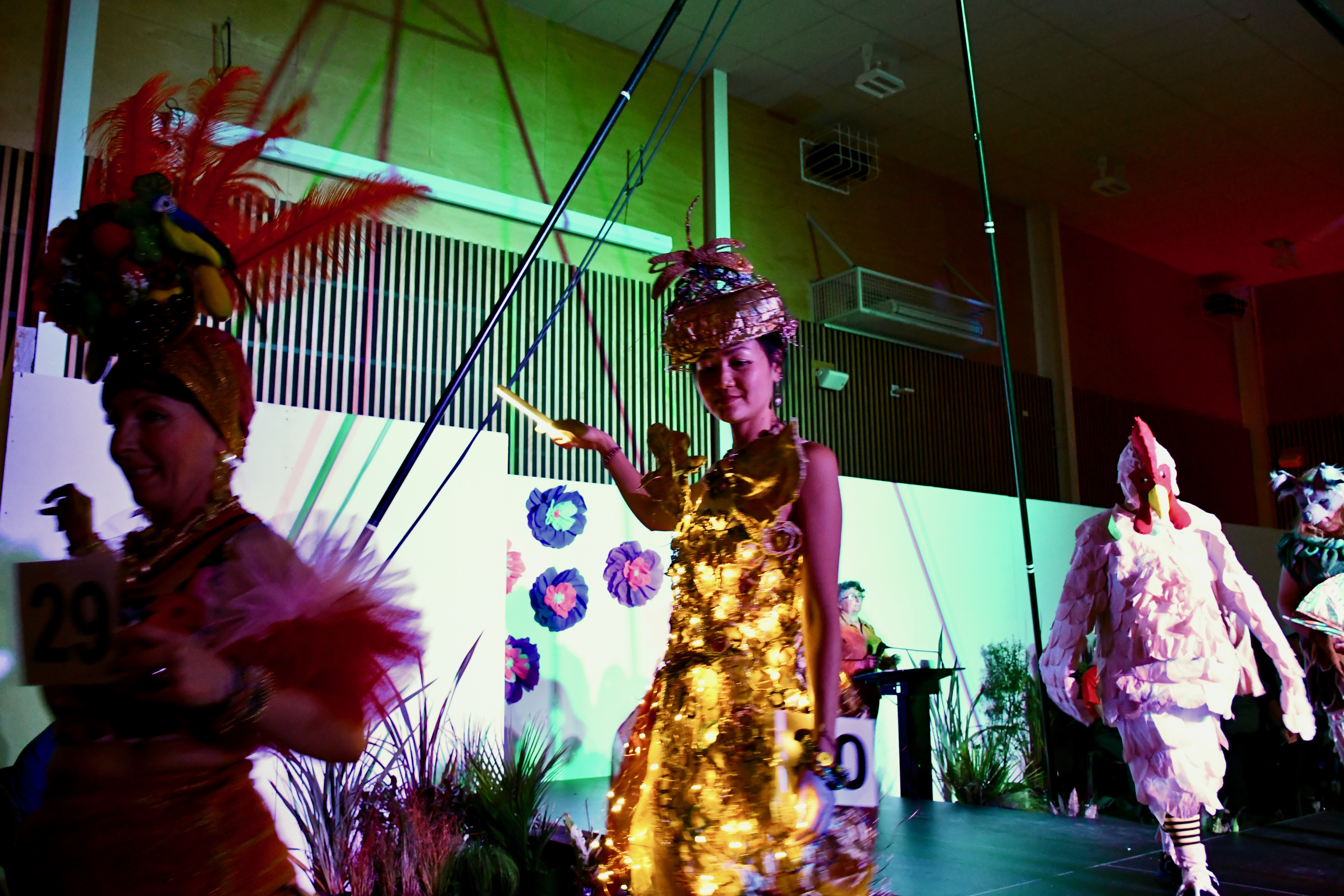




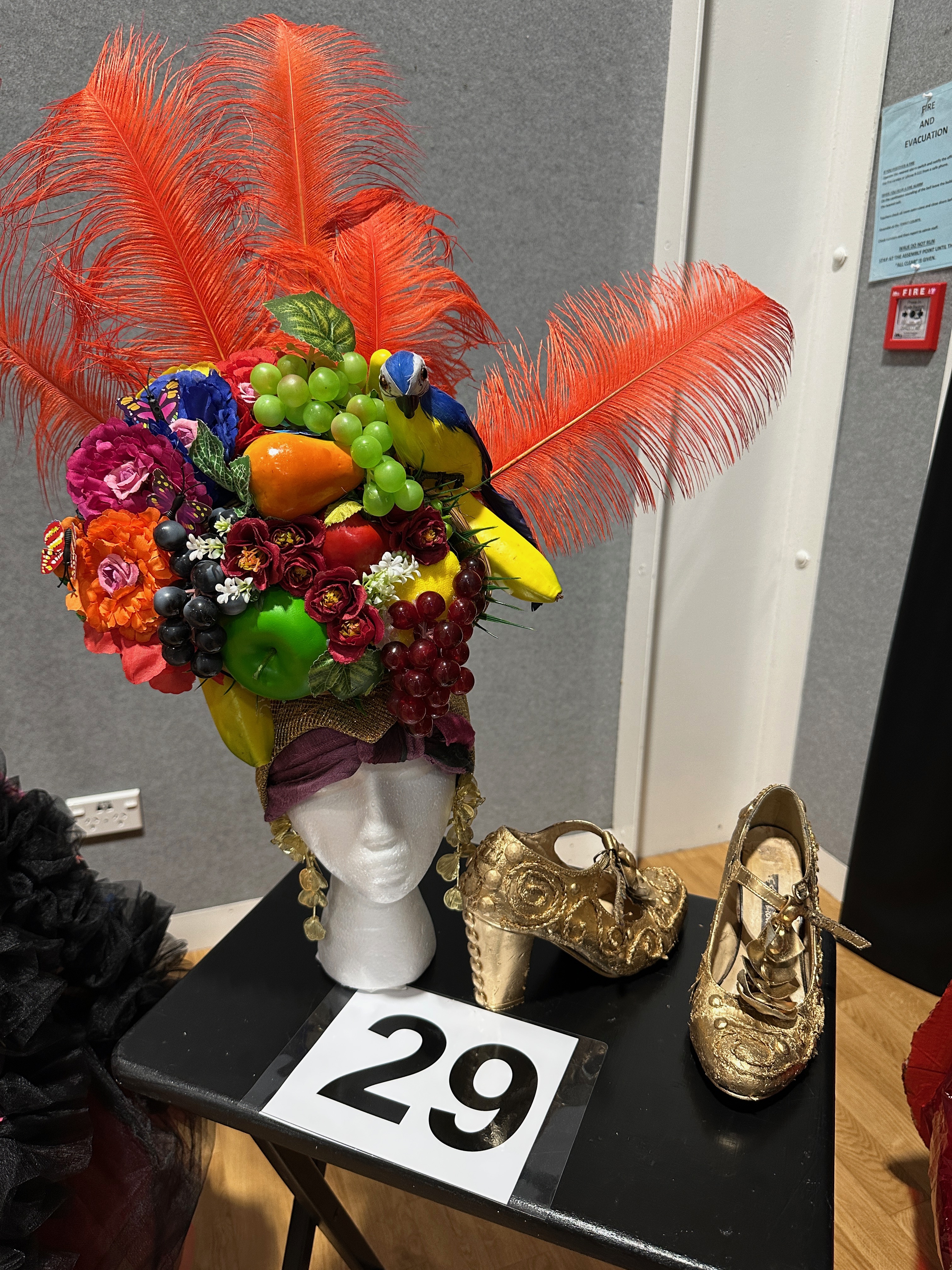


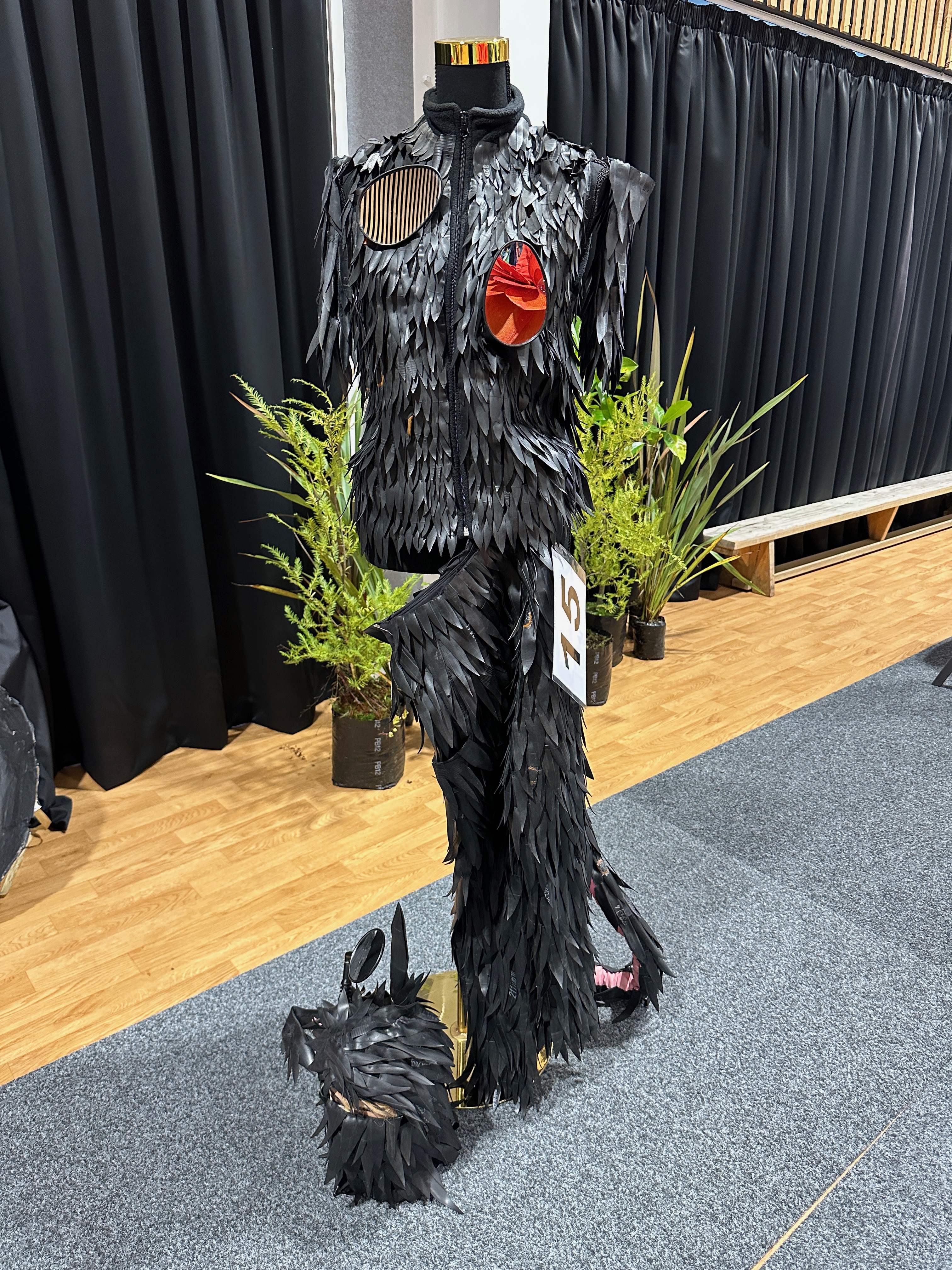

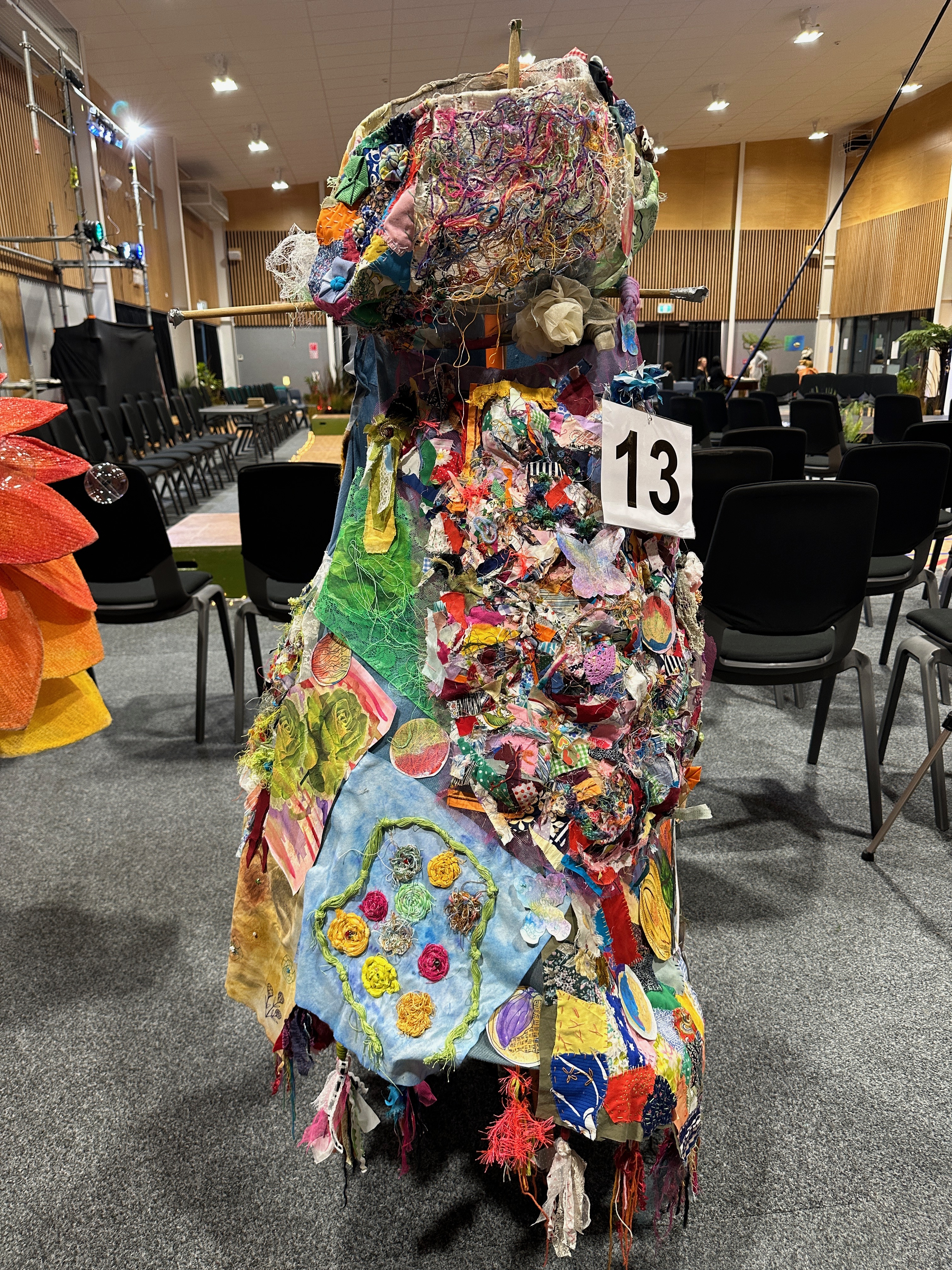
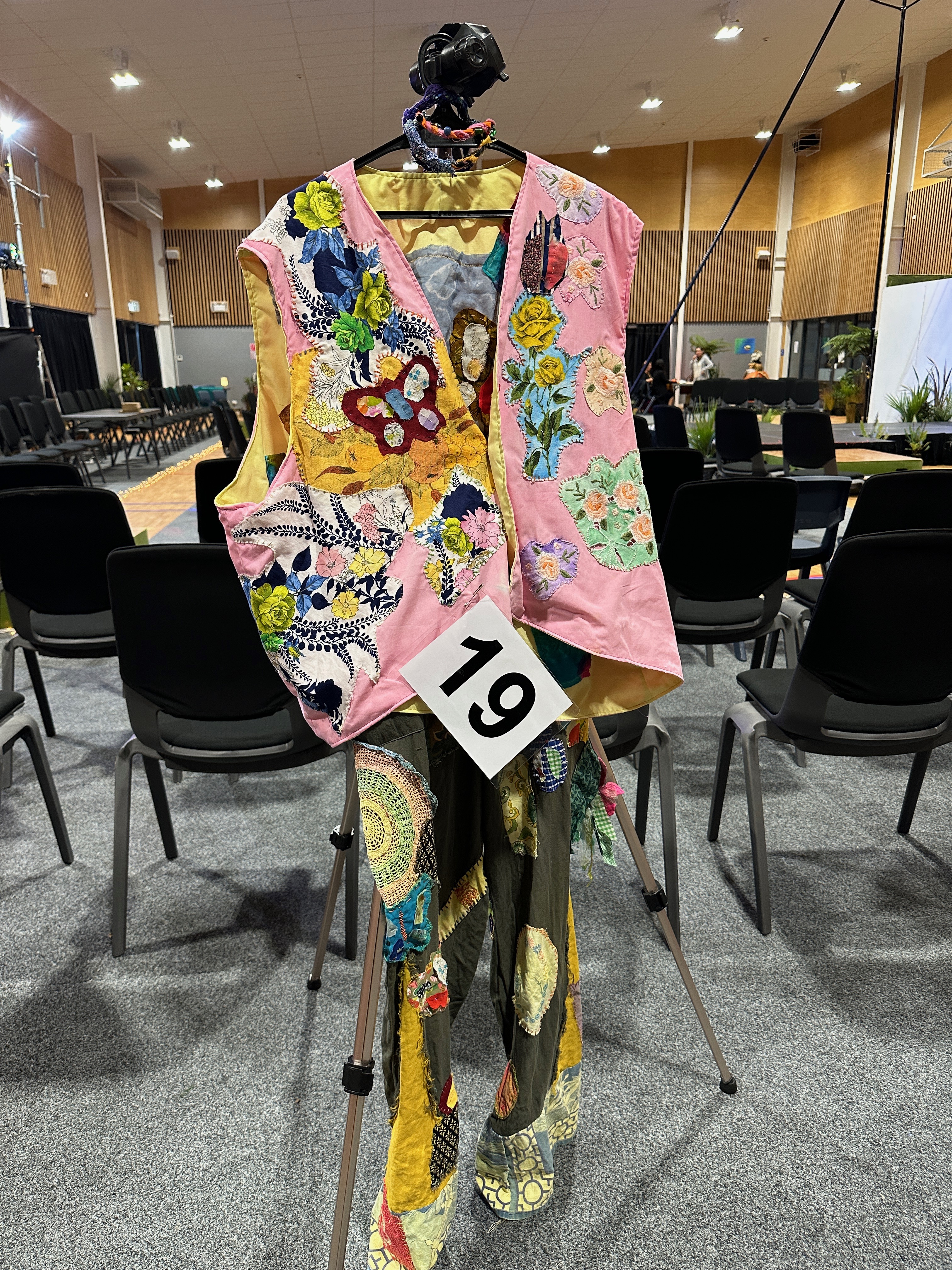

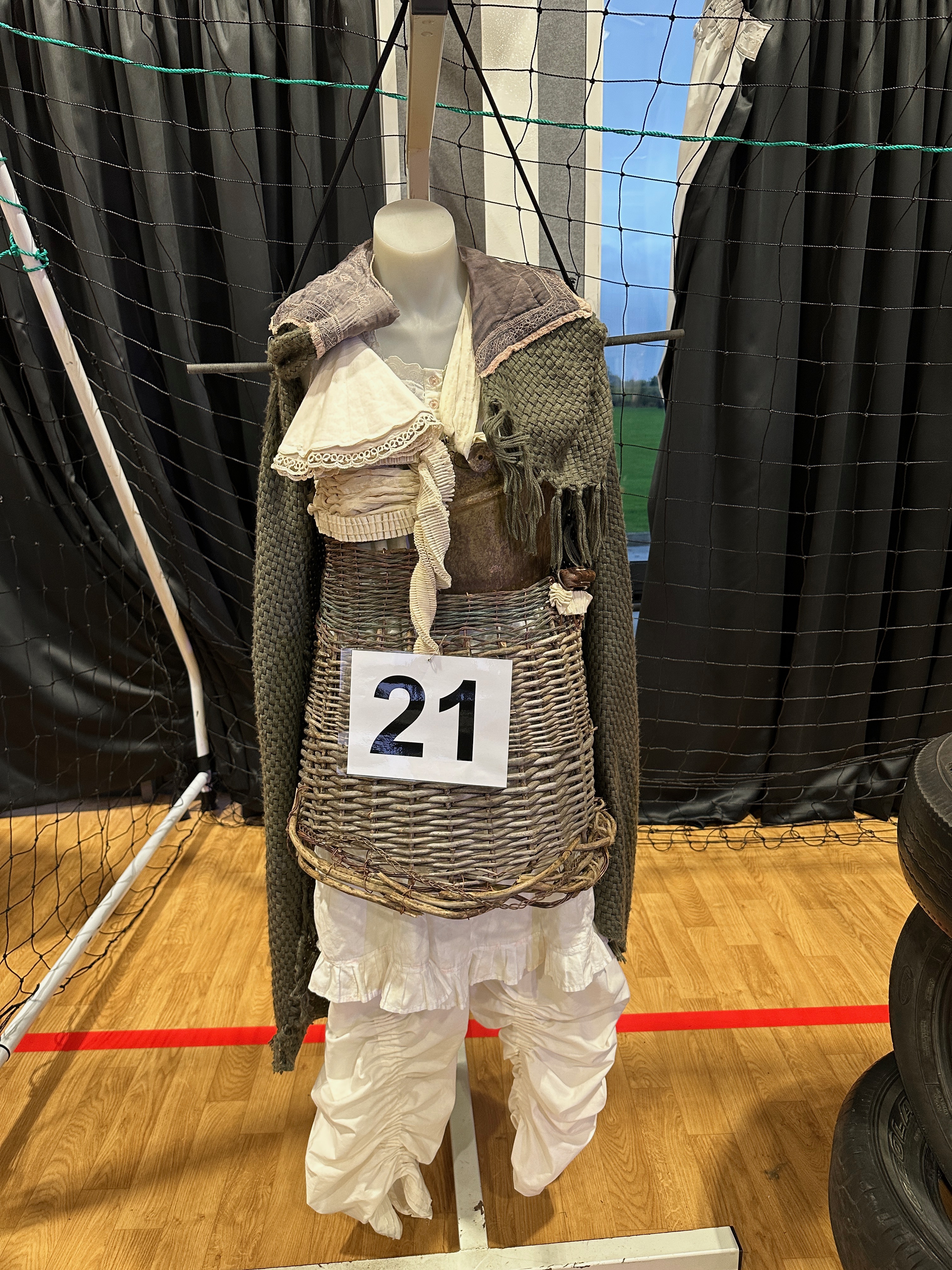


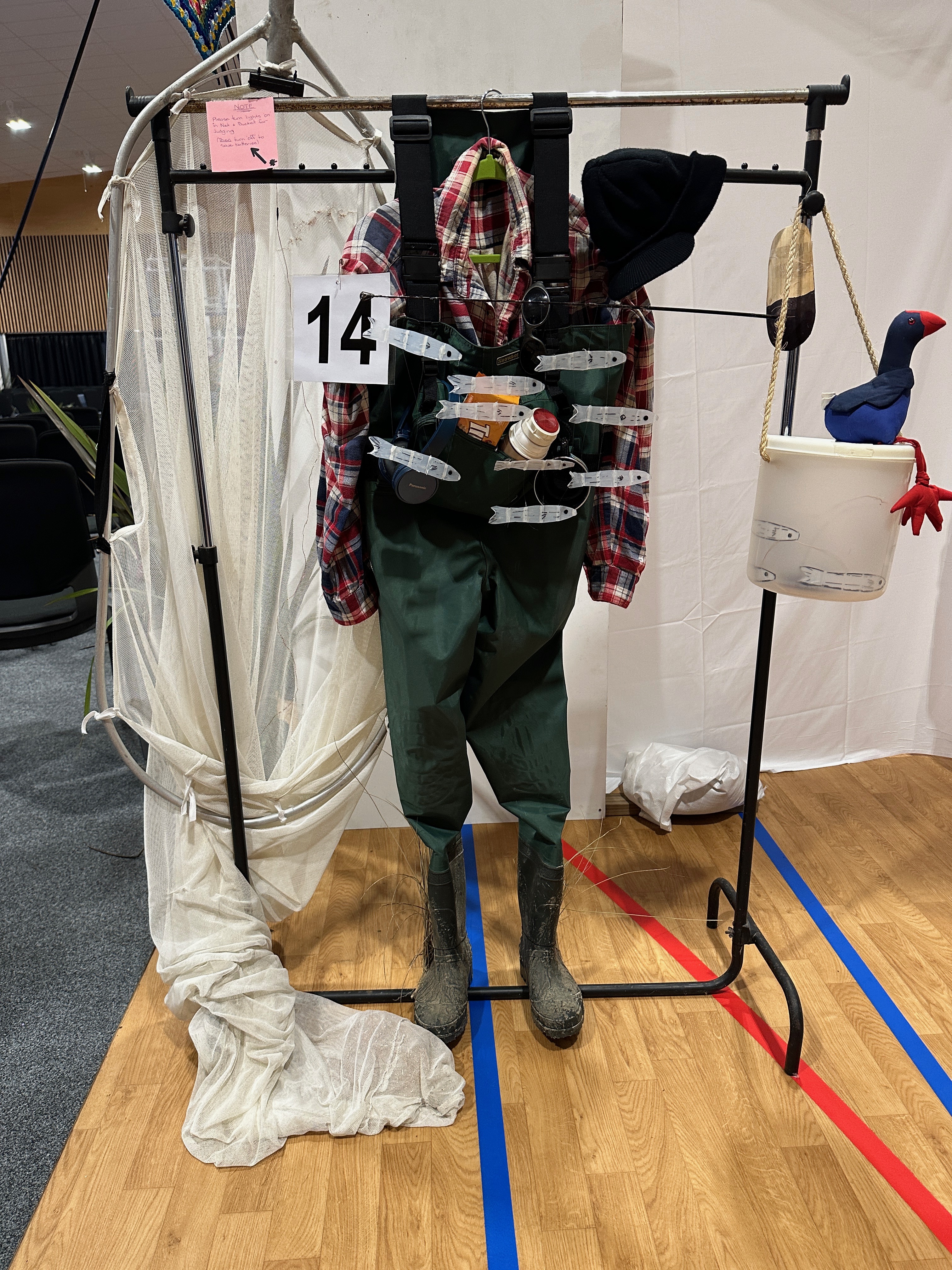


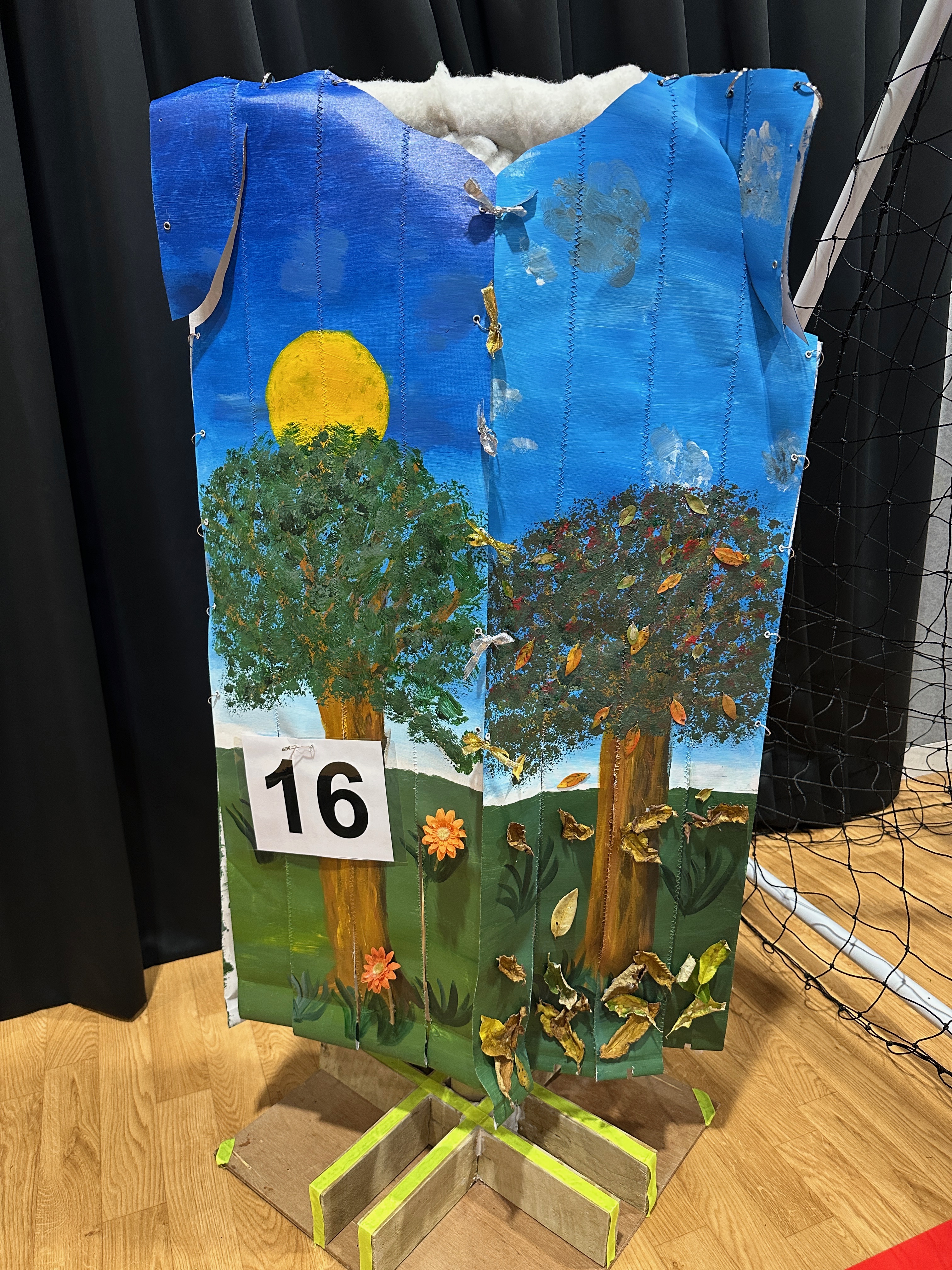
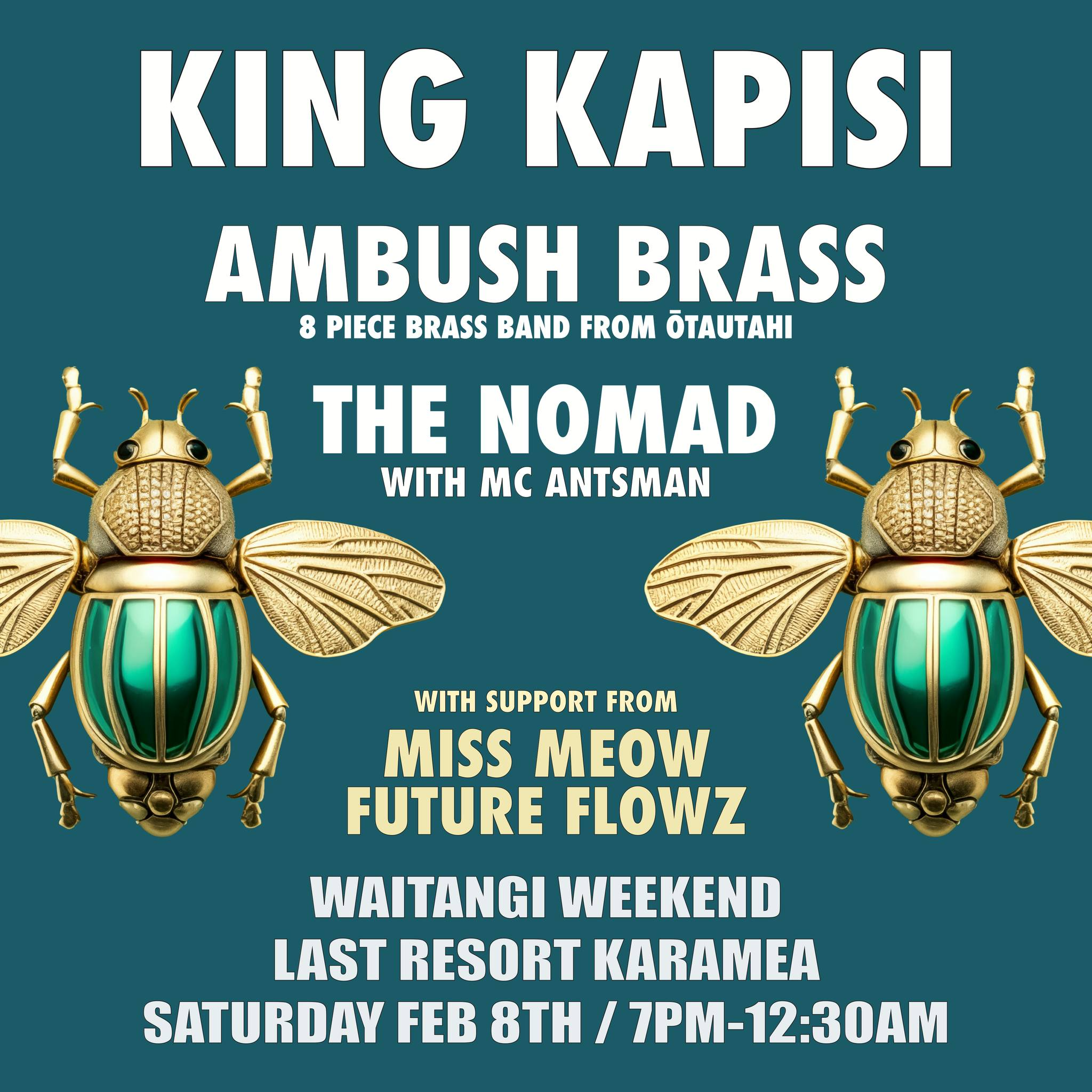



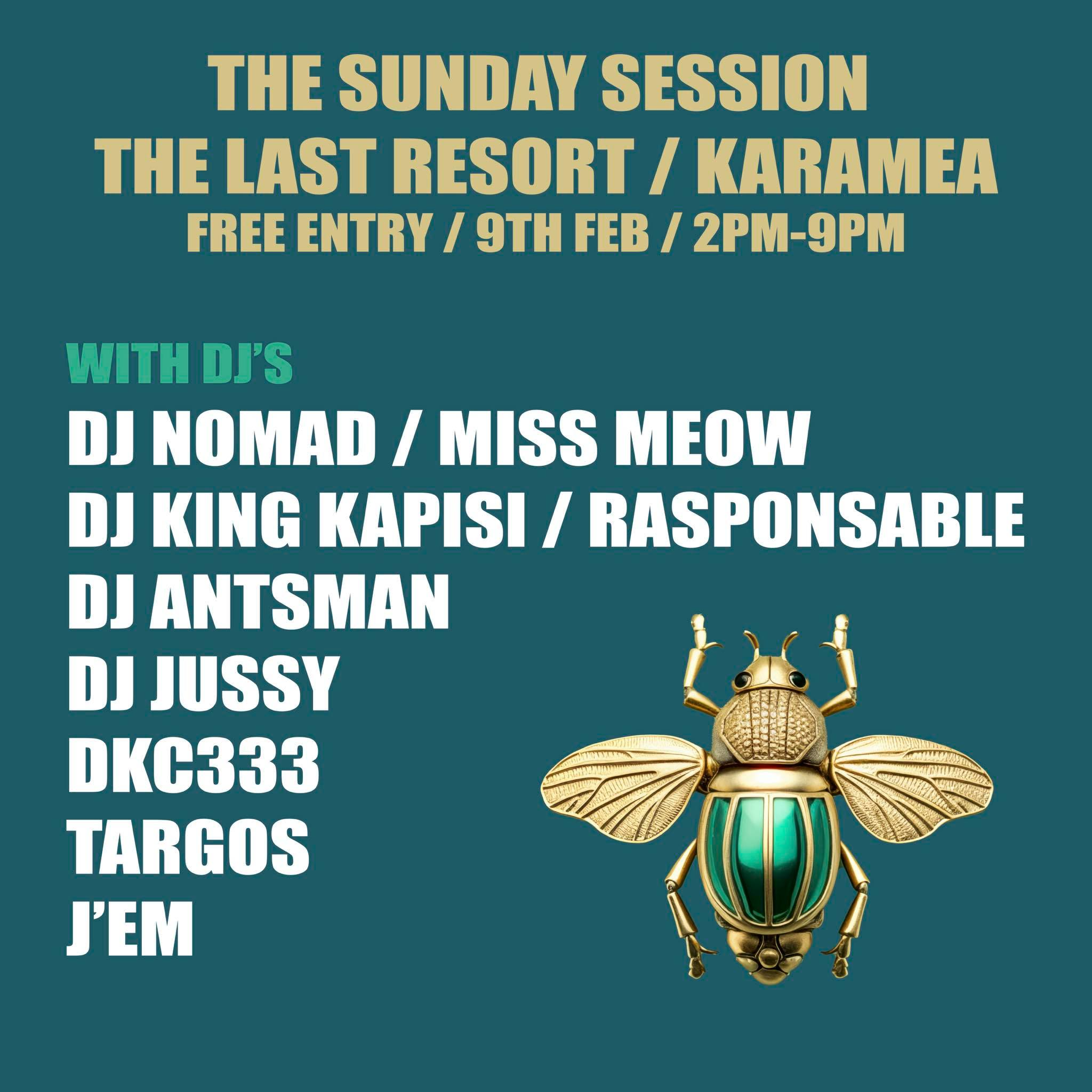









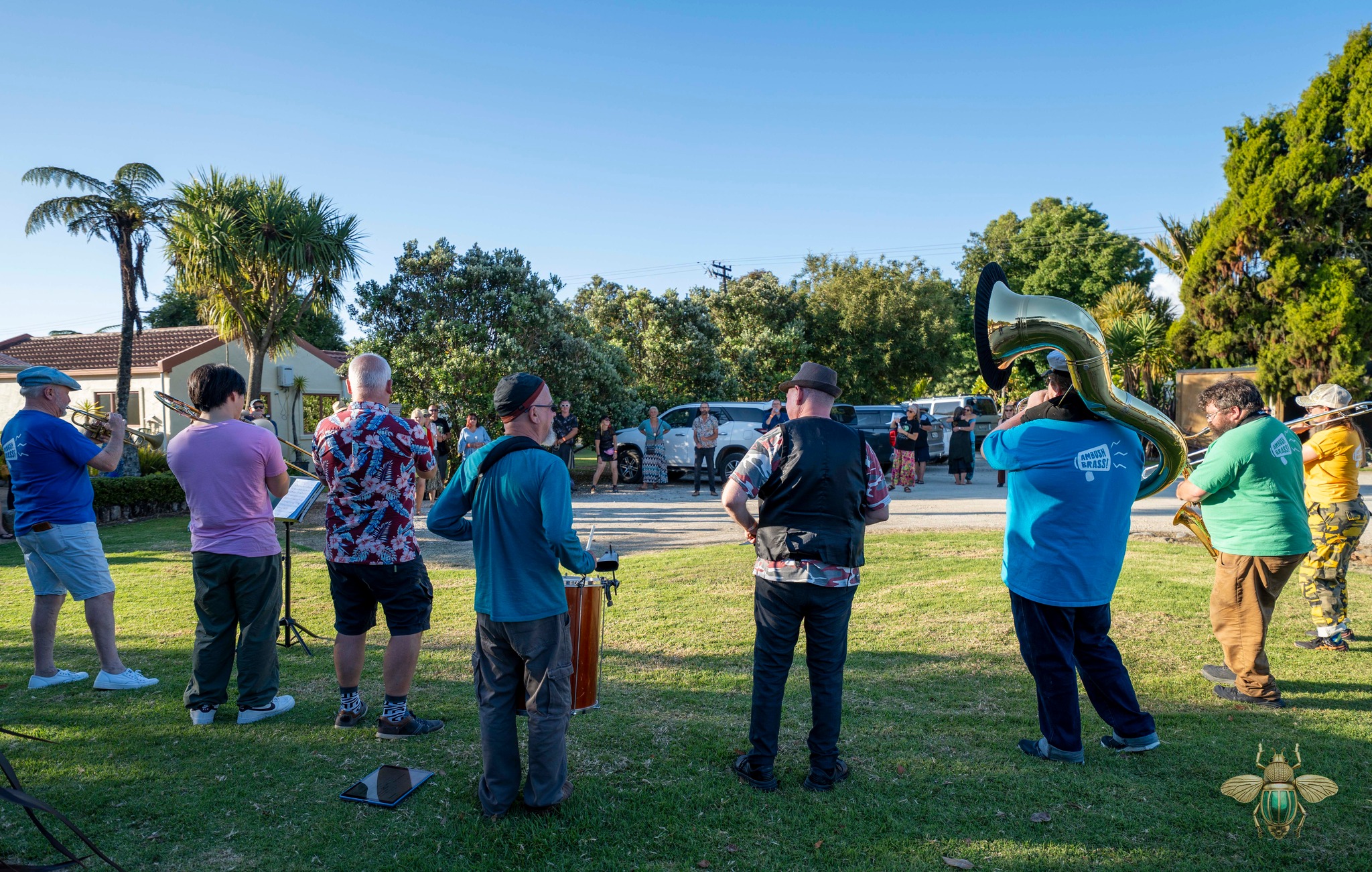

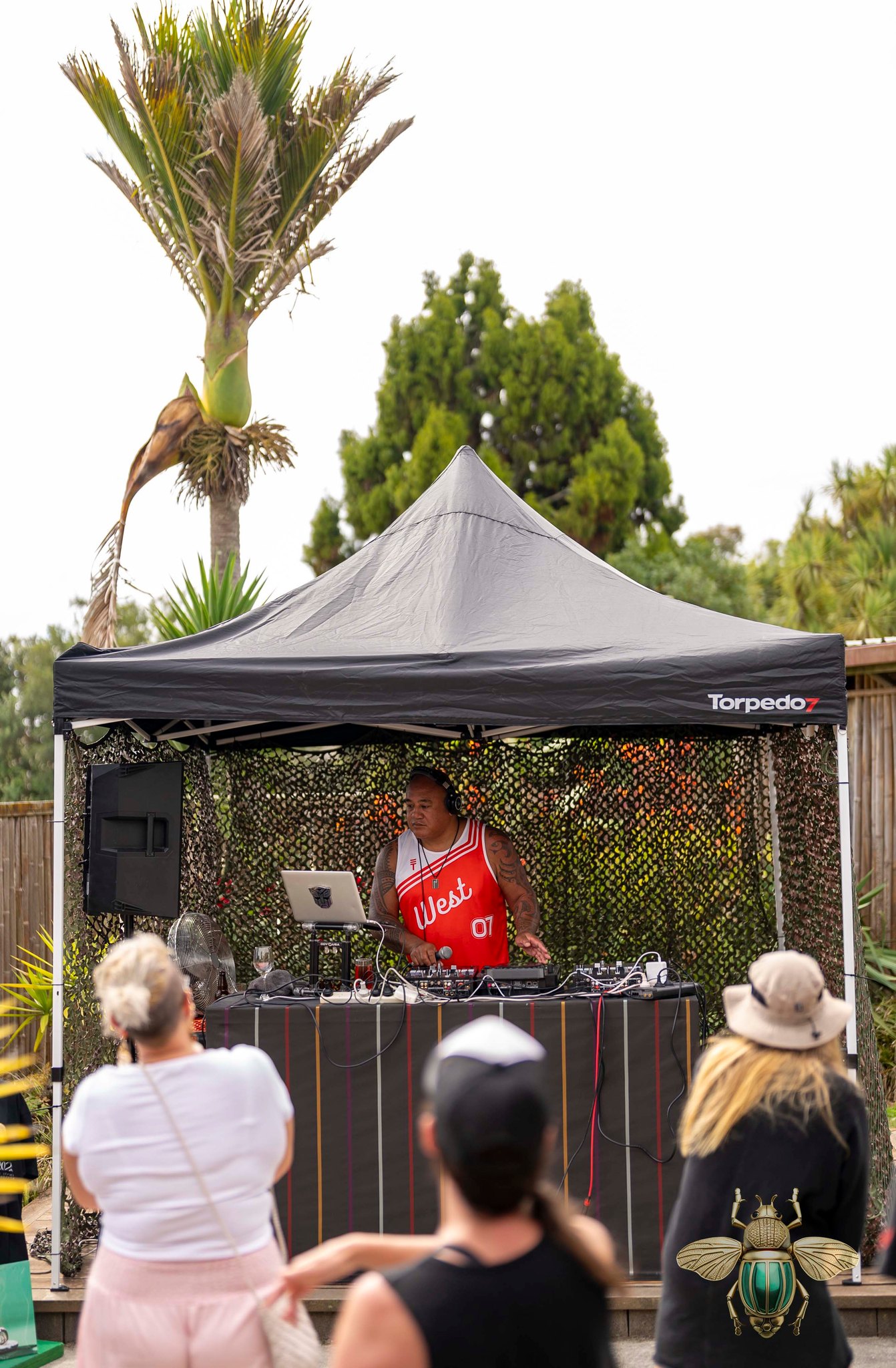






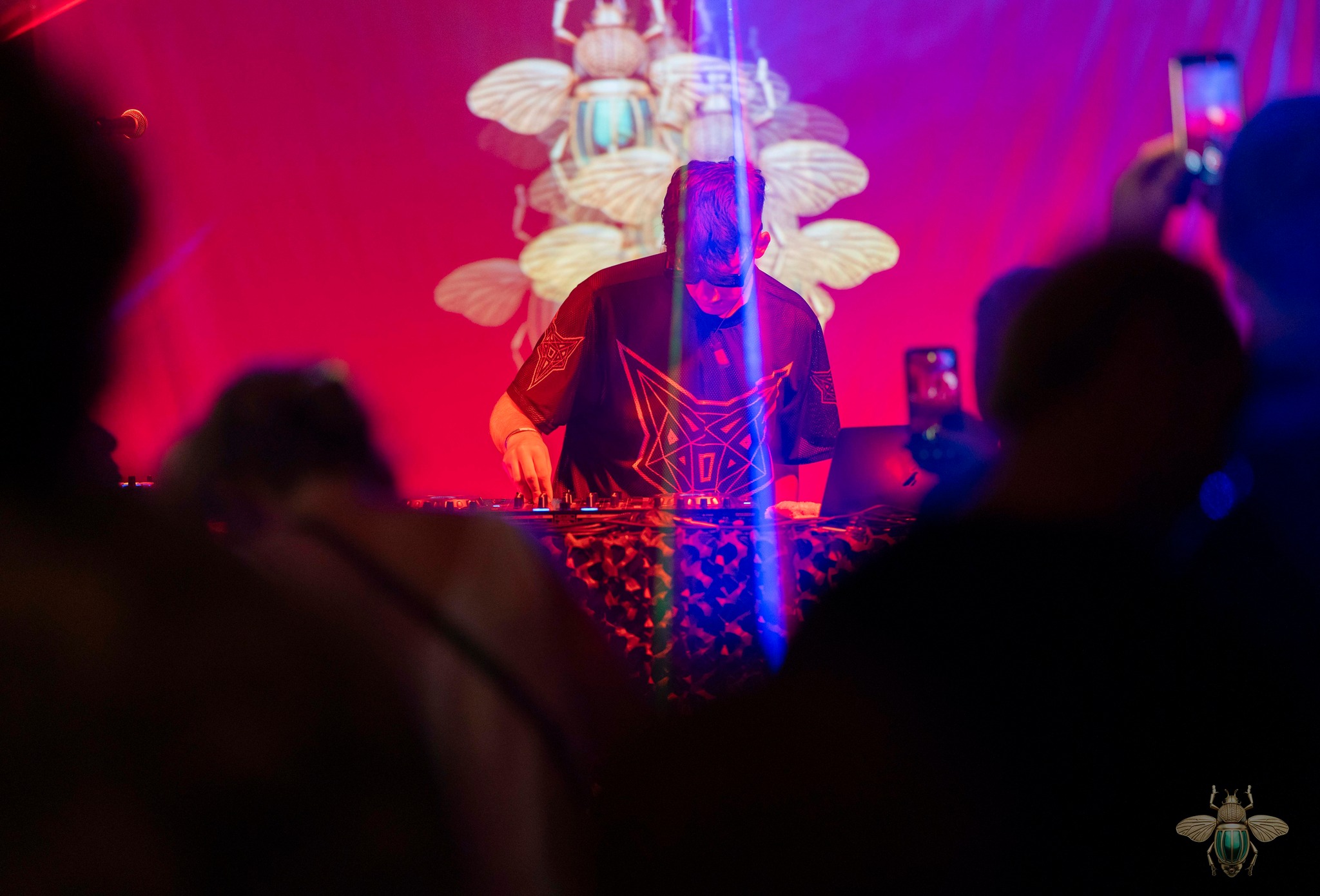


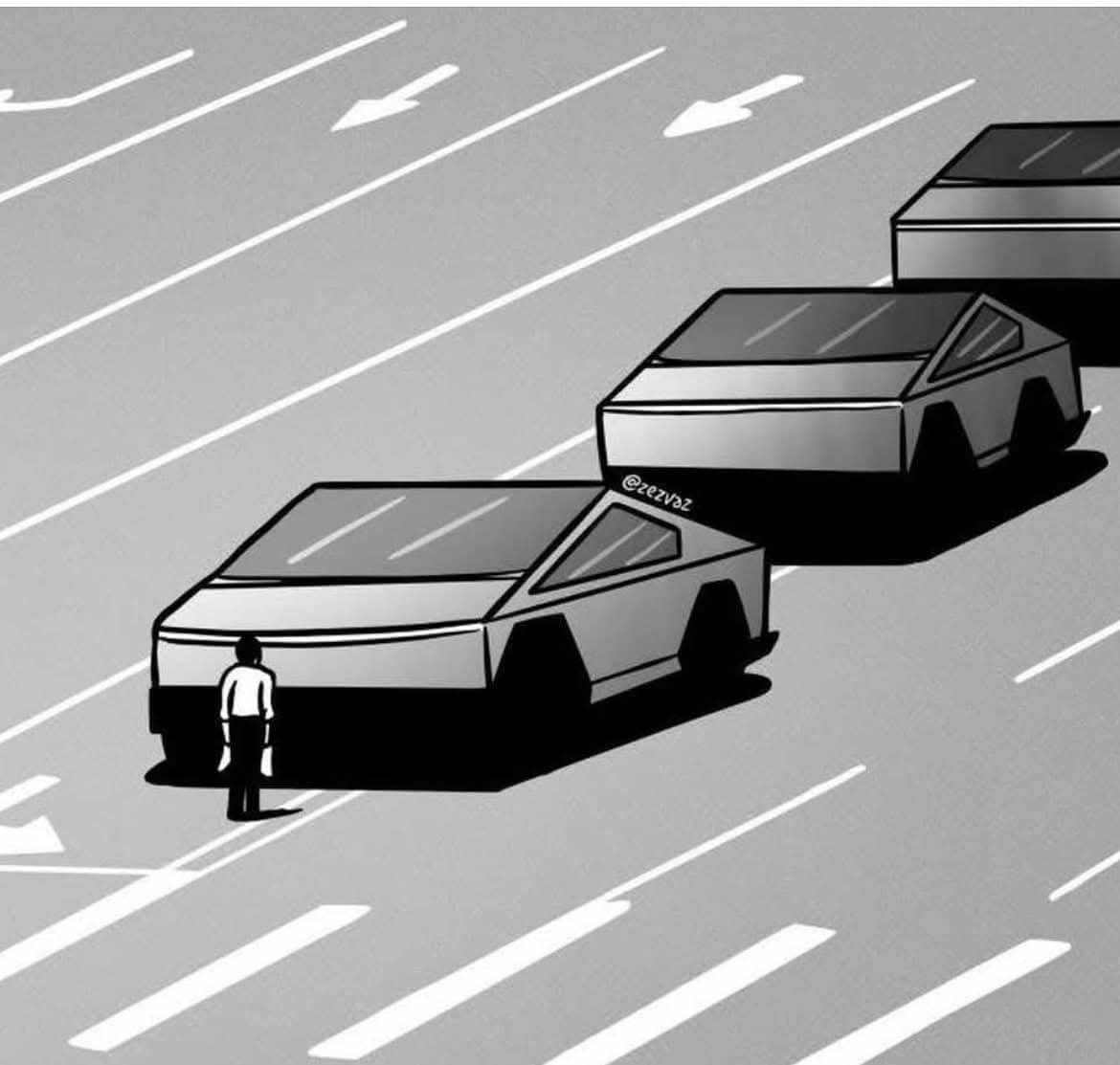
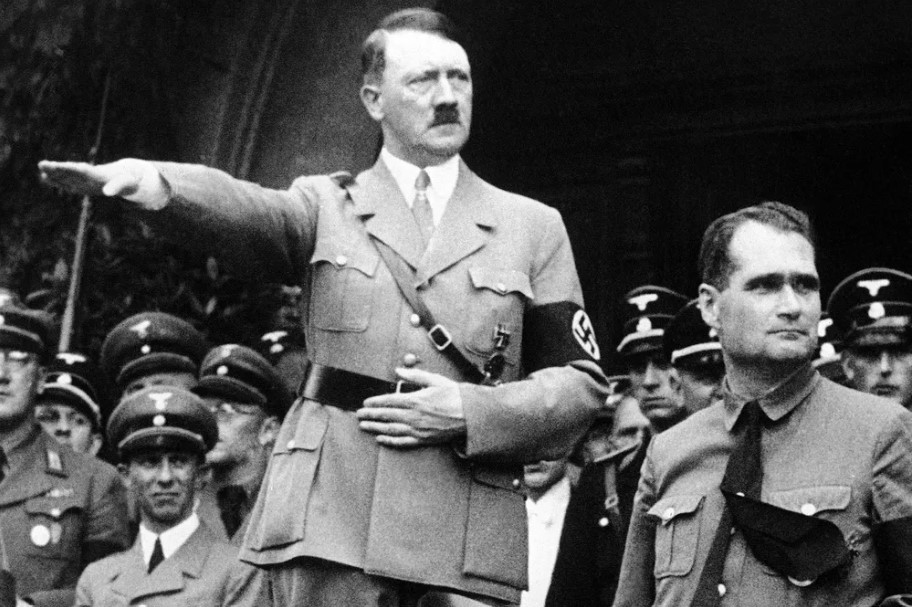


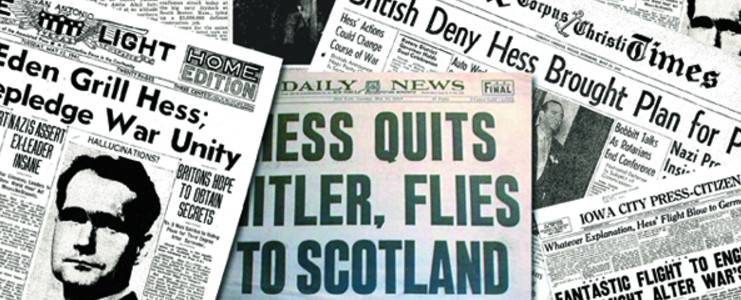


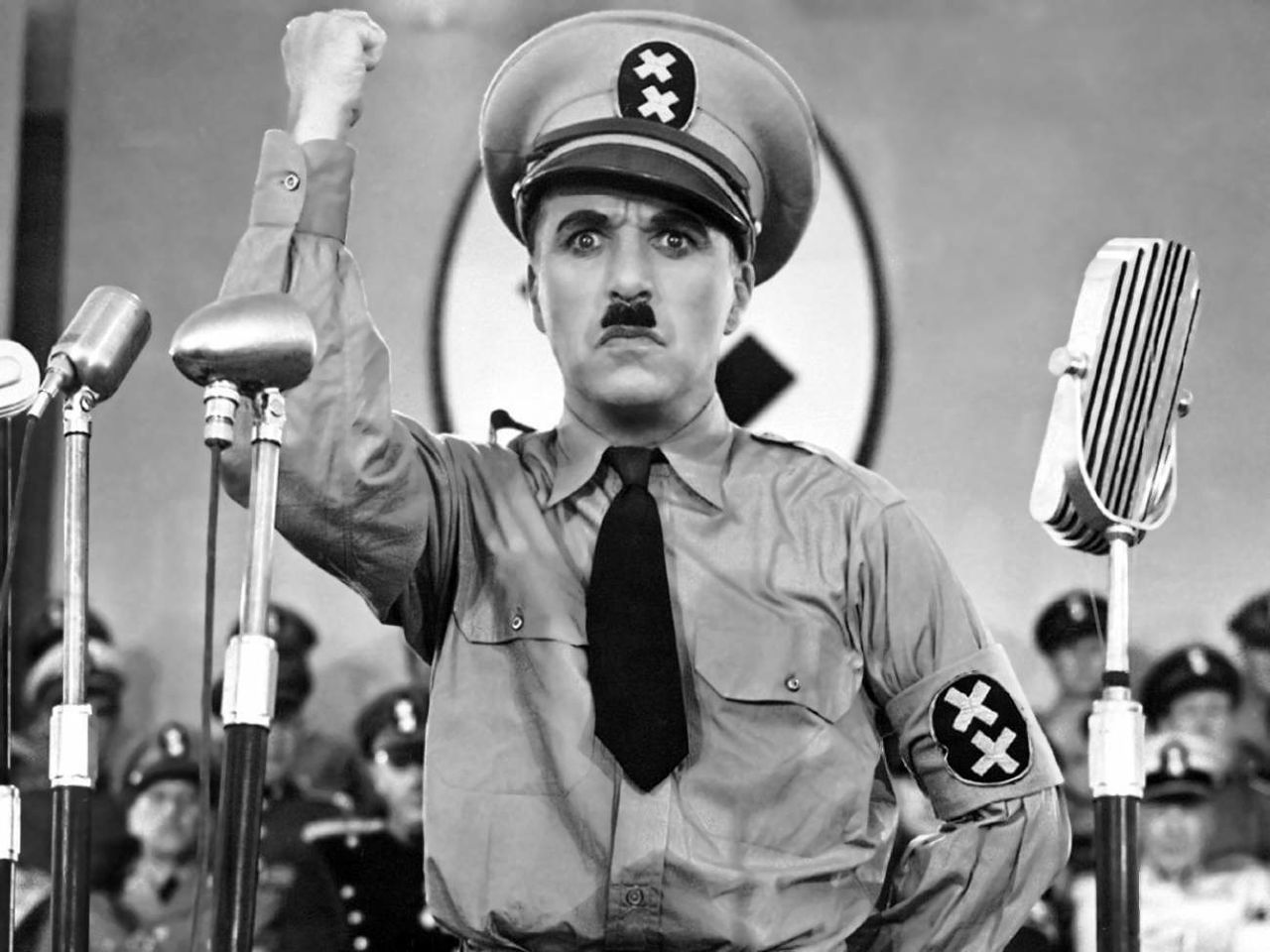

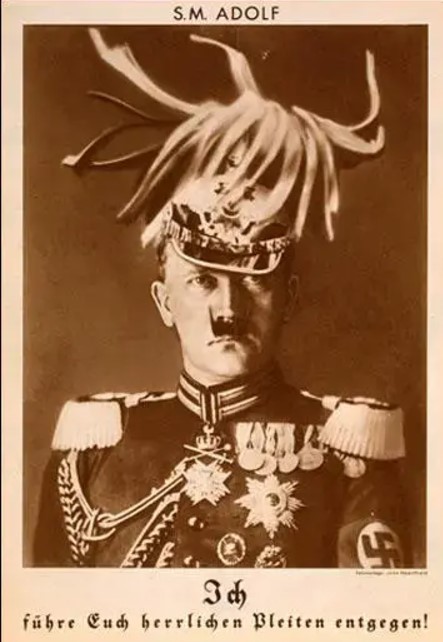
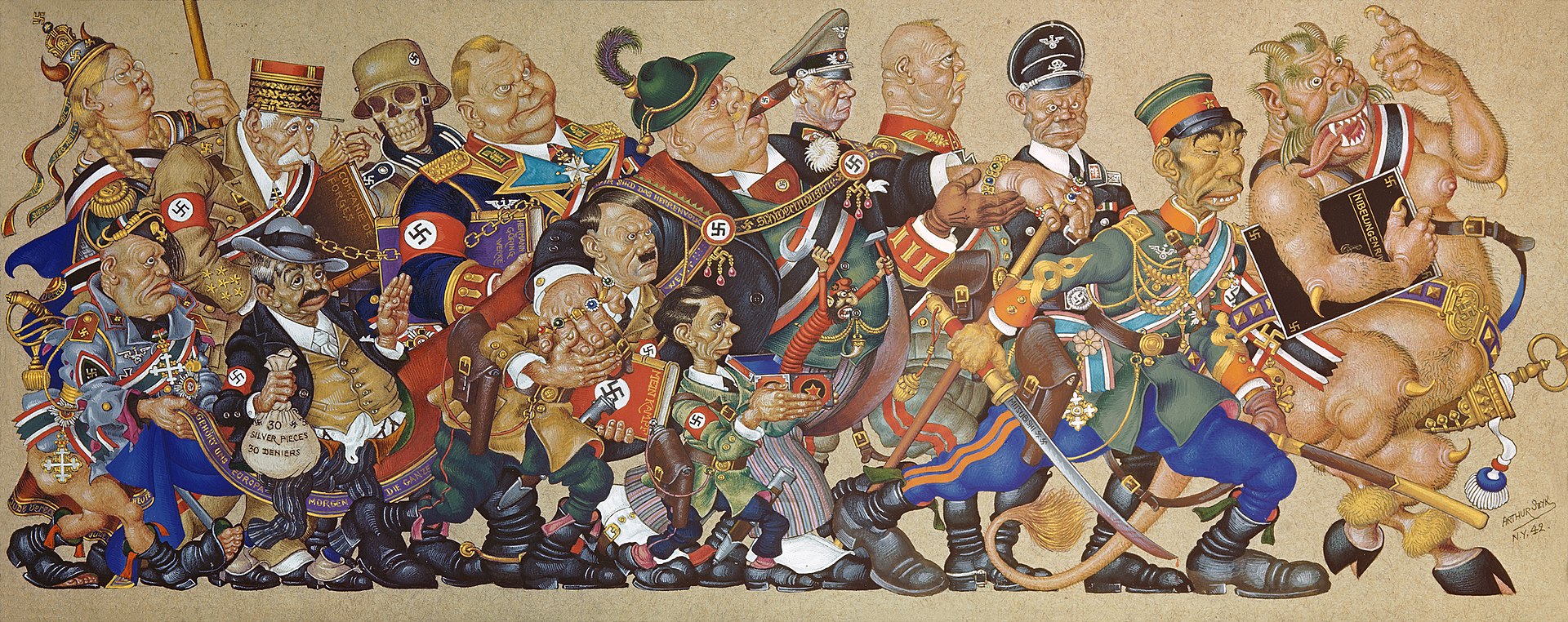


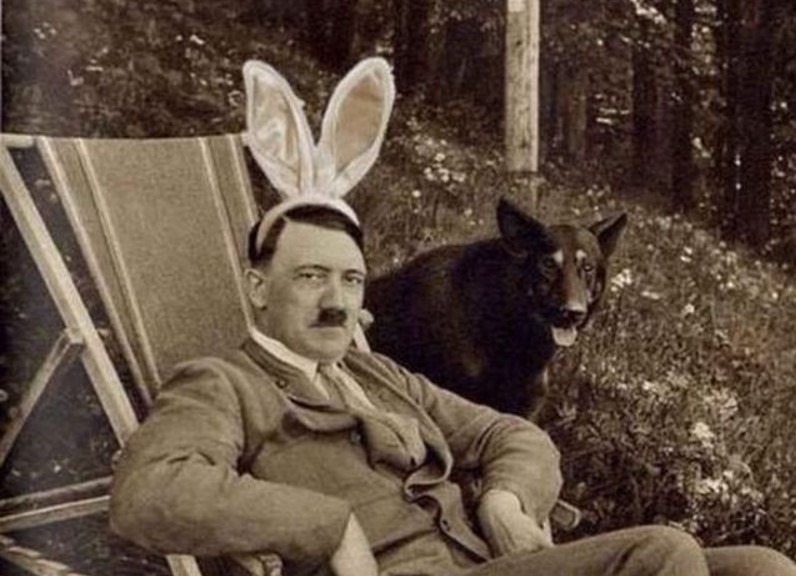



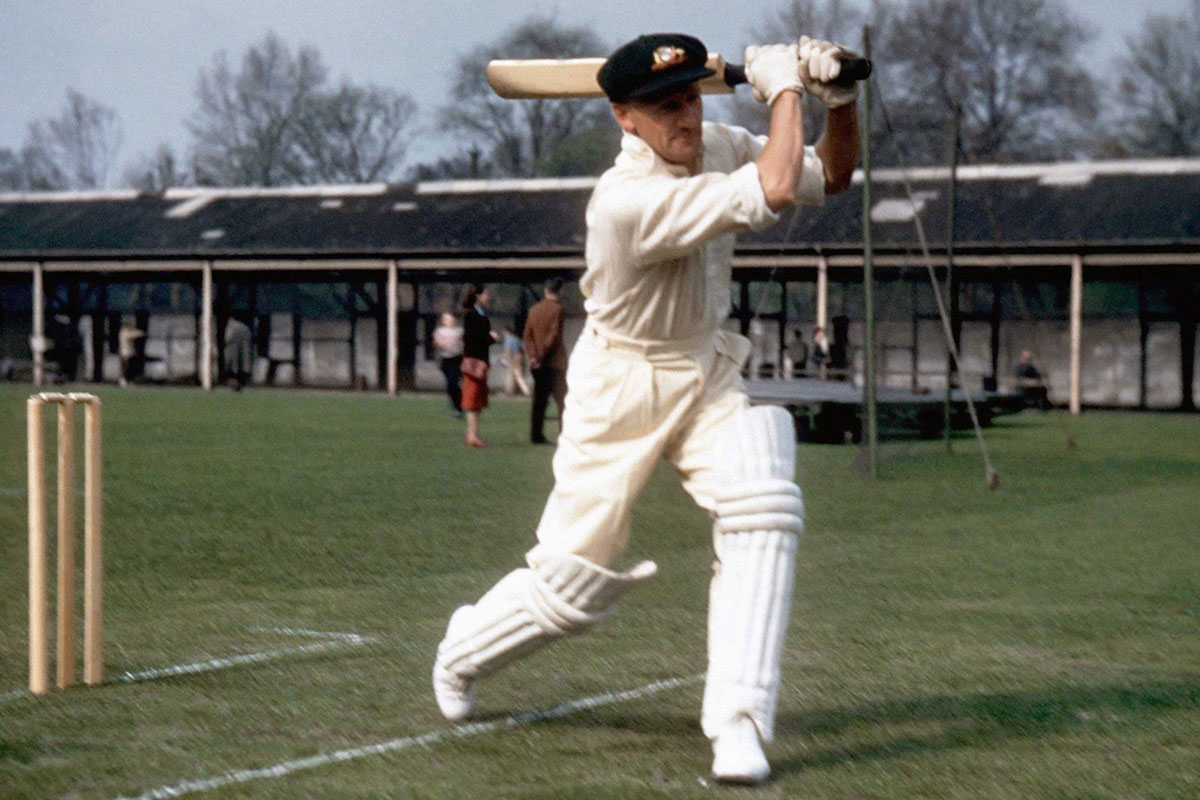






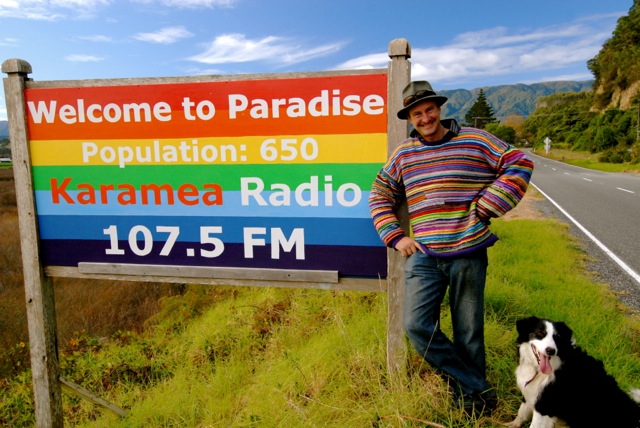














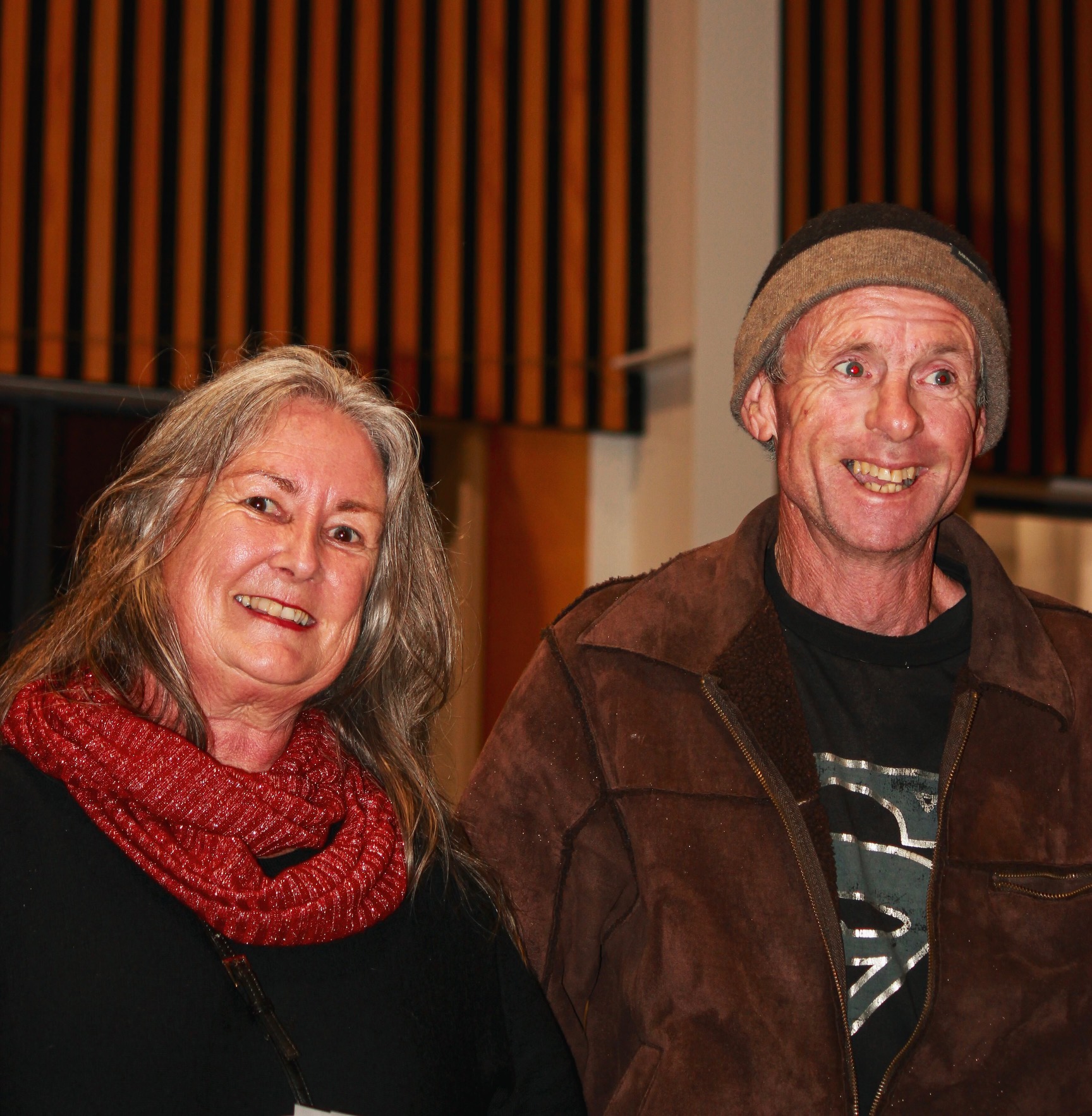


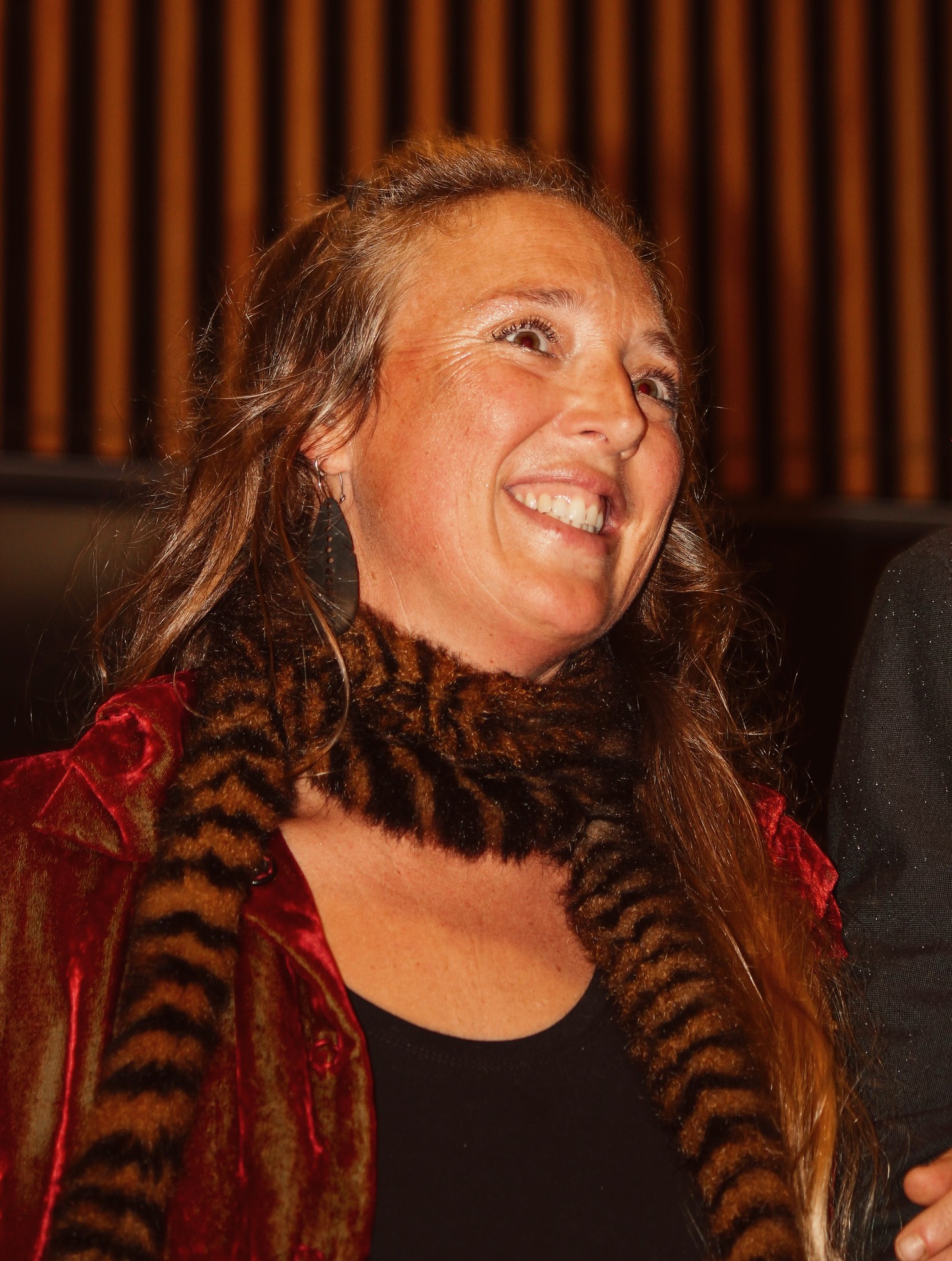




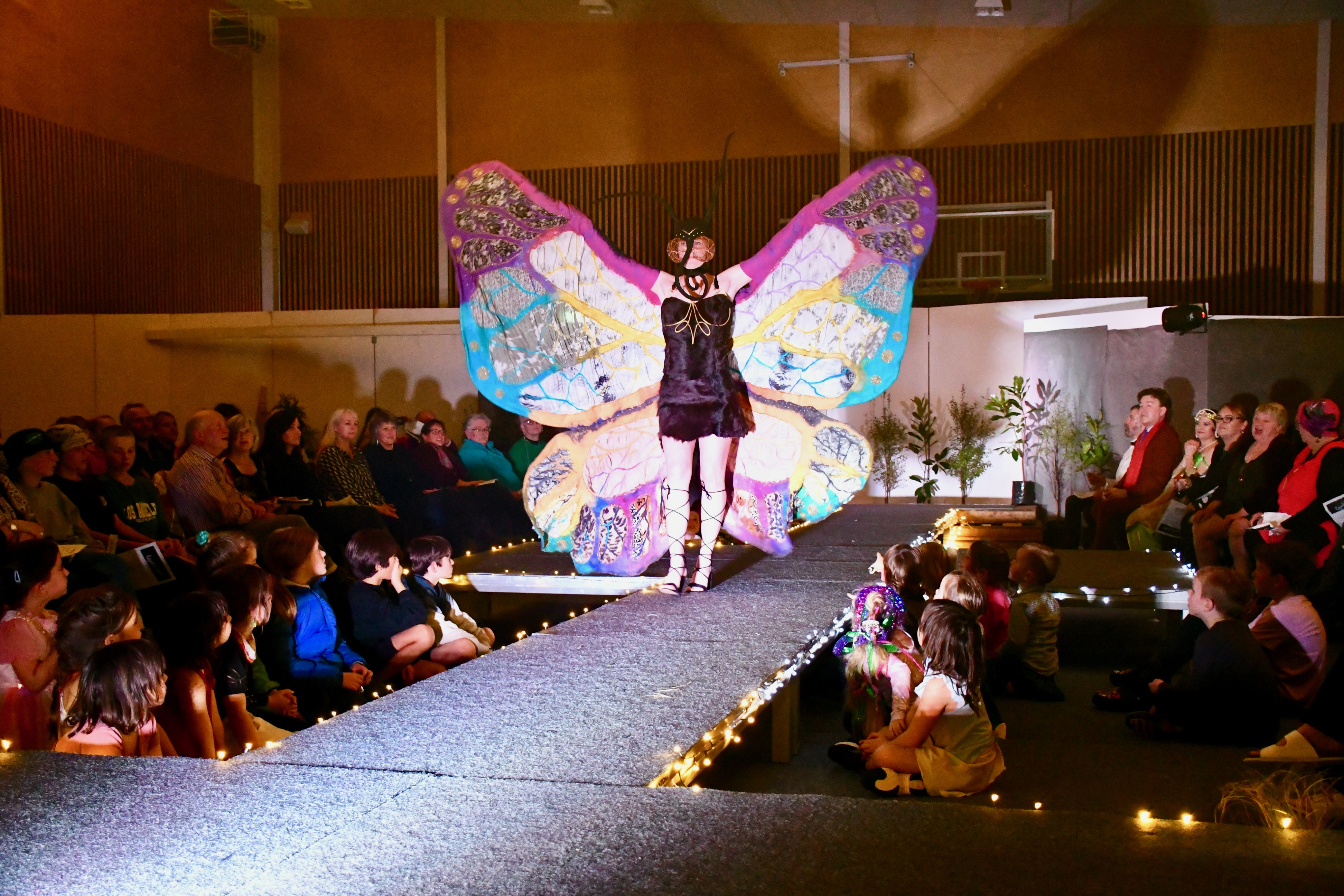
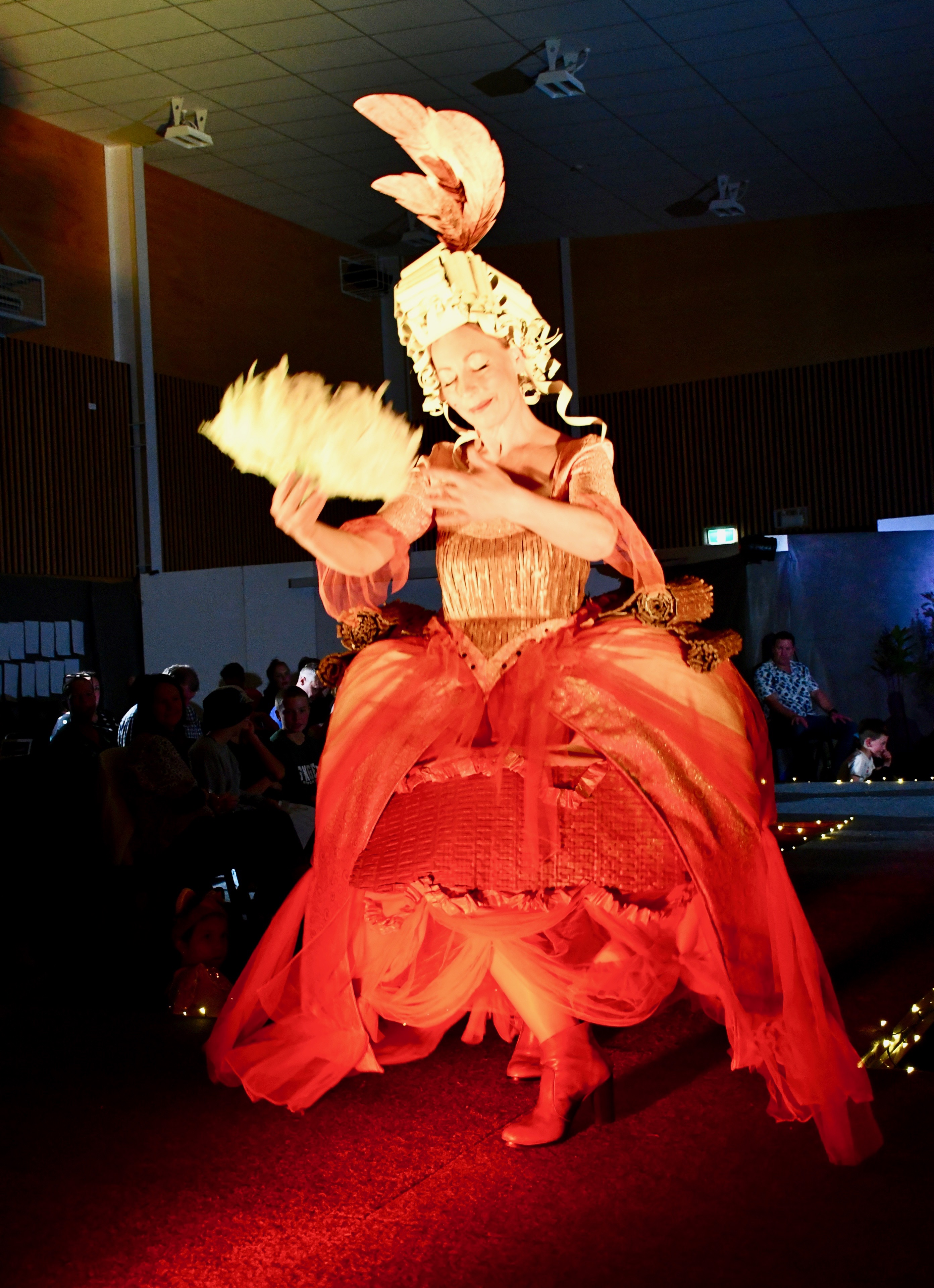



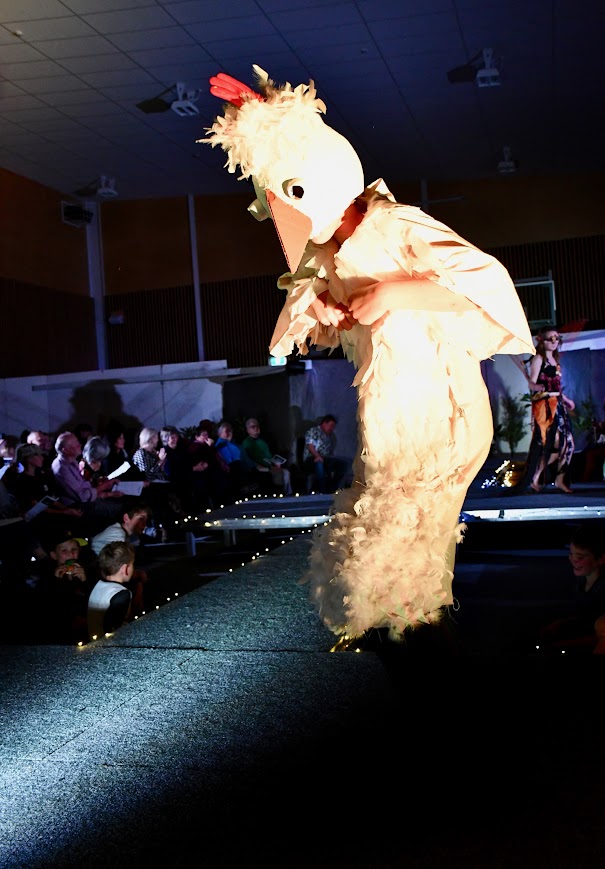

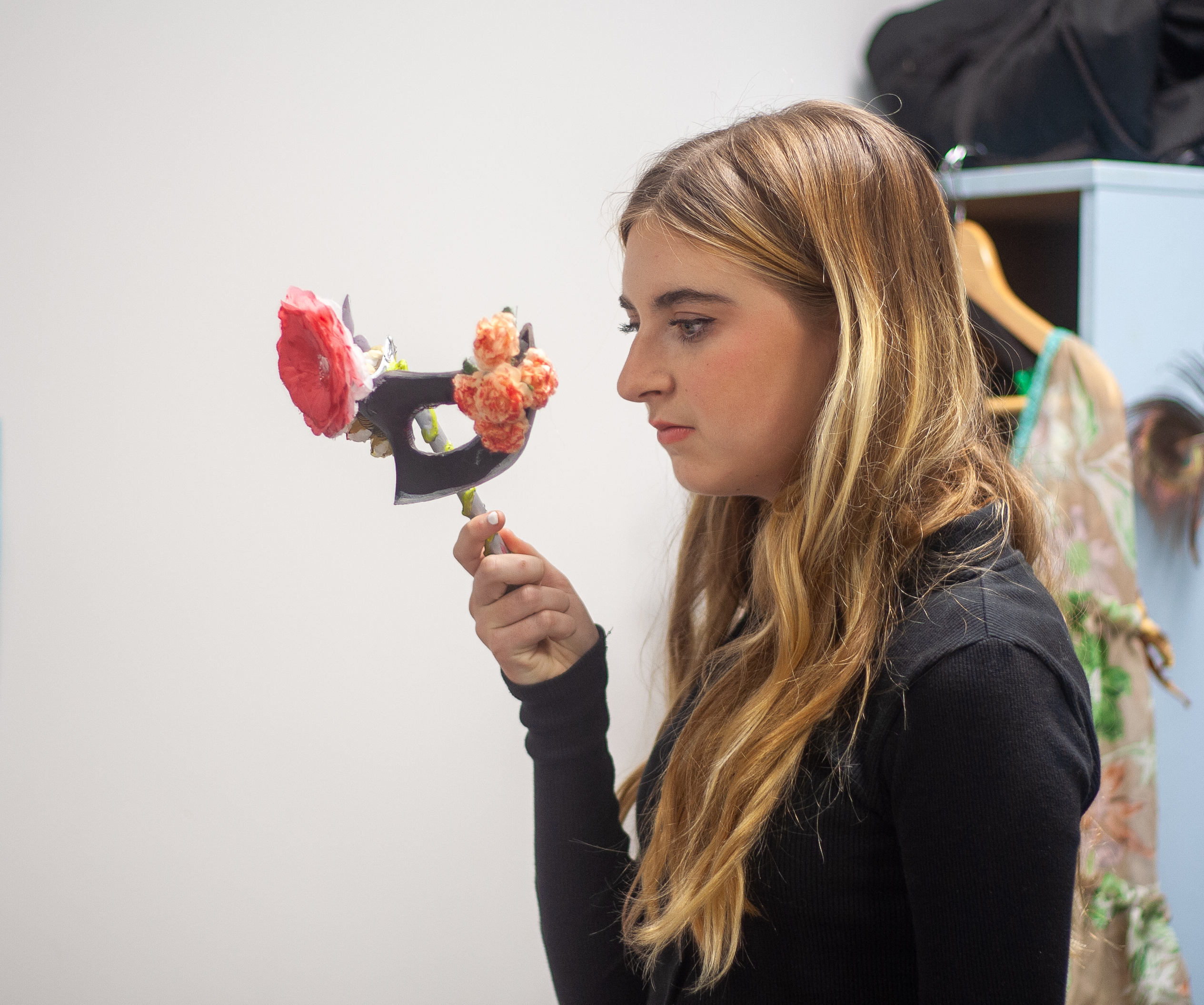






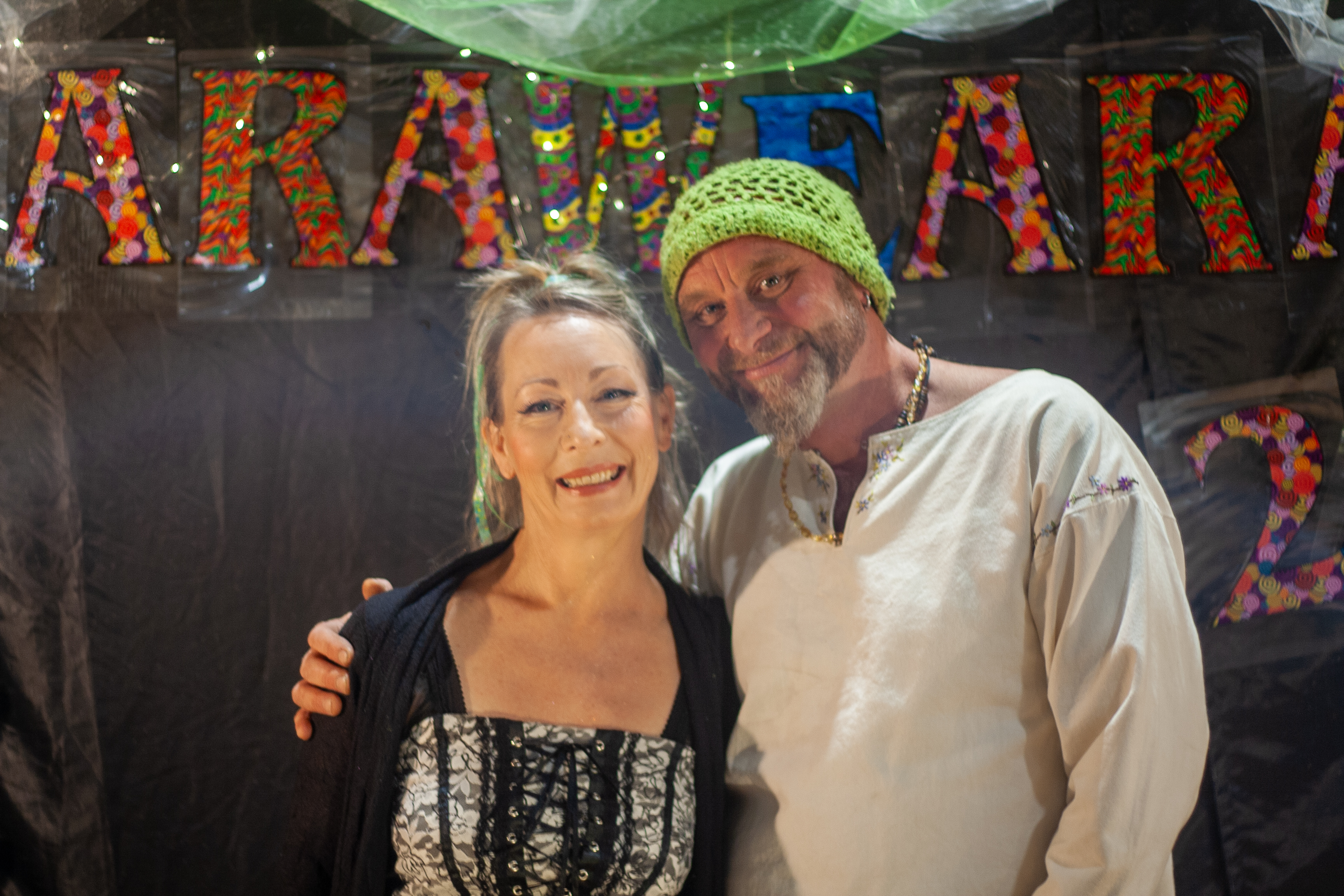





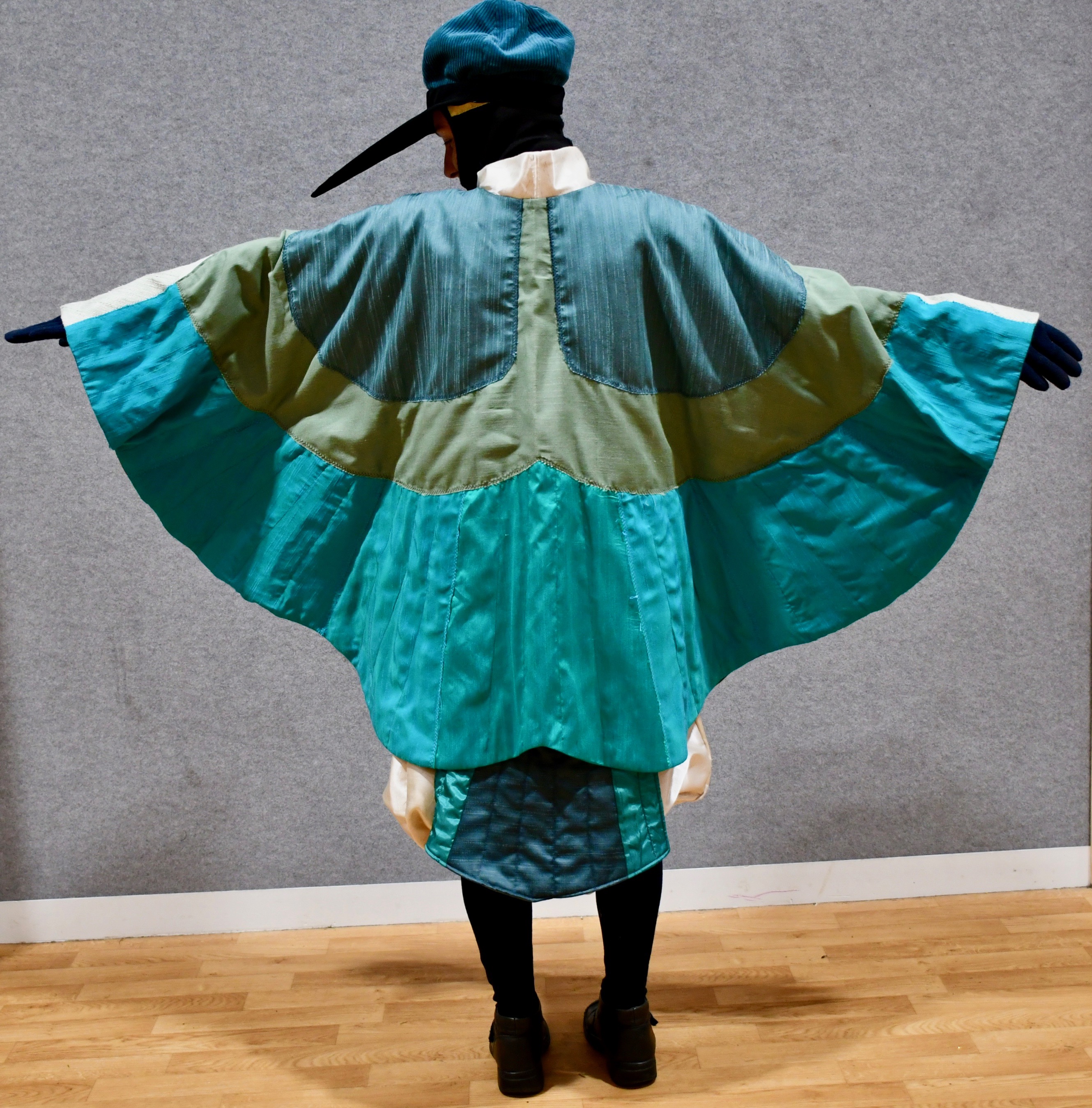

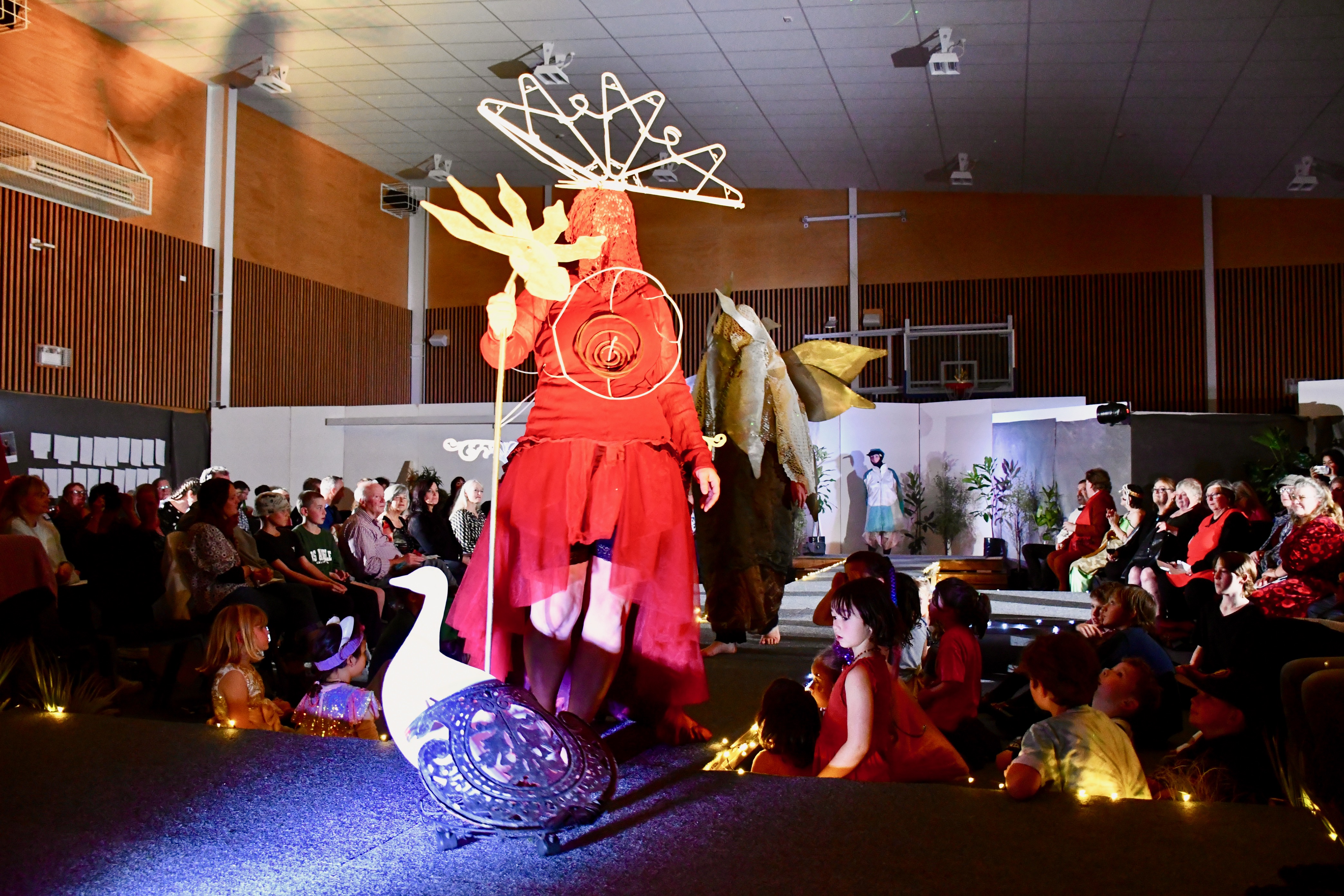

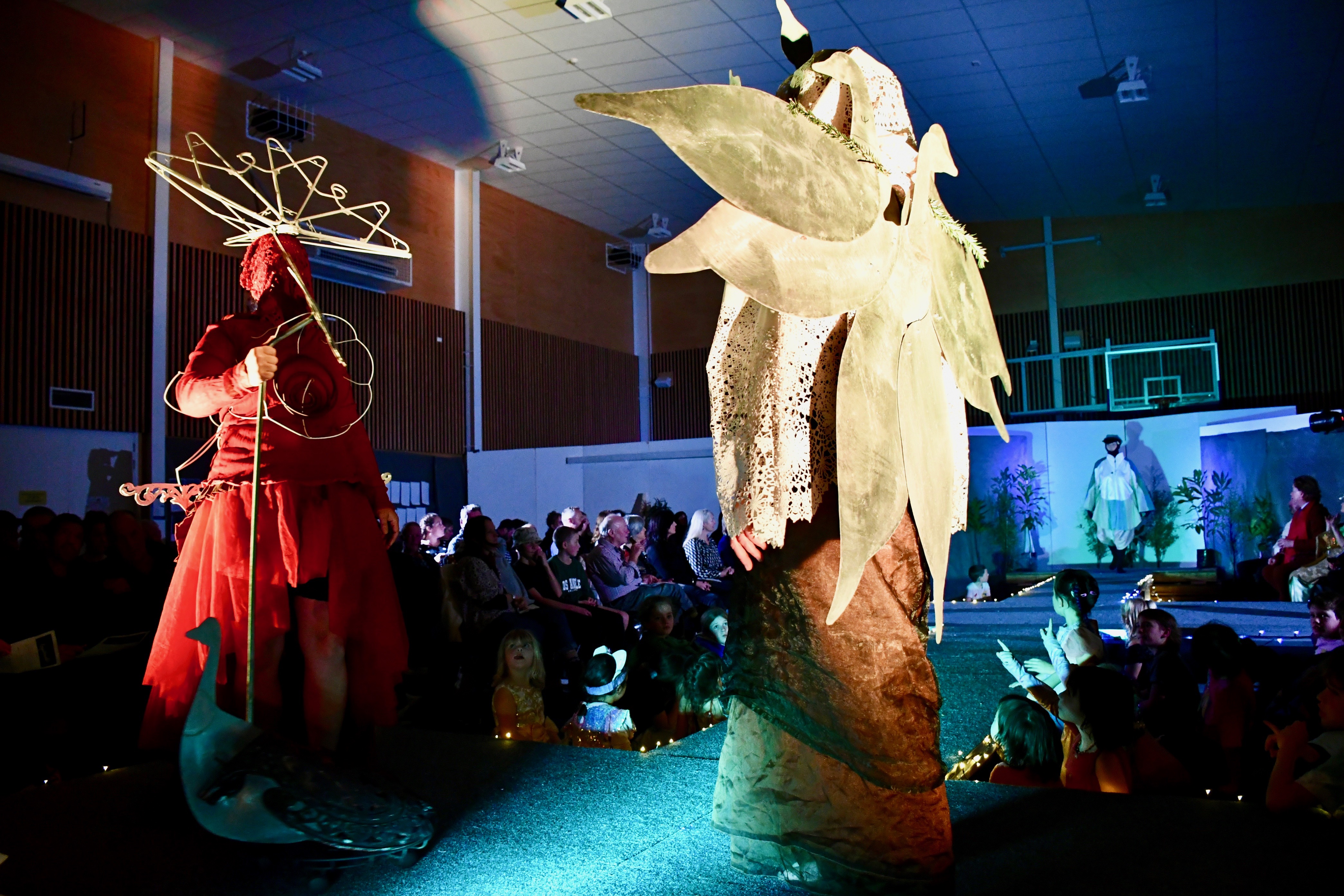





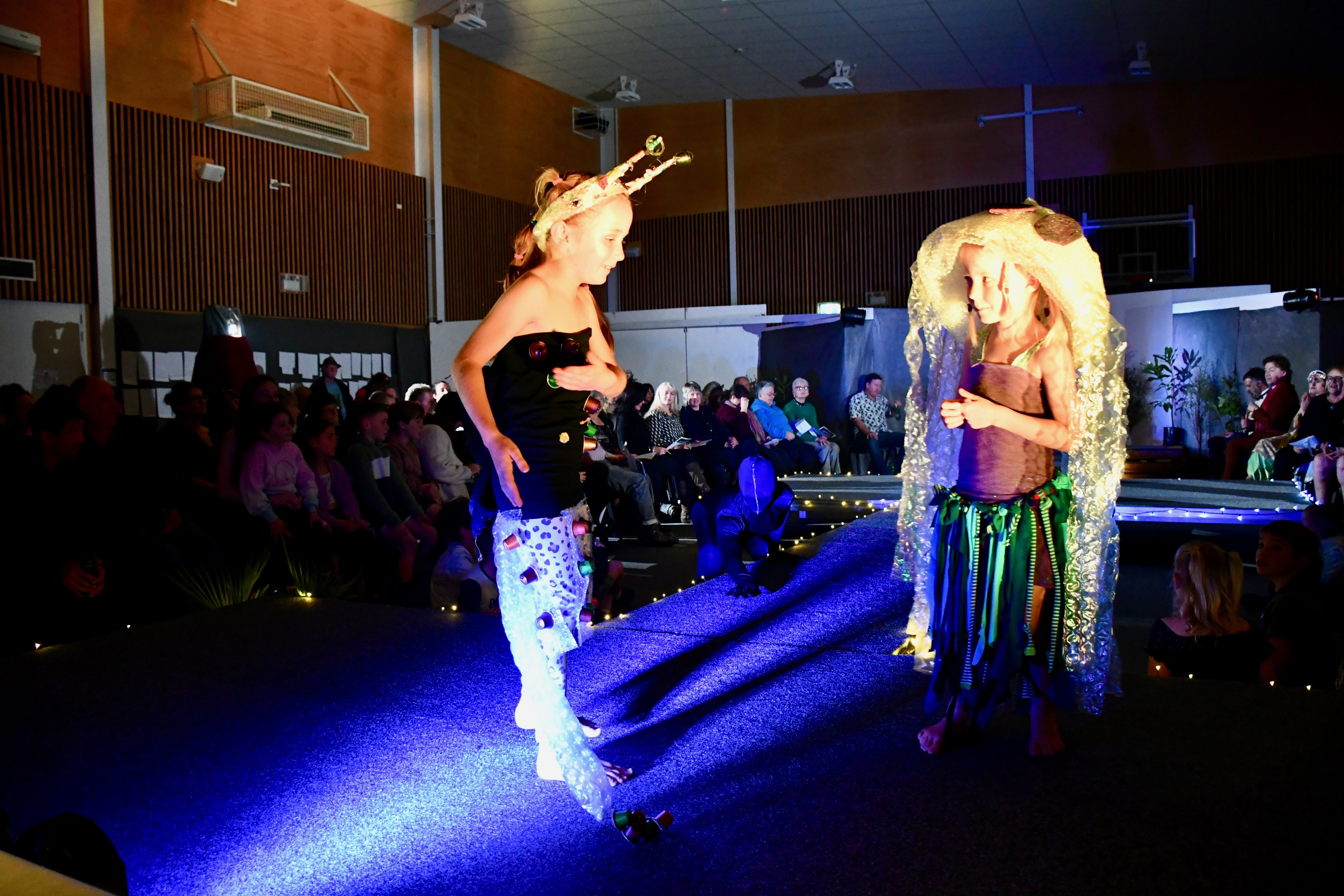
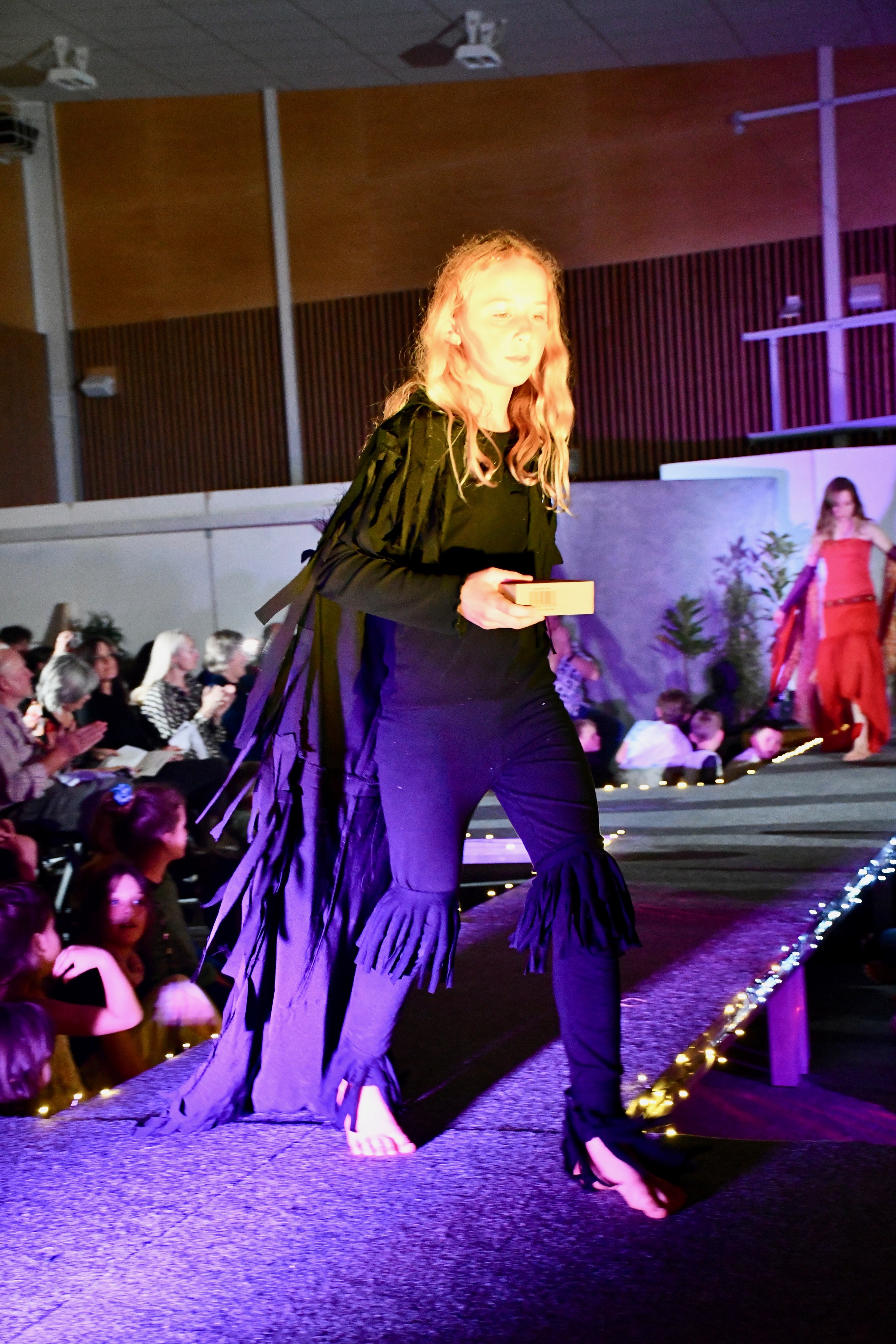









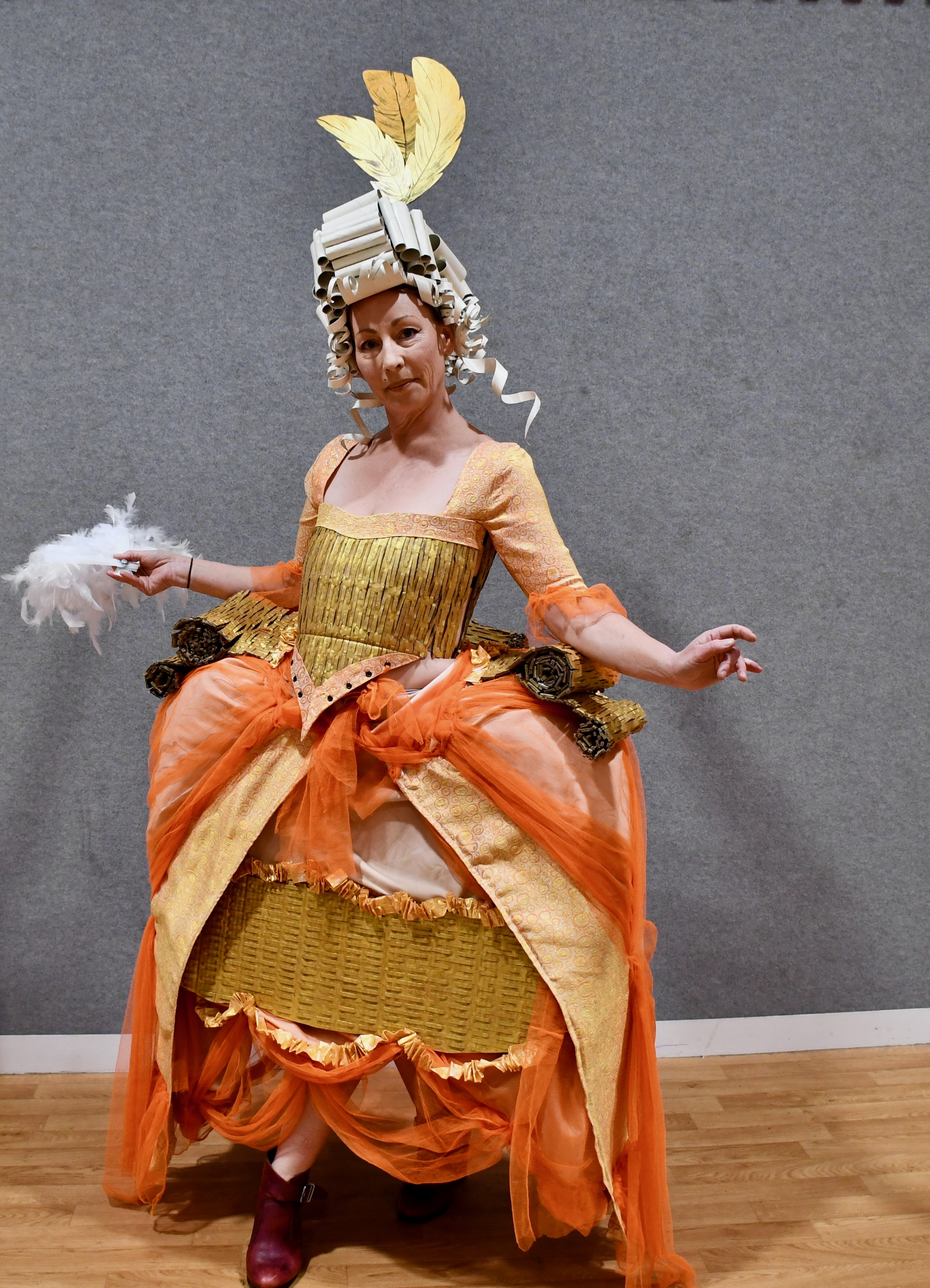


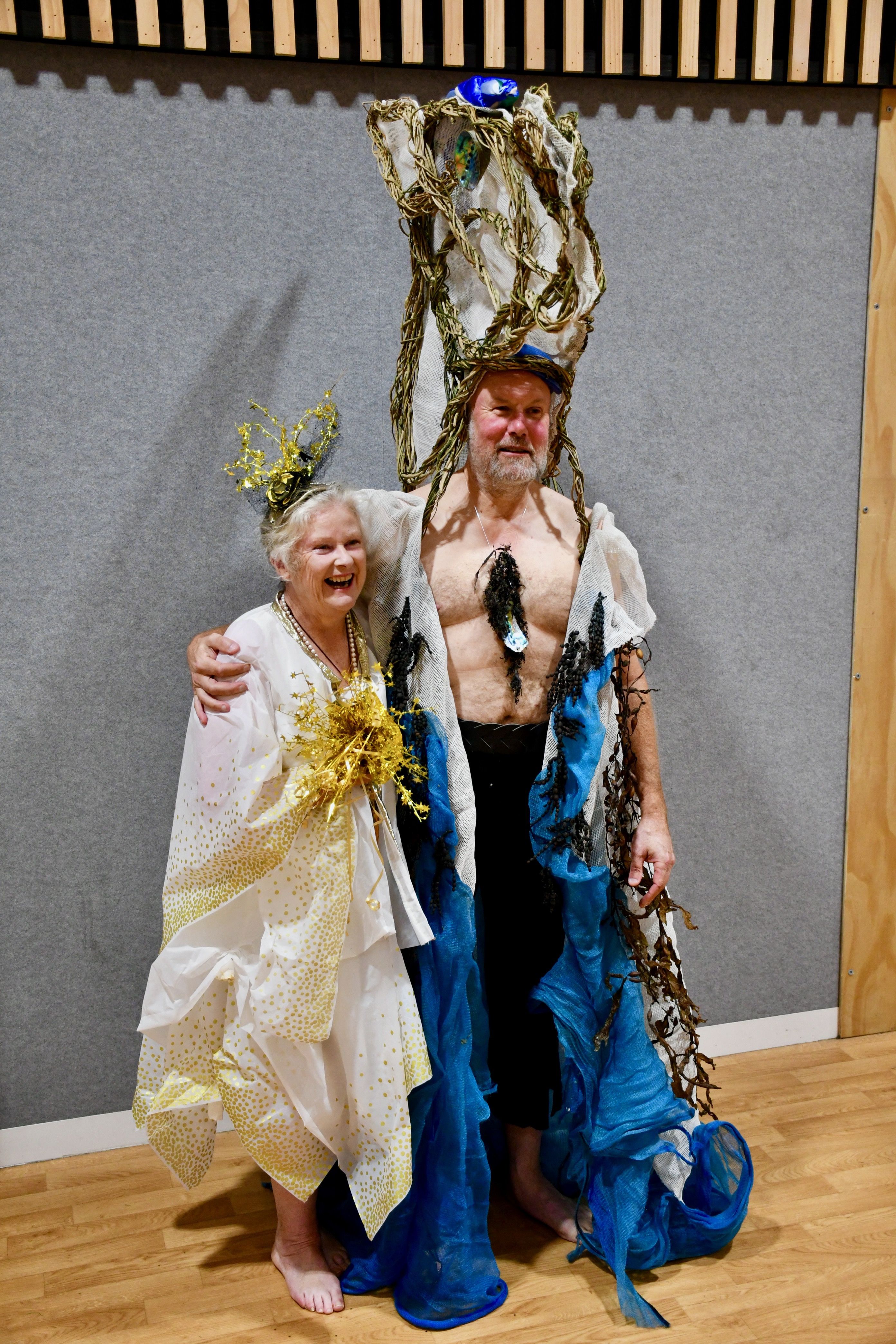





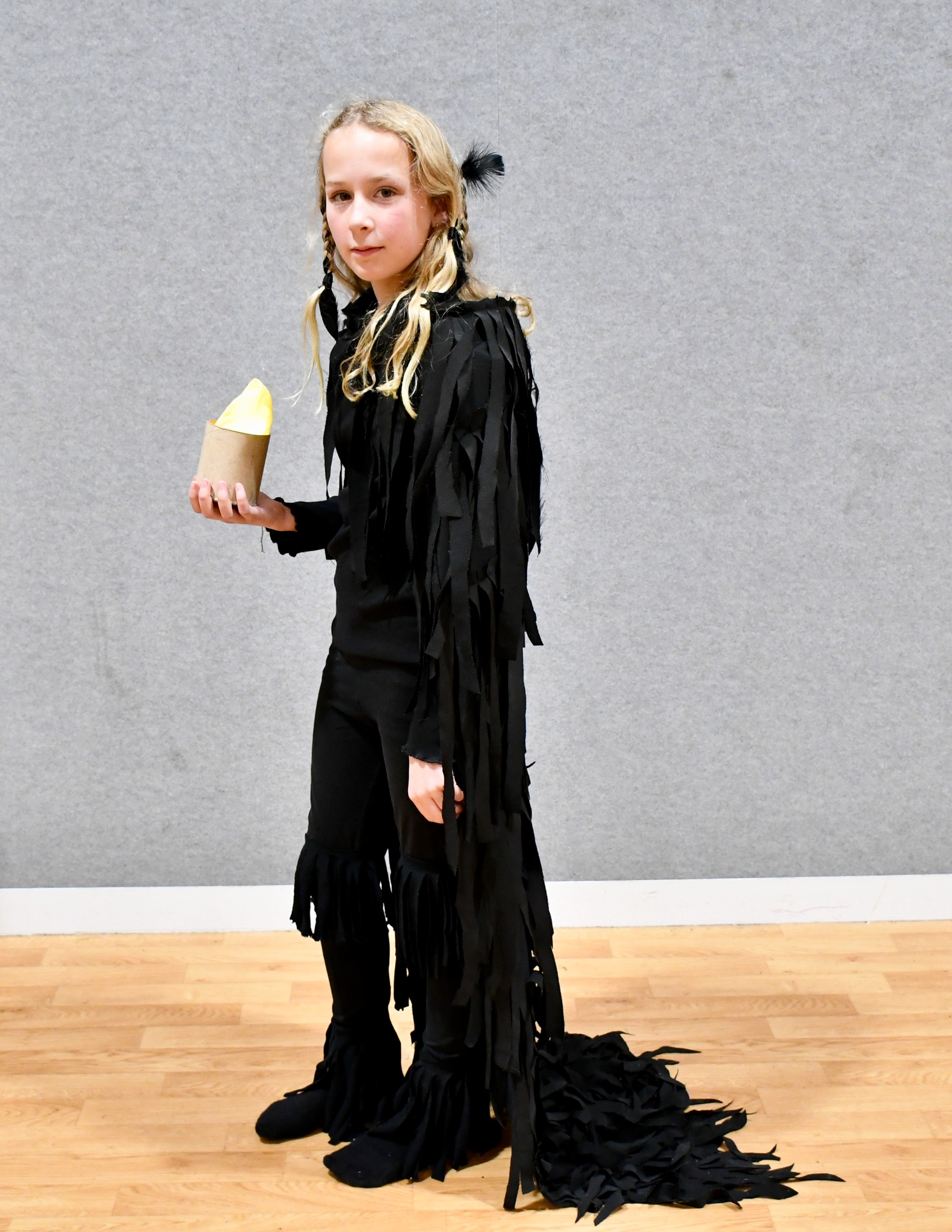


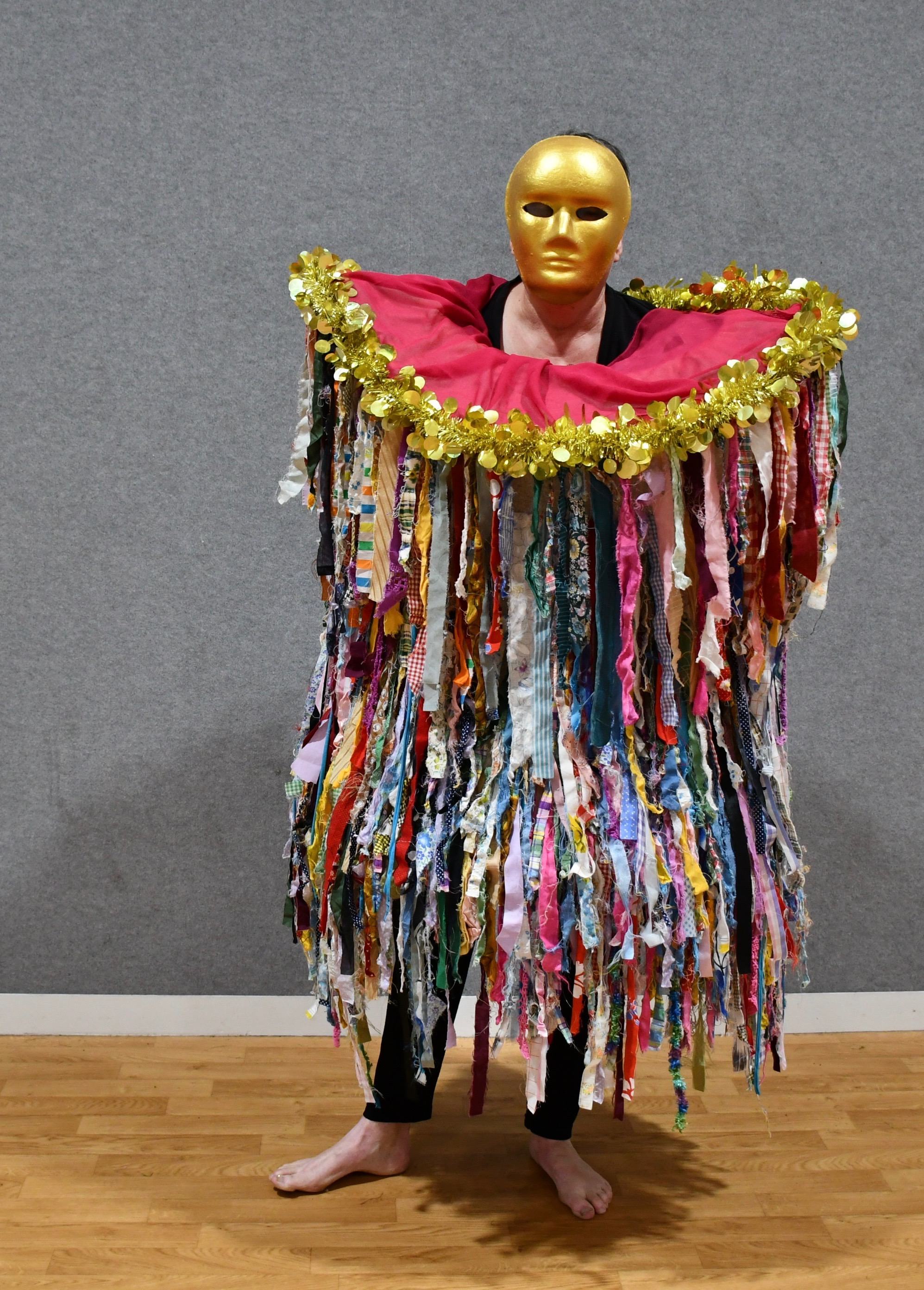

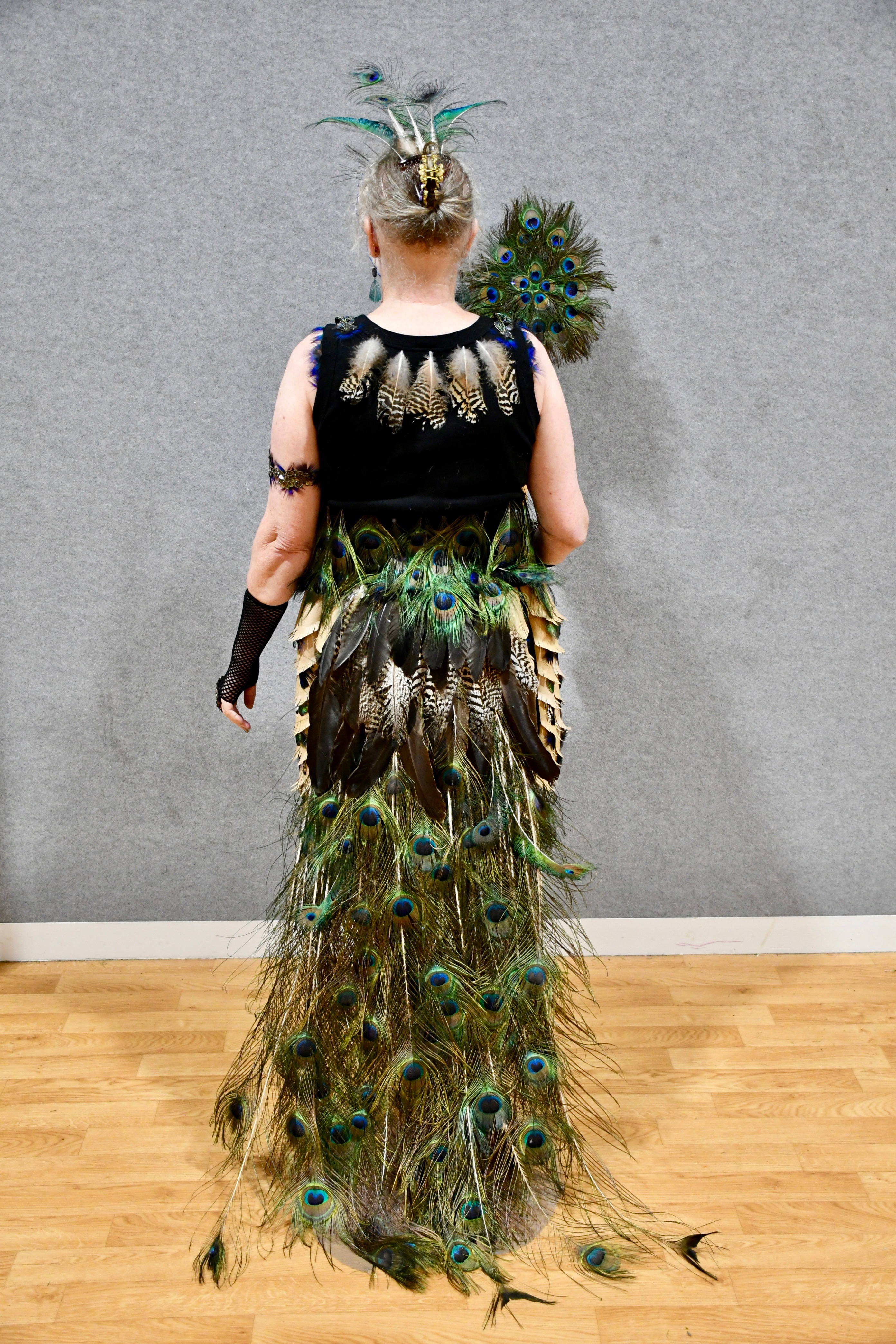



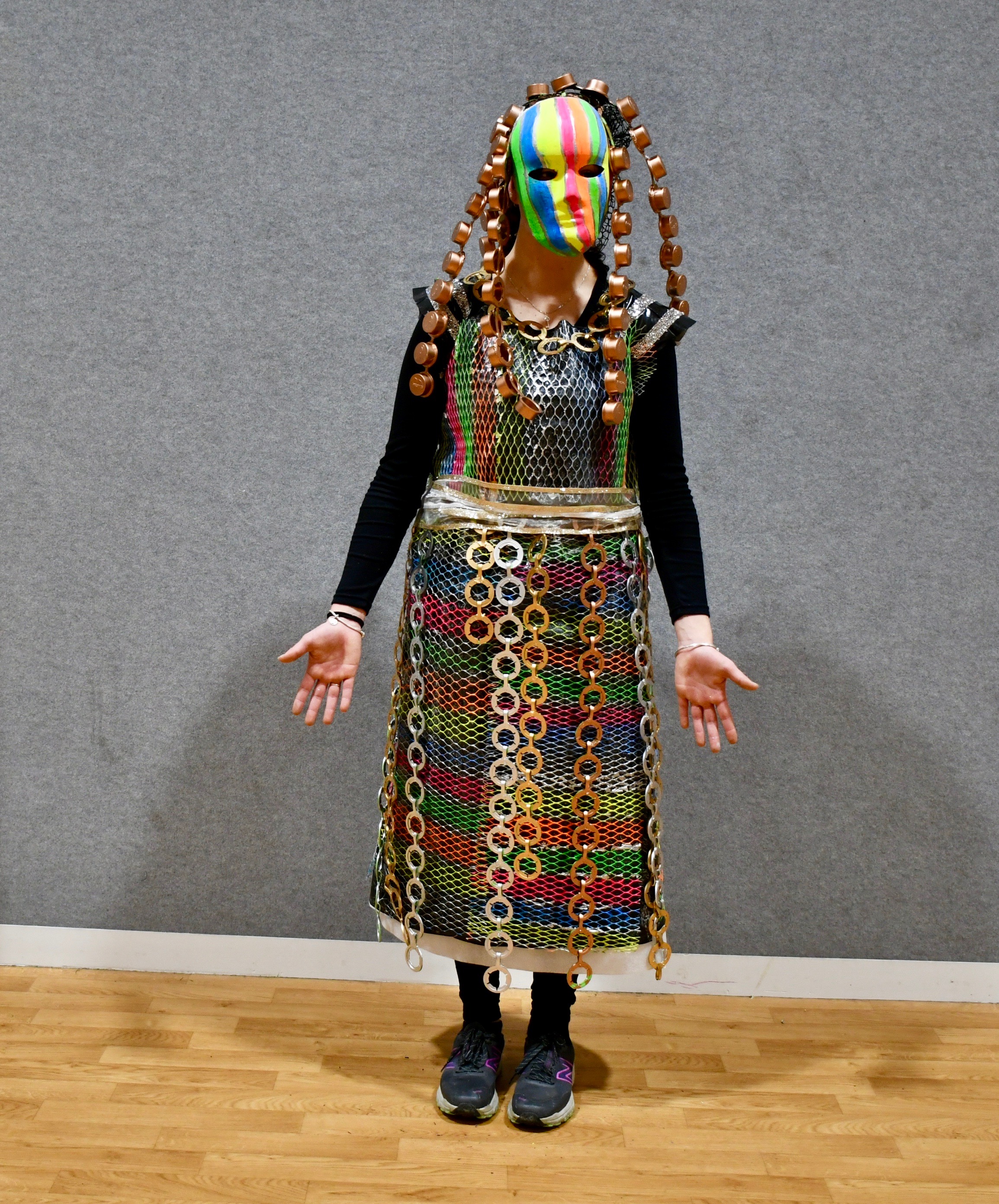











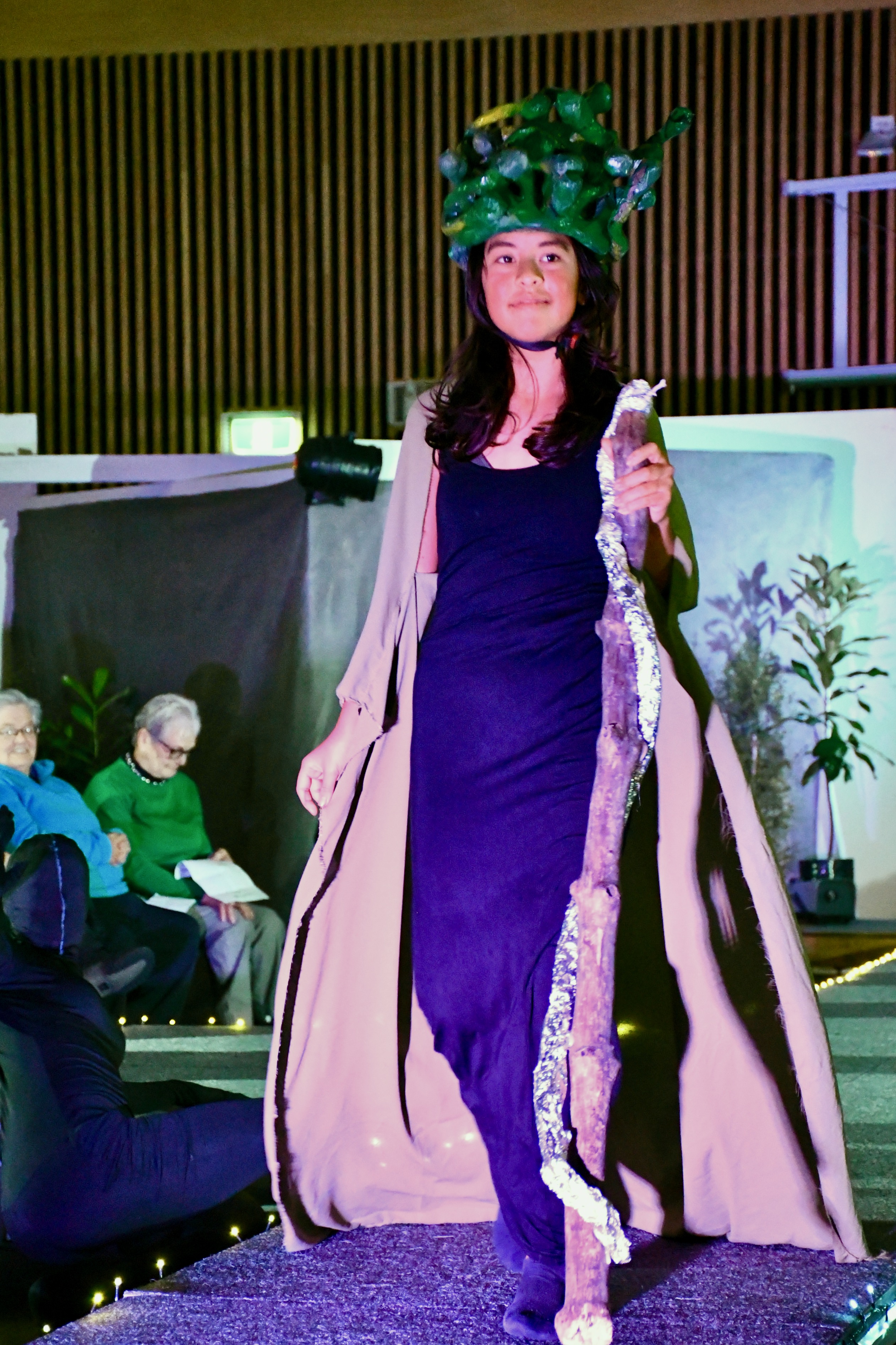
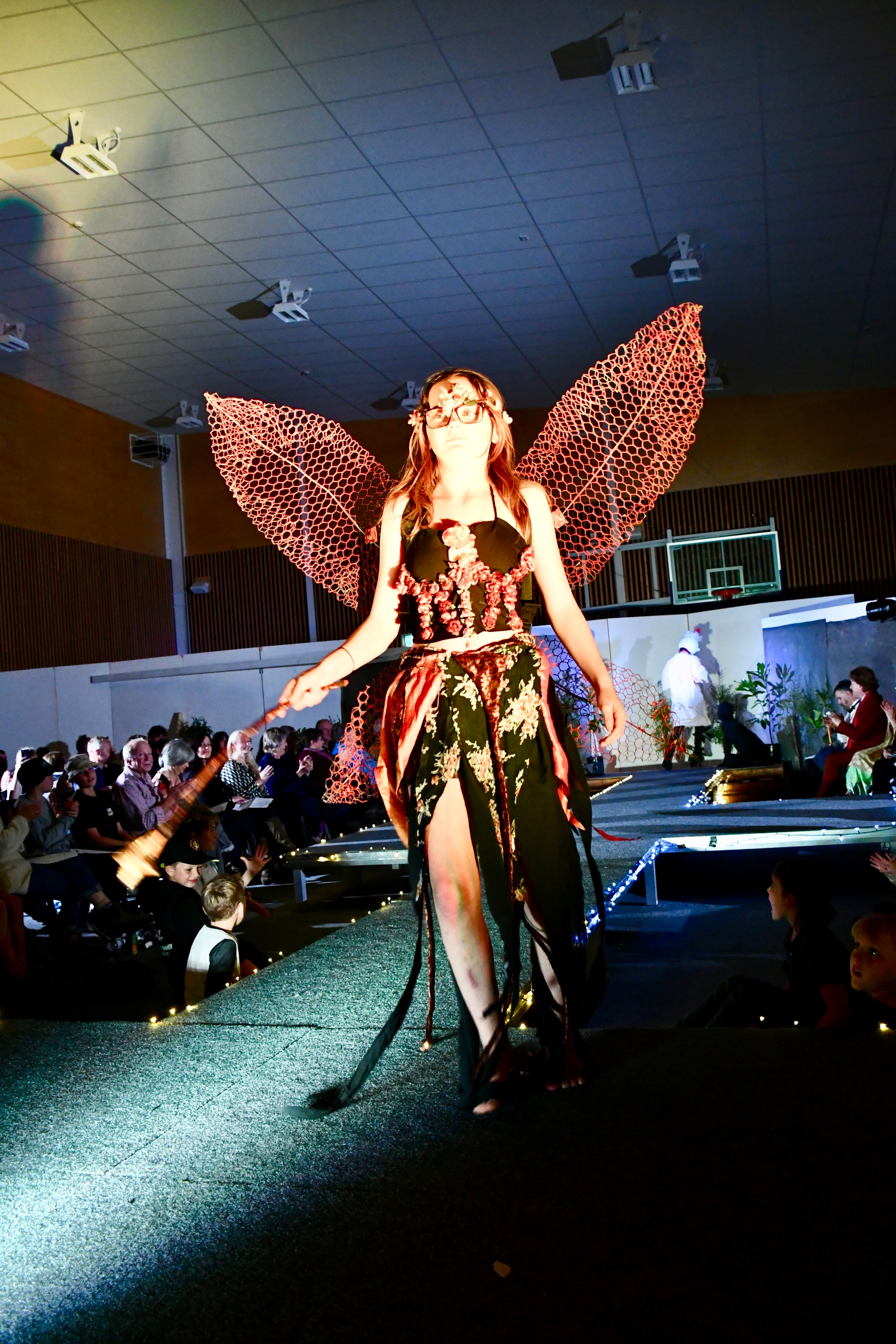
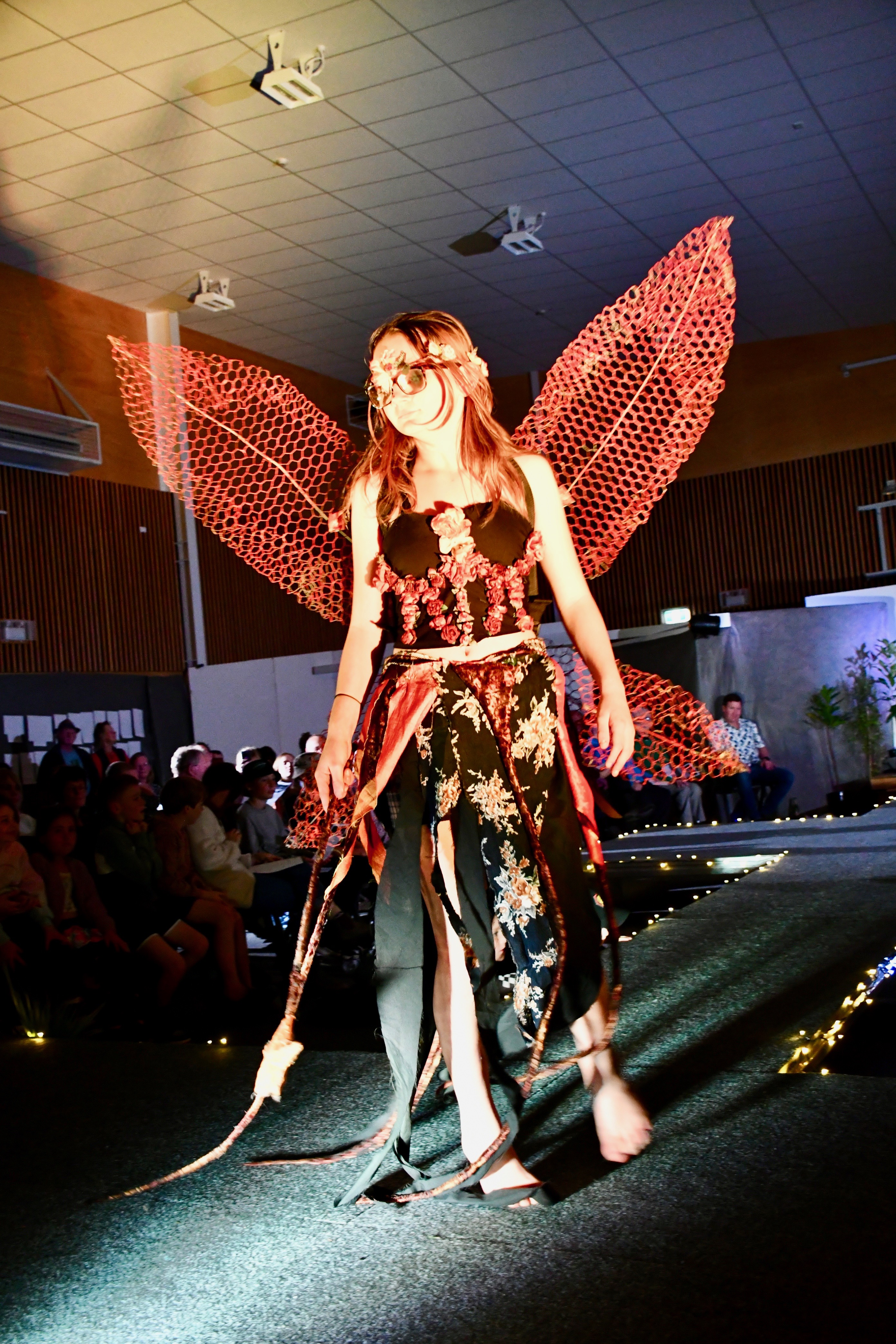

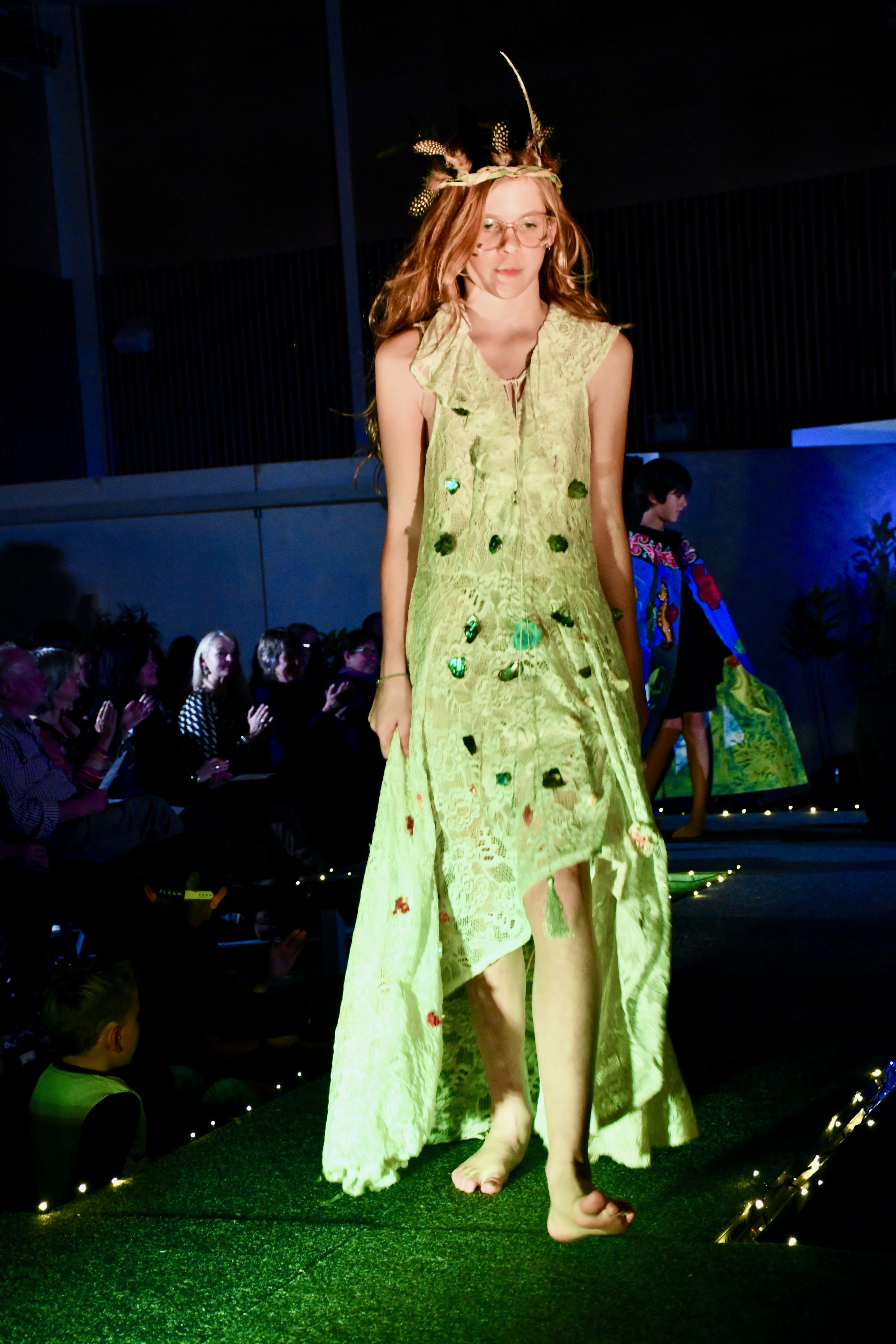

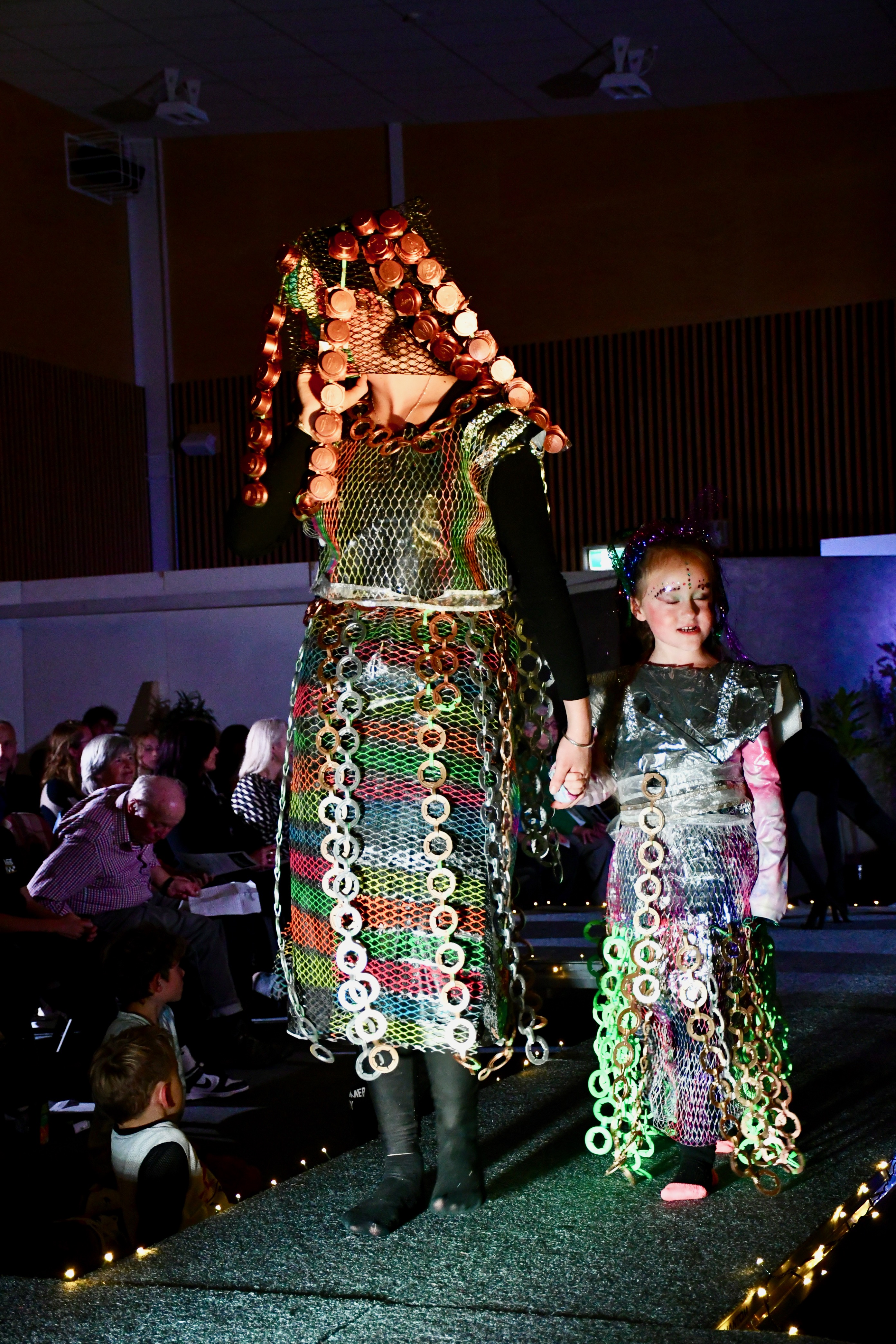

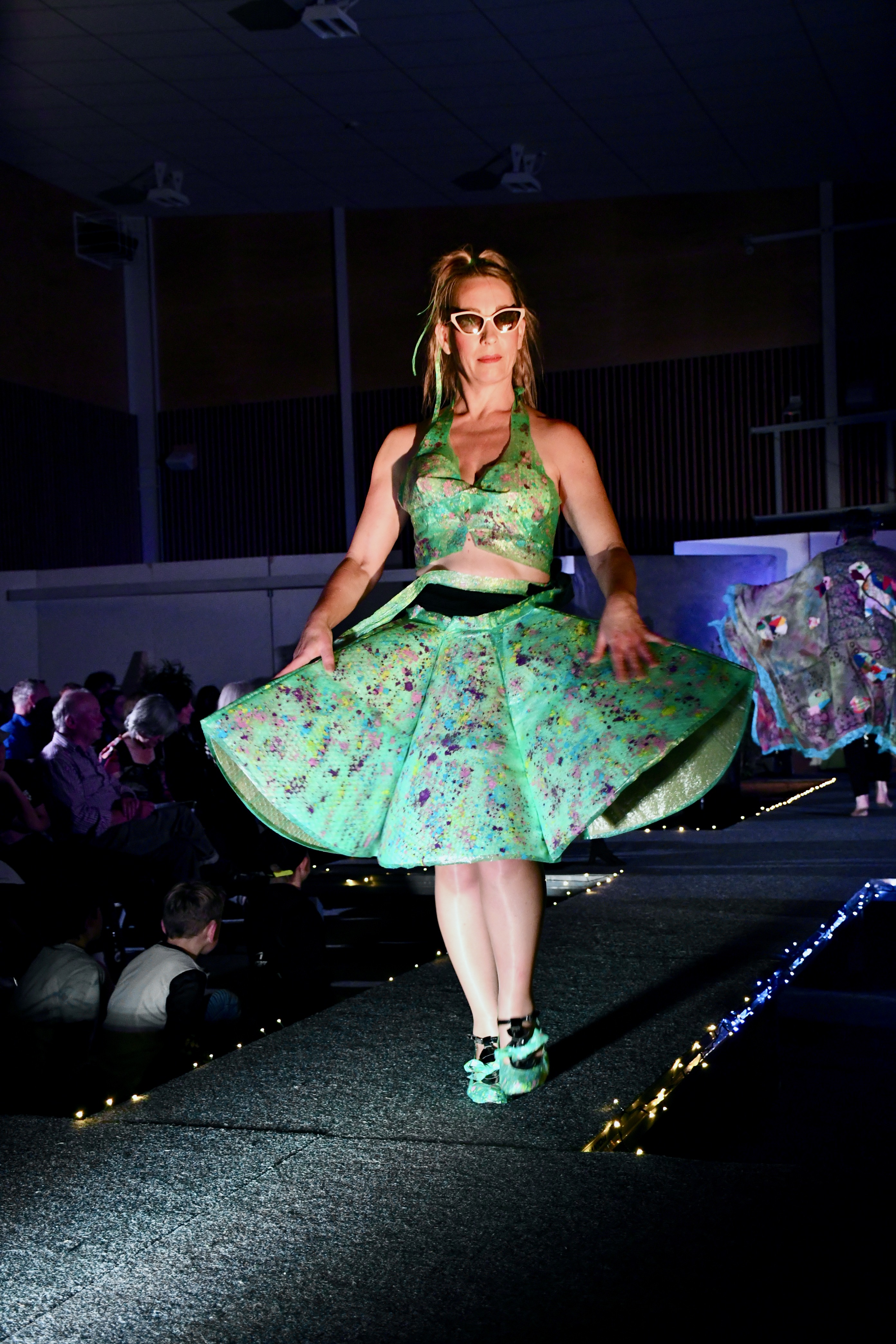


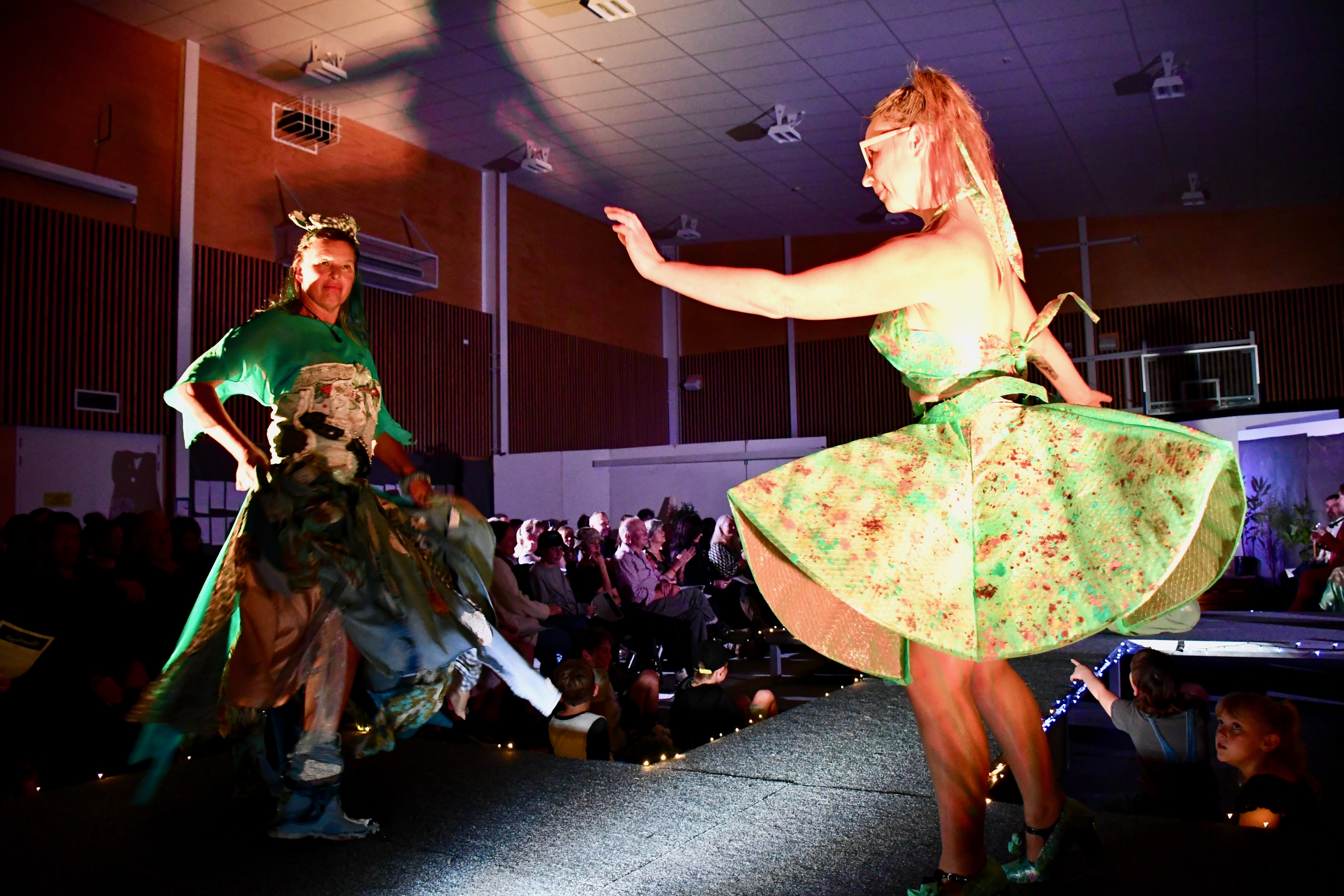
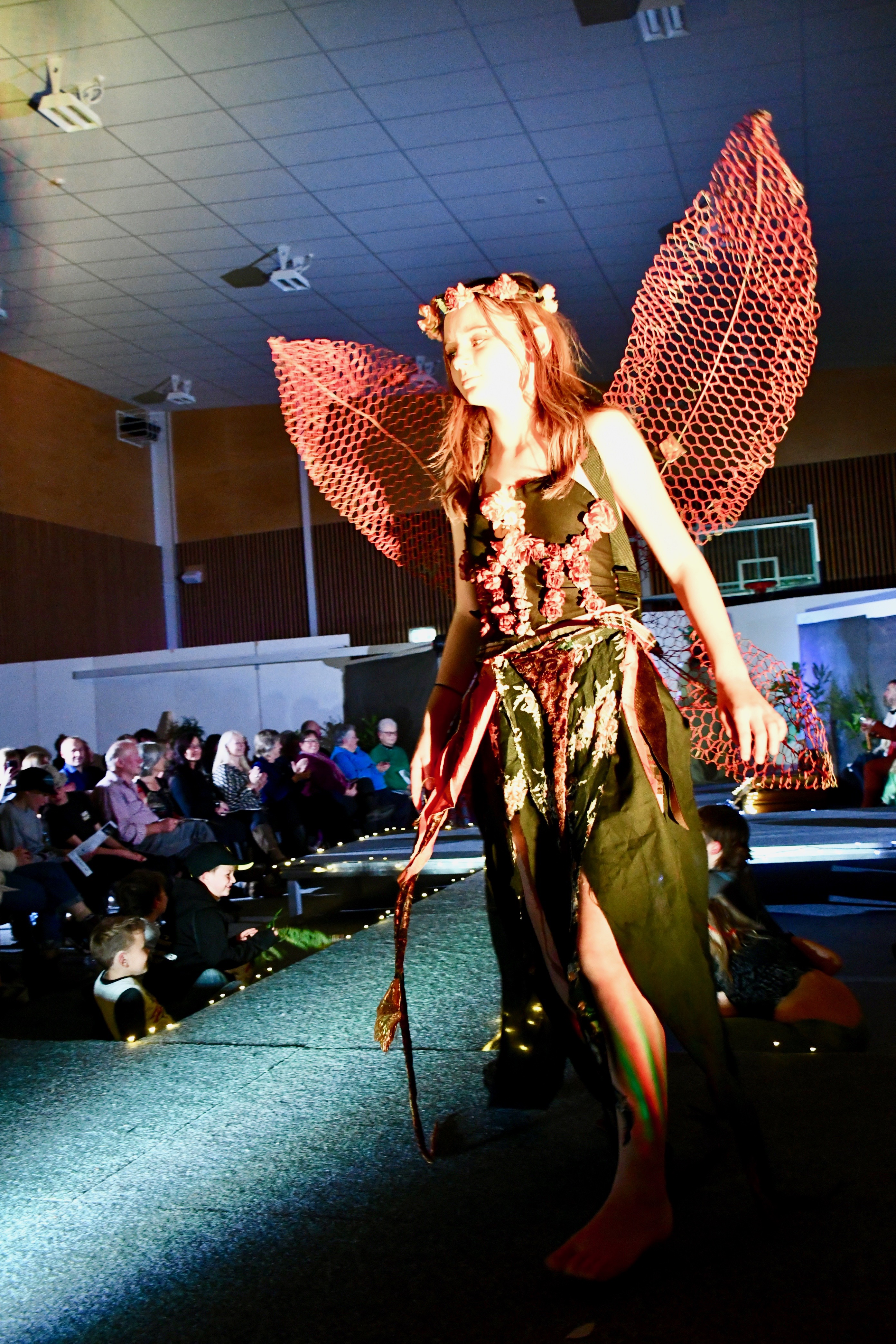
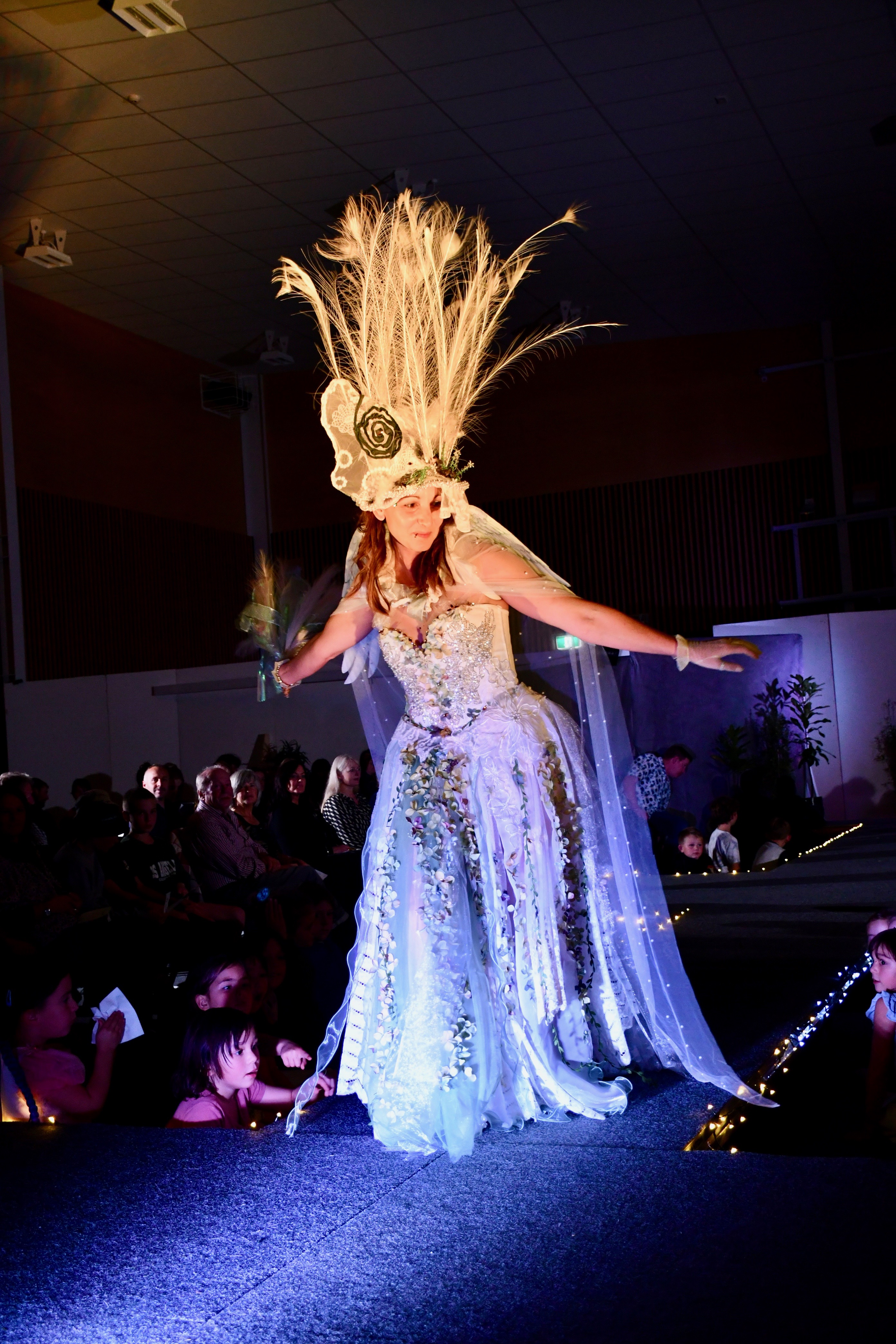


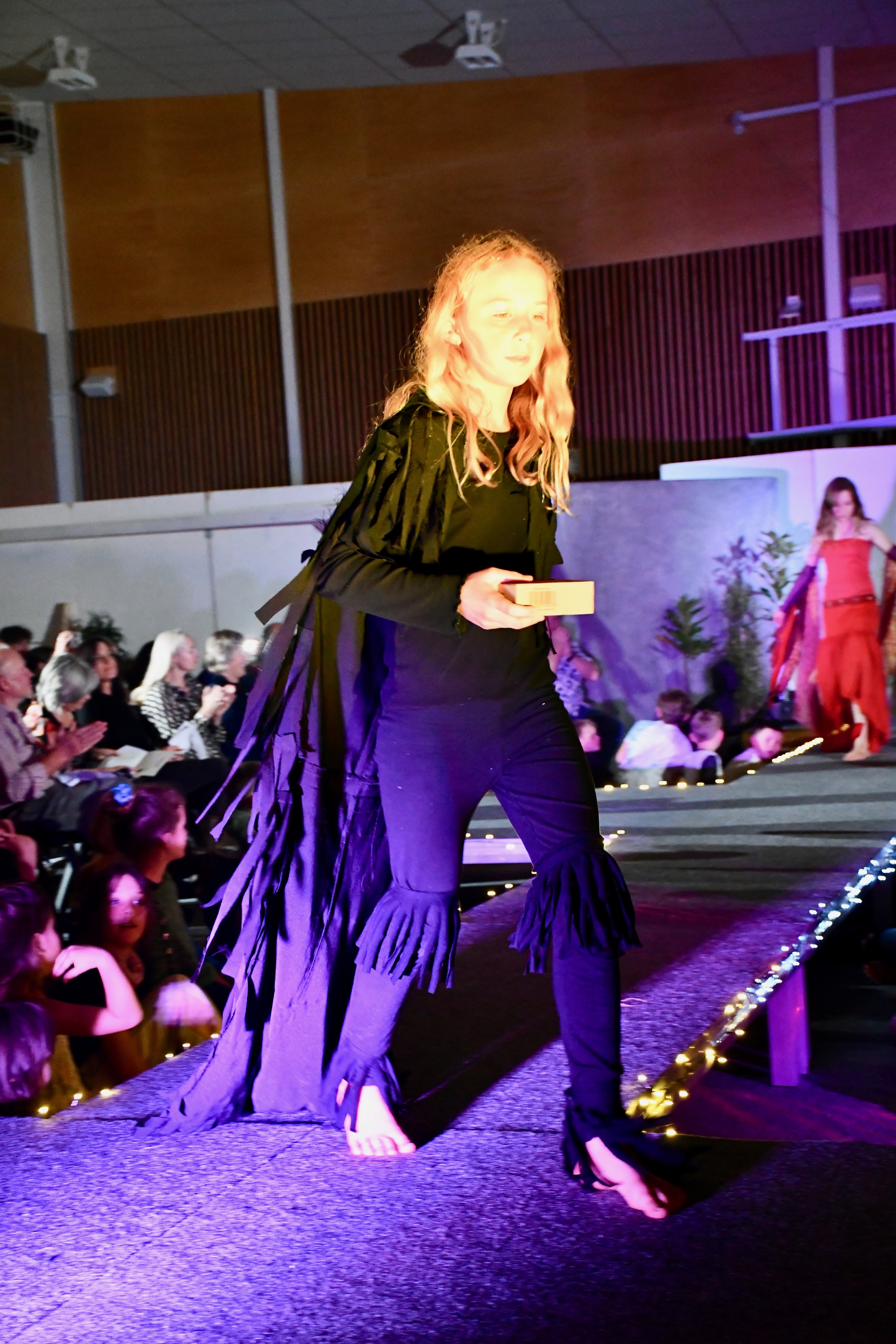


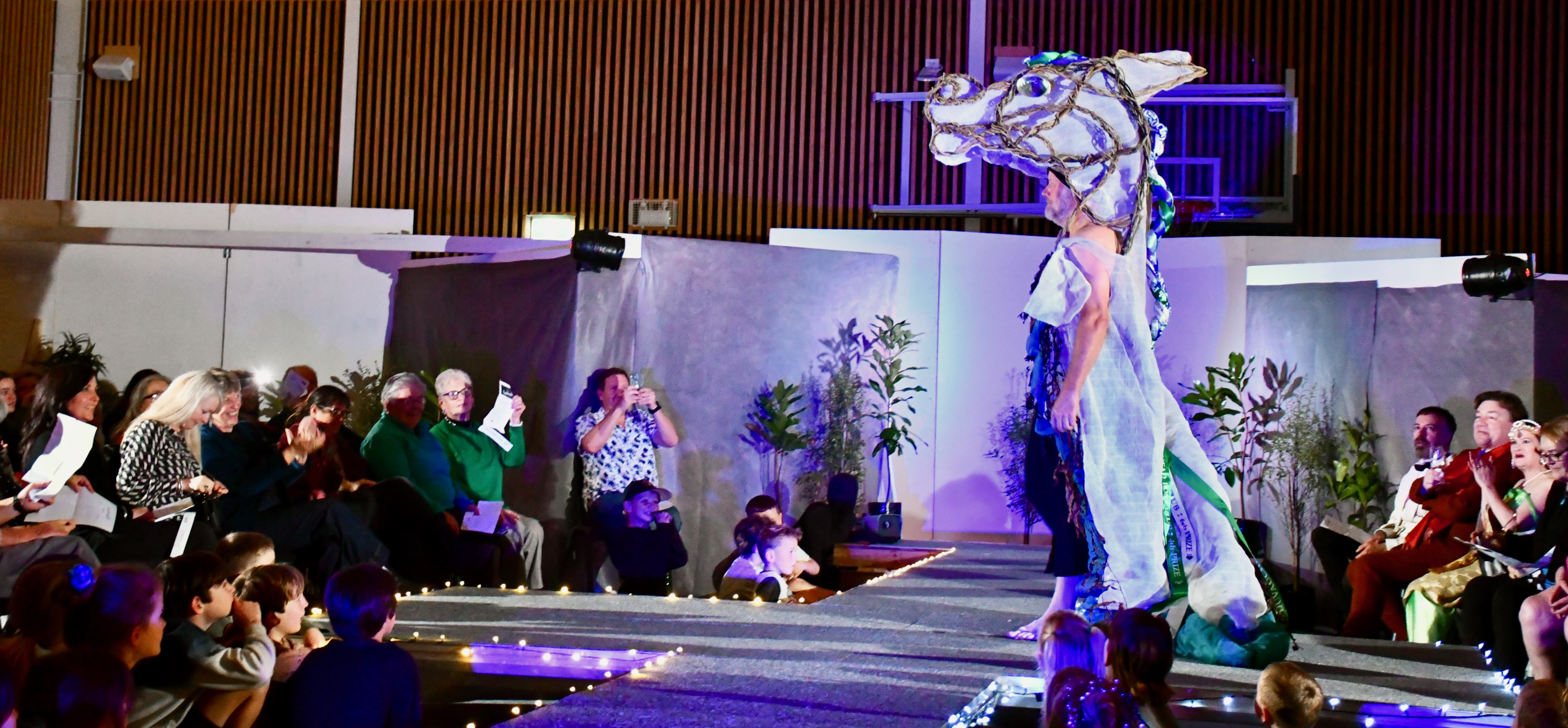





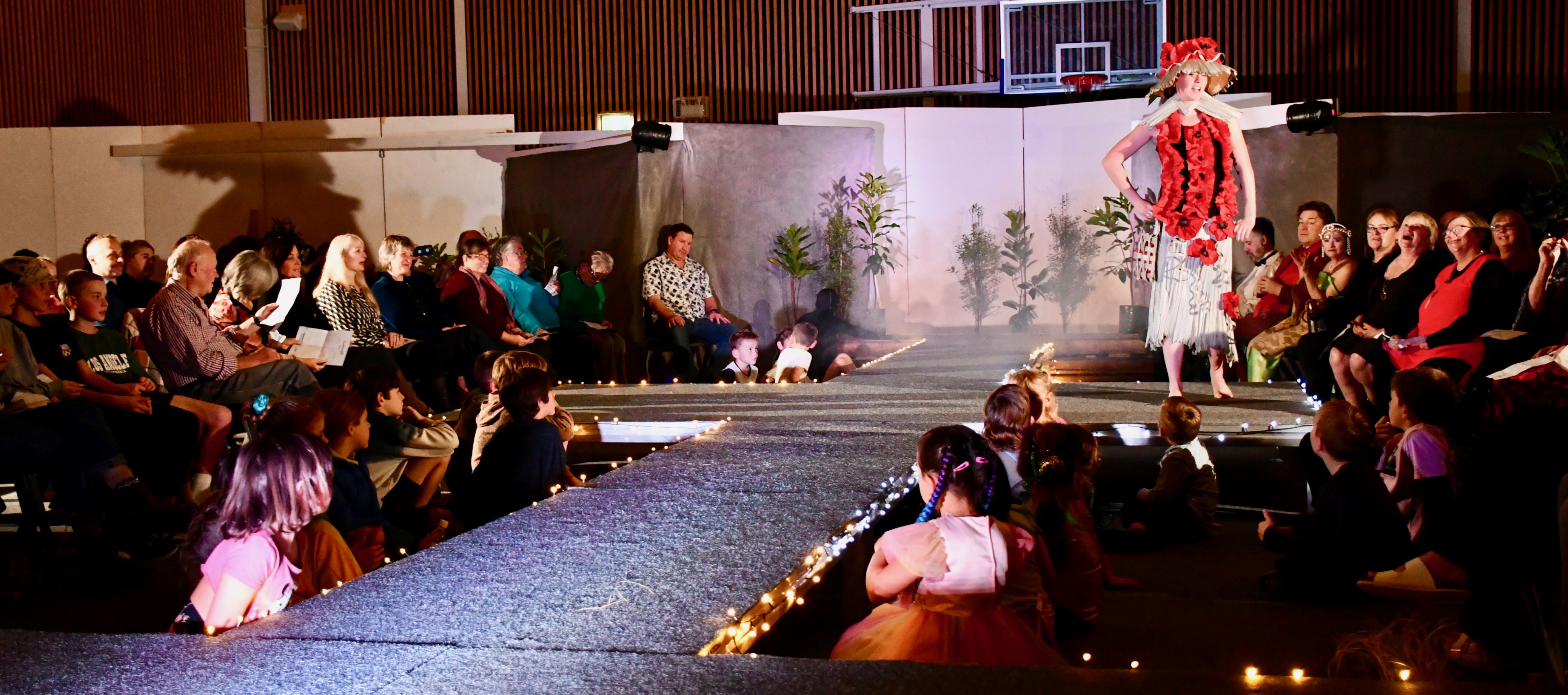

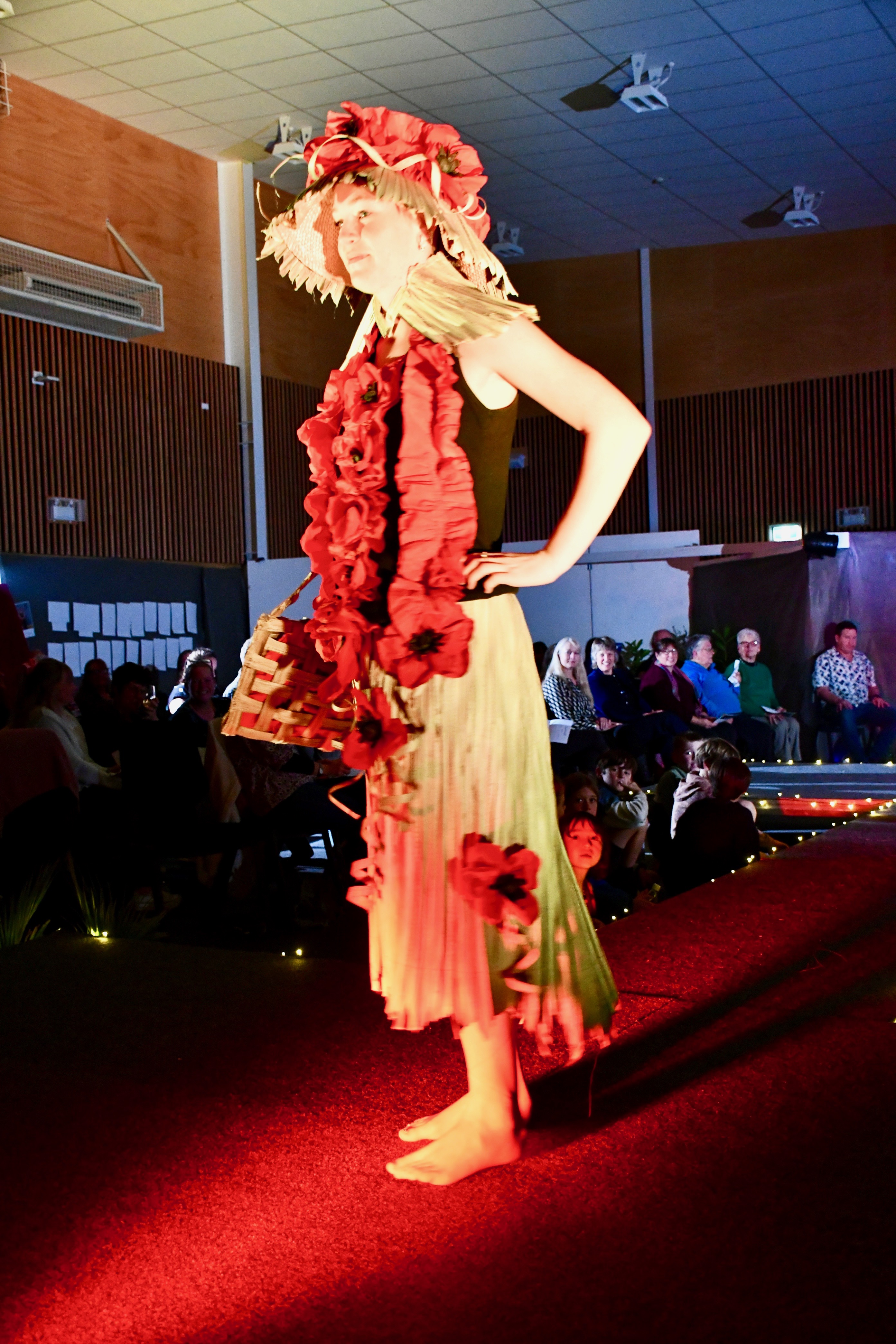
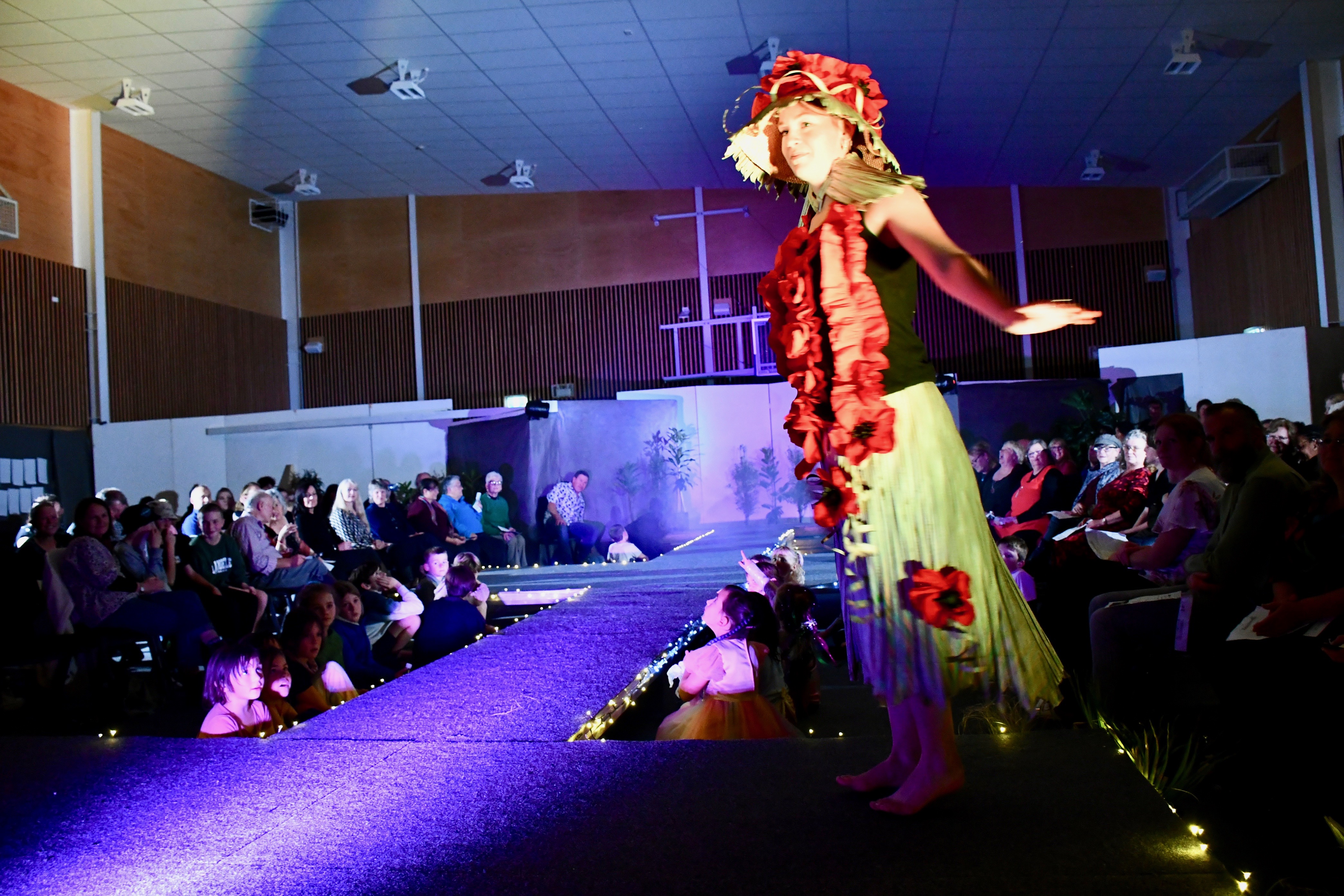


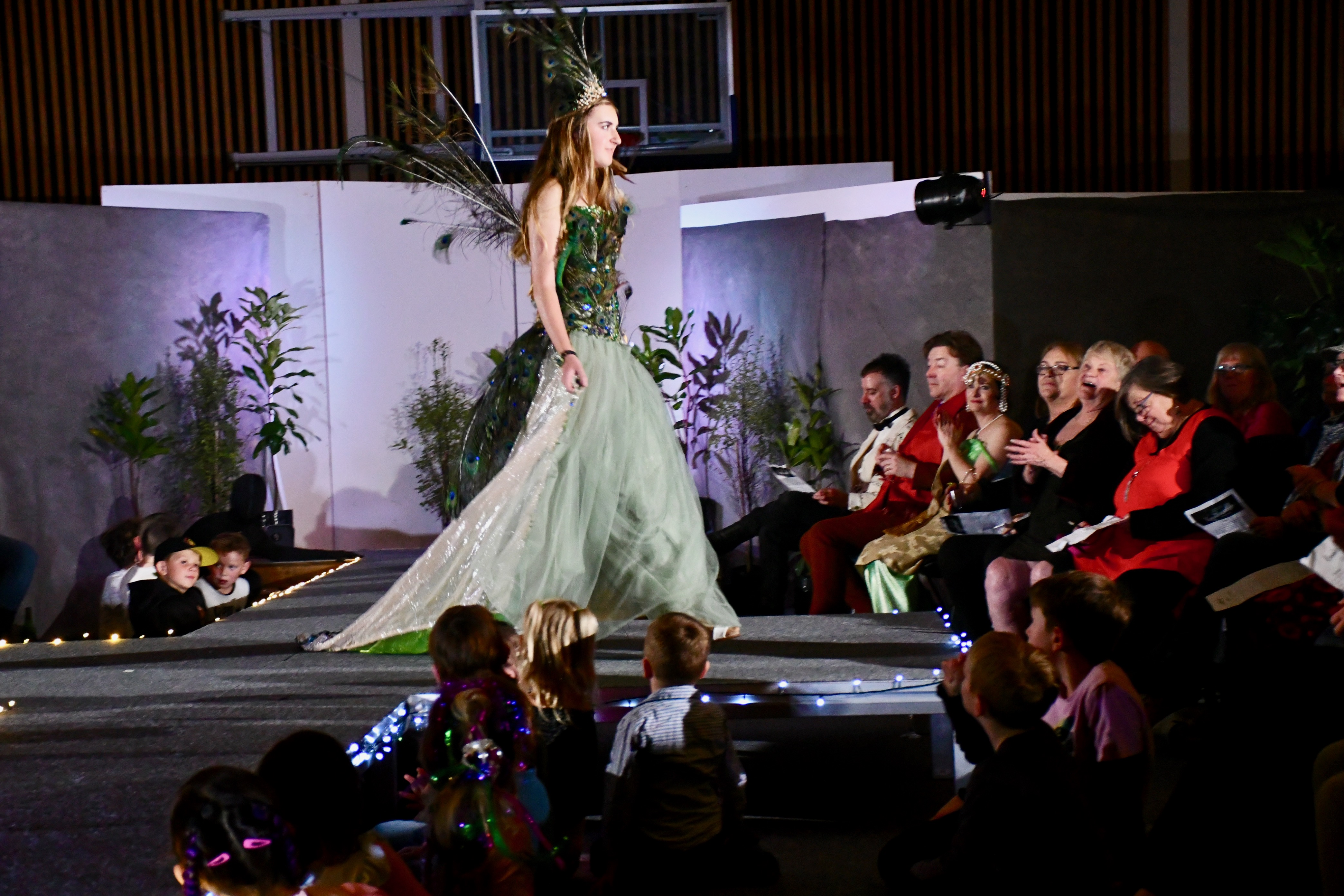



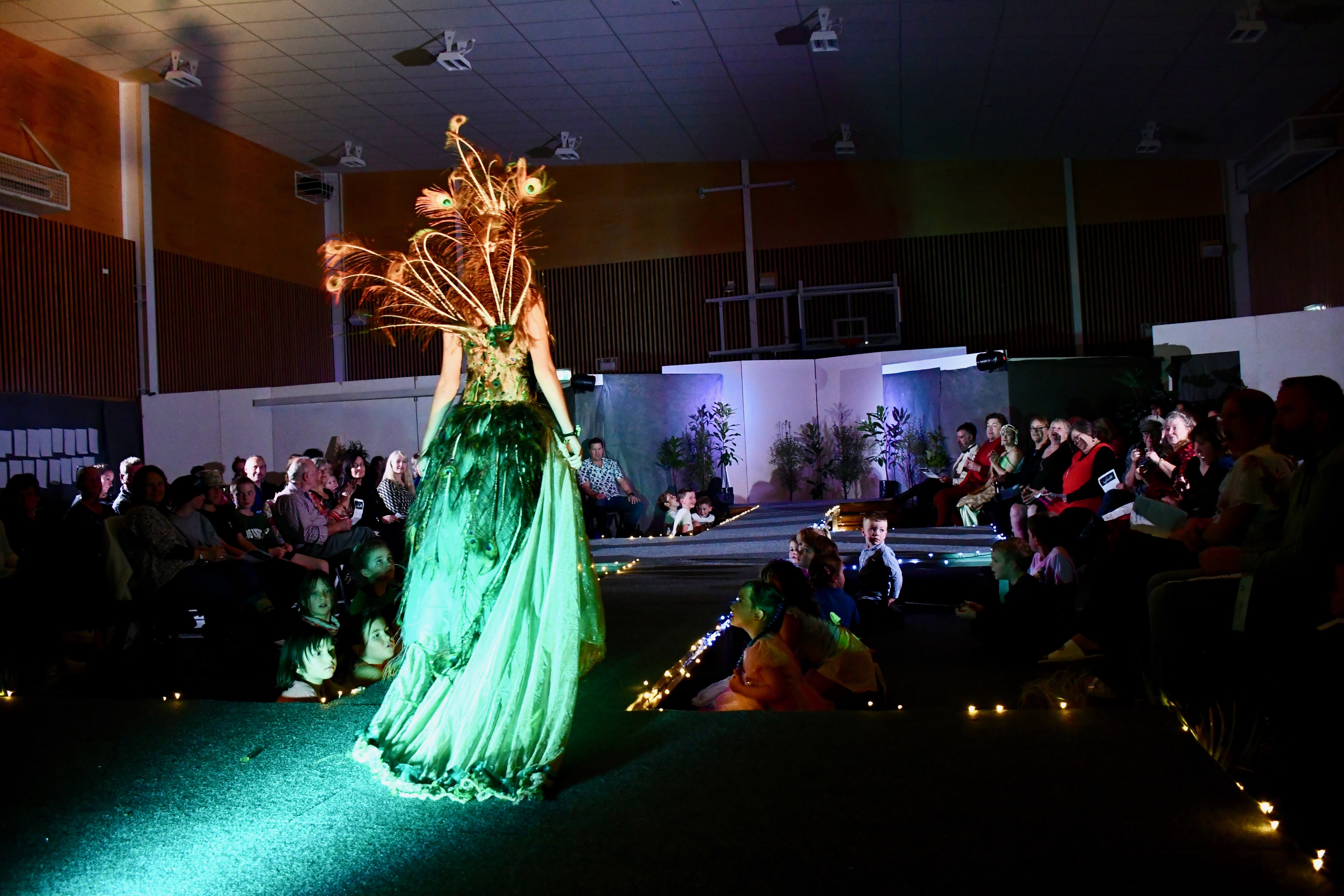
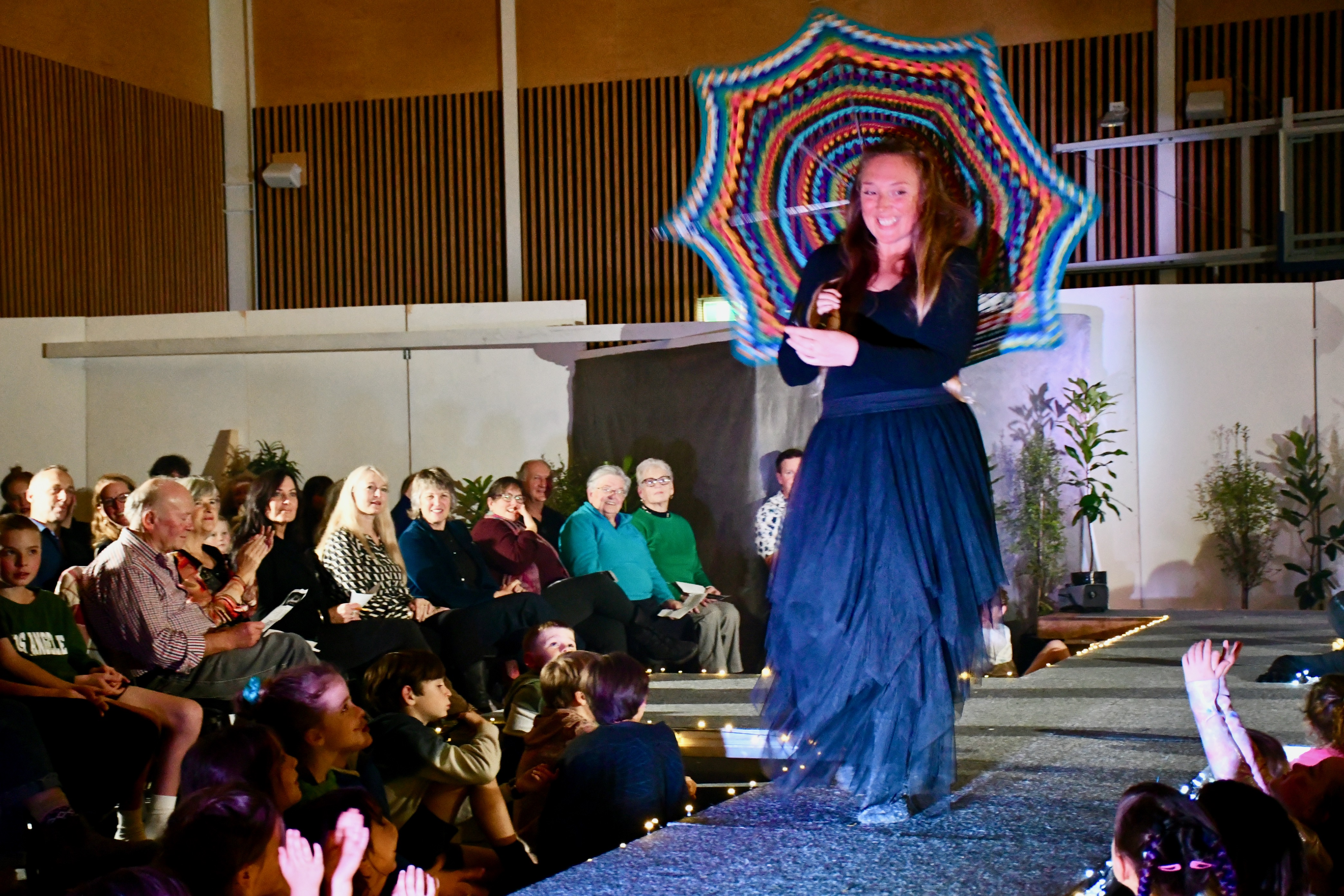

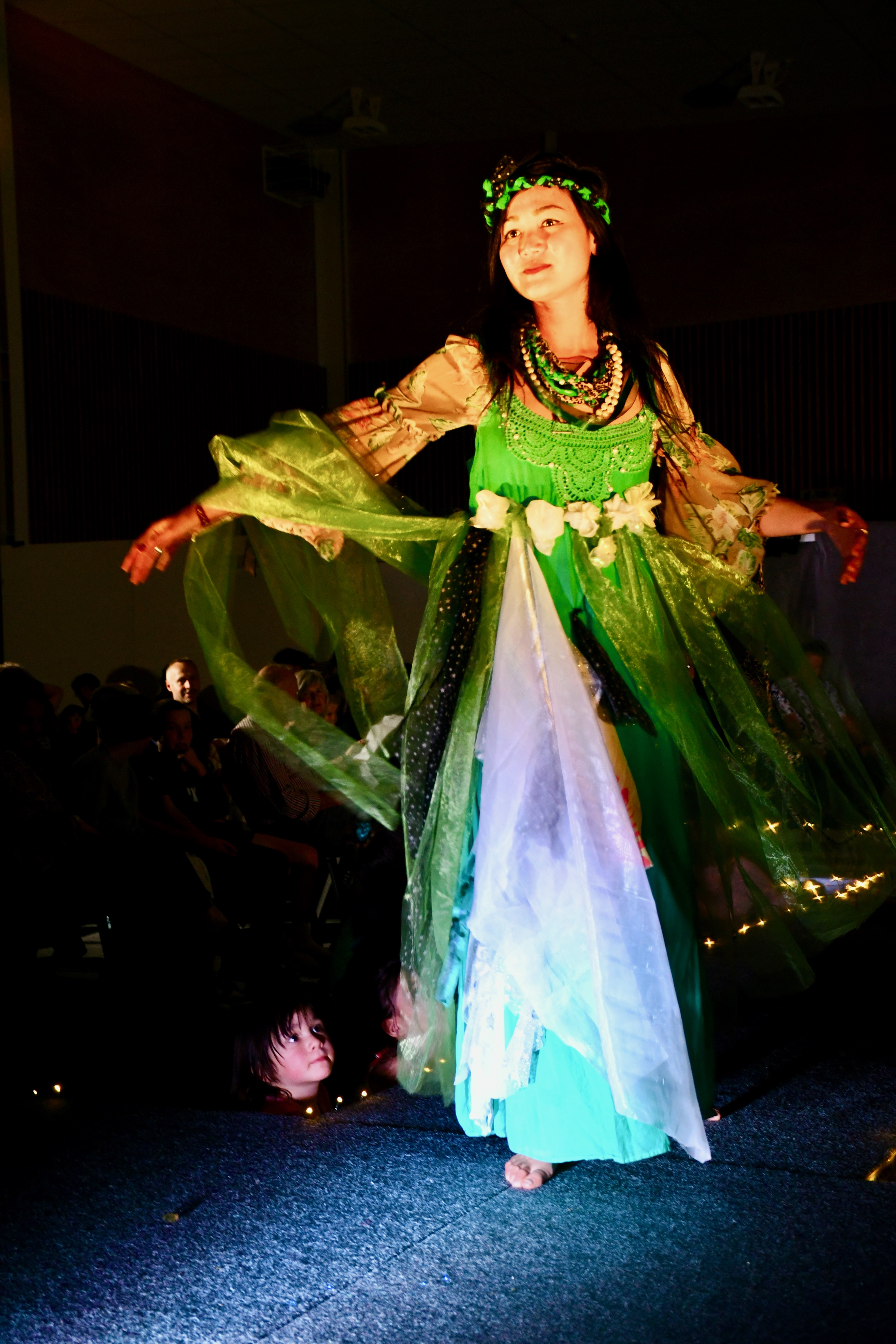
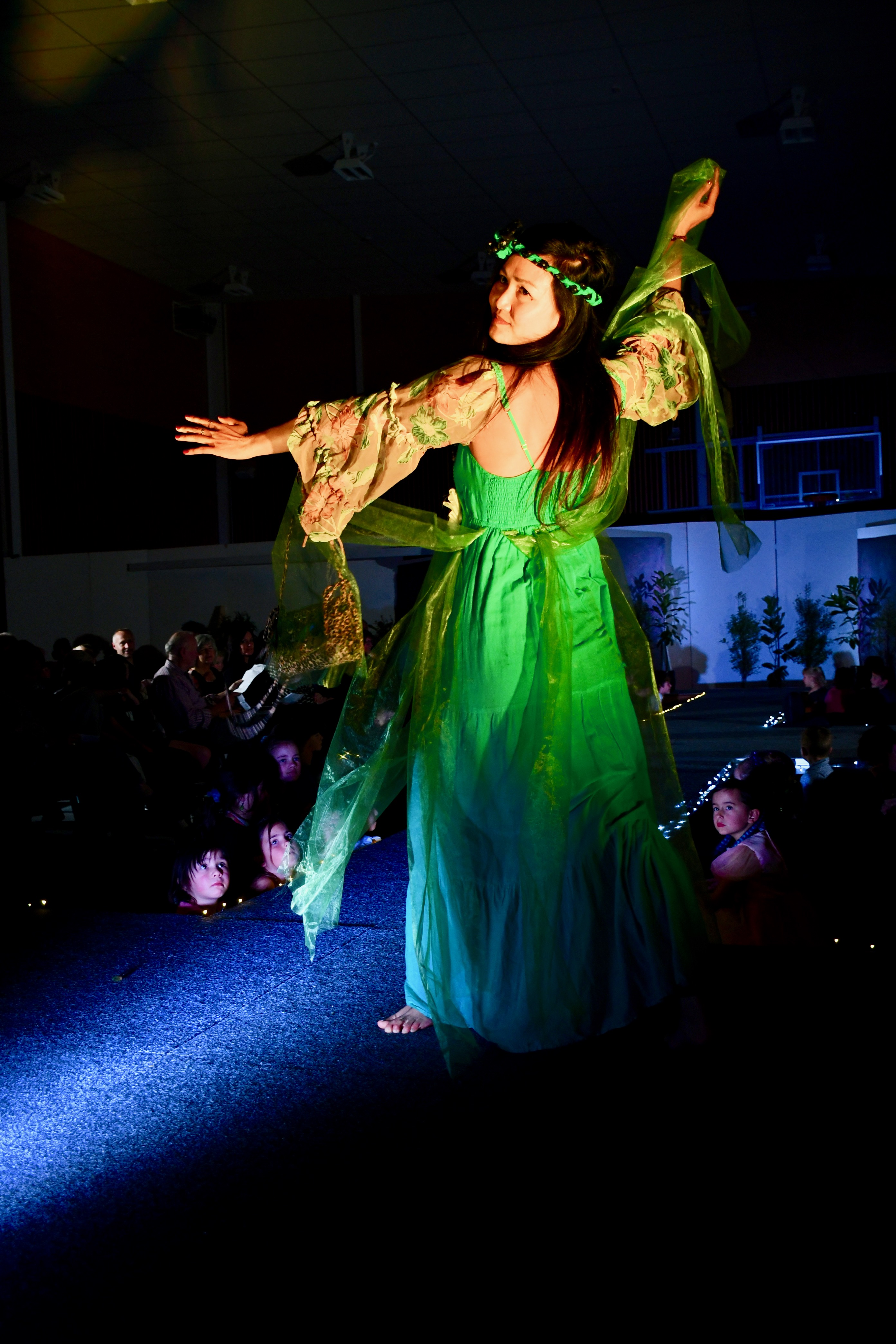


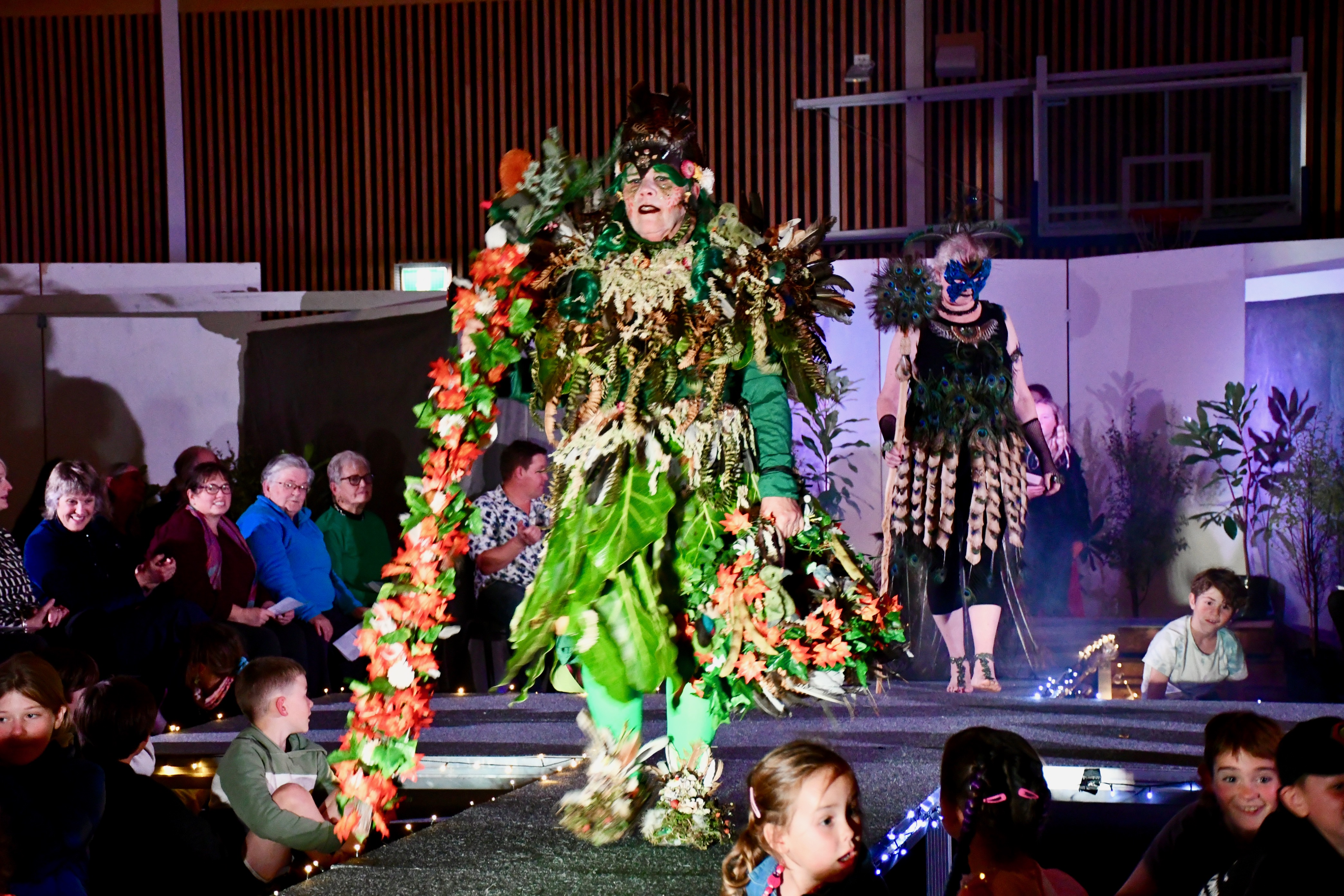

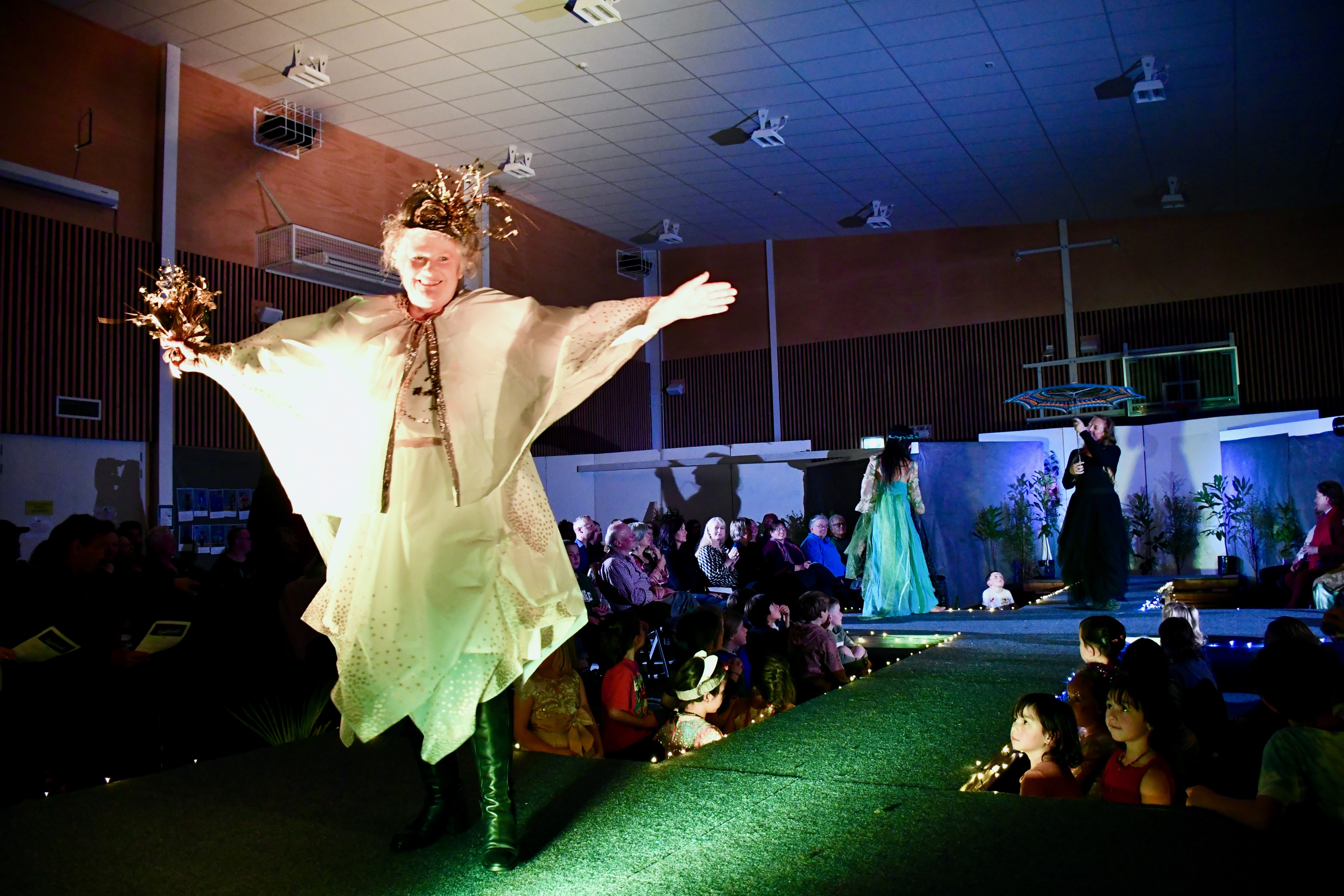

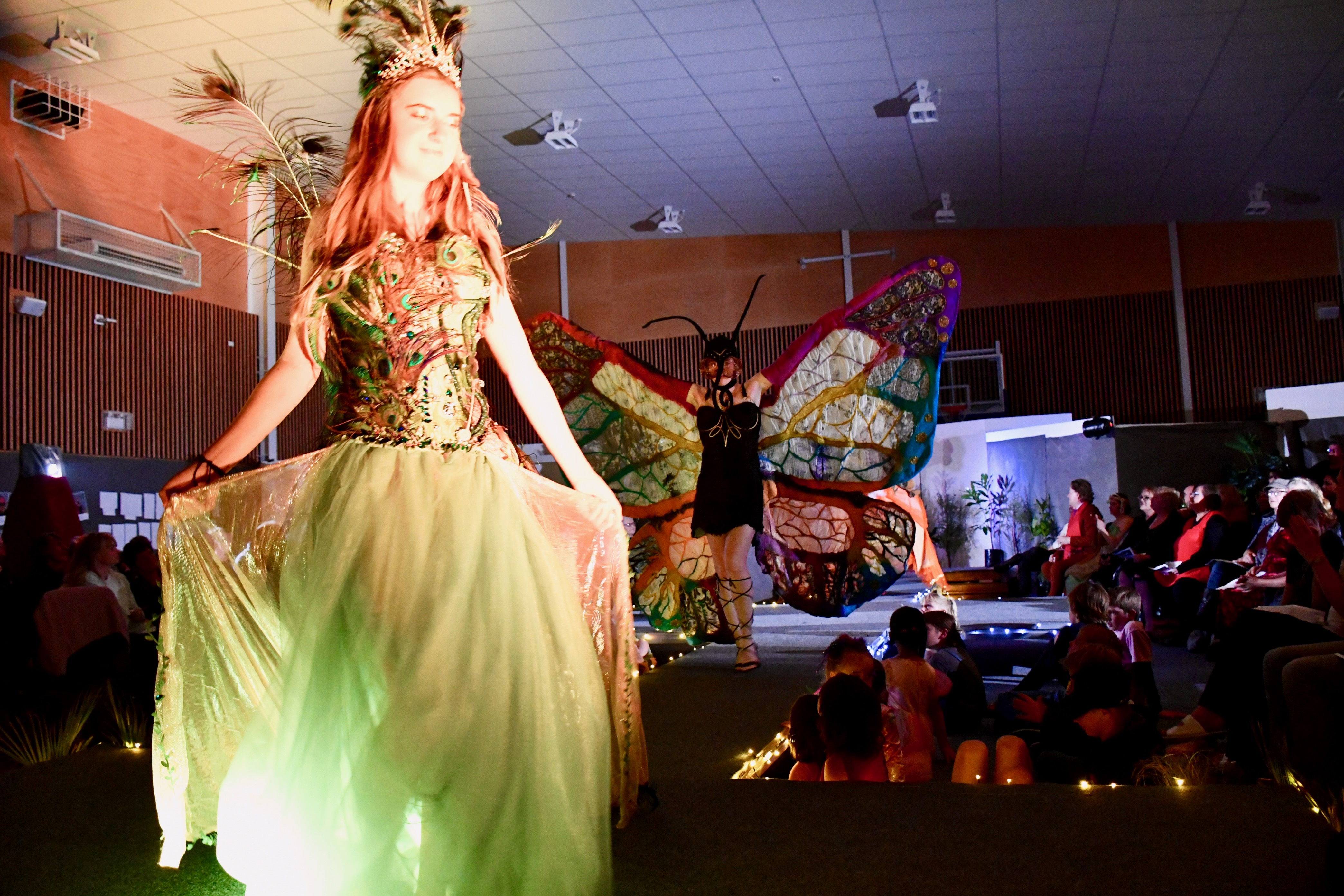
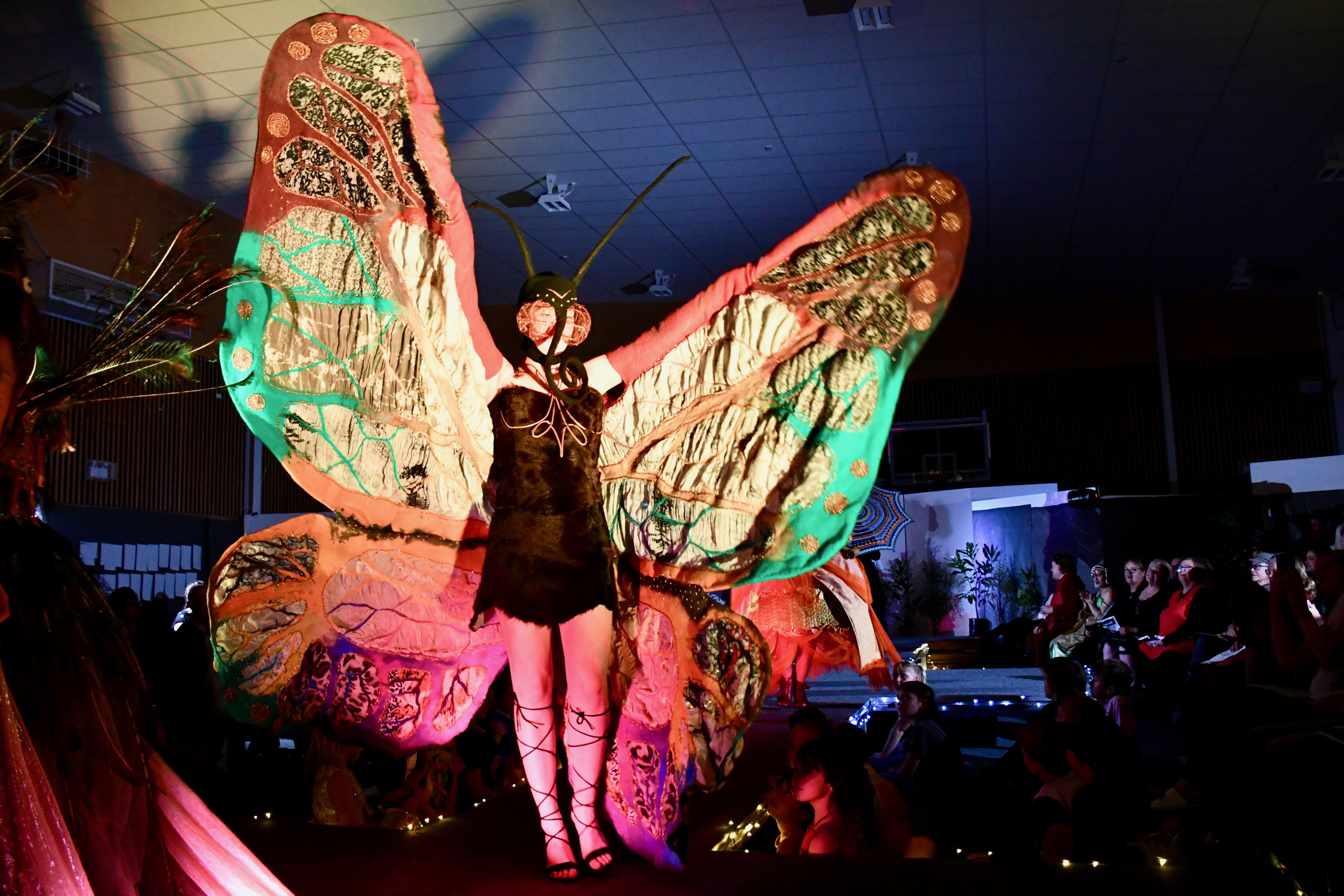




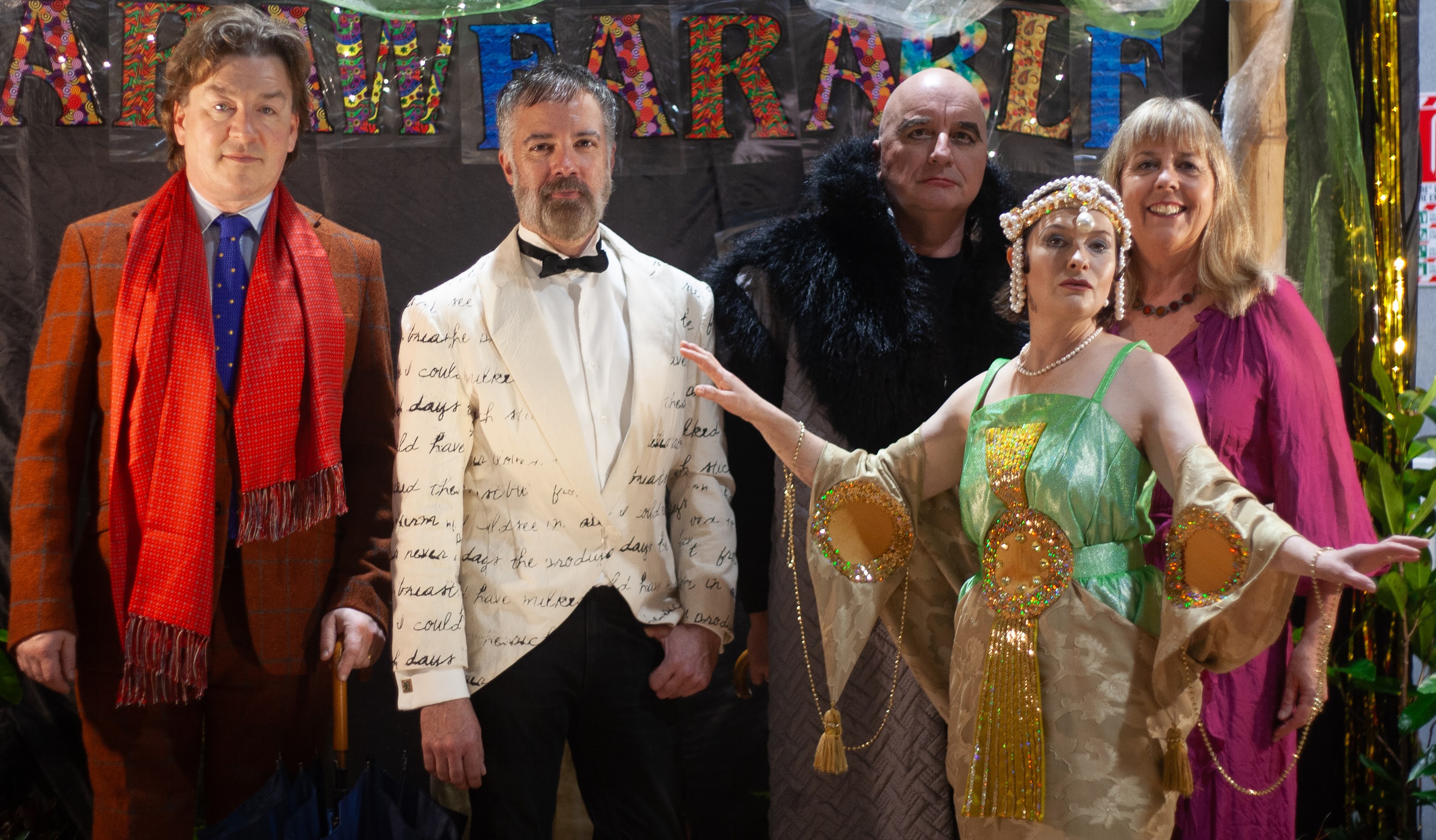

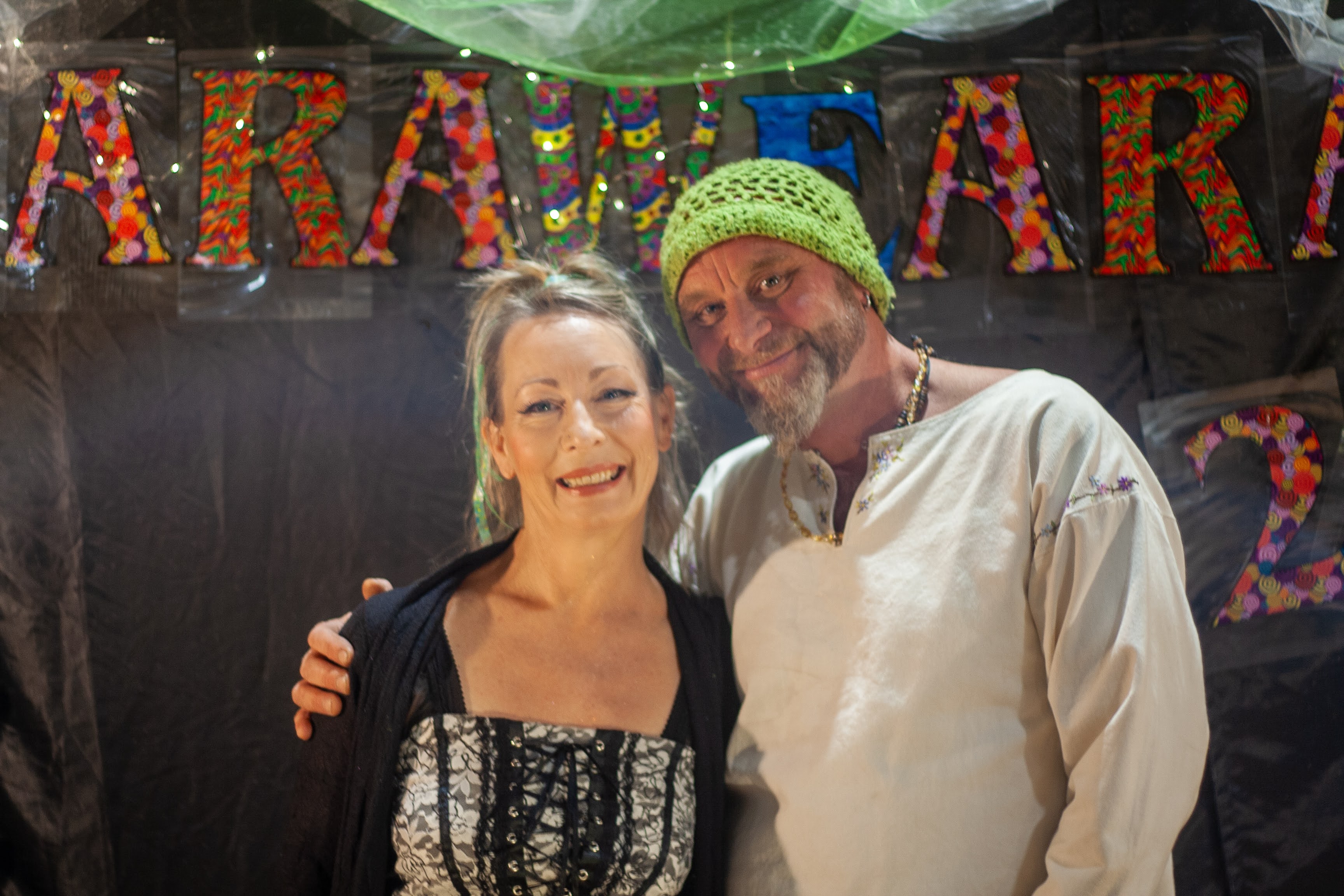




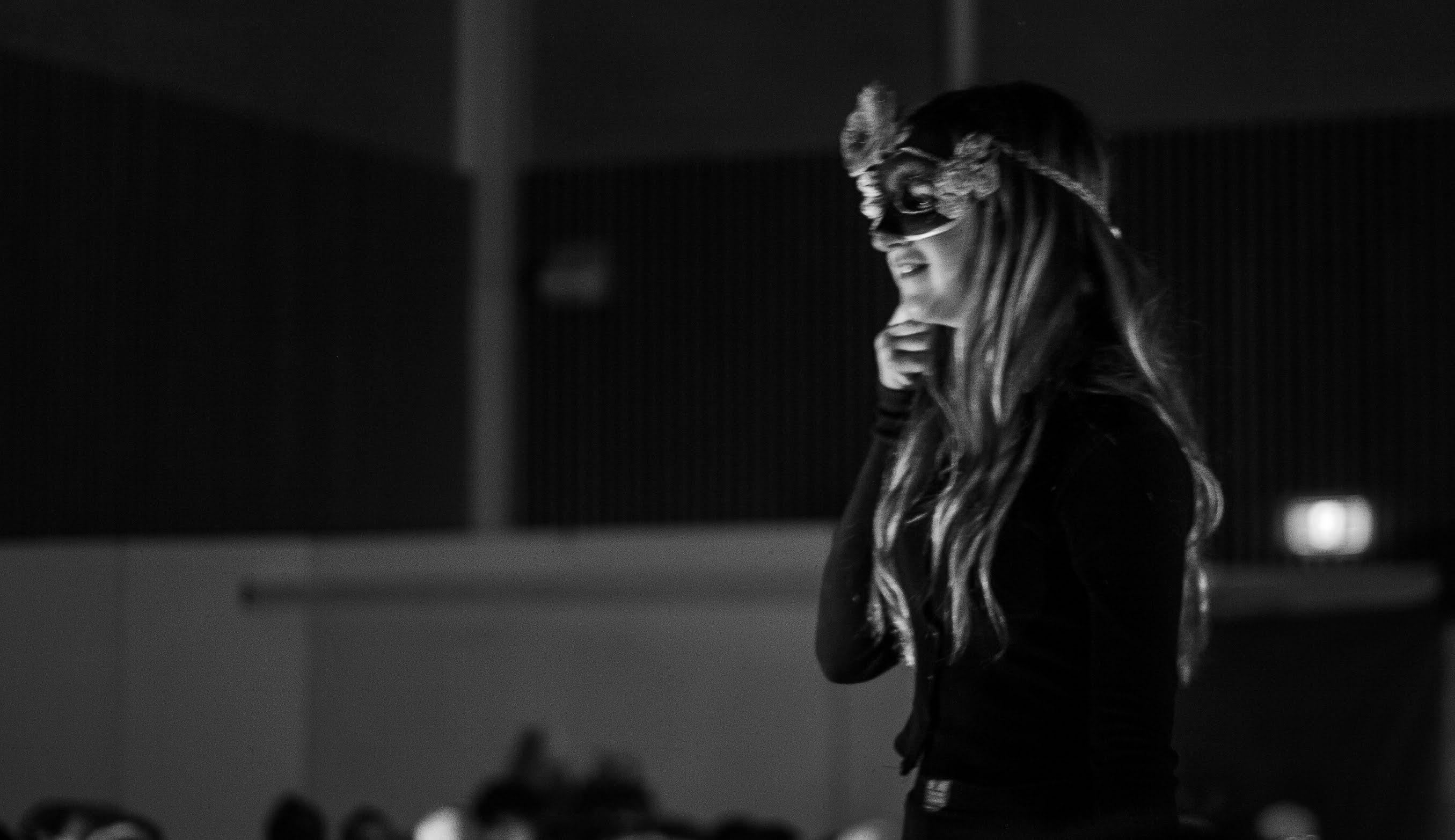


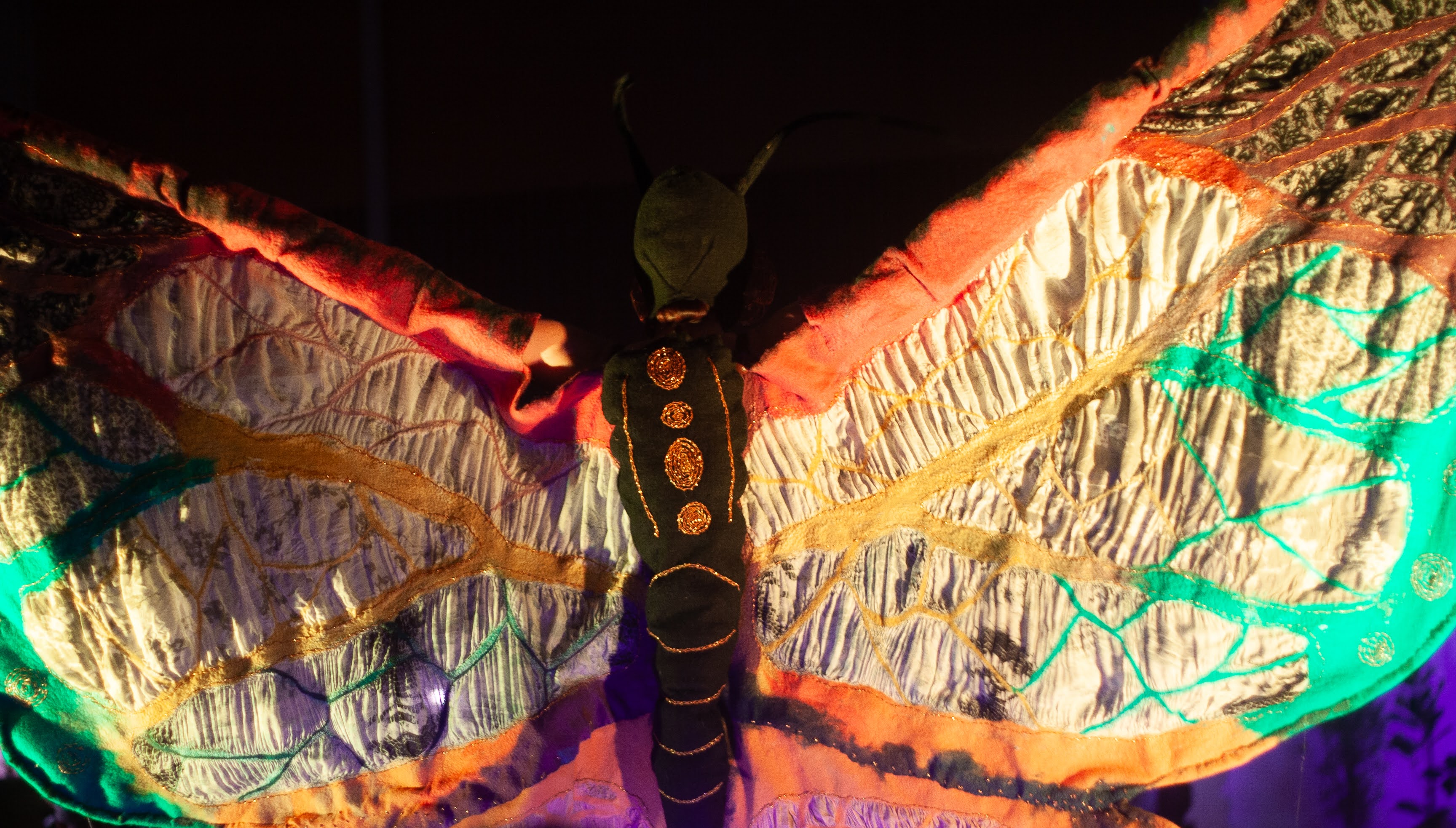


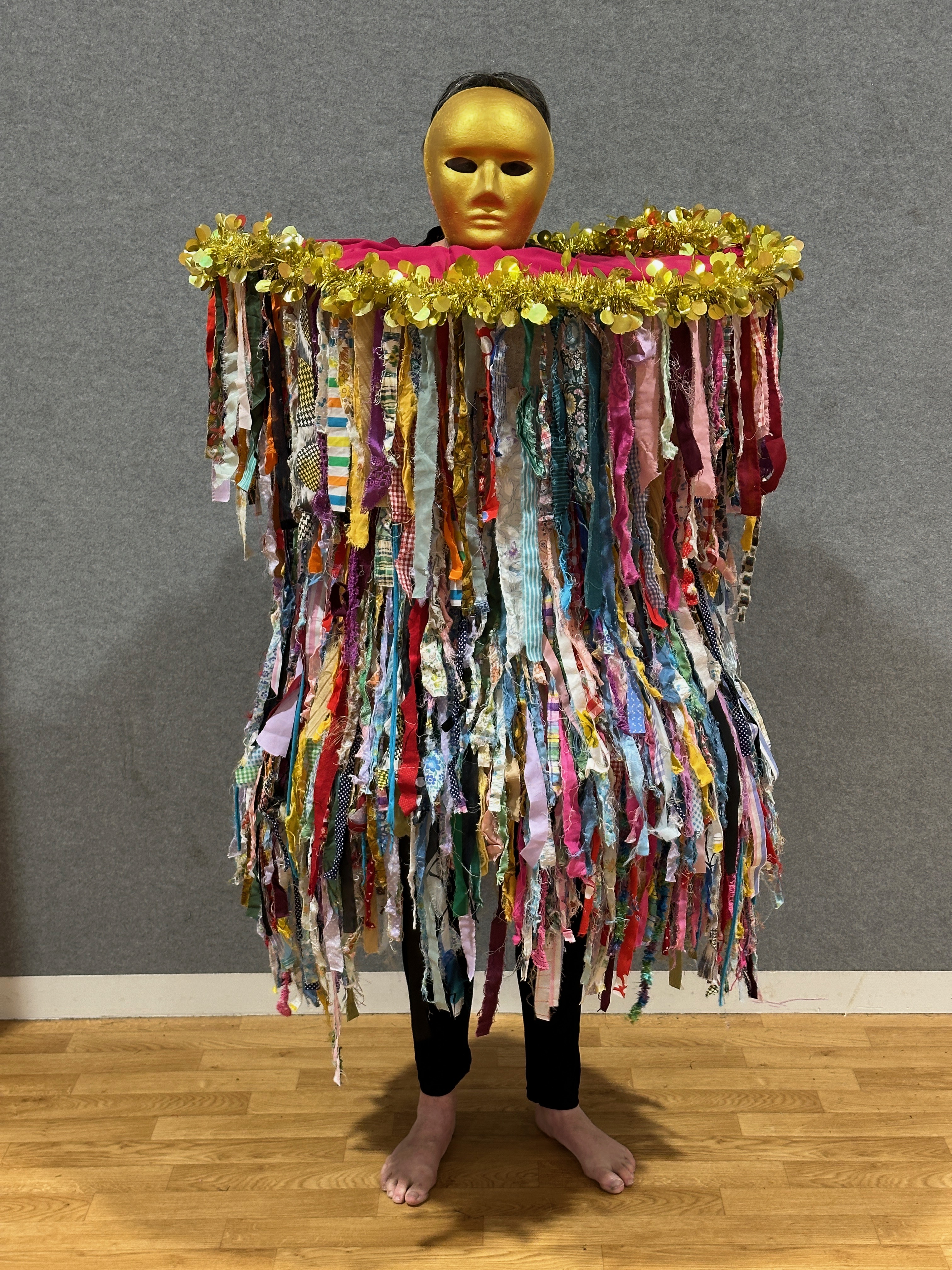
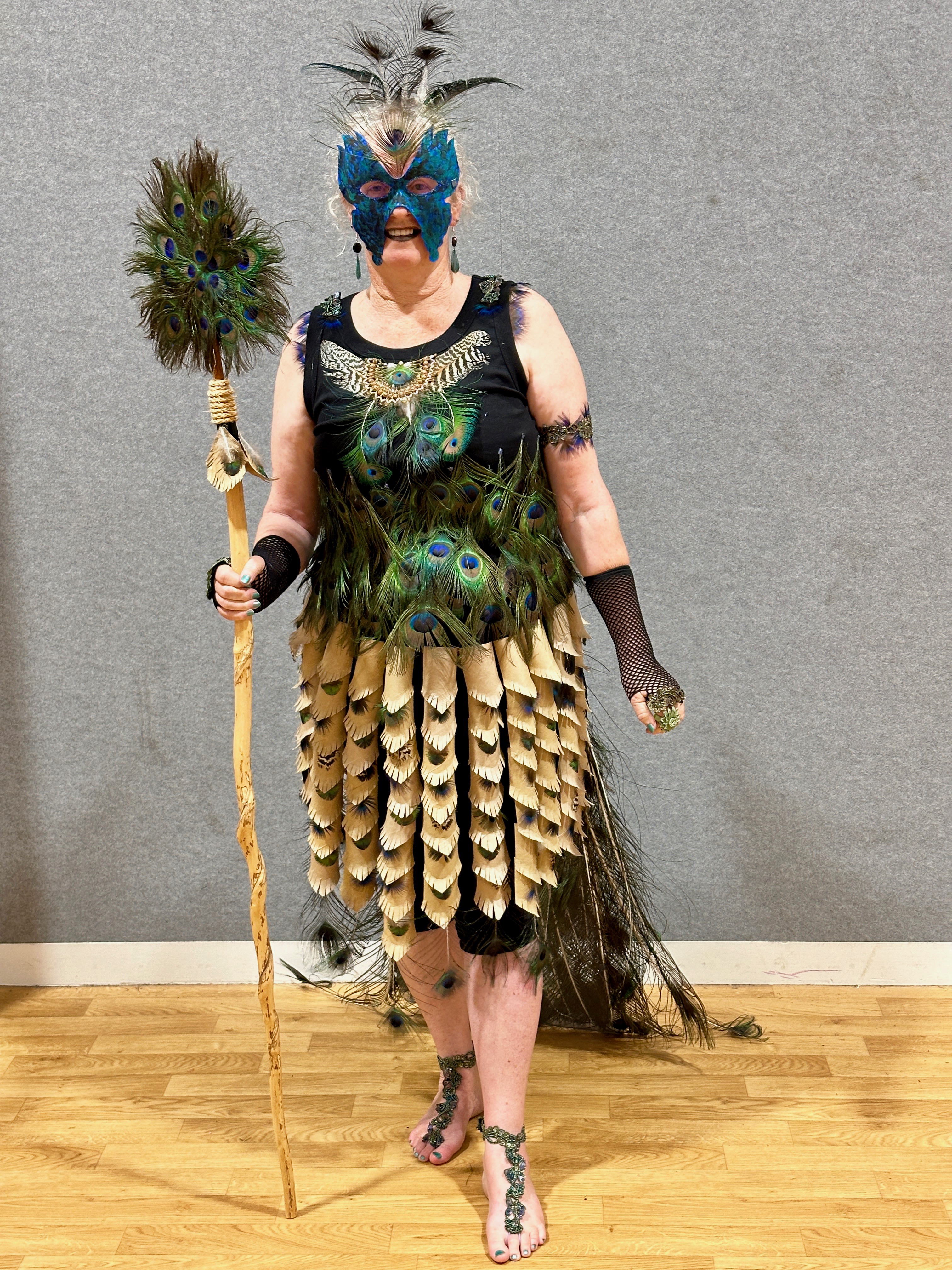























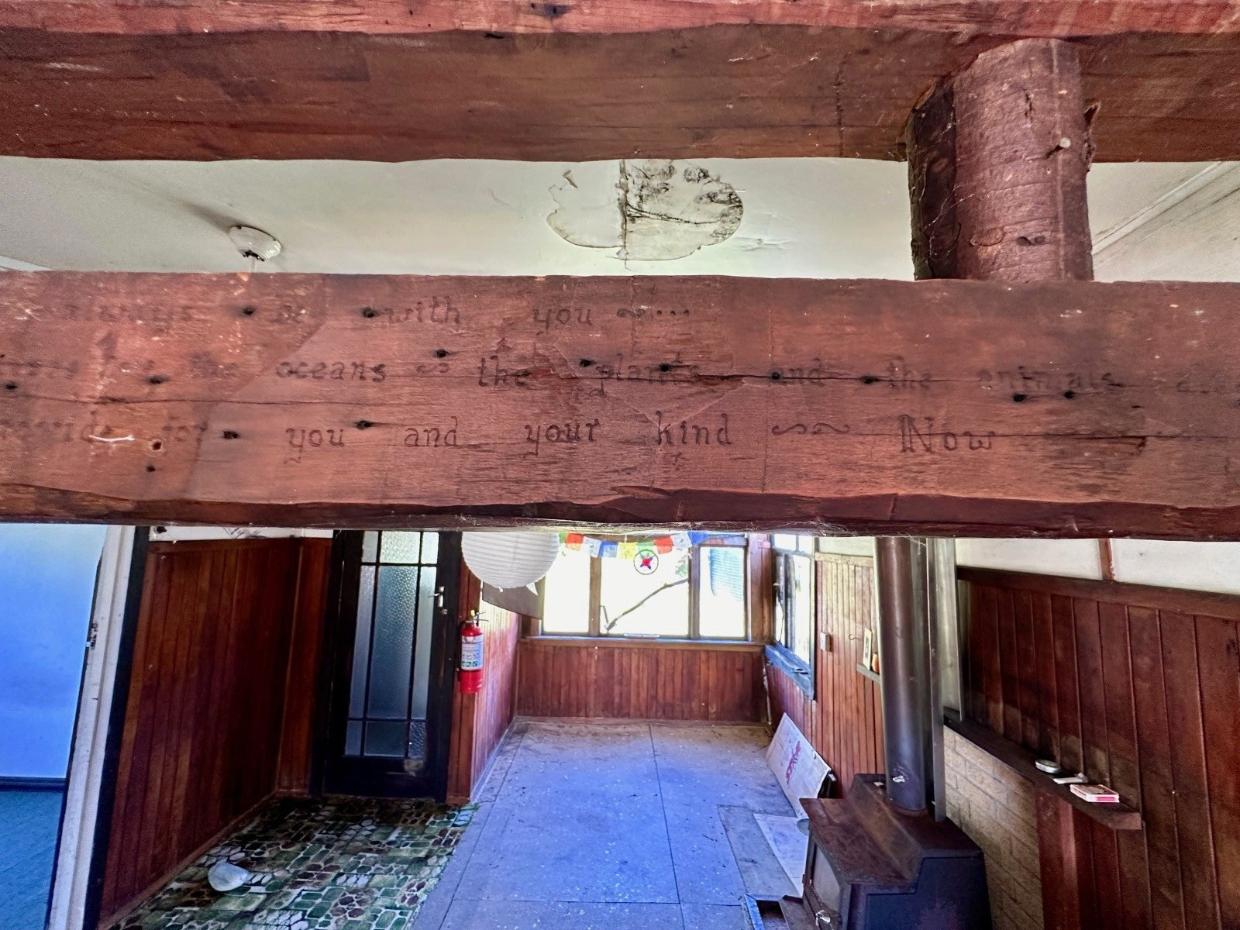

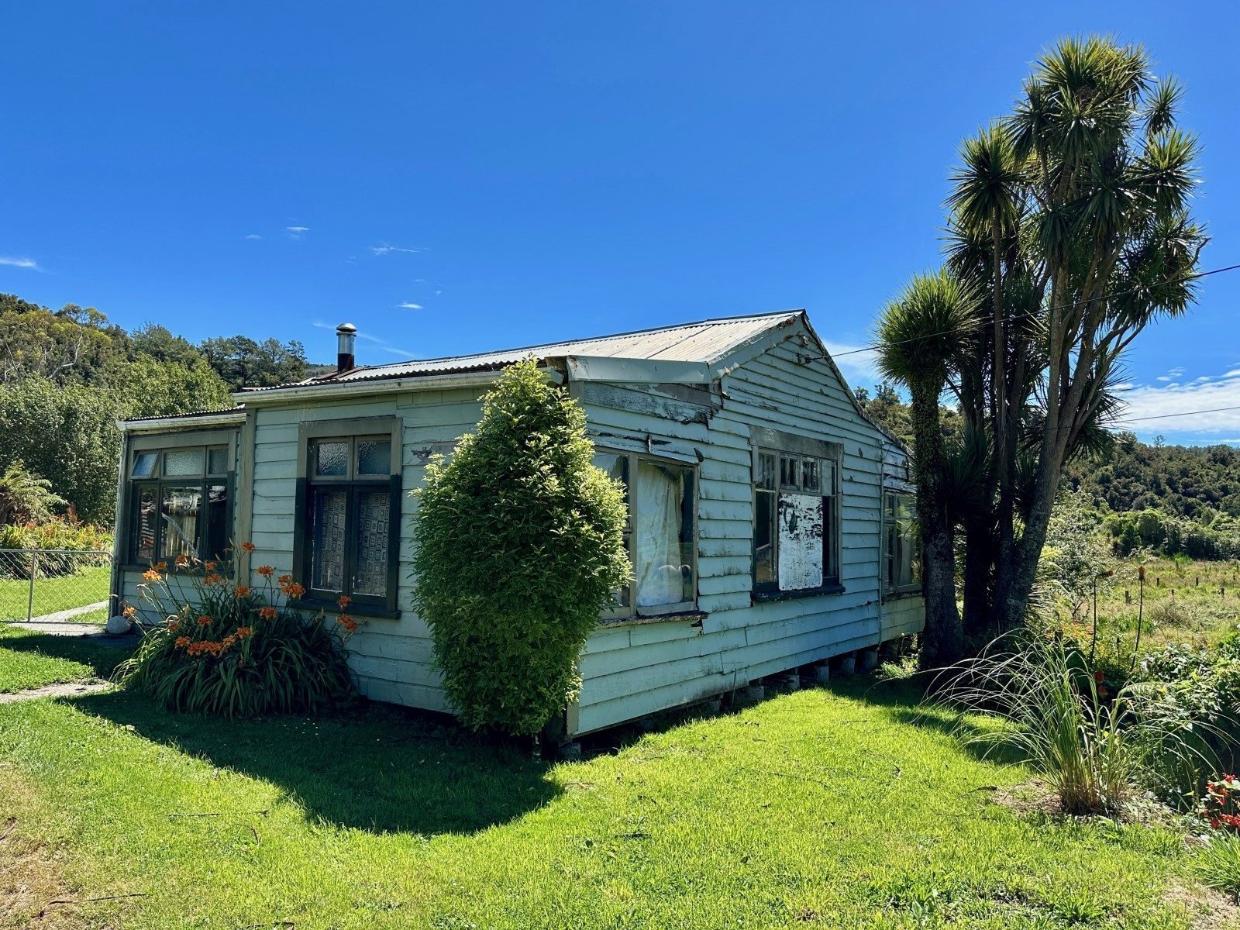

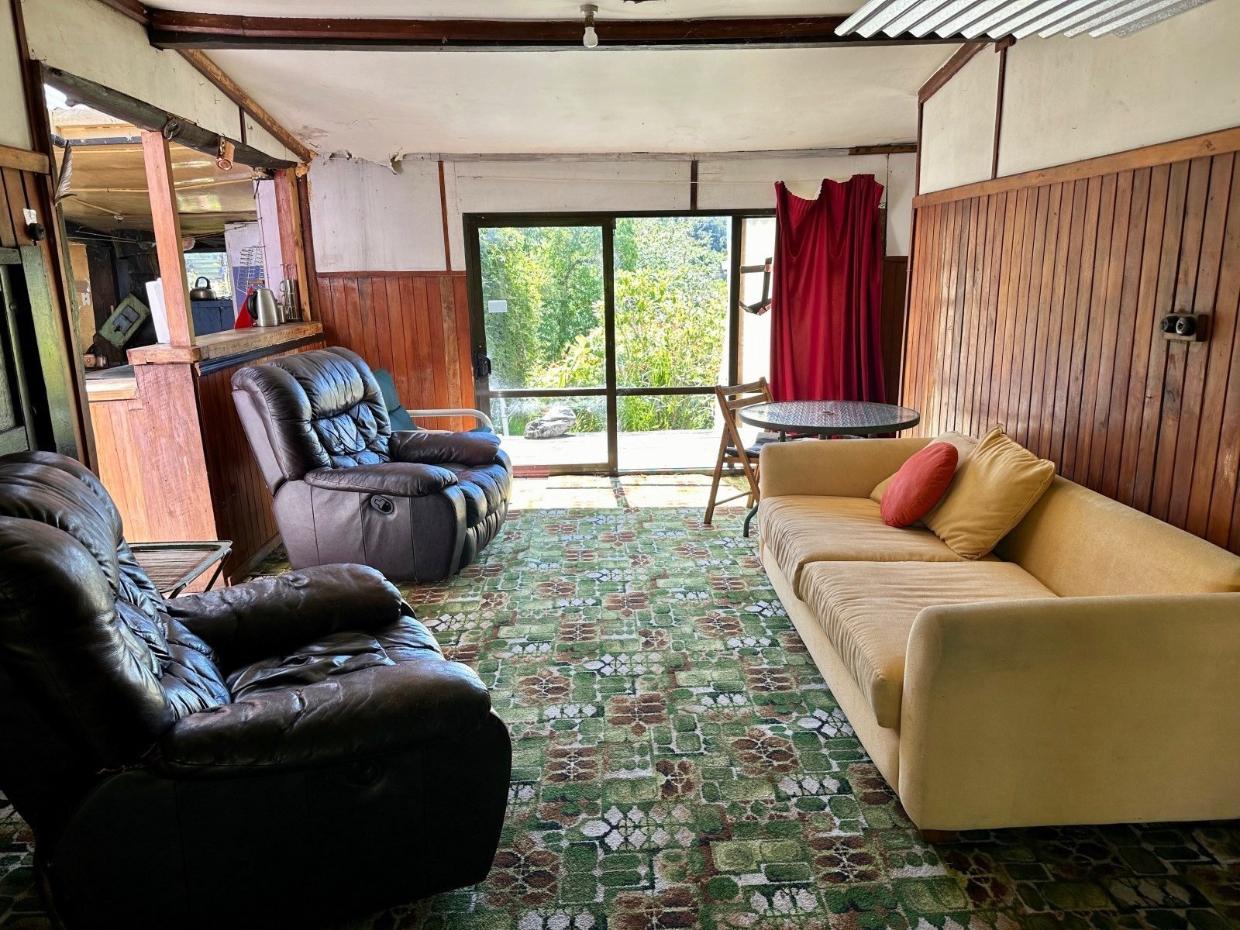


The Little Shop of Horrors
A Karamea Area School Production
August 30, 2025
Off the Top of My Head
Photographs by Paul Murray
Rate this: