Off the Top of My Head
By Paul Murray
***Aboriginal and Torres Strait Islander readers are advised that this article contains names, images and voices of people who have died.***
Australian Rules Football is an spectacular spectator sport and the most popular game in sports-mad Australia, and Aboriginal players command the field, provide much of the on-field entertainment and dominate AFL highlight reels with their uncanny athletic ability, superior game sense and footy IQ.
There are moments in Australian rules football when the sensible thing to do ask someone to hold your beer and watch the replay. Then watch it again, because the first viewing doesn’t explain the play, and Aboriginal players feature in these moments more than most.
Eddie Betts has kicked a goal from inside the playing field at an angle a Pythagoras would struggle to calculate. Cyril Rioli has dispossessed a player who thought he was alone. Michael Mitchell has borrowed another footballer’s shoulders, briefly inspected the weather above the MCG and returned with the ball. Then Buddy Franklin takes possession, starts running and turns a defensive structure into a collection of men with mouths agape pointing at one another in astonishment.
Aboriginal footballers have supplied Australian football with an extraordinary share of hold-my-beer moments. But the highlight reel, magnificent as it is, tells only part of the story. There are innovators, leaders, campaigners, teachers and families behind those airborne bodies. There is also a game that has sometimes been much quicker to applaud Aboriginal brilliance than to listen to Aboriginal people.
The Numbers Behind The Noise
Looking at the numbers, in 2026, the AFL reported 66 First Nations players among 813 men on club lists: approximately 8.1 per cent. The Australian Bureau of Statistics estimated Aboriginal and Torres Strait Islander people at 3.8 per cent of Australia’s population at 30 June 2021. That is roughly one person in 26 nationally, compared with one listed male AFL footballer in 12.
Put another way, First Nations representation on men’s AFL lists is about 2.1 times their share of the population. The remaining shares are approximately 91.9 per cent of AFL players and 96.2 per cent of the population respectively. This is a comparison of broad population and playing-list shares, not a measurement of anybody’s inherited ability.
There are qualifications worth keeping attached. These figures combine Aboriginal and Torres Strait Islander people, who are distinct peoples. They compare a 2021 population estimate with 2026 playing lists, and the whole population with a highly selected group of adult men. They do not adjust for age, sex or where football is played. The often-quoted 3.2 per cent national figure is the 2021 Census count; 3.8 per cent is the ABS estimate allowing for Census undercount and other adjustments. Mixing those two produces impressively confident confusion.
Nor does overrepresentation mean the pathway is working perfectly. The AFL reported a record 87 First Nations players in 2020. Earlier in 2026 it counted 62; its later releases put the number at 66. These are dated snapshots, rather than interchangeable totals. Even the later figure remains well below the peak.
As for “dominating the highlights,” I would happily argue the case over a beer. I cannot offer a reliable census of every spectacular mark and ridiculous goal ever televised. Appreciation needs no invented statistic.
Before The Television Rights
Australian football took shape in Melbourne in 1858, with the Melbourne Football Club’s first written rules drawn up in 1859 by a group including Thomas Wentworth Wills. The VFL began in 1897 and became the AFL in 1990. The sport is much older, and much broader, than the competition now selling the advertising space. Wills’ place in the story is established. The influences that shaped his thinking remain debated.
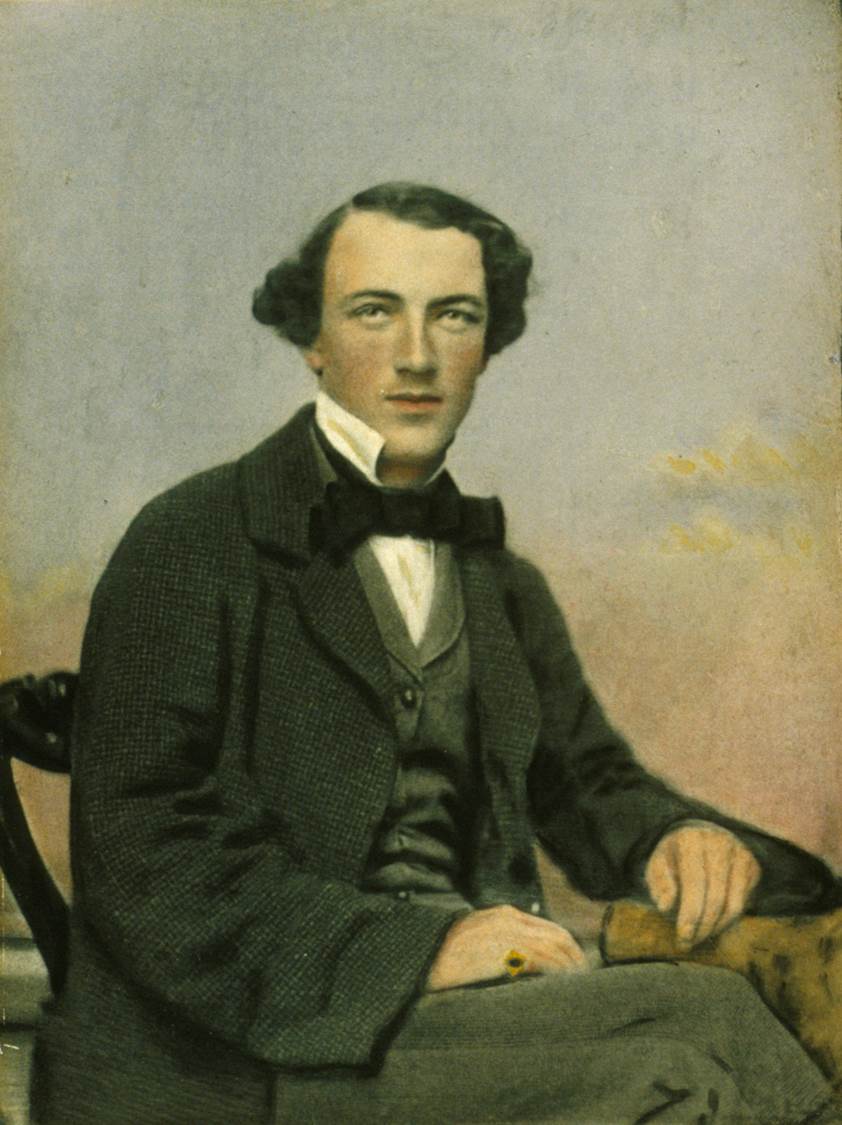
(https://en.wikipedia.org/wiki/Tom_Wills)
Marngrook, a traditional Aboriginal ball game associated particularly with south-eastern Australia, involved kicking and catching, including high leaps. Wills grew up among Aboriginal communities in western Victoria before attending Rugby School in England. The possible connection is neither a modern marketing invention nor a settled historical equation.
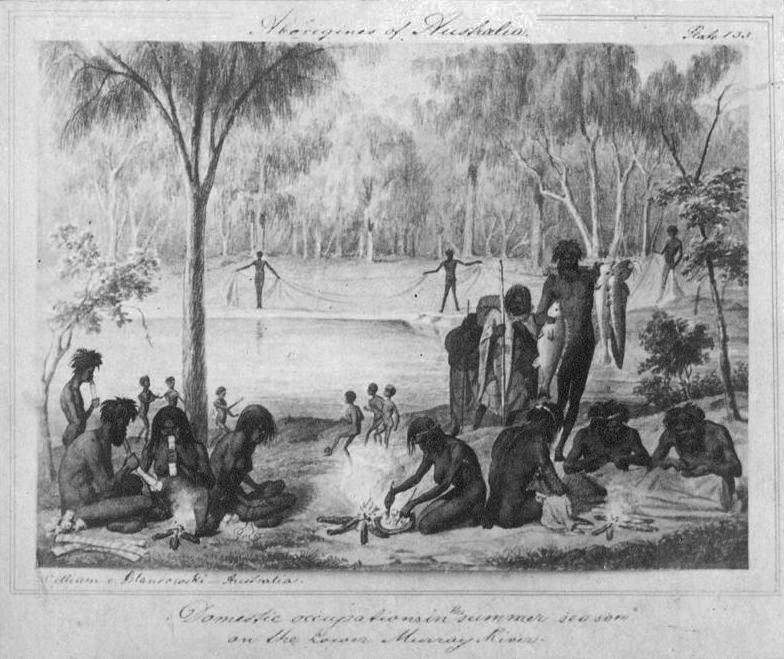
https://commons.wikimedia.org/w/index.php?curid=19354936
The Australian Institute of Aboriginal and Torres Strait Islanders discusses historian Jenny Hocking’s research into Johnny Connolly’s account of Aboriginal football in the district where Wills spent his childhood. That strengthens the evidence that the game was present in his surroundings. Historians disagree about whether, and how directly, it influenced the rules he helped write. There is no surviving declaration from Wills conveniently explaining which elements came from where.
We should take Aboriginal testimony and knowledge seriously without pretending a disputed question has been settled by an enthusiastic caption. Aboriginal football traditions existed; their precise contribution to the codified game remains contested. The absence of a neat colonial paper trail is not an invitation to erase them.
A sport that now requires an entire television panel to decide whether somebody moved sideways off the mark would perhaps like a tidier birth certificate, however, it would seem that history has declined to provide one.
Who Was the First Aboriginal AFL?
For the VFL/AFL competition, the first recognised Aboriginal player was Joe Johnson, who debuted for Fitzroy on 7 May 1904. He played 55 games and won premierships in 1904 and 1905. Two flags in his first two seasons…an achievement St Kilda supporters may find personally offensive.
But Johnson was not the first known Aboriginal man to play senior Australian football in Victoria. Albert “Pompey” Austin played for Geelong against Carlton on 25 May 1872, before the VFL existed. The Victorian Government’s account records that he played without boots.
Both belong in the story. Calling Austin the first AFL player puts him in a league that did not yet exist. Starting everything with Johnson overlooks an earlier pioneer.
Sir Doug Nicholls followed at Fitzroy in the 1930s. A footballer, pastor and campaigner for Aboriginal rights, he became Governor of South Australia in 1976—the first Aboriginal person to hold an Australian state governorship. The round bearing his name honours a life far bigger than a football career.
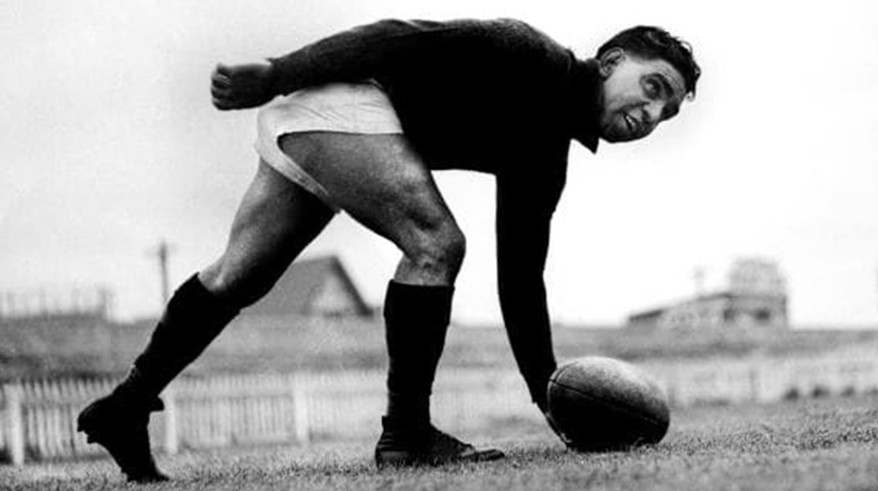
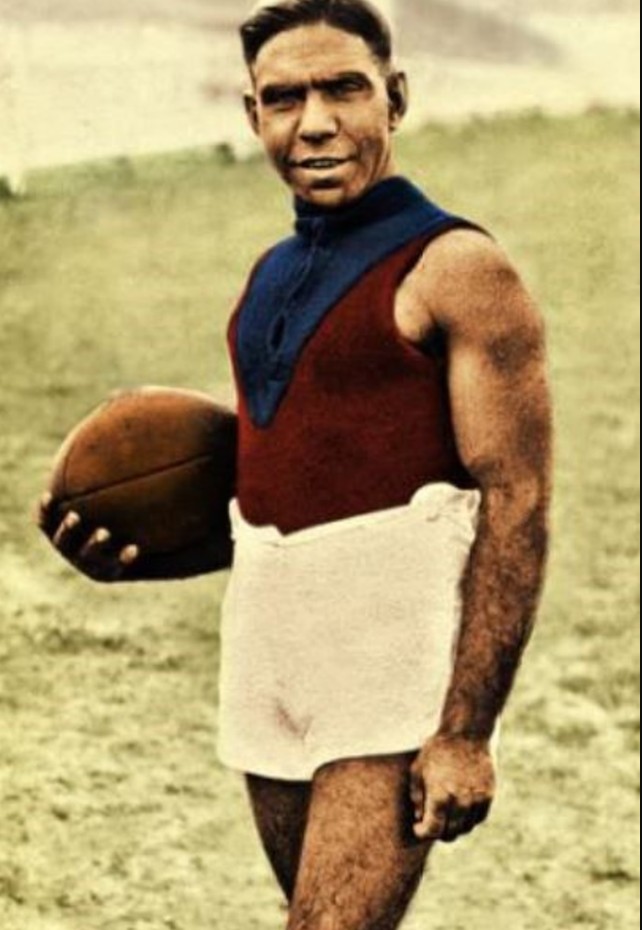
These men entered football from an Australia that restricted Aboriginal lives through discriminatory laws and institutions. Getting selected did not magically leave that racist society outside the dressing-room door.
Polly Changed The Instructions
Graham “Polly” Farmer did more than perform the game beautifully. He helped change how it was played. A dominant ruckman in Western Australia and at Geelong, Farmer made handball an attacking weapon. He helped demonstrate that a quick, precise handpass could release a teammate and open the field rather than merely dispose of an inconvenience. His career included Geelong’s 1963 premiership, three Sandover Medals and an influence that travelled far beyond his own possession count.
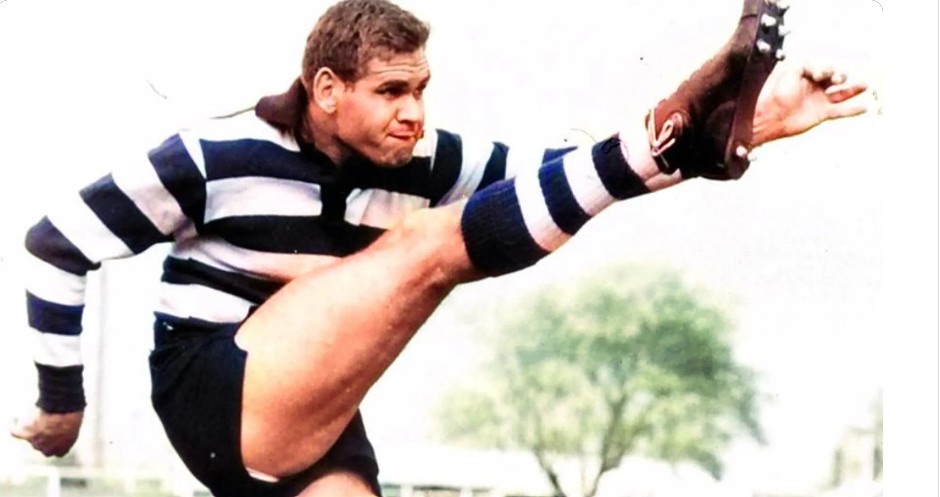
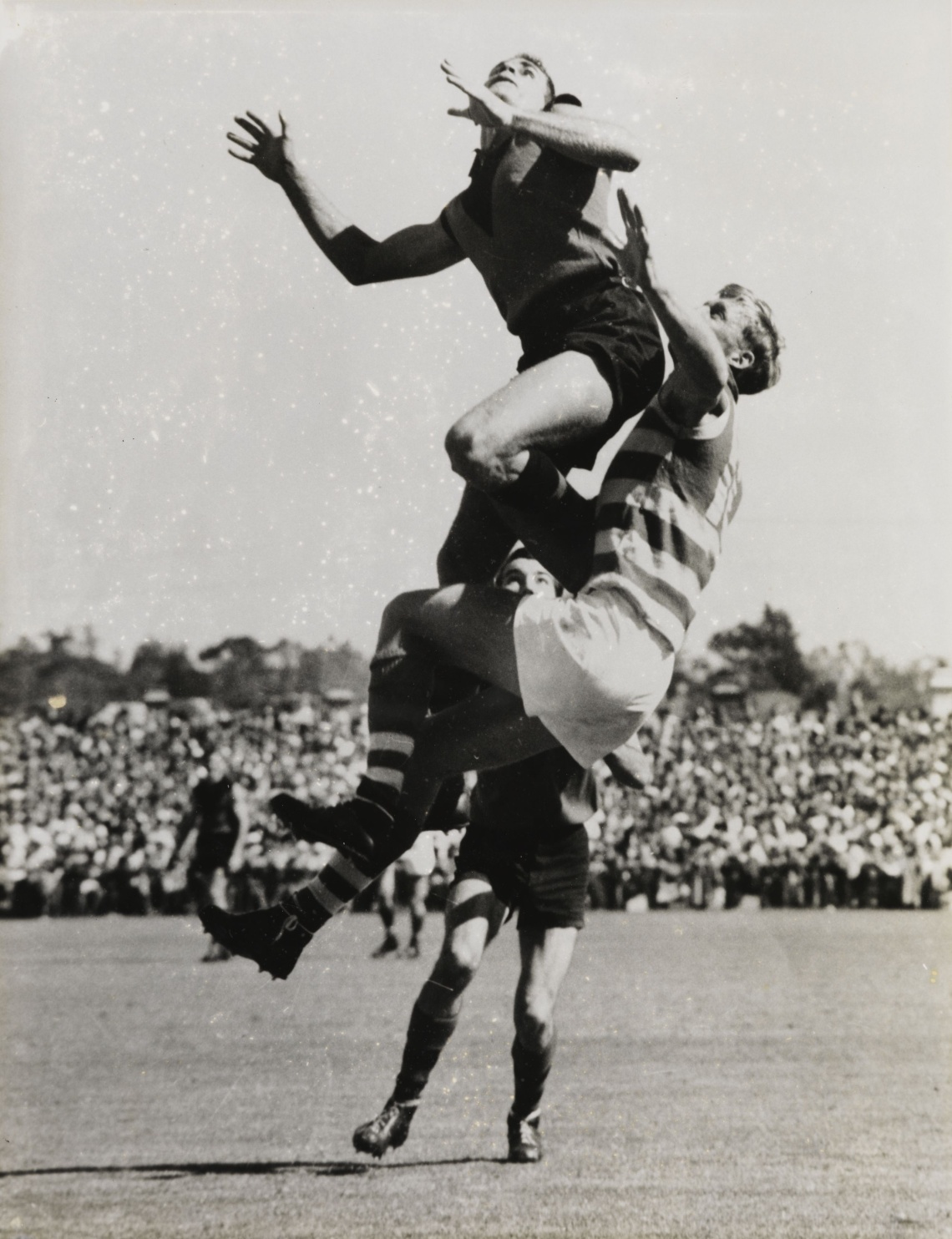
The modern game’s chains of movement owe something to players prepared to imagine another way. Farmer belongs among those architects. Calling him a gifted athlete is accurate; leaving it there misses the football brain doing the construction work.
Syd Jackson brought skill and composure to Carlton’s premiership teams, including the famous 1970 comeback. Jim and Phil Krakouer later arrived at North Melbourne from Claremont, combining with an understanding that made defenders look as though they had missed a planning meeting.
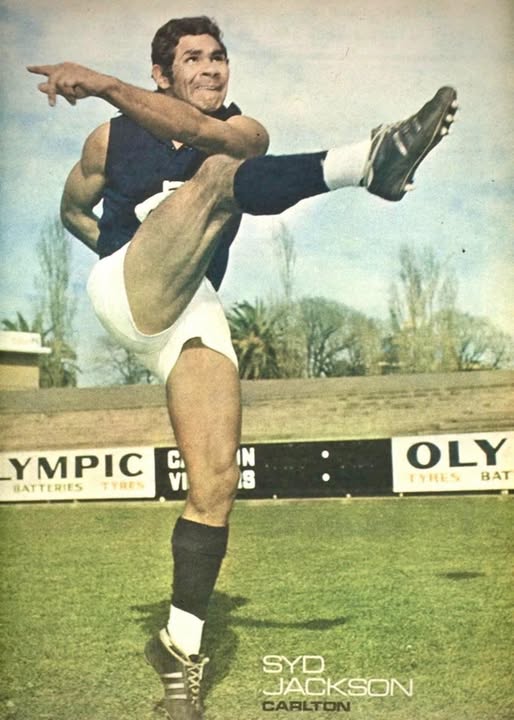
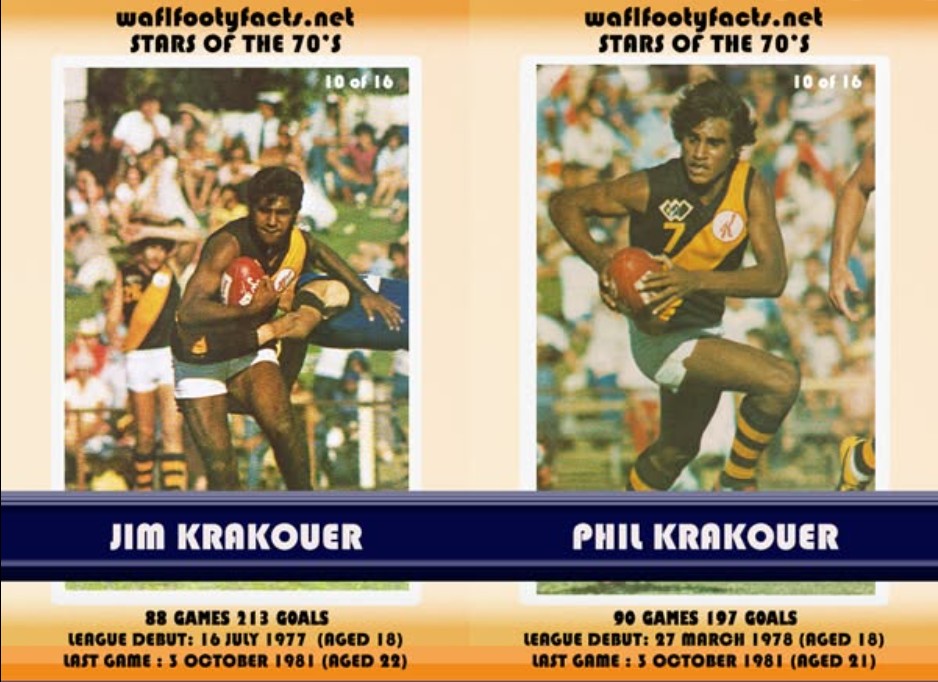
The temptation is to call everything instinctive. Sometimes it was anticipation developed through years of playing together, reading bodies, recognising space and practising until a difficult skill looked casual. “Natural talent” can be a compliment that accidentally deletes the work.
The WAFL, SANFL, Northern Territory competitions and community clubs matter here. Aboriginal football history did not begin whenever a Victorian recruiter finally noticed somebody.
The Replay Button Takes A Hiding
Michael Mitchell’s 1990 season offers a useful demonstration of the range. He won both Mark of the Year and Goal of the Year, which was the first and only time thus far that a player has won both gongs in the same season.. Against Fitzroy, he climbed above Brett Stephens and completed a juggling one-handed grab. Against Sydney, he carried the ball on a seven-bounce run from half-back before kicking a fine goal from welll inside the 50-metre line.
Whoops…Wrong mark…
Peter Matera’s running and long kicking helped West Coast claim the 1992 premiership. His five goals from a wing earned the Norm Smith Medal. He combined speed with purpose to humiliate defenders and immortalise them in historical highlight reels.
Michael Long’s celebrated running goal in the 1993 Grand Final remains essential viewing. Carlton’s Stephen Silvagni’s still cliams that he touched it on the line, but Long’s speed, balance and nerve are visible regardless of your preferred interpretation of the final few centimetres. Football would lose several productive decades of conversation if everybody agreed!
Andrew McLeod was best on ground in Adelaide’s 1997 and 1998 Grand Final victories. He made space appear where a moment earlier there had been traffic. You could watch the same passage twice and still wonder why everybody else had chosen the crowded route.
Jeff Farmer, “The Wizard”, and Leon Davis, “Neon Leon”, supplied their own catalogues of inventive finishing and aerial cheek. Michael O’Loughlin combined wonderful touch with the sharp judgement of a dangerous forward. These were different players, doing different jobs, rather than examples of one supposedly universal Aboriginal playing style.
Then there is Eddie Betts…Betts won Goal of the Year four times. The front pocket at Adelaide Oval became known as “Eddie’s pocket,” a place from which conventional football geometry didn’t apply. The pocket rocket dodged, weaved, turned opponents inside out and snapped six pointers from seemingly impossible angles on a regular basis. His goals were initially considered “flukes,” because they didn’t seem physicaly possible, but Eddie owned the pocket and filled stadiums every Saturday with fans eagre to witness some Eddie Betts magic. His boundary-line finishing was wonderful theatre, but his timing, balance and control deserve as much attention as the delighted disbelief in his uncanny talent.
Cyril Rioli could have relatively few possessions and still leave fingerprints everywhere. His defensive work deserves its own reel: the chase, the tackle, the recovery and the little handball that suddenly made a teammate dangerous. In the 2015 Grand Final he won the Norm Smith Medal, following his uncles Maurice Rioli and Michael Long into that particular family business.
When asked about sharing the achievement of four premierships with Shaun Burgoyne, Cyril jokingly replied with an excellent retort, “Does he have a ‘Norm’?”
Burgoyne had plenty else. His 407-game career included four premierships across Port Adelaide and Hawthorn. Nicknamed “Silk,” he offered a particularly elegant demonstration that sound decisions under pressure can look less frantic than the situation ought to permit. Longevity, preparation and versatility belong in any account of Aboriginal excellence too.
Buddy Franklin finished his spectacular career with 1,066 goals, four Coleman Medals and eight All-Australian selections. His thousandth, at the SCG in 2022, brought spectators pouring onto the ground from all directions. Security protocols were set aside as there was no way the crowd could be restrained as they flocked to the full-forward position to congratulate Lance “Buddy”Franklin’s incredible achievement.
Franklin was a towering forward who could accelerate away from trouble and kick from distances that invited disbelief. Betts operated closer to the ground and often closer to the fence. Goodes could ruck, run through midfield and go forward. Their excellence was immense; their games were not interchangeable. Football legend “Lethal” Leigh Matthews said of Franklin, “He’s a player whose done the very good very often and done the remarkable regularly.” Here is a tribute to Buddy from another goal-kicking great Matthew Lloyd.
Full Medal Cabinets
Gavin Wanganeen became the first Aboriginal Brownlow medallist in 1993. Adam Goodes won in 2003 and 2006. The Brownlow recognises the home-and-away season’s fairest and best; the Norm Smith recognises the Grand Final’s best player. Different assignments, equally serious company.
The Aboriginal Norm Smith roll includes Maurice Rioli (1982), Peter Matera (1992), Michael Long (1993), Andrew McLeod (1997 and 1998), Byron Pickett (2004), Cyril Rioli (2015), Bobby Hill (2023) and Shai Bolton (2026). McLeod’s double is worth lingering over. Performing when a premiership is on the line is difficult enough without making a habit of it.
Bolton’s latest addition came in Fremantle’s losing Grand Final side, echoing Maurice Rioli’s distinction in 1982. A magnificent individual performance can still leave a footballer wanting the other medal. As Bolton put it: “You don’t really play (for individual honours), you play to win premierships.”
The next generation of Aboriginal playwers are already lighting up the field with their insane talent. Five First Nations players made the 2026 All-Australian team: Wayne Milera, Jarman Impey, Kysaiah Pickett, Nasiah Wanganeen-Milera and Bolton. Wanganeen-Milera’s ability to see a pass and execute it is offering Saints supporters reason to believe, hope and dream of an elusive premiership cup. Hope is a renewable resource for St Kildab fans and Nasiah is our Messiah.
Let’s not forget the women of the AFLW. Brisbane’s Ally Anderson won the AFLW competition best-and-fairest award in season seven of 2022. Aboriginal excellence is not confined the men.
The Jumper Goes Up
On 17 April 1993, after St Kilda played Collingwood at Victoria Park, Nicky Winmar lifted his jumper and pointed at his skin in response to racist abuse. Wayne Ludbey’s photograph captured a gesture that became part of Australia’s national memory.
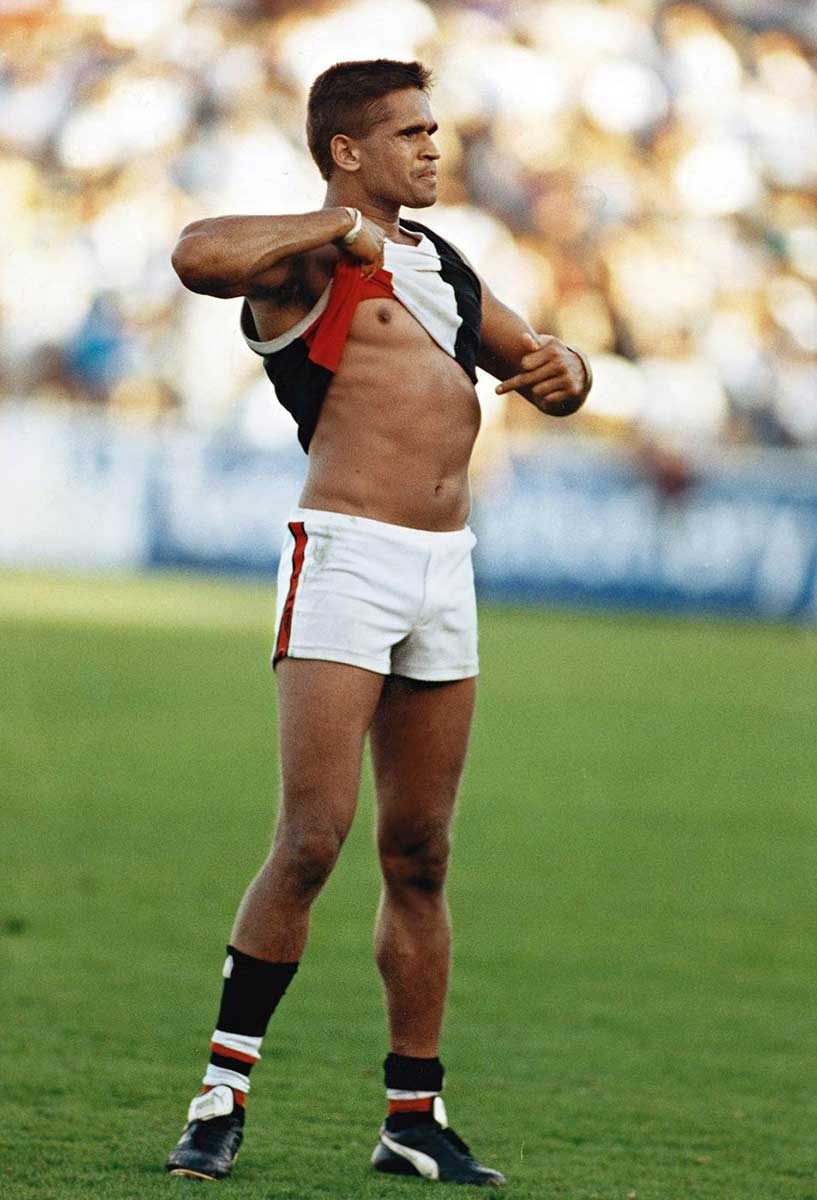
“I’m black and I’m proud to be black.”
Before the symbol, there was the footballer: a beautifully balanced, skilful and courageous player. We should remember the marks and the kicking alongside the stand. Nobody should need to endure abuse to secure their place in history.
Two years later, Long challenged the racial abuse directed at him during the ANZAC Day match against Collingwood. His action helped bring about the AFL’s 1995 racial and religious vilification rule. Introduced as Rule 30, it later became Rule 35, the Peek Rule. Aboriginal players were helping change the equity under which the game is played, as well as the score.
Goodes’ treatment exposed how much remained unresolved. He challenged a racist slur in 2013, spoke publicly about racism and faced relentless booing, particularly during his final season in 2015. In 2019, the AFL and all 18 clubs apologised for failing to support him adequately.
People can debate an individual free kick until the pub shuts, but sustained hostility towards a player who has spoken about racism deserves honest scrutiny and fair consideration about a change in the way Aboriginal playesrs are treated on and off field, by the media, spectators, football commentators and the general public.
Goodes’ own measure of a life was larger than the game and he said, “If people only remember me for my football, I’ve failed in life.” From a man with two Brownlows and two premierships, that is a powerful statement.
The Hawthorn controversy also belongs in an honest account. Former Indigenous players and family members raised serious allegations about their treatment. Alastair Clarkson, Chris Fagan and Jason Burt denied wrongdoing; the AFL investigation ended in 2023 without adverse findings against them. A later Federal Court proceeding against Hawthorn settled in 2024 without a determination of the parties’ allegations. Hawthorn apologised for the hurt and distress experienced by former players and their families. A settlement is not a court finding proving every allegation—or disproving it.
The point extends beyond one club. Recruiting someone’s football ability brings responsibilities towards the person, including respect for family and culture. The AFL has made significant progress in recognising Aboriginal culture and players rights with the Indigenous Round, which features Aborigional players and has the entire team wearing jumpers designed by an Aboriginal artist. Officially known as the Sir Doug Nicholls Round, it celebrats and honours the extraordinary contributions of Aboriginal and Torres Strait Islander players and their culture and communities to AFL, but more is needed than a guernsey design to eliminate racism from sport and Australian society.
Addressing AFL Inequality and the Provision of Opportunities for Young indigenous Players
There are practical initiatives underway. The Flying Boomerangs and Woomeras programs provide development opportunities for young First Nations boys and girls. The pathway also includes Indigenous Academies for older teenagers, and the 2026 Flying Boomerangs camp combined football with social, emotional and cultural wellbeing sessions.
Former players are helping deliver it. The 2026 Flying Boomerangs coaching group included Roger Hayden, Chad Wingard, Nakia Cockatoo and Jake Neade. Young players can learn from people who understand both the game and parts of the journey from personal experience.
The AFL has announced optional extra First Nations rookie-list places for both AFL and AFLW clubs from 2027, alongside cultural-capability standards. It has also set a target of 111 First Nations players across the two competitions by 2030. Those are announced measures and targets, rather than outcomes achieved.
The women’s figures show why a blanket celebration would be premature: the latest summit release lists 22 First Nations players among 575 AFLW players, approximately 3.8 per cent. That is roughly the national population share, and markedly below the men’s. Different denominators and different dates need to stay visible.
Access is only the beginning. Clubs also need to make it possible for players to remain, develop and belong. That means listening to players and families, responding seriously to racism and recognising that moving away from the bush to the city involves much more than a change of address.
Beyond The Final Siren
Michael Long’s activism grew into The Long Walk, taking Aboriginal concerns into a national conversation and continuing through education and community work. The Michael Long Learning and Leadership Centre also uses his standing to create opportunities for young people.
Adam Goodes and Michael O’Loughlin co-founded the GO Foundation with James Gallichan. Its educational scholarships support Indigenous students from school through to university. The ambition extends well beyond producing footballers.
The Polly Farmer Foundation’s Follow the Dream program provides educational support, tuition and mentoring. Farmer’s influence continues in classrooms as well as on the football field.
Eddie Betts has built a foundation and youth football academy combining development on the field with education, leadership and wellbeing. His books and other work have also taken messages about kindness and respect to children. The conjurer who specialised in creating on-field magic is helping to expand the issue of racial equity and achieving recognition for Aboriginal people in AFL and Australian society.
If AFL’s only measure of success is whether a child gets drafted, it has set a very narrow goal. Education, confidence, strong cultural identity and options beyond sport matter for the many young people whose futures will take them somewhere else.
More Than A Highlight Reel
Aboriginal footballers have helped Australian rules become faster, smarter, more inventive and thrilling. They have also challenged it to become fairer. Some of that work has carried a cost no player should have had to pay.
Calling the skill “magic” is an understandable response from the couch. Watch closely and there is intelligence in it: the reading of a bounce, the weight of a kick, the decision to chase, the timing of a leap and understanding the ball and how it behaves. There are hours of practice, family encouragement and community football behind those on-field moments that seem effortless.
Australia has been extraordinarily fortunate that so many First Nations people have chosen to bring their gifts to this game. A proper thank-you involves enjoying the football and respecting the people who produce it—especially when they have something uncomfortable to say.
By all means, watch Eddie bend one through from the boundary, Mitchell soar over the pack, Cyril hunt the ball and evade all-comers and Buddy streaming down the wing. Then watch them again and then get out and practice yourself to see if you can replicate the athletic feats regularly displayed by our Aboriginal players.
A game enriched this much by its First Peoples and ought to be able to offer them something equally dependable in return: a place where their talent, their voice and their humanity all belong and are recognised fairly.
Figures at a glance
| Measure | First Nations | Remaining share |
| Australian population, ABS estimate at 30 June 2021 | 3.8% | 96.2% |
| Men’s AFL lists, latest 2026 summit release | 66 / 813 = 8.1% | 747 / 813 = 91.9% |
| AFLW lists, same summit release | 22 / 575 = 3.8% | 553 / 575 = 96.2% |
Calculated percentages are rounded to one decimal place. “First Nations” combines Aboriginal and Torres Strait Islander people. The 2.1-times comparison is 8.118% ÷ 3.8%; it is descriptive, not adjusted for age, sex, geography or eligibility. The September list-place announcement used a different AFLW denominator; this draft consistently uses the later summit release.
Whoops, I almost forgot Darryl White!
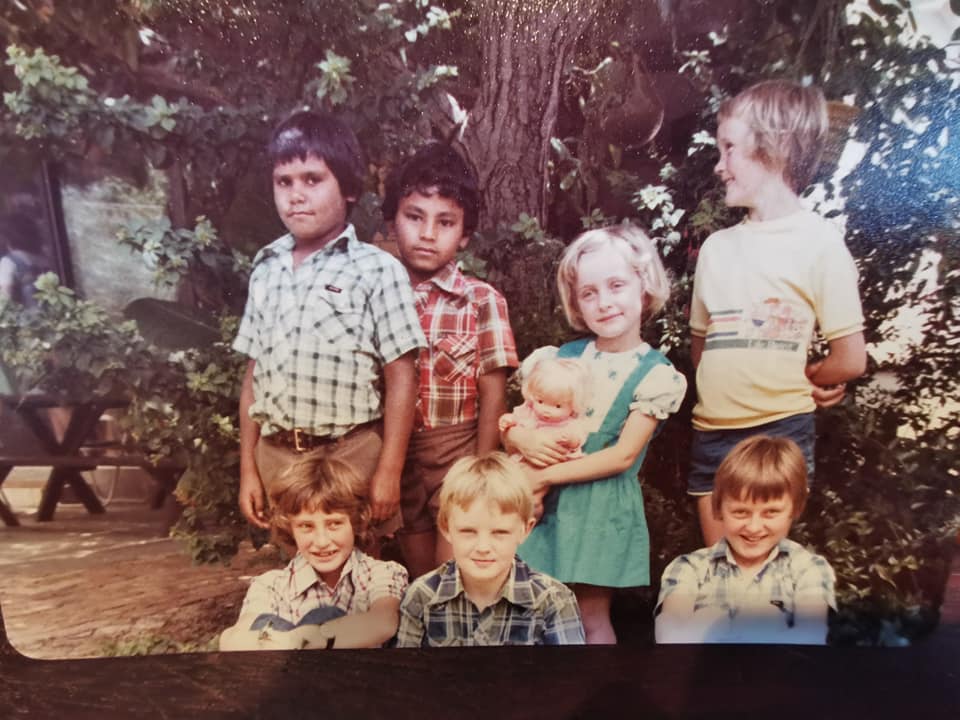
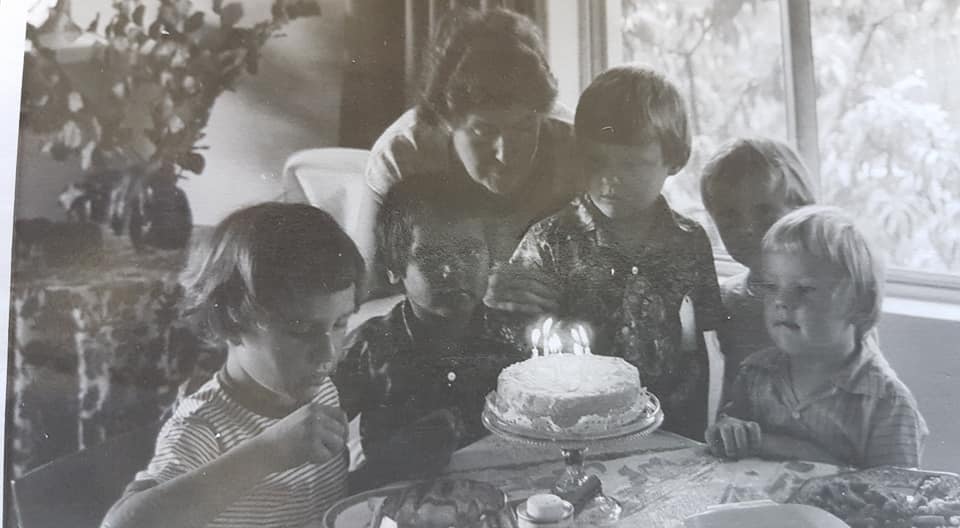
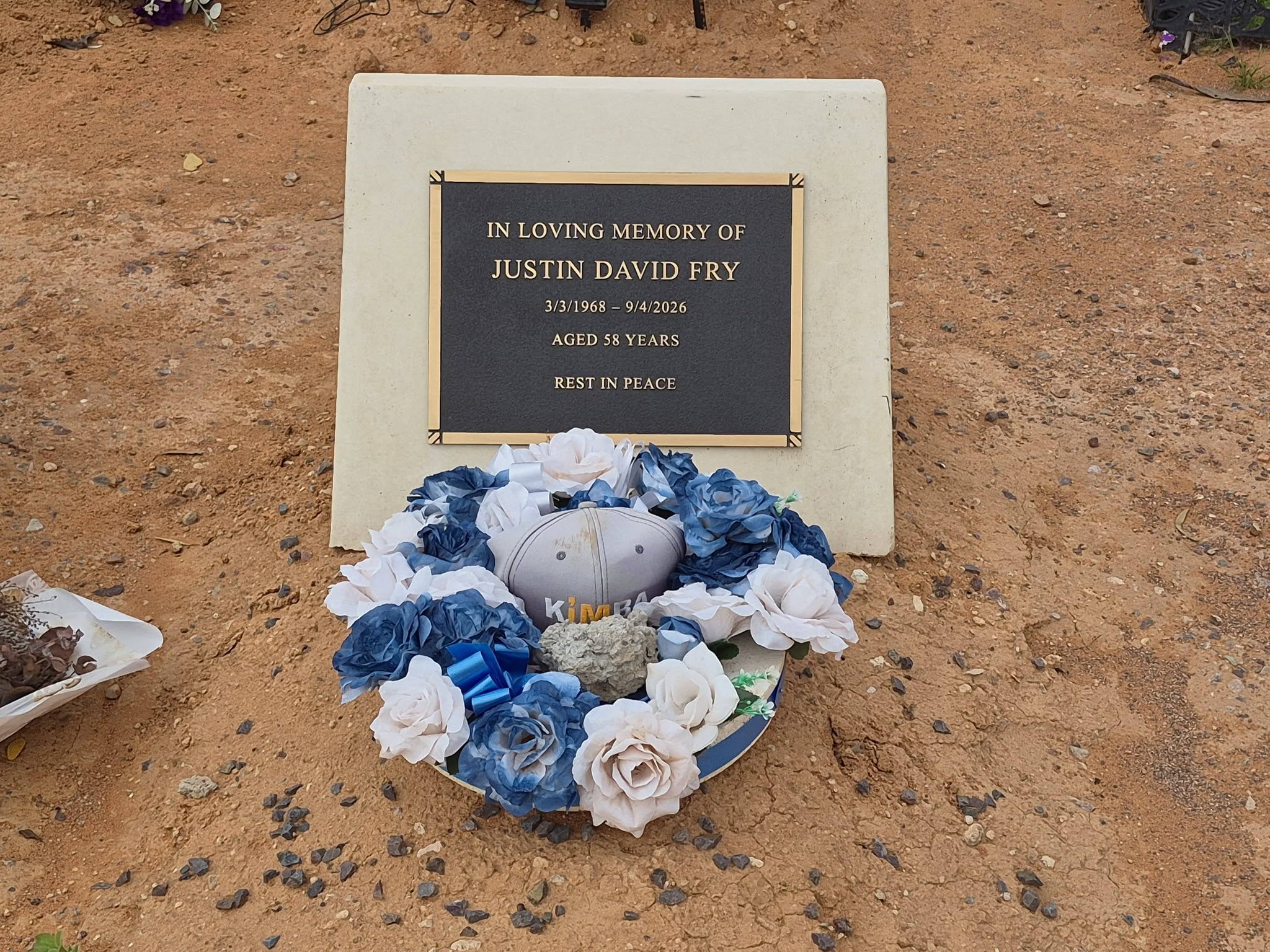
***This article is a tribute to my Aboriginal cousin Justin Fry, who passed away last year. I grew up with Justin and he was a much better cricketer/footballer and violin player than I was or will ever be.***