Smithsonian Institute, 207 Pennsylvania Avenue Washington, DC 20078
Dear Mr. Williams,
Thank you for your latest submission to the Institute, labelled ‘93211-D, layer seven, next to the clothesline post… Hominid skull.’
We have given this specimen a careful and detailed examination, and regret to inform you that we disagree with your theory that it represents conclusive proof of the presence of Early Man in Charleston County two million years ago. Rather, it appears that what you have found is the head of a Barbie doll, of the variety that one of our staff, who has small children, believes to be ‘Malibu Barbie.’
It is evident that you have given a great deal of thought to the analysis of this specimen, and you may be quite certain that those of us who are familiar with your prior work in the field were loathe to come to contradict your findings. However, we do feel that there are a number of physical attributes of the specimen which might have tipped you off to its modern origin:
1. The material is moulded plastic. Ancient hominid remains are typically fossilised bone.
2. The cranial capacity of the specimen is approximately 9 cubic centimetres, well below the threshold of even the earliest identified proto-hominids.
3. The dentition pattern evident on the skull is more consistent with the common domesticated dog than it is with the ravenous man-eating Pliocene clams you speculate roamed the wetlands during that time.
This latter finding is certainly one of the most intriguing hypotheses you have submitted in your history with this institution, but the evidence seems to weigh rather heavily against it. Without going into too much detail, let us say that:
1. The specimen looks like the head of a Barbie doll that a dog has chewed on.
2. Clams don’t have teeth.
It is with feelings tinged with melancholy that we must deny your request to have the specimen carbon-dated. This is partially due to the heavy load our lab must bear in its normal operation, and partly due to carbon-datings notorious inaccuracy in fossils of recent geologic record.
To the best of our knowledge, no Barbie dolls were produced prior to 1956 AD, and carbon-dating is likely to produce wildly inaccurate results.
Sadly, we must also deny your request that we approach the National Science Foundation Phylogeny Department with the concept of assigning your specimen the scientific name Australopithecus spiff-arino. Speaking personally, I, for one, fought tenaciously for the acceptance of your proposed taxonomy, but was ultimately voted down because the species name you selected was hyphenated, and didn’t really sound like it might be Latin.
However, we gladly accept your generous donation of this fascinating specimen to the museum. While it is undoubtedly not a Hominid fossil, it is, nonetheless, yet another riveting example of the great body of work you seem to accumulate here so effortlessly. You should know that our Director has reserved a special shelf in his own office for the display of the specimens you have previously submitted to the Institution, and the entire staff speculates daily on what you will happen upon next in your digs at the site you have discovered in your Newport back yard.
We eagerly anticipate your trip to our nation’s capital that you proposed in your last letter, and several of us are pressing the Director to pay for it. We are particularly interested in hearing you expand on your theories surrounding the trans-positating fillifitation of ferrous ions in a structural matrix that makes the excellent juvenile Tyrannosaurus Rex femur you recently discovered take on the deceptive appearance of a rusty 9-mm Sears Craftsman automotive crescent wrench.
Yours in Science, Harvey Rowe Chief Curator-Antiquities
The stage production “Virtual Symposium,” which was written, directed, produced and performed by local playwright Brendan O’Dwyer, co-director Sacha Healey and a troupe of actors from Karamea closed on Saturday February 25 after two sell-out shows at the Karamea Pulse Energy Centre and near full houses at The Lyric Theatre in Granity.
Over a year of preparation and dedication shaped a disparate gaggle of schoolteachers, nurses, farmers, horticulturalists, cave tour guides and Department of Conservationists into a guild of performers who rallied together and performed superbly.
Cast & (some) Crew at the Pulse Energy Centre in Karamea. L-R: Val Moynihan, Peter Moynihan, Tina Wylie, Tamati Dean, Ang Cronin, Brendan O’Dwyer, David Guppy, Aby Chalmers, Sacha Healey, Cliff Meakin, Liz Kerslake, Cathy Sampson. Sina Tuiavi’i and Sanae Murray. Photo by Paul Murray
Many of the performers are also members of the Karamea singing group “The Endorphins” and could really hold a note. The casting director deserves special mention as the roles assigned to the actors seemed to fit well with their characters, and they all seemed very comfortable in their thespian personas.
The show opened with a gunfight and had it all; fabulous costumes, singing, dancing, rap, hip-hop, social commentary, poetry, some magic, robots, romance, a mad scientist, a bearded lady, some associated cross-dressing and a lot of humour. The stage set was a simple white backdrop that was highly effective in catching the performers’ shadows and enhancing histrionics. The sound, lighting and venues were superb, and matched with the enthusiasm of the performers, it was a thoroughly enjoyable and entertaining evening.
Sacha Healey (left) as “Helen,” a petulant young woman with a gaming addition and no real friends. Photo by Paul Murray.
The premise of the production was to address the insidious means by which technology has infiltrated our lives and, in some instances, taken over. Game-addicted “Helen (Sacha Healey)” is trapped in a virtual world and has sought professional help to overcome her dependence on computer games and to seek more meaning from life.
Assisted by an avant-garde psychiatrist, “Ziggy (Val Moynihan),” who prescribes some experimental medication, and her hilarious robotic sidekick “Bud-E (Dave Guppy),” she embarks on a quest of rediscovery. With a little help from her friends, she is encouraged to escape her virtual reality to seek actual reality and regain an appreciation for life’s simple pleasures.
Sacha Healey (left) as “Helen,” a petulant young woman with a gaming addition and no real friends and David Guppy as “Bud-E,” Helen’s robotic companion. Photo by Paul Murray.“Virtual Symposium” Dubious Psychiatrist “Ziggy” (Val Moynihan (L)) and Computer Game-Addicted “Helen” (Sacha Healey) Photo by Paul Murray
Along the way, she meets snake oil cabaret performers “Heidi Seekey (Aby Chalmers)” and “Micky Dangledeep (Cliff Meakin),” a synod of argumentative, toga-wearing philosophers, a nutty professor and ends up performing in a talent quest. When we first meet game-addicted Helen, she is irascible, sullen and disconnected, without purpose or meaning in her life, but as reality kicks in, she gradually begins to smile and finishes the show beaming like the Cheshire cat. Did she choose humanity or digitality? That questions caused some ambiguity, some thinking she embraced the reality of the natural world, others thinking she morphed into virtual reality under a new persona, but in the end, all that really mattered was the resultant stimulating debate and conversation that the play elicited among the audience.
L-R Tina Wylie (“Convincus”), Aby Chalmers (“Heidi Seekey”), Peter Moynihan (“Argumentus”), Cliff Meakin (“Mickey Dangledeep”) and Brendan O’Dwyer (“Martin Brady”). Photo by Paul Murray.
The show took off in all directions but came together in the end to thoroughly address the juxtaposition between virtual and reality and the challenge of our age to know the difference. “Virtual Symposium” was made possible with support from the Buller District administered Council Creative Communities NZ grant of $2,000 and a grant from the Department of Internal Affairs through the Community-Led Development Programme of $17,987 to the Karamea Drama Group. The group invested the entire finding amount into the production of the show, set, equipment, professional services, venue hire etc. The performances raised a significant profit from ticket sales and the money will be distributed to local organisations in need of financial support. The recipient organisations for the profit distribution will be announced formally in the coming weeks.
“Virtual Symposium” was a triumph. It generated much-needed community unity after the social disruption of the COVID era, enabled creative ferment to blossom, raised money for deserving community groups and provided a great example for young people in the community as well as superb evening’s entertainment; Well done all concerned!
Cast & (some) Crew at The Lyric Theatre in Granity L-R: Val Moynihan, Peter Moynihan, Tina Wylie, Brendan O’dwyer, Ang Cronin, David Guppy, Aby Chalmers, Sach Healey, Cliff Meakin, Liz Kerslake, Cathy Sampson. Sina Tuiavi’i and Sanae Murray. Photo by Paul Murray
I am honoured to acknowledge the players and crew who were involved with the Virtual Symposium. Each member committed to the project on the basis that they would only do it if it was ‘going to be great.’ There was no room for half measures. This level of commitment became the backbone of the production, and I am forever grateful to those people who invested their energy into such an abstract vision. Commitment alone is rare. Commitment to a moving target that barely exists in someone’s head is, at best, foolish. Thank God for fools, otherwise we’d never get anything done.
Brendan O’Dwyer as “Martin Brady,” a man. Photo by Paul Murray
Thanks to:
Sacha Healey, for her tireless patience over a tumultuous two years. Sacha was not just a support person for me but an equal in terms of the creative vision. Her writing skills, editing abilities and creative prowess are apparent throughout the script, the songs and the overall vision of the show. Her acute attention to detail and her ability to interpret the written word was key to bringing dialogue to life and movement to otherwise flat characters. Simply put, without Sacha’s exceptional skills, there would not have been a show, and I would be responsible for a mediocre script that sat at the bottom of a pile of empty ideas.
Sacha Healey (left) as “Helen,” a petulant young woman with a gaming addition and no real friends. Photo by Paul Murray.
David Guppy, who described it best when he declared that I’d ‘built a great ship and it was sitting high upon the dry dock, and all hands were onboard and all the coffers were full, and ahead was a great voyage, and all that remained was for me to get underneath with a small hammer and tap, tap, tap at the little wedge that held the entire thing at bay and at the moment he jumped onboard, ‘tap’ went the wedge and the whole thing lurched headlong into the ocean.
David Guppy as “Bud-E,” a robot. Photo by Paul Murray.
Tina Wylie, for her creative energy in the costume department. A ninja with a needle, with glee did she take on the massive task of outfitting 13 people and always maintained her composure.
Tina Wylie (the Judy Dench of Karamea) as “Convincus,” a Greek philosopher in the school of Socrates. Photo by Paul Murray
Liz Kerslake, for asking ‘So, when are you gonna write the thing?’ and believing in me when I wasn’t sure if I could. Also, thanks for her abundant patience and positivity. Her friendship and calm presence steadied the ship when we were headed for the doldrums.
Liz Kerslake at “Glitch,” a non-human event. Photo by Paul Murray
Cathy Sampson, for ‘trusting the process.’ It was a pleasure to watch you grow into the role and also grow into yourself along the way. I’m sure you got younger over the years.
Cathy Sampson as “Alexa,”a conscious AI who runs the Virtual Symposium: Photo by Paul Murray
Cliff Meakin, for taking a leap of faith and grabbing his character by the Top Hat. Armed with an arsenal of wisecracks, he always lightened the mood.
Cliff Meakin (left) as “Mickey Dangledeep,” a travelling salesman, who dreams of being the best.
Aby Chalmers, for her bright energy and professional approach. Leaving the shore long after the ship had sailed, Aby swam her arms off and not only caught up with the ship but jumped onboard and gave the rest of us swimming lessons.
Aby Chalmers (left) as “Heidi Seekey,” Mickey Dangledeep’s assistance and the one that is the best. Photo by Paul Murray
Ang Cronin for her endless enthusiasm and bottomless bag of tricks.
Ang Cronin as “Grace Goggle,” alchemist and barmaid. Photo by Paul Murray
Pete Moynihan for his sharp ability to smell bullshit from a nautical mile away.
Peter Moynihan as “Argumentus,” Greek philosopher and adjudicator of the Symposium. Photo by Paul Murray
Val Moynihan, who got onboard with a small part and ended up with a much larger role, I don’t know how many times I heard someone say, ‘Val can do it,’ and she certainly did.
Val Moynihan (left) as “Ziggy,” a biotech firm rep. and avant-garde therapist consults with Sacha Healey as “Helen,” a petulant young woman with a gaming addition and no real friends. Photo by Paul Murray
Tamati Dean, another one who left the shore long after the ship had sailed. Not only did the man catch up, at one point he was spotted pushing icebergs out of our way.
Tamati Dean as “”Rebuttas,” Greek ohilosphoer in the school of Aristotle. Photo by Paul Murray
Sina Tuiavi’i wasn’t on the shore to begin with. Nearing the end of the voyage, we were desperately low on supplies and morale was on the wane when the kind winds blew us on a course to Sina’s Island. She nourished and restocked us and came onboard with a determined aura, becoming a rock for a frazzled crew.
Sina Tuiavi’i as “NPC,” a ‘non-playable character’ that can move between scenes in the sim.
Sanae Murray, tasked with making us look pretty, she would look through the foundation and past the glitter and gaze into your soul so that your entire being would be ready for the harsh reality of performance.
Sanae Murray Make-Up Artist to the STARS: Photo by Paul Murray
Kathy Ramsay, her gentle professionalism was much appreciated and her late addition to the crew was a welcome shift in our dynamics. Having her there was a personal measure of how legitimate the production was.
Emilie Schmitthaeusler, unwavering in her enthusiasm and carrying so much responsibility, she ran a tight ship and never buckled under pressure. A cool, calm presence that we all relied on, she never let us down.
Sam Beach, with his technical skills he could diagnose a discordant sound and ‘tweak’ it out of existence. He could also identify the ambient resonance of a space and tune the rig to harmonise with it. Nerdy for sure, invaluable no doubt.
Sam Beach working the sound and lighting desk at The Lyric Theatre in Granity: Photo by Paul Murray
Harry Bretherton, a master sound engineer with decades of recording and mixing experience, he treated the music with grace and engineered it to a higher form than I had ever intended.
Thanks also to Raramai Adcock and Carlos de Treend for graphic design, Tracy McEwing for mentorship and filming the show and David Lee for being the man. In addition, thanks to Sonder de Vries, Dion Mawson, Seth Doherty, Fernando Tarrango, Paul Murray, Rosalie Sampson and Jessie Creedmore, Steve Shultz and Mary McGill for support, encouragement and know how. And finally, Vinnie Dunford for the superb food, Rebecca and Emma for working the bar, Craig and Hannah for looking after the door and Juliette for use of the rehearsal space.
Thanks in general to the families who supported our mission. In particular my own, Ema, Quillyn and Odin, your support and understanding was priceless.
Peter Moynihan as “Mete Poynihan” and Sacha Healey as “Helen,” a petulant young woman with a gaming addition and no real friends. Photo by Paul Murray.Aby Chalmers (left) as “Heidi Seekey,” Mickey Dangledeep’s assistance and the one that is the best and Brendan O’Dwyer as “Martin Brady,” a man. Photo by Paul MurrayPeter Moynihan as “Mete Poynihan” in full flow. Photo by Paul Murray. Cliff Meakin (left) as “Mickey Dangledeep,” a travelling salesman, who dreams of being the best, and Cathy Sampson as “Alexa,”a conscious AI who runs the Virtual Symposium: Photo by Paul Murray. L-R: David Guppy, Sacha Healey, Aby Chalmers, Peter Moynihan, Liz Kerslake, Tina Wylie, Brendan O’Dwyer and Cathy Sampson on stage at The Lyric Theatre in Granity. Photo by Paul Murray.
Virtual Symposium Article from The Westport News February 19, 2024
Sacha Healey (left) as “Helen,” a petulant young woman with a gaming addition and no real friends and David Guppy as “Bud-E,” Helen’s robotic companion. Photo by Paul Murray.Cliff Meakin (left) as “Mickey Dangledeep,” a travelling salesman, who dreams of being the best.
Last Christmas was the first year our daughter Diva chose presents for family members by herself with her own pocket money. She bought me two secondhand books from the Soap Box in Westport, “The Narrow Road to the Deep North” by Richard Flanagan, which won the Booker Prize in 2014. It’s about the Burma-Thai Railway and prisoners in Japanese POW camps, an impressive choice for my reading taste. The other book appeared to be a generic, trashy detective novel by someone I’d never heard of and would never have bought myself.
I promised Diva I’d read them both and started on “The Silkworm” by Robert Galbraith. I thought it would be a good summer holiday read by the pool, at the beach, afternoon siestas, that sort of thing. However, I was immediately captivated by the story, the quality of the writing, the confidence of the protagonists, their character development and interplay…the story was real and compelling…I read the entire novel in a day.
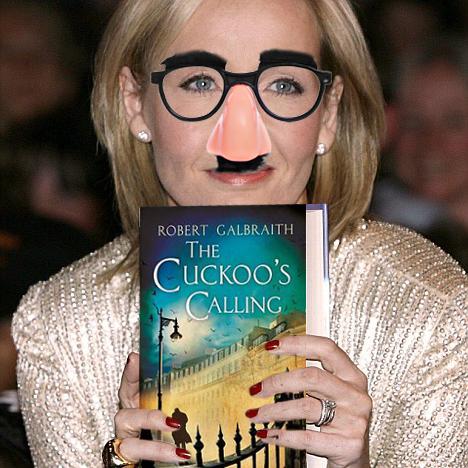
The book grabbed me and took me on an adventure with the unlikely characters the story evoked, and I thought, Who the hell is Robert Galbraith? I asked Dr Google, and guess what? Robert Galbraith is none other than J.K. Rowling. The book Diva gave me for Christmas was the second in the seven books in the “Strike” series of novels she wrote under the pseudonym. It’s Happy Potter for adults and genuinely unputdownable. I’ve now read four and found the first book in the series “Cuckoo’s Calling” in the Karamea Library this morning.
The Silkworm by Robert Galbraith aka J.K Rowling
The series is set in London and features the enigmatic Cormoron Strike, a ruggedly handsome, illegitimate and estranged son of faded rock star Jonny Rokeby and “supergroupie” Leda Strike. He is also a British war veteran (Royal Military Police Special Investigation Branch) who lost his lower leg in Afghanistan and is now a determined civlilian detective and owner of a private investigation service. Strike is simple, grumpy, ruggedly handsome, physically imposing, likes beer, burgers, fish and chips, and easily relatable. Despite his gruff persona, Strike has a strong sense of justice and compassion, particularly in his interactions with vulnerable clients and victims. His troubled past and strained relationship with his famous father add layers of depth to his character, shaping his approach to his personal and professional life.
The other main character is Robin Ellacott, an attractive young lady from Yorkshire, who arrives at Strike’s office to do some temporary secretarial work and finds a passion and aptitude for detective work and soon becomes an indispensable partner in the firm. Ellacott is complex, intuitive, courageous, determined, fashionable and very feminine.
Private Detectives Cormoran Strike and Robin Ellacott
Rowling, one of the most successful authors of all time, chose to cloak herself in anonymity to enable creative freedom and break free from the stereotype of her iconic Harry Potter legacy. By assuming the persona of Robert Galbraith, Rowling could explore new genres and narratives without the burden of expectation and comparison.
Yet, despite her efforts to remain incognito, Rowling’s true identity as Galbraith was eventually unveiled, leading to a surge in interest and sales for the Cormoran Strike series. While some may view this revelation as a calculated marketing ploy, others see it as a testament to Rowling’s commitment to her craft and her willingness to take risks in pursuit of artistic fulfilment.
Writing under the nom de plume of Galbraith has enabled Rowling to venture into the realm of crime fiction, crafting intricately plotted mysteries populated by flawed yet compelling characters. Far removed from the magical halls of Hogwarts, these novels delve into the gritty realities of crime and investigation, incorporating Rowling’s storytelling prowess. From the brooding private investigator Cormoran Strike to his resourceful partner Robin Ellacott, Galbraith’s protagonists captivate readers with their depth and complexity, drawing them into a world where the line between good and evil is often blurred.
The novels have been made into a BBC TV series, which is currently on NEON for New Zealand viewers. However, in my opinion, the books are infinitely better than the show.
I rarely read novels by female writers…It’s not sexist; I just prefer a masculine writing style. However, Galbraith’s prose has interesting female perspectives that added to the complexity of the narrative. Strike and Ellacott have complicated personal relationships with their respective partners, but their close working relationship and mutual respect lead them to fall secretly in love without acknowledgement or discussion for fear of compromising their friendship and professional relationship. This creates ongoing tension throughout the series…I’m on the sixth book, and they still haven’t shared their true feelings. HELP! I’ve been tricked into enjoying feminine locution!
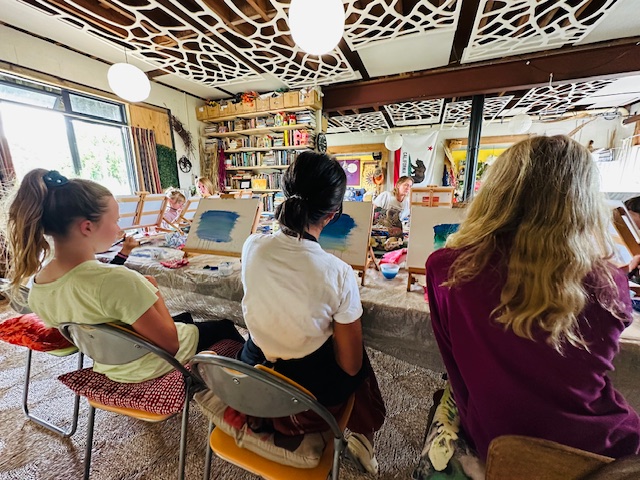
With financial support from the Community Led-Development Programme (CLDP), local volunteers have provided Karamea kids with a wonderful schedule of exciting, intellectually stimulating and practical activities this summer. From cooking, Stand Up Paddleboarding, yoga hula-hooping, art classes, hiking, mountain biking, music and a raft of other great events that have kept our children entertained, active and engaged this summer, as a parent, I offer a huge thank you to all concerned.
We all love our children, but the summer holidays are very long, and many of us have work commitments that conflict with the expectations of the youngsters and their need for action and invigorating pursuits to fill their sunny days. The Summer Activities for Kids and Youth in Karamea 23/24 has been a great help to both parents and their offspring. Throw in Little Wanganui Beach Day, the Karamea Show, Irish Dancing, Christmas, gymnastics, pickle ball, volleyball, badminton in the new hall, the heated swimming pool and all the superb outdoor activities on offer in the region and this summer has been jam-packed with awesomeness for our kids and the community.
The challenge of our age as parents in this rapidly changing world of emergent technologies is to encourage our children to use their own creative powers rather than drawing on the imaginations of others in the digital media-verse. It is also to provide our kids with a thorough understanding of social ethics and moral codes to guide them through the challenges they will eventually face on their own later in life. Life is busy these days with many parents both working to provide for their family, so the summer activities programme has been a marvellous help to keep our kids engaged in wholesome activities that inspire, motivate, entertain and help them grow.
About a decade ago, there was an essay competition at Karamea Area School, and the students read out their compositions. Somewhat disturbingly, many of the narrations were on dark subjects like bullying, depression and suicide, which is a big problem in New Zealand society, especially among our young. New Zealand has the second highest adolescent suicide rate among OECD (wealthy) countries in the world.
Much has changed since then, and the Karamea Area School is in a much better place in terms of management and the dedication of the teaching staff; the facilities have vastly improved, and the initiative of the Karamea community to provide our children with inspiring holiday activity programmes has really turned this troubling situation around. I suspect that if we reran the essay competition, the outcome would be much more optimistic.
Much gratitude to the team of local leaders, many stepping up for the first time, for sharing their skills, equipment and time to lead various activities. The response was overwhelming when Liz Kerslake called for volunteers to host summer events and activities. It enabled her to create a full timetable for our youngsters this summer.
Massive thanks to Liz Kerslake, the Karamea community and the following folk for their dedication and belief in our youth: Deborah Wagner, Jodi Goodwin, Lena Fischbach, Aby Chalmers, Emily Klaver, Angela Cronin, Alwyn, Jackie Christie, Harry Bretherington, Linda Brownie, Mark Cloughley, Saelyn Guyton, Emilie, Sander, Cole Simpson, Fifi, Tony Ibbotson, and Rosalie Sampson deserve immense gratitude. These individuals have contributed to activities ranging from mountain hikes and artistic endeavours to music sessions, cooking classes, and even car maintenance tutorials.
51 local children and some grateful visitors actively participated in the programme activities. There were a few issues with the weather, but everything worked out fine with a bit of rescheduling. Some no-shows occurred, and the expected numbers for some events/activities were lower than expected. This was disappointing for the volunteers and organisers who had offered their time and energy freely, so let’s make sure to attend and honour commitments in future to ensure this programme can continue to support our kids and their development and the welcome respite the programme affords parents over the summer break.
Thank you again to the organisers of the excellent summer schedule, the parents who car-pooled to help get the kids to the activities, those who organised, volunteered and supervised, and Karamea Community Incorporated, who saw value in and supported the programme.
The CLDP funding runs until September this year, so we hope to receive local sponsorship for the 24/25 programme. Liz is already cooking up some exciting Youth Club experiences this year and is looking forward to welcoming a new wave of 13+ youngsters into the fold.
We’re so fortunate to live in an outdoor activity paradise and to have so many willing adults giving up their time and expertise to support our kids. If wealth could be measured in children’s tired, happy smiles, Karamea parents are more affluent than Elon Musk!
From Tokyo to Karamea: The Start of the Road at the End of the World’s Longest Cul de Sac.
Sanae and Paul Murray say life is sweet in this remote town of 700 people.
For Paul Murray, ex-journalist, art photographer, keen horticulturist, cultural enthusiast, real estate agent, former bed and breakfast proprietor, and family man; life in the little South Island town of Karamea couldn’t be sweeter.
Murray, 57, has been living in the isolated settlement of 700 residents cocooned between the Kahurangi National Park and the Tasman sea since 2003. With his wife, Sanae Murray, 41, joining him in 2004, they’ve chosen to raise their family there, to give their children a free-range lifestyle. Their happy and confident kids, Diva and Winston, are now almost 12 and just turned 9.
With one road in and one road out, Paul likens the town, including its peculiarities, mindset and biological diversity, to that of an island.
“We’re at the end of the world’s longest cul-de-sac, and a place we like to think of as the start of the road,” he say. “We’re 100km north of Westport, basically, on a no-exit road.’
PAUL & SANAE MURRAYPaul and Sanae Murray have made their family life in Karamea since 2003, raising their two children there, Winston at left, and Diva, at right, who are now nine and almost 12, respectively.
Paul first visited Karamea in 2000 when he was living in Japan, working as a journalist and art photographer.
“I came to New Zealand on a holiday in about 2000, and looked at a map and I thought ‘Wow, the town right up there.’ I was driving around the south, and I thought we’re gonna look at that. And so I drove up here and just thought, ‘What an incredible place.’ And I just fell in love with it.”
PAUL MURRAYHappy visits to the beach are par for the course in Murray family life in Karamea.
He’s not the only one to drive down the no-exit road and decide to never leave. Paul says there are “lots of stories about people doing that”, including a Canadian friend, who has since died, who came to Karamea for a picnic and ended up staying for 40 years.
When Paul returned to Tokyo, he says he couldn’t stop thinking about Karamea. The following year, he bought 32 hectares of bush that borders the national park, then went back to Tokyo to work to pay for it. Two years later he moved there permanently, with Sanae following not long after.
PAUL & SANAE MURRAYThe stunning natural beauty and biodiversity of Karamea won Paul Murray over in 2000, and his partner, then wife, Sanae, followed him shortly after.
“It’s been an amazing journey,” he says. So what’s so great about Karamea?
“It is a very stunning place,” says Paul. “It’s very much like a geographical island. You’ve got the Kahurangi National Park on three sides and then it’s sealed in by the Tasman Sea.”
“It’s the warmest, driest place on the West Coast, because it’s the furthest north. And interestingly, we’re actually north of Wellington. Because in maps the South Island is a bit skewed, we’re actually just north of Wellington, and we’re east of Timaru. So it’s a bit of a local joke: Where are you from, mate? Oh, just north of Wellington. Oh, the Kāpiti coast? No, no. Karamea.’
SANAE MURRAYBeing an available dad is important to Paul, which is why he no longer runs the motel and B&B facilities that they used to.PAUL & SANAE MURRAY“Just north of Wellington and east of Timaru” is where you’ll find Karamea.
Because it’s remote, Paul says the residents are independent, resilient, and “interested in sustainable living and growing food”.
It’s a world away from the bustling streets of Tokyo, where Paul and Sanae first met. For her, moving to Karamea meant a new language, a new culture, a new lifestyle … and directly disobeying her father’s wishes.
Long since settled now, the family enjoy weekly calls on a Sunday to Sanae’s parents in Tokyo, and go to visit every year. They speak Japanese on the Zoom calls but English around the house.
“Speaking Japanese to my wife is pointless because her English is far better than my Japanese,” Paul says.
PAUL & SANAE MURRAYThe Murrays try to visit Japan every year so the children can see their grandparents. Every visit, Paul is reaffirmed in the choice they have made to raise their children in Karamea. Compared to children of the same age in Tokyo, he feels his are “so much more confident”.
The family have their own little farm that includes 1.6ha of grazing sheep and 2000m² of productive gardens.
Before Covid, the couple used to run motels in Karamea, including a 10-bedroom 1960s ex-maternity hospital which they operated as a bed and breakfast. Paul estimates they served up 2,500 meals a year using their own garden’s produce.
The ease of growing all manner of fruits and vegetables is one of the key things that encouraged Paul, who has a degree in horticulture, to move here.
“It’s warm and sunny, and you can grow almost anything here. I was absolutely astounded by the range of different crops people can grow here. They can grow bananas.”
PAUL & SANAE MURRAYDiva in the Murray’s productive garden, which these days produces around 60% of the family’s food.
His garden includes plants you wouldn’t expect to be viable on the West Coast, such as macadamia nuts, Ecuadorian coconuts, feijoas, passion-fruit, and blueberries.
Paul’s long-term goal is to become a kawakawa “pepper baron.” A collaborative partnership is already underway with a local cheesemaker to create a sensational kawakawa-infused cheese. Watch this space.
His career in abstract nature photography began with a Tokyo exhibition of holiday photos from New Zealand. Far from the “snaps next to a giant gumboot” that his friends expected, the images were artistic captures, a lens into a landscape that Paul loves.
PAUL & SANAE MURRAYThe Murrays also have sheep grazing on their little farm.
Pushed on by his friends to exhibit, he says the experience was unexpectedly “a phenomenal success”.
“It was unbelievable, the jammiest thing I’ve ever done in my life,” he says.
“So many people came, we had to close the exhibition down. And we had to employ a security guard to let a certain number of people in at a time. There was a line outside the restaurant for a block and a half.”
“And then because of the line, it attracted media attention, and suddenly, all these journalists were turning up wanting to talk to the artist and I’m thinking, ‘Oh no, is that me?’ Suddenly, I’m an artist.”
“I ended up in Japanese photo magazines, and then in the popular press in Tokyo at the time. And from then on, I was just doing exhibitions all the time, to the point where I kind of burned out a bit. I lost the passion for what I was doing, because I ended up sort of feeling like I was doing it for other people rather than myself.”
PAUL MURRAYA recent abstract nature artwork by Paul who plans to hold another exhibition in Tokyo in 2024.PAUL & SANAE MURRAYPaul’s wife Sanae took the leap of a lifetime to buck tradition and join him to live in Karamea in 2003. Her brave choice was the beginning of their family’s story.
He met Sanae at one of the exhibitions, so it’s safe to say the experience was still resoundingly positive.
Paul has returned to creating art in Karamea, and is also an enthusiastic supporter of the arts community there. Sanae has produced 11 pop-up exhibitions in the town and he estimates that around 10% of Karamea’s residents are artists.
Will the Murrays ever move? Not a chance.
They’ve hosted multiple Japanese television crews and an Italian documentary team, all curious to learn why they choose to live in a place some consider to be the ends of the earth.
PAUL & SANAE MURRAYThe place where their children have grown, Karamea is full of happy memories. Here, their son Winston, now nine, plays on the beach in Karamea at dusk.PAUL & SANAE MURRAYSanae Murray is also a keen supporter of the arts and to date, has organised 11 pop-up exhibitions of local artists’ works.
Their “ramshackle, work in progress, building site of a house” is a 100-year-old, three-bedroom villa, at the western end of Karamea.
The town has all the amenities that Paul considers to be important, from “one of the best schools in New Zealand” to a Vidal Sassoon hairdresser, a supermarket, heated swimming pool, hardware store, gas station, cafe-restaurant, and “excellent medical care” available via the local nurses, with the rescue helicopter 20 minutes away for emergencies.
“It’s been 20 years I’ve been here, we’ve done a lot of stuff, and it’s been a wonderful, wonderful journey,” says Paul.
“I still wake up every morning, look across and see my wife is still sleeping and open up the curtains, look at and watch the sun rise over the forest and mountain peaks of the Kahurangi National Park, and think, ‘Shit, I’ve won life’s lottery.’”
“This place is my Shangri-la. Honestly, I love it. Love living here. Don’t want to go anywhere else.”
The idyllic rural community of Karamea in the Buller District at the the top of the West Coast, is possibly the most remote on Mainland New Zealand in terms of its proximity to another town. Westport (Pop.6,000), the Capital of the Buller, is well over an hour’s drive away.
Recent media about Karamea and discussions of upcoming local events have highlighted the critical role tourism plays in supporting our region’s businesses and services. Remote towns like Karamea face unique challenges that set them apart from more populated areas, and the services they offer rely on a lifeline from visitors to their region.
In New Zealand, many small towns, just like Karamea, hinge economic survival on their environmental assets, natural beauty, and outdoor attractions. These places, blessed with breathtaking landscapes, depend on the success of their communities to harness and promote their natural resources while simultaneously preserving the quality of life, privacy, and well-being of their residents.
Karamea is no different, and tourism is the linchpin holding our community together. Travellers are drawn to Karamea to explore our iconic semi-tropical rainforests, the enchanting Kahurangi National Park, and the awe-inspiring Ōpārara Basin, along with our many other attractions. They come here to partake in outdoor activities and soak in our tranquil environment, briefly immersing themselves in our high quality of life.
Oparara Arch: Photo by Sean Coleman
While our history has seen us relying on extractive industries like forestry and mining, the present and future place greater emphasis on environmental stewardship rather than exploitation. Climate change is often in the limelight, but it’s just one piece of the puzzle. Now, the spotlight is on personal wellness, reduced reliance on exploitation, and a stronger connection to nature. Sustainability and regeneration of our natural environment and resources are paramount. The Karamea Community Plan powerfully underscored how vital our natural environment is to our community and how much we treasure our unique wonderland.
Our road access and maintenance depend on usage, and while the dairy industry plays an important role, tourism is equally vital. Access to our region hinges on having industries like agriculture and tourism, one producing marketable products locally and the other bringing income into the community through the money spent by visitors. Our population alone cannot justify essential services like the fuel station and supermarket, or nice-to-have businesses such as cafes, restaurants, and bars. The tourism and agricultural sectors are necessary to support local businesses and the services and facilities we, as residents, hold dear.
The tourism industry is the lifeblood of Karamea, diversifying our local economy, creating job opportunities, and keeping people employed in roles that cater to our visitors. By carefully managing, developing, and preserving our natural assets, we can chart a path toward prosperity that benefits the businesses that form the backbone of our community and provide the essential services and facilities we all rely on.
So, thank you to Juliette and Jason and their crew for providing such an excellent supermarket, thanks Vinnie for your fabulous café and delicious food and beverages, and thank you to the medical staff who do an incredible job of keeping our community healthy. Thank you to the Karamea Village and Little Wanganui pubs and the Last Resort, thanks to Tony and Sandy at Karamea Hardware for the amazing array of products you stock, thank you to Lena for keeping us all trim and tidy, the Information Centre for the fuel service, farm supplies, books and gifts, to Tony and Fifi for the refillery, to Rebecca at the Co-Op, the Higgs family and Karamea Tomatoes for freight and transport services, the magnificent Karamea Area School staff and teachers, Lee and Stu looking after our amazing Karamea Pulse Energy Centre. and our policeman, Alan Kees, thanks for keeping the peace. To the volunteers, fire, ambulance, sports coaches. fund raisers, quiz and raffle organisers, art exhibition helpers, winter-school teachers, the dedicated market stallers, youth group mentors, radio station DJs,…all the people who make our community fabulous.
Kohaihai River Mouth:Photo by Paul Murray
Thanks also to Jessie Creedmore for working tirelessly to improve our lot and to Sanae Murray and the Pop-Up Gallery team for the fantastic exhibitions, the teachers and staff at Karamea Area School, the volunteers who run the tremendous Karamea Library and Museum, the swimming pool committee, golf club, helicopter services, airport management and the many other people working behind the scenes to keep Karamea awesome. However, it’s essential to remember that many of these services and facilities owe their viability to the support of tourism and the visitors who come to our region. In the delicate balance of sustaining our community, tourism is the indispensable partner.
Karamea Community Coordinator Jessie Creedmore: Photo by Paul Murray
Karamea’sCreative Couture Transcends All Expectations
Off the Top of My Head
By Paul Murray
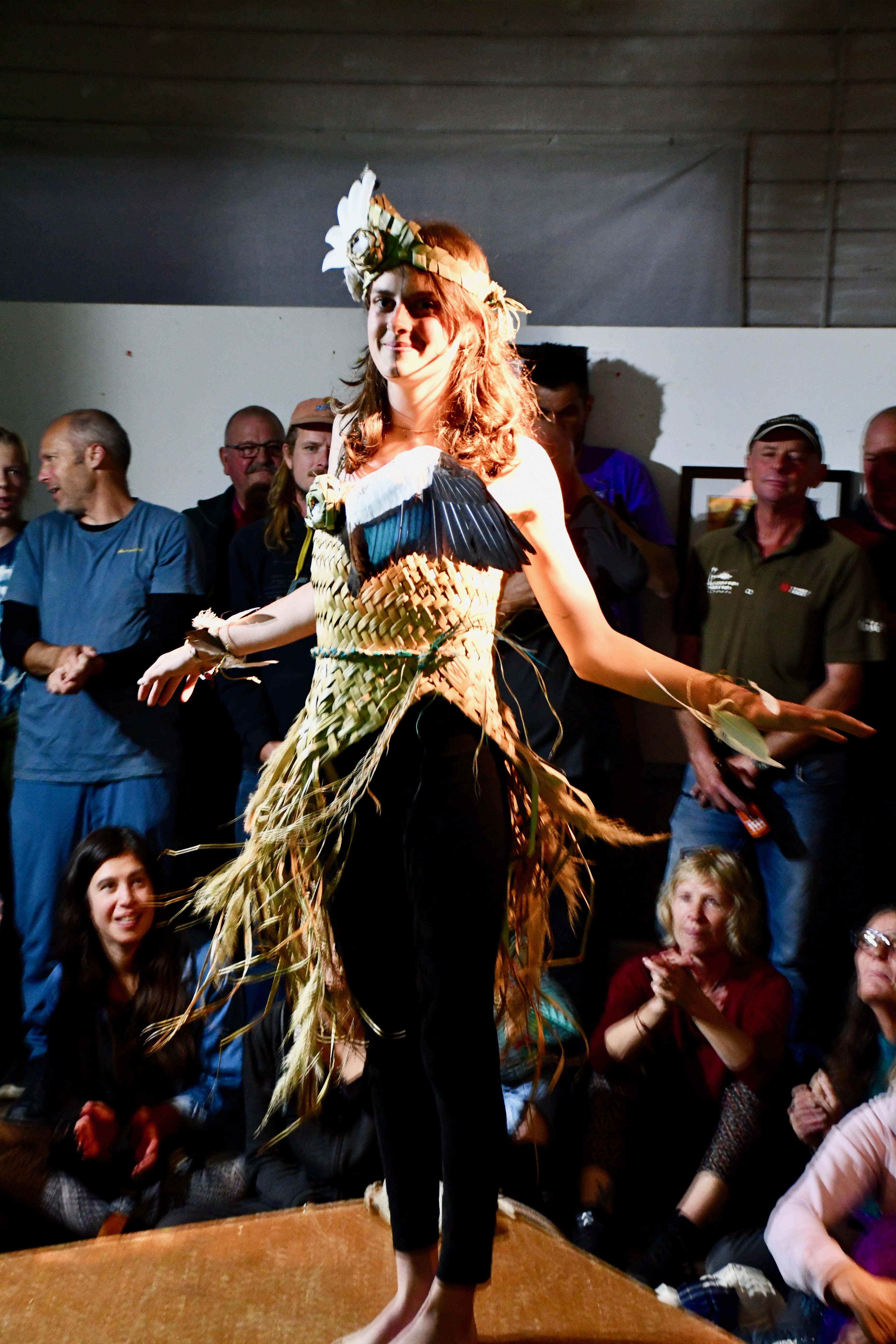
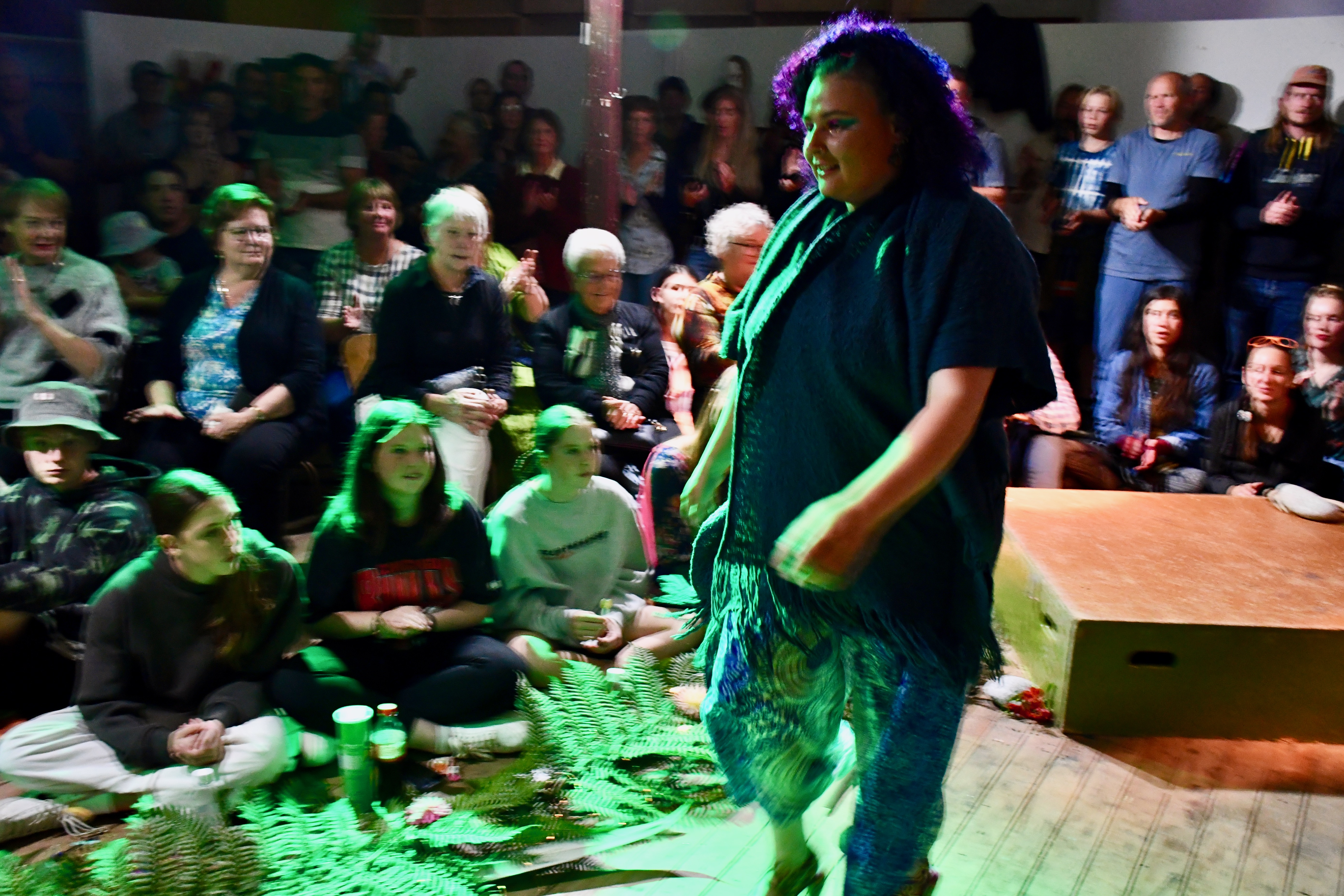
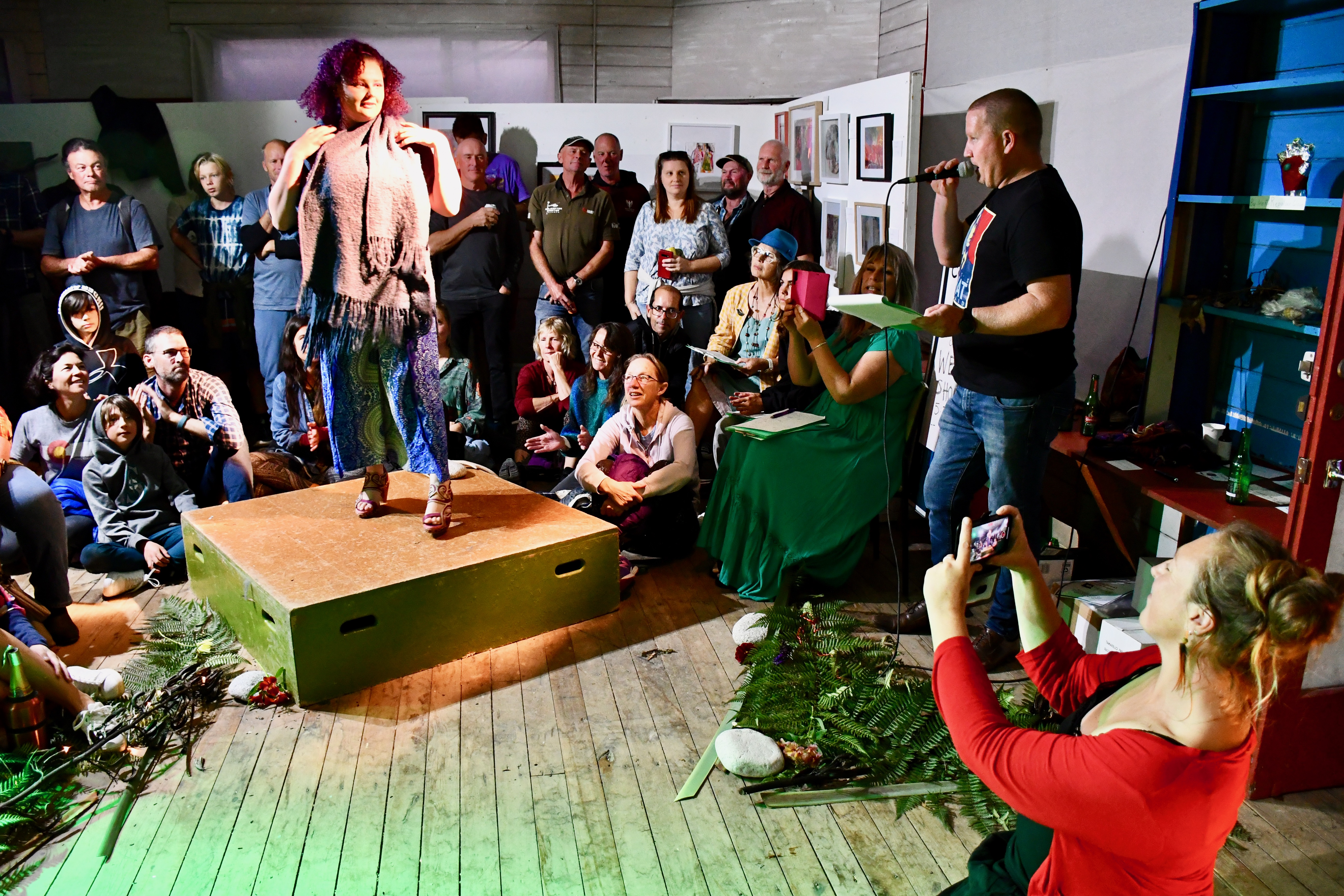
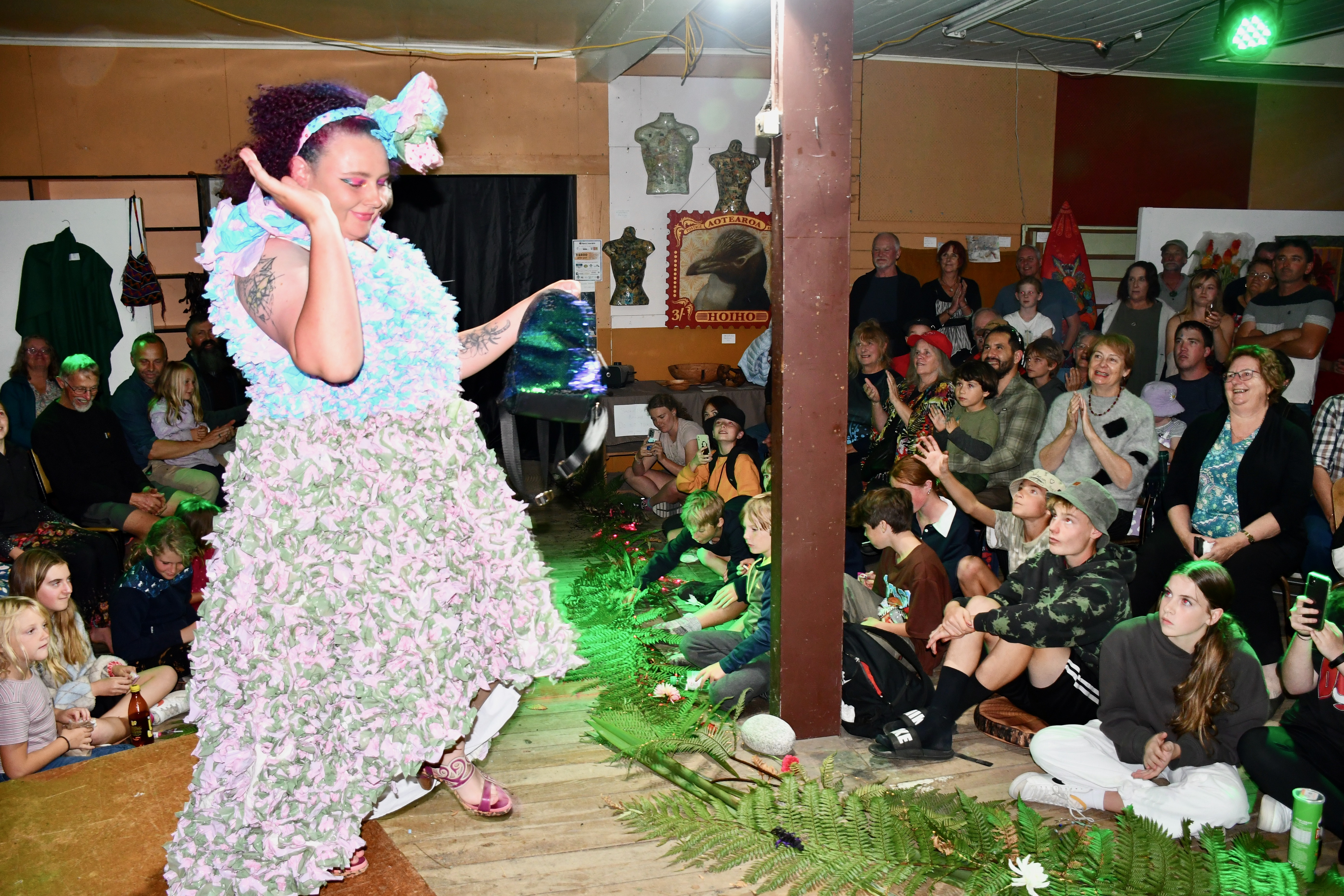
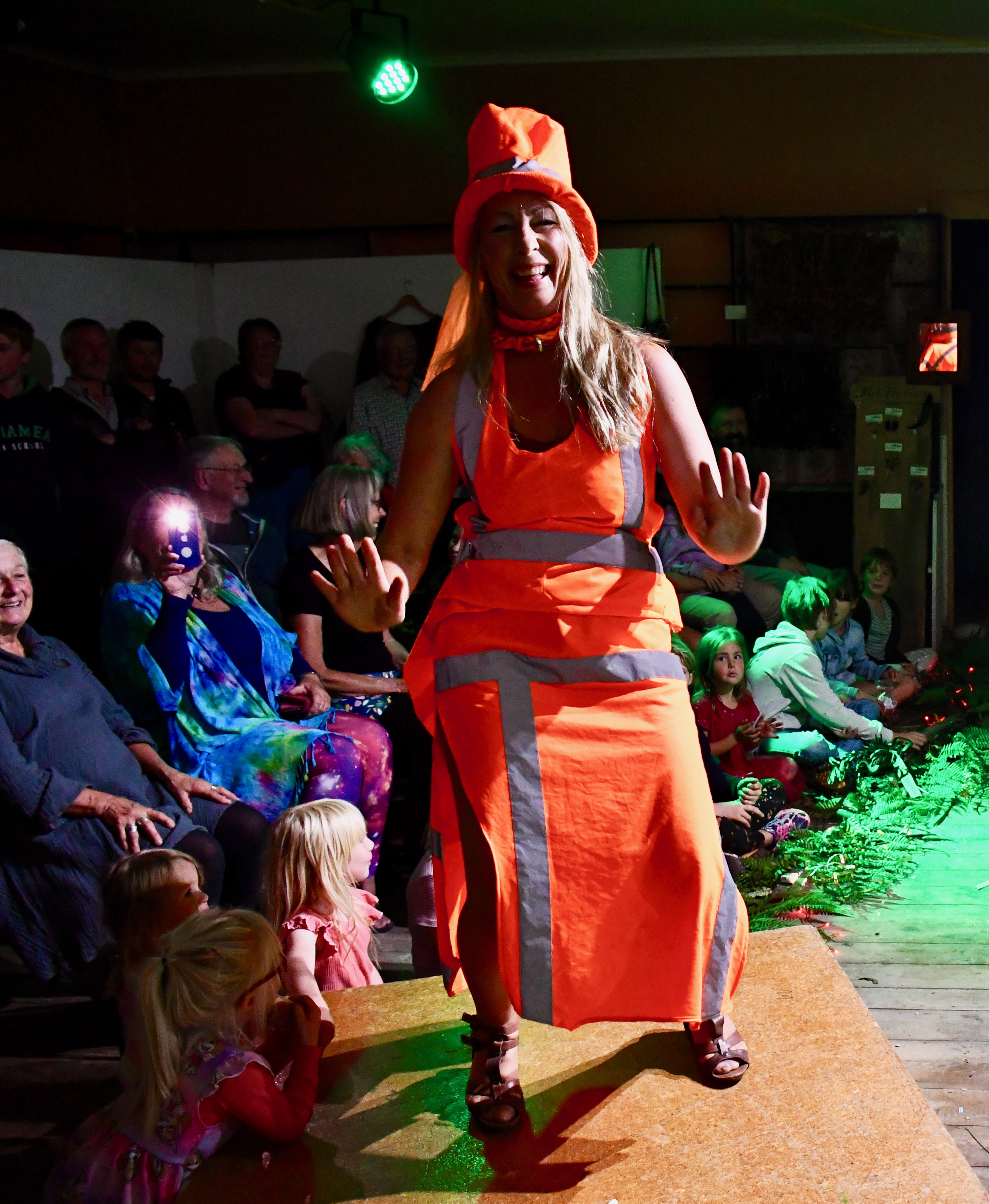
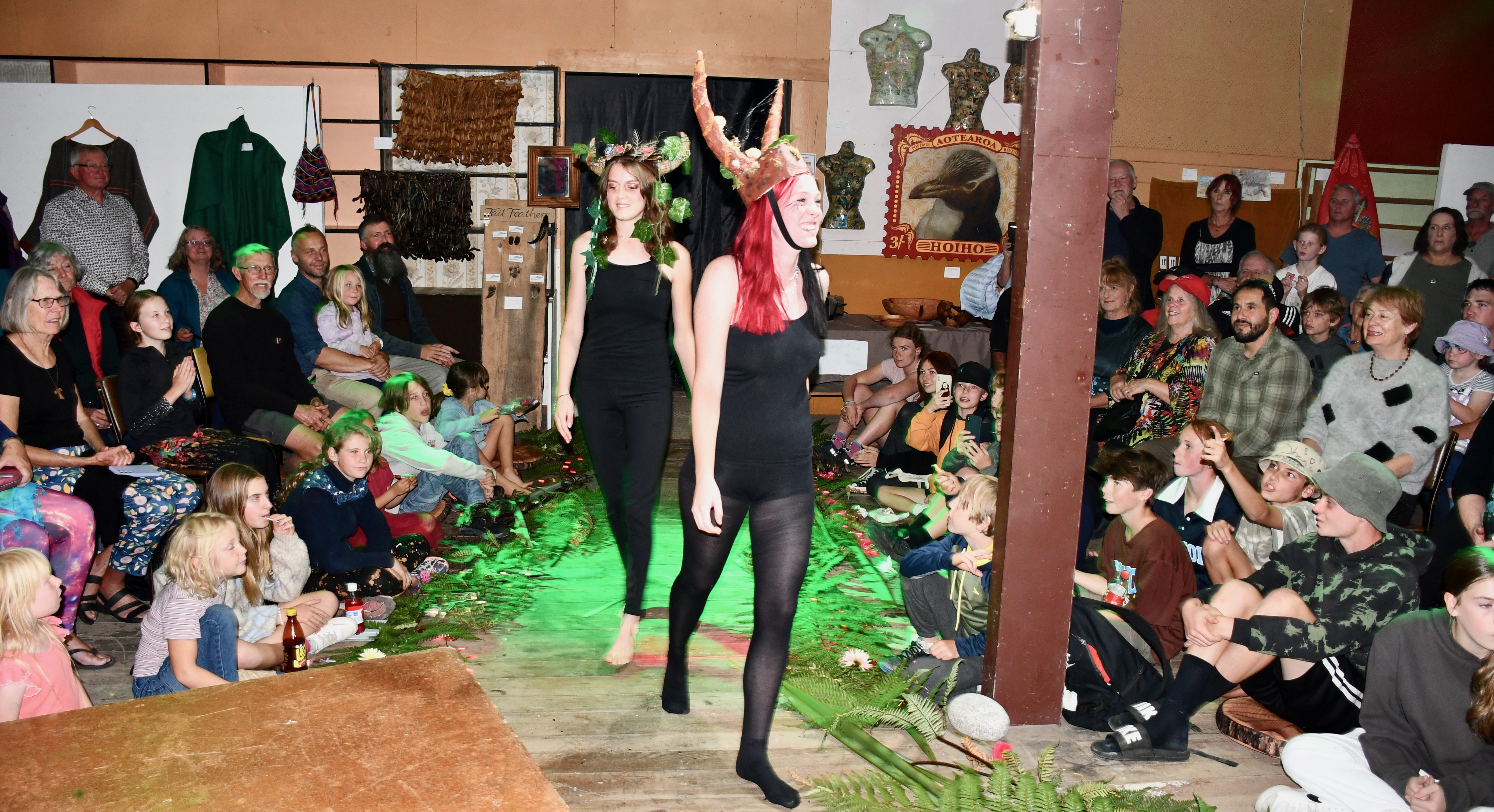
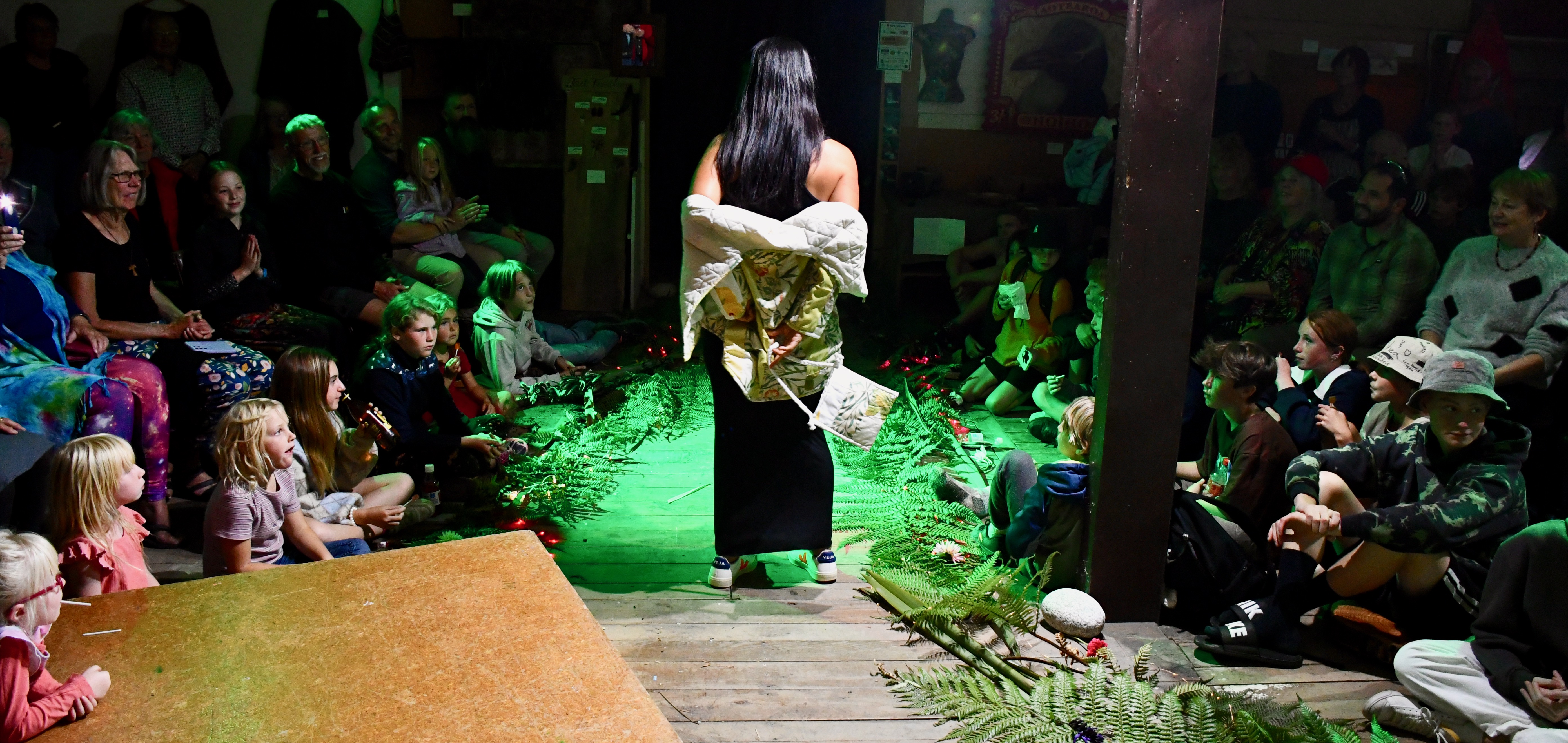
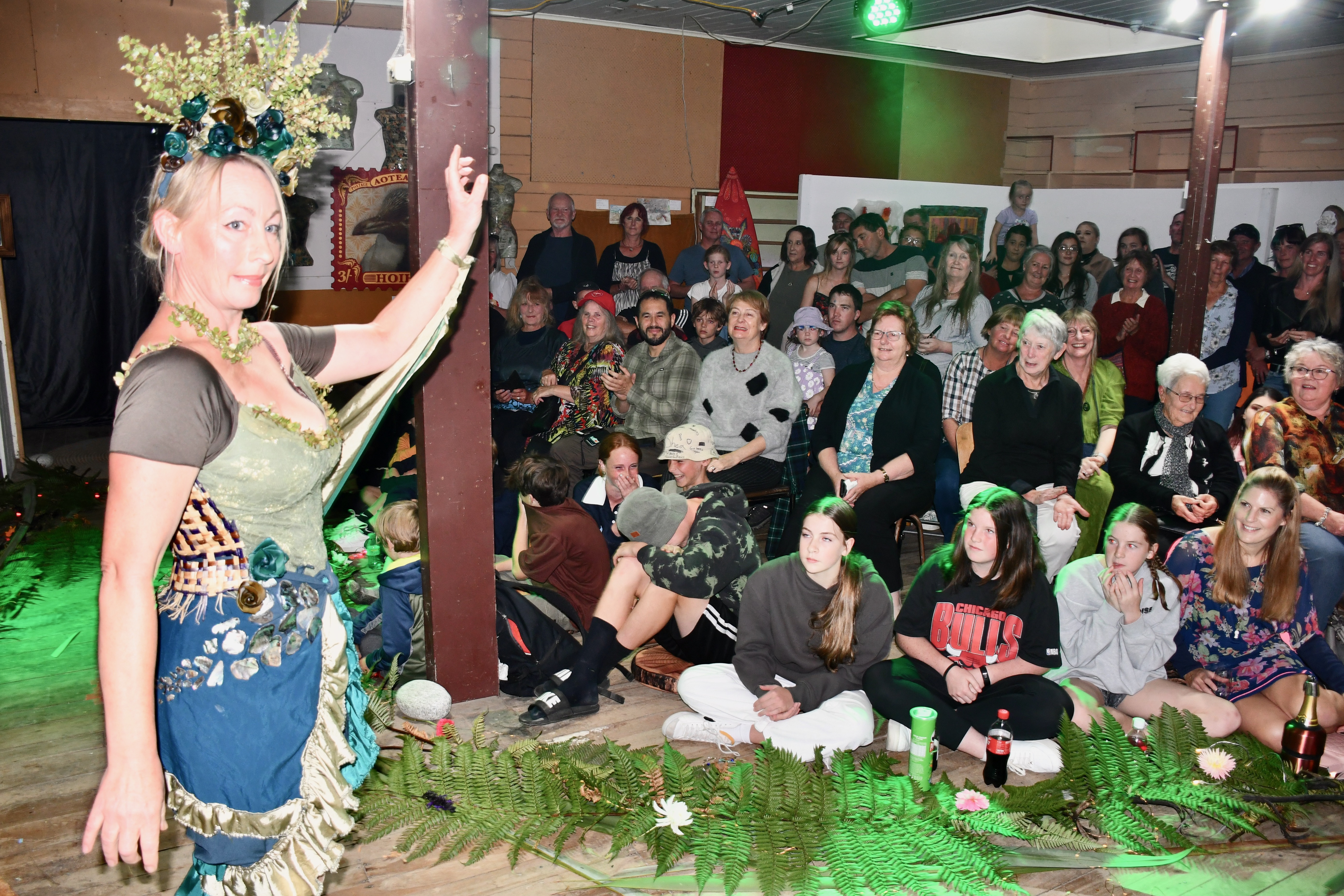
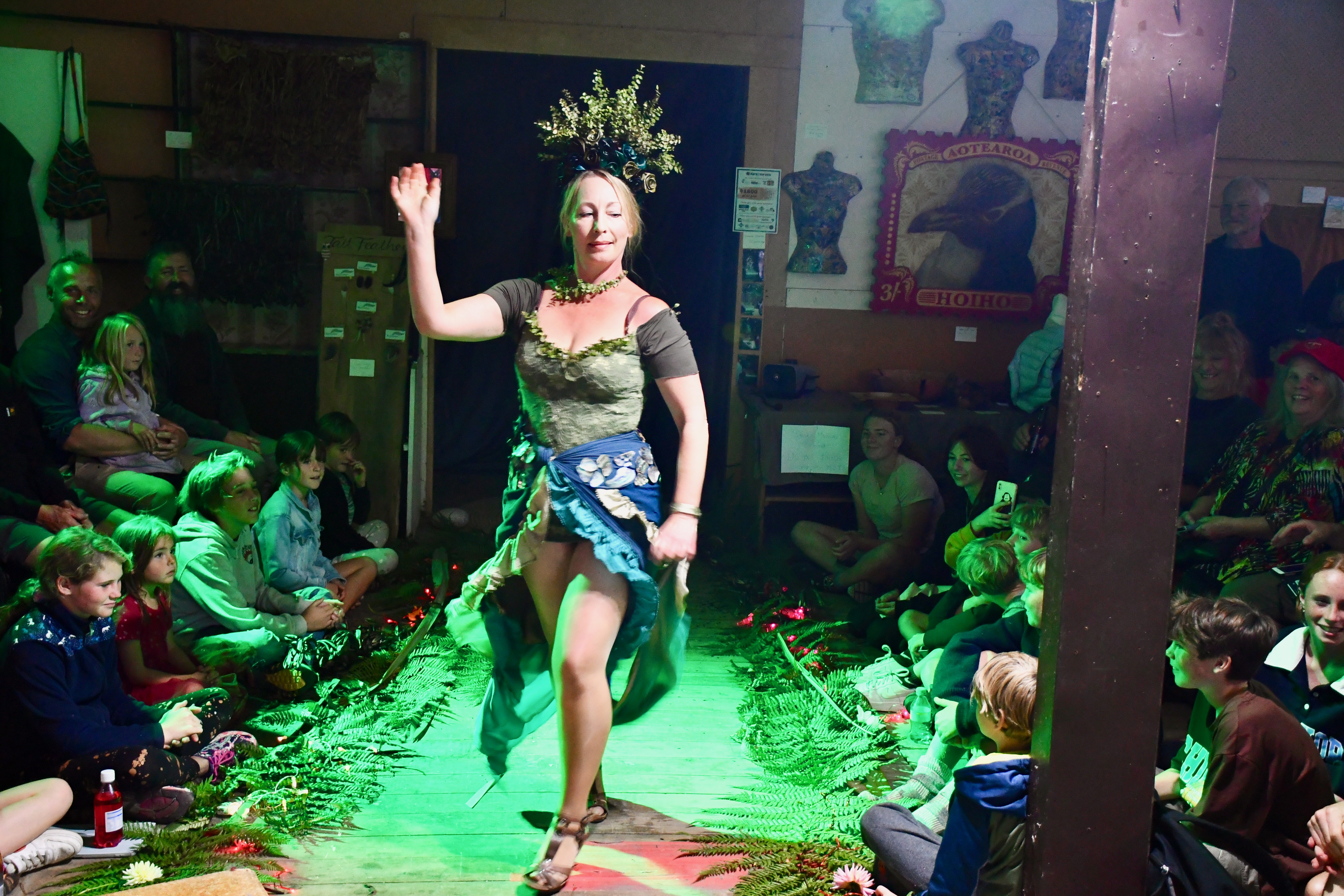
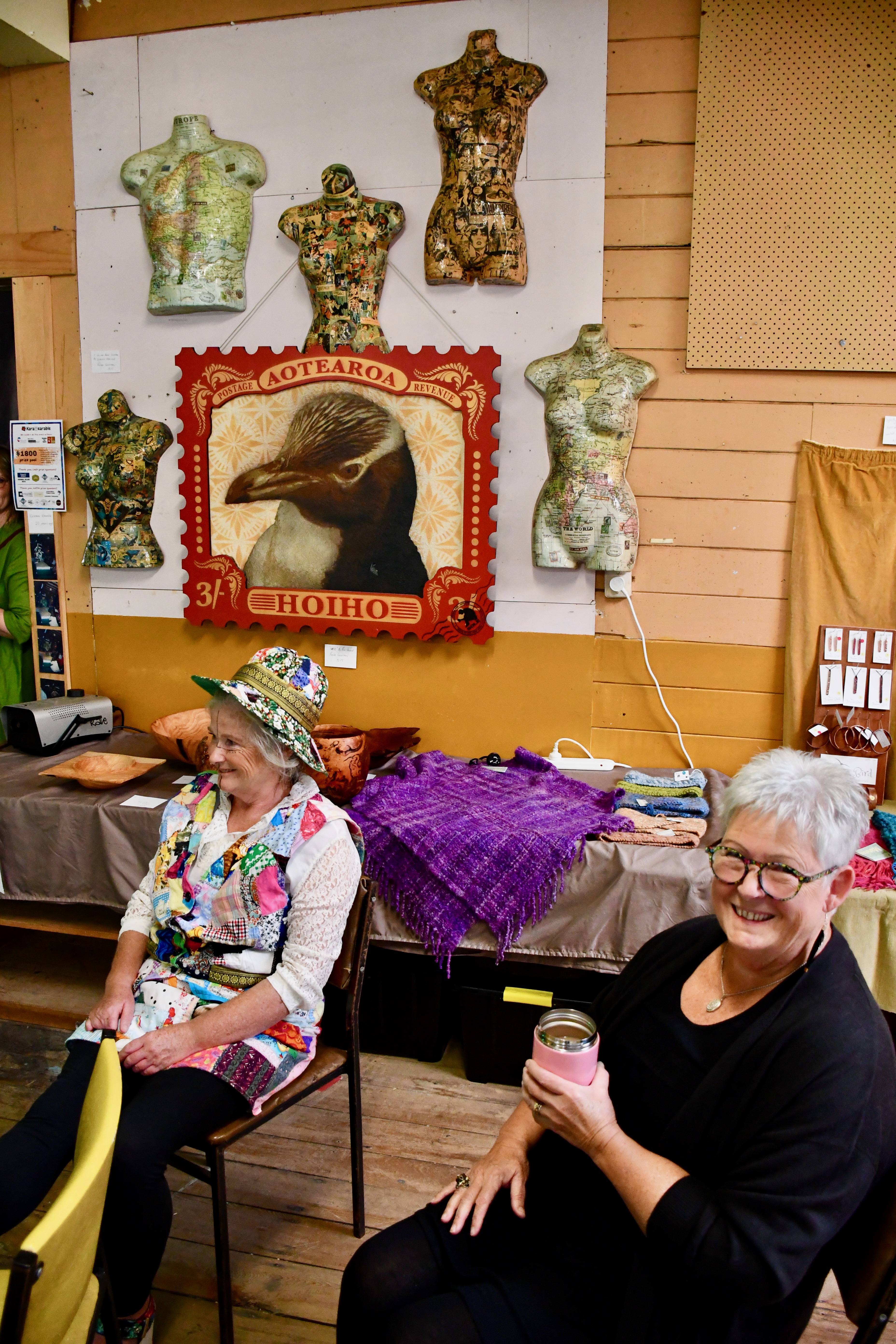
WOW! The World of Wearable Art came to the small rural community of Karamea at the top of the West Coast of the South Island of New Zealand on April 8, 2023. The town bubbled with creative ferment, and most of the community and many Easter visitors packed the old Hardware Store to take in the KaraWearable Arts Show and experience haute couture West Coast style.
The wearable art show was part of the ninth Karamea Pop-Up Gallery Easter Art Exhibition. The outfits worn in the show were displayed with the other exhibits for people to examine closely before seeing them on the catwalk models. The show was timed to coincide with the busy Easter weekend, attracting many visitors and allowing Karamea to show that our region has more to offer than stunning scenery, beautiful beaches, rivers, estuaries, forests, the Heaphy Track and the Oparara arches, caves and lakes. Visitors returned home knowing we also have a vibrant and artistic population of fun-loving folk who are proud of where we live and our 700-strong community.
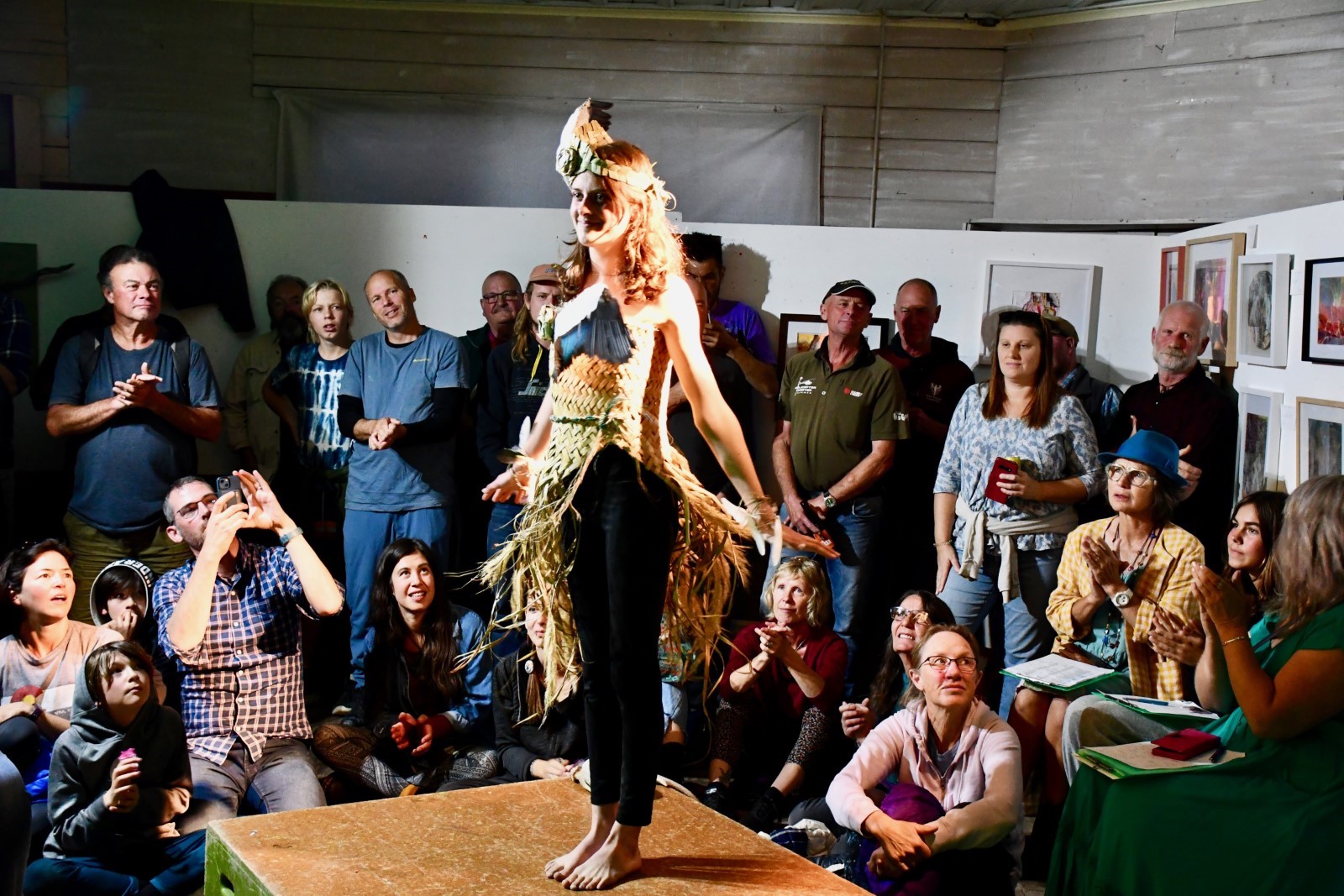
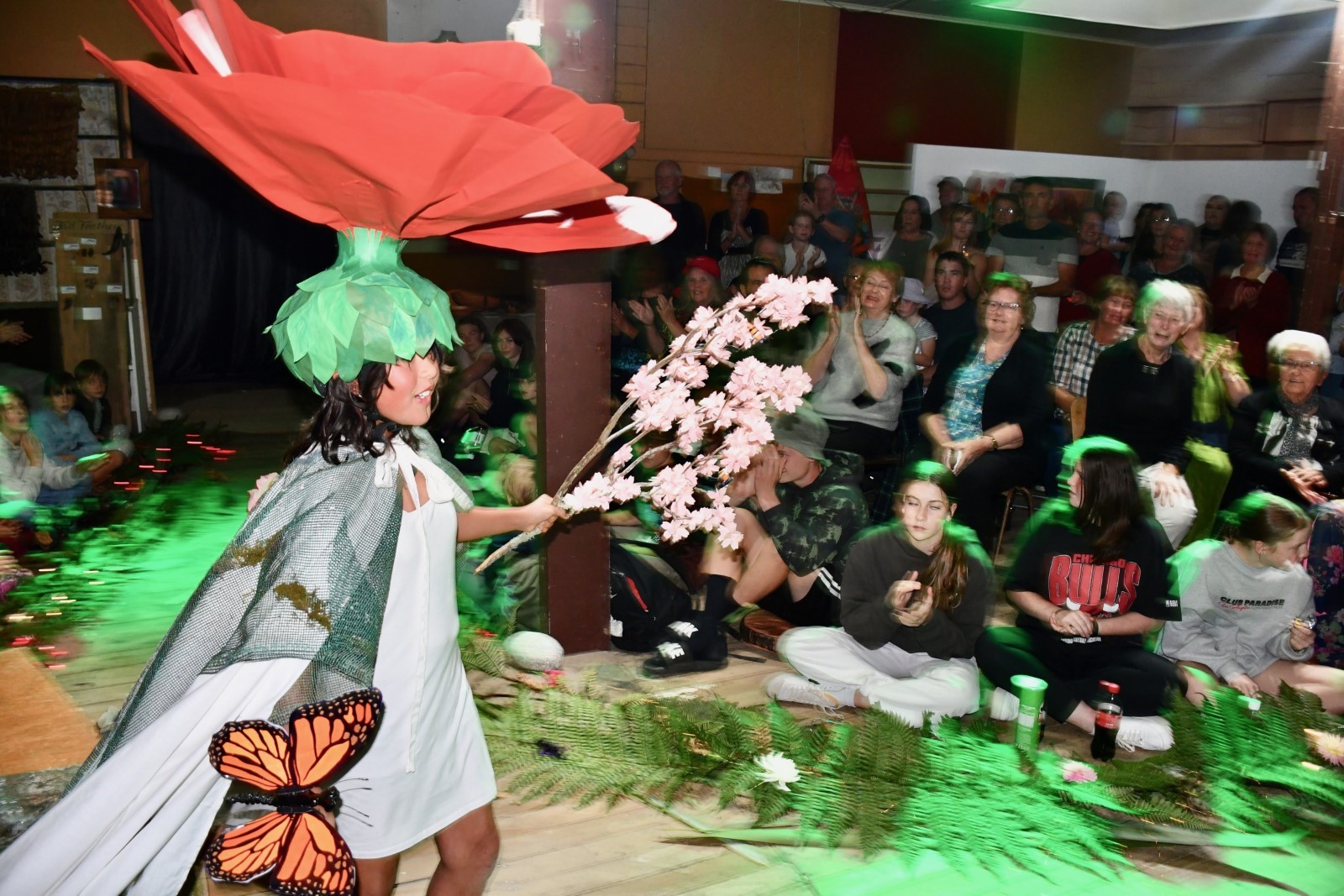
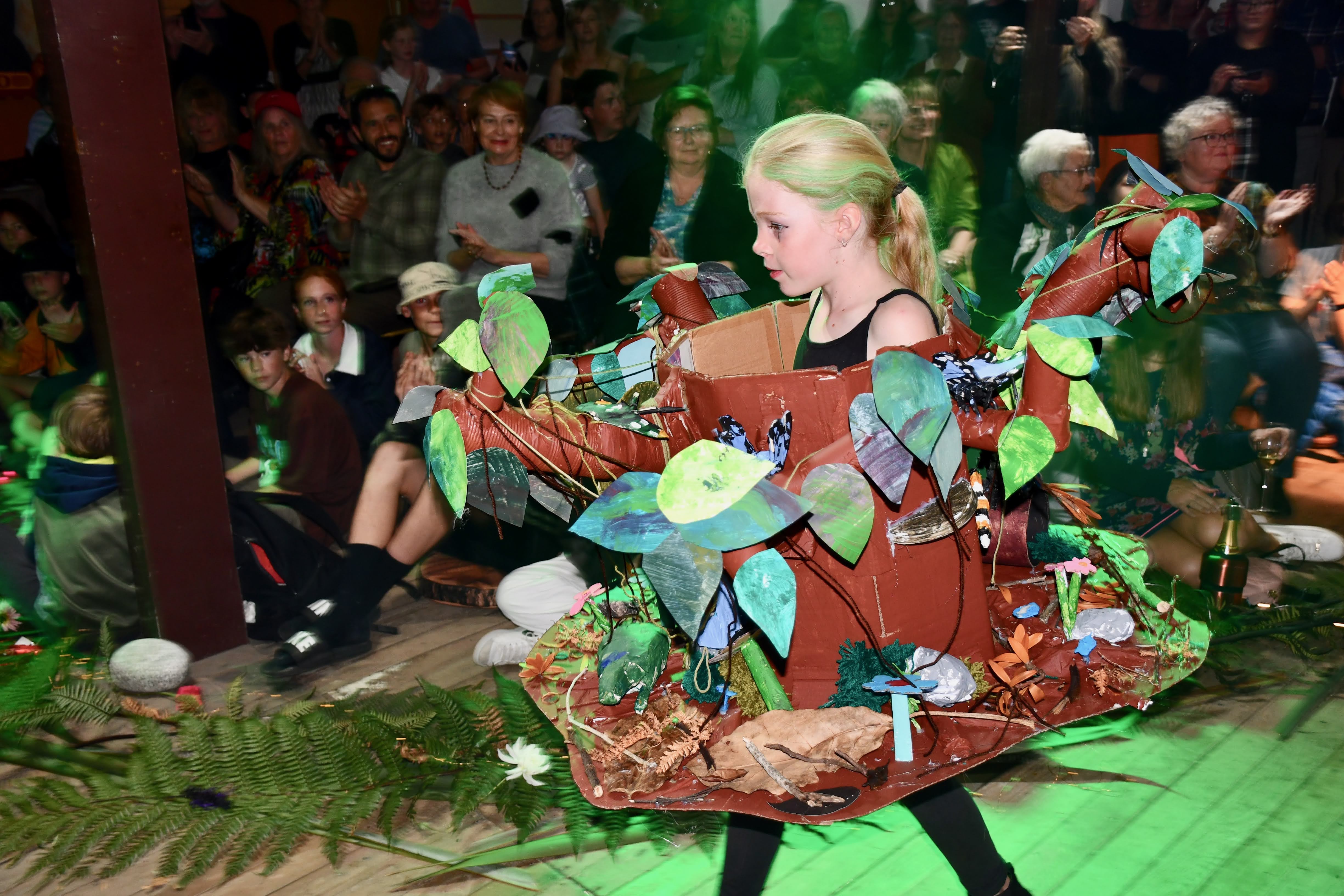
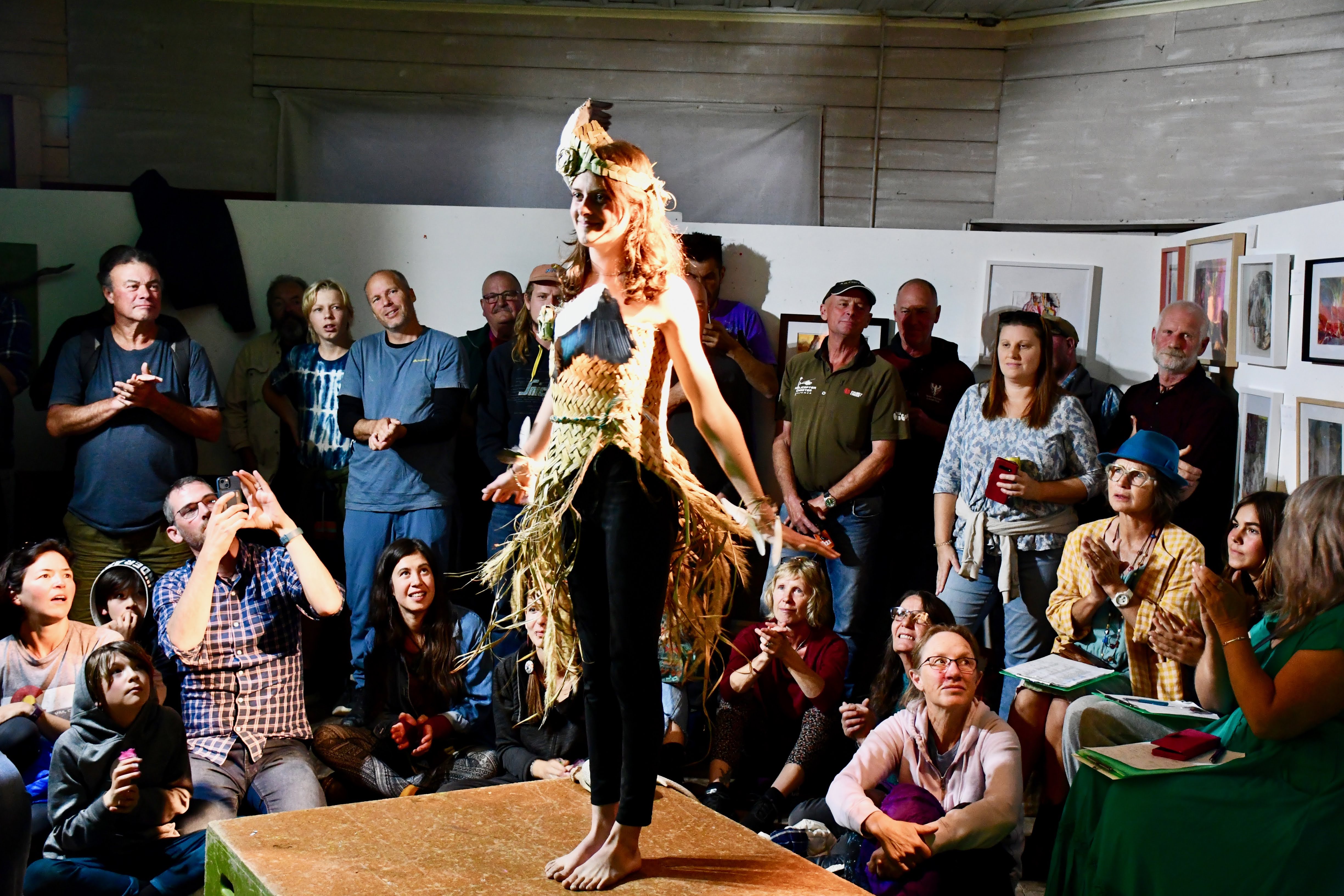
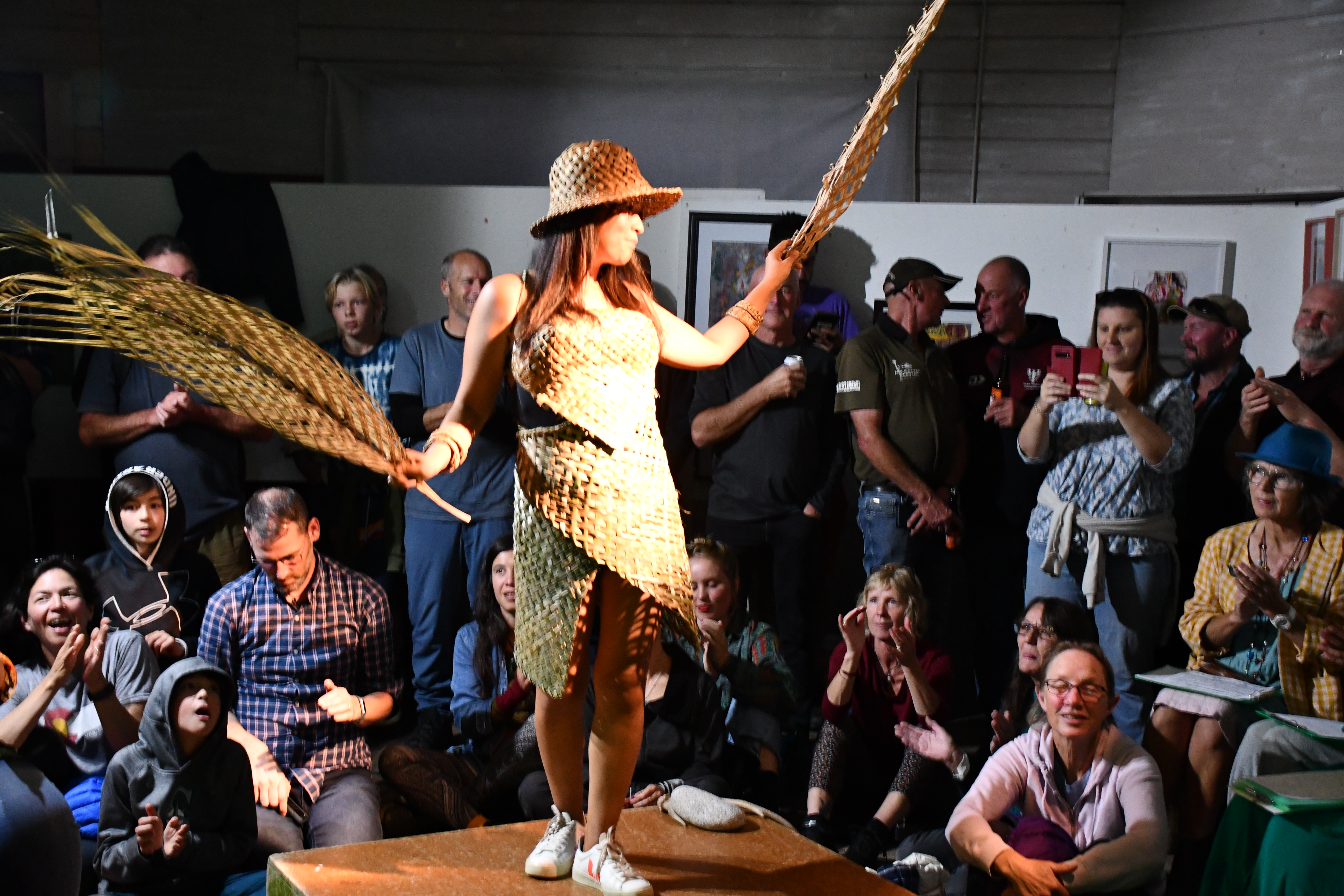
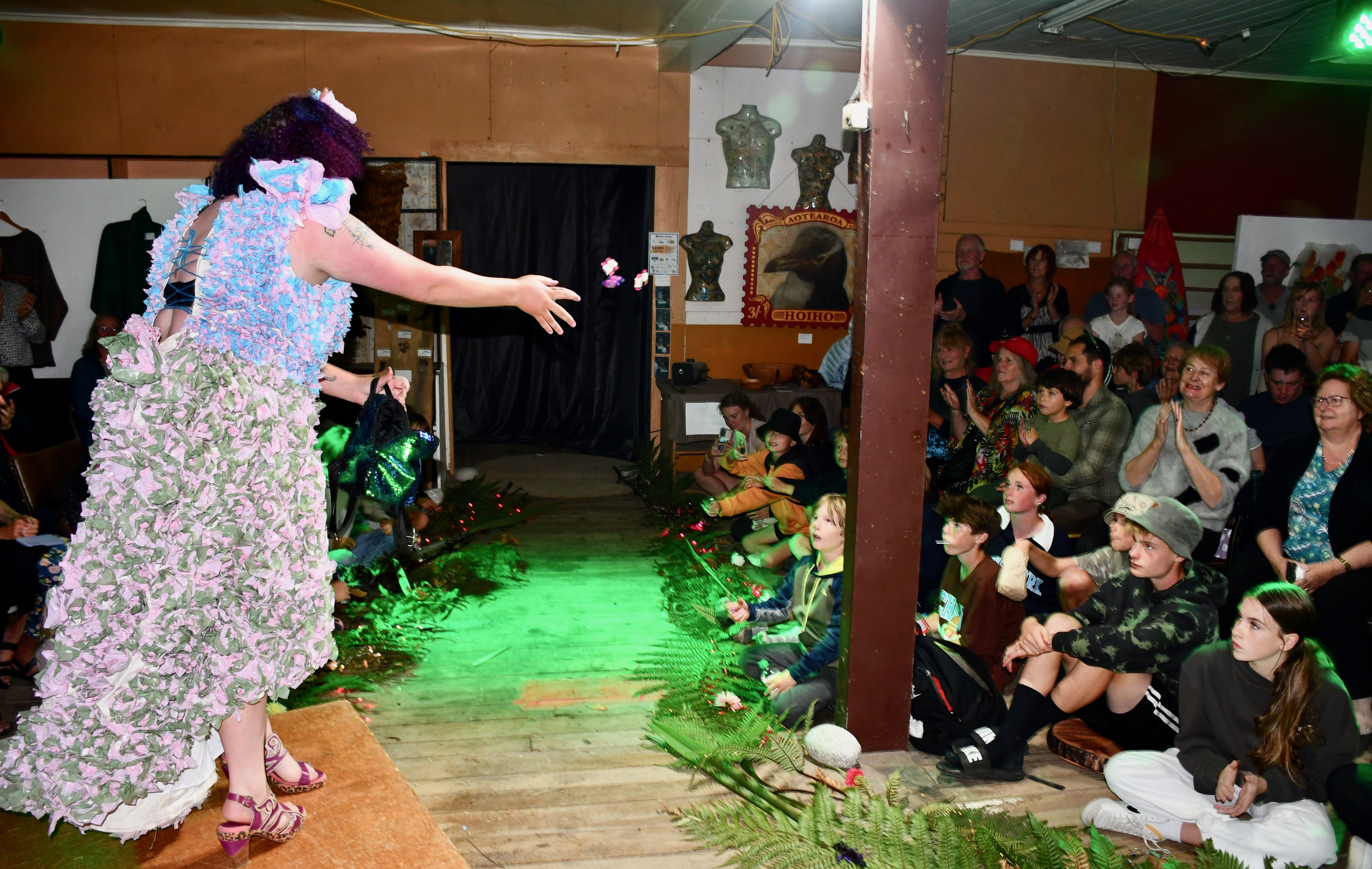
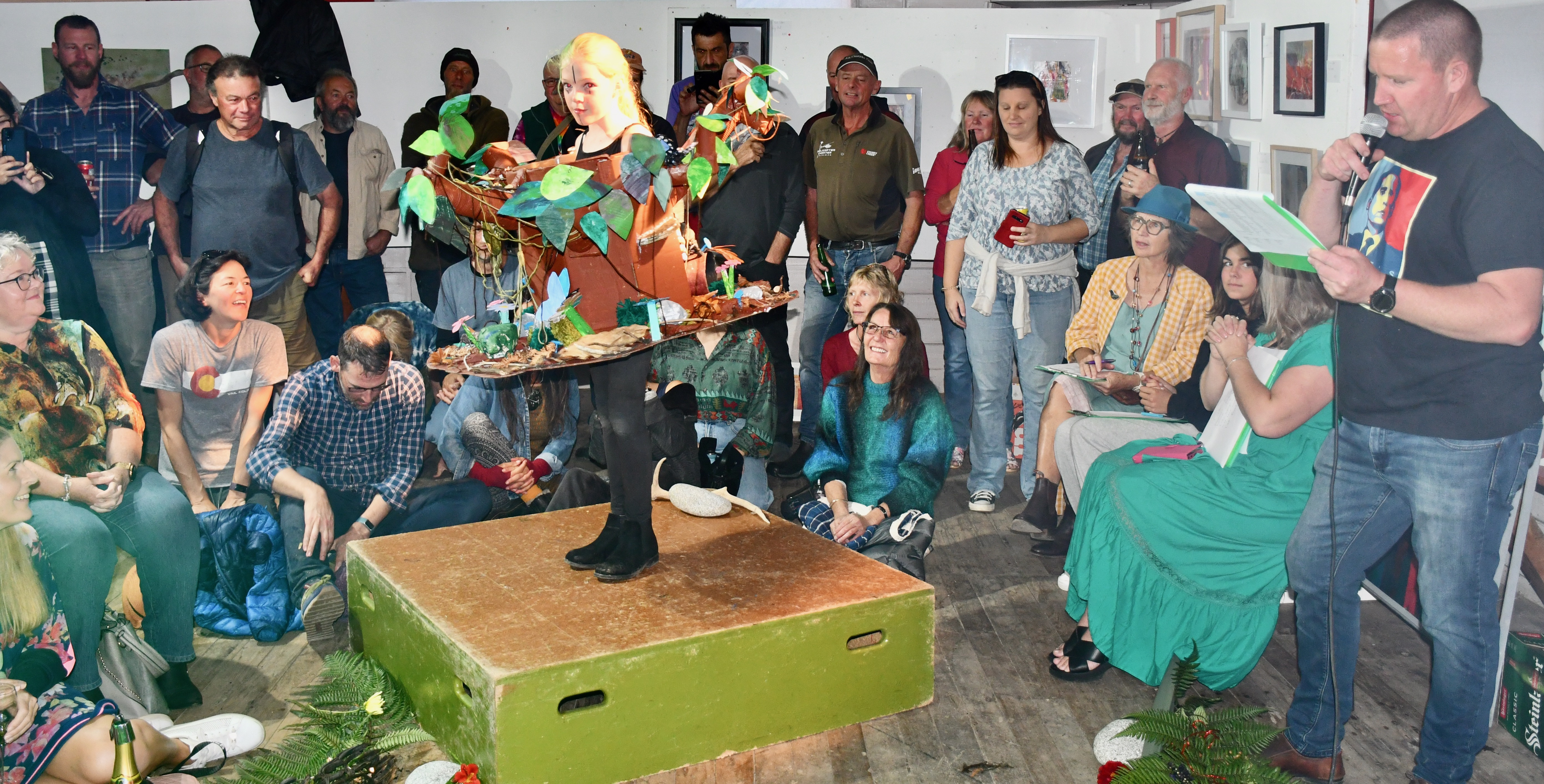
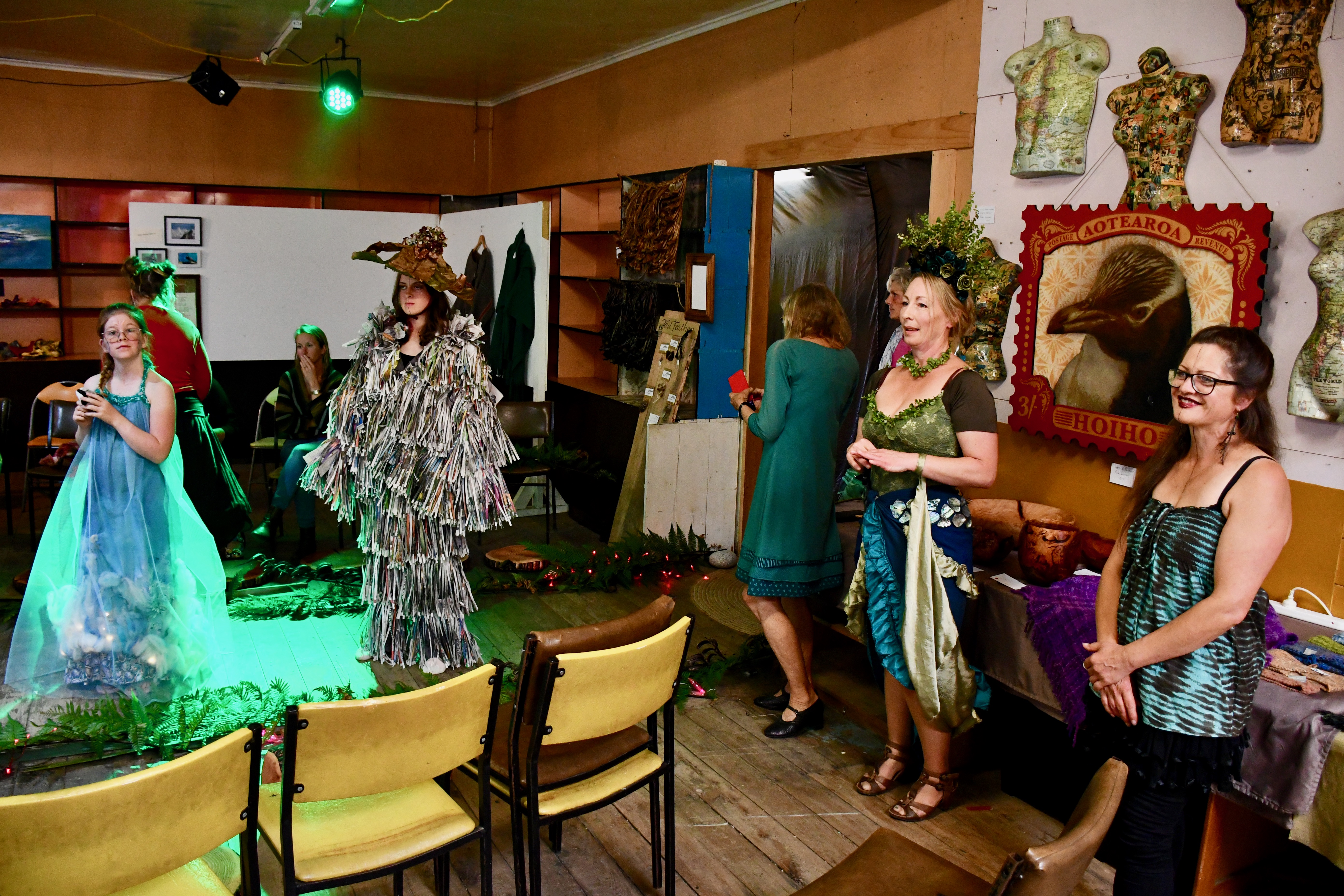
Fabulously fashionable creations were sown, stapled, nailed, glued, woven and screwed together and modelled by Karamea’s finest ladies and a few handsome lads. Karamean supermodels donned the fashionistas’ fantastic creations and strutted their stuff on an S-curve catwalk that permitted much crowd interaction and feedback as the overwhelmed onlookers cheered, clapped and wolf-whistled their encouragement and appreciation. Traditionally, models are supposed to be straight-faced and aloof to deflect attention from themselves to encourage the audience to focus on their outfits, but our models danced, spun, twisted, twirled and beamed like Cheshire cats to present their outfits with enthusiasm and infectious excitement.
Designer & Model: Odette Peter Presents Her “Odette’s Ballgown” Creation: Runner-Up in the Upcycled/Recycled Category. Photo by Paul Murray.
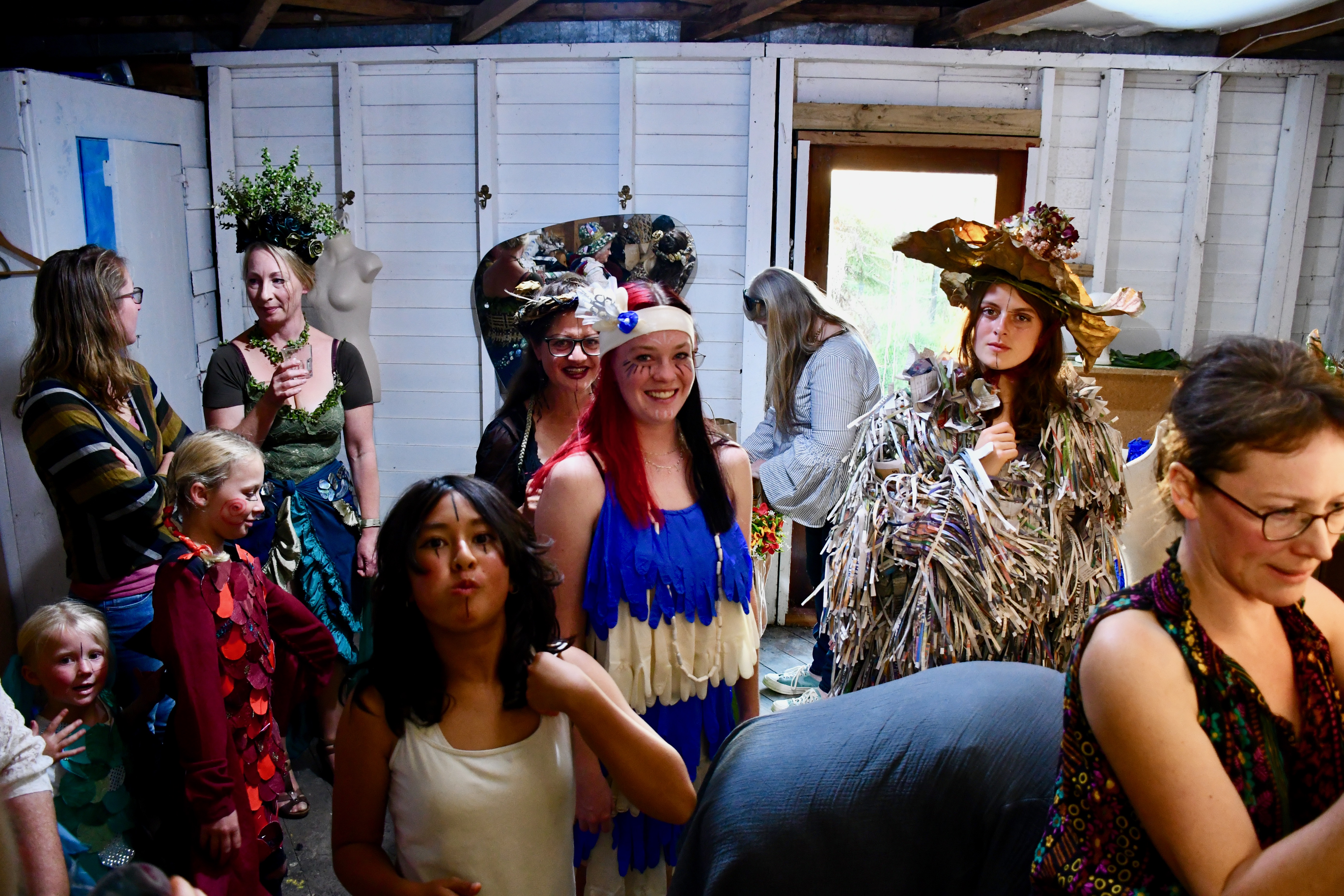
Dairy farmers, schoolteachers, retirees, schoolchildren, parents, nurses and chefs became fashion designers for the occasion. They put their minds into creating beautiful, clever, stylish and outlandish outfits for their models to show off. Natural materials collected from regional forests, beaches, rivers and estuaries, and rubbish that would otherwise be in a landfill were all utilised in the creative process. Everything was recycled/repurposed/reused/renovated/restored, and, occasionally, rediculous!
Spot Prize Winners, Madeleine (L) and Tessa Young, Model the Young Family’s “Ember the Fire Dragon and Sparkles the Sea Dragon.” Photo by Paul Murray.
There were 39 wearable creations in the show, modelled by 16 beautiful locals. The youngest model was four years old, and the most senior was a sexagenarian! The show also attracted entries from Granity, and Buller Mayor Jamie Cleine visited the exhibition to check out the creations. Before the fashion parade, 241 people visited the gallery on April 8 and 9, 2023, and many came back to see the show, which was standing-room only. A visitor involved with the Nelson Wearable Arts Festival on condition of anonymity said, “The creations here tonight reminded me of the first WOW show in Nelson…This is as good as that!”
The Karamea Pop-Up Gallery team of Liz Kerslake, Jessie Creedmore and Sanae Murray and the many volunteers who assisted them in making show deserve much credit for their dedication and effort in organising the event; this was their ninth exhibition. Sacha Healy joined them for this show as the director of the KaraWearable Art Show and absolutely nailed it by leading the way with her wearable “Paradise Lost” creation (which won the show!) and rallying the costume designers, encouraging and instructing the models, designing the catwalk and bringing it all together into a gala presentation on the night. Across all the exhibitions, 58 local artists have exhibited their work, 271 artworks have been sold and 1,870 people visited the exhibitions (with over 200 attending the KaraWearable Art Show).
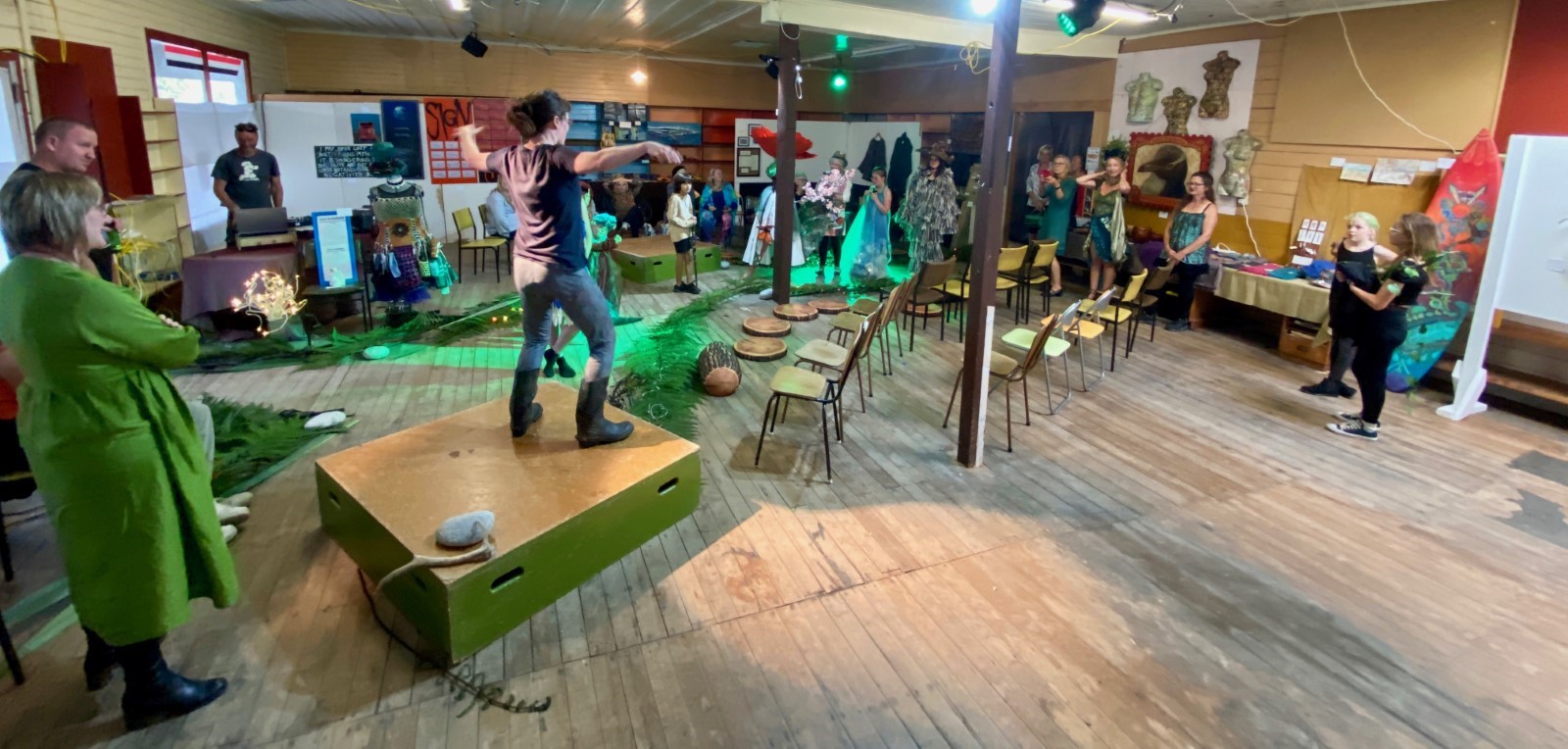
Sacha Healy Prepares the Performers Pre-Show: Photo by Paul Murray
Quillyn O’Dwyer Models Sacha Healey’s “Wind in his Wings” SUPREME Award-Winning Creation: Photo by Paul Murray
The Crowd Lines the Catwalk in Eager Anticipation: Photo by Paul Murray
Jason and Juliette James again permitted the use of the Old Hardware Store, which is an excellent venue for the art shows. Many of the models in the show are Irish dancers. Juliette James’ work with the Irish Dancing troupe prepared the models well and gave them grace, poise, confidence and the stage presence that comes from the experience gleaned from their many public dancing performances. They were all very comfortable and professional doing their “little turns” on the catwalk. Thank you Juliette for your efforts and dedication to the dancers.
Karamea Area School teacher, Brett Mawson, lit up the catwalk and created a festive atmosphere with a smoke machine and excellent musical accompaniment (thanks to Karamea Area School for the use of the equipment). Vinnie Dunford’s delicious food platters kept everyone well-nourished, and audience members were soon passing the plates around, which made the visitors very welcome, and the nibbles soon disappeared. Undoubtedly, the world-famous Vinnie’s Café would have been busy over Easter once the crowd sampled his fare. Local bon vivant Nick Scarlett emceed the show and kept the event flowing with professional instruction and good humour. To all the designers, models and volunteers who created, presented and organised the show; thank you all for your efforts!
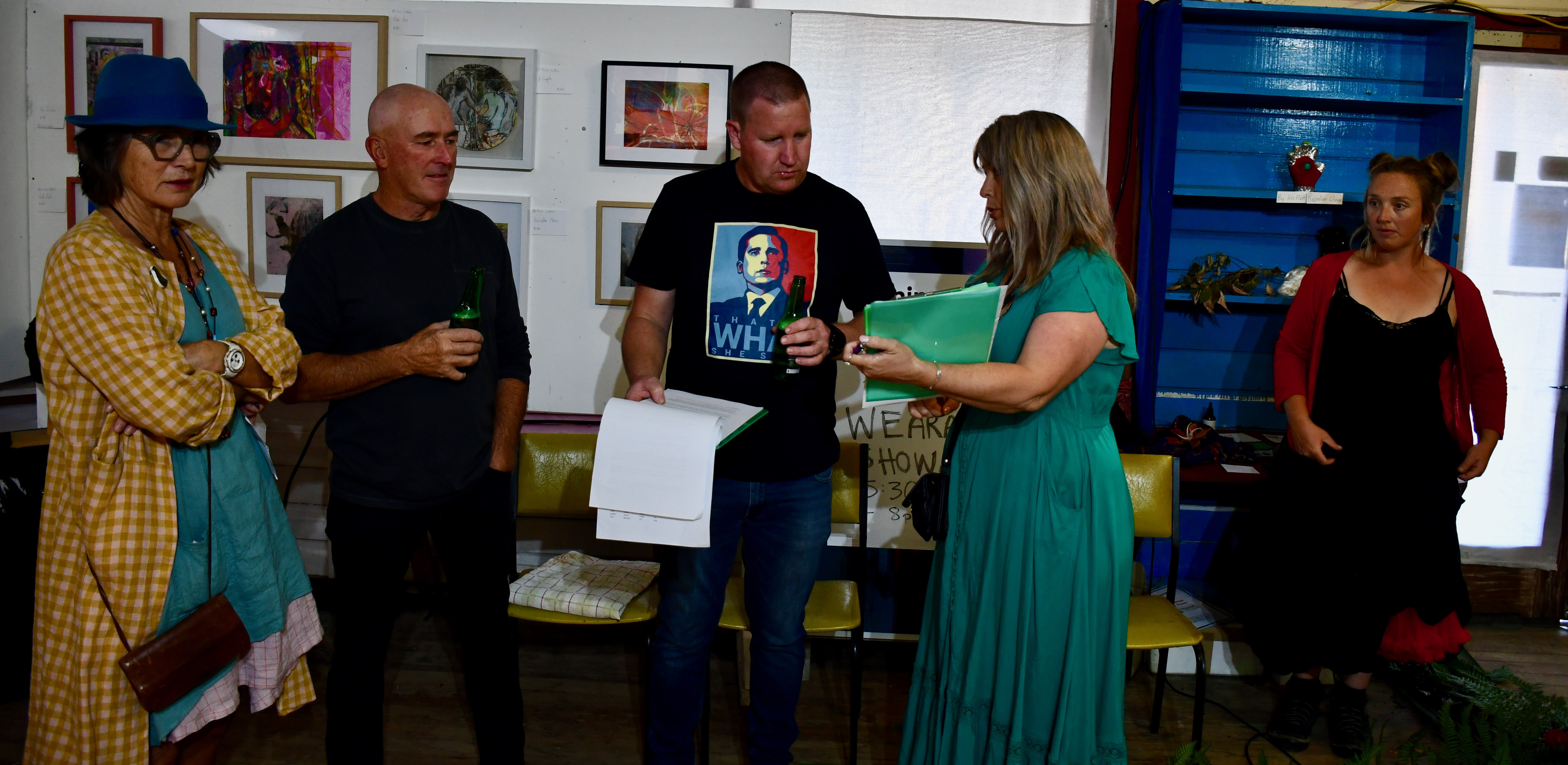
The hardest job of all was borne by the judges; Jessie Creedmore, Jane Sage and Laila Klaver-Jones, who were tasked with ranking the modelled creations and determining winners for the categories of “Youth,” “Upcycled/Recycled,” “From Nature,” and several “Spot” prizes. The quality of the costumes and the wow factor and the presentation of the outfits by the models made the task of choosing winners very challenging, but the crowd helped with enthusiastic clapping and cheering. They drew heavily on the “clap-o-meter” to diplomatically make difficult decisions.
Diva Murray Models Tina Wylie’s 1st Prize Winning Creation in the Upcycled/Recycled Category: “Earth Mother, The Seasons.” Photo by Paul Murray
After a few disruptive years of social interruption and forced anti-social behaviour, the KaraWearable Arts Show was just what the community needed to reinvigorate social interaction, creativity, public expression, and confidence and was a great initiative in putting the unity back into the community in the post-COVID era. The show was very much a community effort led by a dedicated group of Karameans, with much behind-the-scenes support from their families, the staff and students at Karamea Area School, businesses who provided logistical support, a venue, cash prizes, donations for the raffle and help setting up the show, printing, lighting, music, promoting, compèring, documenting and catering for the event.
A raffle on the night raised almost $1,000 to help fund the next KaraWearAble Art Show, scheduled for the 2024 Easter Weekend with the categories of “Upcycled/Recycled”, “Youth,” “Myths & Legends” and an “Open” class.
Donna Chambers Wins the Karaka Meat Tray Raffle Prize: Photo by Paul Murray
The dominance of Internet-based entertainment these days has all but put paid to community initiatives like the wearable art show. However, the excitement, energy and genuine laughter for all who participated in the show as performers, artists, designers, models and audience made it a memorable night that far exceeded a night with NETFLIX/Facebook/Fox Sports, SKY etc. The show enabled people to actively express their creativity instead of being passively entertained by others.
Well done, Karamea…LOVE your work!
Many thanks to the generous sponsors and raffle donations and congratulations to the prize winners!
For more information on upcoming events or the 2024 KaraWearable Art Show, please contact:
KaraWearable Director: Ms Sacha Healey: 020-4149-1184 / sachahealey@hotmail.com
Karamea Pop-Up Gallery Curator: Ms Sanae Murray: 021-118-4691 / sanaenmt@gmail.com
Karamea Community Coordinator: Ms Jessie Creedmore: 027-517-7107 / jessie@marketinghouse.co.nz
Book Review: How to Homeschool: A Guide for Progressive Parents by Miguel Varella-Cid
Published in 2022 by Panorama Press Ltd
ISBN: 978-1-784529-65-9
“How to Homeschool: A Guide for Progressive Parents” by Miguel Varella-Cid
Good Evening Ladies and Gentlemen. Welcome to tonight’s debate on the pros and cons of homeschooling.
For the affirmative, Mr Miguel Varella-Cid will extol the virtues of nurturing your children’s minds at home and speak of his personal experience. The international established education system will present the contrary position.
Mr Varella-Cid recently wrote a book on the subject and will be our first speaker this evening. He and his wife Yuko lost faith in the contemporary education system in Japan, where they have chosen to raise their two children, daughter Arina and son Akira, and decided to teach them at home. They found the experience both challenging and enlightening. Their satisfaction with the outcome has compelled Mr Varella-Cid to share their findings with other parents who may be considering homeschooling an option for their offspring.
The book’s release coincides with a chapter in history in which every parent worldwide has been homeschooling due to the COVID pandemic and may resonate with people who have found the experience both favourable and disadvantageous.
Not everyone is suited to being a good teacher. Homeschooling requires patience, dedication, persistence and significant investment in time and effort. However, the decision to homeschool involves the children’s future, and I’m yet to meet a parent not interested in that subject. In his thought-provoking and comprehensive book, Mr Varella-Cid quickly points out that the decision to homeschool should involve the children as their life is at the core of the determination.
Reading through the book, it occurred to me that every parent homeschools as children generally only attend formal schools for six hours per day, which leaves them at the educational mercy of their parents for the remaining hours. Not all schooling is academic and much of the responsibility of responsible parents these days is to encourage children to develop their own imaginations and not draw excessively on the creativity of others via digital media. To instil good moral fortitude, manners and social etiquette into their children’s disposition and share life’s lessons to prepare them for adulthood is the role of parents these days. This book is worthwhile for all parents, even those like me, who lack the prowess and zeal to educate their children at home full-time.
“How to Homeschool: A Guide for Progressive Parents” recounts an educational journey involving parents and children. Miguel and Yuko also had to learn to teach and how to inculcate Arina and Akira with a passion for knowledge, understanding and academia. They were fortunate to draw on the three decades of homeschooling knowledge and experience of community member Mr Yukio Furuyama, who became their mentor.
Like most parents, Yuko and Miguel recognised that their children’s characters were entirely different. After initially attempting to mirror the traditional Japanese school system and finding it exceedingly difficult to keep pace with the curriculum, Mr Furuyama encouraged them to foster Arina and Akira’s unique interests and abilities and to “create a bespoke learning environment that suited each child.” He also stated that homeschooling is not easy, but pointed out that valuable life lessons rarely are.
Mr Furuyama encouraged the Varella-Cids to turn traditional teaching thinking around and make education the responsibility of the children to learn in their own way. He urged the passionate parents to take a leap of faith to trust their children and allow them to nurture their inherent abilities and passions.
The book includes numerous personal examples of how Yuko and Miguel met with and overcame challenges during the homeschooling of their children. This is helpful as other parents will likely encounter similar hurdles along their homeschooling journey. Also included in the book is a comprehensive list of resources, including books, Web sites, podcasts and forums where parents can find valuable information, advice and assistance on how to improve the delivery of curriculum, improve homeschooling techniques and learn from the experience of others.
Miguel, an enthusiastic advocate of homeschooling, has also launched a Website (www.howtohomeschool.life) to provide ongoing support and information to parents considering homeschooling their children. He encourages readers of his book to join his mailing list to receive regular updates and access to his reading list, podcasts and videos. His goal is to build a community of 100,000 like-minded free homeschoolers worldwide. This forum will encourage, support and nurture parents who seek a more wholesome educational experience for their children and assist parents with homeschooling advice, inspiration and advocacy. It will also enable Miguel, Yuko, and other members of the forum to share their experiences and knowledge and make it easier for other parents to replicate the successful home education of their children.
“How to Homeschool: A Guide for Progressive Parents” is a comprehensive and eminently readable book that will appeal not only to people considering educating their children at home, but to parents everywhere who seek to be better at helping their children learn and develop as they grow.
Reading the book has provided me with numerous insights on how I could be a better parent and help my children develop into well-balanced, intelligent, considerate adults with accurate moral compasses.
Thank you, Mr Varella-Cid; you make a good case for homeschooling. Now, it’s over to the establishment and the modern school system to rebut your contentions…Hello? Anyone there? Sorry Ladies and Gentlemen, it would seem they have taken their children and gone home!
The homeschooling team wins by default. Well done, Mr Varella-Cid; you are tonight’s winner and congratulations on your superb book. I highly recommend this book to any parent who wants to improve how they interact with their children and help them grow into confident, well-educated, inquisitive young adults.
Paul Murray (left) with Yuko and Miguel Varella-Cid (centre) Sanae Murray (right) and their respective children L-R Winston, Arina, Diva and Akiraat their home in Chiba, Japan.
Karamea Co.Starters Graduate with BIG Plans for Business Success
Off the Top of My Head
By Paul Murray
In the small rural enclave of Karamea in a community ravaged by COVID, seven local entrepreneurial ladies graduated from a 10-week Co.Starters business course on May 11, 2022.
About 20 people gathered for the occasion at Vinnie’s Cafe in Karamea to hear business pitch presentations from the respective participants. Heath Milne, CEO of Development West Coast (DWC), which sponsored the programme, attended the event. The participants, facilitators and people of Karamea thoroughly appreciated his effort to come to Karamea from his home near Greymouth for the celebration.
Liz Kerslake from WeatherTop Permaculture Retreat Presents her Business Pitch to Fellow Co.Starters Participants, DWC CEO Heath Milne and Members of the Public.
The Co.Starters programme takes a business idea and walks it through a logical series of steps over the course of 10 weeks to prepare the concept for market success. Co.Starters began in an economically challenged community in Chattanooga, Tennessee. The region faced high unemployment and the social issues associated with little hope, penury and lack of life purpose and meaningfulness. The programme was initially run in Karamea in 2016 when the region was facing significant economic challenges. Several new businesses became established, including a Vinnie’s Cafe and a Nature aHead hairdressing salon.
Co-Facilitator Jessie Creedmore Delivers a Speech in Italian at Celebration Night.
The 2022 course was conducted via ZOOM due to meeting restriction protocols relating to the COVID pandemic. Despite initial concerns, it worked out very well for all participants who could join from the comfort of their own homes. The online forum also permitted guest speakers to access the sessions from afar. Guest speakers zoomed-in from Nelson, Hokitika, Mexico and Japan and shared their knowledge and experience about specific facets of business. Participants could also ask questions and interact with the guest speakers.
DWC CEO Heath Milne Enables Guest Speakers, Award Donators, DWC Staff, Buller Mayor Jamie Cleine and COVID Afflicted Co.Starters to Join Celebration Night via ZOOM
The decision to host the programme by ZOOM turned out to have been prudent as halfway throgh the course, many participants, including the facilitators, succumbed to the lurgy and were required to home isolate. However, throughout the course, those who were able got together to discuss the challenges participants were facing and help each other out. The programme’s strength results from the synergies that evolve between the participants and the “better together” concept whereby everyone helps each other out for mutual benefit.
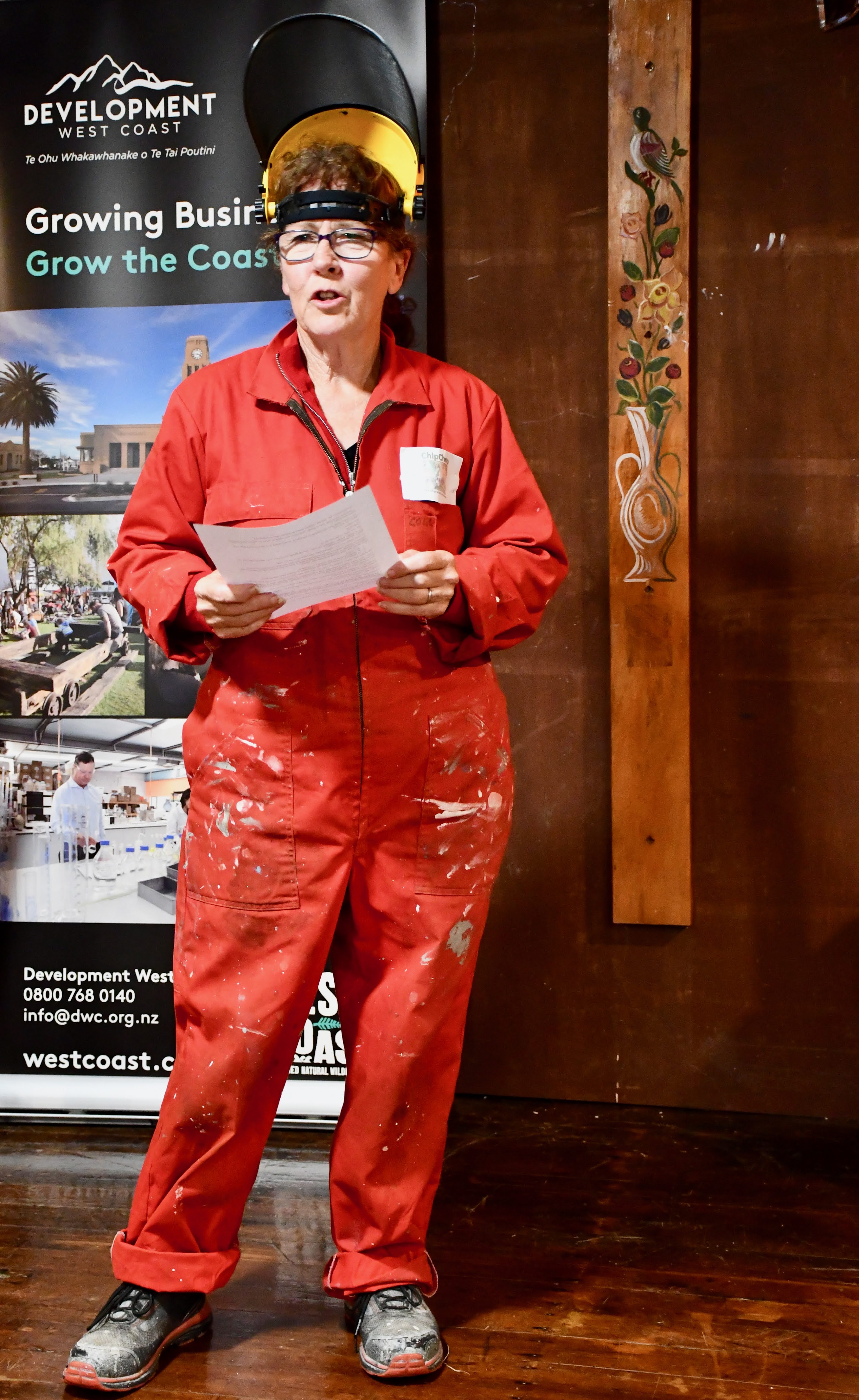
The business ideas were as diverse as the participants themselves, from a night sky star gazing activity (DUSK Dark Unique Skies Karamea) to a peaceful alternative to the Military-Industrial Complex (Peace Inc.). Also, a branch-mulching service (Chip-Chop (We Chip, What You Chop)), Permaculture Retreat (WeatherTop), Hikoia traditional Maori Flax-Weaving, a vegan food cart and artisan cheesemaker Dianne Anderson, who is already winning national awards for cheeses made from her own grass-fed dairy herd.
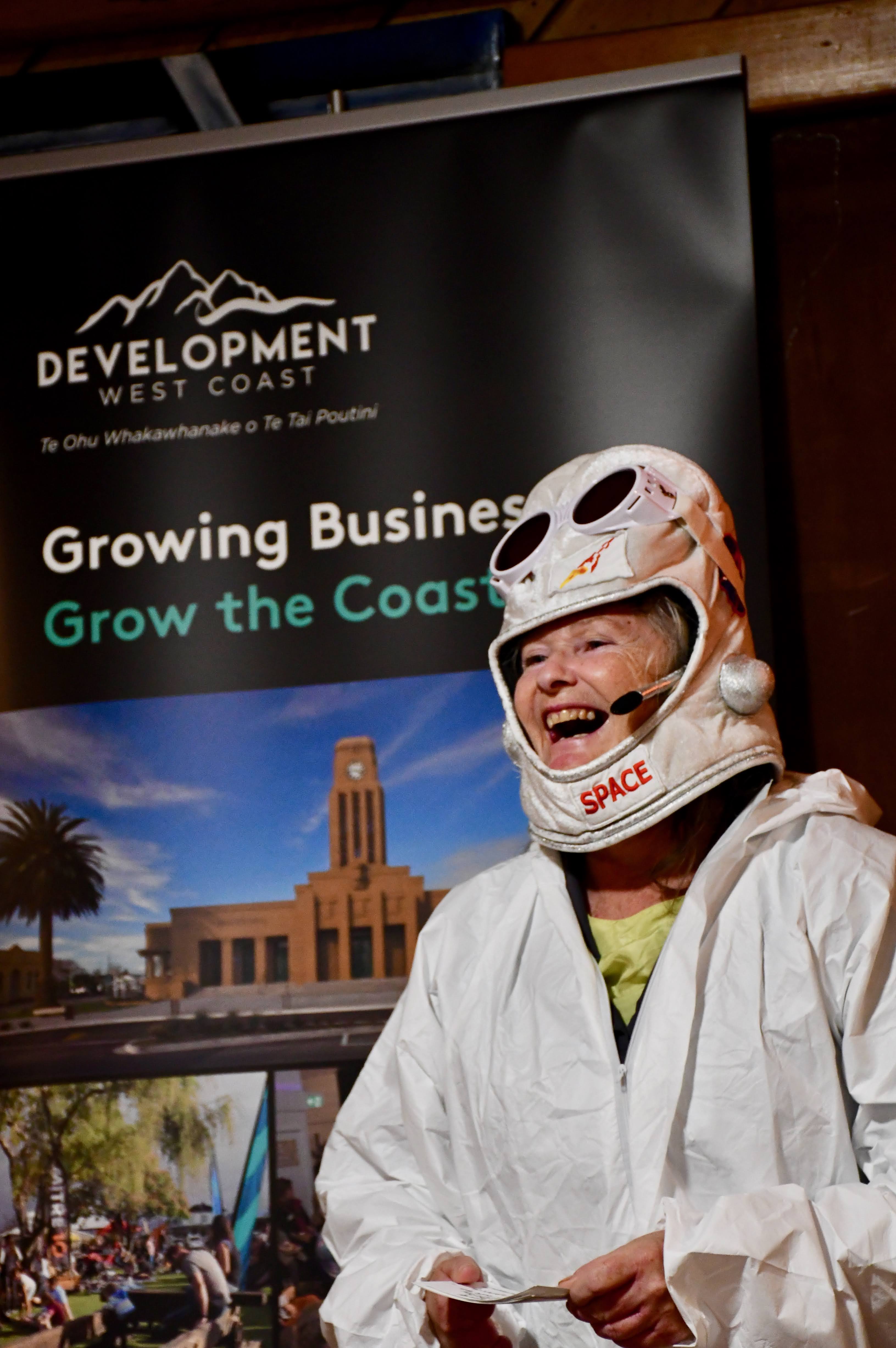
Ange Cronin Dressed as an Astronaut, Presents her Pitch for DUSK: Dark Unique Skies Karamea.
Seven of the nine starters graduated from the course. It was a great satisfaction for the facilitators to hear the business pitches on “Celebration Night” and recognise how much progress the participants had made in sharpening and consolidating their business ideas into a polished presentation and the confidence they had in sharing their business concepts publicly. Two Co.Starters graduates joined the Celebration Night by ZOOM and did their pitches online.
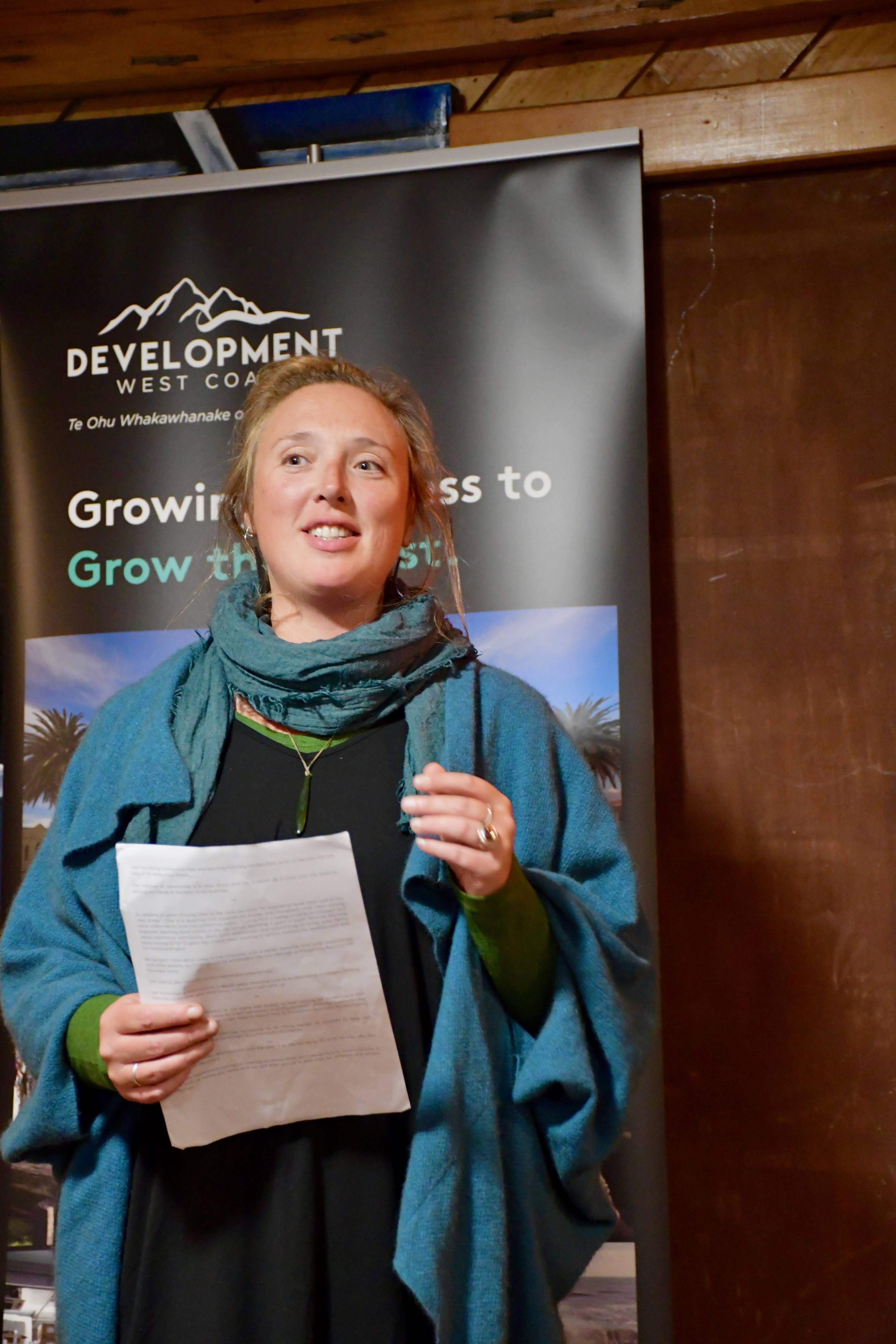
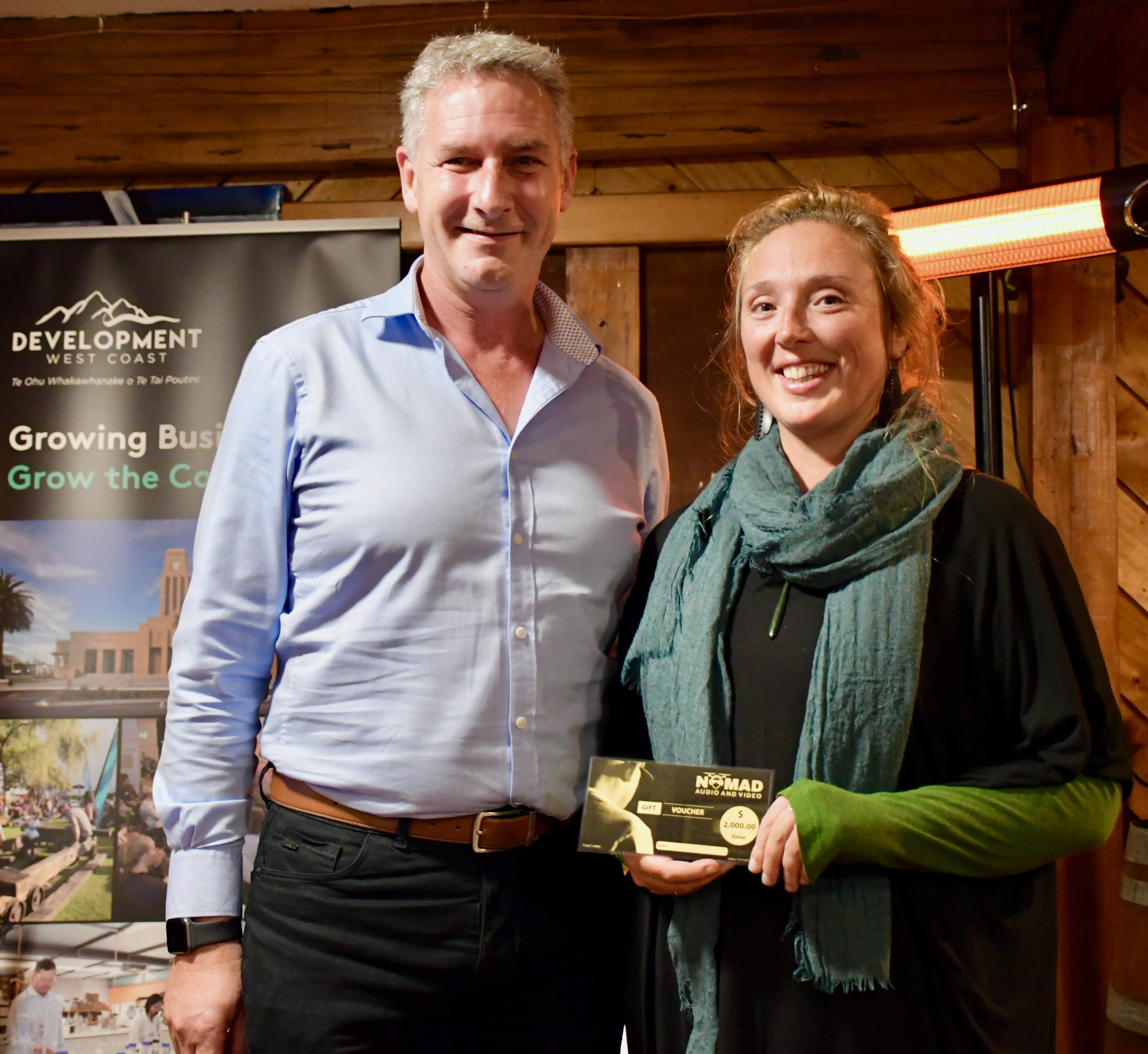
Liz Kerslake scooped two additional awards for Best Presentation and the Customer Count Award for discussing her business idea with more prospective customers to elicit their feedback. Dianne Anderson won the “People’s Choice Award,” which was voted on by the participants for the best business idea.
Liz Kerslake Presents her Business: WeatherTop Permaculture Retreat
Cheesemaker Dianne Anderson.
Raramai Adcock pitches “Hikoia,” her traditional Maori flax-weaving business.
Colleen O’Sullivan Presents her “Chip-Chop” (We Chip What You Chop) Business Idea.
Liz Kerslake recieves the Customer Count award from DWC CEO Heath Milne. Cheesemaker Dianne Anderson receives the Peoples Choice Award from DWC CEO Heath Milne. DWC CEO Heath Milne presents the “Best Pitch Award” to Liz Kerslake
Co.Starters Graduate Dunford Speaks to Graduates About his Experience Starting and Operating his Business “Vinnie’s Cafe” in Karamea and Presenting all Graduates with a Coffee Voucher.
Celebration Night Feast by Co.Starters Alumni Vinnie Dunford of “Vinnie’s Cafe.”
Many thanks to DWC for financially supporting the Co.Starters programme and to Amy McLaughlin of Tinker Creative for the $400 branding package (won by Liz Kerslake), Business Mentors NZ for a 12-month subscription (won by Dianne Anderson) and Daimon Schwalger of Nomad Audio and Video for a 45-second promotional video worth over $2,000 (won by Liz Kerslake).
Very special thanks also to Rachel Doolan from DWC for her enthusiastic and professional support and the superb guest speakers who freely offered their time, wisdom and experience to the course participants.
Guest Speakers: • Don Grant, Penati • Frank Witowski, Hybrid Bike • Nadine Hickman, Peptalk Media • Dave Barrett, Thorvald Cheese, Little River Cheese, Kahurangi Wine, The Junction • Ali Boswijk, Nelson Tasman Chamber of Commerce • Miguel Varella-Cid – New Era Imports • Tash Dellaca – EPIC Westport • Cindy Hopper, West Coast Scenic Waterways • Rochelle Crossman – Karamea Village Hotel
After 52 years of “running around after other people,” Dianne Anderson said, “Right… It’s my turn now; I want a cheese room,” and, just like that, she started a new career at 69 by becoming a cheesemaker.
Dianne has been a supportive wife of husband Russell and mother of three on their family dairy farm between the townships of Karamea and Little Wanganui at the top of the West Coast of the South Island of New Zealand. Born in Leeston on the Canterbury plains, her family moved to Waimangaroa when she was 12 years old. She attended high school in Westport and was a community nurse when she met a dashing young farmer named Russell Anderson at a cabaret and has been a Karamea girl ever since.
Dianne and Russell Anderson at Home in Karamea
She discovered a passion for cheesemaking when asked to make some cheese for a community fundraising effort for Karamea swimming pool renovations. She’d never made cheese before but found herself on a knowledge quest into the art and science of cheese and embarked on a mission to thoroughly understand the craft.
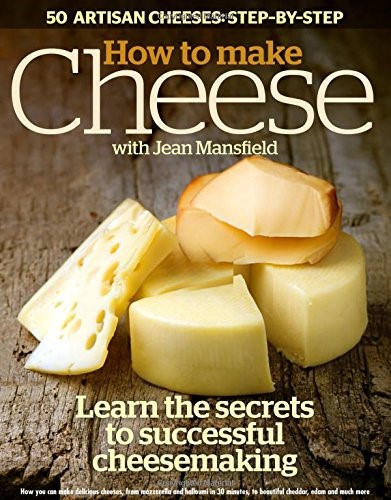
Through her research, Dianne discovered Waihi-based cheesemaker Jean Mansfield and purchased her book “How to Make Cheese: Learn the Secrets to Successful Cheesemaking.” She also went to Waihi and took a cheesemaking class with Mansfield.
“How to Make Cheese: Learn the Secrets to Successful Cheesemaking,” by Jean Mansfield
On the way back from Waihi, she called in to meet artisan raw-milk cheesemaker Biddy Fraser-Davis in Eketahuna after seeing her on TVNZ’s “Country Calendar” programme.
Fraser-Davis’ appearance on the show drew the attention of the Ministry of Primary Industries (MPI), which took exception to her amateur home cheesemaking business. MPI demanded compliance with their laborious and costly food security, hygiene and safety regulations. Fraser-Davis fought back hard, took on the bureaucracy and forced the government to rethink its policies. This led to a simplified and cheaper set of rules for small cheesemaking operations that enables people like Dianne to operate a legally compliant home business that meets all food safety and hygiene regulations without costing the Earth.
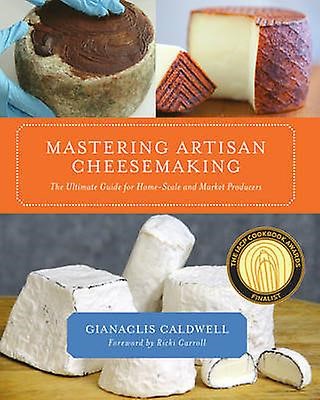
Fraser-Davis advised Dianne to purchase a book by Gianaclis Caldwell titled “Mastering Artisan Cheesemaking: The Ultimate Guide for Home-Scale and Market Producers.” Dianne said, “I bought the book, read it up, and, if I’d known there was so much science in cheesemaking, I would never have started making cheese…I was lucky I’d already started before I read that book!”
“Mastering Artisan Cheesemaking: The Ultimate Guide for Home-Scale and Market Producers,” by Gianaclis Caldwell
Dianne’s culinary skills are legendary in the Karamea region. She is a self-taught kitchen master, having spent over five decades feeding family, farm workers, and friends, catering for community events and fundraisers and spending 15 years running an international farm-stay business on the family farm. Visitors worldwide have enjoyed the Anderson family’s hospitality on their Karamea property and Dianne’s delectable cuisine, mostly made from her home garden and produce from the farm.
Dianne recently won two awards in the 2022 New Zealand “CHAMPIONS OF CHEESE AWARDS,” which the New Zealand Specialist Cheesemakers Association runs to promote and develop the New Zealand cheese industry.
The Anderson Family farm is wedged between the roaring Tasman Sea and the forested mountain peaks of the Kahurangi National Park. Their 520 Friesian/Jersey cross cows are all exclusively grass-fed on lush West Coast pasture and do not receive any nutritional supplements or additives to their feed. They thrive on the healthy, verdant fields, fresh rainwater and warm West Coast sunshine.
She is also experimenting with the unique natural botanical flavours of the native bush in the Karamea region. She has also teamed up with a local berry grower and created a hard cheese soaked in blueberry and aronia berries juice and skins that creates a beautiful deep burgundy coating and subtle berry flavour to the finished product. Dianne also has a unique hard cheese made with a New Zealand native pepper coming out soon that her enthusiastic local cheese tasting team have called; “Incredible,” “Amazing,” “Fantastic,” “Unbelievable,” and “Tremendous.” Halloumi, Feta, Camembert, Gouda, Havarti and Cheddar are also in her repertoire.
Interest in cheesemaking has spread throughout the Karamea community, and Dianne’s superb results have inspired many others to give it a try. The Karamea Cheese Competition evolved from the surge in local cheesemaking, and it is a hotly contested event that attracts up to 80 entries from budding caseiculturists. If you win the competition, you are, apparently, permitted to wear your underpants on the outside for the whole year! No one has ever done that, but the cheese competition has significantly increased local interest in cheese, and cheesy conversations are common in the bars, cafes and restaurants around town.
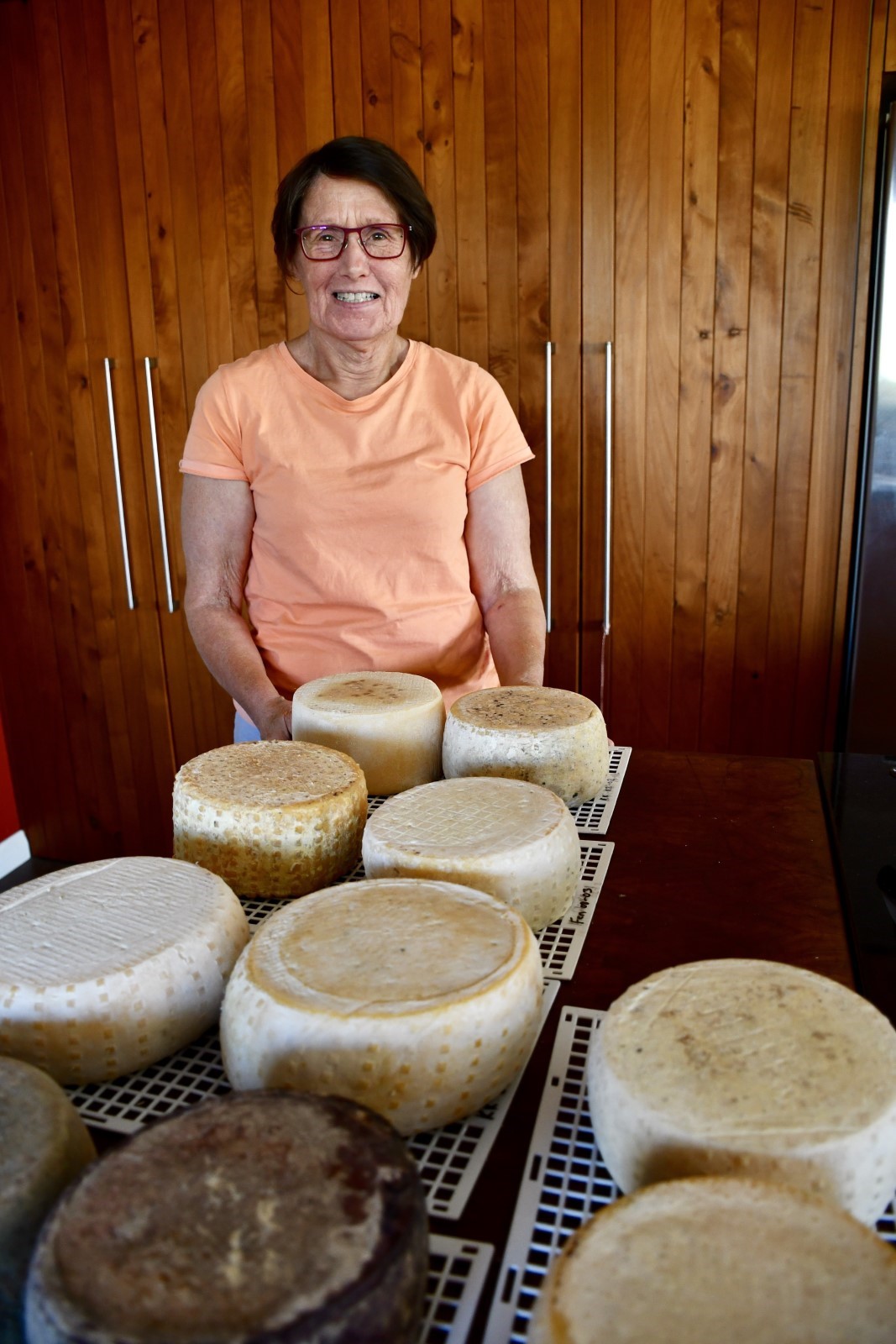
Dianne Anderson Nurturing her Maturing Cheese Rounds
Cheese Maturing in Humidity and Temperature Controlled Cabinet at the Anderson Family Homestead
Now that she is a consummate cheesemaker and bonafide cheese champion, Dianne’s next challenge is negotiating the minefield of compliance regulations for establishing a food-processing business. This is particularly treacherous for cheese production, given the need for absolute hygiene and regular testing for pathogens, unwanted bacteria, and other contaminants. The regulations and associated expenses have put the cheese room’s estimated cost at upwards of $70,000.
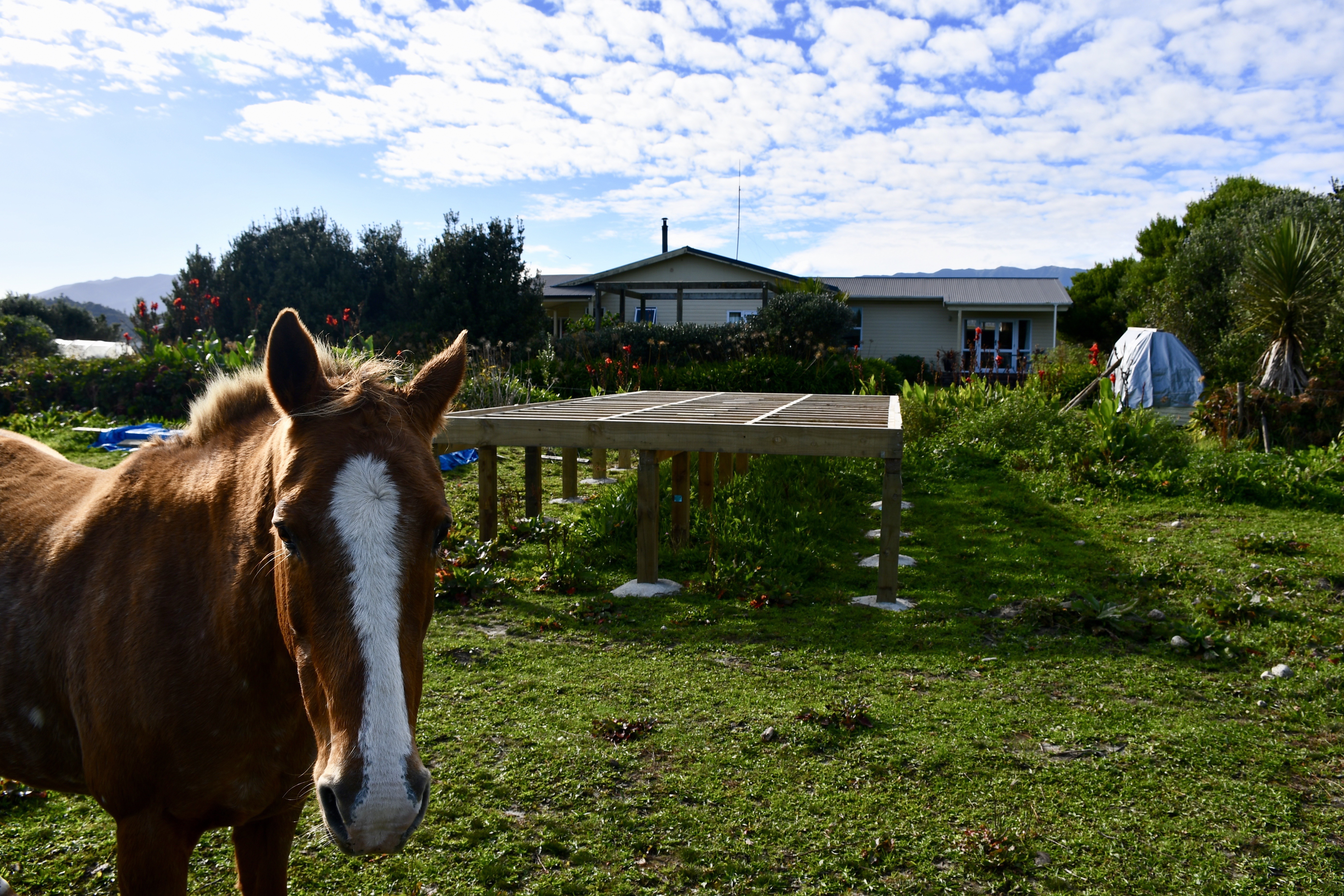
The Beginnings of Dianne Anderson’s Cheese Room in front of the Family Homestead: “Mini-Me” Looks On.
Husband Russell, understandably, had some concerns about this, but Dianne was quick to point to his new digger and other farm equipment in support of her argument in favour of the expenditure. Dianne won her day in the Anderson Family Court, and an allocation for her cheese room was added to the farm budget.
Dianne is studying business via a Development West Coast sponsored Co.Starters course on Wednesday nights in Karamea to prepare her cheese operation for market success. The course is helping her focus and hone her business idea to ensure she has a complete grasp of the cheese business’s compliance, legal, accounting, and marketing aspects before launching the venture.
Dianne plans to work four days a week when she is in full production, with another day dedicated to sterilising the cheese room. She has a pasteuriser that will enable her to process 100 litres of raw milk per batch, resulting in approximately 10 kilograms of cheese per day. So, each week, Dianne hopes to turn 400 litres of milk from their farm into 40 kgs of artisan cheese. She initially plans to offer the cheese to the local market by stocking the local produce shop and attending the Saturday Market with her range. Her cheese will also, undoubtedly, be popular with visitors to the Karamea region, who are always keen to try local artisan food products.
So, after over half a century of hands-on kitchen experience, considerable expense and study, Dianne Anderson is ready to present her lovingly crafted cheese range to the world from her home base in Karamea, West Coast, South Island, New Zealand. Cheese aficionados, start your engines!








































“Virtual Symposium” Wows West Coast Theatregoers
Off the Top of My Head
By Paul Murray
The stage production “Virtual Symposium,” which was written, directed, produced and performed by local playwright Brendan O’Dwyer, co-director Sacha Healey and a troupe of actors from Karamea closed on Saturday February 25 after two sell-out shows at the Karamea Pulse Energy Centre and near full houses at The Lyric Theatre in Granity.
Over a year of preparation and dedication shaped a disparate gaggle of schoolteachers, nurses, farmers, horticulturalists, cave tour guides and Department of Conservationists into a guild of performers who rallied together and performed superbly.
Many of the performers are also members of the Karamea singing group “The Endorphins” and could really hold a note. The casting director deserves special mention as the roles assigned to the actors seemed to fit well with their characters, and they all seemed very comfortable in their thespian personas.
The show opened with a gunfight and had it all; fabulous costumes, singing, dancing, rap, hip-hop, social commentary, poetry, some magic, robots, romance, a mad scientist, a bearded lady, some associated cross-dressing and a lot of humour. The stage set was a simple white backdrop that was highly effective in catching the performers’ shadows and enhancing histrionics. The sound, lighting and venues were superb, and matched with the enthusiasm of the performers, it was a thoroughly enjoyable and entertaining evening.
The premise of the production was to address the insidious means by which technology has infiltrated our lives and, in some instances, taken over. Game-addicted “Helen (Sacha Healey)” is trapped in a virtual world and has sought professional help to overcome her dependence on computer games and to seek more meaning from life.
Assisted by an avant-garde psychiatrist, “Ziggy (Val Moynihan),” who prescribes some experimental medication, and her hilarious robotic sidekick “Bud-E (Dave Guppy),” she embarks on a quest of rediscovery. With a little help from her friends, she is encouraged to escape her virtual reality to seek actual reality and regain an appreciation for life’s simple pleasures.
Along the way, she meets snake oil cabaret performers “Heidi Seekey (Aby Chalmers)” and “Micky Dangledeep (Cliff Meakin),” a synod of argumentative, toga-wearing philosophers, a nutty professor and ends up performing in a talent quest. When we first meet game-addicted Helen, she is irascible, sullen and disconnected, without purpose or meaning in her life, but as reality kicks in, she gradually begins to smile and finishes the show beaming like the Cheshire cat. Did she choose humanity or digitality? That questions caused some ambiguity, some thinking she embraced the reality of the natural world, others thinking she morphed into virtual reality under a new persona, but in the end, all that really mattered was the resultant stimulating debate and conversation that the play elicited among the audience.
The show took off in all directions but came together in the end to thoroughly address the juxtaposition between virtual and reality and the challenge of our age to know the difference. “Virtual Symposium” was made possible with support from the Buller District administered Council Creative Communities NZ grant of $2,000 and a grant from the Department of Internal Affairs through the Community-Led Development Programme of $17,987 to the Karamea Drama Group. The group invested the entire finding amount into the production of the show, set, equipment, professional services, venue hire etc. The performances raised a significant profit from ticket sales and the money will be distributed to local organisations in need of financial support. The recipient organisations for the profit distribution will be announced formally in the coming weeks.
“Virtual Symposium” was a triumph. It generated much-needed community unity after the social disruption of the COVID era, enabled creative ferment to blossom, raised money for deserving community groups and provided a great example for young people in the community as well as superb evening’s entertainment; Well done all concerned!
###############################################################################
Thank God for Fools
By Brendan O’Dwyer
I am honoured to acknowledge the players and crew who were involved with the Virtual Symposium. Each member committed to the project on the basis that they would only do it if it was ‘going to be great.’ There was no room for half measures. This level of commitment became the backbone of the production, and I am forever grateful to those people who invested their energy into such an abstract vision. Commitment alone is rare. Commitment to a moving target that barely exists in someone’s head is, at best, foolish. Thank God for fools, otherwise we’d never get anything done.
Thanks to:
Sacha Healey, for her tireless patience over a tumultuous two years. Sacha was not just a support person for me but an equal in terms of the creative vision. Her writing skills, editing abilities and creative prowess are apparent throughout the script, the songs and the overall vision of the show. Her acute attention to detail and her ability to interpret the written word was key to bringing dialogue to life and movement to otherwise flat characters. Simply put, without Sacha’s exceptional skills, there would not have been a show, and I would be responsible for a mediocre script that sat at the bottom of a pile of empty ideas.
David Guppy, who described it best when he declared that I’d ‘built a great ship and it was sitting high upon the dry dock, and all hands were onboard and all the coffers were full, and ahead was a great voyage, and all that remained was for me to get underneath with a small hammer and tap, tap, tap at the little wedge that held the entire thing at bay and at the moment he jumped onboard, ‘tap’ went the wedge and the whole thing lurched headlong into the ocean.
Tina Wylie, for her creative energy in the costume department. A ninja with a needle, with glee did she take on the massive task of outfitting 13 people and always maintained her composure.
Liz Kerslake, for asking ‘So, when are you gonna write the thing?’ and believing in me when I wasn’t sure if I could. Also, thanks for her abundant patience and positivity. Her friendship and calm presence steadied the ship when we were headed for the doldrums.
Cathy Sampson, for ‘trusting the process.’ It was a pleasure to watch you grow into the role and also grow into yourself along the way. I’m sure you got younger over the years.
Cliff Meakin, for taking a leap of faith and grabbing his character by the Top Hat. Armed with an arsenal of wisecracks, he always lightened the mood.
Aby Chalmers, for her bright energy and professional approach. Leaving the shore long after the ship had sailed, Aby swam her arms off and not only caught up with the ship but jumped onboard and gave the rest of us swimming lessons.
Ang Cronin for her endless enthusiasm and bottomless bag of tricks.
Pete Moynihan for his sharp ability to smell bullshit from a nautical mile away.
Val Moynihan, who got onboard with a small part and ended up with a much larger role, I don’t know how many times I heard someone say, ‘Val can do it,’ and she certainly did.
Tamati Dean, another one who left the shore long after the ship had sailed. Not only did the man catch up, at one point he was spotted pushing icebergs out of our way.
Sina Tuiavi’i wasn’t on the shore to begin with. Nearing the end of the voyage, we were desperately low on supplies and morale was on the wane when the kind winds blew us on a course to Sina’s Island. She nourished and restocked us and came onboard with a determined aura, becoming a rock for a frazzled crew.
Sanae Murray, tasked with making us look pretty, she would look through the foundation and past the glitter and gaze into your soul so that your entire being would be ready for the harsh reality of performance.
Kathy Ramsay, her gentle professionalism was much appreciated and her late addition to the crew was a welcome shift in our dynamics. Having her there was a personal measure of how legitimate the production was.
Emilie Schmitthaeusler, unwavering in her enthusiasm and carrying so much responsibility, she ran a tight ship and never buckled under pressure. A cool, calm presence that we all relied on, she never let us down.
Sam Beach, with his technical skills he could diagnose a discordant sound and ‘tweak’ it out of existence. He could also identify the ambient resonance of a space and tune the rig to harmonise with it. Nerdy for sure, invaluable no doubt.
Harry Bretherton, a master sound engineer with decades of recording and mixing experience, he treated the music with grace and engineered it to a higher form than I had ever intended.
Thanks also to Raramai Adcock and Carlos de Treend for graphic design, Tracy McEwing for mentorship and filming the show and David Lee for being the man. In addition, thanks to Sonder de Vries, Dion Mawson, Seth Doherty, Fernando Tarrango, Paul Murray, Rosalie Sampson and Jessie Creedmore, Steve Shultz and Mary McGill for support, encouragement and know how. And finally, Vinnie Dunford for the superb food, Rebecca and Emma for working the bar, Craig and Hannah for looking after the door and Juliette for use of the rehearsal space.
Thanks in general to the families who supported our mission. In particular my own, Ema, Quillyn and Odin, your support and understanding was priceless.
Virtual Symposium Article from The Westport News February 19, 2024
Rate this: