
Karamea. A community of 650 people in rural New Zealand. A small community with a big vision.

Imagine if every traveller and every business took responsibility for their carbon footprint. This is the vision of Paul Murray, founder of the Living In Peace Project in Karamea.
Paul was inspired by Douglas Tompkins, the founder of North Face and Esprit clothing businesses, who, on the sale of his companies for $120 million, purchased 900,000 ha of virgin forest in Chile to “preserve it from development.” Paul explains:
I wasn’t anywhere near as cashed up as Mr Tompkins, but loved the essence of what he was doing and his motivation for doing it. I had the opportunity to purchase a much smaller piece of forest and did so.
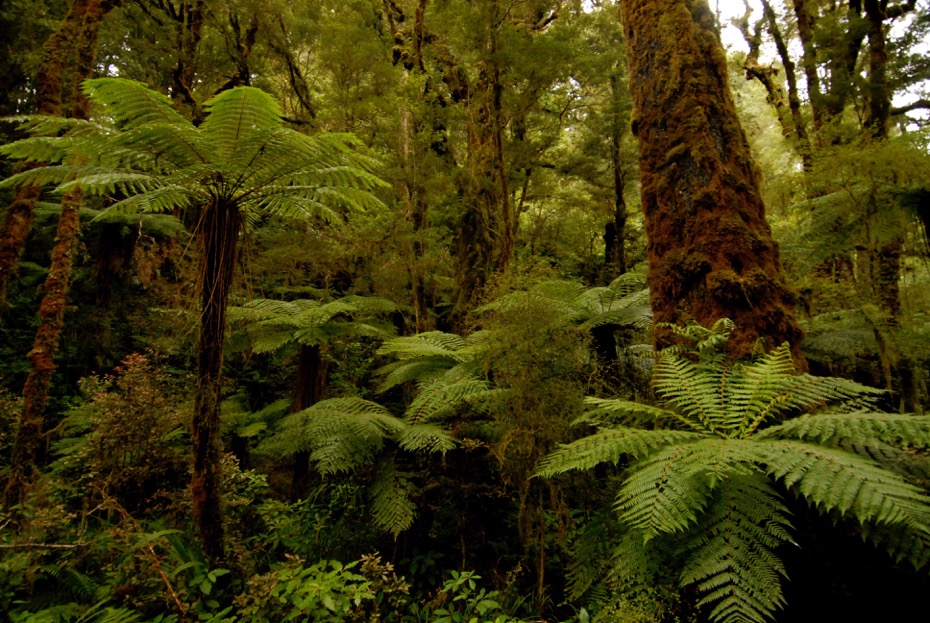
In 2001, Paul purchased and committed to maintaining a 80-acre (31 ha) forest bordering on the Kahurangi National Park. The Living in Peace Project is funded through his businesses including Rongo Backpackers & Gallery and Karamea Farm Baches. He wanted to capture carbon to mitigate the environmental impact of his businesses.
My accountant refers to the forest as a “non-performing asset,” but I don’t see it that way, it definitely performs a function and that is to enable us to take full environmental responsibility for the carbon cost of our business and that is important to me.
I want to be able to raise my hand and say that “I am an environmentally responsible business person” and that means I want to have a successful business, without damaging the environment in the process. I want to take full responsibility for every aspect of my business and always seek to minimise the environmental impact of my business activities.
Paul actively encourages people from all over the world to visit Karamea, which is possibly the most remote town on mainland New Zealand, which is also a country a long way from any other. There is a carbon cost for people to visit his business and he meets that by maintaining the forest, which absorbs CO2 and turns it into wood. There are also some incredible rata trees on the property that he estimates are over 1,200 years old.
To stand in the forest and be present is very inspiring for me. The forest provides everything it needs to grow and thrive and recycles all waste material in a way that sustains it. It requires no inputs other than freely available resources of water, sunshine and soil. It’s a perfect system and I believe the path to sustainable business is to strive to be like the forest…biomimicry.
Paul acknowledges that while tourism businesses have a responsibility to offset the impact of their businesses, travellers also need to do their part to minimise and offset their carbon footprint. He believes that although many people are becoming more aware about the carbon cost of their travel, others have not really considered it.

We take tour groups to the forest, go check out the big trees and discuss why we maintain the forest. The people who are already aware of the issue are very impressed with our efforts to address the carbon cost of travel on their behalf. Others, who are perhaps comprehending the information for the first time, go away thinking about the subject and perhaps in a small way, we are influencing their thinking on the subject of sustainable travel.

We asked Paul to share some Dos and Don’ts for GOOD travellers considering a trip to New Zealand. Here they are.
Do:
- Stay longer and slow down…It’s impossible to see and do everything, so take the time to have a quality experience everywhere you go. Seek quality experiences over quantity of experiences.
- Be a traveller instead of a tourist. Take the time to experience different cultures, fashions, foods, architectural and art styles, languages, traditions etc
- Eat locally, be a locavore as it significantly reduces the carbon cost of your travel and supports local producers and businesses who are striving to be efficient and environmentally responsible.
- Car pool – the more people in a car the better and it is a cheaper and more efficient way to travel.
- Seek out of the way places and explore lesser travelled roads…
- Take time to get involved everywhere you go…Volunteer, socialise, meet people and have good conversations…learn and grow.
- Share what you have with others.
- Take LOTS of photos.
Don’t:
- Try and see an entire country in two weeks.
- Be a tourist! Tourism is an expensive (financially and environmentally) form of entertainment without inherent value. Slow down, observe and get involved in the places you visit.
See More:
Living in Peace Project
Location:
Karamea, New Zealand

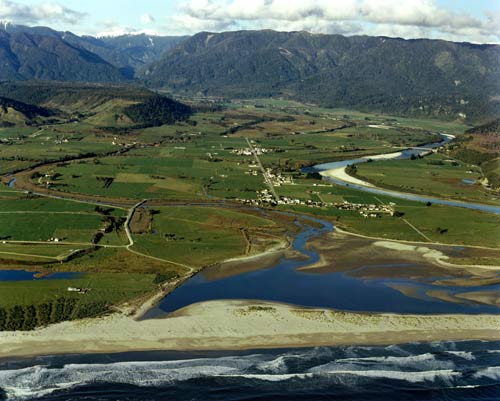
The Living in Peace Project is based in Karamea at the top of the West Coast of the South Island of New Zealand. Karamea is enveloped by the Kahurangi National Park on three sides and sealed in by the Tasman Sea. It is a region of great scenic beauty and ecological significance.
The Living in Peace project combines elements of art, travel, permaculture and education to create an environmentally, socially and economically sustainable business. Rongo Backpackers & Gallery and Karamea Farm Baches form the financial base of the project and support the development of the project by providing income to fund expansion. The eco-tourism businesses incorporate art, permaculture (permanent organic agriculture), and volunteerism, into their management structures and strive to be energy efficient, progressive thinking, professional and profitable.
The project is involved in so many GOOD initiatives! We have highlighted a few below but we also recommend visiting their website for more information and inspiration!
- Solar Hot Water: Rongo Backpackers & Gallery has not used any electricity to heat water since 2005. The water is heated with a solar system and augmented with a wood-burning water heater and a wetback system on the living room fireplace. This is a significant cost saving in terms of economics and the environment. Karamea Farm Baches also have solar pre-heaters installed to defray the cost of heating the water with electricity and solar systems will be installed to heat the water at the baches in future.
- Carbon Sink: A 31-hectare (80-acre) regenerating bush property provides a carbon offset for the emissions associated with the business. To encourage people to fly to New Zealand from Europe, Asia and America and other parts of the world incurs a carbon cost that they want to take responsibility for. To counter this, they keep the bush block as a carbon sink to absorb the carbon we produce in the service of our business. The property doubles as an attraction and they plan to build a simple camp ground there to enable people to enjoy the property and have an experience that is not possible in many parts of the world
- Permaculture Farm: The project aims to be self-sufficient in the production of food––fruit, vegetables, meat and firewood––in addition, they provide locally grown organic meals to our guestomers. They operate on a “no waste” model, with simple, organic, healthy meals locally produced from seasonal fruit, vegetables, venison, beef, lamb, pork, chicken, fish and other seafood etc
Article By:

Eliza Raymond

http://good-travel.org/blog/sustainable-rural-tourism-new-zealand

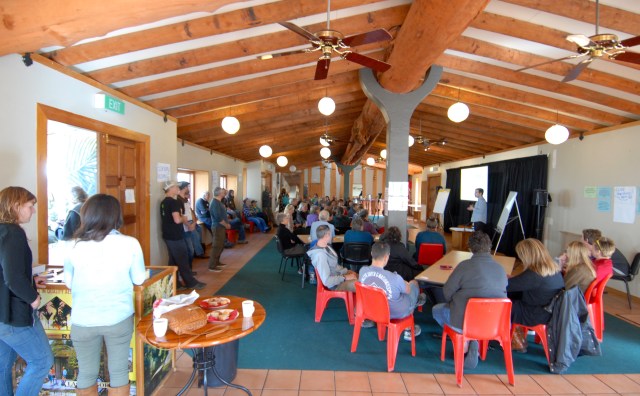


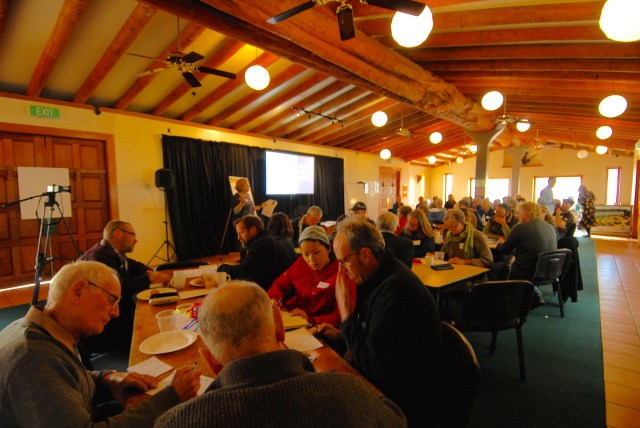


 Karamea has been granted a partnership with the Department of Internal Affairs (DIA) for five years through its Community-Led Development Programme (CLDP), which will offer financial, logistical and professional support for community projects. There are five communities across New Zealand to have this chance to improve their lot and Karamea is the only community on the South Island to have been selected.
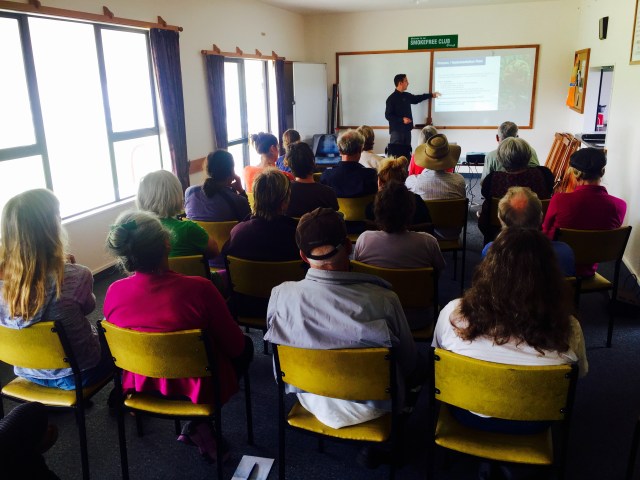
 KCI is a group of local people passionate about improving our community for the people living here. We need your help, Buller REAP in conjunction with KCI have arranged for a community forum called “Love (Y)Our Place.” Megan Courtney, a facilitator from “Inspiring Communities” is coming to Karamea on August 12, 2017, to enable all the members of our community to have a voice and share their thoughts on how we might take full advantage of the opportunity the CLDP offers. We need your help by coming to the forum and contributing to the future of our region by sharing your thoughts and ideas.


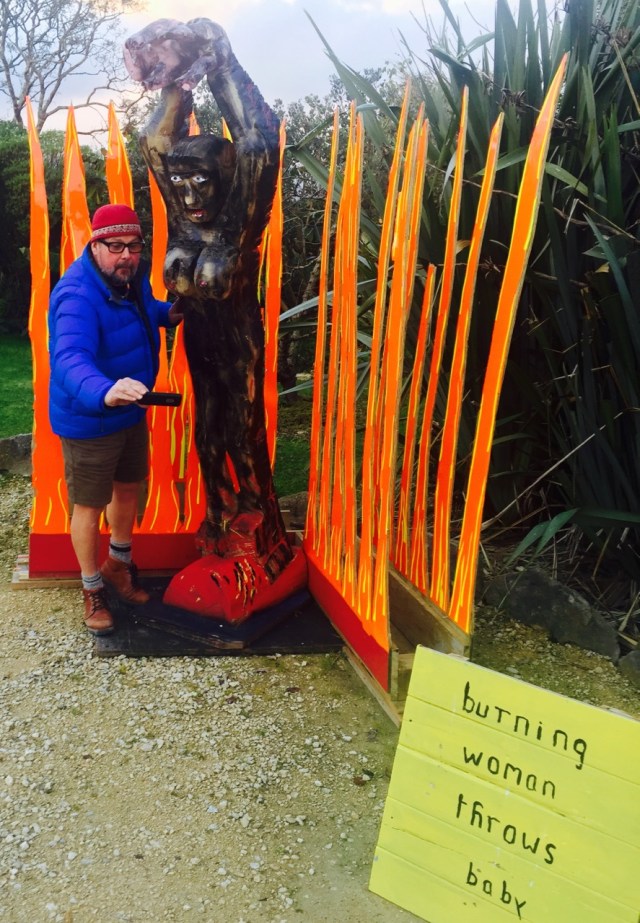
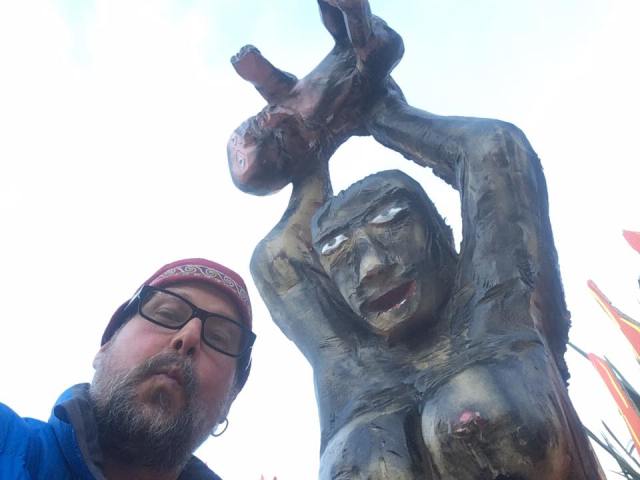


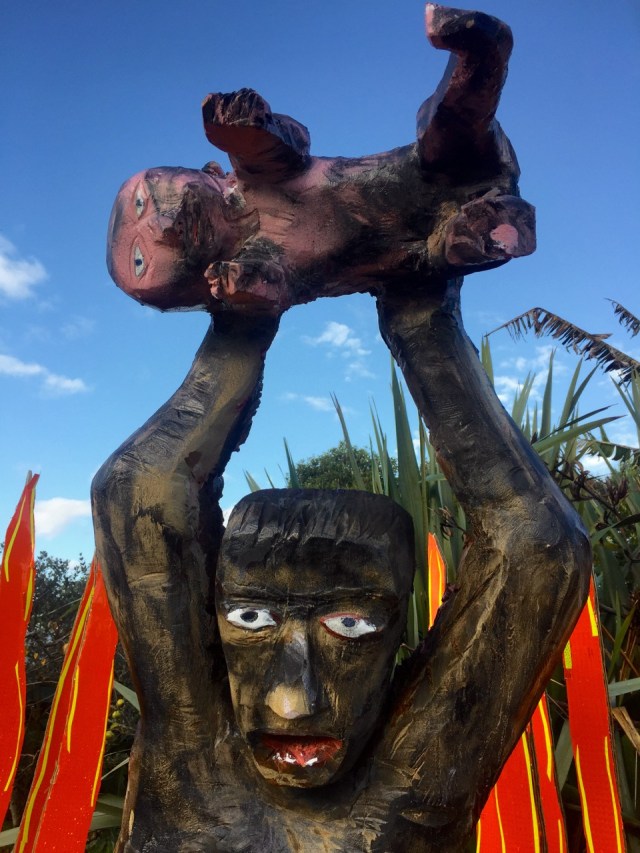


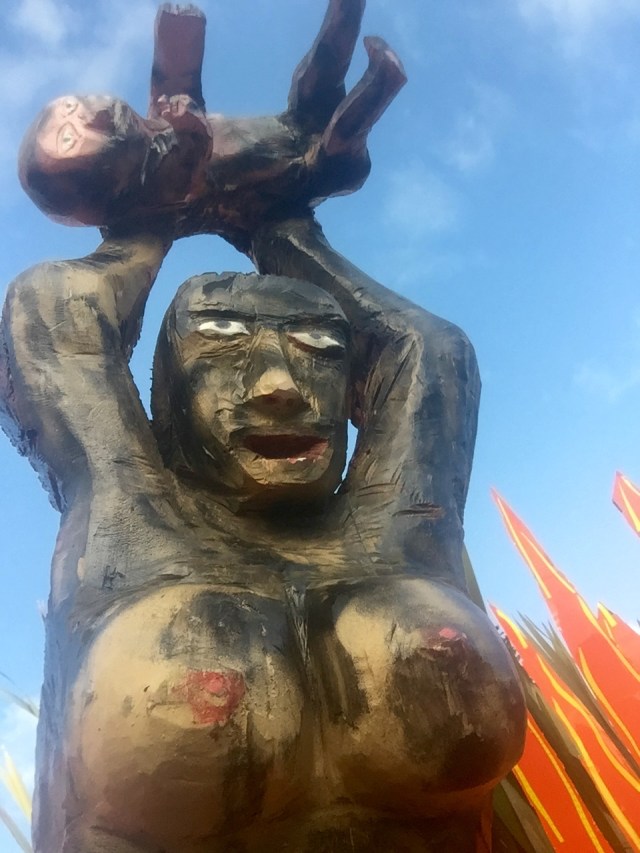





































 The Rongolian Star
The Forgotten White Man in Historic Olympic Photo
.
Original text by Italian writer Riccardo Gazzaniga
Translation by Alexa Combs Dieffenbach
Sometimes photographs deceive. Take this one, for example. It represents John Carlos and Tommie Smith’s rebellious gesture the day they won medals for the 200 meters at the 1968 Summer Olympics in Mexico City, and it certainly deceived me for a long time.
I always saw the photo as a powerful image of two barefoot black men, with their heads bowed, their black-gloved fists in the air while the US National Anthem, “The Star-Spangled Banner,” played. It was a strong symbolic gesture – taking a stand for African American civil rights in a year of tragedies that included the death of Martin Luther King and Bobby Kennedy.
It’s a historic photo of two men of color. For this reason I never really paid attention to the other man, white, like me, motionless on the second step of the medal podium. I considered him a random presence, an extra in Carlos and Smith’s moment, or a kind of intruder. Actually, I even thought that that guy – who seemed to be just a simpering Englishman – represented, in his icy immobility, the will to resist the change that Smith and Carlos were invoking in their silent protest. But I was wrong.
Thanks to an old article by Gianni Mura, today I discovered the truth: that white man in the photo is, perhaps, the biggest hero of that night in 1968. His name was Peter Norman, he was an Australian who arrived in the 200 meters finals after having ran an amazing 20.22 in the semi finals. Only the two Americans, Tommie “The Jet” Smith and John Carlos had done better: 20.14 and 20.12, respectively.
It seemed as if the victory would be decided between the two Americans. Norman was an unknown sprinter, who seemed to just be having a good couple of heats. John Carlos, years later, said that he was asked what happened to the small white guy – standing at 5’6”tall, and running as fast as him and Smith, both taller than 6’2.”
The time for the finals arrives, and the outsider Peter Norman runs the race of a lifetime, improving on his time yet again. He finishes the race at 20.06, his best performance ever, an Australian record that still stands today, 47 years later.
But that record wasn’t enough, because Tommie Smith was really “The Jet,” and he responded to Norman’s Australian record with a world record. In short, it was a great race.
Yet that race will never be as memorable as what followed at the awards ceremony.
It didn’t take long after the race to realize that something big, unprecedented, was about to take place on the medal podium. Smith and Carlos decided they wanted to show the entire world what their fight for human rights looked like, and word spread among the athletes.
Norman was a white man from Australia, a country that had strict apartheid laws, almost as strict as South Africa. There was tension and protests in the streets of Australia following heavy restrictions on non-white immigration and discriminatory laws against aboriginal people, some of which consisted of forced adoptions of native children to white families.
The two Americans had asked Norman if he believed in human rights. Norman said he did. They asked him if he believed in God, and he, who had been in the Salvation Army, said he believed strongly in God. “We knew that what we were going to do was far greater than any athletic feat, and he said “I’ll stand with you” – remembers John Carlos – “I expected to see fear in Norman’s eyes, but instead we saw love.”
Smith and Carlos had decided to get up on the stadium wearing the Olympic Project for Human Rights badge, a movement of athletes in support of the battle for equality.

They would receive their medals barefoot, representing the poverty facing people of color. They would wear the famous black gloves, a symbol of the Black Panthers’ cause. But before going up on the podium they realized they only had one pair of black gloves. “Take one each”, Norman suggested. Smith and Carlos took his advice.
But then Norman did something else. “I believe in what you believe. Do you have another one of those for me”? he asked, pointing to the Olympic Project for Human Rights badge on the others’ chests. “That way I can show my support for your cause.” Smith admitted to being astonished, ruminating: “Who is this white Australian guy? He won his silver medal, can’t he just take it and that be enough!”.
Smith responded that he didn’t, also because he would not be denied his badge. There happened to be a white American rower with them, Paul Hoffman, an activist with the Olympic Project for Human Rights. After hearing everything he thought “if a white Australian is going to ask me for an Olympic Project for Human Rights badge, then by God he would have one!” Hoffman didn’t hesitate: “I gave him the only one I had: mine”.
The three went out on the field and got up on the podium: the rest is history, preserved in the power of the photo. “I couldn’t see what was happening,” Norman recounts, “[but] I had known they had gone through with their plans when a voice in the crowd sang the American anthem but then faded to nothing. The stadium went quiet.”
The head of the American delegation vowed that these athletes would pay the price their entire lives for that gesture, a gesture he thought had nothing to do with the sport. Smith and Carlos were immediately suspended from the American Olympic team and expelled from the Olympic Village, while the rower Hoffman was accused of conspiracy.
Once home the two fastest men in the world faced heavy repercussions and death threats.
But time, in the end, proved that they had been right and they became champions in the fight for human rights. With their image restored they collaborated with the American team of Athletics, and a statue of them was erected at the San Jose State University. Peter Norman is absent from this statue. His absence from the podium step seems an epitaph of a hero that no one ever noticed. A forgotten athlete, deleted from history, even in Australia, his own country.

Four years later at the 1972 Summer Olympics that took place in Munich, Germany, Norman wasn’t part of the Australian sprinters team, despite having run qualifying times for the 200 meters thirteen times and the 100 meters five times.
Norman left competitive athletics behind after this disappointment, continuing to run at the amatuer level.
Back in the change-resisting, whitewashed Australia he was treated like an outsider, his family outcast, and work impossible to find. For a time he worked as a gym teacher, continuing to struggle against inequalities as a trade unionist and occasionally working in a butcher shop. An injury caused Norman to contract gangrene which led to issues with depression and alcoholism.
As John Carlos said, “If we were getting beat up, Peter was facing an entire country and suffering alone.” For years Norman had only one chance to save himself: he was invited to condemn his co-athletes, John Carlos and Tommie Smith’s gesture in exchange for a pardon from the system that ostracized him.
A pardon that would have allowed him to find a stable job through the Australian Olympic Committee and be part of the organization of the 2000 Sydney Olympic Games. Norman never gave in and never condemned the choice of the two Americans.
He was the greatest Australian sprinter in history and the holder of the 200 meter record, yet he wasn’t even invited to the Olympics in Sydney. It was the American Olympic Committee, that once they learned of this news asked him to join their group and invited him to Olympic champion Michael Johnson’s birthday party, for whom Peter Norman was a role model and a hero.
Norman died suddenly from a heart attack in 2006, without his country ever having apologized for their treatment of him. At his funeral Tommie Smith and John Carlos, Norman’s friends since that moment in 1968, were his pallbearers, sending him off as a hero.

“Peter was a lone soldier. He consciously chose to be a sacrificial lamb in the name of human rights. There’s no one more than him that Australia should honor, recognize and appreciate” John Carlos said.
“He paid the price with his choice,” explained Tommie Smith, “It wasn’t just a simple gesture to help us, it was HIS fight. He was a white man, a white Australian man among two men of color, standing up in the moment of victory, all in the name of the same thing”.
Only in 2012 did the Australian Parliament approve a motion to formally apologize to Peter Norman and rewrite him into history with this statement:
This House “recognises the extraordinary athletic achievements of the late Peter Norman, who won the silver medal in the 200 meters sprint running event at the 1968 Mexico City Olympics, in a time of 20.06 seconds, which still stands as the Australian record”.
“Acknowledges the bravery of Peter Norman in donning an Olympic Project for Human Rights badge on the podium, in solidarity with African-American athletes Tommie Smith and John Carlos, who gave the ‘black power’ salute”.
“Apologises to Peter Norman for the wrong done by Australia in failing to send him to the 1972 Munich Olympics, despite repeatedly qualifying; and belatedly recognises the powerful role that Peter Norman played in furthering racial equality”.
However, perhaps, the words that remind us best of Peter Norman are simply his own words when describing the reasons for his gesture, in the documentary film “Salute,” written, directed and produced by his nephew Matt.
“I couldn’t see why a black man couldn’t drink the same water from a water fountain, take the same bus or go to the same school as a white man.
There was a social injustice that I couldn’t do anything about from where I was, but I certainly hated it.
It has been said that sharing my silver medal with that incident on the victory dais detracted from my performance.
On the contrary.
I have to confess, I was rather proud to be part of it.”

When even today it seems the fight for human rights and equality is never-ending, and innocent lives are being taken, we have to remember the people that have already made self-sacrifices, like Peter Norman, and try to emulate their example. Equality and justice is not a single community’s fight, it’s everyone’s.
So this October, when I’ll be in San Jose, I am going to visit the Olympic Black Power statue on the San Jose State University campus, and that empty podium step will remind me of a forgotten, but truly courageous hero, Peter Norman.
Source: The white man in that photo
Rate this: