
Off the Top of my Head
By Paul Murray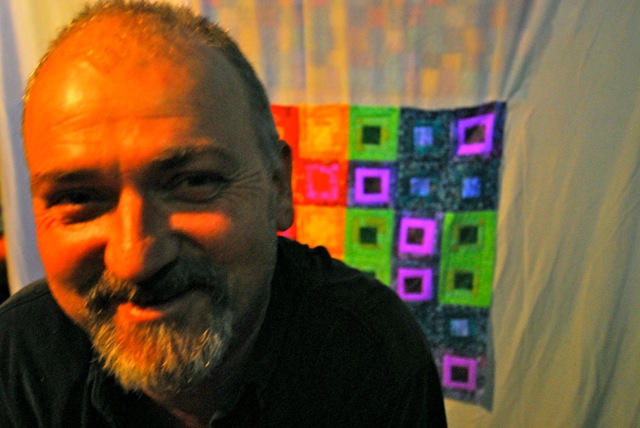 A thirst for inspiration, wisdom, experience and understanding led Gerar Toye (52) on an international quest from his birthplace in South Auckland to Karamea at the top of the West Coast of the South Island of New Zealand.
The youngest of six children, Gerar spent his formative years in Manurewa––one of the most multi-cultural suburbs of Auckland and also one of the roughest and toughest––before moving to Borneo for a couple of years with his father Dallas, a school teacher, and mother Pauline, a volunteer nurse.
On returning to New Zealand and completing his primary education, Gerar developed a strong interest in photography and became a darkroom printer for New Zealand’s top professional photographers. The job satisfied his passion for photographic printing, but the formulaic style of the photography he was charged with printing and the sterile, safe and conservative images he constantly saw emerging in the developing fluid left him wanting to make his own images and express his creative ideas through photography.
Gerar quit the job that no longer inspired him and went to Australia in 1982 for a couple of years before returning to Borneo to hook up with childhood school friends there. The trip triggered his wonderlust and he spent the next two decades travelling the world and gaining the international experience, self-education and wisdom that travel affords.
Sri Lanka was next and there he met fellow travellers from the north, who had strange tales of India to share. “In Aragum Bay, I met people who had travelled through India who told me crazy stories about the country with sparkles in the eyes, which inspired me to visit the country,” he said. “I couldn’t believe the tales I heard and wanted to verify them for myself…I wanted to prove them wrong, but after seeing the country for myself, I found out that all I’d heard was true and more!”
His tourist visa allowed for six months in India, but that was in no way sufficient once his interest in the country and its diverse culture was piqued. He returned 10 times and travelled extensively all the while with his camera at the ready.
In 1989, he heard about the Kumbh Mela Festival, a Hindu pilgrimage that takes place every four years in four different locations in rotation. Hindu devotees flock to bathe in the sacred Ganges River and here he photographed the religious, cultural and anthropological spectacle of the largest gathering of humans on the Earth.

The experience was overwhelming, 30 million people assembled in one location, with 70 million attending the event over the course of one month inspired Gerar to return to participate in the Maha (large) Kumbh Mela festival in 2001, which occurs every 144 years and is held at Triveni Sangam the “meeting place” at the confluence of the Ganga, Yamuna and the Sarasvat rivers.
There Gerar photographed the myriad people assembled in the largest-ever congregation of religious pilgrims with his unique “shooting from the hip” style that enables him to capture candid moments, spontaneity and genuine emotion in his subjects. The hand-printed images are now being exhibited at the Global Gypsy Gallery in Karamea.
With the travelbug’s teeth now deep into his flesh and Gerar ventured to numerous countries, travelled through the Americas, Europe and Asia, all the while with camera at the ready to capture moments of human emotion, joy, expression and life moments. With three cameras and 200 rolls of film each year Gerar had no room for cold or wet weather clothes so spent his time in constant warmth with only one winter in his twenty years on the road.
Opportunities abounded and he helped everyone he met basically woofing before it was invented. These led to some marvellous experiences, including being invited to tour America with Paul Kelly and Crowded House, which he turned down to follow an affair of the heart. Using his darkroom skills he built a darkroom on a 1910 Danish Gaff rigged ketch from Fremantle West Australia through Indonesia, Micronesia and Japan and on to Alaska.
He now had a body of work that he could share with others and market to finance his vagabond lifestyle. Years on the road had also furnished him with wisdom and spiritual understanding well beyond his years and he decided to mix both his spirituality and photography to create postcards, posters and T-shirts of his images matched with inspirational quotations and put his experiences out into the retail market. Despite significant effort and attempts to offer his cards to retail outlets, shop owners were not keen to stock his products, so he decided to go it alone and sell them himself.
He returned to New Zealand in 1990 initially to Mangawhai Heads north of Auckland where his now retired parents live. While there, he painted an ecological mural on the public toilets as a move to think globally and act locally. The mural was graffiti-free until it started to peel ten years later and he was commissioned to return to repaint it for the locals.
He later travelled in a purple 1956 Bedford bus called “Carpe Diem” with the Kiwi Gypsy Fair for five years, circling the country six times and selling his wares at markets, festivals and fairs. The response to his products was very positive and the feedback he received encouraged him to produce a book compiling his photographic images and quotations. However, finding a publisher to handle the idea proved frustrating as the idea was considered unsaleable. “The images and quotes were very popular with the public, so I knew a book would work,” he said. Publishers thought otherwise and he was forced to go it alone and using all his credit cards to produce his first book “Reality is for Those with no Imagination,” which was published in 1997.
The next challenge was to find book retailers that would stock and sell his book. This again proved frustrating as he wasn’t backed by a publisher and as a sole trader, retailers were less than helpful and he met with similar resistance from bookshop owners he had experienced when marketing his quote cards.
Around that time the Internet was gathering popularity and he set up a Web site www.globalgypsy.com to stock his own work and market it online. This proved a good move and his product started to move. Retailers gradually came on board and his work is now stocked in over a hundred outlets across New Zealand and Australia. His book sold out and has been translated into French, German and 16 other languages. He now has eight books on the market and has sold over 14,000 copies making him one of New Zealand’s best-selling authors.
In 2002, Gerar and his then partner Amla had boy/girl twins Kiva and Rimu. His nomadic lifestyle quickly changed and he became a father, settled back into life in New Zealand,
He decided to pursue his creative passion and enrolled in a fine arts degree at Canterbury University in Christchurch. He initially decided to study painting, but on reflection switched to filmmaking as he felt the artform had a greater propensity to influence people in a positive way. “I didn’t feel I could change the world by painting,” he said.
The challenges and responsibilities of fatherhood forced him to leave university before graduating, but he managed to express his talent for directing and writing film and produced a low budget ($400) 20-minute short film titled “Zen and the Art of Hitchhiking,” which can be seen online:
Zen and the Art of Hitchhiking
By Gerar Toye
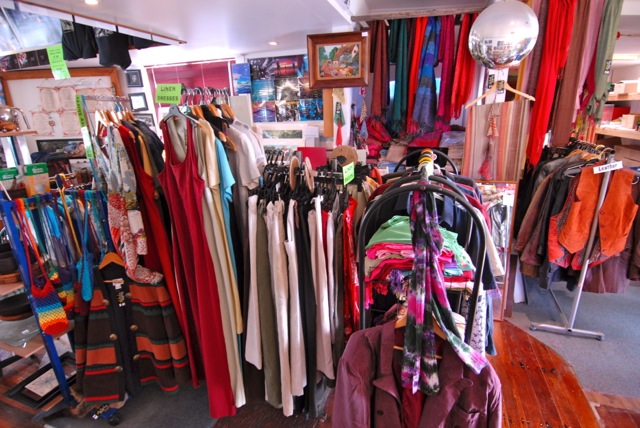
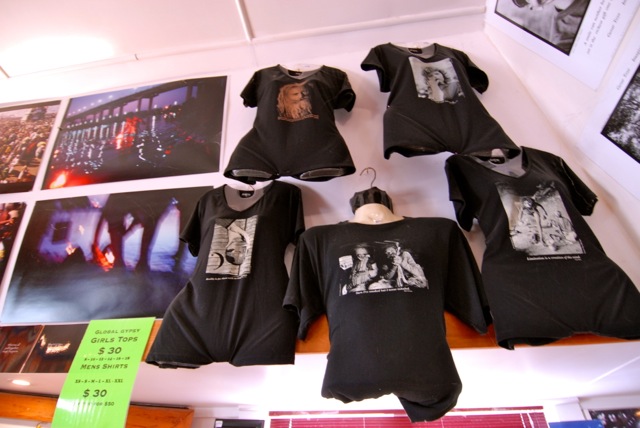
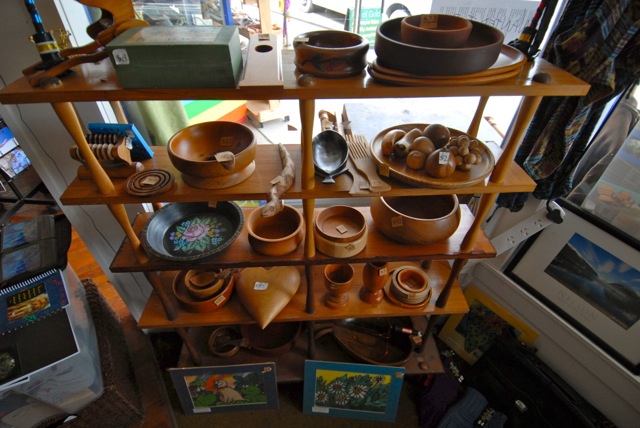
Invited by Paul Murray to revisit Karamea and the LivinginPeace Project he had started Gerar was inspired to be part of the dream to bring people together and he settled into life in the small remote rural community in 2007 after purchasing the old information centre building in the centre of town. He painted it in rainbow stripes and established a retail outlet of his own to market his growing range of books, postcards, T-shirts, fridge magnets, jigsaws, bumper stickers, framed photographs and posters and expanded with a range of goods and products including; organic food, local produce, artworks, fair trade items, second-hand goods, accessories, curios and pre-loved natural-fibre clothing…the Global Gypsy Gallery was born.
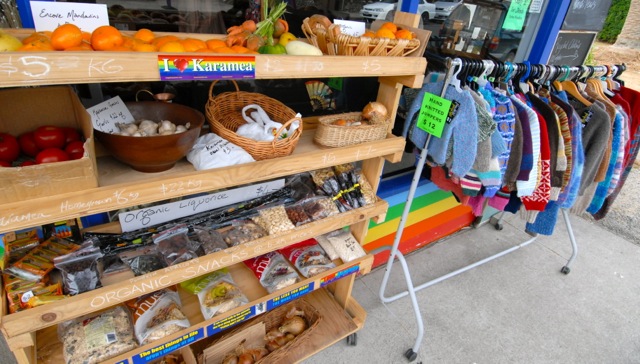
Today, the Global Gypsy Gallery is a veritable emporium and must-see shop for any visitor to Karamea. It has become a Farmer’s Market where local organic fruit and vegetable growers can sell their excess produce, local artisans can sell their creations, the best cup of tea and coffee in town and hours of browsing through a treasure trove of quality new and used products from around the world. Gerar’s photographs adorn the walls and he again has overcome the challenges of unsupportive retailers and conservative mindset by doing it himself…and doing it very well.
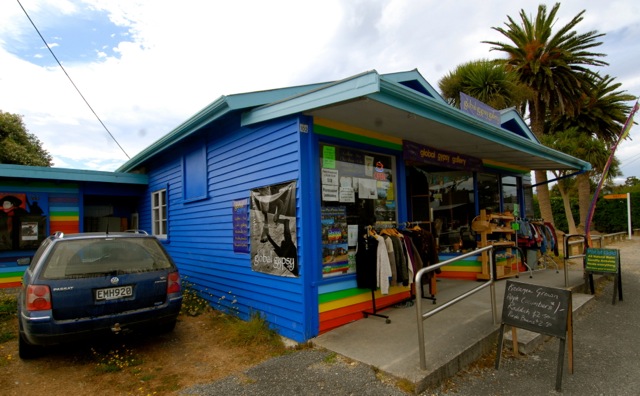
Global Gypsy Gallery

Farmer’s Market: Fresh Local Produce and Packaged Organic Foods

Gerar Toye at he Helm of the Globl Gypsy Gallery

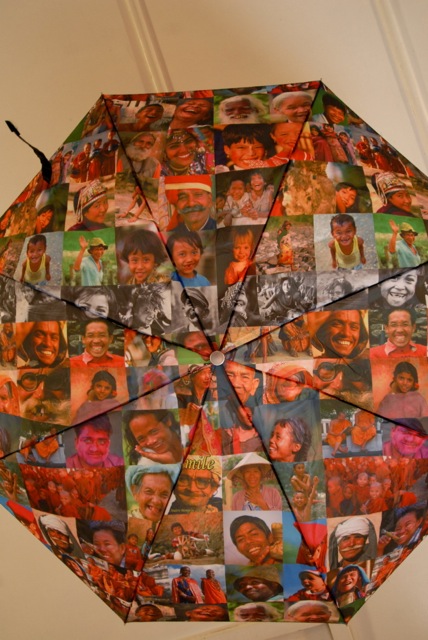
Smile Umbrella

Gerar Toye’s Best-Selling Books

Framed Photos from India

The Endorphin Mat

Gerar Toye



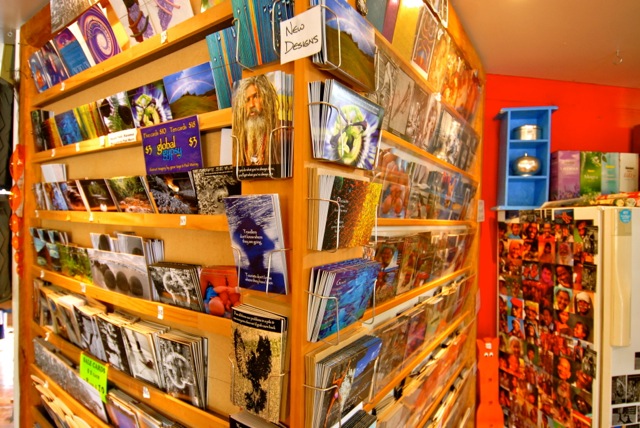
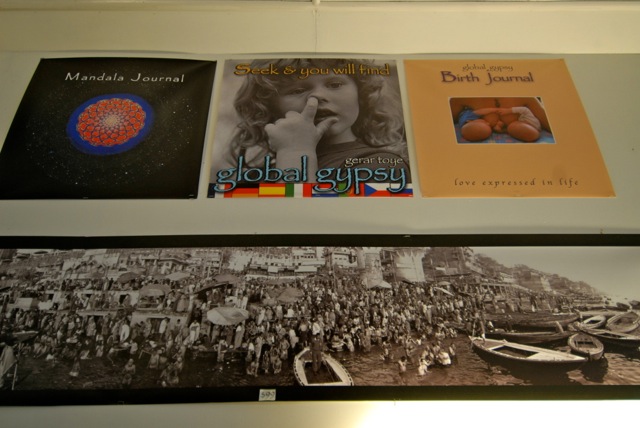


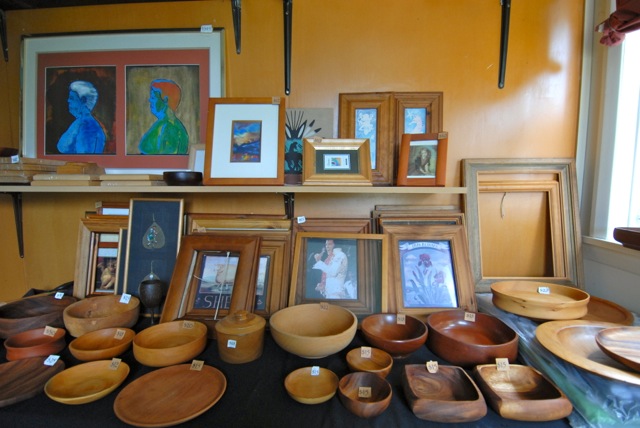

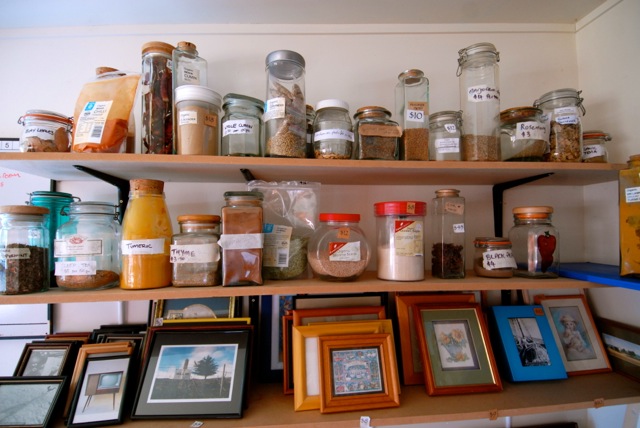















 (Photo: PETER MEECHAM/Fairfax NZ)
REAL DEAL: Auckland artist Dean Buchanan has had a con-man impersonating him and selling his artwork over the past six years.
(Photo: PETER MEECHAM/Fairfax NZ)
REAL DEAL: Auckland artist Dean Buchanan has had a con-man impersonating him and selling his artwork over the past six years.







Permaculture Solutions for a SUSTAINABLE Future
“What permaculturalists are doing is the most important activity that any group is doing on the planet. We don’t know what the details of a truly sustainable future are going to be like, but we need options, we need people experimenting in all kinds of ways and permaculturalists are one of the critical groups doing that.” — David Suzuki
Join the New Permaculture Generation
By Arthur Lewis Gordon JacksonLooking out over the lifeless brown quilt of drought-stricken Midwest corn monoculture from the window of a Boeing 747-700, it was immediately apparent to me that permaculture farming practices would have prevented this ecological catastrophe. The hottest summer on record in the United States combined with aggressive commercial farming practices has created the potential for a biblical famine!
I had been to New York City to attend the nuptials of a very close friend and was heading to a lush, green parallel universe to do a permaculture design course in Karamea on the West Coast of the South Island of New Zealand.
However, New Zealand too has had a dry summer with much of the country being designated a drought zone. There is a change happening on weather systems, we should be focussing all of our available energy and resources to find solutions to overcome the challenges this will present. The permaculture fraternity appears to be doing just that…working with the forces of nature to create food production systems that will produce an abundance of food and can be sustained forever.
Flying over the land at 10,000 feet affords a perspective on life that is not possible at ground level. The view of a bird reveals clearly the perils of commercial agriculture and the devastating impact of human influence on natural systems
Vast tracts of flat fertile farmland devoted to the production of corn, which is now a staple food in the United States. Corn and its byproducts form the basis for most processed food products. The diverse natural landscape that must have once existed here is all gone…the diversity of flora and fauna has been replaced with a single crop.
The interior of the Unites States currently resembles the dry withered skin of an old elephant…with the occasional urban smogatropolis bursting through the leathery hide like a festering pustule as we flew over cities…surely this is not a healthy landscape? How long will it be before the great elephant succumbs to consumption?
As I look around the plane, I consider that I am possibly the only passenger pondering the subject of sustainability. I am one of the lucky 10% of the world’s population who can actually afford to fly and I’m feeling very decadent indulging myself the environmentally expensive luxury of international flight, but am I decadent compared with the businesspeople in first class who do this most every day? Are they decadent compared with the owner of the airline who has mansions all over the world, his own island and is planning flights to the moon? Thinking about the poor sodbusters below watching their cornfields wither and die as they pray for rain puts my self-indulgence into sharp perspective.
Looking down on the state of the land in the U.S. Midwest, it is clear land-use changes need to be made as the current system of food through the exploitation of land resources is clearly not sustainable and appears headed for collapse.
In permaculture, it is often stated that, “the problem is the solution” and that the solution to any problem already exists in nature. Broad-scale monoculture farming is the problem here, the solution is to reintroduce crop diversity, water harvesting, replanting trees along waterways, assisting nature to remediate the damage done and collectively applying permaculture principles over the entire region.
Another huge part of this problem is that there are many mouths to feed in the United States, food production is essential to the sustenance of the populace. Midwest farmers no doubt feel the weight of responsibility to provide food.
The good news for U.S. farmers is that there is already a lot of permaculture activity in the United States and progressive farmers like Joel Salatin and his Polyface Farms in Virginia have working models of what is possible with a change of mindset from “we do it this way because that’s how my grandfather did it,” to it’s time to take a new approach, let’s learn about permaculture, and set about repairing our land for future generations. Doing what you’ve always done does not always produce what you’ve always got and cracks are appearing in the broad-scale commercial monoculture model…it’s time to have a rethink on food production in the Midwest and everywhere else.
With that in mind, Paul Murray decided to be part of the solution and study permaculture so that he could help find answers to the challenges of future food production and distribution and work towards rebuilding and replenishing the land so that it may produce an abundance of food and feed everyone forever .We need to help others to learn about permaculture and how to grow food for themselves without relying on corporate agriculture food production and distribution systems.
However, Permaculture Design Course students often come from large cities somewhere in the world. They may not have had an opportunity to gain hands-on practical experience necessary to apply the principles of permaculture in a practical situation.
Seeing the need to offer practical training for people who have completed a theoretical Permaculture Design Course to enable them to achieve the confidence and competence necessary to apply the permaculture theory they have learned in the classroom to their own permaculture ventures, Living in Peace Project founder Paul Murray decided to offer his property, facilities and services to people seeking practical permaculture experience and set about creating a centre for excellence in permaculture.
The LivinginPeace Project seeks to holistically apply the principles of permaculture to the establishment, development and management of a business venture. The stated goal of the LivinginPeace Project is to incorporate the elements of art, travel, permaculture and education into a sustainable business.
Inspired on completing a Permaculture Design Course with Bill Mollison and Geoff Lawton at Melbourne University in 2009, Murray, with a lot of help from people from all over the world, and with further inspiration from the Permaculture Master Plan, he began to establish a permaculture exhibition farm, education facility and centre for permaculture research, training and practice in the Karamea region at the top of the West Coast of the South Island of New Zealand.
In June 2004, Murray purchased an old maternity hospital and converted it into a hostel to offer reasonably priced accommodation to young and budget travellers visiting the region. A year later, he purchased a small farm and motel complex to cater to travellers looking for self-contained accommodation and organic gardens to grow food for his family, colleagues and customers.
Murray has a degree in agricultural science with a major in horticulture. The degree was essentially a study in commerce and taught students how to maximise the profit derived from every square inch of land with no real consideration for maintaining the fertility of the farm or for responsible stewardship. Permaculture made a whole lot more sense and the Permaculture Design Course with colourful, progressive-thinking characters like Mollison and Lawton and 100 students from all over the world convinced him of the way forward and his life changed as Lawton suggested it might.
The long-term objective for the Living in Peace Project is to gradually phase into permaculture and away from tourism, which Murray believes to be “an environmentally expensive form of entertainment” and into the provision of permaculture education, way of life and knowledge sharing with travellers. “Karamea is a stunning region, but it is also perhaps the most remote town on mainland New Zealand, people have to make a real effort to come here.” “I want to cater to travellers who make that effort––people who take the time to learn from their travel experience––and we have a great opportunity to share our permaculture knowledge with people from all over the world and, hopefully, gain new ideas and innovations from the people who come and stay.”
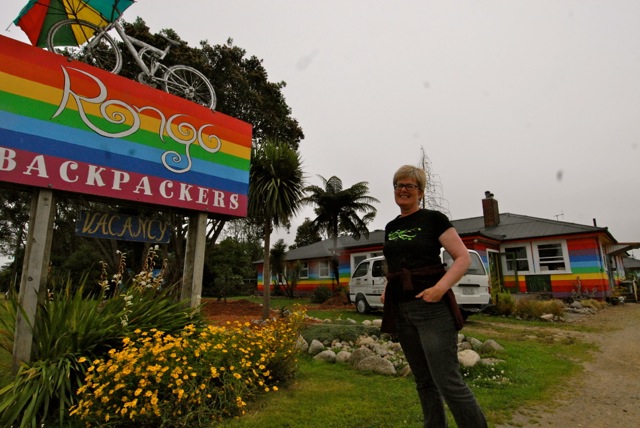
The hostel, Rongo Backpackers & Gallery, hosts travellers from over 50 countries each year and the Murray hopes the experience of living and working on a permaculture farm will spark a quest for knowledge among his guests and that they will take some of the energy-saving, self-sufficiency initiatives and permaculture practices home with them.
Bananas and avocadoes can be grown in Karamea and the region enjoys an almost sub-tropical microclimate. The soil is deep, well-drained alluvial loam, which enable a broad range of food crops to be grown. The annual rainfall is around 80 inches and it is evenly spread across the year, alleviating the need for irrigation and water storage.
“In all my travels, I’ve never come across a place with greater potential for growing food. The Living in Peace Project farm is a blank canvas for permaculture designers. People have the opportunity to learn how to go from bare earth to Eden rather than just seeing an established permaculture farm, we offer a very interactive experience and the chance to learn how to do it rather than merely seeing it after it’s done,” he said.
The project has employed Dave Tailby as the Permaculture Farm Manager this year and he has taken charge of the property and its development.
“Having Dave on board is fantastic! He’s a great people-person, a really hard worker and is as passionate about permaculture as anyone you’ll meet. He’s an asset to the project and a really great teacher,” Murray said.
After doing his Permaculture Design Course and watching the Permaculture Master Plan video, Murray decided to devote his life to permaculture and saw his tourism accommodation facilities and farm performing a different function––spreading the word about permaculture, helping others to learn and offering an opportunity to urban permaculture people to learn practical farm skills so that they might be better able to establish their own permaculture projects.
In the meantime, the LivinginPeace Project still offers accommodation over the summer months to visitors coming to see the many regional attractions, but changes focus from May to December to host permaculture students as interns on the farm and will offer a permaculture design course from May 14 to May 28, 2013.
“We are very fortunate to have Tim Barker from the Permaculture Research Institute coming over to lead the course, Tim is a great guy and an experienced permaculture practitioner with lots of practical skills to pass on to students on the course,” Murray said. Barker is currently one of the farm managers at the PRI’s Zaytuna Farm in New South Wales, Australia and describes himself as “Mr Fix it.”
Eventually, Murray hopes to phase tourism out altogether and focus entirely on permaculture programmes year-round. “I don’t think international tourism is a good bet, but I do believe in international travel…it’s the best form of self-education you can get,” he said.
The LivinginPeace Project will therefore cater to travellers and provide opportunities for people to affordably stay in Karamea for an extended period and learn about New Zealand customs, culture, traditions, lifestyle, food while they also learn about permaculture, sustainable living and self-sufficiency.
For more information on the LivinginPeace Project, or to enrol in the LivinginPeace Project Permaculture Design Course, please contact Paul Murray:
E-mail: rongo@actrix.co.nz
Ph: 0064 (3) 7826-767
Incorporating Art, Travel, Permaculture and Education Into a Sustainable Business.LivinginPeace Project Permaculture Design Course 2013
Permaculture Design Course in Karamea
(May 14 to May 28, 2013)
Course Outline:
The PDC held at The Living Peace Project/Rongo Backpackers & Gallery from May 14 to May 28, 2013 will be slightly different to most other PDC’s. The full theoretical curriculum will be presented, but we will also be expanding the classroom out into the surrounding environment and conducting practical workshops so that students will go home with all the theoretical information, but also with confidence, ability and skills to put their course material into practice.
Practical aspects of the course will include:
The students will also receive the diversity of 3 teachers all of whom are very experienced and knowledgeable in specific areas. Specialty subject teachers ensure the students receive the most critical information throughout the 72-hour programme.
On completion of the PDC, students may choose to stay on to experience life on a working permaculture farm.(Accommodation at the discounted rates as listed below)
Course Fee Structure:
Course Fee: NZ$1,200 per person
Meals: $20 per person per day
(Breakfast/Lunch/Dinner) (Morning and Afternoon Tea supplied)
Transport: Transport supplied by Karamea Connections
*** 25% deposit required on booking the course.Full payment to be made by commencement of the PDC.
*** Please e-mail us for Bank Account Details or
send a cheque made out to Iltamara Ltd to:
Rongo Backpackers & Gallery
130 Waverley Street
P.O. Box 54
Karamea 7864
NEW ZEALAND
Cancellation Policy:
Up until May 1, 2013: Full refund of deposit and course fee
Between May 1 and May 14: 50% refund of deposit and course fee
After May 14: No refund of deposit of course fee
Accommodation Options:
Rongo Backpackers & Gallery
Karamea Farm Baches
(single occupancy)
(two people)
Karamea Connections Oparara Basin Tour
Karmea Connections: Movement of the People
www.KarameaConnections.co.nz
Teachers’ Profiles
Tim Barker
Aussie born, trained as a diesel fitter, began my Permaculture journey after reading Permaculture One by David Holmgren and Bill Mollison in 1981, still reading and learning. Ran an adventure tourism business in far North Queensland for 8 years, also contracted to the EPA as a guide for environmental impact studies on the cape York Peninsular, and in conjunction with Tourism Queensland and Aboriginal communities set up and ran turtle conservation camps as a test case for indigenous eco-tourism based business. Former treasurer of the Albatross bay catchment management group and served as environmental contracts administrator for a large contractor based in Far North Queensland. Received my PDC through Permaculture visions, and completed an internship at The Permaculture Research Institute under Geoff Lawton. Was invited back to the PRI as a MR Fix It and teacher. Favourite pastime; thinking, appropriate low tech and aquaponics. Age: 48Dave Tailby
Living In Peace Project Farm Manager, Dave was formerly a qualified builder and did his PDC with Geoff Lawton at the Permaculture Research Institute of Australia Zaytuna Farm in 2010 and joined the Living In Peace Project as the Farm Manager in March 2012. He has taken charge of the farm development and is creating a permaculture exhibition farm to help others learn about the principles of permaculture. Dave is a great people-person and loves to share his knowledge of permaculture and building. Age: 50Paul Murray
Paul is the founder of the Living In Peace Project. He did his PDC with Bill Mollison and Geoff Lawton at Melbourne University in 2009. Grew up on a grazing property on Kangaroo Island in South Australia. Degree in Agricultural Science (horticulture) from University of South Australia (Rosweworthy). Grad Dip Arts (Journalism) University of Southern Queenland (Toowoomba). Age: 47PDC TESTIMONIAL by 2012 Students
Anneliese McNaughton and Luc Gregoire
Rate this: