


Japanese artist Shota Kawahara made his American debut recently with his first art exhibition titled “Inspiration,” which will run at the Lake Forest art gallery and retail shop Re-Invent until Sept. 29.
Shota’s journey to Lake Forest started when he met Re-Invent co-owner and Lake Forest High School graduate Kristin Mikrut while they were both resident artists at the Living in Peace Project in Karamea located on the West Coast of the South Island of New Zealand.
Mikrut returned to Lake Forest and opened Re-Invent in May 2012 with childhood friend and Lake Forest Academy graduate Cecilia Lanyon. Familiar with the depth of Shota’s diverse talent, Mikrut and Lanyon asked him to showcase his work in their hometown and to be Re-Invent’s first resident artist.
“My whole idea of being artist is to inspire people,” Shota said. “Not only by my art works but also by my way of living, traveling, sharing experience and passion.”
More than 10 volunteers from the Lake Forest community helped Shota prepare for his exhibition, which in addition to his “abstract landscape” paintings, features collaboration work with gallery co-owners Kristin and Cecilia and a video about the Living in Peace Project.
A portion of the proceeds from “Inspiration” also will benefit the Lake Forest-Lake Bluff Rotary Club’s fundraising outreach for Rotary International tsunami relief efforts.

Before arriving in the United States, Kawahara traveled the world for the past seven years to find inspiration, experience and knowledge for his art. He also is a graduate of the Kyoto University art faculty.
On his website, Shota attributed nature as his biggest inspiration for his “abstract landscape style.”
Shota described the paintings as “vibrant, intense, highly worked in colorful detail, unique and uplifting.” The paintings featured over 30 individual colors with immense details and layers of complex composition masked by simple shapes meant to stimulate imagination, bring out one’s inner creativity and subconscious.
According to Shota, “Each shape is quite simple, but there are layers of complex composition and detail. That’s why people never quite understand the whole painting. Each time when people look at it they find different shapes and stories.”
For him, “art is a means of visualizing one’s philosophy.” Like the exhibition’s name, Shota hopes his art will “inspire people to open their mind and heart.”
To learn more about “Inspiration” visit www.shotakawahara.com, or check it out in person at Re-Invent, 202 Wisconsin Ave, Lake Forest, IL.
By Paige Wagenknecht, GazeboNews assistant editor
“We’re all scared,” said Paul Ehrlich, president of the Center for Conservation Biology at Stanford University.
“But we must tell the truth about what’s happening and challenge people to do something to prevent it,” Ehrlich told IPS.
Global collapse of human civilisation seems likely, write Ehrlich and his partner Anne Ehrlich in the prestigious science journal, Proceedings of the Royal Society.
This collapse will take the form of a “…gradual breakdown because famines, epidemics and resource shortages cause a disintegration of central control within nations, in concert with disruptions of trade and conflicts over increasingly scarce necessities”, they write.
Already two billion people are hungry today. Food production is humanity’s biggest industry and is already being affected by climate and other environmental problems. “No civilisation can avoid collapse if it fails to feed its population,” the authors say.
Escalating climate disruption, ocean acidification, oceanic dead zones, depletion of groundwater and extinctions of plants and animals are the main drivers of the coming collapse, they write in their peer-reviewed article “Can a collapse of global civilisation be avoided?” published this week.
Dozens of earth systems experts were consulted in writing the 10-page paper that contains over 160 references.
“We talked to many of the world’s leading experts to reflect what is really happening,” said Ehrlich, who is an eminent biologist and winner of many scientific awards.
Our reality is that current overconsumption of natural resources and the resulting damage to life-sustaining services nature provides means we need another half of a planet to keeping going. And that’s if all seven billion remain at their current living standards, the Ehrlichs write.
If everyone lived like a U.S. citizen, another four or five planets would be needed.

Global population is projected to increase by 2.5 billion by 2050. It doesn’t take an expert to conclude that collapse of civilisation will be unavoidable without major changes.
We’re facing a future where billions will likely die, and yet little is being done to avoid certain disaster, he said.
“Policy makers and the public aren’t terrified about this because they don’t have the information or the knowledge about how our planet functions,” he said.
Last March, the world’s scientific community provided the first-ever “state of the planet” assessment at the “Planet Under Pressure” conference in London. More than 3,000 experts concluded humanity is facing a “planetary emergency” and there was no time to lose in making large-scale changes.
In 2010, a coalition of the national scientific bodies and international scientific unions from 141 countries warned that “the continued functioning of the Earth system as we know it is at risk”.
“The situation is absolutely desperate and yet there’s nothing on the front pages or on the agenda of world leaders,” said Pat Mooney, head of the international environmental organisation ETC Group.
“The lack of attention is a tragedy,” Mooney previously told IPS.
Solutions exist and are briefly outlined in the Ehrlich paper. However, these require sweeping changes. All nations need to do everything they can to reduce their emissions of fossil fuels regardless of actions or lack of them by any other country, he said.
Protection of the Earth’s biodiversity must take centre stage in all policy and economic decisions. Water and energy systems must be re-engineered. Agriculture must shift from fossil-fuel intensive industrial monocultures to ecologically-based systems of food production. Resilience and flexibility will be essential for civilisation to survive.
A key element in meeting this unprecedented challenge is “…to see ourselves as utterly embedded in Nature and not somehow separate from those precious systems that sustain all life”, writes England’s Prince Charles commenting on the Ehrlich’s paper.
“To continue with ‘business as usual’ is an act of suicide on a gargantuan scale,” Prince Charles concluded from his holiday castle over a dinner of swan.


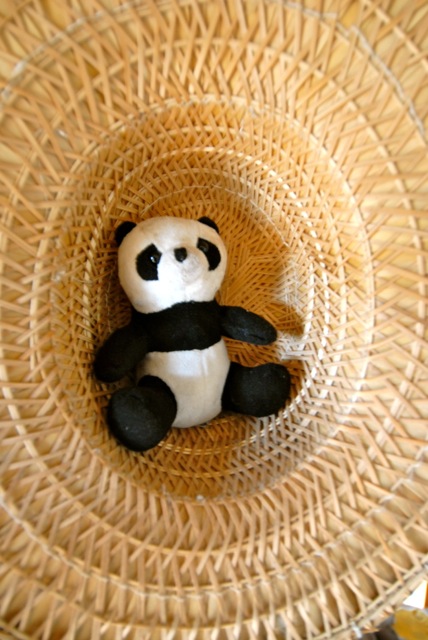
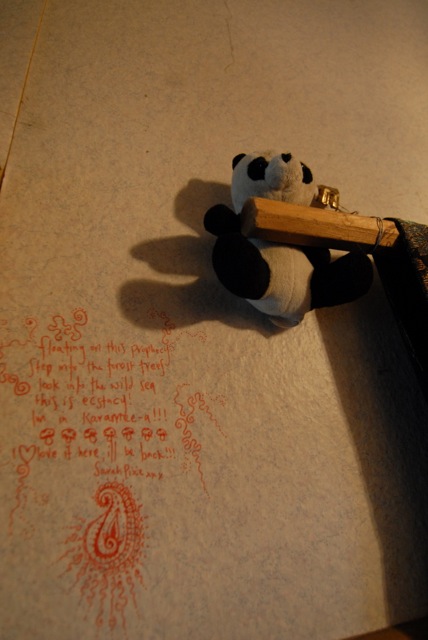
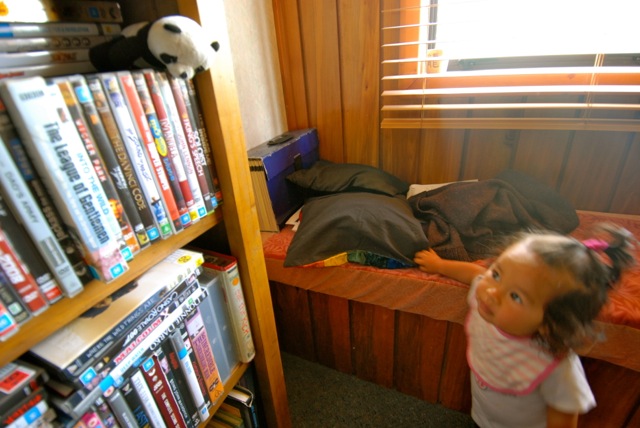
“Ba” means “Boo” in Japanese and “BaBear” is the name given to our daughter Diva’s little panda, which she received as a gift from a nice lady at the Novotel Hotel near Auckland Airport. We stayed there on the way to and from Australia on our recent trip to Adelaide.
Diva was given a choice of several soft toys and she chose BaBear.
Of all her toys; including Murphy, Cow, Tigger, Gooby, Twitty, HeffaLump, Roo, Wog and Thing, BaBear is by far and away her most favorite.

Gooby

Wog
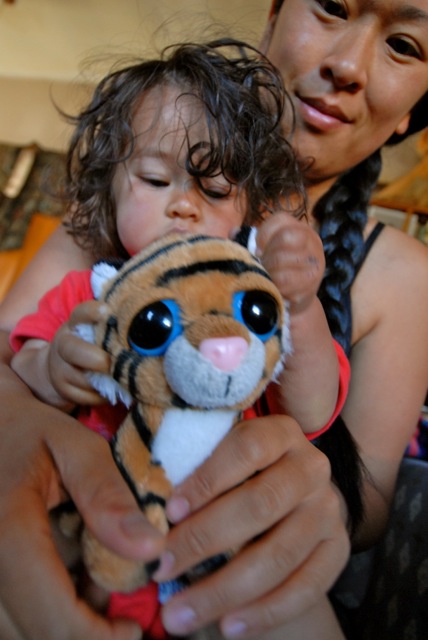
Tigger
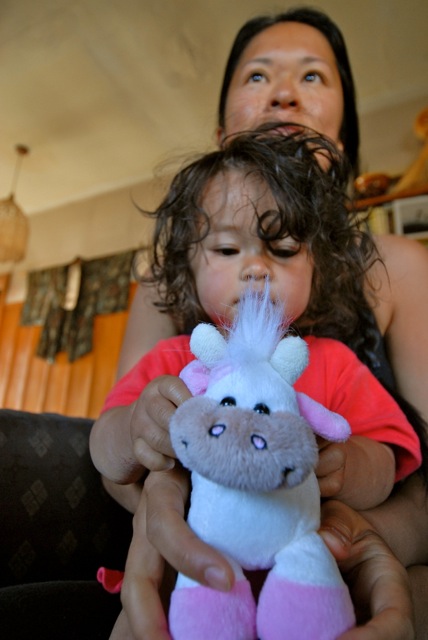
Cow
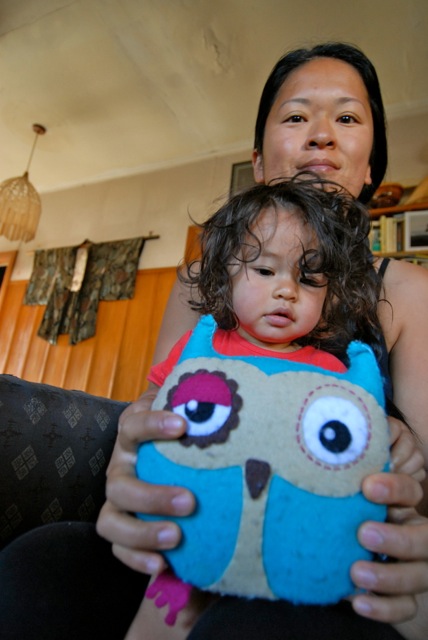
Twitty
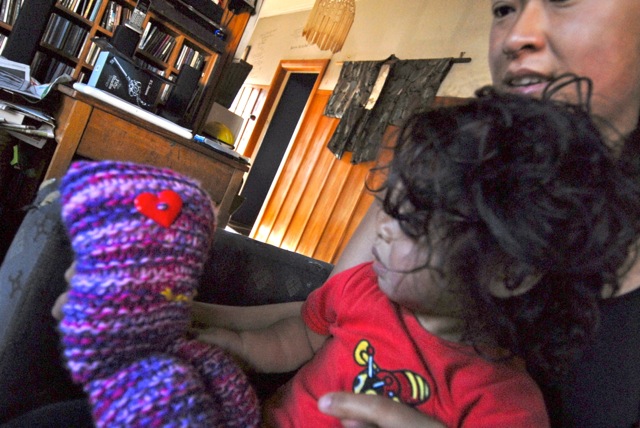
Thing

Roo

Murphy

HeffaLump
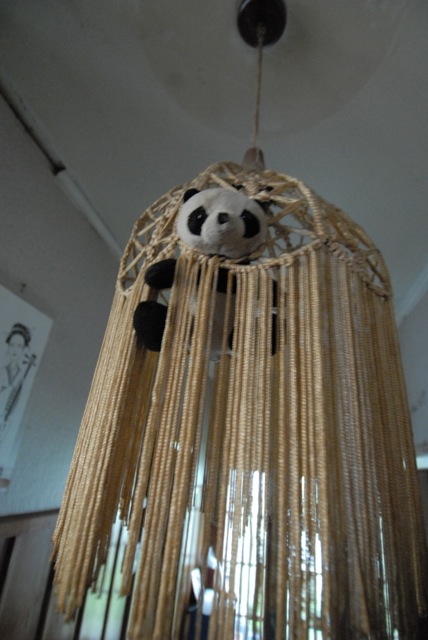
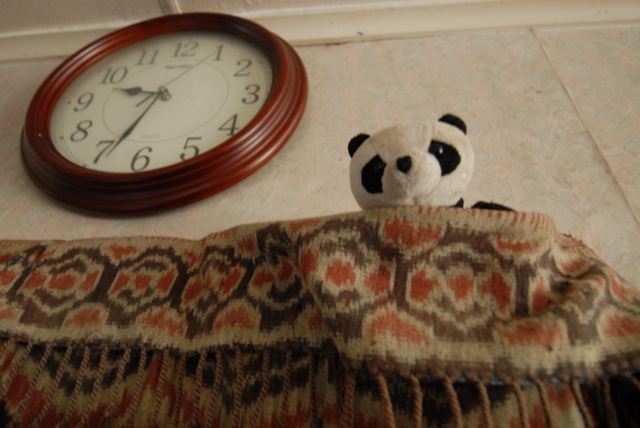
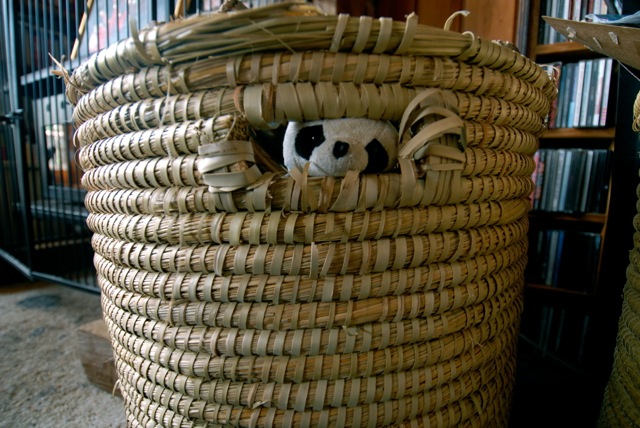
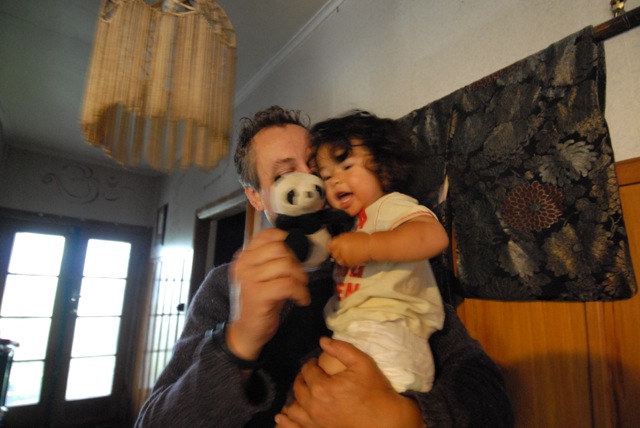
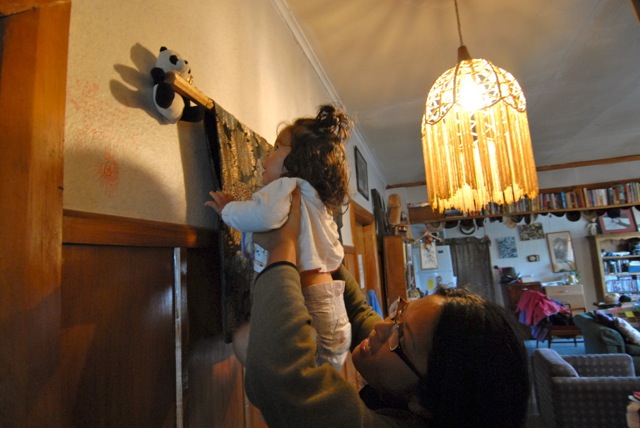
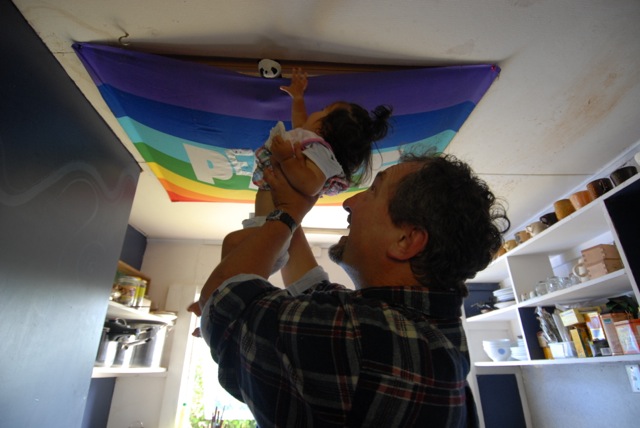
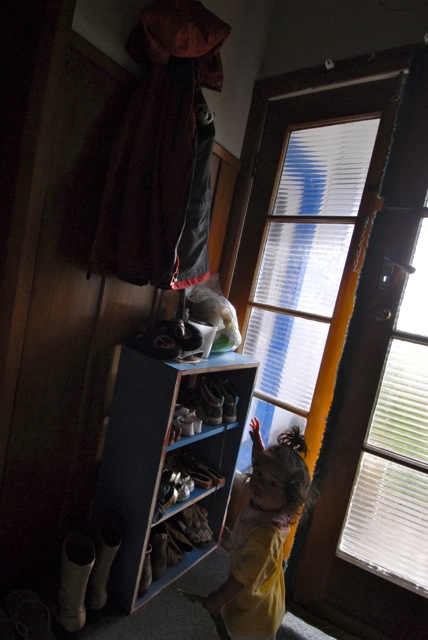
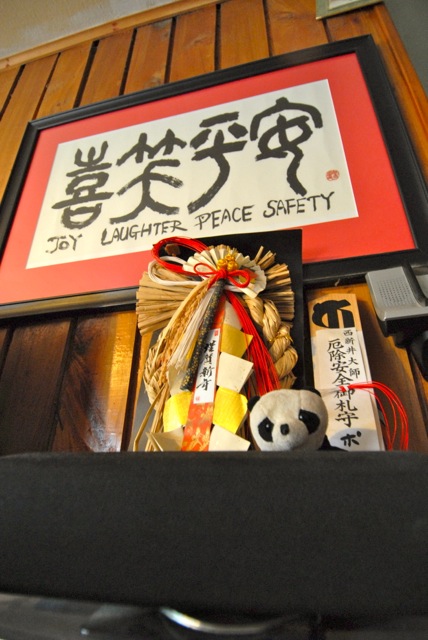
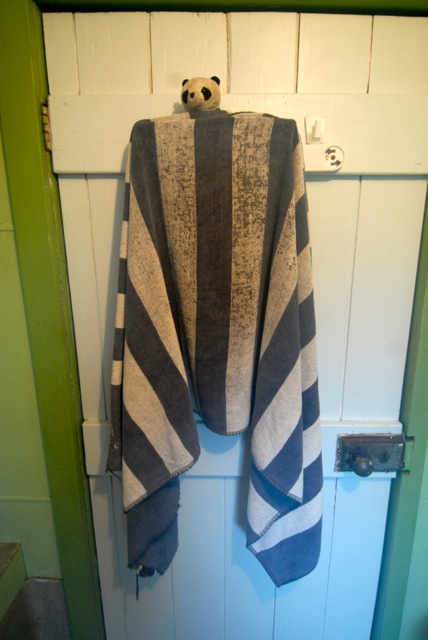
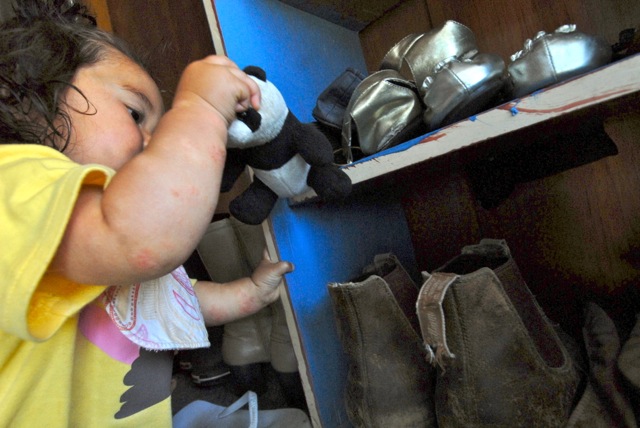
We have invented a game called “Where’s BaBear” in which we hide BaBear around the house and Diva looks for him and eventually finds him. She’s very good at this game and we have not yet managed to hide him successfully…she’s found him every time.


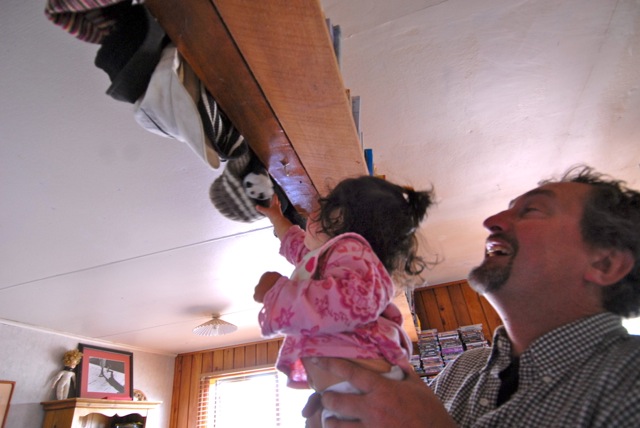
This was a difficult one…BaBear was hidden here by our friend Luke…but Diva found him in half an hour.

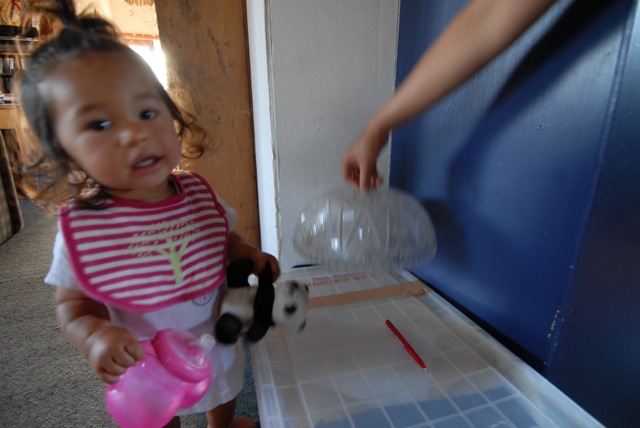





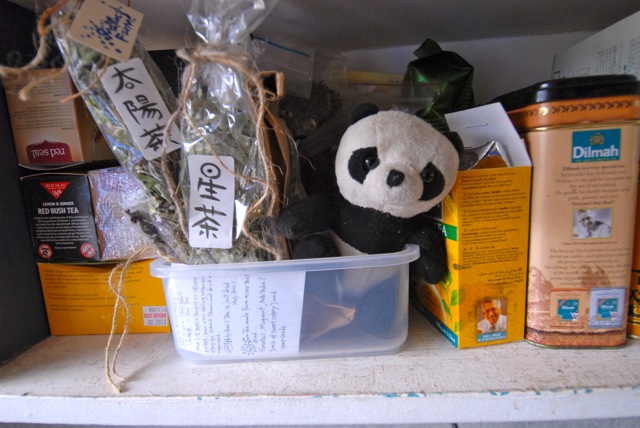
When she finds BaBear, she points and says “Ba.” We congratulate her for being so clever and then help her to retrieve him. She always grabs him and looks at him as if to say, “What on Earth were you doing in there you naughty BaBear!”
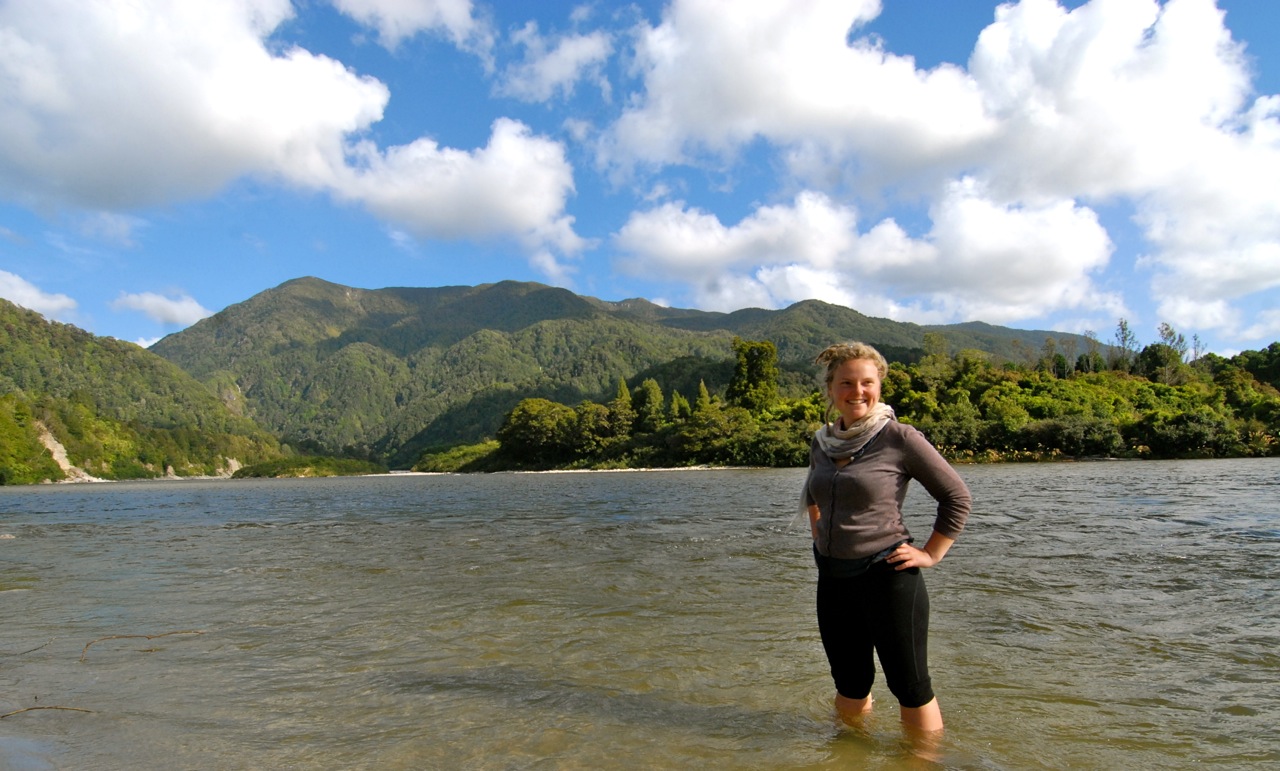
The LivinginPeace Project welcomes Belgian student Elena Gilis, who is studying Human Ecology at the College of the Atlantic (CoA) in Maine, USA, and has joined us as an intern from January 3 to March 15, 2013.
CoA states on its Web site that the college “is for idealists with elbow grease, for people who see the world as a complex, interconnected place. It’s for people who want to make the world a better place.”
Elena sees her studies in Human Ecology as holistic preparation for herself to eventually tackle some of the challenges facing humans today and into the future. “Human Ecology is a multi-discipinary course that covers a range of subjects including; art, science, history and also love and ethics…it’s a broad subject, but there are so many things to fix in this world and everything is interconnected” she said.
She chose to study at the CoA as the university is innovative, and progressive and has a flexible curriculum and an alternative approach to study. The programme is very open and free and it enables the students to take charge of their own learning. “I realised that my education is up to me, I am responsible for my studies and whatever I derive from it and the University of the Atlantic has the flexibility that enables me to design my own educational destiny,” she said.
Studying in the United States is legendarily expensive, but Elena was fortunate to be selected as a scholarship student, half of her school fees are met by a benevolent donor and the other half is paid by the school, which benefits from having international students like Elena and the fresh perspectives they bring from their respective backgrounds.
The university has only 400 students, so class sizes are small, much of the alternative curriculum is assessed on course work and student reports, there are no exams in the human ecology major and field work is encouraged. So Elena began looking for a suitable place to further her practical knowledge and experience and decided to travel to Karamea on the West Coast of the South Island of New Zealand.
She discovered the LivinginPeace Project, which incorporates, art, travel, permaculture and education into a sustainable business, and determined that the venture incorporated many of her areas of interest. “I was searching for a project that involved community, one that was not just working on a farm…the LivinginPeace Project is human ecology in action,” she said.
The LivinginPeace Project team welcome Elena and look forward to both working with her and learning from her.
Elena’s LivinginPeace Project Internship Objectives:
Interning at the LivingInPeace project, I expect to assist in running the business, taking on diverse responsibilities — staff coordination, financial management, interior decoration, tour guiding and organizing — and assist the business in its pursuit for sustainability. I will also be working on the farm and some work at the hotel (such as preparing meals, greeting guests, etc…)
Learning objectives in brief
Elena has also studied on scholarship at the United World College in Costa Rica and speaks fluent German, French, Spanish, English and is competent in Dutch. We are very fortunate to have Elena with us for the next six weeks and look forward to her input, ideas, innovations and initiatives on how to improve our operation, make it more energy efficient, environmentally responsible and socially harmonious and hope Elena will in return pick up some good ideas she can implement elsewhere on her life adventure.

Elena Gilis (left) with the Rongolians in the jungle

Human ecology is the subdiscipline of ecology that focuses on humans. More broadly, it is an interdisciplinary andtransdisciplinary study of the relationship between humans and their natural, social, and built environments. The term ‘human ecology’ appeared in a 1907 work on sanitary practices in the home and surrounding environments. The term also appeared in a sociological study in 1921 and at times has been equated with geography. The scientific philosophy of human ecology has a diffuse history with advancements in geography, sociology, psychology, anthropology, zoology,family and consumer science, and natural ecology.
A less formal history of ecology can be traced to the Greeks and a lengthy list of developments in natural history science. Ecology also has notably developed in other cultures. Traditional knowledge, as it is called, includes the human propensity for intuitive knowledge, intelligent relations, understanding, and for passing on information about the natural world and the human experience. The term ecology was coined by Ernst Haeckel in 1866 and defined by direct reference to the economy of nature.
Like other contemporary researchers of his time, Haeckel adopted his terminology from Carl Linnaeus where human ecological connections were more evident. In his 1749 publication, Specimen academicum de oeconomia naturae, Linnaeus developed a science that included the economy and polis of nature. Polis stems from its Greek roots for a political community (originally based on the city-states), sharing its roots with the word police in reference to the promotion of growth and maintenance of good social order in a community. Linnaeus was also the first to write about the close affinity between humans and primates. Linnaeus presented early ideas found in modern aspects to human ecology, including the balance of nature while highlighting the importance of ecological functions (ecosystem services or natural capital in modern terms): “In exchange for performing its function satisfactorily, nature provided a species with the necessaries of life” The work of Linnaeus influenced Charles Darwin and other scientists of his time who used Linnaeus’ terminology (i.e., the economy and polis of nature) with direct implications on matters of human affairs, ecology, and economics.
An early and influential social scientist in the history of human ecology was Herbert Spencer. Spencer was influenced by and reciprocated his influence onto the works of Charles Darwin. Herbert Spencer coined the phrase survival of the fittest, he was an early founder of sociology where he developed the idea of society as an organism, and he created an early precedent for the socio-ecological approach that was the subsequent aim and link between sociology and human ecology.[3][16][17]
Human ecology is the discipline that inquires into the patterns and process of interaction of humans with their environments. Human values, wealth, life-styles, resource use, and waste, etc. must affect and be affected by the physical and biotic environments along urban-rural gradients. The nature of these interactions is a legitimate ecological research topic and one of increasing importance.
Ecology is not just biological, but a human science as well. American chemist and founder of the field of home economicsEllen Swallow Richards is credited with bringing the term “ecology” into English-language use, first introducing the term as “oekology” in 1892, and subsequently developing the term “human ecology.” The term “human ecology” was published in Richard’s 1907 work “Sanitation in Daily Life”, defined as “the study of the surroundings of human beings in the effects they produce in the lives of men.” Richard’s use of the term recognized humans as part of rather than separate from nature.
The term “Human ecology” made its first formal appearance in sociological works in a sociological study in 1921.However, the history of human ecology has strong roots in geography and sociobiology departments of the late 19th century. In this context a major historical development or landmark that stimulated research into the ecological relations between humans and their urban environments was founded in George Perkins Marsh‘s book “Man and Nature; or, physical geography as modified by human action“, which was published in 1864. Marsh was interested in the active agency of human-nature interactions (an early precursor to urban ecology or human niche construction) in frequent reference to the economy of nature.
In 1894, an influential sociologist at the University of Chicago named Albion W. Small, collaborated with sociologist George E. Vincent and published a “‘‘laboratory guide’’ to studying people in their ‘‘every-day occupations.’’” This was a guidebook that trained students of sociology how they could study society in a way that a natural historian would study birds. Their publication “explicitly included the relation of the social world to the material environment.” Robert E. Park and Ernest W. Burgess(also from the sociology department at the University of Chicago) published a 1921 book on “Introduction to the Science of Sociology” where the term human ecology was used. Their student, Roderick D. McKenzie helped solidify human ecology as a sub-discipline within the Chicago school. These authors emphasized the difference between human ecology and ecology in general by highlighting cultural evolution in human societies.
Human ecology has a fragmented academic history with developments spread throughout a range of disciplines, including: home economics, geography, anthropology,sociology, zoology, and psychology. Some authors have argued that geography is human ecology. Much historical debate has hinged on the placement of humanity as part or as separate from nature. In light of the branching debate of what constitutes human ecology, recent interdisciplinary researchers have sought a unifying scientific field they have titled coupled human and natural systems that “builds on but moves beyond previous work (e.g., human ecology, ecological anthropology, environmental geography).” Other fields or branches related to the historical development of human ecology as a discipline include cultural ecology, urban ecology,environmental sociology, and anthropological ecology.
Biological ecologists have traditionally been reluctant to study human ecology gravitating instead to the allure of wild nature. Human ecology has a history of focusing attention on humans’ impact on the biotic world. Paul Sears was an early proponent of applying human ecology, addressing topics aimed at the population explosion of humanity, global resource limits, pollution, and published a comprehensive account on human ecology as a discipline in 1954. He saw the vast “explosion” of problems humans were creating for the environment and reminded us that “what is important is the work to be done rather than the label.” “When we as a profession learn to diagnose the total landscape, not only as the basis of our culture, but as an expression of it, and to share our special knowledge as widely as we can, we need not fear that our work will be ignored or that our efforts will be unappreciated.”
Human ecology has been defined as a type of analysis applied to the relations in human beings that was traditionally applied to plants and animals in ecology. Toward this aim, human ecologists (or sociologists) integrate diverse perspectives from a broad spectrum of disciplines covering “wider points of view.” In its 1972 premier edition, the editors of Human Ecology: An Interdisciplinary Journal gave an introductory statement on the scope of topics in human ecology. Their statement provides a broad overview on the interdisciplinary nature of the topic:
Forty years later in the same journal, Daniel G. Bates (2012) notes lines of continuity in the discipline and the way it has changed:
Today there is greater emphasis on the problems facing individuals and how actors deal with them with the consequence that there is much more attention to decision-making at the individual level as people strategize and optimize risk, costs and benefits within specific contexts. Rather than attempting to formulate a cultural ecology or even a specifically “human ecology” model, researchers more often draw on demographic, economic and evolutionary theory as well as upon models derived from field ecology.
While theoretical discussions continue, research published in Human Ecology Review suggests that recent discourse has shifted toward applying principles of human ecology. Some of these applications focus instead on addressing problems that cross disciplinary boundaries or transcend those boundaries altogether. Scholarship has increasingly tended away from Gerald L. Young‘s idea of a “unified theory” of human ecological knowledge—that human ecology may emerge as its own discipline—and more toward the pluralism best espoused by Paul Shepard: that human ecology is healthiest when “running out in all directions.”. But human ecology is neither anti-discipline nor anti-theory, rather it is the ongoing attempt to formulate, synthesize, and apply theory to bridge the widening schism between man and nature. This new human ecology emphasizes complexity over reductionism, focuses on changes over stable states, and expands ecological concepts beyond plants and animals to include people.
In addition to its links to other disciplines, human ecology has a strong historical linkage to the field of home economics through the work of Ellen Swallow Richards, among others. However, as early as the 1960’s, a number of universities began to rename “home economics” departments, schools, and colleges as “human ecology” programs. In part, this name change was a response to perceived difficulties with the term “home economics” in a modernizing society, and reflects a recognition of “human ecology” as one of the initial choices for the discipline which was to become “home economics”. Current Human Ecology programs include Cornell University College of Human Ecology and the University of Alberta’s Department of Human Ecology, among others.
Perhaps the most important implication involves our view of human society. Homo sapiens is not an external disturbance, it is a keystone species within the system. In the long term, it may not be the magnitude of extracted goods and services that will determine sustainability. It may well be our disruption of ecological recovery and stability mechanisms that determines system collapse.
Changes to the Earth by human activities have been so great that a new geological epoch named the Anthropocene has been proposed. The human niche or ecological polis of human society, as it was known historically, has created entirely new arrangements of ecosystems as we convert matter into technology. Human ecology has created anthropogenic biomes (called anthromes). The habitats within these anthromes reach out through our road networks to create what has been called technoecosystems containing technosols. Technodiversity exists within these technoecosystems. In direct parallel to the concept of the ecosphere, human civilization has also created a technosphere. The way that the human species engineers or constructs technodiversity into the environment, threads back into the processes of cultural and biological evolution, including the human economy.

The ecosystems of planet Earth are coupled to human environments. Ecosystems regulate the global geophysical cycles of energy, climate, soil nutrients, and water that in turn support and grow natural capital (including the environmental, physiological, cognitive, cultural, and spiritual dimensions of life). Ultimately, every manufactured product in human environments comes from natural systems. Ecosystems are considered common-pool resources because ecosystems do not exclude beneficiaries and they can be depleted or degraded. For example, green space within communities provides sustainable health services that reduces mortality and regulates the spread of vector borne disease. Research shows that people who are more engaged with regular access to natural areas have lower rates of diabetes, heart disease and psychological disorders. These ecological health services are regularly depleted through urban development projects that do not factor in the common-pool value of ecosystems.
The ecological commons delivers a diverse supply of community services that sustains the well-being of human society. The Millennium Ecosystem Assessment, an international UN initiative involving more than 1,360 experts worldwide, identifies four main ecosystem service types having 30 sub-categories stemming from natural capital. The ecological commons includes provisioning (e.g., food, raw materials, medicine, water supplies), regulating (e.g., climate, water, soil retention, flood retention), cultural (e.g., science and education, artistic, spiritual), and supporting (e.g., soil formation, nutrient cycling, water cycling) services.
Policy and human institutions should rarely assume that human enterprise is benign. A safer assumption holds that human enterprise almost always exacts an ecological toll – a debit taken from the ecological commons.
“Human activities are associated directly or indirectly with nearly every aspect of the current extinction spasm.”
Nature is a resilient system. Ecosystems regenerate, withstand, and are forever adapting to fluctuating environments. Ecological resilience is an important conceptual framework in conservation management and it is defined as the preservation of biological relations in ecosystems that persevere and regenerate in response to disturbance over time. However, persistent, systematic, large and nonrandom disturbance caused by the niche constructing behavior of human beings, habitat conversion and land development, has pushed many of the Earth’s ecosystems to the extent of their resilient thresholds. Three planetary thresholds have already been crossed, including 1) biodiversity loss, 2) climate change, and 3) nitrogen cycles. These biophysical systems are ecologically interrelated and naturally resilient, but human civilization has transitioned the planet to an Anthropocene epoch, where the threshold for planetary scale resilience has been crossed and the ecological state of the Earth is deteriorating rapidly to the detriment of humanity. The world’s fisheries and oceans, for example, are facing dire challenges as the threat of global collapse appears imminent, with serious ramifications for the well-being of humanity; while the Anthropocene is yet to be classified as an official epoch, current evidence suggest that “an epoch-scale boundary has been crossed within the last two centuries.” The ecology of the planet is further threatened by global warming, but investments in nature conservation can provide a regulatory feedback to store and regulate carbon and other greenhouse gases.
In 1992, William Rees developed the ecological footprint concept. The ecological footprint and its close analog the water footprint has become a popular way of accounting for the level of impact that human society is imparting on the Earth’s ecosystems. All indications are that the human enterprise is unsustainable as the footprint of society is placing too much stress on the ecology of the planet. The WWF 2008 living planet report and other researchers report that human civilization has exceeded the bio-regenerative capacity of the planet. This means that the footprint of human consumption is extracting more natural resources than can be replenished by ecosystems around the world.
Ecological economics is an economic science that extends its methods of valuation onto nature in an effort to address the inequity between market growth and biodiversity loss. Natural capital is the stock of materials or information stored in biodiversity that generates services that can enhance the welfare of communities. Population losses are the more sensitive indicator of natural capital than are species extinction in the accounting of ecosystem services. The prospect for recovery in the economic crisis of nature is grim. Populations, such as local ponds and patches of forest are being cleared away and lost at rates that exceed species extinctions. The mainstream growth-based economic system adopted by governments worldwide does not include a price or markets for natural capital. This type of economic system places further ecological debt onto future generations.
Many human-nature interactions occur indirectly due to the production and use of human-made (manufactured and synthesized) products, such as electronic appliances, furniture, plastics, airplanes, and automobiles. These products insulate humans from the natural environment, leading them to perceive less dependence on natural systems than is the case, but all manufactured products ultimately come from natural systems.
Human societies are increasingly being placed under stress as the ecological commons is diminished through an accounting system that has incorrectly assumed “… that nature is a fixed, indestructible capital asset.” The current wave of threats, including massive extinction rates and concurrent loss of natural capital to the detriment of human society, is happening rapidly. This is called a biodiversity crisis, because 50% of the worlds species are predicted to go extinct within the next 50 years. Conventional monetary analyses are unable to detect or deal with these sorts of ecological problems. Multiple global ecological economic initiatives are being promoted to solve this problem. For example, governments of the G8 met in 2007 and set forth The Economics of Ecosystems and Biodiversity (TEEB) initiative:
In a global study we will initiate the process of analyzing the global economic benefit of biological diversity, the costs of the loss of biodiversity and the failure to take protective measures versus the costs of effective conservation.
The work of Kenneth E. Boulding is notable for building on the integration between ecology and its economic origins. Boulding drew parallels between ecology and economics, most generally in that they are both studies of individuals as members of a system, and indicated that the “household of man” and the “household of nature” could somehow be integrated to create a perspective of greater value.
Human ecology may be defined: (1) from a bio-ecological standpoint as the study of man as the ecological dominant in plant and animal communities and systems; (2) from a bio-ecological standpoint as simply another animal affecting and being affected by his physical environment; and (3) as a human being, somehow different from animal life in general, interacting with physical and modified environments in a distinctive and creative way. A truly interdisciplinary human ecology will most likely address itself to all three.
Human ecology expands functionalism from ecology to the human mind. People’s perception of a complex world is a function of their ability to be able to comprehend beyond the immediate, both in time and in space. This concept manifested in the popular slogan promoting sustainability: “think global, act local.” Moreover, people’s conception of community stems from not only their physical location but their mental and emotional connections and varies from “community as place, community as way of life, or community of collective action.”
In these early years, human ecology was still deeply enmeshed in its respective disciplines: geography, sociology,anthropology, psychology, and economics. Scholars through the 1970s until present have called for a greater integration between all of the scattered disciplines that has each established formal ecological research.
While some of the early writers considered how art fit into a human ecology, it was Sears who posed the idea that in the long run human ecology will in fact look more like art. Bill Carpenter (1986) calls human ecology the “possibility of an aesthetic science,” renewing dialogue about how art fits into a human ecological perspective. According to Carpenter, human ecology as an aesthetic science counters the disciplinary fragmentation of knowledge by examining human consciousness.
While the reputation of human ecology in institutions of higher learning is growing, there is no human ecology at the primary and secondary education levels. Educational theorist Sir Kenneth Robinson has called for diversification of education to promote creativity in academic and non-academic (i.e.- educate their “whole being”) activities to implement a “new conception of human ecology”.
The WordPress.com stats helper monkeys prepared a 2012 annual report for this blog.

Here’s an excerpt:
19,000 people fit into the new Barclays Center to see Jay-Z perform. This blog was viewed about 59,000 times in 2012. If it were a concert at the Barclays Center, it would take about 3 sold-out performances for that many people to see it.
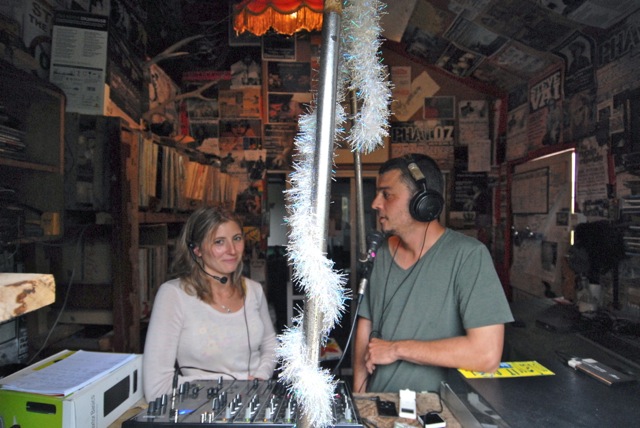
DJ Stephanie Owens interviews the Rongo wwoofing team (The Rongolians) live on Karamea Radio 107.5 FM on December 17, 2012.
The Rongolians candidly discuss their respective lives, passions, travel experiences, sexual persuasions, gender and personal philosophies.
Karamea Radio is broadcast from Rongo Backpackers & Gallery, which is part of the LivinginPeace Project.


Rongo Backpackers & Gallery: http://www.rongobackpackers.com

LivinginPeace Project: http://www.livinginpeace.com

























 The Rongolian Star

Where’s that Naughty BaBear?
Off the Top of My Head
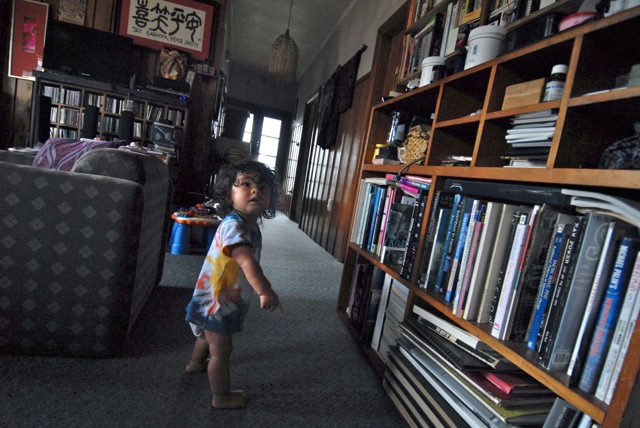
By Paul MurrayOur daughter Diva loves the BaBear game we invented…we hide BaBear around the house and she hunts him down and brings him back to us….we’re basically training her to be a hunter and gatherer.
Diva is really very good at this game and we are running out of hiding places for BaBear…perhaps we’ll take him on holiday…or start hiding him in the garden as the summer weather is so nice here in Sunny Karamea…here are some photos of the BaBear game…I guess we could put Diva in front of the TV to keep her entertained…but where’s the fun in that?
Rate this: