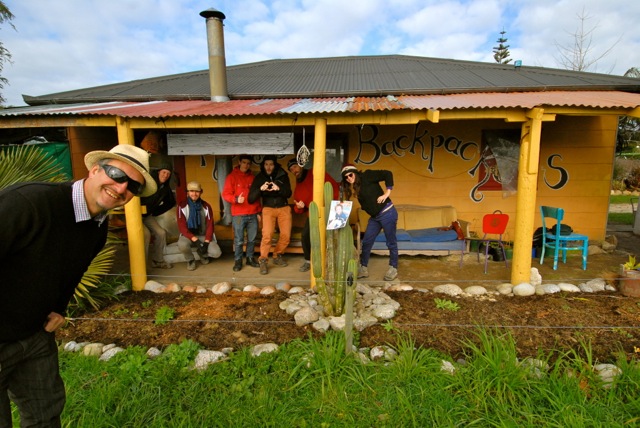
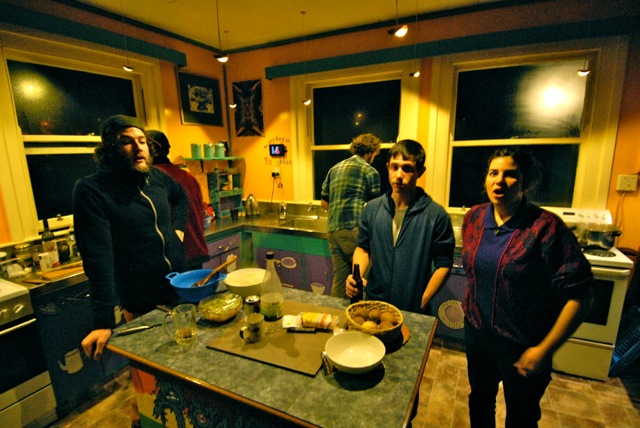
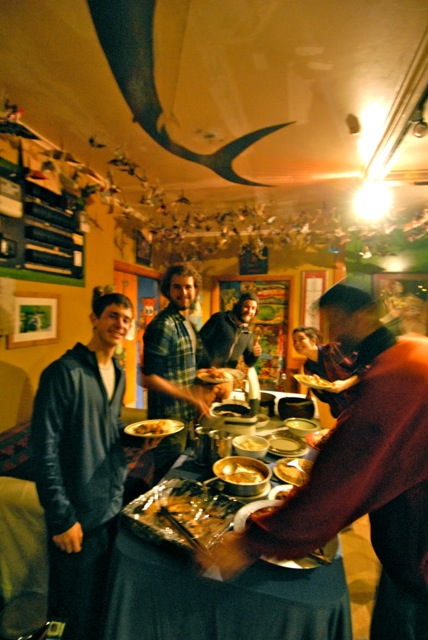
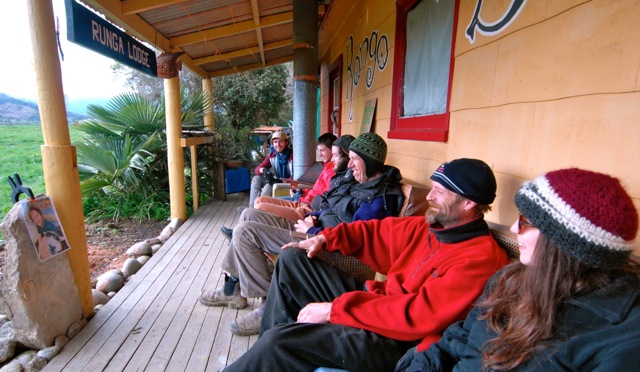
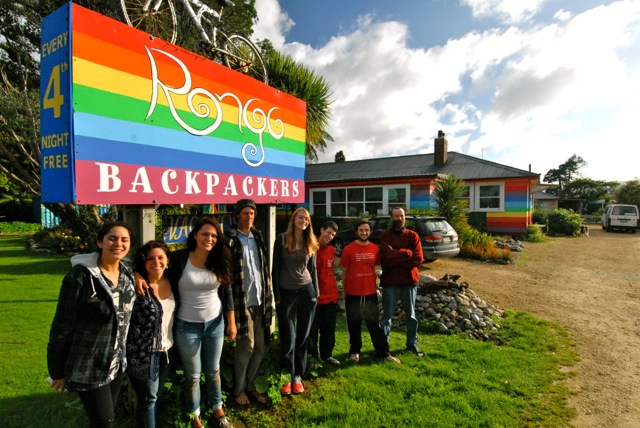
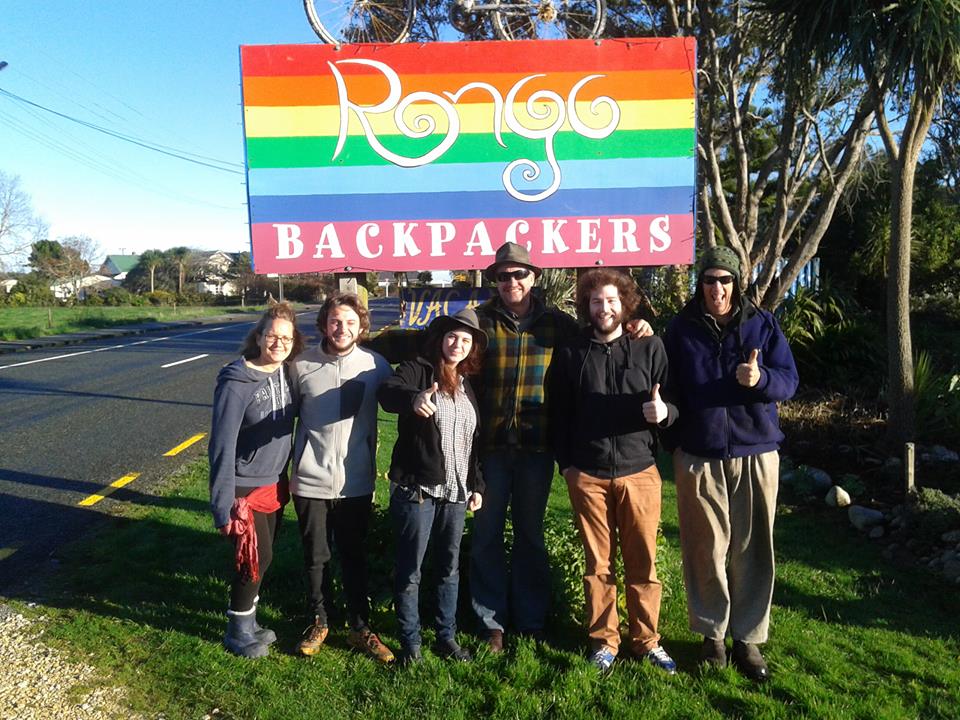
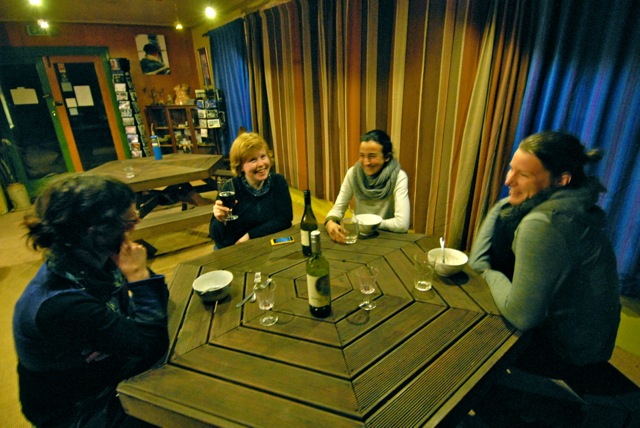
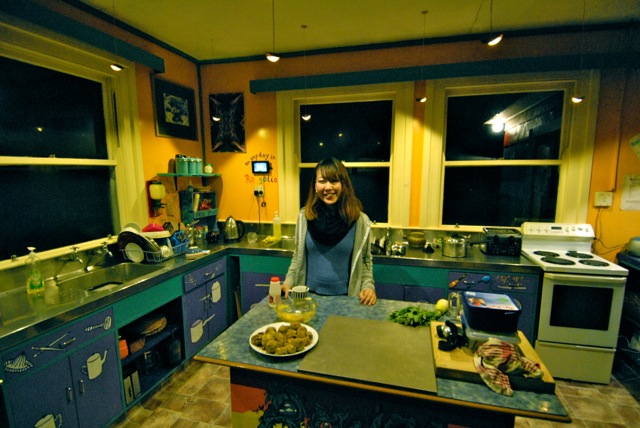
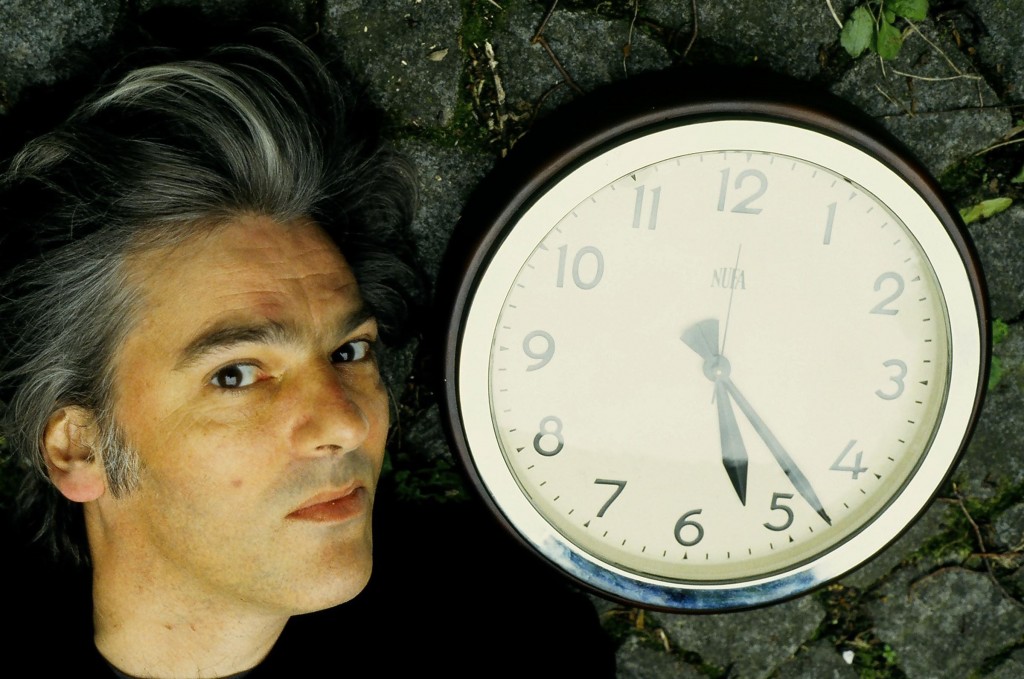
Rongo Backpackers & Gallery in Karamea at the top of the West Coast of the South Island of New Zealand has just reduced its lighting power consumption by over 85% by installing LED lighting.
The hostel, which is in perhaps the most remote location of any accommodation facility on mainland New Zealand, is part of the LivingInPeace Project, a venture that strives for sustainability, environmental responsibility and energy efficiency.
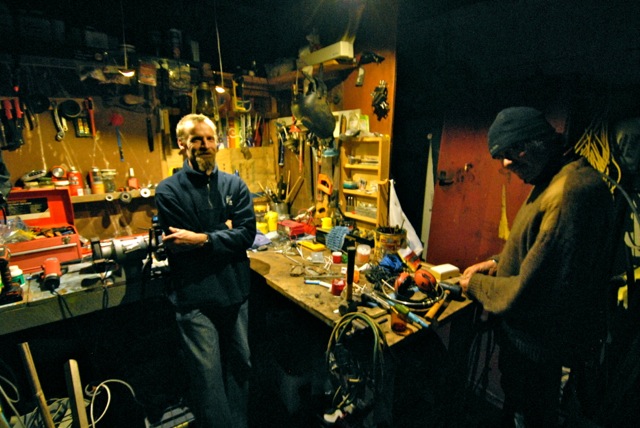
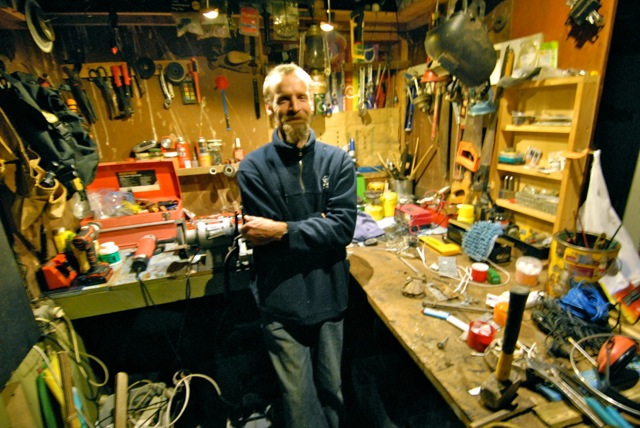
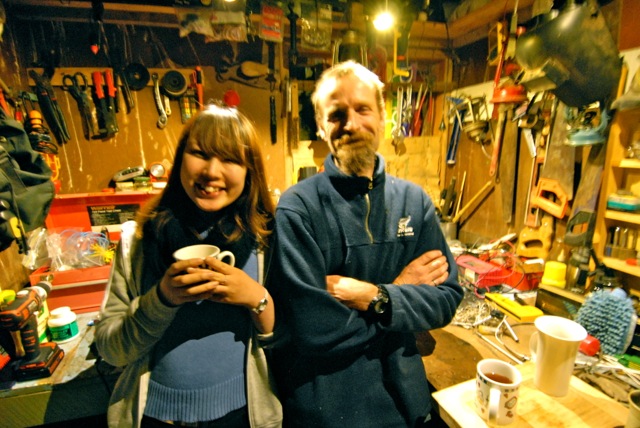
Peter Jenkins, a LED (Light Emitting Diode) lighting technician, who is also a metal and plastics engineer, a builder, artist and permaculturalist, came to Karamea to do the work and to introduce the new lighting technology to the hostel.
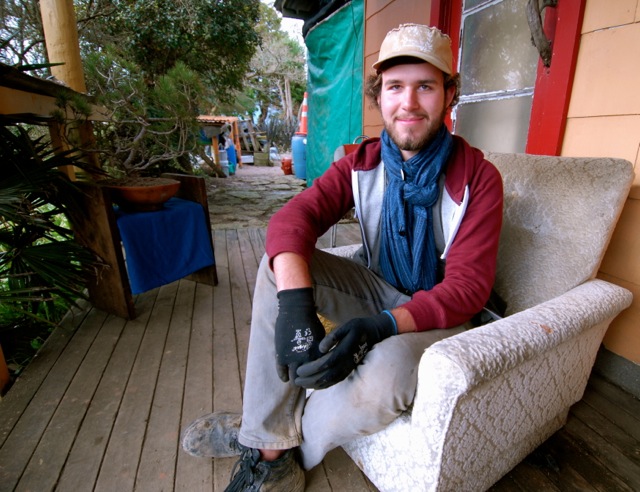
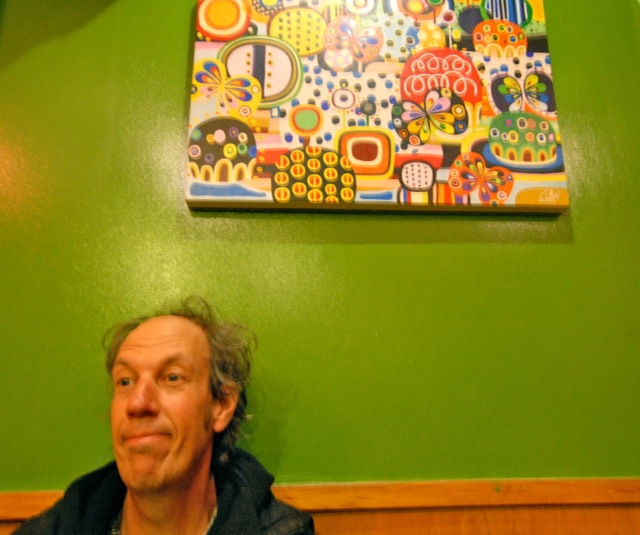
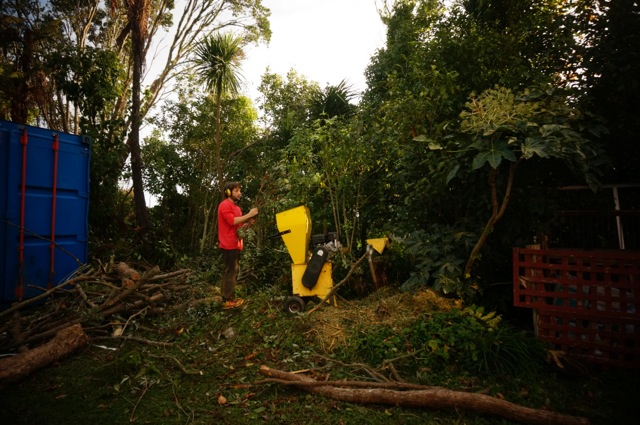
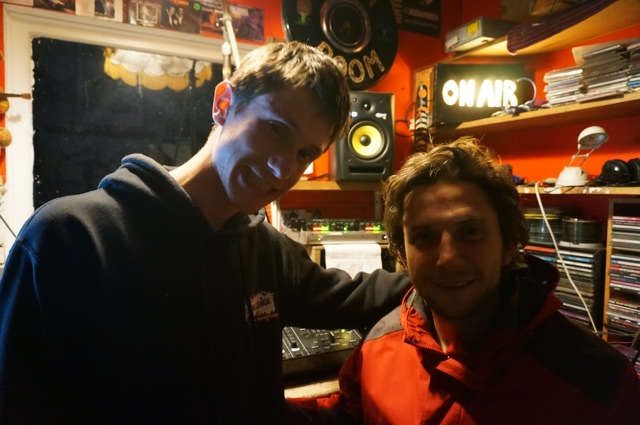
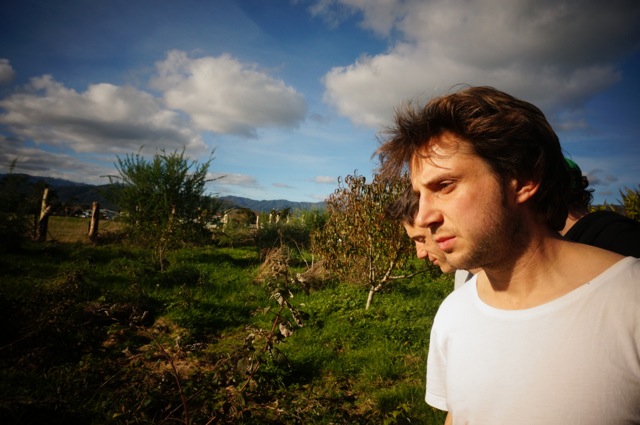
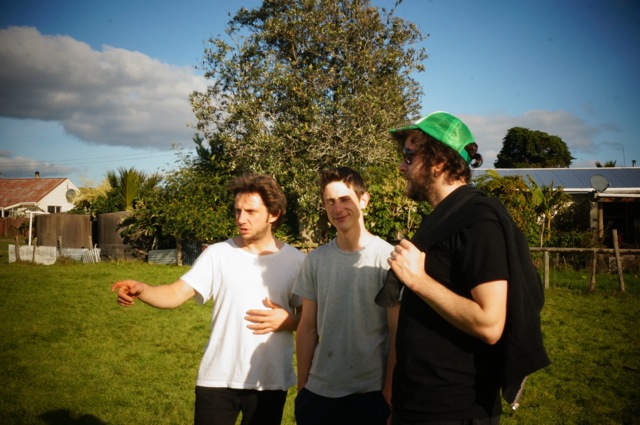
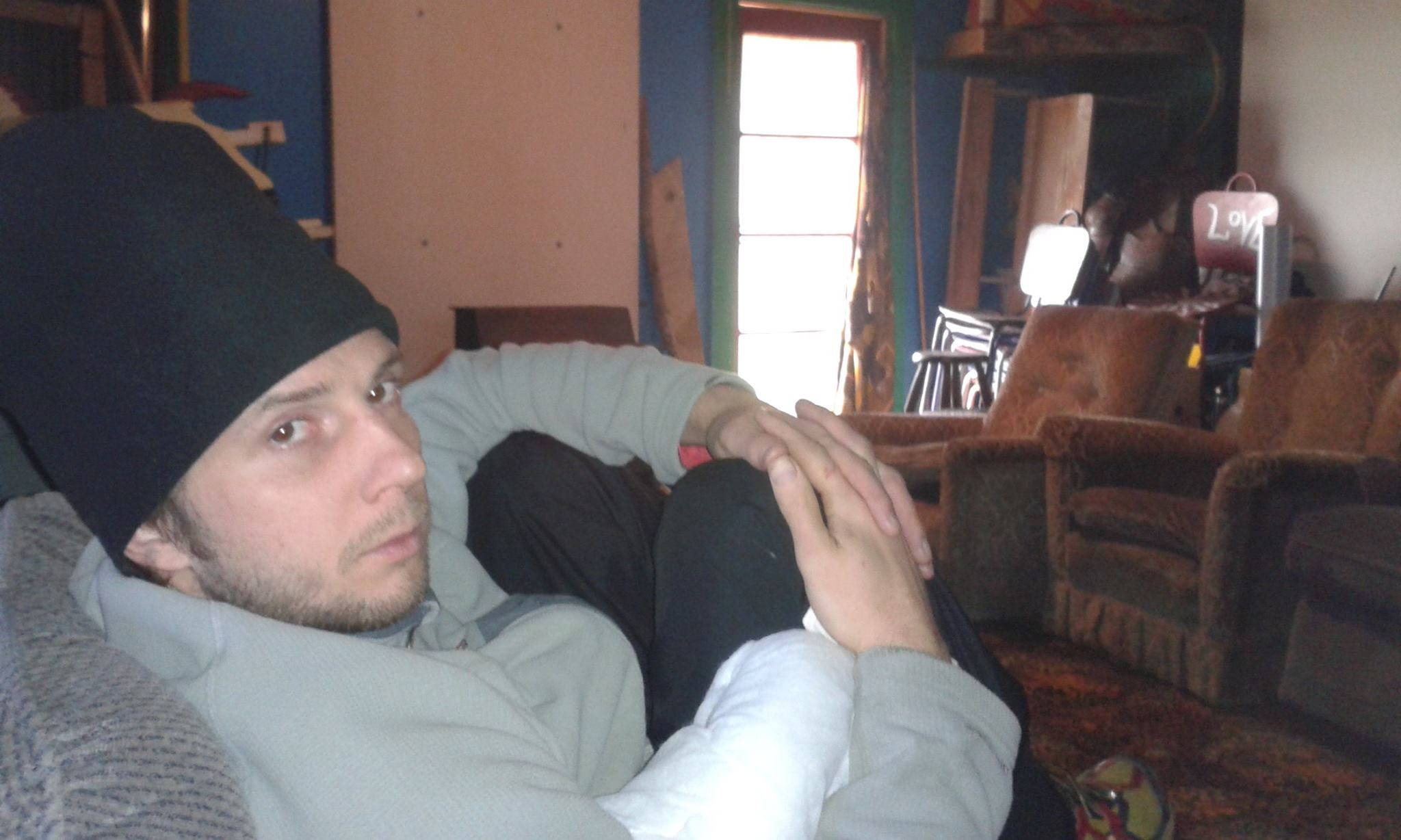
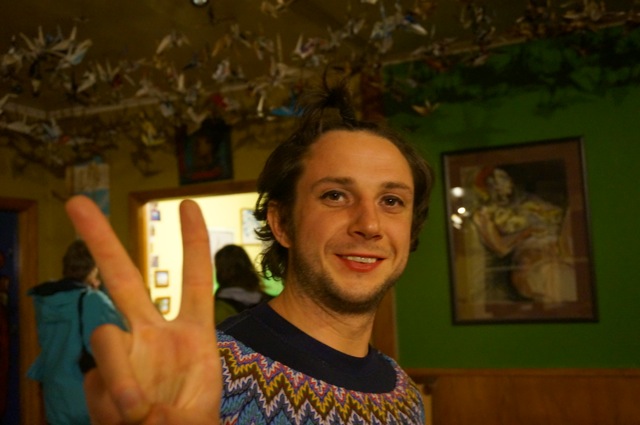
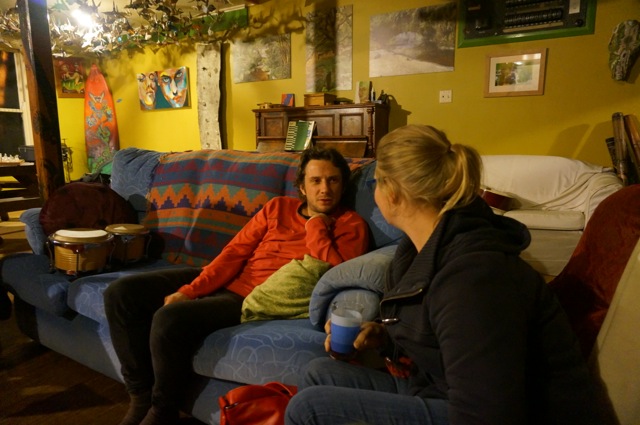
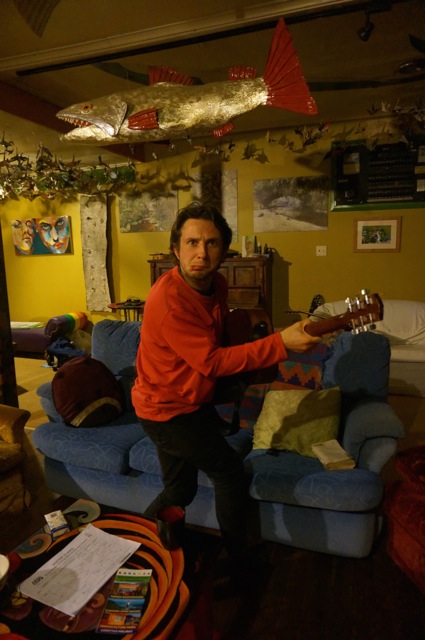
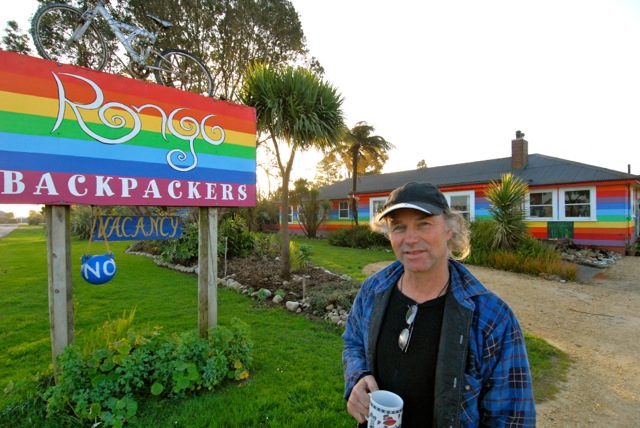
LED lighting technician Peter Jenkins at Rongo Backpackers & Gallery.
The remoteness of the hostel makes the need for energy efficiency and the effective management of resources critical to the business success of the venture as essential services like electricity are more expensive in Karamea than more populated urban regions of New Zealand. For example, power in Karamea is 5c/KWH more expensive than in Christchurch. So as the owner of the hostel, I am always looking for ways to mitigate the operating cost the business and improve its efficiency.
Karamea is also subjected to power surges and electrical storms that can damage lighting, electrical appliances, computer modems, phone lines etc. The expense of replacing light bulbs damaged by the fluctuating power supply is a significant business cost and also contributes to the production of unnecessary waste and mercury contamination associated with the disposal of spent light bulbs.
When I heard about Pete’s lighting system, I was very interested and wanted to learn more about how such technology could be applied to my business to save money, reduce the amount of waste we produce and improve the overall efficiency of the venture. I estimate the cost of installing lighting at the hostel will be completely recovered in two years and the ongoing cost of lighting the building will be a mere 15% of the previous traditional lighting system.
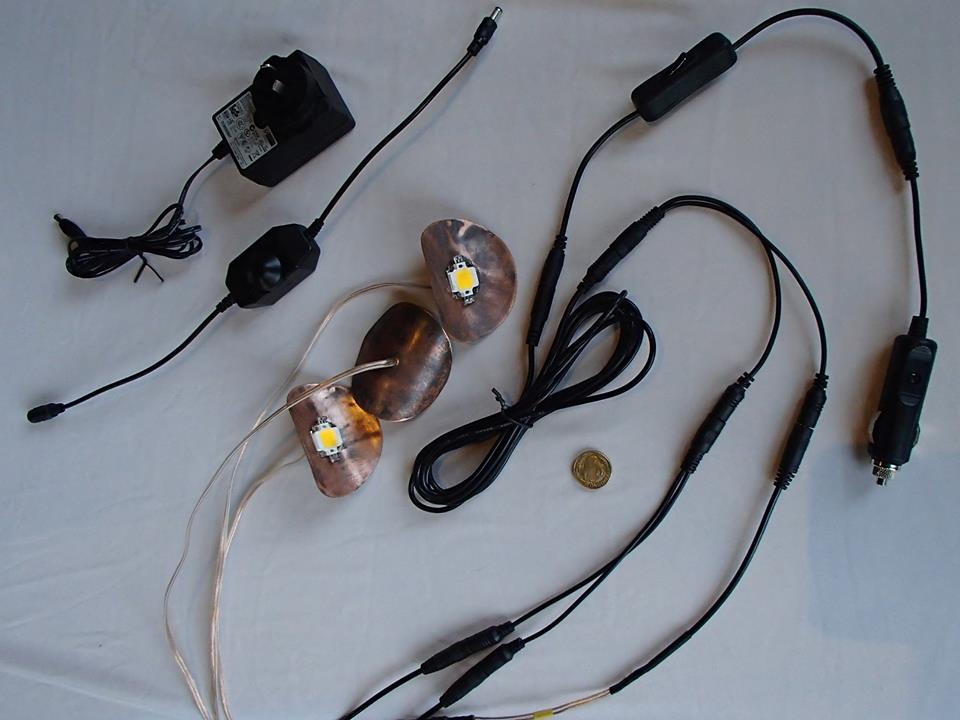
The efficiency of the low energy LED lights is enhanced by further reducing the 12 volt energy flow by adding a resister into the line. This increases the efficiency of the lighting by minimizing the power it requires and also extends the life expectancy of the LED by limiting the amount of energy running through the unit, which means the diodes will last between 100-200 years. The cost saving in not replacing light bulbs alone is significant. The system is also considerably safer than traditional 240 volt lighting.
Pete Jenkins Explains his LED Lighting System:
Pete’s partner Lisa makes creative lampshades from recycled copper that are then attached to the LEDs and soldered onto the wiring. The resultant light fitting then hangs from the ceiling where it is required; above kitchen benches, communal areas, illuminating artworks…wherever light is required.
This exciting new technology will revolutionize lighting, reduce energy consumption and the need for new power generation plants, reduce landfill, pollution, CO2 emissions, improve safety and provide a beautiful soft ambient lighting that is both fully functional and pleasant. It is also a short step from here to convert the building to solar power as the lighting system is 12 volt, which eliminates the need for a transformer and, because the power requirement is lower, it will also significantly reduce the cost of conversion to solar as less panels will need to be installed to power the lighting.
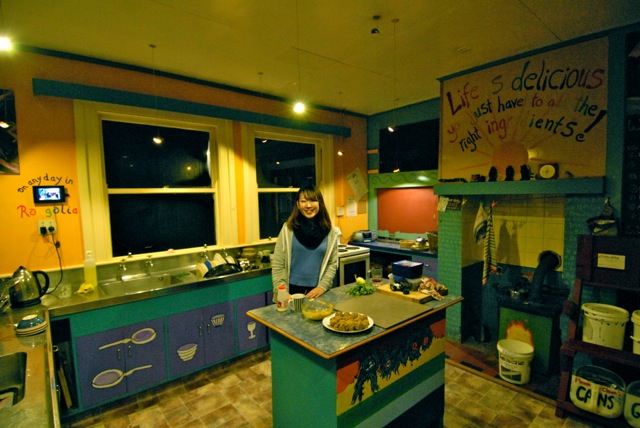
The initial plan was to add LED lighting to the living room and kitchen areas, however, the result was so pleasing that the rest of the building, including the tool shed, radio station, theatre, yoga room, courtyard and all guest and staff rooms was also converted.
I am extremely happy with the lighting system installed at Rongo Backpackers by Pete Jenkins and happily endorse his business Forever Lights and recommend his service to people looking to improve the efficiency of their homes and businesses and are keen to save money on their power bill, reduce their carbon footprint and be more environmentally responsible.
For more information or to discuss refitting your home or business with LED lights, contact Pete directly on 03-432-6162 or 027-595-0056 or join him on FaceBook or check out his Web site: http://foreverlights.nz
DJ Crap (Paul Murray) interviews Pete Jenkins, a LED light technician who recently refitted the lighting at Rongo Backpackers & Gallery, a hostel at the top of the West Coast of the South Island of New Zealand with energy saving LED lighting. The new lighting will reduce the energy cost of lighting the building by over 85%.
Pete talks about how he came to be involved with LED lighting, his home base in Oamaru, his Autumn Arena festival, permaculture and his life philosophy of refocussing his life away from consumerism and into a more sustainable way of living.
The Nuphoria Radio show is recorded in Tokyo, Japan by DJ Marcellus Nealy exclusively for Karamea Radio 107.5 FM, a small community radio station at Rongo Backpackers & Gallery in the township of Karamea at the top of the West Coast of the South Island of New Zealand.
The focus of the show is groove-based music and each week DJ Marcellus explores the art and science of the groove.
Here for the first time is the complete collection of Nuphoria radio shows for your listening pleasure…tune in and tell a friend.
For more information about Marcellus Nealy check out his Web sites:
DJ Echo and DJ Crap decided on a winter detox to cleanse their respective bodies of the toxins of summer excess…as part of this process, DJ Echo embarked on a mission to do an hour radio show with a cup of hot water each morning and featuring some of his favourite artists…tune in, turn up and rock out!
(DJ Echo and DJ Crap also did a show together to celebrate their newfound abstinence)
The symbiotic relationship between musicians and drugs is well known, but how about musicians who don’t use drugs to unlock their creativity? Do such people exist?
DJs Echo & Crap, who themselves are in the middle of an annual detox programme that stipulates temperance and have been abstaining from any form of legal or illegal stimulation for almost two weeks, decide to find out.
They managed to cobble together a radio show featuring the music of straight-edged artists that was slightly embellished with musicians who reformed their wild ways later in the careers and found sobriety.
Some surprises here…it turns out more musicians than immediately spring to mind have produced musical gems in a state of complete clearheadedness. Stay tuned for the much longer and possibly more interesting inebriates show where there are many more musical choices available.
Thanks for listening and you’re welcome.
From DJ Echo:
Now past the midway point of their collective alkalising detox, DJs Echo and Crap team up for a tribute to sobriety featuring the music of musicians who evidently never indulged in anything stronger than a beer or a cup of coffee (here’s looking at you Frank Zappa!) to the many who have reformed and cleaned up after earlier periods of constant intoxication or ‘worse’! Somehow managing to squeeze the Rolling Stones in the show was a high-point for DJ Echo (the Bill Wyman penned and sung ‘In Another Land’) whilst DJ Crap took listeners through a Tom Waits segment. Comparisons to their last collaboration two weeks back for Bob Dylan’s birthday where the two took more of a Keith Richards path to the palace of wisdom, this was more of a Ted Nugent inspired effort, albeit that there was no chance of that particular gun-happy Republican redneck’s music getting an airing.
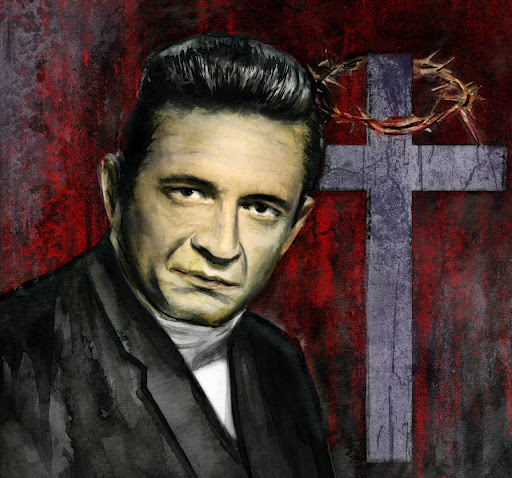
DJ Echo: The Detox Diaries #1: Johnny Cash: May 28, 2015
DJ Echo and DJ Crap wisely decided on a three-week detox after the excesses of their Bob Dylan collaboration. As part of the cleansing process, DJ Echo has embarked on a musical quest that will feature one artist per day for one hour in the morning…today it was Johnny Cash, tomorrow tune in at 8: 00 a.m. for the Nick Cave feature…presumably the music will become brighter as the toxins leave DJ Echo’s body over the course of the next 21 days…perhaps DJ Echo will transcend this world and achieve nirvana…anything is possible on Karamea Radio…stay tuned and thanks for listening.
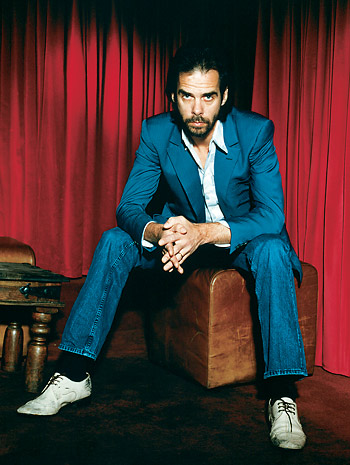
DJ Echo: The Detox Diaries #2: Nick Cave: May 28, 2015
Part 2 of DJ Echo’s on-going Detox Diaries series features the music of the legendary (round these parts at least) Nick Cave and the Bad Seeds. 60 minutes was only sufficient to scratch the surface of the man’s work, but a mix of well known songs (Nick Cave doesn’t really have ‘hits’ as such!) and obscurities gave a glimpse of his outlandish talent. Also included was a very brief weather and traffic report- this is breakfast radio after all. Tune in tomorrow for(most likely) an hour of Cat Power!
DJ Echo: The Detox Diaries #3: Cat Power: May 29, 2015
DJ Echo returns to the Radio Karamea studio for the 3rd instalment of the increasingly popular Detox Diaries. This episode features the original songs and interpretations of other people’s work by the uniquely talented Chan Marshall, better known as Cat Power. Covers of Dylan, Kiwi artist Peter Jefferies and the Rolling Stones sit alongside tracks from her own 20-year-and-counting canon of work. DJ Echo is headed for the hills over the weekend but will return energised and further detoxed early next week for Part 4 in the ongoing series. Possible contenders for that show include Matthew Houck, aka Phosphorescent but suggestions are welcomed from the local and global audience. Those watching closely will notice that the cover photos for these shows are remarkably similar, but each one will feature DJ Echo with a different cup, even if he’s wearing the same jumper every day. Thanks for listening!
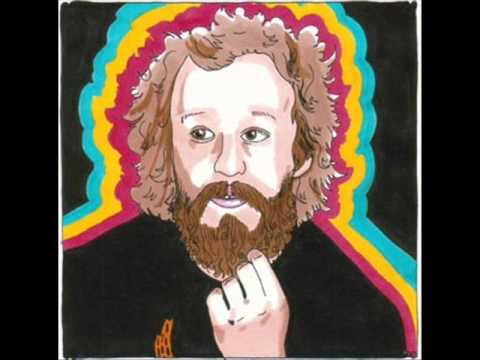
DJ Echo: The Detox Diaries #4: Phosphorescent: June 2, 2015
Back after a small tramping break in the Nelson Lakes over the long weekend (and using the justification that it would be un-Kiwi to go into the forest and not have at least a couple of drinks to rationalise a slight fall from the detox wagon), DJ Echo returns for the 4th hour-long special in the current series. Focussing today on Matthew Houck, aka Phosphorescent- the songs are by turns melancholy and exuberant and offer a sample of the work of one of the best U.S. songwriters to emerge this century (or so says DJ Echo). Tune in again tomorrow for an hour of an artist yet to be decided.
DJ Echo: The Detox Diaries #5: The Felice Brothers: June 3, 2015
A hugely talented musical family from upstate New York, the Felice Brothers (and off-shoot projects) are the focus of today’s instalment of the Detox Diaries. Taking a blueprint developed by The Band nearly 50 years ago, the Felice Brothers combine multiple writers and lead singers, with an element the of ‘no one sings harmonies like blood brothers’ theory which has paralleled the history of popular music for even longer. Songs about chickens, love and hauling meth from Chicago, this show might make you tap your toes and engage your brain at the same time. DJ Echo also took time out to report on overnight news from the world and a report on the near gridlock on Karamea’s Wharf Road this morning with 3 moving vehicles sighted simultaneously! See you tomorrow for another episode in the on-going series. Now, time for lentils for breakfast…………
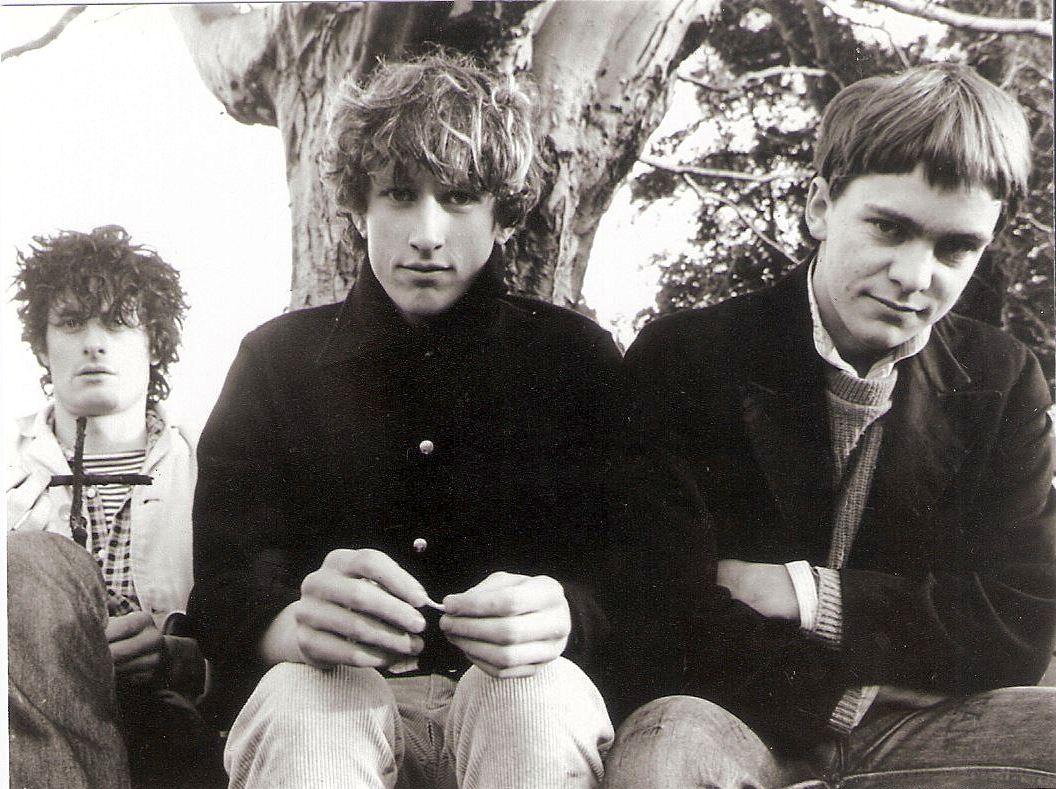
DJ Echo: The Detox Diaries #6: David Kilgour & The Clean: June 4, 2015
Today’s instalment of the Detox Diaries sees DJ Echo pay homage to the uber-lords of New Zealand post-punk rock, The Clean. The Kilgour Brothers, guitarist David and drummer Hamish plus Robert Scott on bass have been making music together and apart for well over a third of a century and an hour was never going to be enough to do more than touch on the major milestones of their collective careers, but within the allotted 60 minutes the sublime wash of David K’s guitar reigned supreme and lit up the morning air of a bright sunny Karamea day. Tracks drawn from David’s solo albums, a couple of more recent Sam Hunt collaborations and a smattering of 80s Clean classics to finish with, this Detox Diary should make your day brighter wherever you are. Tune in tomorrow for an hour of Bill Callahan and Smog.
DJ Echo: The Detox Diaries #7: Bill Callahan & Smog: June 6, 2015
After a 24 hour delay due to technical issues with the radio station computer, DJ Echo returns with an hour of music from U.S. artist Bill Callahan, playing songs from his earlier incarnation as Smog, a couple of covers including Gil Scott Heron and a smattering of selections from Bill’s recent work under his own name. On a rather damp and grey Karamea morning it seemed somewhat appropriate to feature Smog, although the closest we get here is low cloud and a bit of mist. Tune in tonight for a Saturday Night Detox Special– Artists who never (?) strayed from the straight and narrow and chose to remain sober and drug-free throughout their careers. Could be a rather short show!
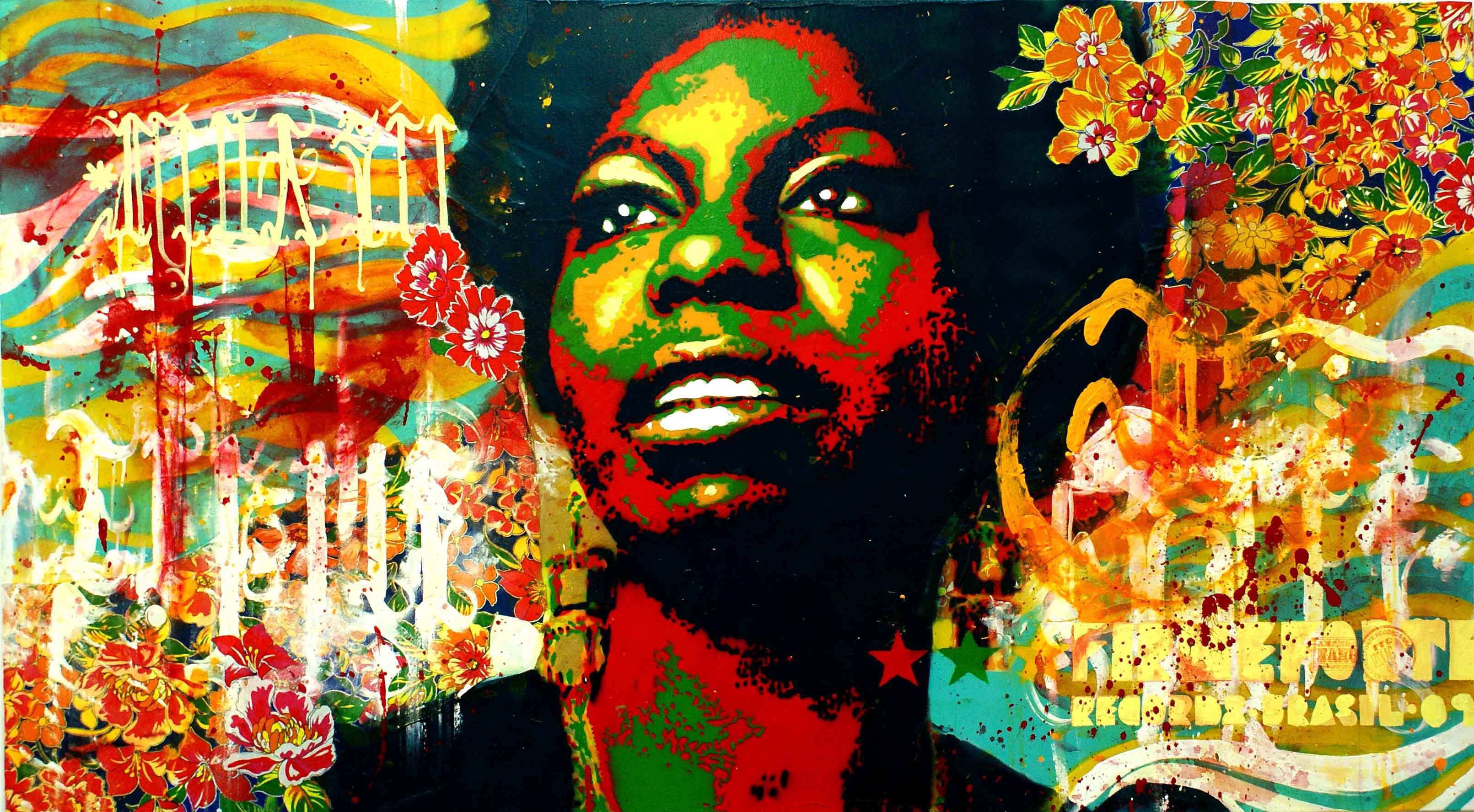
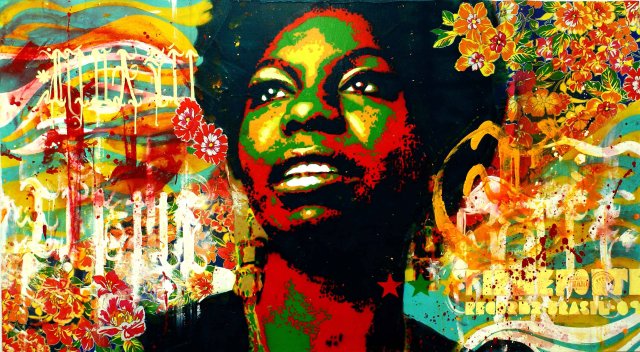
DJ Echo: The Detox Diaries #8: Nina Simone: June 7, 2015
Nina Simone was the featured artist on a crisp Karamea Sunday morning as DJ Echo explored her vast and impressive catalogue in Part 8 of the Detox Diaries series. Featuring originals by Ms Simone alongside some wonderful interpretations of other artists’ work, this was a fairly low-on-talk show given that many of the songs clocked in at 8-10 minutes, making for a relaxing but inspiring start to Sunday morning for DJ Echo and listeners alike.
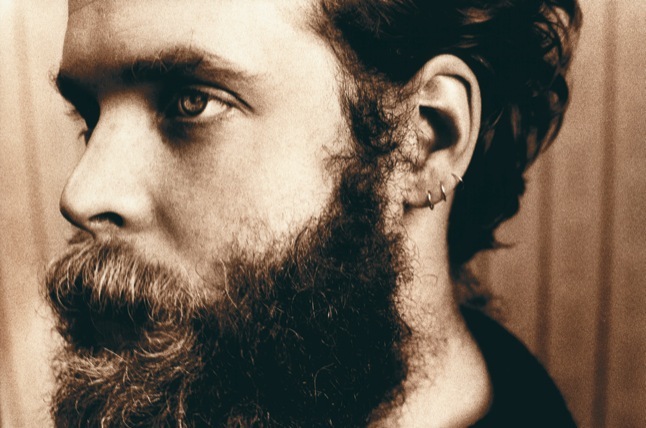
DJ Echo: The Detox Diaries #9: Will Oldham aka Bonnie “Prince” Billie: June 8, 2015
Despite rarely recording under his own name, Will Oldham aka Bonnie ‘Prince’ Billy (and a host of other aliases), has amassed a large and wide-ranging body of work since his debut releases in the early 90s. In today’s Detox Diary DJ Echo plays songs from across the Bonnie Prince’s career beginning, as perhaps all Monday morning radio should, with No Bad News from 2006 album The Letting Go and ending up an hour later with Ease Down the Road from the album of the same name. A languid and lyrical but intriguing start to the final week of the Detox Diaries (or is it?)- tomorrow will be altogether stranger and perhaps even a touch psychedelic.
DJ Echo: The Detox Diaries #10: Robyn Hitchcock: June 9, 2015
Robyn Hitchcock is a singular talent- by turns whimsical, quirky, surrealistic and downright odd. DJ Echo is a long term fan and chose this tenth instalment of the detox diaries to focus on the work of an artist who seems to polarise people into love him or hate him. Songs about sledges, eating too much cheese and the Sleeping Knights of Jesus sit side by side in the Hitchcock canon with somewhat more conventional but no less idiosyncratic songs about Condeleeza Rice, the Devil’s Radio and an imaginary sighting of Nick Drake. It’s all here, and there’ll be more from DJ Echo tomorrow.
DJ Echo: The Detox Diaries #11: The Decemberists: June 10, 2015
Hailing from Portland, Oregon, The Decemberists’ sound defies description to some extent, but is hailed by All Music as being influenced by 60s British folk-rockers Pentangle and Fairport Convention as well as the 80s grandeur of the Waterboys. Today’s instalment in the series takes in tracks from 6 of the band’s albums, beginning with a modern sea-shanty and passing through the Mariner’s Revenge Song en route to a suite of tracks from their 2009 masterpiece The Hazards of Love. DJ Echo encountered a rather stormy Karamea morning for the 11th show in the Detox series and made the decision to drive the 400-odd metres from his home to Radio Karamea’s studio (rather than swim) to bring the show to the listening public. Enjoy, and see you again tomorrow!

DJ Echo: The Detox Diaries #12: The Black Heart Procession: June 11, 2015
San Diego band The Black Heart Procession have long been a favourite of DJ Echo. Their six albums and assorted collaborations (including, featured here, a typically quirky remix by the great Lee ‘Scratch’ Perry) proved to be a fertile musical wellspring for today’s Detox Diary- #12 in the series!. The band’s largely unrelenting sense of bleakness seemed appropriate on an atypically cold and wet Karamea morning. While the band are now on a semi-permanent hiatus, DJ Echo shows no sign of slowing down as the Detox Diaries reaches the round dozen mark with more to follow in the days and weeks ahead.
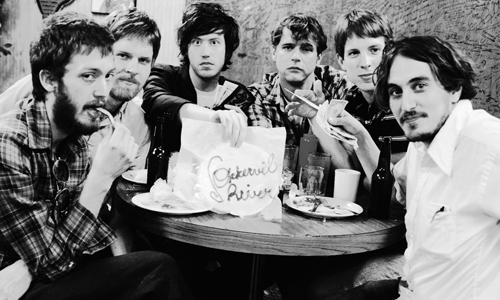
DJ Echo: The Detox Diaries #13: Okkervil River: June 12, 2015
Lou Reed once described Okkervil River’s Will Sheff as the best rock singer in America and who are we to argue with Lou?! Today’s Detox Diary features songs from across the Austin, Texas band’s 15 year plus career. Sheff is a great writer and singer of ‘character songs’ but there’s a strong autobiographical streak lurking behind the clever character studies and dense lyrics. DJ Echo takes listeners on a journey down the River of Golden Dreams through the Silver Gymnasium and ends up in search of Lost Coastlines. Tune in again tomorrow for the lucky 14th show in the series.
DJ Echo: The Detox Diaries #14: Roky Erickson & The 13th Floor Elevators: June 13, 2015
Managing a small element of symbiosis, DJ Echo brings the music of the 13th Floor Elevators (and the subsequent solo career of lead singer Roky Erickson) to the radio waves of Karamea on the 14th instalment of the Detox Diaries series….on the 14th of June. The at times tragic story of Roky Erickson is one of the most disturbing in the annals of rock music and is worth looking into as a tale of triumph (eventually) in the face of extreme adversity. The music featured across the hour and a bit of this show covers all major periods of Roky’s career from the earliest psychedelic stirrings of the Elevators in mid-60s Texas through solo albums from the 80s and eventually to his most recent tour de force, True Love Cast out all Evil, a collaboration with Okkervil River whose own musical journey was the focus of yesterday’s show.
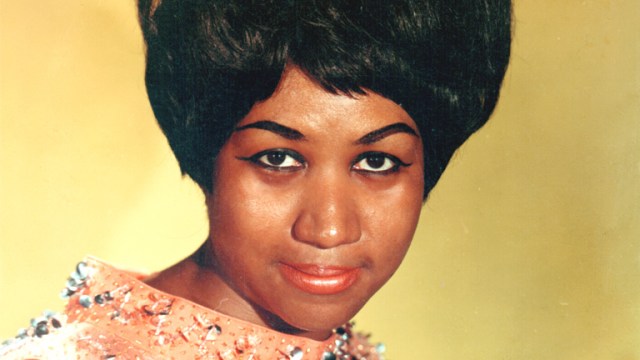
DJ Echo: The Detox Diaries #15: Aretha Franklin: June 14, 2015
Aretha Franklin, the Queen of Soul, is a bona fide musical legend and needed no introduction, nor much in the way of talk or explanation, from DJ Echo on the final Sunday of the Detox Diaries series (or is it?). Drawn entirely from Aretha’s classic years on Atlantic Records in the late 60s and early 70s, this is proof, if it were needed, of the timeless wonder of this music. Thanks for tuning in!
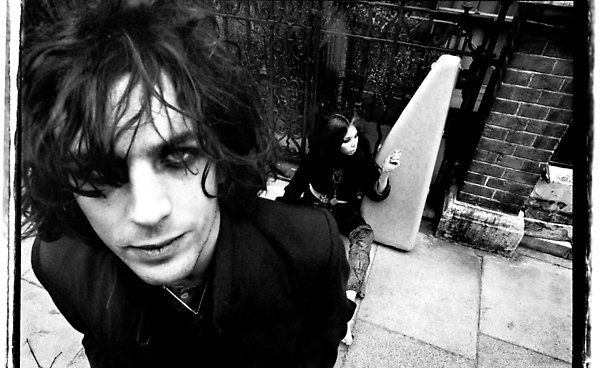
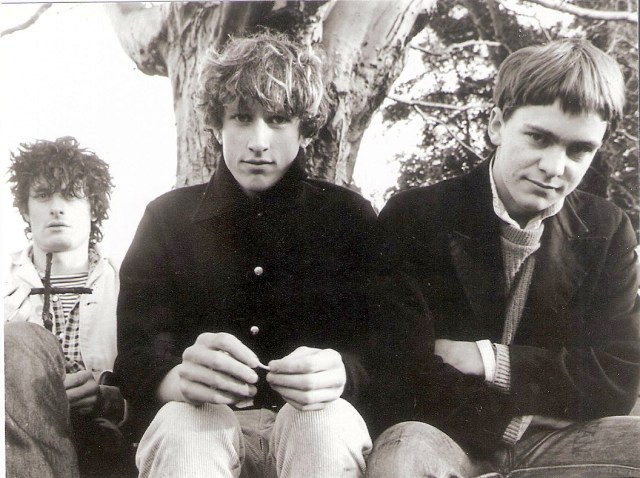
DJ Echo: The Detox Diaries #16: Syd Barrett: June 15, 2015
Following on from Saturday’s Roky Erickson show, another of rock’s legendary and polarising figures, Syd Barrett, is the focus of this Monday morning blast of whimsical 60s psychedelia from the earliest days of Pink Floyd as well as Barrett’s own brief but stellar solo career. In keeping with Radio Karamea’s tradition of being the best and least conventional radio station in the world, few others would dare (or bother) to play an hour of slightly unhinged, largely joyous and deeply questing music as this to serenade listeners at the start of the working week. But amidst the meteorological drabness of the past few days what could be better than a blast of Syd. Tomorrow marks the theoretical end of the Detox Diaries; the question is, will DJ Echo begin tomorrow’s show with a beer. Or a whisky. Or both? Tune in on Tuesday and find out!
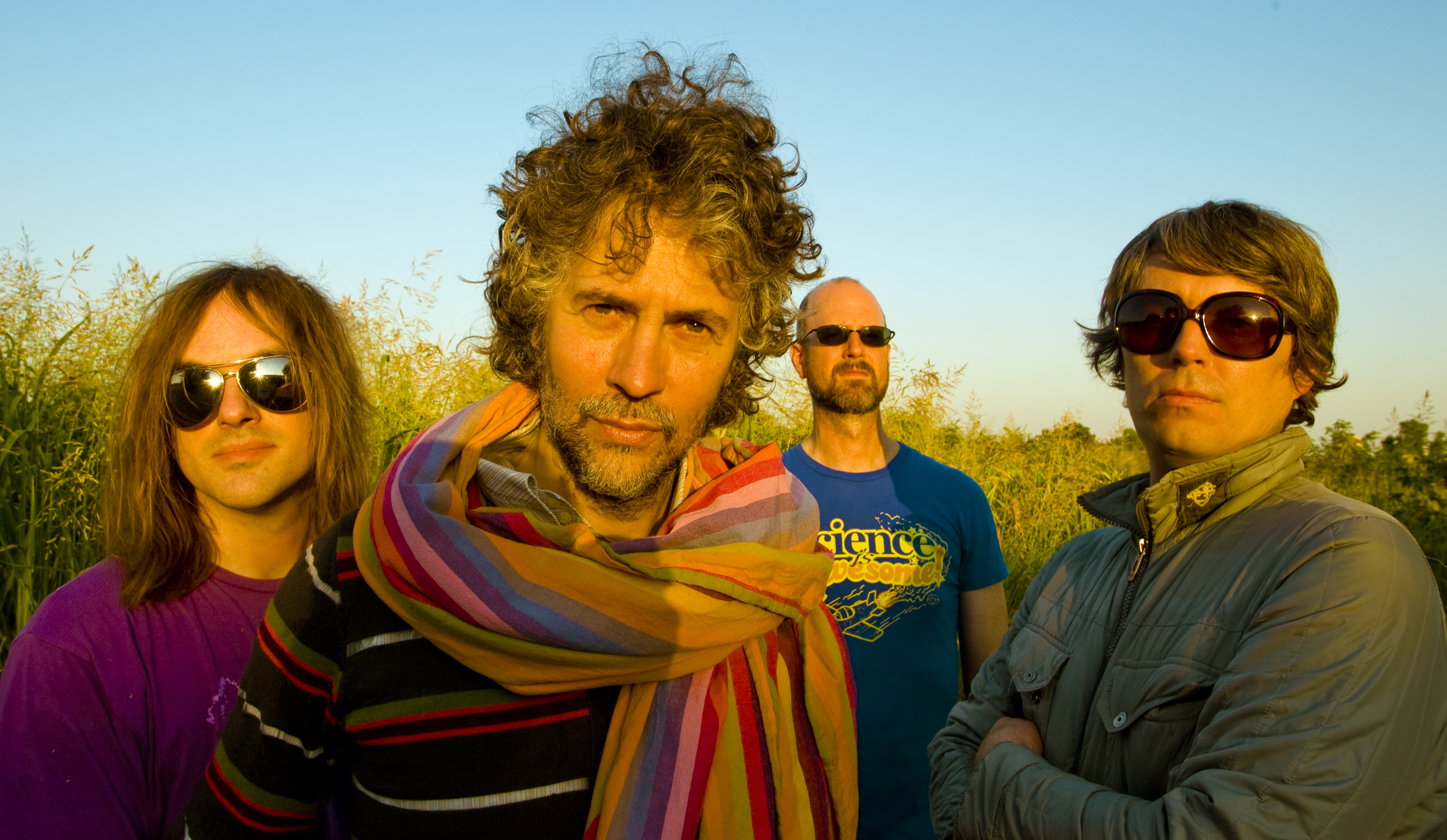
DJ Echo: The Retox Diaries #1: The Flaming Lips: June 16, 2015
As his joint detox (conducted simultaneously with DJ Crap) concludes after an atypically abstemious 21 days, DJ Echo celebrates the return of coffee and, even more importantly, sunshine and with it National-Party-proofing Vitamin D. Oklahoma’s finest the Flaming Lips are the featured artist today and the 60 minutes of their music showcased here is but a taste of the wonders of their illustrious catalogue. The final show in one sequence or the first of a new one? Only time will tell, and as the Flaming Lips kindly remind listeners on the concluding song, All We Have is Now! Thanks for tuning in over the past 3 weeks and 17 single-artist shows. Only on the world’s best radio station, Radio Karamea!
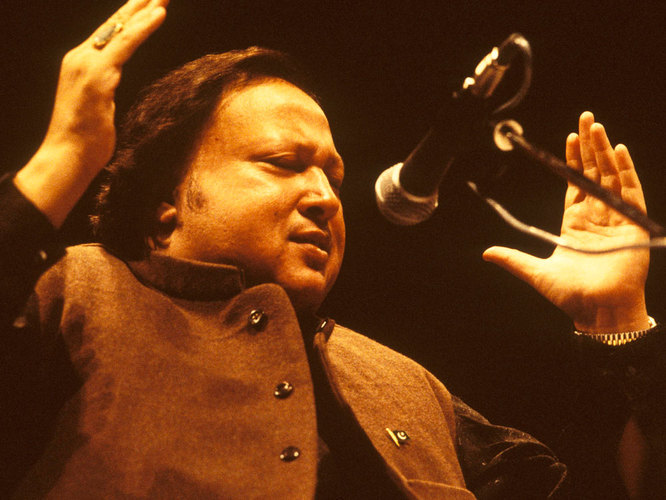
DJ Echo: The Retox Diareis #2 Nusrat Fateh Ali Khan June 20, 2015
Nusrat Fateh Ali Khan. The Greatest Voice Ever Recorded. The Voice of Heaven. The Master of Qawwali. The Sub-continental Elvis. These accolades have been proscribed to the legendary NFAK both during his stellar career and since his death in 1997 (coincidentally 20 years to the day after Elvis himself left Memphis permanently to live here in Karamea!). On a recent Retox Diaries Show (on the 2nd shortest day of the year), DJ Echo took to the airwaves to provide listeners with a sample of the genius of Nusrat.
DJ Echo: Retox Diaries #3: Mercury Rev: June 29, 2015
Mercury Rev: after a week or so of delightful distraction, DJ Echo returns for a final week (well, perhaps!) of morning shows before setting off on his much-anticipated scientific experiement to see if it is actually possible to live in Christchurch during July. Evidence will be gathered and reported back to the good people of Karamea and all our internet listeners in August. In the meantime, this morning’s hour-long special focuses on the music of Mercury Rev, a somewhat (ahem) mercurial and maverick outfit from upstate New York. Spanning their 25 year career and featuring Neil Young and Burt Bacharach covers among the original Rev tracks, this is one worth checking out whether you know the band or not.
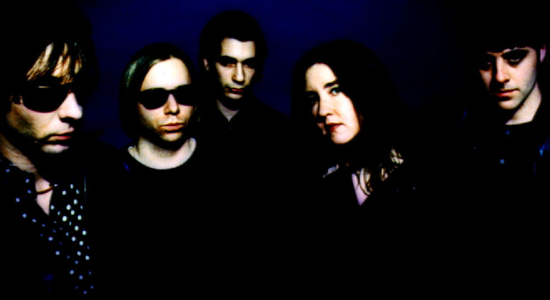
DJ Echo Retox Diaries #4: The Church: June 30, 2015
Another round of morning radio hit the Karamea airwaves today, with DJ Echo focussing this time around on the music of Australian icons The Church. Notwithstanding DJ Echo’s usual predilection for gospel music, this should in no way be confused with ‘church music’ but instead embraces the kind of woozy, slightly mystical psychedelia which is so popular around these parts (it makes the cows lay more eggs, or something like that). Sampling tracks mainly from the middle period of the Church’s 35 year career, this show may be low on the Hallelujahs but high on several other levels.
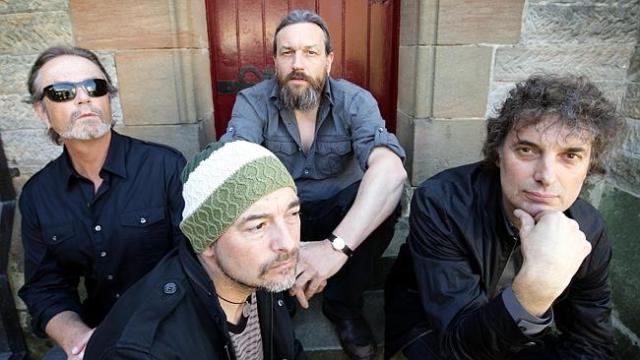
As the owner of Rongo Backpacker & Gallery Paul Murray gets to meet a LOT of interesting people. Here are Karamea Radio interviews with a some of them…You’re Welcome!
DJ C-Rap Interview with Urban Permaculturalist Eri Suzuki: July 6, 2017
Urban permaculturalist Eri Suzuki visited the LivingInPeace Permaculture Project in Sunny Karamea at the top of the West Coast of the South Island of New Zealand to exchange ideas and learn about rural permaculture. She chats with DJ C-Rap (Paul Murray) about her work in the Tokyo Urban Permaculture project and the reasons she has invested her life in permaculture practice and philosophy and her experience in visting the LivingInPeace Project and her stay at Rongo (home of Karamea Radio 107.5 FM).
The interview includes music from the Permaculture music troupe Formidable Vegetable Sound System and Climbing Tree.
For more information about Eri Suzuki and her work in permaculture, check out the following links:
DJ C-Rap chats with playwright and actor Martine Baanviger about her play “Solitude” and her portrayal of the true- life story of the amazingly intrepid Annie Chaffey.
A full house at Karamea’s Bush Lounge enjoyed Baanviger’s one-woman show “Solitude-The Secret Life of Annie Chaffey” on May 12, 2017 and her interpretation of Annie Chaffey’s lonely life in remote Asbestos Cottage in the wilds of the Kahurangi National Park where she lived in exile with the man she loved for 40 years.
Annie Fox abandoned two young boys and escaped a violent husband in Timaru in 1913 when she absconded with Henry Chaffey to the remote hut up a mountain in the Cobb Valley near Takaka, Golden Bay. They eventually married when Annie received word that her abusive husband had died.
“Solitude” is about the four decades Henry and Annie spent together in a 25 m2 hut at and altitude of 1,000m living on wild wekas, deer, goats and pigs any vegetables they managed to grow and the power of love.
The play not only recounts this incredible story of intransigence, and perseverance but also explores the dichotomy between loneliness and solitude.
Ollie Mason is writing a thesis on sustainable living for his master’s thesis in anthropology at Radboud University in Nijmegen, The Netherlands. He came to Kararama at the top of the West Coast of the South Island of New Zealand to study the LivingInPeace Project and other sustainable living practices in the region. He has conducted a series of interviews with local people and been involved with the machinations of the LivingInPeace Project for about two months.
DJ C-Rap chats with Ollie about his experience, philosophies, thoughts on sustainability and plans for the future.
DJ C-Rap Interview with Musician Debra Khng: April 1, 2017
Singaporean musician, singer-songwriter and lovely person Ms Debra Khng is visiting New Zealand and came to Karamea to stay with us at Rongo Backpackers & Gallery (Home of Karamea Radio) for several weeks. She talks with DJ C-Rap about her musical journey and sings one of her original songs “BlackForest Birthday” for us…Have a listen to what she has to say and to her beautiful song.
For more information about Debra Khng check out the following links:
Aussie traveller Mr Lee Traynor arrived at Rongo Backpackers & Gallery in Karamea at the top of the West Coast of the South Island of New Zealand after completing a four day walk through the wilds of the Kahurangi National Park along the Heaphy Track.
Over dinner at Rongo, Lee informed us he was involved in the establishment of 3PBS FM radio station in Melbourne almost 40 years ago. PBS 106.7FM is still broadcasting today and the station has grown into a large cooperatively owned community radio broadcaster that hosts about 80 programmes every week.
Lee was interested in our community radio station Karamea Radio 107.5 FM and DJ C-Rap was keen to have a chat with him about his broadcasting background, life as a teacher of technical English at a university in Hanover, Germany, and his experience walking the Heaphy Track.
To hear more of Lee Traynor’s New Zealand advenures, check out his TravelBlog:
Jeremy and Constance from Sydney, Australia, arrived in Karamea at the top of the West Coast of the South Island of New Zealand after walking through the Heaphy Track with their WilderWheels scooters.
They stayed with us at Rongo Backpackers & Gallery (home of Karamea Radio 107.5 FM) and agreed to a radio interview about their adventures in New Zealand and their WilderWheels invention.
WilderWheels is a scooter, it’s a walking pole, it’s a paddle, it’s a shovel, it’s a trolley…It’s set to revolutionise how we move around and interact with the great outdoors.
DJ C Rap talks with the intrepid travellers about their scooters before they head off on their next adventure into the wilds of the Kahurangi National Park.
Hosting international travellers at Rongo Backpackers at the top of the West Coast of the South Island of New Zealand is a dream job for DJ C Rap as interesting people from all over the world come to him and share their stories. One such person is Mr Roy Smith, an intrepid traveller, mountaineer and bon vivant.
He arrived at Rongo Backpackers & Gallery (Home of Karamea Radio) after walking for several days through the Heaphy Track and the wilds of the Kahurangi National Park.
He agrees to a radio interview and chats with DJ C Rap about his fascinating life growing up in abject poverty in rural England, joining the British Army to escape the penury and developing a quest for experience and adventure. He becomes and mountaineer, leads an expedition down the Omo River in Ethiopia for National Geographic magazine on which one member is taken by a hippopotamus and he almost succumbs to a crocodile attack…Tales of arctic adventure and anecdotes of a life well lived. Roy is a guy who opens the door when opportunity knocks, shakes its hand and says, “Let’s GO Mate.”
Have a listen to a great story told by a great storyteller as DJ C Rap chats with Mr Roy H. Smith about life and other adventures.
DJ C-Rap Interview with Blues Musician Ruth Wyand: April 1, 2016
Ruth Wyand, a blues musician from Kill Devil Hells North Carolina in the United States, stayed with us at Rongo Backpackers & Gallery in Karamea, West Coast, New Zealand on her tour of Aotearoa.
Ms Wyand was here a couple of years ago and played an educational gig at the Last Resort featuring her music and a presentation about the historical influence of female blues musicians like Ma Rainey, Nina Simone, Memphis Minnie, Bonnie Raitt and Billie Holiday called “Mama’s Got the Blues,” which is also the title of her album on the subject.
She is also the musical director of the Mustang Outreach Program that encourages and finds underprivileged and “troubled” kids into music.
DJ C-Rap finds out a little bit about her, they discuss the Mustang Outreach Program, the madness that is the U.S. Primaries, some little-known facts about the Wright Brothers and her upcoming gig at the Little Wanganui Hall Saturday night.
Check her out live at the Little Wanganui Hall on April 2, 2016 @ 7:30 p.m. $10 at the door…buy a CD or download her songs on from her Web site (cheaper than i-Tunes Store!)
DJ Crap Interview German Cyclist Niclas Eschner: September 8, 2015
Young German cyclist and traveller Niclas Eschner chats with DJ Crap about his ride up the West Coast of the South Island of New Zealand…from Greymouth to Karamea in one day.
The ride is about 200 kilometres along the winding mountainous West Coast highway. He left Greymouth at 6:00 a.m. and checked in at Rongo Backpackers & Gallery in Karamea at 4:00 p.m., which is not bad going given that the same trip in a car would take about 4 hours. Tomorrow, he takes on the Heaphy Track, the only New Zealand “Great Walk” that is also a “Great Ride,” on a hybrid road/mountain bike with fully loaded panniers.
Interview with Photographer Arwen Dyer: July 21, 2015
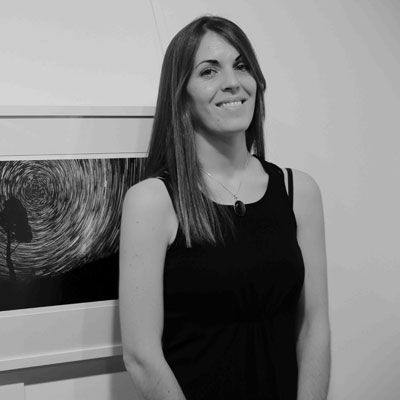
DJ Crap (Paul Murray) interviews 2015 LivingInPeace Project Resident Artist, Australian Photographer Arwen Dyer about her time in Karamea at the top of the West Coast of the South Island of New Zealand.
Tasmanian native, Ms Dyer specialises in nature, abstract, night and macro photography and spent two weeks at the LivingInPeace Project as a resident artist in July 2015.
Dr Duncan Steel, a bonafide Rocket Scientist, arrived in Karamea as a guest at Rongo Backpackers & Gallery (home of Karamea Radio 107.5 FM) and agreed to an interview with DJ Crap about his experiences working for NASA, astrobiology, space junk, the “Fifth Domain of Warfare” and its implications for New Zealand, the Large Hadron Collider, Project SpaceGuard, missing Malaysian Airlines Flight MH370, the importance of travel, Anthropogenic Global Warming (AGW), the Sex Pistols, alien life forms, geopolitics, the assassination of former U.S. President John F. Kennedy…everything from asteroids to hemorrhoids…the actual interview was over 90 minutes, but a computer failure toward the end of the interview meant that much of it was lost to the ether…perhaps the NSA was listening?
I hope you enjoy this very interesting conversation with a highly educated and personable gentleman…thank you for agreeing to be interviewed on Karamea Radio Dr Steel… I’m sure we’ll all sleep more soundly with the knowledge that clever fellas like yourself are working hard to ensure we’re not smashed out of our beds by a meteorite!
Swedish friends Normann Kotzurek and Stig Fagergren came to Karamea at the top of the West Coast of the South Island of New Zealand to catch BIG trout. They embarked on an intrepid journey into the wilds of the Kahurangi National Park in search of the world’s best fishing and emerged with an amazing tale of adventure 11 days later…this is their story.
Paul Murray (DJ Crap) Interviews 71-year-old U.S. traveller Carole Beauclerk about her experience on the Heaphy Track, one of New Zealand’s “Great Walks” and a life spent well doing all sorts of interesting things from taking ayahuasca with an Ecuadorian shaman in the 70s to sleeping with a 25 yr-old Congolese drummer on her 50th birthday in Tokyo…something for everyone here…that’s Karamea Radio folks…thanks for listening!
Interview with Israeli Traveller Arnin Amit: January 3, 2015
DJ Crap interviews Israeli Traveller Arnon Amit, who is thought to be the first ever person to complete the Heaphy Track in a wheelchair. Assisted by his brother Nadav and friends Maayan and Gul, Arnon arrived at Rongo Backpackers & Gallery in Karamea at the top of the West Coast of the South Island of New Zealand after a five-day adventure on the Heaphy Track to show the world that it is possible to do the Heaphy without the use of your legs!
Thanks for staying at Rongo team and for taking the time to chat with DJ Crap on Karamea Radio. Happy Trails and keep on keeping on! Shalom Aleichem…Peace be with you!
Interview with “Light Healer” MeWe: December 10, 2014
Aussie character Me-We arrived in Karamea with his mobile light-healing cart that he has pulled around New Zealand stopping off to provide his biophotonic light-healing services to all and sundry along the way. He stayed at Rongo Backpackers & Gallery in Karamea and agreed to a radio interview with DJ Crap to discuss his past, present and future. A most interesting chap indeed, part Aussie larrikin, part ethereal, new-age hippy renegade, Me-We thoroughly believes in himself and what he has to offer…the world needs more people like this guy!
Interview with Buller District Councillor Sheryl Rhind: July 25, 2014
Almost a year after having been elected to the Buller District Council as regional representative for the Seddon Ward, Councillor Sheryl Rhind returns to the Karamea Radio studio to talk with Paul Murray (DJ Crap) about her experience.
Topics include: Broadband Internet, Civil Defense, Reticulated Water Supply, 1080, Mountain Biking, the Oparara Valley Track as well as the influence of central Government on local politics.
This interview is of principal interest to people living in Karamea region of the Buller District, but also provides listeners with a window on life at the top of the West Coast of the South Island of New Zealand.
Interview with German Artist Almut Prang: June 25, 2014
2014 LivingInPeace Project Resident Artist Almut Prange speaks with project founder Paul Murray on Karamea Radio 107.5 FM about her experience, life in Karamea, art, travel and her future plans.
Interview with Italian Traveller Lorenzo Sebastio: June 25, 2014
Lorenzo Sebastio (28) is a traveller, there’s not many of them left. He has walked halfway across New Zealand from the very north tip at Cape Reinga to Karamea at the top of the West Coast of the South Island where he stopped for the night at Rongo Backpackers & Gallery…home of Karamea Radio 107.5 FM where spoke with Paul Murray about his journey before he heads of down the West Coast to Bluff the southernmost tip of the New Zealand mainland.
Interview with Student Nurse Eloise Clayton: April 16, 2016
Eloise Clayton is nearing the end of her nursing studies and came to the small rural community of Karamea at the top of the West Coast of the South Island of New Zealand to complete the practical training component of her degree. She was here for about six weeks and really got involved with the community and met most people in the district. She agreed to have a chat about her experience with DJ Crap on Karamea Radio 107.5 FM.
Interview with Canadian Artist Dejana Lukac: March 2014
Dejana Lukac from Alberta, Canada, came to Karamea for a couple of months in the summer of 2014 on the LivingInPeace Project artist-in-residency programme. Her art combines natural and found objects with man-made materials to create an entirely new object. The harmony of the nature contrasts with artificial products like foam and acrylic paint that seem to enhance and highlight each entity. Thank you Dejana for coming to Karamea and being a resident artist at the LivingInPeace Project.
Northern Ireland photographer and textile artist Norma Burrowes was a resident artist for the LivingInPeace Project in the summer of 2010. She returned to Karamea at the top of the West Coast of the South Island of New Zealand in March 2014 for a second residency and spoke with Paul Murray on Karamea Radio about her art, life experiences and upcoming exhibition at Rongo Backpackers & Gallery on March 17, 2014.
Interview with Trail Runners Vicki and Vicki: January 7, 2014
Trail Runners Vicki Woolley & Vicki Quinn arrived in Karamea after running the Heaphy Track in two days. They stayed at Rongo Backpackers & Gallery in Karamea and enjoyed a Heaphy Conqueror’s Feast, visited the Oparara Basin arches and caves the following day and ran back to Karamea along the Oparara Valley Track…tomorrow, they’re off to Vicki Woolley’s old hometown of Seddonville to take on the newest MTB track in New Zealand…The Old Ghost Road…Happy Trails for 2014 and beyond Super Vickis!
Vicki Woolley is the N.Z. Editor for TrailRun Magazine: www.TrailRun.com She is a single mum on her annual one week holiday….Vicki Quinn is her friend and fellow trail runner. Welcome to Karamea Ladies….
Interview with Permaculturalist Robina McCurdy: October 11, 2014
Paul Murray interviews Local Food Resilience/Security educator Robina McCurdy about her Local Food Resilience workshop at Rongo Backpackers & Gallery in Karamea on Saturday October 12 (9:00 a.m. to 4:30 p.m.)and the presentation the previous evening (October 11, 7-9 p.m.) Robina is a founding member of the Tui Community in Golden Bay and a passionate and enthusiastic champion of growing food, permaculture, biodynamics and building strong communities.
Radio NZ Interview with Permaculuralists Paul and Pete
Radio New Zealand Presenter Cosmo Kentish-Barnes visits Karamea and talks with LivingInPeace Project Founder Paul Murray and “Permaculture” Pete Cureen about their respective ventures.
Interview with Buller Council Deputy Mayor Rosalie Sampson
Paul Murray interviews Buller District Council Deputy Mayor and candidate in the upcoming BDC elections Rosalie Sampson about her 24 years on the Council, Water, Rubbish, Mountain Biking and other issues important to the people of Karamea and the Buller District.
Interview with Buller Council Mayoral Candidate Margaret Montgomery
Paul Murray interviews Buller District Council Mayoral Candidate Margaret Montgomery about her nine years as a Councillor, important issues facing the Buller District, ideas about improving the lot for Buller residents her background, experience, business life and family. Essential listening for people interested in making an informed vote in the October election.
Interview with West Coast Conservation Board Chair Stewart Robinson
A Karamea Radio Interview with West Coast Conservation Board Chair Stewart Robertson discussing the role of the WCCB, conservation issues facing the West Coast and the challenges ahead for the West Coast Department of Conservation staff in maintaining a large tract of New Zealand’s national parkland.
Interview with Buller Council Candidate Sheryl Rhind
Buller District Council election candidate Sheryl Rhind chats with Paul Murray on Karamea Radio about who she is, what she stands for and why she wants to represent Karamea, the Seddon Ward and the Buller District as a Councillor.
Crystal (Chuying) and Cindy (Xingxin) are the first Wwoofers from mainland China to come to Karamea to lend a hand at Rongo and the LivinginPeace Project. Paul Murray (aka DJ Crap) interviews them about their lives in China and their experiences travelling in New Zealand.
Interview with Buller Council Mayoral Candidate Garry Howard
Garry Howard is a candidate for Buller District Council Mayor in the upcoming election. He drops by Karamea Radio for a chat with Karamea Radio DJ Paul Murray about his candidacy, vision for the Buller District, the main issues facing the Council, mining, tourism, environment as well as his personal history…Compulsory listening for anyone interested in the Buller and its governance.
Karamea Community Coordinator Rick Lucas interviews LivinginPeace Project Founder Paul Murray on permaculture, life in Karamea, business, Permaculture Design Course and related topics.
Brandon Yelavich is attempting to be the first person to circumnavigate the New Zealand coastline on foot. He is also raising money for Ronald McDonald House, a charity that assists parents of sick children. He arrived at Rongo Backpackers & Gallery in Karamea at the top of the West Coast of the South Island on July 18, 2013 and dropped in to Karamea Radio 107.5 FM and had a chat with DJ Crap about his exploit.
Read about Brando’s Adventure Here:
Auckland Lad Attempts 1st Lap of N.Z. Coast on Foot:
As a schoolgirl, Elise Burkevics was “way too cool for farming” despite attending Urrbrae Agricultural High School in Adelaide, South Australia, which specialises in training young people with agricultural aspirations.
More interested in art and design during her school years, it wasn’t until Burkevics graduated and entered the wide world that she discovered a passion for getting her hands dirty and the completion of a permaculture design course with Fair Harvest in Margaret River, Western Australia, really galvanized her passion for growing food and sparked her interest in the environment and sustainable living.
Burkevics moved to New Zealand in 2014 to pursue another passion–snowboarding– and applied to do a permaculture internship in the autumn of 2015 at the LivinginPeace Project in Karamea at the top of the West Coast of the South Island to put her theoretical understanding of permaculture into practice and gain valuable hands-on experience while waiting for the snowfields to open.
The LivingInPeace Project began in 2004 and is located in Karamea at the top of the West Coast of the South Island of New Zealand. It combines the elements of Art, Travel, Permaculture and Education into a sustainable business.
LivingInPeace Project founder Paul Murray offered Burkevics a chance to test her mettle and gave her an opportunity to shine. She enthusiastically accepted the challenge of transforming a neglected patch of garden that had become and jungle into a functional, artistically designed and fertile vegetable patch that would feed the Murray Family with fresh organic produce year-round.
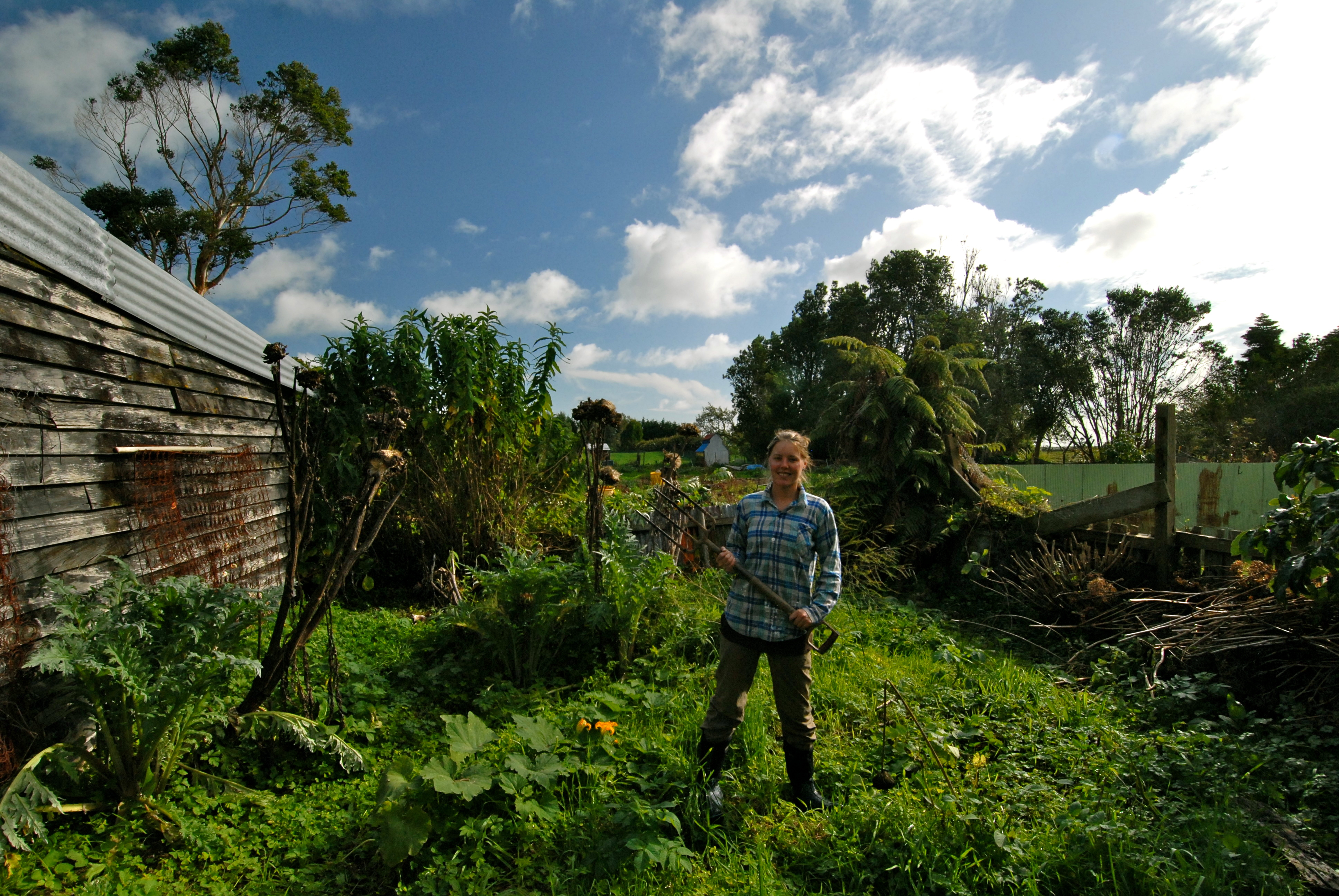
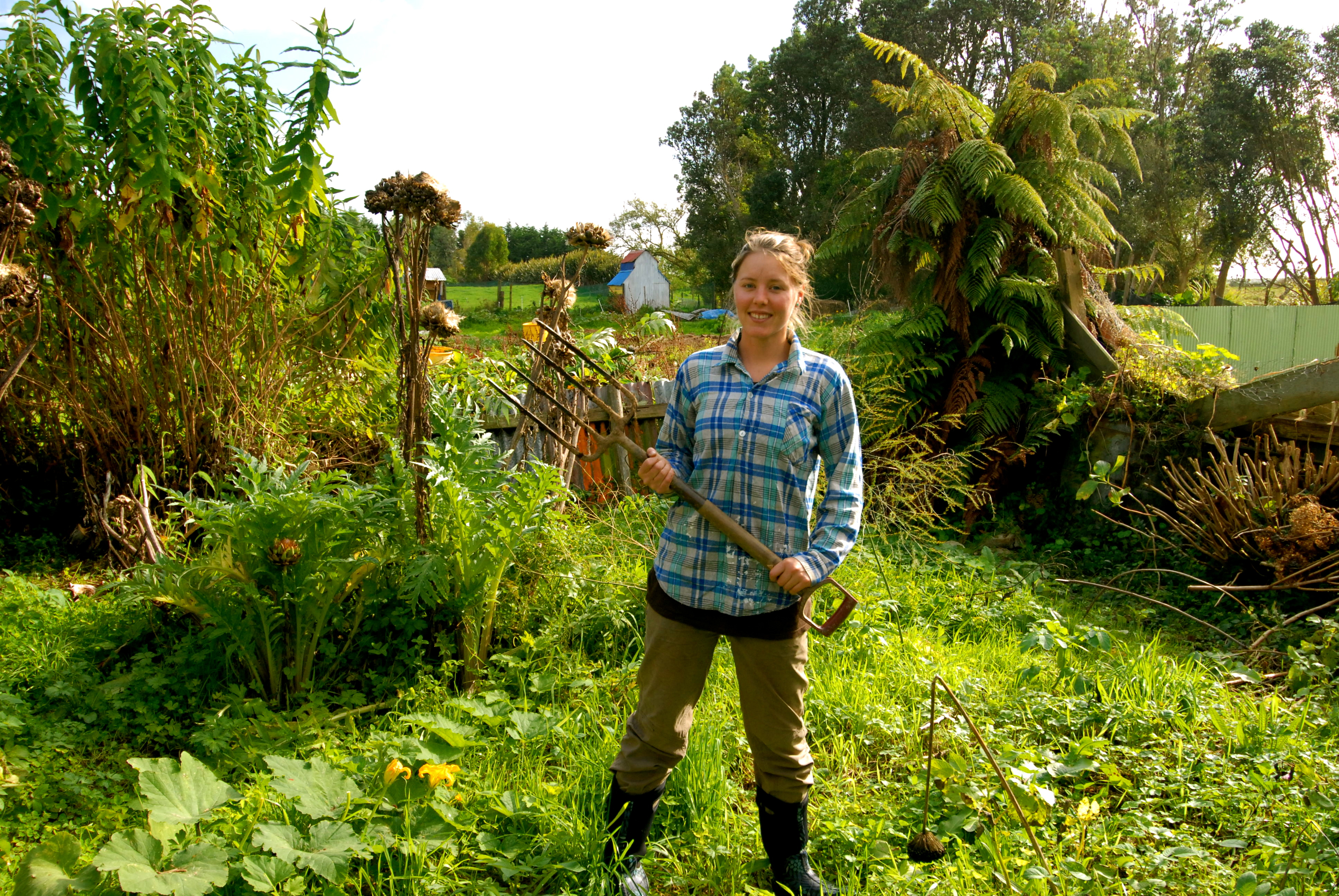
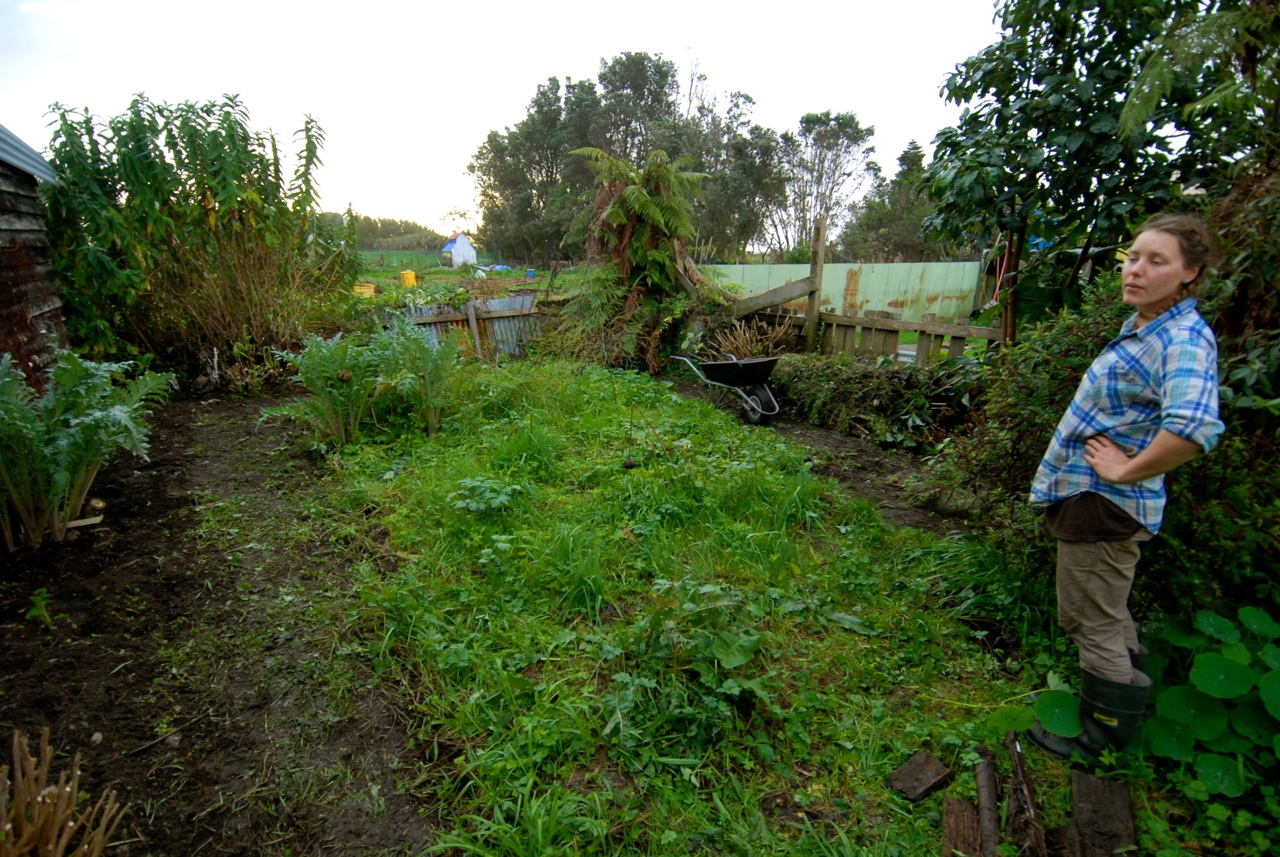
Elise Burkevics Prepares to Tackle the Jungle
After a discussion to establish the project objectives, Burkevics was given complete management authority to create the garden and she set to work with pick, shovel, fork and spade.
The garden had been continuously cropped for about 10 years, but left fallow for a year while the property owners were absent and had gone wild with weeds and overgrowth. This presented a significant challenge and one Burkevics accepted with glee.
She first sat down and drew up a plan in line with her permaculture design training and decided to first remove the weeds and discover what existing plants, if any, could be incorporated into the garden design. The focus was on food production, so ornamental plants, flowers and non-edible vegetation was removed to make way for vegetables, herbs and fruit. So out came the hydrangeas and other ornamental plants, which were relocated to a garden at Rongo Backpackers & Gallery, one of the accommodation facilities at the LivingInPeace Project to enhance the landscaping around the hostel.
Day 2: Work Begins
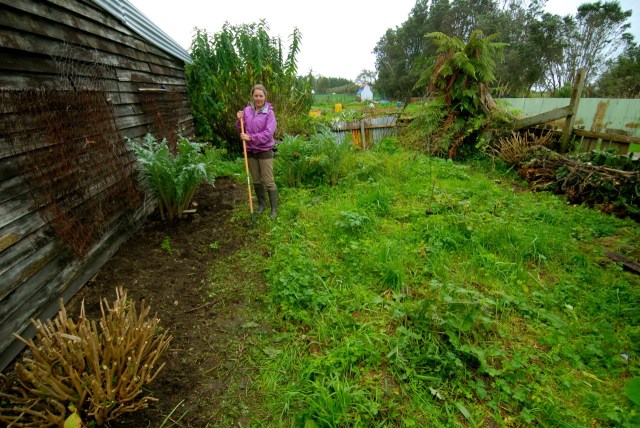
The garden was once fertile and productive with a diverse range of edible plants. Burkevics embarked on an archeological dig to unearth the lost garden and determine if any of the plants could be rescued from the jungle and incorporated into the new design.
Day 4: Taming the Jungle
On Day 5, Murray decided Burkevics deserved some assistance and Wwoofer Kyla McLachlan offered to help. Together, they removed all the wild vegetation, tamed the jungle and started work on rebuilding the garden.
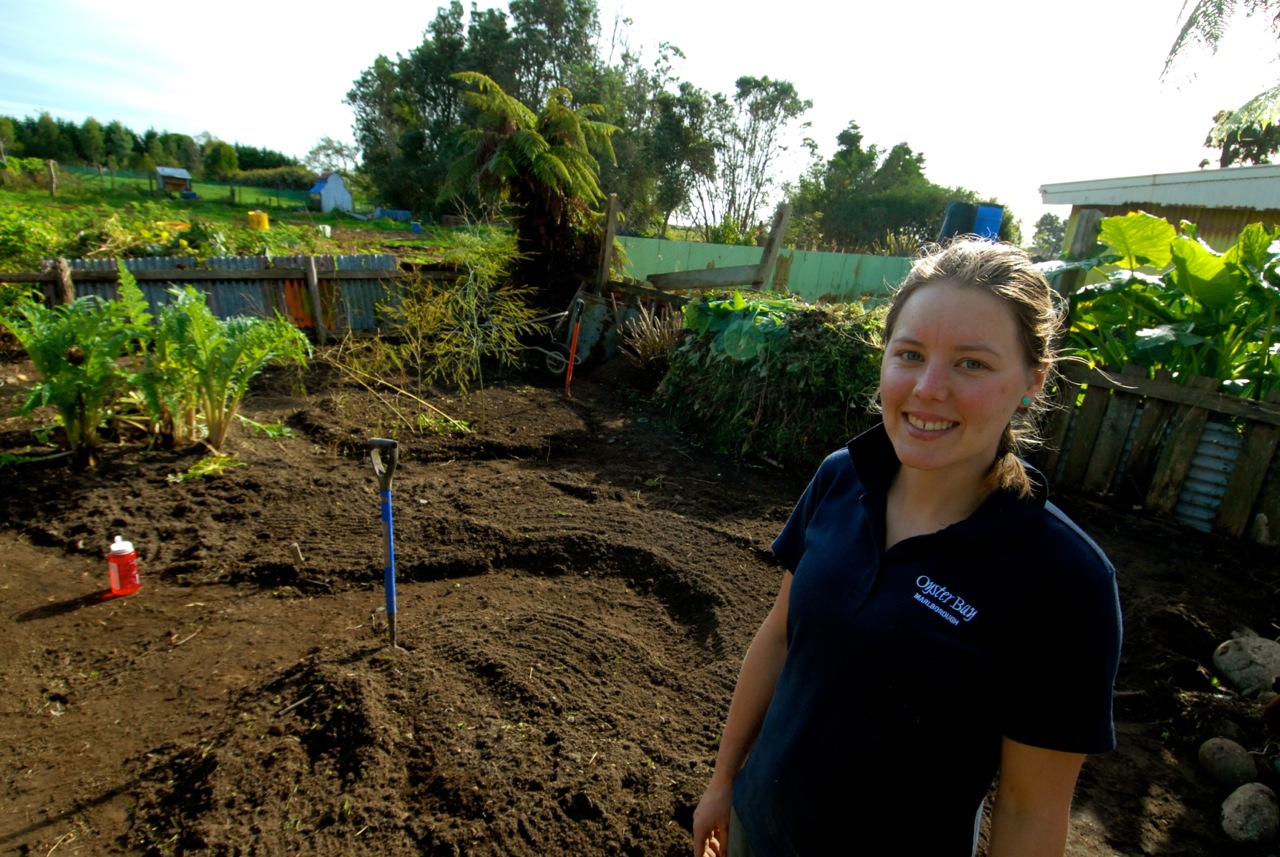
Kyla McLachlan and Elise Burkevics hard at work
Burkevics was happy to have some help and much progress was made when Kyla McLachlan arrived to assist.
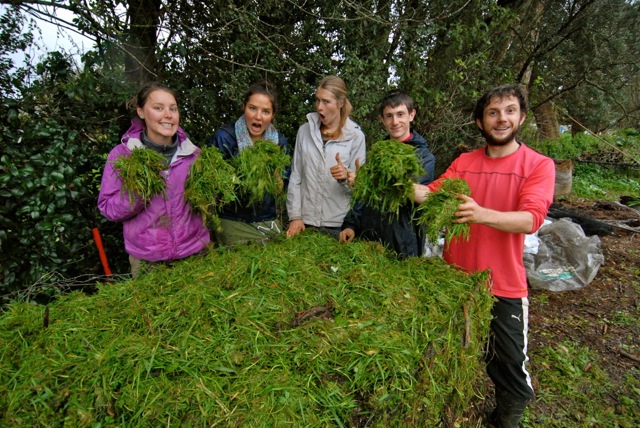
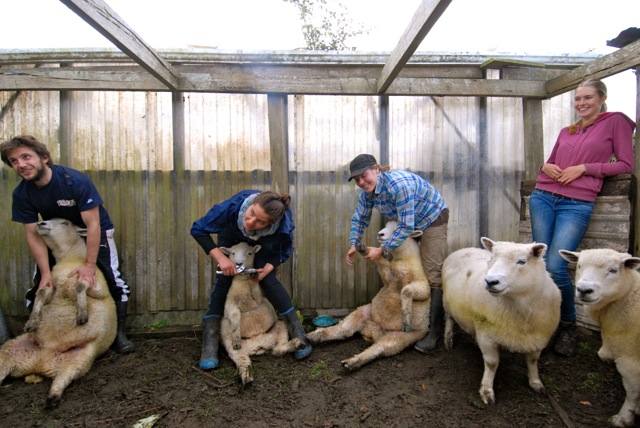
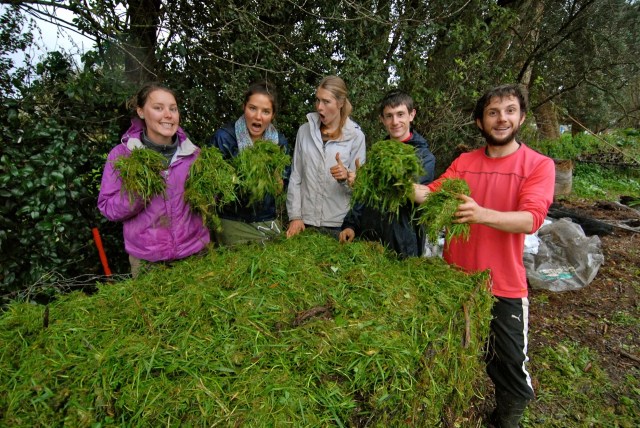
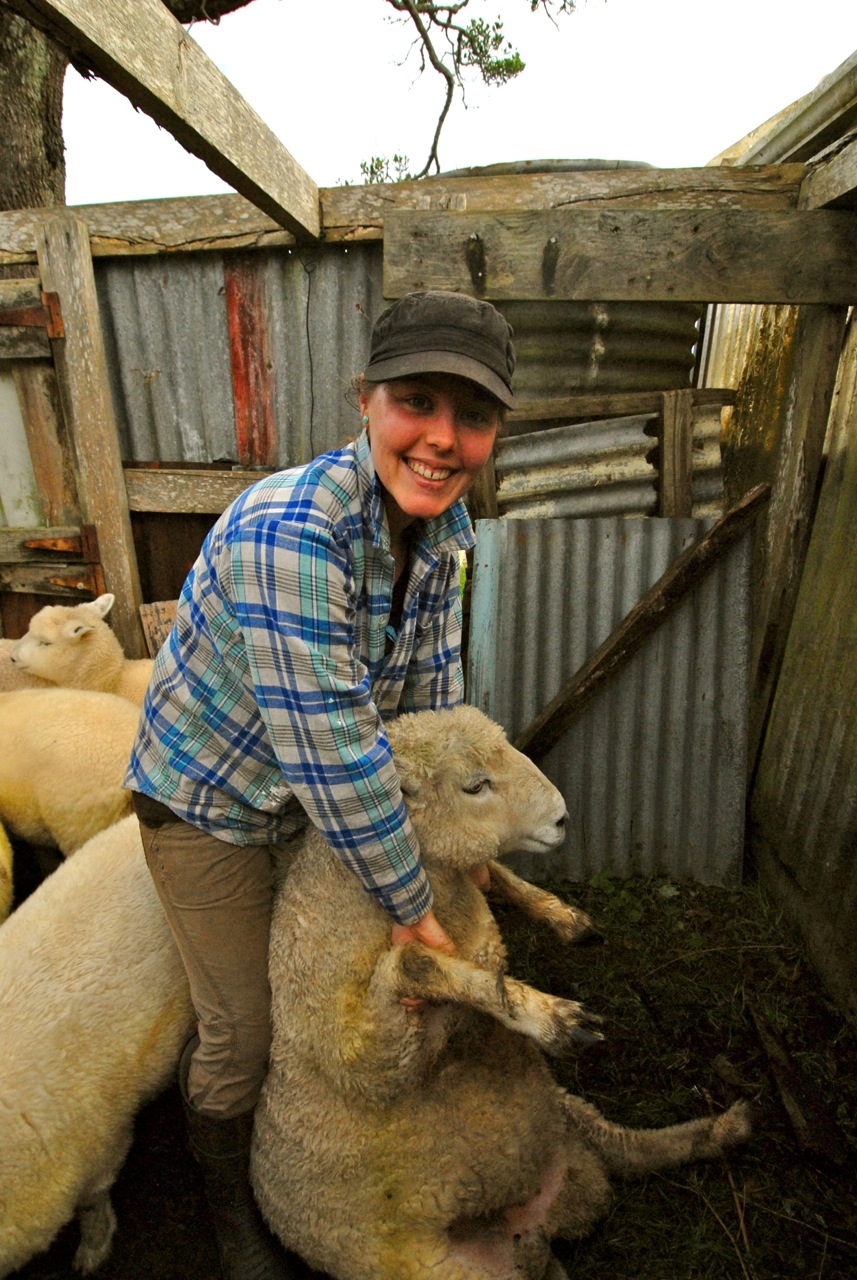
On Day 6, there was an opportunity to take a break from the project and do some other work on the LivingInPeace Project Permaculture Farm, so Burkevics and McLachlan joined the other members of the Wwoofing crew to make some compost and trim the sheep’s feet…and drink some beer.
Left to Right: Elise Burkevics, Kyla Mclachlan, Ruth Schrapper, Peter Dickinson and Jamie Tillett The LivingInPeace Project Wwoofing Crew.
Elise Burkevics and Friend
Elise Burkevics (left) and Kyla McLachlan
After a break, work on there garden resumed with gusto and Burkevics and McLachlan worked well together…progress was rapid. The garden design began to take shape, the pathways formed and the vegetable beds created. They lay cardboard along the pathways as a means of preventing the return of weeds and to provide a base for the river sand that was carted in to line the paths.
Day 6: The garden begins to take shape, pathways are created and lined with cardboard ready to be covered in river sand.
Burkevics applied her love of design to the project and came up with a garden layout that was not only functional and practical, but also aesthetically attractive.
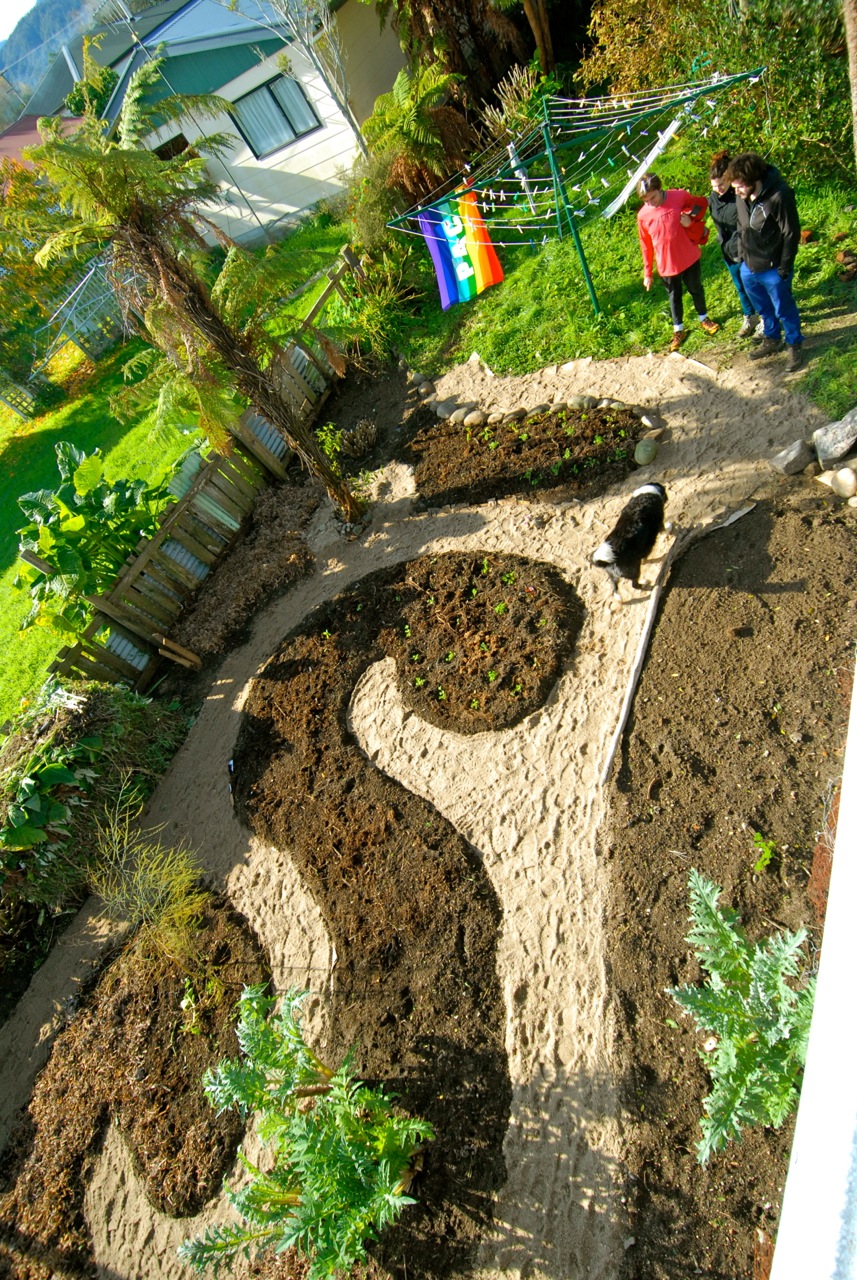
Once the sand was laid on the pathways, the garden beds were clearly defined and the white sand formed an attractive contrast with the rich, dark alluvial Karamea soil.
“Moo” inspects progress as the gardens begin to take shape.
Driftwood and granite river rocks were collected to edge the gardens and further enhance their aesthetic appeal and then the planting began. Silverbeet, brassica, lettuce and other seedlings were planted into the well-composted garden beds to provide a banquet of winter vegetables for the Murray Family to enjoy.
The weeds, grass, sticks and other organic material was piled up and covered to slowly break down and provide compost for the garden beds for the following season.
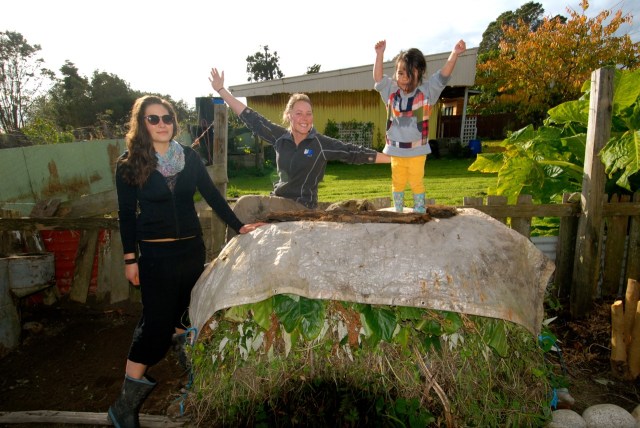
Diva Murray came to celebrate the completion of the garden reclamation project and climbed to the top of Mt Compost.
Many people stopped by to see the amazing transformation from jungle to garden on one week.
Kyla McLachlan, Elise Burkevics and Diva Murray stand in the completed gardens inspecting the newly planted seedlings.
Ten days later, the garden was complete. The mess of overgrown vegetation gone and in its place, tidy, aesthetically pleasing and productive garden beds with the promise of an abundance of winter vegetables.
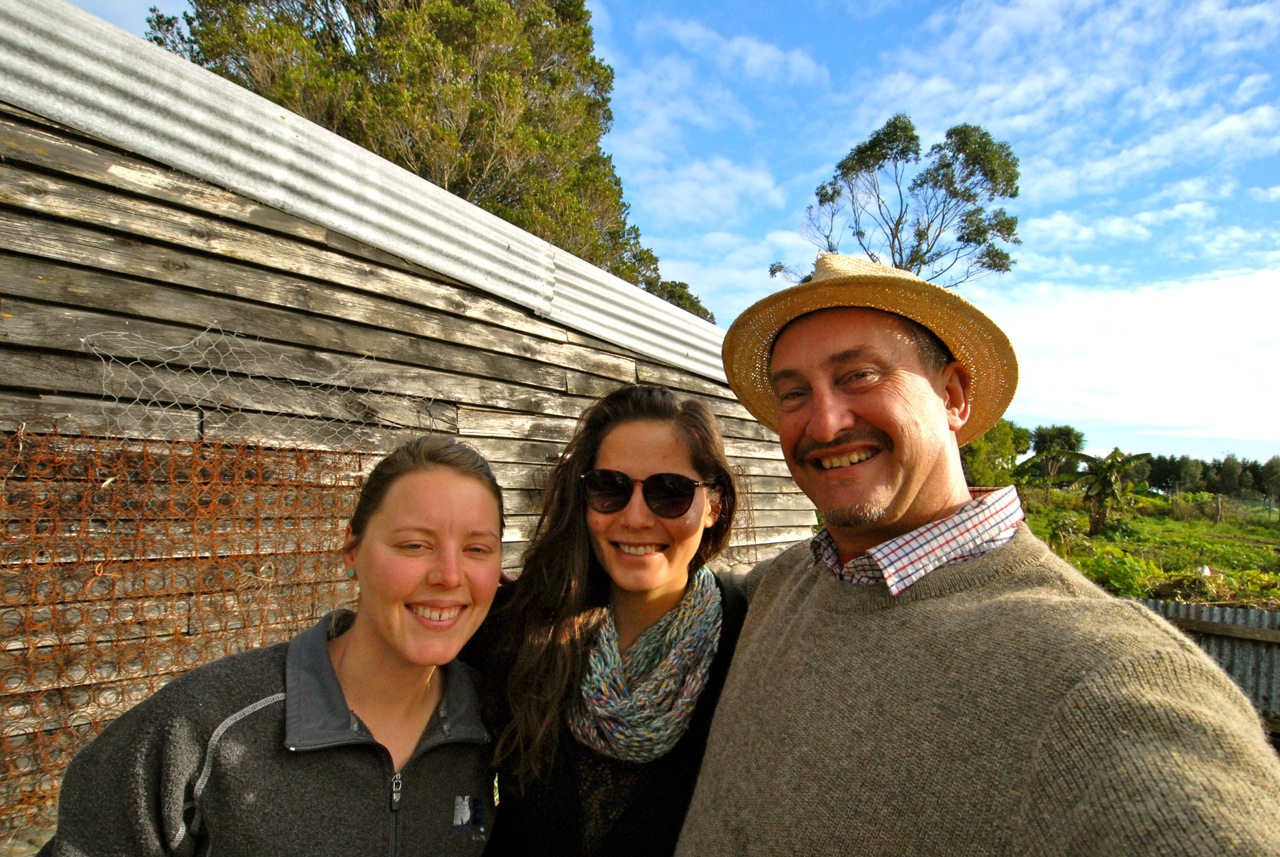
Very Happy: Client Paul Murray (right) was rather pleased with the results of the transformation of his overgrown former garden into neat artistic, functional and productive food patch by Elise Burkevics and Kyla McLachlan.
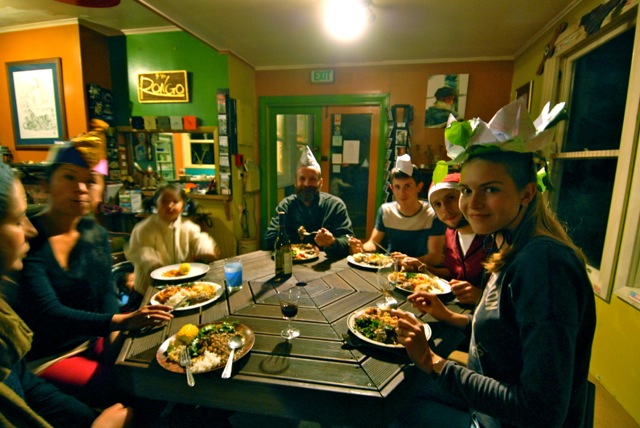
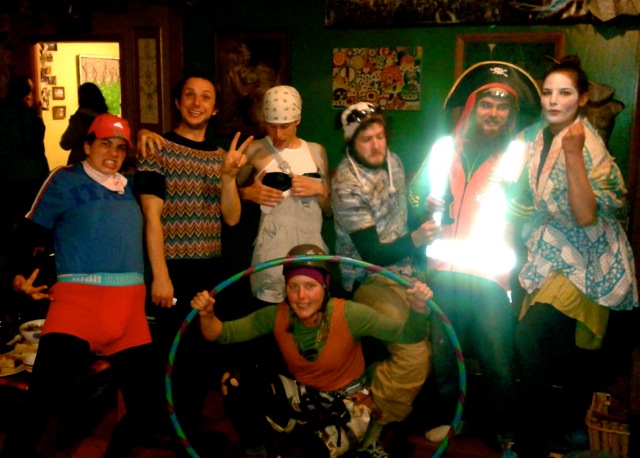
“Anachronism” Party at Rongo Backpackers & Gallery: May 27, 2015. Elise Burkevics (with Hula Hoop) and Kyla McLachlan (as a geisha). (Photo by Tristan Lockerbie)
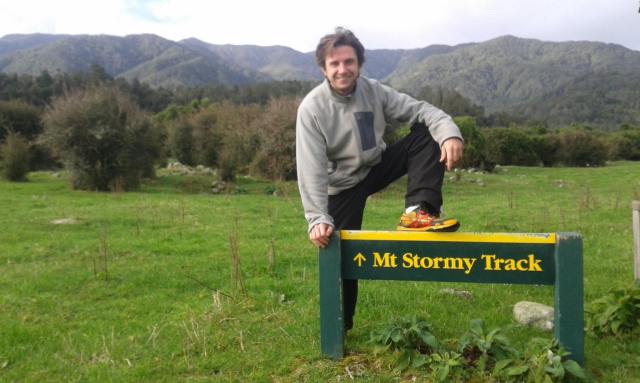
To celebrate the completion of the project, Burkevics and McLachlan joined the rest of the LivingInPeace Wwoofing Crew for an “Anachronism” dress-up dinner party and climbed Mt Stormy the following day. Thank you Ladies, Great Job!
Elise Burkevics (left) and Kyla McLachlan (right) atop Mt Stormy. (Photo by Mitsuyo Numata)
DJs Crap and Echo team up to bring the Karamea Radio public the music of the Appalacians, Ozarks and the Deep South…HillBilly Music tonight, put on your overalls, get your banjos out, knock out a couple teeth, marry your sister, chew on some straw, cook up a raccoon, go blind guzzlin’ moonshine, shoot some meth, saddle up a pig and get on down to this good ole HillBilly Hoedown…You’re Welcome!
This year we’re bringing the Hui back to it’s roots with a 4 day immerse experience.
The Hui’s focus is Moving On, set to a timely backdrop of blossoming regeneration in the Garden City of Christchurch, Aotearoa. This year we’re incorporating Gift Culture and Open Space Technology (OCT) along with the usual PiNZ AGM.
All ages and levels of experience welcome.
We start with a Welcome Day on…Friday 3rd April –
Creating space, Arrivals & Introductions.
Workshops & Meetings.
Potluck Evening Meal.
Then we will take a day each to explore the3 Permaculture Ethics…
Saturday – Earth Care – Kaitiakitanga
Provision for all life systems to continue and multiply.
Earth care encompasses care of the soil, care of all living systems, concepts like Gaia….
Sunday – People Care – Whanaungatanga
Provision for people to access the resources necessary for their existence.
People Care starts with the self – if you don’t take care of yourself you can’t care for anyone else! From the self, People Care spreads out to kin and community…
Monday – Fair Share – Manaakitanga
This is sometimes called “Surplus Share” or “Share our Resources”.
By governing our own needs, we can set resources aside to further our ethics.
Set limits to consumption, growth and population.
We’ll explore how to harness the ethics and principles of permaculture in all areas of our lives to move us towards Sustainability, Regeneration & Abundance by using a blend of Presentations, Talks, Open Circles and OST.
Plus Music, Movies and Stories to entertain us in the evenings.
And plenty of time for sharing, connecting and exploring all things permaculture & beyond!
Fresh local organic Food & Drink provided. Though, this year there is no accommodation at the Hui site. After careful consideration, Central New Brighton School Hall was chosen to host. This has kept the ticket prices as low as possible, and the hui easily accessible and open to more people. Watch this space for information on lift shares, accommodation & billeting options.
Planning the 2015 Hui has been a great adventure so far…. We invite you to join us for a long weekend of Learning, Sharing & Dancing!
Book Review: “Feral: Rewilding the Land, Sea and Human Life” by George Monbiot
Off the Top of My Head
By Paul Murray
Oxford-educated Zoologist and writer George Monbiot takes on the subject of rewilding in his latest book “Feral” and makes it real by searching out and documenting practical examples of its successful application and exploring possibilities of furthering the concept to restore damaged ecosystems for the betterment of human life by recognising that the natural world is integral to our well being.
Wikipedia describes “Rewilding” as “large-scale conservation aimed at restoring and protecting natural processes and core wilderness areas, providing connectivity between such areas, and protecting or reintroducing apex predators and keystone species.”
Conservation is a hot topic these days and everyone has their own perception of what it is and how it should be applied. Monbiot introduces the concept of the “Shifting Baseline Theory” whereby people and conservation groups only seek to restore the environment to the level of their personal experience and recollection of how it once was, not necessarily how it naturally existed, or its natural state. Rewilding is a process that permits nature to conserve and restore itself.
Jasper James/Getty Images
In many parts of the world, relentless grazing by sheep, goats and other livestock limits the re-establishment of the natural environment by browsing young plants and preventing them from reaching maturity. Monbiot suggests that large tracts of Scotland, Ireland, England and Wales (where he lives) are devoid of woodland, forest and have depleted ecosystems as a result of centuries of overgrazing in a chapter he titled “Sheepwrecked.” The same certainly applies in Australia and New Zealand and all other countries where broad-scale grazing practices are common and landscapes are devoid of vegetation and the natural life systems it supports. Rewilding offers a positive means of correcting the damage done and restoring biodiversity.
A “sheepwrecked” landscape
Rewilding is no longer merely an idea or theoretical concept; it has been successfully applied with numerous unexpected benefits. Perhaps the best example is the reintroduction of wolves to Yellowstone National Park in the United States. Wolves had been absent from the park for about 70 years after having been completely hunted out. This led to a proliferation of grazing animals, particularly red deer (or elk), which were then permitted to reproduce freely in an environment without predators. The increase in deer numbers resulted in a marked decrease in vegetation, loss of habitat for birds and animals that had sheltered in the grass and woodlands that existed there before heavy grazing by deer drastically altered the original landscape.
The reintroduction of a dominant predator, in this case wolves, led to an initial reduction in deer numbers, but also a change in the behavior of the deer. They no longer grazed in the valleys, canyons, gulches and gorges, zones where they felt vulnerable to predation. They were restricted to the grasslands and plains where they were able to more easily escape wolf attack. This enabled the vegetation to re-establish in the less open areas, woodlands returned, saplings were allowed to become trees, the trees and the shelter they provide allowed birds to return, small animals found home in the undergrowth, rabbits and mice returned providing a food source for weasels, foxes and birds of prey, which also fed on the carrion left by the wolves.
Bears also came to feed on the berries, carrion and assisted the wolves in the ecological reengineering process by eating deer calves. Beavers came down the rivers and recolonised the banks, built their dams, slowed the flow of the river, which rehydrated the land, facilitating further vegetation growth and stabilising the riverbanks, reducing erosion and soil loss, the river meandered less, the entire ecosystem became more robust, balanced and steadfast. The reintroduction of wolves changed the entire landscape, significantly increased the biodiversity and health of the environment and initiated a natural top-down succession process that has been termed a “trophic cascade.”
The idea of reintroducing wolves to the Yellowstone National Park met with significant resistance, but proponents of rewilding overcame the challenges to the ideas and the people who feared their grandmothers might be eaten and were permitted to release a few wolves into the park to see what effect they would have on the ecosystem. The results far exceeded all expectations and did much to establish the concept of rewilding as a means of repairing damaged landscapes. No grandmas died, no houses were blown down, no one was mauled when the moon was full…the net result definitely justified the means and Yellowstone is now significantly more valuable as a national park, sustains vastly more plants and animals and is far more stable environmentally since the wolves were returned.
How Wolves Change Rivers:
Oceans too can be rewilded; in fact the process is simpler than land rewilding as there are less physical barriers to the movement of plants and animals through the water. The creation of marine reserves around the world has produced remarkable results in quickly restoring fish stocks, species diversity and seabed vegetation. By prohibiting fishing trawlers from regions of the ocean, breeding zones and ecologically significant areas, the number, size and types of aquatic species soon recover and proliferate. Monbiot states that by allowing fish and other marine life the protection they need to regenerate their numbers, fish catches and associated economic return outside the marine reserves have increased.
Another interesting revelation in the book is the importance of whales to the ocean environment and indeed the entire Earth. Whales eat fish, plankton and krill, and it turns out that they also sustain their food sources. Monbiot convincingly demonstrates that removing whales from the ecosystem leads to a trophic collapse of fish, plankton and krill numbers, quite the opposite of claims by the Japanese government and others that removing whales will increase fish numbers and improve catches and allow more food for humans.
Whales feed in the dark depths of the ocean and then return to the surface for air. In the photic zone, the upper levels of the ocean where sunlight penetrates the water, the whales release what scientists politely refer to as “faecal plumes,” meaning they defecate in the water, effectively fertilsing the ocean in the photic zone where photosynthesis occurs. Whale excrement is rich in iron and nitrogen and these nutrients significantly enhance the growth of plankton, which in turn, supports other aquatic life.
By deep diving and returning to the surface, the whales also create turbulence in the water that circulates plankton back up into the photic zone where it can reproduce. The plankton, like all plants, absorbs carbon dioxide and sunlight as it grows. It then sinks to the ocean floor effectively removing carbon from atmospheric circulation and storing it. The sequestration of CO2 by plankton is an important process in the balancing of carbon levels in the atmosphere and Monbiot suggests that the action of whales removes “tens of millions of tonnes” of carbon from the atmosphere, benefits of which reach far beyond the ocean and assists human life and the general health of the planet as well.
How Whales Change Climate:
In addition to significant environmental benefits, rewilding has been shown to generate a much better financial return from rural land than grazing. Environmental tourism, bird and animal watchers, botanical tour groups etc. are attracted to rewilded areas, spending money as they go, Monbiot lists numerous examples in his book of vastly better economic results from eco-tourism than agriculture.
The Anthropecene epoch is in danger of being remembered historically by future peoples as the stupidest, most apathetic, ignorant and indecisive generation ever for its inaction and inability to accept and meet current environmental challenges and for our unwillingness to change, even though we know we must.
Nature knows nothing of shifting baseline theory, as its memory is timeless. In fact, time is all nature requires to fully restore itself. Rewilding is a simple and cost-effective means of restoring damaged environments, it’s as simple as removing grazing animals from an ecosystem and allowing it to regenerate, create habitat, shelter, food sources that permit and sustain wild animals. Perhaps it’s time for humans to respect the power of nature to heal itself, defer to a greater authority on the subject of eco-management and allow natural systems to rewild themselves for the great benefit of all concerned.
Transcript of TED Talk on Rewilding by George Monbiot:
When I was a young man, I spent six years of wild adventure in the tropics working as an investigative journalist in some of the most bewitching parts of the world. I was as reckless and foolish as only young men can be. This is why wars get fought. But I also felt more alive than I’ve ever done since. And when I came home, I found the scope of my existence gradually diminishing until loading the dishwasher seemed like an interesting challenge. And I found myself sort of scratching at the walls of life, as if I was trying to find a way out into a wider space beyond. I was, I believe, ecologically bored.
Now, we evolved in rather more challenging times than these, in a world of horns and tusks and fangs and claws. And we still possess the fear and the courage and the aggression required to navigate those times. But in our comfortable, safe, crowded lands, we have few opportunities to exercise them without harming other people. And this was the sort of constraint that I found myself bumping up against. To conquer uncertainty, to know what comes next, that’s almost been the dominant aim of industrialized societies, and having got there, or almost got there, we have just encountered a new set of unmet needs. We’ve privileged safety over experience and we’ve gained a lot in doing so, but I think we’ve lost something too.
Now, I don’t romanticize evolutionary time. I’m already beyond the lifespan of most hunter-gatherers, and the outcome of a mortal combat between me myopically stumbling around with a stone-tipped spear and an enraged giant aurochs isn’t very hard to predict. Nor was it authenticity that I was looking for. I don’t find that a useful or even intelligible concept. I just wanted a richer and rawer life than I’ve been able to lead in Britain, or, indeed, that we can lead in most parts of the industrialized world.
And it was only when I stumbled across an unfamiliar word that I began to understand what I was looking for. And as soon as I found that word, I realized that I wanted to devote much of the rest of my life to it.
The word is “rewilding,” and even though rewilding is a young word, it already has several definitions. But there are two in particular that fascinate me. The first one is the mass restoration of ecosystems.
One of the most exciting scientific findings of the past half century has been the discovery of widespread trophic cascades. A trophic cascade is an ecological process which starts at the top of the food chain and tumbles all the way down to the bottom, and the classic example is what happened in the Yellowstone National Park in the United States when wolves were reintroduced in 1995. Now, we all know that wolves kill various species of animals, but perhaps we’re slightly less aware that they give life to many others. It sounds strange, but just follow me for a while. Before the wolves turned up, they’d been absent for 70 years. The numbers of deer, because there was nothing to hunt them, had built up and built up in the Yellowstone Park, and despite efforts by humans to control them, they’d managed to reduce much of the vegetation there to almost nothing, they’d just grazed it away. But as soon as the wolves arrived, even though they were few in number, they started to have the most remarkable effects. First, of course, they killed some of the deer, but that wasn’t the major thing. Much more significantly, they radically changed the behavior of the deer. The deer started avoiding certain parts of the park, the places where they could be trapped most easily, particularly the valleys and the gorges, and immediately those places started to regenerate. In some areas, the height of the trees quintupled in just six years. Bare valley sides quickly became forests of aspen and willow and cottonwood. And as soon as that happened, the birds started moving in. The number of songbirds, of migratory birds, started to increase greatly. The number of beavers started to increase, because beavers like to eat the trees. And beavers, like wolves, are ecosystem engineers. They create niches for other species. And the dams they built in the rivers provided habitats for otters and muskrats and ducks and fish and reptiles and amphibians. The wolves killed coyotes, and as a result of that, the number of rabbits and mice began to rise, which meant more hawks, more weasels, more foxes, more badgers. Ravens and bald eagles came down to feed on the carrion that the wolves had left. Bears fed on it too, and their population began to rise as well, partly also because there were more berries growing on the regenerating shrubs, and the bears reinforced the impact of the wolves by killing some of the calves of the deer.
But here’s where it gets really interesting. The wolves changed the behavior of the rivers. They began to meander less. There was less erosion. The channels narrowed. More pools formed, more riffle sections, all of which were great for wildlife habitats. The rivers changed in response to the wolves, and the reason was that the regenerating forests stabilized the banks so that they collapsed less often, so that the rivers became more fixed in their course. Similarly, by driving the deer out of some places and the vegetation recovering on the valley sides, there was less soil erosion, because the vegetation stabilized that as well. So the wolves, small in number, transformed not just the ecosystem of the Yellowstone National Park, this huge area of land, but also its physical geography.
Whales in the southern oceans have similarly wide-ranging effects. One of the many post-rational excuses made by the Japanese government for killing whales is that they said, “Well, the number of fish and krill will rise and then there’ll be more for people to eat.” Well, it’s a stupid excuse, but it sort of kind of makes sense, doesn’t it, because you’d think that whales eat huge amounts of fish and krill, so obviously take the whales away, there’ll be more fish and krill. But the opposite happened. You take the whales away, and the number of krill collapses. Why would that possibly have happened? Well, it now turns out that the whales are crucial to sustaining that entire ecosystem, and one of the reasons for this is that they often feed at depth and then they come up to the surface and produce what biologists politely call large fecal plumes, huge explosions of poop right across the surface waters, up in the photic zone, where there’s enough light to allow photosynthesis to take place, and those great plumes of fertilizer stimulate the growth of phytoplankton, the plant plankton at the bottom of the food chain, which stimulate the growth of zooplankton, which feed the fish and the krill and all the rest of it. The other thing that whales do is that, as they’re plunging up and down through the water column, they’re kicking the phytoplankton back up towards the surface where it can continue to survive and reproduce. And interestingly, well, we know that plant plankton in the oceans absorb carbon from the atmosphere — the more plant plankton there are, the more carbon they absorb — and eventually they filter down into the abyss and remove that carbon from the atmospheric system. Well, it seems that when whales were at their historic populations, they were probably responsible for sequestering some tens of millions of tons of carbon every year from the atmosphere.
And when you look at it like that, you think, wait a minute, here are the wolves changing the physical geography of the Yellowstone National Park. Here are the whales changing the composition of the atmosphere. You begin to see that possibly, the evidence supporting James Lovelock’s Gaia hypothesis, which conceives of the world as a coherent, self-regulating organism, is beginning, at the ecosystem level, to accumulate.
Trophic cascades tell us that the natural world is even more fascinating and complex than we thought it was. They tell us that when you take away the large animals, you are left with a radically different ecosystem to one which retains its large animals. And they make, in my view, a powerful case for the reintroduction of missing species. Rewilding, to me, means bringing back some of the missing plants and animals. It means taking down the fences, it means blocking the drainage ditches, it means preventing commercial fishing in some large areas of sea, but otherwise stepping back. It has no view as to what a right ecosystem or a right assemblage of species looks like. It doesn’t try to produce a heath or a meadow or a rain forest or a kelp garden or a coral reef. It lets nature decide, and nature, by and large, is pretty good at deciding.
Now, I mentioned that there are two definitions of rewilding that interest me. The other one is the rewilding of human life. And I don’t see this as an alternative to civilization. I believe we can enjoy the benefits of advanced technology, as we’re doing now, but at the same time, if we choose, have access to a richer and wilder life of adventure when we want to because there would be wonderful, rewilded habitats.
And the opportunities for this are developing more rapidly than you might think possible. There’s one estimate which suggests that in the United States, two thirds of the land which was once forested and then cleared has become reforested as loggers and farmers have retreated, particularly from the eastern half of the country. There’s another one which suggests that 30 million hectares of land in Europe, an area the size of Poland, will be vacated by farmers between 2000 and 2030.
Now, faced with opportunities like that, does it not seem a little unambitious to be thinking only of bringing back wolves, lynx, bears, beavers, bison, boar, moose, and all the other species, which are already beginning to move quite rapidly across Europe? Perhaps we should also start thinking about the return of some of our lost megafauna.
What megafauna, you say? Well, every continent had one, apart from Antarctica. When Trafalgar Square in London was excavated, the river gravels there were found to be stuffed with the bones of hippopotamus, rhinos, elephants, hyenas, lions. Yes, ladies and gentlemen, there were lions in Trafalgar Square long before Nelson’s Column was built. All these species lived here in the last interglacial period, when temperatures were pretty similar to our own. It’s not climate, largely, which has got rid of the world’s megafaunas. It’s pressure from the human population hunting and destroying their habitats which has done so.
And even so, you can still see the shadows of these great beasts in our current ecosystems. Why is it that so many deciduous trees are able to sprout from whatever point the trunk is broken? Why is it that they can withstand the loss of so much of their bark? Why do understory trees, which are subject to lower sheer forces from the wind and have to carry less weight than the big canopy trees, why are they so much tougher and harder to break than the canopy trees are? Elephants. They are elephant-adapted. In Europe, for example, they evolved to resist the straight-tusked elephant, elephas antiquus, which was a great beast. It was related to the Asian elephant, but it was a temperate animal, a temperate forest creature. It was a lot bigger than the Asian elephant. But why is it that some of our common shrubs have spines which seem to be over-engineered to resist browsing by deer? Perhaps because they evolved to resist browsing by rhinoceros.
Isn’t it an amazing thought that every time you wander into a park or down an avenue or through a leafy street, you can see the shadows of these great beasts? Paleoecology, the study of past ecosystems, crucial to an understanding of our own, feels like a portal through which you may pass into an enchanted kingdom. And if we really are looking at areas of land of the sort of sizes I’ve been talking about becoming available, why not reintroduce some of our lost megafauna, or at least species closely related to those which have become extinct everywhere? Why shouldn’t all of us have a Serengeti on our doorsteps?
And perhaps this is the most important thing that rewilding offers us, the most important thing that’s missing from our lives: hope. In motivating people to love and defend the natural world, an ounce of hope is worth a ton of despair. The story rewilding tells us is that ecological change need not always proceed in one direction. It offers us the hope that our silent spring could be replaced by a raucous summer.
N.Z. National Permaculture Hui 2015: Let’s Get GROWING!
NZ National Permaculture Hui 2015
3rd-6th April 2015 (Easter Weekend)
Moving On
Basic Regeneration with Permaculture
This year we’re bringing the Hui back to it’s roots with a 4 day immerse experience.
The Hui’s focus is Moving On, set to a timely backdrop of blossoming regeneration in the Garden City of Christchurch, Aotearoa. This year we’re incorporating Gift Culture and Open Space Technology (OCT) along with the usual PiNZ AGM.
All ages and levels of experience welcome.
We start with a Welcome Day on…Friday 3rd April –
Creating space, Arrivals & Introductions.
Workshops & Meetings.
Potluck Evening Meal.
Then we will take a day each to explore the 3 Permaculture Ethics…
Saturday – Earth Care – Kaitiakitanga
Provision for all life systems to continue and multiply.
Earth care encompasses care of the soil, care of all living systems, concepts like Gaia….
Sunday – People Care – Whanaungatanga
Provision for people to access the resources necessary for their existence.
People Care starts with the self – if you don’t take care of yourself you can’t care for anyone else! From the self, People Care spreads out to kin and community…
Monday – Fair Share – Manaakitanga
This is sometimes called “Surplus Share” or “Share our Resources”.
By governing our own needs, we can set resources aside to further our ethics.
Set limits to consumption, growth and population.
We’ll explore how to harness the ethics and principles of permaculture in all areas of our lives to move us towards Sustainability, Regeneration & Abundance by using a blend of Presentations, Talks, Open Circles and OST.
Plus Music, Movies and Stories to entertain us in the evenings.
And plenty of time for sharing, connecting and exploring all things permaculture & beyond!
Fresh local organic Food & Drink provided. Though, this year there is no accommodation at the Hui site. After careful consideration, Central New Brighton School Hall was chosen to host. This has kept the ticket prices as low as possible, and the hui easily accessible and open to more people. Watch this space for information on lift shares, accommodation & billeting options.
Planning the 2015 Hui has been a great adventure so far…. We invite you to join us for a long weekend of Learning, Sharing & Dancing!
Tickets on sale at www.permaculture.org.nz or email nzpchui15@gmail.com for information
Rate this: