Wild Wild West Coast Towns

Off the Top of My Head

By Paul Murray

 
Paul on Mt Stormy

Karamea

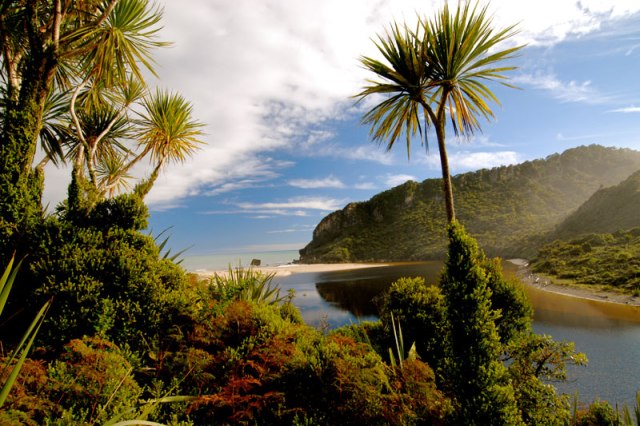
Way up north as far as you can drive; you’ll arrive at the warmest, driest place on the wonderful West Coast. Karamea has a great climate year round and the drive from Westport is spectacular, so take your time, stop often and enjoy the many interesting spots along the way. Nestled between the densely forested mountains of the Kahurangi National Park and the Tasman Sea, Karamea is a geographical island paradise, connected to the rest of New Zealand by the stunningly scenic 100-kilometre “bridge” road north of Westport.

336

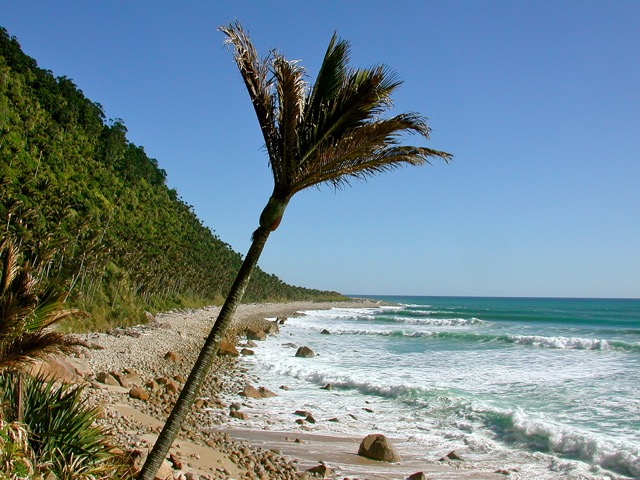
West Coast Nikau Palm  (Photo by Paul Murray)

The road to Karamea is one of the most beautiful drives in the world and affords stunning views of the Tasman coast, river valleys, verdant forest and jagged mountain ranges. The journey takes you along the coast through the charming seaside villages of Granity, Ngakawau and Hector and across the Mohikuniui River before heading into the mountains of the Kahurangi National Park, you’ll pass ancient tree giants, beneath majestic tree ferns and go high over the Karamea Bluff before dropping into the broad alluvial coastal plain at Little Wanganui. You’ll pass happily grazing dairy herds on lush green pasture, the expansive Otumahana Lagoon and over the mighty Karamea River before arriving in the beautiful hamlet of Karamea…getting there is just the beginning of your adventure.

In Karamea, you’ll find the largest limestone arch in the Southern Hemisphere, limestone caves with glow worms and the bones of a giant moa, rushing rivers to raft, forests to explore, mountains to climb and beaches to roam…Karamea is often referred to at the West Coast’s “best kept secret.”

Westport

Westport is the gateway to the Northern West Coast. It is at the end of the Lewis Pass road from Christchurch, which enters the West Coast region at Maruia Springs…you’ll know you’re entering the West Coast when the forest starts to thicken, the mountains become more majestic, the air gets fresher and the climate improves. Westport is right on the coast and is a great base exploring the region’s many attractions. There are adventure activities like jet boating, rafting, caving and horse trekking, as well as coal mine tours, the Coal Town museum and much more to do in Westport. The smart traveller will turn north and head up to Karamea after exploring Westport region and visit the quaint coastal towns of Granity, Hector, Ngakawa, Mokihinui and Seddonville before heading over the spectacular bluff road through the Kahurangi National Park to Karamea.

To the south lies Cape Foulwind. Ship captains, who found it difficult to fill their sails due to lack of breeze, rather than the evil aroma the name suggests, named the cape.

B4

Palmerston Street Westport (Photo Supplied by Tourism West Coast)

Charleston

Situated equidistant between Punakaiki and Westport, this quaint little town once boasted 94 hotels, was home to 18,000 people and was considered as a possible location for the capital city of New Zealand. The town boomed on the back of the gold rush and from 1866 to 1884 it was perhaps the most happening place in New Zealand. Only one of the many gold mines that used to operate in the area is still working and guided tours of the Mitchell’s Gully Gold Mine workings includes a working a battery stamper powered by a water wheel that pulverises gold-bearing quartz rock to release its riches.

The Underworld Adventures company operates out of Charleston and conducts a range of limestone cave and underworld rafting guided tours in the Paparoa National Park. Educational, exciting and fabulous fun, the company’s tours are great value and begin with a little train ride through stunning rainforest and beneath towering limestone cliffs.

Charleston  4

UnderWorld Adventures Cave

Denniston

Ingenious feat of engineering excellence, the Denniston incline was the steepest railway ever built and it was powered by gravity. The weight of a laden coal truck being lowered to the rail yard at Waimangaroa was used to lift goods and people in empty coal buckets to the top of the hill. The brakeman, who applied friction to the cable at the Denniston summit, controlled the speed of the bucket. The experience of riding to the top of the mountain in a coal bucket at the mercy of the brakeman was apparently so harrowing that some of the women who successfully completed the journey never again left the mountain such was their terror at the mere thought of again having to take the fearful ride.

Reefton

F2

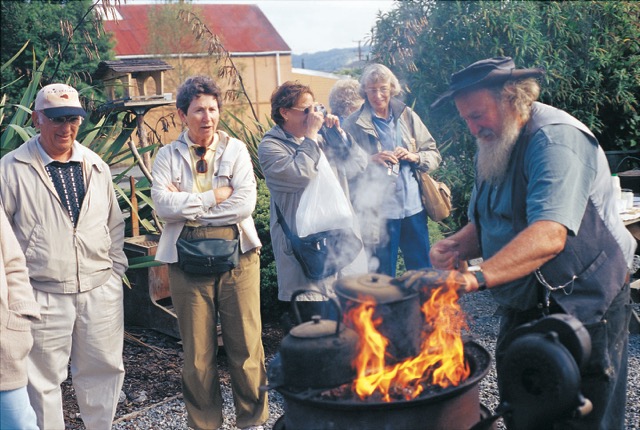
Reefton Townsfolk (Photo Courtesy of Tourism West Coast)

Reefton is considered the gateway to the West Coast for travellers from the east. The region is all about history. Built on gold, the town dates back to the 1860s and retains much of its old-world charm today. The main street of the town has a Western movie set feel and many of the buildings lining Broadway Street date back to the 1870s. Reefton was the first town in New Zealand to have electric lighting, which was switched on in 1888, just six years after Thomas Edison’s technology first lit the streets of New York.

Coal mining supported the region in the 1900s and these days, gold and coal mining remain the community’s economic foundation. The historically high gold price of late has boosted the local economy and given the region a surge of development and much of the town has been renovated to retain its historic appeal. The drive between Reefton and Westport along the Buller Gorge is enchanting; there are many places to pull over, stop and breath in the scenic splendour of the raging Buller River and the giant white clouds that rise from the steep forested valley.
F1

Hokitika

Hokitika Gorge 5

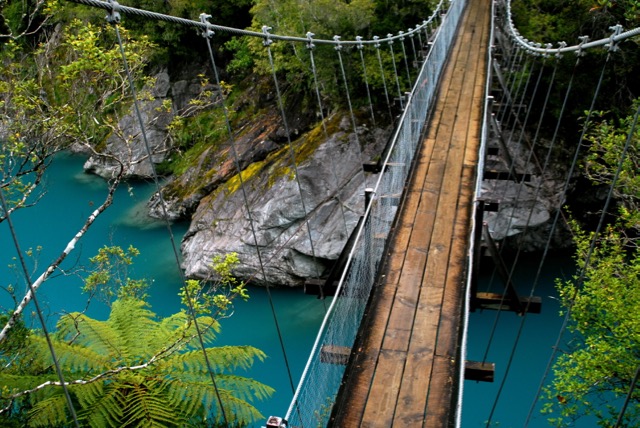
Swing Bridge over Hokitika Gorge (Photo by Paul Murray)

The vibrant town of Hokitika is perhaps the most artistic and creative urban centre on the West Coast. Artisans work with local materials; gold, silver, pounamu greenstone, driftwood, paua shell and stone to create a tremendous array of fine art pieces, jewellery and sculpture that make for excellent souvenirs as you’ll be taking home a piece of the West Coast lovingly fashioned into an original work of art by a Coaster.

A good starting point would be the stately Carnegie Building, which houses the West Coast Historical Museum and the information centre. The museum has an exceptional collection of both Maori and European artefacts, a documentary video display of the region’s history and a gallery of local painting and sculpture. Another attraction for visitors is the Saturday outdoor market on the bank of the Hokitika River. The market showcases the talents of local artists and craftspeople and fresh produce is also sold. Hokitika is an excellent base for exploring the area and a visit to Hokitika Gorge, Lake Kaniere, the Ross goldfields and Kumara regions will be highly rewarding.
DSC_0005.JPG

Hokitika Cemetery is also a very interesting place to visit as it has the graves of South Westland explorer and philosopher Charles Douglas, as well as that of Eric Stanley Graham, the West Coast’s most infamous mass murderer. Graham, a dairy farmer, ran amok in 1941, fatally shooting seven men, four of which were policemen. Graham was wounded and later died of his injuries and was later buried in a nondescript grave at Hokitika Cemetery in a row of graves that includes two of his victims. A monument recalling the tragic incident now stands at Kowhitirangi and can be seen on the road to Hokitika Gorge.

Hikitika Gorge 4

Hokitika Gorge (Photo by Paul Murray)

Among the many gravestones, people from the world over are represented; some of the headstones are in Hebrew, Chinese and other languages and the many New Zealand soldiers lost in the Boer, Vietnam and both World Wars reflect the great sacrifice made by New Zealand in the service of her allies. The cemetery looks out over the Tasman Sea and is a very interesting place to stroll around and reflect on yesteryear.

The National Kiwi Centre has live kiwi, tuatara and giant eels on display and you can carve your own greenstone pendant at Bonz n Stonz, or take a leisurely cruise on calm waters through virgin rainforest on a paddleboat…Hokitika has a plethora of sightseeing and all-weather activities for the whole family.

Ross

It was here that the largest gold nugget in New Zealand was found in 1909. The “Honourable Roddy Nugget” was as big as a man’s fist and weighed 99 ounces. It was purchased by the N.Z. government and presented to King George V as a coronation gift. A 1950 enquiry about the whereabouts of the nugget to the Royal Family resulted in the embarrassed Imperial Household reporting that the nugget had been melted down to gild a Royal tea service! (Further discomfiture ensued when the said tea service could not be located).

(There is some conjecture over the nugget’s origin. Some consider the “Honourable Roddy” was in fact found in Australia and smuggled to New Zealand by dishonourable diggers and planted at Ross to fraudulently inflate the sale price of their gold claim).

The land beneath the township of Ross has never been mined and a Ministry of Commerce geologist estimated in 1993 that gold deposits of about $700 million lie under the town.


Punakaiki

The loop walkway around the pancake rocks at Punakaiki is one of the most popular tourist spots on the West Coast. An easily accessible walkway that is wheelchair friendly winds through the nikau palms, cabbage trees and flax to a spectacular layered limestone formation that has been shaped by the elements and crashing waves from the Tasman Sea. At hight tide in a big sea, the waves crashing into the limestone force water into cracks and crevasses and up through blowholes in the rock to create huge plumes of salty spray in which rainbows can often be seen. People of all ages will enjoy this walk and the stunning coastal views.

Opposite the entrance to the blowhole loop track is Punakaiki Crafts, a West Coast artist’s cooperative. Punakaiki Crafts has an international reputation for excellence and the work many of the Coast’s most creative artists and craftspeople is available for sale. From warm possum skin lingerie, creative and unique Coast jewellery to smiling driftwood fish, Punakaiki Crafts is a great place to pick up a quality souvenir from the West Coast.

C4

Punakaiki Township (Photo Supplied by Tourism West Coast)

There are also some great tramps in the Punakaiki area from the sedate Truman Track, which meanders through the rainforest to a stunning coastal view, to the more challenging Inland Pack Track into the heart of limestone country. The Pororari and Punakaiki rivers offer fabulous canoeing, safe swimming and bird watching activities and there are also many caves in the region and horse riding along the beach is the embodiment of freedom.

C1

Punakaiki Pancake Rocks (Photo Supplied by Tourism West Coast)

Barrytown

Between Punakaiki and Greymouth, Barrytown is situated on an expansive fertile plain between mountains and sea and is a perfect location for an extended “away from it all” break. The area has many retreat-type accommodation facilities suitable for families or for a romantic escape.

Arthur’s Pass

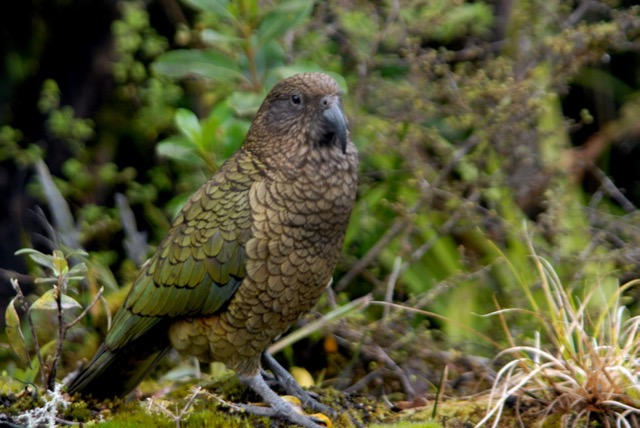
Right in the heart of Arthur’s Pass National Park, this idyllic alpine village is a warm and cosy base for mountaineers, alpinists and nature lovers to explore the peaks and valleys, forests, waterfalls, rivers and snowfields in close proximity to the town. Inquisitive Kea, a native alpine parrot, can be seen in and around the village. Prone to mischief, Kea are extremely curious and playful, they pose for photographs and sometimes try to dismantle your car with their sharp beaks and strong talons. They have been known to open unattended packs to sample hiker’s lunches and souvenir tourist’s cameras and flown off with them into the forest.
Kea


Jacksons

This fabulous old pub was once a coach stop between the Canterbury and the West Coast. It is still a great location to break up the drive in either direction, and an excellent place for breakfast, lunch or dinner. Down the road is probably the best camper van facility in New Zealand. Jacksons Retreat has all-weather camping facilities and a great view of the Taramakau River and the mountains around Lake Brunner.

Otira

Otira was once a busy town that serviced construction gangs working on the 8-kilometre Otira tunnel, which opened in 1923 and enabled rail transport between Christchurch and Greymouth. It flourished as a rail town until road transport and buses took over much of the freight and people transport in New Zealand and gradually became a ghost town on the way to Greymouth. The town’s raison de’etre ceased to exist, employment opportunities faded, the people moved on and eventually, all the houses stood empty and the businesses closed. However, the entire town—the pub, 17 houses, the fire station and engine, the swimming pool, school, railway station and community hall–was purchased in 1997 by entrepreneurs Chris and Bill Hennah for the princely sum of $78,000. In the past decade, they have been working hard to restore the town’s infrastructure and rebuild the services and facilities it once offered.

Otira is a very interesting place to stop and have a break and it is also possible to stay at the historic hotel, in one of the renovated houses, or the backpackers there to explore the town and the many walking tracks in the area.

Greymouth

As the commercial hub of the West Coast, Greymouth is centrally located and is the Coast’s largest town. All roads lead to Greymouth as well as the scenic Tranz Alpine train line, which terminates in Greymouth after traversing the Southern Alps on its way west from Christchurch. The town is replete with fine restaurants, museums, art galleries, amenities, facilities and services you would expect from a major urban centre. A number of sport fishing charter boats operate out of Greymouth between July to September and some record blue fin tuna have been caught off the Coast recently. Greymouth is also home to the famous Monteith’s Brewery and tours of the facility and beer tasting is a great activity in any weather (sorry kids, this one is for mum and dad only).

Across the Grey River is the suburb of Cobden, which has some marvellous day walks along driftwood-strewn pebble beaches and along the Tasman coast.

From Greymouth on most days, a clear view of the large looming Southern Alps suggests much awaits the traveller heading south. Greymouth represents a botanical turning point and the forest changes from nikau palm groves, pohutukawa and other more tropical trees fade out and are replaced by more cold-tolerant varieties such as rimu, kahikatea and beech forests.

DSC_0021.JPG

Blackball

Home of the N.Z. Labour Party, Blackball was the site of a miners strike in 1908 when the miners downed tools seeking a 15 minute extension to their lunch 15-minute lunch break. The successful strike paved the way for similar action by miners across the country and from it workers nationwide were empowered. The town is on a plateau with views of the peaks of the Paparoa Range. The many walks in this region are centred on the remnants of the region’s gold and coal mining history.

“Formerly the Blackball Hilton” a historic hotel in Blackball, was formerly called the “Blackball Hilton.” However, a sternly worded letter from lawyers representing the Hilton family suggested that legal action would be taken against the owners of the old pub if they didn’t change the name of the establishment. Not wishing to enter into a protracted legal challenge with such a deep-pocketed opponent the publicans duly changed the name.

5358415655_bbb320d3ae_b

The BlackBall Hilton (Photo by Dan Goodwin)

Shantytown

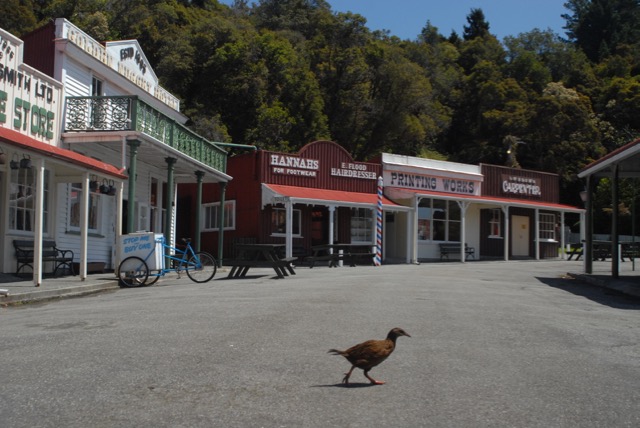
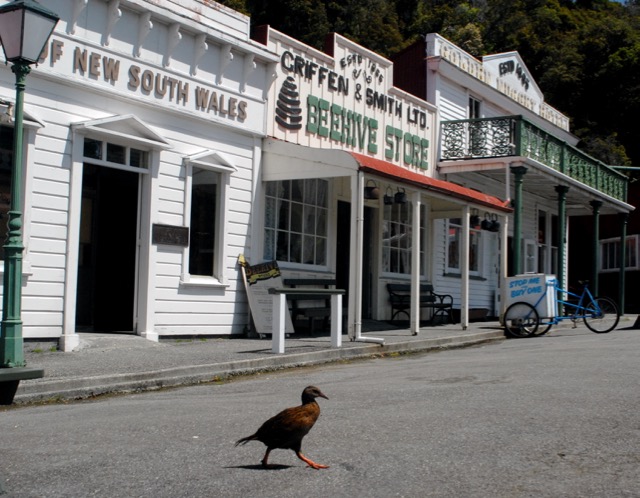
New Zealand’s premier historic attraction. This replica township has been constructed from buildings from round the West Coast and recreates the atmosphere and style of a West Coast boomtown. Shantytown has working stores in the style of the late 1800’s as well as a steam train, sawmill, goldfields, water races, a shebeen, a hospital, bank, jail, gold panning activities, a Chinese mining settlement and a fabulous display of relics and artefacts from the heady days of the Gold Rush.
Shantytown 16

Shanty Town, Greymouth (Photo by Paul Murray)

Lake Brunner

Brunner 28

Lake Brunner (Photo by Paul Murray)

A raft of aquatic activities await you at Lake Brunner as well as numerous scenic and historic bushwalks around the lake that take in the region’s gold mining and timber milling history. One of the best trout fishing locations in New Zealand with year-round fishing possibilities, local fishing guides, tackle and bait supplies and plenty of fishing stories at the Moana Hotel in Moana, the main township on the lake. Lake Brunner is a fabulous location for a family holiday ands is one of the West Coast’s fastest growing tourist destinations. The Tranz Alpine train stops at Moana and it is possible to disembark here and enjoy the lake for a few days before heading on to Greymouth and beyond.

Kotuku

On the way to Lake Brunner from Greymouth a detour to the Jack’s Mill School historic reserve is very rewarding. The school principal Edward Darracott was a inspiring and innovative leader who believed in teaching his students how to think for themselves as well as providing them with practical skills that they could apply to their lives. The students built beautifully landscaped gardens and constructed a 3/4-sized bungalow and in the process developed gardening skills, botany, architecture, carpentry, bricklaying, plastering, painting, surveying, report writing and other abilities. Darracott believed that if the students were actively involved in the beautification of the school grounds and creating an aesthetically pleasing environment, that it would promote inner harmony in the students. The school grounds are in the process of being restored by a group of former students and the Department of Conservation. The school, bungalow and grounds are recognised by the New Zealand Historical Places Trust.

Franz Josef

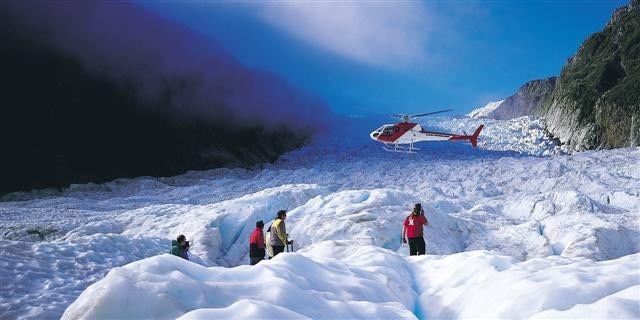
To stand at the terminal face of a massive frozen river and feel the weight and might of this natural phenomenon is a truly humbling. To then strap crampons to your boots and climb upon the glacier and explore its crevasses and folds is an incredible experience. Glacier Country is understandably one of the most popular destinations on the West Coast. Outside of Argentina, New Zealand is the only country where glaciers extend their icy tongues into the temperate rainforest and grind to a halt only 250 metres above sea level. Government geologist Julius von Haast named Franz Josef Glacier in 1863 after the then Austro-Hungarian Emperor. Franz Josef is a hive of activity year-round. There are helicopters buzzing overhead, buses coming and going and throngs of sightseers browsing around the town and enjoying the many fine restaurants and cafes as well as the excellent information centre, which has models of the region and loads of information about the glacier, it’s history, geology and physiography. Two glacier guiding companies operate out of Franz Josef as well as a number of helicopter and fixed-wing scenic flight companies that will take you high above the mountains and can even land on the upper reaches of the glacier for a truly incredible natural experience in white and blue.
I12

Whataroa

Rare white heron (kotoku) nest at the Waitangi Roto Nature Reserve in the summer months and guided tours, which include a jet boat ride to the sanctuary, is a wonderful way to observe these most regal and elegant birds tend their young.

The Kotuku Gallery in the main street has a fine collection of Maori artefacts, craft and artworks.

Hari Hari

It was here in 1931 that Australian pilot and adventurer Guy Menzies completed the first solo flight across the Tasman Sea from Australia to New Zealand. Menzies crash landed and his craft—the Southern Cross Junior–came to rest wheels up in a swamp. Much controversy surrounded the flight as Menzies had informed the authorities in Australia that he would be flying across Australia west to Perth, however, shortly after takeoff, he banked east and took on the Tasman. He completed the flight in 11 hours and 45 minutes. A quaint little rural town, Hari Hari has a lot to offer trampers, anglers, deer hunters, bird watchers and sightseers.

Okarito

The 16-kilometre drive off the coast road to the charmingly quaint coastal town of Okarito will be rewarded with stunning panoramic views of the august jaws of the Southern Alps, an expansive and peaceful estuarial lagoon teeming with bird life and the solitude and calm for which this special place is renowned. An obelisk commemorates the first recorded sighting of New Zealand by Abel Tasman near here in 1642 as well as the charting of the coast by Captain James Cook in 1770.


Fox Glacier

DSC_0061.JPG

Fox Glacier Guide (Photo by Paul Murray)

A lovely little village at the foot of the largest glacier on the West Coast. The town offers a more intimate glacier experience as the town is smaller than it’s neighbour Franz Josef. The Fox Glacier Guiding Company has been conducting ice tours since 1928 and offers a range of half and full day hikes on the ice as well as several heli-trek options ranging in duration from several hours to several days. Training courses for aspiring alpinists and ice-climbing excursions are also on offer for the more adventurous. Interestingly, the Fox Glacier—unlike most of the world’s glaciers—has been advancing sine 1985.

Lake Matheson

Stunning walk for all ages around a still and peaceful lake that on a clear day perfectly mirrors the Southern Alps and the giant snow-capped peaks of New Zealand’s highest mountains; Mt Cook and Mt Tasman.

I5

Lake Matheson (Photo Supplied by Tourism West Coast)

Gillespies Beach

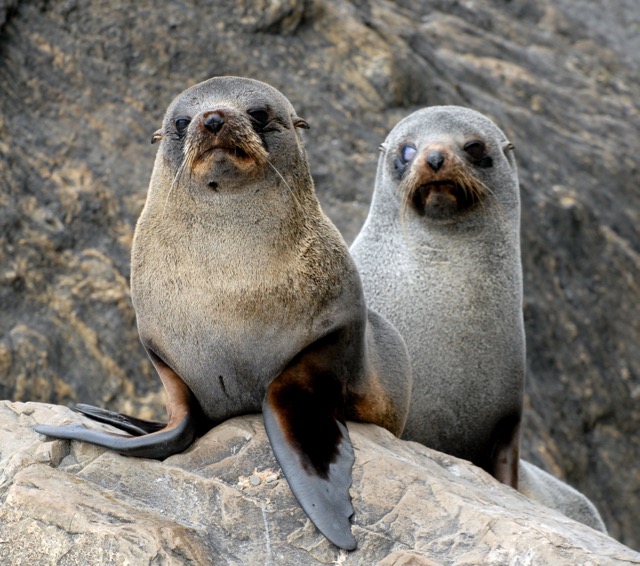
Walk along a wild, stony beach littered with driftwood past old gold workings, tunnels and abandoned machinery through the forest to a seal colony where seals can be observed in their natural state…lolling about on the beach, fighting, lumbering along, and plunging into the ocean from the rocks.

Gillespies Beach  2

DSC_0321.JPG

Seals at colony on Gillespies Beach (Photo by Paul Murray)

Bruce Bay

Here the coast road emerges from the forest canyon to reveal sweeping coastal views of the bipolar Tasman Sea, which ranges from a millpond to a thrashing turbulent maelstrom, depending on how it is feeling.

DSC_0114.JPG

Wood carving at Bruce Bay Marae (Photo by Paul Murray)


Lake Moeraki

To paddle a kayak or canoe on this peaceful mirror lake inspires reflection and introspection. Surrounded by ancient kahikatea tree giants and steep mountains, the lake offers tranquil sanctuary from the dense forest. A walk through the forest at Monro Beach will bring you to a calm bay of stones and shells where rare Fiordland Crested penguins (Tawaki) can be seen from July to January. Guided tours are available for guests at Lake Moeraki Wilderness Lodge. Please take care not to disturb the birds, observe them from a distance and respect their habitat.

Jackson Bay

The southernmost settlement on the West Coast is also its only seaport. A calm and sheltered bay is home to a few hardy Coasters, a small fishing fleet and Fiordland crested, blue penguins, fur seals and dolphins can be easily seen most days. The drive to Jackson Bay should be rewarded with a meal at The Cray Pot, which serves a bounty of seafood from local waters.

DSC_0045.JPG

Jacksons Bay Wharf (Photo by Paul Murray)

Haast

Located at the heart of the South West New Zealand UNESCO World Heritage Area, Haast is a wild, untamed and wonderful place. Today the word “untouched” has become a synonym for beautiful, when it really means “pristine.” The Haast region is one of the genuinely untouched accessible places left on Earth. Here mighty rivers, giant trees, ferocious seas and tempestuous weather combine to create an emotive masterpiece of natural splendour. The World Heritage Information Centre is perhaps the best such facility n New Zealand and has a wealth of information, photographs, displays, maps and charts on the region’s history, geography, flora and fauna.

Designated a World Heritage Area by UNESCO in 1991, the South-West New Zealand (Te Wahipounamu) World Heritage Area covers 2.6 million hectares, or about 10% of New Zealand. Other World Heritage Areas include; Mt Everest, the Great Barrier Reef and the Grand Canyon.

DSC_0065.JPG

Haast River (Photo by Paul Murray)

Makarora

Maori knew this spectacular, wild and remote region as “Kaika Paeki,” “Place of Abundant Food.” They visit the area to hunt and fish and stock up on supplies as they made their way to the West Coast from Otago and Southland in search of pounamu greenstone. Today, Makarora offers a range of outdoor activities, day walks and more challenging multiple-day walks up and down mountains, across rivers and along pristine valleys.
maxresdefault-2

##########################################################


The Wonderfully Wild West Coast

 Off the Top of My Head

 
By Paul Murray


The West Coast of the South Island of New Zealand is a slice of paradise sandwiched between the roaring Tasman Sea and the majestic Southern Alps. It extends 600 kilometres from the subtropical north at Karamea to the temperate south at Jackson’s Bay. Along its length are a smorgasbord of activities, a feast of scenic splendour and a banquet of opportunity for wondrous experience through vivacity and adventure or via blissful relaxation.

DSC_0001.JPG

From the first glimpse of the morning sun over the impressive alps to the east to when it sinks into the Tasman in the evening, your day will be filled with discovery, fascination and wonder…the West Coast is the best coast…take your time and enjoy the experience of being in one of the greatest, wild places on Earth.

This is an invitation to indulge yourself in the wondrous West Coast, to explore the many facets of this scenic jewel and take home with you fantastic memories of an unforgettable holiday. The West Coast is a holiday destination in itself, there is something for everyone here, take you time, relax, listen to the birdsong, smell the flowers, photograph the stunning scenery, chat to the colourful “Coasters” you meet along the way and find for yourself a secret, special place…somewhere just for you to unwind, be free and discover yourself in the bosom of Mother Nature.

DSC_0027.JPG

For more detailed information, track guides, books on flora, fauna, history and Coast life, help with accommodation, weather reports and local knowledge, drop in at the many information centres and ask the affable and conversant staff about each region along the West Coast.

Ever since the lure of gold in the 1860s, people from around the globe have been flocking to the West Coast of New Zealand’s South Island. The economy exploded during the gold rush years, crashed when it ended and has bumped along with the emergence of lesser industries of flax milling, timber milling and stabilised somewhat through dairying and now tourism. It is currently the fastest growing regional economy in the New Zealand. The Coast took an economic hit with the 2002 decision by the federal government to halt native timber logging, but it is again finding its way to prosperity through the relatively new industry of tourism, the booming dairy industry and its old stalwarts—coal and gold mining.

Possum Pete's 2

All along the Coast evidence of investment and development is evident, houses are being renovated, fresh paint and home extensions, new sub-divisions and businesses catering to the burgeoning tourist industry are opening their doors to the world. Projections by Statistics N.Z. show no end in sight for the popularity of the region for overseas visitors and domestic travellers alike.

The free and easy West Coast lifestyle and relatively inexpensive real estate allows people to establish quirky businesses to pursue their passions and make a living by doing exactly as they please…you’ll find all sorts of unusual business ventures, curiosity shops, galleries and artisans along the West Coast and in them you’ll find people filled with the contentment and happiness that only comes from following your dreams.

Maori discovered the West Coast around 700 years ago and it was later explored by intrepid men like Charles Brunner and Charlie Douglas, who ventured into the unknown and reported on its mystery. Gold and coal mining, flax milling, sphagnum moss collection and the timber and dairy industries then developed the Coast. Today people come to appreciate the Coast’s natural beauty rather than to plunder its natural wealth…nature has finally triumphed over man.

“Toitu he kainga; whatu-ngarongaro he tangata” “People come and go, but the land endures.”
Maori proverb
Shantytown 14

To maximise your enjoyment of the West Coast, take your time, slow down to match the pace of life and work with the weather…if it is raining, which it occasionally does on the Coast, visit any of the numerous museums and delve into the region’s fascinating history, check out the many art galleries, visit Shantytown, a replica 19th century gold rush town, drop in at a local pub and have a chat with a friendly “Coaster,” go underground and explore a limestone cave system…pretty soon, the sun will again be shining and you can resume your outdoor adventures. If you take plenty of time and work with the Coast, the Coast will work with you and you’ll have the time of your life.

“We have a great deal of disagreeable weather, an a small proportion of bad weather, but in no part of the world, I believe, does Nature so thoroughly understand how to make fine days as in New Zealand.”
(Lady Barker 1870)

The diversity in scenic beauty is a feature of the West Coast, around every bend awaits a stunning new vista. The Southern Alps are petrified Gods to the Maori people…travelling along the West Coast is a spiritual experience. As you observe the mountains, forests, cloud formations, crashing waves, rocky outcrops and raging rivers, it often seems like the scenery is watching you…yes, it is very easy to accept that the West Coast is where the Gods of nature live. There are faces in the clouds, in the landscape and the dense forest, these are the Gods watching over and protecting travellers as they pass, please enjoy, but respect our sacred coast.

DSC_0130.JPG################################################################


Handy West Coast Hints and Historical Quotations

Off the Top of my Head 

By Paul Murray
 

“Please remember that sandflies are an endangered species…every one you kill drives them closer to extinction…it is estimated that there are only 80 billion of the little critters remaining in the wild.”

“Don’t worry about the rain, it will wash off, doesn’t stain your clothes, is non-toxic and is great for your skin!”

“Driving along the coast road is best done in as lower gear as possible, slow right down, and take in the stunning scenery, stop often and enjoy the ride for the journey is what the Coast travel experience is all about.”
Kohaihai-River-Mouth_Karamea

“Pull over onto the many overtaking bays along the way to let other vehicles pass is the correct driving etiquette (remember, not everyone is on holiday) and take extra care on the many one-way bridges that only allow passage of one vehicle at a time, if in doubt as to right of way, give way to all oncoming traffic, especially large trucks!“

“Coasters may initially seem gruff and unfriendly, but they’re all softies and will roll over and beg if you scratch their tummies…or buy them a beer!”

“If you can see the mountains, it’s going to rain…if you can’t see the mountains, it’s raining!”

“Rain is champagne for the forest.”

“Intermittent periods of intense beauty amid a deluge of immense beauty”
(West Coast weather report)

“More specific local detail about activities and attractions is available at the many information centres along the West Coast. Drop in and pick up the regional brochures and have a chat with the friendly and helpful i-site staff, who are full-bottle on local knowledge.”

“Karamea may be the end of the road for you, but it’s the start of the road for us!”
(Karamea Resident)

DSC_0063.JPG

“Far South Westland is as remote from the settled centres of New Zealand as one can reach; its extent is vast enough to test all the powers of the body and the imagination. Set between sky-popping peaks of the alps and the vast emptiness of the western seas are forests and lakes, rivers and seashores, as beautiful, as mysterious, as rich in elemental spirit as any left on Earth.”
(West Coast poet Peter Hooper)

I’ve travelled quite a lot–Swiss Alps, Pyrenees, New Guinea—but the West Coast tops the lot. It’s absolutely spectacular, we’ve had a wonderful holiday and we’re definitely coming back.”
(Ian Johnson, Willunga, South Australia)

“One of the top 10 coastal drives in the world.”
(Lonely Planet)


Historical West Coast Quotations

“Nothing populates a waste, howling wilderness like gold.”
(James Buller on Hokitika)

“As far as the eye could reach everywhere snow and ice and rock appeared around us, and in such gigantic proportions that I sometimes thought I was dreaming, and instead of being in New Zealand, I found myself in the Arctic or Antarctic mountain regions.”
(Geologist Julius Haast, exploring the Mt Cook region in 1862, on the grandeur of its peaks and glaciers)

“Rain continuing, dietary shorter, strength decreasing, spirits failing, prospects fearful.”
(West Coast Explorer Thomas Brunner 1847, just prior to deciding to eat his faithful dog “Rover” to stave of certain death from starvation. The desperate act earned him the nickname “Kai-Kuri,” “Dog-Eater.”)

“One long solitude, with a forbidding sky, frequent tempests and impenetrable forests.”
(French sailor Jules de Blosseville 1824)

“The last, loneliest, loveliest, exquisite apart…”
(Rudyard Kipling)

336

“Now that that is over, I wouldn’t tackle it unless someone gave me 5,000 quid.”
(Australian pilot Guy Menzies after crash landing in a swamp at Hari Hari in 1931 to complete the first solo flight across the Tasman.)

“Moral engines that were put on Earth to see that men didn’t lay about”
(Explorer Charles Douglas or sand flies and mosquitoes)

“Not being able to swim has saved my life many a time.”
(Charles Douglas on the dangers of river crossings) (The brave, the foolish and the drunk often drowned)

“Fools say that knowledge can only be acquired from books & men.”
(Charles Douglas, South Westland explorer, philosopher and naturalist.)

“For curiosity and impudence, the kea takes the record among all the feathered creation.”
(Charles Douglas, South Westland explorer, philosopher and ornithologist)

“A small grain of knowledge is cheaply purchased at the expense of a thousand ordinary lives.”
(Explorer and philosopher Charles Douglas reflecting on his unconventional life of adventure and battling the elements in the harsh south Westland environment.)

################################################################

Posted in Adventure, Buller District Council, Department of Conservation, DOC, Environment, Heaphy Track, Historical, Humor, Humour, Kahurangi National Park, Karamea, Mountain Biking, Nature, New Zealand, Oparara, Oparara Basin, Paul Murray, Photography, Product review, Social Commentary, South Island, Tramping, Travel, West Coast | Tagged , , , , , , , , , , , | 1 Comment

The Rongolian Star Issue 10: September, 2011

The Rongolian Star Issue 10: September, 2011

The Rongolian Star

Issue No. 10: September 2011
Published by Royal Decree since 1878
Rongo, 130 Waverley Street,
Karamea, Buller, South Island, New Zealand
Telephone    00 64 3 7826 667
Web:  www.rongobackpackers.com
Posted in Uncategorized | Leave a comment

Karamea Ministry of Red Tape #1

Karamea Ministry of Red Tape

A New Zealand Government Department authorised by an Act of Parliament and by Royal Decree to Receive Official Complaints.

Office Manager – Red Scarlett. Senior Complaints Officer – Rob Bersdog

The Curious Case of the Premasticated Chocolate Fish

Karamea Ministry of Red Tape Office, Market Square, Karamea

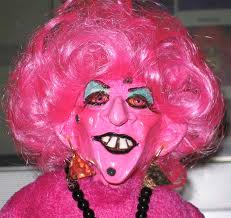
Hyacinth:   Good morning. I am here to lodge a serious complaint!

Rob Bersdog

Rob Bersdog:    An Official Complaint Madam?

Hyacinth:    I am not a Madam! I am virtuous Christian church goer. Yes, I would like to make an official complaint!

Rob Bersdog:    So what is the nature of your complaint, babe?

Hyacinth:    Well I purchased this chocolate fish from the Karamea Information Centre and look someone has eaten the tail before I bought it!

Rob Bersdog:    How outrageous! Do you realise the seriousness of your complaint Miss ……???

Hyacinth

Hyacinth:    Miss Camelia! No!  How serious is my complaint?

Rob Bersdog:    Mmmm! Let me see… Ministry of Red Tape Complaint 714/3 “To whit. Did purchase aforesaid chocolate fish minus cranial obtrusion!”  Wow!  This complaint properly prosecuted could result in lengthy prison terms for the miscreants that have enacted this monstrous crime upon your good self!

Hyacinth:    Good! Justice must prevail!  Now look here young man and examine this chocolate fish very closely and you will note that the head has also been eaten and there are the incriminating teeth marks.

Rob Bersdog:    Indeed! Rather scandalous Miss Camelia!

Hyacinth:    You young people are not so sharp are you? Look it has been gutted, scaled and filleted as well!

Rob Bersdog:    I see what you mean. How rude!!

Hyacinth:    Now look closely Mr.   …   ???

Rob Bersdog:    Bersdog!

Hyacinth:    An act of vicious cruelty has seen someone cut off the dorsal fin.

Rob Bersdog:   Sacre Rouge!  In all my born days I have never seen such vicious depravity!

Hyacinth:    (sob, sniffle) Look this poor innocent chocolate fish has also been skinned alive and had its pectorals, deltoids, abs and gluteus maximus removed!

Rob Bersdog:    Shall we kneel down and pray for forgiveness!!

Hyacinth:   No I want the perpetrators castrated!!

….knock… knock…..knock…

Red Scarlett:    Come in Rob!

Red Scarlett

Rob Bersdog:    I’ve got a live one Boss! Miss Hyacinth Camelia!

Red Scarlett:    Excellent! Does she have a Gold Card?

Rob Bersdog:    No, only her Pension Card.

Red Scarlett:    Rats!! Does she have any gold fillings?

Rob Bersdog:    No, she has got dentures!

Red Scarlett:    Mmm! What would Uncle Shylock do in this situation? Right, bring her in I will deal with this problem!

Rob Bersdog:    Excuse me Miss Camelia. The Manager  Mr.  Red Scarlett considers this complaint of such national significance that he will handle this complaint himself. Please step into his office.

Red Scarlett:    Please take a seat Mademoiselle!

Hyacinth:   Oh!  What a nice office! What clan is that coat of arms on the wall?

Red Scarlett:    Clan Scarlett. Notice the steel broad sword; a symbol of honesty, integrity and august sagacious administration.

Hyacinth:    Why is the knight chopping off that young lady’s head!

Red Scarlett:    That is symbolic of the Clan Scarlett requirement for precise dispensation of justice!

Hyacinth:    But… but … why ..is the minister giving the last rites with a large bottle of Loch Craig in his left hand?

Red Scarlett:    I believe he injured his right hand in a poker game!

Hyacinth:    Why is the young lady being executed, dressed in a bodice??

Red Scarlett:    Lady Sabrina was caught in fragrante delicto by my ancestor Sir Will Scarlett?

Hyacinth:    Ooooh!! I imagine the ladies husband demanded the restoration of family honour by exacting the ultimate penalty!

Red Scarlett:    Indeed! Sir William is executing his own wife!!

Hyacinth:    Ooooh!  Who was the cuckold!!

Red Scarlett:    Well actually Sir William was a schizophrenic and he caught his wife canoodling with his alter ego!!

Hyacinth:    Slut!! She deserved the chop!

Red Scarlett:    Right, now the Ministry of Red tape exacts a particular fee for your category of complaint.

Hyacinth:   But I am penniless. I lost all my savings which I invested in the Last Resort Diamond Mine share float!! In fact you were one of the trustees!!

Red Scarlett:    Yes a rather unfortunate affair!! Now ..do.. you have any life insurance?

Hyacinth:   Well yes!  A rather large endowment policy with Lagos Assurance!!

Red Scarlett:  Excellent! Now sign right here and the Ministry of Red Tape will take a lien on your policy as security for the complaint fee!!

Hyacinth:   You’re hurting my hand!!

Red Scarlett:   That’s it … Hyacinth Camelia. Well done!

Hyacinth:    That is a nice gold watch you have on Mr. Scarlett!!

Red Scarlett:    Yes .. a .. present .. from .. my mother!

Hyacinth:    I do admire a man who wears a hand make silk suit. So dashing!!

Red Scarlett:   cough cough .. I may be coming down with something!  Aachoo!

Hyacinth:   Bless you. Extraordinary!!!  A Last Resort gold embroidered handkerchief and look diamond cuff links!!

beep … beep … beep….

Brunhilde:    Ya!

Red Scarlett:    Yes, a special coffee for Miss Hyacinth!!

Brunhilda:    Yawhol!!

Hyacinth:    Mmm this coffee is quite bitter! Can I have a teaspoon of sugar??

Brunhilda

Brunhilde

……………………………………………………………………………………………………………………….
Market Cross 4 Square Supermarket

The Big Man    :   Yeah g’day Sweeny two meat pies please! Yeah the Kaitangata extra chunky.

Sweeney Todd

Sweeny Todd   :   Would you like a haircut while you are waiting for me to microwave your pies!!

The Big Man  :  Not me! Hey Phil! I’ll shout you a haircut!

Sweeny Todd   :   Sit down Phil!!  Mmmm how much do you weigh?

Phil  :   I’m 130 kgs of prime beef!!

Sweeny Todd   :  Bonza!!!

Phil   :   Hey do you cut woman’s hair?

Sweeny Todd   :  Of course, they are so much tastier!

Big Phil

Phil   :   Well could you cut this hair between my front teeth!

Sweeny Todd   :   Phil! Mate! You look a different man after you have been shorn!

Phil    :    Cheers for the pie Brian!

The Big Man    :   Tasty!  A bit chewy and got a …. strange coffee taste!!

Red Scarlett    :    Morning lads. Meat pies!! Ahh…..

Phil    :    Yuk!!!  This pie has got an ear in it!!

Red Scarlett    :    Ahh….   um…. do….. you wish to make a complaint?

Phil    :    You betcha!

Red Scarlett    :    An official complaint?

Phil    :   Oath!

Red Scarlett    :    Right I am commandeering this ear for evidential purposes.

The Big Man    :   Yuk!!!  It looks like a human ear!

Red Scarlett    :    Au contraire .. it.. ah…  appears to be a monkey’s ear!

Phil    :    A monkey’s ear!!  Give me a look!

Red Scarlett    :    Gulp!

The Big Man    :    You swallowed it!

Red Scarlett   :    Yummy!! ! Definitely a monkey’s ear!

Phil    :     Yeah??  Hey Sweeny! Two more meat pies for me and The Big Man!

Big Man

Dog’s Eye

Posted in Art, Funny, Humor, Humour, Karamea, Karamea Ministry of Red Tape, Parody, Satire | Tagged , , , , , , | 2 Comments

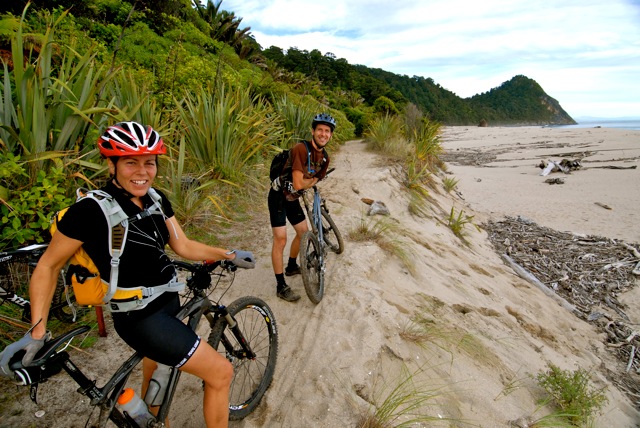
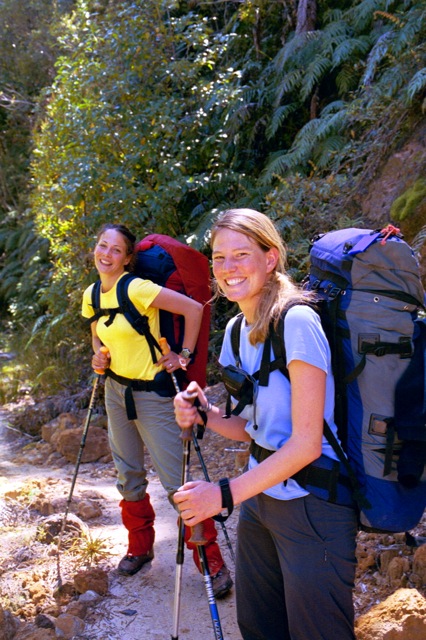
Hike and Bike Karamea: Wild, Wild West Coast Adventure

Hiking and Biking Trails in the Karamea District!

Come to Karamea, West Coast, New Zealand and steal some magical memories your grandchildren might listen to for about 20 seconds in between FaceBook chat!

  • The Heaphy Track.   New Zealand’s “Ultimate Trek” through spectacular Wild West Coast flora.  Bike and Hike 


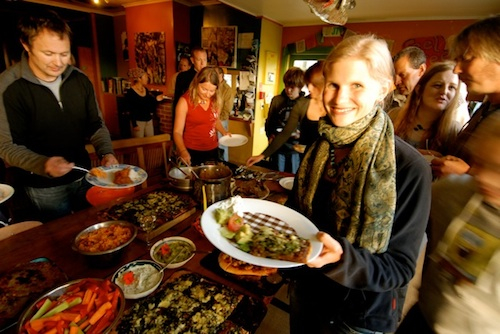
    •  The Heaphy Track is New Zealand’s Ultimate Trek through rugged West Coast terrain, spectacular flora, clear mountain streams, and unique wildlife. Afterwards treat yourself to the “Heaphy Conquerors Feast” at Rongo… A snack?? Mais Non! A meal? Hah! Dinner?? Nyet tovarisha!!  A FEAST!!!

"Heaphy Conqueror's Feast" only at: http://www.rongobackpackers.com


Distance:   82 kms

Duration:  3- 5 days hiking, 2-3 days biking.

Facilities:  Department of Conservation huts at 7 locations along the track, including three shelters. Telephones at Brown Hut northern entrance and Kohaihai Shelter southern entrance! Emergency Radio telephone at Lewis hut! DOC staff huts at Perry Saddle, James McKay Hut and Heaphy Hut!

Hut Fees: $30.60 Adults and children/youths 5-17 FREE!!

Camp Site Fees:  $12 Adults and children/youths 5-17 FREE!!

Route/Directions:   Purchase a map from the Department of Conservation Information Centre. Heaphy Track brochures also available.

Requirements:   Full tramping kit including woolly hat, wind and water proof jacket with hood, torch, matches and sensible scrogging food!

********************************************************************************

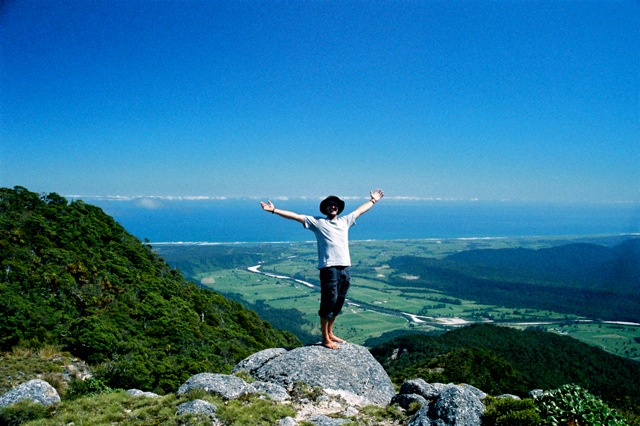
• Mt. Stormy: Climb the Sleeping Warrior!   Stand atop the peak and breathe in the cool fresh air!   Phenomenal vistas of the coast line and bush!  Hike

Atop Mount Stormy

Atop Mount Stormy

  • Mount Stormy       Hike

Mount Stormy is a mountain climb that provides panoramic vistas of the Tasman Sea, West Coast shoreline and amazing native bush. The exhilaration of completing this challenge and reaching the top will be the achievement of a life time. Are you tough enough to scramble the RAZORBACK !! SuperMoo even stopped here to dance a jig!!

Start Location   :   Mt . Stormy car park 10 kms from Rongo on Arapito Road.
Duration   :  3-4 hour climb.

Direction/ Route   :  Follow the signposts and track markers.

Requirements : Take a day pack, food, water bottle, wind and water proof jacket, woolly hat and  good quality hiking boots.

********************************************************************************

 • Opapara Arch.   Largest in the Southern Hemisphere! Prehistoric caves with curious limestone stalactites and stalacmites dating from the Oligocene-Miocene  Age! If you dare, enter the Box Canyon and Crazy Paving Caves. Dark and scary! Check your life insurance!  Bike and Hike

Oparara Arch: http://www.oparara.co.nz (photo by Sean Coleman)

  • Opapara Arch       Hike and Bike

The largest arch in the southern hemisphere! A prehistoric grotto of gigantasauros proportions. The site of the last recorded Taniwha attack! Human remains testify to the savagery and rapacious appetite of this voracious predator!! Please keep an eye on children!!

Prehistoric Crazy Paving and Box Canyon Caves within minutes of the Opapara Basin Car Park.

Distance   :   22kms from Karamea

Duration   :  Bike 2 hours, walk 3 hours.

Facilities   :  Opapara Basin carpark. Shelter and picnic tables, toilets and Department of Conservations information signage on history and prehistory of the Opapara Basin.

Route/Directions   :   Department of Conservation signposts to Opapara Arch and caves.

Requirements : Ultra Lite Track Sprint Shoes, Emergency Pack of 15 x blood transfusions, ability to survive with just your Adam’s Apple intact, Prepaid consult with Doctor Frankensteinway, sense of humour in the face of THE MACABRE!!! Don’t forget your camera, video camera and three forms of inedible identification!

********************************************************************************

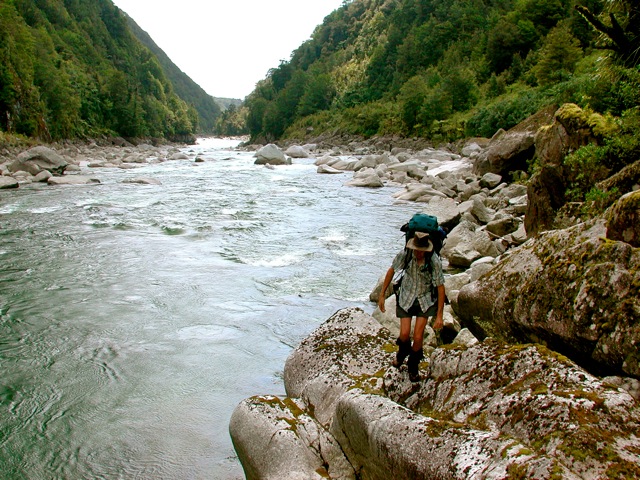
• Karamea Gorge Track – Greys Hut. Complete solitude. No Facebook!
Wander into the dark mysterious primordial bush and leave civilisation on another planet! 
Hike

Karamea Gorge

  • Karamea Gorge – Greys Hut       Hike

Complete solitude! No Face Book allowed!!! Get lost from all civilisation and experience real freedom!

Distance  :    Entrance to Karamea Gorge Track 10 km up Umere Road. A route track only. High level of fitness required. Entrance to track on right just across Virgin Creek. Phenomenal trout fishing for the fly enthusiast all along the Karamea River!

Time   :   6 hours to Greys Hut

Facilities   :  Greys Hut Free!! Bunks and fireplace. No gas bottle!

Sit by the fire on a moonlit night and listen to the haunting calls of the mysterious morepork on a dark still clear night. M..O..R..e..p..o..r..k!!! Obviously not part of a kosher diet!!

Requirements :  Full tramping kit, wind and water proof jacket, enough high energy food to last three days, matches, torch, candles and a good book to read!!

********************************************************************************

  •  Karamea Fishing Trail

Kahawai so huge, you need a Sikorsky helicopter just for your bait bag!
Trout so succulent that Karamea’s graveyard is full of the vanquished from pistol duels fought over prime Karamea fishing spots! Snapper so ginormous that Tiger Sharks flee in terror! Eels so slimy and deceitful that any self respecting politician would feel extremely proud to call Amigo! Even the disciples would have caught enough to feed the hungry!!

 Karamea Fishing Trail –  Bike and Hike

Kahawai, Snapper, Brown Trout, Sea Run Trout, Eels, Red Cod, Whitebait. Even the odd coelacanth!!

HUGE!

MONSTROUS!

EASY TO CATCH!!  Even God who can’t use a 1 iron, could catch a lion sized mackerel to keep Her Celestial Indoors happy!!

A FISHERMAN’S HEAVEN ON EARTH!!  Flagstaff Beach, Karamea River Mouth, Mossy Burn, Wangapeka River, Opapara River, Little Wanganui River and Beach, Extra Virgin Creek! Explore the myriad of small creeks for those crafty lurking kura, eels and trout.

Distance : Who knows!

Duration :  Who cares?!

Requirements :  Fishing Gear, Ravenous appetite and enough frail elderly grandmothers to give you  at least a months paid leave. Rongo has grannies for hire. Please do not feed!


Posted in Uncategorized | 1 Comment

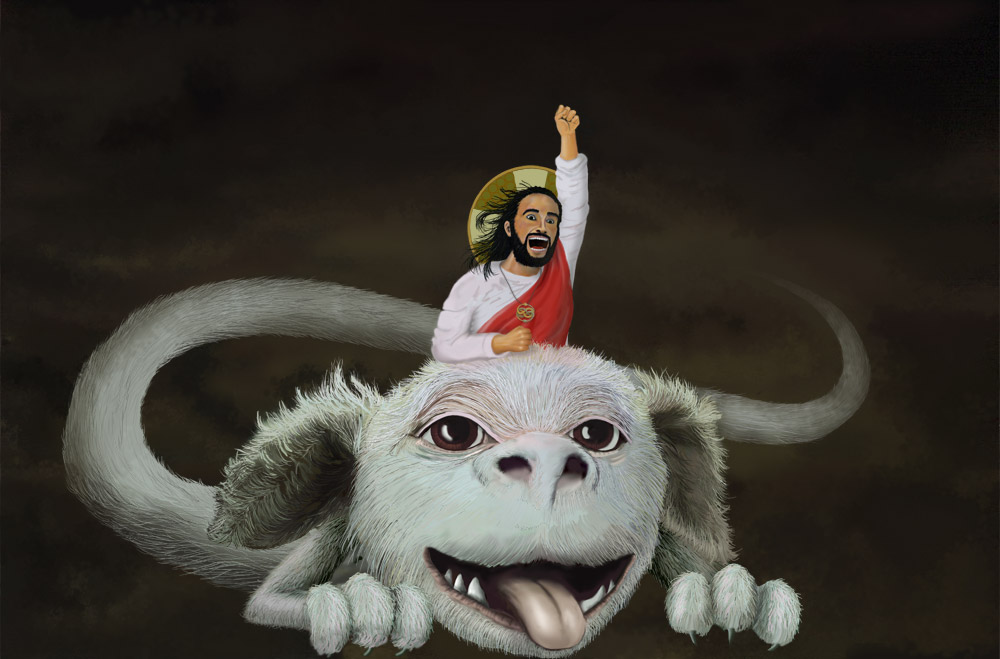
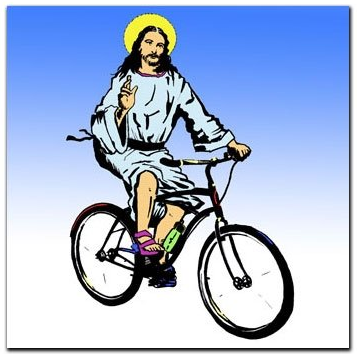
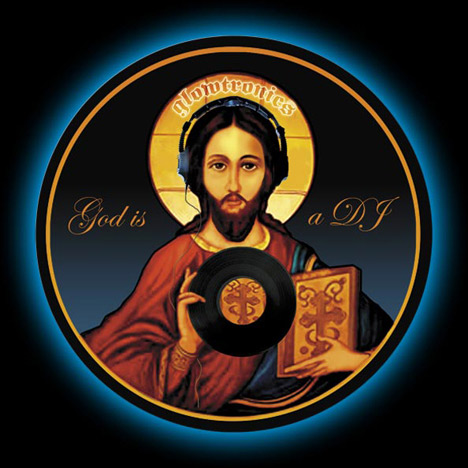
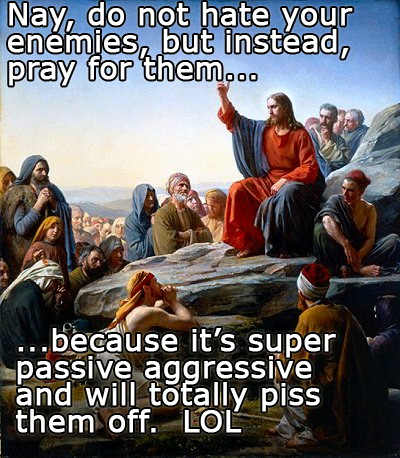
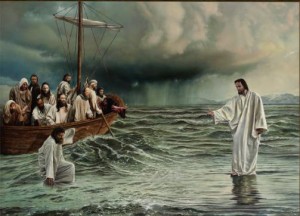
An INCREDIBLY Busy Day for Jesus

Pirate Jesus

Abstaining Jesus

Iggy Jesus

Goalie Jesus

Comedian Jesus

Republican Jesus

Animal Psychologist Jesus

Whacked Jesus

Philisopical Jesus

Chaste Jesus

Entomological Jesus

Frugal Jesus

Captain Jesus

Playboy Jesus

Disagreeable Jesus

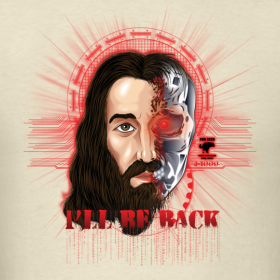
Terminator Jesus

Hipster Jesus

Electric Jesus

Showboat Jesus

Horny Jesus

Posted in Uncategorized | Leave a comment

The World is Your Canvas – Karamea’s Rongo Backpackers Where Self-Sufficiency Meets Creativity

Reprinted from the world’s Happiest Magazine: HappyZine: http://www.happyzine.co.nz
 
Article by By Kathleen Anderson Freelance Writer

Paul Murray is a self-realized artist.  He has invested his whole life and soul in his current work: The LivinginPeace Project, which aims to combine the elements of; art, travel, education and permaculture into an environmentally, socially and economically sustainable business.

Most people may identify Paul as the amiable man behind the reception desk at Rongo Backpackers & Gallery, or the handyman around the Karamea Farm Baches.  However, when delving deeper to discover the intricate web of inter-relationships that embody the LivinginPeace Project, one realizes Paul is not any ordinary artist.  He is an artist who believes life is his canvas. The project thrives on exactly this idea, that we are all artists, interdependent on one another and Earth, and our lives are our current works of art.

Paul grew up on Kangaroo Island in Australia where he says, “whether real or perceived, there were certain expectations of who I was as a person.” Feeling pigeonholed and unsure of his own identity, Paul moved to Tokyo where he was thrown into a foreign culture and a whirl of thirty-three million people he didn’t know.  Ten years living in Tokyo and travelling the world created Paul’s mantra on travel: “international travel is the best means of self-education.”  Travelling allows one to actively gain valuable experience, while tourism is an entirely different endeavour where one only pursues places to check them off the list, not to form new relationships with others and yourself.  At Rongo, guestomers (guests+customers) and woofers (Willing Workers on Organic Farms) find a space asking you to indulge in your own self-education in any manner you can imagine.  Rongo is exploding with self-expression from individuals who have come from all over the world to experience the place. The positive messages on the Visitor’s Wall, the colors of the building, and the infinitely different styles of art on the walls illustrate the open and creative aura surrounding Rongo.

While Rongo’s free-spirited existence exudes an attitude pivotal to the understanding of the LivinginPeace Project, this is only one facet of the project.  In fact, the reason this art project is the most unique to Paul’s portfolio is because it has no end.  Paul has always found himself incredibly motivated to make change, but once that larger change takes place, the goal has been achieved, and movement begins to plane, he loses interest.  With the LivinginPeace Project, “there is always movement forward.  It has no end.”

The project began six and a half years ago when Paul bought property in Karamea and wanted to create a place where artists could live and create, free from the shackles of societies expectations.  In this pursuit, he discovered there must be concurrent focuses because, for example, the artists must eat.  They must have water to shower and do laundry.  “We also need to recognize we are part of something else,” Paul says.  The LivinginPeace Project thrives because it recognizes and embraces that we are all part of something bigger.  It creates a model ecosystem in which the Earth and its inhabitants rely upon one another and give back to one another, a simple equation which has been lost, forgotten, or complicated beyond understanding in places around the world.

“We learn by teaching others,” Paul states.  Self-sufficiency is overlooked in the world today and, on a very basic level, the project also strives to teach people how to live sustainably.  Rongo is set up to teach people how to live sustainably and people are trusted to pursue this type of lifestyle.  The hostel is run by volunteers, and Paul believes this is an essential piece to Rongo’s success.  Woofers are not told exactly, for example, how to clean the rooms after guestomers leave or given an in-depth guide to checking guestomers in.  Instead, they teach one another as new woofers arrive and depart, passing on what they learned to the next Rongolians. “Responsibility and trust makes you work bloody hard,” says Paul.

Rongolians, the name given to the inhabitants of Rongo, are encouraged to speak first, think for themselves, and take action.  If you see a wall, paint it.  If there’s a garden bed in need, tend to it.  If the vacuum bag is full, empty it.  Not only does work get accomplished, but it is accomplished with unique flavor and flare.  A goal is set but how you go about achieving that goal is up to you. “It is not necessary to tell an intelligent young individual how to mop the floor.  We try to let people find their own way,” says Paul.  “They usually find a way far better than mine.”

Although The LivinginPeace Project has surmounted numerous seemingly unconquerable obstacles, it will always be a work in progress.  It strives to be self-sufficient one day but it is far from achieving that today.  Paul has purchased eighty acres of land around Karamea to offset the carbon emissions of travellers.  A permaculture farm is taking rapid shape.  The LivinginPeace Project will forever encounter new obstacles and Paul admits there are discouraging moments, but when these arise, he comes back to the Visitor’s Wall, which is covered in messages and drawings telling the stories of past experiences of volunteers and guests at Rongo.  Hundreds of inspired words slink along the walls as a positive reminder of the impact of the project.  Paul hopes, if anything, that “people walk away a bit taller.” And past woofers and guestomers have made it clear that they experience tremendous personal growth.  One individual, who arrived last year and ended up staying for six months, recently wrote Paul saying, “Last year [while staying at Rongo] was one of the single most enjoyable times of my life.”

Share
Posted in Agriculture, Art, Australia, Business, Economics, Education, Environment, Heaphy Track, Japan, Kahurangi National Park, Karamea, Karamea Radio, LivinginPeace Project, Media, New Zealand, Oparara, Peace, Permaculture, Photography, Product review, Social Commentary, SuperMoo the KarameaWonderDog, Sustainablity, Travel, Uncategorized, West Coast | Tagged , , , , , , , , , , , , , , , , , , | Leave a comment

There’s More to the West Coast than Dairy

The Press August 21, 2008


Off the Top of my Head

By Paul Murray
 

The use of sodium monofluoroacetate (1080) by the Animal Health Board (AHB) on the West Coast is indeed a contentious and emotive issue and one that has attracted a lot of media attention recently. The issue’s newsworthiness results from the groundswell of public opposition to the broad-scale, indiscriminate aerial distribution of the poison over large areas of the West Coast in the service of killing possums to help eradicate bovine tuberculosis.

However, it is important to remember that there are many strings to the West Coast’s economic bow. These include dairy farming and tourism, both of which are pillars of the West Coast economy. Unfortunately, tourism operators have been largely ignored by the AHB’s single-minded approach to Tb eradication on the Coast.

In the recent aerial 1080 operation on the West Coast, tourism operators were not even considered “affected parties” by the AHB or pest-control contractor EPRO Ltd. Attempts to inform the community, or tourism operators of their daily schedules, including the temporary closure of tracks and some tourist attractions, were woefully inadequate.

In 2007, a comprehensive study of the Karamea community revealed that 90% of residents listed the environment as their principal motivation for choosing to live in this remote, but idyllic and scenically stunning, West Coast region. I believe that most West Coast residents share this sentiment.

A local petition circulated by community action group Karameans Advocating Kahurangi Action (KAKA) revealed that over 40% of local residents vehemently opposed the aerial distribution of 1080 in our backyard. A West Coast-wide petition, currently in circulation, is indicating similar results. Opposition to aerial distribution of 1080 on the Coast is widespread and significant. It can hardly be a surprise to the proponents of 1080 that there is significant protest and passionate opposition to the programme.

The 1080 aerial programme has a major negative impact on the Coast region in terms of tourism and may endanger visitors to the Coast. We also have to cope with a poisoned environment for the next six months and suffer the stigma of skull and crossbones signs in place at all public places warning people of the dangers of 1080 to humans and animals. We cannot walk our dogs and residents and visitors must keep a constant vigil on their children to ensure they are not poisoned.

To suggest, as Chairwoman of Tb Free West Coast Helen Lash did in an article headlined “Coast Needs 1080 Use” in The Press on July 31, 2008 (A9), that the entire West Coast economy would collapse if we didn’t aerially dump poison all over the forest in an attempt to control bovine Tb totally ignores the critical role of hard-working tourism, mining, fishing and other non-dairy based business operators in sustaining and growing our local economy. Tourism operators and many others have devoted their lives, invested large amounts of money and continue to work tirelessly promote the region’s unique environment to international and domestic visitors.

eight_col_337565_crop

Also, to suggest that all farmers are in favour of 1080 is misleading. Many farmers, including some dairy farmers, on the Coast have refused to allow aerial 1080 operation on their properties. Some dairy farmers have also begun to question the effectiveness of 1080 aerial operations and the relative importance of possums in the transmission of Tb and some suggest that other vectors and stock-management practices may be the root cause of Tb in West Coast herds.

Ms Lash suggests that the AHB 1080 programme is to “protect the Coast from any possibility of any future trade or export restrictions in the farming sector due to Tb infection.” What trade or export restrictions does she refer to? Many countries have Tb infestation rates far in excess of New Zealand and the World Animal Health Organisation has removed Tb as a barrier to regulated trade. While this doesn’t suggest that Tb control is no longer important, it does suggest that a complete review of the AHB approach to the problem is necessary.

A far greater threat to trade and export is the potential for our agricultural exports to be contaminated with 1080 residue and our Clean/Green/100%Pure New Zealand image tarnished by the continued broad-scale, indiscriminate use of a toxin so dangerous it is banned in most countries. The continued use of 1080 will inevitably jeopardise New Zealand’s international image as a tourist destination and producer of quality primary food products.

The AHB is an incorporated society; a Government established and funded quango that is not answerable to the Ombudsman nor subject to the Official Information Act.

It appears to be accountable only to the Minister of Agriculture and Fisheries (Jim Anderton). UnitedFuture leader Peter Dunne summarised the situation well in a recent press release when he wrote, “I know no other publicly funded industry in New Zealand that has such a blatant disregard for community transparency. DOC, the AHB and the poison contractors should therefore not act surprised that public perception has turned against them.”

Both the Minister for Agriculture and the Minister for Finance are shareholders in the government company that makes the 1080 baits. (***Appendix 1) Given these connections, and the legislated protections and financial resources the AHB enjoys, is it any wonder that an increasing body of people are dubious about the accuracy of AHB reports, want independent monitoring of its activities and stronger oversight by Government. Peter Dunne again said it well; “It is crazy that those whose commercial interests lie in the persistence of the status quo are the same people left to assess the effectiveness and future viability of Government policy regarding 1080.”

No responsible anti-1080 campaigners are suggesting that we shouldn’t control possums, or that we should make no attempt to contain and eradicate bovine Tb. Let’s make sure that the solution addresses the problem. Let’s also make sure that the process of looking after the farmers doesn’t contravene the rights of other stakeholders, harm our environment unnecessarily, decimate our native birds, pollute our waterways, poison the land and limit the legacy we have to offer our children.

What is urgently required is a roundtable with all stakeholders to get together and work out genuinely Clean/Green and 100%Pure solutions to the problem of pest-control and bovine Tb, so that we can all go about our respective businesses and confidently promote our country and our primary products to the world market with confidence and pride.

****KAKA is a community action group formed in 2007 in Karamea to represent local people concerned about of aerial 1080 programme on the West Coast of the South Island and to campaign for genuinely Clean Green/100%Pure alternatives to aerial 1080. ****

Paul Murray

Karamea Tourism Operator and Media Spokesperson for (KAKA)

Appendix 1 ***

•    Animal Control Products Ltd – www.pestoff.co.nz

Crown Ownership Monitoring Unit (COMU) – www.comu.govt.nz/shareholders.html


Posted in 1080, Agriculture, Buller District Council, Department of Conservation, DOC, Environment, Historical, Kahurangi National Park, Karamea, Media, Money, New Zealand, Social Commentary, Sustainablity, Travel, West Coast | Tagged , , , , , , , , , , , , , , , | Leave a comment

Near the 7th B/Day of 107.5 FM we Recall the 1st

Off the Top of my Head: Karamea Radio 1-Year Anniversary

By Paul Murray
 

Luke Hurley Live on Karamea Radio 107.5 FM in 2004

September 26, 2004 marks the first anniversary of Karamea Radio 107.5 FM, which means the community radio has been broadcasting non-stop (bar a few technical hiccups and the odd power outage) for more than 8,760 hours.

From its humble beginnings at James and Raramai’s “Old Bike Shop” building on Bridge Street to its current location in the old ambulance bay behind Rongo Backpackers & Gallery on Waverley Street, the radio station–and the people who run it–have overcome poverty, equipment failure, technical ineptitude and finite musical archives to continuously transmit an eclectic range of fabulous audio entertainment for the Karamea community.

Craig Stenhouse, James Rae and Stu Mollison were the instigators of the radio station and their vision for the station was realised through their passion for the idea, a lot of hard work and the generosity of the Karamea community, who donated money to purchase a transmitter as well as much of the music and station equipment we still use today. Special mention must be made of the contribution made by Cab in Little Wanganui, who provided a 25-stack CD player, which enables us to play at random 25 different CDs repeatedly all night until the morning DJ arrived to change the tunes. Judith and Norman Stopforth donated many fabulous old records, as did Peter Churchill and Tex Franken and Brian Thomson took the station to a new level with the donation of a laptop computer to store and play the station’s extensive library of music.

Operation of the radio station equipment is surprisingly easy and after some simple instructions, aspiring DJs can begin broadcasting their own material and soon become masters of the decks. Many locals have risen to the Karamea Radio challenge and come down to do their own shows. Tjalve Mollison-Sjoberg, alias DJ-T, plays music every week as well as occasionally reading the news on air. His father Stu has a huge collection of classic records and CDs and is a consummate purveyor of alternative, forgotten and rare tunes. Jethro Davidson-Linnaker occasionally drops in to play narrated children’s stories on air and Cody Wilkinson, Callum Moynihan, Dave Bateman, Simon Vos, Matthew McNabb, Leila and Willis MacBeth, along with the Rongo Crew of Sage, Brian, DJ Crap, Mette, Cath and Tristan are regular performers on Karamea Radio.

Last December, Sylvia Raikes and Alysha Harmon led us into the festive season with Christmas music from around the world and read out lists of good deeds done by Karameans throughout the year––a great idea that embraced the concept of community spirit and community radio.

Poet Sam Hunt and blues guitarist Paul Ubana Jones are two of the N.Z. celebrities who have dropped in to Karamea Radio to say hello to the community over the airwaves and the station also broadcast the world premiere of a German punk bands new album––the musicians just happened to stay at Rongo last summer.

Karamea Radio is non-commercial and has been established by the community for the community, there is no advertising, no sponsorship and no censorship; it is truly free radio, which is very rare in this highly regulated world. Many international visitors, Germans in particular, often comment how envious they are of our radio station and how impossible it would be to establish such a station in their country.

Backpackers staying at Rongo love the radio station and many of them have MP3 players, which allows them to carry their favourite music with them on their travels. This is a boon for Karamea Radio as guests at Rongo can plug in their MP3 gadgets and play the latest tunes from their respective countries. The ease at which MP3 flies can be copied has enabled the station to compile a huge collection of music from the world over on computer hard drive, an archive that is growing rapidly and covers a broad spectrum of musical genres.

As a result, Karamea Radio has probably one of the most contemporary and international play lists of any radio station in the world.

Karamea Radio has made great progress in its first year, but to maintain the growth, development and improvement of the station, additional equipment must be purchased. Main objectives include; boosting the broadcast output to enable more homes to receive the signal, purchase new computer equipment to store and play music, the building of a DJ booth around the equipment to minimise dust and sound interference and to allow DJs to do their thing without distraction.

There are also several building plans to make the radio station more comfortable, for example, the construction of a deck on the sunny north side of the building, painting and insulating the station and the installation of heating to make the chilly winter nights more comfortable.

Talkback radio would be made possible by connecting a phone line to the station, which could lead to Internet streaming and the ability to broadcast Karamea Radio on the Web so that people worldwide could tune in and listen to what’s playing on 107.5FM.

Radio is an excellent medium for entertainment and not too many years ago, sitting around the radio would have been the principal form of entertainment for many Karameans.

In its second year, the radio station will have regularly scheduled programmes that will enable listeners to tune into shows of interest to them whether it’s blues, jazz, rock’n’roll, funk, hip-hop, metal, talk-back, news reports, humour, story-telling, Broadway tunes, classical, Latin, world music or punk, Karamea Radio will continue to improve and grow to provide a valuable service to the Karamea Community.

So tune your radio to 107.5 FM and rip the knob off…if you haven’t already!

Karamea Radio 107.5 FM: http://www.karamearadio.com

Posted in Uncategorized | 2 Comments

Homeless to be Fitted with Shells

September 8, 2011
By Rick Westwell

Homeless to be fitted with their own shell

The government is set to address the growing problem of homelessness by fitting the poor with snail-style shells as a cost-efficient and convenient home.

The shells will be fitted permanently to the home-seeker, and will provide excellent shelter in all weathers, as well as protection from predatory birds.

Government economists hope that after a small initial expenditure, the shells will solve the housing problem at a stroke by enabling the shellee to make their home wherever they happen to be standing at the end of the day.

“We’re tremendously excited,” explained housing minister Grant Shapps.“We see this as a natural extension of the council house ‘right to buy’ program of the ’80s, only with a lower barrier to entry, and shells instead of houses.”

Government tackles homelessness

Reaction from homelessness charities was cautiously optimistic.

“Once the stigma of being a shell-dweller has dissipated, we feel this could be an excellent solution,” said a spokesman.

“Few people realise how great a threat jackdaws and kestrels pose to the homeless, and this could solve the problem at a stroke.”

Industry representatives have also welcomed the scheme. The Association of Private Landlords is seeking assurances that investors will not be hindered in buying up huge swathes of empty shells as a thriving lower-end rental market begins to emerge.

There have been some suspicions that the wealthier parts of the country will not welcome a slow influx of the crustaceous poor, but councillors from the boroughs of Kensington and Chelsea denied that there was any connection to their newly-announced year-round gritting and road salting programme

Building contractors are already in negotiations to build and fit the shells including several French firms expressing interest, with one describing the scheme as a ‘tasty opportunity’.


Posted in Uncategorized | Leave a comment

The Rongolian Star Issue 9: August, 2011

The Rongolian Star

Issue No. 9 August 2011
Published by Royal Decree since 1878
Rongo Backpackers, 130 Waverley Street,
Karamea, Buller, South Island, New Zealand
Telephone    00 64 3 7826 667
Web:  www.rongobackpackers.com

Peace & Art Project by Alicia and Featuring The Rongolians

Calling Rongolians World Wide….

Enter the Fantabulous Rongo Badge Competition

Mark of the Rongolian

Rongo Badge FaceBook Photo Competition

For Rongolians with Rongo Badges, please take a great photo of yourself wearing the badge somewhere in the world, in front of a recognisable landmark, with a famous person, or just in your hometown with your friends and family having a good time.

Please then join the Rongo Backpackers & Gallery FaceBook Page post the photo…the best photo will win a week’s free accommodation at the World’s Greatest Backpackers!!! www.rongobackpackers.com

Rongo FaceBook Page: https://www.facebook.com/group.php?gid=52782788167

To Join the Competition: 

(To cover postage, handling, packaging and production costs and to help the LivinginPeace Project www.livinginpeace.com)

Send $NZ10 if in New Zealand, or $NZ20 if Overseas to:

Rongo Backpackers, P.O. Box 54, Karamea, 7864, NEW ZEALAND

(Include your name and postal address and we’ll send you a Rongo Badge)

Or come and stay as a guest for 4 nights and we’ll give you one!

Four consecutive nights in the same bed….
Mi-Chan
DJ Crap
Captain Callie
Mademoiselle MiMi
Little Naughty
Count Rongo
Miss Claudia (Very Much!)

Rongo Language and Cultural Exchange Programme


Posted in Uncategorized | Leave a comment