
Off the Top of my Head
By Paul Murray
The New Zealand Parliamentary Commissioner for the Environment Dr Jan Wright
The New Zealand Parliamentary Commissioner for the Environment Dr Jan Wright was invited to address the Nelson Science Society on August 19, 2014 at the Old St James Church on the subject of her report on the use of Sodium Fluoroacetate (1080 Poison) to control mammalian pests in New Zealand.
N.Z. Government agencies the Department of Conservation and the Animal Health Board use 1080 poison to control possums, stoats and rats, which are deemed a threat to New Zealand’s native flora and fauna and are thought to be a vector for tuberculosis, which may threaten the health of dairy cattle and the country’s important dairy industry.
The use of 1080 is controversial in New Zealand and many people across the country vehemently oppose the continued use of the poison and in particular, the indiscriminate aerial broadcasting from helicopters over large areas of native forest and National Parks.
Many people also question the efficacy of the Government’s poison policy as the poison also kills many native animals in the process. Valid concerns over the ecological, environmental impact and possible human health implications associated with the use of 1080 are also widespread.

Staunch opponent of 1080 poison Waikato Regional Councillor Clyde Graf films a poisoned deer for his documentary “Poisoning Paradise” on the subject of 1080 poison in New Zealand.

Possums are considered a pest in New Zealand
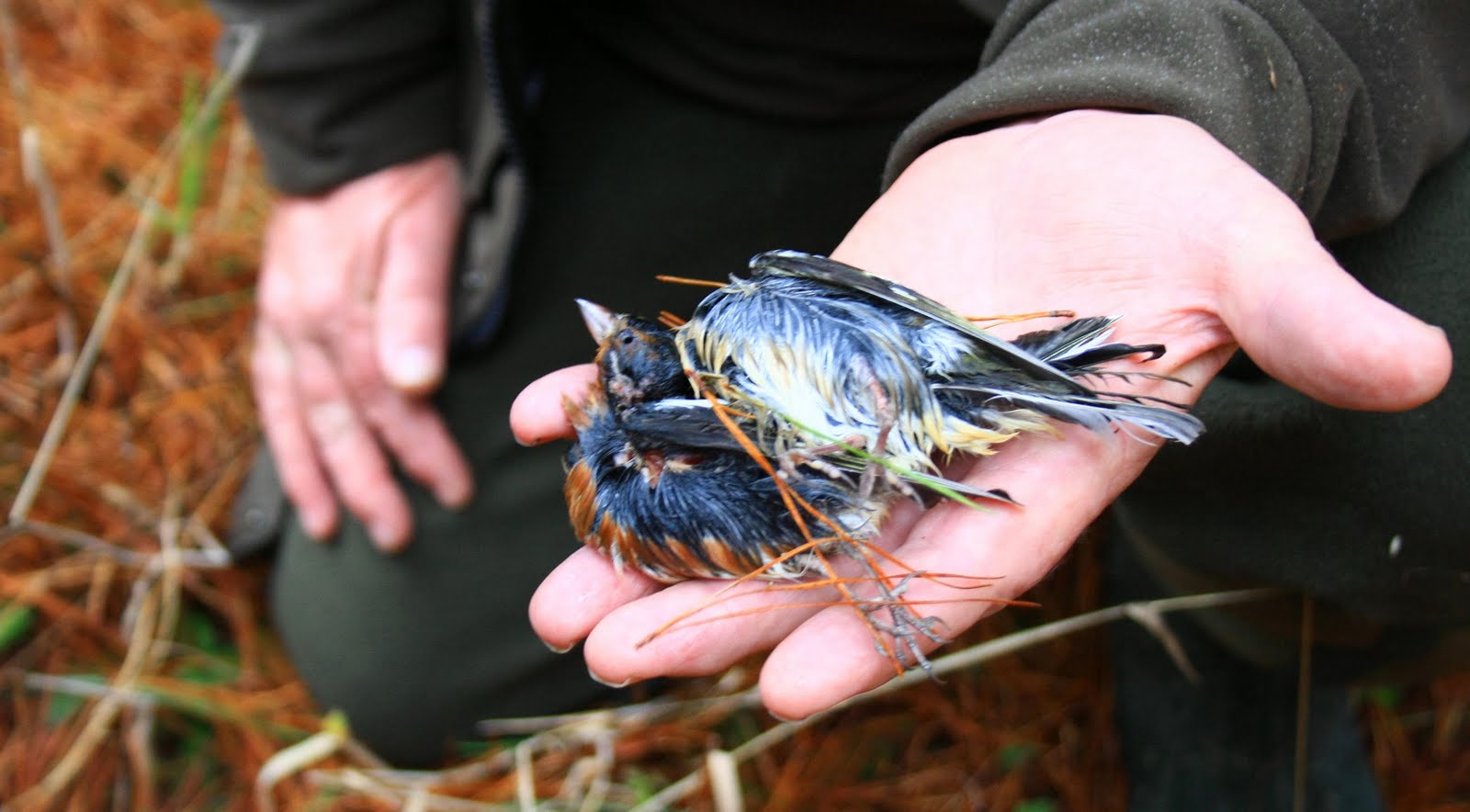
Dead native birds found after a 1080 poison drop
There is also considerable concern among N.Z. tourism operators that the poisoning programme is having a negative impact on New Zealand’s Clean/Green 100%Pure international brand and that it may deter travellers from visiting the country.

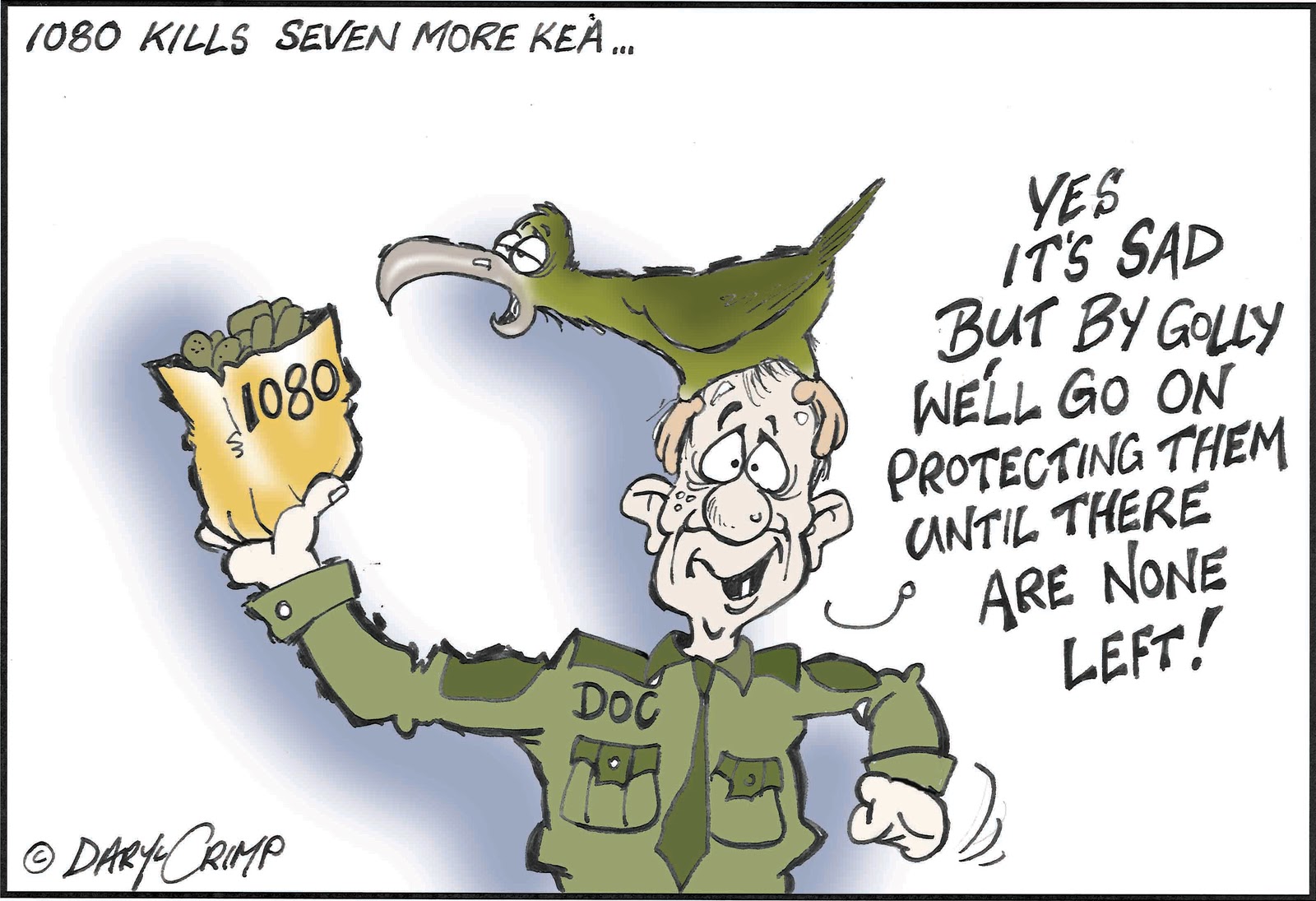
Dr Wright’s report “Evaluating the use of 1080: Predators, Poisons and Silent Forests” was released in June 2011 and controversially recommended that the use of the poison be increased.
Dr Wright spoke to a full house and presented her report in an attempt to convince all in attendance that it was based on a comprehensive study that gave due consideration to public concerns and incorporated all known scientific studies and information. Dr. Wright allowed questions after her address and I asked a question that she was unable to answer “on the spot.” She invited me to present the question to her in written form so that she and her team could provide me with a good answer. My letter is attached below.
Paul Murray Managing Director Iltamara Ltd P.O. Box 54 Karamea 7864 New Zealand September 1, 2014 Dr Jan Wright Parliamentary Commissioner for the Environment PO Box 10-241 Wellington 6143 New Zealand Tel: 64-4-471 1669 Email: pce@pce.parliament.nzDear Dr Wright,
Thank you for coming to Nelson to address the Science Society and explain your report “Evaluating the use of 1080: Predators, poisons and silent forests.”
You may recall I asked a question after your speech that was difficult for you to answer and you invited me to present the question to your Wellington office for clarification.
Thank you for the opportunity and I would also like to ask several other questions that are of concern to me and many others while I have your ear.
The observations myself and many other Karamea residents of the 1080 operation that covered 54,000 ha of the Western Kahurangi National Park in 2008 is that rodent populations have exploded. We now have rat and mice problems in our homes and businesses that did not exist before the aerial 1080 operation, which was conducted by the Animal Health Board (AHB).
Rodents are extremely fecund and following the 1080 operation, they repopulated a zone that was devoid of predators (all killed by the poison) and with an abundant food supply, this lead to a rapid escalation in their population.
- Given that you accept that rodent numbers quickly recover after an aerial 1080 operation, is it also correct that stoat numbers also quickly recover given that, as you suggest, rodents are their main food source?
Please provide scientific evidence that aerial 1080 operations effectively control rodent populations and that the populations do not return to or surpass pre-1080 drop levels.
- Is indiscriminate aerial broadcasting of 1080 poison not resulting in an increase in rodent and stoat numbers?
Please provide scientific evidence that the use of aerial 1080 is not contributing to a long-term net increase in rat and stoat populations.
My concern here is that if aerial 1080 programmes lead to and increase in rodent populations, it would seem counter-productive to use this method to “control” rodents and by association other animals like stoats given that they are also fecund and their numbers likely also increase rapidly in line with the increase in rodent population.
Given that the overall essence of your report is to recommend that more 1080 poison be used in New Zealand, I have some other questions that are important to me and many other New Zealanders regarding the assessment and ongoing monitoring of the effectiveness, destructiveness and overall efficacy of the proposed 1080 poison operations nationwide by the Department of Conservation (DOC).
I note with appreciation that you recommend that DOC improve the transparency of its 1080 operations and improve the quality of communication with the public. I also appreciate that you recommended the AHB be subjected to the Official Information, and the Ombudsmen acts.
- Should the AHB (now known as OSPRI or TB-Free New Zealand) have conducted any follow-up studies to determine the efficacy of the 2008 1080 operation in the Western Kahurangi National Park? (Studies showing reduction in possum numbers, TB infection rates, impact on non-target native species etc.)
- Should DOC have scheduled any pre-drop monitoring programmes to determine possum, stoat and rat numbers and native bird and animal populations in the drop zones ahead of the 1080 operations scheduled for the Kahurangi National Park in the coming year?
- Should DOC conduct ongoing monitoring procedures after the 1080 poisoning and throughout the life of the consent to determine the efficacy of the pesticide operation and gauge the extent of the loss of native birds, invertebrates, insects and aquatic life (non-target species) and the long-term impact on the populations of pests and non-target species in the drop zones and for the life of the consent?
- Should DOC monitor of water quality in the poison zone following 1080 drops to measure possible contamination of water resources in the area throughout the life of the consent?
- What contingency plans should DOC have to mitigate the potential negative effects of the 10-year poison programme on local tourism?
- How should DOC notify the public of the extent, location and timing of drops during the life of this consent if granted? (Given that DOC 1080 operations are now deemed “Non-Notifiable)
I am a Karamea tourism business operator. I also have a permaculture farm in the region that has been pesticide free for 10 years.
I feel that the proposed 1080 operation by the DOC will compromise both the marketing strategy for my tourism businesses and also the pesticide-free status of my permaculture farm.
I also own and maintain a Web site promoting the Heaphy Track and administer a FaceBook page for the Heaphy Track I am also a member of the Karamea Estuary Enhancement Project I actively support DOC activities in the Kahurangi National Park as evidenced by my involvement in promoting DOC facilities and projects in the region.
My businesses in Karamea also provide logistical support, services and facilities people utilising DOC facilities in the Kahurangi National Park, I work with DOC on a daily basis and appreciate that pest control over such a large estate is a difficult challenge. I also support pest-specific possum control initiatives conducted by DOC and the AHB in the Kahurangi, but strongly oppose the broad-scale, indiscriminate broadcasting of 1080 pesticide over a vast region of the park as I consider it:
- A threat to the quality of life for myself and my family
- Raises health concerns for myself and my family
- Has a serious negative impact on my business activities in Karamea
- Violates the nation’s “Clean Green/100%Pure” brand that is used to promote New Zealand internationally.
- Compromises the marketing strategy of my business and indeed the entire nation.
- Compromises my efforts to maintain a pesticide-free permaculture farm
Myself and many other Karamea residents publicly opposed the aerial 1080 operation conducted in the Kahurangi National Park by the AHB in 2008 and my position and that of the other residents on the issue has not changed. We find aerial 1080 pesticide operations to be an unacceptable solution to possum control and evidence suggests it creates a raft of other problems in the forest.
Scientific studies show that rat populations explode after aerial 1080 operations and that was certainly the observation of people living in Karamea following the 2008 poison programme and rat numbers in and around the town are still high in my experience. Prior to the 2008 1080 poisoning, I hadn’t seen a rat in the town, however, soon after the aerial pesticide operation, rats began to invade our homes and businesses. It’s ironic that the rats you say are one of the targets of the proposed 1080 programme are resultant from the last poison operation.
Poisoning vast areas of the national park leads to an elevation in rat numbers in the poison zone. Rats quickly repopulate the poisoned forest and come into an area devoid of predators and with an abundant food supply and their numbers are shown to surpass population levels that existed in the area prior to the pest-control operation. Surely then the use of 1080 poison is a redundant strategy as is exacerbates the problem.
Following the experience of the 2008 AHB drop and the associated negative impact on and restriction to my business trade, I requested DOC give me advanced notice of any scheduled similar aerial 1080 poison operations in the Kahurangi National Park so I can inform all potential customers that my business will be closed for the duration of the programme and for at least one month following to ensure all risk associated with the baits has passed and the pesticide has broken down in the soil to “harmless by-products,” or until all green baits have decomposed.
I consider this the only responsible action I can take to protect the reputation of my business, honour my marketing strategy—in which I actively invite people from all over the world to visit the pristine, pure, clean, green and scenically beautiful environment in the Karamea region—and prevent the risk of possible exposure to the poison of guests staying at my accommodation facilities and utilising my transport service.
I have established good standing as a professional eco-tourism operator over the past 10 years and I consider that the proposed aerial 1080 operation is a serious threat to that hard-earned reputation. If my business continues to host guests during and immediately after the 1080 poison programme, I risk my business marketing strategy being considered specious and hypocritical given that they way I promote my business is contrary to inviting people to come and visit a poisoned forest.
There will be a significant financial loss incurred by my business by closing for which I reasonably expect to be compensated. Would you please provide me with information as to how I might file a business compensation claim so that I might recover the losses incurred resulting from the interruption to my business and restriction to trade?
I am not opposed to pest-control and appreciate that national park management is a considerable challenge for DOC, but ask that any pesticide use specifically target the pest in question. I strongly oppose broad-scale indiscriminate aerial poisoning of vast regions of DOC administered land in the name of New Zealand and New Zealanders. I appreciate your consideration of the issues I have raised and hope to receive a full response to the questions I have asked in this letter.
Should you have any questions, or require more information, please e-mail, or call me any time.
Yours Sincerely,
Paul Murray
(Managing Director Iltamara Ltd)
www.LivingInPeace.com www.KarameaFarmBaches.co.nz www.RongoBackpackers.com www.KarameaConnections.co.nz *** The Parliamentary Commissioner for the Environment’s Report on 1080: “Evaluating the Use of 1080: Predators, Poisons and Silent Forests” can be downloaded here: http://www.pce.parliament.nz/publications/all-publications/evaluating-the-use-of-1080-predators-poisons-and-silent-forestsResponse from Dr Jan Wright: Parliamentary Commissioner for the Environment:
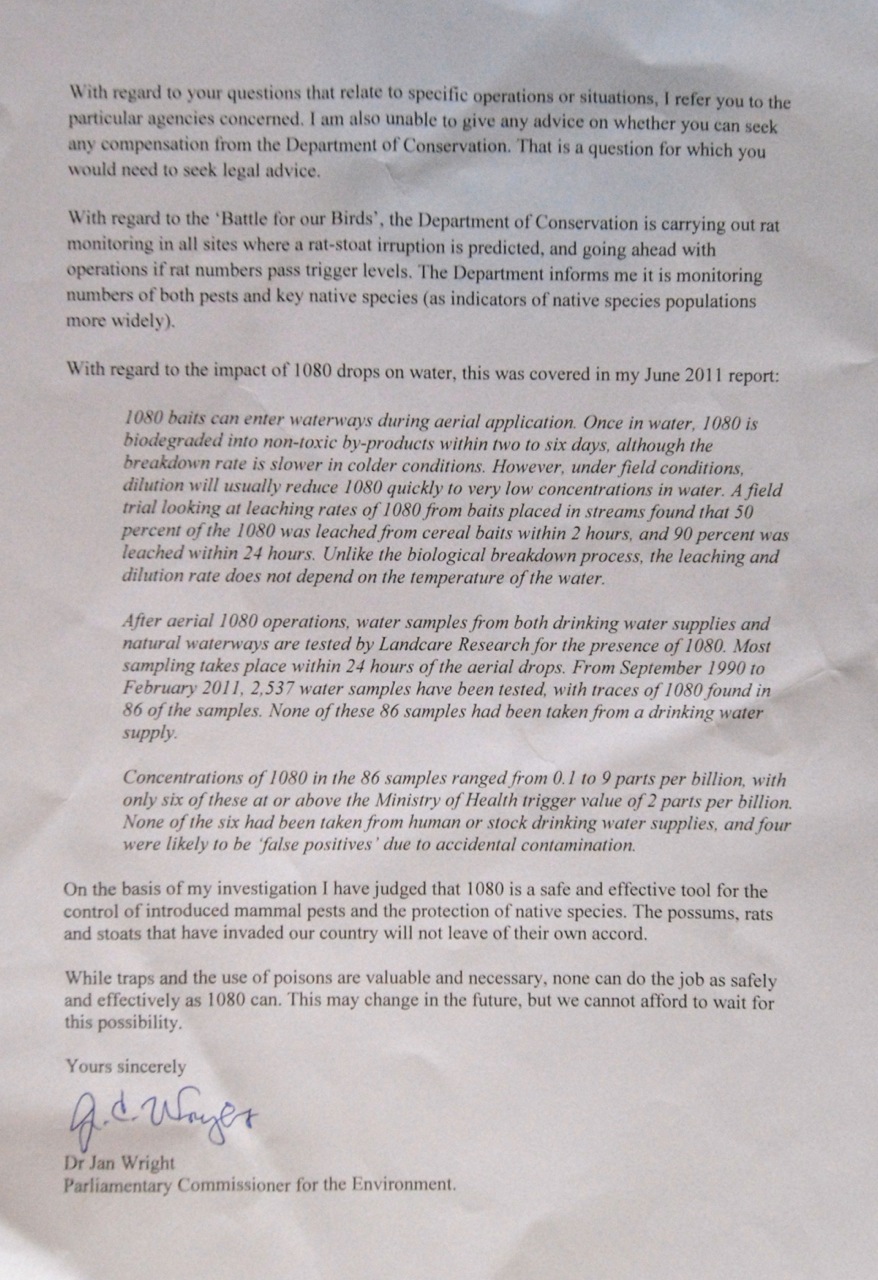
Letter (Response) from Dr Jan Wright



After Dr. Wright’s report was published in 2011, it was peer-reviewed by Dr Jo Pollard, who has a doctorate in zoology and would seem eminently more qualified to assess the scientific information pertaining to the use of 1080 in New Zealand and the effect of the poison on invertebrates that Dr Wright, who has a degree in physics, another in energy and resources and a doctorate in public policy.
Below is Dr. Pollard’s report in full:
A scientific evaluation of the Parliamentary Commissioner for the Environment’s views on 1080
By Dr Jo Pollard, BSc (Hons), PhD (Zoology)Introduction=
In June this year New Zealand’s Parliamentary Commissioner for the Environment (PCE), Dr Jan Wright, announced that we should be spreading 1080 poison across more conservation land. Furthermore that the use of aerial 1080 and other poisons to control pests should be subject to fewer regulations (PCE, 2011).
Dr Wright evaluated the use of 1080, focusing on the control of three pests: rats, stoats and possums, in native forests. Describing her purpose, she wrote: “This investigation has been undertaken to provide Members of Parliament, members of the public and other interested groups with an independent assessment of 1080 that is not overly technical”.
However, some may consider 1080 to be a highly technical issue that deserves proper scientific evaluation. As Dr Wright tells us in her Overview, the Prime Minister’s Chief Science Adviser, Sir Peter Gluckman, frequently calls for policy decisions to be based on evidence.
According to ecologists, wide scale poisoning is contributing to our ecological problems, rather than being a solution: “Mainland NZ is currently experiencing a decline in terrestrial faunal diversity unprecedented since the 1870’s. Predation by introduced predators has been shown by numerous studies to be the fundamental cause…Furthermore this has been exacerbated by prey-switching in stoats following large scale possum eradication” (Scofield et al., 2011).
Therefore there has never been a greater need for well-informed advice on the management of our natural heritage, and control of pests in particular. The PCE, while having scientific credentials, has no biological or ecological science credentials. The bulk of her report is a non-scientific version of what the scientists doing research supported by DoC claim that their research says. In the following review I will show that the major assertions made by the PCE are not supported by the research she has cited. In fact, as I will demonstrate, they either support just the opposite conclusion, find that no conclusion can be reached, or indicate that further and/or different research needs to be conducted.
Assertion One (p 36): Aerial 1080 can decrease populations of possums, rats, and stoats
Possums
There is good evidence that when cereal or carrot baits poisoned with 1080 are spread from the air into forests, a large number of the resident possums are killed. Possum numbers usually rebuild at a moderate pace. This was acknowledged by the PCE who stated that “populations of pests can only be knocked down for a time” and “for possums, control is generally done every 5 to 10 years” (p 36).
However, a fact not noted by the PCE is that the recovering population can grow to be larger than before any aerial 1080 poisoning occurred. This was found after five years in one study (Urlich & Brady, 2005) and in another study, the number of possums caught 6 years after control was double the pre-control number (Nugent et al., 2010).This is evidence that 1080 can increase, rather than decrease, possum numbers.
Rats
Most rats in an area are killed by aerial 1080 but return rapidly. Thus the PCE stated that to control rats using repeated aerial 1080 treatments “the intervals are likely to be shorter [than for possums] – generally every 2 to 4 years” (p 36).
However there is good evidence that this poisoning system will not adequately control rats. After large-scale poisoning, significant numbers of rats often appear within a few months (Innes et al., 1995; Powlesland et al., 1999; Department of Conservation (DoC), 2008). Numbers often escalate to reach very high levels, for example the rat-tracking index rose to 95% within 10 months of an aerial 1080 operation at Kaharoa (Innes et al., 1995) and 88% two years after an aerial 1080 operation at Mokau (Sweetapple et al., 2006). Numbers can remain far higher than before poisoning (Sweetapple et al., 2006; Sweetapple & Nugent, 2007). In an on-going experiment on pest control techniques Ruscoe et al. (2008) found that two years after an aerial 1080 operation, rat numbers had doubled compared to original levels and also compared to sites that had no pest control.
The effect of using aerial 1080 possum control on rat populations was described by Sweetapple and Nugent (2007): “Mean ship rat abundance indices increased nearly fivefold after possum control and remained high for up to 6 years…the typical outcome for most pulsed possum control is an uncontrolled ship rat population in the presence of a low-density possum population for most of the 3-7 year cycle.” Recently Innes et al. (2010) reiterated “Intermittent control of possums and ship rats may have the nett effect of increasing ship rats for most of the time.”
If frequent applications of aerial 1080 were used to control rats, as the PCE claims, the success rate of the operations would probably diminish rapidly. Aerial 1080 was increasingly poor at killing rats when applied at regular (yearly) intervals (Innes et al., 1995; 1999), and there is good evidence that genetically 1080-resistant strains of rat will emerge with repeated poisoning. This has been observed in laboratory rats (Howard et al., 1973), house flies (Agency App. F), and (apparently) rabbits (Twigg et al., 2002).
Therefore there is substantial evidence that aerial 1080 will increase rat numbers, regardless of how frequently it is applied. Successful rat control appears to require a variety of techniques and a continuous effort (Gillies & Pierce, 1999; Innes et al., 1999), and not repeated pulses of 1080.
Even to create an initial knockdown of rats, 1080 has proven less effective than other techniques: “Of the two commonest control methods, brodifacoum applied repeatedly in ground stations resulted in smaller mean rat tracking indices (5%, SD 7%, n=6 ) than 1080 applied once aerially (18%, SD 18%, n=6), but this difference was not significant…As for ship rats, brodifacoum applied repeatedly in ground stations resulted in smaller mean possum indices (1, SD 0.1, n=5), than 1080 applied once aerially (14, SD 18, n=5)…p=0.04.” (Innes et al., 1999).
Stoats
1080 poison travels very easily through food chains and stoats and other predators can be killed by eating poisoned prey (“secondary poisoning”). However aerial 1080 had a devastating failure when it was trialled as a stoat control tool at Tongariro Forest . The manager reported “Four months after an effective possum and rat knock-down by a 20,000-ha aerial 1080 operation over Tongariro Forest, stoats reappeared in the centre of the forest and began killing kiwi chicks. So far five of the 11 chicks have been predated, and all in the centre of the treatment area” (DoC, 2002a), (see also Brown, 2003).
In other observations, stoat numbers have not been decreased by aerial 1080 (Murphy & Bradfield, 1992; Powlesland et al., 2003) with any poisoned animals being replaced rapidly by neighbouring adult stoats and dispersing juveniles, possibly using scent to detect unoccupied habitat (Powlesland et al., 2003; DoC, 2008).
With a good food supply, stoat numbers can reach plague levels (Elliot & Suggate, 2007). Stoats are very widespread, even inhabiting the alpine grasslands, where home ranges are several hundred hectares. These alpine grasslands may be a source of dispersing stoats that reinvade areas after poisoning (Smith et al., 2007). In beech forest, stoats dispersed over large distances, in one case over 65 km in one month (Murphy & Dowding, unpubl., cited by Murphy & Bradfield, 1992).
Stoats respond to a decrease in ship rats by switching to eating birds and invertebrates (Murphy & Bradfield 1992; Murphy et al, 1998; 2008). Thus Murphy et al. (1998) observed “stoats are likely to have the greatest effect on birds after successful 1080 poison operations”. Notably, these authors found that successful 1080 operations resulted in higher bird predation by stoats than Talon (brodifacoum) or pindone operations.
The longer term effects of aerial 1080 may be an increase in numbers of stoats. Mustelid tracking indices for a 1080-treated area (treated in May 2000) rose from 6% pre-poisoning to 21% in February 2002 (values for an untreated area were 2% and 8% for the same two periods) (Powlesland et al., 2003). An explanation for this could be that the explosion in rat populations to multiple times pre-poison levels leads to a big increase in the stoats’ primary diet component, thereby fostering a growth in stoat populations.
Managers and scientists seem well aware that aerial 1080 operations are unlikely to control stoats, and therefore use ground control (Innes et al., 2004; Elliot & Suggate, 2007; Campbell et al., 2010). Stoats can become trap shy, so having alternative methods available is recommended, such as using dogs to find dens (Brown, 2003; King & White, 2004).
According to the PCE “there is evidence that 1080 operations can kill most or all of a stoat population” and cites three studies of stoats fitted with radio transmitters prior to 1080 operations. Two were ground control operations which used bait stations only (Gillies & Pierce, 1999; Alterio, 2000). Numbers of stoats in those studies were very small (one in one study, and four in the other), and the stoats died. In the third study, 13 stoats fitted with radio transmitters were all found dead after an aerial 1080 operation, and 12 contained residues of 1080 (Murphy et al., 1999). Animals that DoC fits with these devices to monitor effects of operations often die even before any poisoning occurs (e.g. 7 of 16 cats (Gillies & Pierce, 1999); kereru (Powlesland et al., 2003); morepork (DoC unpubl., 21 of 34 at Waitutu)) and stoats can die of handling stress (Smith et al., 2008) so these results may not be representative of normal stoats. Nevertheless these studies indicate that secondary poisoning of stoats does occur.
However the PCE failed to mention prey-switching by stoats and the rapid reinvasion of stoats into poisoned areas. An objective assessment would have included these effects, as stated by Innes et al. (1995) “Unexpected ecological repercussions of large-scale poisoning in North Island New Zealand forests may include a functional change (diet) by stoats and a numerical change (increase) by mice. Assessment of the costs and benefits of large-scale poisoning must allow for these and other repercussions of community perturbation.”
Other predators
The PCE’s belief that rats, stoats and possums cause the most harm of our vertebrate pests and therefore should be targeted specifically is not supported by ecologists, who consider that other predators can cause significant harm and should be removed too (Murphy & Bradfield, 1992; Alterio et al., 1999). Three reasons for this were described by King et al. (1996): “uncertainty about which predator is most damaging, and also the possibilities of diet switching and/or rodent population release, demand that pest control operations to protect threatened birds at Pureora should include all mustelids, rodents, feral cats and possums together.”
Hedgehogs are frequently caught in trapping programmes (Wilson et al., 2007; Campbell et al., 2010) and may have a major ecological impact. Innes et al. (2010) found evidence that in podocarp-broadleaf forest “hedgehogs at mean density consume most invertebrates compared with other mammals, and could be competitors for ground insectivores, such as kiwi.”
Other significant forest predators include weasels and ferrets (Murphy et al., 1998) and cats (King et al., 1996a; Innes et al., 2010). Aerial 1080 was not effective in eliminating ferrets and cats when used for rabbit control. Instead, these predators responded to sudden declines in rabbit numbers by increasing their home ranges and eating alternative prey (Norbury et al., 1998; Heyward and Norbury, 1999; Norbury, 2001).
Control of mice was not addressed by the PCE, nevertheless large numbers of mice have appeared following aerial 1080 poisoning operations (Murphy et al., 1991, Innes et al., 1995; Sweetapple & Nugent, 2007, Ruscoe et al., 2008). Recently Armstrong et al. (2010) noted that with poisoning operations “mice are so far the Achilles heel of many programmes, with mouse numbers irrupting following rat and/or stoat removal”. Mice eat invertebrates, fruits and seeds, and are prone to sudden irruptions in response to an increase in food supply and probably predator removal (King et al., 1996b).
Another threat to native birds are feral birds such as magpies and myna birds. Because they are aggressive birds they can readily displace other birds to take over their ecological niche, and may be favoured by 1080 operations. For example Innes et al. (2004) found a significant increase in myna birds following poisoning for pest control.
Summary
Aerially spread 1080 poison will only reduce numbers of rats for a few months, beyond which a steep increase in numbers is expected. Repeated aerial poisonings of rats are likely to become less effective. Stoat numbers are not likely to be decreased by aerial 1080 for any significant amount of time. Rats and stoats need continuous, rather than pulsed control and a variety of control techniques.
Expected effects of aerial 1080 poison on pests include abundant mice, and cats and mustelids switching their prey from rats (or rabbits) to invertebrates, birds and reptiles.
Overall there is substantial evidence that aerial application of 1080 poison can result in significant ecological upheaval, with increased numbers and impacts of rats and other invasive feral species.
Assertion Two (p 37): 1080 can increase populations of native species
Birds
The PCE cited a small number of studies as evidence that birds have responded well to pest control programmes using aerial 1080, with increased chick and adult survival, and increases in population size. The studies are:
- Whio
The evidence cited is a DoC report on the progress of efforts to increase whio (blue duck) numbers in rivers bordering the Tongariro forest (Beath, 2010). Aerial 1080 operations were carried in the area for possum control by the Animal Health Board in 2006 and 2007. In 2007 predator traps were installed along the banks of three rivers.
The report claims that two key measures of success, fledging rate and adult female survival, were highest when aerial 1080 was concurrent with trapping, in 2007/08. For fledging rate the reader is referred to Figure 4, which shows a fledging rate for that year that is not significantly different from the previous or following year. However it is significantly different from 2009/10, in which the fledging rate was very low (this was attributed to flooding).
For female survival the only figures in which 1080 and trapping were involved come from one site (Mangatepopo Stream), in which 82% of females survived in 2007/08, compared to 89% in 2005/06 (when there was no predator control), 90% in 2006/07 (1080 only)and 92% in 2008/09 (trapping only) (Appendix 4).
Therefore there is no basis for these claims. Furthermore, there were indications that the pest control was leading to serious problems with stoats: “During 2009/10 female survival was slightly lower than previous years (79%). This may be related to more losses to stoat predation. This year stoat numbers were high, with a big peak between December-February. Reasons for the higher stoat numbers this year are unknown” (Beath, 2010).
Overall there is no evidence the 1080 was needed for whio survival. According to DoC staff “work in Operation Ark and other whio sites has demonstrated that stoat trapping lines along the edge of the rivers is the most effective method of reducing stoat numbers and ensuring breeding success” (Elliot & Suggate, 2007).
- Kereru
The evidence cited is a study of the abundance of several bird species before and after the start of ground poisoning (using bait stations with a series of 1080 cereal baits, brodifacoum “Pestoff” baits, and cyanide capsules in paste) to kill rats and possums, plus trapping for stoats, ferrets and cats (Innes et al., 2004). No aerial 1080 was used in the study.
Unfortunately bird numbers were assessed using the unreliable “5 minute count” technique (Powlesland et al., 1999) and the authors admitted that their unreplicated study design limited any generalisations that could be made. There was an apparent increase in kereru numbers, and a decrease in grey warblers was especially noted because that had also occurred in other poisoned areas. Kereru nesting success was good in one year but very poor in the following two years.
- Kiwi
The reference given for this study was “DoC, unpublished data”. It was claimed that survival of brown kiwi chicks in Tongariro Forest was twice as high after an aerial 1080 drop, with the effect lasting for two years before stoat numbers increased.
Thus a temporary increase in chick survival was observed. This small effect in one unreplicated, unpublished trial is scant evidence for the PCE to back up her assertion that for kiwi, aerial 1080 increases survival and population size.
Furthermore as mentioned above, a previous trial using aerial 1080 in the same forest (Tongariro) had devastating effects when stoats appeared in the centre of the forest four months later and began killing kiwi chicks (DoC, 2002a; Brown, 2003).
- Tomtits
In the study cited, numbers of marked tomtits and nesting success were monitored in three areas in 1997 and 1998. One area (Tahae) was treated with aerial 1080 poisoned carrot in 1996; one area (Waimanoa) received that treatment in 1997, and one (Long Ridge) was treated with aerial 1080 poisoned cereal baits in 1998 (Powlesland et al., 2000).
In 1997, the aerial operation was thought to have killed 78.6% of the marked tomtits, because they were missing two weeks afterwards, and other (unmarked) dead tomtits were found and tested positive for 1080. Four out of six nesting attempts were successful in the area that had been treated with aerial 1080 in 1996 (Tahae), and four out of five nesting attempts were successful in the recently treated area (Waimoana).
In 1998, no mortality of marked tomtits was seen following the aerial cereal operation, and nesting success was not measured. The authors stated that there seemed to be overall fewer tomtits at Waimoana one year after the poisoning (1998) than had been present before (Powlesland et al., 2000).
Thus no significant increase in nesting success was seen in response to the aerial 1080 operations, and the high number of tomtits killed by the carrot bait operation in 1997 was considered to have left the population smaller than previously.
In any event, it would be a mistake to extrapolate from a season of nesting success to conclude there was a population benefit.
The authors warned that if 1080 carrot-bait operations were repeated at three-yearly intervals or less, a long-term detrimental effect on tomtit populations could occur, even though this species was resilient, being a good coloniser and prolific breeder.
- Robins
The study cited by the PCE was in the same area as the tomtit study (above) (Powlesland et al., 1999).
In 1996, 43% of one group of robins, and 55% of another group, vanished within two weeks of an aerial 1080 carrot operation at Tahae, and dead robins tested positive for 1080. At Tahae, 13/18 robin nests were successful while in an untreated area (Waimanoa) 4/35 nests were successful. One year after the operation, the number of robins had increased by eight (28 to 36) in the treated area and by one in the untreated area (32 to 33).
In 1997, Waimanoa was treated with aerial 1080 carrot and only 3 monitored robins disappeared. Twenty of 30 nests were successful in this area. At Tahae, which had been treated the previous year, 20 of 67 nests were successful. This reduced nesting success compared to the previous year was considered to be due to the build up of predators that had survived within the poisoned area rather than immigration, because the poisoned area was very large (38, 000 ha).
One year after the 1997 treatment the number of robins at Waimanoa had increased by 11 (from 35 to 46), while at Tahae, the number had increased by 16 (from 49 to 65).
The overall conclusion was that aerial 1080 applied over a large area just before the robin breeding season would be beneficial to the nesting success of robins that survived the poisoning.
- Kakariki
The study cited by the PCE as evidence that kakariki had increased chick and adult survival and increases in population size, as a result of pest control operations that used aerial 1080,
is a progress report on activities carried out under the Operation Ark programme. According to the report, the programme started in 2004 and aimed to preserve populations of 3 species of birds, and bats, at selected areas in the South Island (Elliot & Suggate, 2007).
Kakariki (Orange-fronted parakeets, OFP) were targeted at Hurunui and in the Hawdon-Poulter Valleys, and had been subjected to various intensive treatments prior to Operation Ark.
At Hurunui, stoat and possum control had been carried out for ten years previously. In 2001/2002 a rat and stoat plague occurred over a wide area. This was unusual: “rat plagues are a new phenomenon for DoC in the South Island, with swift and catastrophic impacts” (DoC, 2002a). DoC staff have blamed their own management for the rats’ effects on kakariki numbers: “Although the stoat control was effective in controlling stoat numbers, the absence of rat control at the time meant that both orange fronted parakeet and mohua populations declined dramatically” (Elliot & Suggate, 2007).
In 2001 only one nest was found and it was abandoned when the second clutch of eggs was near to hatching (DoC staff were monitoring with nest inspections “involving rope climbing and a lot of acrobatics” (DoC, 2002a; 2002b)). In 2003 the only nest found at Hurunui was raided by DoC, with all 5 eggs taken for captive rearing (Doc, 2003). In the 2003/4 breeding season, eggs from two nests were removed repeatedly for captive rearing (Elliot & Suggate, 2007). Rat trapping started in 2003, then bait stations from 2004. In anticipation of an increase in rat numbers in 2006 (due to a heavy beech seedfall), aerial 1080 was used. It was claimed that the aerial operation had saved the birds from local extinction (Elliot & Suggate, 2007).
As at 2007, numbers at Hurunui remained extremely low and it was considered that the situation required “continued implementation of the best pest control regimes. In addition it will need more intensive monitoring, individual nest protection and possibly re-introduction of birds” (Elliot & Suggate, 2007). Sadly, although not acknowledged here, bringing in birds from elsewhere could make the situation even worse by introducing avian malaria or other diseases (Tompkins & Gleeson, 2006; Alley et al., 2010).
In the Hawdon and Poulter Valleys kakariki numbers declined dramatically due to the rat and stoat plagues in 2001/2002. Stoat trapping had been underway in the Hawdon Valley, whereas no predator control had been carried out in the Poulter. According to DoC staff the dramatic declines in kakariki numbers were due to mismanagement: “the absence of rat control in both valleys and stoat control in the Poulter Valley at the time meant that both OFP and mohua numbers declined dramatically” (Elliot & Suggate, 2007).
High numbers of rats were present in the Hawdon Valley in 2004 and poisoning using bait stations (containing brodifacoum and racumin) began. A break in trapping and poisoning occurred in 2005 due to a perceived low risk of rats.
Rat numbers increased in the Hawdon Valley again in 2006 and bait stations were loaded with brodifacoum again. Despite relatively low numbers of rats (3% and 5% tracking rates in the Poulter and Hawdon Valleys, respectively), aerial 1080 was applied. It was considered that the control measures had prevented the local extinction of kakariki. Numbers have “not yet detectably recovered” since 2001 (Elliot & Suggate, 2007).
Therefore aerial 1080 was used after pest control and other manipulations had seemingly reduced kakariki numbers to extremely low levels, and the effect of the aerial 1080 was not quantified. This is not evidence, as claimed by the PCE, that aerial 1080 has helped kakariki by increasing chick and adult survival and increasing population size.
- Mohua
The same study (above) was cited by the PCE as evidence that aerial 1080 had assisted in increasing chick and adult survival and population size in mohua. In that study, mohua were targeted for protection in the Hawdon and Poulter Valleys (as above) and have suffered the same fate there as kakariki: “They are now so rare in the Hawdon and Poulter Valleys that no consistent monitoring is possible” (Elliot & Suggate, 2007).
Mohua were also targeted at Hurunui where they were subjected to nest monitoring and banding. In 2006 there was a decline in mohua numbers despite the aerial 1080 operation carried out to protect them, and this was attributed to the operation not being carried out early enough to protect them from rats during the winter (Elliot & Suggate, 2007).
The Dart-Caples area mohua were targeted too. In this area stoat control had been carried out for some time before the start of Operation Ark in 2004. In 2006, in response to rising rat numbers, bait stations with brodifacoum were used, but these failed. (Possible reasons given for the failure were the type of bait station and the abundance of seed for food.) Rat numbers continued to rise and aerial 1080 was used in 2006, when tracking rates were approximately 40%. Tracking rates declined immediately to 0% then rose to 10% within a month. It was considered that mohua survival had been aided by the three control techniques used: stoat traps, brodifacoum in bait stations, and aerial 1080.
Notably, rising numbers of rats that were threatening mohua survival were controlled without aerial 1080 in both the Eglinton Valley and in the Catlins. Instead, a succession of three or four different poisons was used in closely-spaced bait stations. Thus Elliot and Suggate (2007) reported that in Operation Ark, two separate techniques had proven successful in quelling rat plagues: aerial 1080 and closely spaced bait stations.
- Kokako
According to the PCE, aerial 1080 has been particularly successful in the management of kokako in the central North Island. The study cited was an eight-year experiment in which pest abundance, kokako chick output and adult density were compared between three areas (Innes et al., 1999). Two of the areas had pest control and one did not. After approximately four years, the treatments were switched between two of the areas. Pest control was carried out using various poisons (cyanide, brodifacoum, 1080 (in bait stations and aerially), and pindone (aerially), trapping and shooting.
Particularly relevant to the PCE’s claim was the finding that bait stations worked better than aerial 1080 (as noted above under Assertion 1): “Of the two commonest control methods, brodifacoum applied repeatedly in ground stations resulted in smaller mean rat tracking indices (5%, SD 7%, n=6 ) than 1080 applied once aerially (18%, SD 18%, n=6), but this difference was not significant…As for ship rats, brodifacoum applied repeatedly in ground stations resulted in smaller mean possum indices (1, SD 0.1, n=5), than 1080 applied once aerially (14, SD 18, n=5)…p=0.04.”
Another limitation of aerial 1080 was a decrease in its effectiveness when applied repeatedly. It was used at one site in Years 2-4 (after poisoning using brodifacoum in bait stations in Year 1) and each year it had less effect on ship rats on numbers. Thus the researchers commented “early results indicated that effectiveness of control increased if possum and ship rat poisoning techniques changed from year to year.”
Also especially relevant is the strong recommendation made in this study that management of pests should be designed to generate information to guide future efforts, by using a formal experimental design with controls and replication, clearly stated hypotheses, and identification and measurement of key parameters relevant to the hypothesis.
This experimental approach is the complete antithesis of DoC projects such as the Operation Ark as reported on by Elliot & Suggate (2007) where there was no evidence of any scientific thought or practice.
Plants
The PCE stated that studies have shown significantly better growth and survival for kamahi, mahoe and tawa, lasting for up to five years after an aerial possum control operation. The only study cited measured possum numbers, and tree condition and survival, at poisoned and unpoisoned sites, in each of three areas. Monitoring was carried out for 6-8 years after the poisoning (Nugent et al., 2010). Results were as follows.
- Kamahi
In one of the three areas (Matemateaonga), there was evidence that Kamahi was browsed less at poisoned sites than unpoisoned sites at 0, 2, 4 and 8 years after possum control. In another area (Ikawhenua), this difference was only seen at six years after control, while at the remaining area (Richmond), browse levels were very low and did not differ between poisoned and unpoisoned sites.
Mean browse scores for the trees at the start of the study, compared with subsequent years, showed an overall decrease in browsing at both unpoisoned and poisoned sites (Table 1).
Table 1. Mean browse scores for the trees at the start of the study (Y0), compared with subsequent years (Y2-6), at unpoisoned and poisoned sites in each area (adapted from Nugent et al., 2010).
| Ikawhenua | Matemateaonga | Richmond | |||||
| Y0 | Y2-6 | Y0 | Y2-6 | Y0 | Y2-6 | ||
| kamahi | unpoisoned | 5.5 | 3.0 | 26.3 | 12.3 | 4.4 | 0.6 |
| poisoned | 7.4 | 1.1 | 4.5 | 0.9 | 3.5 | 0.1 | |
| mahoe | unpoisoned | 9.9 | 4.2 | 21.5 | 6.3 | 3.6 | 0.6 |
| poisoned | 7.2 | 1.5 | 14.2 | 2.3 | 12.4 | 1.4 | |
| tawa | unpoisoned | 9.7 | 2.7 | 15.8 | 6.7 | – | – |
| poisoned | 7.8 | 1.3 | 14.9 | 2.5 | – | – | |
The percentage of dead kamahi trees was lower at the poisoned sites (8.4%), compared to the unpoisoned sites (33.3%), at Matemateaonga, but at Ikawhenua and Richmond the percentage of dead trees was very low and similar between poisoned and unpoisoned sites (0.8% vs 4.3% and 1.8 vs 0%, respectively).
For all three sites combined, there was a small difference in the percent change in the foliar cover index (FCI) over six years between the unpoisoned sites (+0.3%) and poisoned sites (+2.8%).
- Mahoe
In all three areas the level of possum browse decreased at both poisoned and unpoisoned sites between the start and subsequent years of the study (Table 1).
No consistent effect of poisoning on the percentage of Mahoe trees dying was found. Percentages of trees found dead at unpoisoned versus poisoned sites were, respectively 7.9 vs 14.7% (Matemateaonga); 12.9 vs 7% (Ikawhenua); and 4.5 vs 3.1% (Richmond).
For all three sites combined, there was a small difference in the percent change in the foliar cover index (FCI) over six years between the unpoisoned sites (+1.4%) and poisoned sites (+3.6%).
- Tawa
In both areas where tawa was measured (Matemateaonga and Ikawhenua) the level of possum browse decreased at both poisoned and unpoisoned sites between the start and subsequent years of the study (Table 1).
No consistent effect of poisoning on the percentage of Tawa trees dying was found. Percentages of trees found dead at unpoisoned versus poisoned sites were, respectively 4.5 vs 7.9% (Matemateaonga) and 7.5 vs 3.3% (Ikawhenua).
For all three sites combined, there was a small difference in the percent change in the foliar cover index (FCI) over six years between the unpoisoned sites (-0.9%) and poisoned sites (+6.4%).
Overall, the authors stated that possum density was only loosely linked to browse pressure, with low predictability in the relationship. It was considered that “complexity, coupled with the small size of overall response, is likely to have been a major contributor to the paucity of historical evidence of plant responses to possum control.” Similarly in a major study by DoC (Bellingham et al., 1999, not cited by the PCE) on effects of possum browse on forest health over 25 years found no correlation between possum occupancy, possum control and degrees of mortality of canopy tree species.
In the same study cited by the PCE some negative effects of possum control on trees were found. At poisoned sites, fruitfall was lower for pigeonwood than at unpoisoned sites, and it was thought this may have been because of increased rat numbers following poisoning. In addition, for red mistletoe the foliar cover had decreased severely at six years after poisoning, and 18% of the plants had died (Nugent et al., 2010).
Notably the authors highlighted the unreliability of DoC’s and the Animal Health Board’s standard measure of possum abundance (the Trap Catch Index, TCI) as well as the Foliar Cover Index (FCI) used to assess tree canopies, and stressed the need for far better experimental design and monitoring techniques.
- Fuchsia
The PCE cited a different study as evidence that aerial 1080 use had significantly increased growth and survival in tree fuchsia (Urlich & Brady, 2005). The study was carried out over 10 years in the Tararua Range, where four areas were treated with aerial 1080 at various times and one was untreated. The researchers noted that the untreated area differed from the treated areas, being at lower altitude and closer to the coast, and admitted to having difficulties in the consistency of recording (with 18 different observers used over the course of the study).
In the untreated area, more fuchsia stems died than in the treated areas (30% vs a mean of 7%), plant basal area declined by 15% whereas it increased by 3% in the treated areas, and foliar cover showed a greater decline (42%) than in the treated areas (range 0 to 26%).
Importantly, a different study on fuchsia produced evidence that possum trapping (in the lower Waipara River area in the winter of 1995) led to a significant increase in canopy condition within 6 months (Pekelharing et al., 1998).
Summary
Of the birds claimed to have benefited from aerial 1080 operations, there is good evidence that it was not at all necessary for whio because their predators are effectively managed by trapping; it can negatively affect kiwi through subsequent stoat predation; it can kill large numbers of tomtits with subsequent population decline despite their resilience due to being prolific breeders and colonisers; and it can kill large numbers of robins and would need to be applied before every breeding season to assist nesting success of survivors. The kereru study cited by the PCE did not involve aerial 1080. For kakariki and mohua, aerial 1080 was used after bad management had decimated populations through interference and misguided predator control. No effect was measured for kakariki, and mohua numbers declined after aerial 1080 poisoning at Hurunui. Managers who used appropriate ground control (a series of different poisons in closely placed bait stations) succeeded in quelling rat plagues without aerial 1080. Similarly, in the study of kokako, there was evidence that ground bait stations were more effective in controlling rats and possums than aerial 1080.
Of the four tree species claimed to benefit from aerial 1080, kamahi, mahoe and tawa showed highly variable results and where positive effects occurred, these were only minor. Fuchsia appeared to benefit but the study was flawed by a lack of replication and inconsistent recording. Negative effects on red mistletoe and fruitfall of pigeonwood were found.
Assertion Three (p 46): 1080 has minimal effects on reptiles, frogs, aquatic life and insects
The lack of knowledge about 1080’s effects on reptiles and frogs was made clear in the 2007 assessment of 1080 by the Environmental Risk Management Authority (ERMA): “No data are available on the toxicity of 1080 to native NZ reptiles (geckoes, skinks and tuatara)” (Agency App. C); “The Agency has..made no quantitative assessment of the risks of 1080 to skinks” (Agency App. N); “NZ native frogs are taxonomically [distinct] and there is significant uncertainty as to their sensitivity to 1080” (Agency App. C); “The Agency has made no assessment of risks to frogs” (Agency App. N).
Regarding fish and aquatic life the PCE cited one study (Suren & Lambert, 2006). She claimed that populations of eels, koura and bullies had been sampled before and after cereal 1080 baits were added to 5 streams, and that no effects were found. This is incorrect- the study cited was on the impact of 1080 leaching from baits held in mesh bags placed 100m and 10m upstream from cages containing fish. Some of the cages were stolen, many fish escaped, and some mortality was attributed to high rainfall. Overall there was no evidence of an effect of the leached 1080 on the caged fish.
The effects of leached 1080 on aquatic invertebrates was also assessed in the same areas with samples collected one and four days after placing baits in mesh bags in the streams. The researchers found several significant effects of the 1080 treatment, but discounted these as not being ecologically significant (Suren & Lambert, 2006).
Given that 1080 is known to be highly toxic to some aquatic invertebrates (eg mosquito larvae were killed at 0.025g/l) as well as aquatic plants (eg the toxicity threshold for blue-green algae was 0.4 μg/l, and there was a 73% reduction in frond growth rate in duckweed at 0.5 mg/l) (Agency App. C) a profound effect on aquatic communities may well occur, especially in slow flowing or still water habitats. ERMA’s Agency (App. C) admitted “there is significant uncertainty regarding the aquatic classification of 1080 due to the quality of the data available.”
As evidence that there are no serious effects of 1080 on terrestrial invertebrates, the PCE cited the study by Sherley et al. (1999) in which invertebrates were counted in the vicinity of hand-laid 1080 cereal baits. This study has been widely quoted as evidence that 1080 had no effects beyond 20cm of the baits. The authors failed, however, to mention that there were significant effects 100 cm from the baits, as shown on Figure 14 in that study. In addition, the study was not realistic because there was no toxic dust layer: aerially spread 1080-poisoned cereal baits leave a layer of toxic dust right across the treated area and out to at least 1 km away (Wright et al., 2002).
The PCE quotes a second paper to discount effects on invertebrates (Powlesland et al., 2005). This was an unreplicated study of inhabitants of artificial refuges placed 1.5 m up tree trunks, which were monitored before and after an aerial 1080 operation. The authors stated that they had shown that aerial 1080 operations had little effect on invertebrates that inhabit tree trunks (which was perhaps not surprising since the invertebrates most likely to be affected by 1080 are ground-feeding ones). However they found a near-exponential, long term increase in one species (leaf-veined slugs, Figure 11 of that study) suggestive of ecological turmoil. This increase was discounted as being due to “environmental effects”.
The only other paper cited by the PCE was a laboratory study of the effects of 1080 on the native ant Huberia striata, which was used as a substitute for the forest ant Huberia brouni which is commonly found on cereal baits (H. Brouni was deemed too difficult to handle, being very small, and difficult to maintain in the laboratory) (Booth & Wickstrom, 1999). Twelve per cent of the ants died within 48 hours of exposure to the baits, and fragments were spread around. This observation led the researchers to suggest that ants may take baits into the nest, and comment that “the risk associated with this behaviour is unknown.” Residues of 1080 (0.27 mg kg-1) remained in sub-lethally poisoned ants 7 days after exposure when observations ceased (Booth & Wickstrom, 1999).
The lack of knowledge on the effects of 1080 on invertebrates was identified by ERMA’s Agency as a “data gap” (App. C), and some ecologists have warned of severe effects. Notman (1989) considered that “The impact of 1080 on invertebrates is likely to be far-reaching, considering both the wide range of invertebrates reported as being susceptible to 1080 and the variety of microhabitats in which 1080 is available to insects. Invertebrates that eat the baits are likely to be poisoned, leaf feeders are vulnerable to translocated 1080, root feeders are at risk from poison adsorbed on roots, and soil-dwelling organisms might be poisoned from leached residues”.
In 1994 entomologist Mike Meads found a severe impact of aerial 1080 on invertebrates, persisting for at least a year in some species, and warned that “It would be reasonable to assume that populations of those insects with short life cycles (springtails) would recover far more quickly than those that have life cycles of 3 years and more (some beetles, cicadas, hepialid moths)” (Meads, unpubl.). Meads’ study was initially supported by peer reviews but later discredited by DoC and has still not yet been followed up with a comprehensive, replicated trial on invertebrates.
A pilot trial comparing invertebrates at a site where there had been regular animal control (bait stations, and aerial 1080 in 1997) for many years, and a control site where there had been no poisoning, found a significant difference between the sites (Hunt et al., 1998). These authors stressed the need for a full study comparing invertebrate abundance and diversity between randomly selected treatment and non-treatment areas. They recommended that such a study should be carried out over two seasons before the toxin is applied, and for the subsequent four years (Hunt et al., 1998).
Summary
Nothing is known about the effects of 1080 on frogs or reptiles, and the very small amount of information on aquatic environments and terrestrial invertebrates indicates that 1080 may have severe effects on them.
Assertion Four (p 52): 1080 was rated as “moderately humane”
The basis for the humaneness assessment by the PCE was a report commissioned by the National Animal Welfare Advisory Council (Beausoleil et al., 2010). The PCE stated that the report rated 1080 as “moderately humane”. That is incorrect. The report actually said that the word “humaneness” should be replaced with “animal welfare impact” because truly humane control methods are rare. It stated that 1080 had a severe to extreme impact lasting for hours, and because of this it was rated as “intermediate”, with cyanide (which causes rapid loss of consciousness and death) at one end of the scale and anticoagulants such as brodifacoum (which has a severe to extreme impact for days to weeks) at the other end (Beausoleil et al., 2010).
The PCE also claimed that baits can be designed to contain enough 1080 to ensure animals eat enough to die as quickly as possible. There are major problems with this reasoning, firstly because there is no way of determining the dose a predator is going to receive through secondary poisoning, and secondly because of a vast number of variables affecting the lethality of 1080 baits, including wide variation between species (McIlroy, 1986) and genetic strains in sensitivity to 1080 (Triggs & Green, 1989; Henderson et al., 1999), differences in body mass of the consumer (Henderson et al., 1999), difficulty in achieving consistent toxic loadings (Agency App. F), effects of weathering (Lloyd & McQueen, 2000), effects of circadian rhythms (Peters & Fredric, unpubl.), problems with screening out small pieces of carrot bait (Powlesland et al., 1999) and massive variation in the sensitivity of animals with temperature (for example the median lethal dose for possums (LD 50) at 23.5°C being two and a half times that at 10.5°C (Oliver & King, 1983).
Furthermore, using aerial 1080 to kill vertebrate pests is less ethical than harvesting them, according to Littin et al. (2004): “trading useable products that would otherwise be wasted is a benefit that should be considered in the light of the ethical requirement to maximise all of the benefits.”
Summary
1080 has not been assessed as moderately humane by scientists, rather it has been assessed as having intermediate effects compared to other poisons. It is very unlikely that its humaneness could be improved by altering the bait design. Aerial poisoning is less ethical than ground control in which pests can be harvested for commercial use.
Assertion Five (p 5): Without 1080, keeping bovine tuberculosis at bay to protect dairy herds and protecting young trees in plantation forests would be much more difficult and expensive
The PCE has not provided any support for these claims, apart from some costs comparing ground versus aerial control of pests. Regarding tuberculosis, the literature on Tb and wildlife vectors indicates that it would be much easier (more effective) to combat this disease using ground control rather than 1080, as follows.
Tuberculous possums are clustered in relatively small, stationary “hotspots”. Researchers consider that identification and targeting of these high-prevalence areas and improved surveillance of the disease in wildlife would improve the effectiveness of control (Jackson, 2002; Norton et al., 2005). Control of possums in Tb-problem areas should be carried out 1-2 km in from forest margins, because possums (both diseased and healthy) living in forests were found to only travel occasionally onto farm pastures, and none were found to move more than 1300m (Green et al., 1986; Ramsay & Cowan, 2003). Coleman et al. (1999) found indications of only slightly greater benefits for Tb control of using a 7-km buffer zone of aerial poisoning for deer and possum control around farms, compared to a 3 km zone, and questioned whether using control over such a wide area was worth the expense.
Tb is found in a wide range of wildlife including cats, mustelids, hedgehogs and pigs. Carrion is thought to be a significant route of infection for these animals, and the M. bovis organism that causes Tb may survive for several weeks in carcasses (Jackson, 2002). Therefore leaving poisoned carcasses for scavengers (rather than removing them by hunting or trapping) may help to sustain this disease. Aerial poisoning may also help to spread Tb through its observed effect of increasing the home ranges of mustelids and cats (Norbury et al., 1998).
Also the use of aerial 1080 adjacent to farm pastures is not needed because the terrain is not usually rugged and indeed aerial 1080 entails significant additional risks there, due to the exposure of farm animals, humans and domestic pets to the toxin.
Regarding forestry, trees are planted by hand, and pruned and harvested by people on the ground. Forestry areas are readily accessible for pest control. A study using bait stations along forestry roads to control vertebrate pests in a beech forest was highly successful and used only 2-3 kg of 1080 baits per kilometre (Alterio, 2000). Thus the expense and harm from aerial poisoning could be avoided readily: “a common feature of pesticide applications is the overwhelming excess of poisonous material that is required to reach and control the target organism…despite such over-abundance of available toxin, complete extermination is seldom achieved and repeated applications are necessary” (Notman, 1989).
Summary
Ground control of wildlife carriers of Tb is likely to be more effective in protecting dairy herds than aerial poisoning of possums. This is because the incidence of the disease can be monitored, and the disease can be targeted in the areas and animals where it occurs and where it places livestock at risk. Carcasses are a likely source of infection for wildlife and can be removed with ground control. Planted forests are readily accessible for ground control of pests, thus minimising the amount of toxin entering the ecosystem and its potential for system-wide damage.
Assertion Six (p 68): We do not need more water samples
In the ERMA review on 1080, some serious issues concerning water sampling and sample storage came to light that cast doubt over the validity of results from water sampling to date:
“Loss of 1080 from soil stored at -20oC was identified in a report by Landcare Research…the Agency sought clarification from Landcare Research..Their response highlights the uncertainty around the loss of 1080 from stored samples and suggests that concentrations of 1080 in such samples may have been under-reported” (Agency App. C).
Furthermore, regarding water sampling: “A recent sampling protocol…[states that] ‘Samples should be taken immediately after poisoning and continue daily until after the first significant rainfall’..few of the monitoring programmes.. reported such frequent initial sampling, possibly because there was no regulatory requirement to do so..or because of the cost of sample analysis” (Agency App. E).
Also “In relation to environmental monitoring, the Agency notes the concerns about storage ..[e.g.] Eason et al., (1994)..refer to water samples being frozen “within 5 hours” of collection, which seems a relatively long period before appropriate storage” (Agency App. E).
A review of the information on 1080 (www.1080science.co.nz) used in its reassessment by ERMA in 2007 showed that this chemical has an amazing ability to spread. Again and again in research, “control” samples have become accidentally contaminated with 1080. Because 1080 poison is highly soluble it spreads very fast in water and also up food chains. For example, researchers found 100% mortality of aphids on broad bean plants grown in 0.00005% 1080 solution. 1080 has been shown to pass readily into milk and meat. In mammals, it causes birth defects, reduced fertility, damage to reproductive organs and other organs including the brain and heart. Claims that 1080 poison does not cause mutations arise from a study on mice, that ERMA was unable to get a full copy of, and no research at all has been carried out on whether it has carcinogenic effects. Therefore its possible presence in water supplies should be taken extremely seriously.
There has been no research into how long 1080 poison persists in treated areas. In the ERMA documents it was recognised that it might persist indefinitely at low concentrations (www.1080science.co.nz). It has been found to persist in many varied situations including dry places, cool water, water lacking aquatic plants, some types of soil and for at least several months in carcasses. The rate of breakdown of 1080 poison in New Zealand forests and streams is unknown, but it is extremely slow at around 5oC. Thus ERMA’s Agency warned that “No studies have been conducted using standard international guidelines to assess the route and rate of degradation of 1080 in soil. The rate of such degradation under New Zealand conditions is uncertain. And regarding water: ”Overall, the relevance of the aquatic plant/water studies to the degradation of 1080 in water in NZ is not clear.”
The fact that 1080 poison does linger (for instance in carcasses, that may contain a large number of poisoned baits and end up in water courses) was not taken into account in the ERMA reassessment. Effects of chronic exposure to 1080 were not investigated, because “even considering its extensive proposed use, the likelihood of prolonged exposure..is very unlikely” (Agency App. B).
Evidence of chronic effects of 1080 on the heart was among the abstracts submitted by the Applicants in the ERMA reassessment: “In the subacutely and chronically intoxicated [with 1080] animals the multifocal myocardial lesions were more widespread” (in sheep; Schultz et al., 1982). And effects on reproduction: “The chronic administration of this low level [26 ppm of fluoroacetate in drinking water] caused an early but temporary retardation of growth..at termination of the experiment..the testes [showed] severe damage characterised by massive disorganisation of the tubules, nearly total loss of functional cells, absence of sperm and damage to the Sertoli cells” (in rats; Smith et al., 1977).
A further problem with sampling of water supplies has been failure to take into account the likelihood of adsorption of 1080 to cellulosic structures, as found by Hilton et al. (1969). This property of 1080 means it is likely to be present in detritus and suspended particles of plant matter in water, and also will be adsorbed onto any filter paper used during laboratory analyses.
Summary
A reliable method for assessing 1080 contamination of water supplies has not been used historically. Such a method should be identified and applied extensively because of the risk to human health.
Assertion Seven (p 68): There is a strong case for the use of 1080 and other poisons to be permitted activities under the RMA
The RMA (Resource Management Act 1991) is intended to safeguard the life-supporting capacity of ecosystems and ensure that effects of harmful activities are identified and minimised. If the use of aerial 1080 and other poisons to kill pests are permitted activities under this Act then Resource Consent, with its associated assessment, monitoring and consultation, would not be required for DoC, the Animal Health Board or others intending to use poisons.
However there is very strong evidence (all sections above) that widespread use of aerial 1080 has wide-ranging, profound and ill-understood effects. Therefore every proposed aerial operation should be subject to full assessment and scrutiny.
Ecologists recommend that such pesticide use should be planned and monitored very carefully, as follows.
1080 is toxic to a broad spectrum of organisms, including native birds (with corpses of 19 species recovered after aerial operations (Spurr, 2000 cited in Veltman & Westbrooke, 2011), and very high mortality rates observed in some species that have been intensively monitored through aerial 1080 operations, such as tomtits and robins, see above). As shown above aerial 1080 poison has probable serious effects on invertebrates. There is evidence it is toxic to fungi (Soni et al., 1980 (study on sodium fluoroacetate)); microbes (Emptage et al., 1997 (study on monofluoroacetate); Chidthiasong & Conrad, 2000 (study on fluoroacetate)), and plants (Wienhaus, 1973 (study on fluoroacetate); O’Halloran et al., 2003 (study on sodium monofluoroacetate)). Its aerial use may have whole ecosystem-level effects, such as on the rate of litter decomposition, the size of nutrient pools, and primary productivity (Innes & Barker, 1999).
As noted already, Innes et al. (1999) strongly recommended that pest management should be carried out using a formal experimental design so that objective information could be obtained to guide future efforts. Courchamp et al. (2003) warned that the sudden removal of an alien species may generate disequilibrium, resulting in further damage to the ecosystem, so careful pre-control study is required to avoid an ecological catastrophe. Krebs (2006) also warned that to avoid unintended consequences in pest control, standard scientific protocols should be applied, and Zavaleta et al. (2001) stated regarding invasive species: “species removal in isolation can result in unexpected changes to other ecosystem components …Food web and functional role frameworks can be used to identify ecological conditions that forecast the potential for unwanted secondary impacts….a holistic process of assessment and restoration will help safeguard against accidental, adverse effects on native ecosystems.”
It is imperative that the goals of pest control are very well reasoned and defined, on the basis of sound information. Careful ecological monitoring before pest control operations may discover positive effects, for example possums may now fulfil an important ecological role in the dispersal of large-seeds, due to the decline in large-gaped native birds (Dungan et al., 2002) and we may need to accept them as part of our biota (Tyndale-Biscoe, 2005). Restoring NZ’s ecology to its pre-Polynesian state is impossible, as stated by Scofield et al. (2011): “While we applaud the idealistic goal of ecosystem restoration to its prehuman state, its implementation in New Zealand is problematic. The keystone avian herbivores, the moa, are extinct and so are crucial components of the prehuman biota, from the giant flightless herbivorous goose, to the tiny flightless avian mouse.”
Summary
Any alterations to regulations on pesticide use for vertebrate control should require far more, not less, assessment and monitoring to reduce its high risk to our natural heritage and human health.
Conclusion
The use of aerial 1080 should be stopped until there is compelling evidence that it is not doing irreparable damage to our native fauna and ecosystems. Considering the scale of the risk this practice imposes, valid, objective and wide-ranging research would be expected to underlie its on-going use. The PCE has not managed to find such research and indeed, the research she has cited demonstrates that aerial 1080 has devastating ecological effects through killing native birds and causing large increases in pest populations. Research shows that ground control of pests using trapping and/or bait stations is not only feasible but likely to be far more effective in reducing predation on native fauna and in controlling Tb.
References
| Agency B, C, E, F, M,N: Environmental Risk Management Authority’s Assessment of 1080, 2007, Agency’s Appendices. |
| Alley, M., Hale, K., Cash, W., Ha, H., Howe, L. 2010. Concurrent avian malaria and avipox virus infection in translocated South Island saddlebacks (Philesturnus carunculatus carunculatus). NZ Veterinary Journal 58: 218-23 |
| Alterio, N. 2000. Controlling small mammal predators using sodium monofluoroacetate (1080) in bait stations along forestry roads. NZ J Ecology 24 (1): 3-9. |
| Armstrong, D., Castro, I., Perrott, J., Ewen, J., Thorogood, R. 2010. Impacts of pathogenic disease and native predators on threatened native species. NZ J Ecology 34: 272-273. |
| Beath, A. 2010. Securing whio (blue duck) in Tongariro Forest. Department of Conservation Technical Report No. 6: 2009/10. 25 pp. |
| Beausoleil, N., Fisher, P., Warburton, B, Mellor, D. 2010. How humane are our pest control tools? MAF Biosecurity New Zealand Technical Paper no: 2011/01Bellingham, P., Wiser, S., Hall, G., Alley, J., Allen, R., Suisted, P. 1999. Impacts of possum browsing on the long-term maintenance of forest biodiversity. Science for Conservation 103.
Booth, L.H., Wickstrom, M.L., 1999. The toxicity of sodium monofluroacetate (1080) to Huberia striata, a New Zealand native ant. NZ J Ecology 23 (2): 161-165 |





































































 After 41 weeks of abstinence and special duty of care, Sanae Murray again subjected herself to a medical exorcism and delivered a handsome little devil at Nelson Hospital just after midnight on the morning of September 3, 2014.
















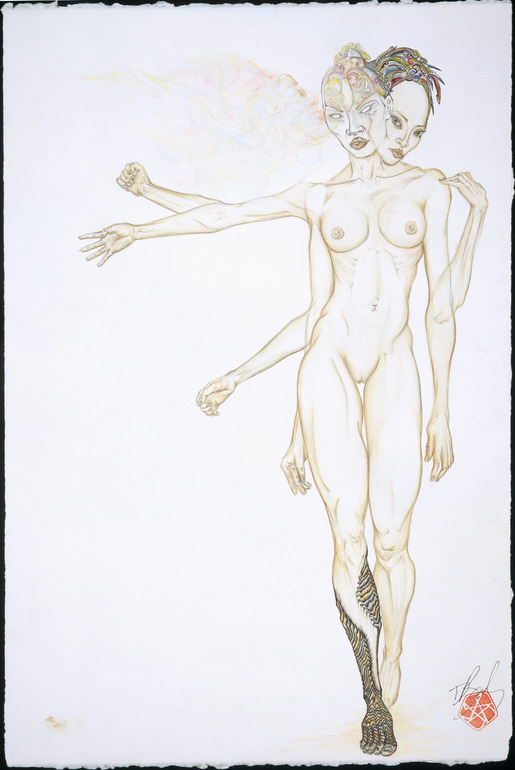



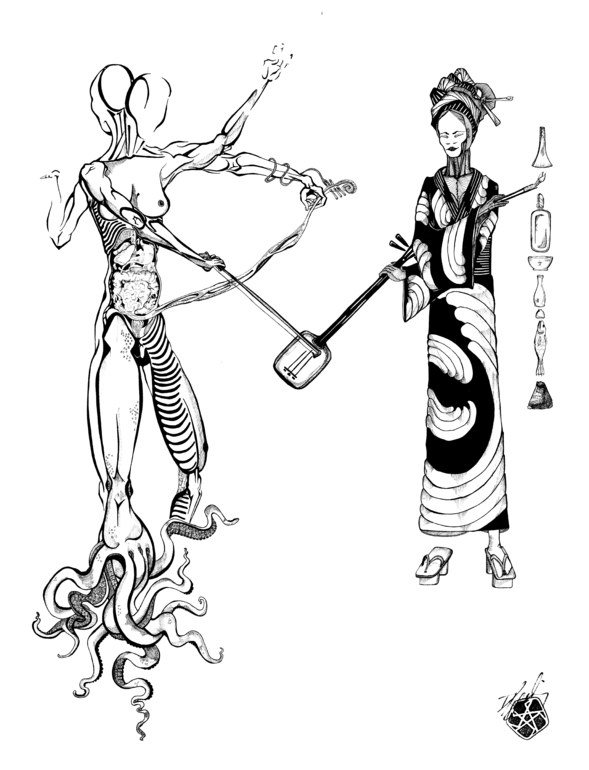






























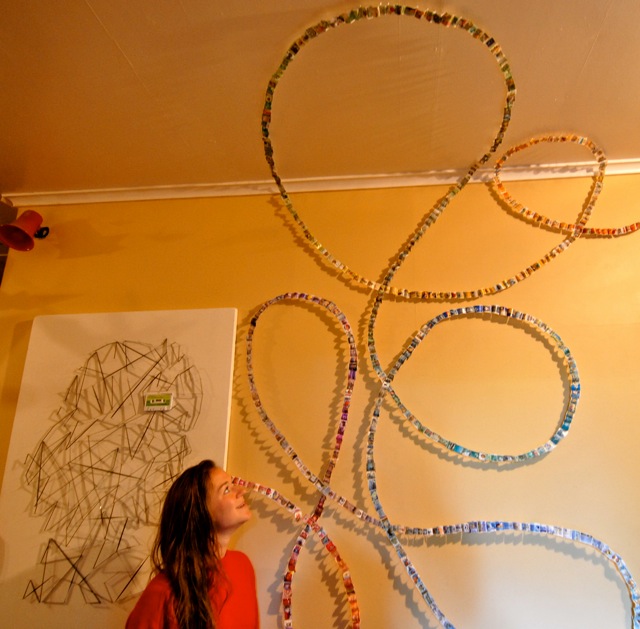


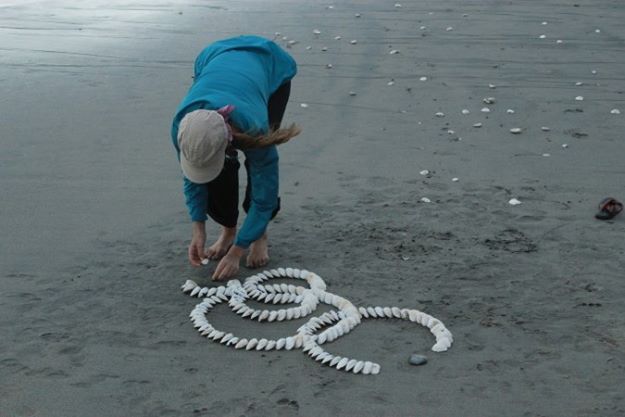
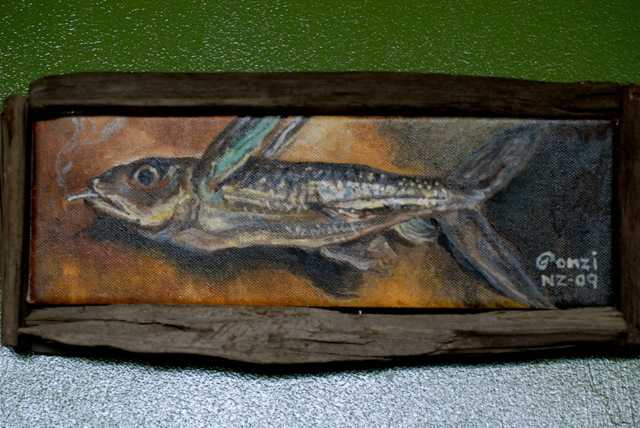
 Kyle Browne at work during her residency at the LivingInPeace Project




















































































 The Rongolian Star




DJ Crap Live on 107.5: International Request Shows
Off the Top of my Head
By Paul MurrayDJ Crap’s International Request Shows on Karamea Radio 107.5 FM have been very popular…great people from all over the world recommending great songs that DJ Crap puts together and plays on the wireless…You’re WELCOME!!
Show #1: Most popular Karamea Radio Show of all time!
DJ Crap asked for and received dozens of requested songs from friends, family and Rongolians worldwide…a 60-song marathon show that is also scientifically and anthropologically interesting as it is a time-lapse study of the effects of alcoholic beverages on the performance of a disc jockey over a sustained period…this show is almost 5-hours long and DJ Crap was well shickered toward the end…even forgetting to play several requested songs (sorry about that!)…his French side-kick Edouard (aka DJ Black Beard) passed out mid-show (ppppfffftttt…young people these days!)
Thanks everyone for all the requested songs…check out the show to hear your song as well as lots of great music you’ve probably never heard and some all time classics.
The music is tremendous, the delivery is crap…that folks is the essence of a DJ Crap Show…you’re welcome!
https://soundcloud.com/rongobackpackers/dj-crap-4-dj-echo-international-requests-show-july-26-2014
Show # 2:
DJ Crap again takes charge of the Saturday Night slot on Karamea Radio in the absence of DJ Echo, who will return next week to resume his show.
Requests again flooded in from around the world and the Karamea airwaves were introduced to a raft of excellent new music, some classic old hits and some extremely offensive violent punk shouting toward the end of the show when DJ Crap (who could have chosen not to play the songs, but is not that kind of DJ) played some obscure music requested by the dubious Doktor Heagney and his doubly suspect side-kick “Ivan Icianus.” Earmuffs for the children later in the show, but great music early on…thank you to all who contributed.
You’re WELCOME!
Karamea Radio 107.5 FM: www.facebook.com/KarameaRadio107.5FM
Rongo Backpackers & Gallery: www.RongoBackpackers.com
LivingInPeace Project: www.LivingInPeace.com
https://soundcloud.com/rongobackpackers/dj-crap-4-dj-echo-international-request-show-ii-august-2-2014
Show #3:
He’s back and he’s still CRAP…DJ Crap gratefully received requests from friends and family all over the world to put together request show #3…the show started well, but deteriorated rapidly after DJ Echo arrived with whiskey to assist…a bit too much Lorax in the middle of the show..and the playlist got totally mixed up…songs repeated etc, but some fantastic new music for y’all to enjoy…not all the songs on the list got played, but stay tuned for Show #4…coming soon to a computer new you!
You’re WELCOME!
https://soundcloud.com/rongobackpackers/dj-crap-international-request-show-iii-sept-24-2014
Rate this: